Free Printable Reading Fluency Worksheets for Class 2
Class 2 reading fluency worksheets from Wayground help students develop smooth, accurate reading skills through engaging printables and practice problems with comprehensive answer keys.
Explore printable Reading Fluency worksheets for Class 2
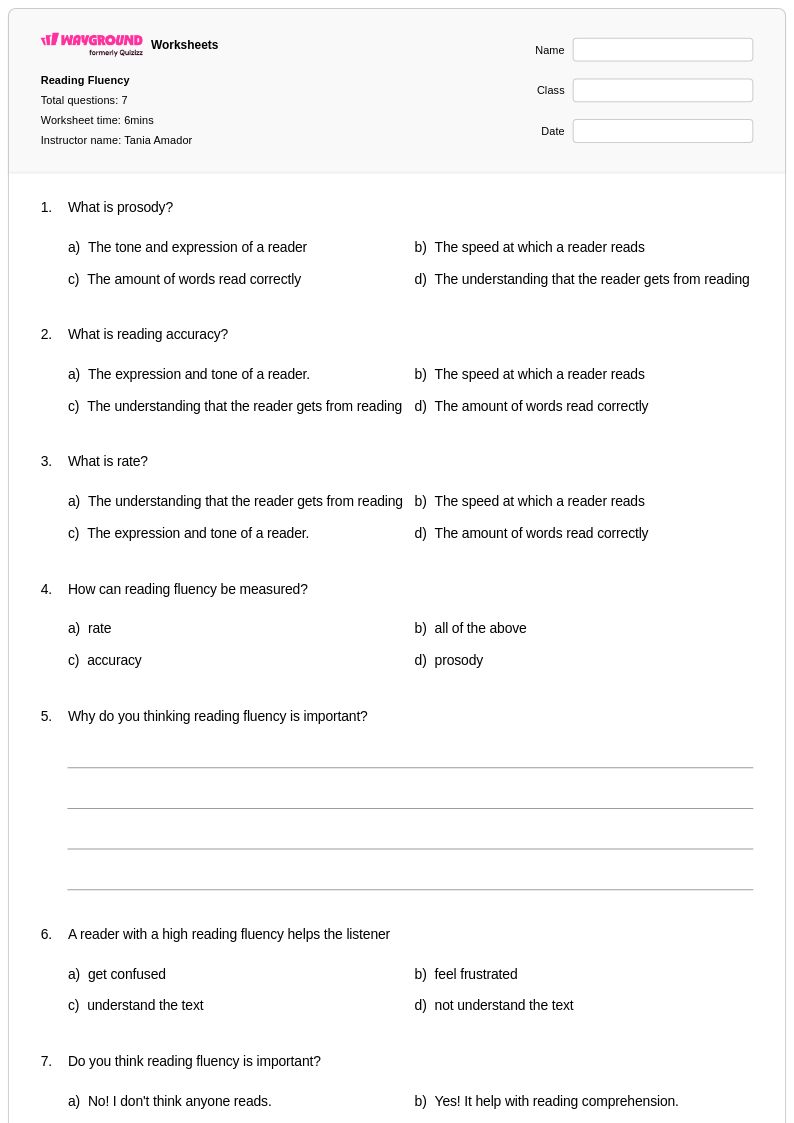
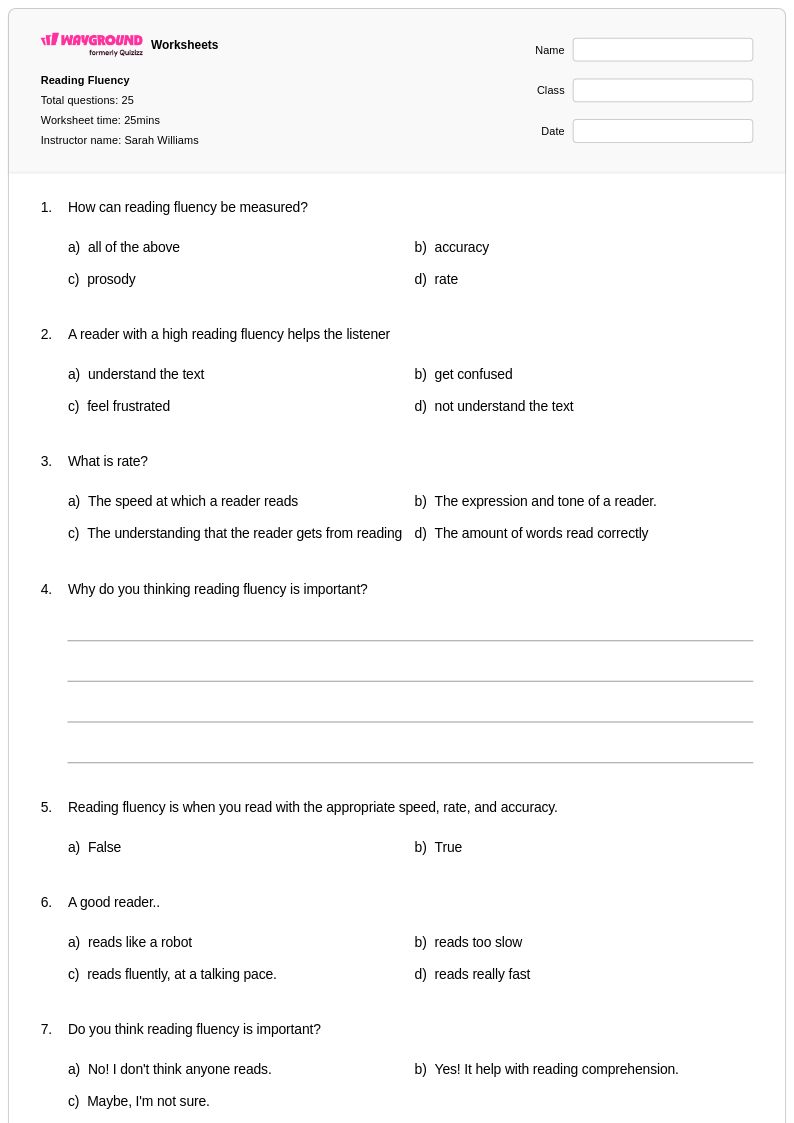
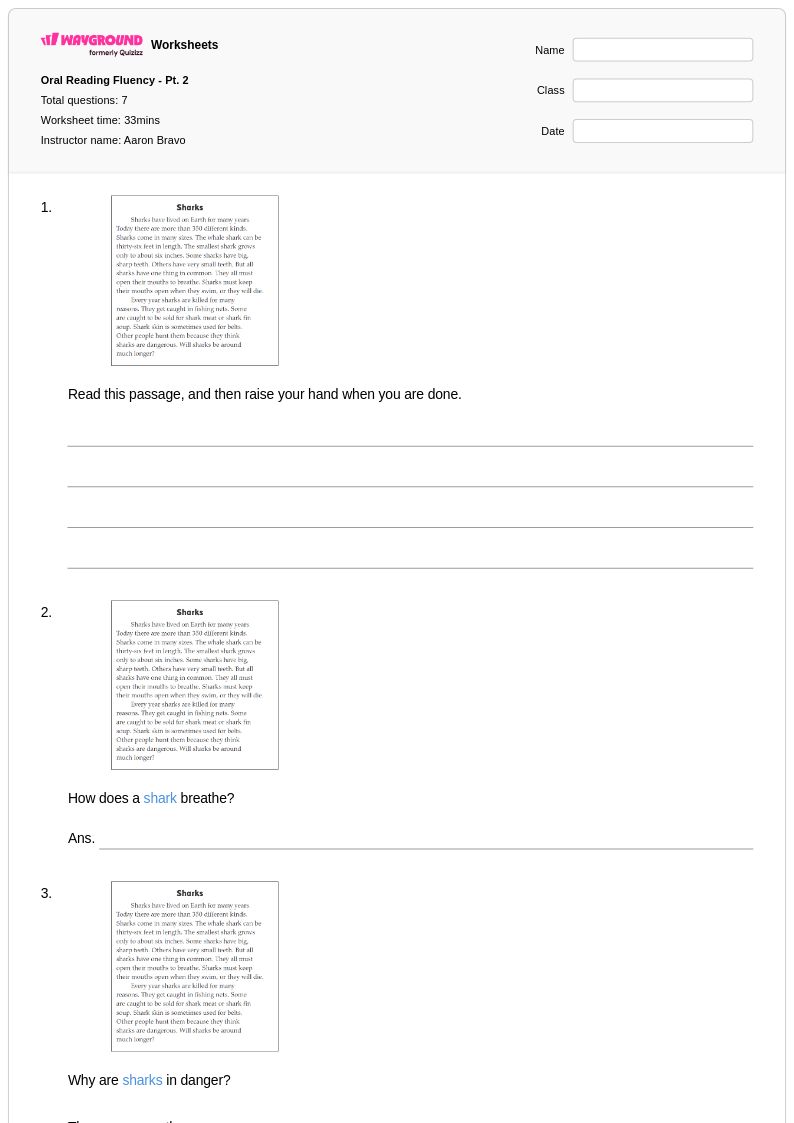
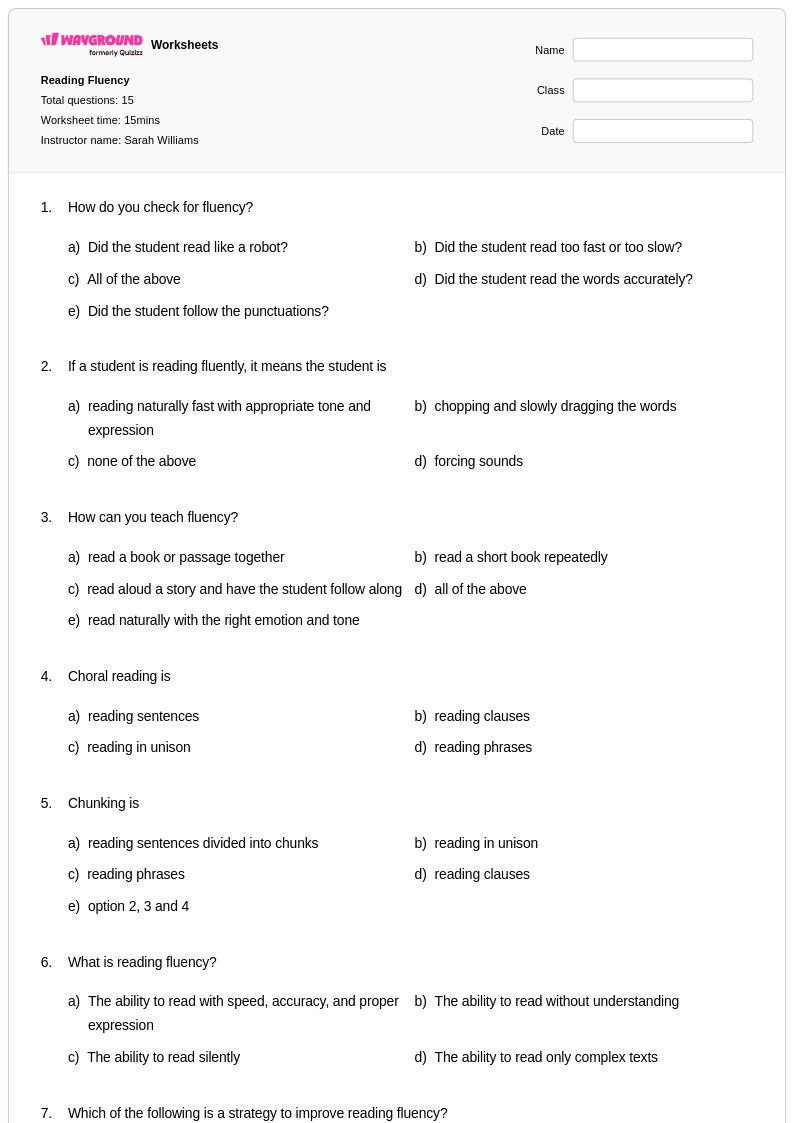
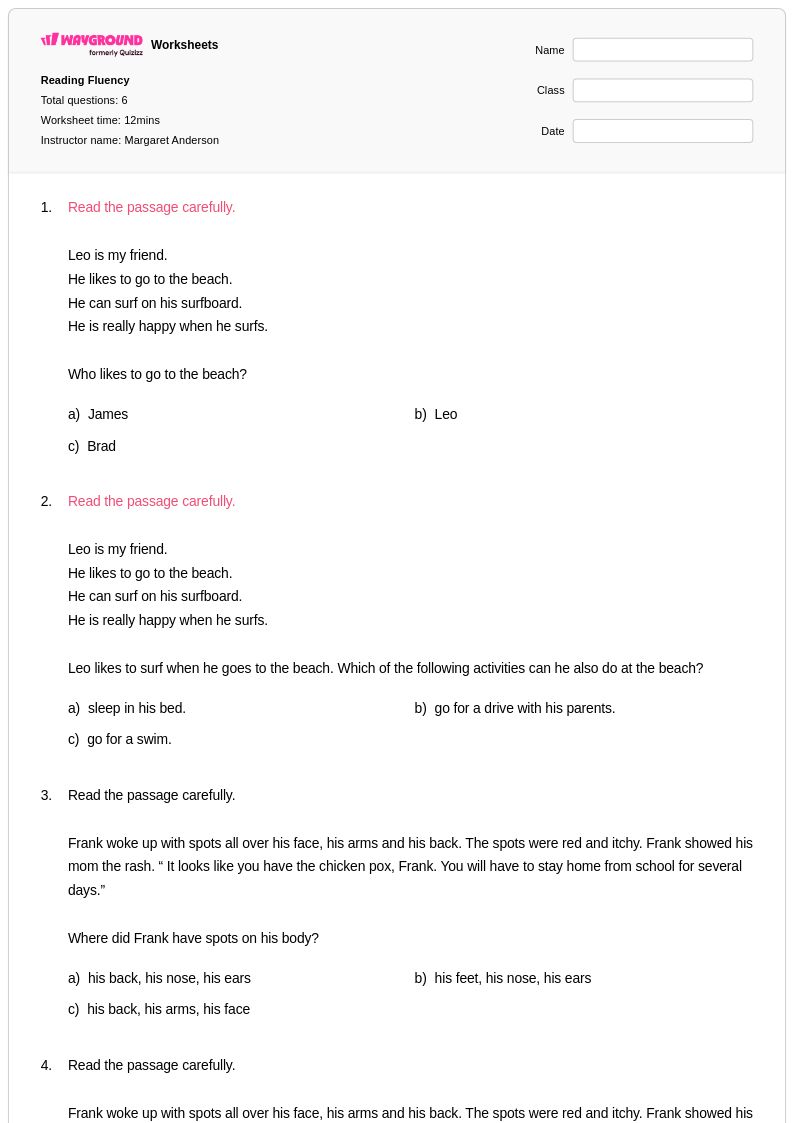
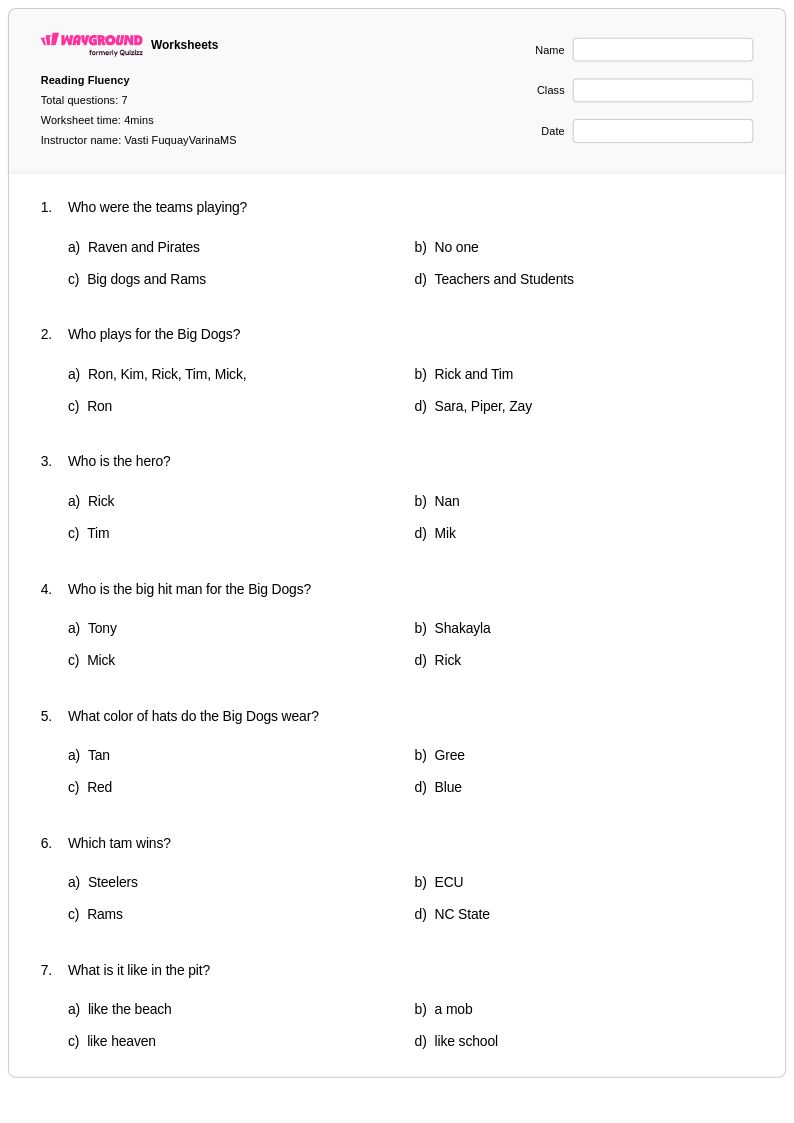
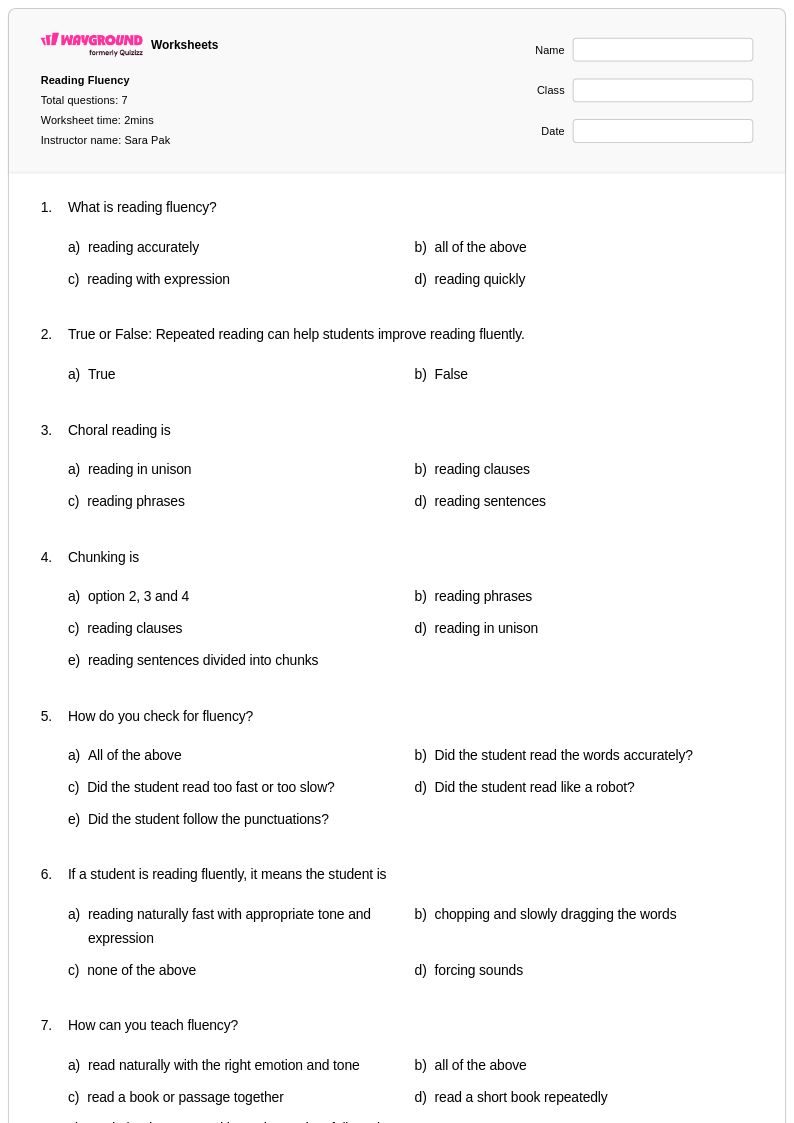
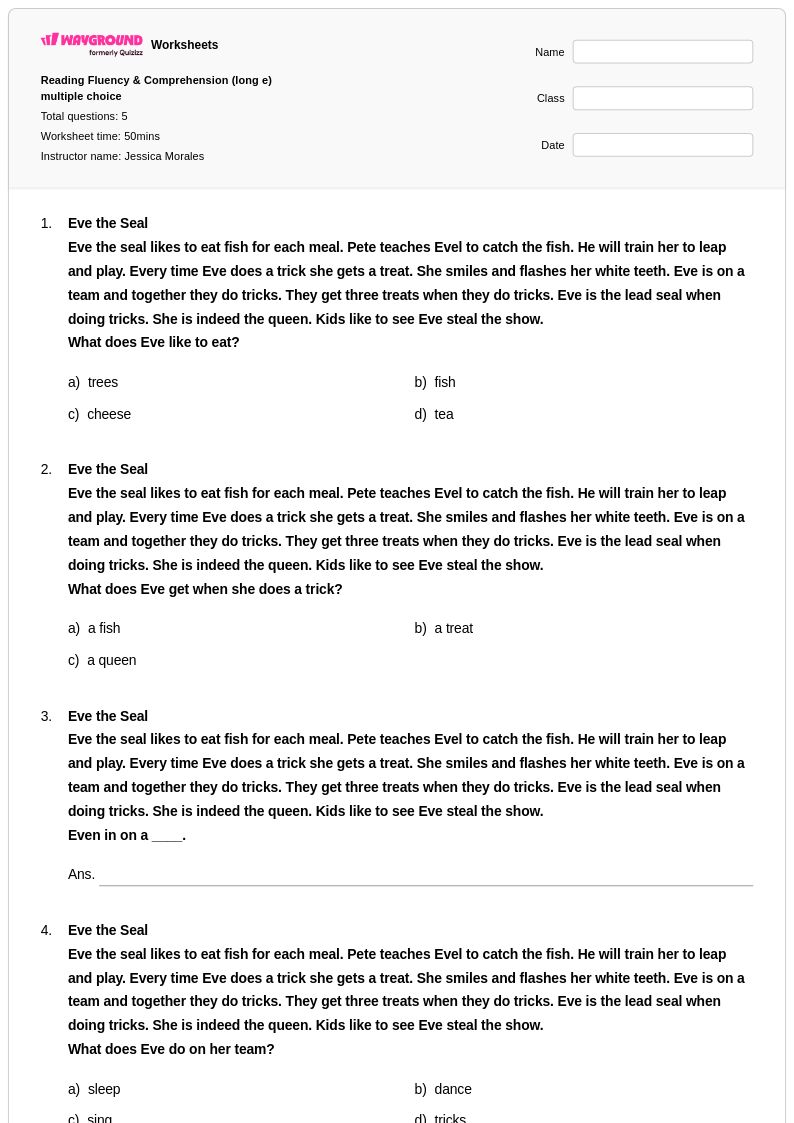
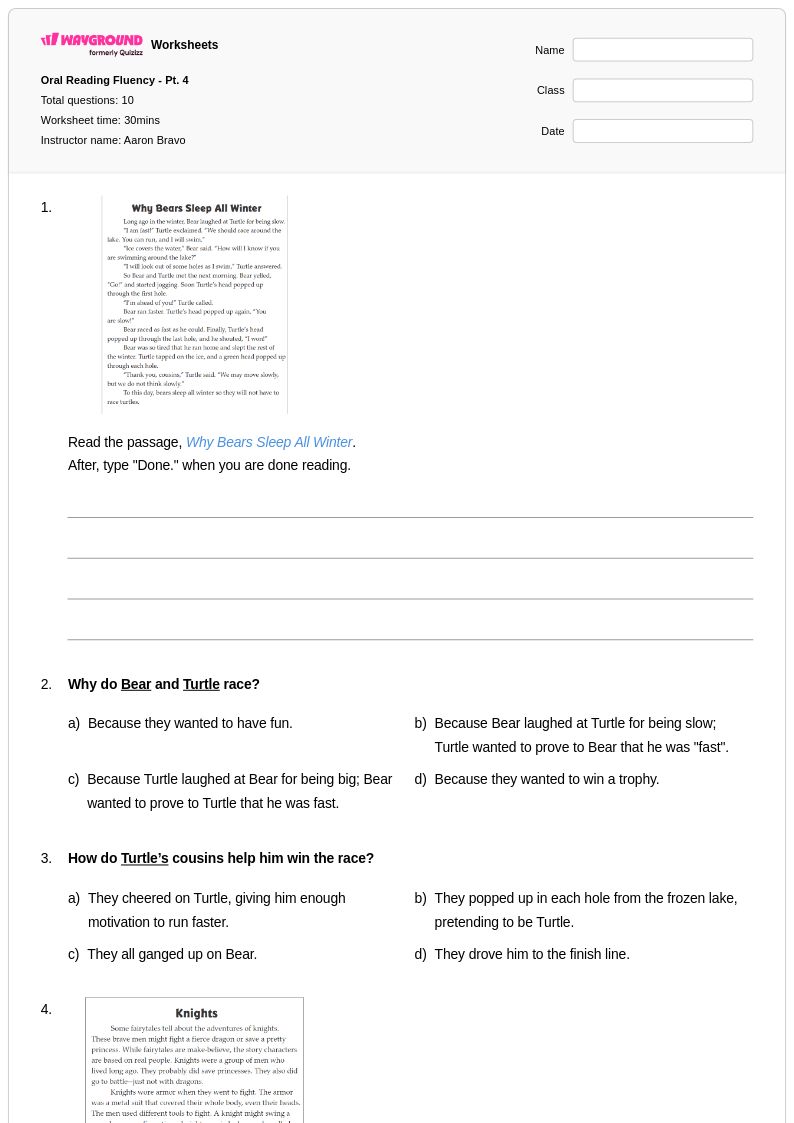
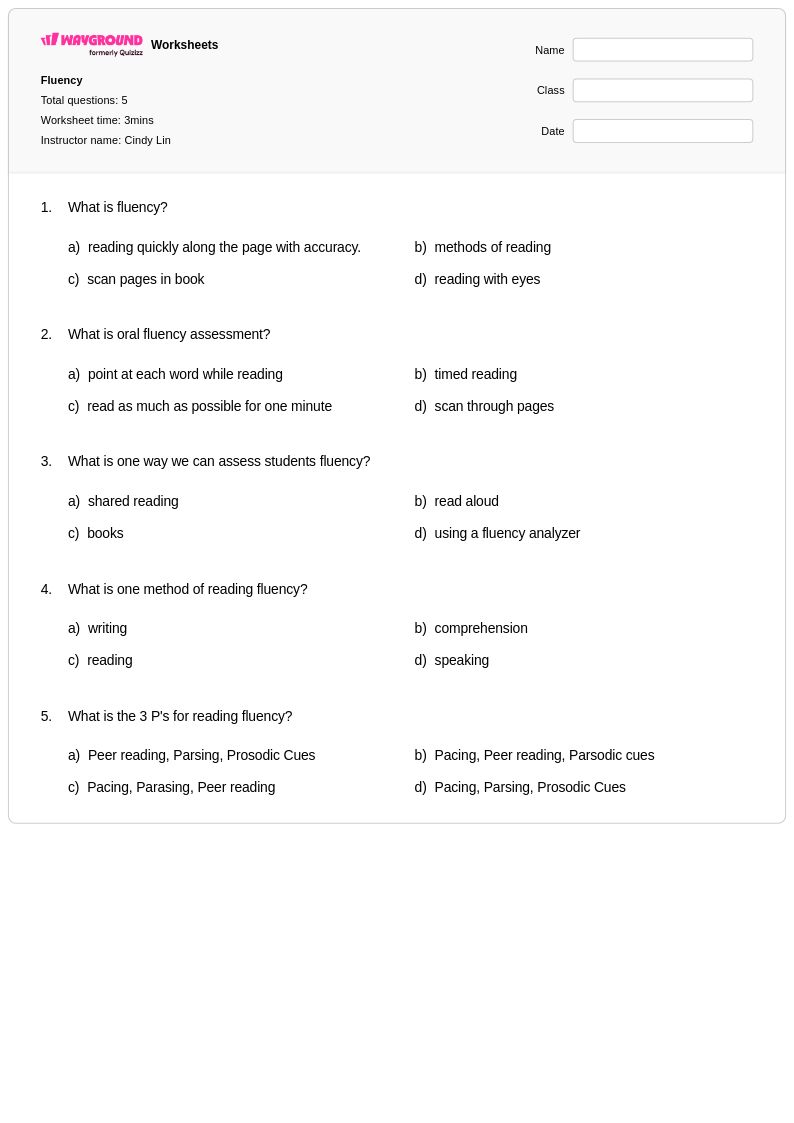
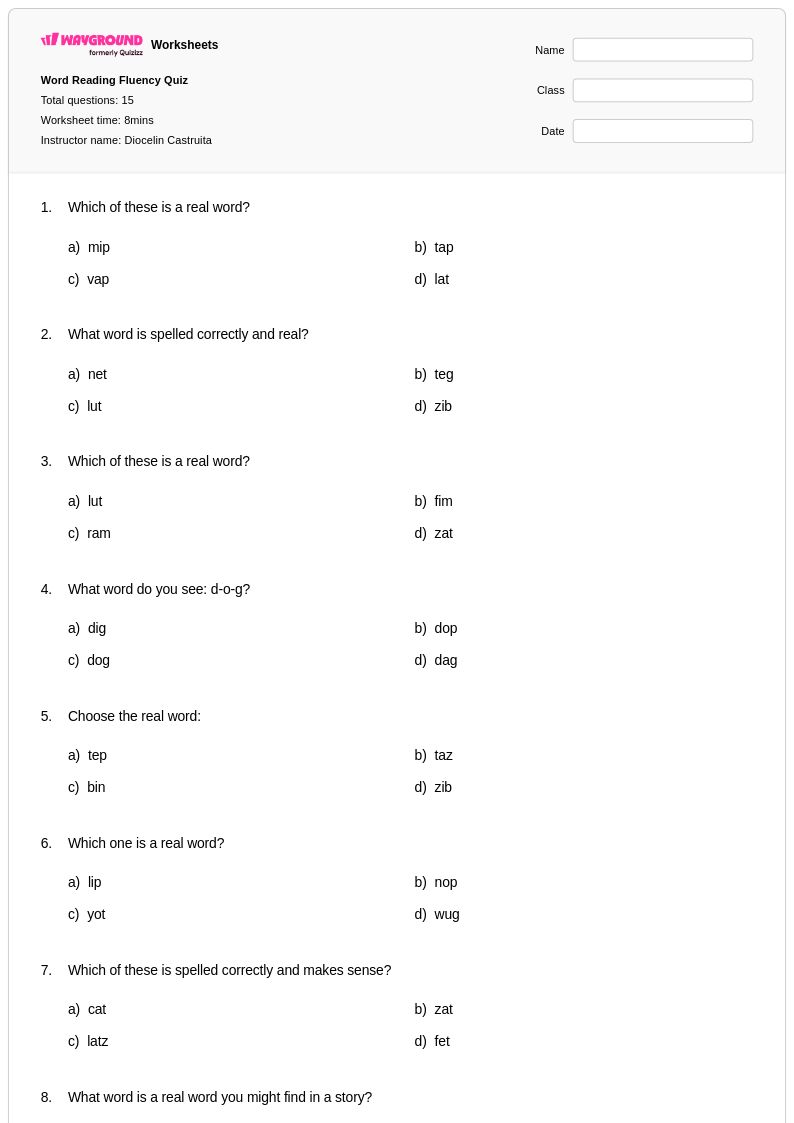
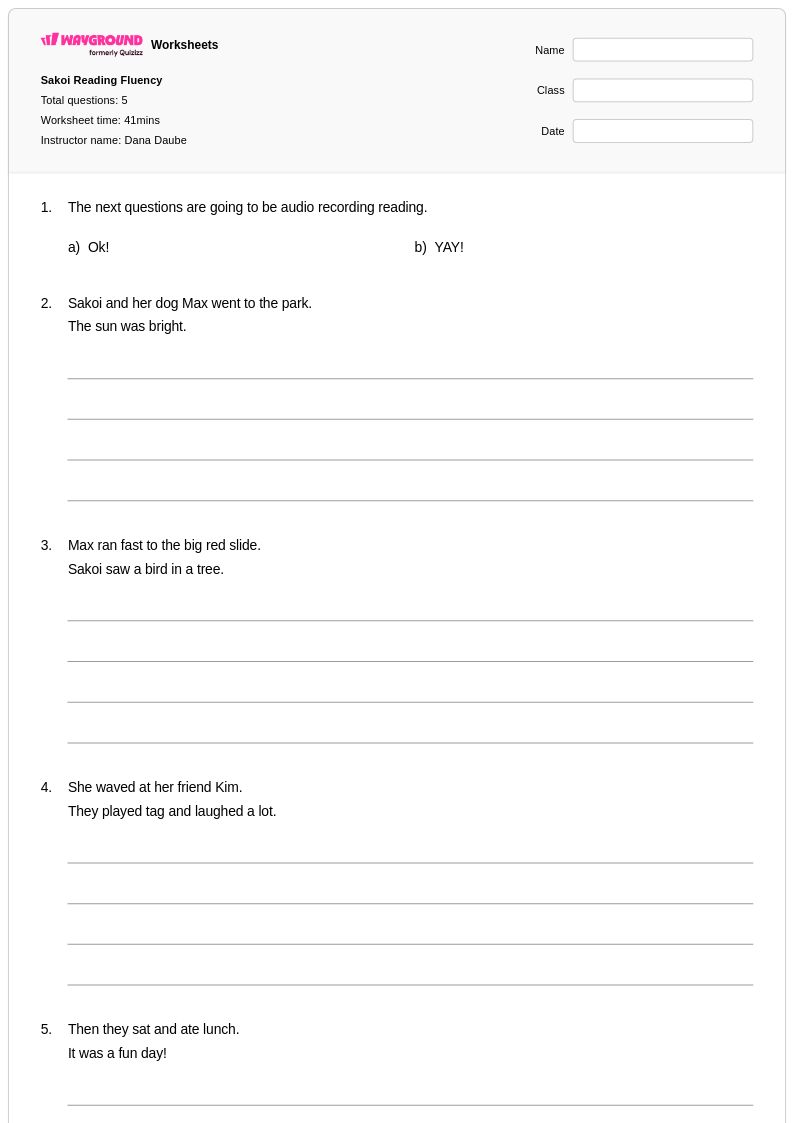
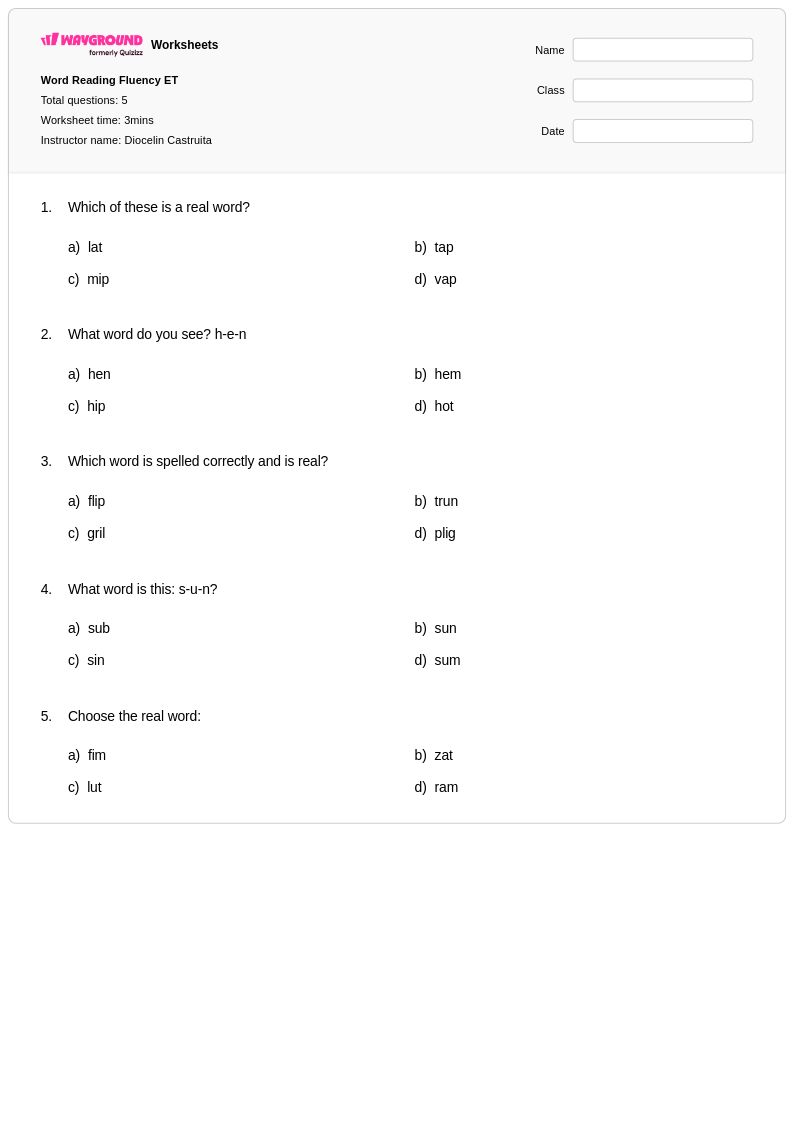
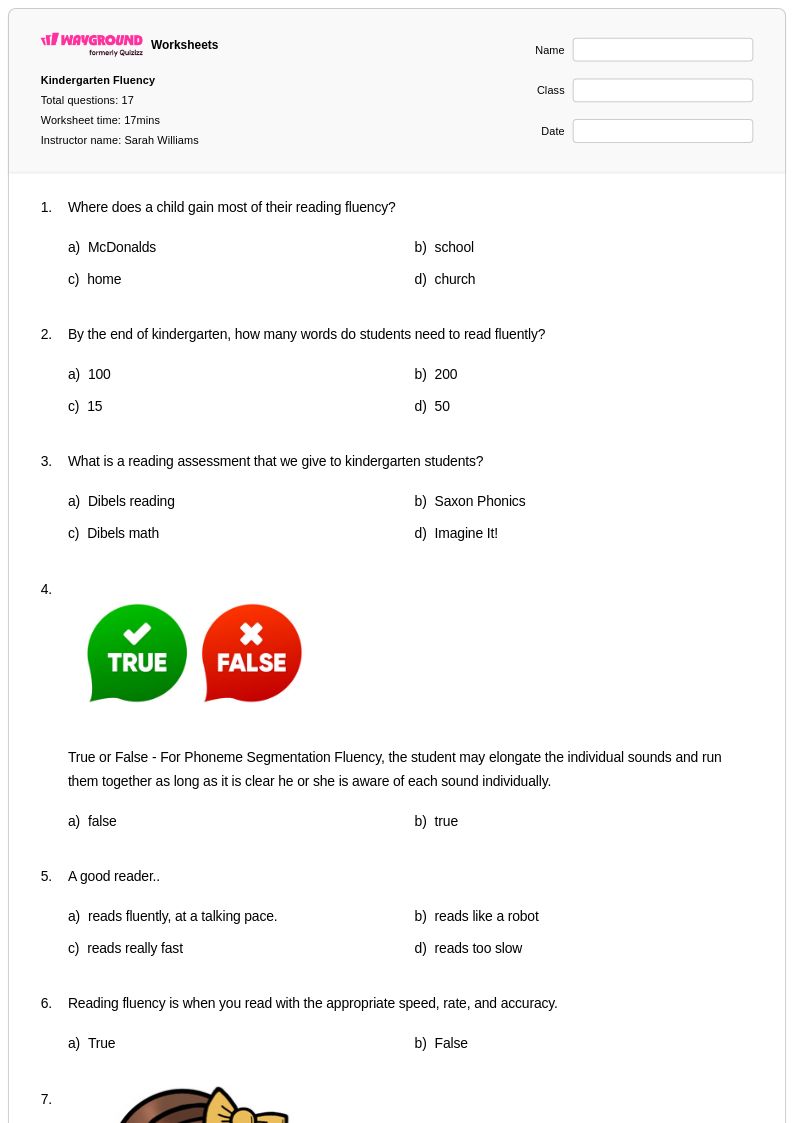
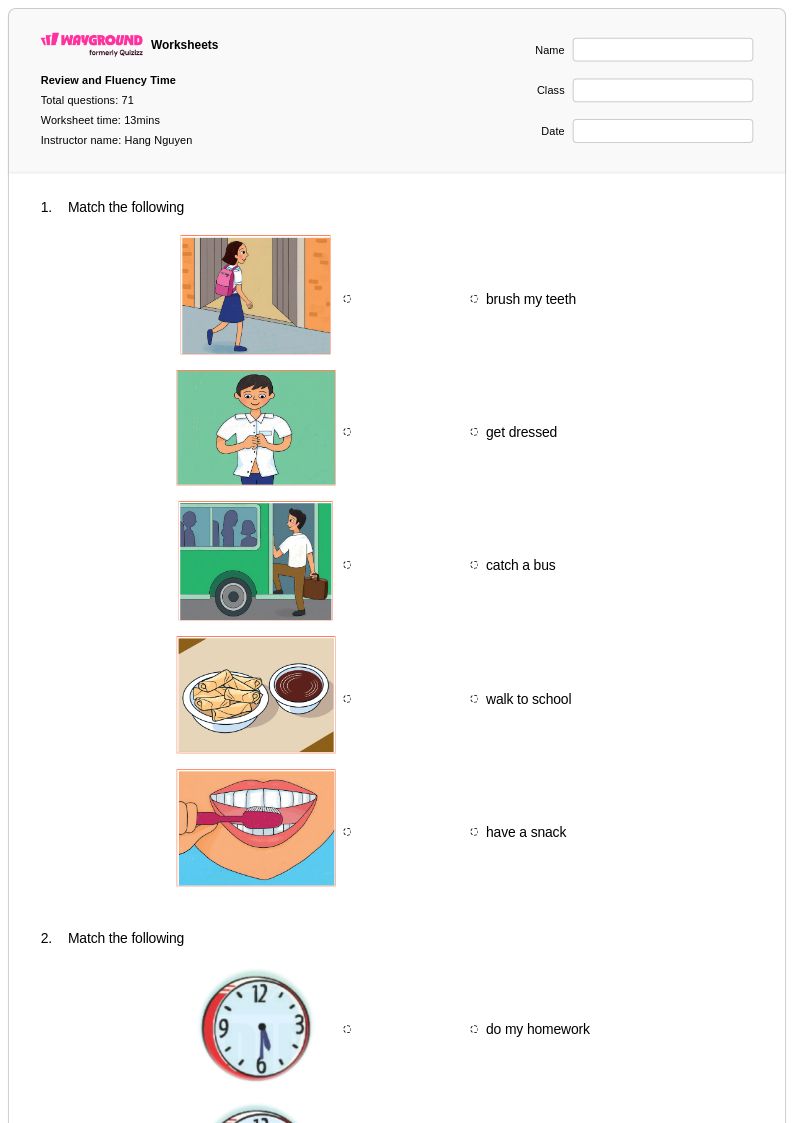
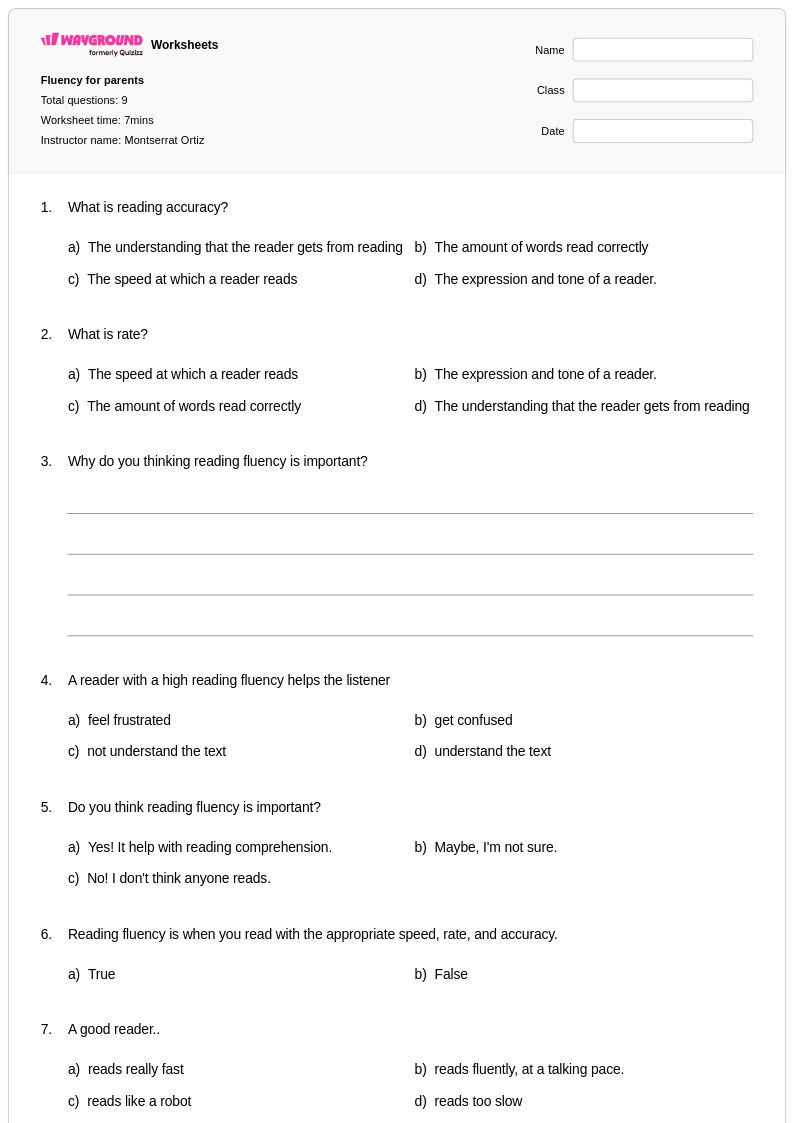
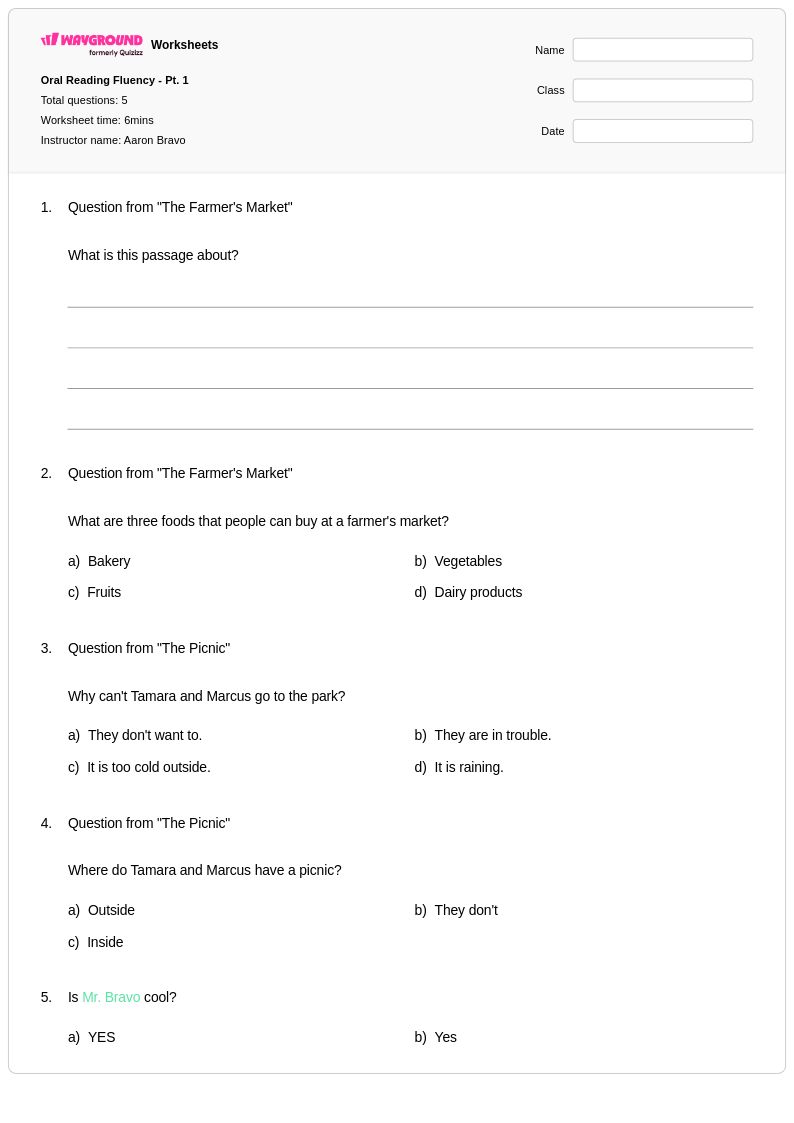
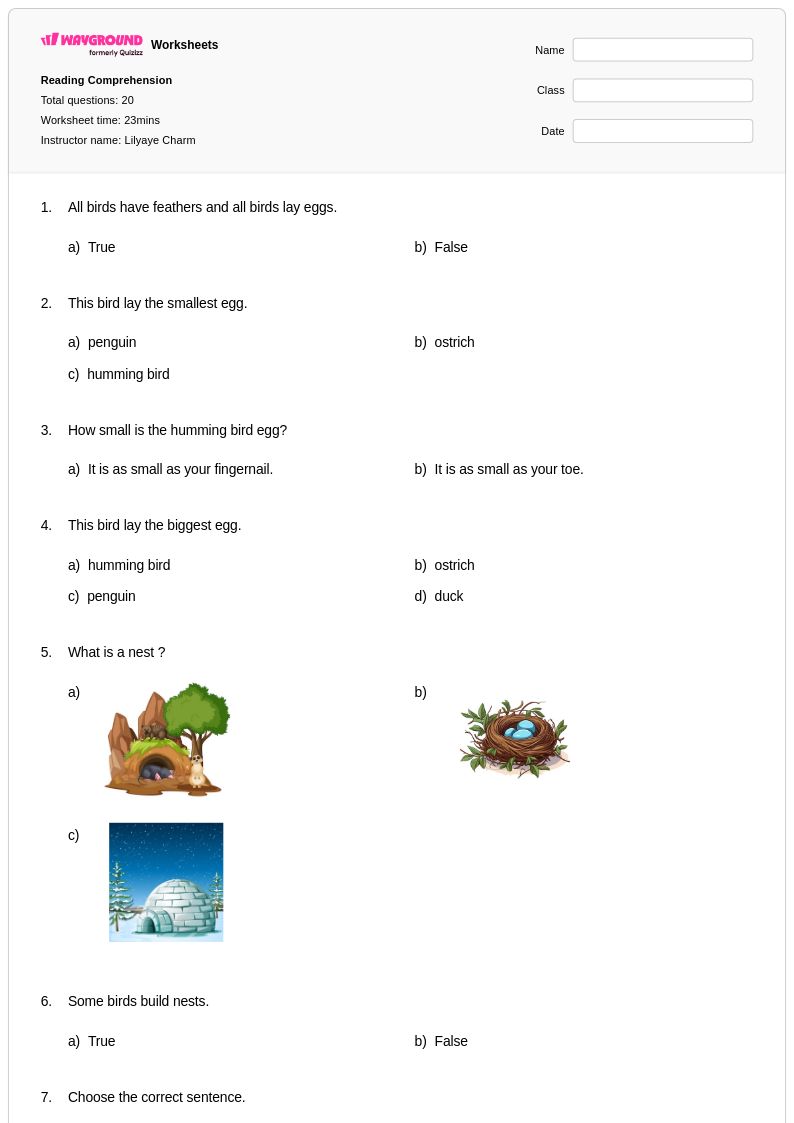
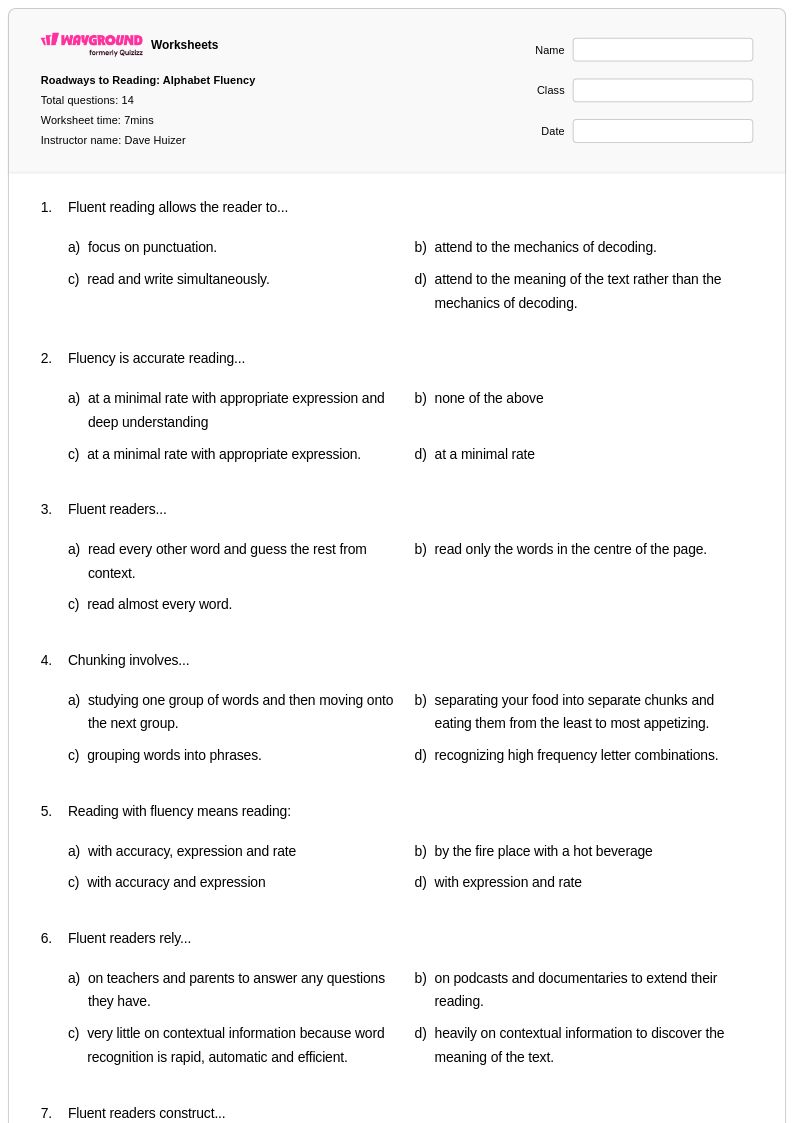
Reading fluency worksheets for Class 2 students available through Wayground (formerly Quizizz) are specifically designed to develop automatic word recognition, smooth phrasing, and expressive reading skills that form the foundation of strong comprehension abilities. These carefully crafted practice problems focus on essential fluency components including sight word recognition, phonetic decoding speed, proper pacing, and prosody development through repeated reading exercises and timed passages. Each worksheet targets age-appropriate text complexity while building students' confidence with familiar vocabulary patterns and sentence structures, with comprehensive answer keys provided to support both independent practice and guided instruction. The free printable resources include varied passage lengths, from single sentences to short paragraphs, allowing educators to scaffold fluency development according to individual student needs while maintaining engagement through diverse topics and formats that second-grade learners find accessible and interesting.
Wayground (formerly Quizizz) empowers teachers with millions of educator-created reading fluency resources that streamline lesson planning and provide targeted skill practice for Class 2 classrooms. The platform's robust search and filtering capabilities enable teachers to quickly locate worksheets aligned with specific reading standards and fluency benchmarks, while differentiation tools allow for seamless customization based on individual student reading levels and pacing needs. Available in both printable pdf formats and interactive digital versions, these resources support flexible implementation whether for whole-group instruction, small-group intervention, or independent practice stations. Teachers can efficiently plan remediation activities for struggling readers, provide enrichment opportunities for advanced students, and track progress through systematic fluency practice that builds the automaticity essential for reading comprehension success, all while accessing high-quality materials that have been tested and refined by educators nationwide.
FAQs
How do I teach reading fluency in the classroom?
Reading fluency is best taught through repeated oral reading practice, modeled fluent reading by the teacher, and structured feedback on speed, accuracy, and expression. Effective strategies include echo reading, choral reading, and partner reading with timed passages. Targeting automaticity with high-frequency sight words reduces cognitive load and frees students to focus on comprehension. Consistent, brief daily practice sessions tend to produce stronger gains than infrequent longer sessions.
What exercises help students practice reading fluency?
Timed reading passages help students build reading rate while tracking accuracy, and expression-focused activities develop prosody by having students attend to punctuation and phrasing. Sight word recognition drills build automaticity with common words that appear across all texts. Repeated reading of the same passage across multiple sessions is one of the most research-supported fluency practice methods because it allows students to measure their own improvement over time.
What mistakes do students commonly make when developing reading fluency?
A common error is prioritizing speed over accuracy, which leads students to skip or guess at unfamiliar words rather than decoding them. Many students also read in a monotone without attending to punctuation, meaning they develop rate but not prosody. Teachers should watch for students who read individual words in isolation rather than in meaningful phrases, as this choppy patterning is a signal that fluency practice needs to emphasize phrasing and expression alongside rate.
How can I differentiate reading fluency practice for students at different levels?
Differentiation in fluency practice involves matching passage difficulty to each student's independent or instructional reading level so that decoding demands do not overwhelm the fluency goal. Wayground supports this through accommodations such as Read Aloud, which provides audio support for students who benefit from hearing the text modeled, and reduced answer choices to lower cognitive load for students who need it. Extended time settings can also be applied per student for timed fluency activities, allowing struggling readers to build confidence without being penalized. These accommodations are saved and reusable across sessions, so setup only needs to happen once per student.
How do I use Wayground's reading fluency worksheets in my classroom?
Wayground's reading fluency worksheets are available as printable PDFs for traditional classroom use and in digital formats for technology-integrated instruction, giving teachers flexibility across in-person, hybrid, and remote settings. Teachers can also host worksheets as a quiz directly on Wayground, making it easy to assign fluency practice digitally and review results in one place. The worksheets include complete answer keys, which support immediate feedback whether students are working independently or in guided groups.
How does reading fluency connect to reading comprehension?
Fluency acts as a bridge between decoding and comprehension: when students read accurately and automatically, cognitive resources shift from word recognition to meaning-making. Students who read slowly or haltingly must devote so much attention to decoding that comprehension suffers. This is why fluency practice, particularly with prosody and phrasing, is considered a foundational skill for overall reading development rather than a surface-level goal.