Free Printable Personification Worksheets for Class 3
Wayground's free Class 3 personification worksheets help students practice identifying and using this figurative language technique through engaging printables and practice problems with complete answer keys.
Explore printable Personification worksheets for Class 3
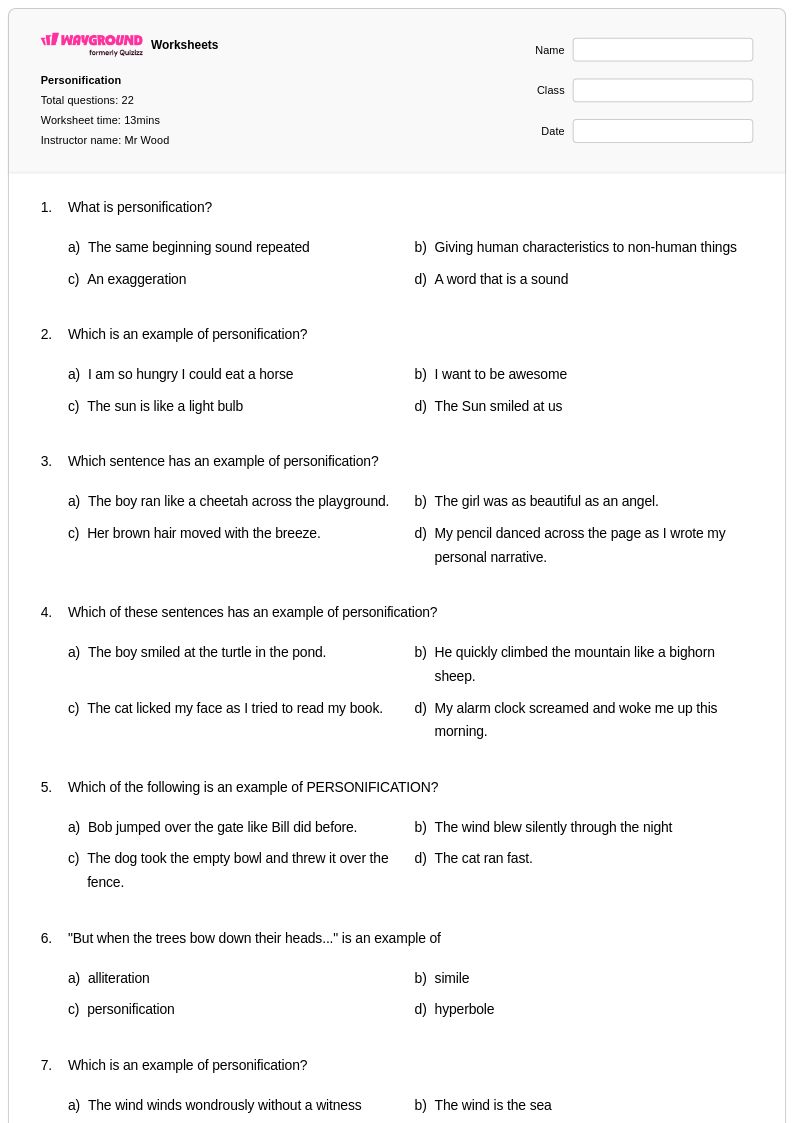
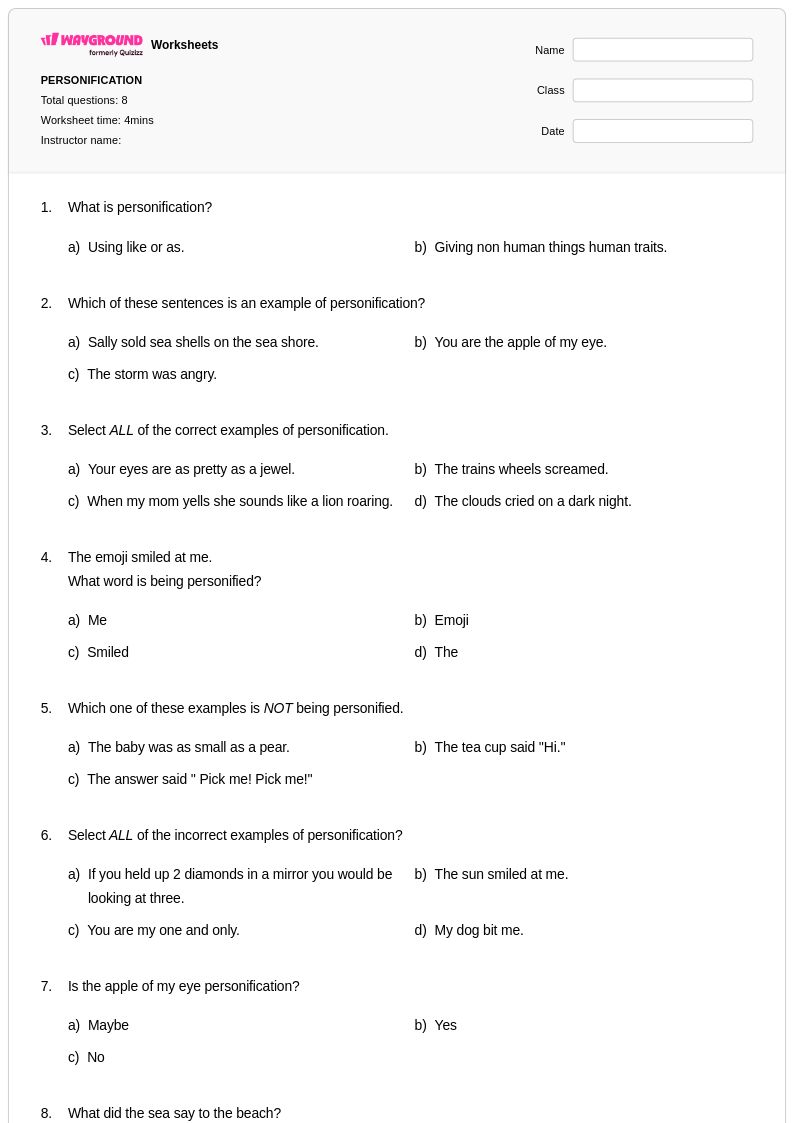
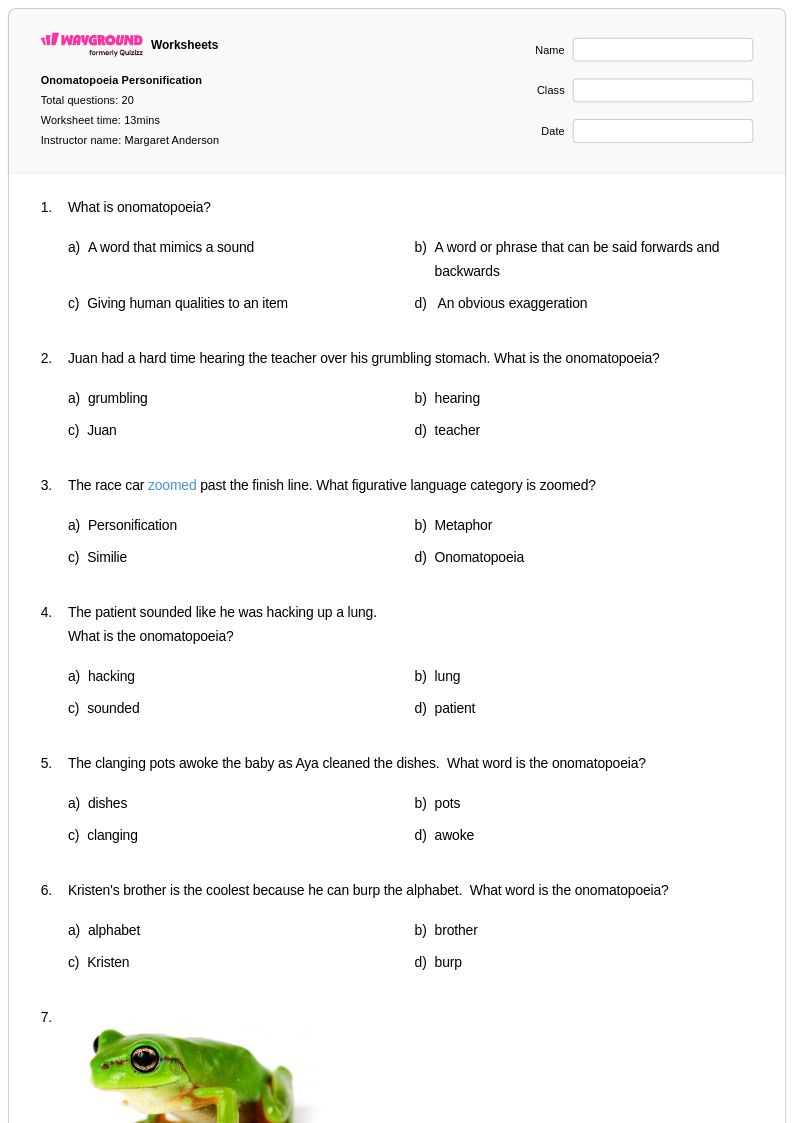
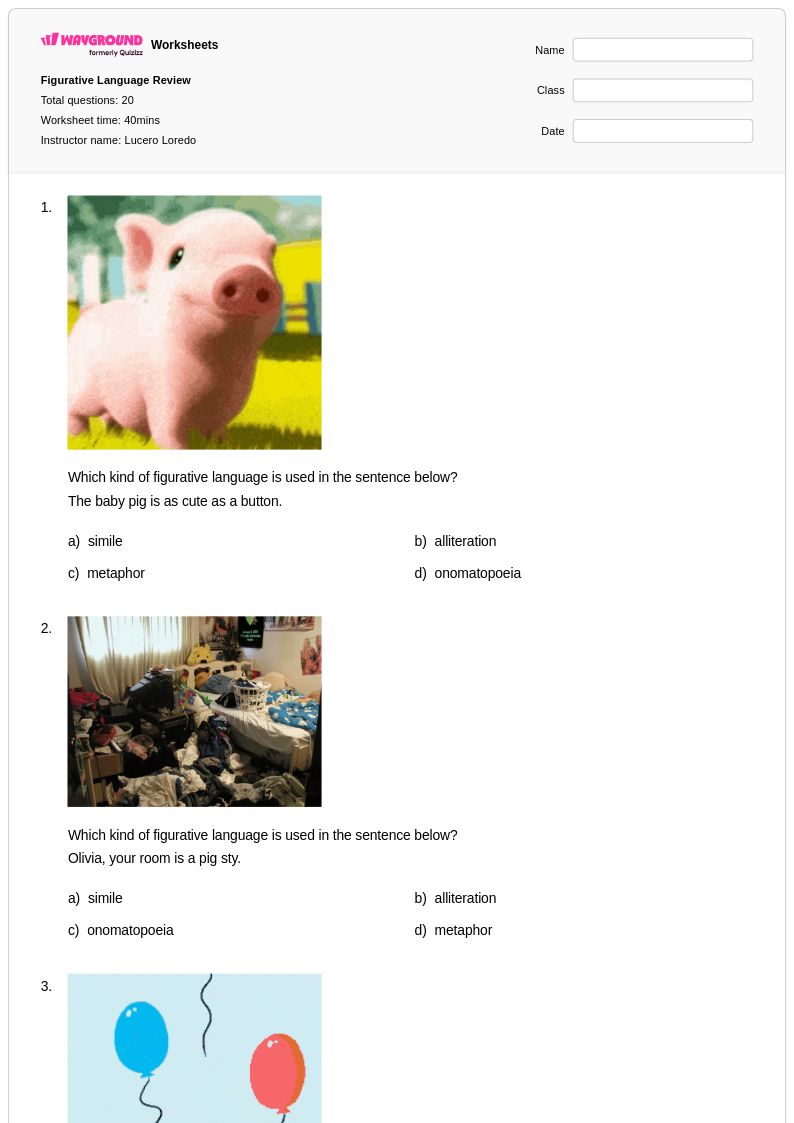
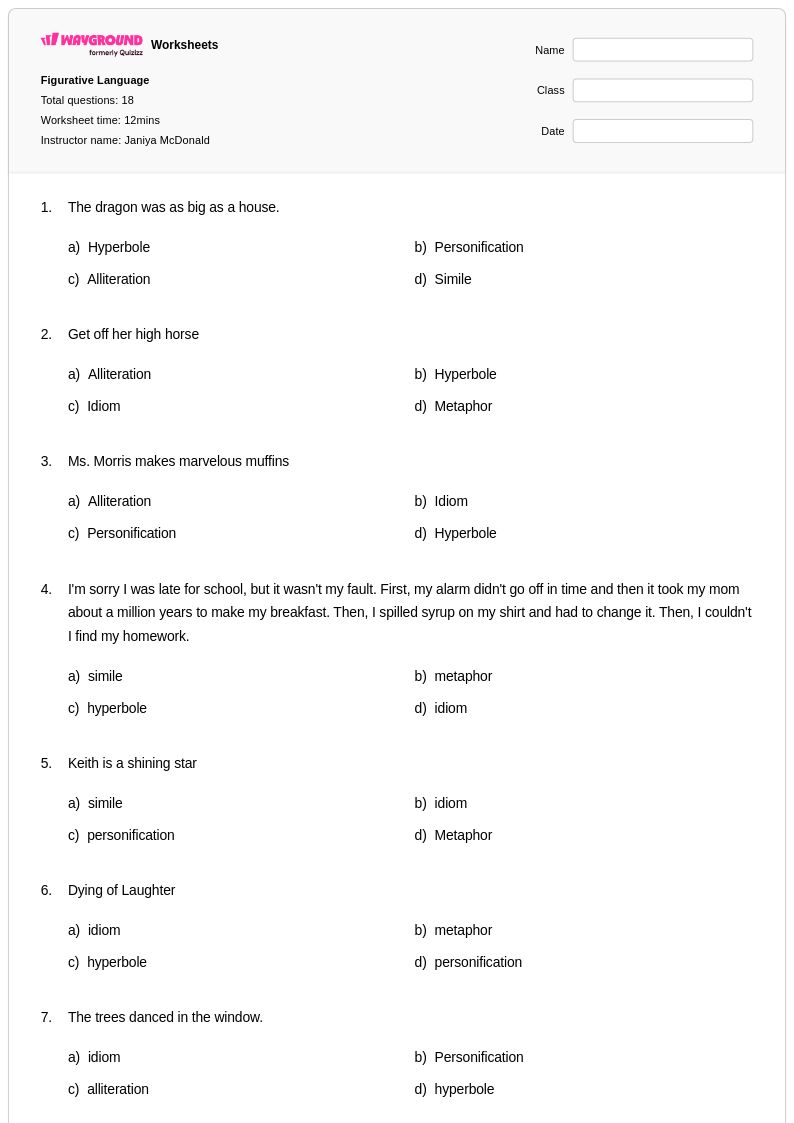
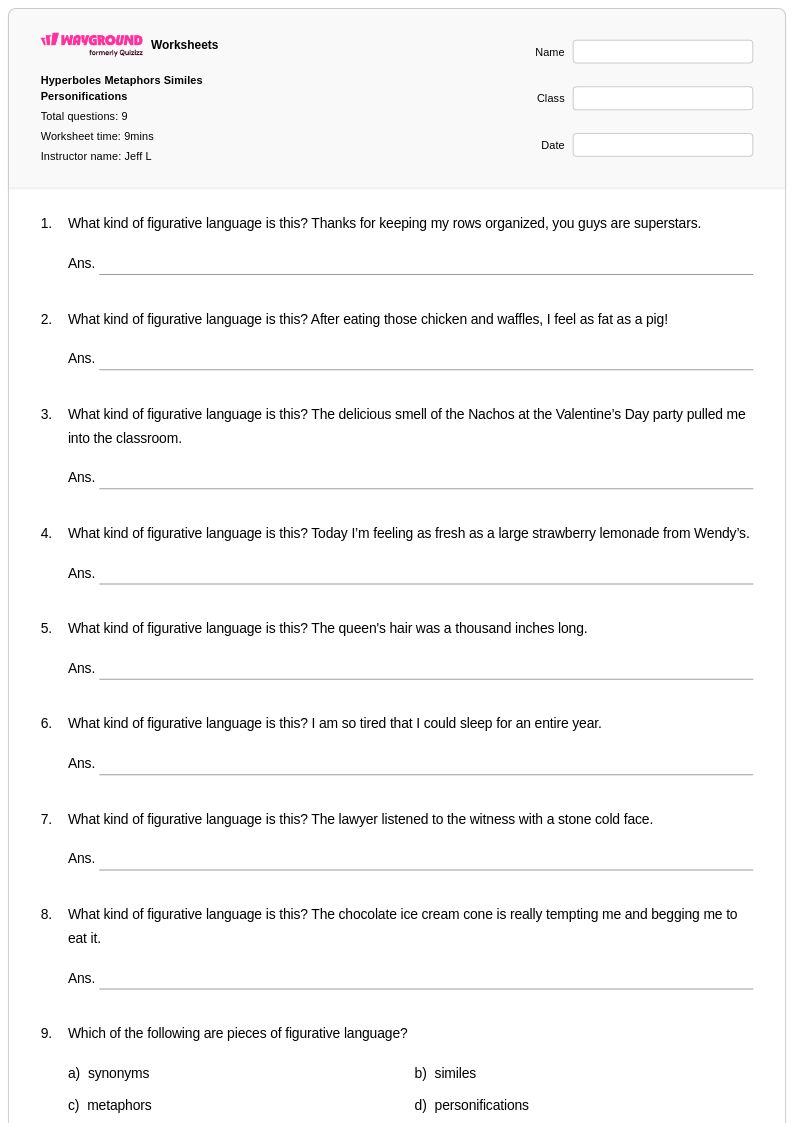
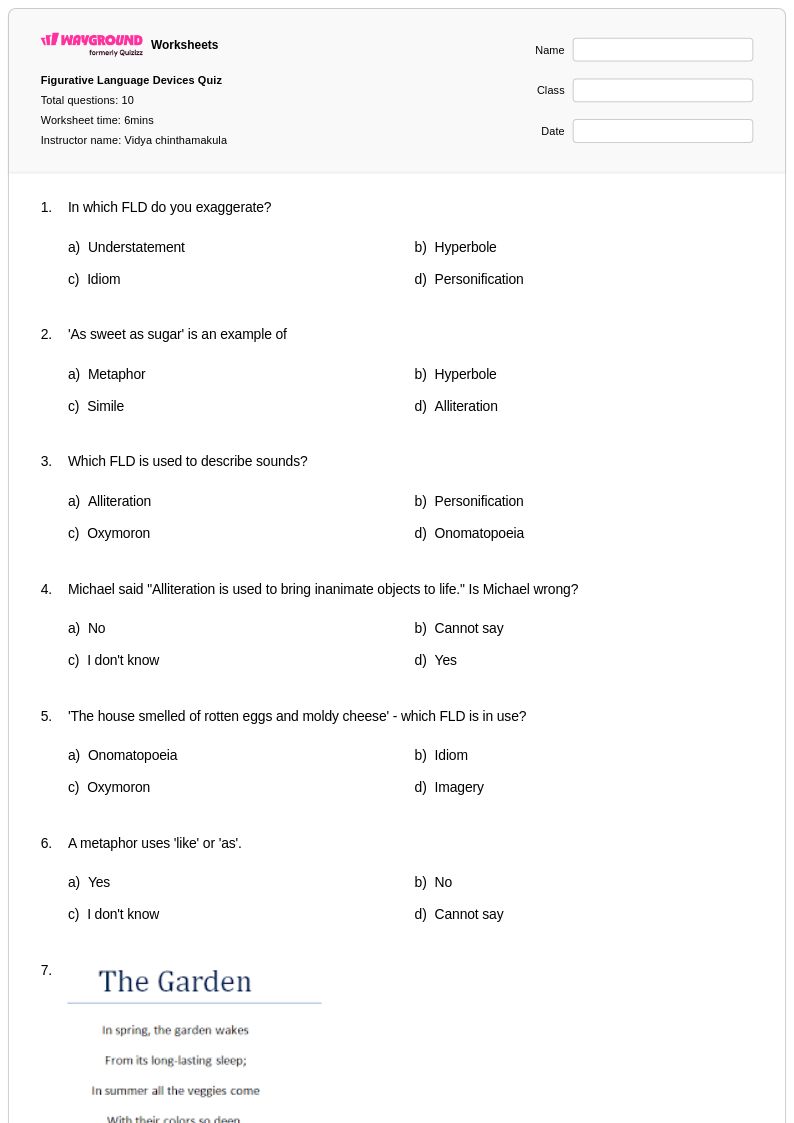
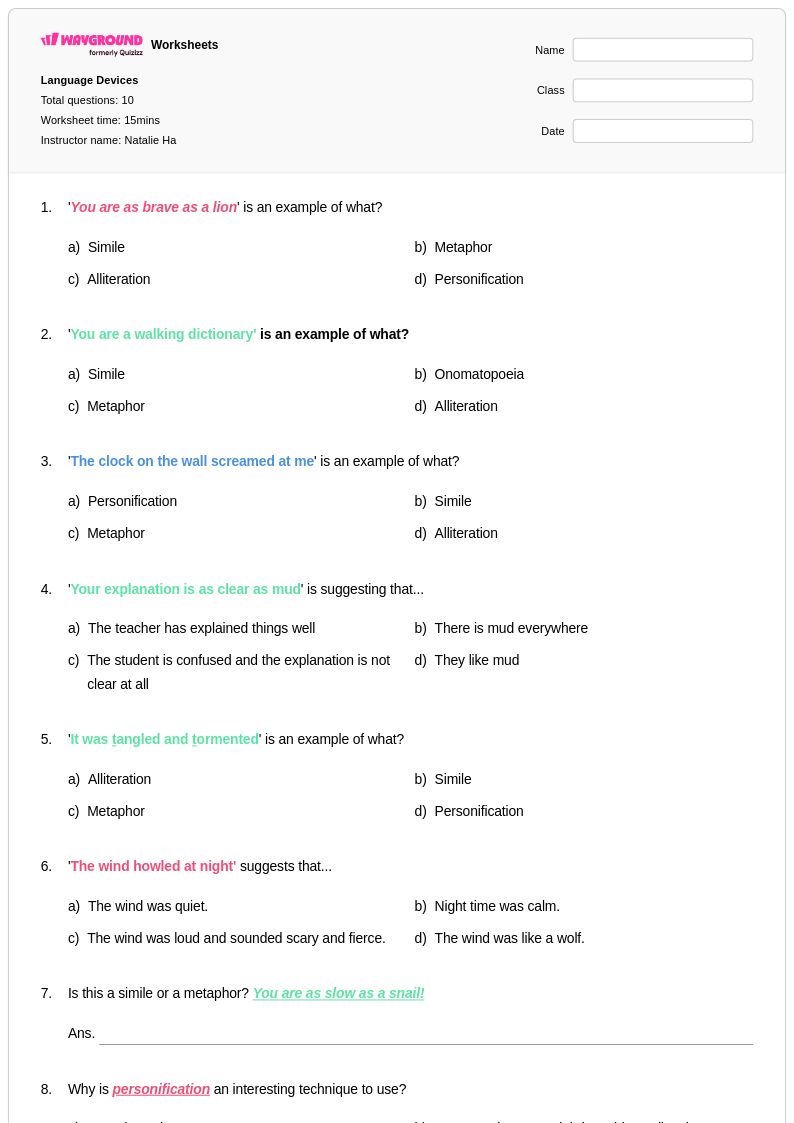
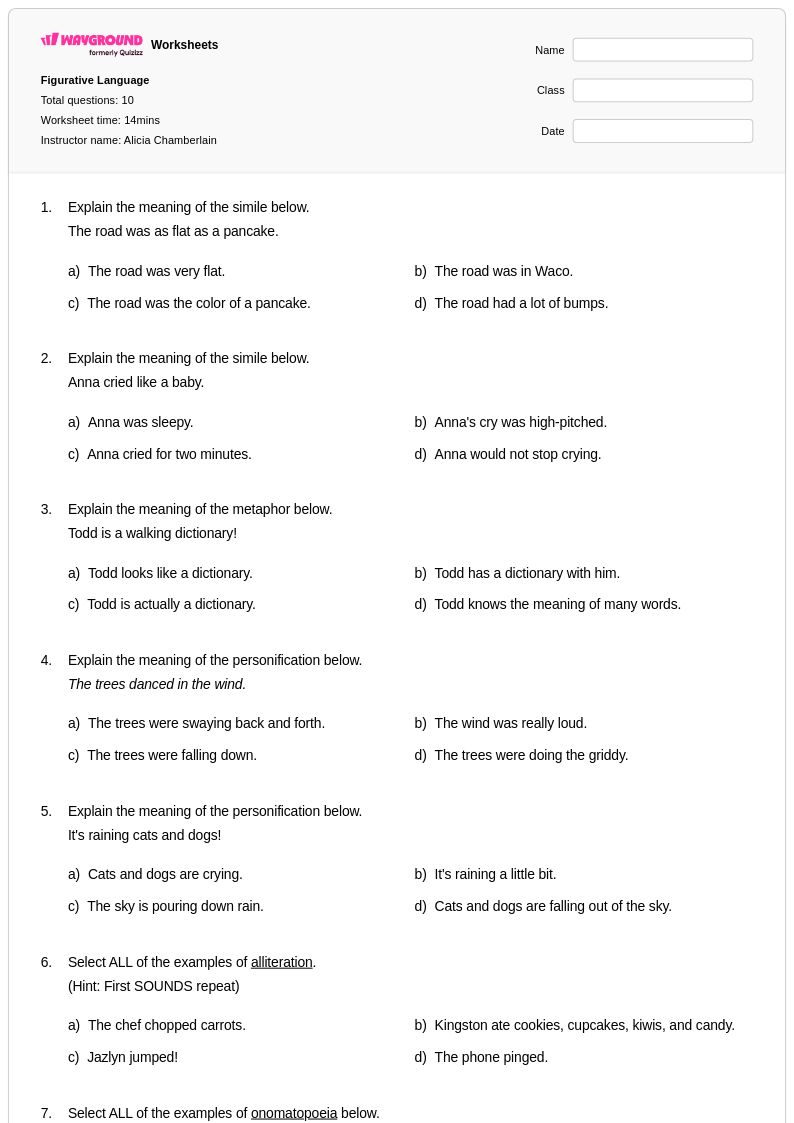
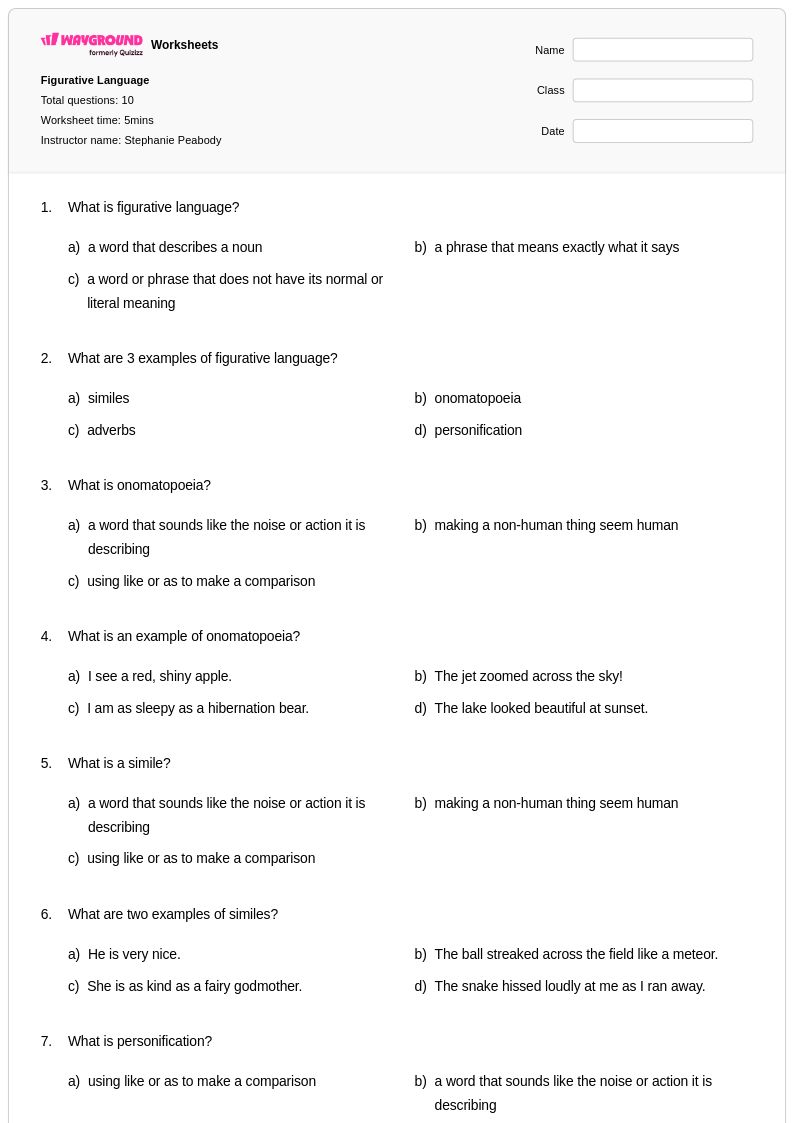
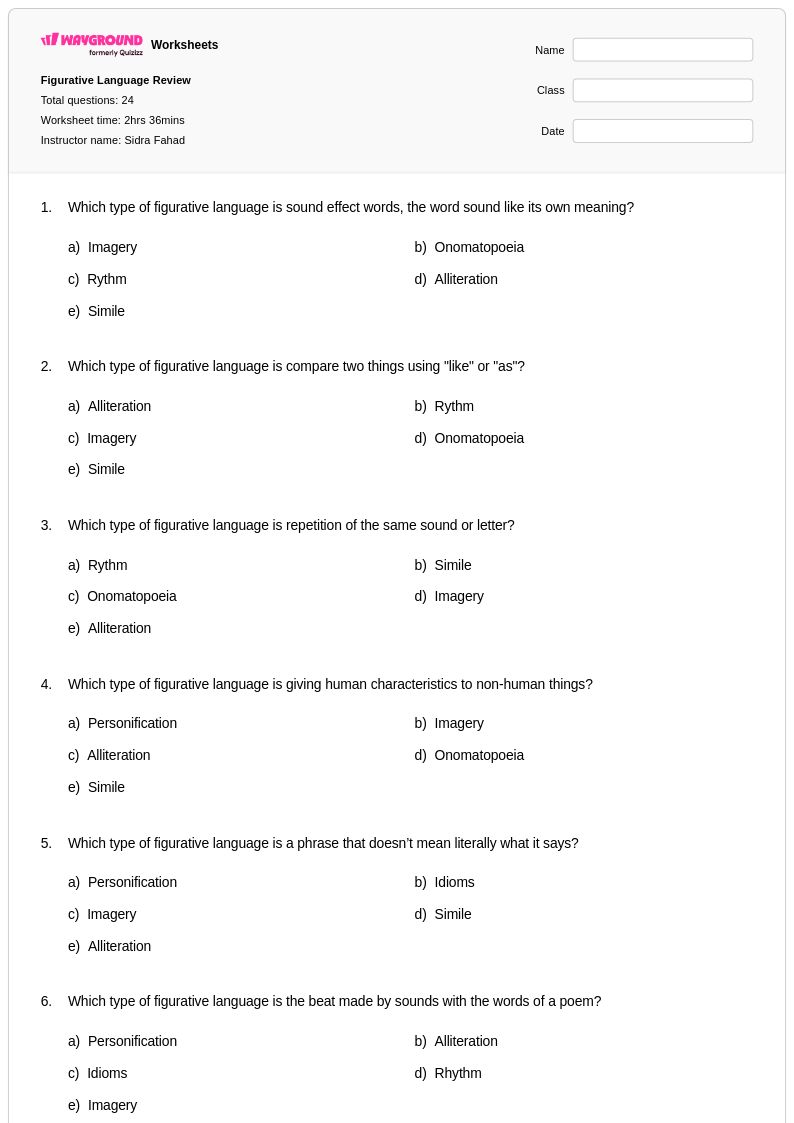
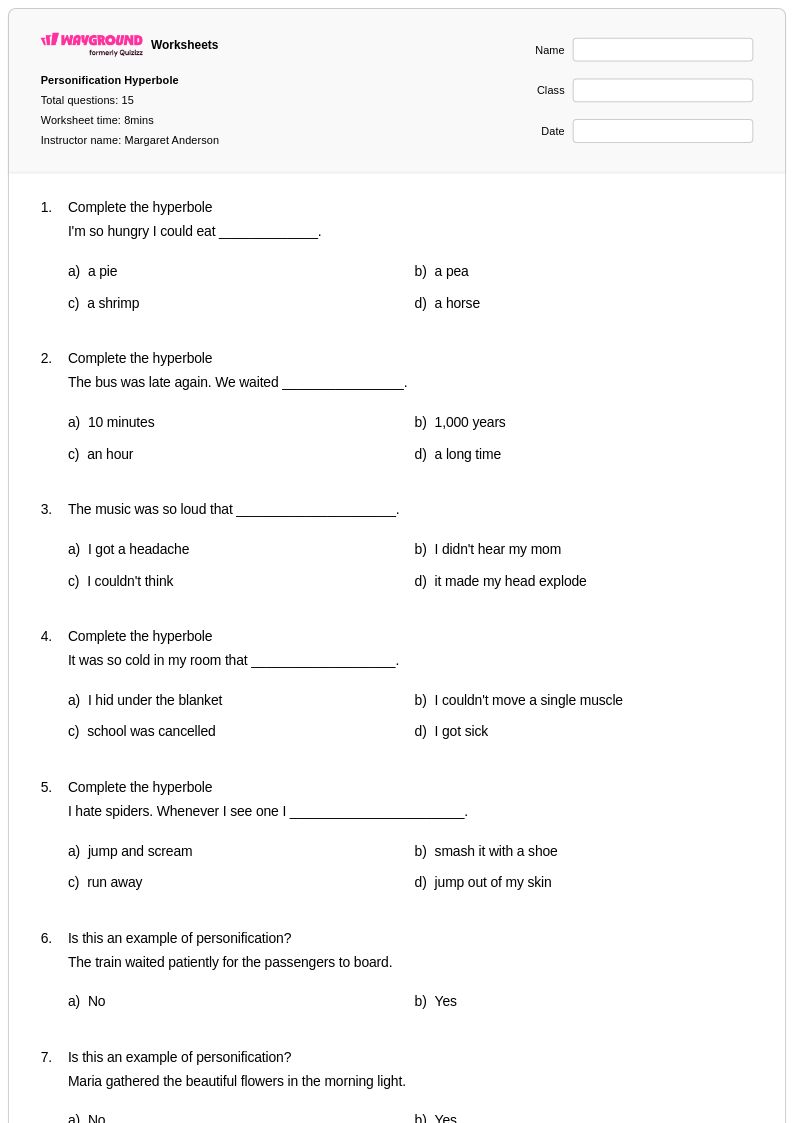
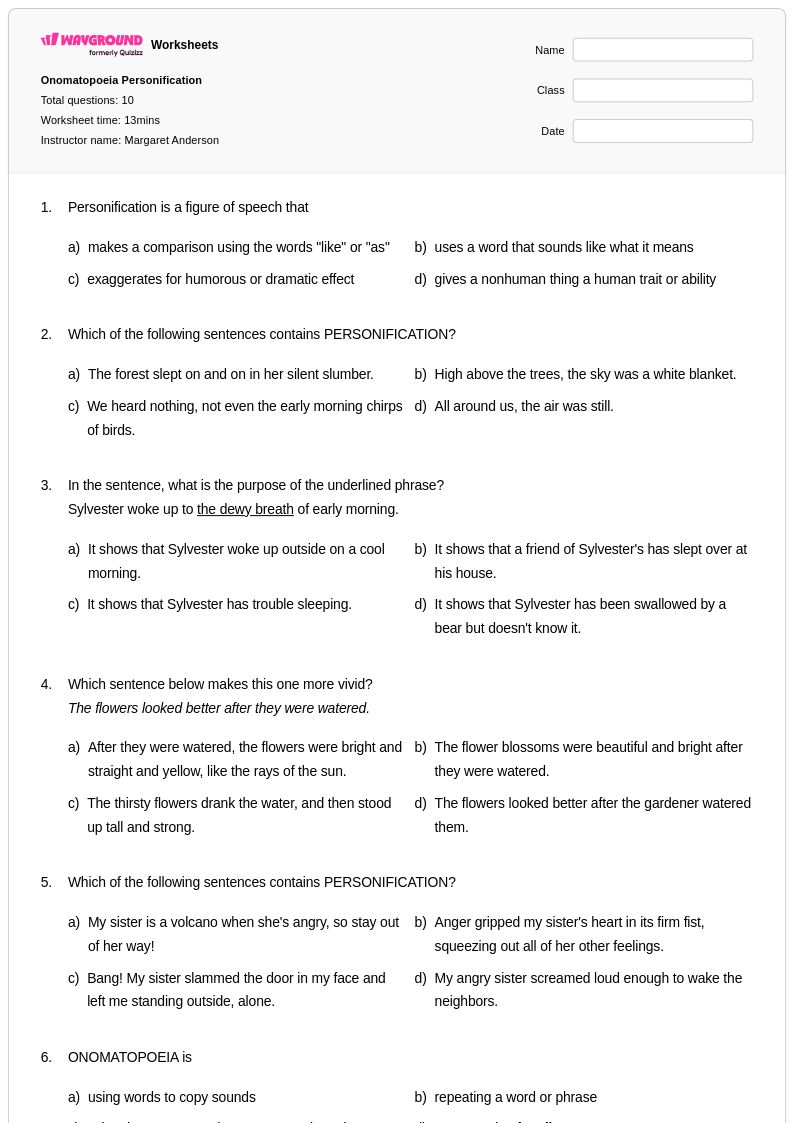
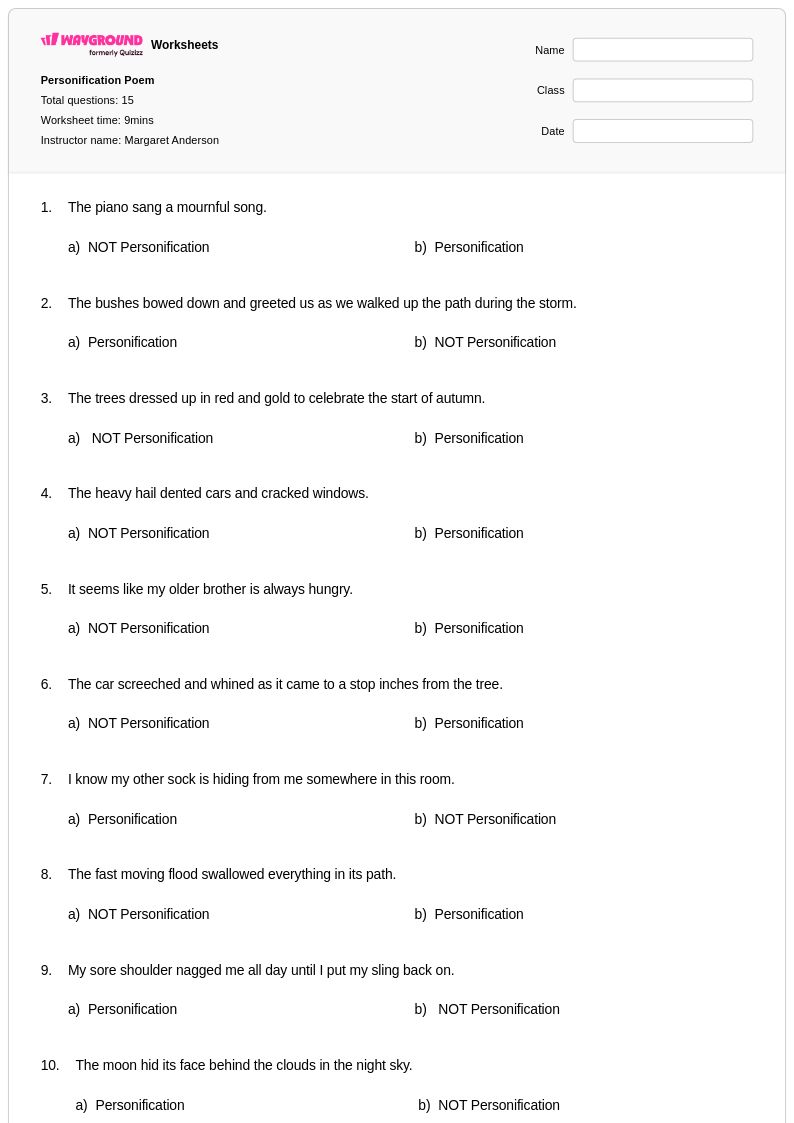
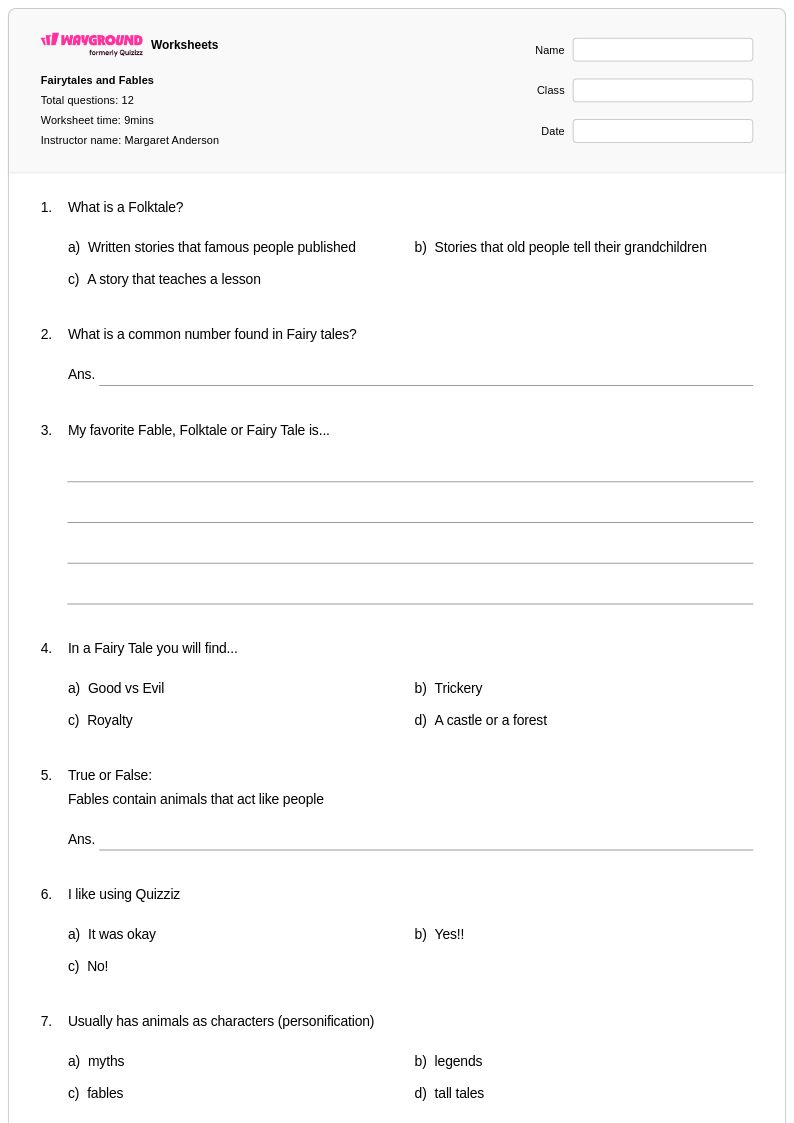
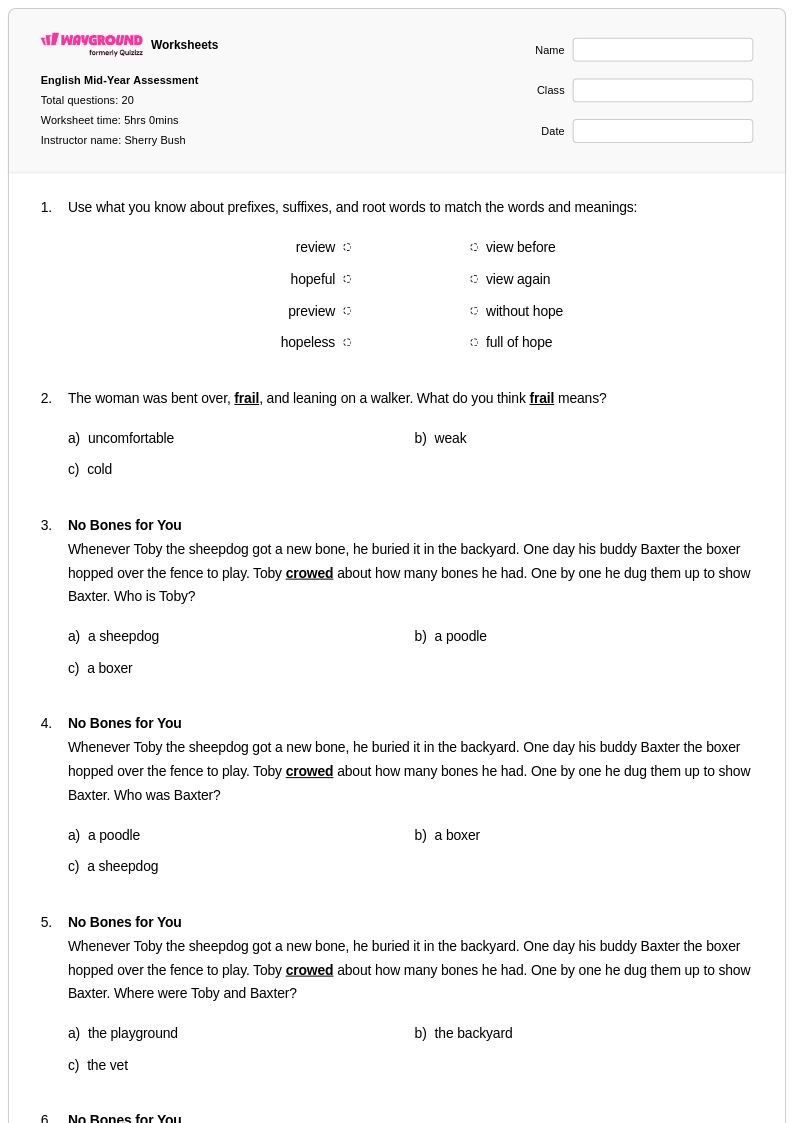
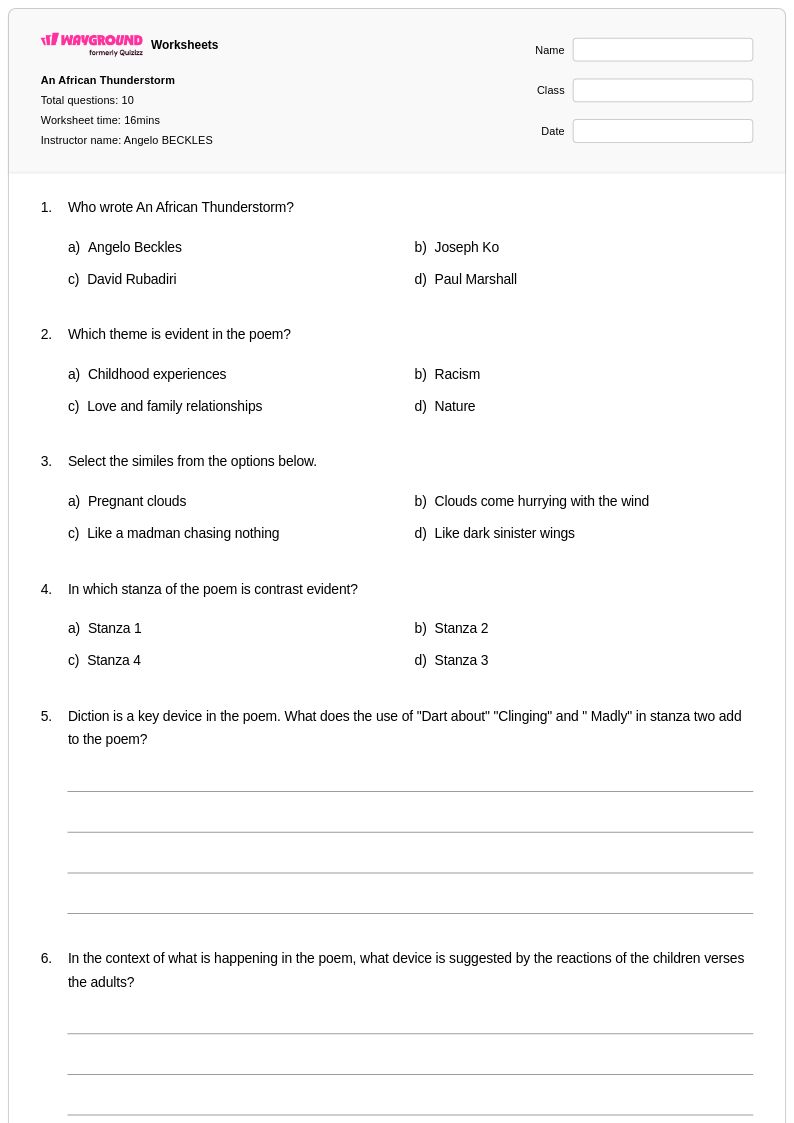
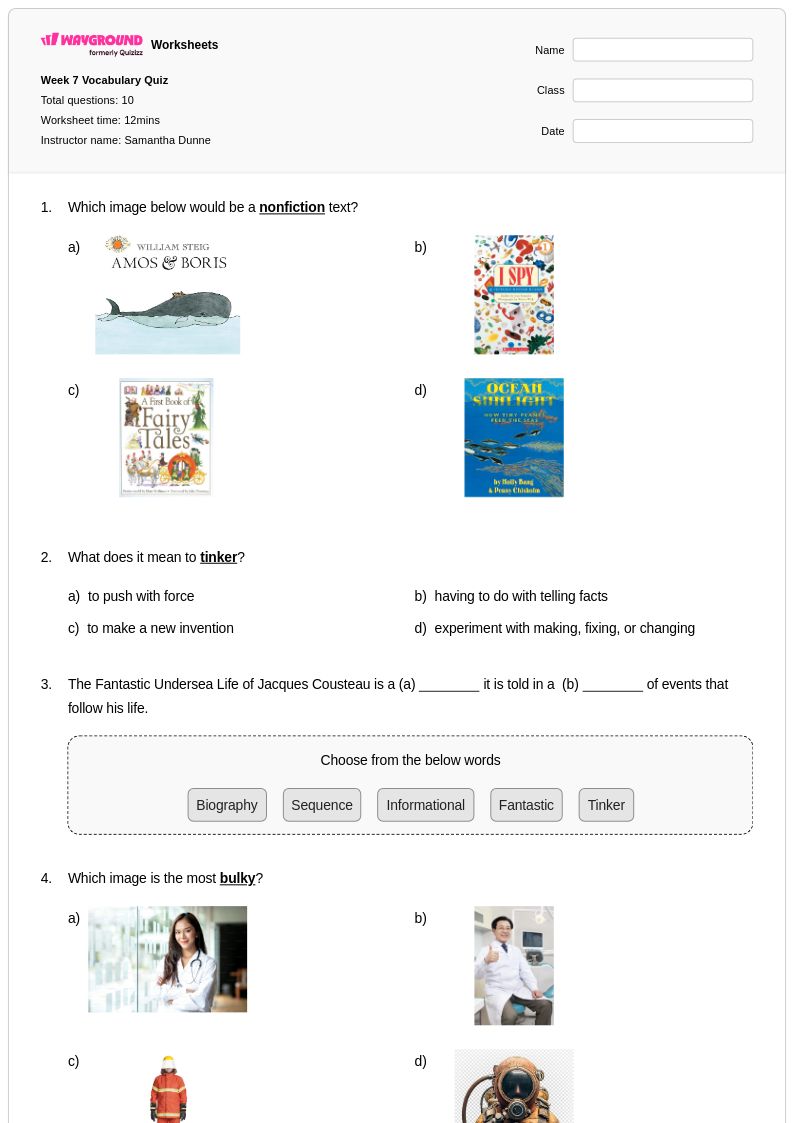
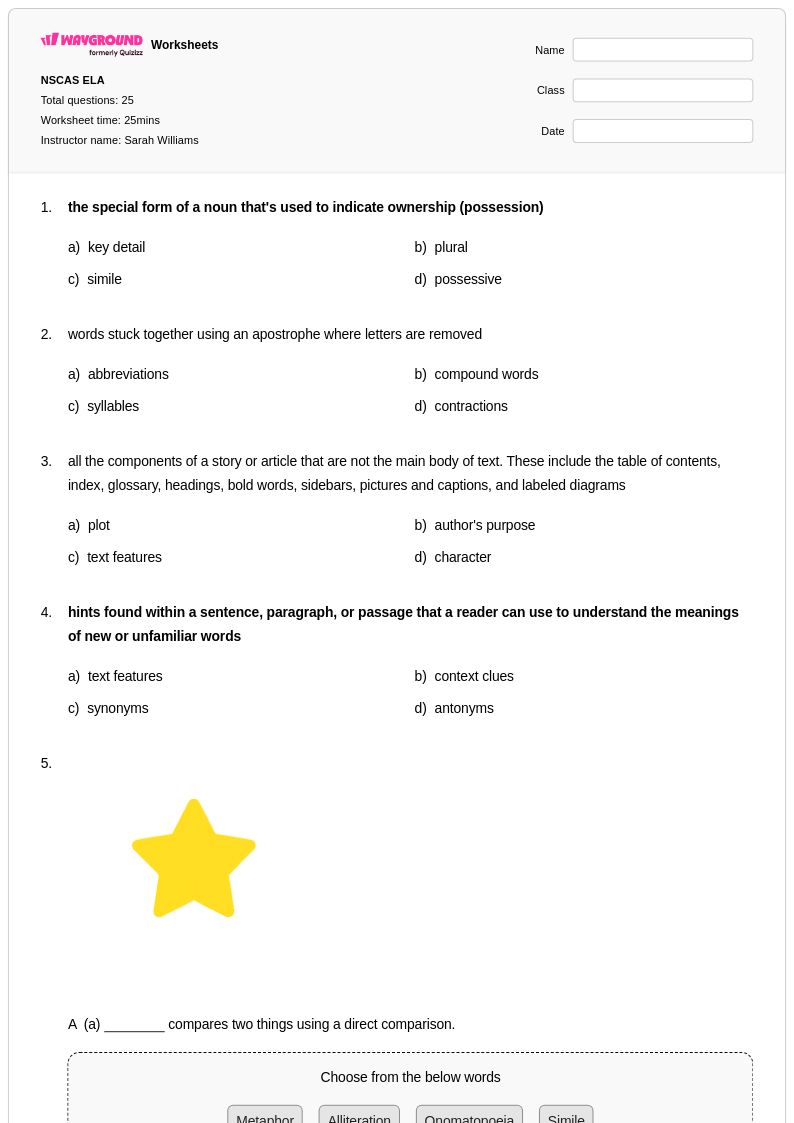
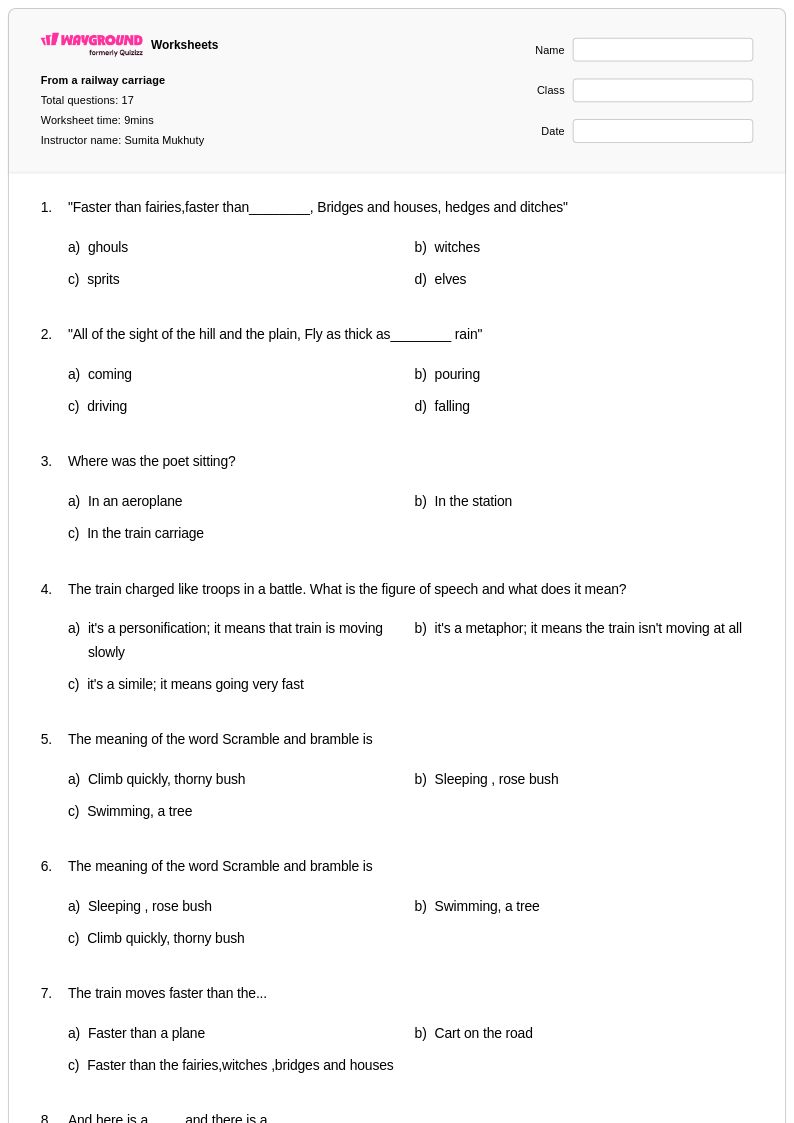
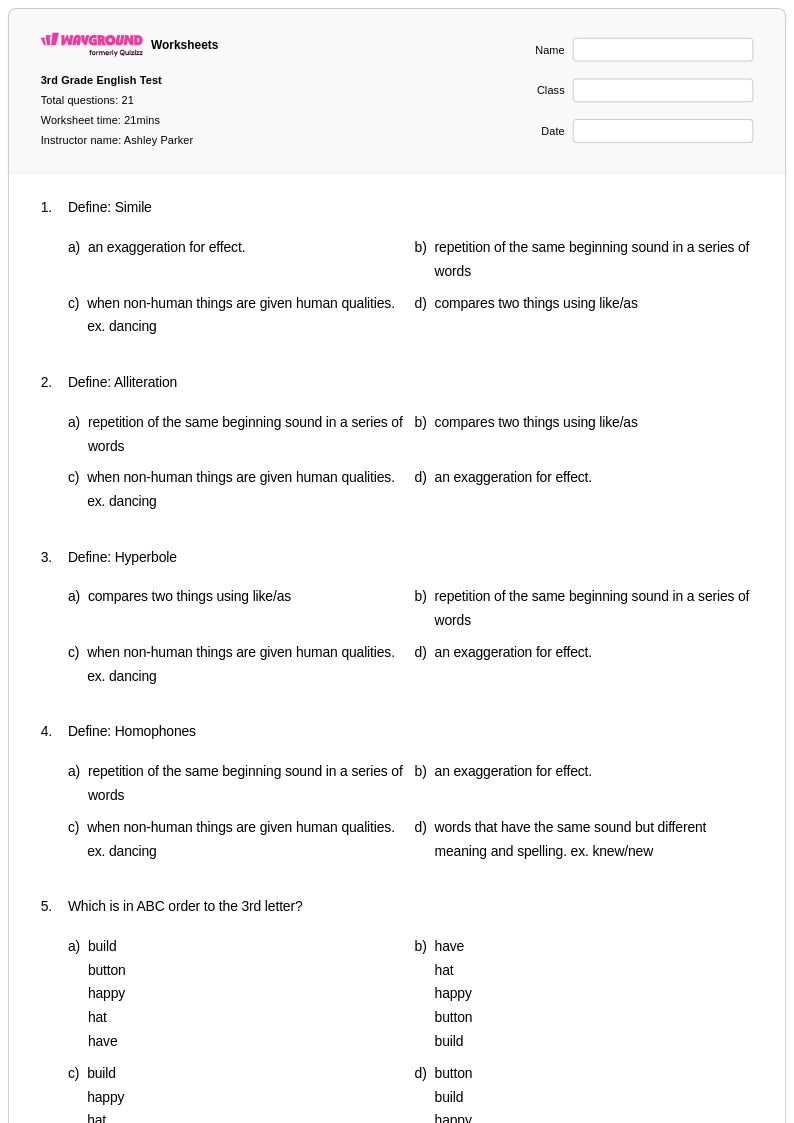
Personification worksheets for Class 3 students available through Wayground (formerly Quizizz) provide essential practice in recognizing and creating this important figurative language technique where human characteristics are given to non-human objects, animals, or ideas. These carefully designed resources help third-grade learners develop critical reading comprehension skills by identifying examples of personification in literature and poetry, while simultaneously strengthening their creative writing abilities through guided practice problems that encourage original expression. Each worksheet collection includes comprehensive answer keys and is available as free printables in convenient pdf format, allowing students to work through progressively challenging exercises that build confidence in understanding how authors bring inanimate objects to life through descriptive language.
Wayground (formerly Quizizz) empowers educators with an extensive library of millions of teacher-created personification resources specifically aligned with Class 3 English language arts standards and learning objectives. The platform's robust search and filtering capabilities enable teachers to quickly locate worksheets that match their students' specific needs, whether for initial skill introduction, targeted remediation, or advanced enrichment activities. These versatile materials are available in both printable pdf format for traditional classroom use and digital formats for interactive learning experiences, while built-in differentiation tools allow educators to customize content difficulty and presentation style. This comprehensive approach to personification instruction supports effective lesson planning by providing teachers with ready-to-use resources that can be seamlessly integrated into figurative language units, writing workshops, and reading comprehension activities.
FAQs
How do I teach personification to students?
Start by defining personification as the attribution of human qualities, emotions, or actions to non-human subjects such as objects, animals, or abstract concepts. Use familiar examples from mentor texts — 'the wind whispered through the trees' or 'the sun smiled down' — before asking students to generate their own. Scaffolding from identification to creation to analysis helps students internalize the technique rather than simply memorize a definition.
What exercises help students practice identifying personification?
Effective practice moves from recognition to production. Begin with identification exercises where students underline personification in provided sentences or short passages, then explain what human quality is being assigned and to what subject. Progress to sentence-completion tasks and eventually to open-ended prompts where students write original examples, reinforcing both recognition and application of the device.
What mistakes do students commonly make when learning personification?
The most common error is confusing personification with other figurative language devices, particularly simile and metaphor. Students will often label 'the dog ran like a person' as personification when it is actually a simile. Another frequent mistake is identifying any animal or object description as personification — students need to understand that the non-human subject must be given a distinctly human trait, action, or emotion for the device to apply.
How do I help students understand why authors use personification?
Teach students to ask two questions about any example: what human quality is being assigned, and what emotional effect does that create for the reader? When students analyze personification in context — rather than in isolation — they begin to see it as a deliberate authorial choice that shapes tone and reader connection. Pairing identification tasks with effect-analysis questions builds this interpretive skill effectively.
How do I use Wayground's personification worksheets in my classroom?
Wayground's personification worksheets are available as printable PDFs for traditional classroom use and in digital formats for technology-integrated environments, making them flexible enough for whole-class instruction, independent practice, or homework. Teachers can also host worksheets as a quiz directly on Wayground. All worksheets include complete answer keys, so grading and feedback are built into the workflow without additional prep.
How can I differentiate personification instruction for struggling or advanced learners?
For struggling students, reduce cognitive load by starting with single-sentence examples and providing sentence frames for written responses. Wayground supports student-level accommodations including read aloud, reduced answer choices, and extended time, which can be assigned individually without other students being notified. For advanced learners, move quickly to analytical tasks that ask students to evaluate how personification affects the meaning and tone of a passage.