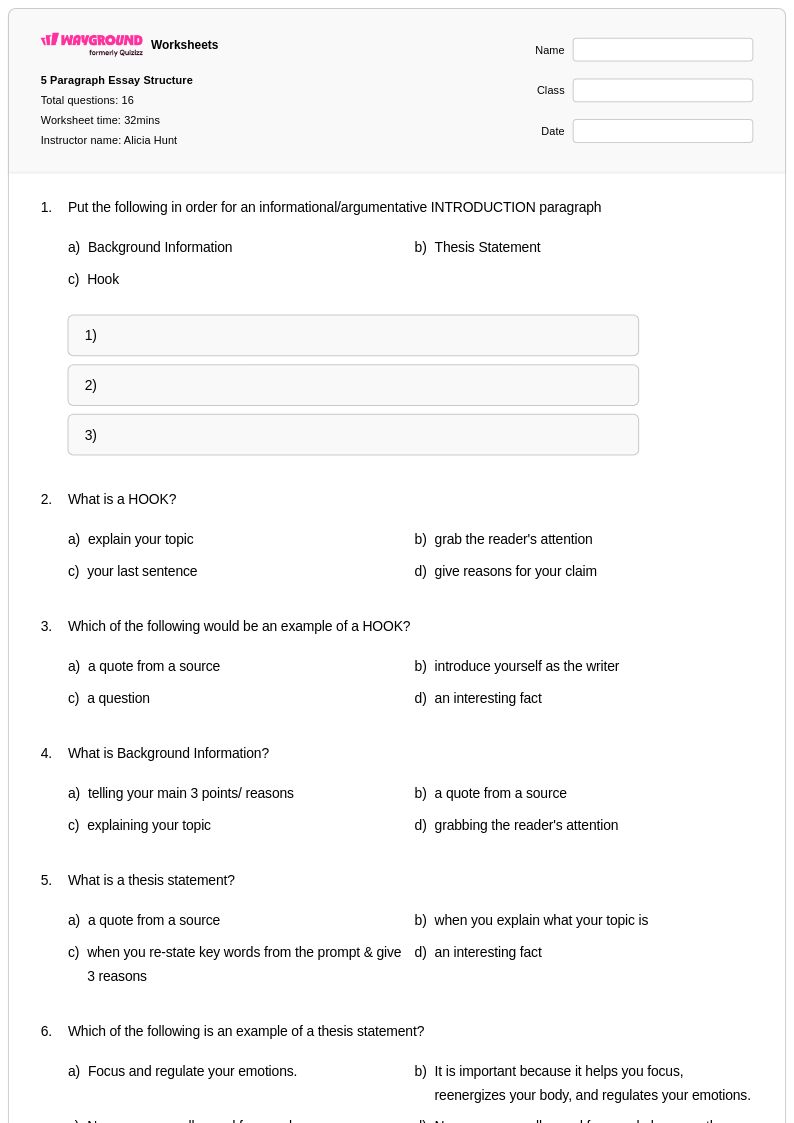
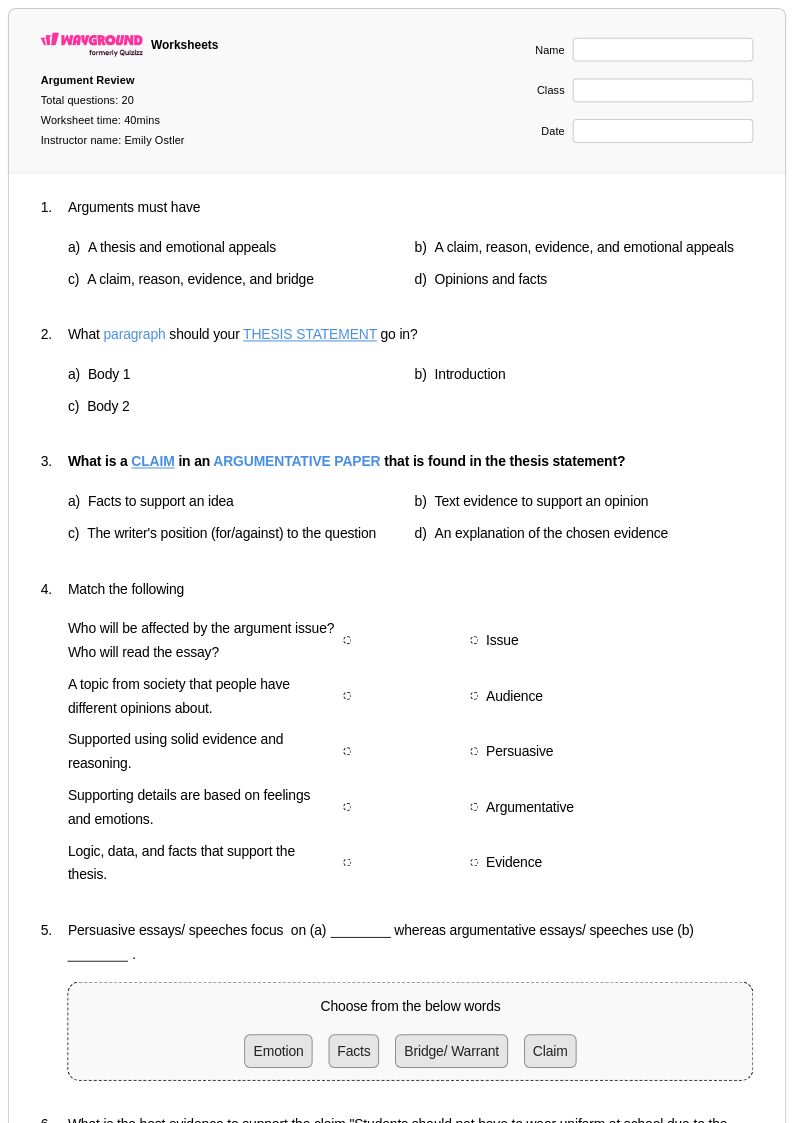
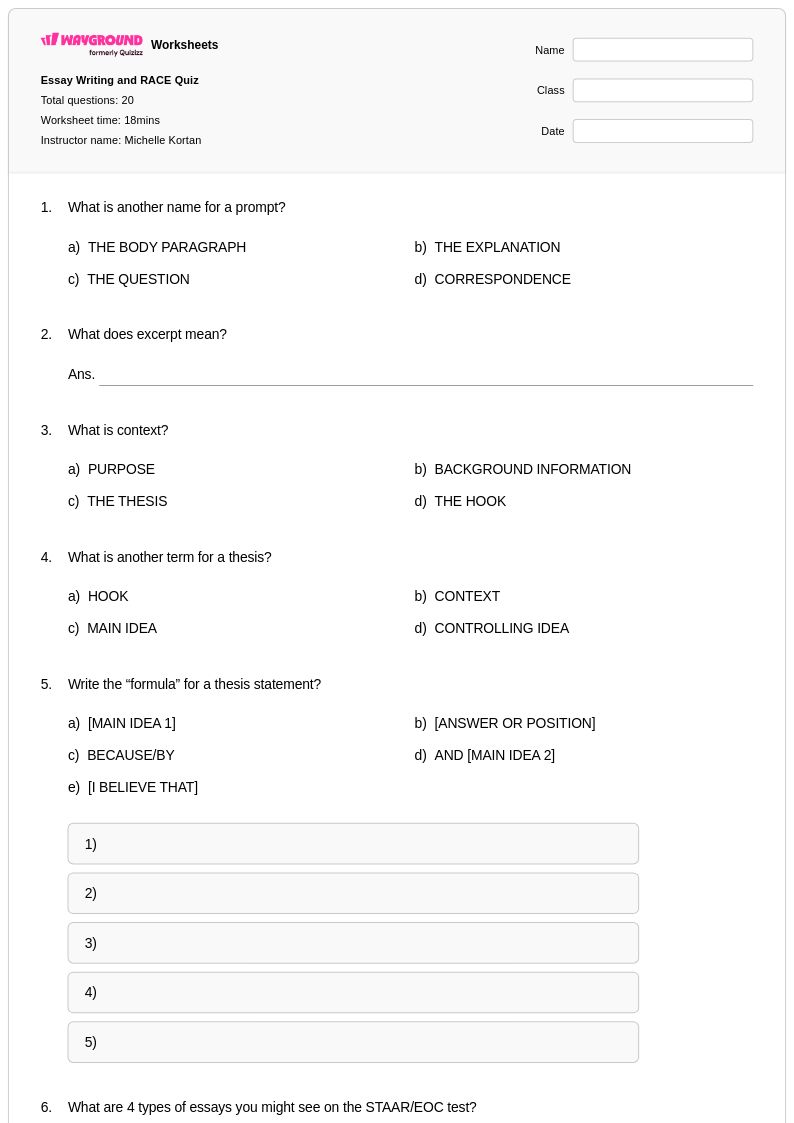
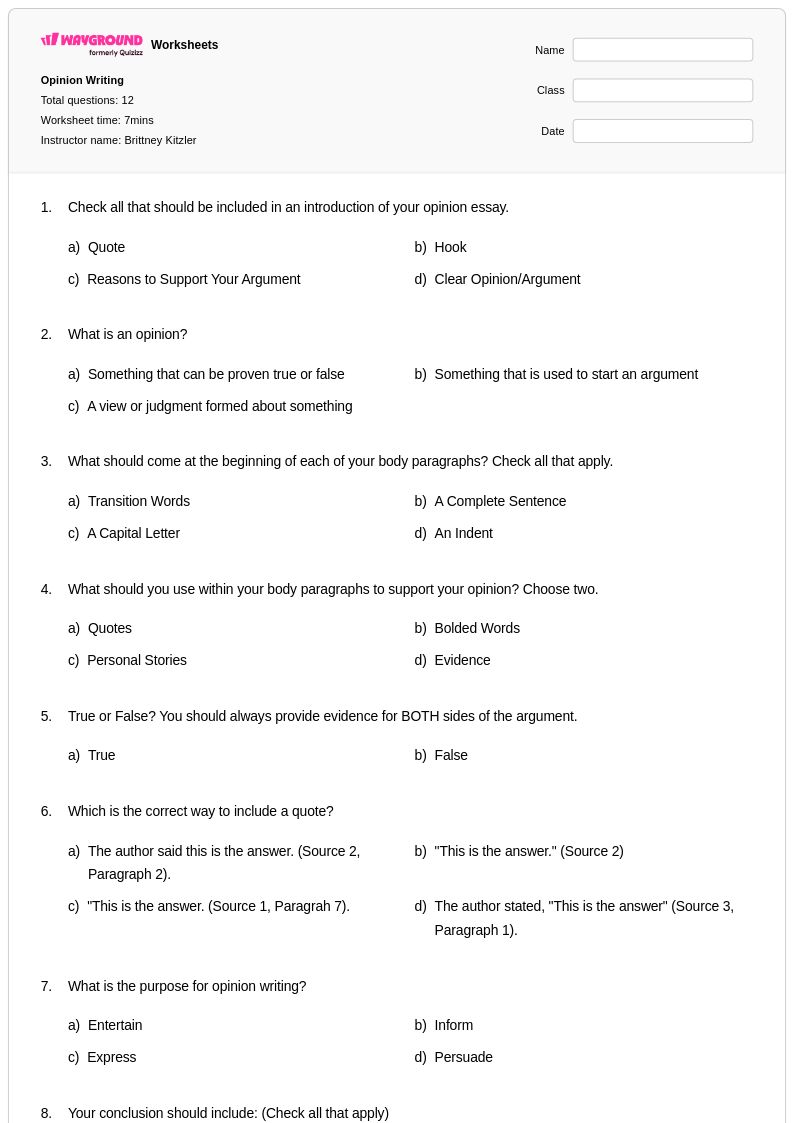
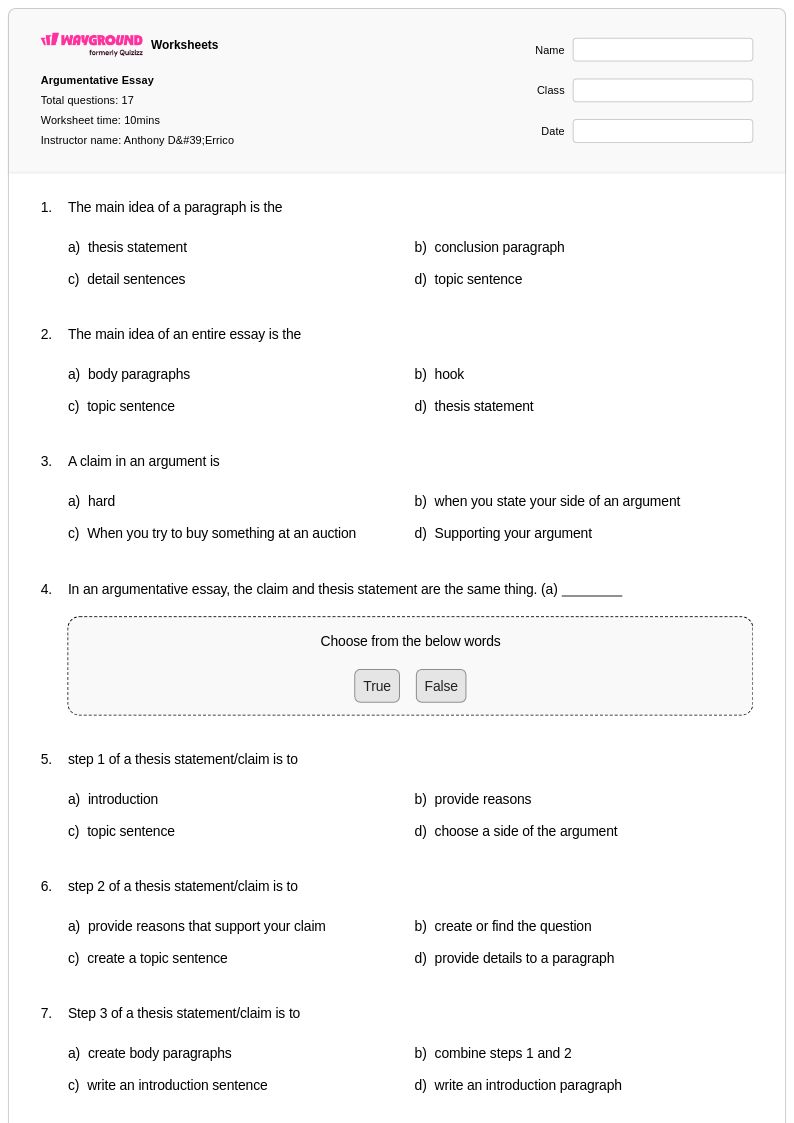
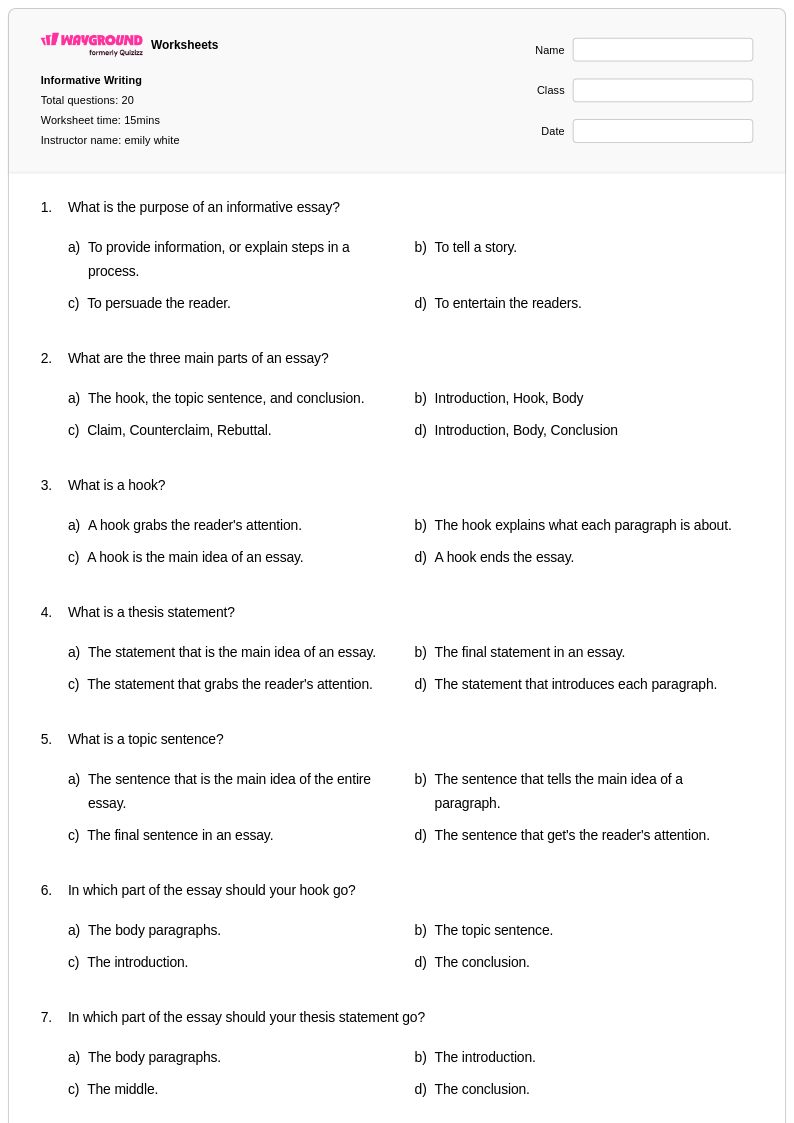
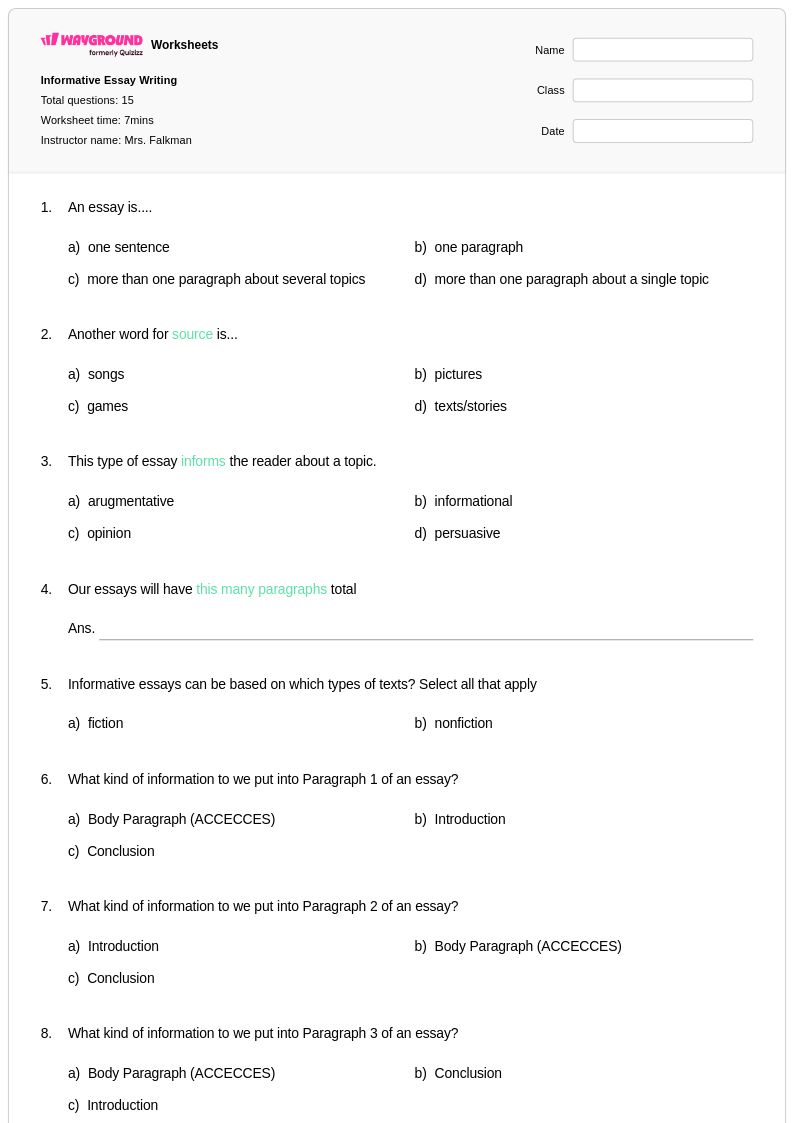
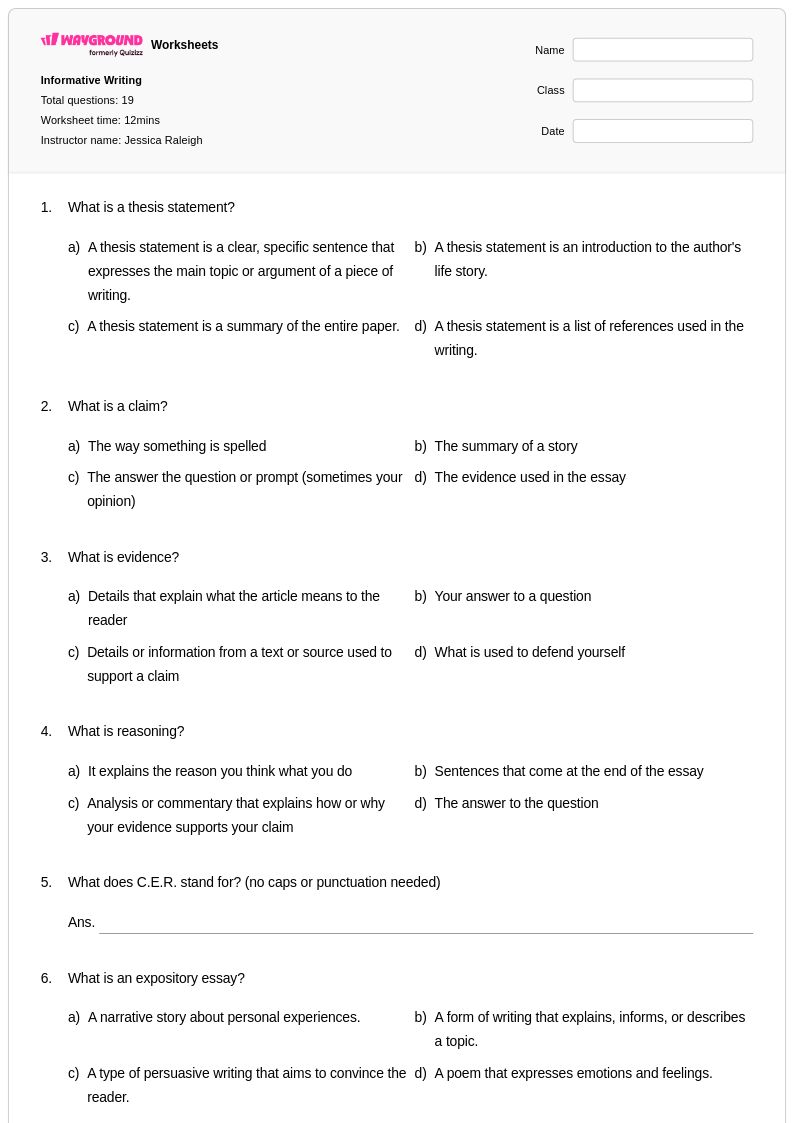
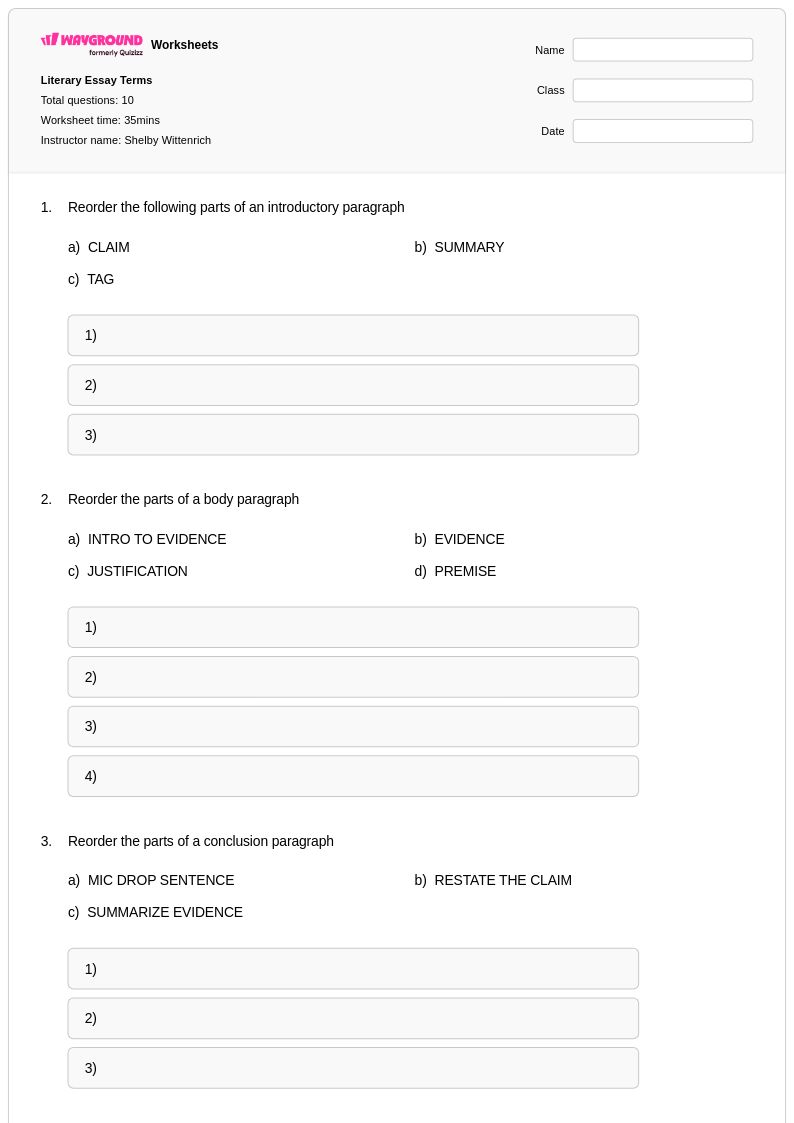
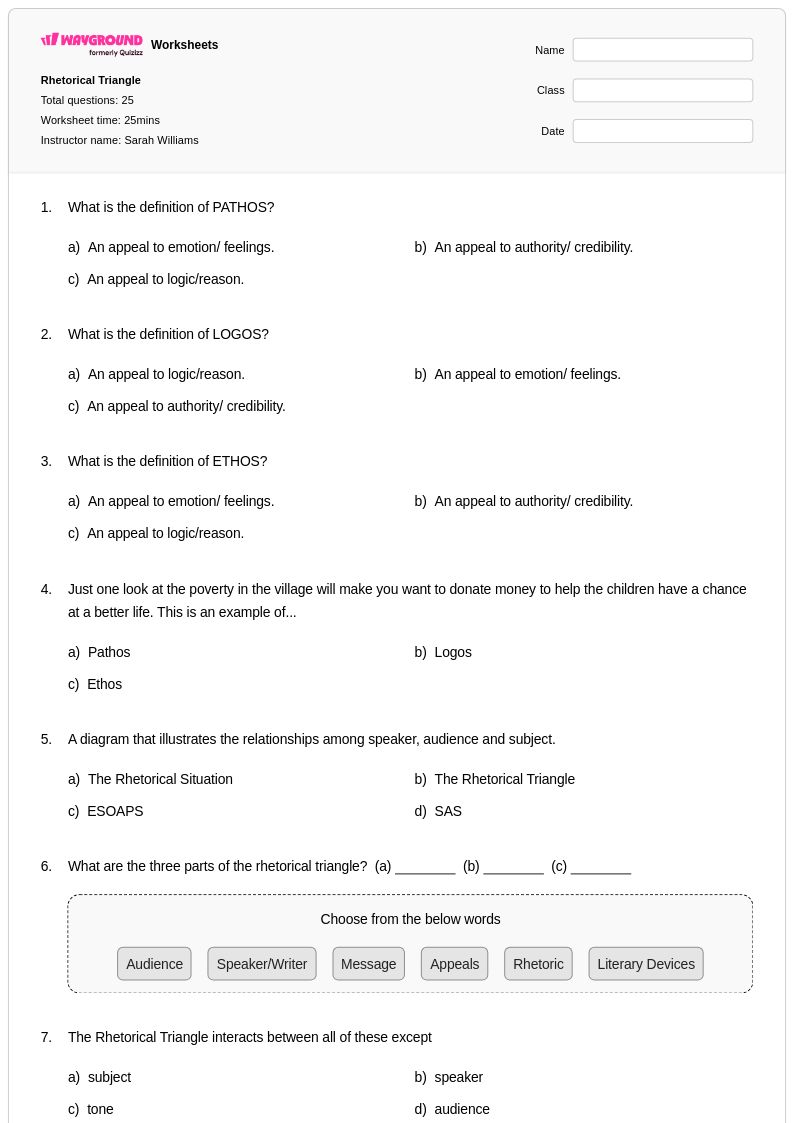
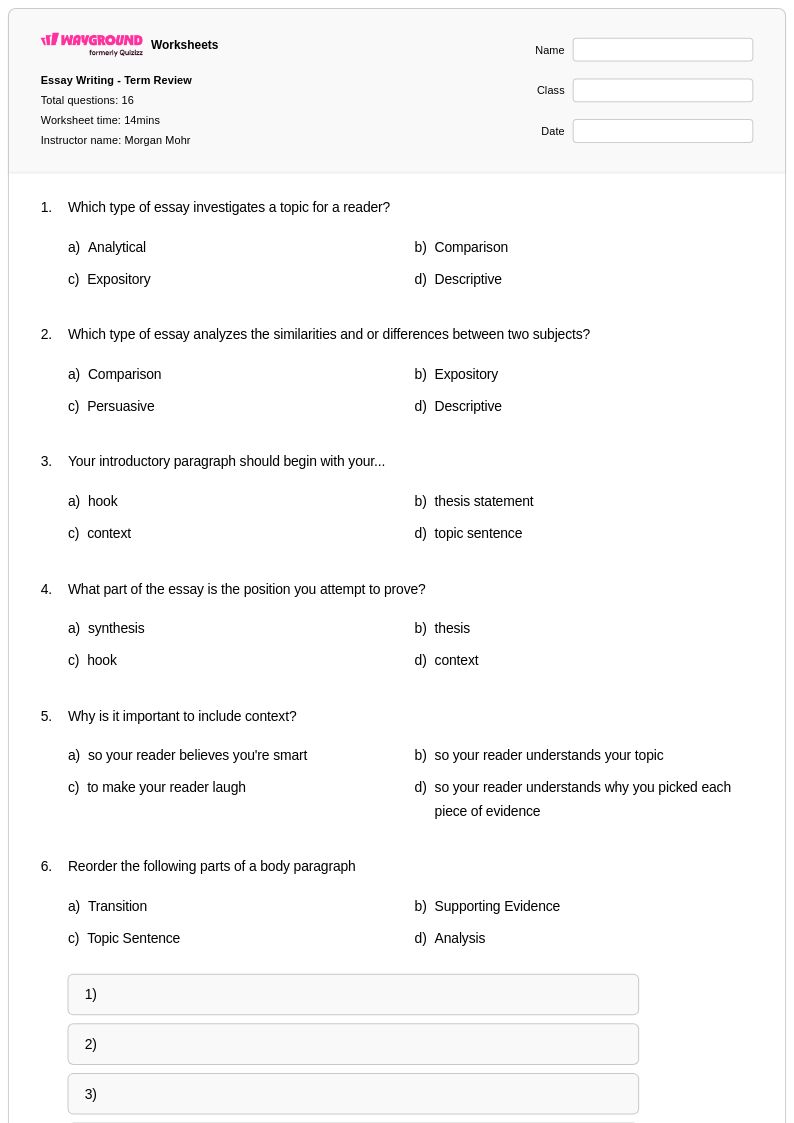
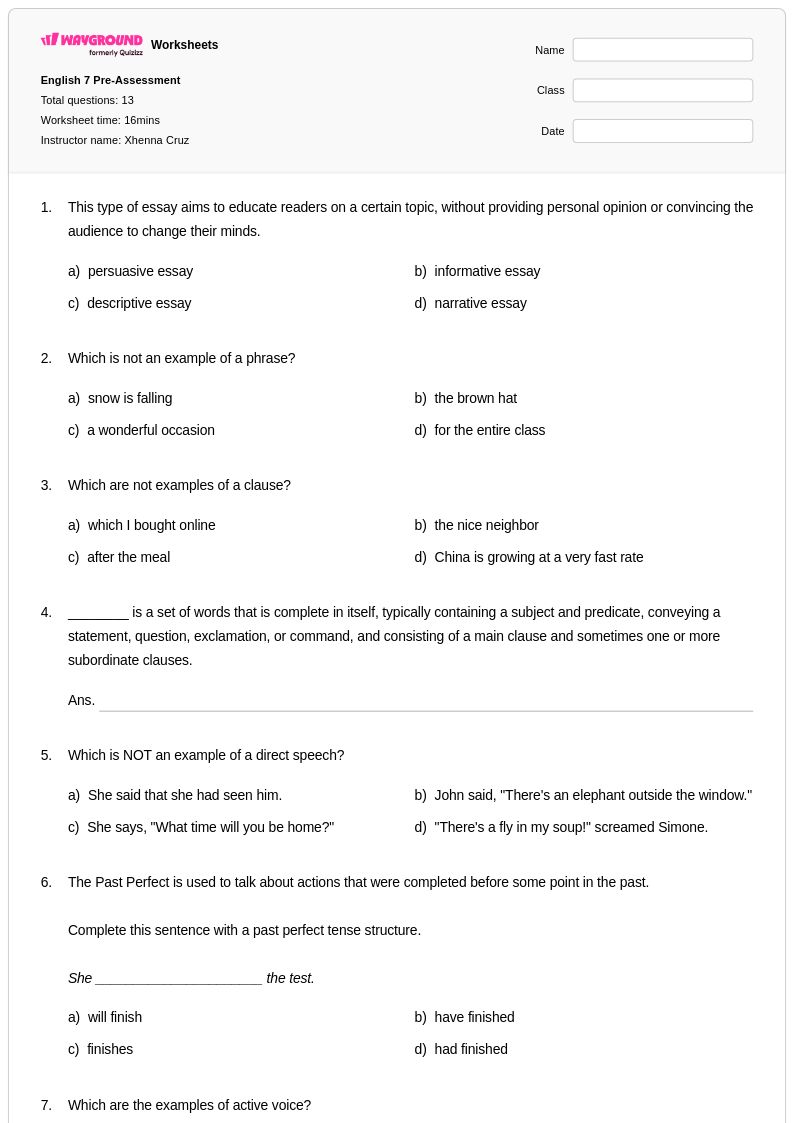
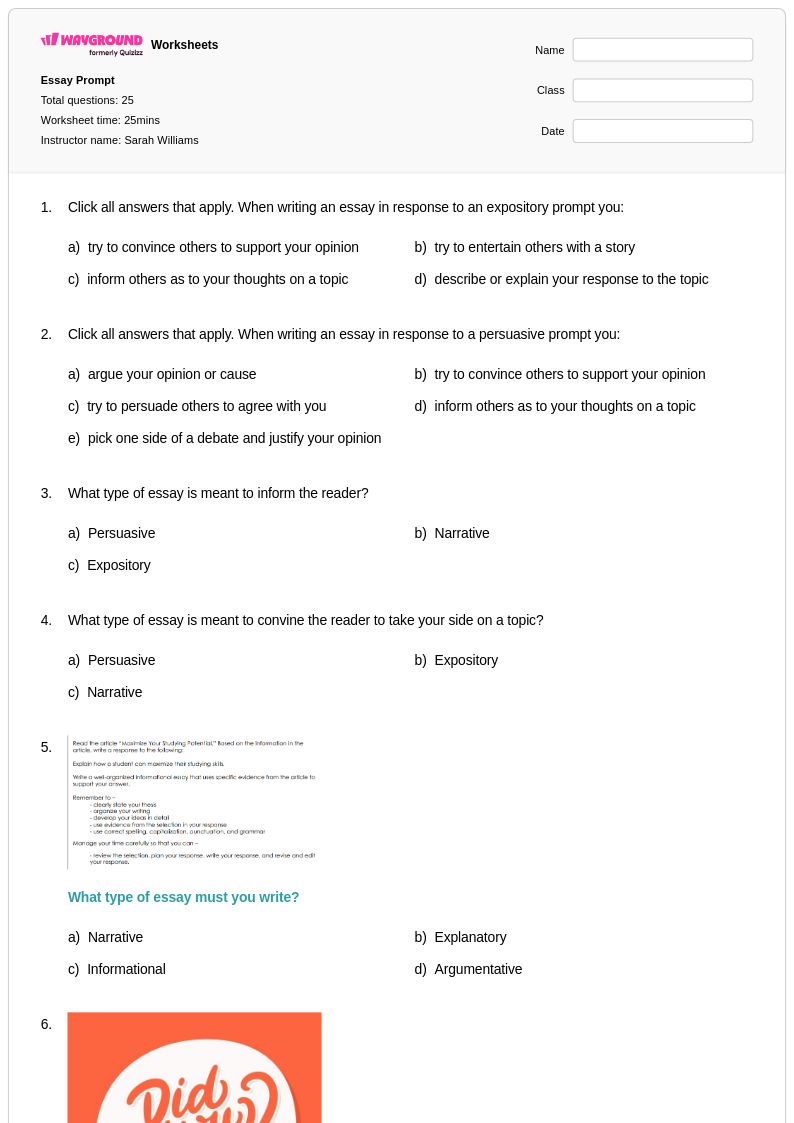
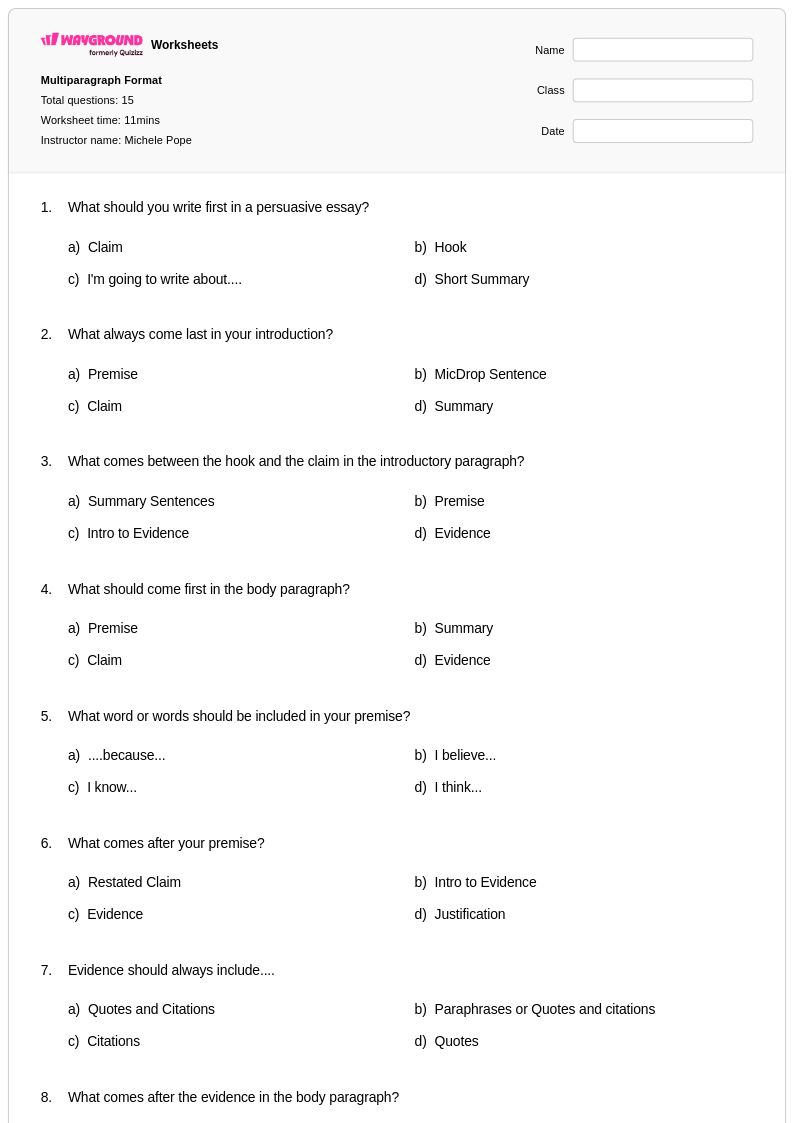
Wayground's free persuasive essay structure worksheets and printables help students master argumentative writing organization through guided practice problems, templates, and comprehensive answer keys for effective essay construction.
Persuasive essay structure worksheets available through Wayground (formerly Quizizz) provide comprehensive practice opportunities for students to master the fundamental components of effective argumentative writing. These educational resources focus on teaching students how to organize compelling arguments through proper introduction techniques, body paragraph development with supporting evidence, counterargument acknowledgment, and strong concluding statements. Students work through practice problems that reinforce understanding of thesis statement placement, logical flow between paragraphs, and the strategic use of transitional phrases that guide readers through persuasive arguments. Each worksheet comes with a detailed answer key to support both independent study and classroom instruction, and these free printables offer teachers flexible options for implementing structured writing practice across various learning environments.
Wayground (formerly Quizizz) supports educators with an extensive collection of teacher-created persuasive essay structure worksheets drawn from millions of resources developed by experienced writing instructors. The platform's robust search and filtering capabilities allow teachers to locate materials that align with specific writing standards and accommodate diverse student skill levels through built-in differentiation tools. Teachers can easily customize existing worksheets or combine elements from multiple resources to create targeted practice sessions for thesis development, evidence integration, or counterargument techniques. These materials are available in both printable pdf format for traditional classroom use and digital formats for online learning environments, making them ideal for lesson planning, targeted remediation with struggling writers, enrichment activities for advanced students, and regular skill practice that builds confident persuasive writers.
FAQs
How do I teach persuasive essay structure to students?
Effective persuasive essay instruction begins with breaking down the structure into discrete, teachable components: a hook and clear thesis in the introduction, body paragraphs that each present one claim supported by evidence, a counterargument section that acknowledges opposing views, and a conclusion that reinforces the essay's central argument. Teachers typically model each component explicitly before asking students to practice independently. Using structured templates and annotated mentor texts helps students internalize the logical flow of argumentation before writing on their own.
What exercises help students practice persuasive essay structure?
Targeted practice exercises include thesis statement identification and revision drills, paragraph-ordering tasks that require students to sequence body paragraphs logically, and sentence-level work on transitional phrases that connect claims to evidence. Counterargument practice is particularly valuable — students benefit from exercises that ask them to identify the strongest opposing view and craft a rebuttal that strengthens rather than weakens their position. Structured templates that scaffold each section of the essay allow students to focus on argument quality rather than getting lost in formatting decisions.
What are the most common mistakes students make with persuasive essay structure?
The most frequent structural error is a weak or missing thesis — students often state a topic rather than a defensible claim, which undermines the entire argument. Body paragraphs frequently lack a clear topic sentence or fail to connect evidence back to the central claim, leaving the argument implicit rather than explicit. Students also commonly omit or mishandle the counterargument, either ignoring opposing views entirely or conceding to them without rebuttal, which reduces the persuasive force of the essay.
How do I use Wayground's persuasive essay structure worksheets in my classroom?
Wayground's persuasive essay structure worksheets are available as printable PDFs for traditional classroom use and in digital formats for technology-integrated or online learning environments, and teachers can also host them as a quiz directly on Wayground. Each worksheet includes a complete answer key, making them suitable for independent practice, guided instruction, or formative assessment. Teachers can use the platform's search and filtering tools to locate materials aligned to specific writing standards and student skill levels, and can customize existing worksheets or combine elements from multiple resources to target specific skills such as thesis development, evidence integration, or counterargument construction.
How do I help struggling writers who can't organize a persuasive essay?
Struggling writers benefit most from reduced cognitive load — provide a partially completed template that labels each structural section and prompts students with sentence starters for the thesis, topic sentences, and transitions. Breaking the writing process into isolated practice tasks, such as writing only the thesis or only one body paragraph, prevents overwhelm and builds component skills before full essay drafts are attempted. On Wayground, teachers can apply accommodations such as read aloud and reduced answer choices to digital worksheet activities, allowing struggling students to engage with the content while receiving individualized support.
How do transitional phrases strengthen persuasive essay structure?
Transitional phrases serve as structural signals that guide readers through the logic of an argument — phrases like 'furthermore' and 'in addition' signal that evidence is building, while 'however' or 'although opponents argue' flag the counterargument section. Without effective transitions, even well-reasoned paragraphs can feel disconnected, weakening the overall persuasive impact. Teaching students to use transitions purposefully, rather than decoratively, is one of the highest-leverage structural skills in argumentative writing instruction.