Free Printable Phonological Awareness Worksheets for Class 3
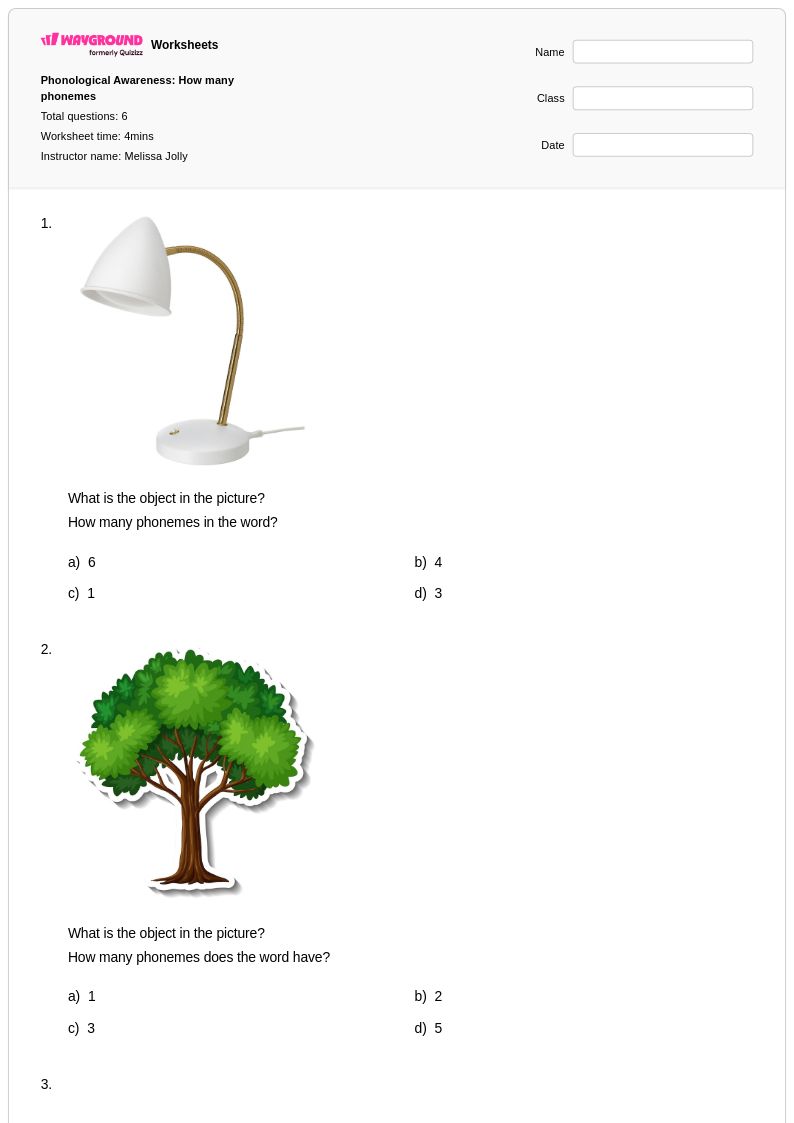
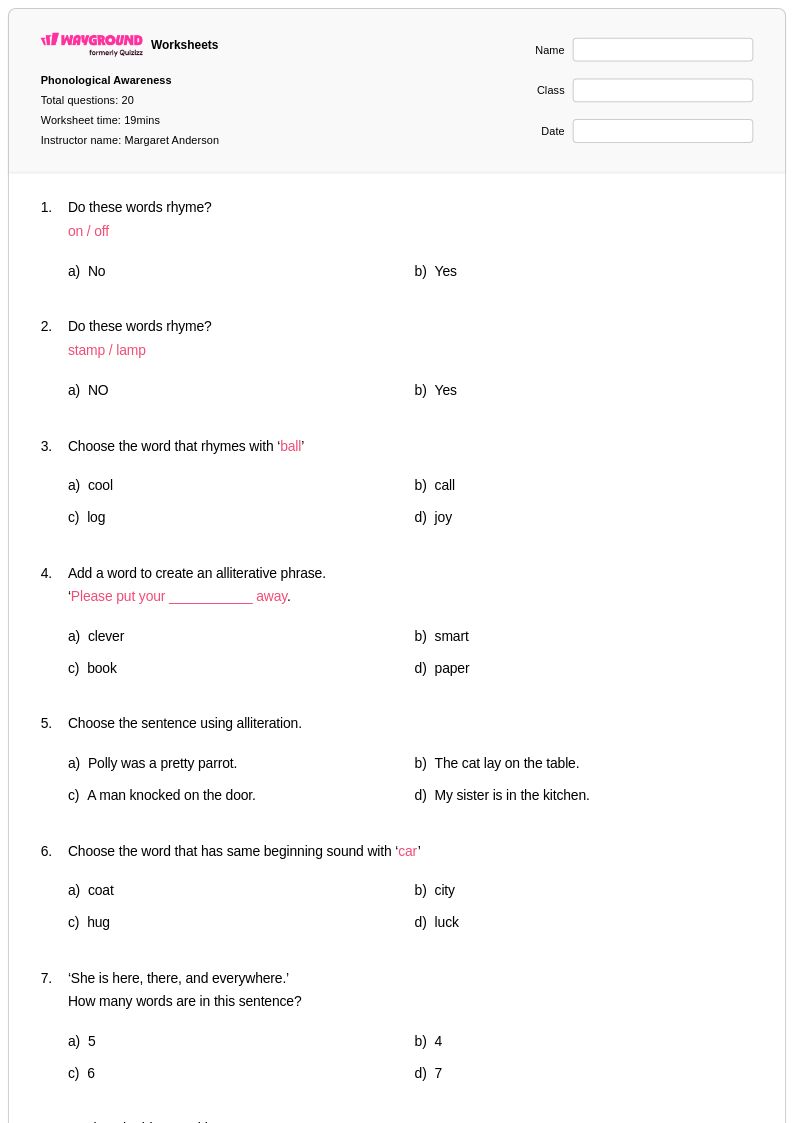
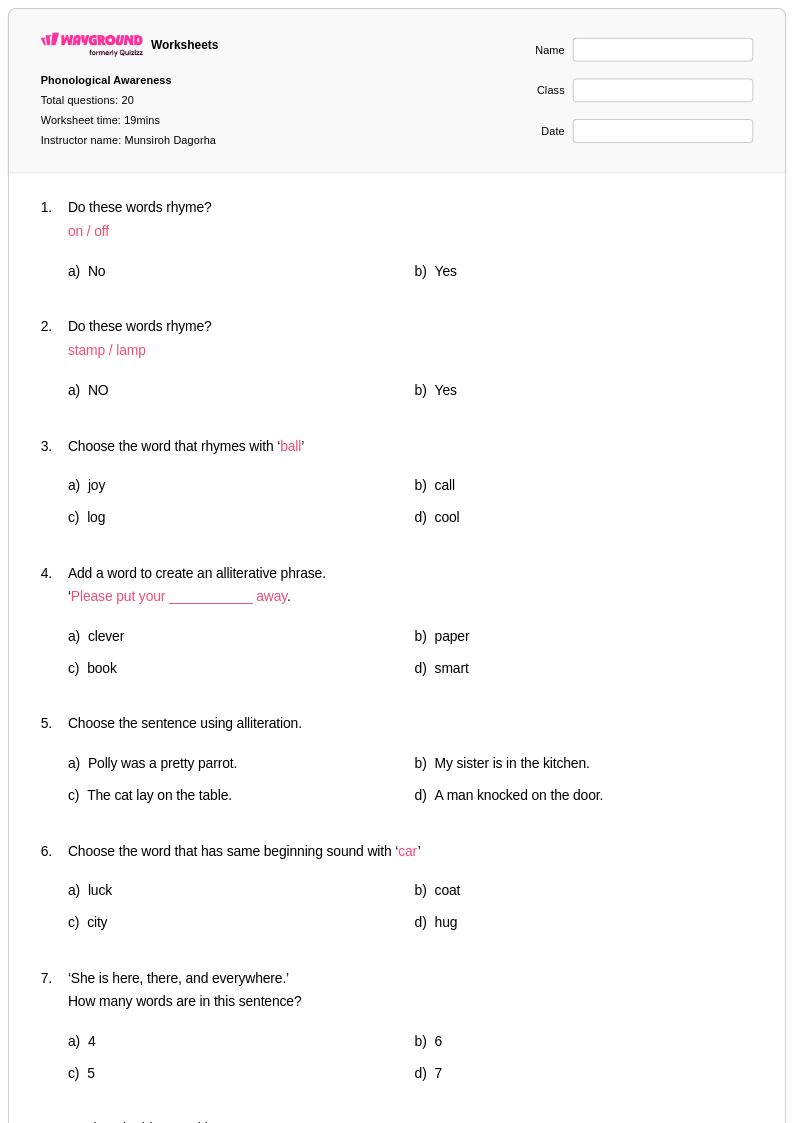
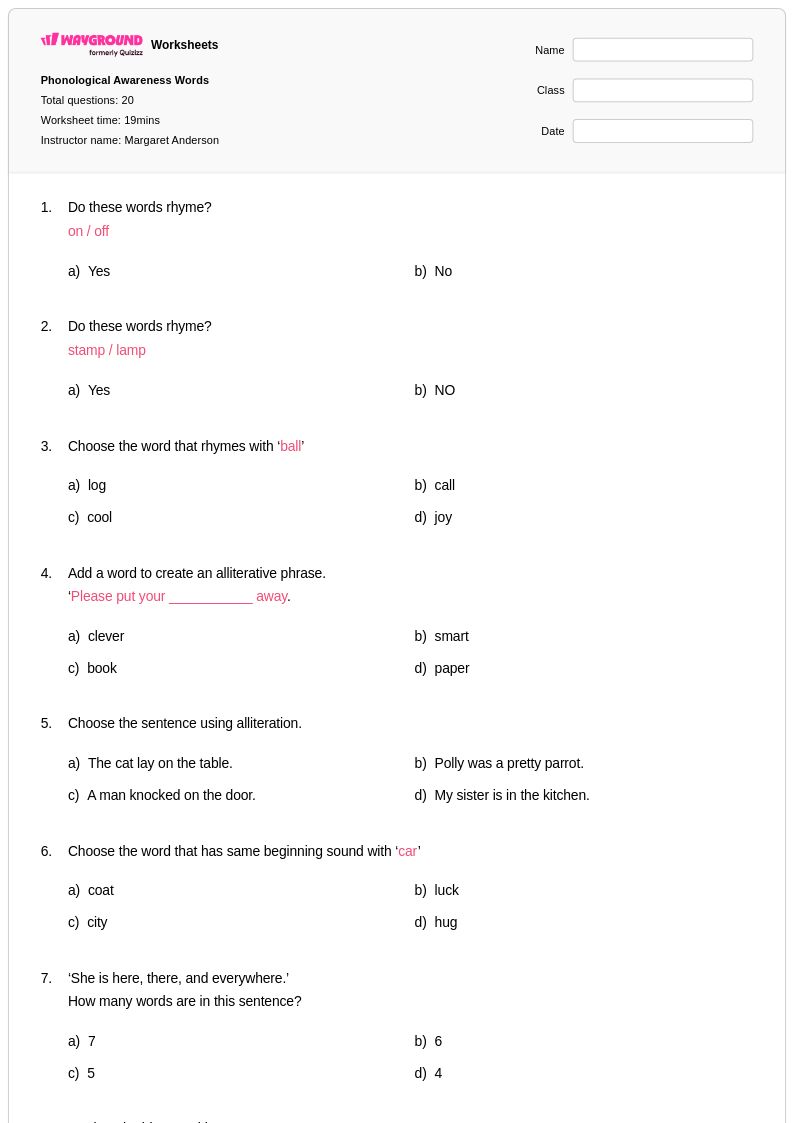
Class 3 phonological awareness worksheets help students develop essential sound recognition and manipulation skills through engaging printables, practice problems, and free PDF resources with complete answer keys.
Explore printable Phonological Awareness worksheets for Class 3
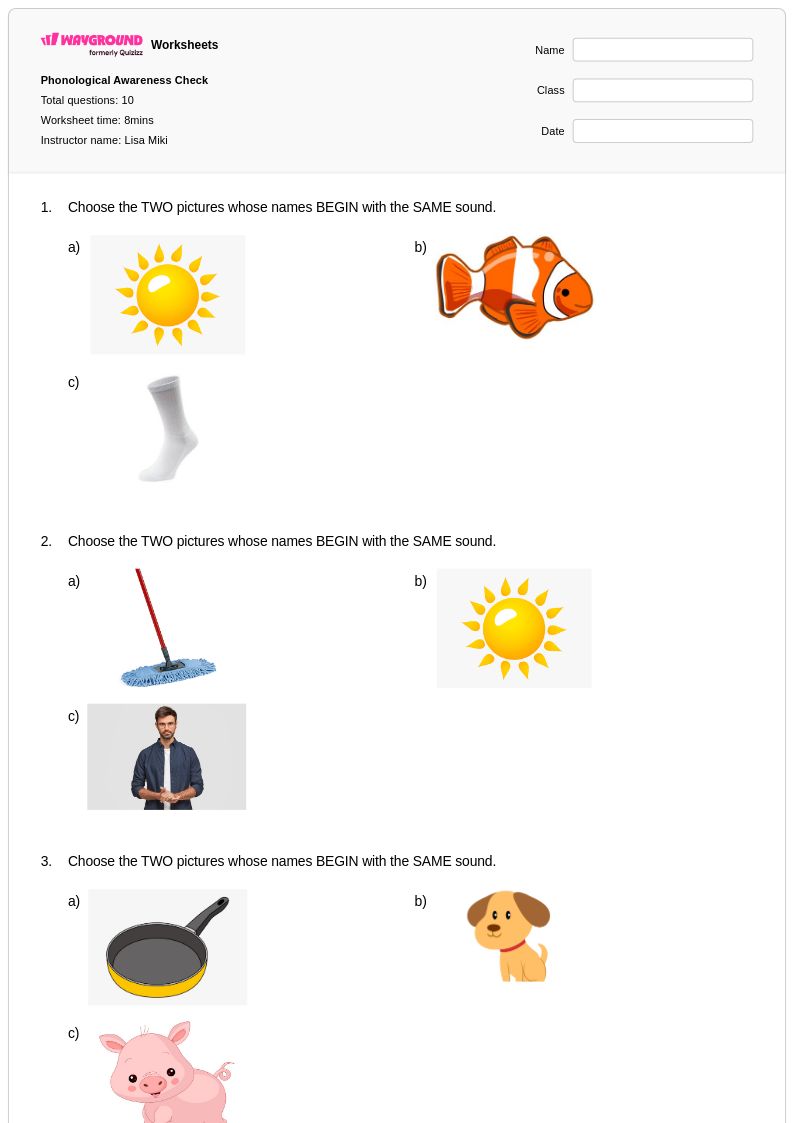
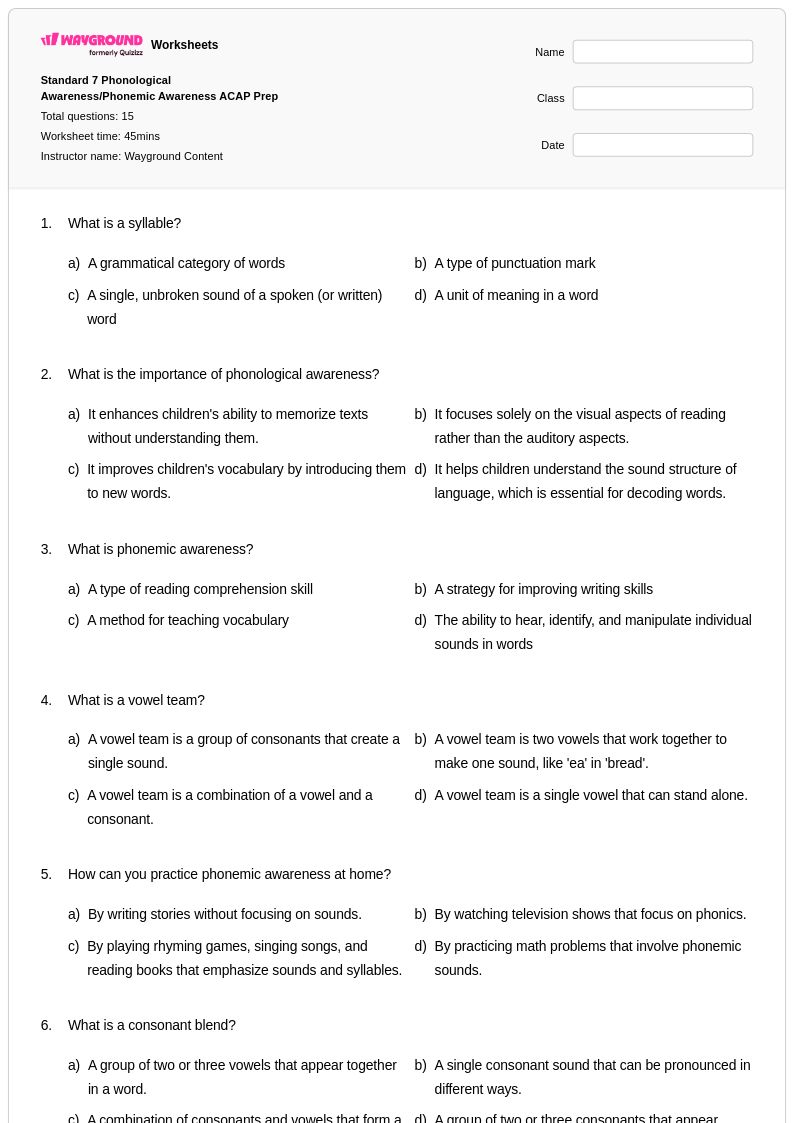
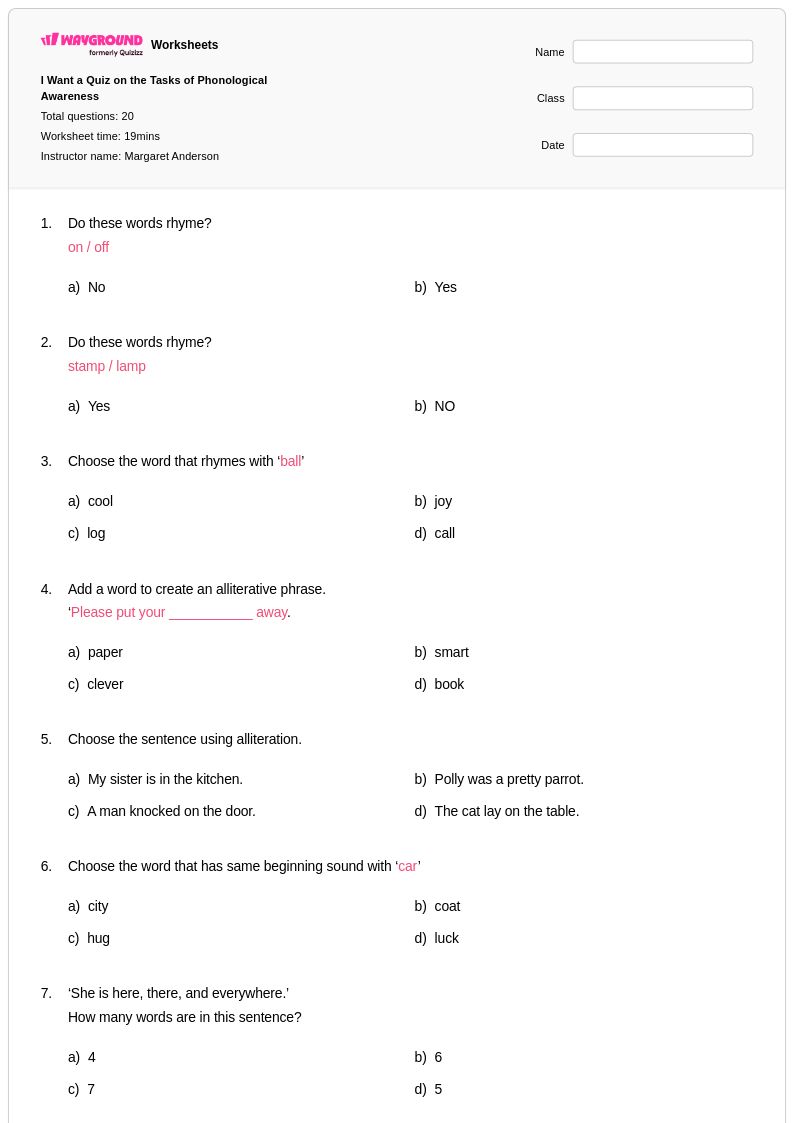
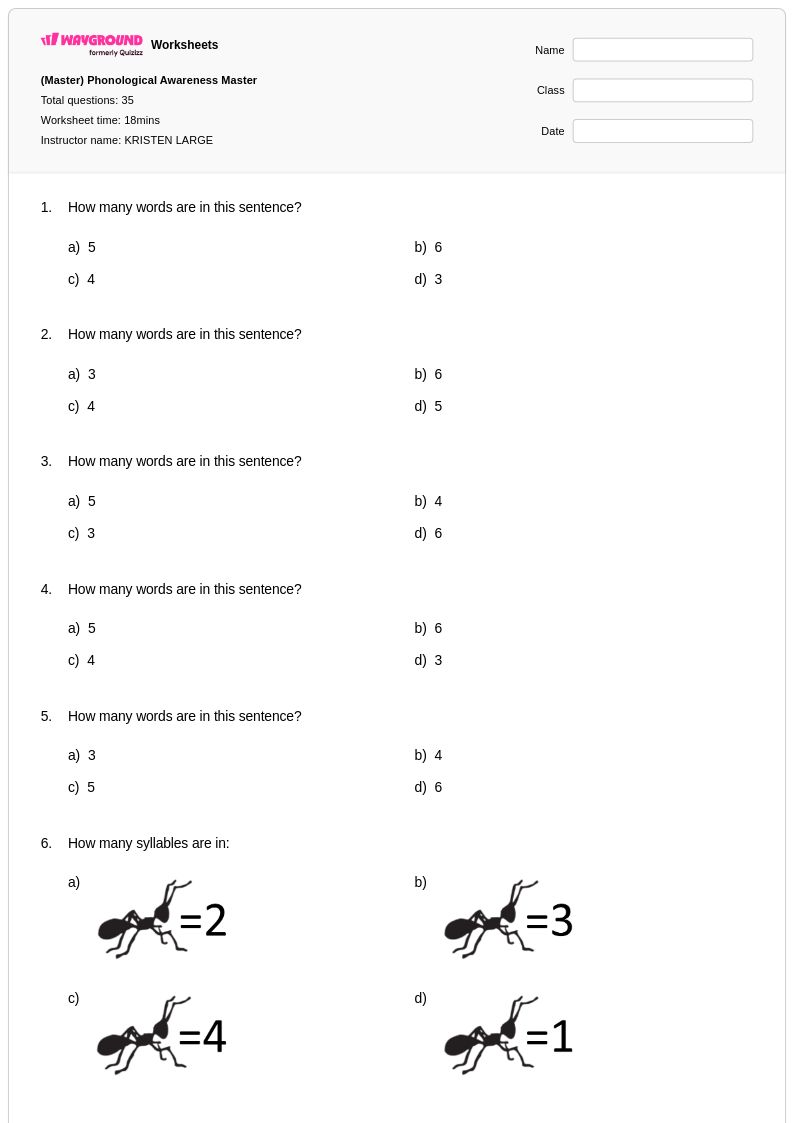
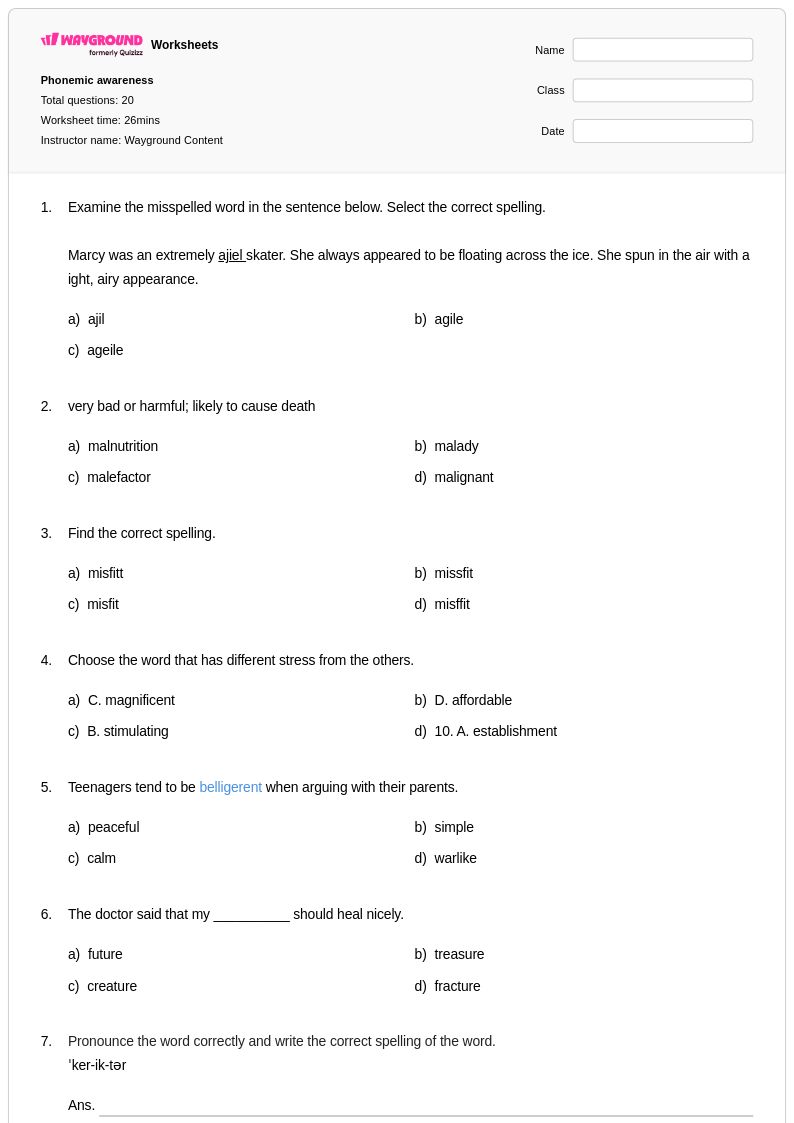
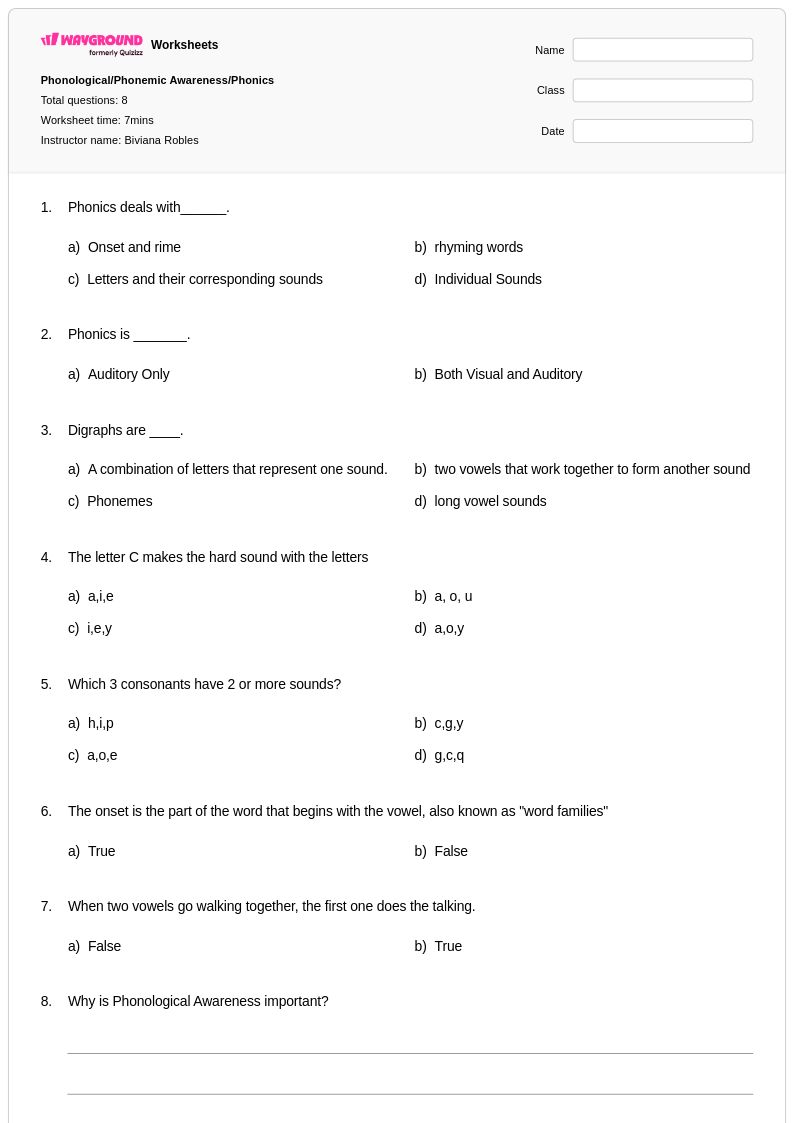
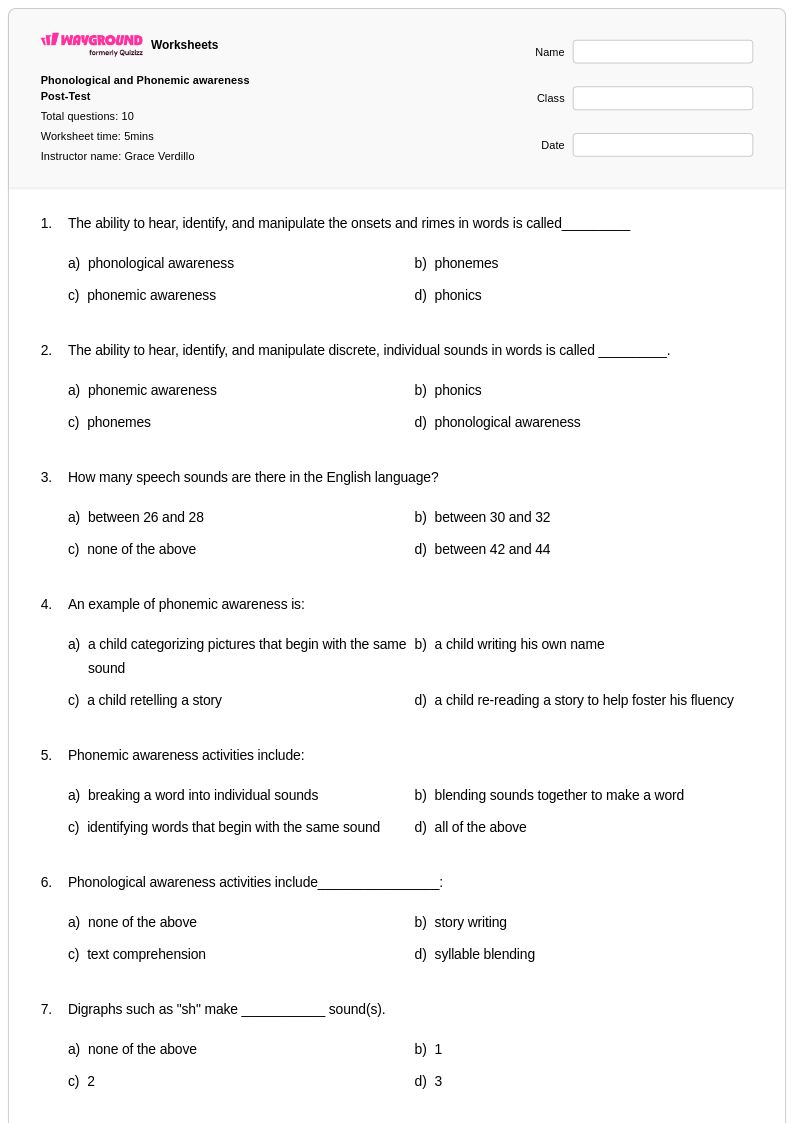
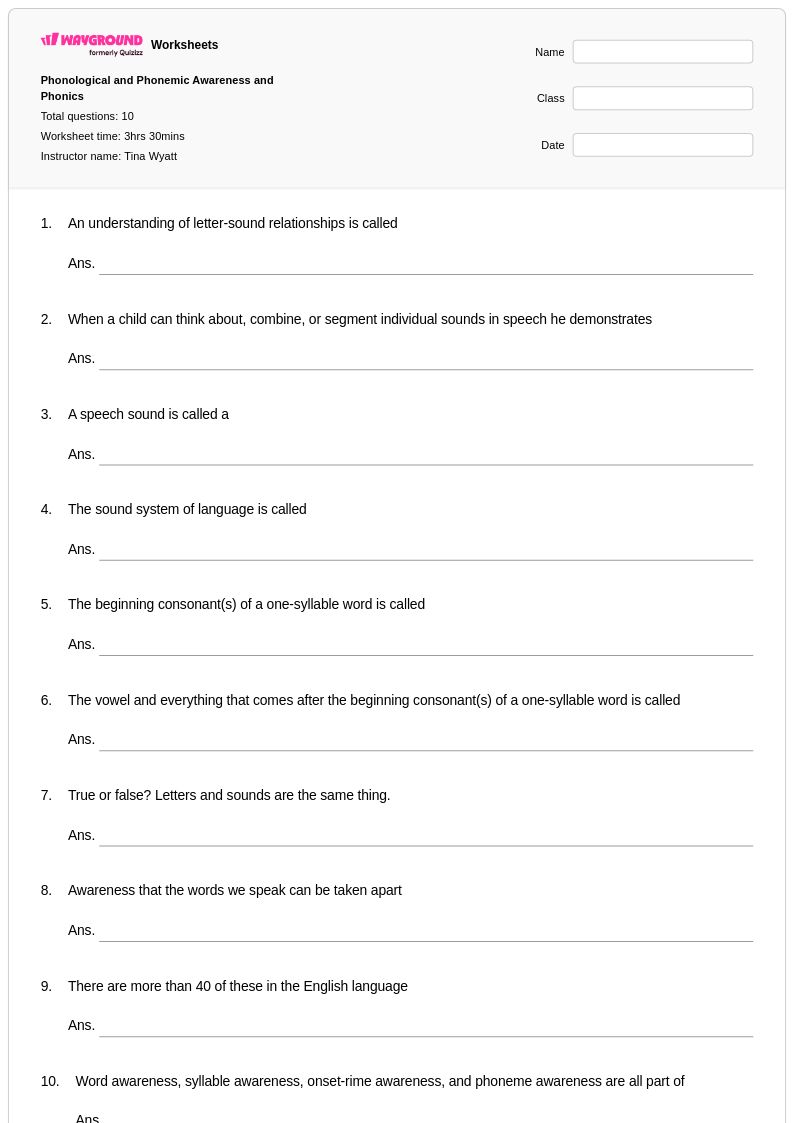
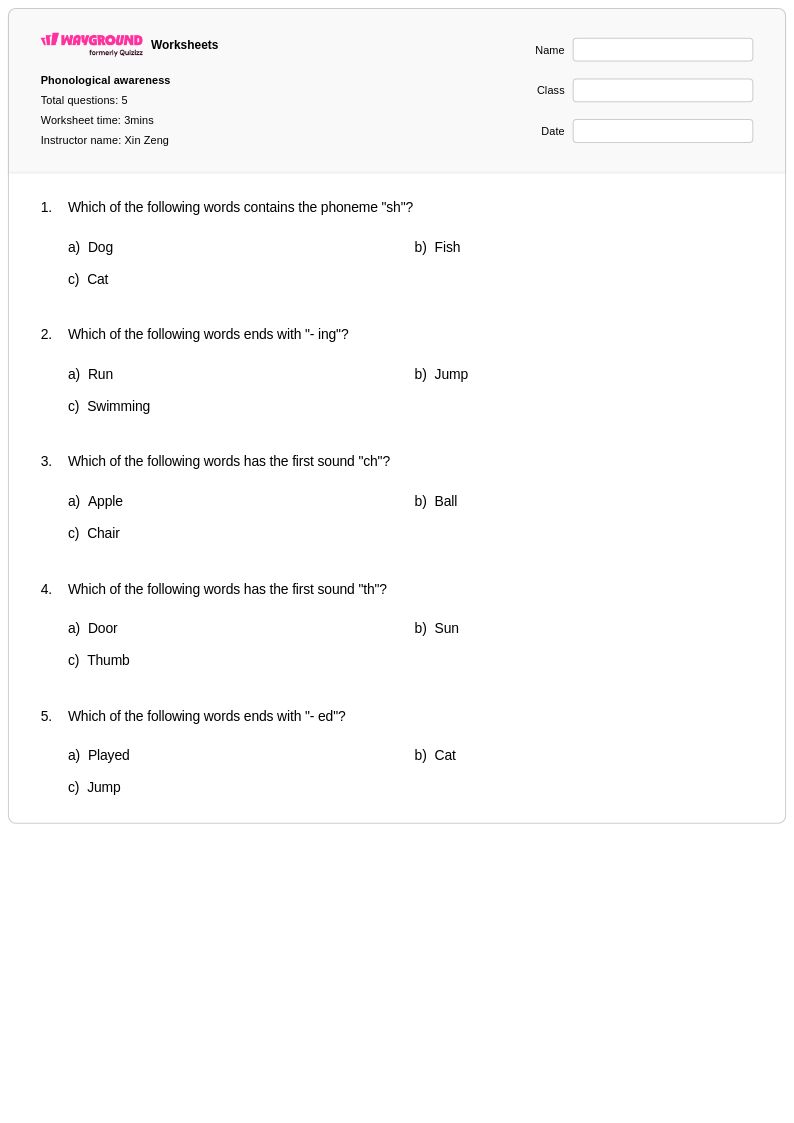
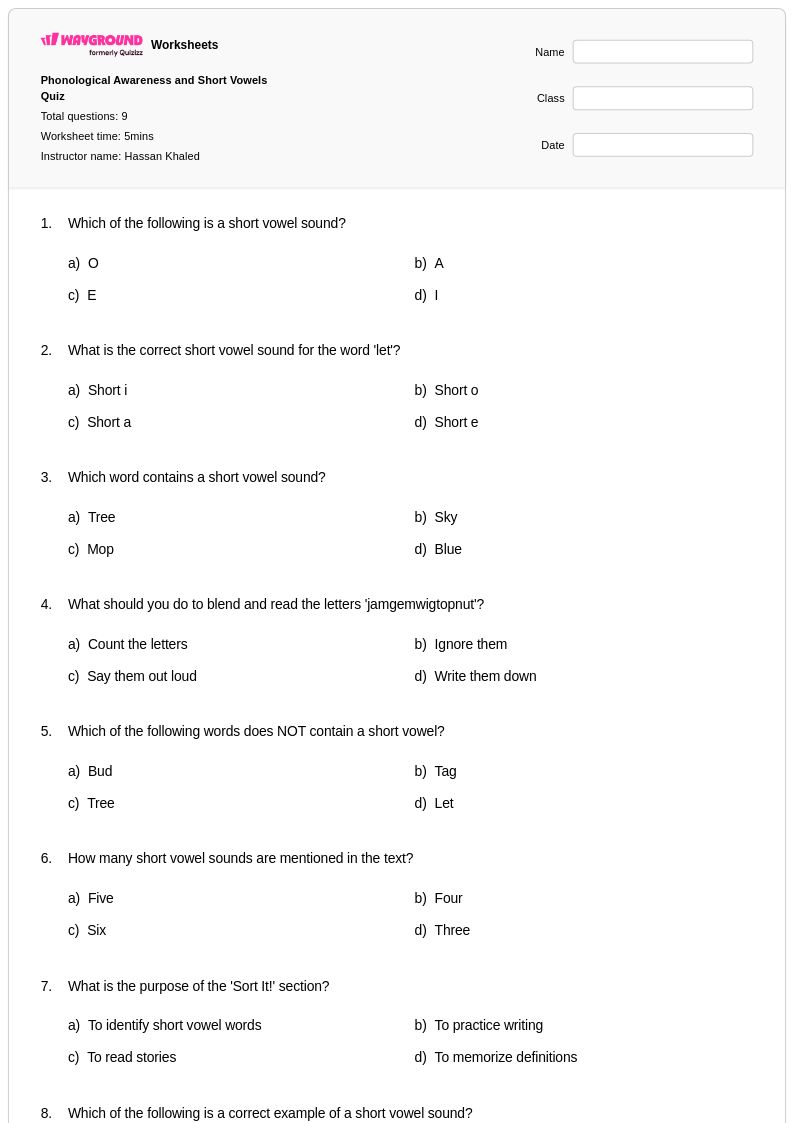
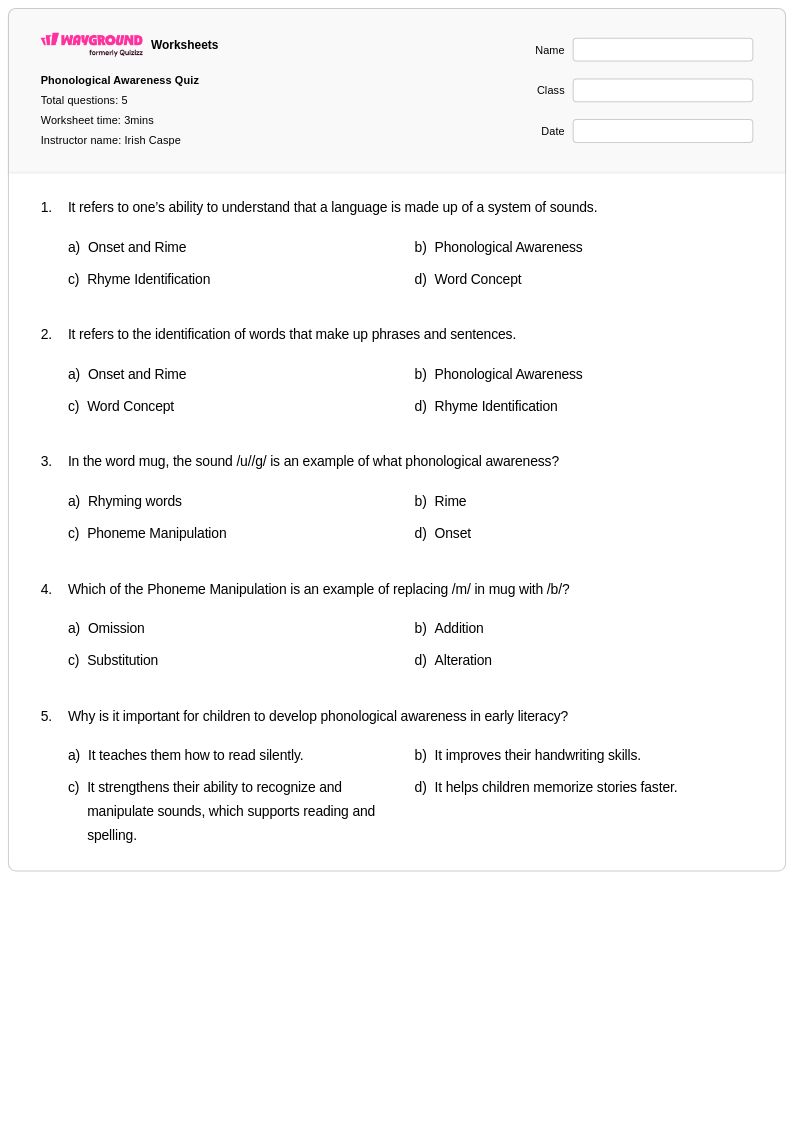
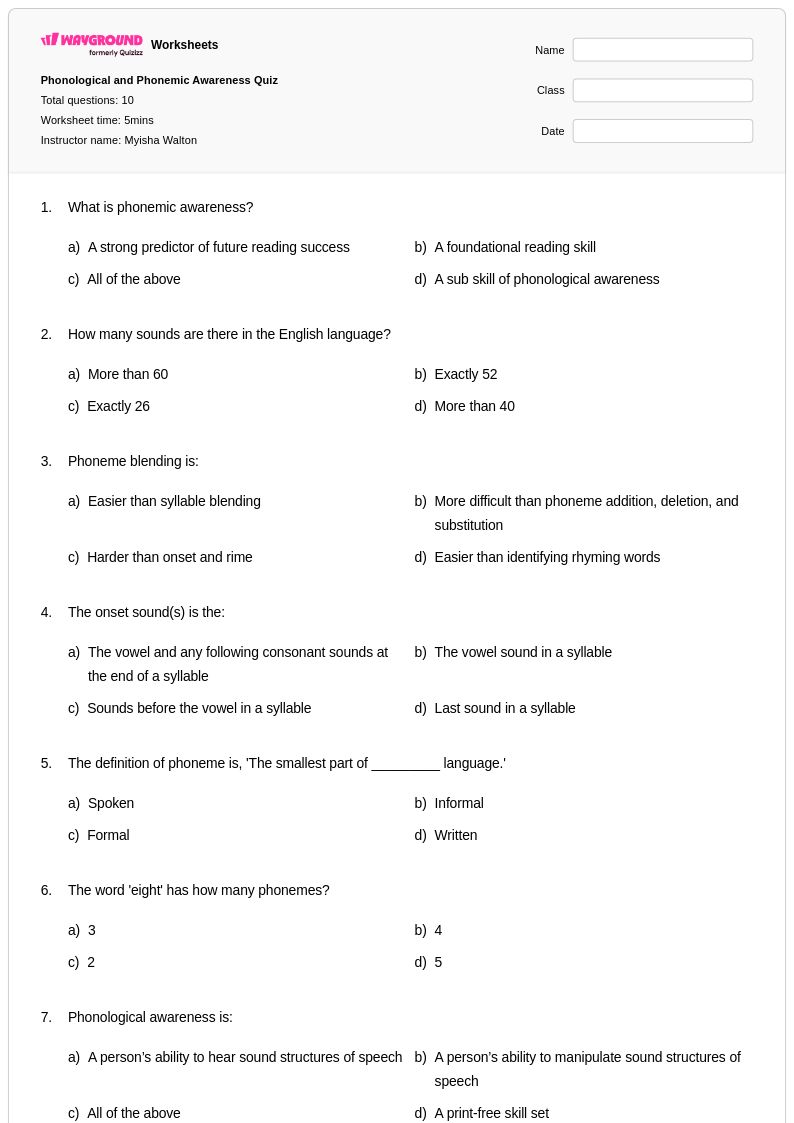
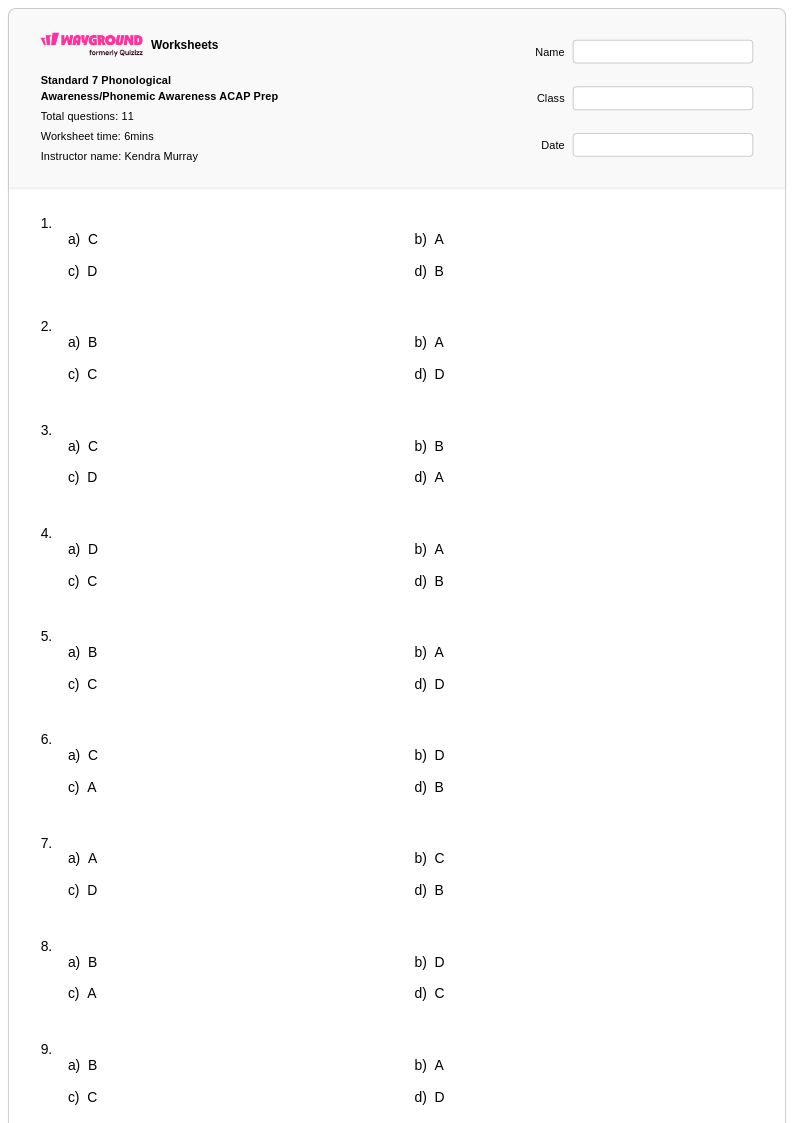
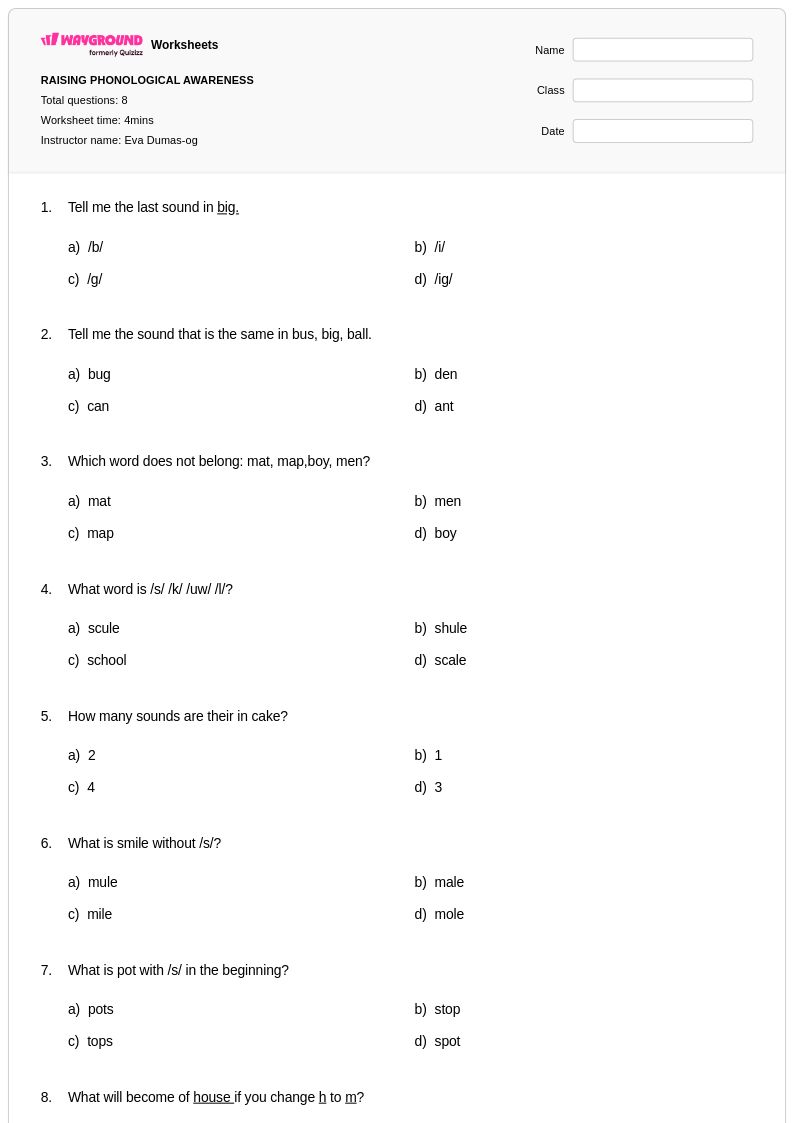
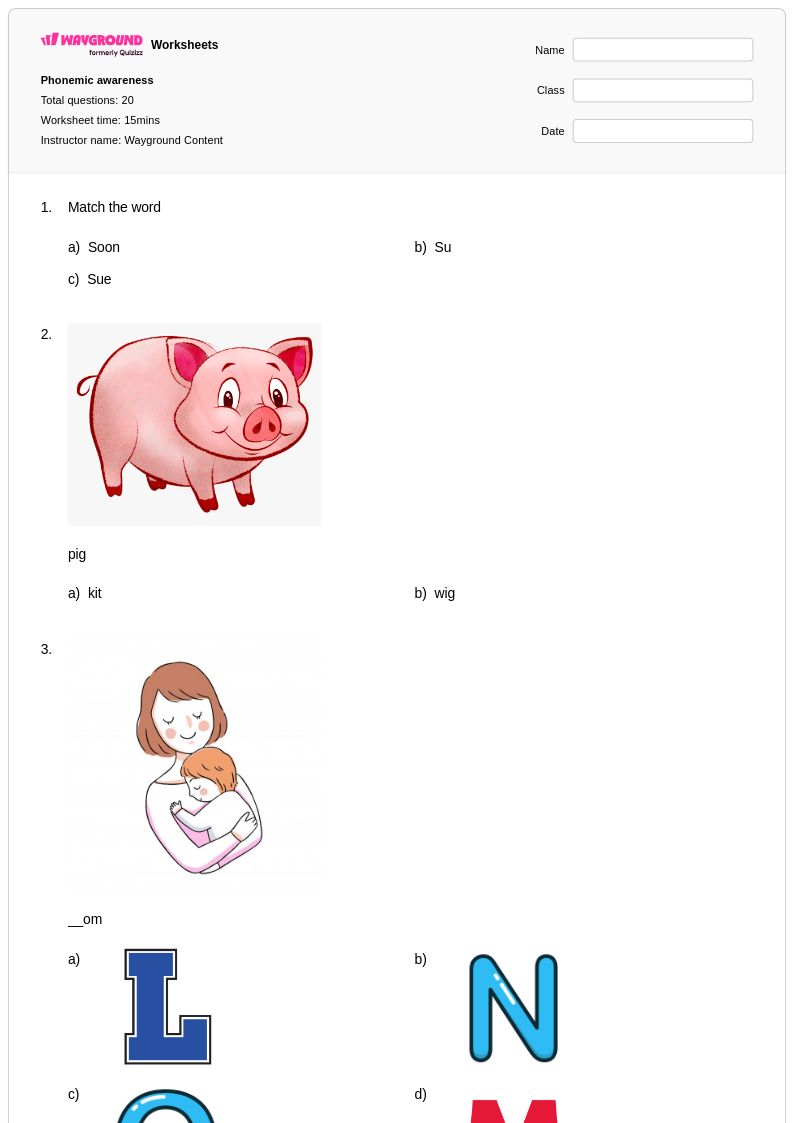
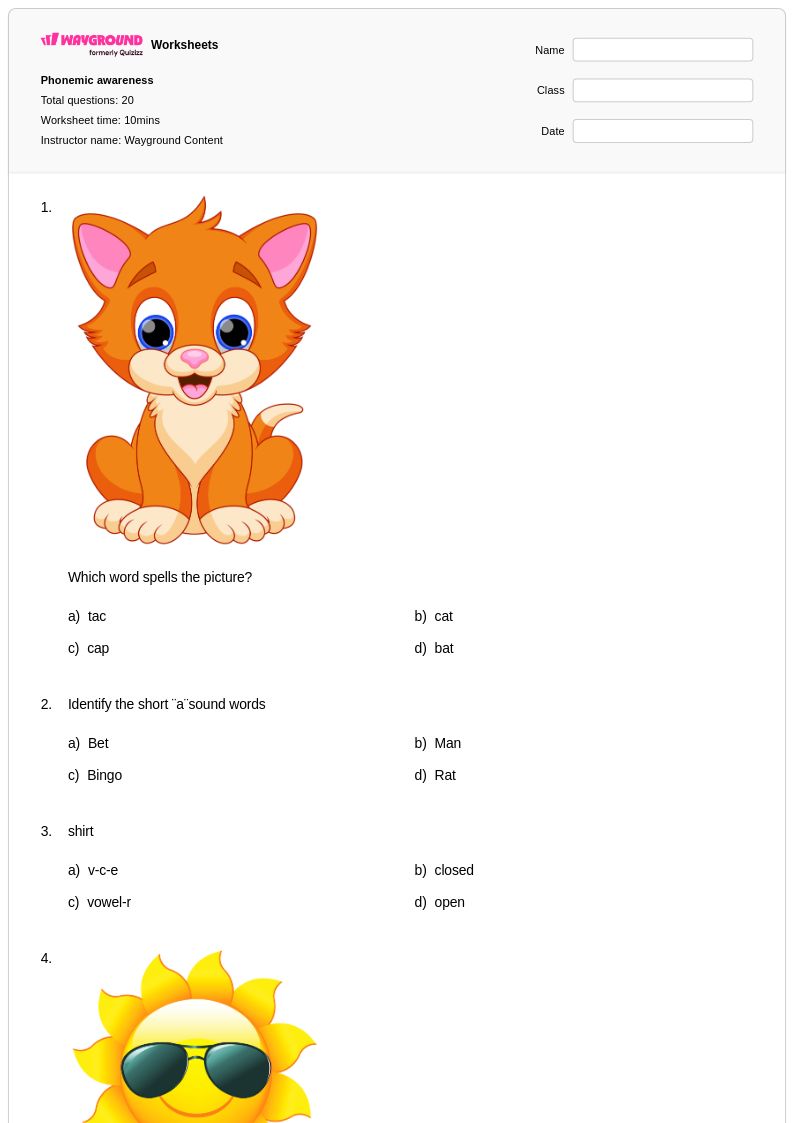
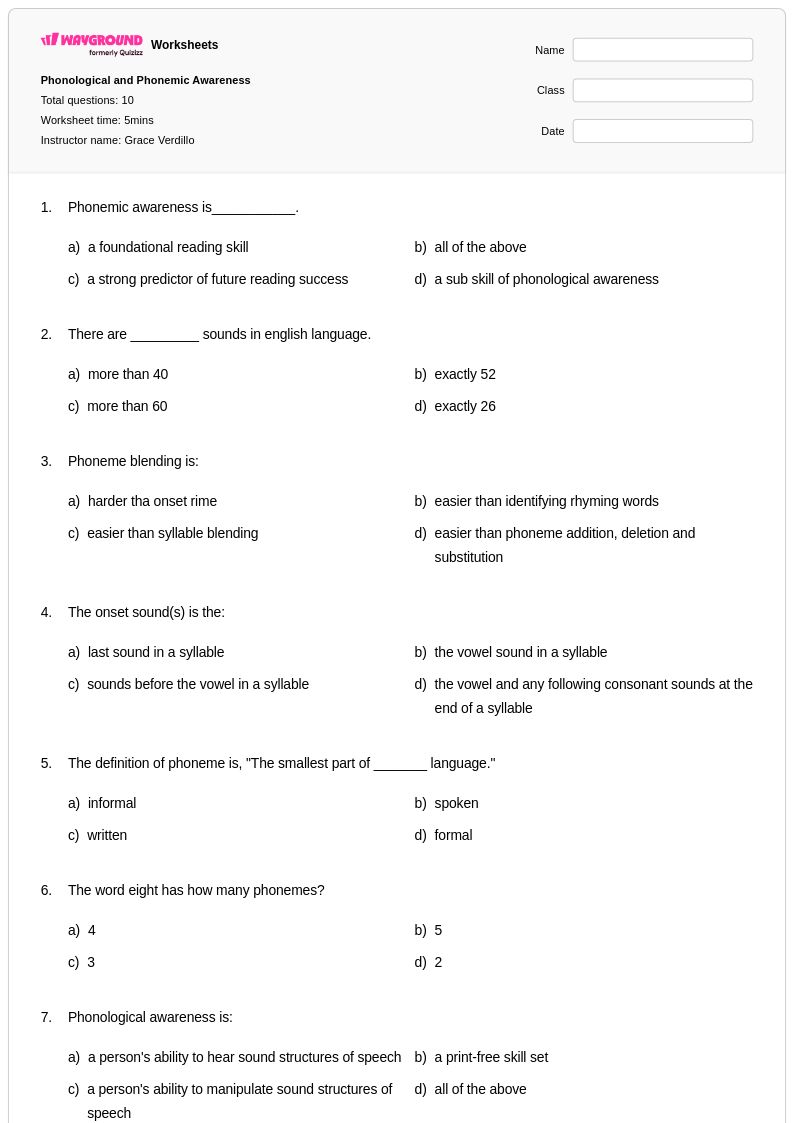
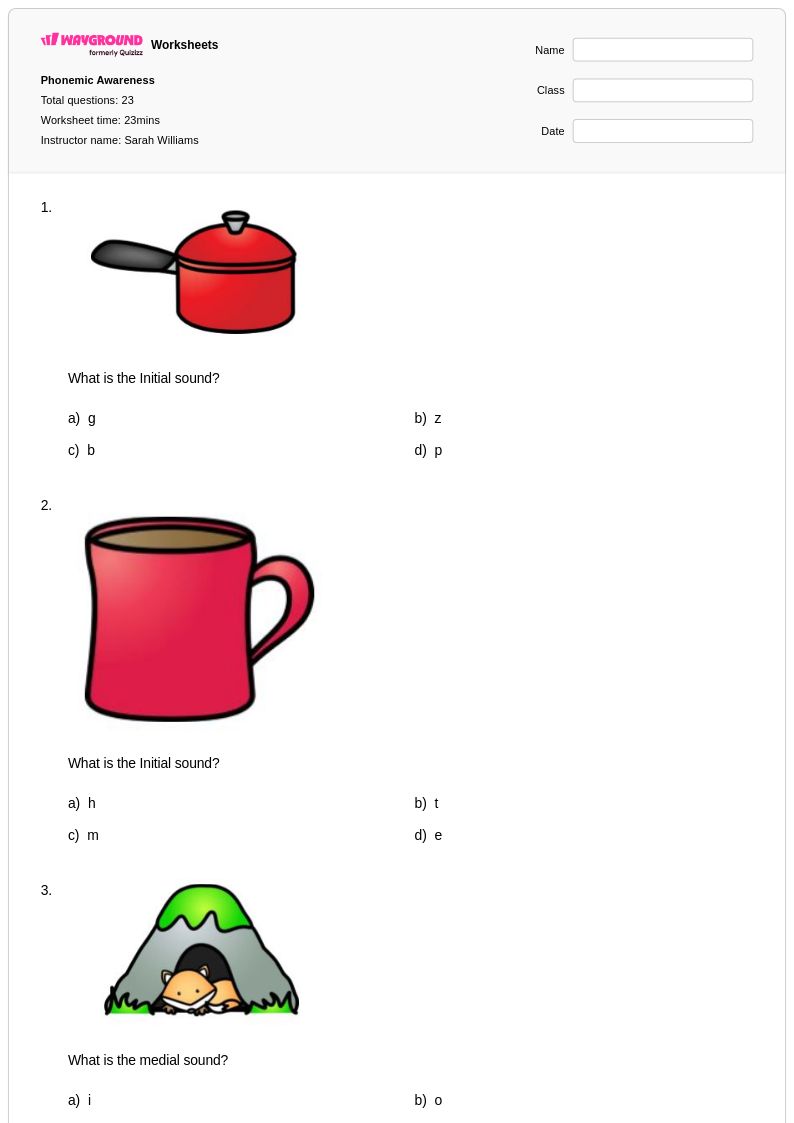
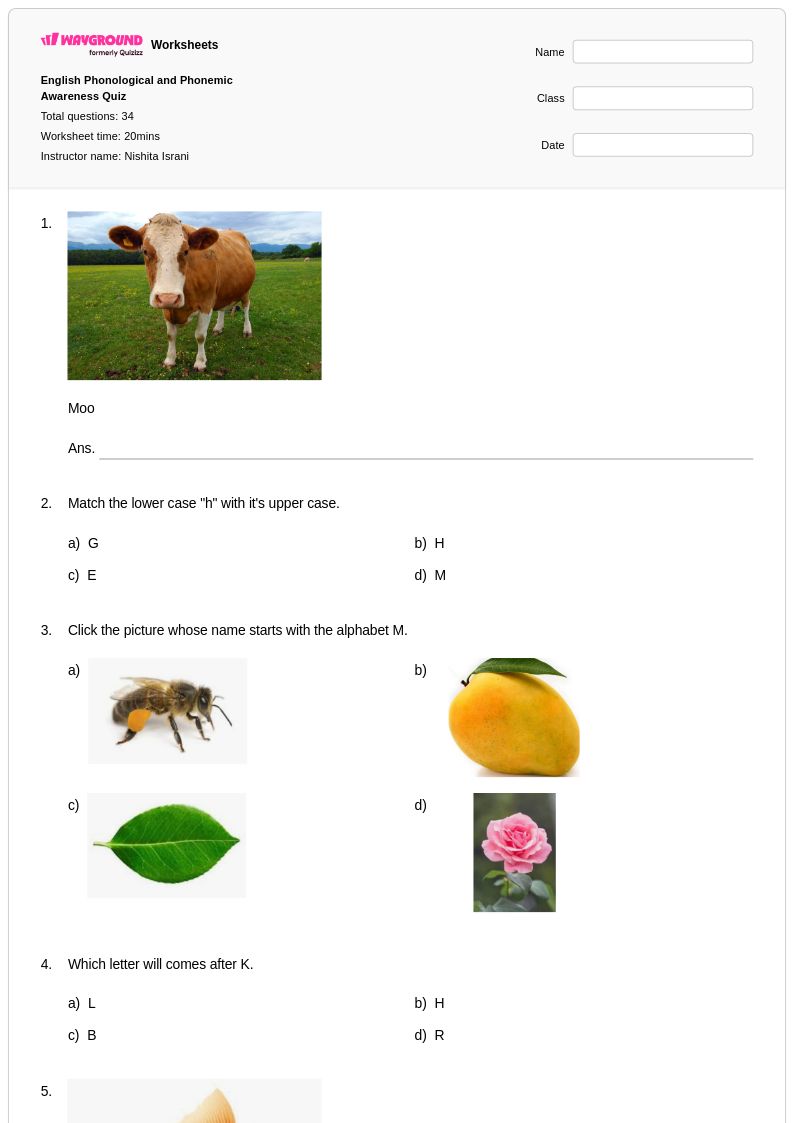
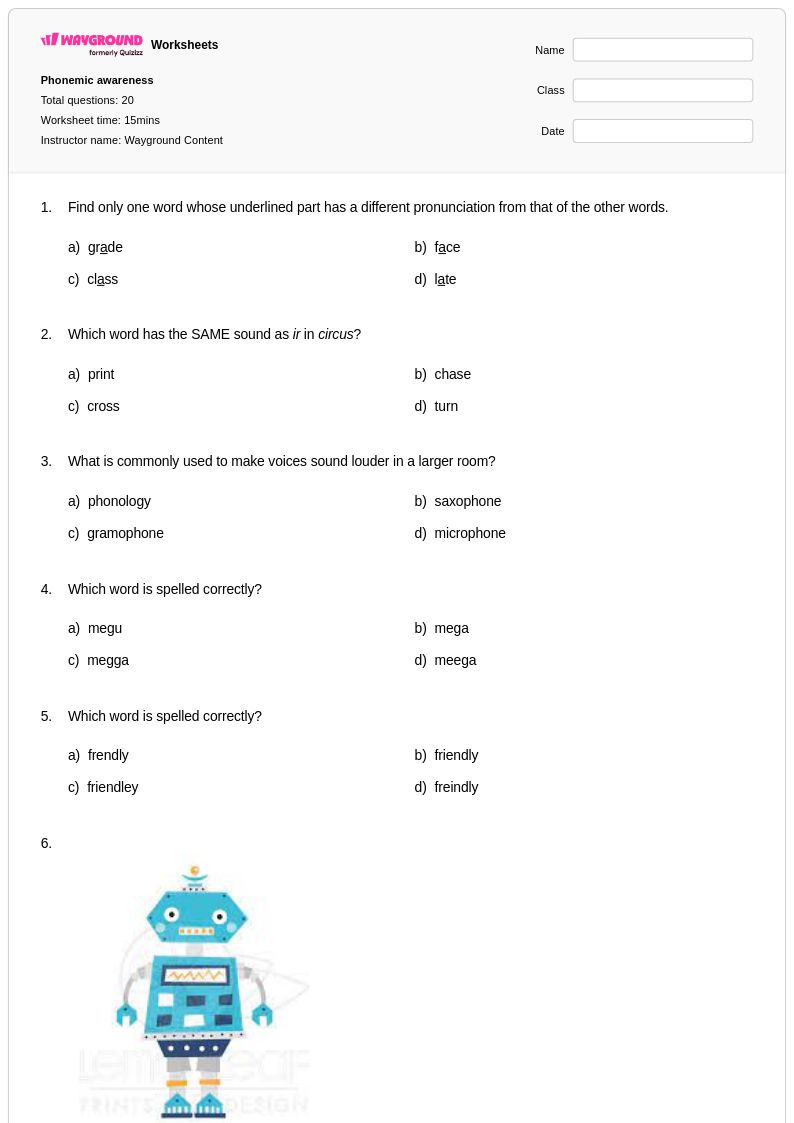
Phonological awareness worksheets for Class 3 students available through Wayground (formerly Quizizz) provide essential practice in recognizing and manipulating the sound structures of spoken language. These comprehensive resources strengthen critical pre-reading and reading skills including syllable segmentation, rhyme identification, onset and rime recognition, and phoneme blending and deletion activities. The worksheets feature engaging exercises that help third-grade students develop auditory processing abilities crucial for spelling, decoding, and reading fluency. Each printable resource includes detailed answer keys and practice problems designed to reinforce sound awareness concepts, with free pdf downloads making these materials easily accessible for classroom instruction and independent learning. Students work through structured activities that build their capacity to hear, identify, and work with individual sounds in words, establishing the phonological foundation necessary for advanced literacy development.
Wayground (formerly Quizizz) empowers educators with an extensive collection of teacher-created phonological awareness resources, drawing from millions of expertly developed worksheets that align with grade-level literacy standards. The platform's robust search and filtering capabilities enable teachers to quickly locate materials targeting specific phonological skills, from basic sound discrimination to complex phoneme manipulation tasks. Comprehensive differentiation tools allow instructors to customize worksheets based on individual student needs, supporting both remediation for struggling learners and enrichment opportunities for advanced students. These versatile resources are available in both printable and digital formats, including downloadable pdfs, facilitating seamless integration into diverse instructional settings. Teachers can efficiently plan phonological awareness lessons, track student progress through structured practice sessions, and implement targeted skill-building activities that strengthen the auditory foundation essential for reading success in Class 3 and beyond.
FAQs
How do I teach phonological awareness to early readers?
Phonological awareness is best taught through a progression that moves from larger sound units to smaller ones: start with recognizing words in sentences, then syllables, then onset and rime, and finally individual phonemes. Use oral and auditory activities before introducing print, since phonological awareness is a spoken-language skill. Clapping syllables, identifying rhyming words, and blending spoken word parts are effective starting points. Systematic, explicit instruction with repeated practice has the strongest evidence base for building these foundational skills.
What exercises help students practice phonological awareness?
Effective practice exercises include rhyme recognition and production, syllable segmentation and blending, onset-rime identification, phoneme isolation, and phoneme substitution tasks. Structured worksheets that progress from simple to more complex tasks help students build confidence while developing accuracy. Activities that ask students to segment a spoken word into its individual sounds or blend a sequence of phonemes into a word are especially valuable for strengthening phonemic awareness, which is the most advanced layer of phonological awareness.
What mistakes do students commonly make with phonological awareness tasks?
A common error is confusing phonological awareness with phonics: students may try to rely on letter knowledge when tasks should be entirely sound-based. When segmenting syllables, students often merge two syllables into one or segment by meaning units rather than sound units. In phoneme isolation tasks, students frequently identify the syllable rather than the individual phoneme, for example saying 'cap' instead of '/k/' when asked for the first sound. Identifying these specific error patterns helps teachers target instruction more precisely.
How can I differentiate phonological awareness practice for students at different skill levels?
Differentiation should reflect where each student sits on the phonological awareness continuum: students still developing rhyme awareness need different tasks than students ready for phoneme deletion or substitution. On Wayground, teachers can apply accommodations such as Read Aloud support so students who need audio reinforcement hear questions read to them, and Reduced Answer Choices to lower cognitive load for students who find multi-option tasks overwhelming. These settings can be assigned to individual students while the rest of the class works with default settings, allowing targeted support without singling students out.
How do I use Wayground's phonological awareness worksheets in my classroom?
Wayground's phonological awareness worksheets are available as printable PDFs for traditional classroom use and in digital formats for technology-integrated environments, giving teachers flexibility across instructional settings. Teachers can also host worksheets directly as a quiz on Wayground, enabling real-time student responses and streamlined review. Both formats include complete answer keys, making them suitable for guided instruction, independent practice, or homework without additional teacher preparation.
At what age or grade level should phonological awareness instruction begin?
Phonological awareness instruction is most critical in pre-kindergarten through second grade, with rhyme and syllable-level skills typically targeted in pre-K and kindergarten, and phoneme-level skills emphasized in kindergarten through first grade. Students who have not achieved phonemic awareness benchmarks by the end of first grade are at significantly elevated risk for reading difficulty and benefit from intensive, targeted intervention. Early screening and systematic practice are essential to catching gaps before they compound into broader literacy challenges.