Free Printable Plyometrics Worksheets for Class 11
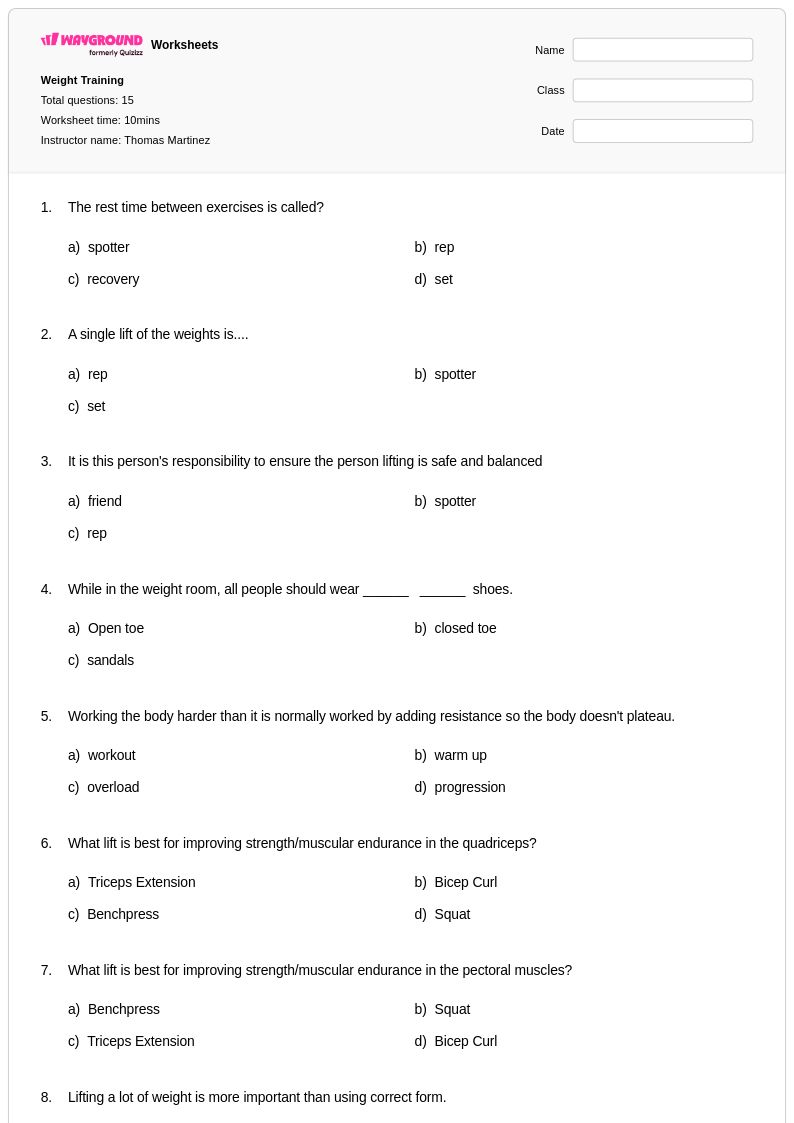
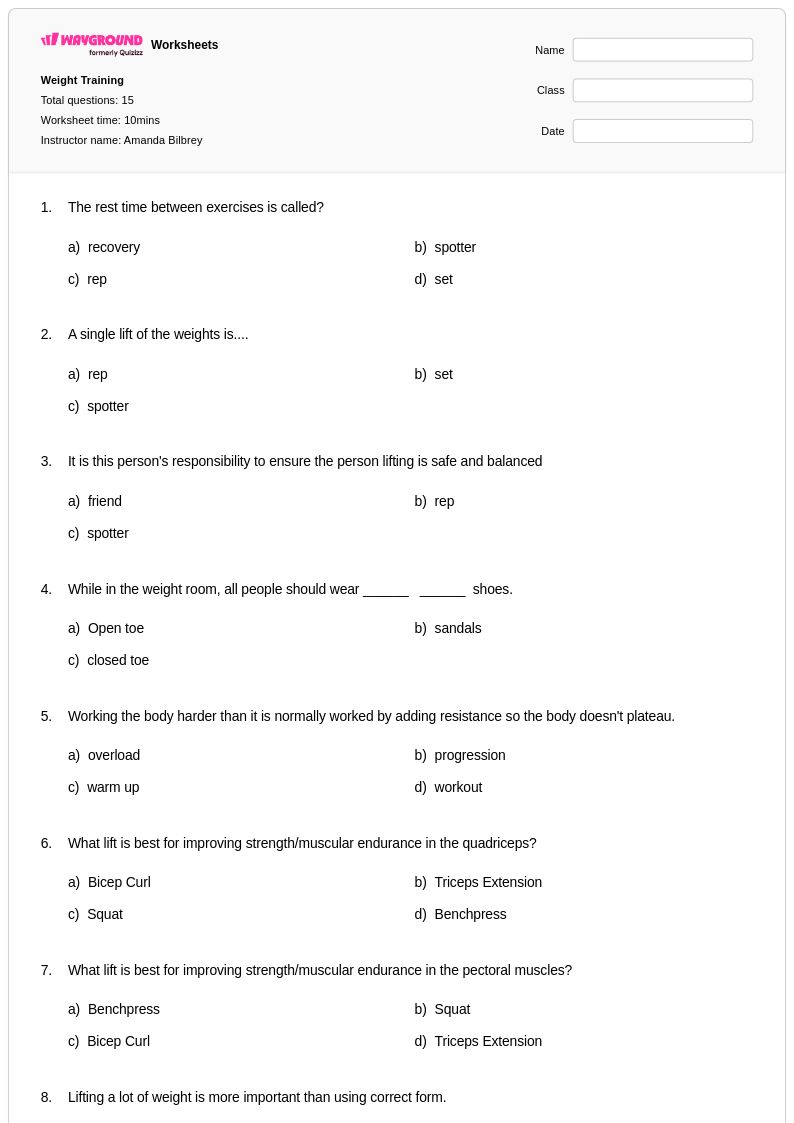
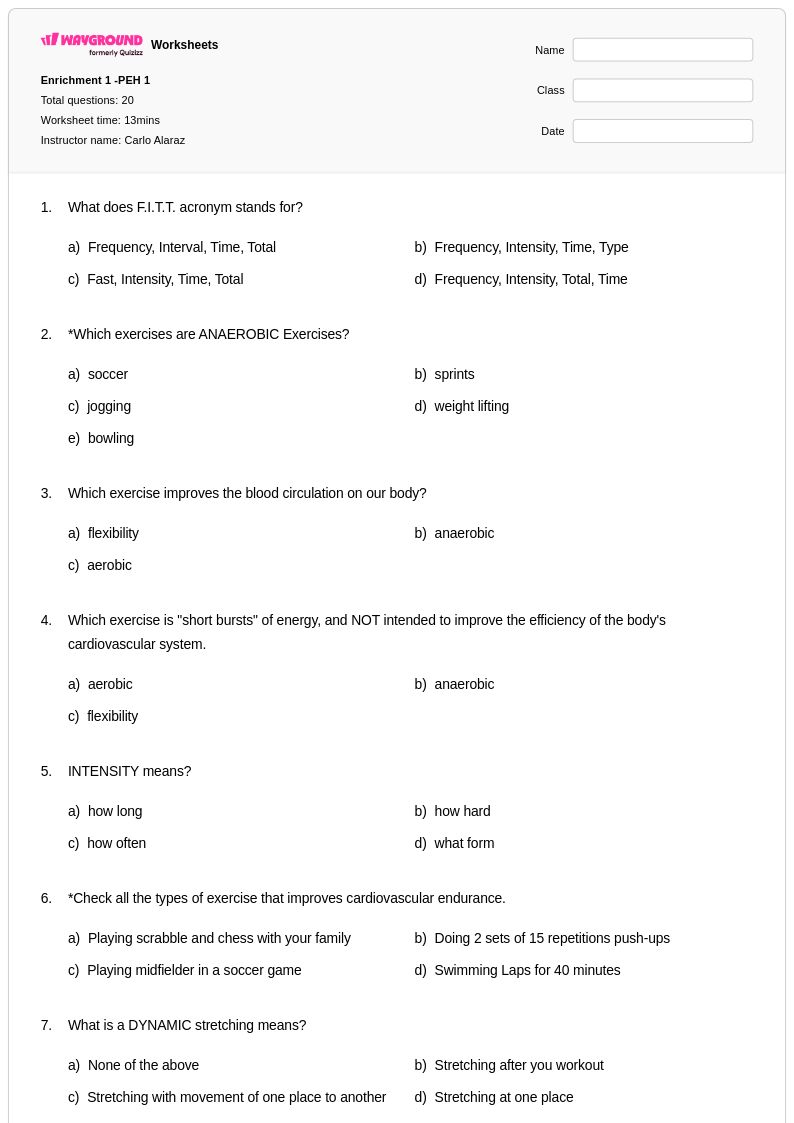
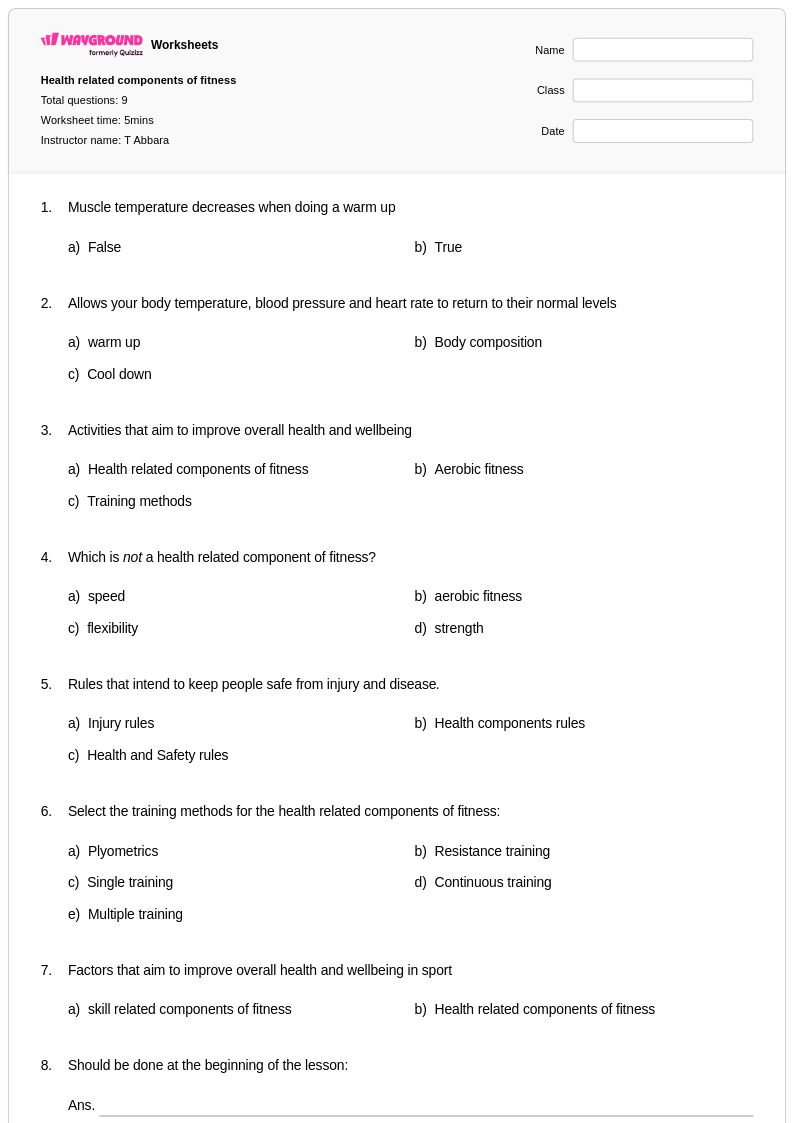
Class 11 plyometrics worksheets from Wayground provide free printables and practice problems to help students master explosive training techniques, featuring comprehensive PDF resources with answer keys for effective physical education learning.
Explore printable Plyometrics worksheets for Class 11
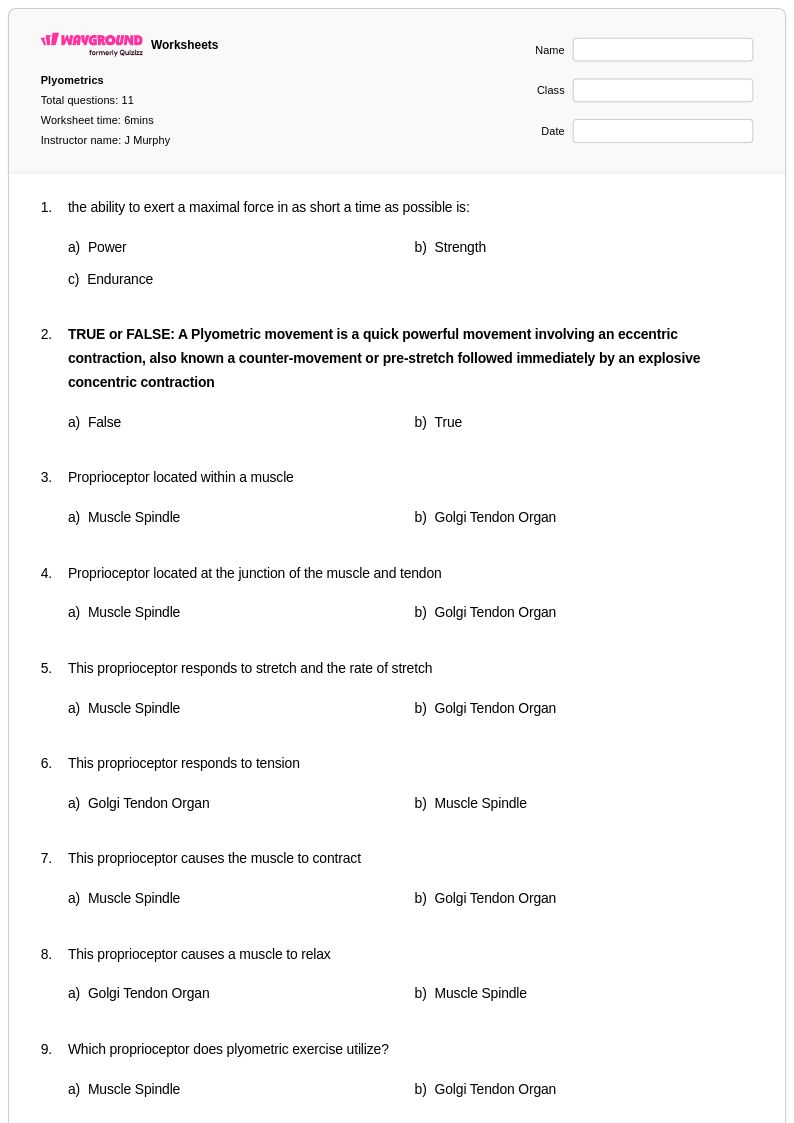
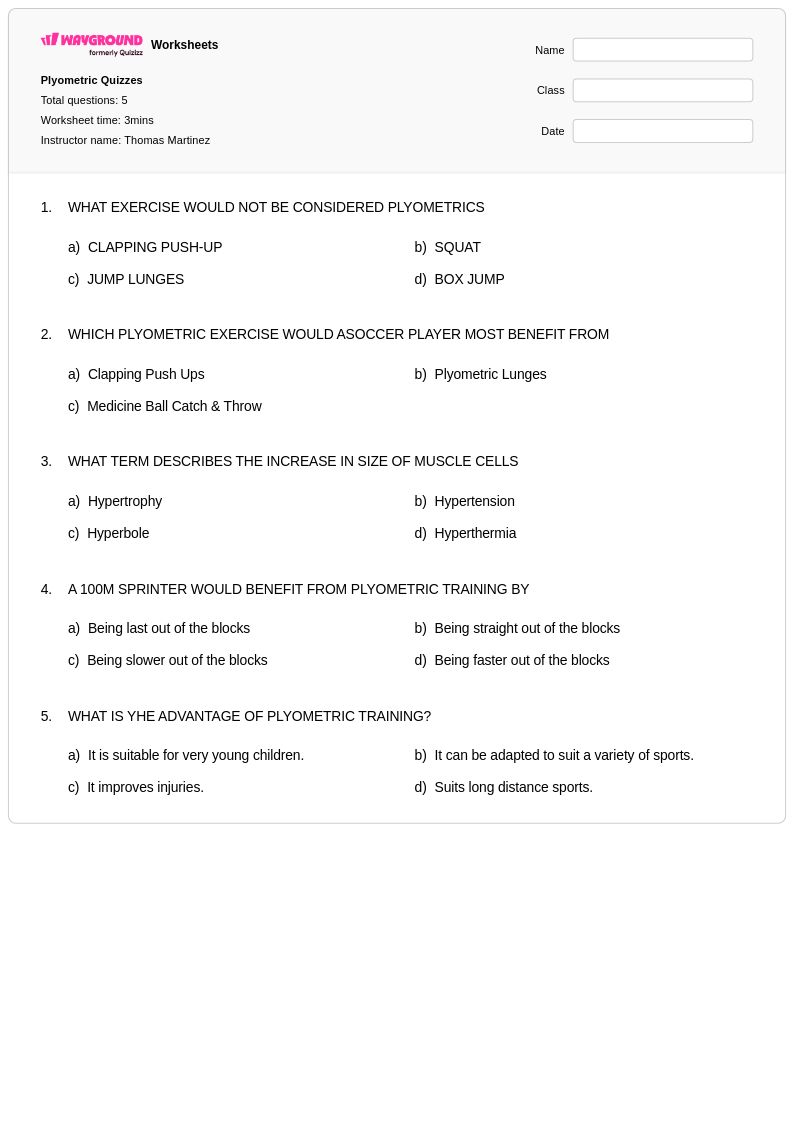
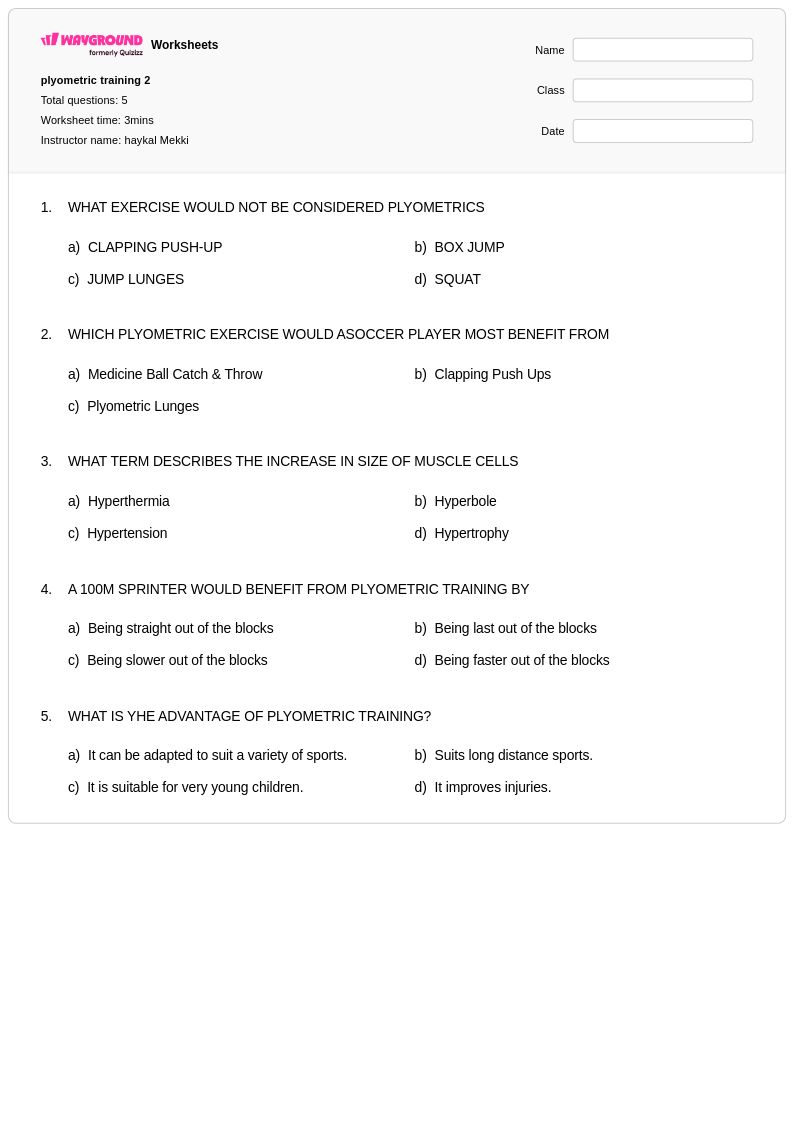
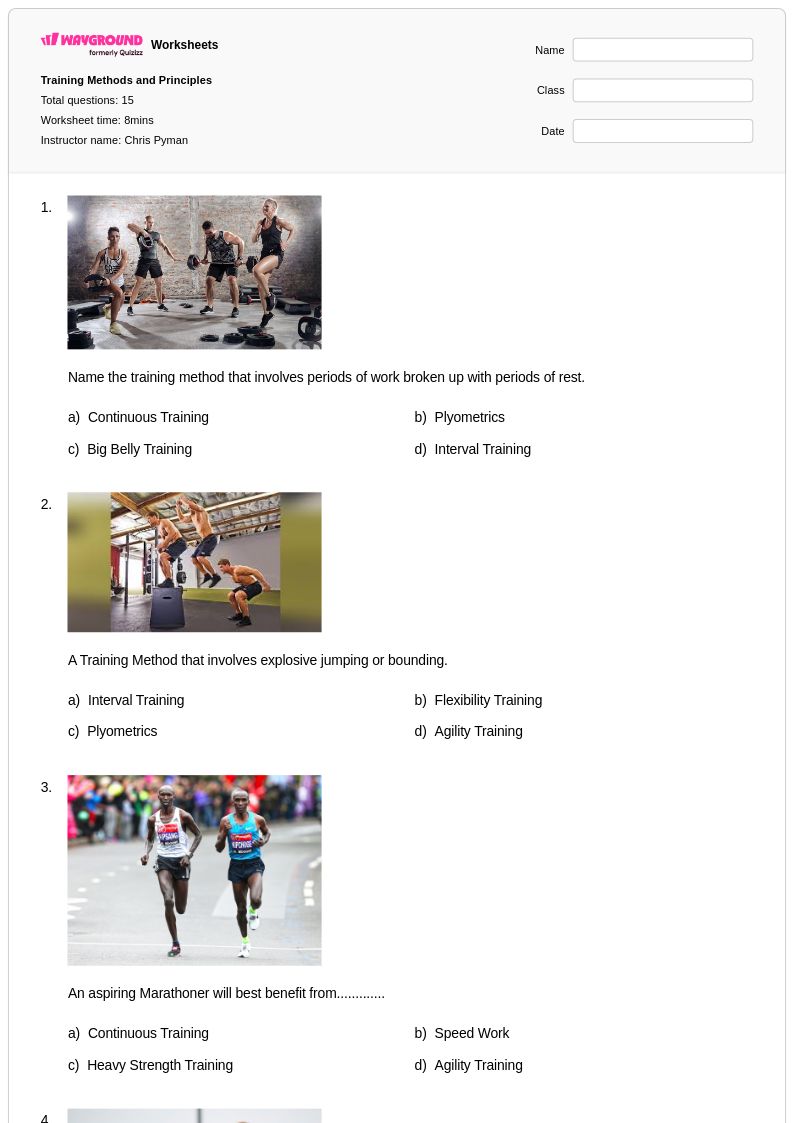
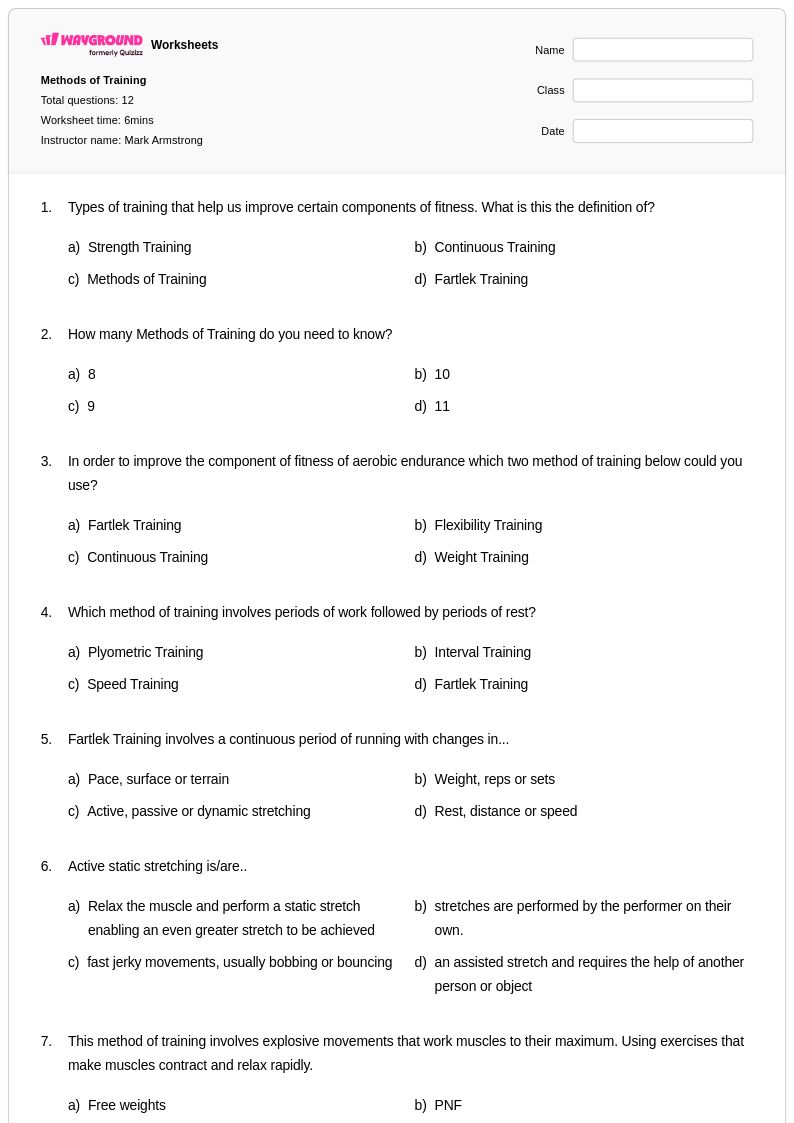
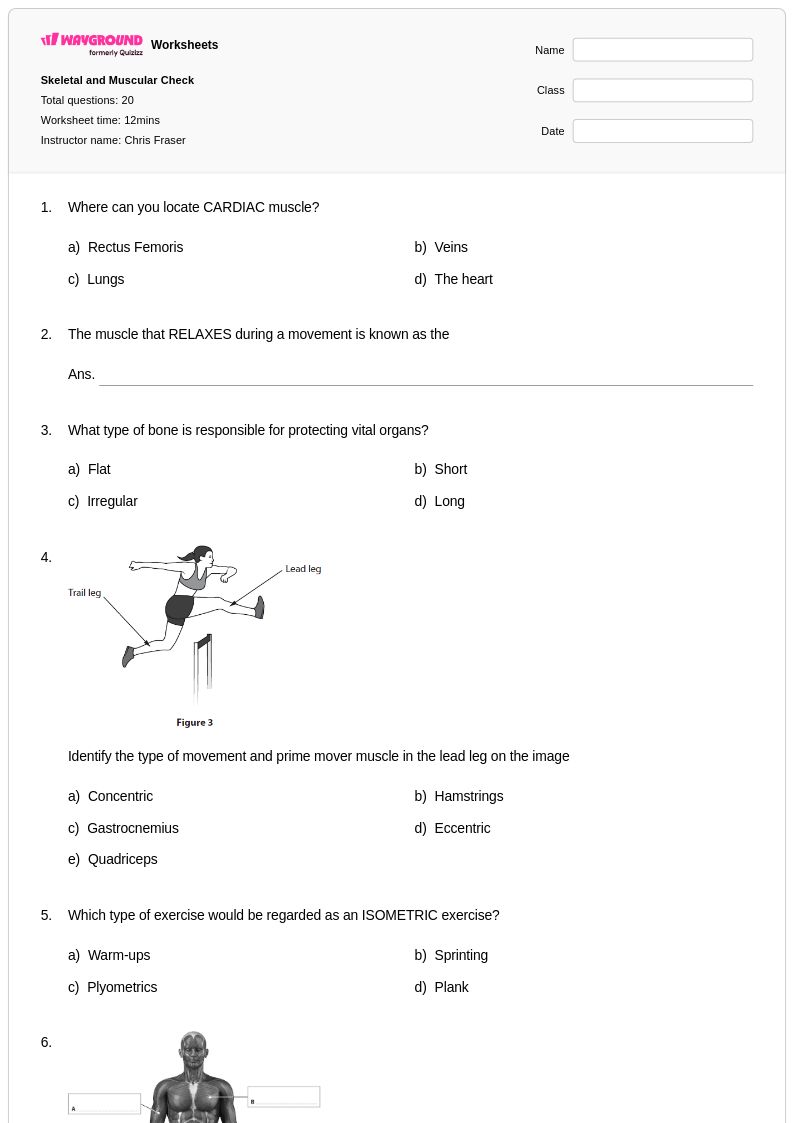
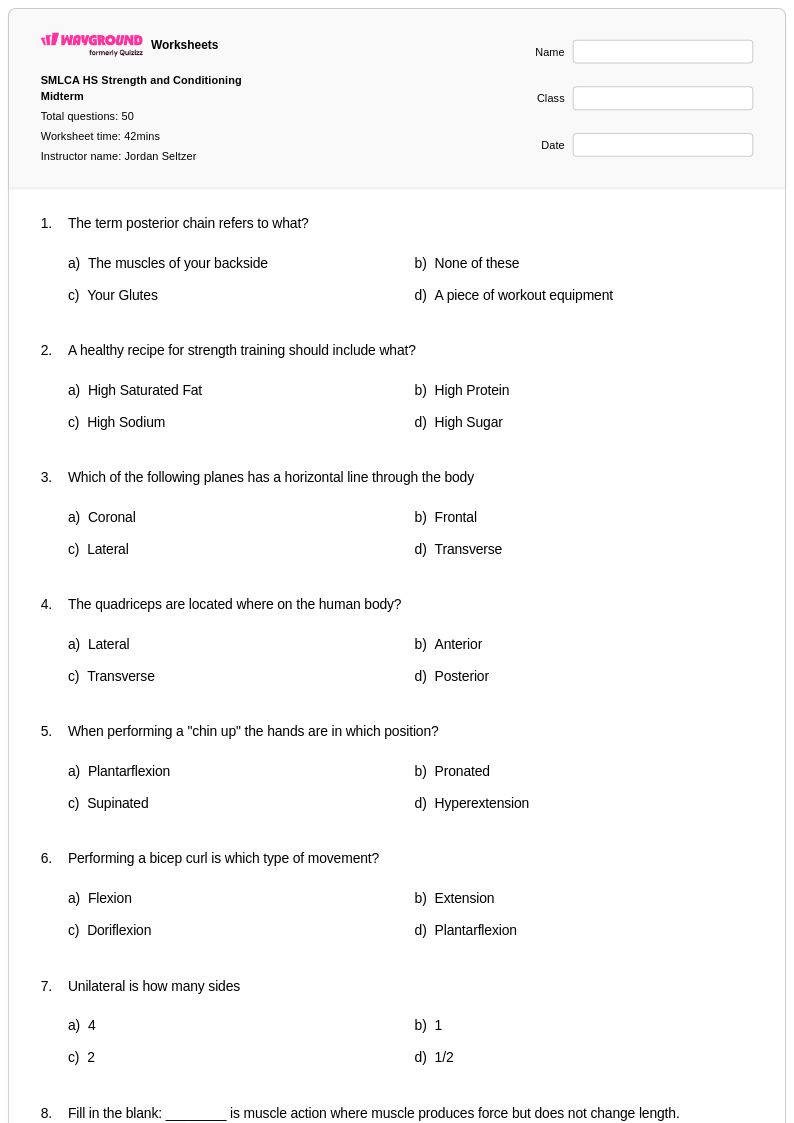
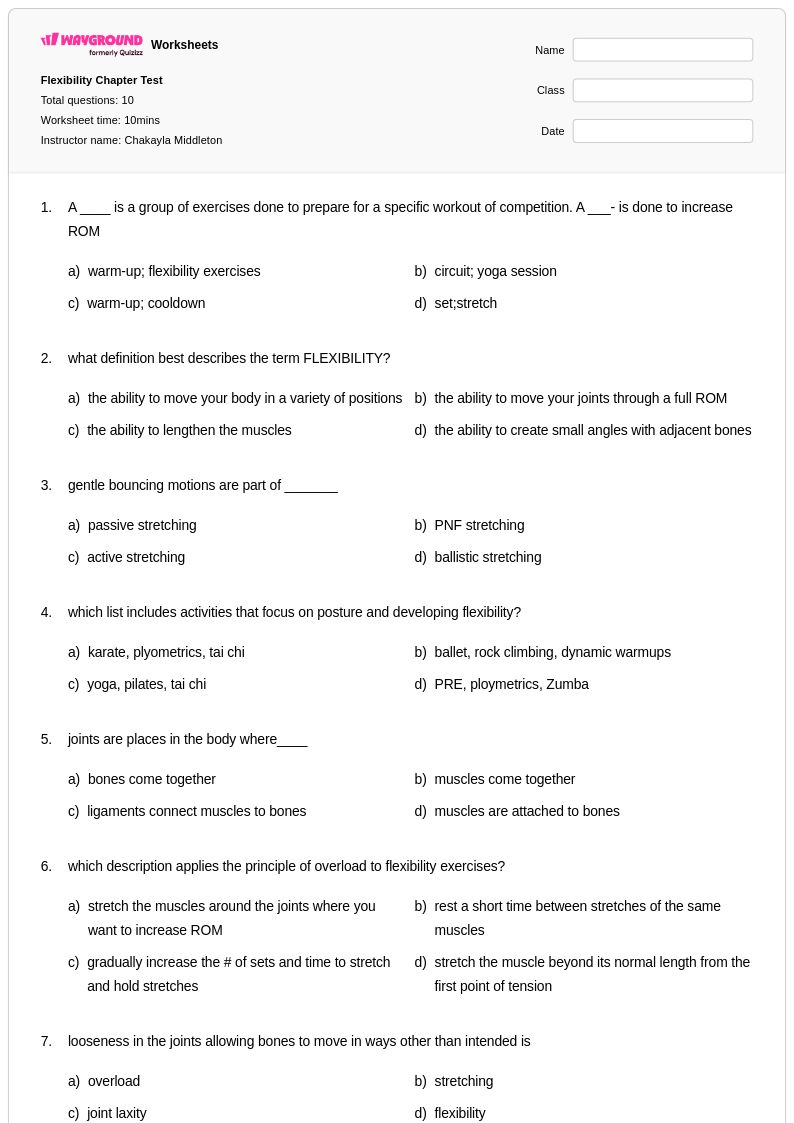
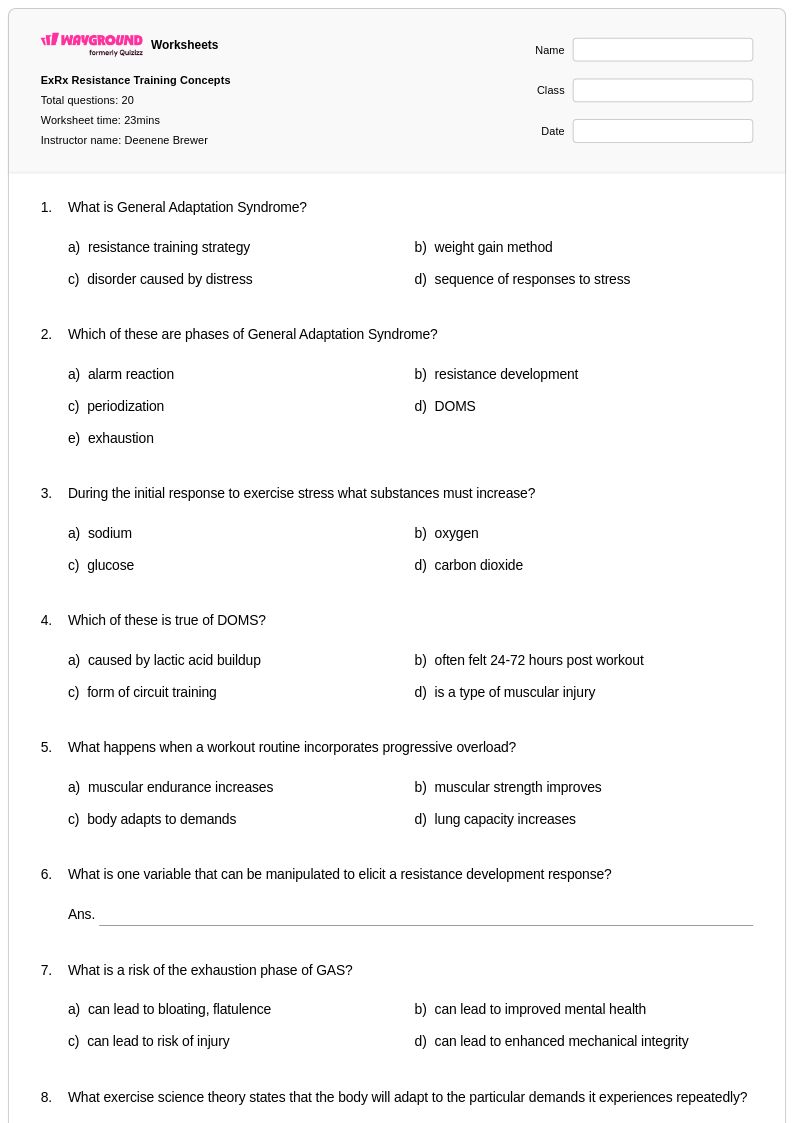
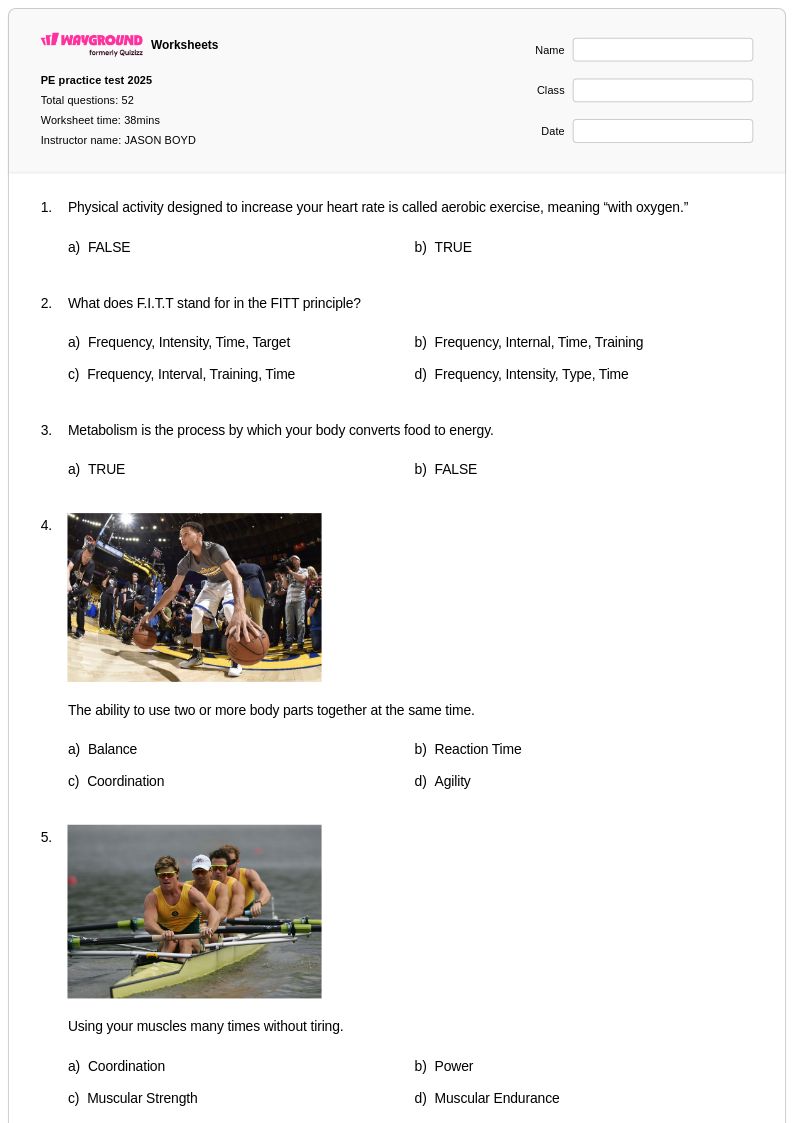
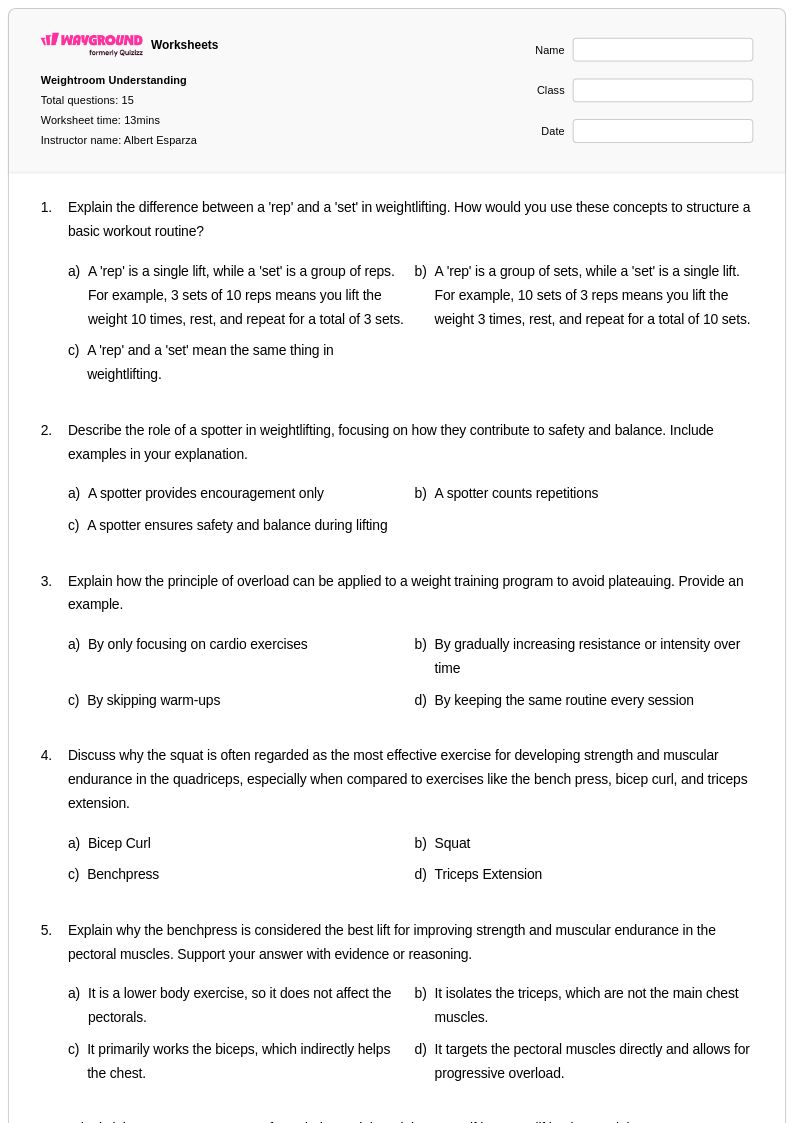
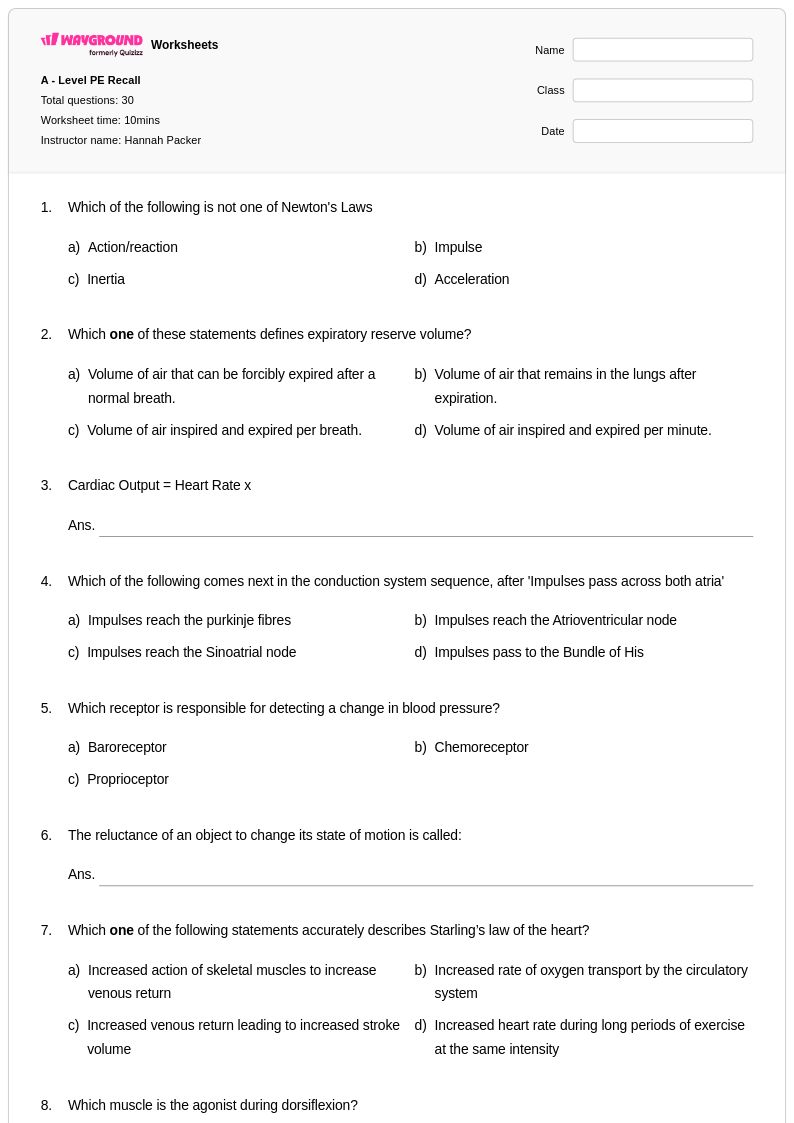
Plyometrics worksheets for Class 11 physical education classes available through Wayground (formerly Quizizz) provide comprehensive resources for understanding explosive movement training and power development principles. These educational materials focus on the scientific foundations of plyometric exercises, including the stretch-shortening cycle, neuromuscular adaptations, and proper progression protocols for athletic performance enhancement. Students engage with practice problems that analyze force production, reaction time improvements, and injury prevention strategies while exploring real-world applications in various sports contexts. The worksheets include detailed answer keys that help students verify their understanding of biomechanical concepts, training periodization, and exercise prescription guidelines, with free printables covering everything from basic jumping mechanics to advanced reactive strength training protocols.
Wayground (formerly Quizizz) supports physical education teachers with millions of teacher-created plyometrics resources that streamline lesson planning and enhance student learning outcomes. The platform's robust search and filtering capabilities allow educators to quickly locate materials aligned with specific curriculum standards and fitness education objectives, while differentiation tools enable customization for varying skill levels and learning needs. Teachers can access both printable pdf versions for traditional classroom settings and digital formats for interactive learning environments, making it simple to provide targeted skill practice, remediation support for students struggling with biomechanical concepts, and enrichment activities for advanced learners. The flexible customization options allow instructors to modify existing worksheets or combine multiple resources to create comprehensive assessment tools that address specific plyometric training principles and safety considerations essential for Class 11 students preparing for advanced athletic participation.
FAQs
How do I teach plyometrics in a physical education class?
Teaching plyometrics effectively starts with grounding students in the stretch-shortening cycle, which explains how muscles store and release elastic energy during explosive movements. From there, progress through exercise categories in order: jumps in place, standing jumps, bounding, and reactive drills. Emphasizing proper landing mechanics and ground contact efficiency before adding intensity helps students build a safe, science-backed foundation for explosive movement training.
What exercises help students practice plyometrics concepts?
Practice exercises should connect biomechanical principles to real movement analysis. Worksheets that ask students to calculate force production, compare ground contact times across exercises, or sequence a plyometric progression from low to high intensity are especially effective. Problems that tie plyometric concepts to specific sports contexts help students understand how explosive power training applies beyond the gym.
What mistakes do students commonly make when learning about plyometrics?
A frequent misconception is that plyometrics simply means jumping fast or high, without understanding the role of the stretch-shortening cycle in generating power. Students also often conflate plyometric training with general strength training, missing the distinction that plyometrics specifically targets reactive, elastic muscle function. Another common error is ignoring exercise progression, treating all plyometric drills as interchangeable regardless of intensity or skill demand.
How can I differentiate plyometrics instruction for students at different skill levels?
Differentiation in plyometrics instruction means separating students who are still learning foundational movement concepts from those ready to analyze advanced biomechanics or sport-specific applications. On Wayground, teachers can apply accommodations at the individual student level, including reduced answer choices to lower cognitive load for struggling learners and read-aloud support for students who need it, while advanced students work through enrichment problems without disruption to the rest of the class.
How do I use Wayground's plyometrics worksheets in my class?
Wayground's plyometrics worksheets are available as printable PDFs for traditional classroom use and in digital formats for technology-integrated instruction, including the option to host them as a quiz directly on the Wayground platform. Teachers can use them to introduce concepts like power development and reactive movement, assign them as independent practice, or use the digital version as a formative assessment tool. The included answer keys support both teacher-led review and self-directed student learning.
How do plyometrics worksheets support physical education learning objectives?
Plyometrics worksheets bridge the gap between movement practice and academic understanding by asking students to engage analytically with concepts like force production, exercise progressions, and movement efficiency. This supports physical education standards that require students to understand the science behind fitness training, not just perform it. Worksheets covering biomechanical principles and safety protocols are particularly useful for units that include both practical and theoretical assessment components.