
6 Q
1st - 10th
20 Q
1st - 10th
19 Q
1st
8 Q
1st
16 Q
1st
13 Q
1st
73 Q
1st - Uni
10 Q
1st
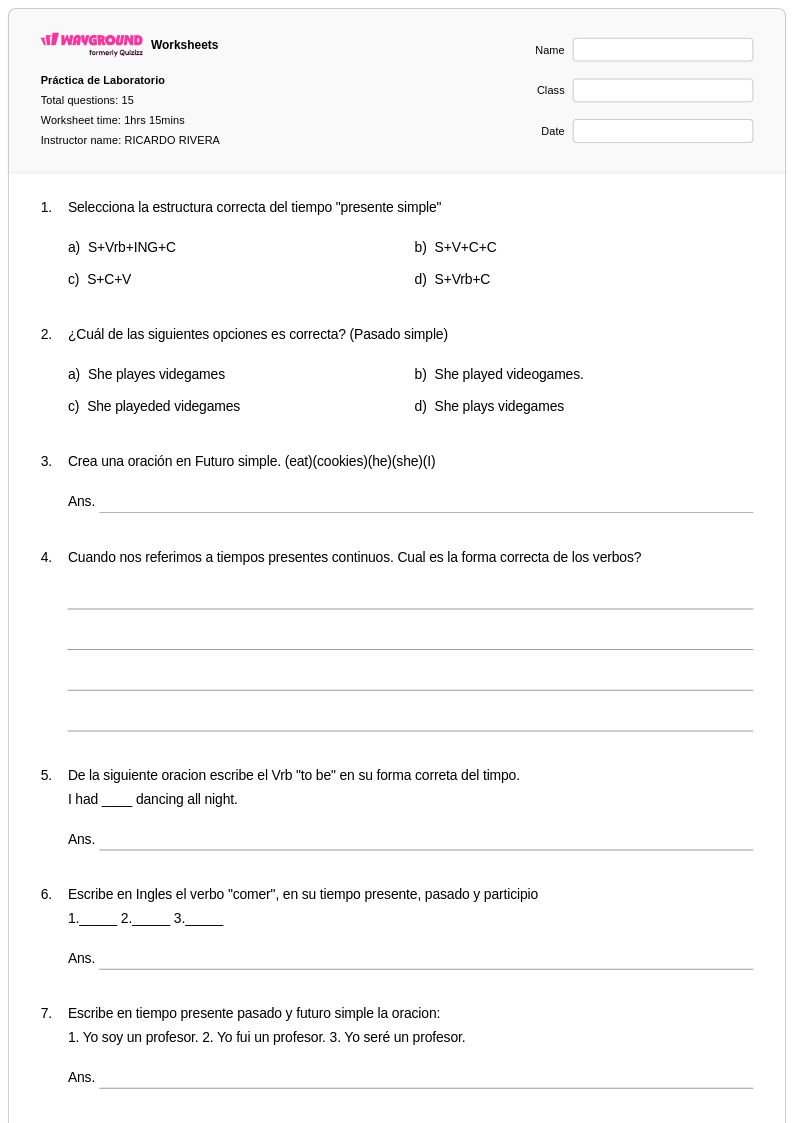
15 Q
1st - 12th
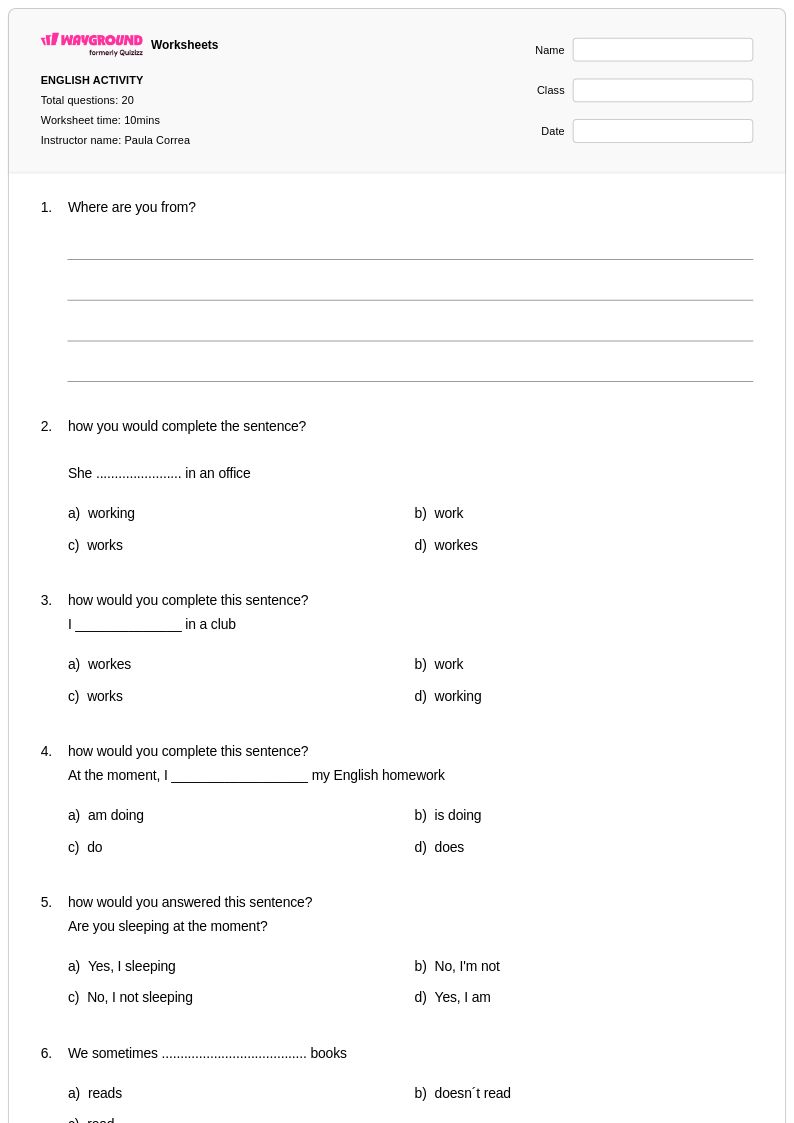
20 Q
1st - 5th
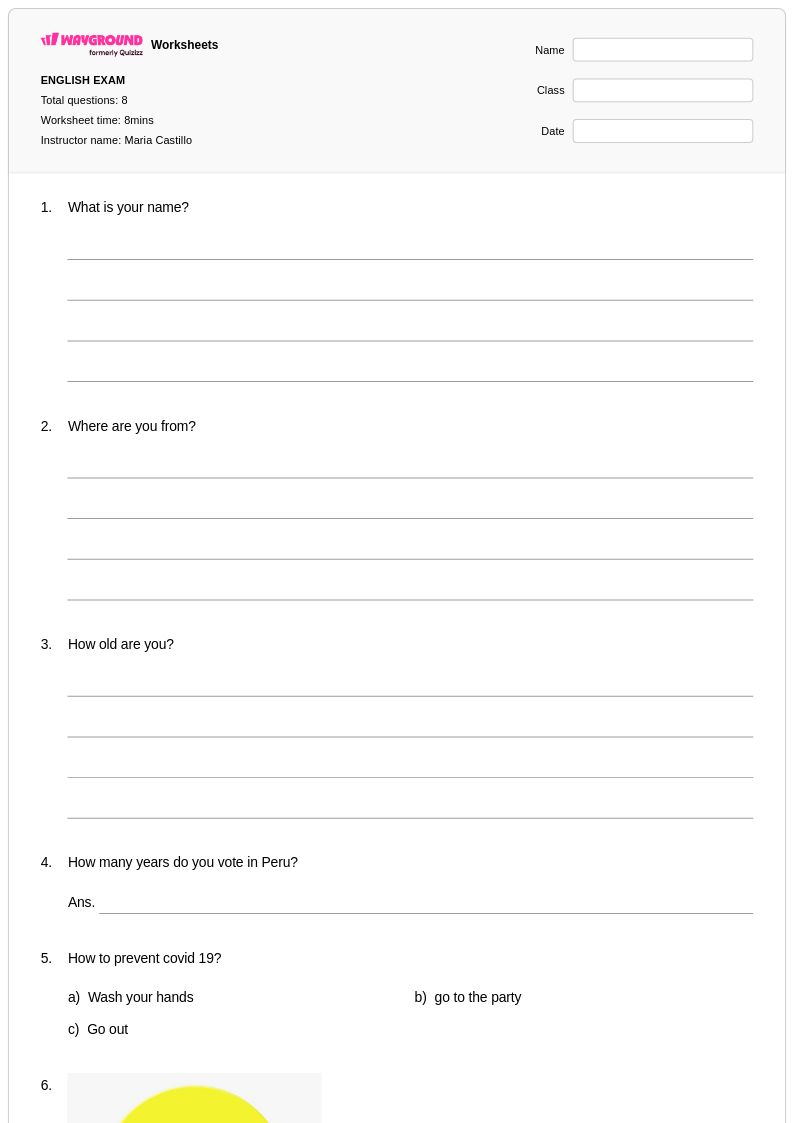
8 Q
1st
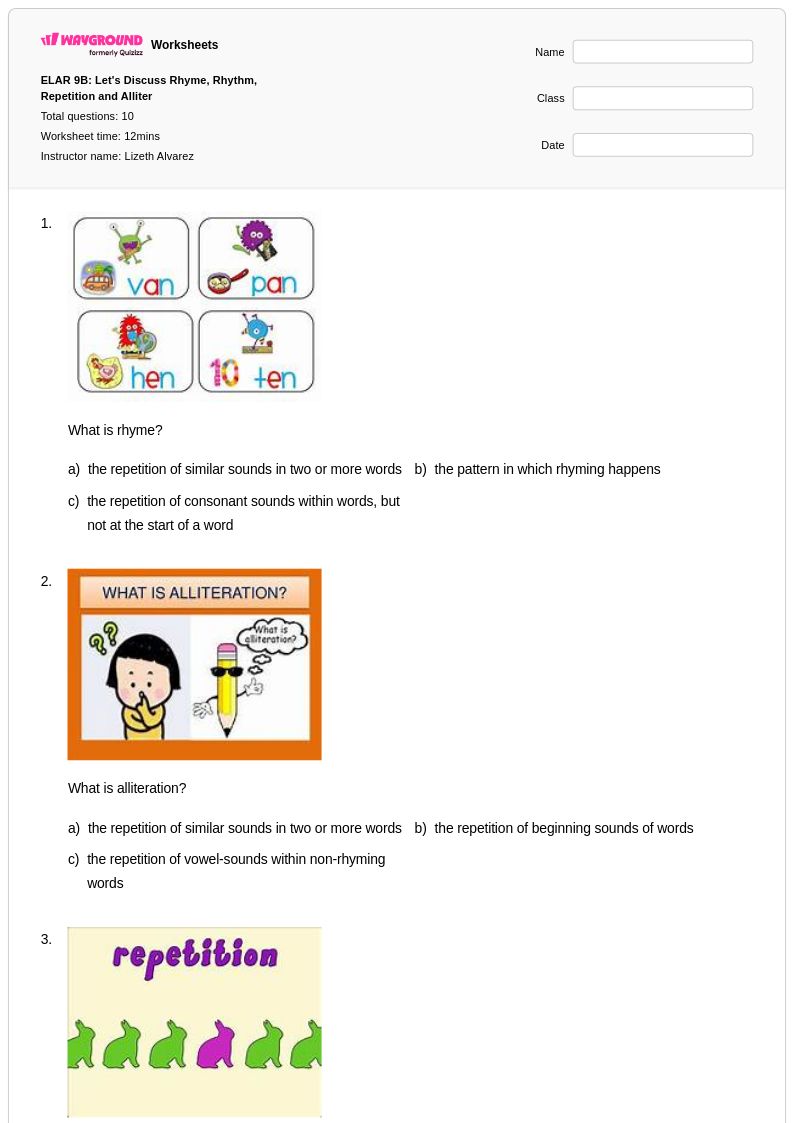
10 Q
1st
12 Q
1st
20 Q
1st
45 Q
1st - 5th
10 Q
1st
10 Q
1st - 3rd
8 Q
1st
18 Q
1st - 3rd
10 Q
1st - 3rd
11 Q
1st
Explore Poems Worksheets by Grades
Explore Other Subject Worksheets for class 1
Explore printable Poems worksheets for Class 1
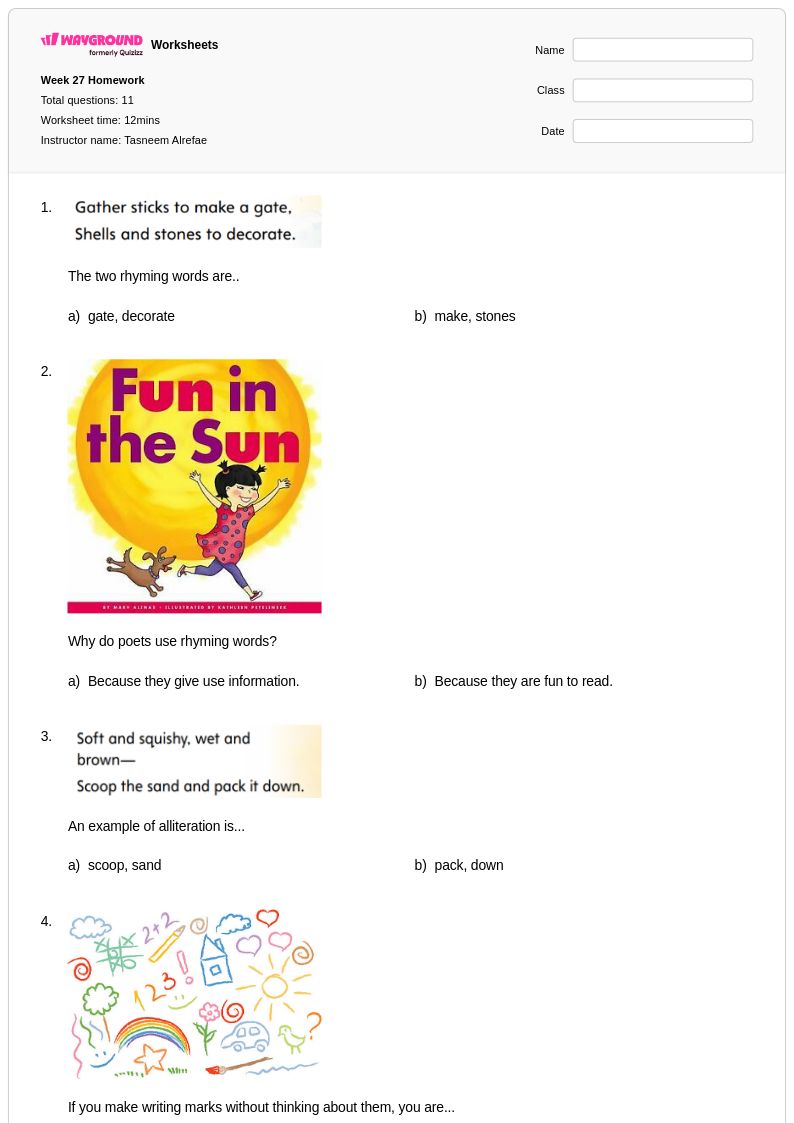
Class 1 poems worksheets available through Wayground (formerly Quizizz) provide young learners with engaging introductions to poetry as a fundamental reading genre. These carefully crafted educational resources help first-grade students develop essential literacy skills including rhythm recognition, rhyme identification, vocabulary expansion, and reading comprehension through age-appropriate poetic texts. The worksheets feature practice problems that guide students through identifying simple rhyming patterns, understanding basic poem structure, and recognizing descriptive language that makes poetry unique from other text types. Teachers can access comprehensive answer keys alongside each printable resource, ensuring efficient grading and immediate feedback opportunities. These free educational materials support classroom instruction while offering additional practice for students who need reinforcement in recognizing and appreciating poetry as a distinct reading genre.
Wayground (formerly Quizizz) empowers educators with an extensive collection of millions of teacher-created poem worksheets specifically designed for Class 1 reading instruction. The platform's robust search and filtering capabilities allow teachers to quickly locate resources that align with curriculum standards and match their students' specific learning needs. These differentiation tools enable instructors to customize worksheet difficulty levels, supporting both remediation for struggling readers and enrichment opportunities for advanced students. The flexible format options include both digital presentations and printable pdf versions, accommodating diverse classroom environments and teaching preferences. This comprehensive worksheet library streamlines lesson planning by providing educators with ready-to-use materials that systematically build students' understanding of poetry while reinforcing broader reading comprehension skills essential for first-grade literacy development.
FAQs
How do I teach students to analyze a poem in the classroom?
What poetic devices should students be able to identify by middle school?
What exercises help students practice identifying figurative language in poetry?
What mistakes do students commonly make when analyzing poetry?
How can I use poems worksheets to support students at different reading levels?
How do I use Wayground's poems worksheets in my classroom?