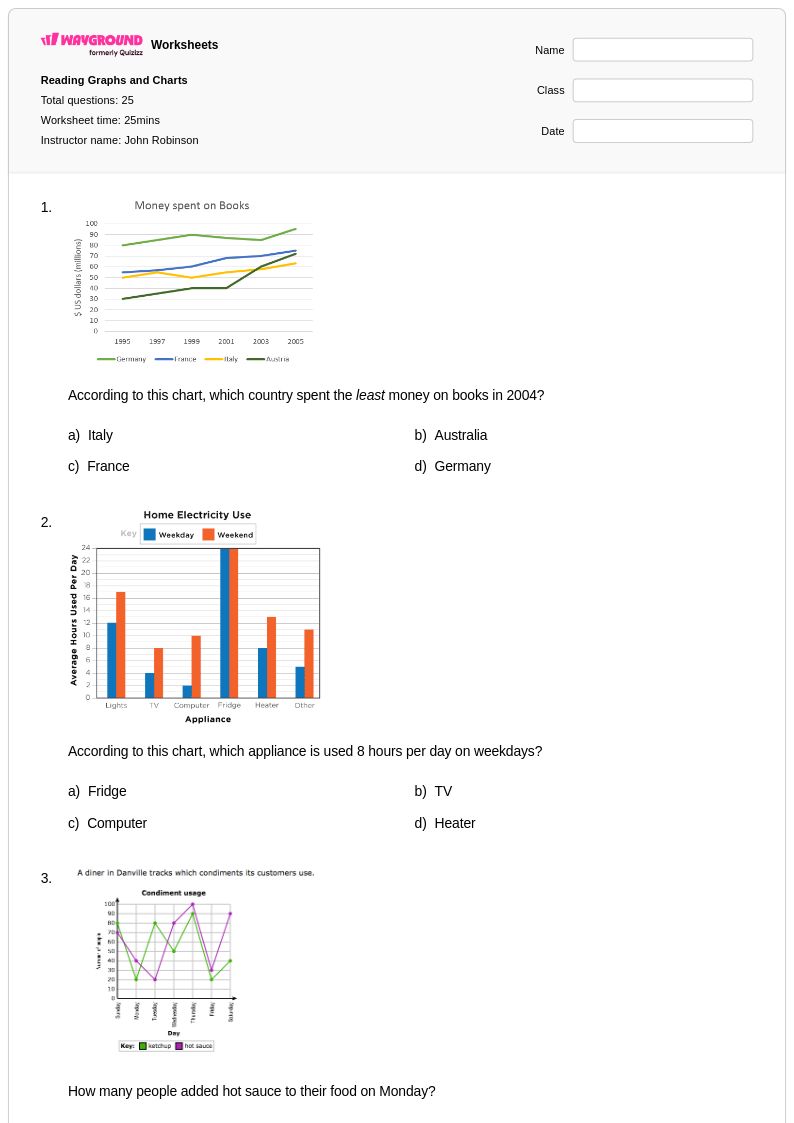
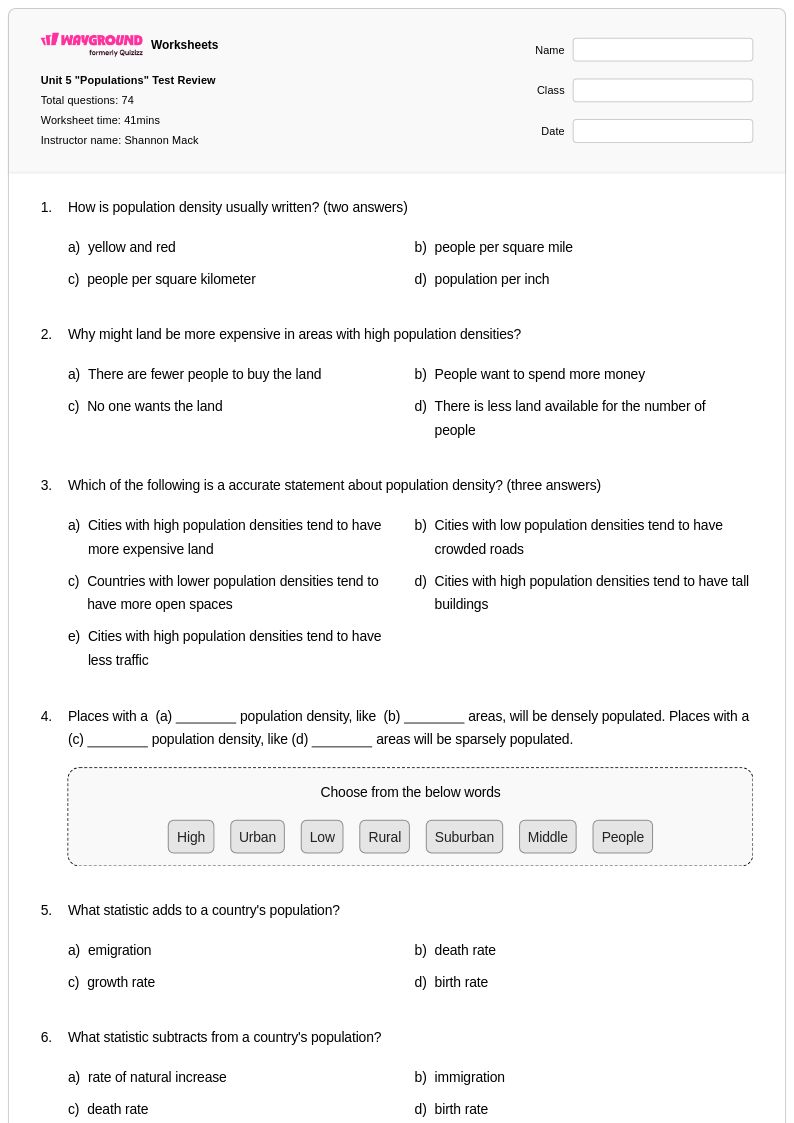
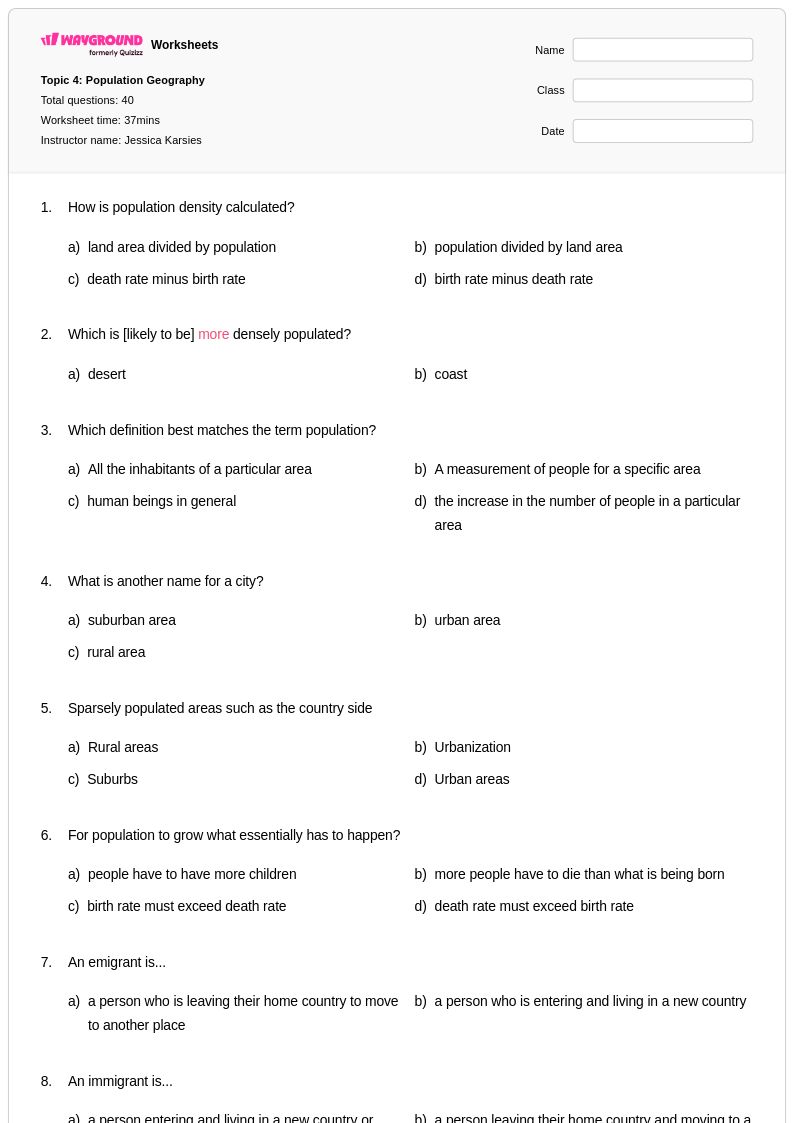
Free Printable Population Graphs Worksheets for Class 6
Explore our free Class 6 population graphs worksheets and printables that help students master interpreting demographic data, analyzing population trends, and creating charts with comprehensive practice problems and answer keys.
Explore printable Population Graphs worksheets for Class 6
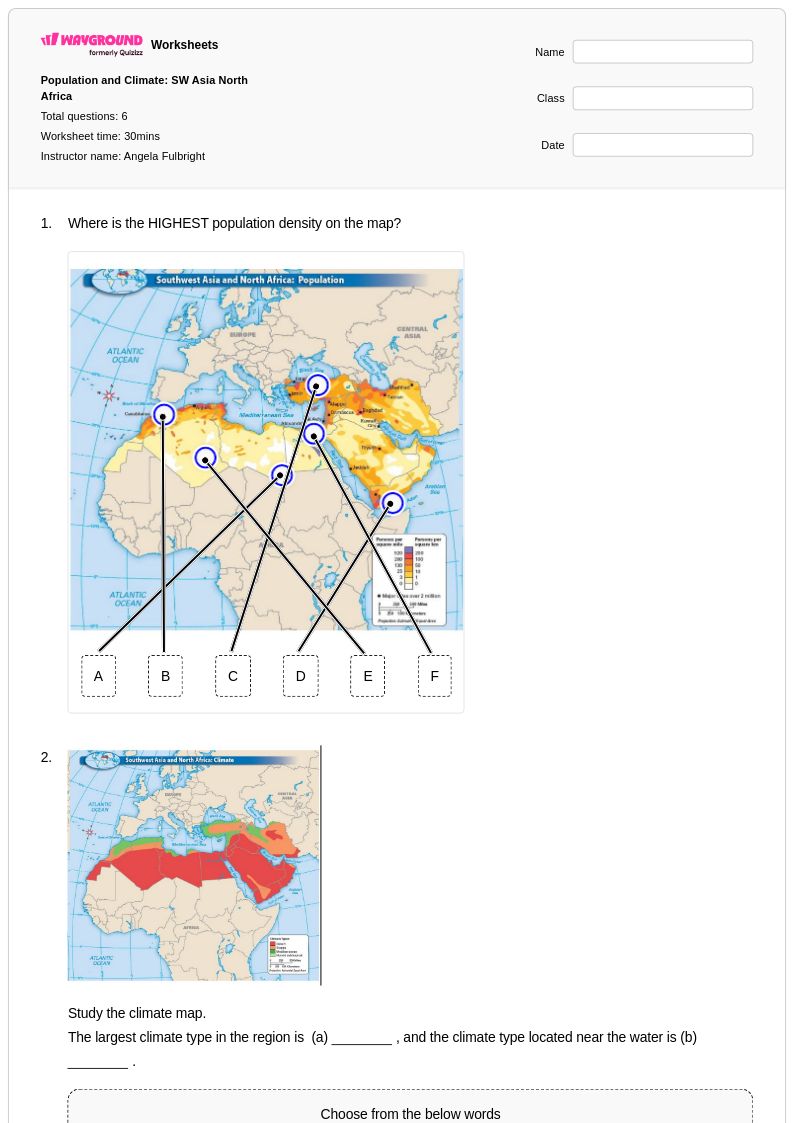
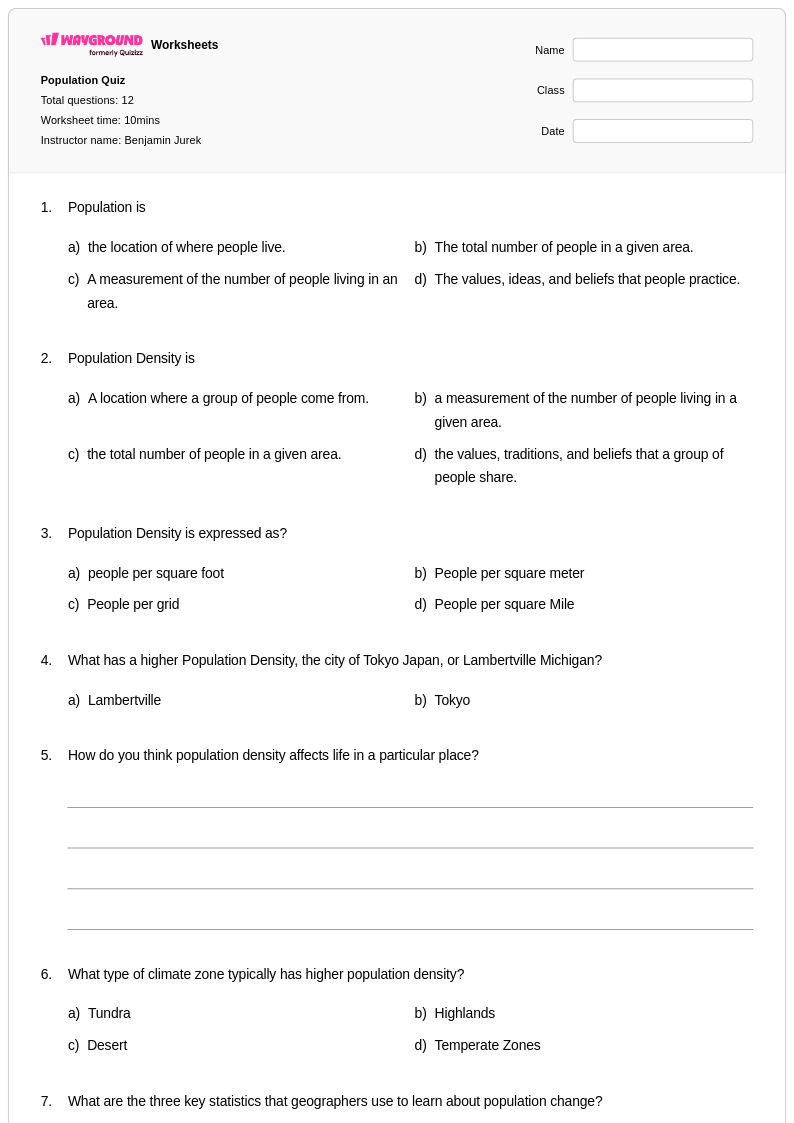
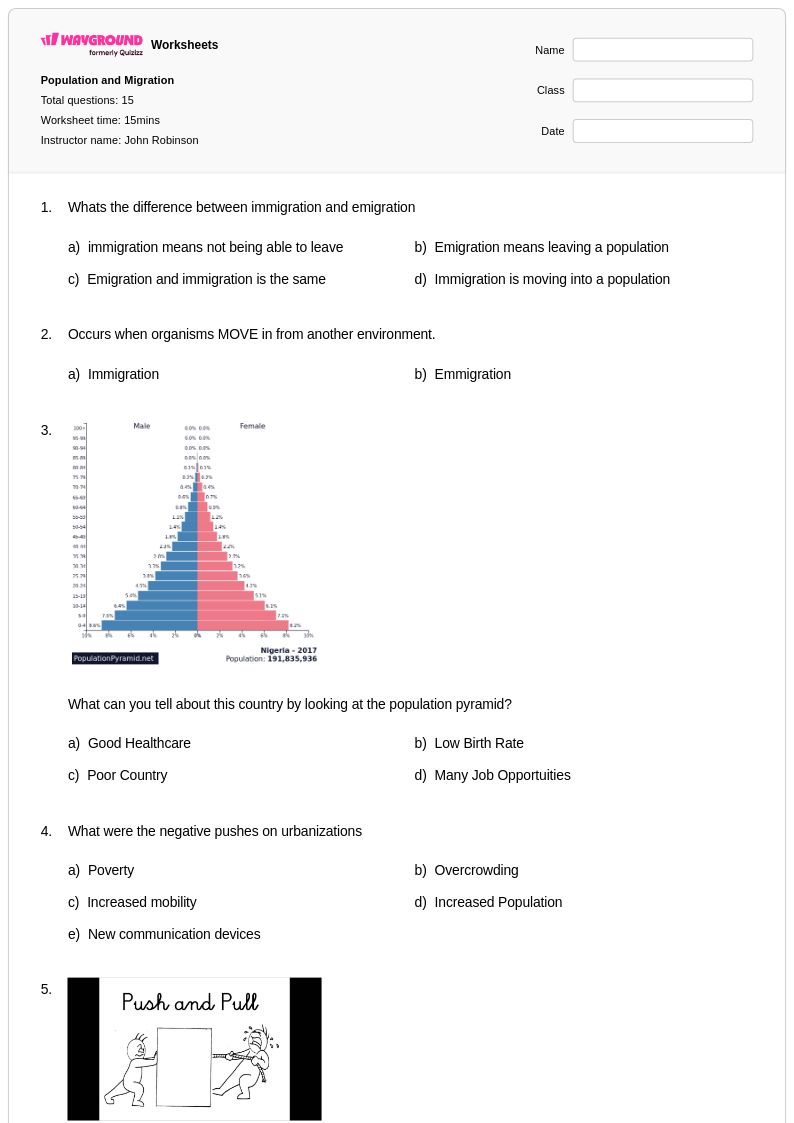
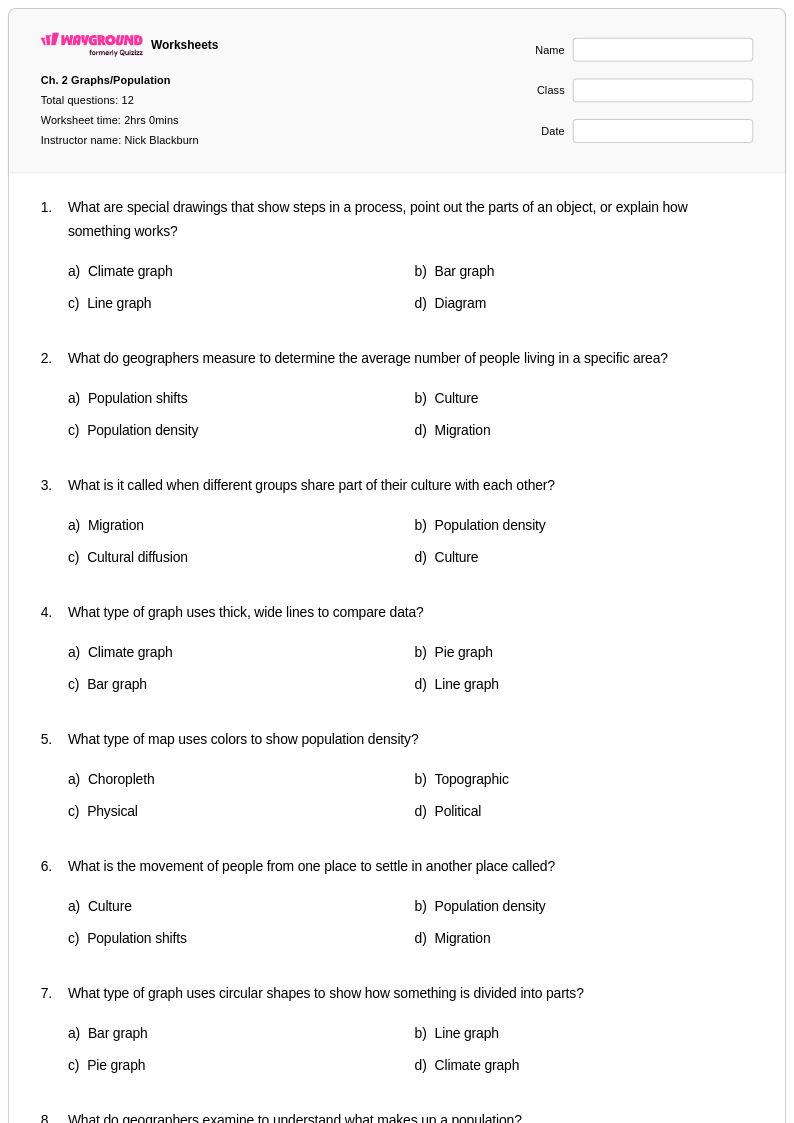
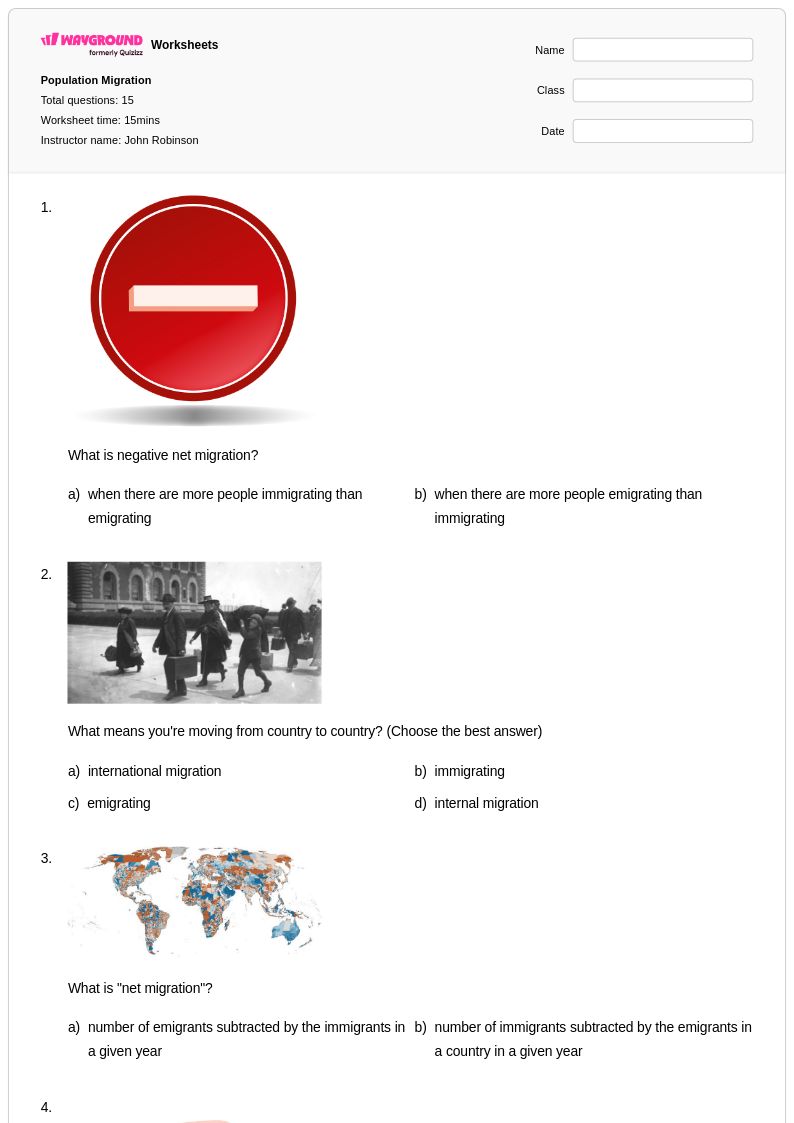
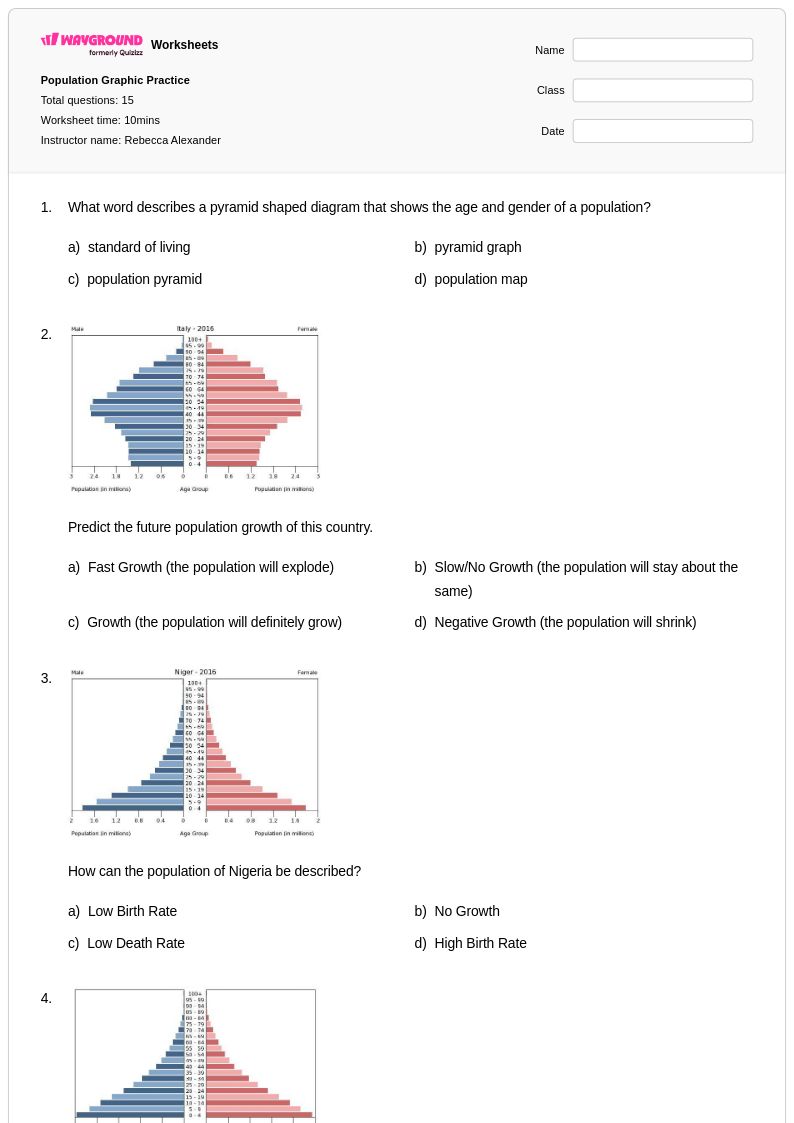
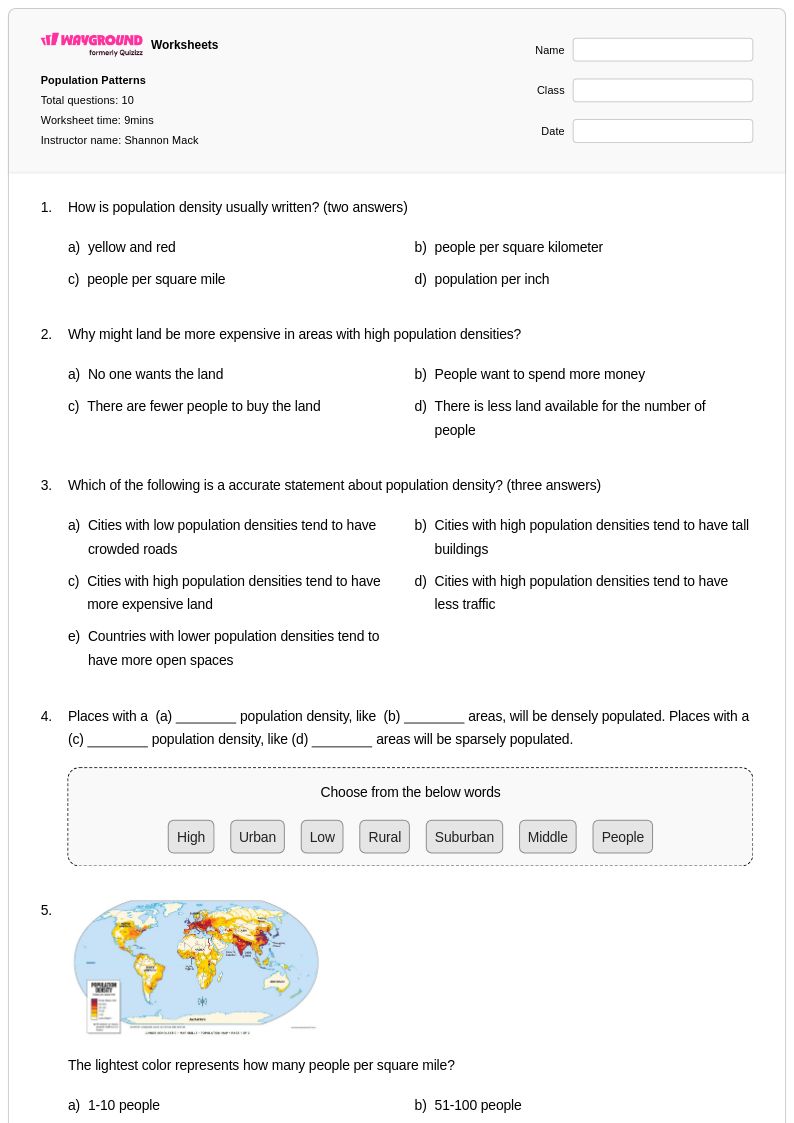
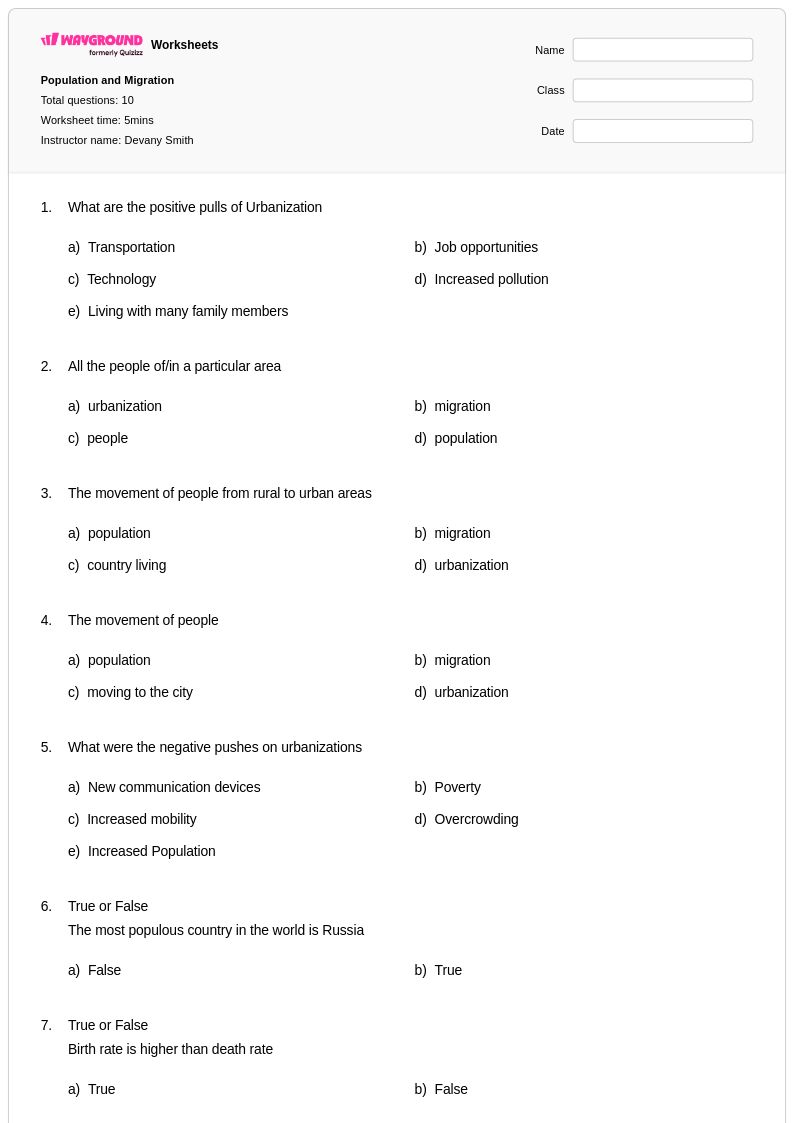
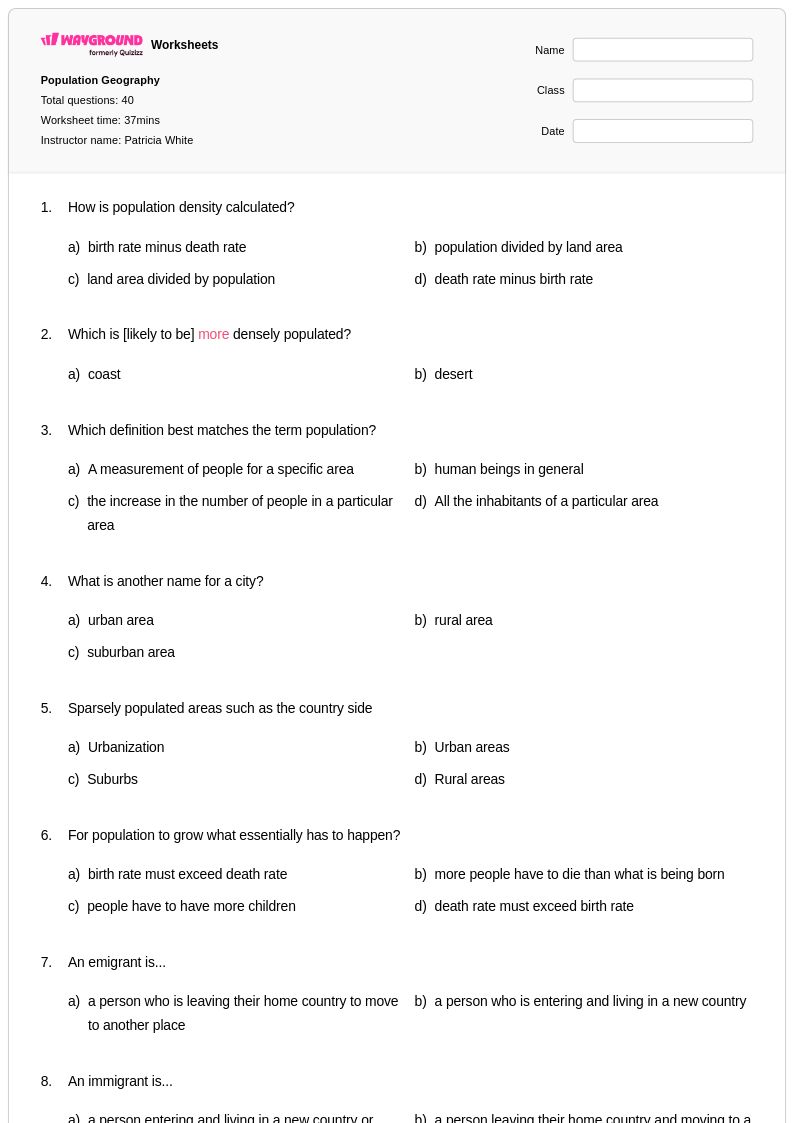
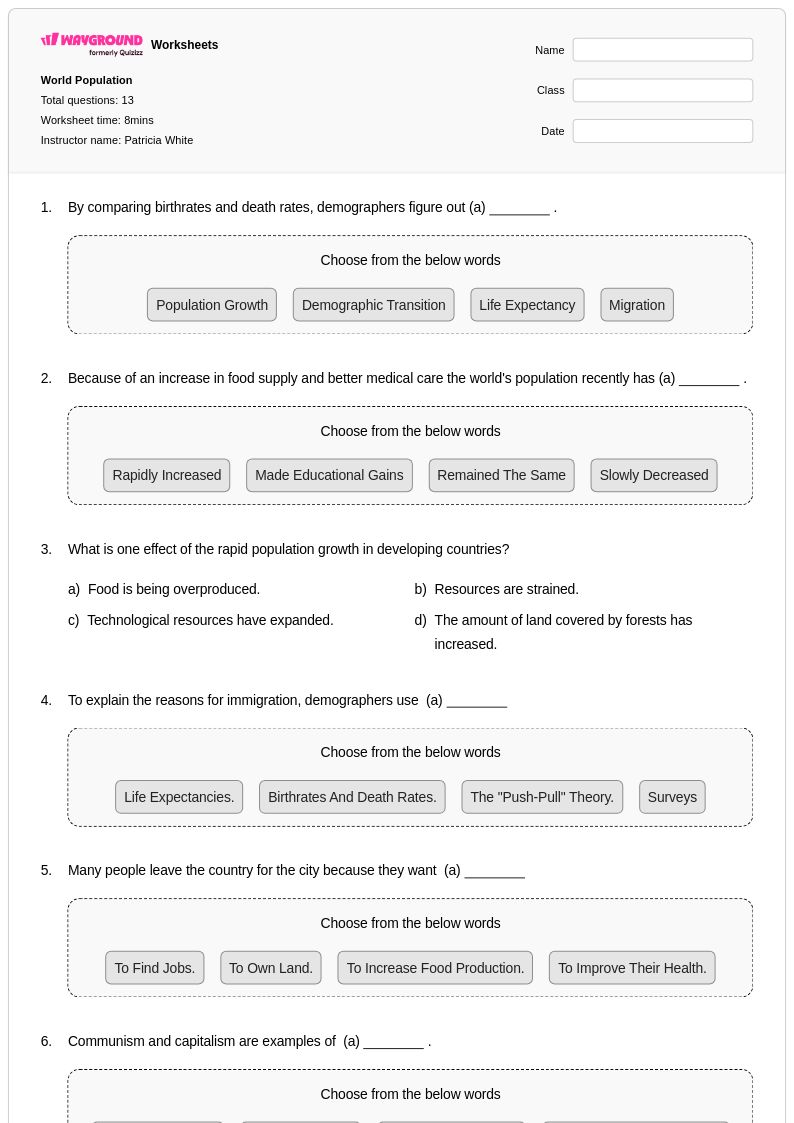
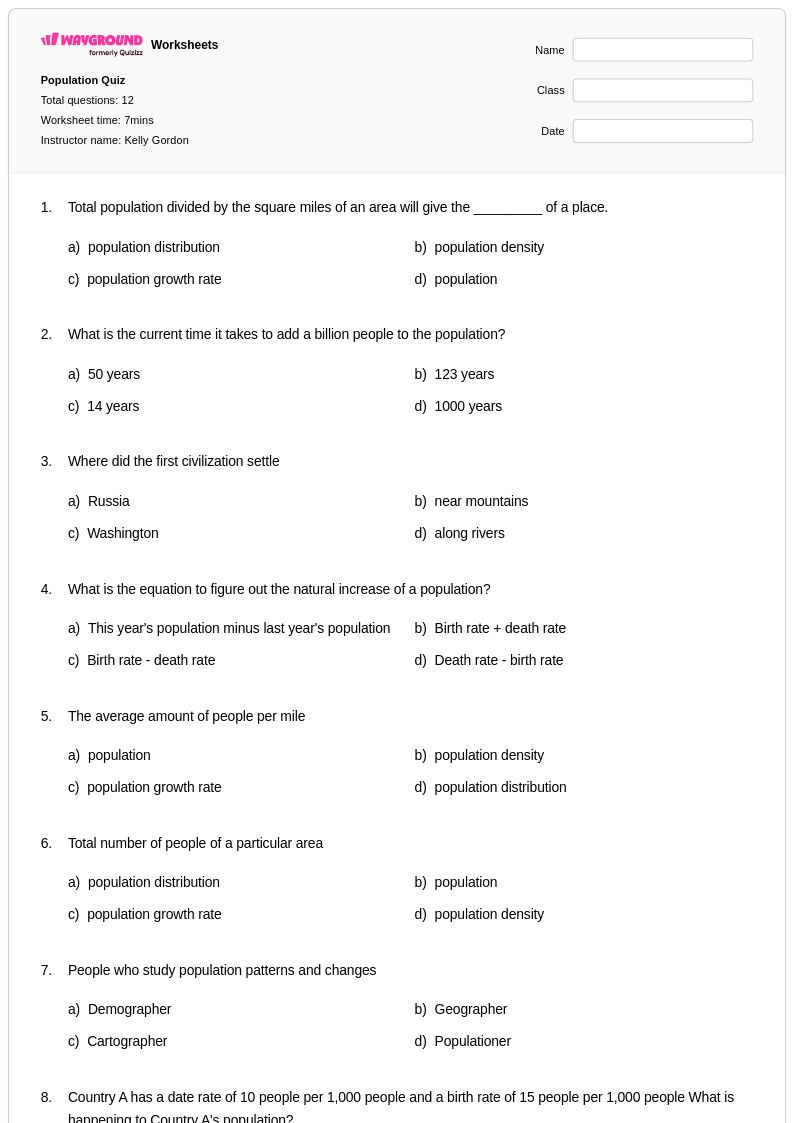
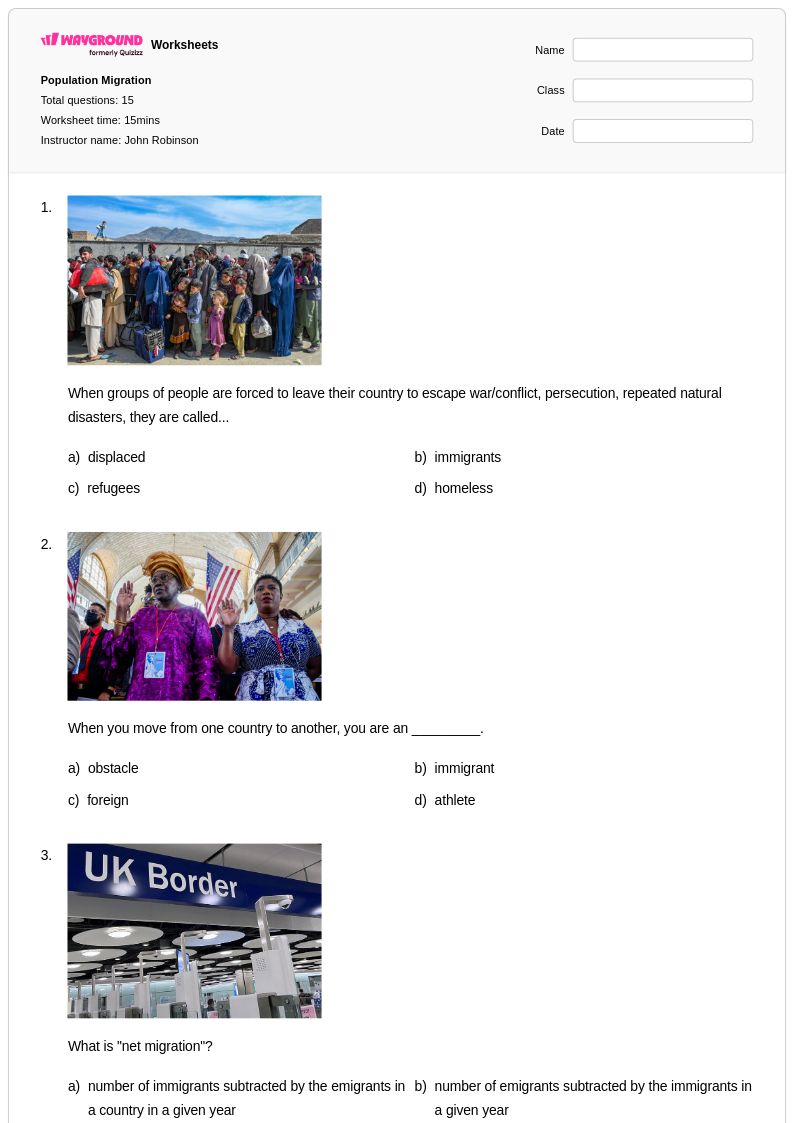
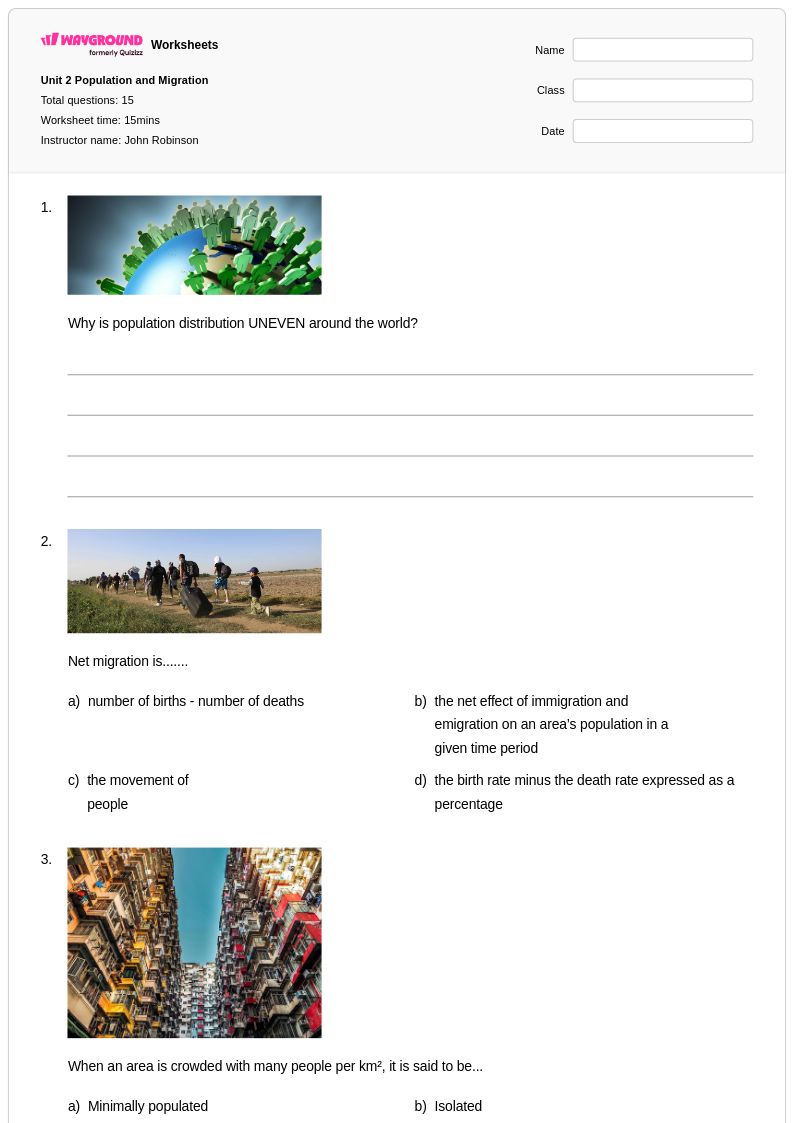
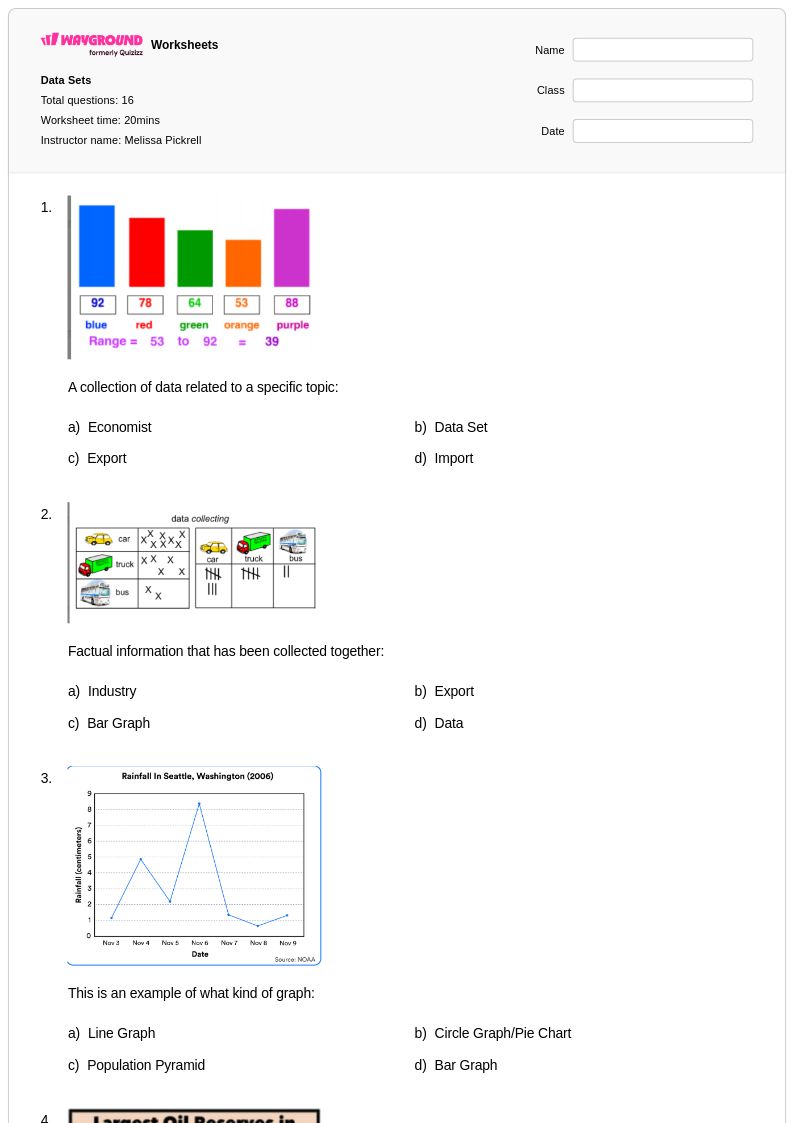
Population graphs worksheets for Class 6 students available through Wayground (formerly Quizizz) provide essential practice in interpreting demographic data and understanding how human populations are distributed and analyzed. These comprehensive worksheets strengthen critical geographic skills including reading population pyramids, analyzing birth and death rates, interpreting census data, and understanding population density maps. Students work through practice problems that cover key concepts such as population distribution patterns, demographic transitions, and the factors that influence where people live. Each worksheet collection includes detailed answer keys and is available as free printables in convenient pdf format, allowing educators to seamlessly integrate population analysis skills into their social studies curriculum.
Wayground (formerly Quizizz) supports teachers with an extensive collection of population graphs resources created by millions of educators worldwide, offering robust search and filtering capabilities that make finding grade-appropriate materials efficient and targeted. The platform's standards-aligned content ensures that worksheets meet curriculum requirements while providing differentiation tools that allow teachers to customize materials for diverse learning needs. These flexible resources are available in both printable and digital formats, including downloadable pdf versions, making them ideal for classroom instruction, homework assignments, or remote learning environments. Teachers can effectively use these materials for lesson planning, targeted remediation of struggling students, enrichment activities for advanced learners, and regular skill practice that builds students' confidence in analyzing demographic data and understanding population trends.
FAQs
How do I teach students to read and interpret population graphs?
Start by introducing each graph type separately: population pyramids, growth curves, and density maps each require distinct reading strategies. Teach students to identify axes, scale, and labels before drawing conclusions, then progress to comparative analysis across regions or time periods. Using real demographic data from countries at different stages of development helps students connect abstract graph-reading skills to meaningful geographic patterns.
What types of exercises help students practice interpreting population data?
Effective practice exercises include reading population pyramids to identify age-sex distributions, calculating population growth rates from line graphs, and comparing density maps across regions. Students also benefit from problems that require them to draw evidence-based conclusions about demographic trends rather than simply reading values off a graph. Ranging practice from single-graph interpretation to multi-source analysis builds the quantitative reasoning skills needed for advanced social studies coursework.
What mistakes do students commonly make when analyzing population pyramids?
Students frequently confuse the left-right axis (male vs. female) with value judgments, and often misread bar lengths when scales are not uniform. A common misconception is assuming a wide base always indicates a growing population without accounting for mortality rates at older age groups. Students also struggle to distinguish between relative and absolute population figures, which leads to flawed comparisons between countries of very different sizes.
How can I differentiate population graph instruction for students at different skill levels?
For students who need additional support, reduce the complexity of the graph presented, such as using a two-variable line graph before introducing population pyramids, and provide sentence starters for written analysis responses. On Wayground, teachers can apply reduced answer choices for individual students to lower cognitive load during digital practice, while advanced learners receive standard or extended problem sets without any disruption to the class. Saving these accommodation settings in Wayground means they carry over to future sessions automatically.
How do I use Wayground's population graphs worksheets in my classroom?
Wayground's population graphs worksheets are available as printable PDFs for traditional classroom use and in digital formats for technology-integrated or remote learning environments. Teachers can also host the worksheets as an interactive quiz directly on Wayground, making it easy to assign and collect student work digitally. Each worksheet includes a complete answer key, supporting both guided instruction and independent student practice.
How do population graphs connect to broader human geography standards?
Population graphs are a core analytical tool in human geography, used to examine demographic transitions, urbanization, migration patterns, and resource distribution. Proficiency in reading these graphs supports standards related to spatial thinking, data analysis, and the relationship between population dynamics and geographic factors. Embedding graph practice within geographic context helps students move beyond mechanical reading skills toward genuine demographic reasoning.