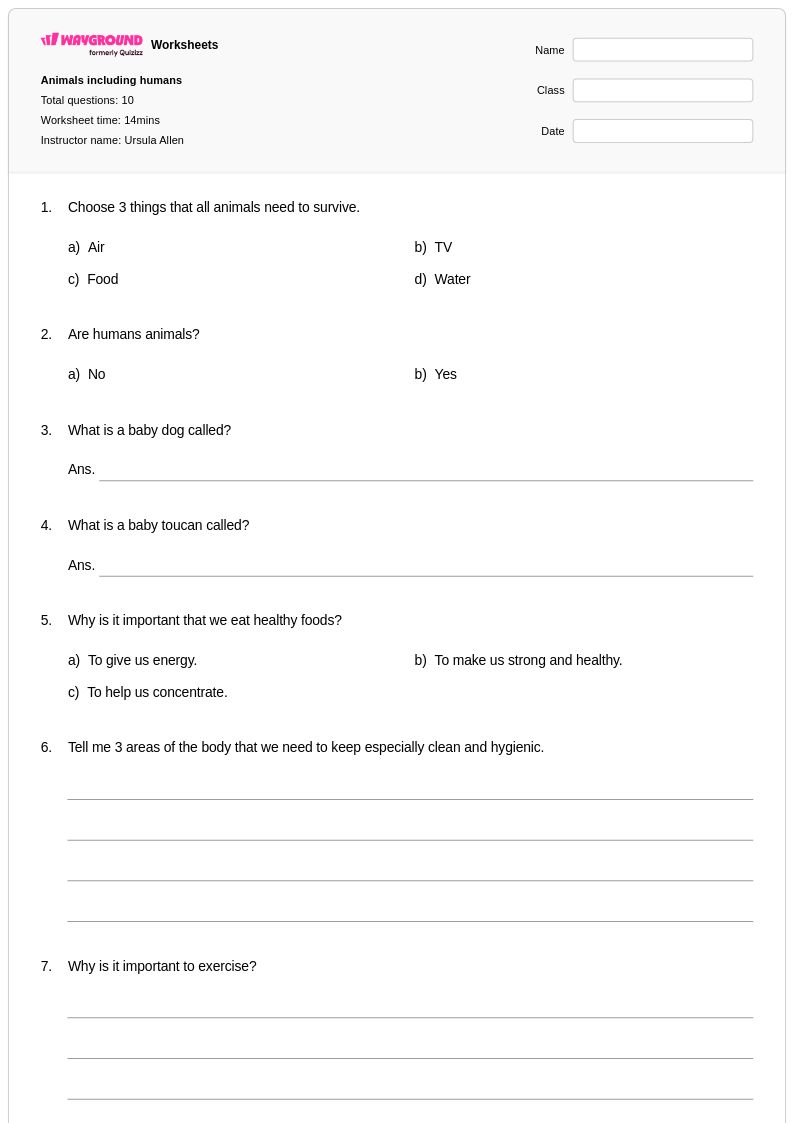
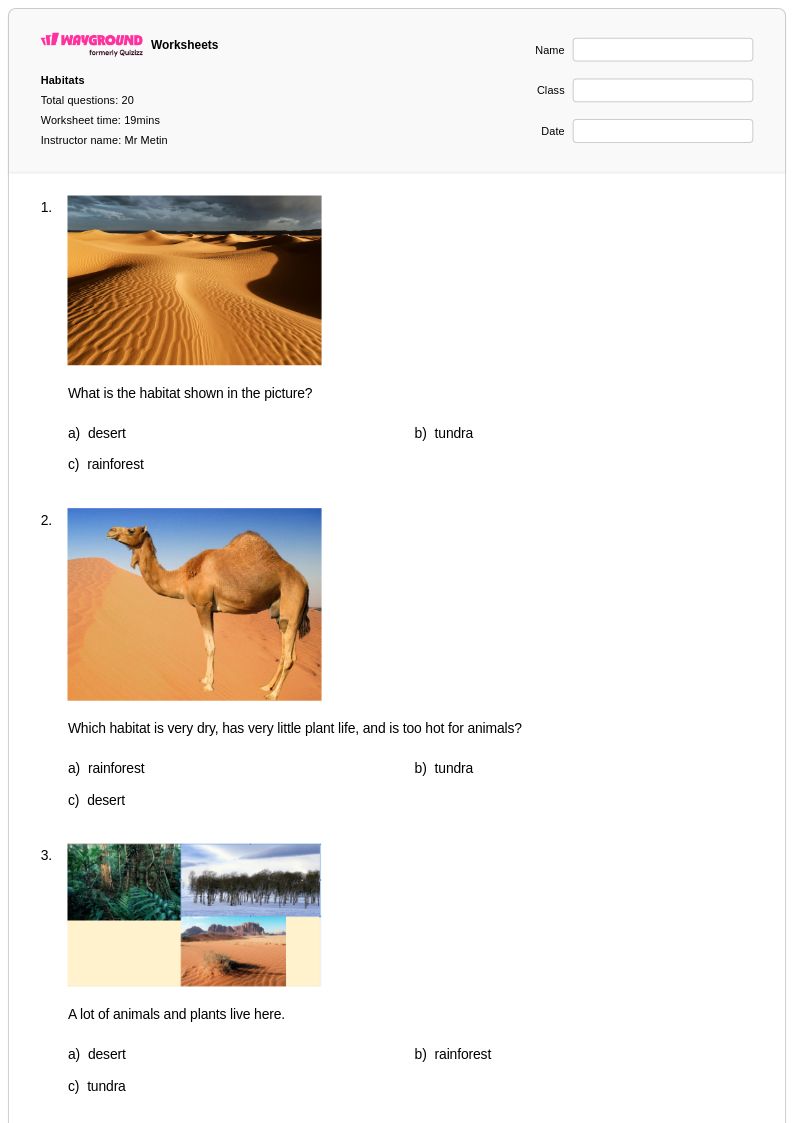
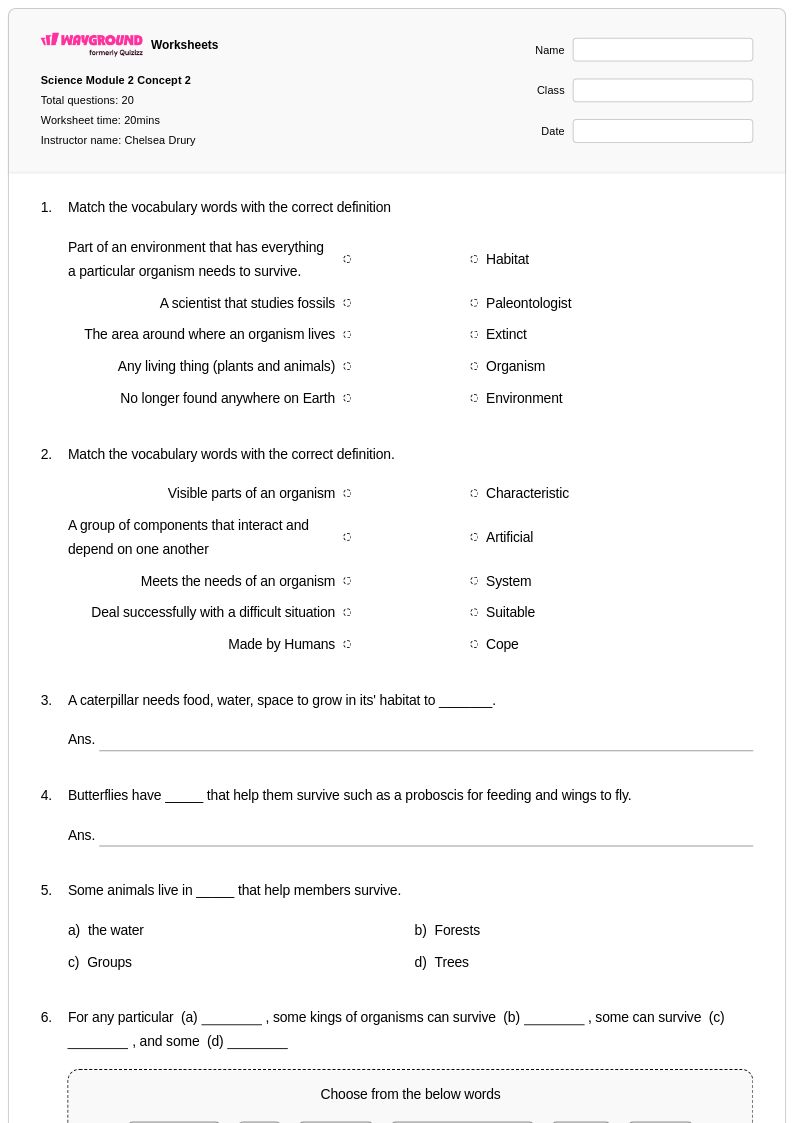
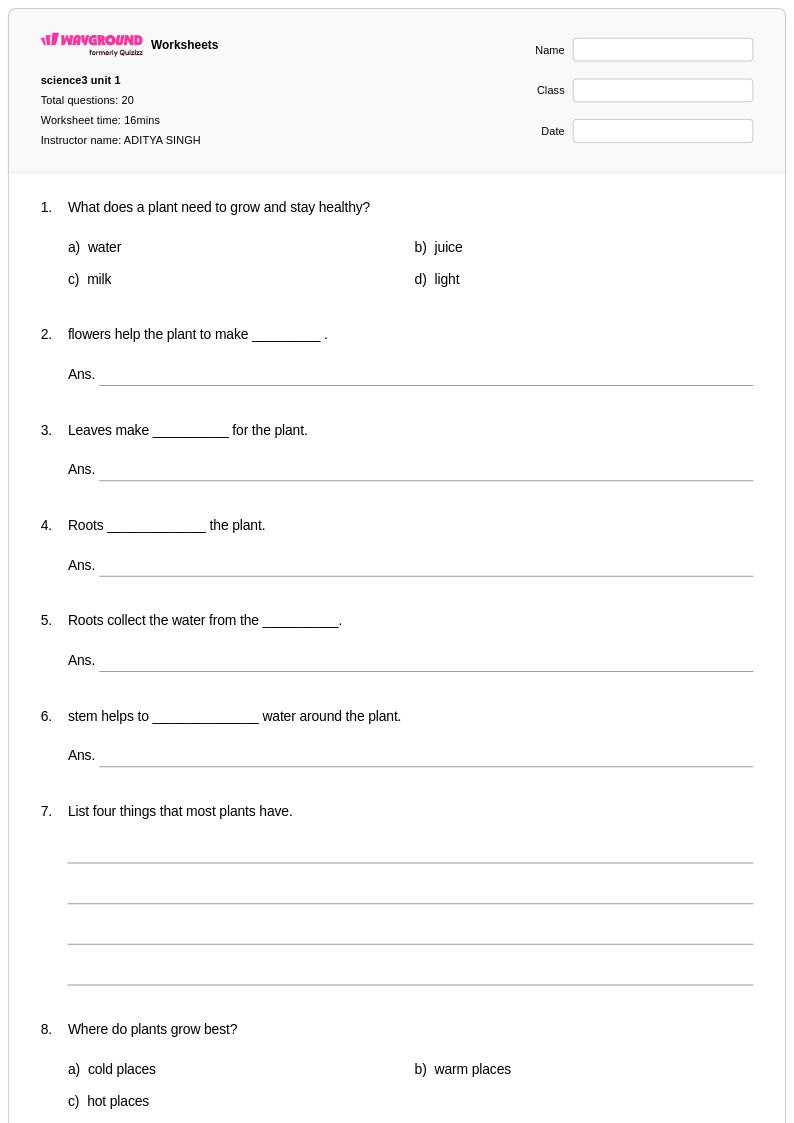
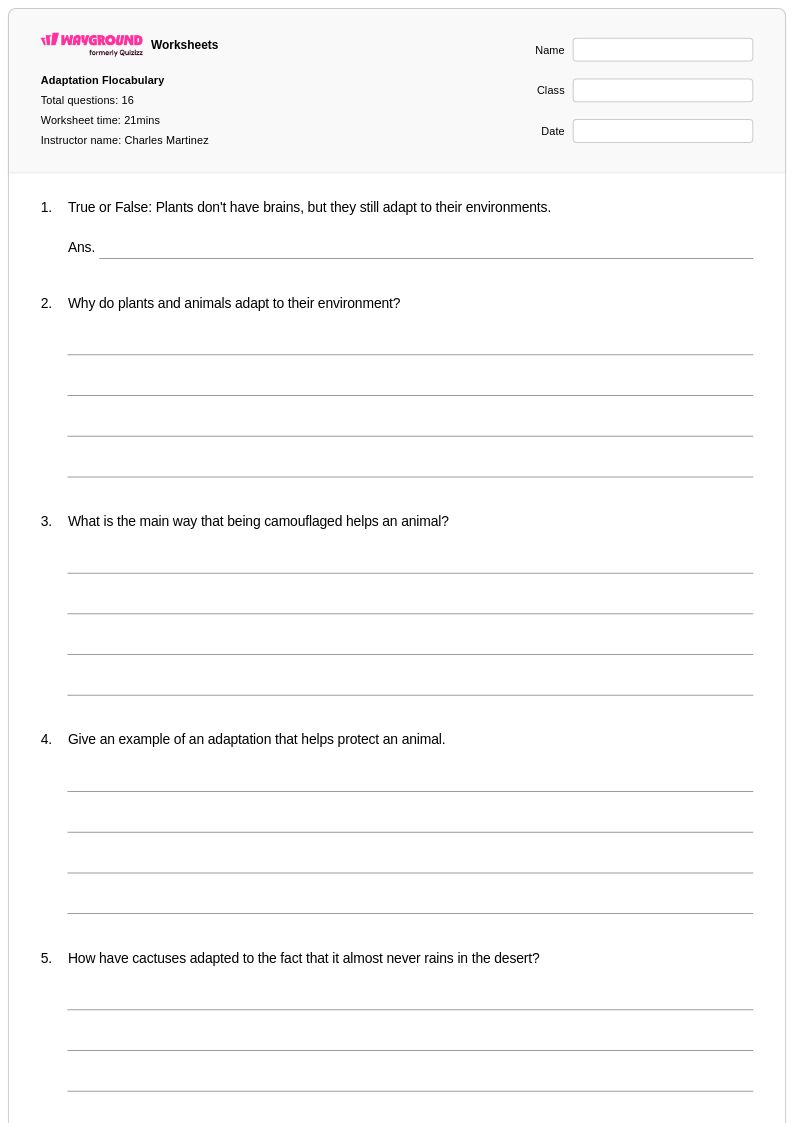
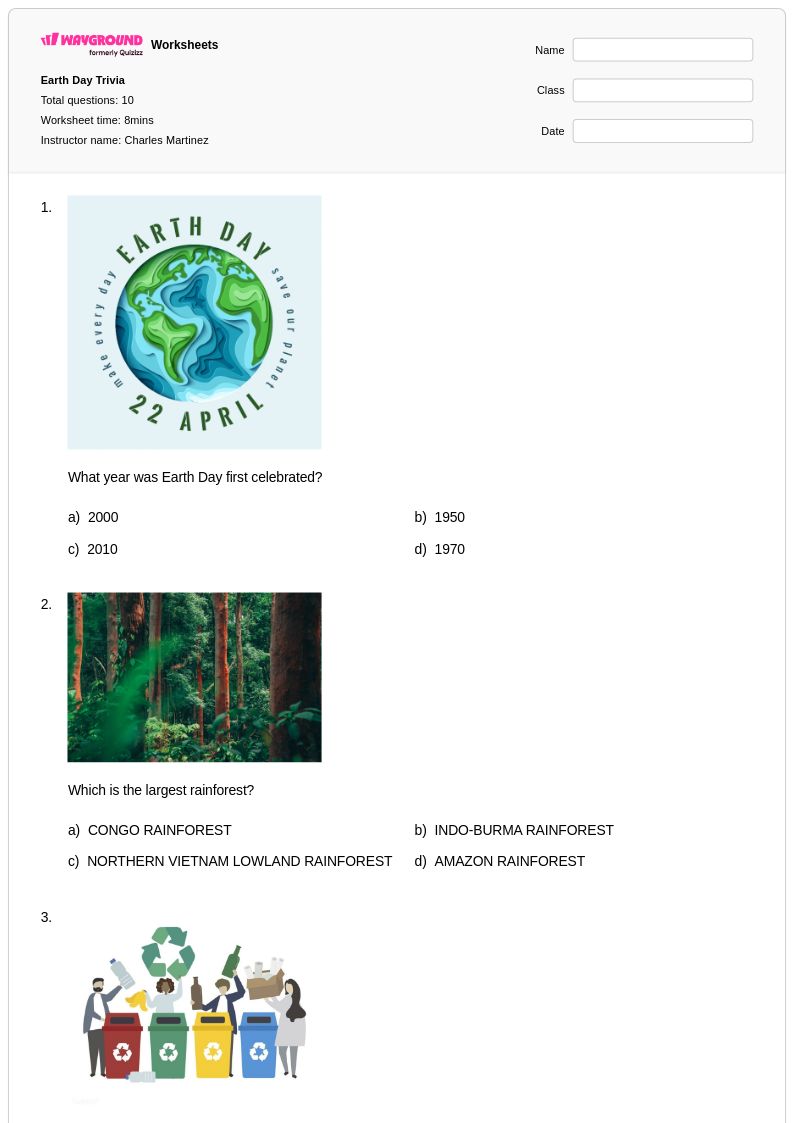
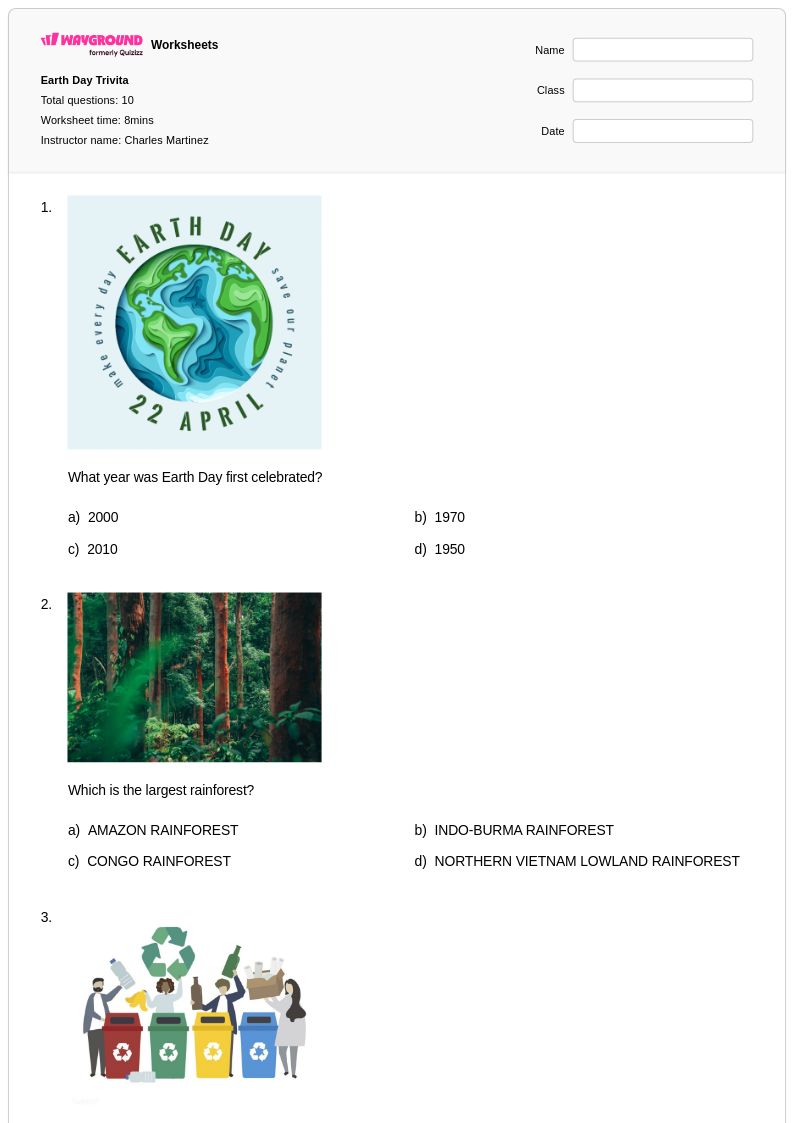
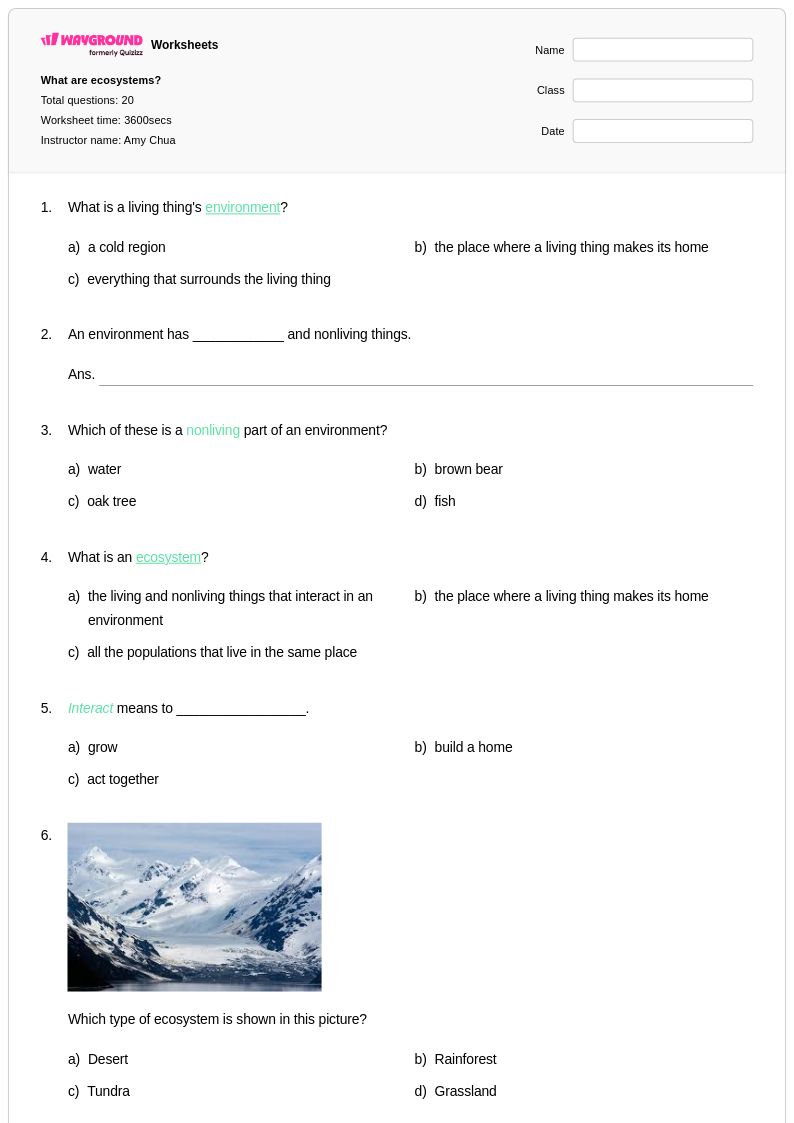
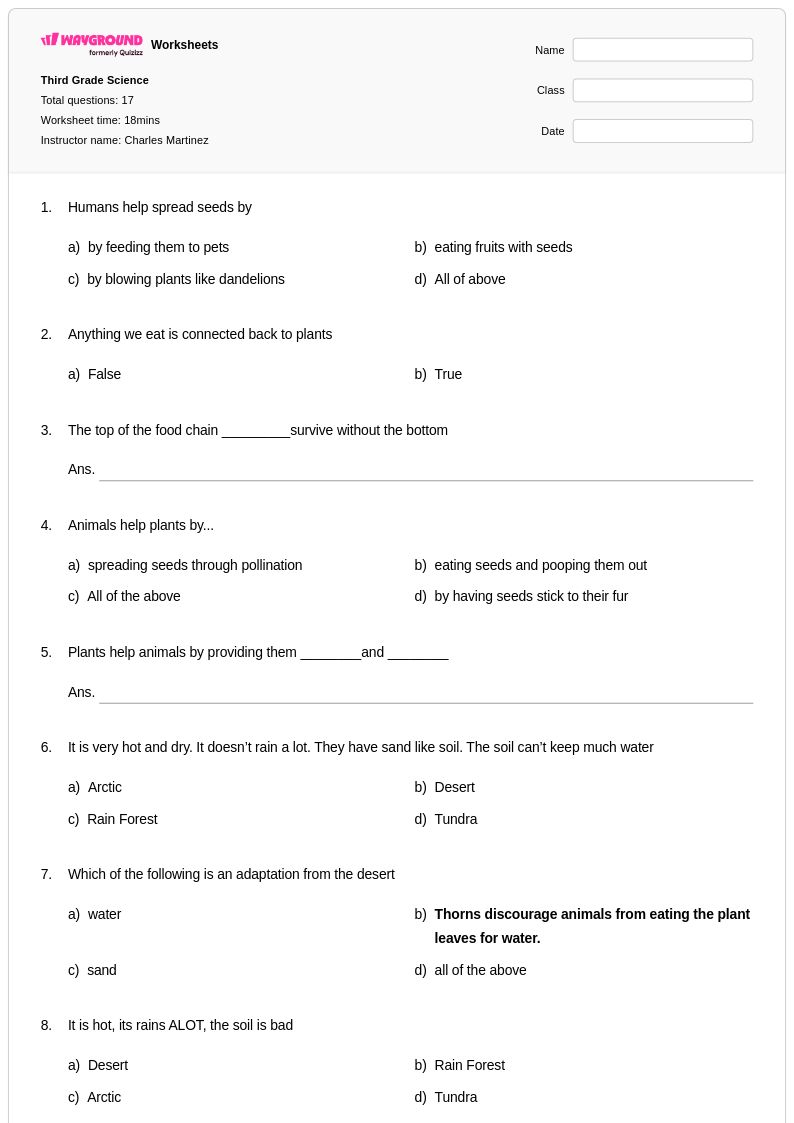
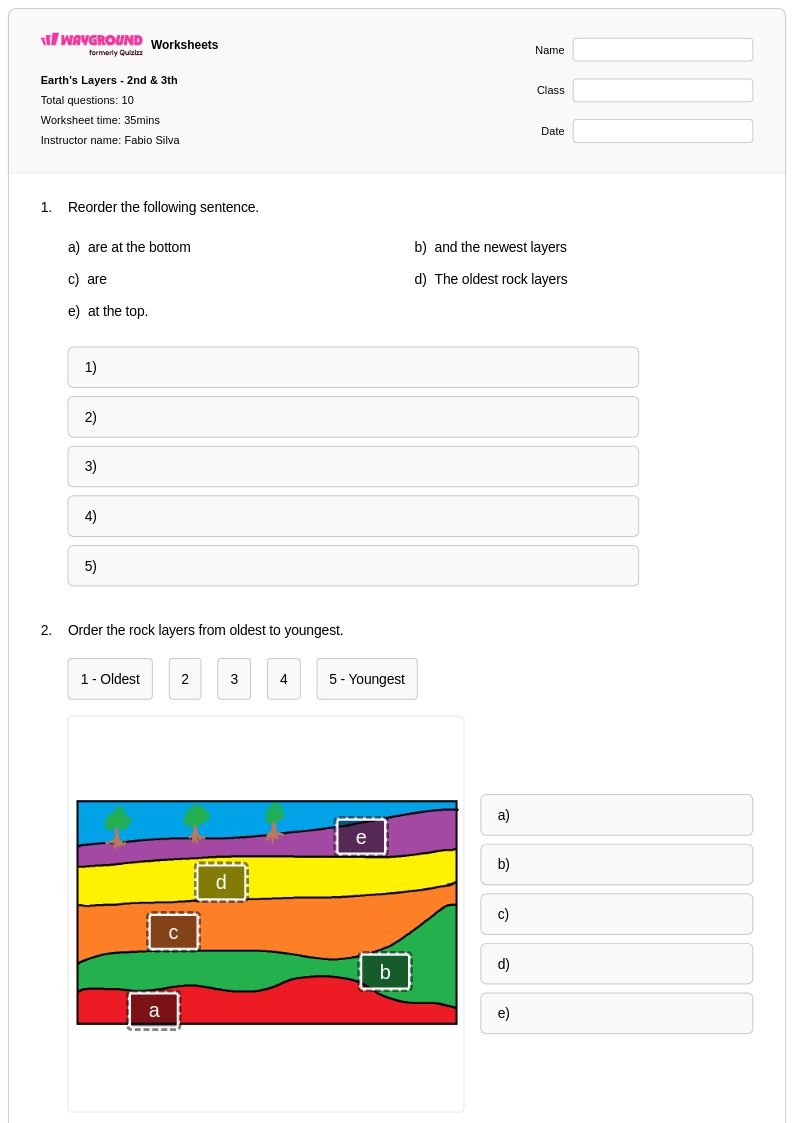
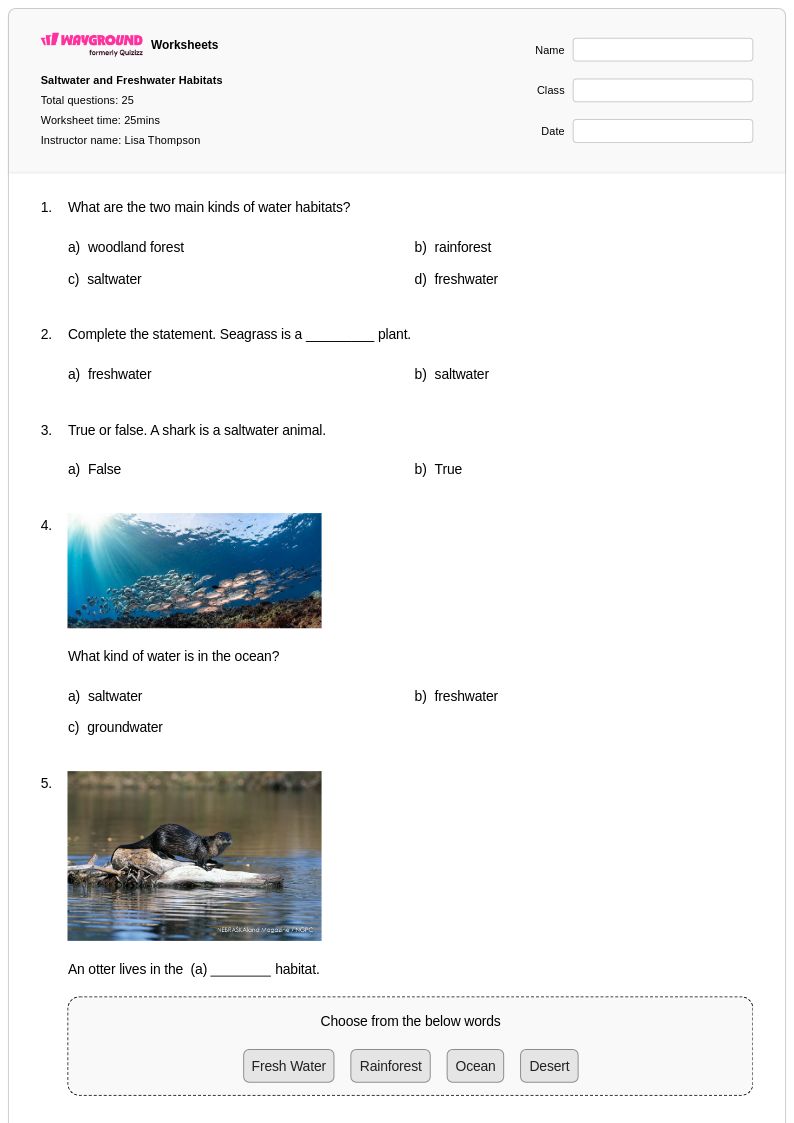
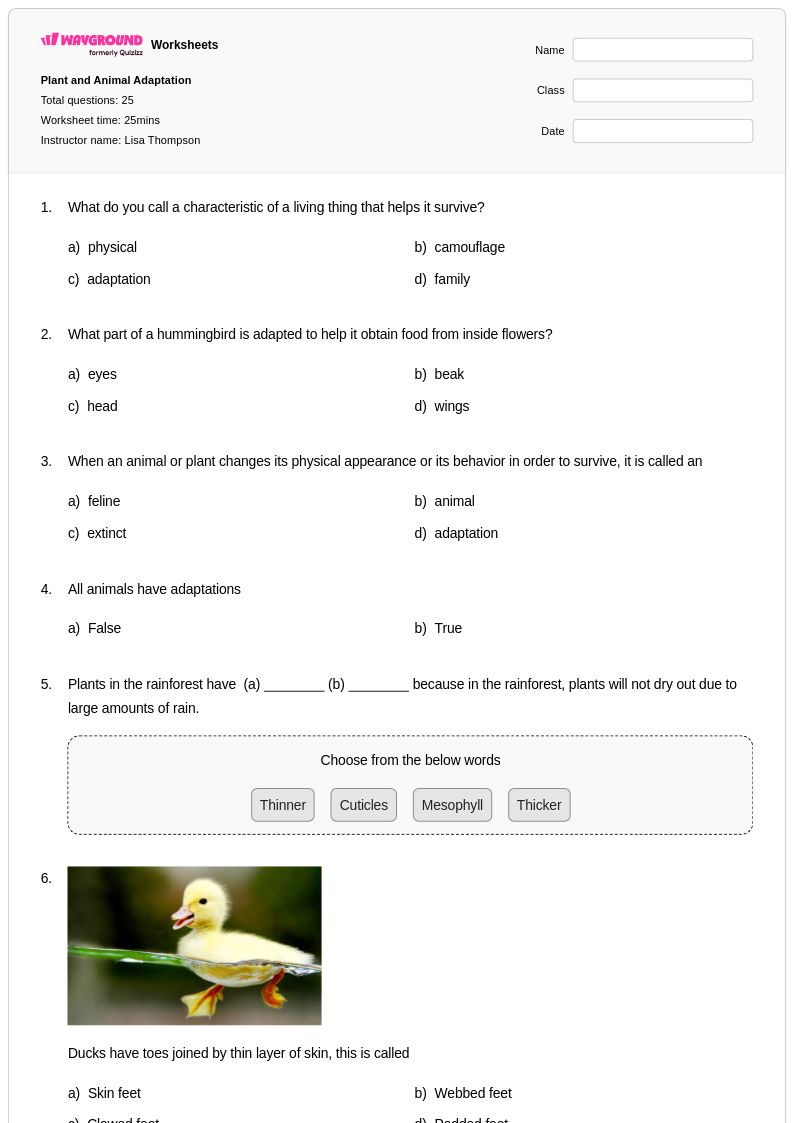
Class 3 rainforest worksheets from Wayground offer free printables and practice problems that help students explore tropical ecosystems, wildlife habitats, and environmental science through engaging PDF activities with answer keys.
Explore printable Rainforest worksheets for Class 3
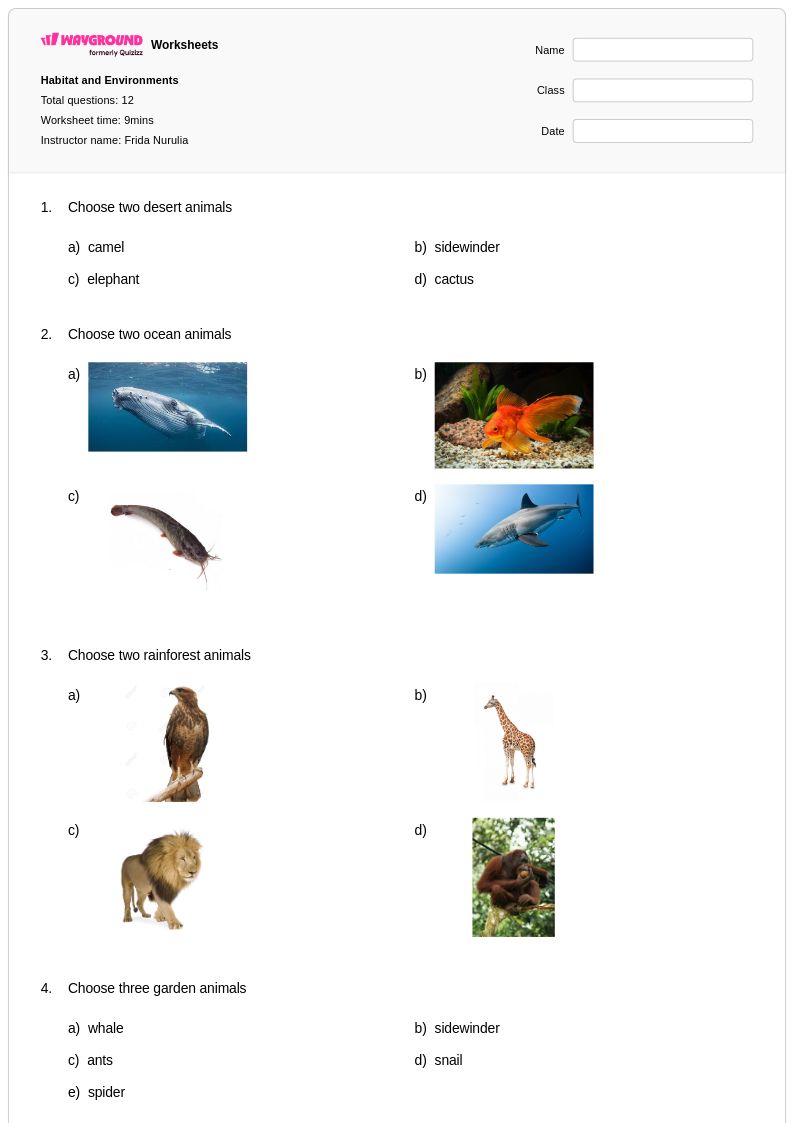
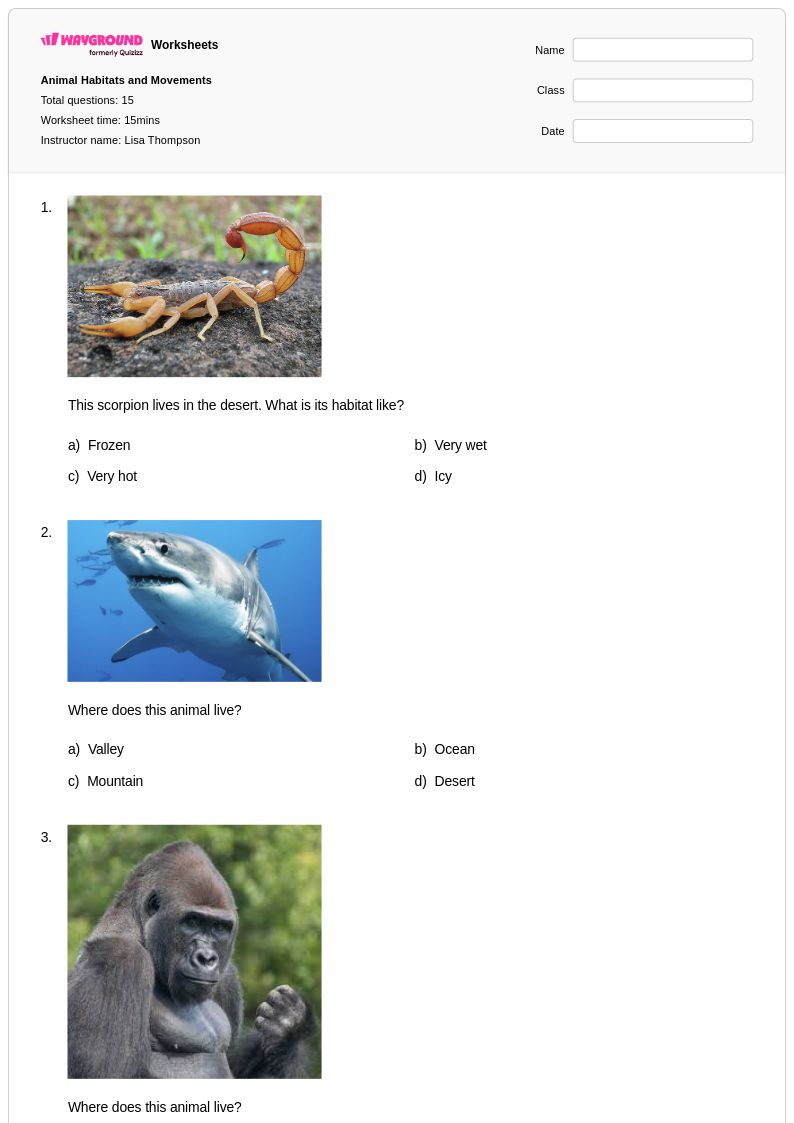
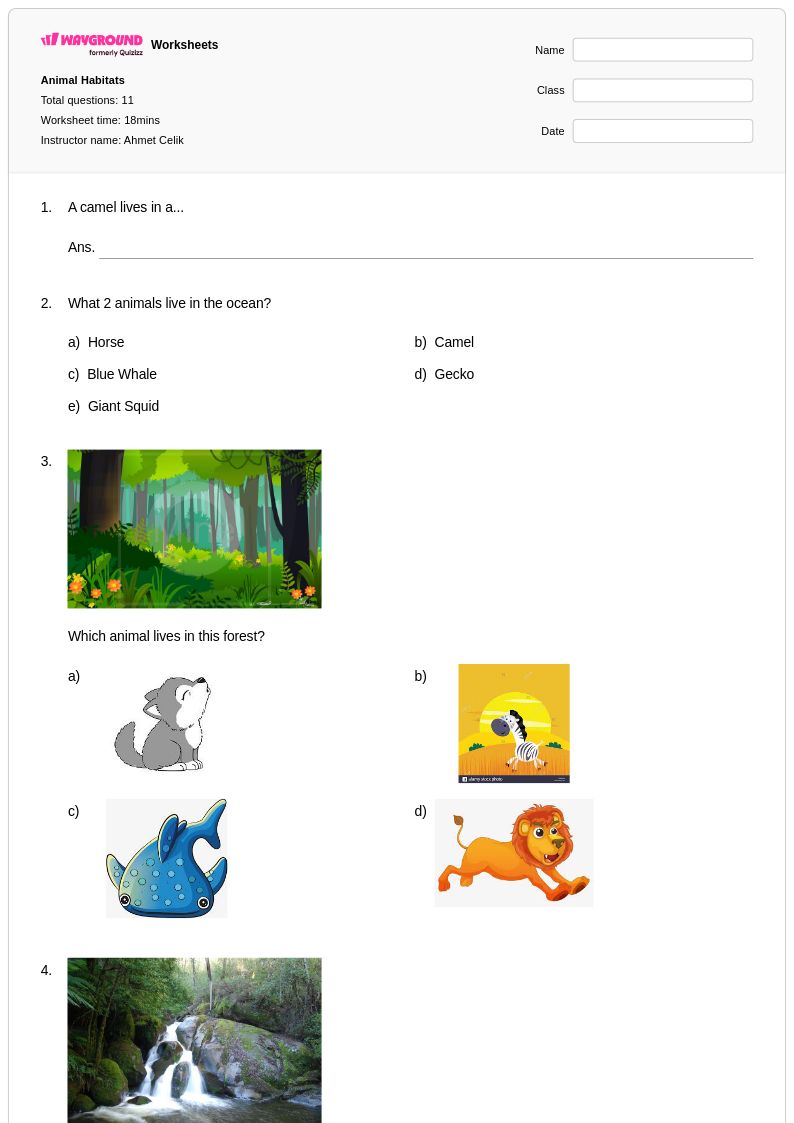
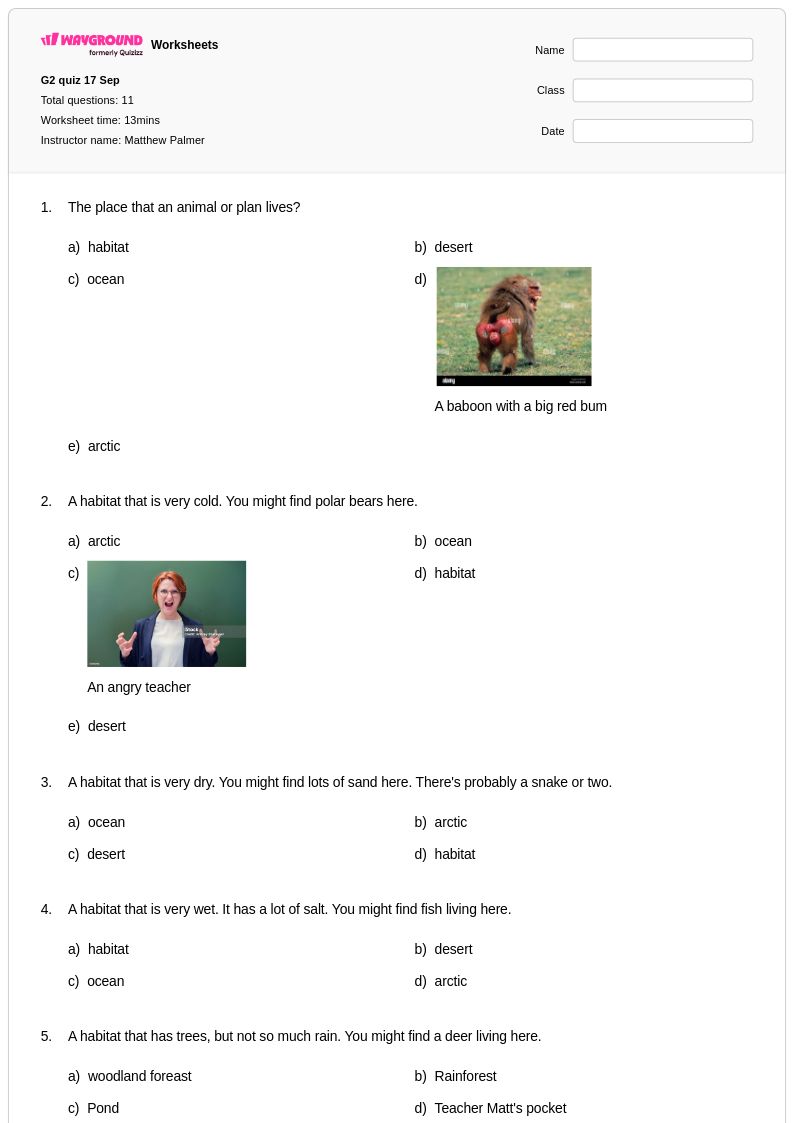
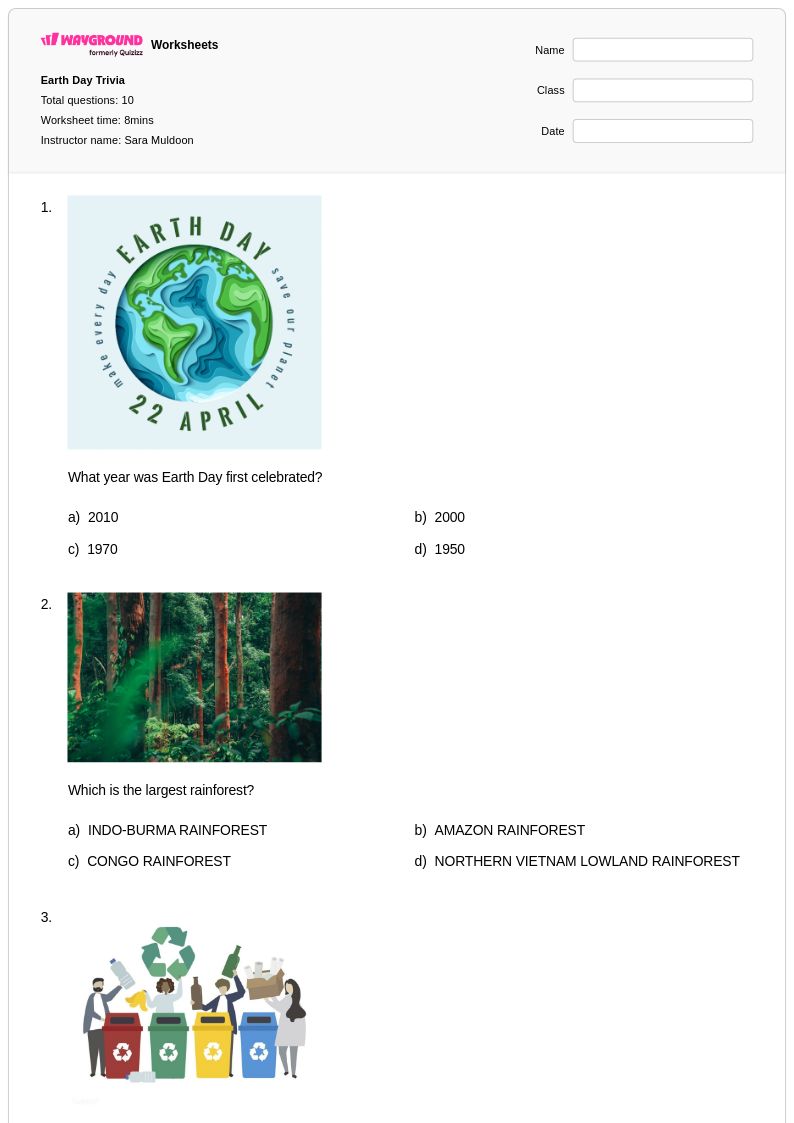
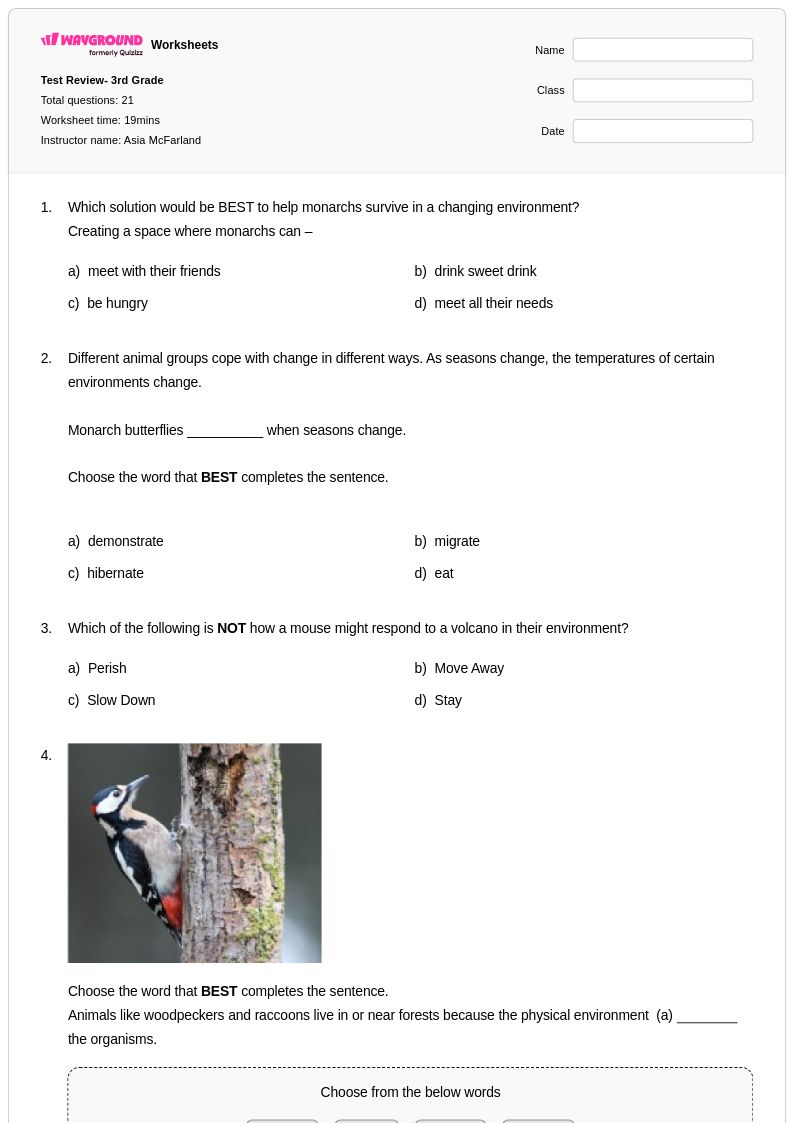
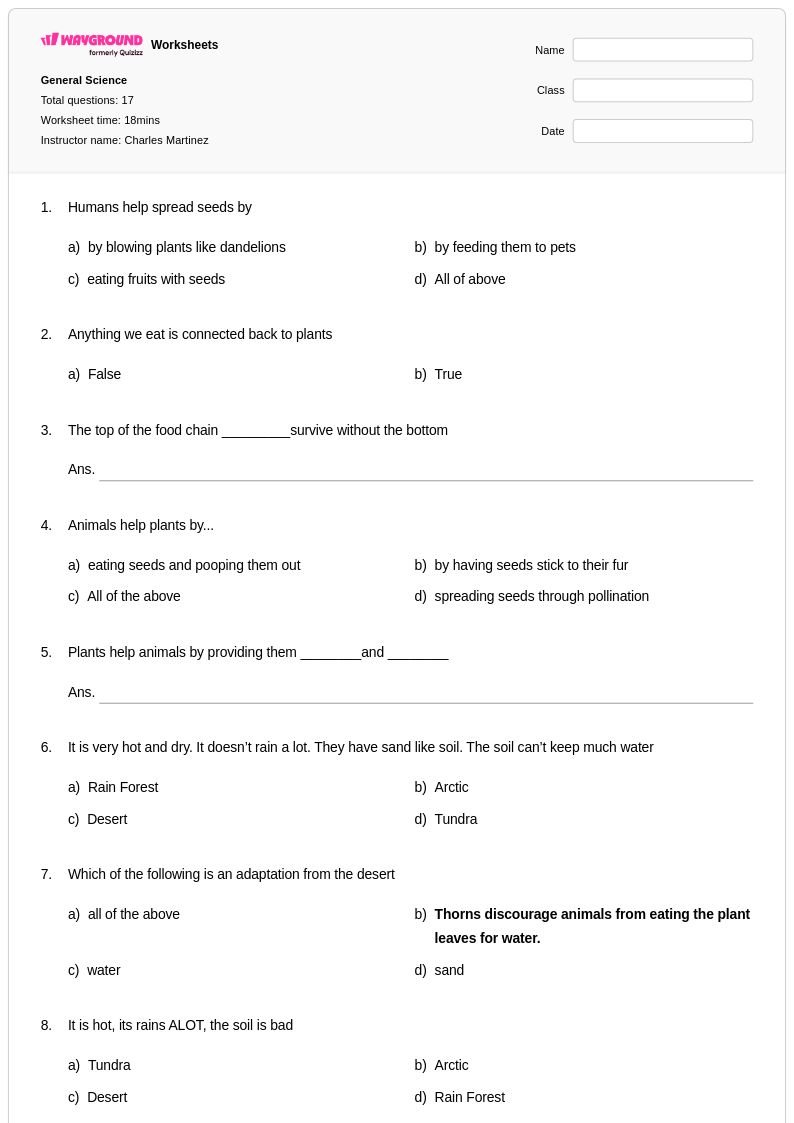
Class 3 rainforest worksheets available through Wayground (formerly Quizizz) provide young learners with engaging opportunities to explore one of Earth's most biodiverse ecosystems. These carefully designed educational materials strengthen critical thinking skills while introducing students to rainforest layers, animal adaptations, plant life cycles, and the important role rainforests play in our planet's climate system. Each worksheet collection includes comprehensive answer keys and is available as free printables in convenient PDF format, making it simple for educators to incorporate rainforest studies into their Earth and Space Science curriculum. Practice problems range from identifying rainforest animals and their habitats to understanding the water cycle's connection to these vital ecosystems, ensuring students develop both factual knowledge and scientific reasoning abilities.
Wayground (formerly Quizizz) supports educators with an extensive library of millions of teacher-created rainforest resources that can be easily accessed through powerful search and filtering tools designed specifically for Class 3 learning objectives. The platform's standards-aligned content ensures that rainforest worksheets meet curriculum requirements while offering robust differentiation tools that allow teachers to customize materials for diverse learning needs and abilities. Whether educators need printable PDF worksheets for classroom activities or digital formats for remote learning, the flexible customization options support effective lesson planning and provide targeted resources for remediation, enrichment, and skill practice. This comprehensive approach enables teachers to create meaningful rainforest learning experiences that connect students to the natural world while building essential scientific literacy skills.
FAQs
How do I teach rainforest ecosystems to students?
Start by introducing the four main layers of the rainforest — emergent, canopy, understory, and forest floor — and explain how each layer supports distinct species and ecological functions. From there, connect rainforest structure to broader concepts like biodiversity, food webs, and climate regulation. Using data-driven activities that ask students to analyze precipitation patterns and species adaptations helps ground abstract ecological concepts in observable evidence.
What topics should rainforest worksheets cover?
Effective rainforest worksheets should cover rainforest layers and their characteristics, biodiversity patterns, climate data including precipitation and temperature ranges, species adaptations, and the ecological relationships between organisms. Conservation content is also valuable, helping students connect what they learn about rainforest science to real-world environmental significance. Practice problems that ask students to interpret data or compare ecosystems deepen comprehension beyond surface-level recall.
What misconceptions do students commonly have about rainforests?
A common misconception is that rainforests are uniformly hot and wet throughout the year — students often don't recognize the seasonal variation in precipitation that many tropical rainforests experience. Another frequent error is conflating biodiversity with abundance, assuming that because a rainforest has many species, each species must have large populations. Students also often underestimate the role of rainforests in global climate regulation, treating them as regionally isolated rather than as systems with planetary-scale influence.
How can I differentiate rainforest lessons for students at different ability levels?
For struggling learners, simplify data interpretation tasks by providing partially completed graphic organizers or reducing the number of variables students must analyze at once. Advanced students can explore deeper connections between rainforest loss and global carbon cycles or compare multiple biomes. On Wayground, teachers can apply accommodations like reduced answer choices or read-aloud support to individual students, allowing the same worksheet to serve multiple ability levels without separate lesson preparation.
How do I use Wayground's rainforest worksheets in my classroom?
Wayground's rainforest worksheets are available as printable PDFs for traditional classroom use and in digital formats for technology-integrated environments, including the option to host them as a quiz directly on Wayground. Teachers can use the platform's search and filtering tools to find materials aligned with specific curriculum standards, making it straightforward to slot these resources into existing lesson plans, remediation sessions, or enrichment activities. Answer keys are included with each worksheet, supporting both teacher-led instruction and independent student practice.
How do rainforest worksheets help students understand conservation?
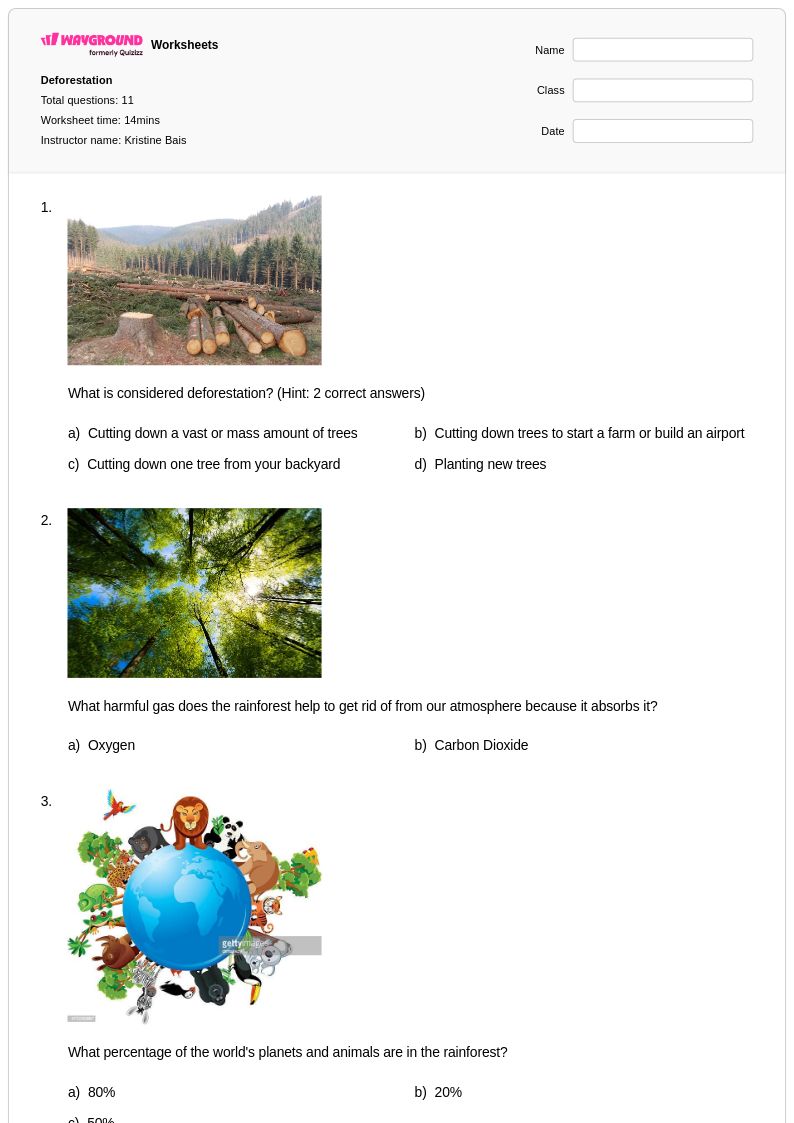
Worksheets that connect biodiversity data and climate characteristics to conservation outcomes help students move from passive awareness to analytical understanding of why rainforest preservation matters. When students interpret real data on deforestation rates, species loss, or carbon sequestration, they develop the scientific literacy needed to evaluate conservation arguments rather than simply accept them. This approach positions conservation not as an emotional appeal but as a scientifically grounded conclusion drawn from evidence.