
Tópicos recomendados para você
- Abiotic Factors
- Amphibians
- Animal Adaptations
- Animal Anatomy
- Animal Cells
- Animal Communication
- Animal Features
- Animal Habitat
- Animal Hibernation
- Animal Homes
- Ants
- Apple Parts
- Arthropod
- Asexual Reproduction
- Balance in Nature
- Benthos
- Biological Classification
- Biology Principles
- Body Covering
- Body Mapping
- Body Parts
- Body Systems
- Bones
- Brain
- Cell Analogy
- Cell Organelles
- Cell Theory
- Characteristics of Life
- Characteristics of Living Things
- Chloroplast
- Corn
- Dichotomous Key
- Digestion
- Dolphins
- Ear
- Echinoderms
- Ecology
- Ecosystem Services
- Ecosystems
- Endangered Animals
- Endangered Species
- Flower Anatomy
- Food Chain
- Fossils
- Fruits
- Fungi
- Germs
- Great White Shark
- Heart
- Horse
- Human Body
- Inherited and Acquired Traits
- Interactions in an Ecosystem
- Introduction to Heredity
- Invertebrate Animals
- Jellyfish
- Joints and Movement
- Kingdoms
- Labeling Structures
- Leaf Anatomy
- Life Cycle
- Living and Non Living Things
- Mammals
- Manatee
- Marine Animals
- Microorganisms
- Microscope
- Microscope Observation
- Microscope Parts
- Mimicry
- Mold Growth
- Monocots and Dicots
- Movement at Joints
- Nekton
- Ocean Animals
- Orca
- Organism Characteristics
- Orientation
- Parts and Use
- Parts of a Tree
- Parts of an Egg
- Parts of Blood
- Parts of Leaf
- Parts of Plants We Eat
- Parts of the Face
- Parts of Tooth
- Photosynthesis
- Plankton
- Plant Adaptations
- Plant Anatomy
- Plant and Animal Cell
- Plant Biology
- Plant Cell Structure
- Plant Kingdom
- Plant Needs
- Plant Parts and Their Functions
- Plant Structure
- Plant Structure and Function
- Plant Systems
- Pollination
- Pollinators
- Predation
- Prefix Suffix
- Prefixes and Suffixes
- Producer Consumer
- Prokaryotes and Eukaryotes
- Sea Animals
- Sea Creatures
- Seashells
- Seed Germination
- Seed Parts
- Seed Structure
- Sharks
- Skeleton
- Slide Observation
- Species Coexistence
- Spiders
- Squid
- Stimulus and Response
- Taxonomy
- Teeth
- The Cell Membrane
- The Digestive and Excretory Systems
- Trees
- Vertebrates and Invertebrates
- Visual Perception
- Wild Animals
17Q
3rd
26Q
2nd - 3rd
11Q
3rd - 6th
21Q
3rd - 6th
6Q
3rd
20Q
3rd - 6th
25Q
3rd - Uni
25Q
3rd - Uni
10Q
3rd
40Q
3rd - 6th
15Q
3rd - Uni
15Q
3rd - Uni
10Q
1st - 5th
16Q
KG - Uni
15Q
3rd - Uni
20Q
3rd
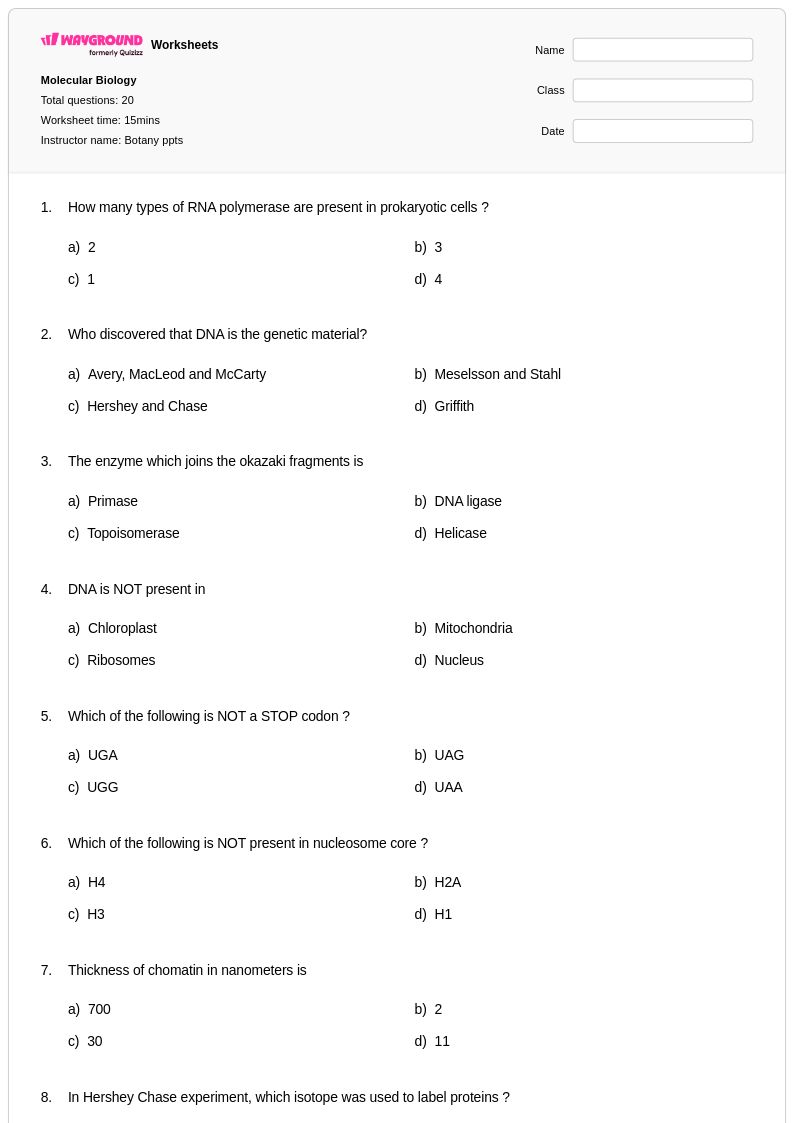
20Q
3rd
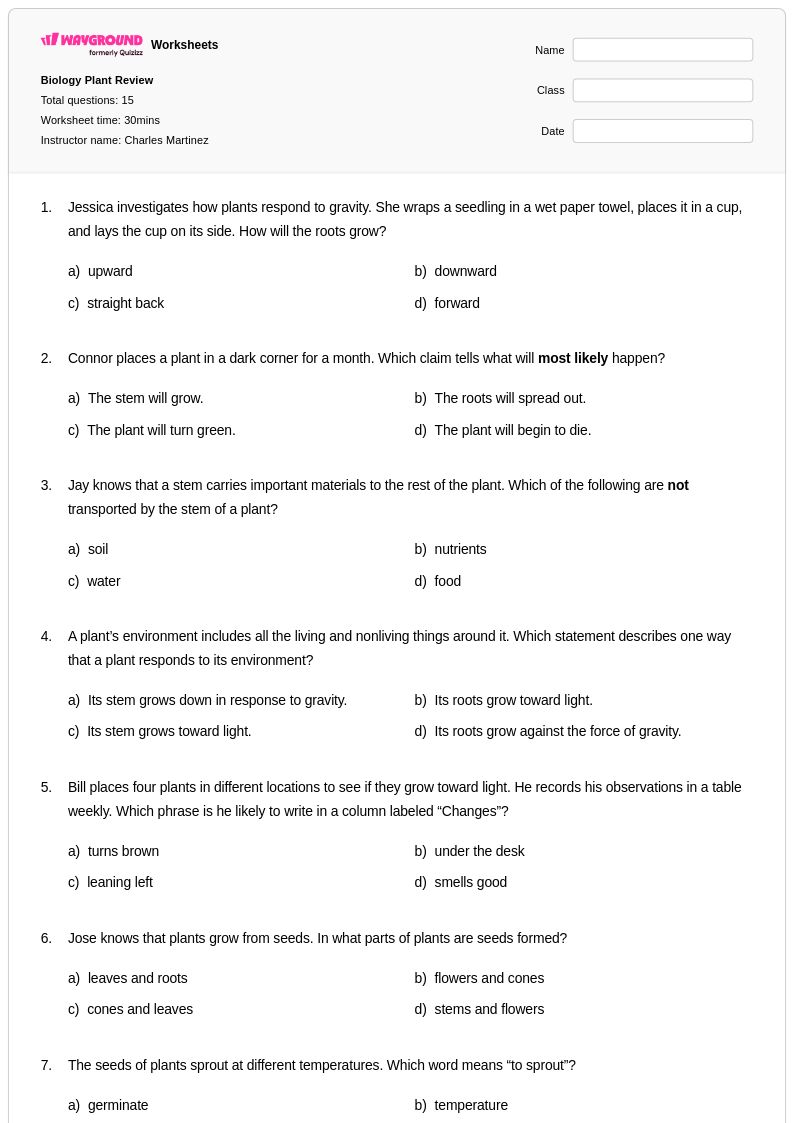
15Q
3rd
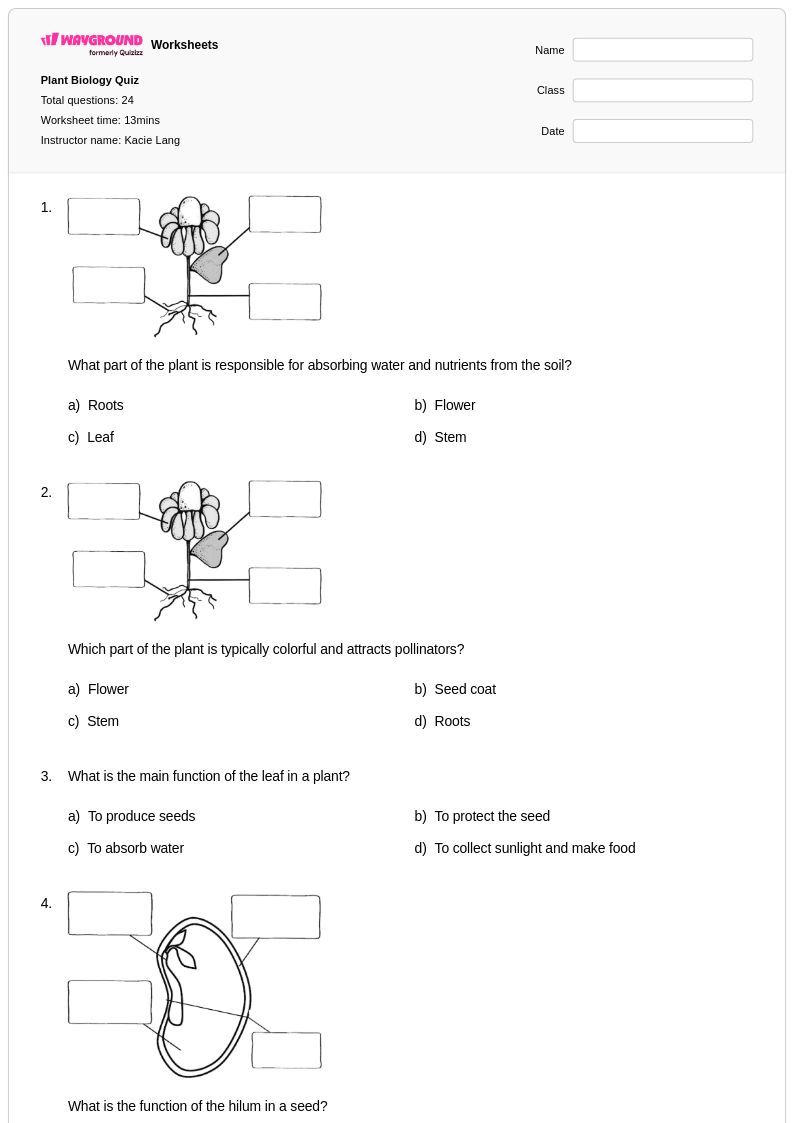
24Q
3rd - Uni
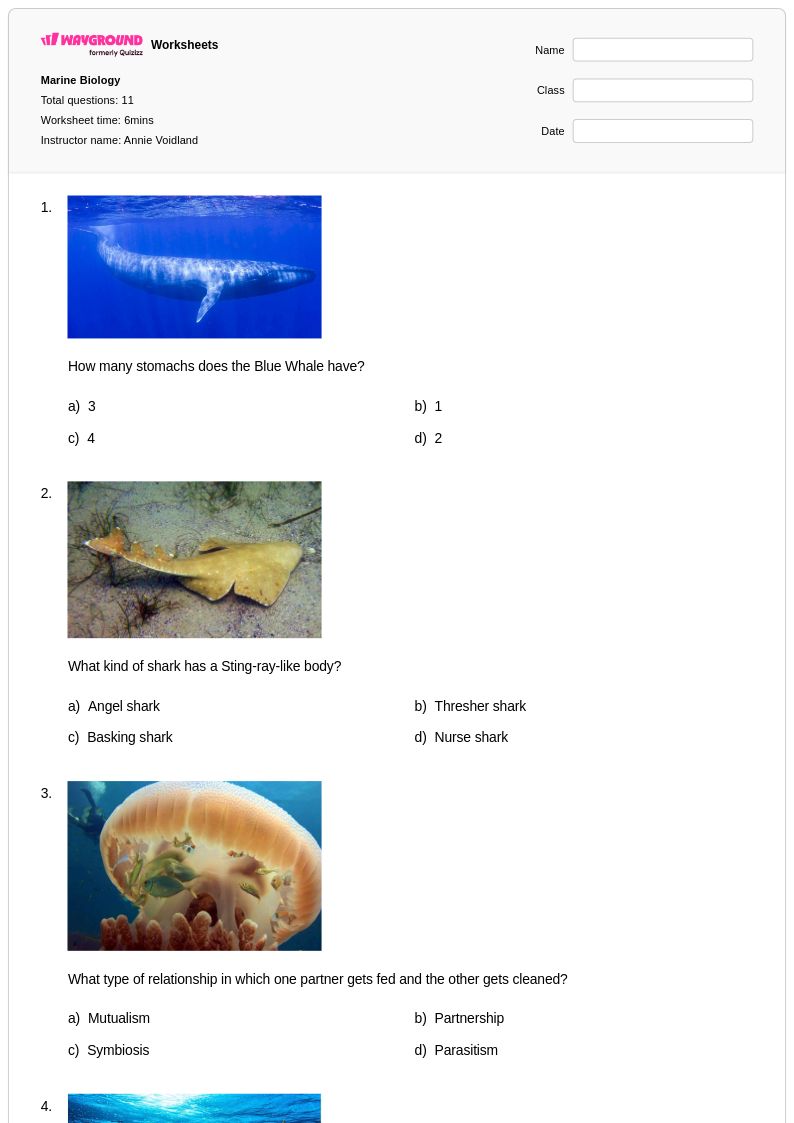
11Q
1st - 6th
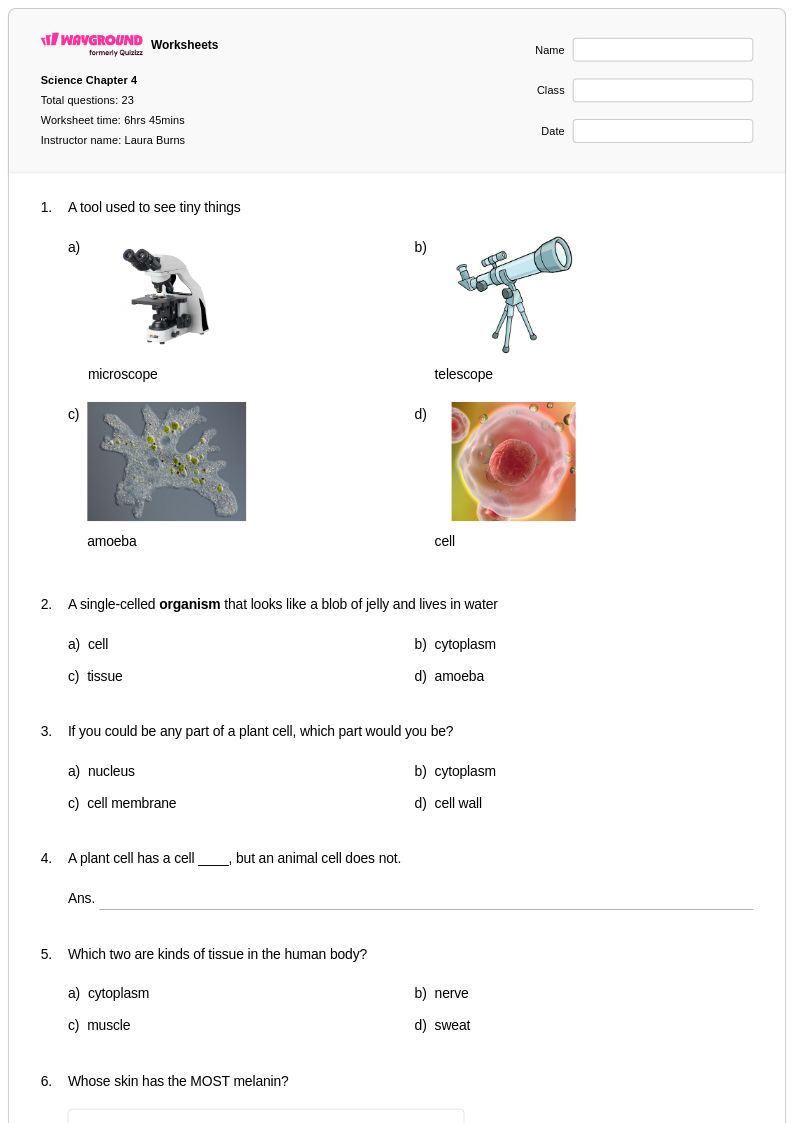
23Q
3rd
14Q
2nd - 3rd
20Q
2nd - 5th
Explore planilhas Biology por notas
Explore planilhas Biology para class 3 por tópico
Explore outras planilhas de assuntos para class 3
Explore printable Biology worksheets for Class 3
Class 3 biology worksheets available through Wayground (formerly Quizizz) provide young learners with engaging opportunities to explore fundamental life science concepts through hands-on activities and structured practice problems. These educational resources cover essential biological topics including plant and animal characteristics, life cycles, habitats, basic needs of living organisms, and simple classification systems that align with elementary science standards. The worksheets strengthen critical thinking skills, scientific observation abilities, and vocabulary development while encouraging students to make connections between living things and their environments. Teachers can access comprehensive collections that include detailed answer keys, making assessment and feedback more efficient, while the free printable format ensures accessibility for diverse classroom settings and home learning environments.
Wayground's extensive platform supports educators with millions of teacher-created biology resources specifically designed for third-grade learners, featuring robust search and filtering capabilities that allow instructors to quickly locate materials aligned with specific learning objectives and curriculum standards. The platform's differentiation tools enable teachers to customize worksheets based on individual student needs, offering various complexity levels and accommodation options for diverse learners. These resources are available in both printable pdf format and interactive digital versions, providing flexibility for different teaching environments and learning preferences. The comprehensive collection facilitates effective lesson planning while supporting targeted remediation for struggling students and enrichment opportunities for advanced learners, ensuring that all third-grade students can develop a strong foundation in biological concepts through meaningful practice and skill-building activities.
FAQs
How do I teach biology concepts effectively in a high school classroom?
What kinds of worksheets are most useful for practicing biology skills?
What mistakes do students commonly make when learning genetics and heredity?
What are the most common misconceptions students have about cellular respiration and photosynthesis?
How can I use biology worksheets to support students with different learning needs?
How do I use Wayground's biology worksheets in my classroom?
How do I assess whether students truly understand biological classification and taxonomy?