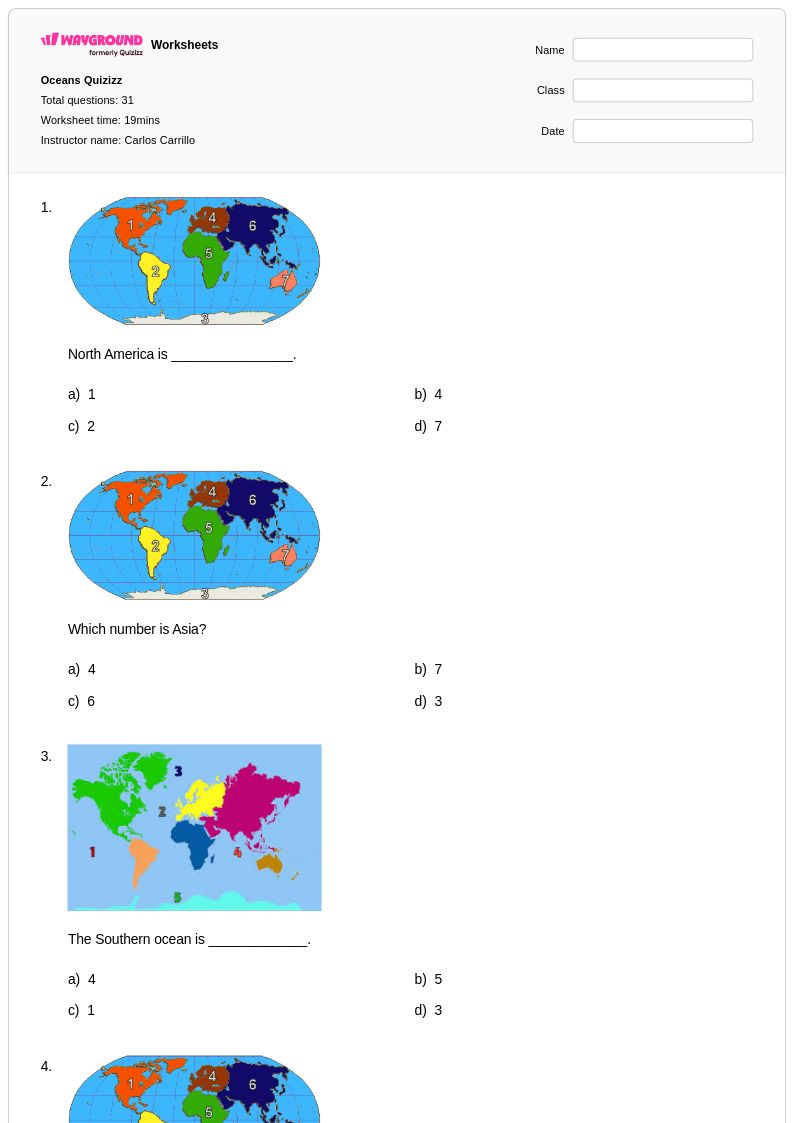
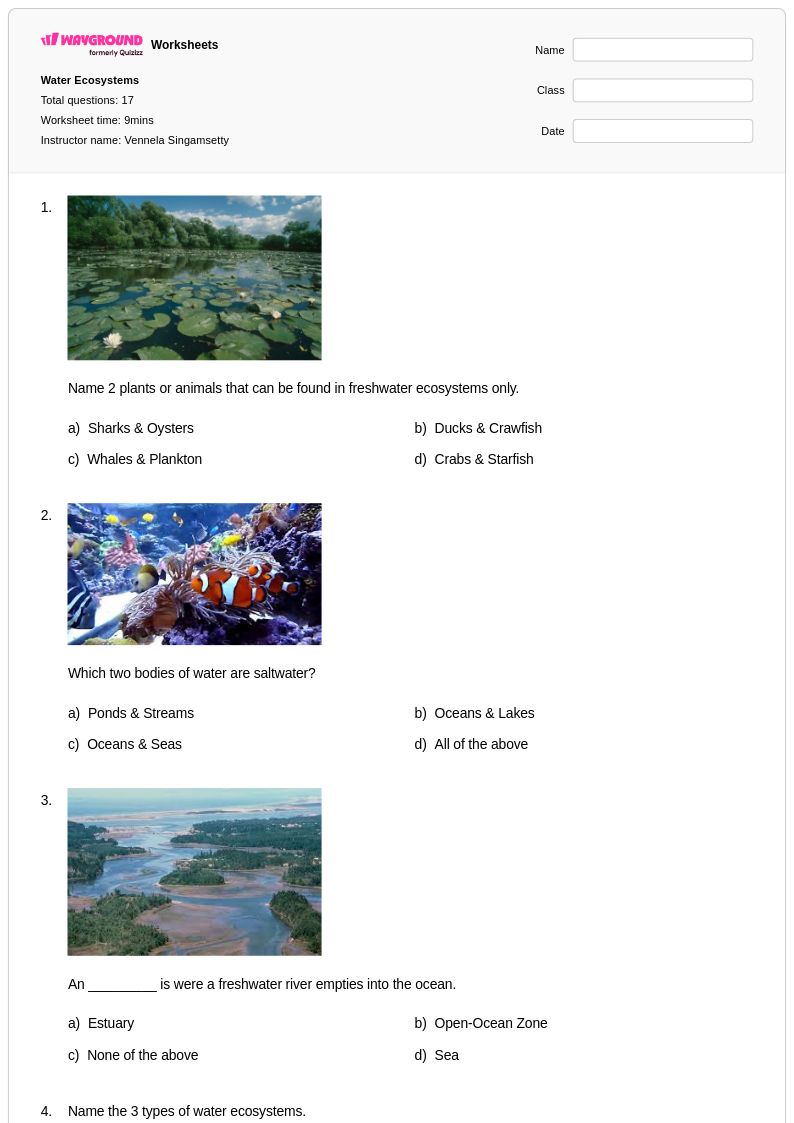
Explore Wayground's free Class 3 benthos worksheets and printables that help students learn about bottom-dwelling aquatic organisms through engaging practice problems and activities with complete answer keys.
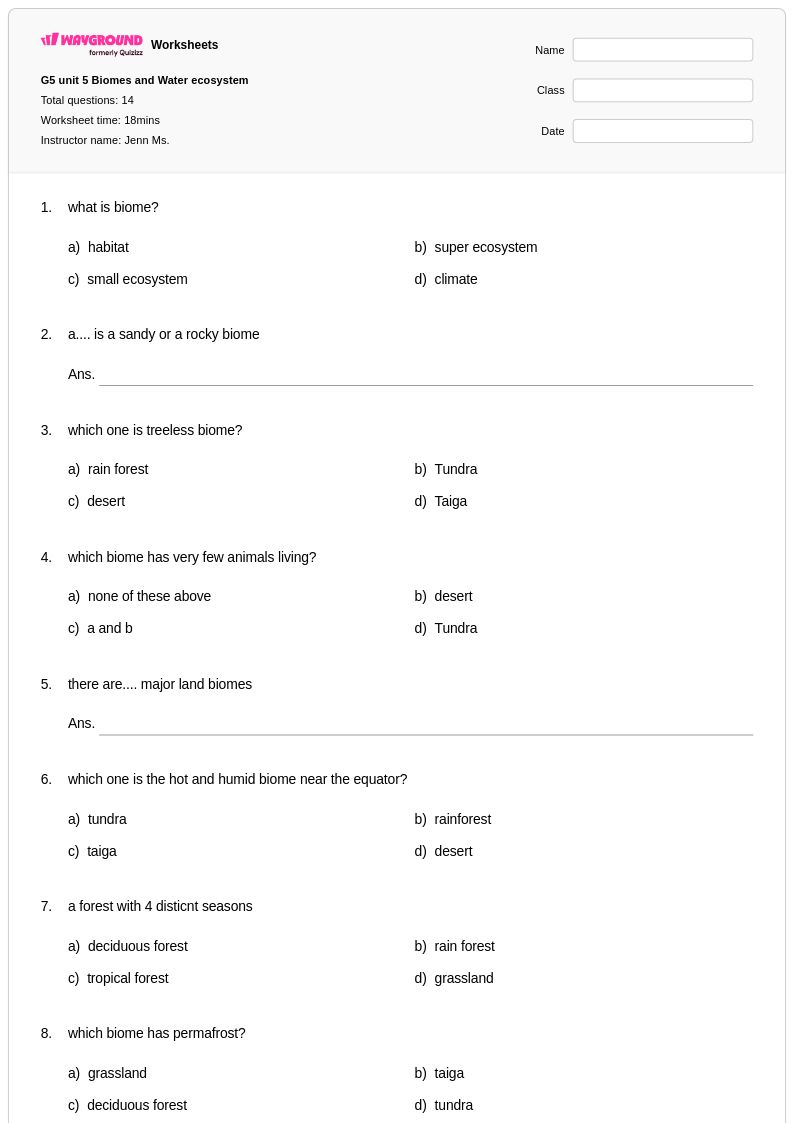
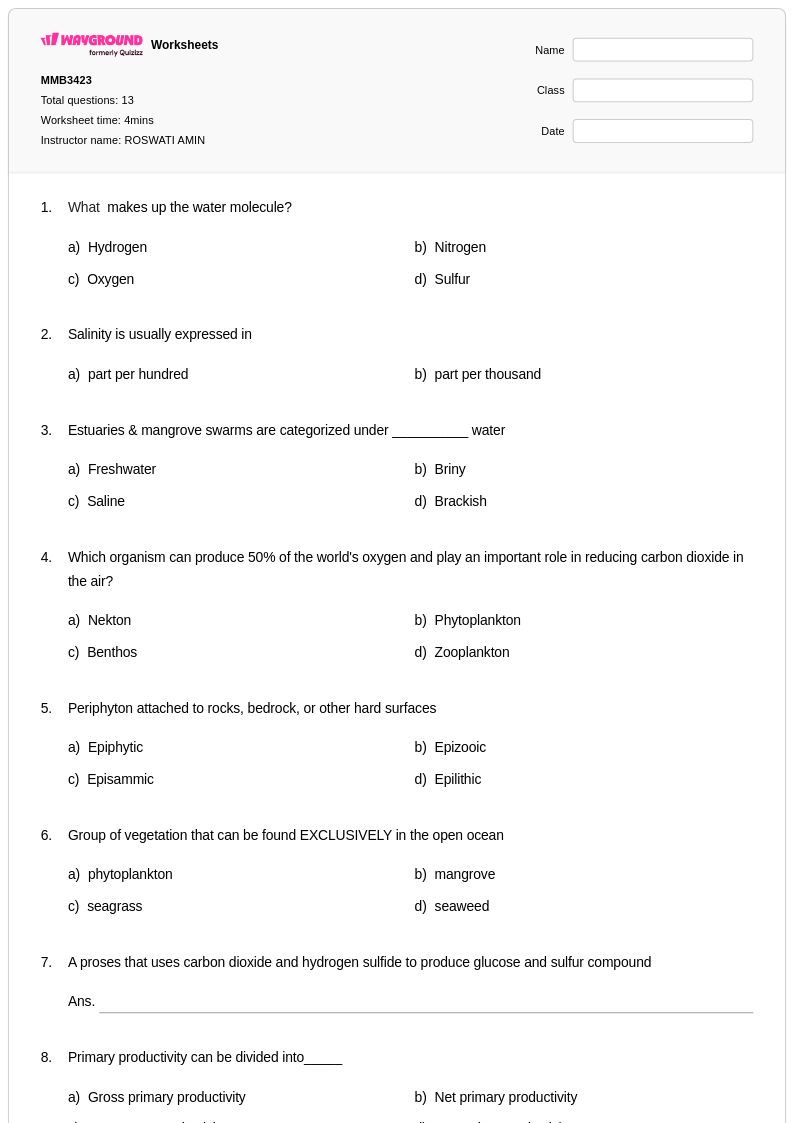
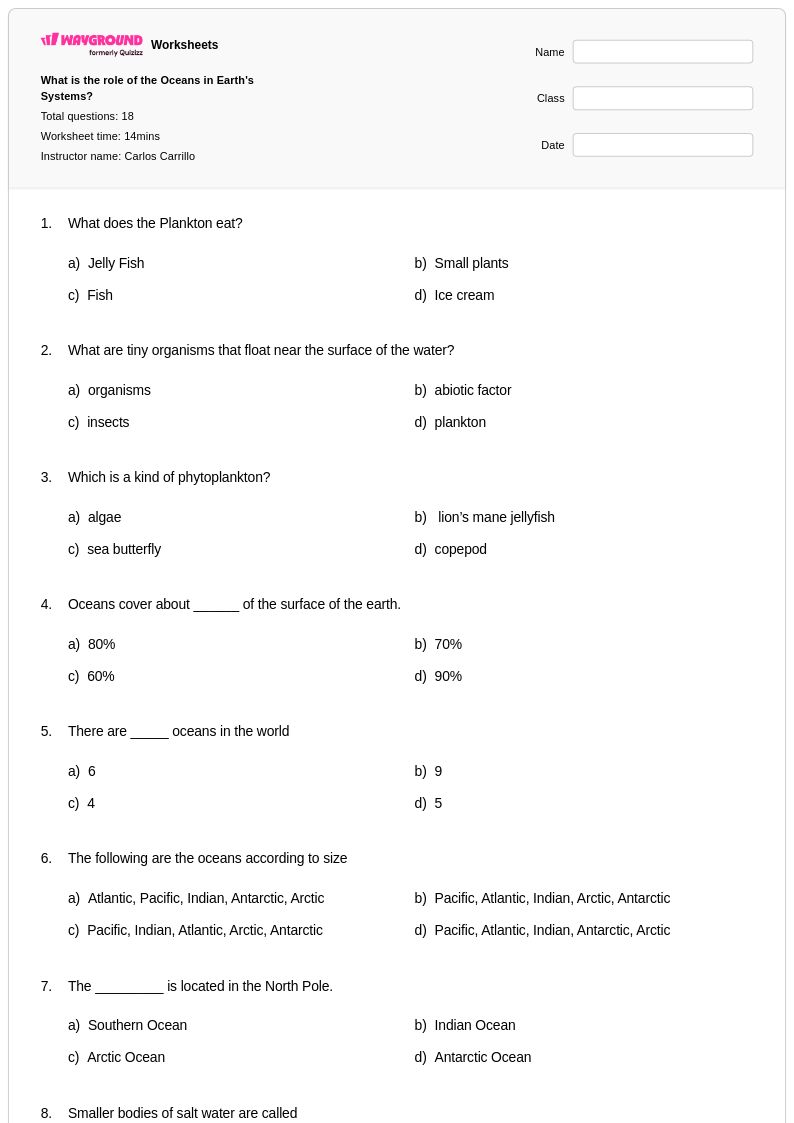
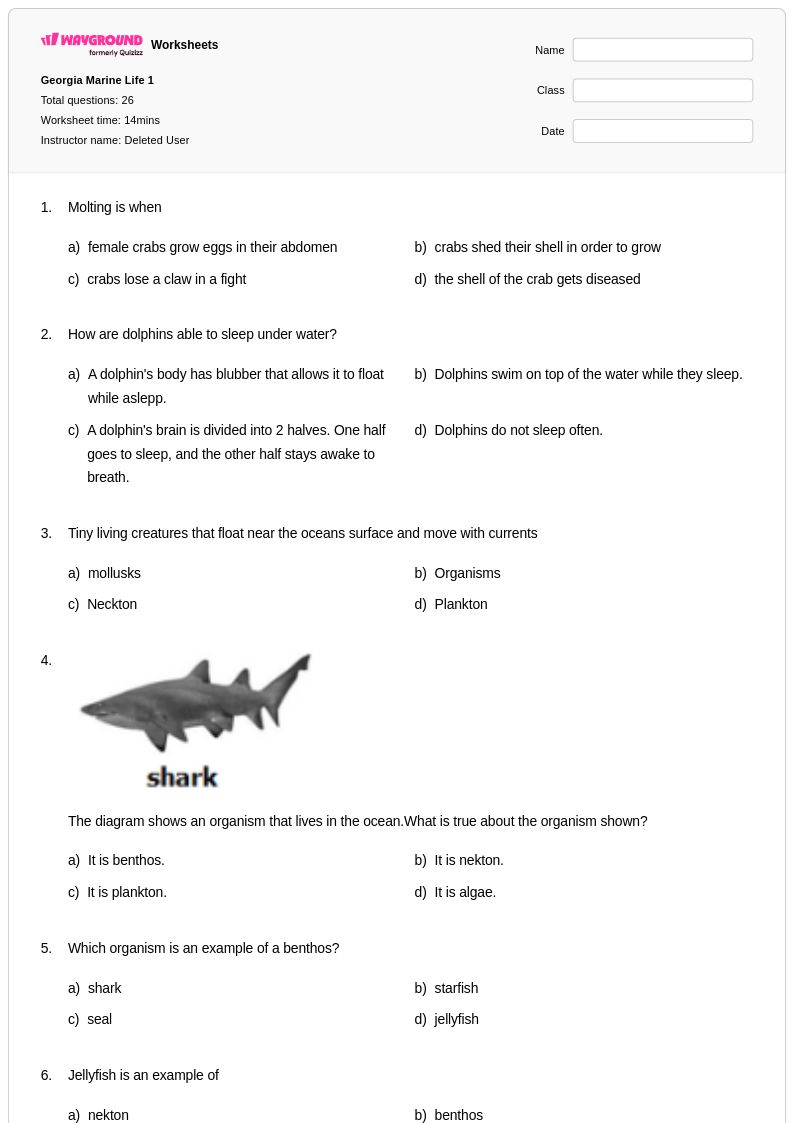
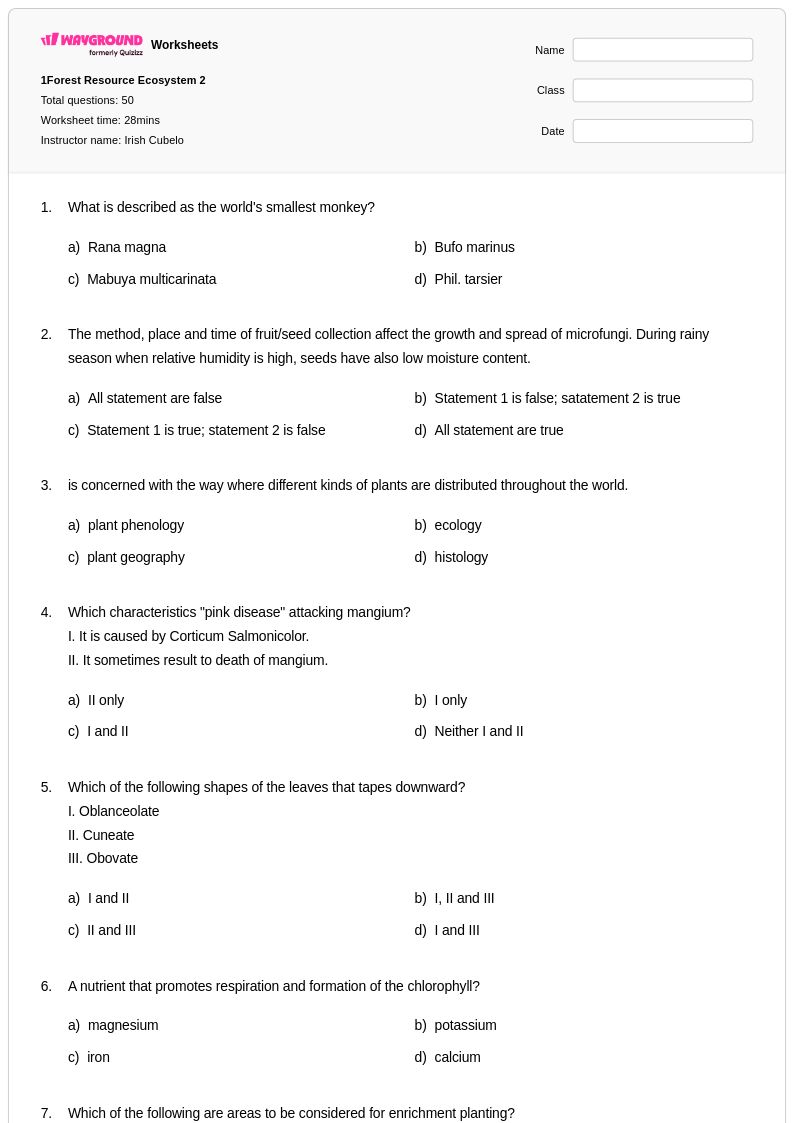
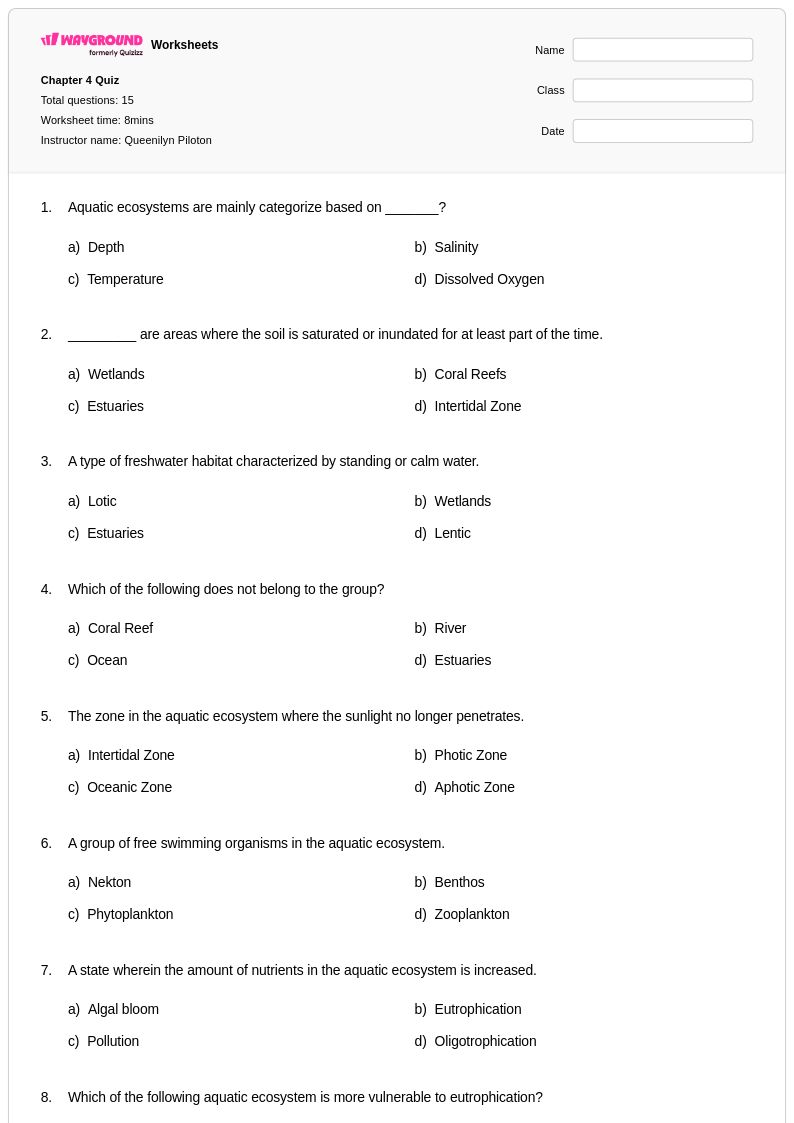
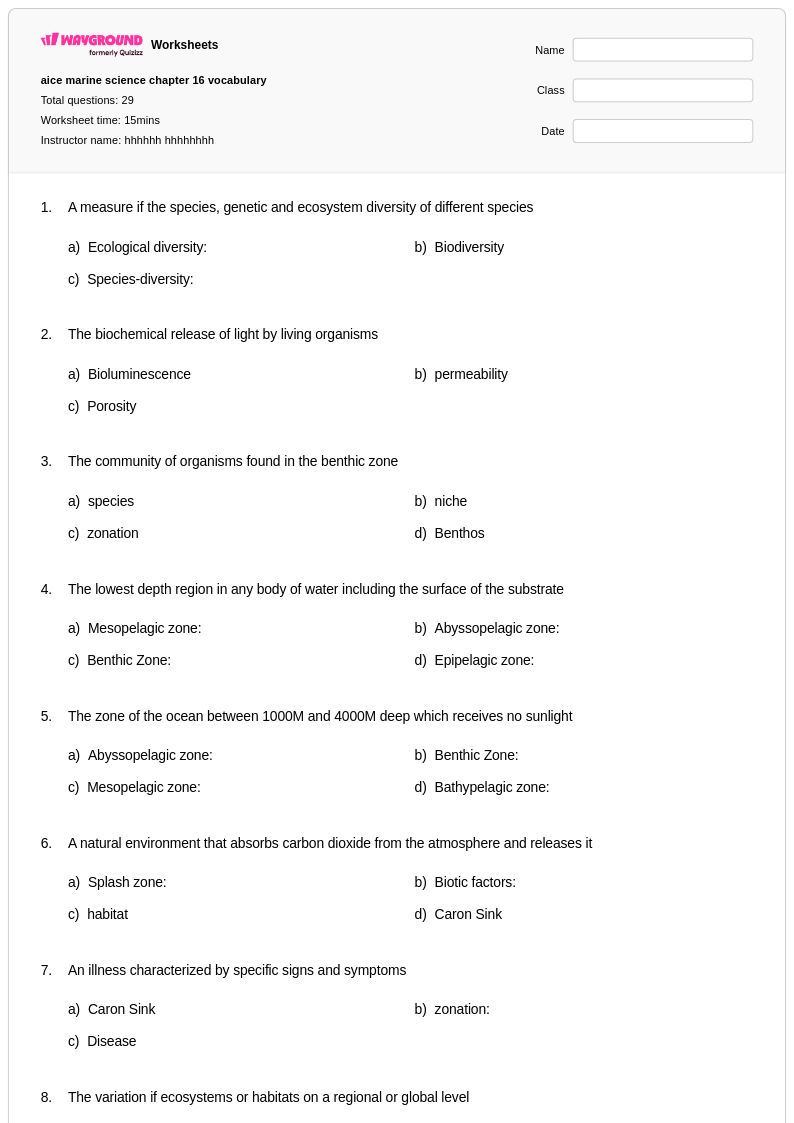
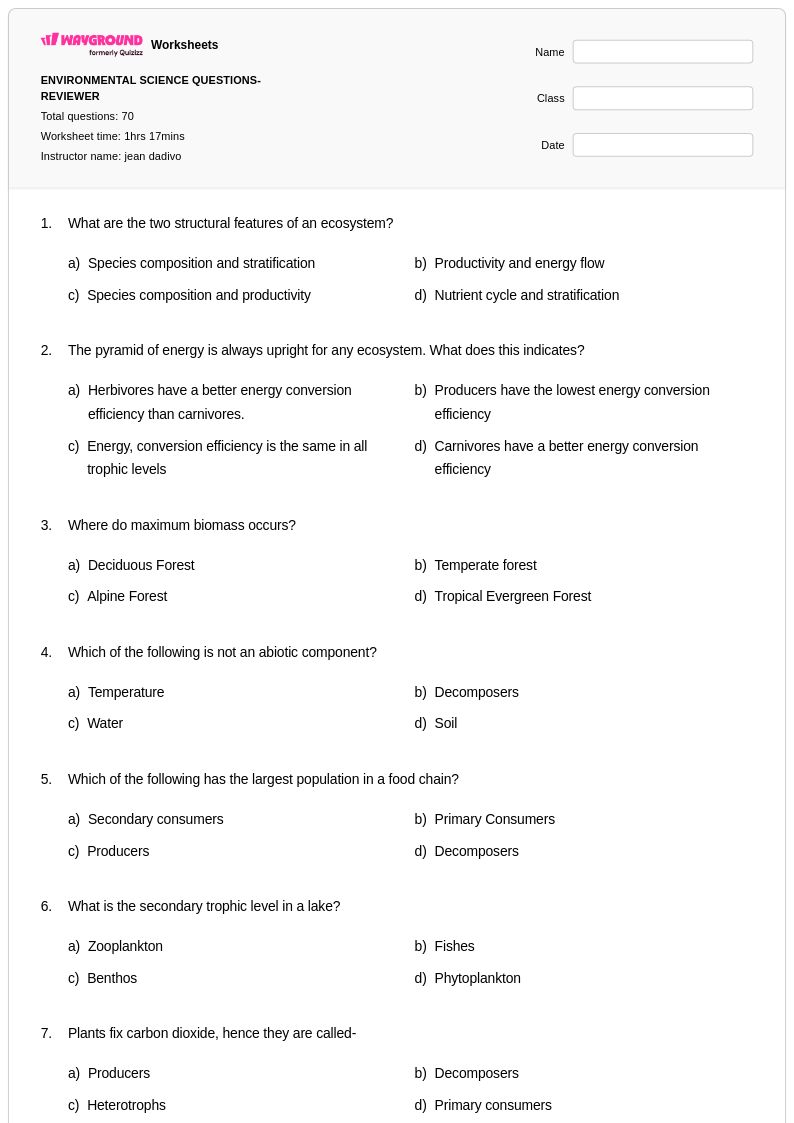
Benthos worksheets for Class 3 students available through Wayground (formerly Quizizz) introduce young learners to the fascinating world of bottom-dwelling organisms in aquatic ecosystems. These educational resources help third-grade students develop foundational understanding of marine and freshwater life forms that live on or near the bottom of bodies of water, including creatures like sea stars, crabs, clams, and bottom-feeding fish. The worksheets strengthen critical thinking skills through engaging practice problems that encourage students to identify different benthic organisms, understand their adaptations for life on the seafloor or lake bottom, and explore their roles in aquatic food chains. Each worksheet comes with a comprehensive answer key and is available as free printables in convenient PDF format, making it easy for educators to incorporate hands-on learning about these essential ecosystem components into their science curriculum.
Wayground (formerly Quizizz) empowers teachers with access to millions of educator-created resources specifically designed to support benthos instruction at the Class 3 level. The platform's robust search and filtering capabilities allow instructors to quickly locate worksheets that align with specific learning standards and match their students' developmental needs. Teachers can take advantage of built-in differentiation tools to customize content for various skill levels, ensuring that all learners can successfully engage with concepts about bottom-dwelling organisms regardless of their starting point. These flexible resources are available in both printable and digital formats, including downloadable PDFs, giving educators the freedom to choose the most appropriate delivery method for their classroom environment. Whether used for initial skill-building, targeted remediation, or enrichment activities, these benthos worksheets provide teachers with reliable, curriculum-aligned materials that make lesson planning more efficient while supporting diverse learning objectives in elementary biology education.
FAQs
How do I teach benthos to my students?
Teaching benthos effectively starts with grounding students in the concept of benthic zones and how physical factors like substrate type, water pressure, light availability, and oxygen levels shape which organisms can survive there. From there, move into organism classification by functional feeding group (deposit feeders, filter feeders, predators) so students understand the ecological roles benthos play rather than memorizing species in isolation. Connecting benthic communities to nutrient cycling and sediment dynamics gives students a systems-level understanding that supports deeper retention.
What exercises help students practice identifying and classifying benthic organisms?
Effective practice exercises for benthos include classification activities where students sort organisms by habitat zone, feeding strategy, or substrate preference using labeled diagrams or data tables. Scenario-based questions that ask students to predict which organisms would thrive under specific benthic conditions, such as low oxygen or soft sediment, build analytical thinking alongside content knowledge. Structured worksheet practice covering benthic classification systems, morphological adaptations, and ecological relationships gives students repeated, targeted exposure to the concepts they need to master.
What misconceptions do students commonly have about benthos?
A common misconception is that benthos refers only to marine environments, when in fact benthic communities exist in freshwater lakes, rivers, and streams as well. Students also frequently conflate benthos with plankton or nekton, struggling to distinguish organisms by their relationship to the substrate rather than their size or mobility. Another error pattern is assuming benthic organisms are ecologically marginal, when in reality they are central to nutrient cycling, sediment processing, and energy transfer within aquatic ecosystems.
How do benthos worksheets connect to broader aquatic ecosystem concepts?
Benthos worksheets work best when they are explicitly tied to food web dynamics, nutrient cycling, and habitat interdependence rather than treated as a standalone organism study. Students who understand how benthic invertebrates process organic matter from the water column and sediment are better equipped to analyze ecosystem health and the effects of human disturbances like sedimentation or hypoxia. This cross-concept framing makes benthos a useful anchor topic for broader units on aquatic ecology or environmental science.
How do I use Wayground's benthos worksheets in my classroom?
Wayground's benthos worksheets are available as printable PDFs for traditional classroom use and in digital formats for technology-integrated instruction, giving you flexibility depending on your teaching environment and student preferences. You can host them as a quiz directly on Wayground, which allows for real-time student engagement and automatic scoring. Each worksheet includes a complete answer key, making them efficient for independent practice, remediation, or enrichment without requiring additional teacher preparation time.
How can I support struggling learners when teaching benthos concepts?
For students who find benthic ecology challenging, breaking content into smaller conceptual chunks works well, starting with the physical benthic environment before introducing organism diversity and ecological function. On Wayground, teachers can apply individual accommodations such as read aloud support, reduced answer choices, and extended time for specific students, ensuring the same worksheet content is accessible to all learners without disrupting the rest of the class. These settings are saved and reusable across future sessions, reducing setup time for ongoing differentiation.