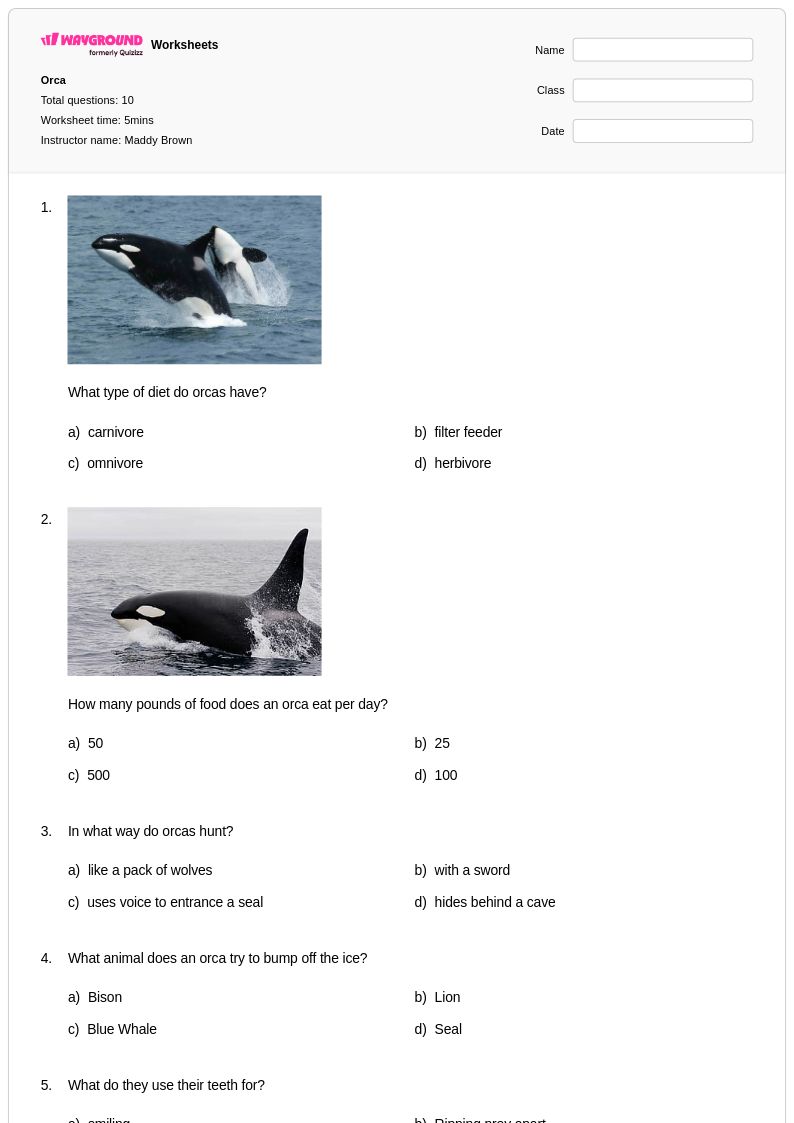
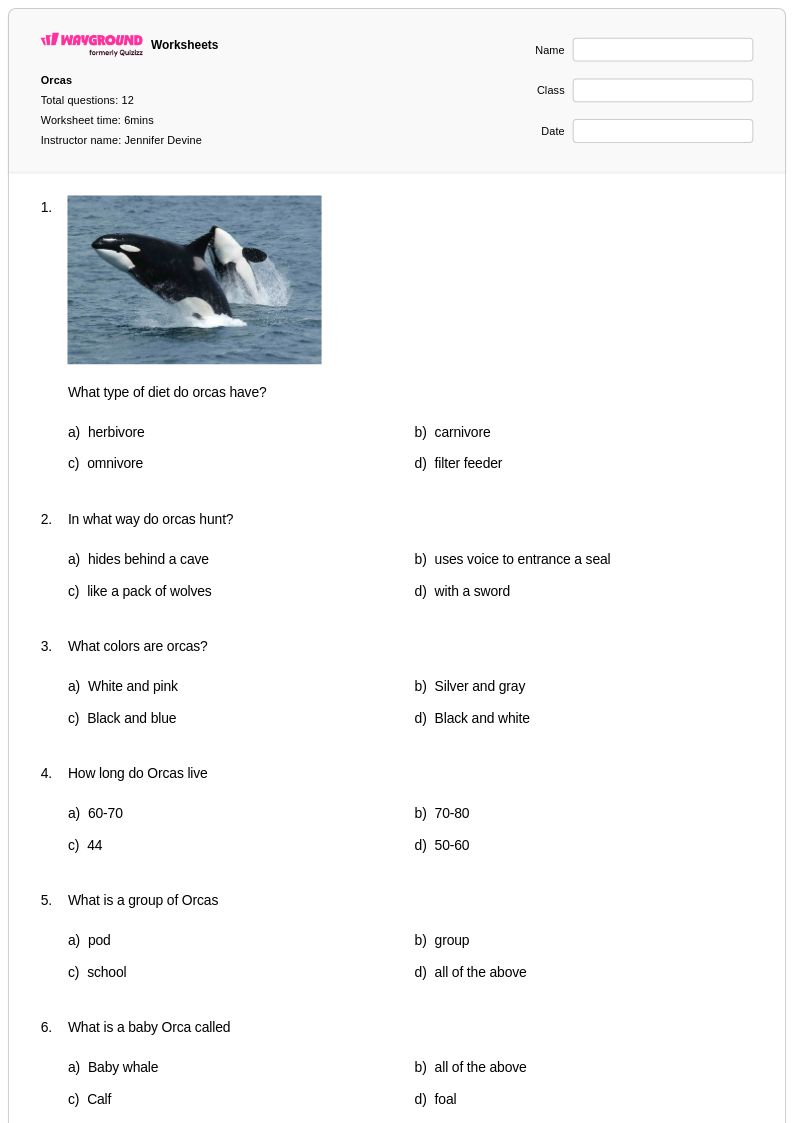
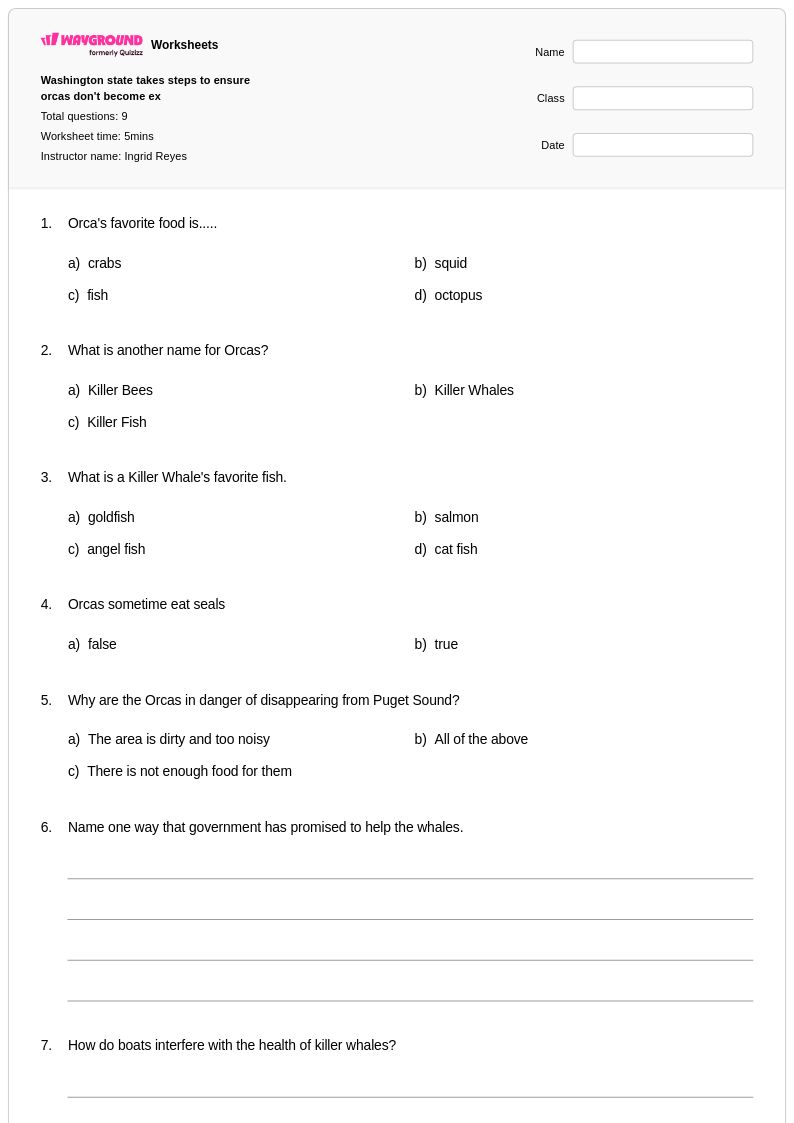
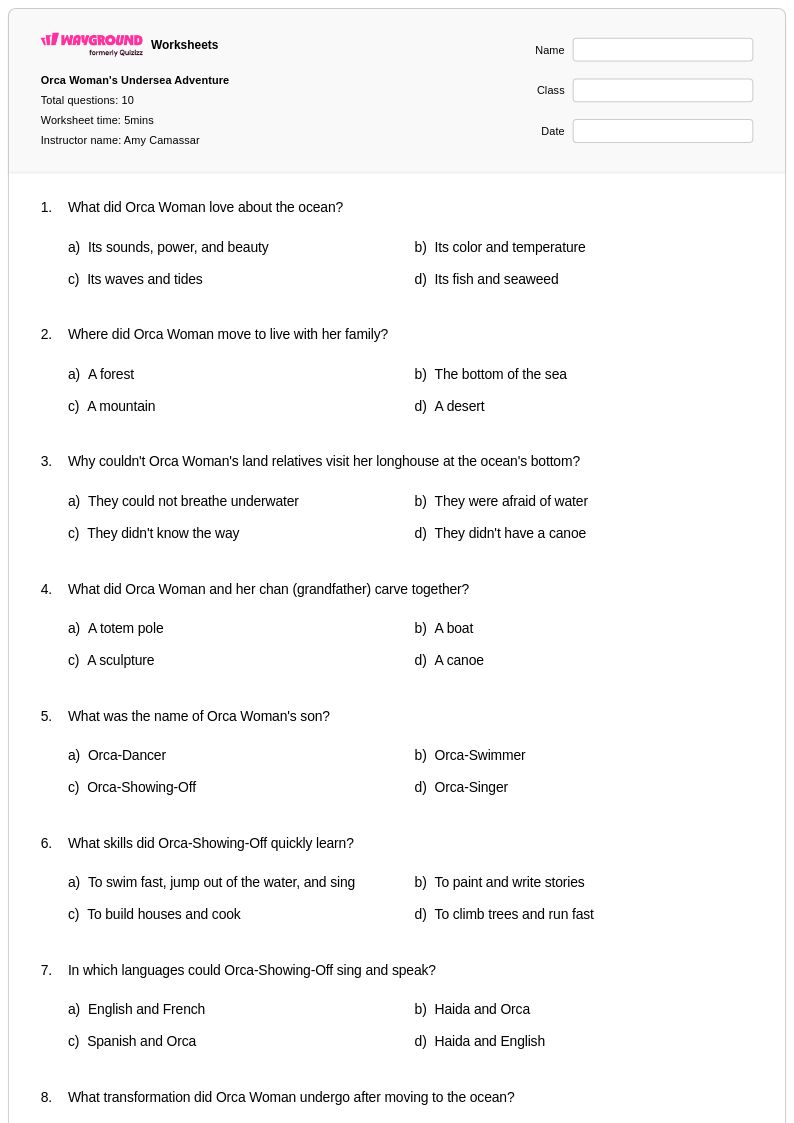
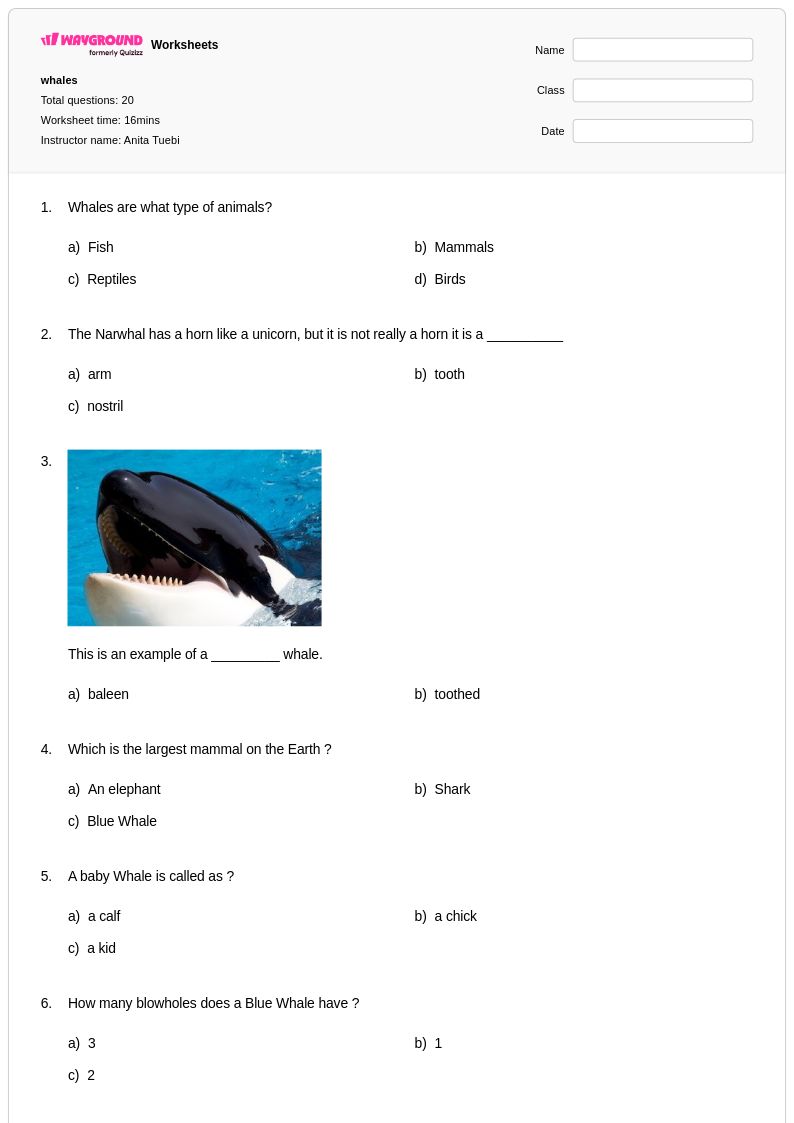
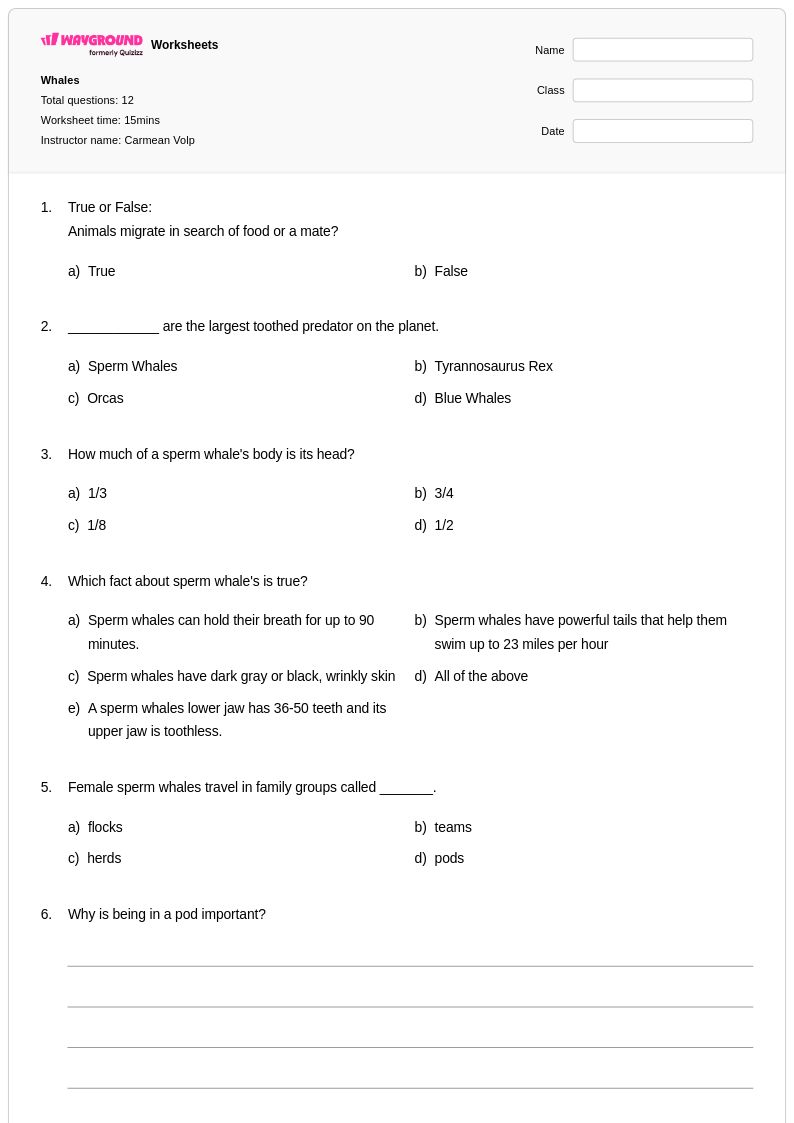
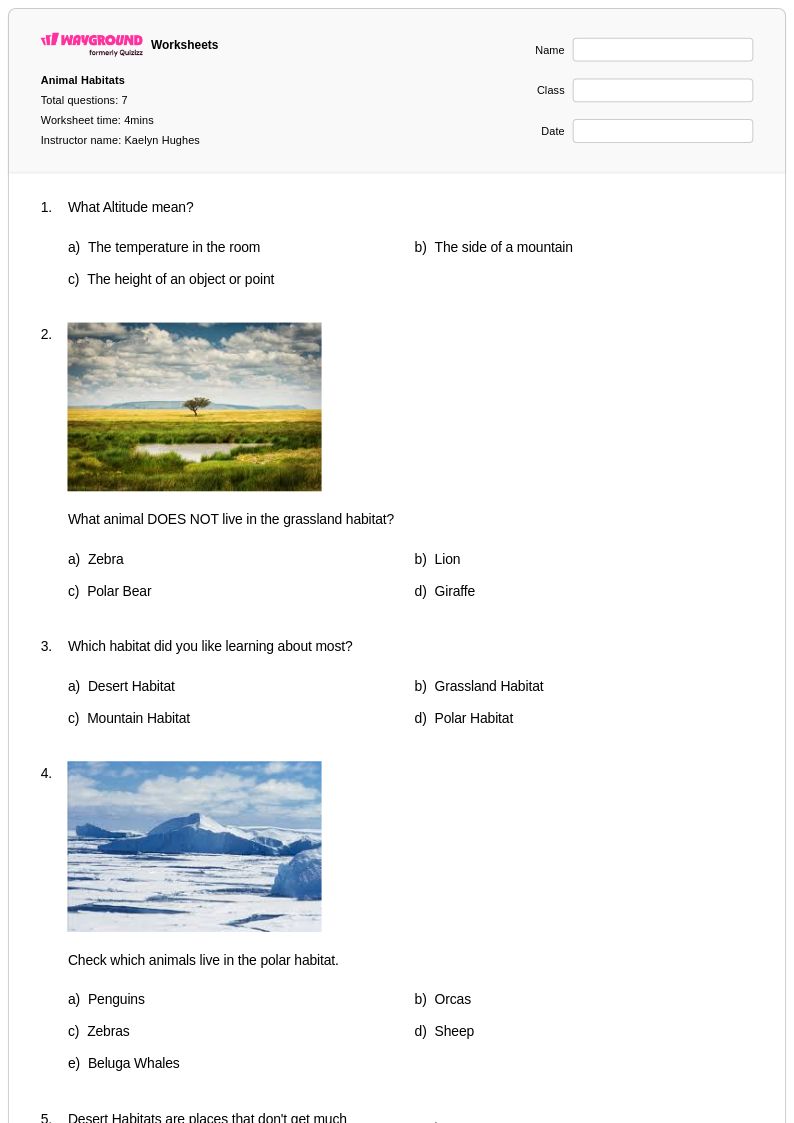
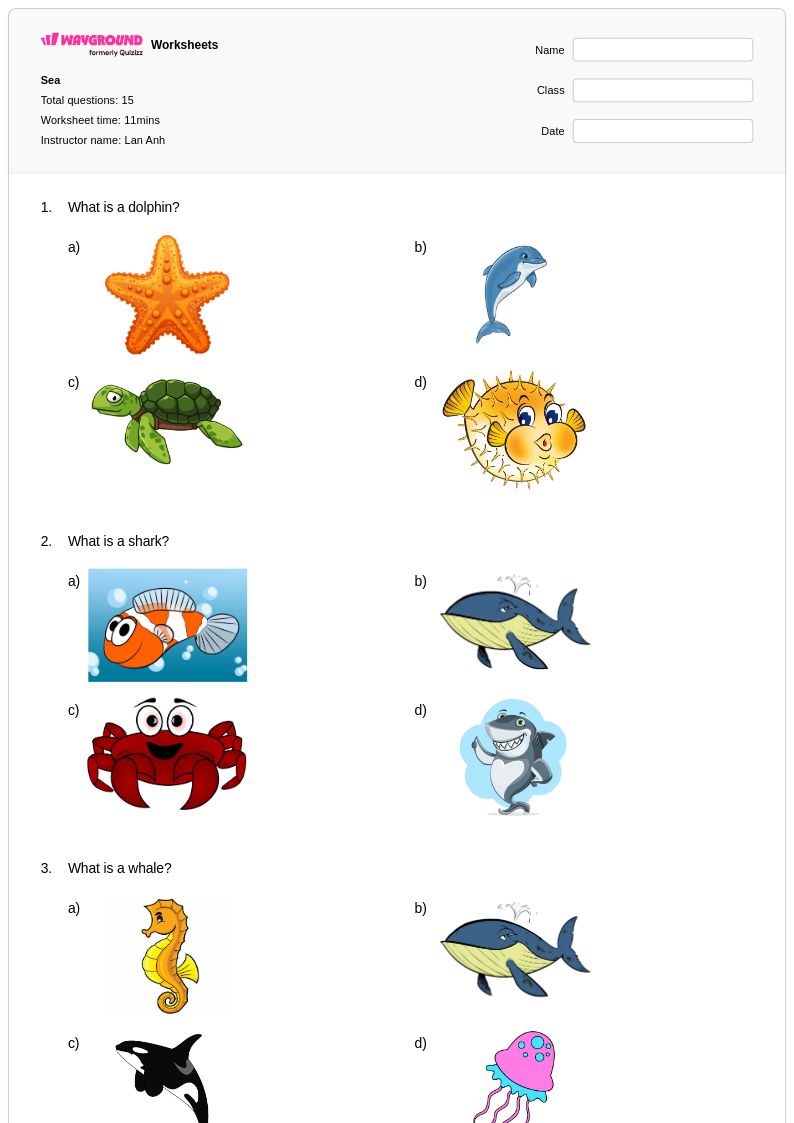
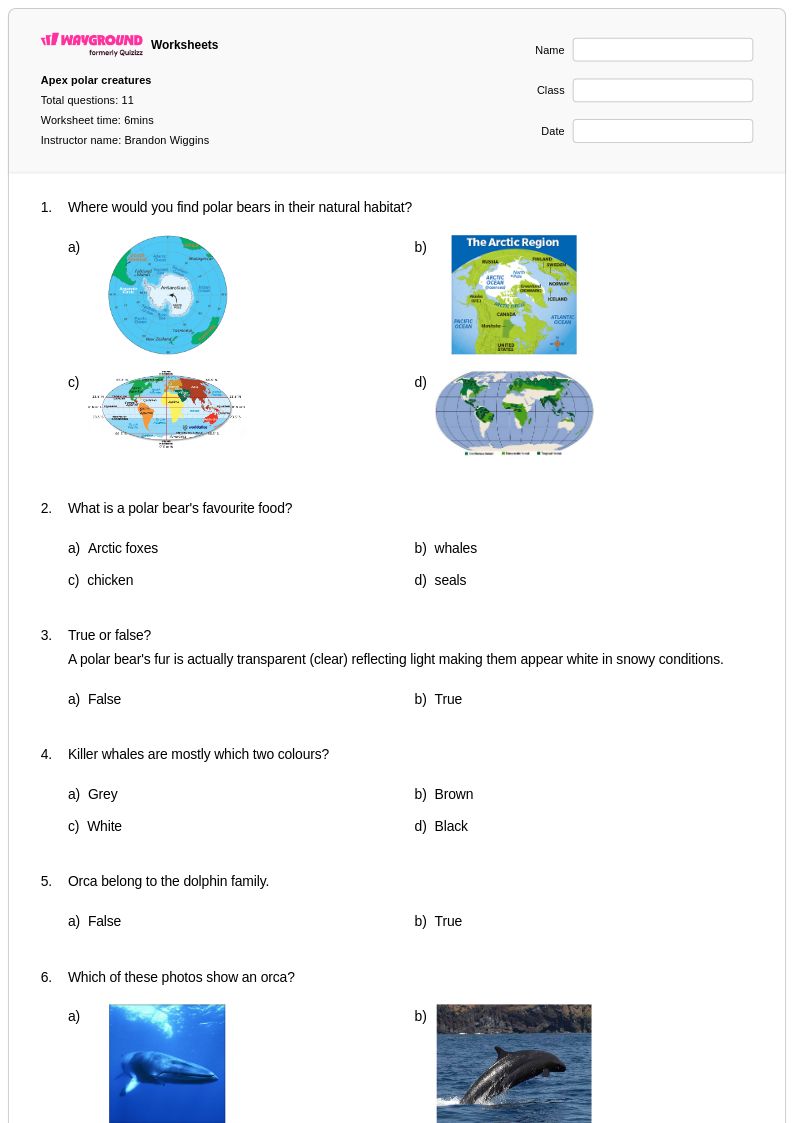
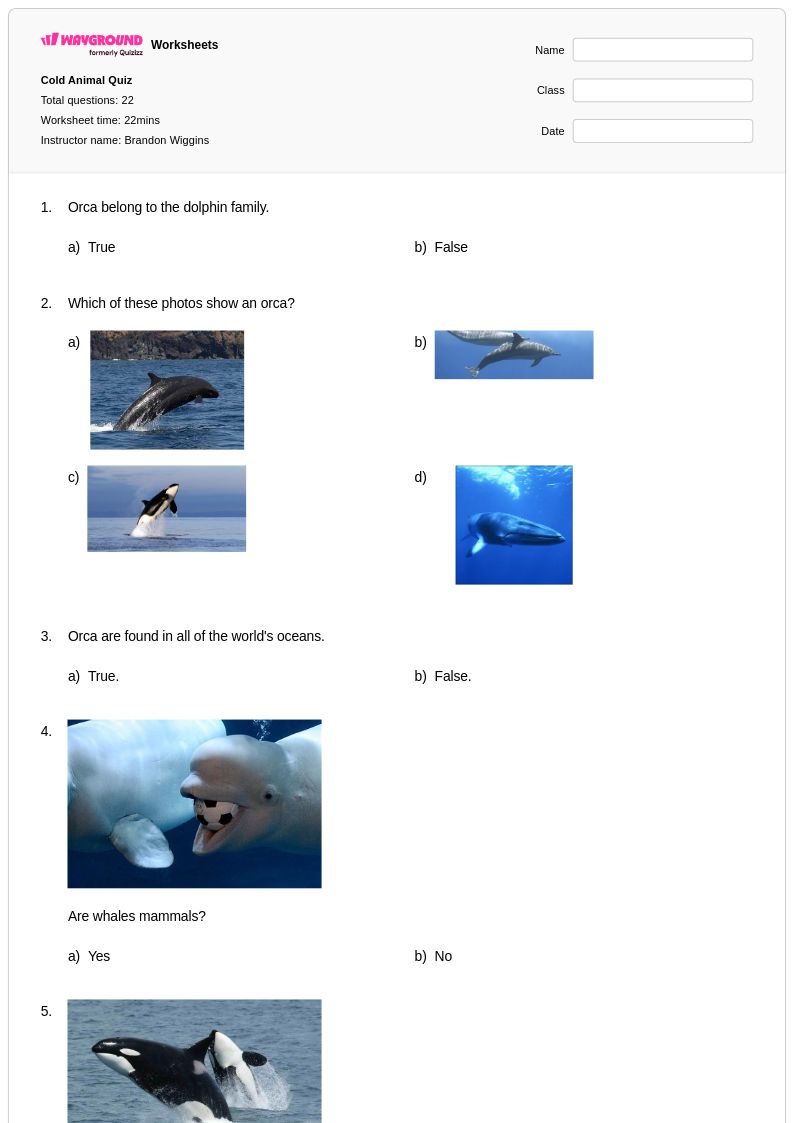
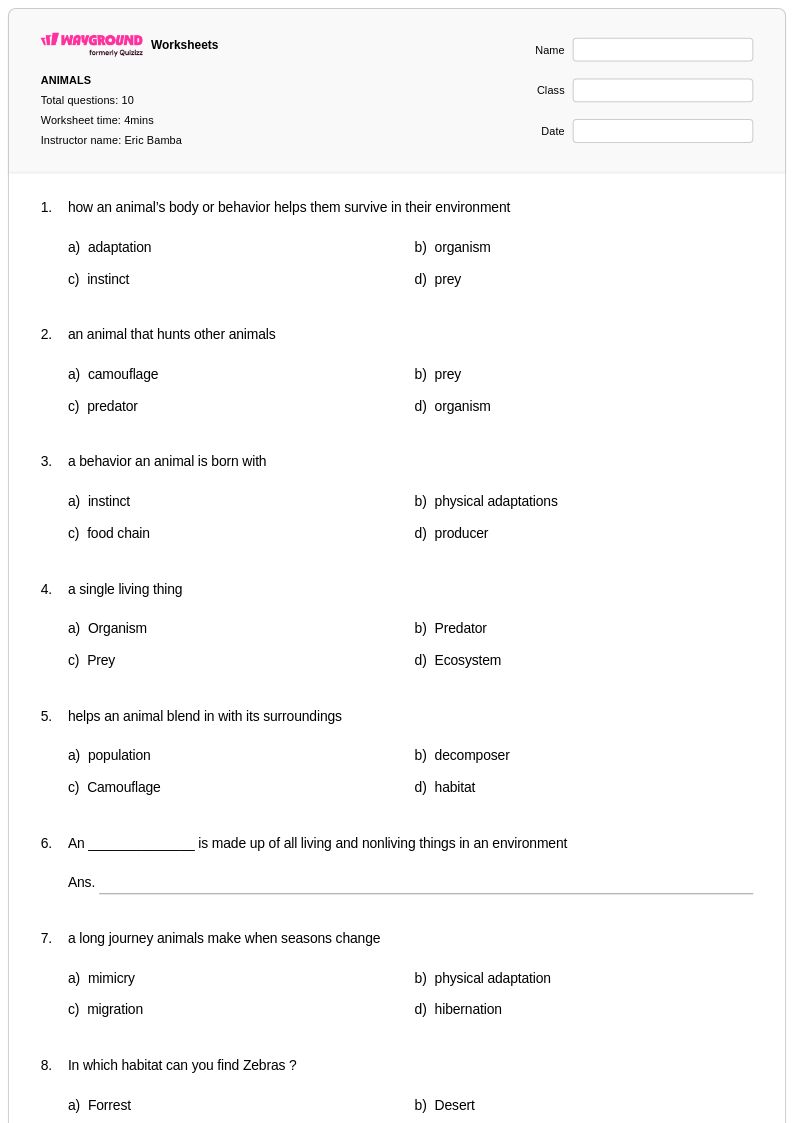
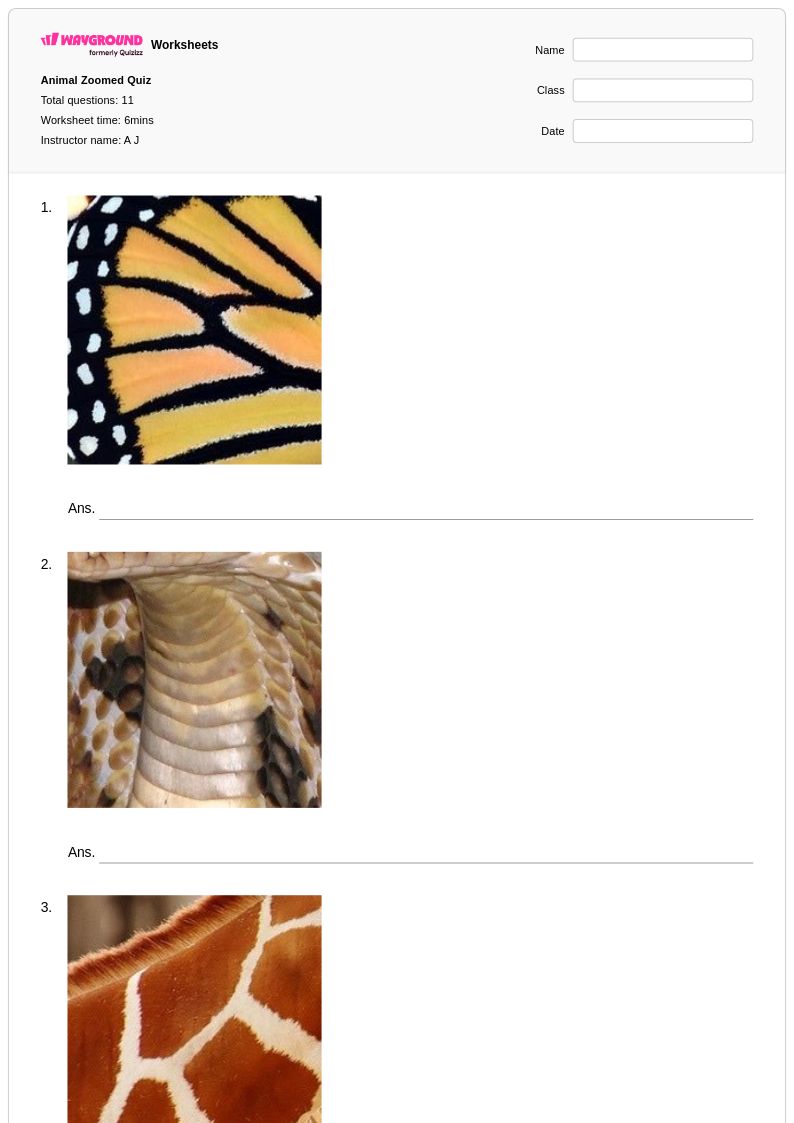
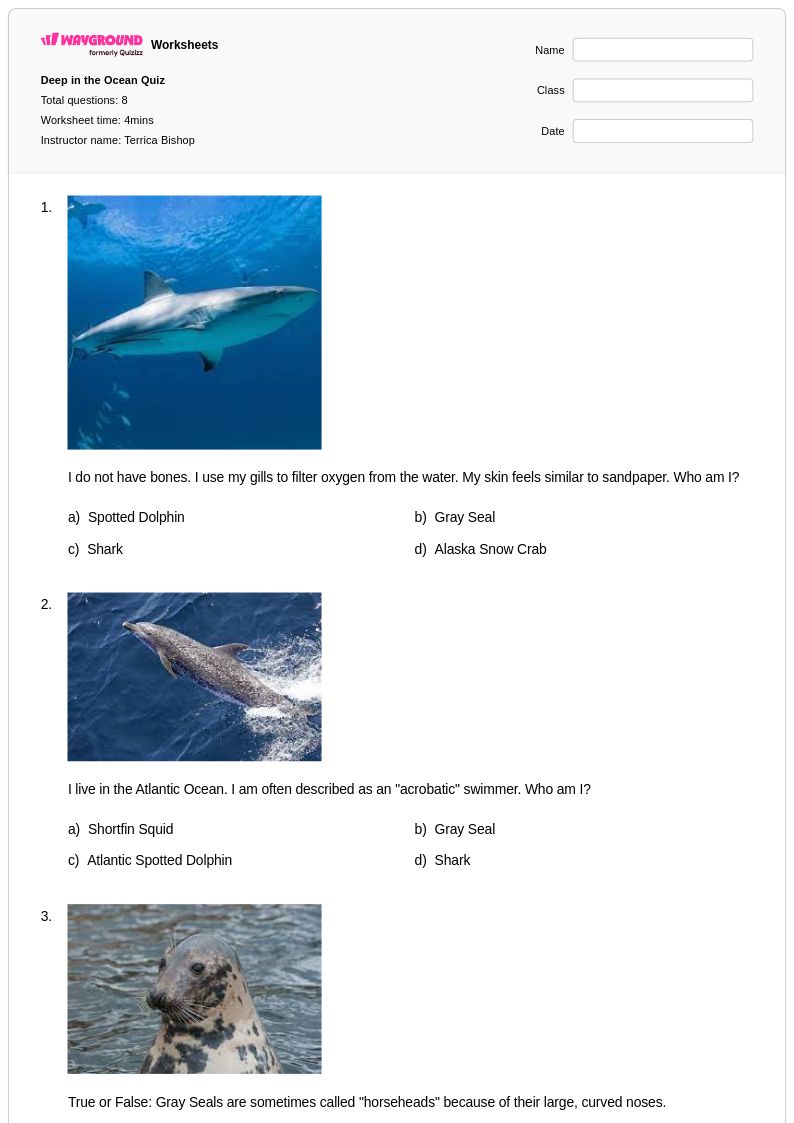
Class 3 orca biology worksheets from Wayground offer free printable PDFs and practice problems that help students learn about these magnificent marine mammals, complete with answer keys for effective study.
Orca worksheets for Class 3 students available through Wayground (formerly Quizizz) provide young learners with engaging opportunities to explore these magnificent marine mammals while developing essential scientific observation and reading comprehension skills. These carefully designed educational materials introduce third-grade students to orca anatomy, behavior, habitat, and social structures through age-appropriate activities that encourage critical thinking about marine ecosystems. The comprehensive collection includes practice problems that help students identify orca characteristics, compare different whale species, and understand predator-prey relationships in ocean environments. Teachers can access printables with complete answer keys, making assessment and feedback efficient, while the free pdf format ensures easy distribution for both classroom instruction and independent study at home.
Wayground (formerly Quizizz) empowers educators with millions of teacher-created resources specifically focused on marine biology topics like orcas, offering robust search and filtering capabilities that allow instructors to quickly locate Class 3 appropriate materials aligned with science standards. The platform's differentiation tools enable teachers to modify worksheet complexity to meet diverse learning needs, while flexible customization options allow educators to adapt content for specific lesson objectives or student interests. Available in both printable and digital formats including downloadable pdfs, these orca-focused worksheets support comprehensive lesson planning whether used for initial concept introduction, skill reinforcement, or enrichment activities for advanced learners. The extensive resource library facilitates targeted remediation by providing multiple worksheet variations that address the same core concepts through different approaches, ensuring every third-grade student can successfully engage with fascinating orca biology content.
FAQs
How do I teach students about orca behavior and social structure?
Start by introducing orca pod communities and the role of matriarchal leadership within them, then connect behavior to survival — hunting techniques, communication, and cooperative feeding strategies all reinforce how social structure directly supports survival. Using anatomical diagrams alongside behavioral case studies helps students see how physiology and behavior are linked. Comparing orca social bonds to human family dynamics can make abstract concepts more concrete for younger learners.
What topics should an orca worksheet cover to align with marine biology units?
A well-designed orca worksheet should cover orca anatomy, echolocation and communication methods, hunting techniques, pod social structure, migration patterns, and the orca's role as a keystone species in marine ecosystems. Comparative studies with other cetaceans can deepen understanding of how orcas fit within the broader class of marine mammals. Including conservation status and human impact questions connects biological content to real-world ecological issues.
What are common misconceptions students have about orcas?
A frequent misconception is that orcas are fish or sharks rather than mammals — students often overlook that orcas breathe air, nurse their young, and maintain complex social bonds typical of mammals. Another common error is conflating all orca populations: ecotype differences mean that some orcas hunt fish exclusively while others specialize in marine mammals, and these populations differ in behavior, dialect, and even genetics. Students also tend to underestimate orca intelligence, often not recognizing that orcas use distinct vocalizations specific to their pod.
How can I use orca worksheets to assess student understanding of marine ecosystems?
Orca worksheets that focus on keystone species concepts are effective assessment tools because they require students to explain cascading ecological effects — if orca populations decline, prey species overpopulate, which disrupts lower trophic levels. Questions involving food web diagrams, migration pattern analysis, or habitat requirement matching can reveal whether students understand ecological interdependence rather than just isolated facts. Including short-answer or explanation questions, rather than only multiple choice, surfaces deeper conceptual understanding.
How do I use Wayground's orca worksheets in my classroom?
Wayground's orca worksheets are available as printable PDFs for traditional classroom use and in digital formats for technology-integrated learning environments, including the option to host them as a quiz directly on Wayground. Printable versions work well for station rotations, independent practice, or take-home assignments, while digital formats allow for real-time feedback during class. All worksheets include complete answer keys, reducing prep time and making them practical for both initial instruction and skill reinforcement.
How can I differentiate orca lessons for students at different ability levels?
For students who need additional support, Wayground offers accommodations including Read Aloud (audio reading of questions), reduced answer choices to lower cognitive load, and extended time settings — all configurable per individual student. Higher-level learners can be challenged with comparative analysis tasks, such as examining ecotype differences or evaluating orca conservation data. These accommodations are saved and reusable across sessions, so teachers don't need to reconfigure settings each time.