Free Printable Biology Principles Worksheets for Class 3
Explore Wayground's comprehensive collection of Class 3 Biology Principles worksheets, featuring free printables and practice problems with answer keys to help young students master fundamental biological concepts through engaging activities.
Explore printable Biology Principles worksheets for Class 3
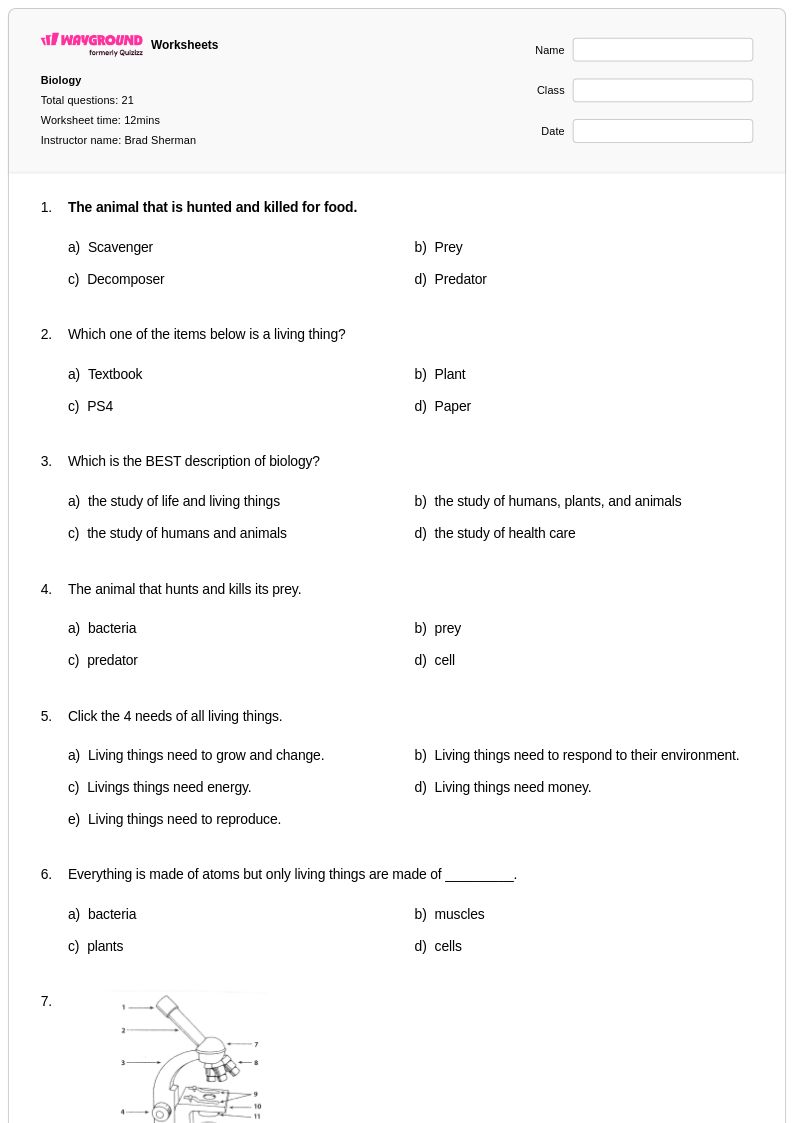
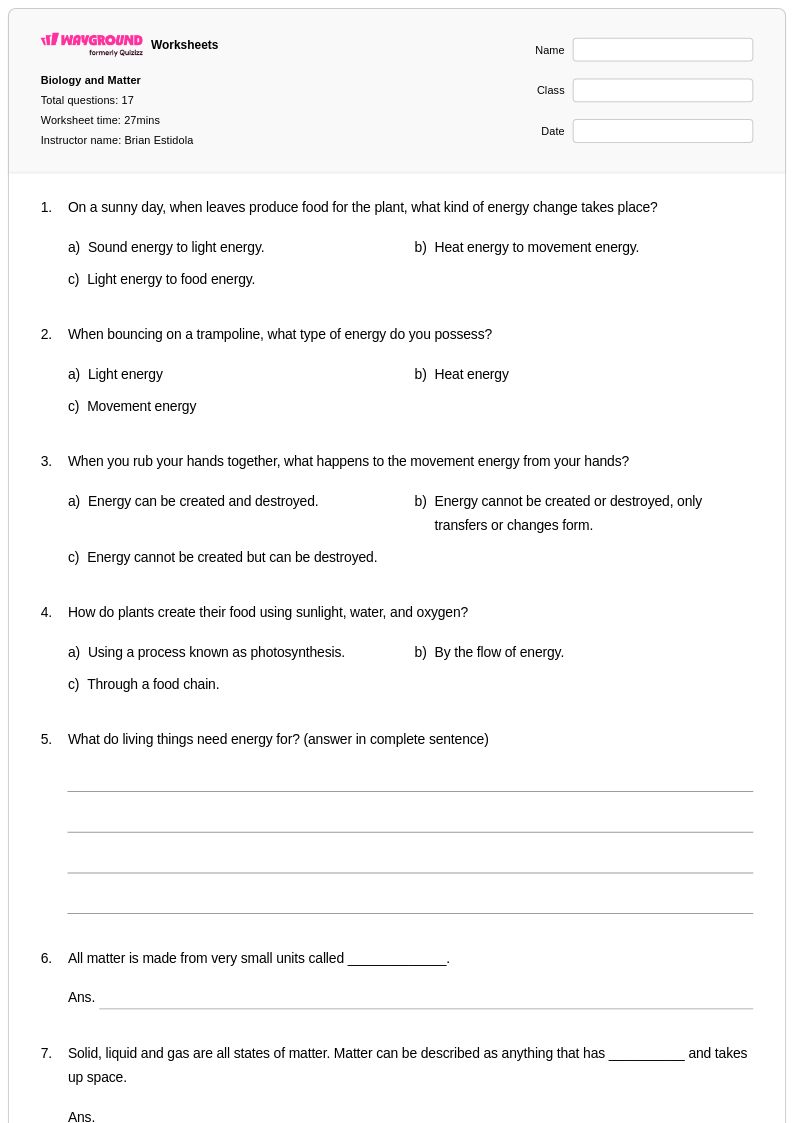
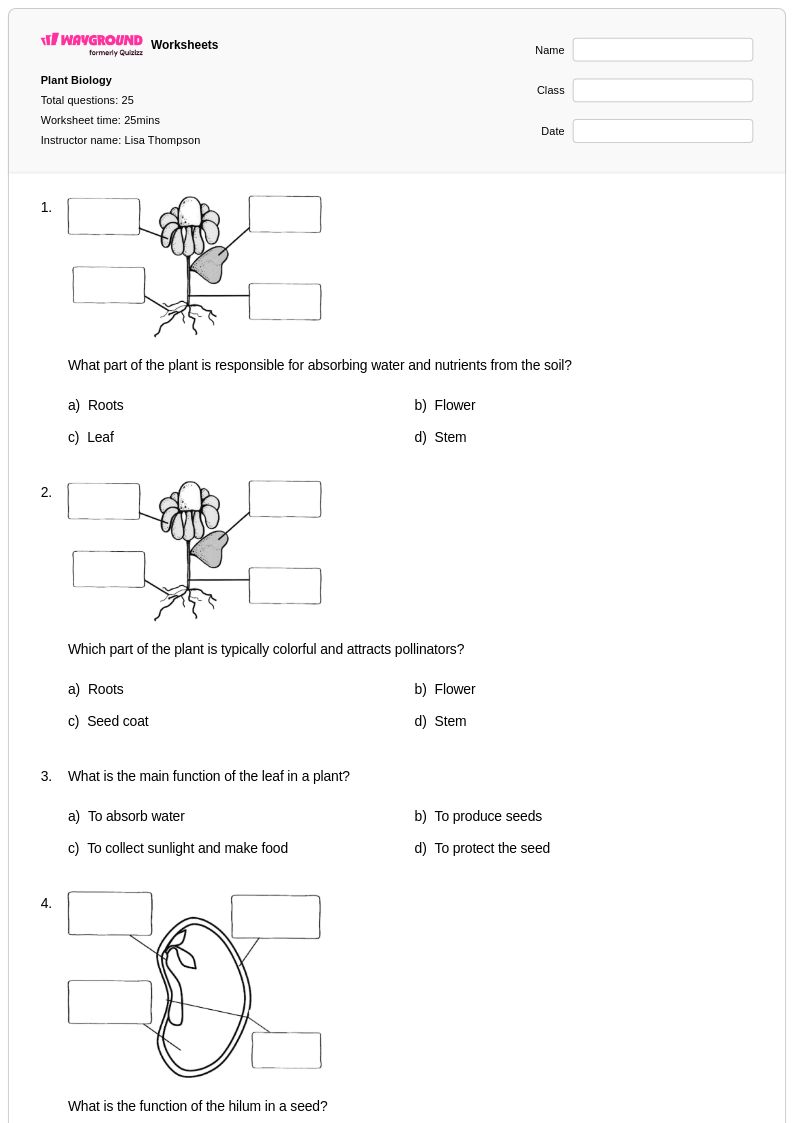
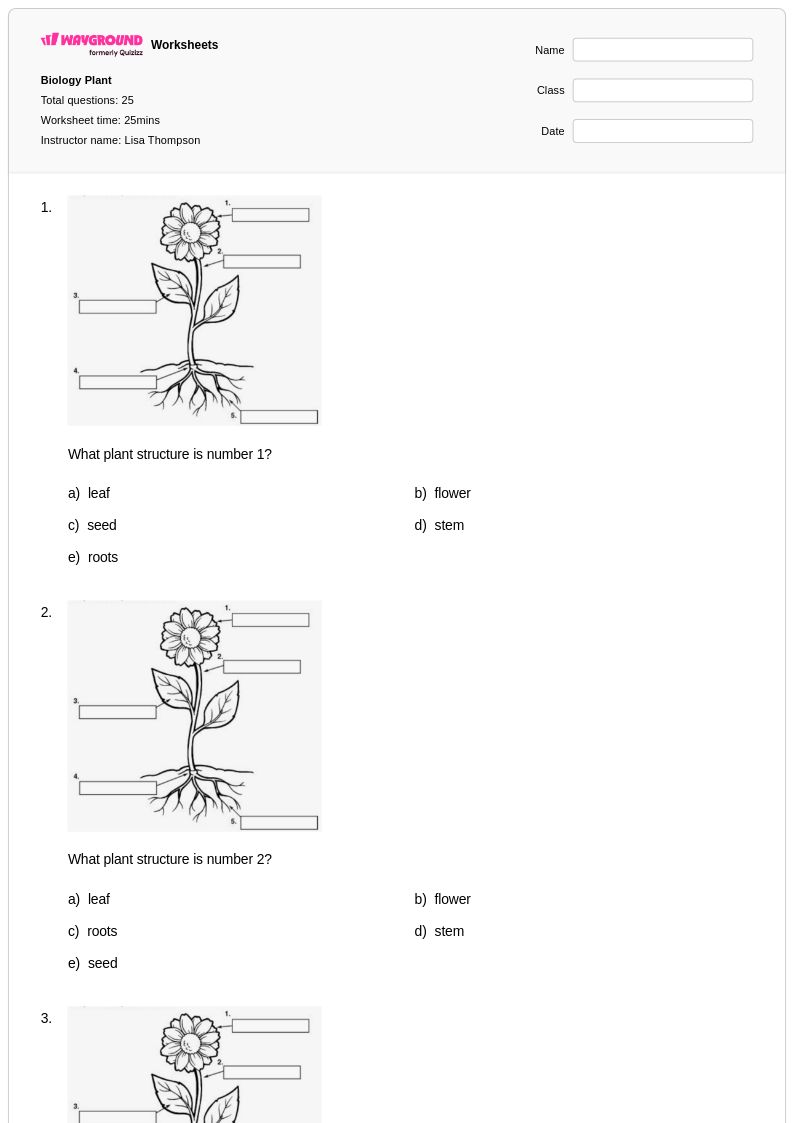
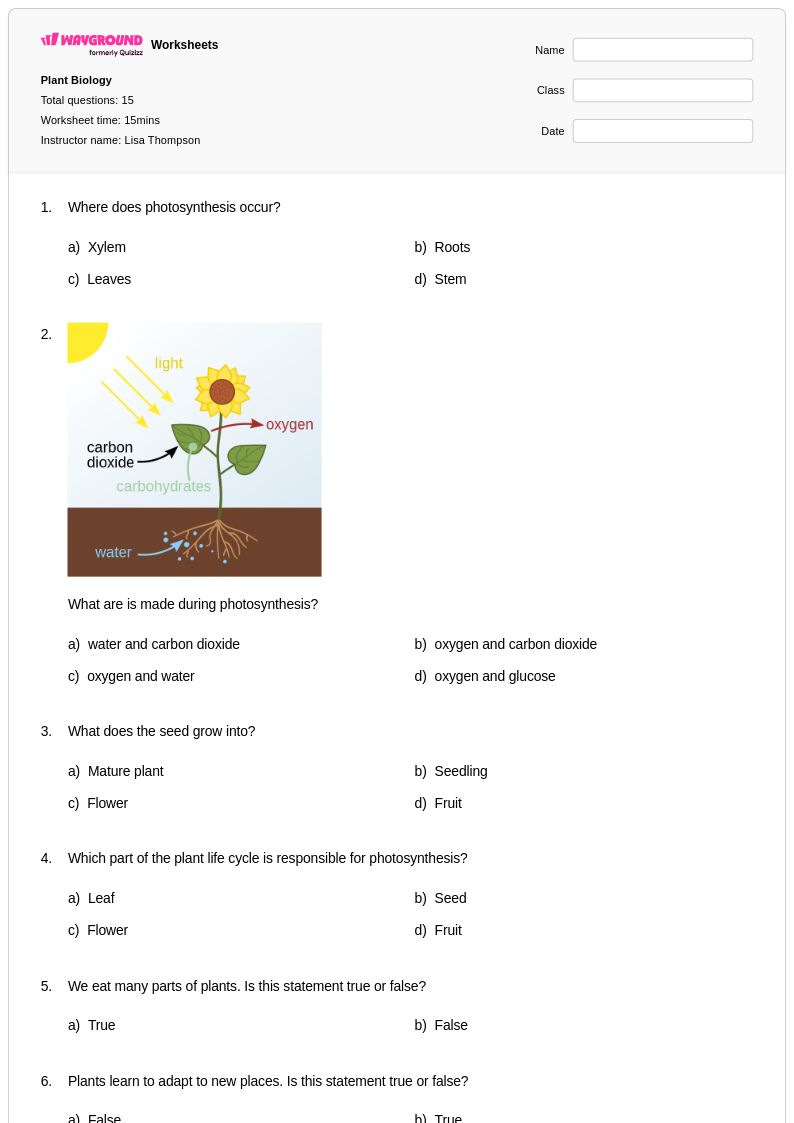
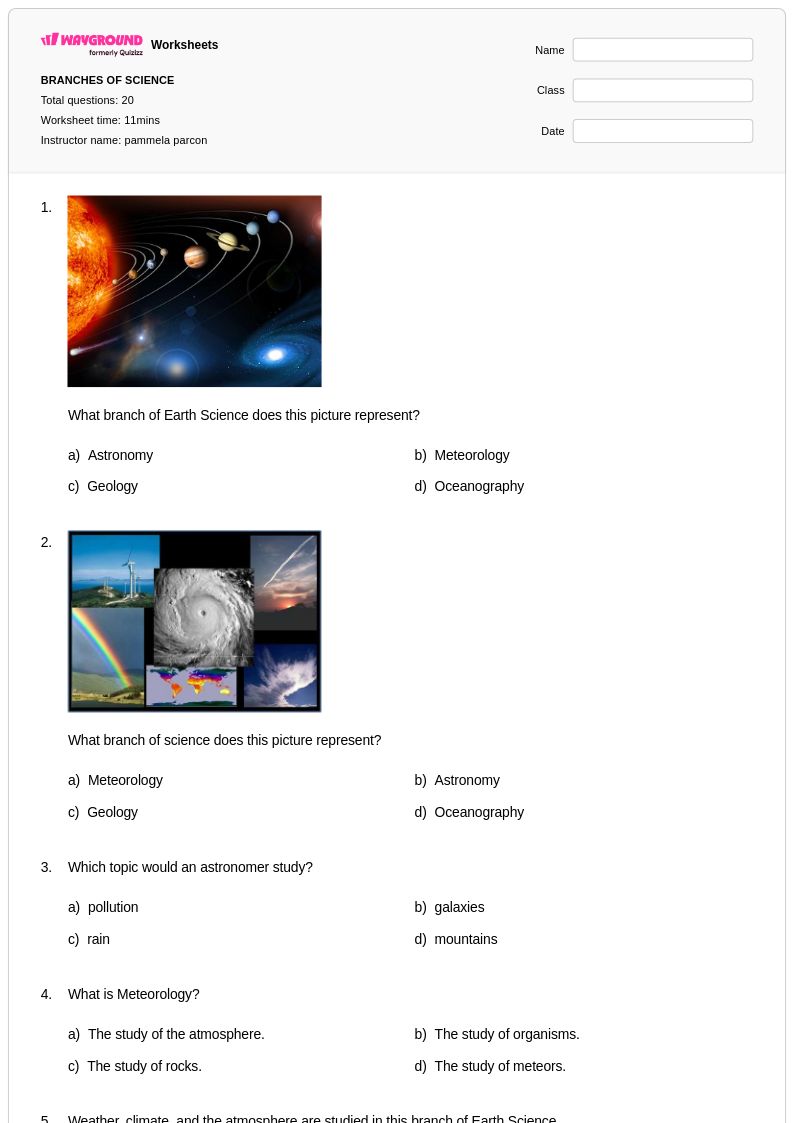
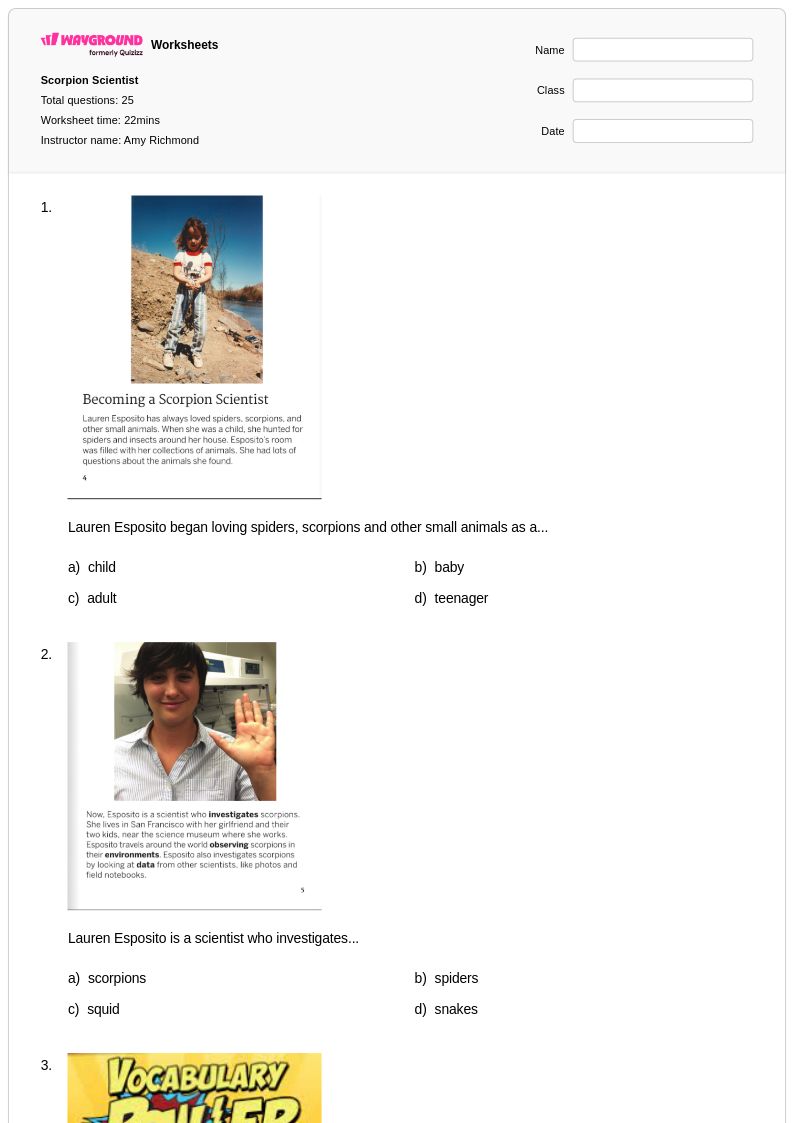
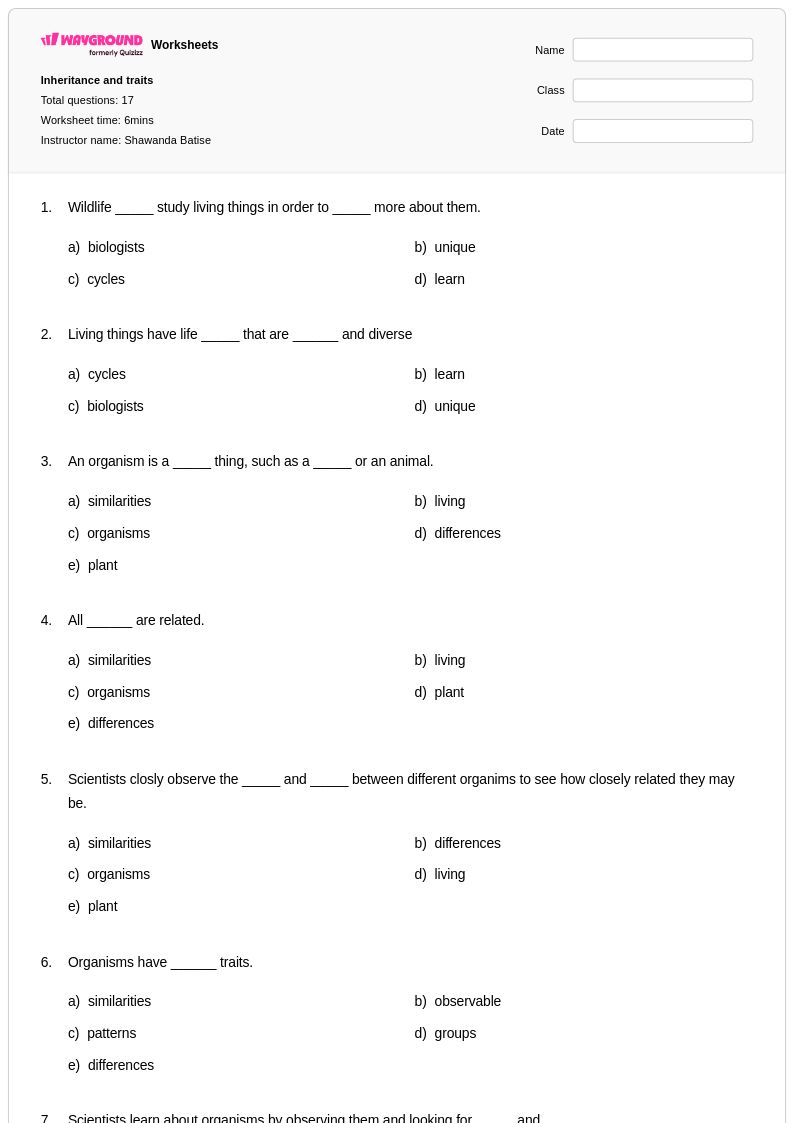
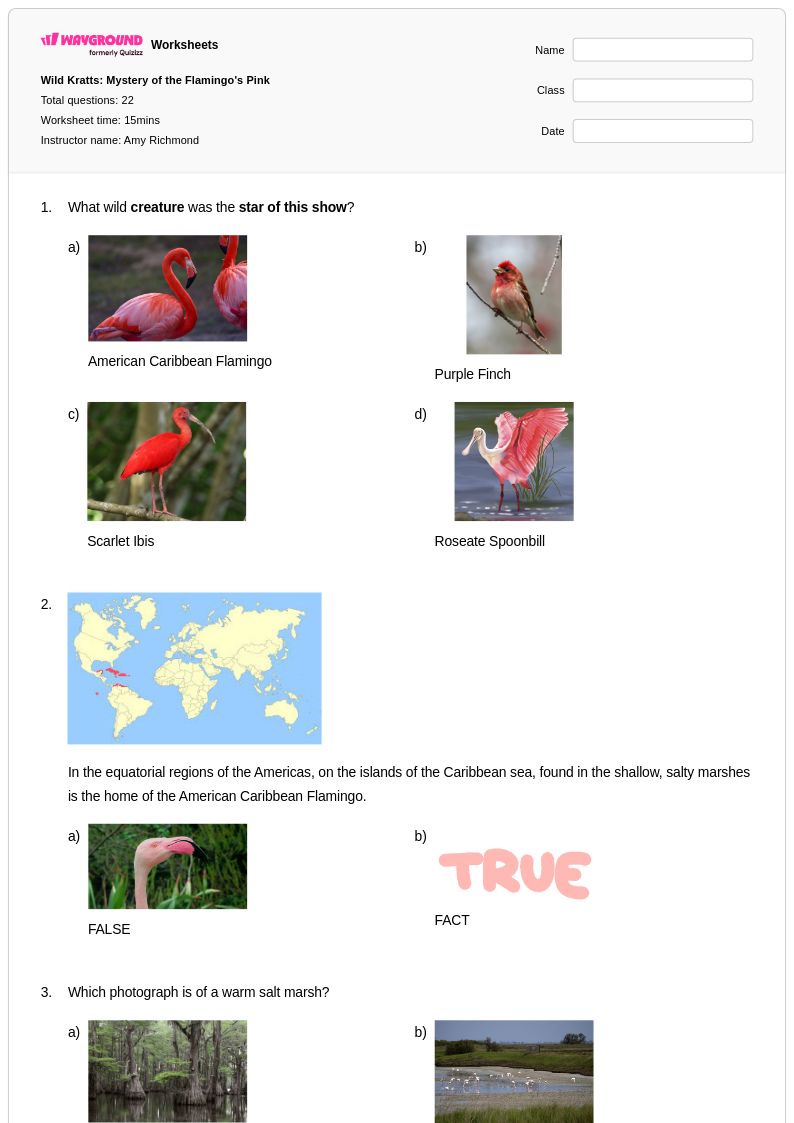
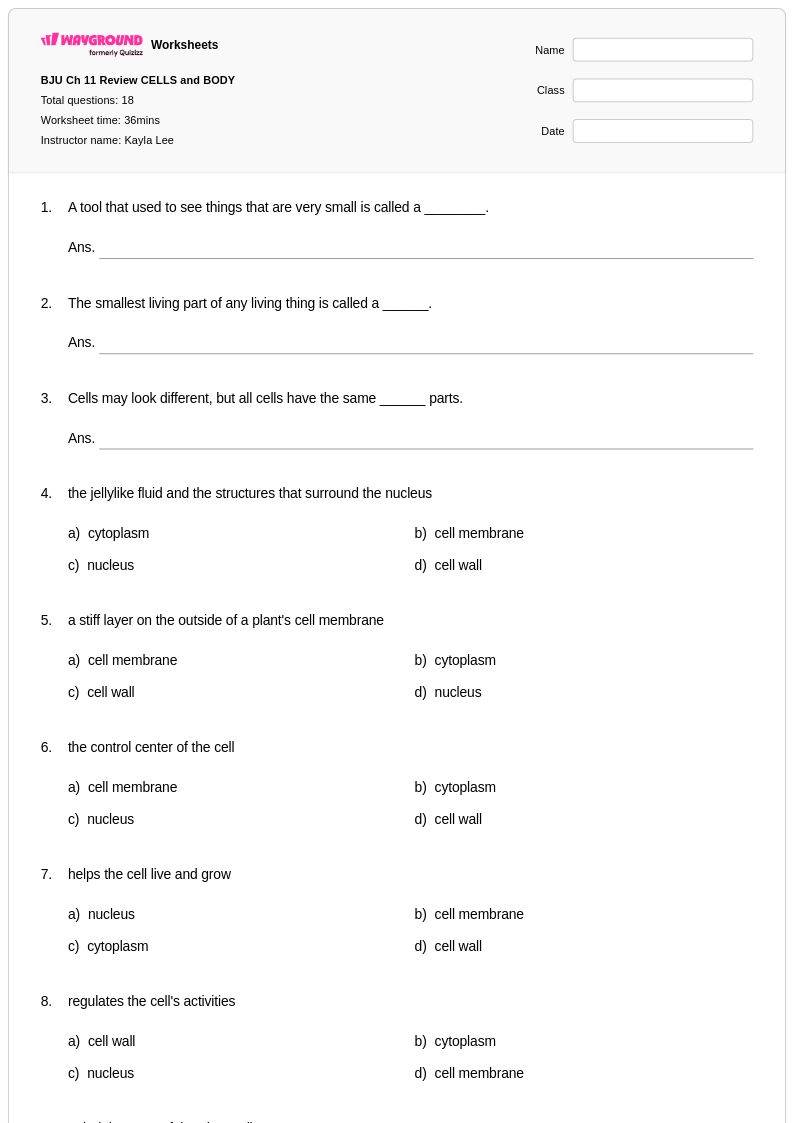
Biology Principles worksheets for Class 3 students through Wayground (formerly Quizizz) introduce young learners to foundational scientific concepts that form the building blocks of life science education. These carefully crafted printables help third-grade students develop critical thinking skills while exploring fundamental biological concepts such as living versus non-living classification, basic needs of organisms, life cycles, and simple ecosystems. Each worksheet incorporates age-appropriate practice problems that encourage observation, hypothesis formation, and scientific reasoning, with comprehensive answer keys provided to support both independent learning and guided instruction. The free pdf resources emphasize hands-on learning experiences that connect abstract biological principles to students' everyday observations of the natural world.
Wayground (formerly Quizizz) empowers educators with an extensive collection of millions of teacher-created Biology Principles worksheets specifically designed for elementary science instruction. The platform's robust search and filtering capabilities allow teachers to quickly locate resources aligned with specific learning standards and individual student needs. These differentiation tools enable seamless customization of content difficulty, ensuring that advanced learners receive appropriate enrichment while struggling students access targeted remediation materials. Available in both printable and digital pdf formats, these worksheet collections streamline lesson planning by providing ready-to-use assessments, skill practice activities, and reinforcement exercises that can be seamlessly integrated into various instructional models, from traditional classroom settings to hybrid learning environments.
FAQs
How do I teach fundamental biology principles to students who are new to the subject?
Start by grounding students in the unifying themes of biology: cell theory, homeostasis, evolution, genetics, and ecological relationships. Introduce each principle with a concrete real-world example before moving to abstract definitions, since students retain foundational concepts better when they can connect them to observable phenomena. Structured practice problems that progress from identification to application help students build both vocabulary and analytical thinking simultaneously.
What exercises help students practice core biology principles?
Effective practice for biology principles includes concept identification tasks, diagram labeling, cause-and-effect scenarios, and application problems that ask students to connect principles across topics. For example, a single worksheet might ask students to identify homeostatic mechanisms, then apply that understanding to a novel organism scenario. This layered approach ensures students move beyond memorization toward genuine biological reasoning.
What mistakes do students commonly make when learning biology principles?
One of the most common errors is treating biology principles as isolated facts rather than interconnected ideas — for instance, students often learn cell theory and evolution separately without recognizing how both underpin genetics. Students also frequently confuse homeostasis with a static state, not understanding it as a dynamic regulatory process. Targeted practice problems that require students to apply multiple principles together can surface and correct these misconceptions early.
How can I differentiate biology principles instruction for students at different skill levels?
For struggling students, reduce cognitive load by focusing on one principle at a time with clear visual supports and simplified answer choices. Advanced learners benefit from complex application scenarios that require synthesizing multiple biological concepts. On Wayground, teachers can apply individual accommodations such as read aloud, reduced answer choices, and extended time to specific students, while the rest of the class receives standard settings without disruption.
How do I use Wayground's biology principles worksheets in my classroom?
Wayground's biology principles worksheets are available as printable PDFs for traditional classroom use and in digital formats for technology-integrated environments, giving teachers flexibility for in-class work, homework, or review sessions. Teachers can also host the worksheets as a quiz directly on Wayground, enabling real-time student response tracking. Each worksheet includes a complete answer key, making them practical for independent practice, self-assessment, or teacher-led review.
How do I assess whether students truly understand biology principles versus just memorizing definitions?
Assessing genuine understanding requires moving students beyond recall — use problems that ask them to apply a principle to an unfamiliar context, such as predicting what happens to an organism when homeostasis fails, or explaining how natural selection would act on a new trait. If students can only recite definitions but struggle with application scenarios, that signals surface-level learning. Worksheets that include both basic identification and complex application problems within the same set allow teachers to quickly diagnose where understanding breaks down.