
10Q
3rd - 4th
6Q
3rd
6Q
1st - 5th
20Q
2nd - 3rd
12Q
3rd
12Q
3rd
5Q
3rd
10Q
1st - 6th
15Q
2nd - 4th
10Q
1st - 3rd
16Q
3rd
12Q
3rd
18Q
3rd
10Q
3rd
15Q
3rd - 5th
10Q
1st - 4th
13Q
3rd
10Q
3rd
10Q
1st - 5th
12Q
3rd
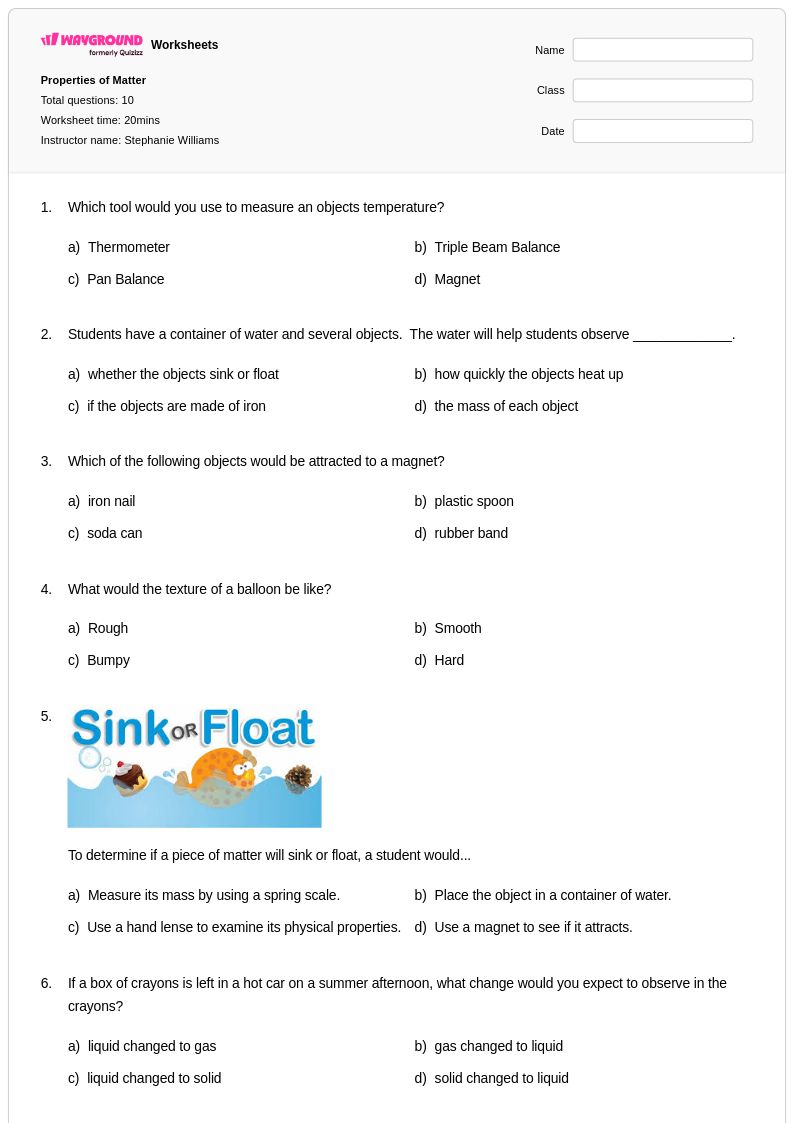
10Q
3rd
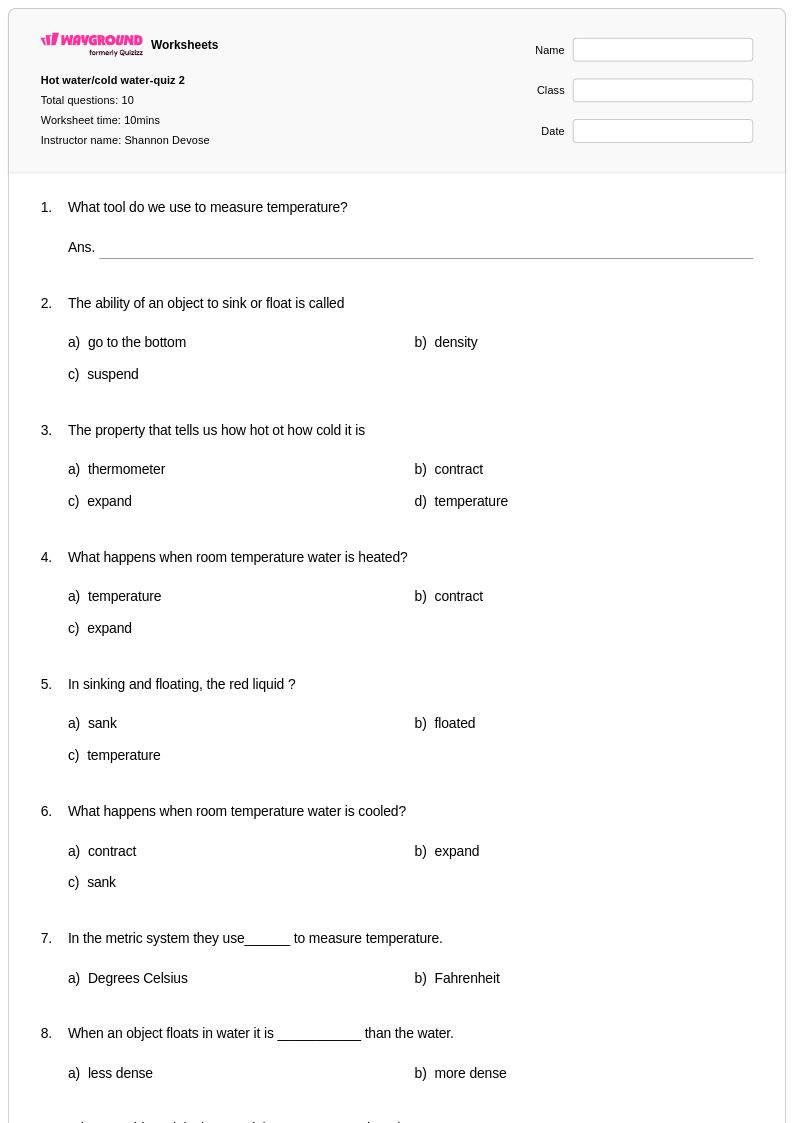
10Q
3rd - 4th

11Q
3rd - 5th
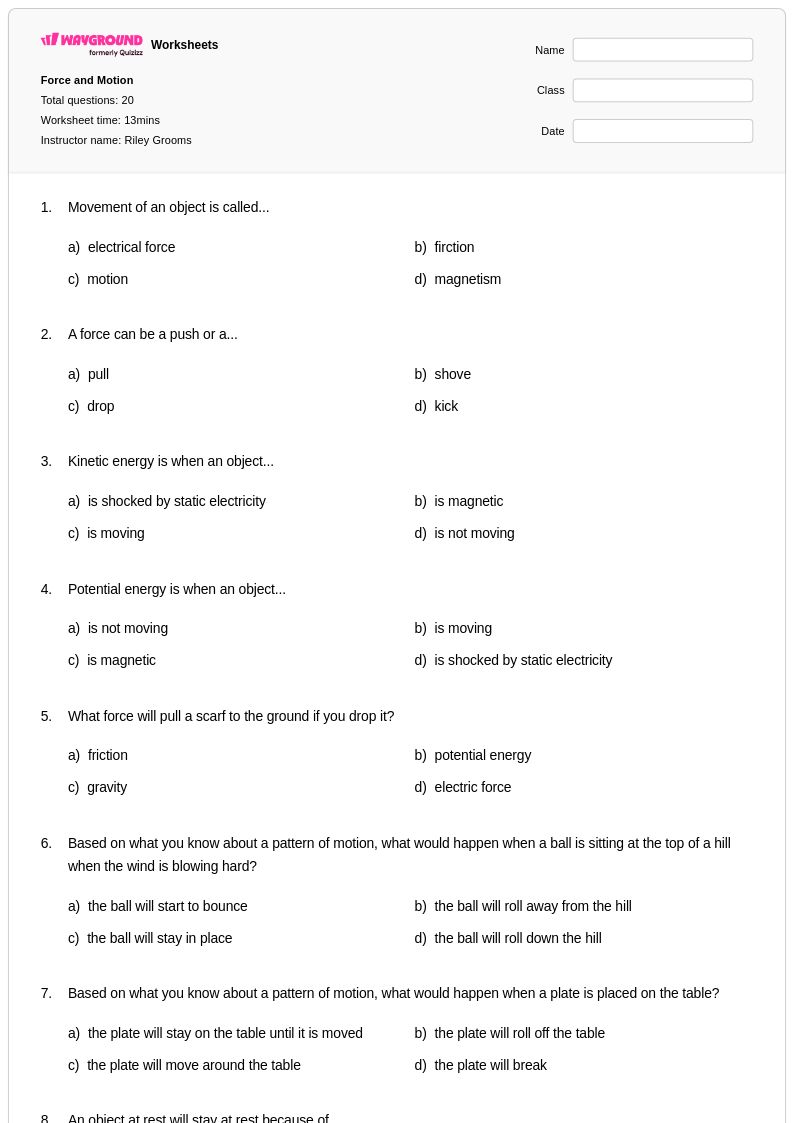
20Q
3rd
Explorar Sinking and Floating hojas de trabajo por grados
Explore otras hojas de trabajo de materias para class 3
Explore printable Sinking and Floating worksheets for Class 3
Sinking and floating worksheets for Class 3 students through Wayground (formerly Quizizz) provide essential hands-on learning experiences that introduce young learners to fundamental physics concepts through observable phenomena. These carefully designed resources help students develop critical thinking skills by encouraging them to make predictions, conduct simple experiments, and analyze results about why certain objects sink while others float. The comprehensive collection includes engaging practice problems that guide students through exploring density, buoyancy, and material properties using everyday objects like wood blocks, metal coins, and plastic toys. Each worksheet comes with a detailed answer key and is available as a free printable pdf, making it easy for educators to incorporate scientific inquiry into their classroom instruction while building students' observation and reasoning abilities.
Wayground (formerly Quizizz) empowers teachers with millions of teacher-created resources specifically focused on Class 3 sinking and floating concepts, featuring robust search and filtering capabilities that help educators quickly locate materials aligned with science standards and learning objectives. The platform's differentiation tools allow instructors to customize worksheets for diverse learning needs, whether providing additional scaffolding for struggling students or offering enrichment activities for advanced learners ready to explore more complex scientific principles. Available in both printable and digital pdf formats, these versatile resources support flexible lesson planning and enable teachers to seamlessly integrate hands-on experiments with theoretical understanding. The extensive collection facilitates targeted skill practice, effective remediation of misconceptions about buoyancy, and enrichment opportunities that deepen students' appreciation for the scientific method and physical science concepts.
FAQs
How do I teach sinking and floating to elementary students?
What exercises help students practice buoyancy and density concepts?
What mistakes do students commonly make when learning about sinking and floating?
How can I differentiate sinking and floating instruction for students at different skill levels?
How do I use Wayground's sinking and floating worksheets in my classroom?