Free Printable Social Contract Worksheets for Class 7
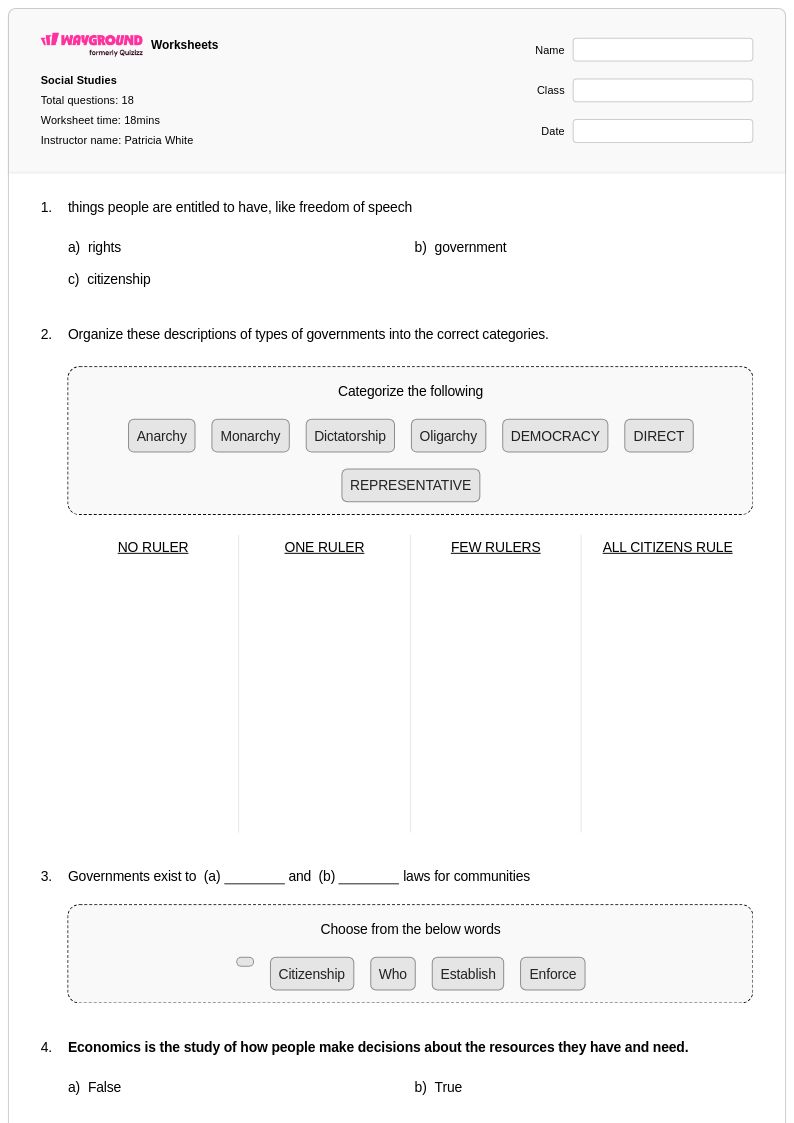
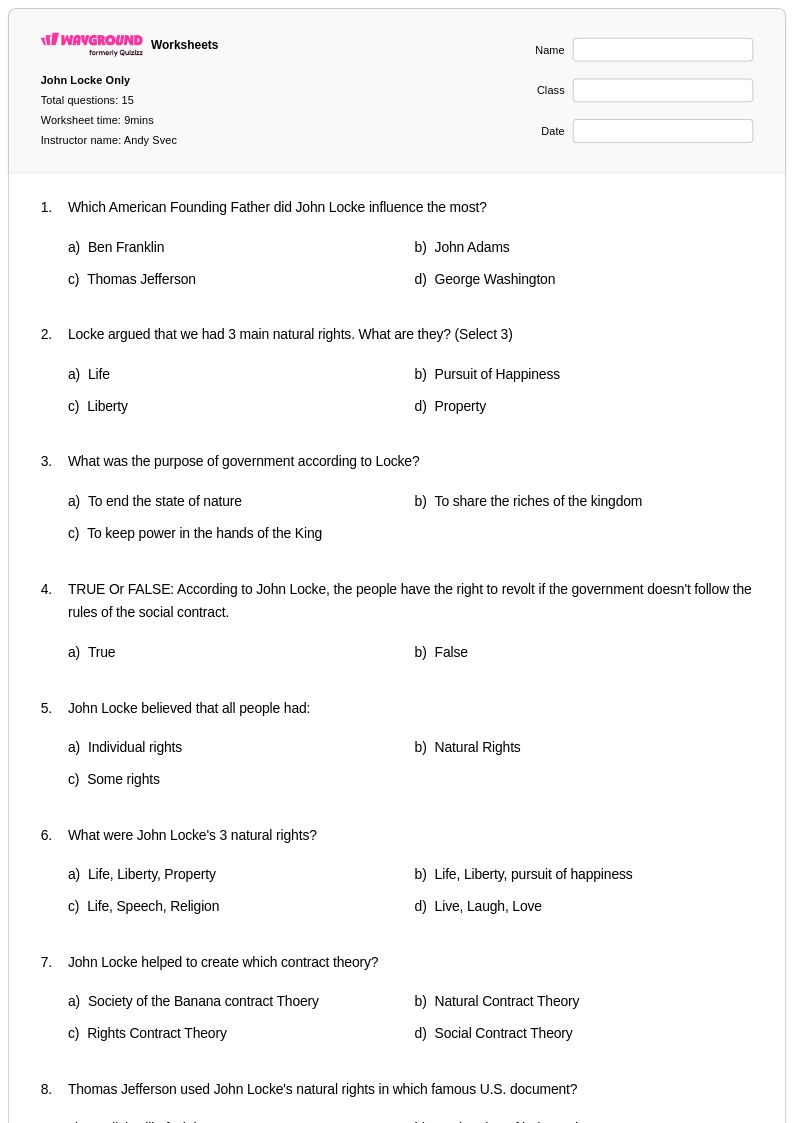
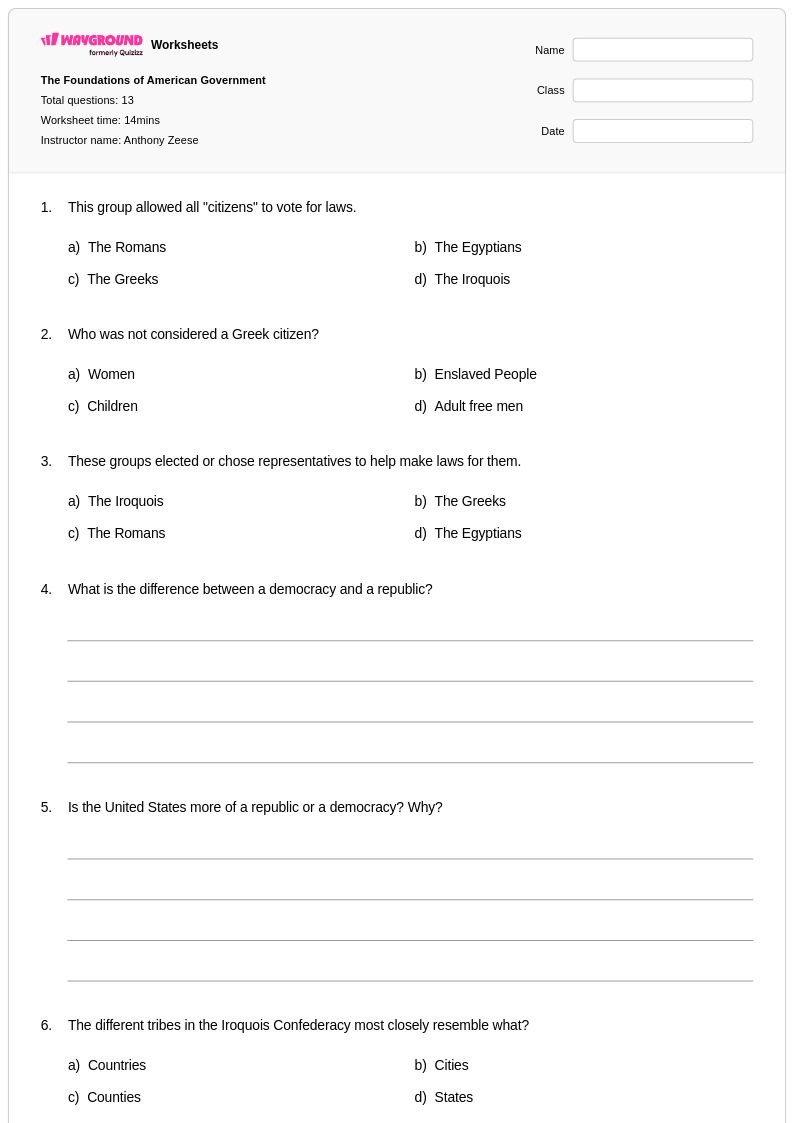
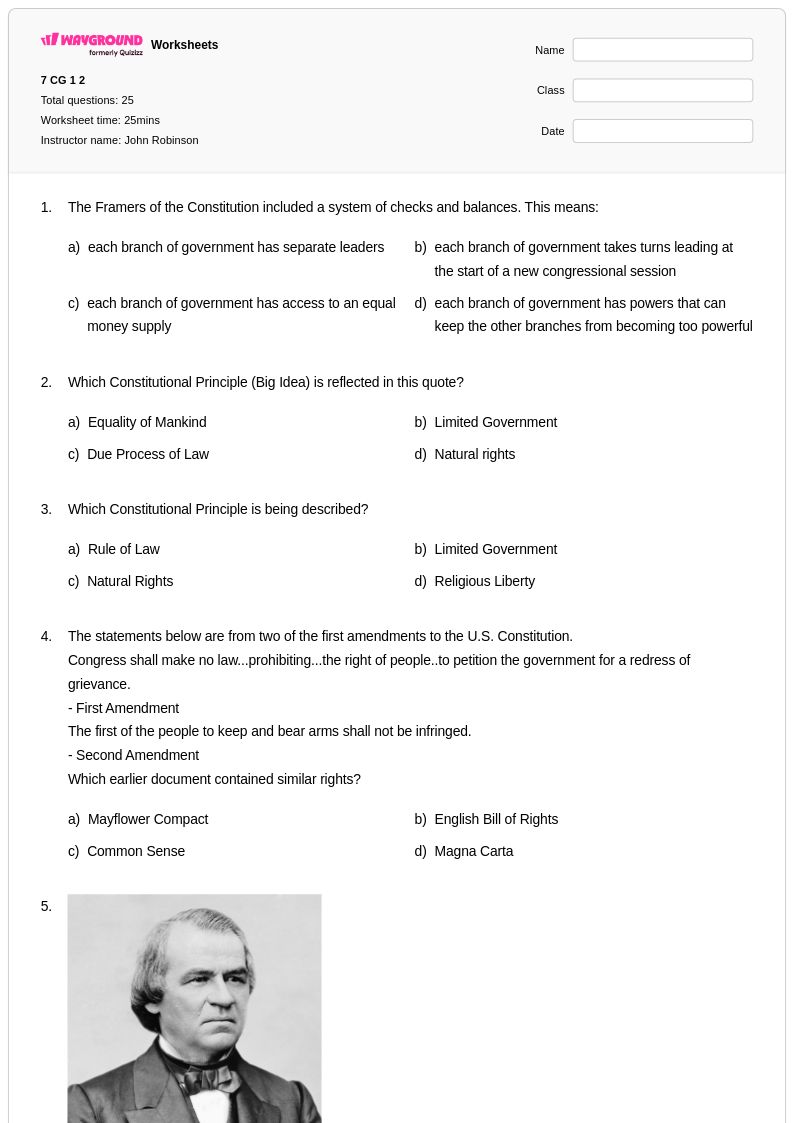
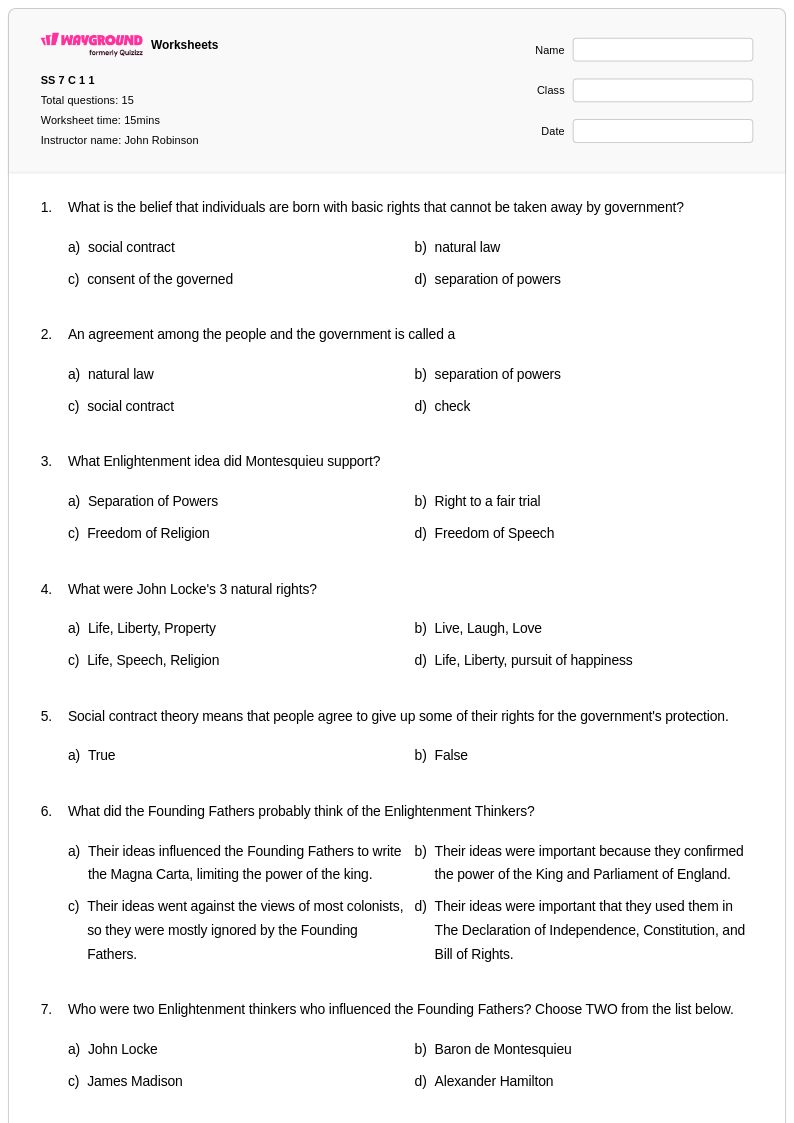
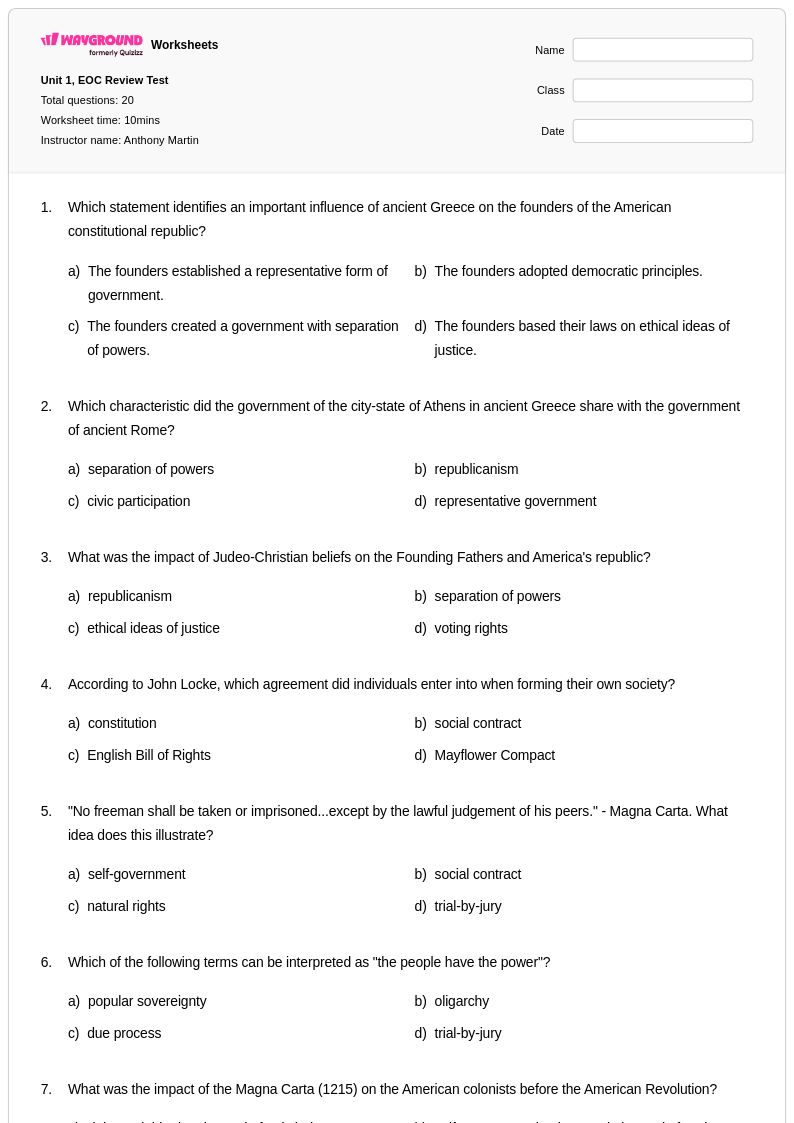
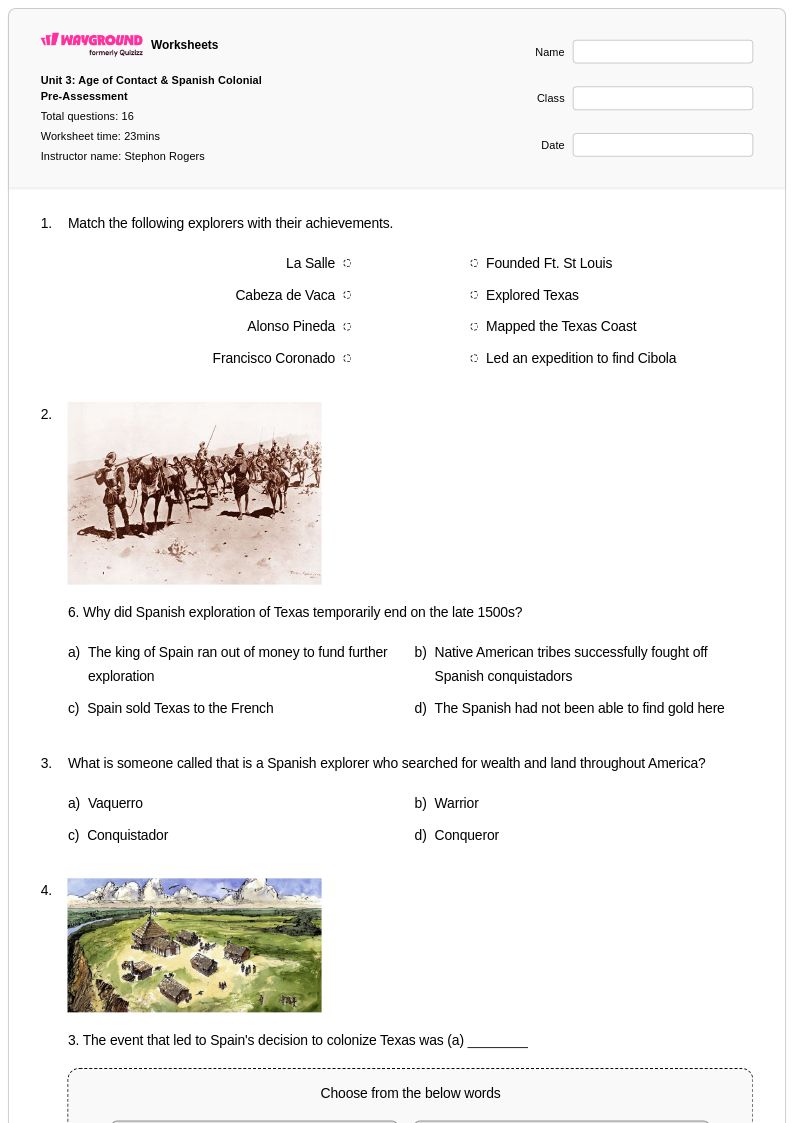
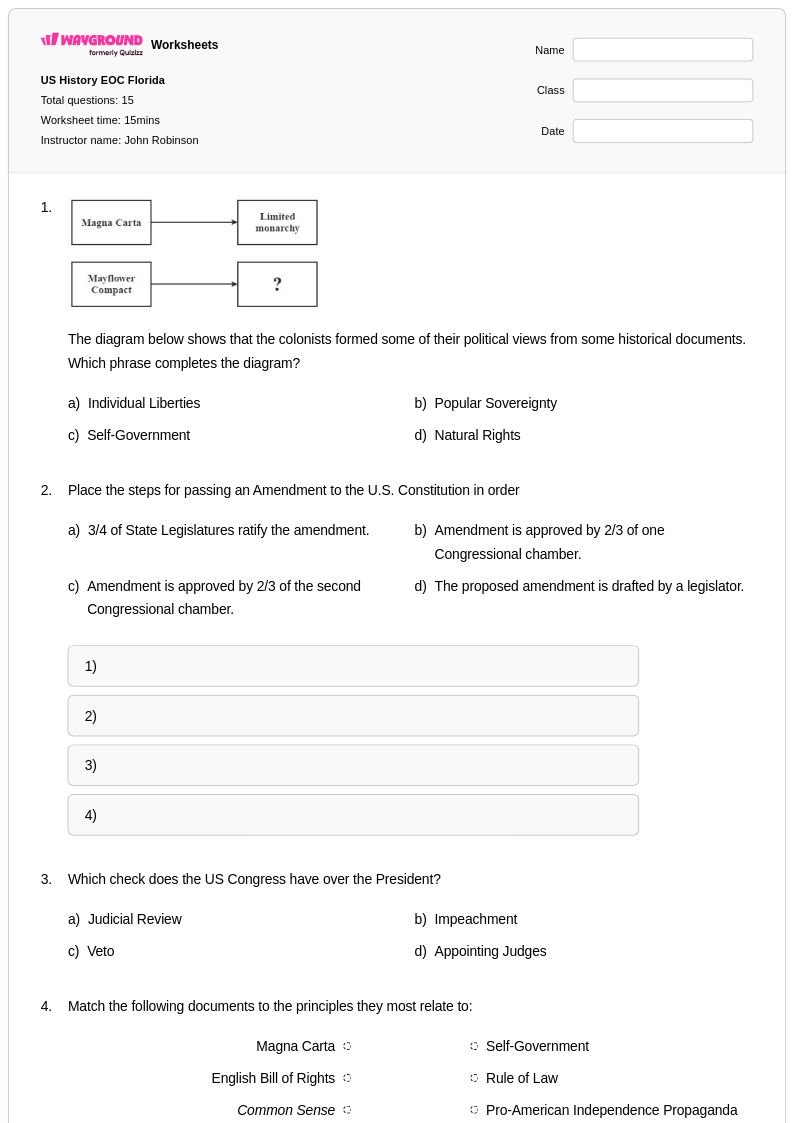
Class 7 Social Contract worksheets from Wayground offer free printables and practice problems with answer keys to help students understand the foundational agreements between citizens and government in civics education.
Explore printable Social Contract worksheets for Class 7
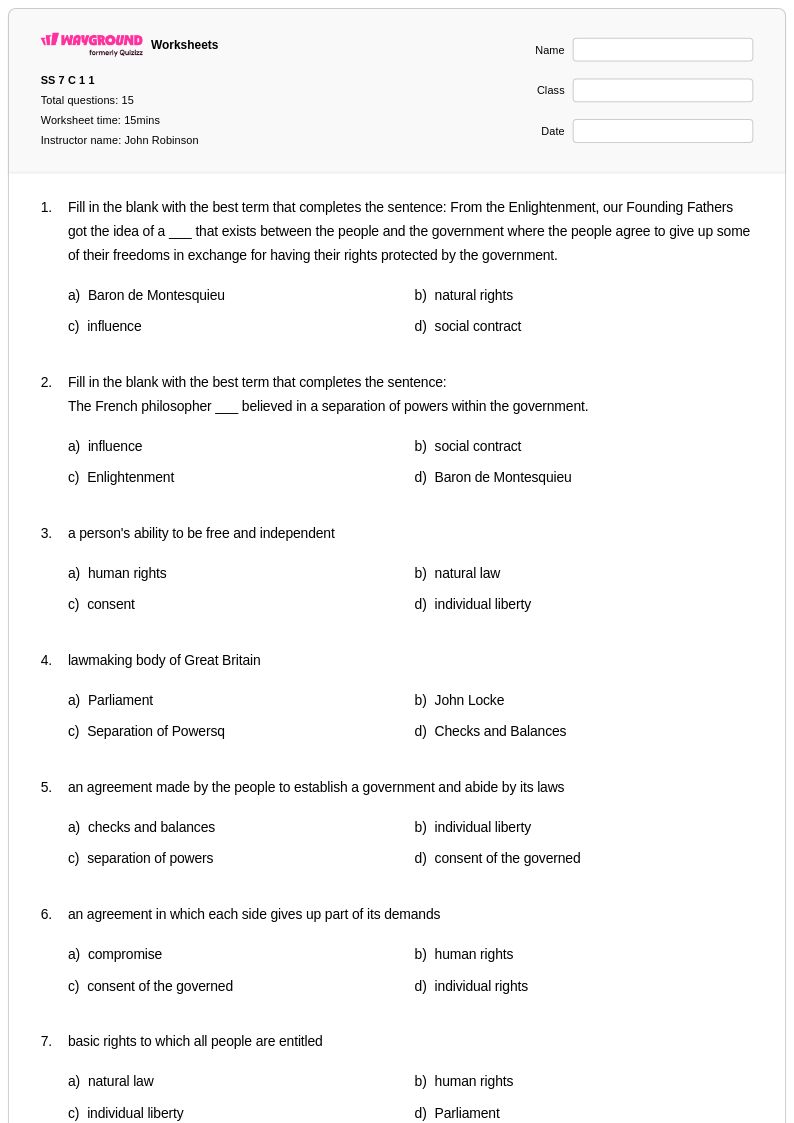
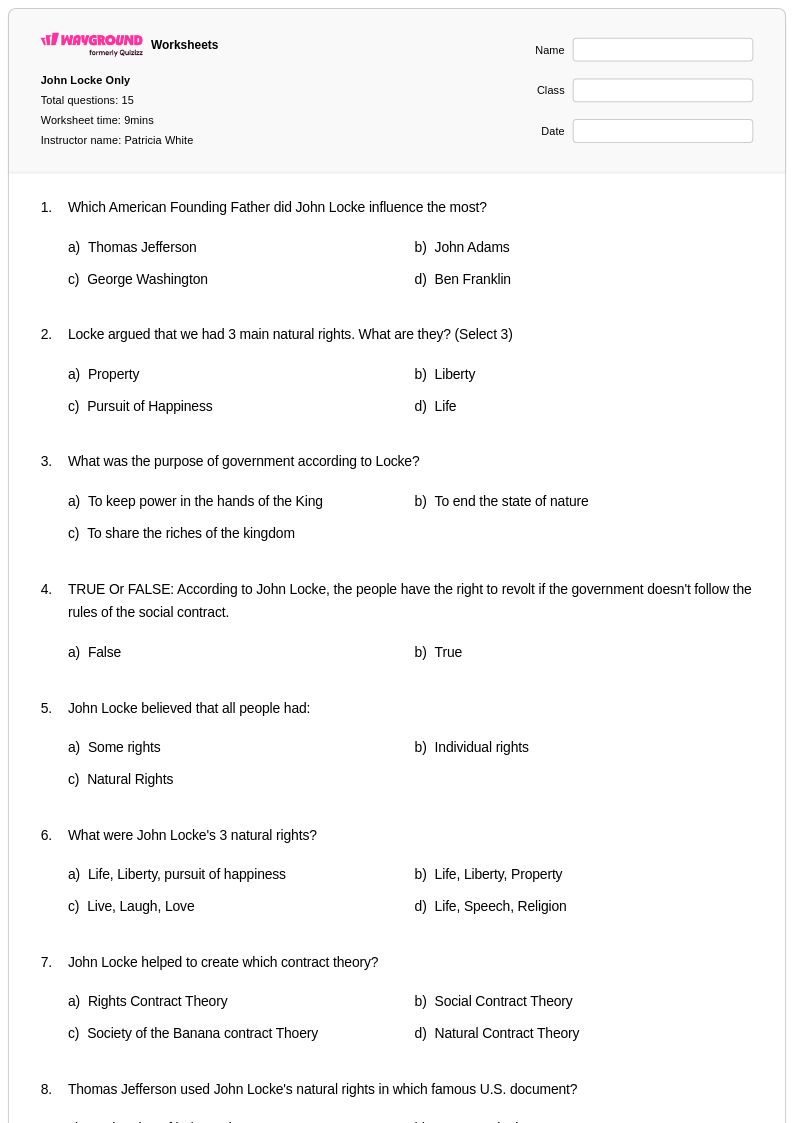
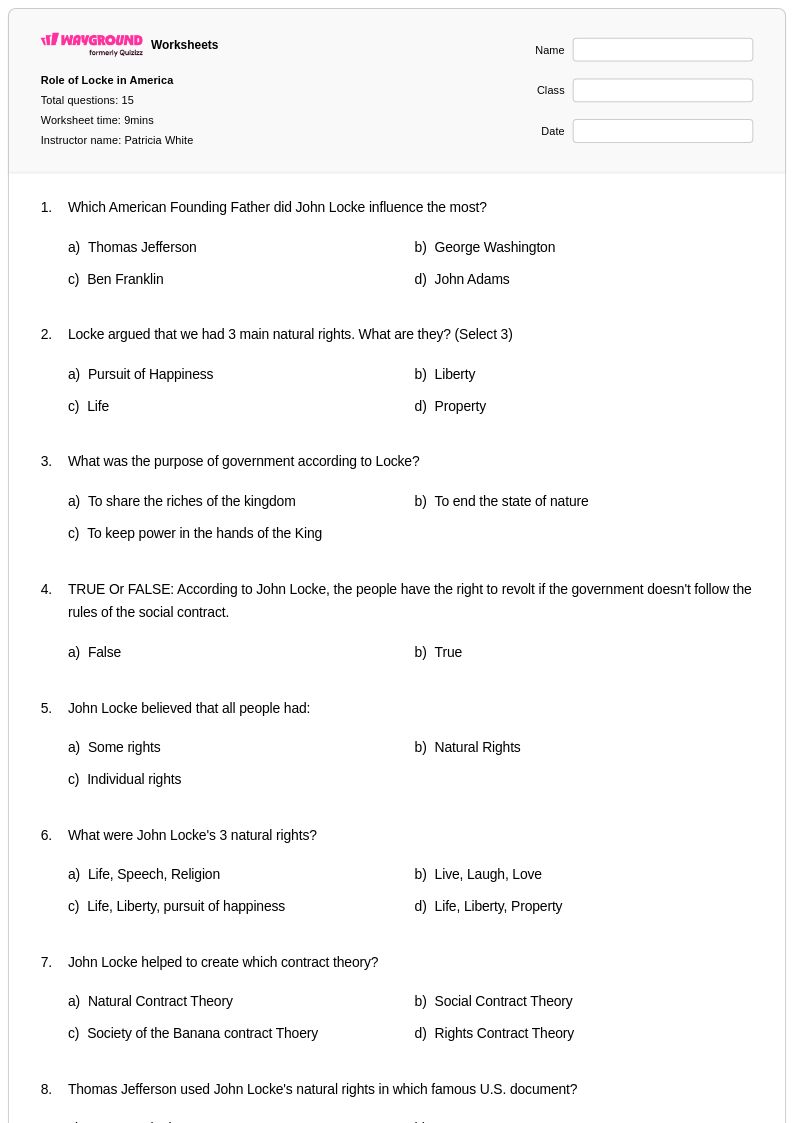
Social contract worksheets available through Wayground (formerly Quizizz) provide Class 7 students with comprehensive practice materials that explore the foundational concept of government legitimacy through citizen consent. These expertly designed worksheets strengthen critical thinking skills by examining how individuals surrender certain freedoms in exchange for protection and social order, analyzing historical examples from philosophers like Hobbes, Locke, and Rousseau, and connecting these theoretical frameworks to modern democratic institutions. Students engage with practice problems that require them to evaluate real-world scenarios, compare different forms of government, and assess the balance between individual rights and collective responsibilities. Each worksheet collection includes detailed answer keys that support independent learning and self-assessment, while the free printable pdf format ensures accessibility for diverse classroom environments and homework assignments.
Wayground (formerly Quizizz) empowers educators with millions of teacher-created social contract resources that seamlessly integrate into Class 7 civics curricula through robust search and filtering capabilities aligned with national and state social studies standards. Teachers can easily differentiate instruction by selecting from worksheets that range from basic concept introduction to advanced analysis activities, while flexible customization tools allow educators to modify content for specific learning objectives or student needs. The platform's comprehensive collection supports effective lesson planning by offering both printable and digital formats, enabling teachers to address diverse learning preferences and classroom configurations. These versatile resources prove invaluable for targeted remediation when students struggle with abstract governmental concepts, enrichment opportunities for advanced learners ready to explore complex political theory, and ongoing skill practice that reinforces understanding of how social contracts shape contemporary civic life and democratic participation.
FAQs
How do I teach social contract theory to my students?
Start by grounding students in the historical context: why did thinkers like Hobbes, Locke, and Rousseau argue that individuals voluntarily surrender certain freedoms to a governing authority in exchange for protection and order? A strong entry point is comparing each philosopher's version of the 'state of nature' before government exists. From there, students can connect these theories to real documents like the U.S. Constitution or the Declaration of Independence, making the abstract concept concrete and relevant.
What exercises help students practice understanding the social contract?
Effective practice tasks include analyzing primary source excerpts from Hobbes' Leviathan, Locke's Second Treatise, or Rousseau's The Social Contract and identifying each thinker's core claims. Comparison charts that ask students to contrast each philosopher's view of human nature, government's role, and individual rights build analytical depth. Scenario-based questions that ask students to apply social contract principles to real-world civic situations, such as taxation or civil disobedience, push higher-order thinking.
What are the most common misconceptions students have about the social contract?
A frequent error is treating the social contract as a literal, signed document rather than a philosophical framework describing the implicit agreement between citizens and their government. Students also tend to conflate Hobbes, Locke, and Rousseau, not recognizing that their views differ significantly — Hobbes favored strong central authority while Locke and Rousseau emphasized natural rights and popular sovereignty. Addressing these distinctions explicitly and early prevents students from blending the three theories into a single, inaccurate account.
How do I differentiate social contract instruction for students at different skill levels?
For struggling learners, simplified text versions of Hobbes, Locke, and Rousseau's arguments with guided annotation scaffolds help reduce cognitive overload. Advanced students benefit from evaluative tasks such as arguing whether modern democratic governments truly fulfill the terms of the social contract or examining how social contract theory has been challenged by critical theorists. On Wayground, teachers can apply accommodations like reduced answer choices or Read Aloud to individual students, so each learner engages with the same core content at an appropriate level of support.
How can I use Wayground's social contract worksheets in my classroom?
Wayground's social contract worksheets are available as printable PDFs for traditional classroom use and in digital formats for technology-integrated or hybrid learning environments. Teachers can also host the worksheets as a quiz directly on Wayground, enabling real-time student responses and automatic grading. Each worksheet includes a complete answer key, reducing prep time and making them practical for independent work, formative checks, or test preparation.
How does social contract theory connect to constitutional law and civic participation?
Social contract theory is the philosophical foundation for constitutional democracy: constitutions formalize the terms under which citizens consent to be governed and define the limits of governmental authority. In the American context, the Declaration of Independence directly echoes Locke's argument that government derives its just powers from the consent of the governed. Teaching this connection helps students understand why civic participation, including voting and legal challenge, is not just a right but a mechanism for enforcing the social contract.