
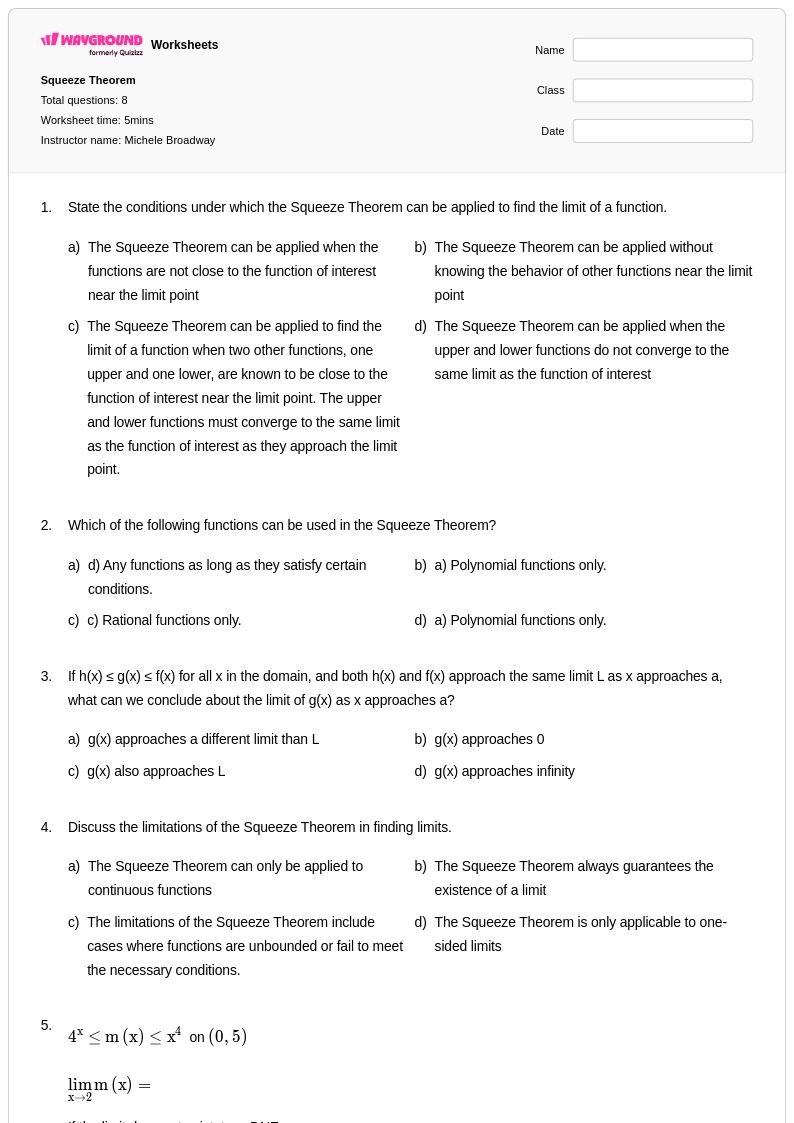
8 Q
9th - 12th
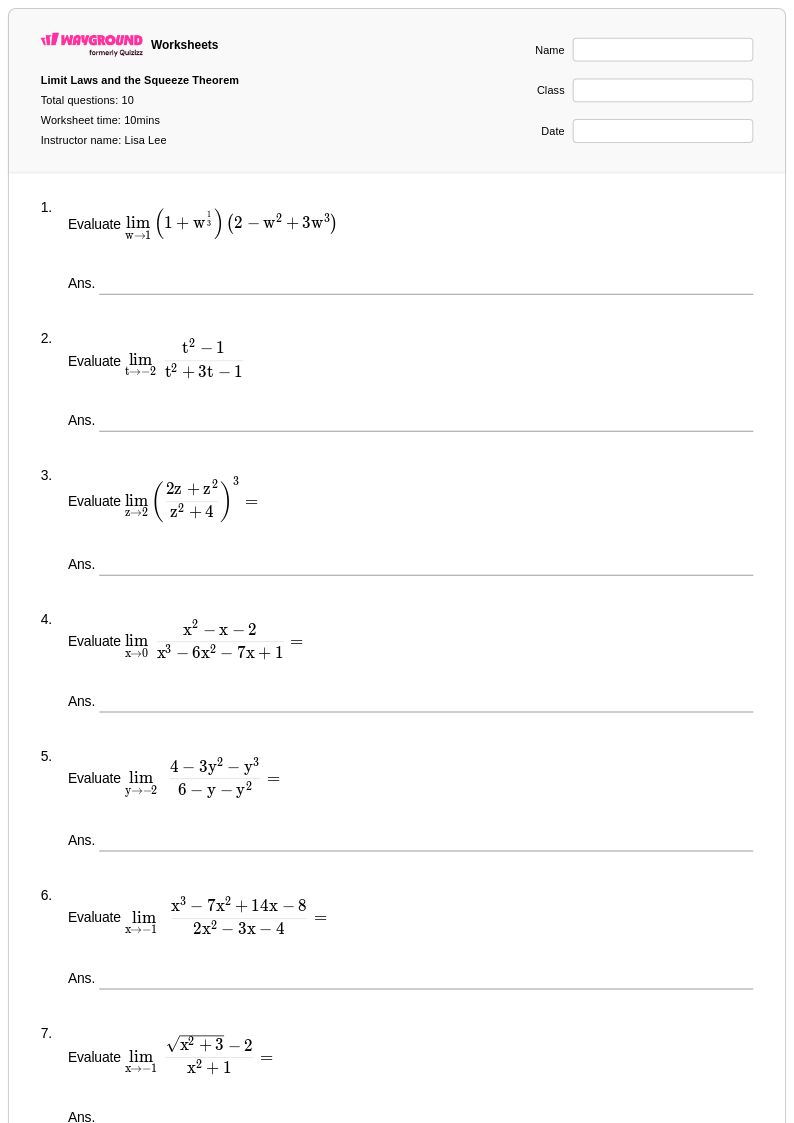
10 Q
11th - 12th
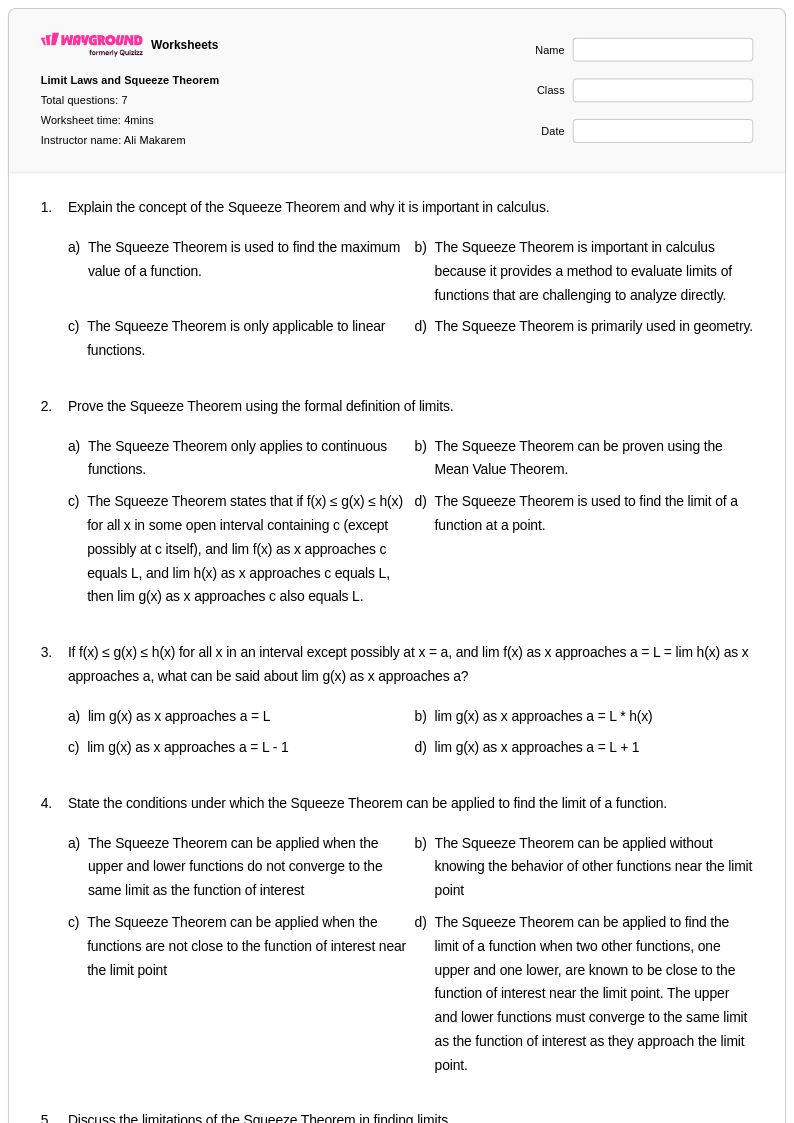
7 Q
11th
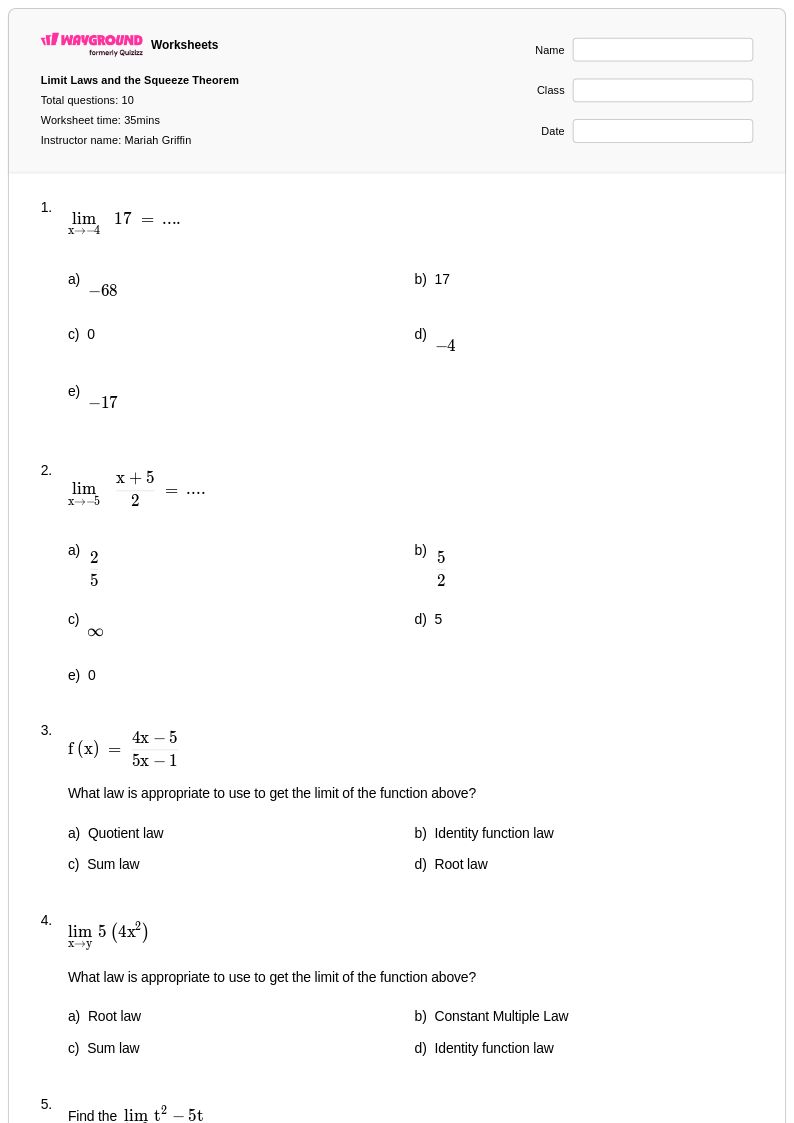
10 Q
11th - 12th
5 Q
11th
17 Q
10th - 12th
17 Q
8th - Uni
18 Q
9th - 12th
17 Q
9th - 12th
13 Q
9th - 12th
12 Q
9th - Uni
15 Q
9th - 12th
20 Q
9th - 12th
20 Q
9th - 12th
60 Q
9th - 11th
20 Q
11th - Uni
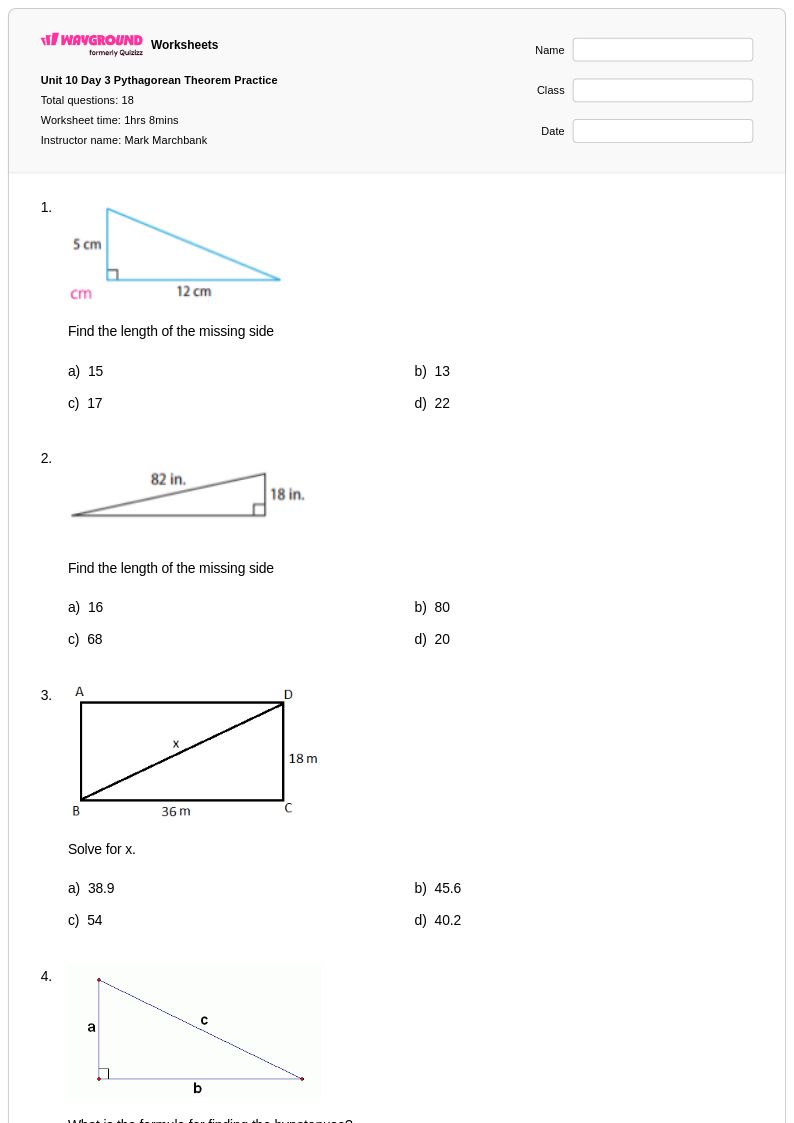
18 Q
9th - 12th
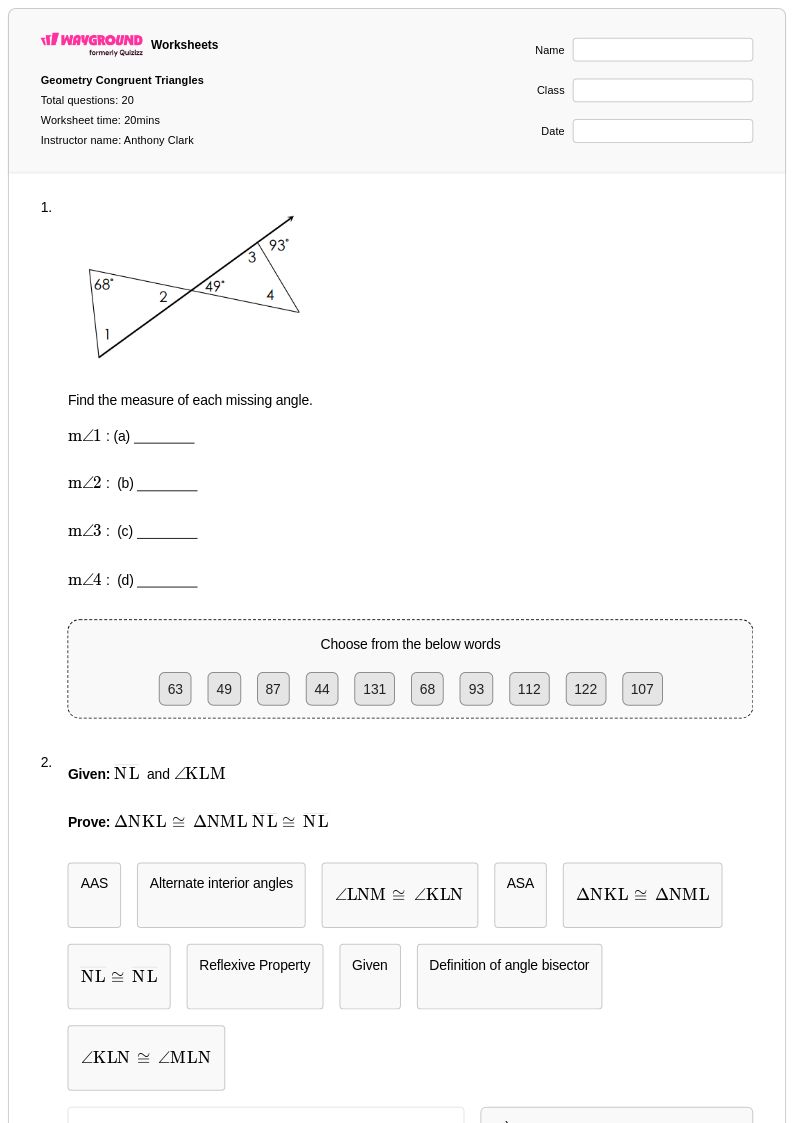
20 Q
10th - Uni
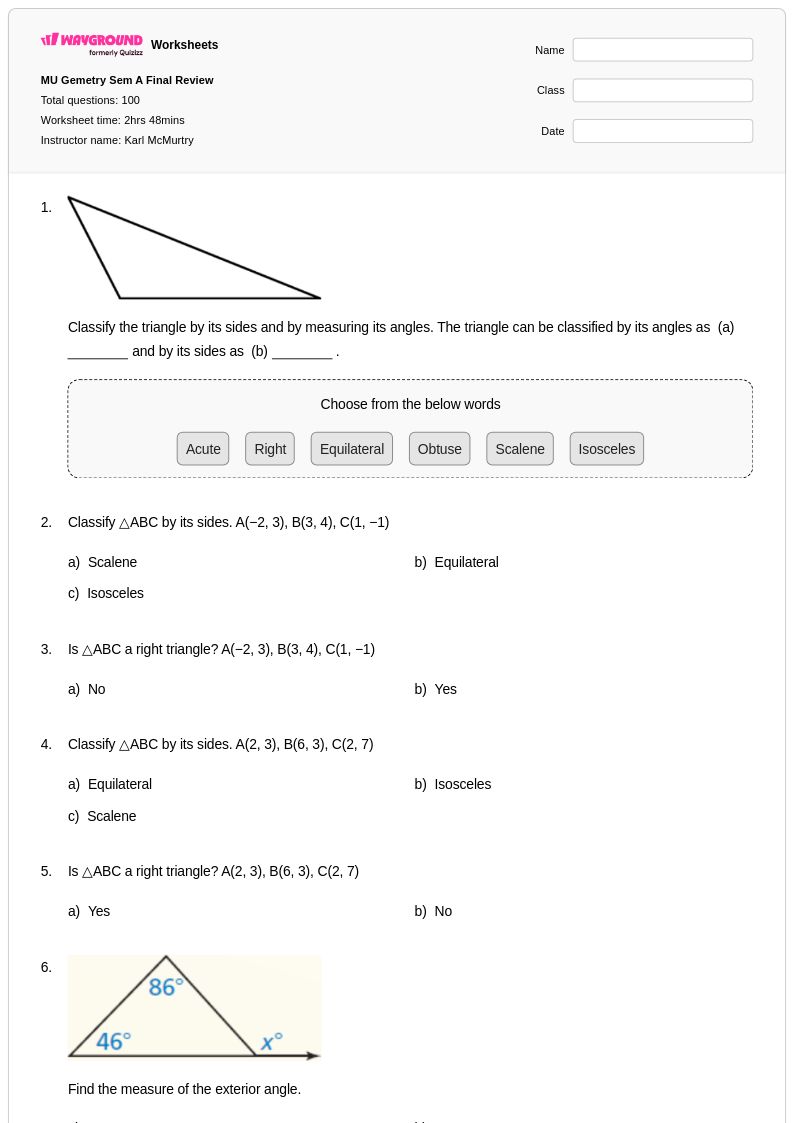
100 Q
9th - 12th
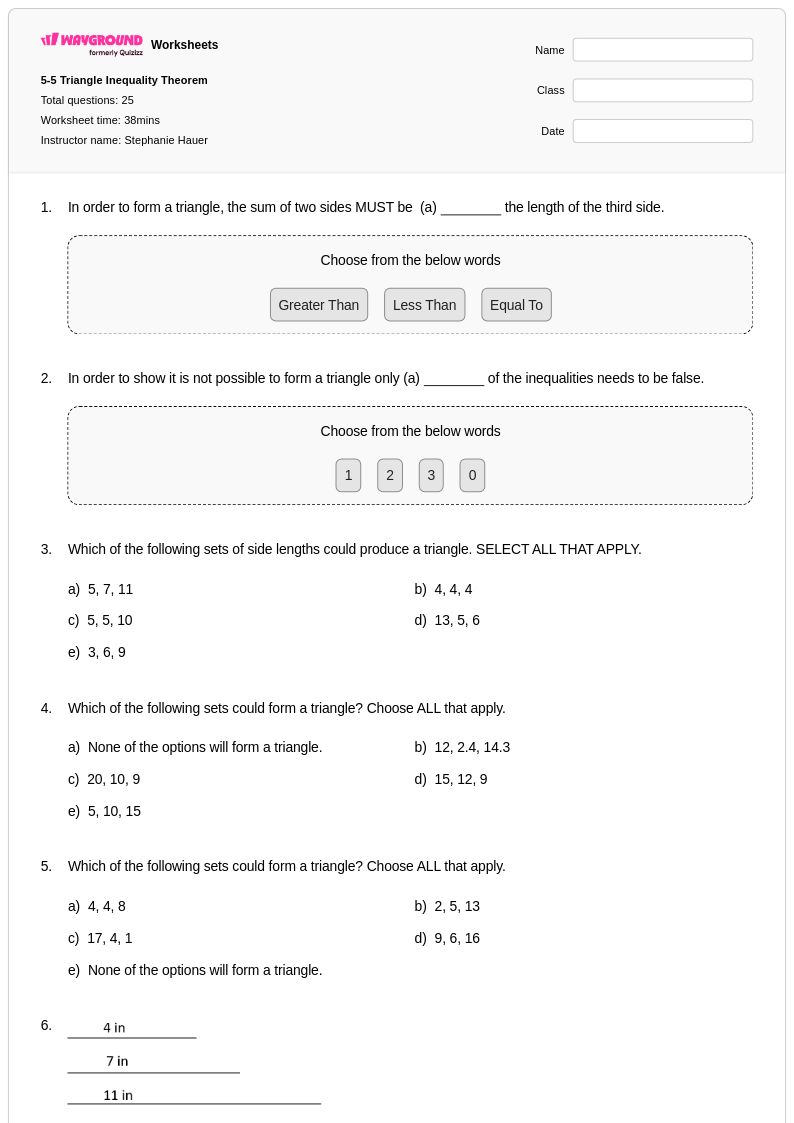
25 Q
9th - 12th
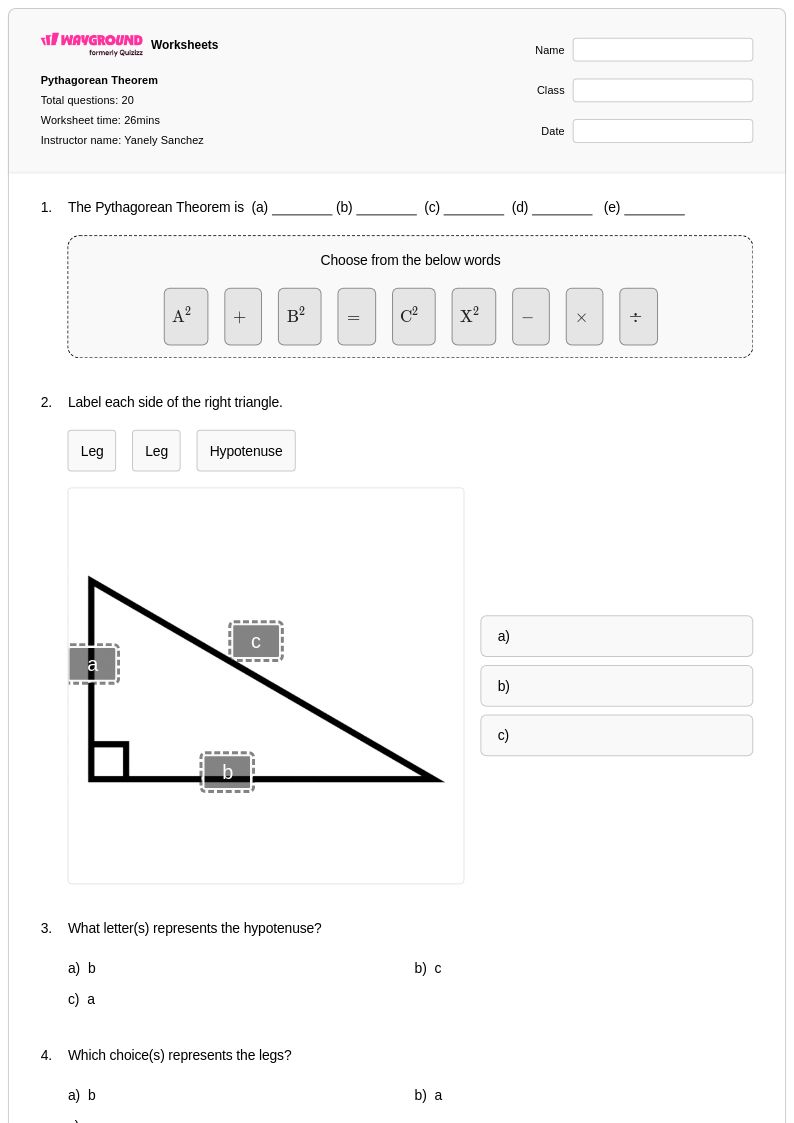
20 Q
9th - 12th
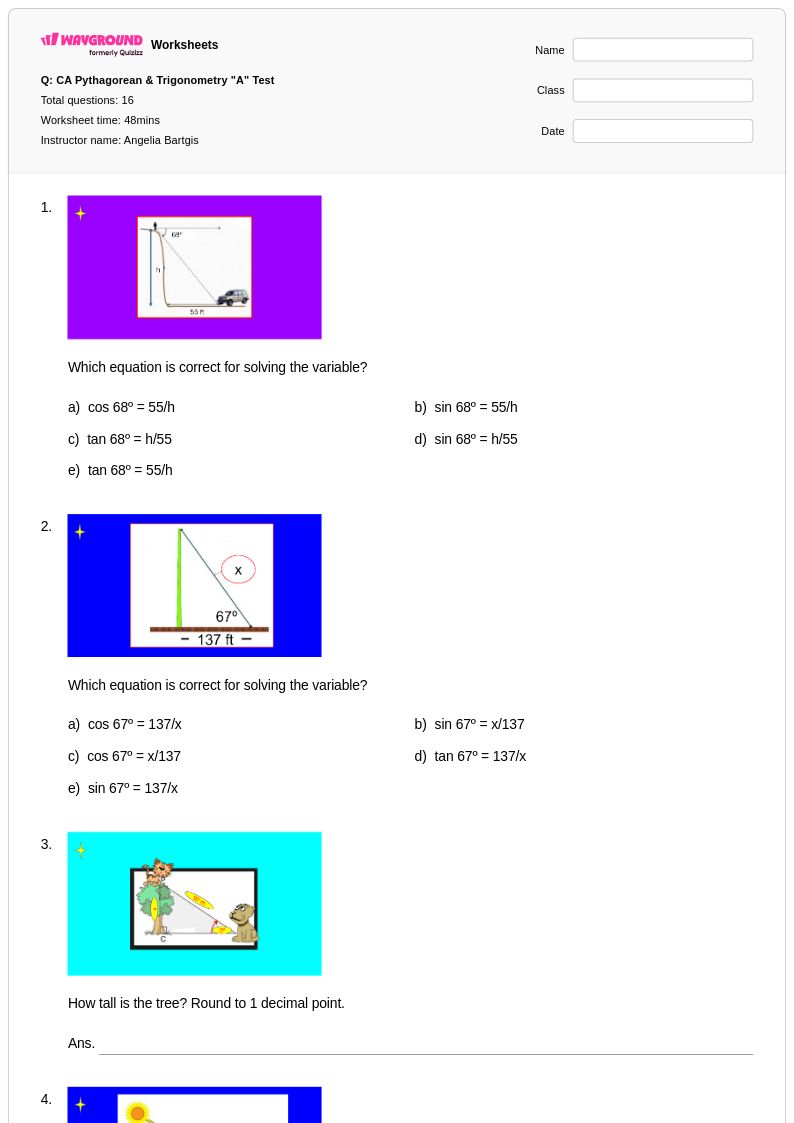
16 Q
9th - 12th
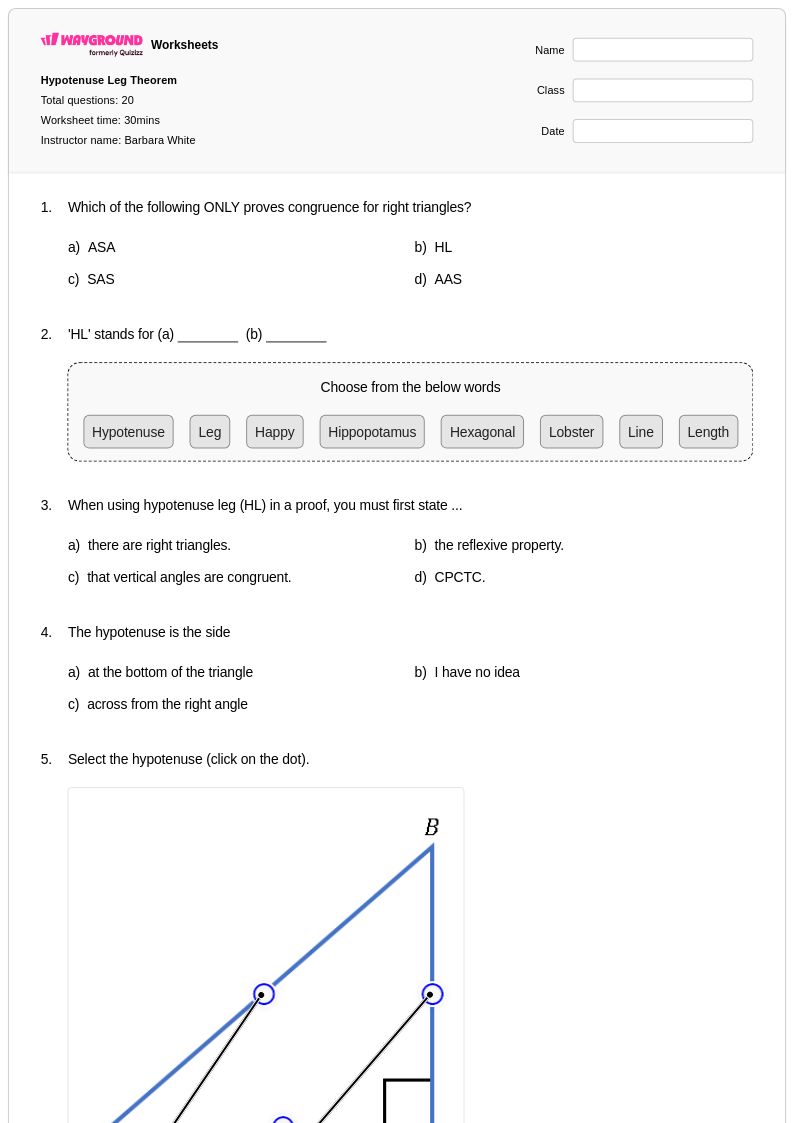
20 Q
9th - 12th
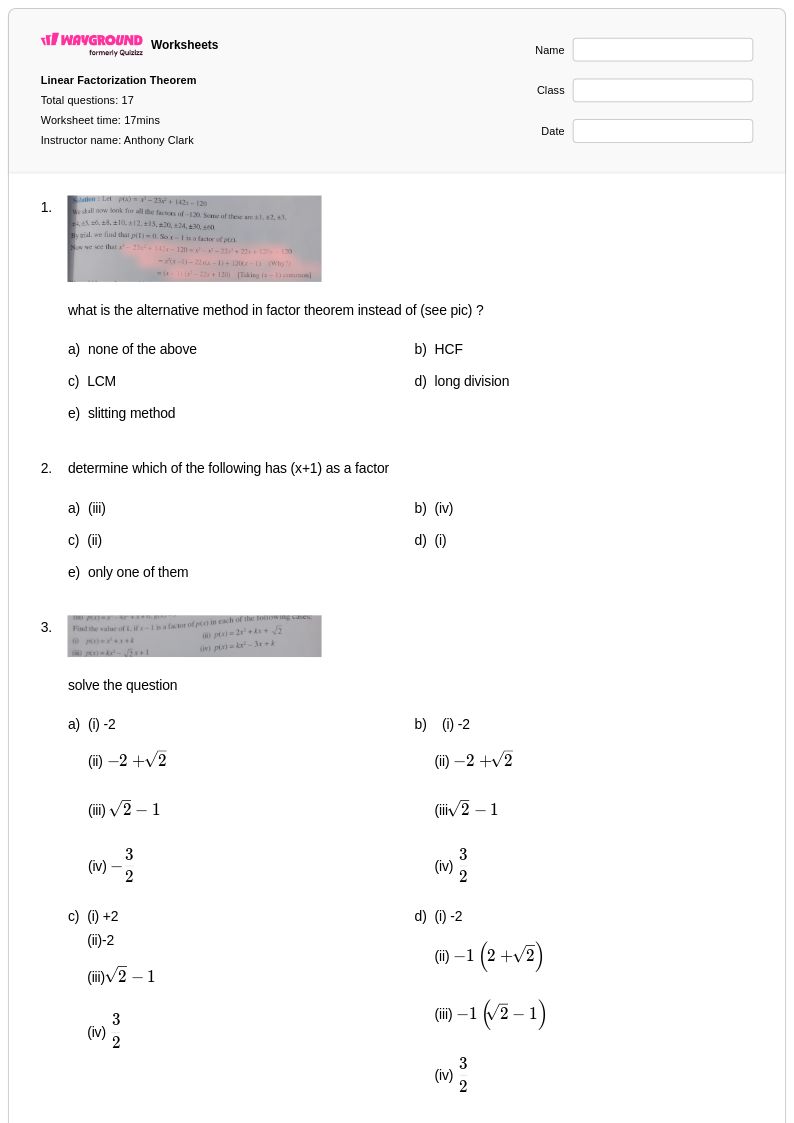
17 Q
8th - Uni
Explore Other Subject Worksheets for class 11
Explore printable Squeeze Theorem worksheets for Class 11
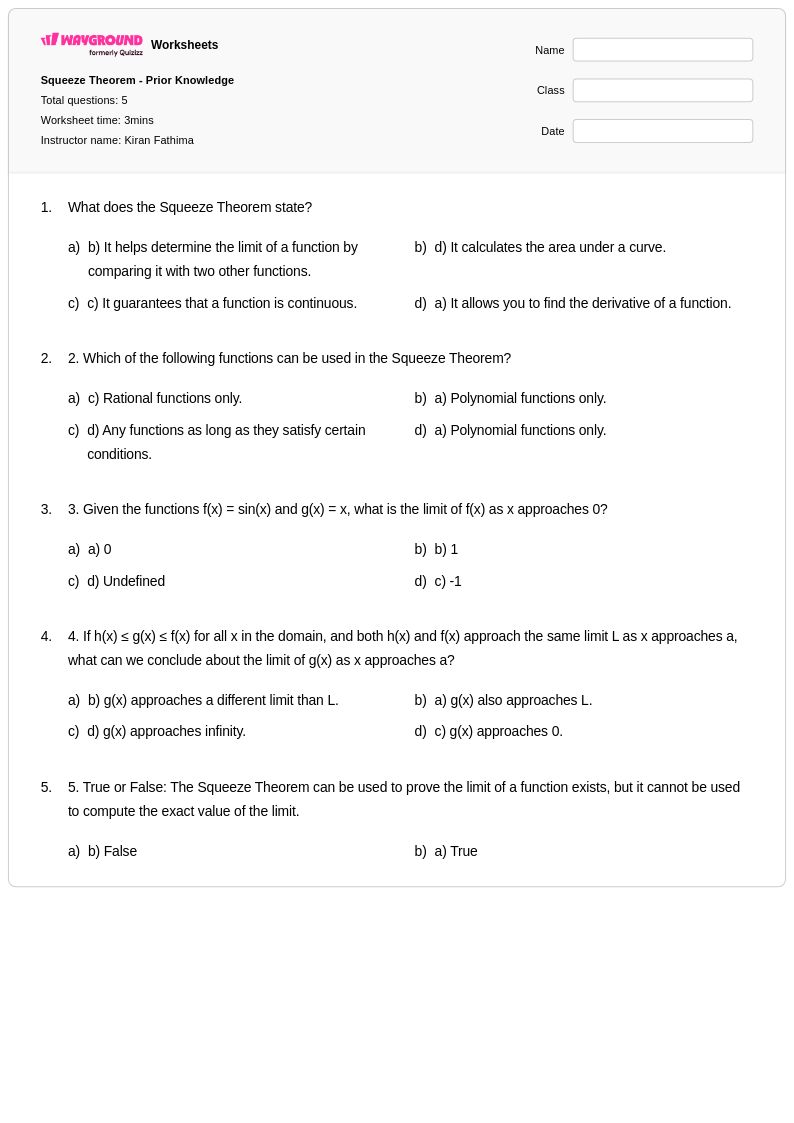
Squeeze Theorem worksheets for Class 11 students available through Wayground provide comprehensive practice with one of calculus's most elegant and powerful limit-finding techniques. These carefully crafted resources help students master the fundamental concept of using two bounding functions to determine the limit of a third function that lies between them, strengthening critical analytical skills essential for advanced calculus study. The worksheets feature progressively challenging practice problems that guide students through identifying appropriate bounding functions, applying the theorem's conditions, and rigorously proving limit existence. Each worksheet includes detailed answer keys that demonstrate step-by-step solution methods, making these free printables invaluable for both classroom instruction and independent study as students develop confidence with this sophisticated mathematical reasoning tool.
Wayground's extensive collection of teacher-created Squeeze Theorem resources offers mathematics educators millions of high-quality materials with robust search and filtering capabilities that enable quick identification of appropriate content for Class 11 calculus instruction. The platform's standards-aligned worksheets support differentiated learning through customizable difficulty levels and flexible formatting options, allowing teachers to tailor practice problems for diverse student needs and learning objectives. These comprehensive resources are available in both printable pdf format and interactive digital versions, facilitating seamless integration into varied instructional approaches while supporting effective lesson planning, targeted remediation for struggling students, and enrichment opportunities for advanced learners seeking deeper understanding of limit theory applications.
FAQs
How do I teach the Squeeze Theorem to Grade 11 students?
What Grade 11 exercises provide effective Squeeze Theorem practice?
Why do students get Squeeze Theorem problems wrong?
How can I use a Grade 11 Squeeze Theorem worksheet?
How can I differentiate Squeeze Theorem work in a mixed-ability Grade 11 class?
Is the Squeeze Theorem a Grade 11 calculus topic?