
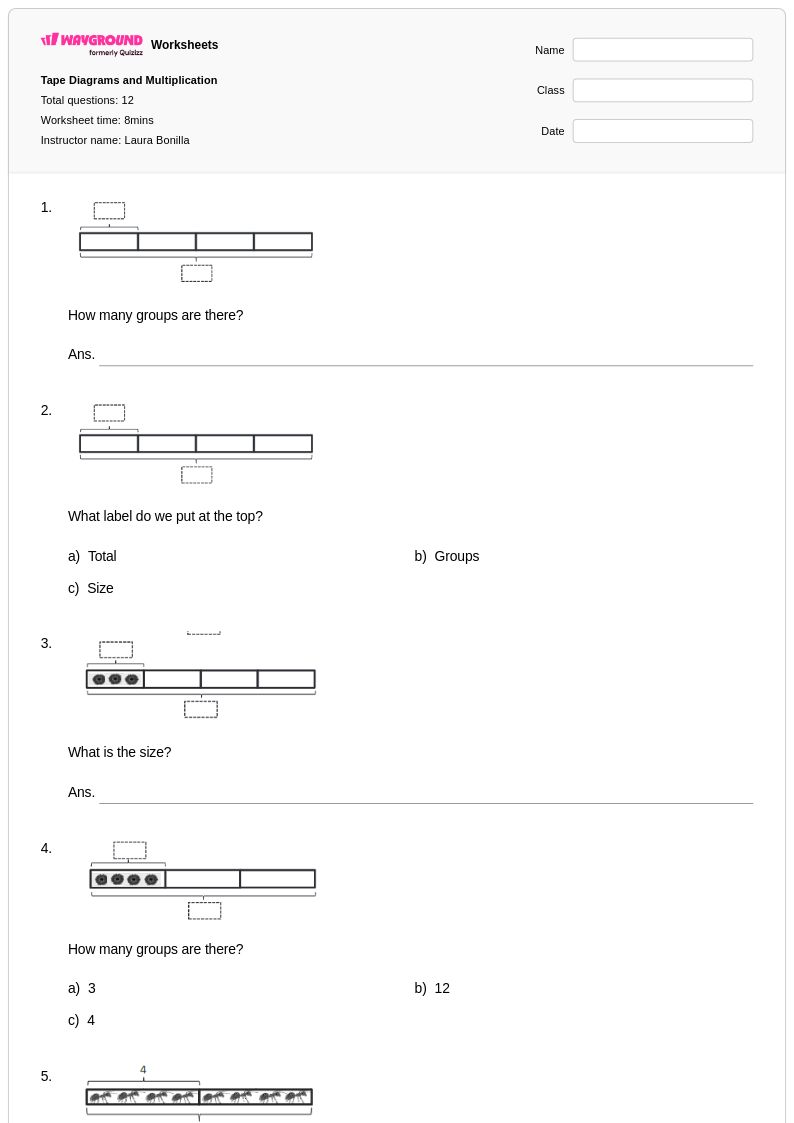
12 Q
3rd
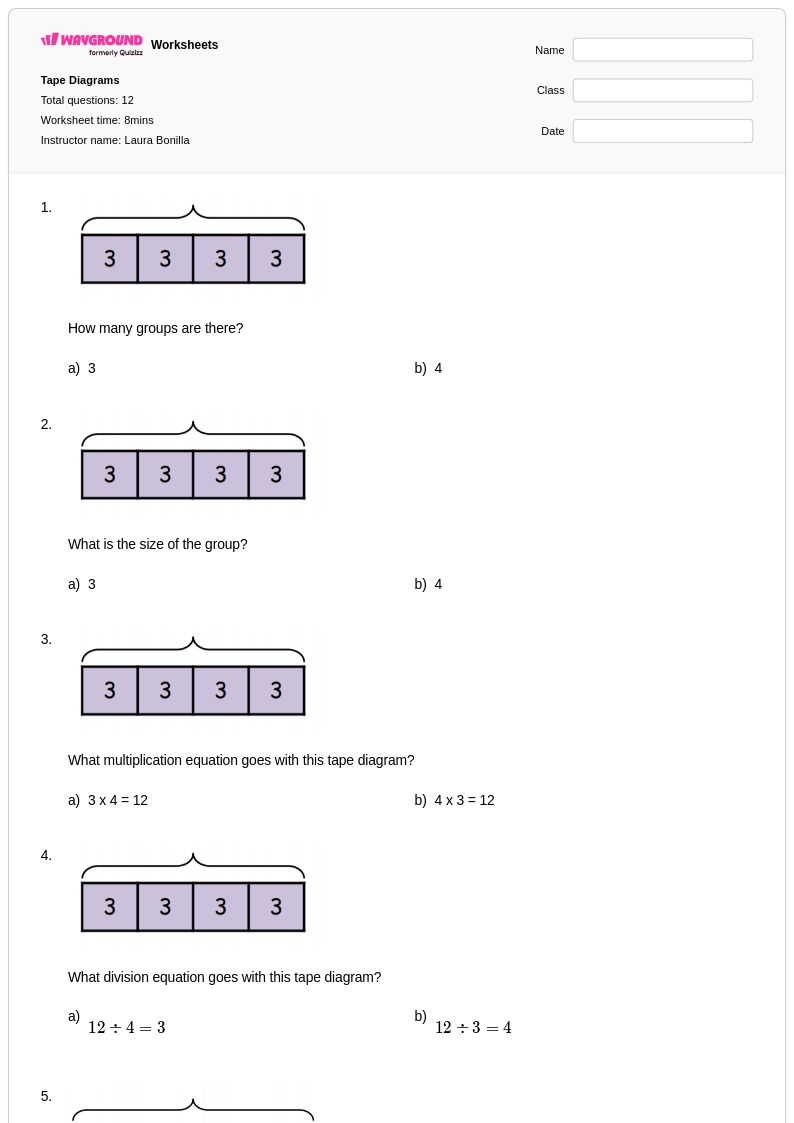
12 Q
3rd
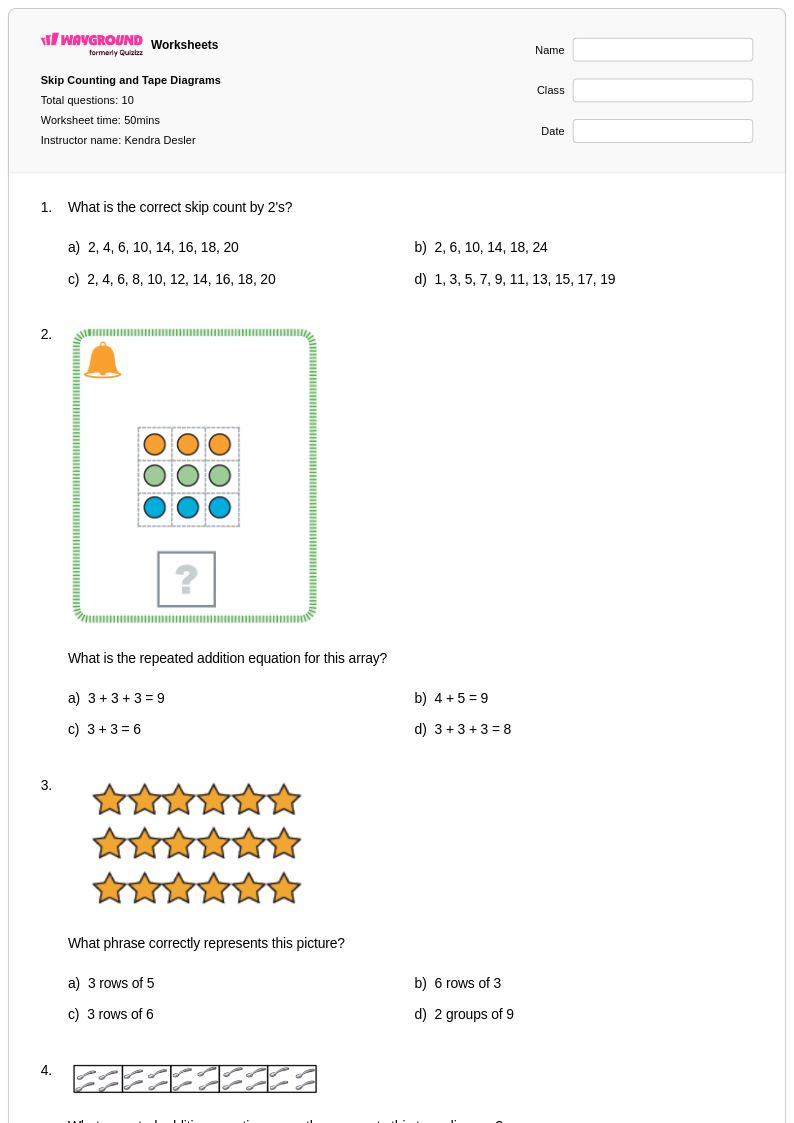
10 Q
2nd - 3rd
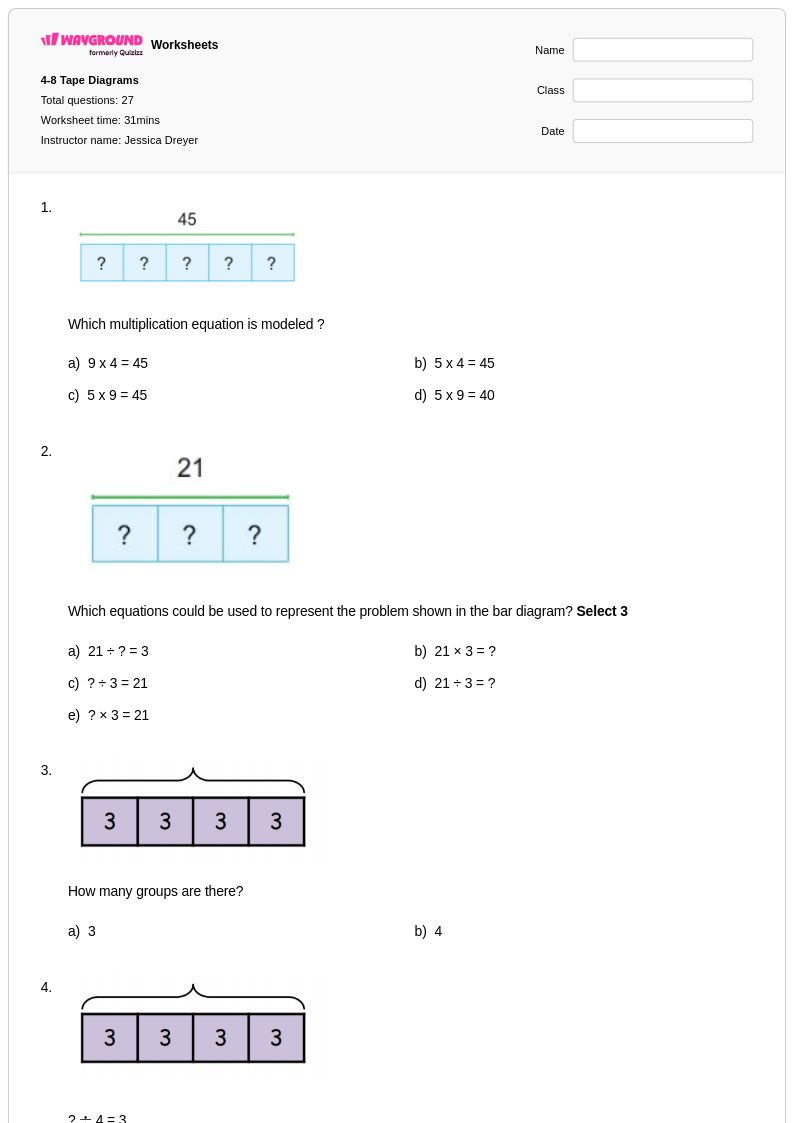
27 Q
3rd - Uni
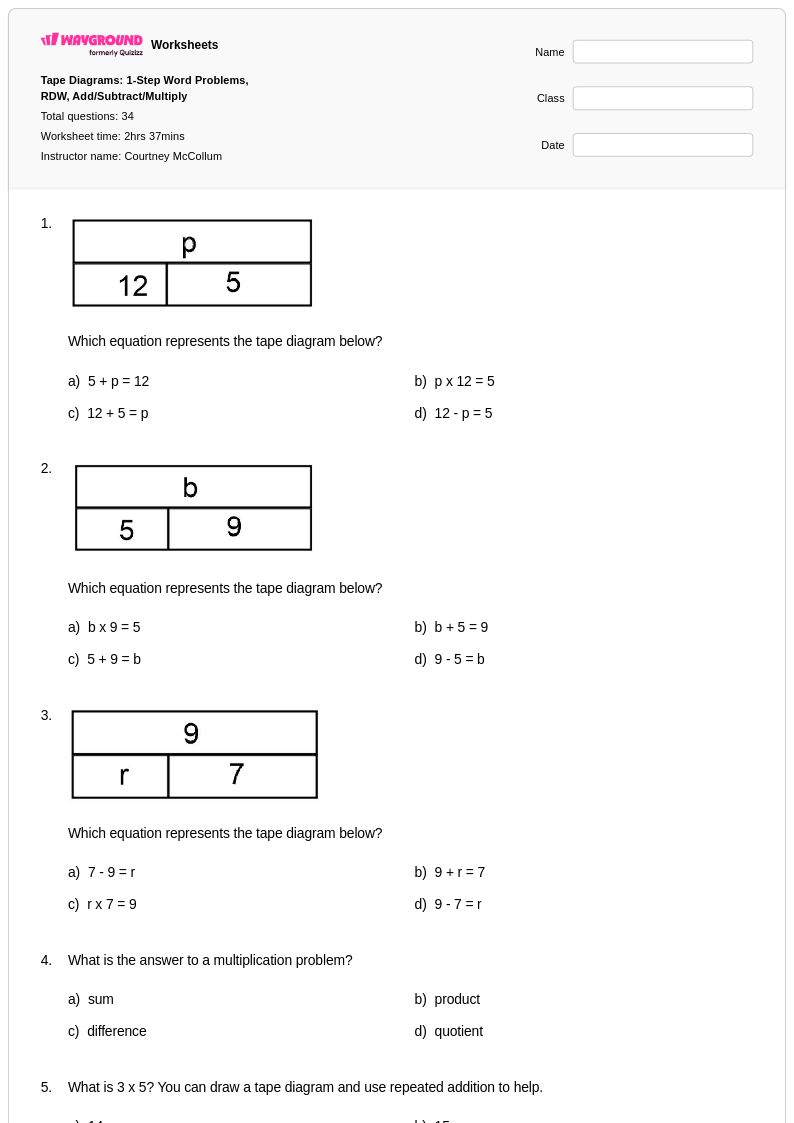
34 Q
3rd
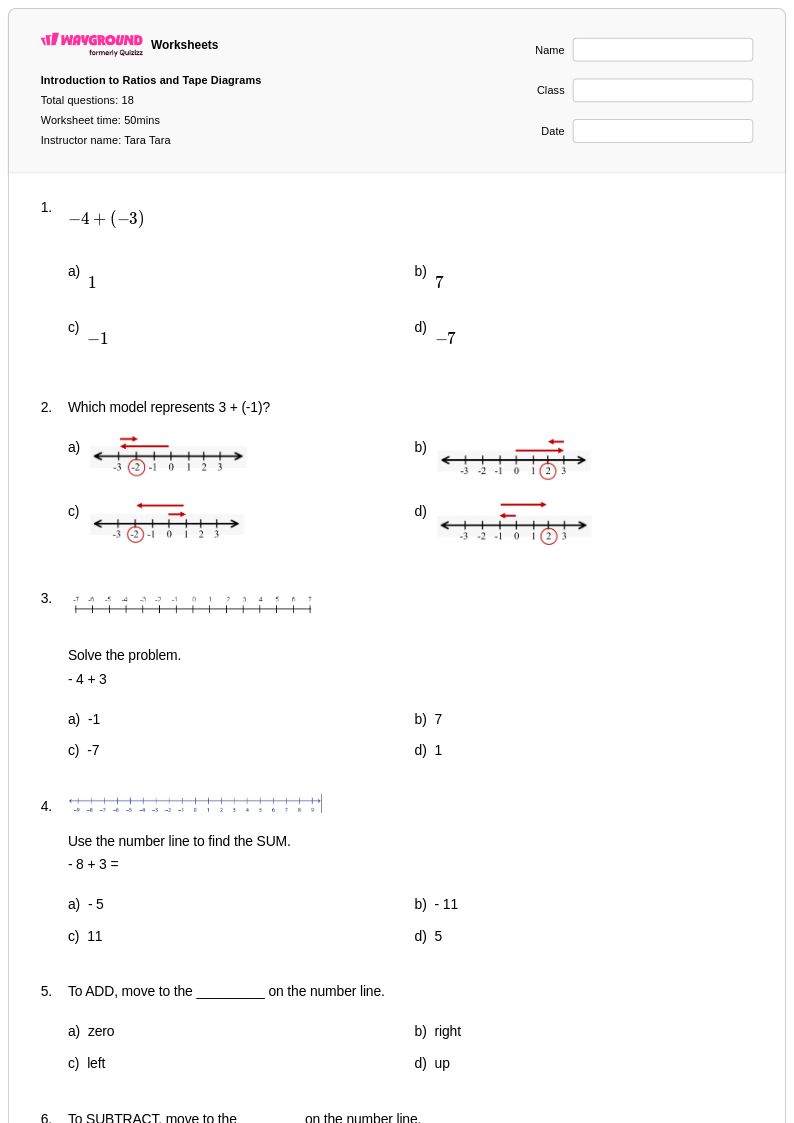
30 Q
1st - 5th
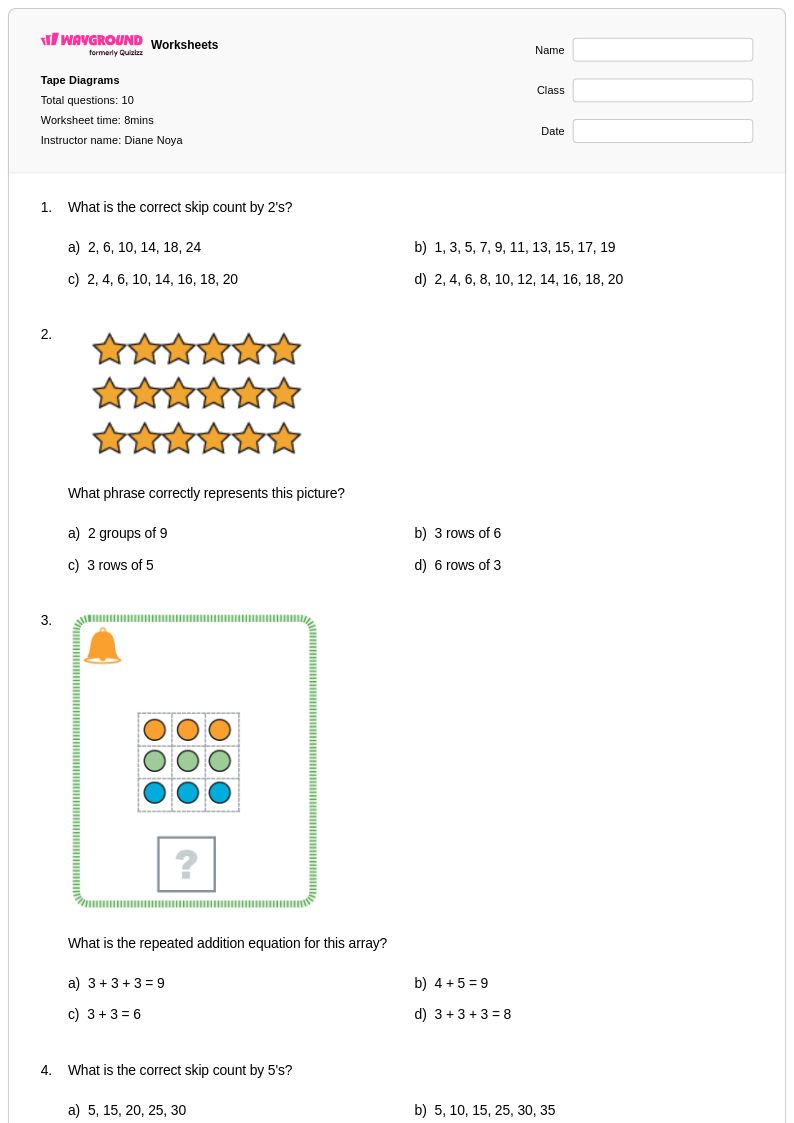
10 Q
3rd
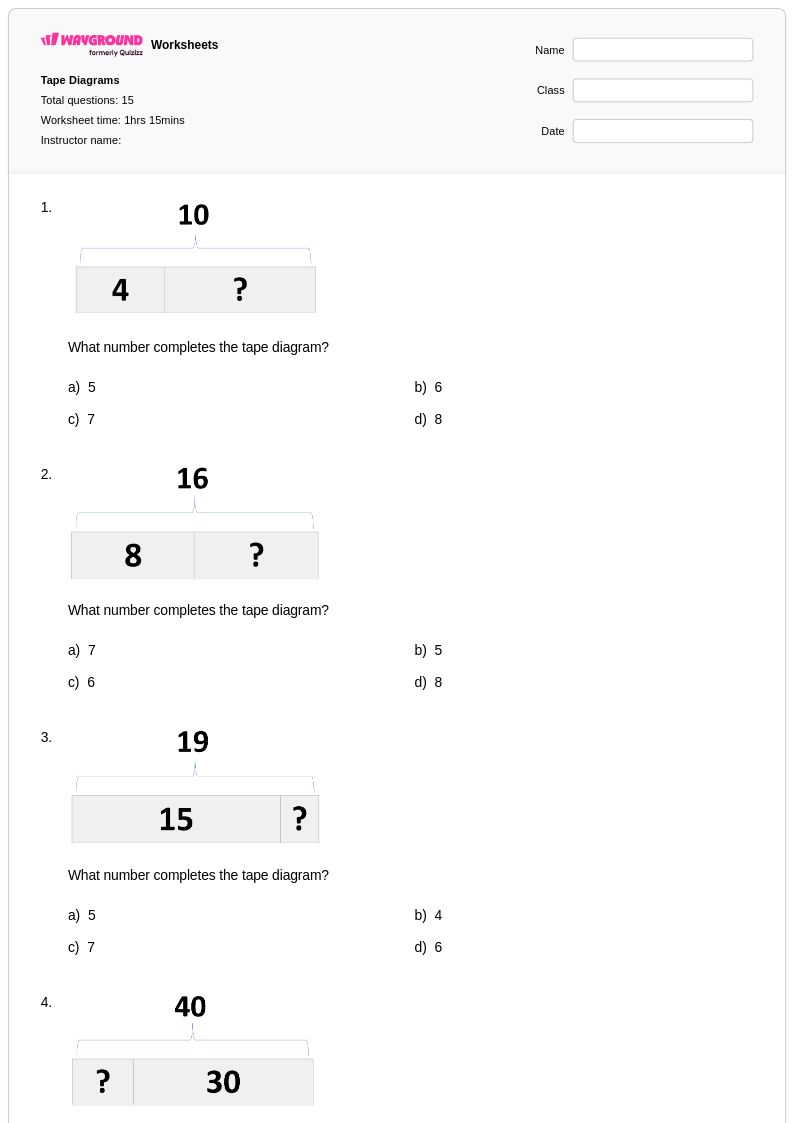
15 Q
3rd - 6th
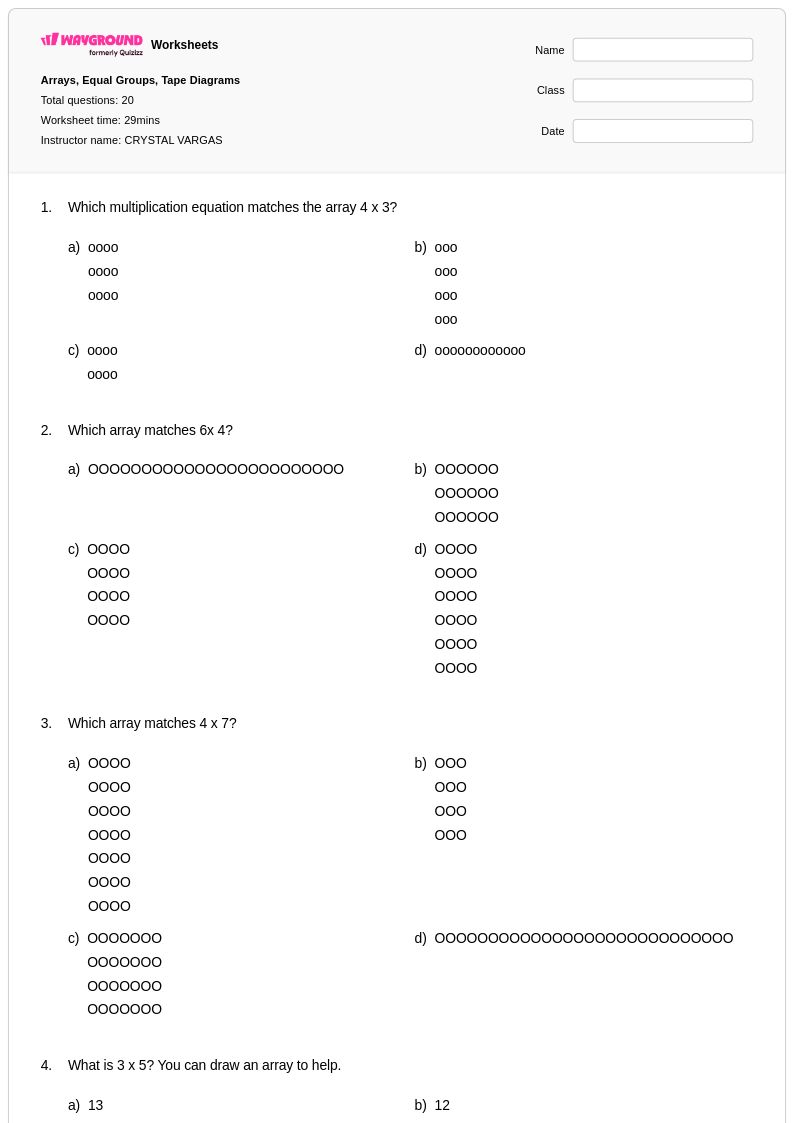
20 Q
3rd
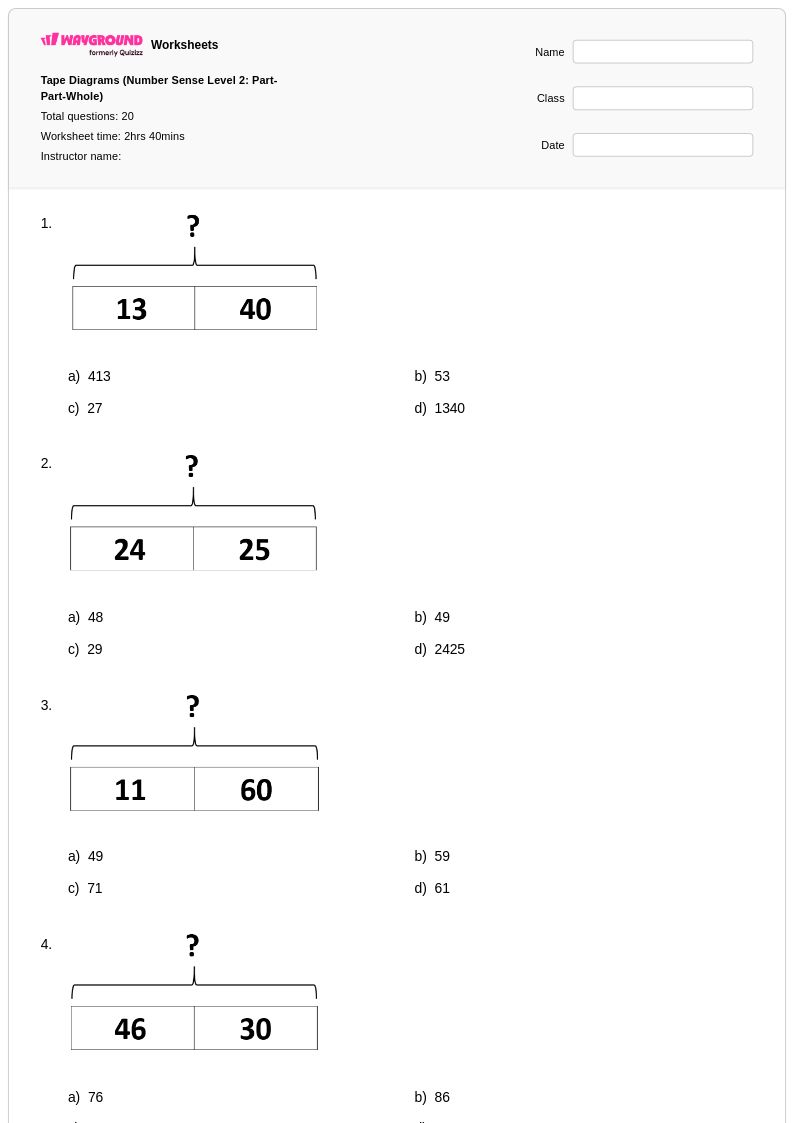
20 Q
3rd - 5th
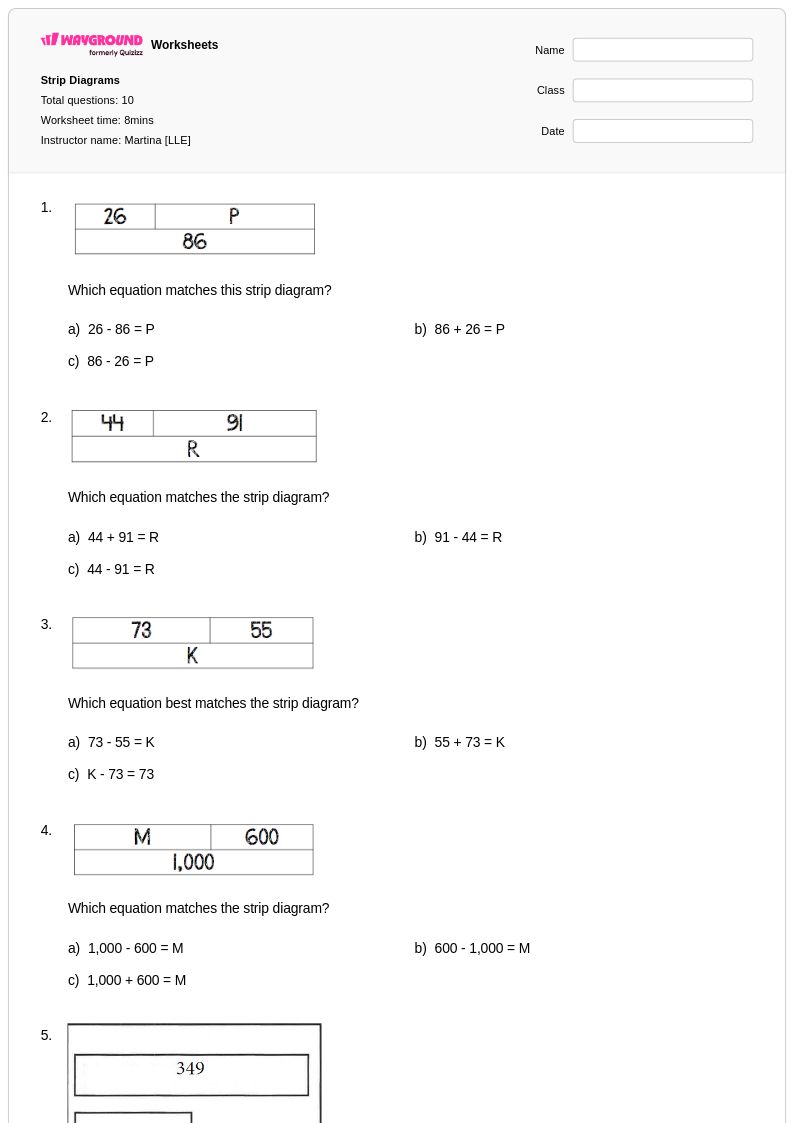
10 Q
2nd - 4th
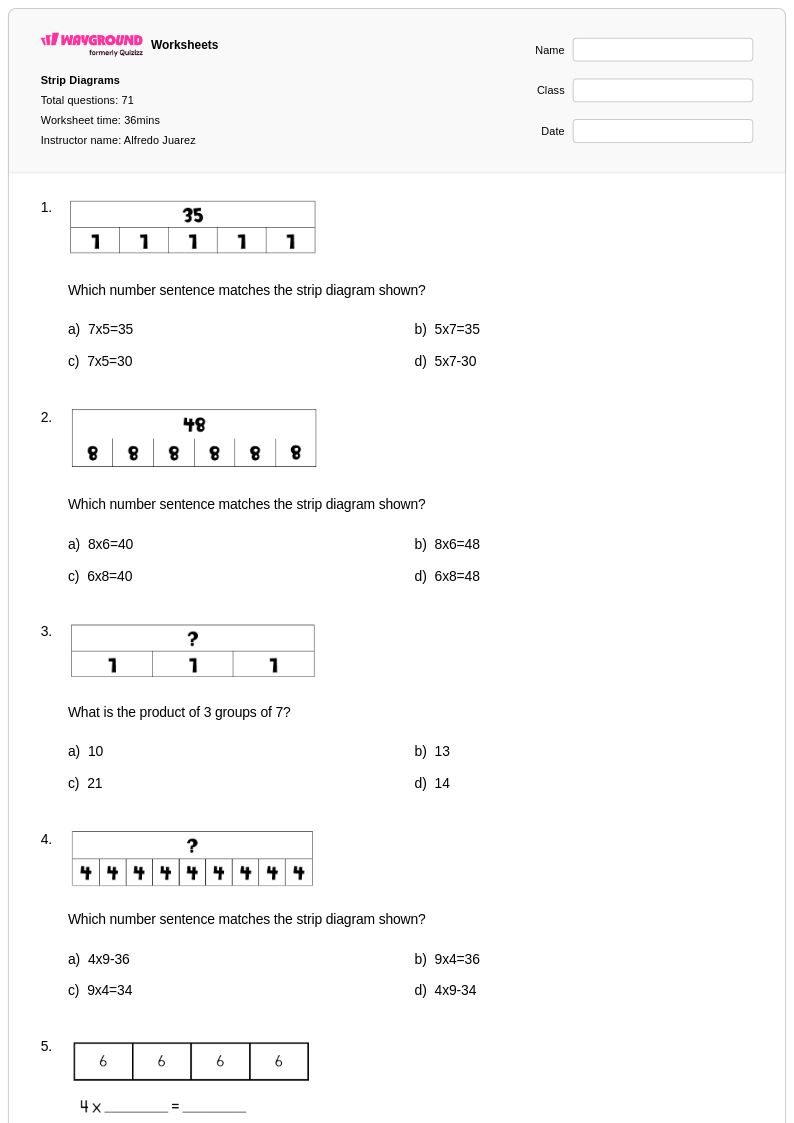
71 Q
3rd - 4th
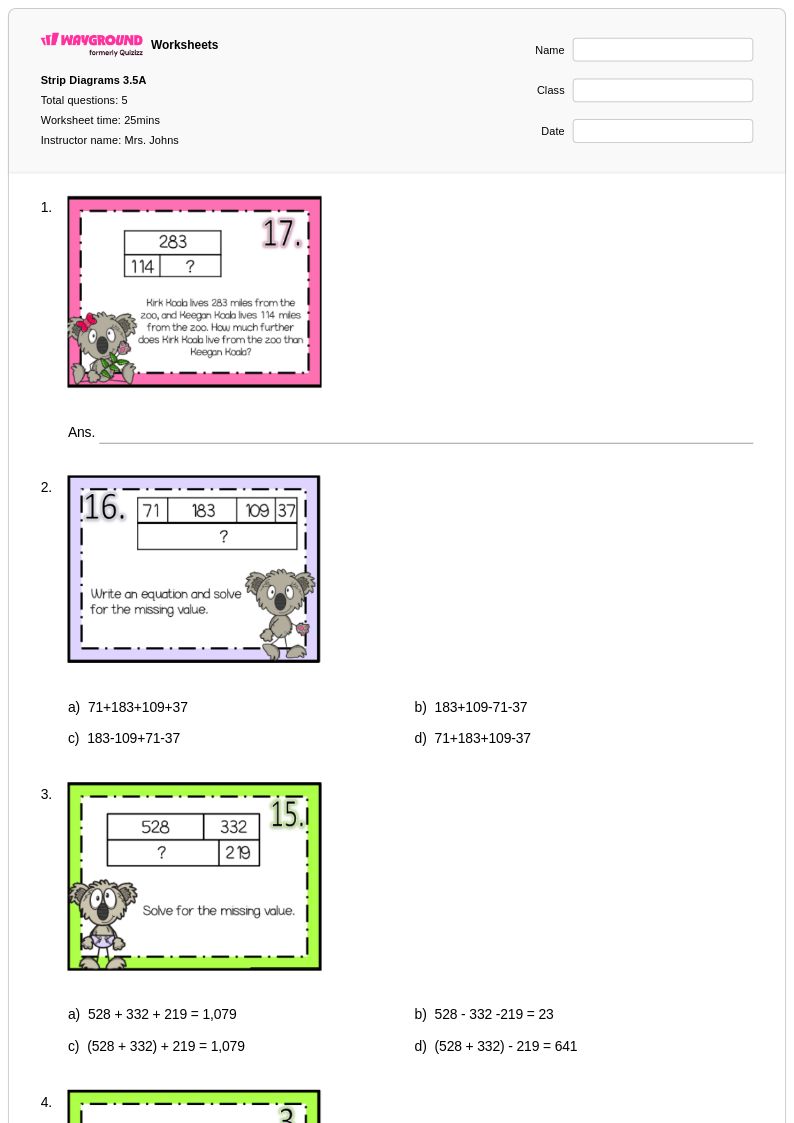
5 Q
3rd - 5th
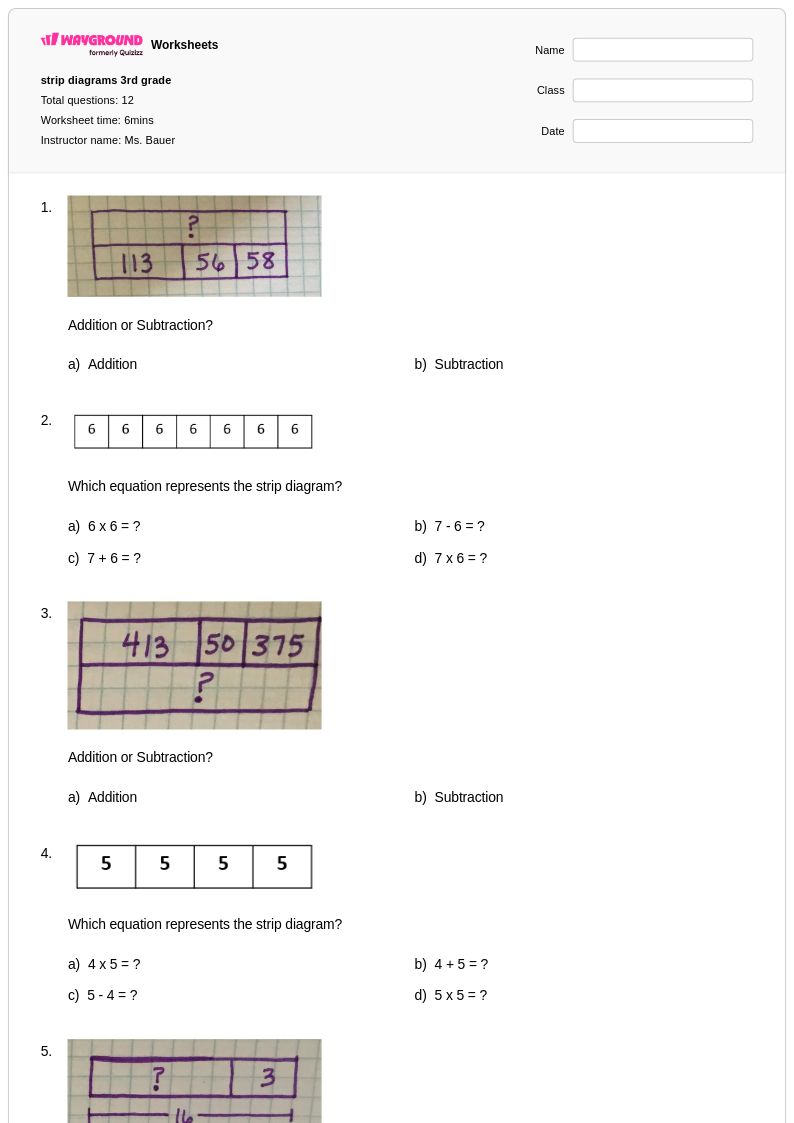
12 Q
3rd
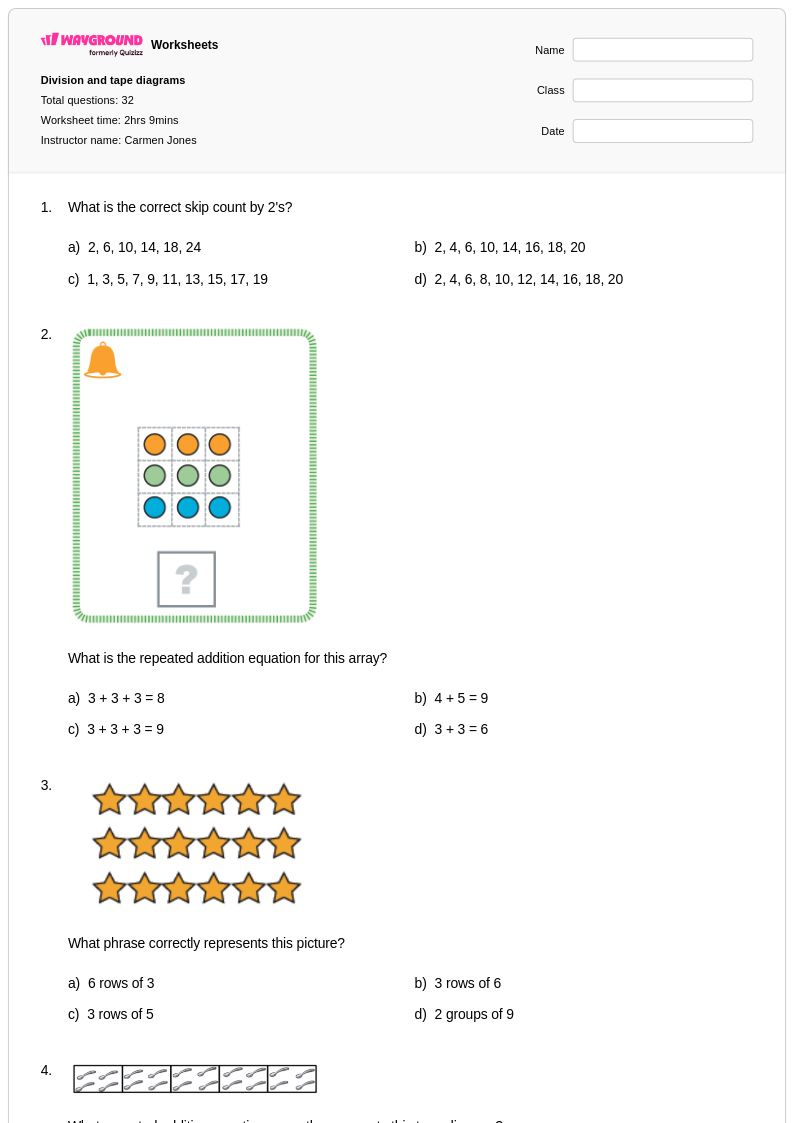
32 Q
3rd
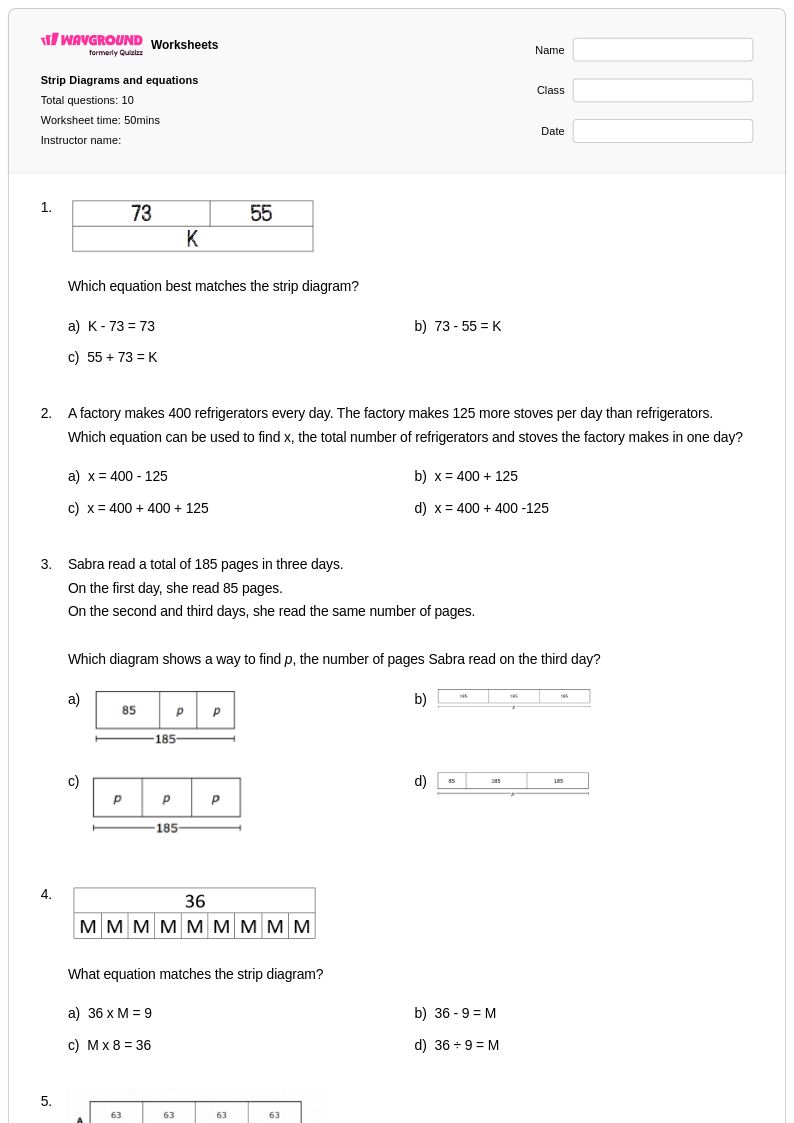
10 Q
3rd - 5th
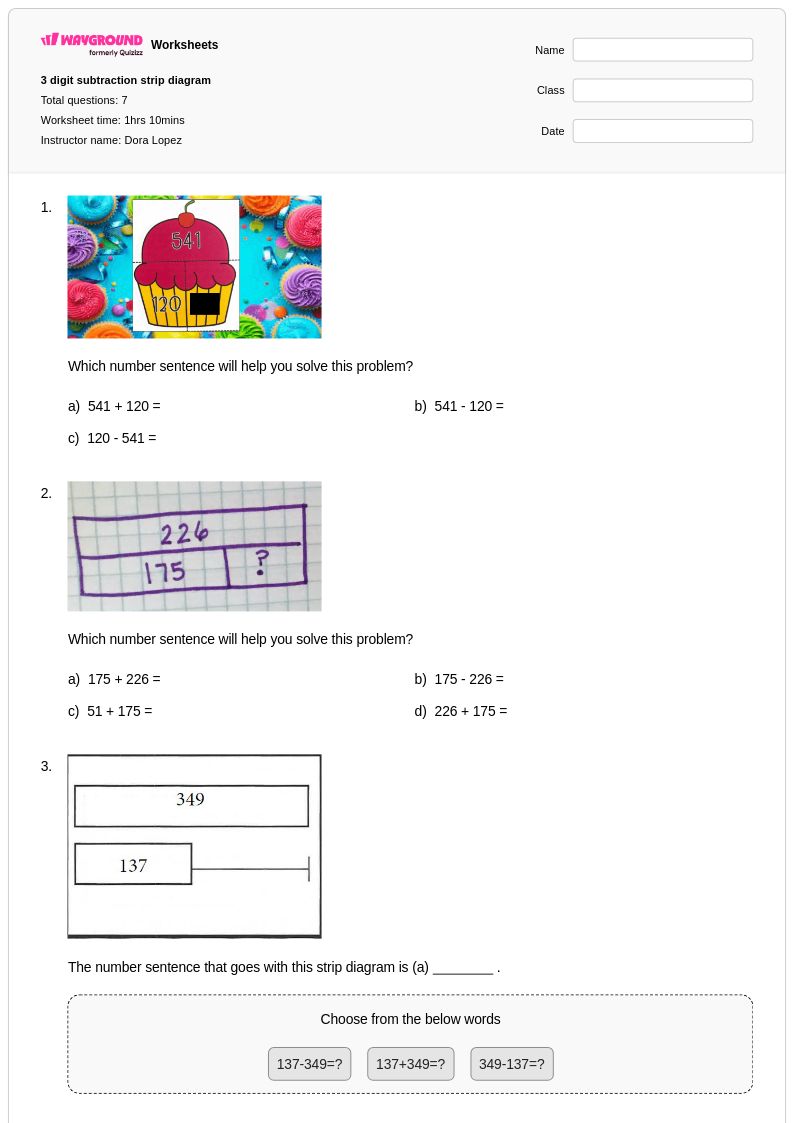
7 Q
3rd
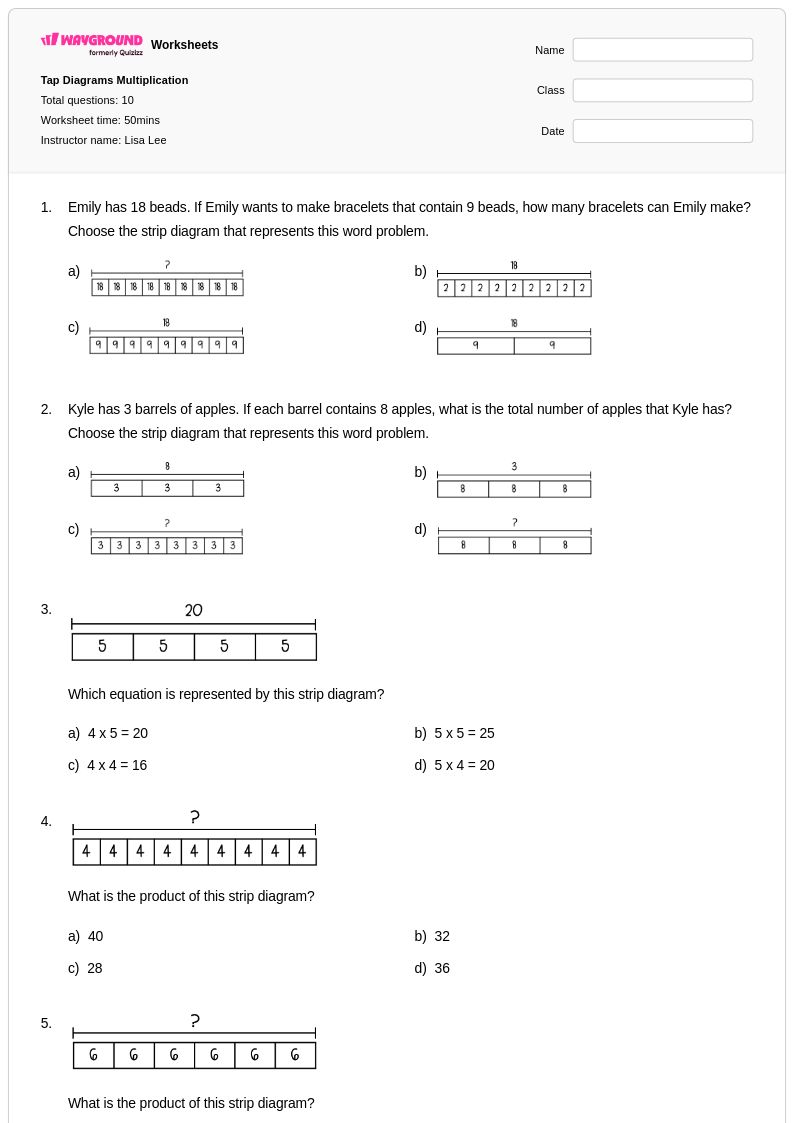
10 Q
3rd
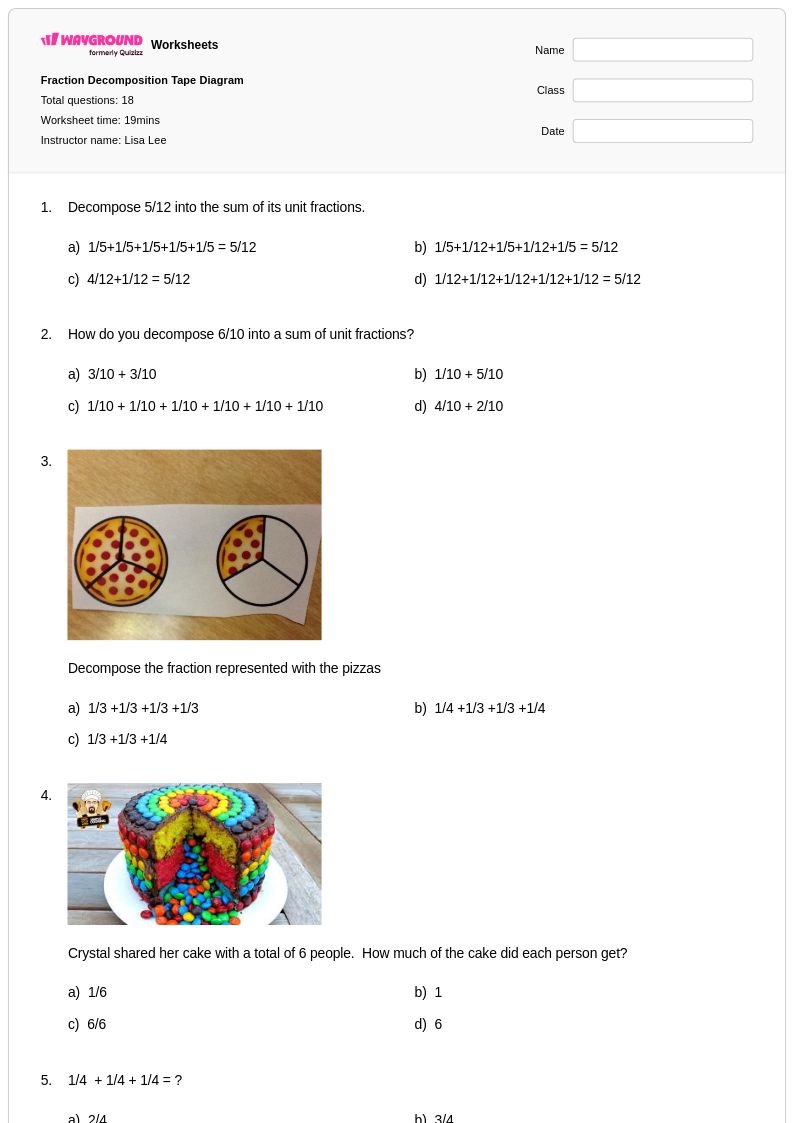
18 Q
3rd - 4th
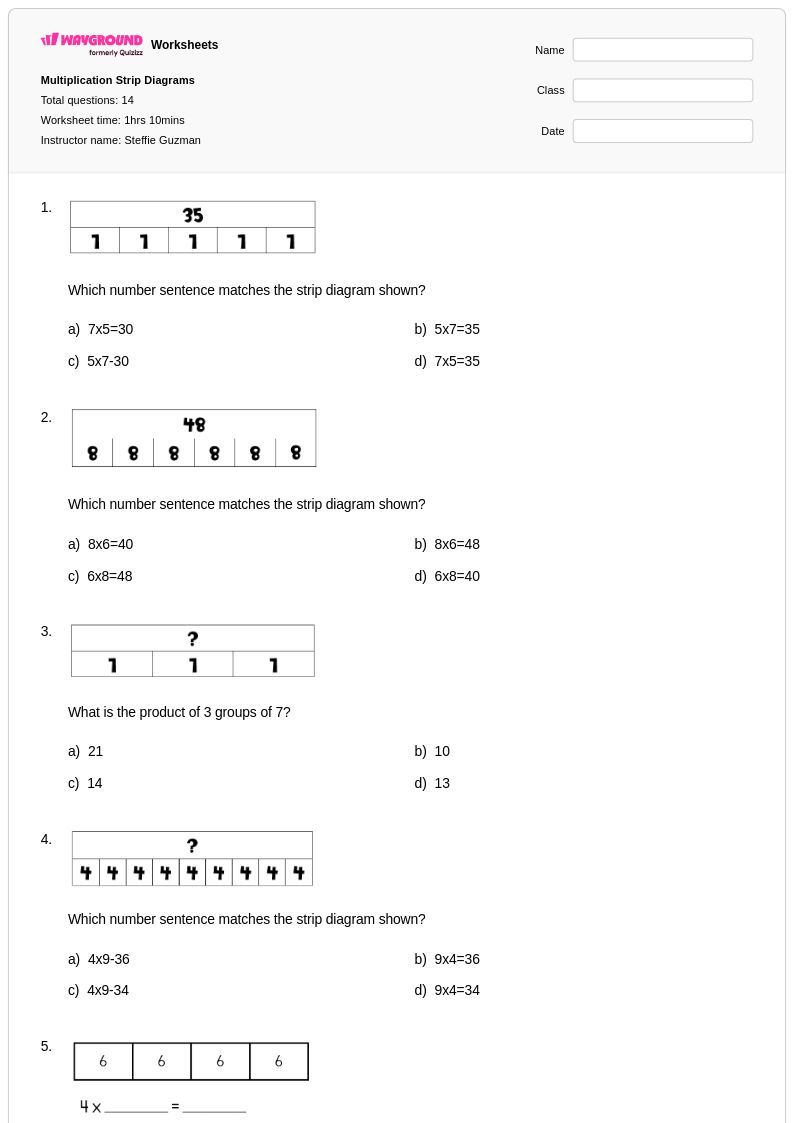
14 Q
3rd
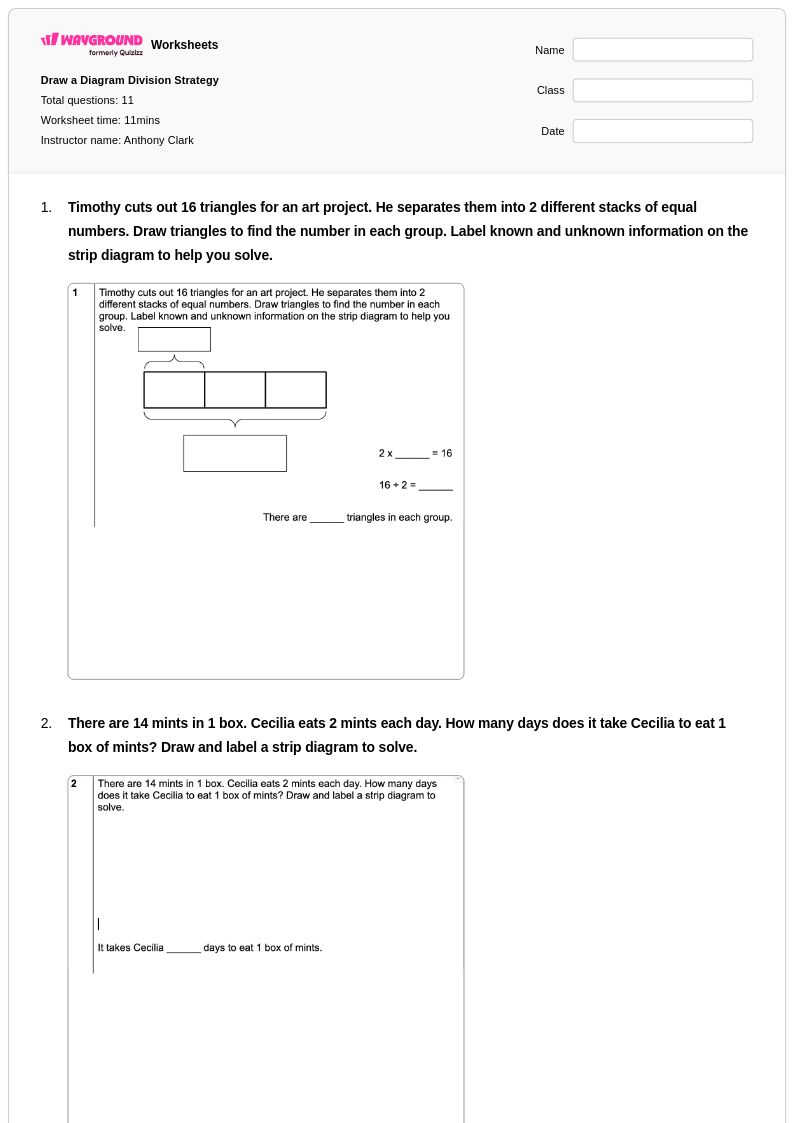
11 Q
3rd - Uni
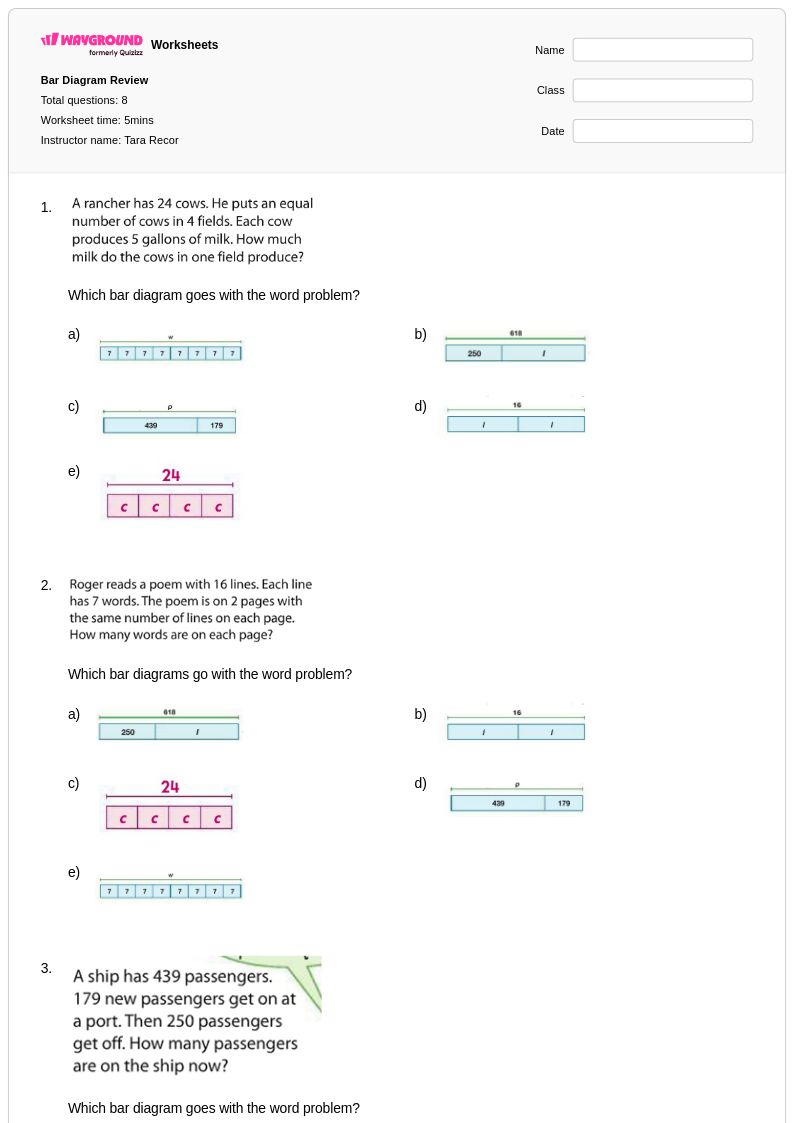
8 Q
3rd - 5th
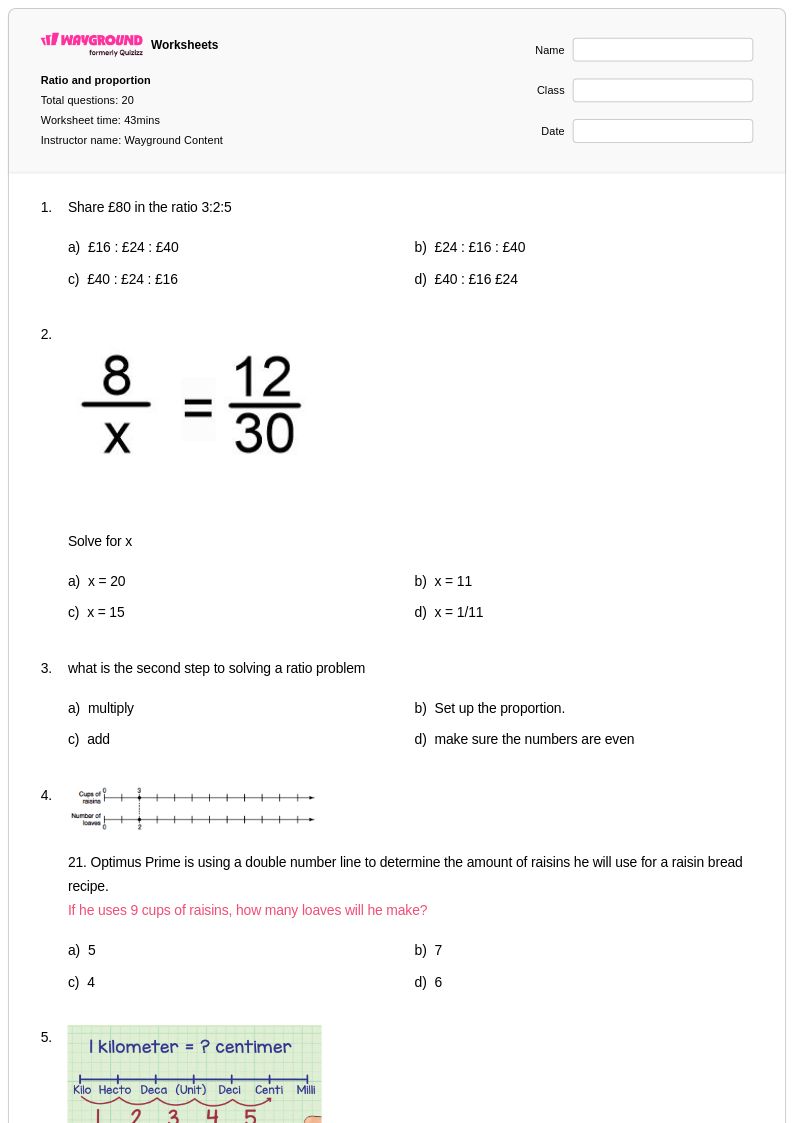
20 Q
3rd
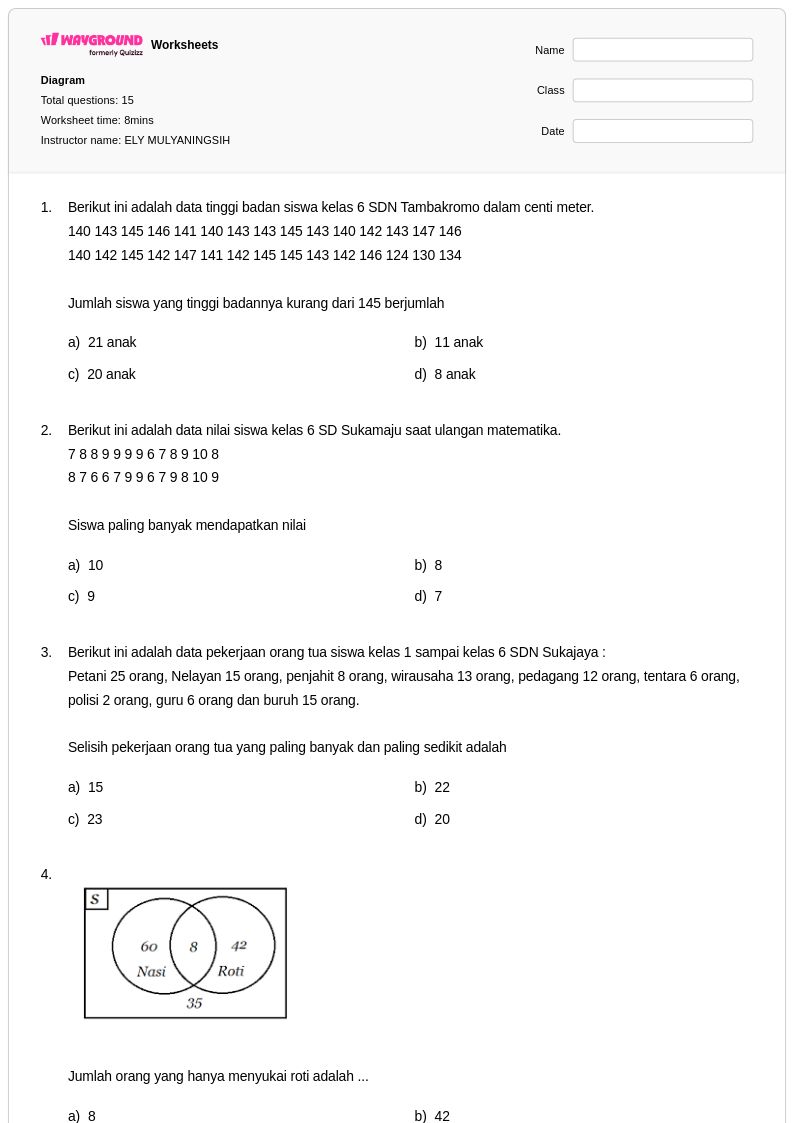
15 Q
1st - 5th
Explore Other Subject Worksheets for class 3
Explore printable Tape Diagrams worksheets for Class 3
Tape diagrams serve as powerful visual tools that help Class 3 students develop critical thinking and problem-solving skills in mathematics. Wayground's comprehensive collection of tape diagram worksheets provides structured practice opportunities that guide young learners through the process of representing mathematical relationships using rectangular bars or strips. These carefully designed printables focus on building foundational skills such as part-whole relationships, comparison problems, and basic addition and subtraction concepts through visual modeling. Each worksheet includes clear instructions and an answer key, making it easy for educators to implement immediate feedback and assessment. The free pdf resources offer systematic practice problems that progress from simple one-step scenarios to more complex multi-step challenges, helping students bridge the gap between concrete manipulatives and abstract mathematical thinking.
Wayground, formerly Quizizz, empowers educators with millions of teacher-created tape diagram resources specifically designed to meet diverse classroom needs and learning objectives. The platform's robust search and filtering capabilities allow teachers to quickly locate worksheets aligned with specific standards and grade-level expectations, while differentiation tools enable customization for students with varying ability levels. These comprehensive collections are available in both printable and digital formats, including downloadable pdf versions that support flexible lesson planning and implementation. Teachers can seamlessly integrate these resources into their instruction for initial skill introduction, targeted remediation, or enrichment activities, with the ability to modify content to address individual student needs and learning goals while maintaining alignment with curriculum standards and mathematical progressions.
FAQs
How do I teach tape diagrams in Grade 3?
What tape diagram exercises are best for third graders?
What mistakes do Grade 3 students make with tape diagrams?
How can I use Grade 3 tape diagram worksheets on Wayground?
How do Grade 3 tape diagrams fit the Common Core math progression?
How can I differentiate tape diagram practice for Grade 3?
What tape diagram skills should a third grader have?