Free Printable The Crucible Worksheets for Class 9
Enhance Class 9 students' understanding of The Crucible with Wayground's comprehensive collection of free worksheets, printables, and practice problems featuring detailed answer keys for effective literature analysis.
Explore printable The Crucible worksheets for Class 9
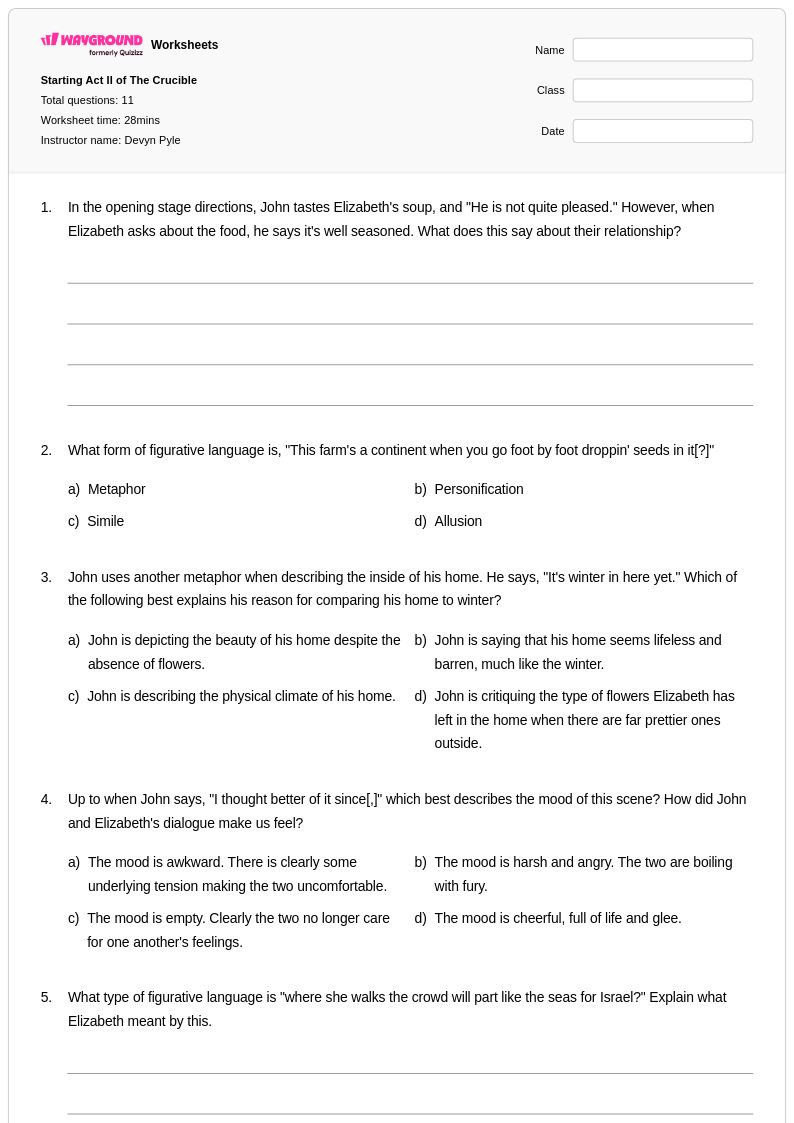
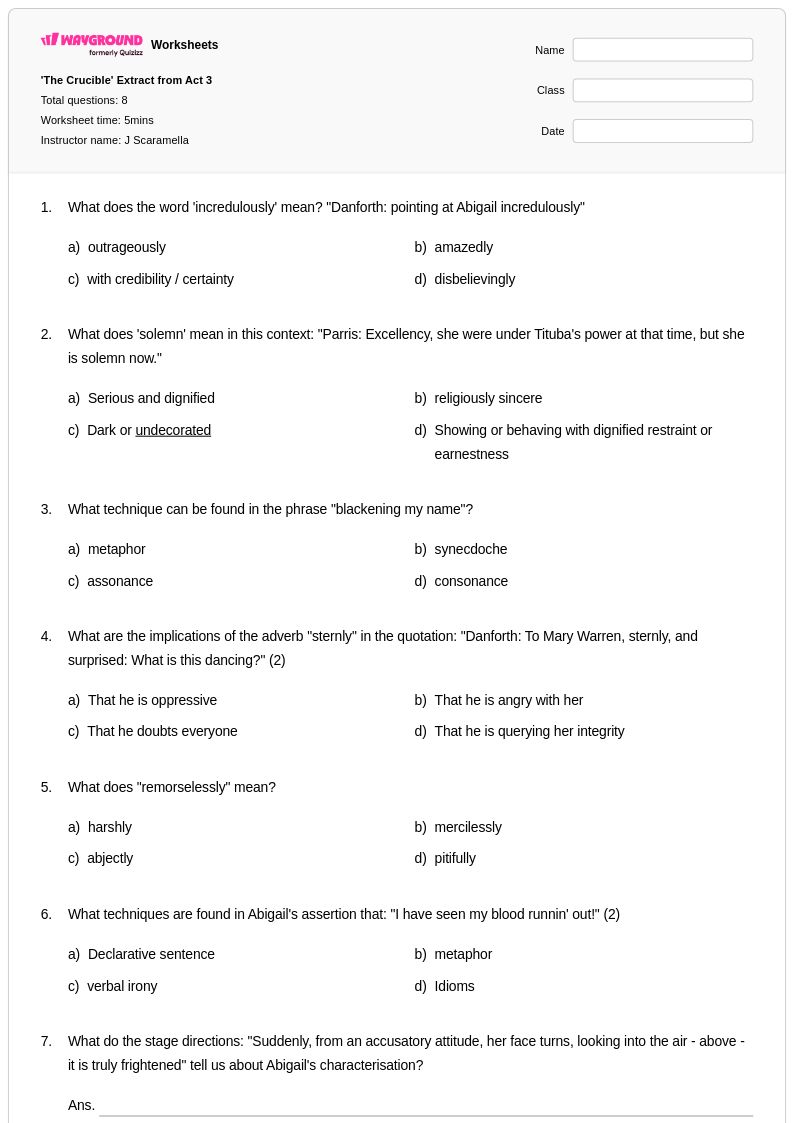
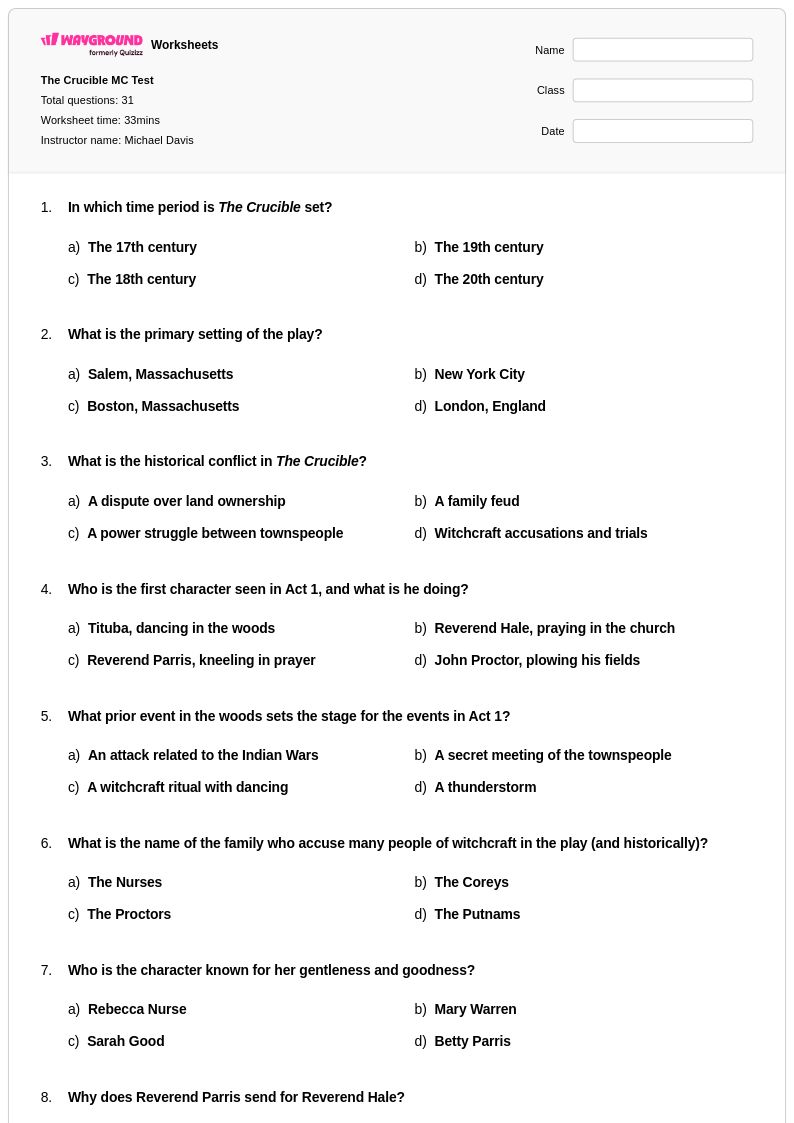
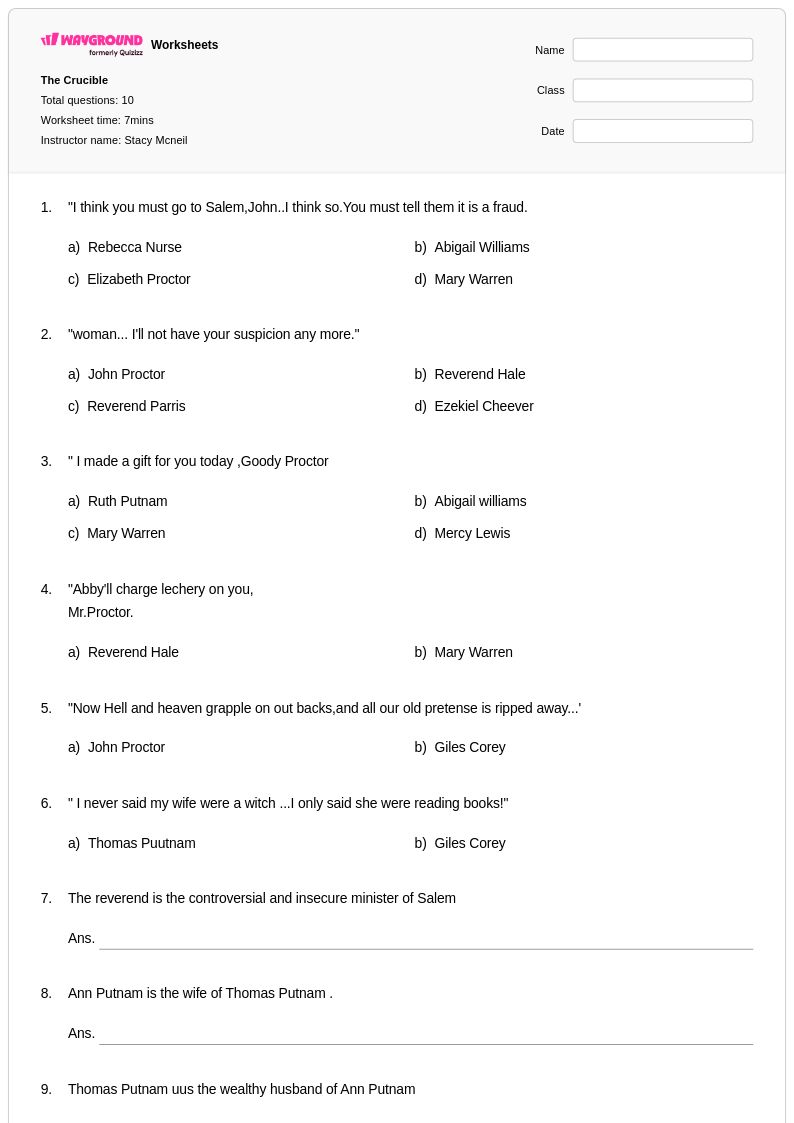
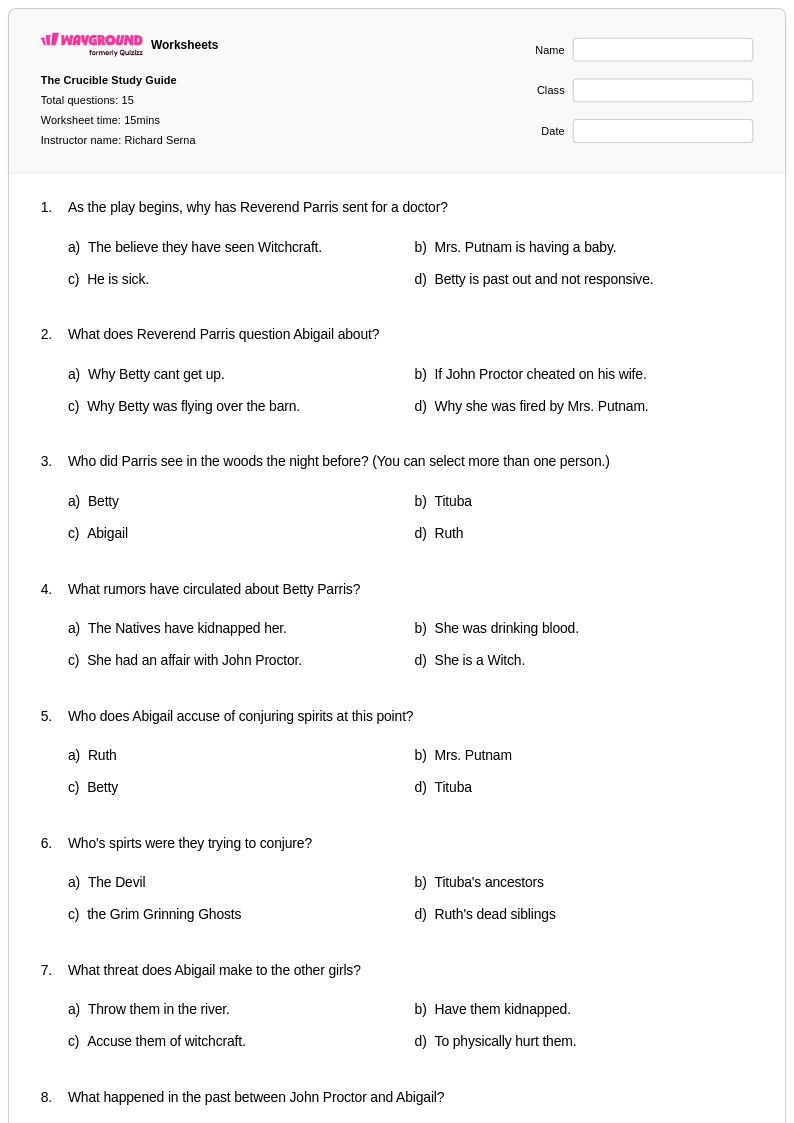
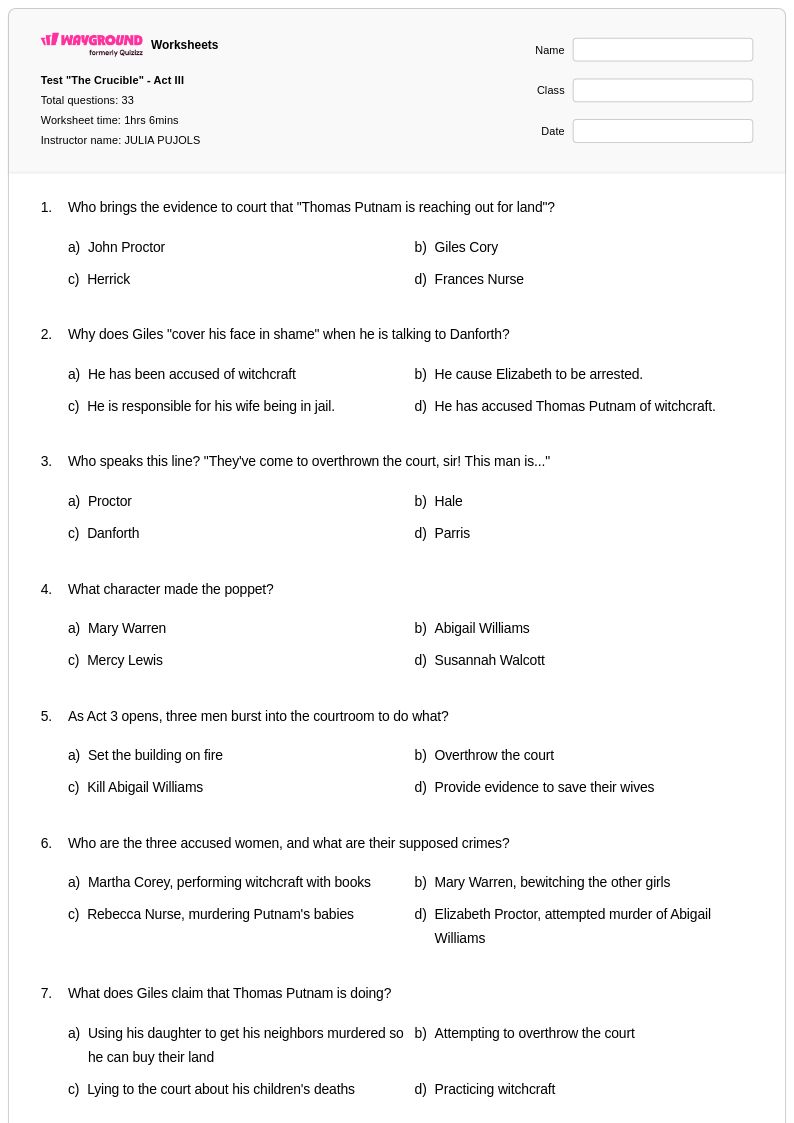
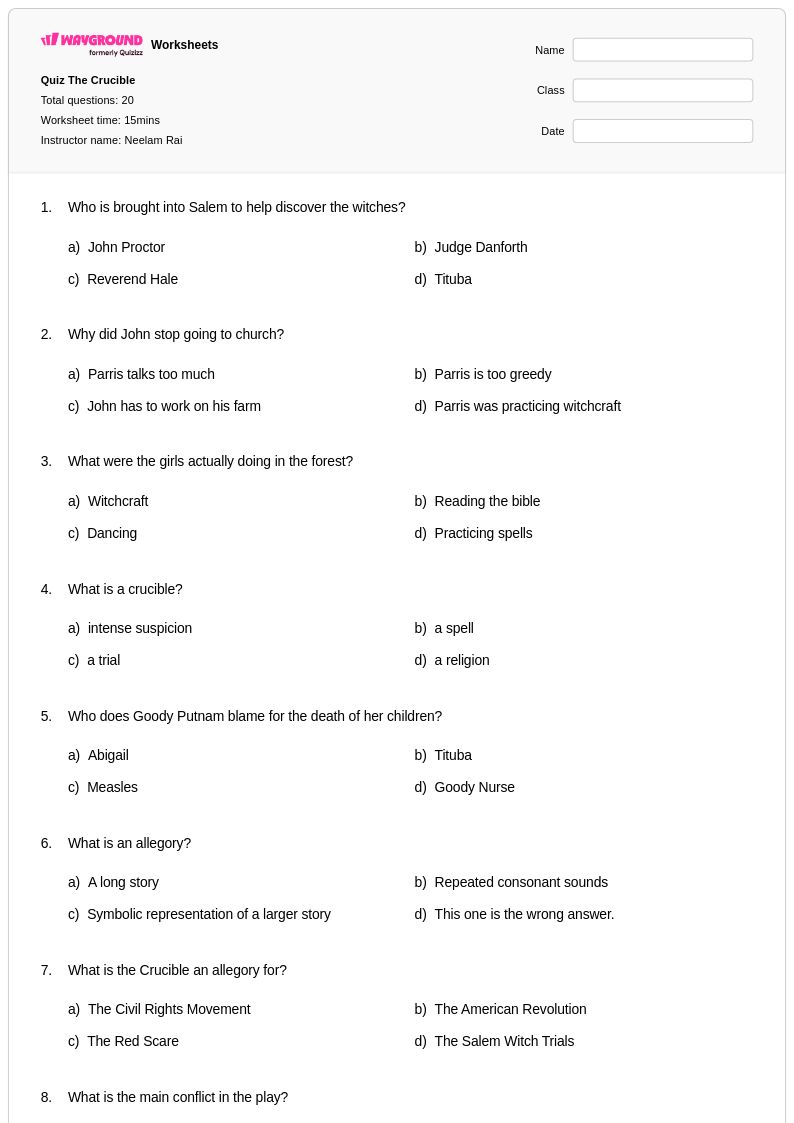
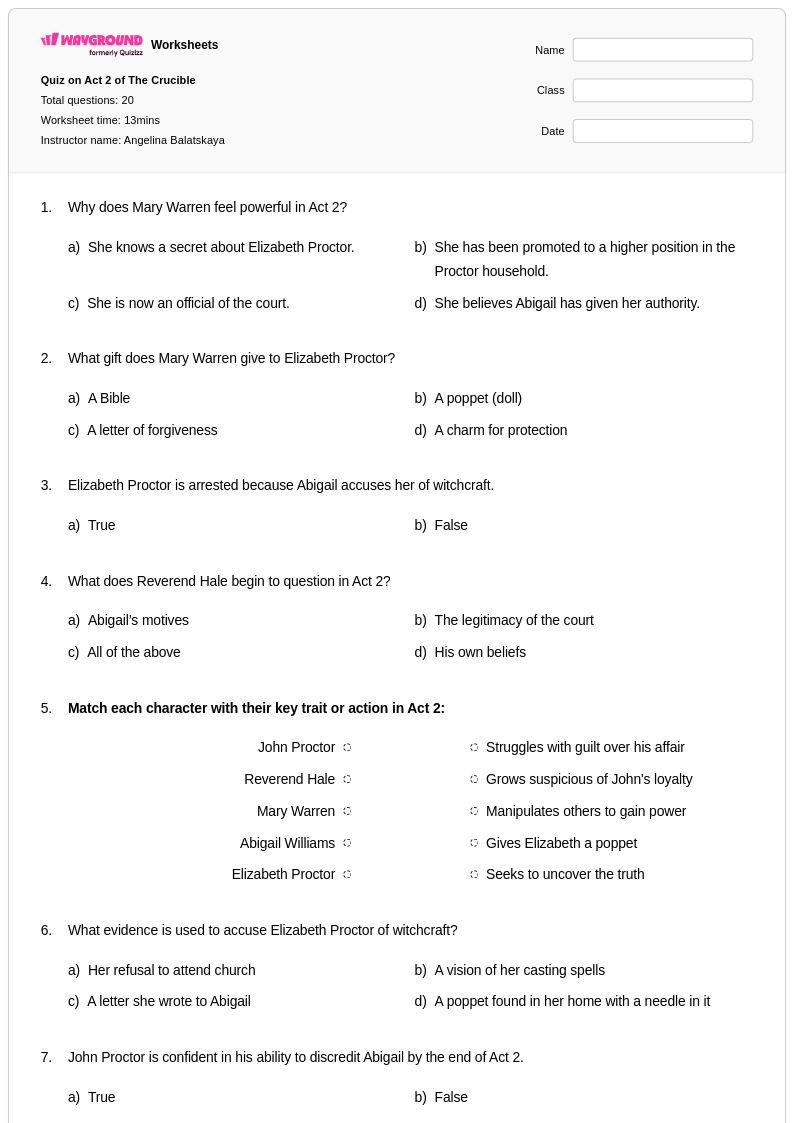
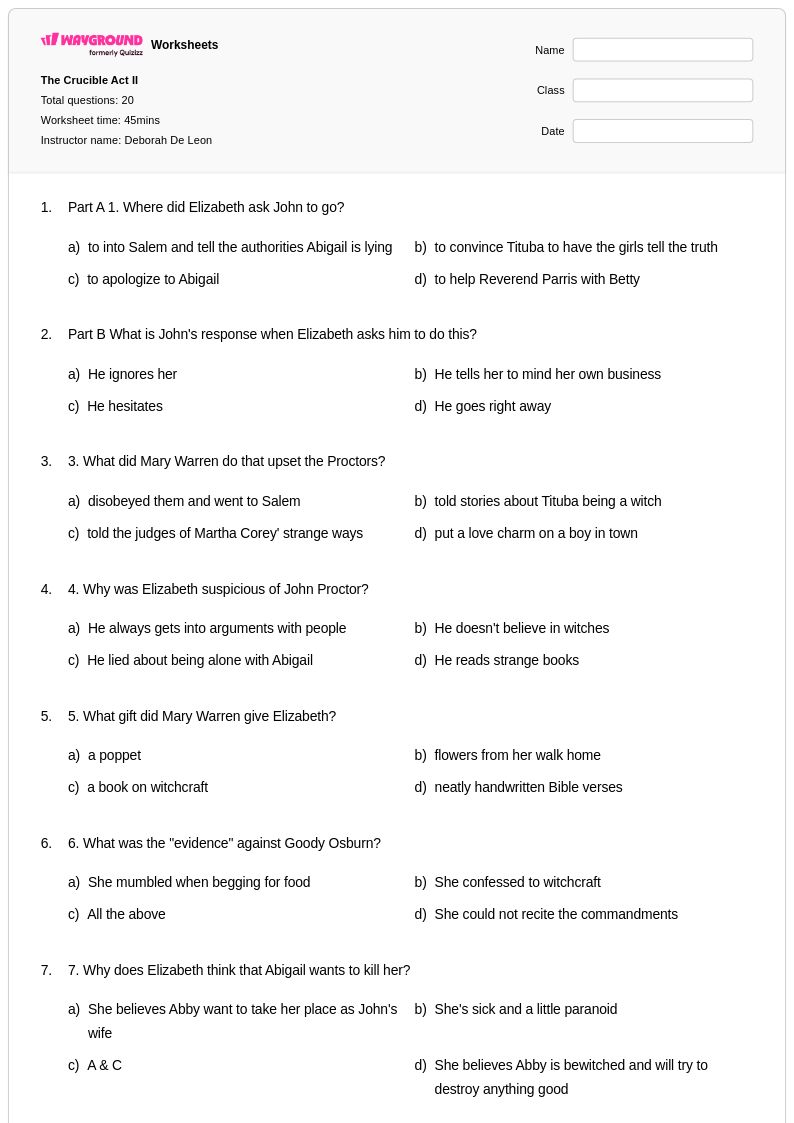
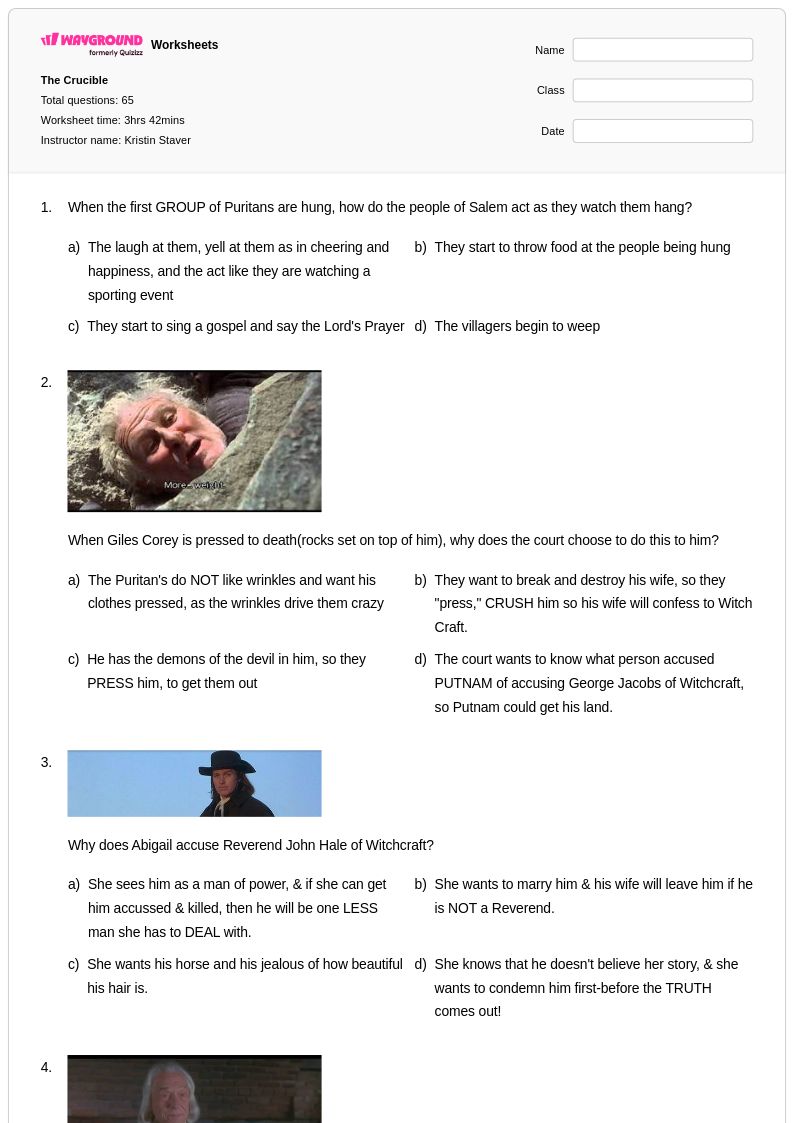
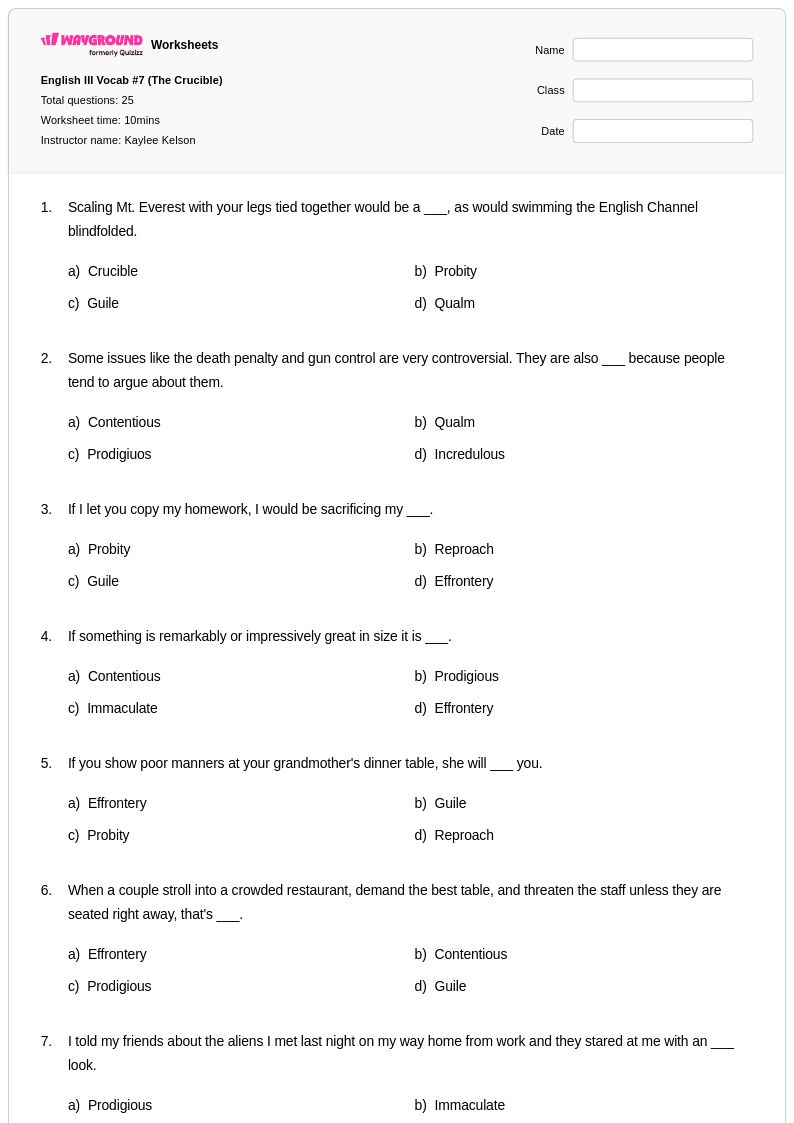
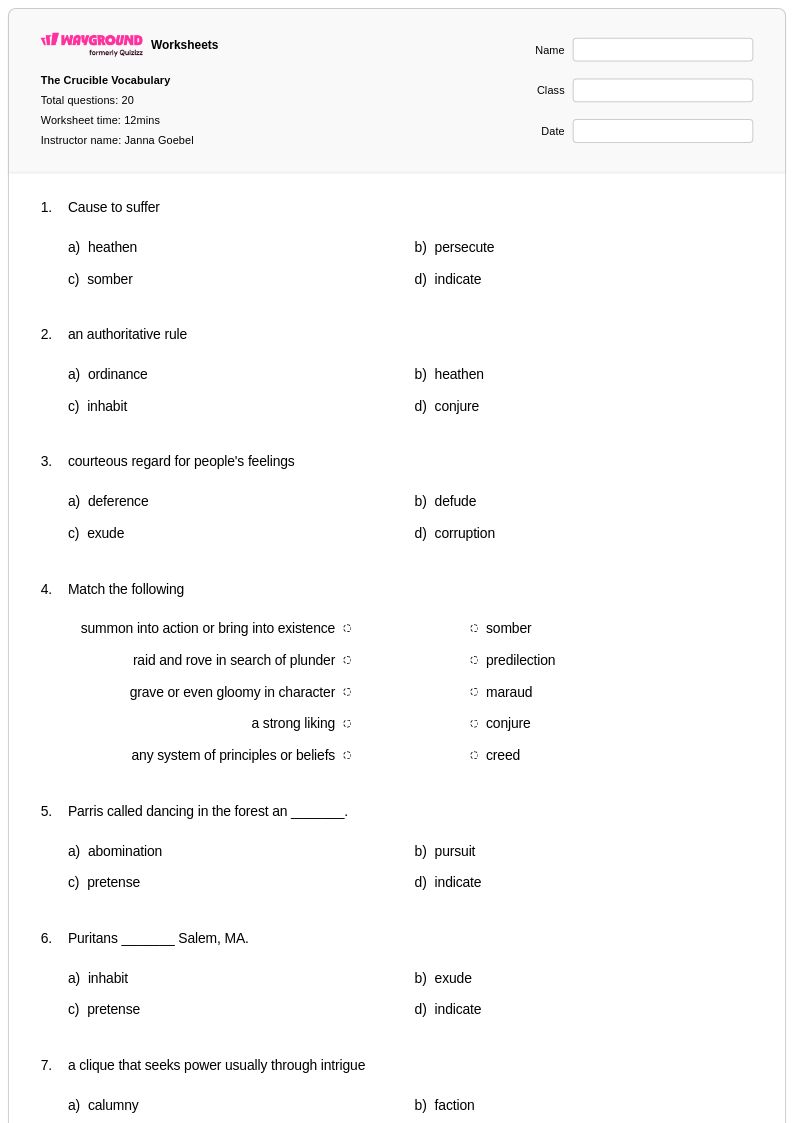
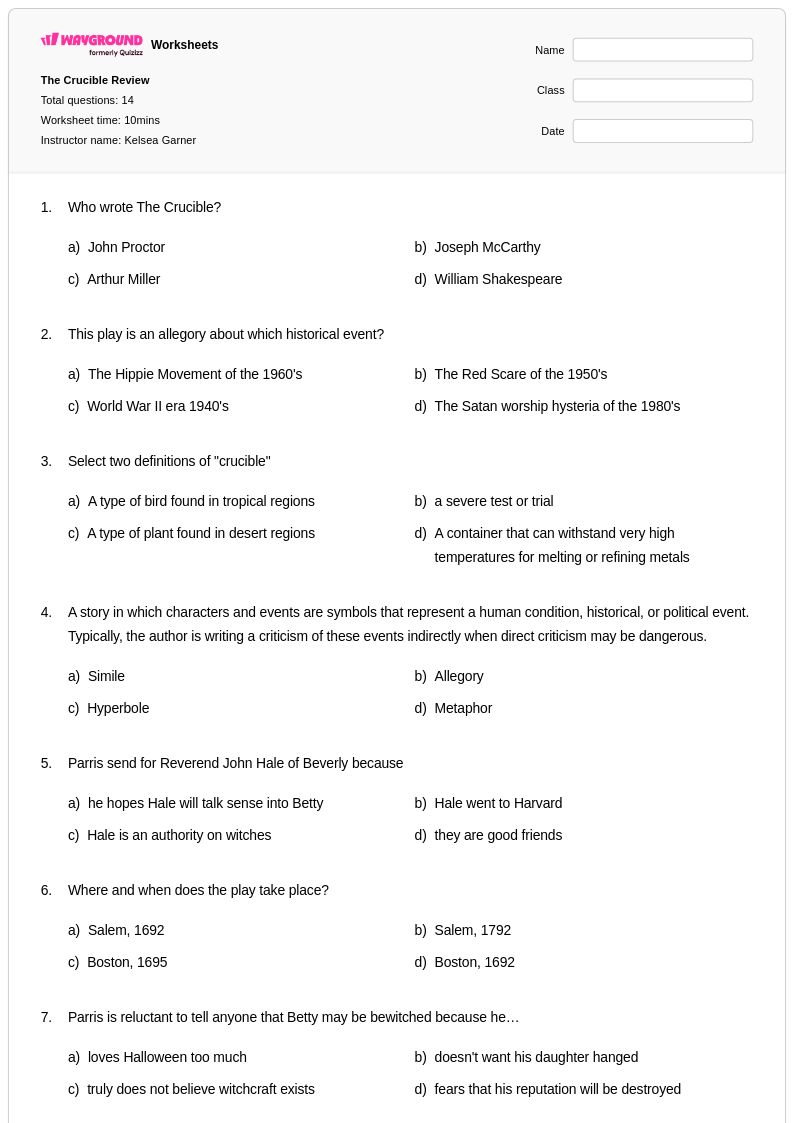
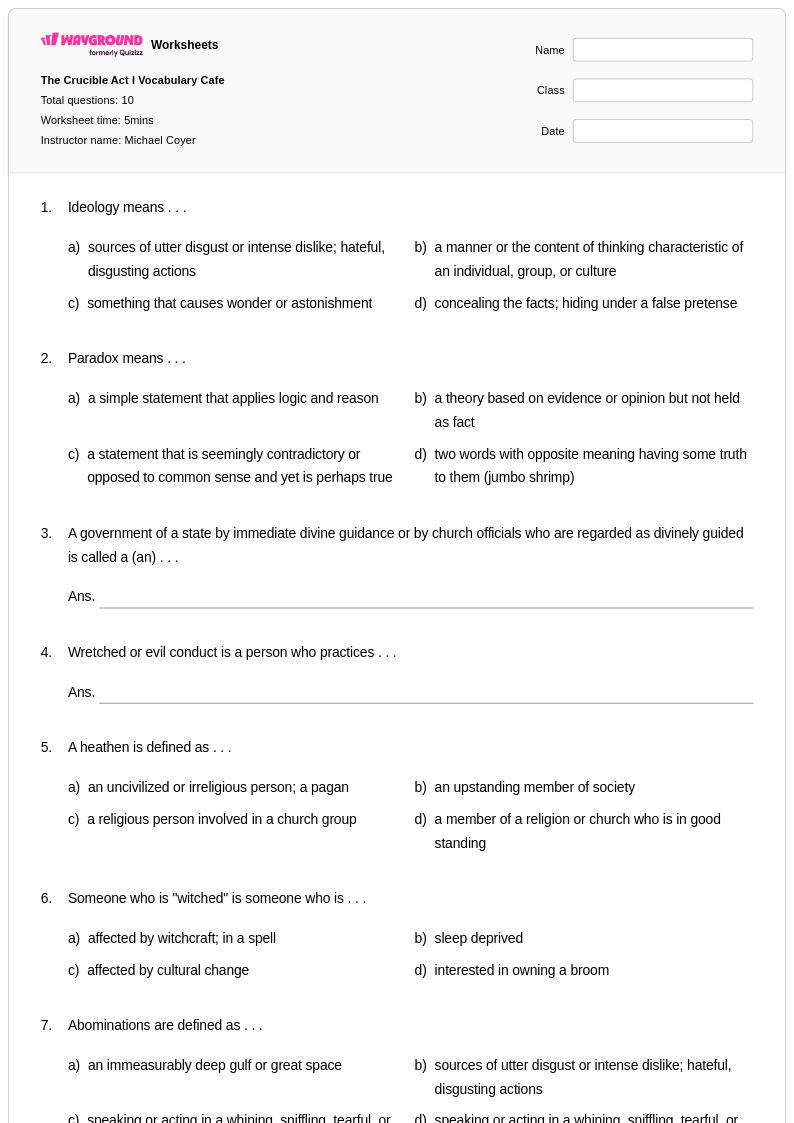
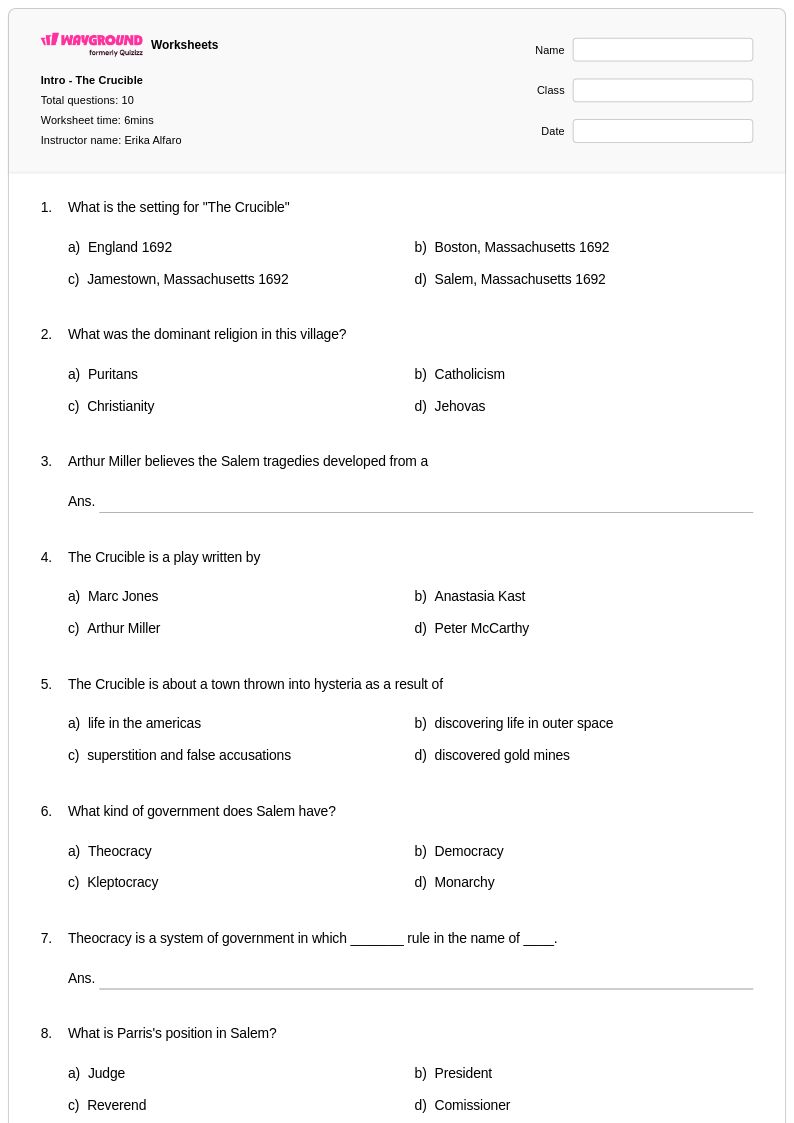
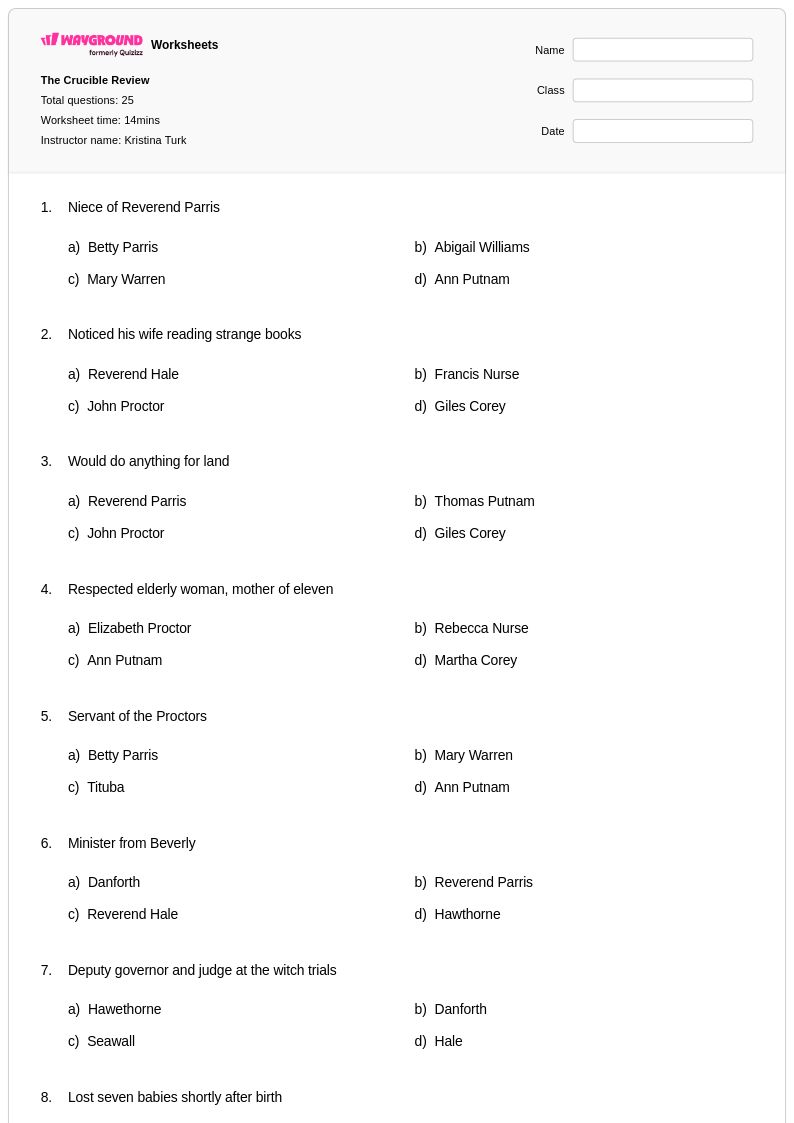
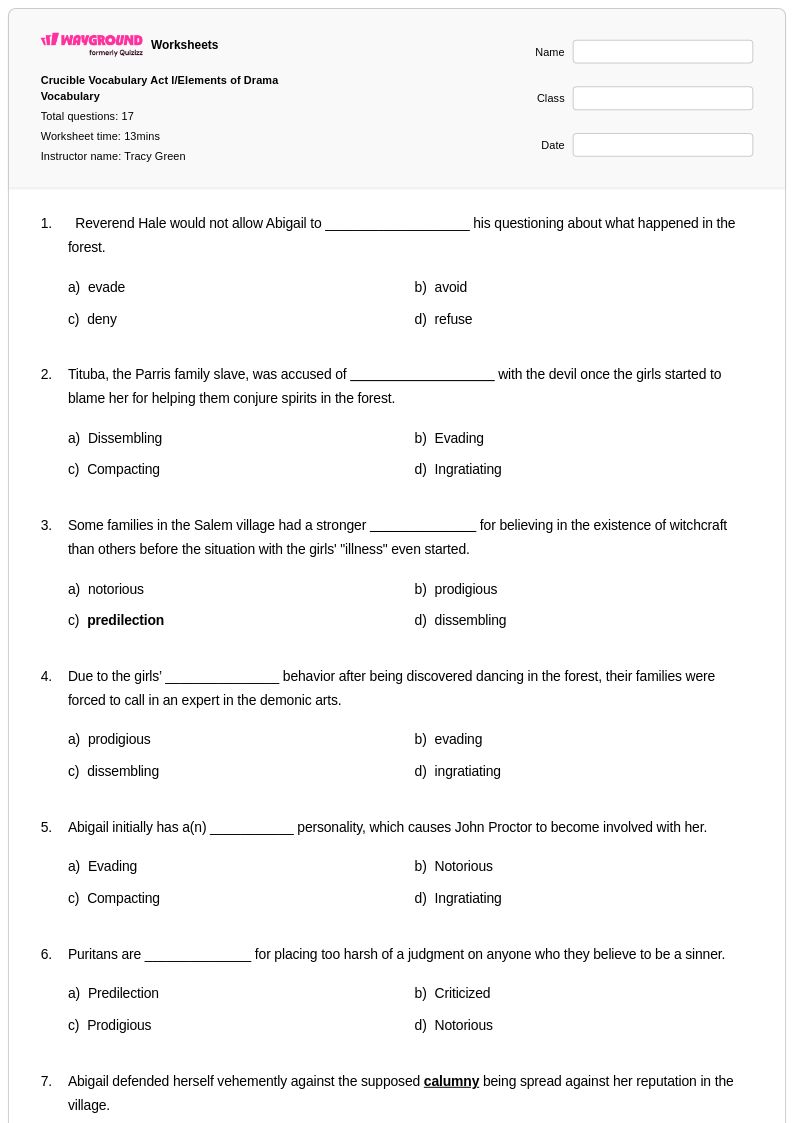
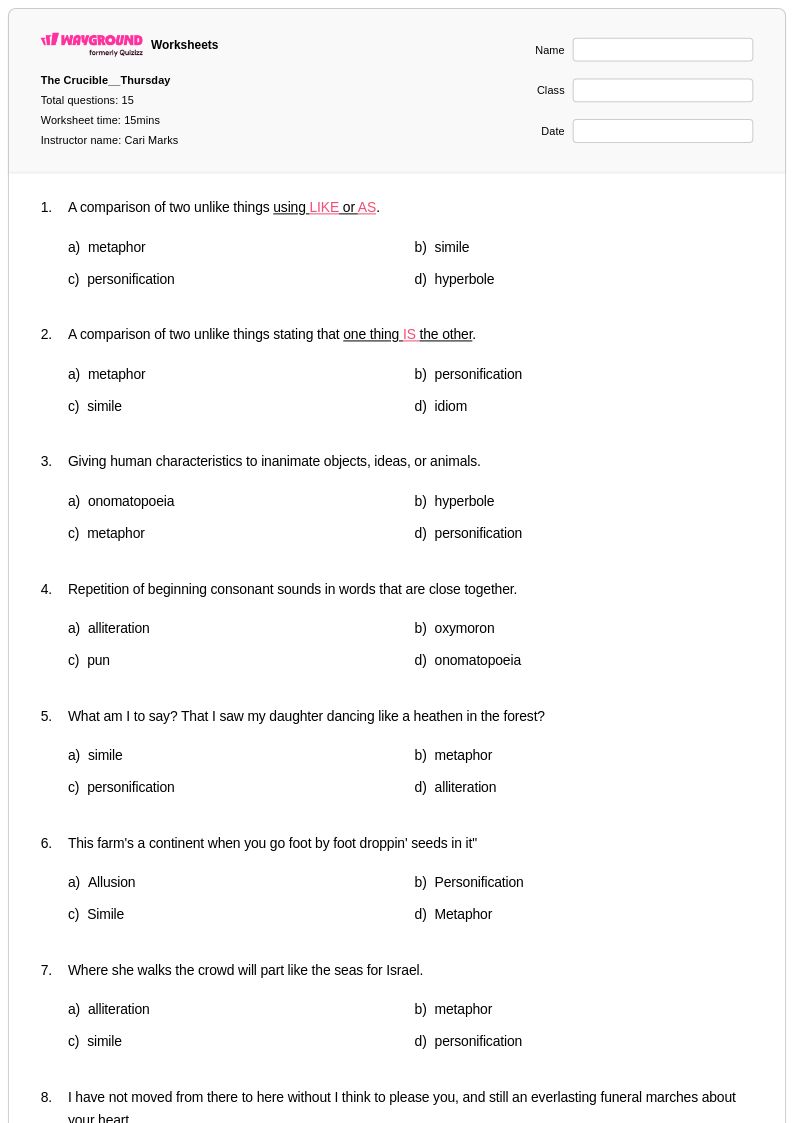
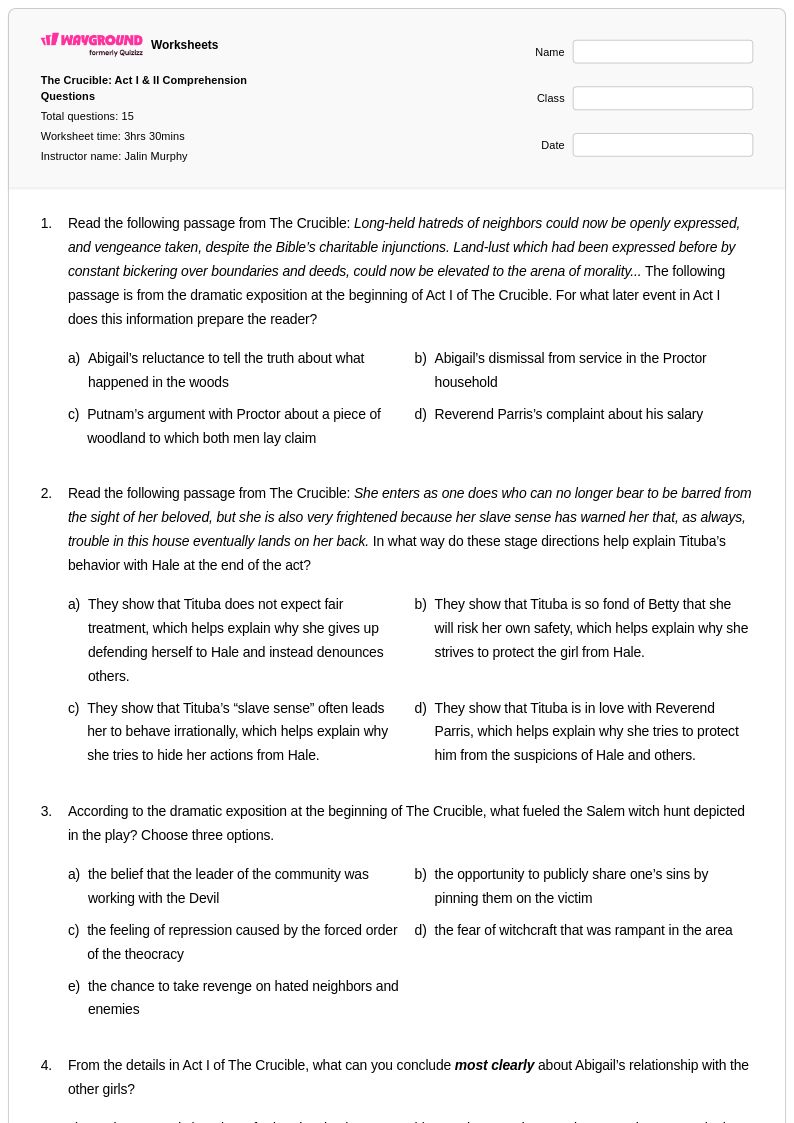
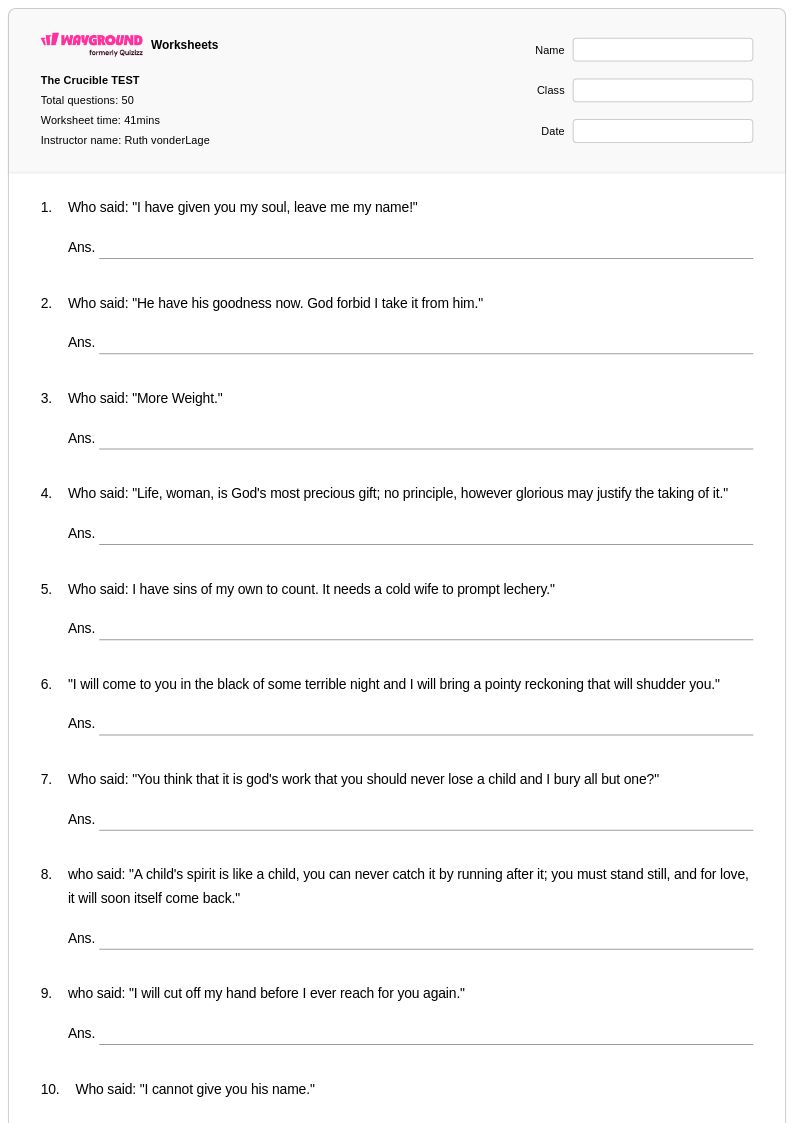
The Crucible worksheets available through Wayground (formerly Quizizz) provide Class 9 students with comprehensive materials to analyze Arthur Miller's powerful drama about the Salem witch trials and McCarthyism. These expertly designed resources strengthen critical reading skills by guiding students through character analysis, thematic exploration, symbolism identification, and historical context examination. Students engage with practice problems that challenge them to interpret Miller's allegory, analyze the moral complexities faced by John Proctor and other central characters, and draw connections between the play's themes of integrity, mass hysteria, and social pressure with contemporary issues. The collection includes free printables with detailed answer keys, allowing students to work independently while teachers can efficiently assess comprehension and provide targeted feedback through pdf resources that support both classroom instruction and homework assignments.
Wayground (formerly Quizizz) empowers teachers with millions of educator-created resources specifically designed for The Crucible instruction, featuring robust search and filtering capabilities that align with literature standards and learning objectives. The platform's differentiation tools enable instructors to customize worksheets based on individual student needs, offering both remediation support for struggling readers and enrichment activities for advanced learners. Teachers can seamlessly integrate these materials into their lesson planning, utilizing both printable and digital formats including downloadable pdf versions that accommodate diverse classroom environments and teaching preferences. The comprehensive collection supports ongoing skill practice through varied question types and analytical exercises, while the platform's flexible customization options allow educators to modify content to match their specific curriculum requirements and pacing guides, ensuring that students develop deep literary analysis skills essential for high school English success.
FAQs
How do I teach The Crucible in a high school English class?
Teaching The Crucible effectively requires grounding students in two historical contexts: the Salem witch trials of 1692 and the McCarthyism of 1950s America. Begin with background reading on both periods before students encounter the text, so they can recognize Miller's allegorical intentions as they read. As students move through each act, anchor discussion to character motivation, moral conflict, and the consequences of mass hysteria. Pairing close reading with structured activities like character analysis and thematic tracking helps students build the analytical framework needed to engage with the play's deeper arguments.
What are common mistakes students make when analyzing The Crucible?
One of the most frequent errors is reading the Salem witch trials as the play's primary subject rather than recognizing McCarthyism as Miller's real target. Students also tend to flatten characters like Abigail Williams or John Proctor into simple villains or heroes, missing the moral complexity Miller builds deliberately. Another common misconception is treating the theme of hysteria as historical rather than universal, which prevents students from connecting the play to contemporary examples of scapegoating and social pressure. Worksheets that prompt students to examine specific textual evidence and allegorical connections help correct these surface-level readings.
What exercises help students practice literary analysis of The Crucible?
Effective practice for The Crucible centers on activities that require students to move from plot comprehension to interpretation. Character analysis exercises that ask students to trace how a character's choices reflect the play's central themes push beyond summary. Symbolism identification tasks, such as examining what the trials represent beyond literal witch-hunting, build allegorical reading skills. Structured written responses that connect the play's moral conflicts to historical context reinforce the critical thinking skills most commonly assessed in literature units.
How do I use The Crucible worksheets from Wayground in my classroom?
Wayground's The Crucible worksheets are available as printable PDFs for traditional classroom use and in digital formats for technology-integrated environments, giving you flexibility for in-person, hybrid, or remote instruction. You can also host any worksheet as a quiz directly on Wayground, which allows you to track student responses and assess comprehension in real time. All worksheets include answer keys, making them practical for independent practice, homework assignments, or guided classroom activities without additional preparation on your part.
How do I differentiate The Crucible instruction for students with different reading levels?
Differentiation for The Crucible often starts with scaffolding the historical context, since students unfamiliar with either the Salem trials or McCarthyism will struggle to access the text's meaning. For students who need additional support during digital practice, Wayground offers built-in accommodation tools including Read Aloud, reduced answer choices, and extended time, all configurable per student without notifying the rest of the class. These settings can be applied individually and saved for reuse across future sessions, reducing the logistical burden of managing accommodations for multiple learners simultaneously.
What themes in The Crucible are most important for students to understand?
The four themes most central to any serious study of The Crucible are mass hysteria, individual integrity, the abuse of power, and the danger of theocracy. Miller uses the Salem witch trials to show how fear and social pressure can override rational judgment and destroy communities. The tension between personal integrity and social conformity, dramatized most directly through John Proctor's final choice, is the emotional and moral core of the play. Students who grasp these themes are better equipped to engage with the play's allegorical argument about McCarthyism and its broader implications for any society governed by fear.