Enhance Class 9 students' understanding of The Odyssey with Wayground's comprehensive collection of free worksheets, printables, and practice problems featuring detailed answer keys to master Homer's epic literature.
Explore printable The Odyssey worksheets for Class 9
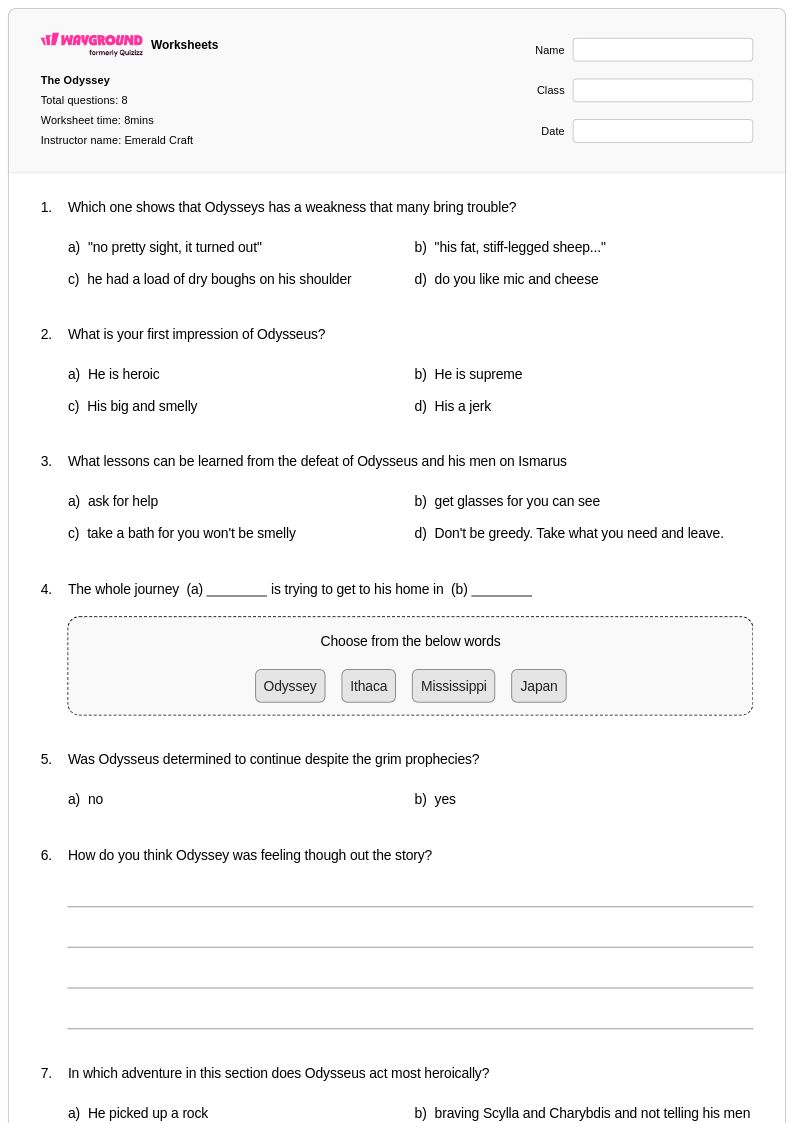
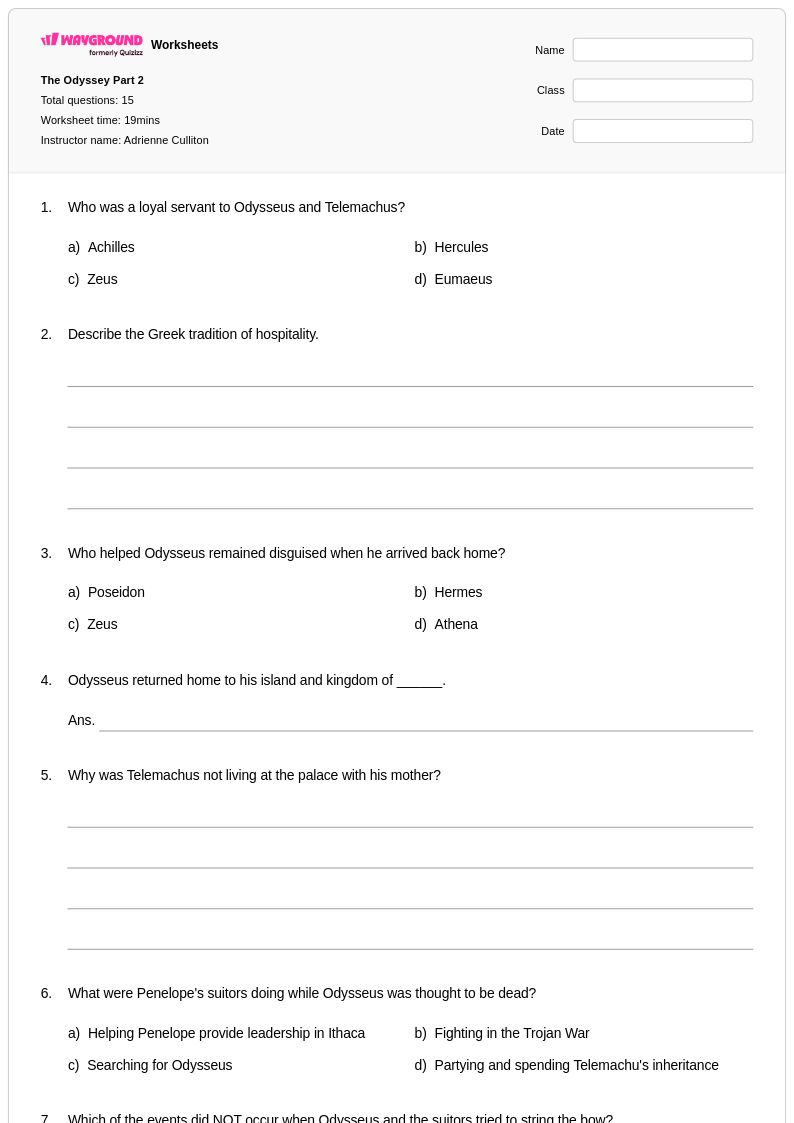
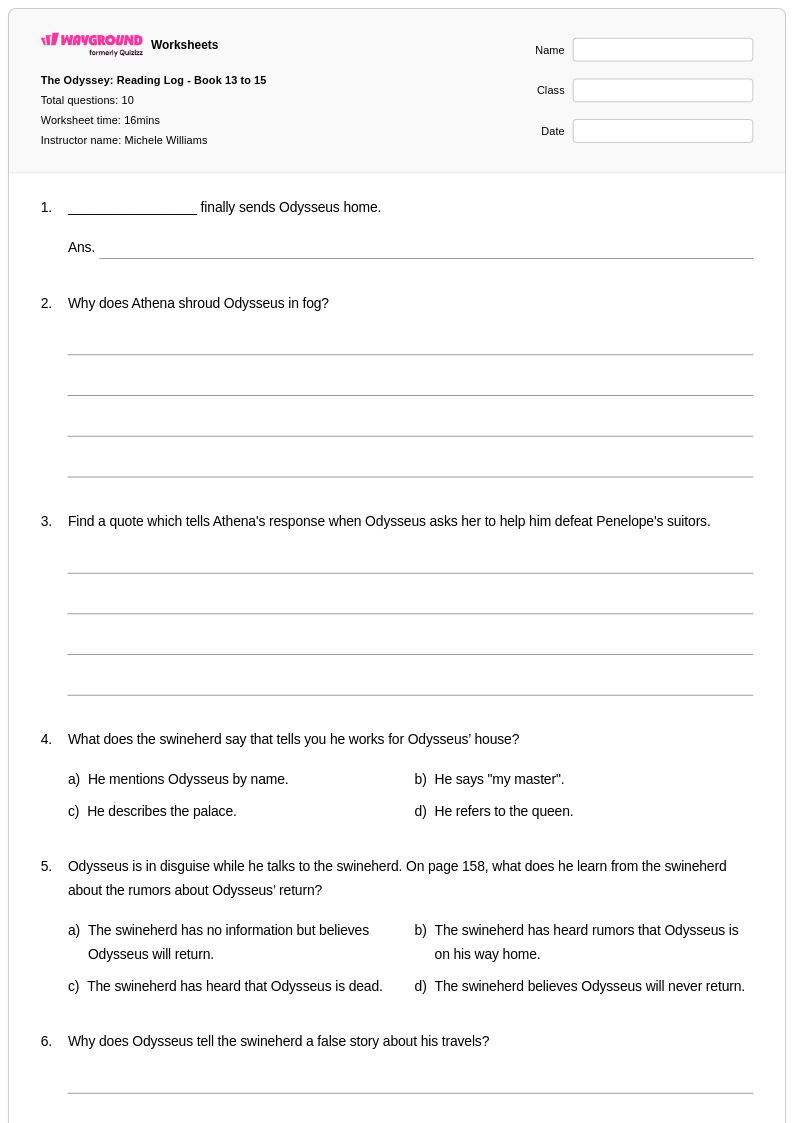
The Odyssey worksheets available through Wayground (formerly Quizizz) provide Class 9 students with comprehensive practice materials that deepen their understanding of Homer's epic masterpiece. These educational resources focus on critical literary analysis skills, including character development, heroic journey themes, symbolism, and narrative structure within the context of ancient Greek literature. Students engage with practice problems that examine Odysseus's transformation throughout his journey, analyze the role of divine intervention, and explore the cultural values embedded in the text. Each worksheet collection includes detailed answer keys that support independent learning and self-assessment, while printable pdf formats ensure accessibility for both classroom instruction and homework assignments. The free resources encompass various question types, from comprehension checks to sophisticated literary analysis prompts that challenge students to make connections between ancient themes and contemporary issues.
Wayground (formerly Quizizz) supports English teachers with an extensive collection of teacher-created resources spanning millions of worksheets specifically designed for The Odyssey instruction at the Class 9 level. The platform's advanced search and filtering capabilities allow educators to quickly locate materials aligned with specific learning standards and differentiate instruction based on individual student needs. Teachers can customize existing worksheets or create original content using flexible digital tools, then distribute materials in both printable and interactive digital formats including downloadable pdf versions. These comprehensive features streamline lesson planning by providing ready-made resources for skill practice, enable targeted remediation for students struggling with complex literary concepts, and offer enrichment opportunities for advanced learners ready to explore deeper thematic connections. The platform's robust organizational tools help teachers track student progress while building a personalized library of The Odyssey teaching materials.
FAQs
How do I teach The Odyssey to high school students?
Teaching The Odyssey effectively means grounding students in the conventions of epic poetry before diving into the narrative — introduce epithets, epic similes, and the hero's journey framework early so students have tools to analyze the text as they read. Connecting Odysseus's trials to universal themes like loyalty, perseverance, and the consequences of pride gives students a personal entry point into the material. Pairing close reading of key passages with structured analysis activities helps students move beyond plot summary toward genuine literary interpretation.
What exercises help students practice analyzing The Odyssey?
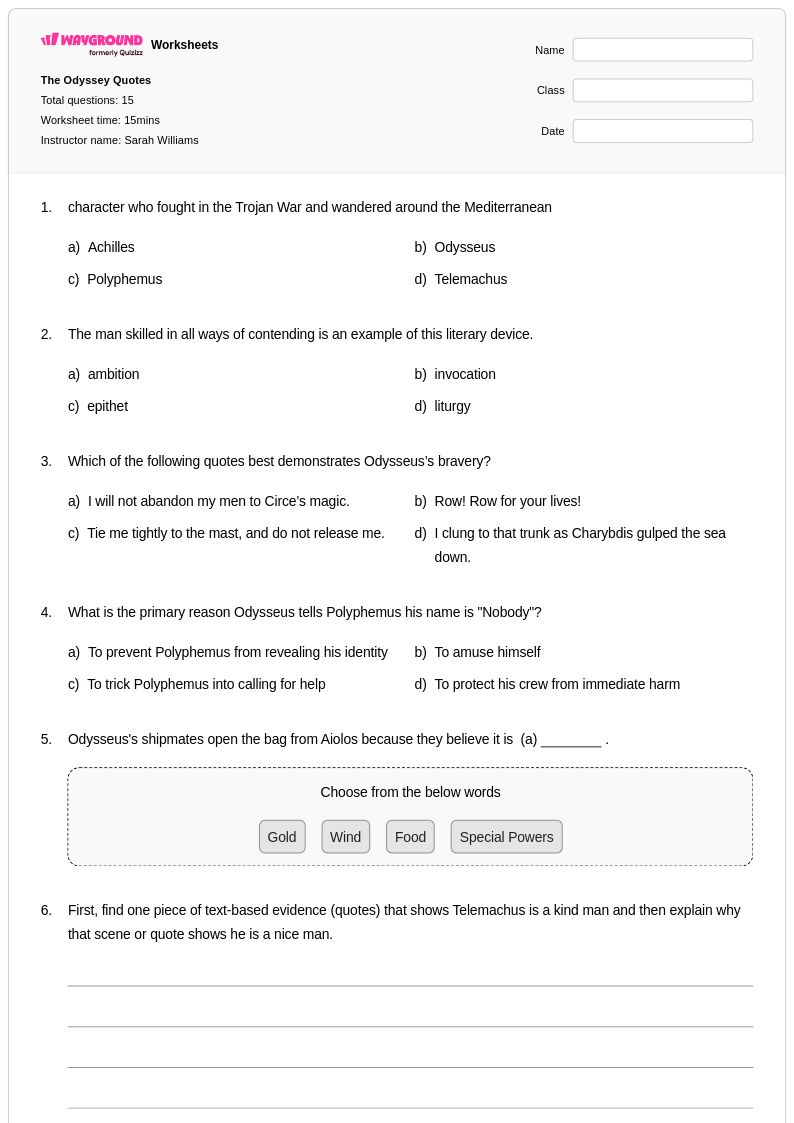
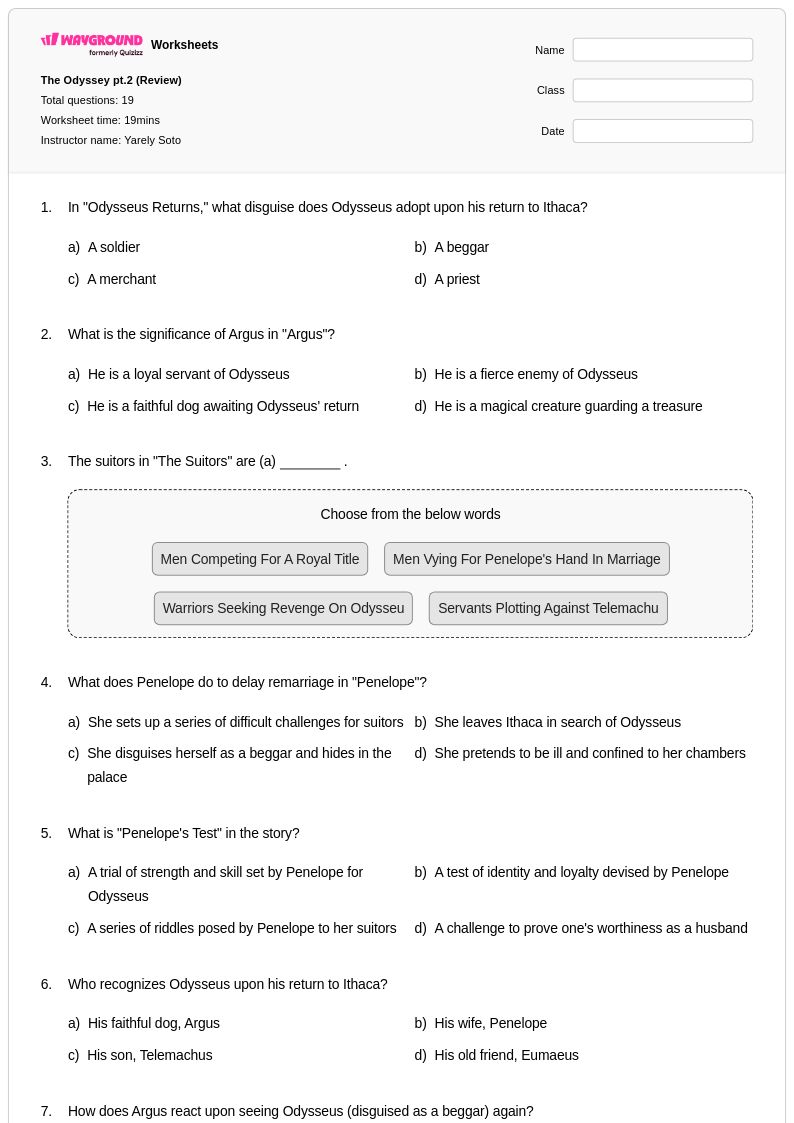
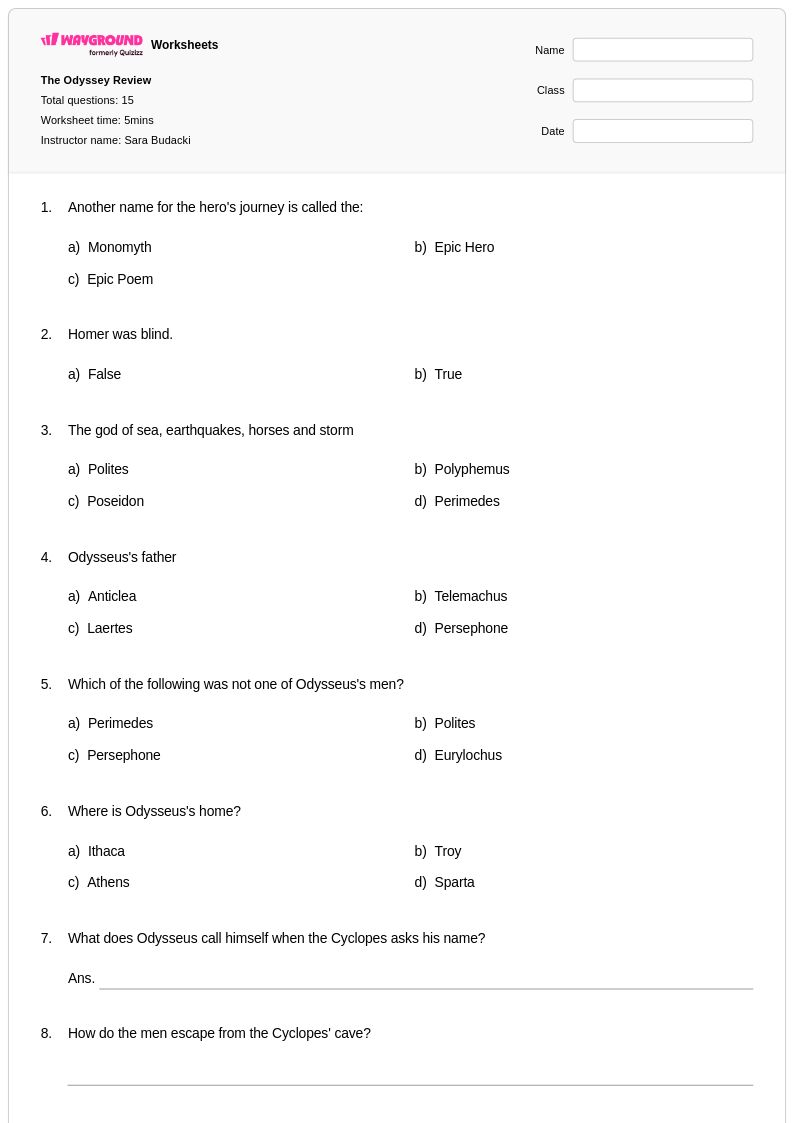
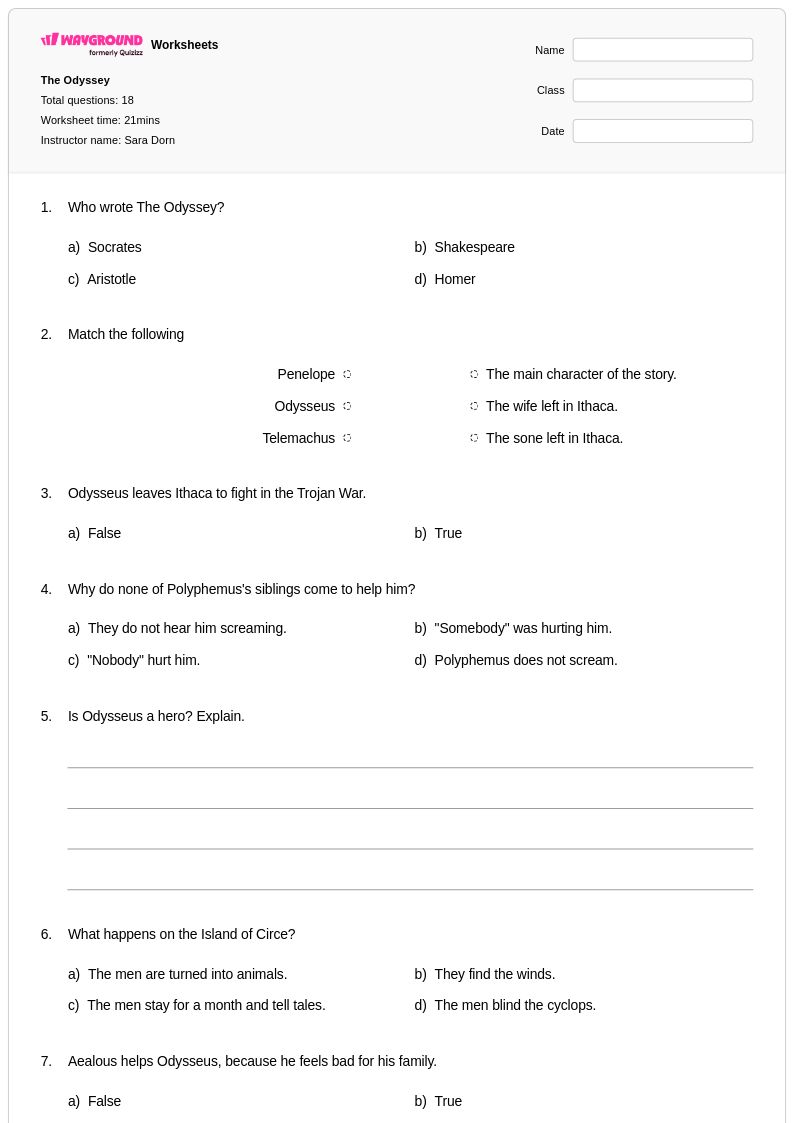
Effective practice exercises for The Odyssey include identifying and interpreting epic similes and epithets in context, tracing Odysseus's character development across key episodes, and analyzing how mythological allusions reinforce the poem's themes. Activities that ask students to compare ancient Greek values — such as xenia (hospitality) and kleos (glory) — to contemporary counterparts deepen their cultural understanding. Structured worksheets that scaffold literary analysis, moving from identification to interpretation to evaluation, are particularly useful for building independent close-reading skills.
What mistakes do students commonly make when reading The Odyssey?
One of the most common errors is treating Odysseus as an uncomplicated hero rather than a complex figure whose pride and cunning are both his greatest strengths and the source of his greatest setbacks. Students also frequently confuse mythological allusions or conflate characters from Greek mythology they've encountered elsewhere, which disrupts their comprehension of cause and effect in the narrative. Another persistent misconception is misreading epic similes as literal descriptions rather than extended comparisons — explicitly teaching the structure of the Homeric simile helps students parse these passages accurately.
How do I use The Odyssey worksheets from Wayground in my classroom?
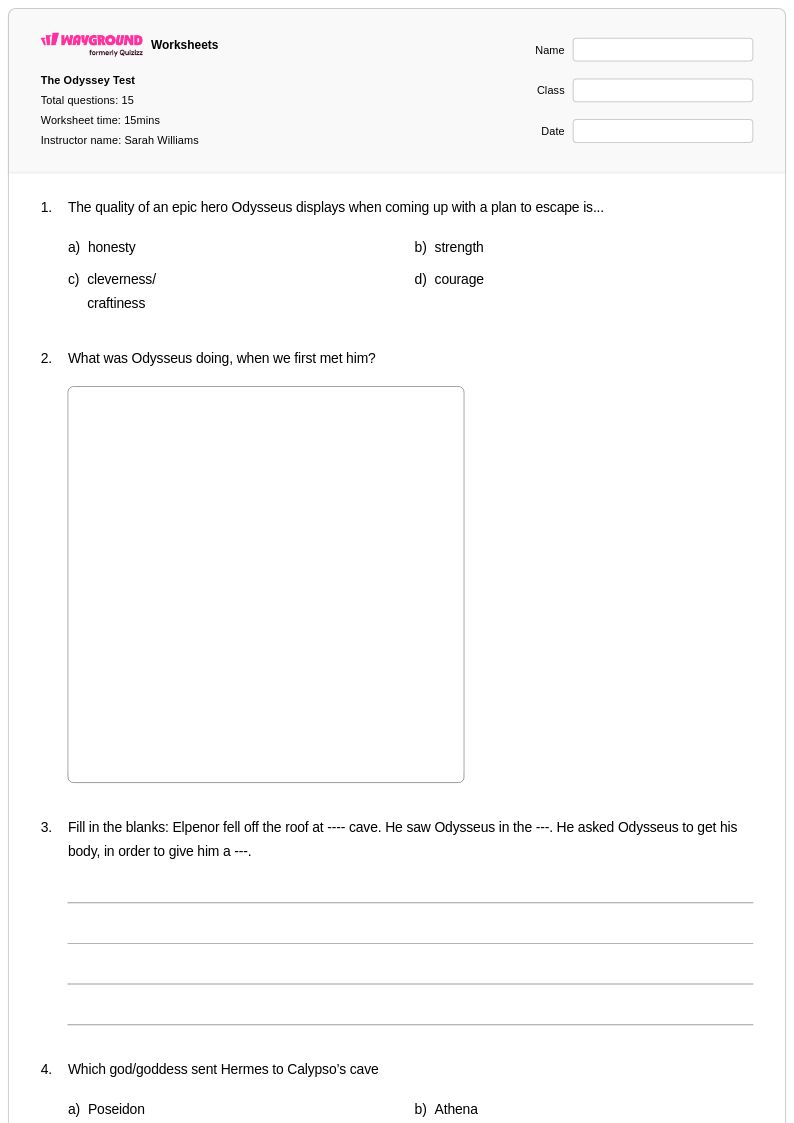
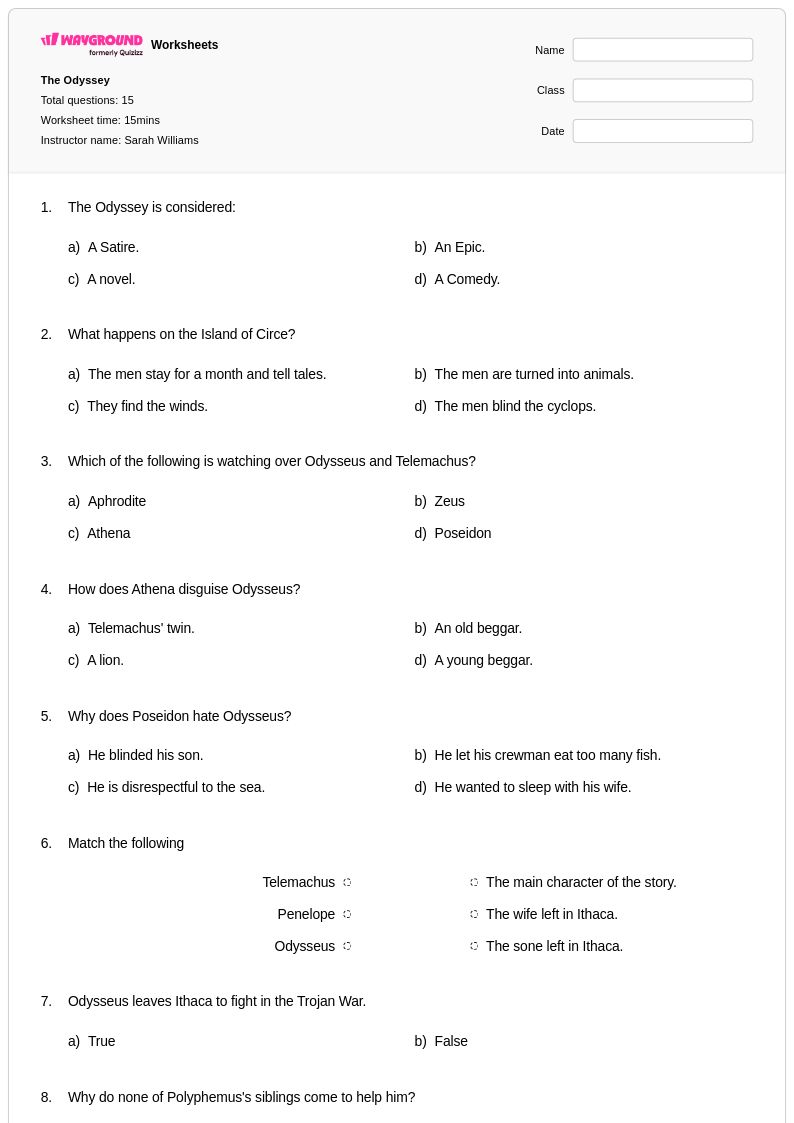
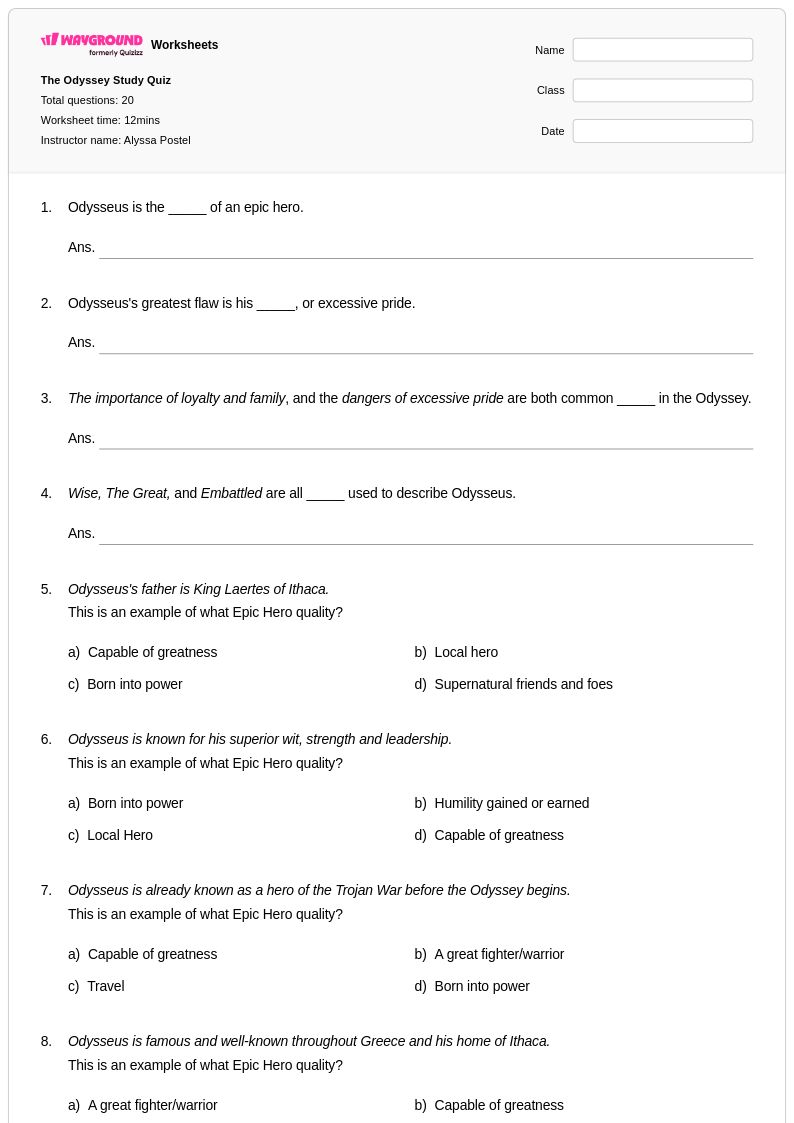
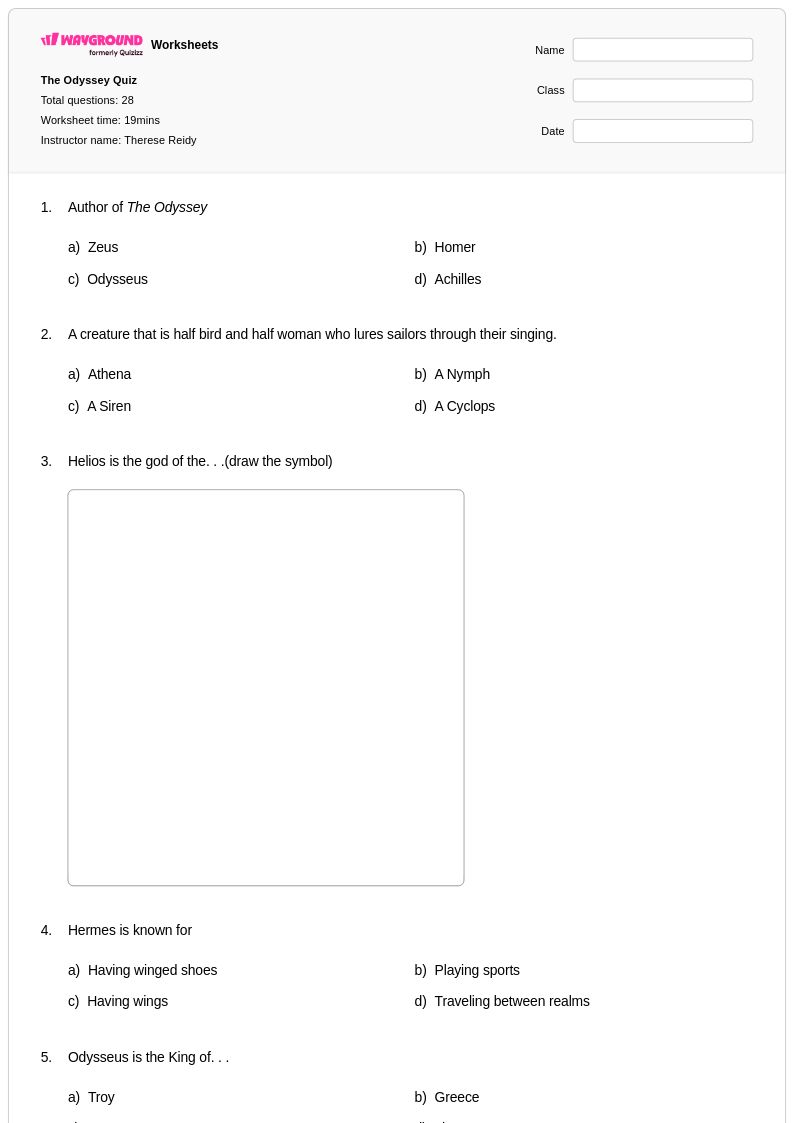
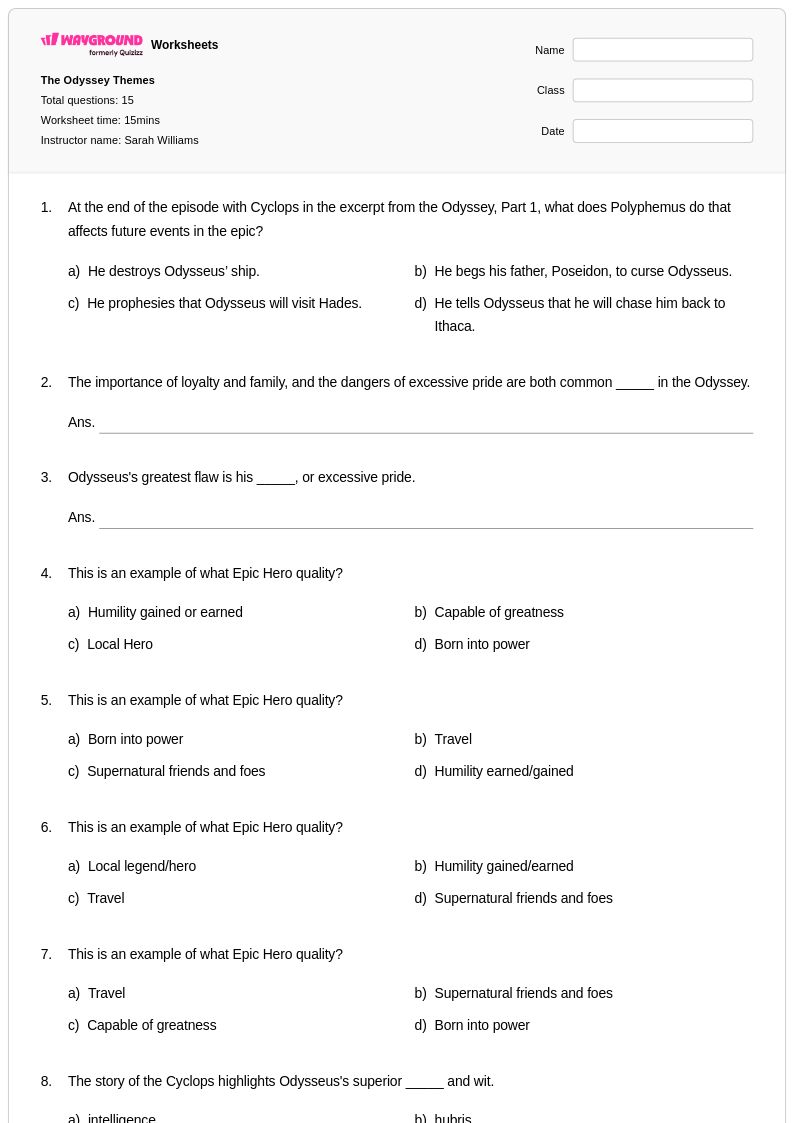
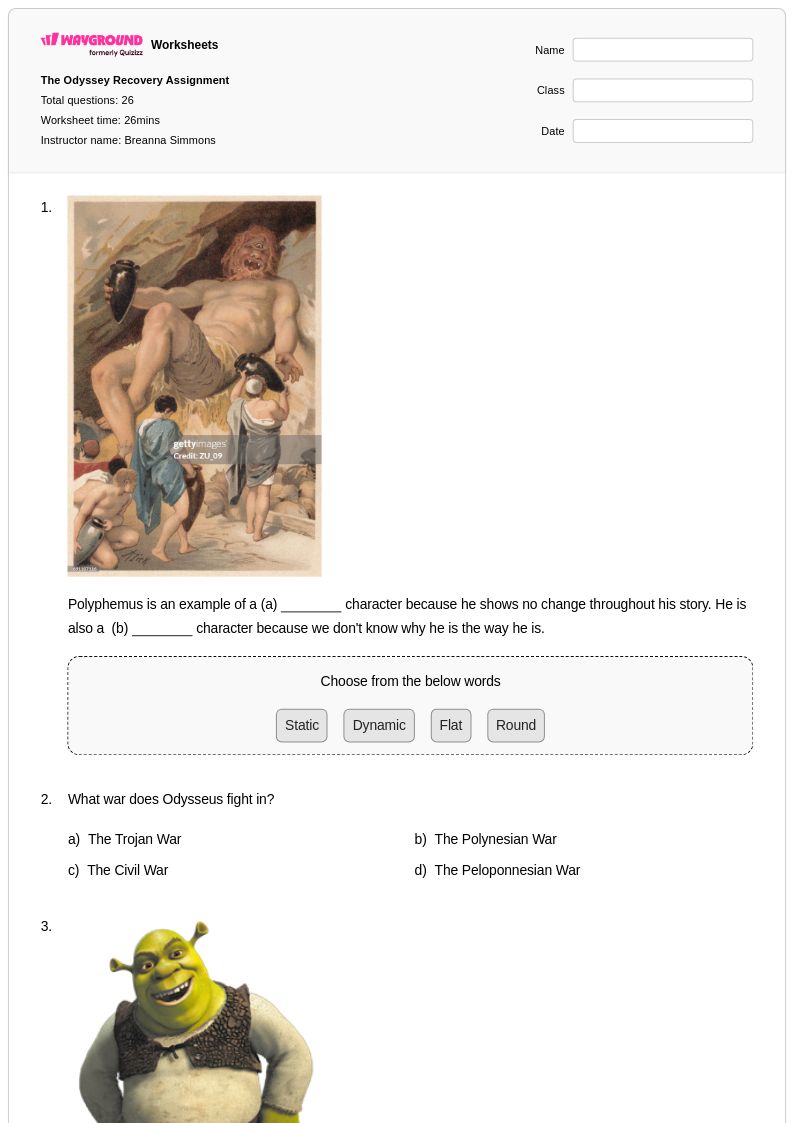
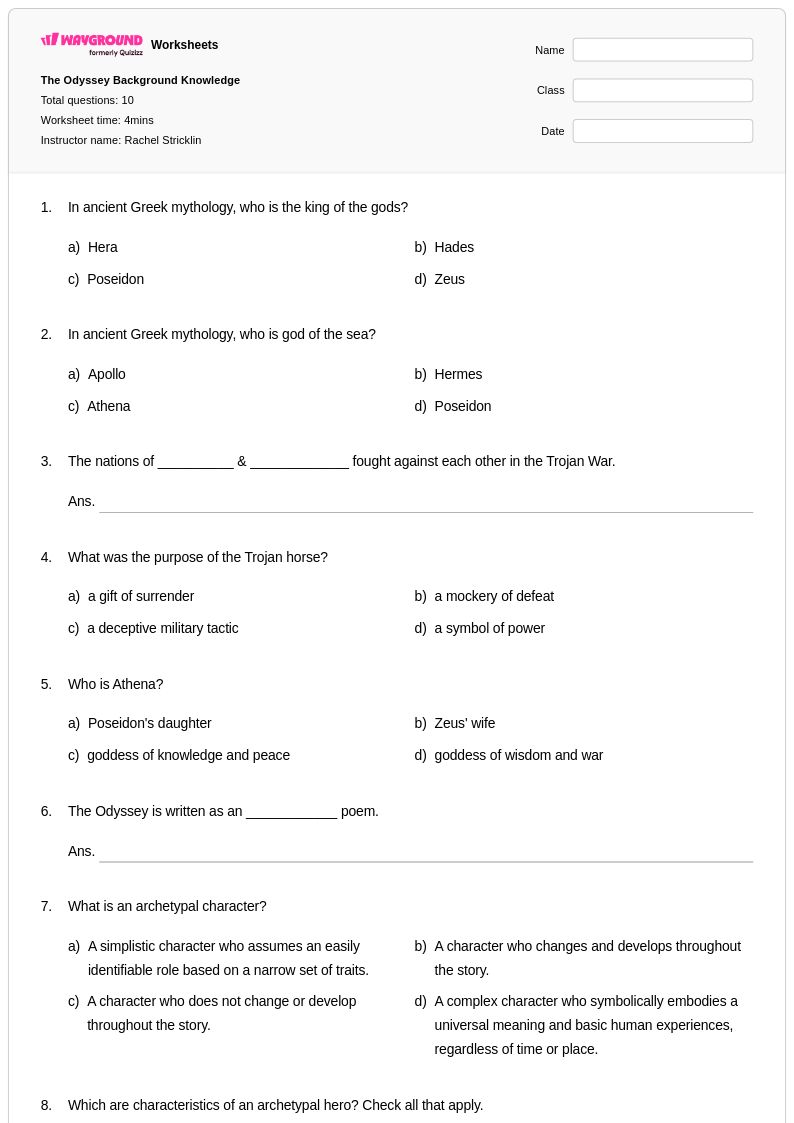
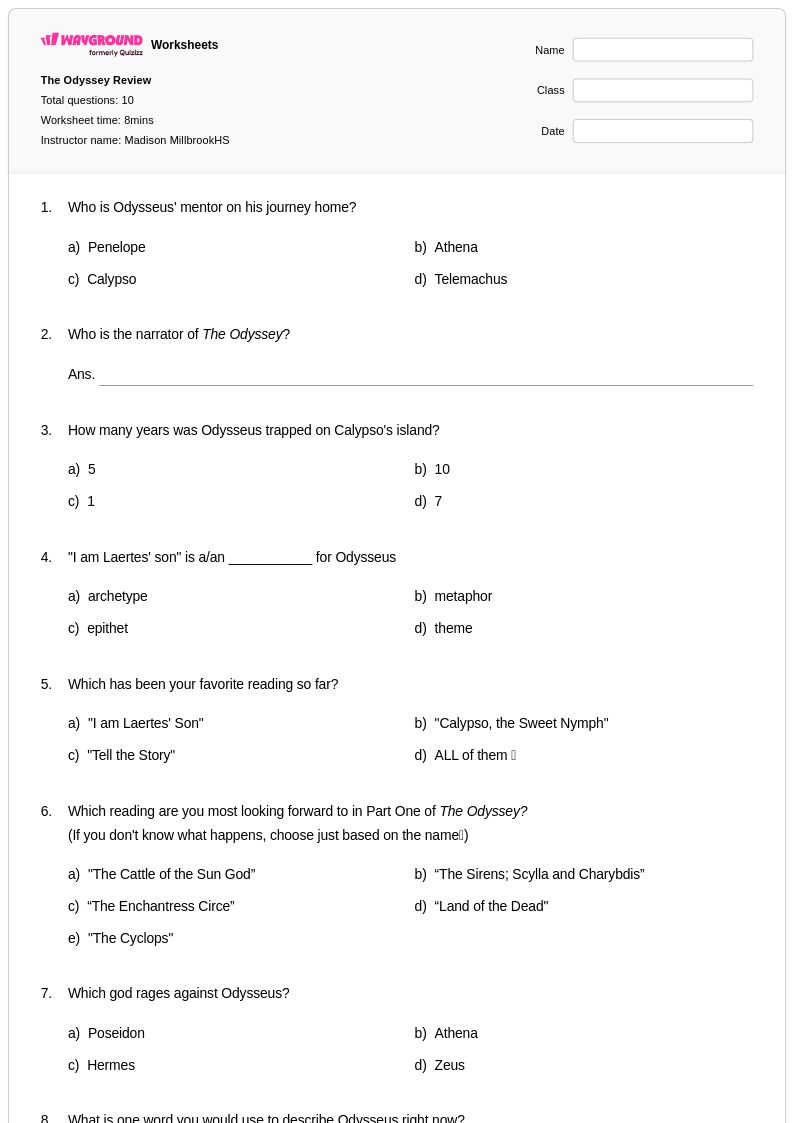
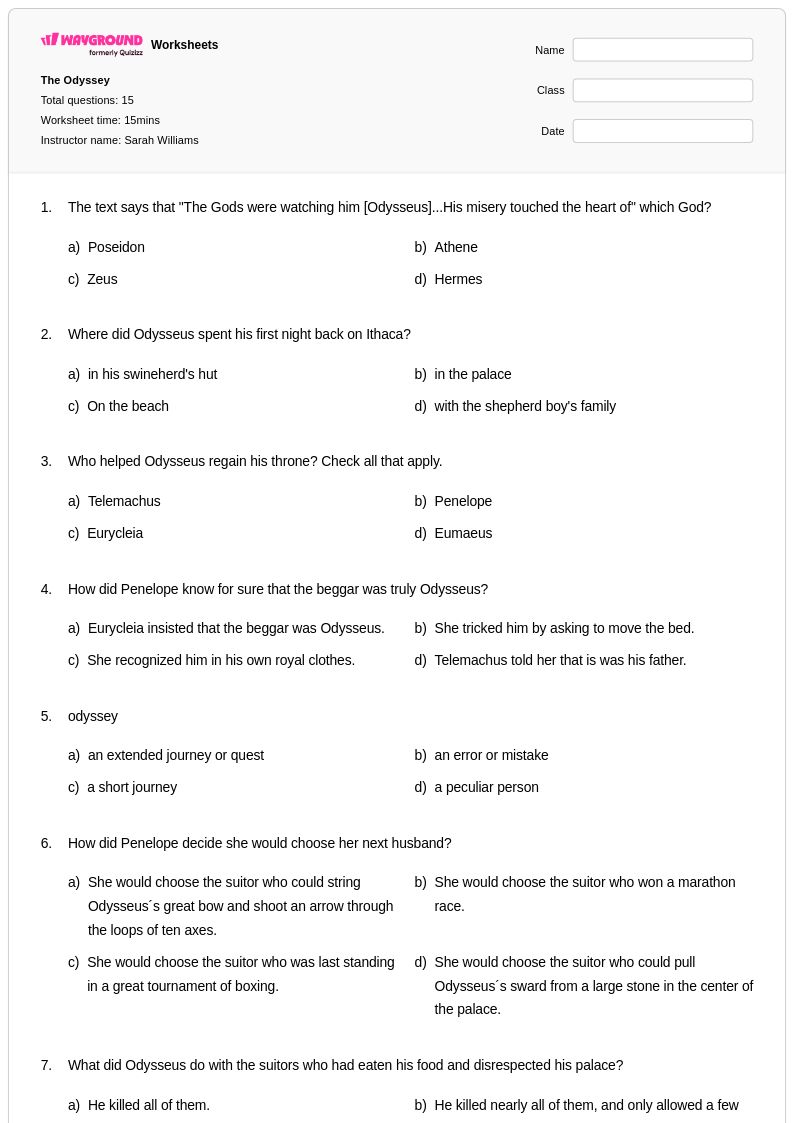
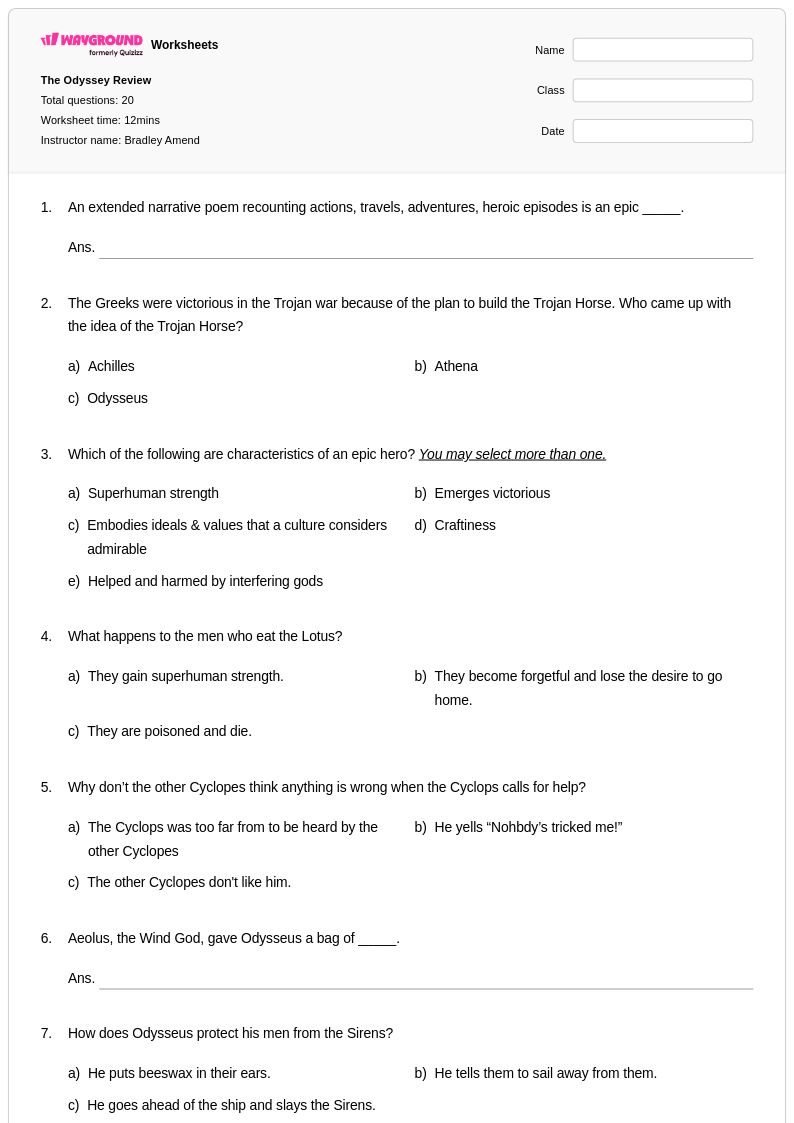
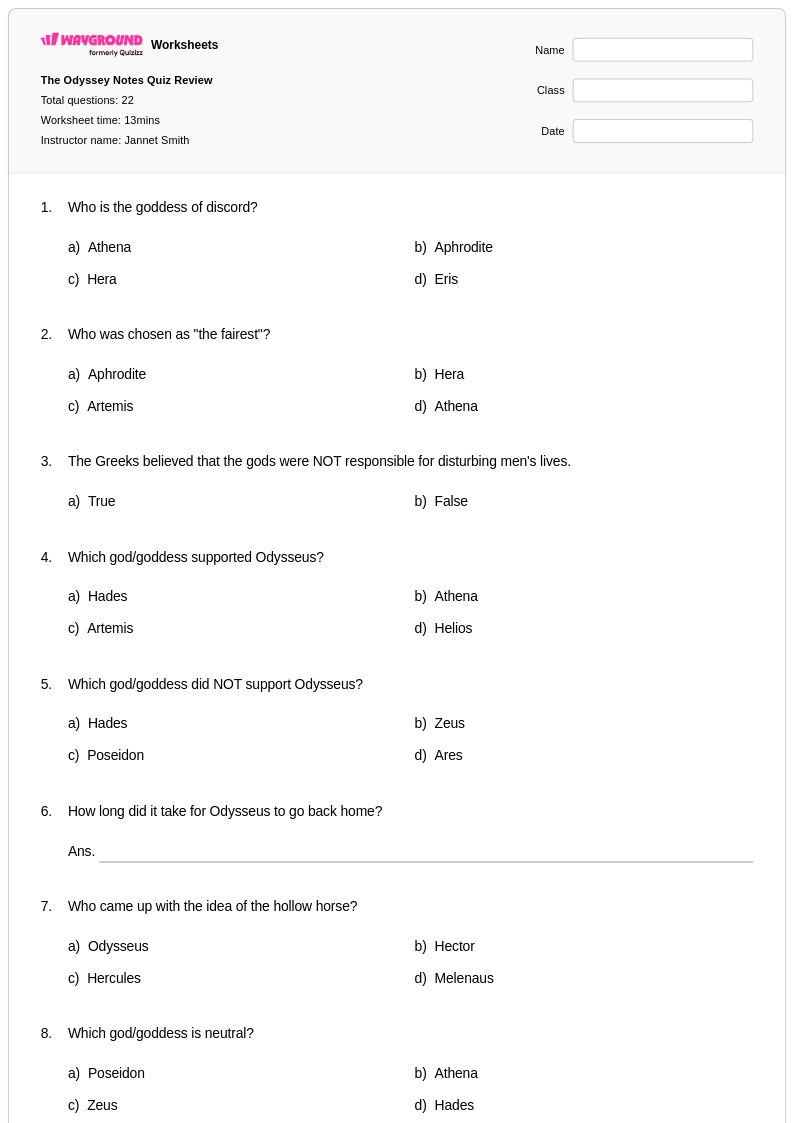
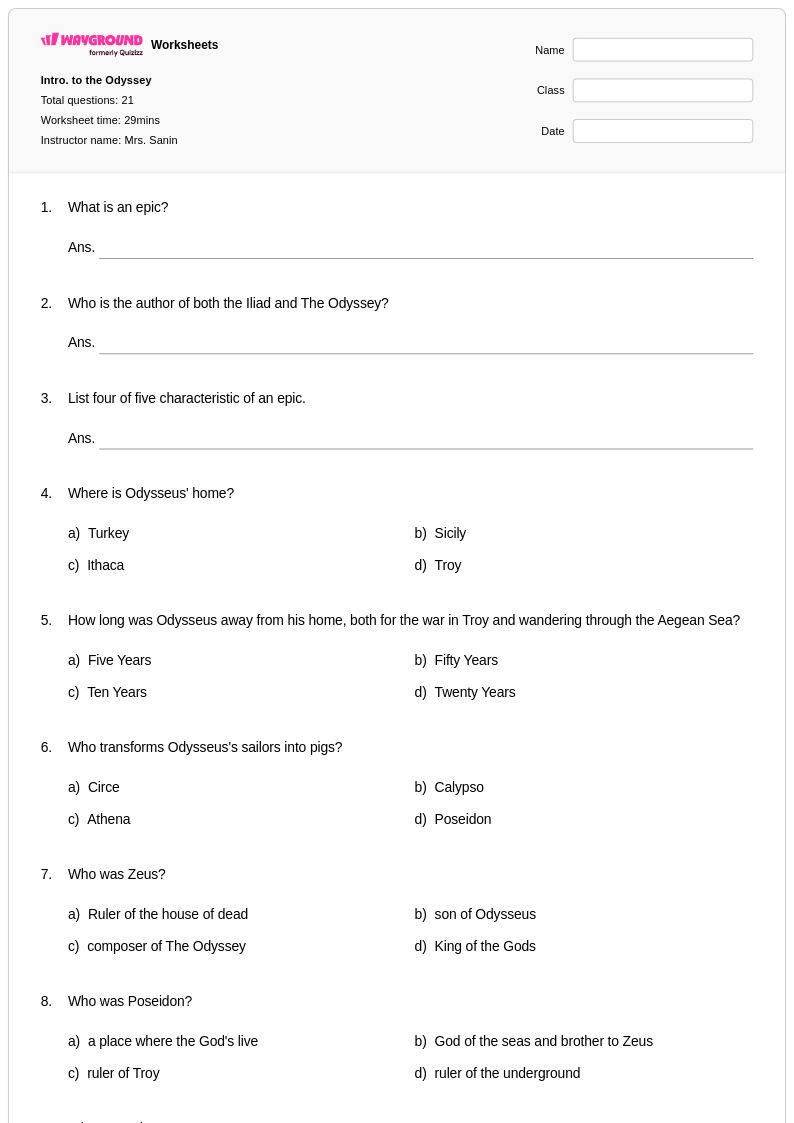
Wayground's Odyssey worksheets are available as printable PDFs for traditional classroom use and in digital formats for technology-integrated or remote learning environments, including the option to host them as a quiz directly on the Wayground platform. Teachers can use these materials for initial skill practice, targeted remediation with students who struggle with epic poetry conventions, or as enrichment tasks for advanced learners making connections between ancient Greek literature and contemporary themes. The worksheets come with complete answer keys, making them practical for both guided instruction and independent student work.
How do I help struggling readers access The Odyssey?
For students who find Homer's elevated language and long verse paragraphs difficult, chunking the text into manageable episodes and pre-teaching key vocabulary — particularly epithets and mythological references — significantly lowers the barrier to entry. Wayground's digital worksheets support read-aloud functionality and adjustable reading modes, including font size and theme settings, which can be assigned to individual students who need additional accessibility accommodations. Pairing the original text with structured comprehension questions that progress from literal recall to inferential analysis helps scaffolded readers build confidence before tackling higher-order interpretation tasks.
How do I assess student understanding of The Odyssey beyond multiple choice?
Beyond multiple choice, strong assessment strategies for The Odyssey include asking students to write analytical paragraphs that identify a literary device and explain its effect on tone or theme, or to trace how a character like Odysseus, Penelope, or Telemachus changes across specific episodes. Comparative tasks — such as connecting an episode from The Odyssey to a modern narrative that uses the hero's journey structure — assess both comprehension and transferable literary thinking. Short constructed-response questions that require textual evidence push students to engage precisely with the language of the poem rather than relying on general plot knowledge.

![The Odyssey - Part 1 (o) [HR. 2] - Printable The-odyssey Worksheets Class 9 - Wayground](https://quizizz-static.s3.amazonaws.com/_media/worksheets-new/6421e1dade2250001e0bf0a0-the-odyssey-part-1-o-hr-2)