Free Printable Thoughts Vs Feelings Worksheets for Class 7
Class 7 social studies worksheets help students distinguish between thoughts vs feelings through engaging printables and practice problems that develop emotional intelligence and self-awareness skills with comprehensive answer keys.
Explore printable Thoughts Vs Feelings worksheets for Class 7
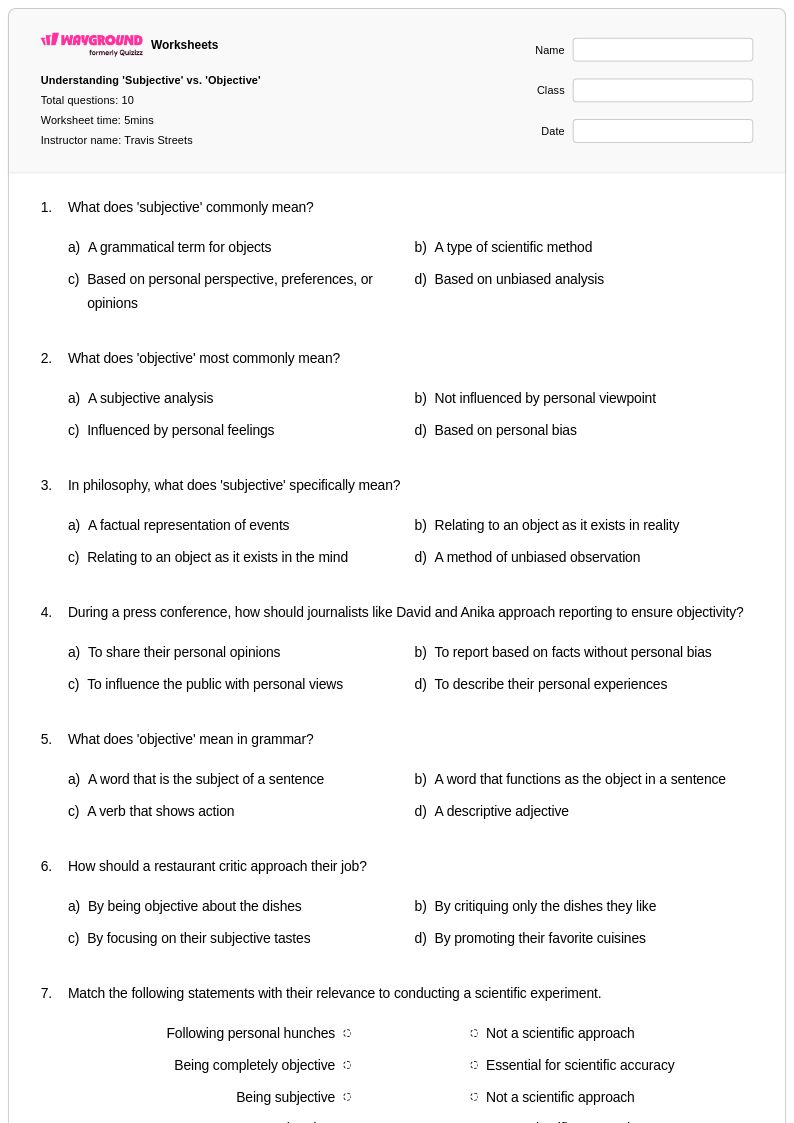
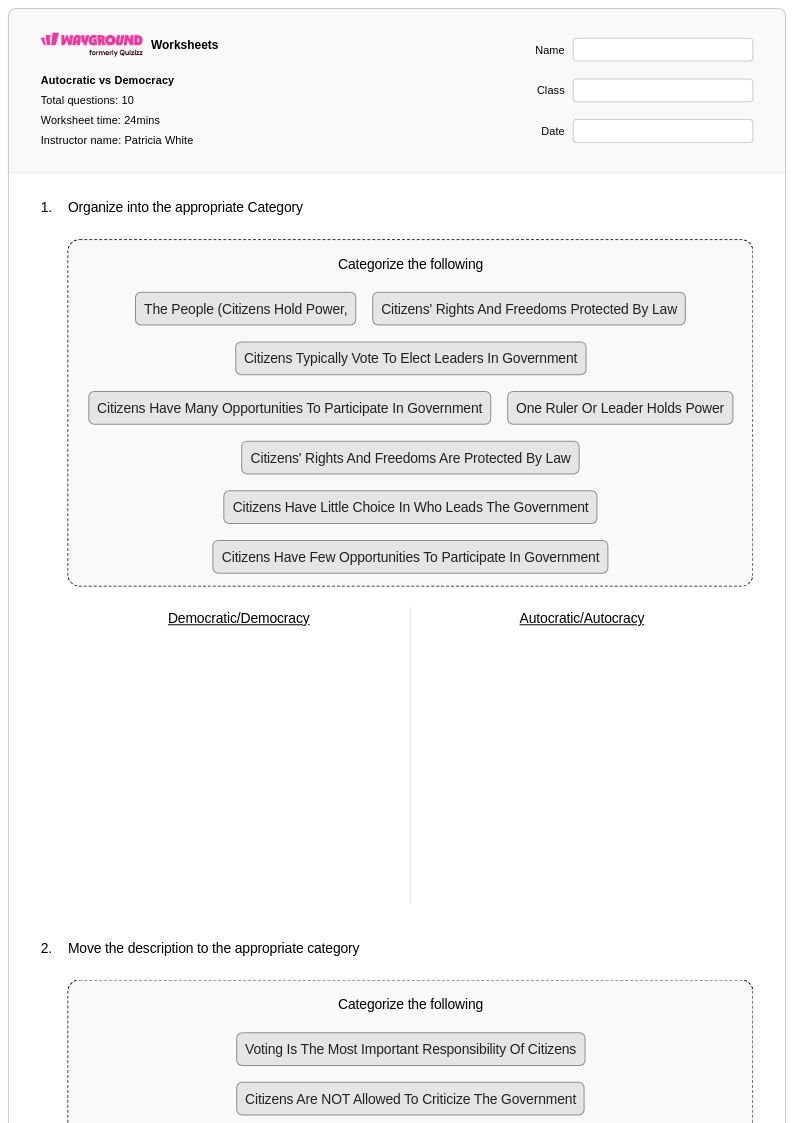
Thoughts versus feelings worksheets for Class 7 students provide essential practice in developing emotional intelligence and self-awareness skills that are crucial for adolescent social development. These comprehensive resources available through Wayground help seventh-grade students learn to distinguish between cognitive thoughts and emotional responses, building critical social skills that impact their relationships, decision-making, and overall well-being. The worksheets feature engaging scenarios, reflective exercises, and practical applications that guide students through identifying their internal experiences and understanding how thoughts influence emotions and vice versa. Each printable resource includes structured practice problems that encourage students to analyze real-life situations, while accompanying answer keys support both independent learning and teacher-guided instruction. These free educational materials offer varied difficulty levels and interactive formats, making it easy for educators to provide targeted practice in emotional literacy and self-regulation skills.
Wayground's extensive collection of thoughts versus feelings worksheets draws from millions of teacher-created resources, ensuring educators have access to high-quality, diverse materials that meet their Class 7 social studies curriculum needs. The platform's robust search and filtering capabilities allow teachers to quickly locate worksheets that align with specific learning standards and match their students' developmental levels, while built-in differentiation tools help customize content for diverse learning needs. These resources are available in both digital and printable PDF formats, providing flexibility for classroom instruction, homework assignments, and individualized intervention. Teachers can easily adapt these materials for whole-group lessons, small-group activities, or independent practice sessions, making them invaluable tools for lesson planning, skill remediation, and enrichment activities that strengthen students' emotional awareness and social competency throughout their middle school experience.
FAQs
How do I teach students the difference between thoughts and feelings?
Start by establishing clear definitions: thoughts are cognitive interpretations or beliefs about a situation, while feelings are emotional responses that arise from those interpretations. Use concrete, relatable scenarios — such as 'I think my friend is ignoring me' versus 'I feel hurt' — to help students see how the two differ in real interactions. Practicing labeling thoughts and feelings separately helps students begin to notice the distinction in their own daily experiences, which is the foundation of emotional intelligence and effective self-regulation.
What exercises help students practice distinguishing thoughts from feelings?
Scenario-based exercises are among the most effective, where students read a situation and must sort statements into 'thought' or 'feeling' categories. Journaling prompts that ask students to write one thought and one feeling about the same event reinforce the distinction through personal reflection. Structured worksheets that present sentence stems — such as 'I think...' versus 'I feel...' — and ask students to complete and categorize them build fluency in applying the concept consistently.
What mistakes do students commonly make when identifying thoughts versus feelings?
The most common error is treating 'I feel like...' as an emotion when it actually introduces a thought — for example, 'I feel like nobody likes me' is a thought, not a feeling. Students also frequently name mental states like 'confused' or 'overwhelmed' as feelings when these can straddle both categories, which is why precise vocabulary instruction matters. Helping students understand that feelings are typically single emotion words (happy, anxious, frustrated) while thoughts are full interpretive statements is a reliable heuristic that reduces this confusion.
How can I use thoughts vs feelings worksheets in a social-emotional learning lesson?
These worksheets work well as a structured activity following a brief direct instruction segment where you define and contrast the two concepts. After independent practice, use the worksheet responses as discussion anchors — invite students to share their categorizations and explain their reasoning, which deepens understanding and surfaces lingering misconceptions. Thoughts vs feelings worksheets on Wayground are available as printable PDFs for traditional classroom use and in digital formats for technology-integrated environments, and can also be hosted as a quiz directly on Wayground to streamline collection and review of student responses.
How does distinguishing thoughts from feelings help students in real-world social situations?
When students can separate what they think from what they feel, they gain the ability to challenge unhelpful thought patterns rather than treating them as emotional facts, which is a core skill in cognitive-behavioral approaches to social and emotional learning. This distinction also improves communication — students learn to say 'I feel frustrated' rather than 'I feel like you're being unfair,' which reduces defensiveness in peer and adult interactions. Over time, this skill builds self-awareness and helps students navigate conflict, disappointment, and misunderstanding with greater confidence and clarity.
How can I differentiate thoughts vs feelings instruction for students with varying skill levels?
For students who are newer to the concept, reduce the complexity of scenarios and provide a word bank of common feeling words to scaffold their responses. More advanced students can move from simple categorization to analyzing how a specific thought triggers a specific feeling, encouraging deeper reflection. On Wayground, teachers can support students with diverse learning needs using built-in accommodations such as read aloud, extended time, and reduced answer choices, all of which can be configured individually per student without disrupting the rest of the class.