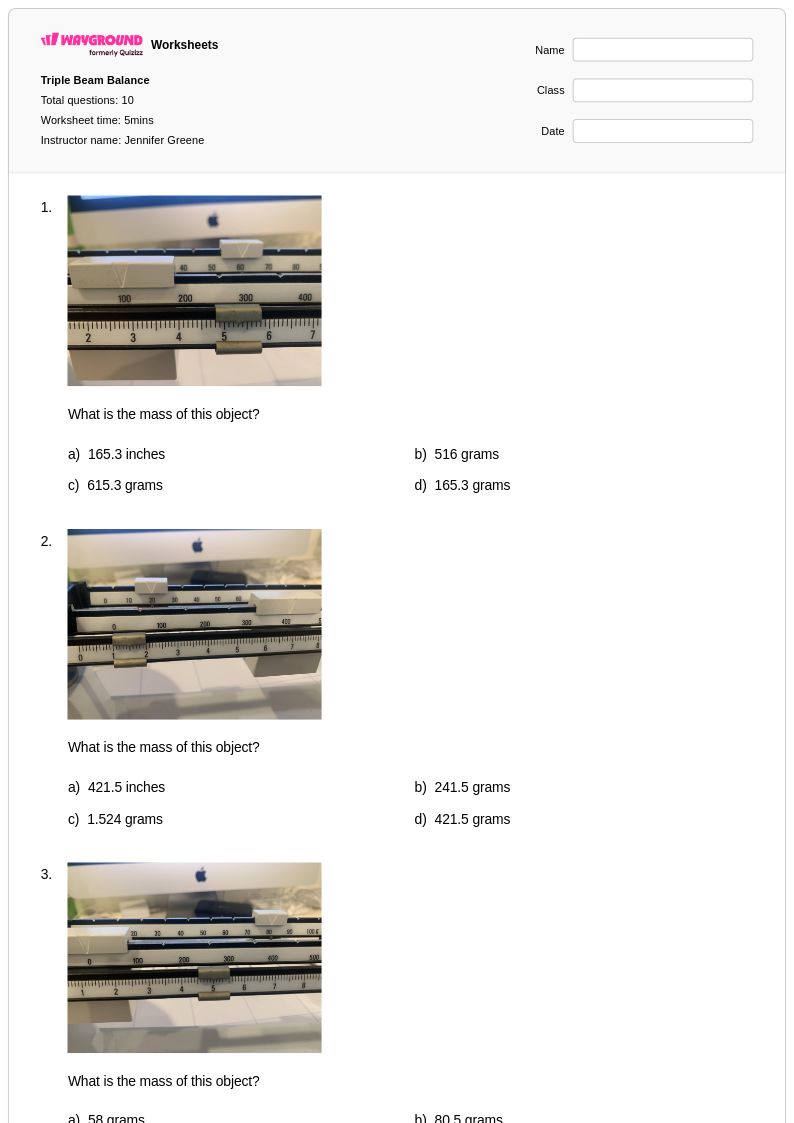
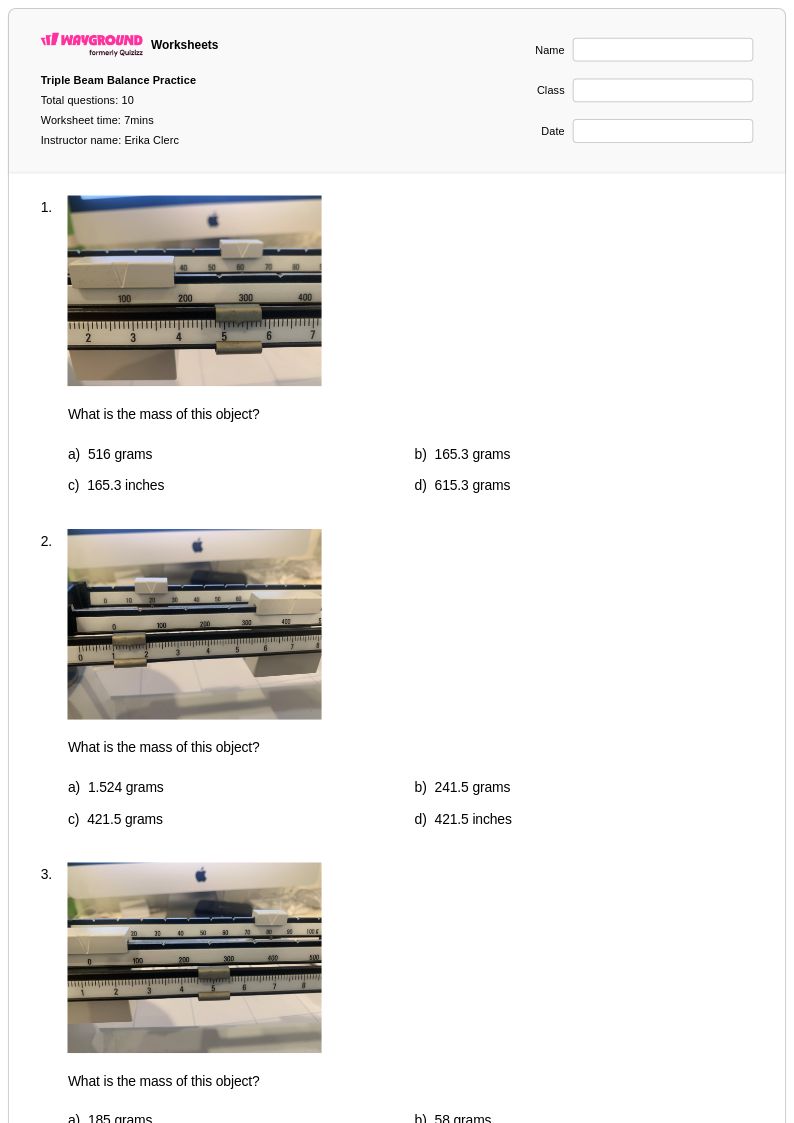
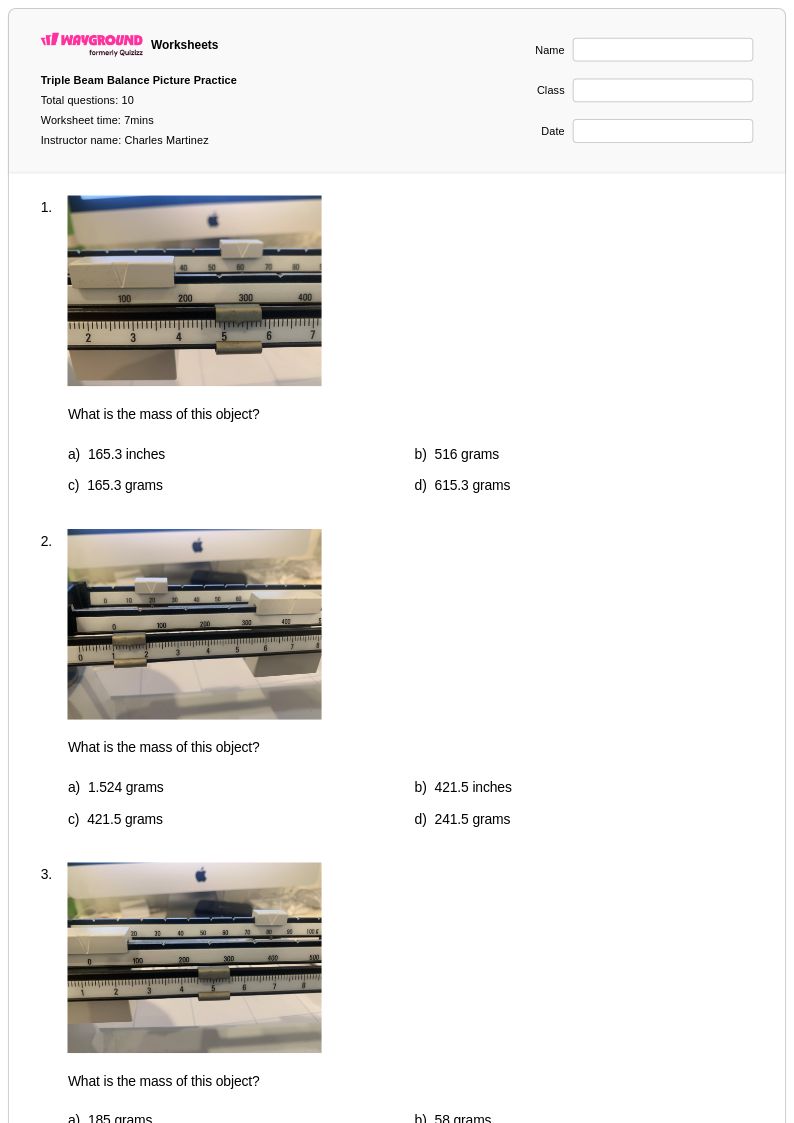
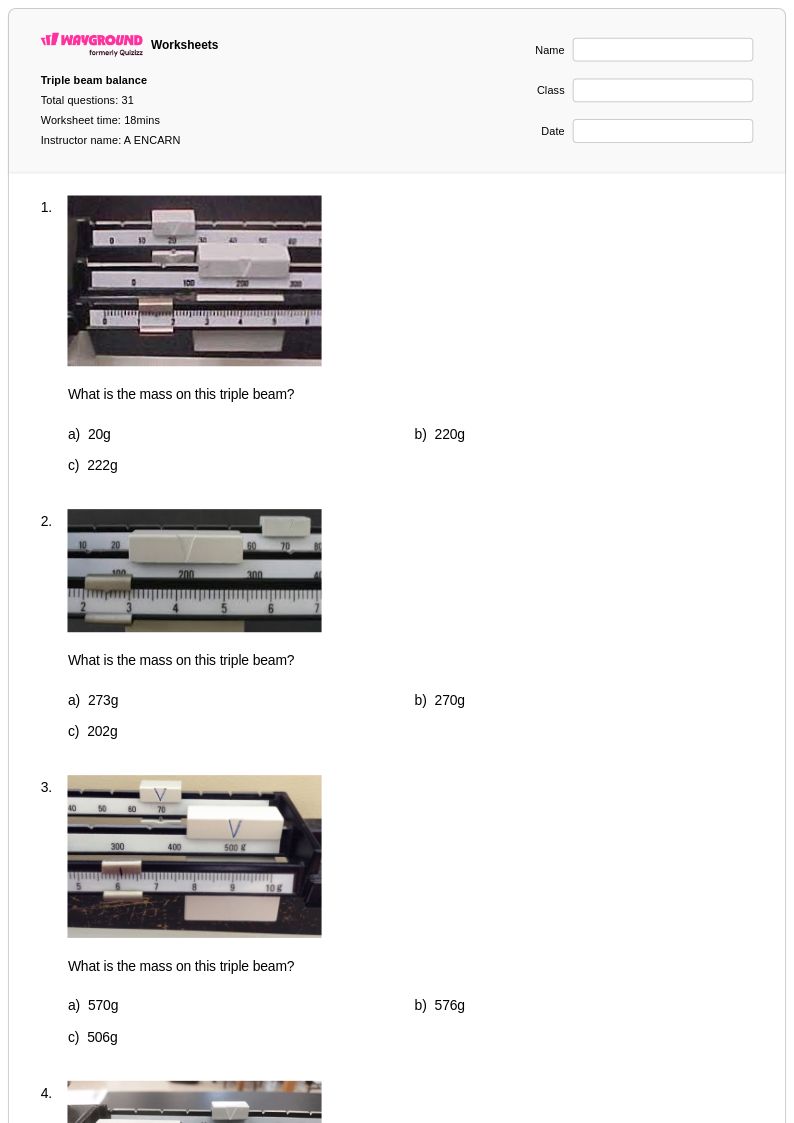
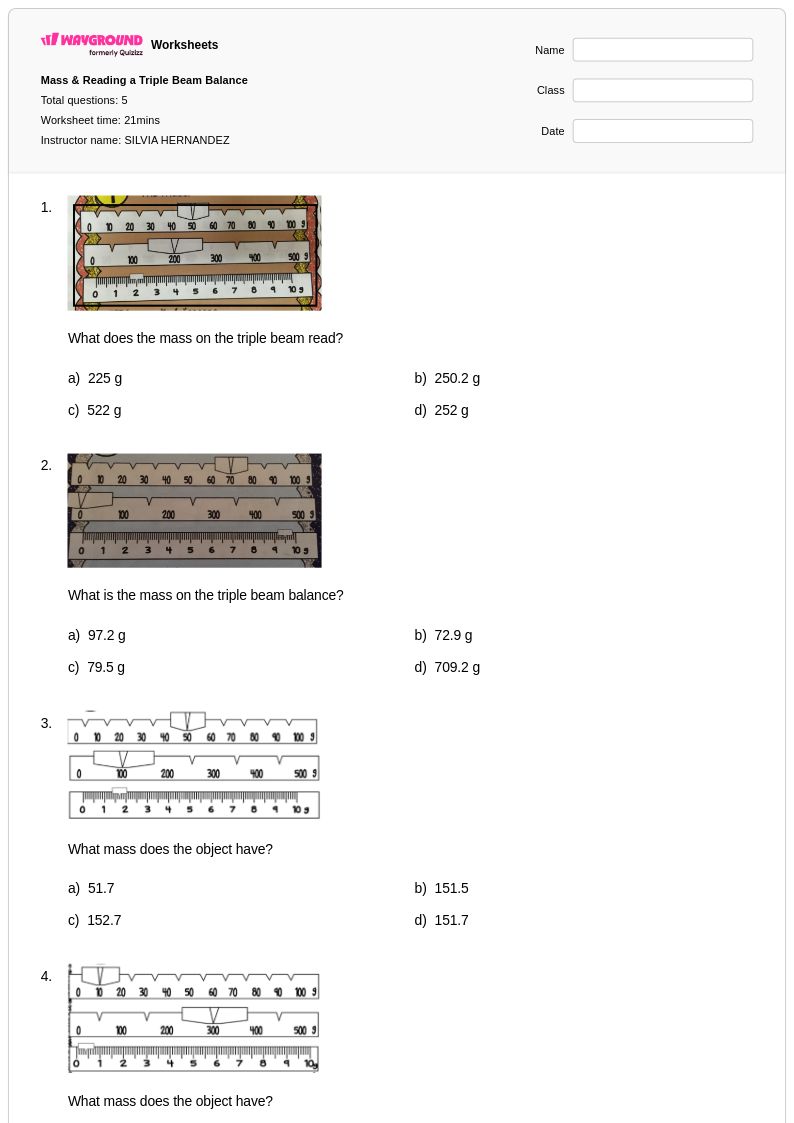
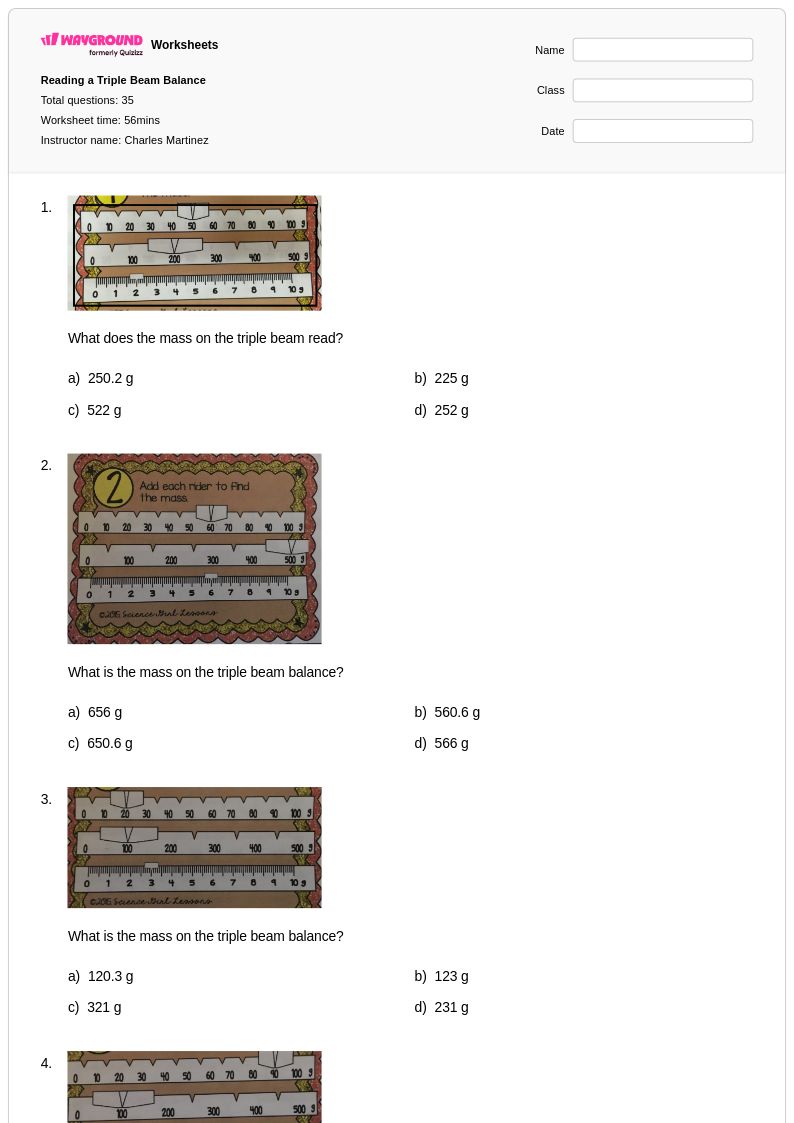
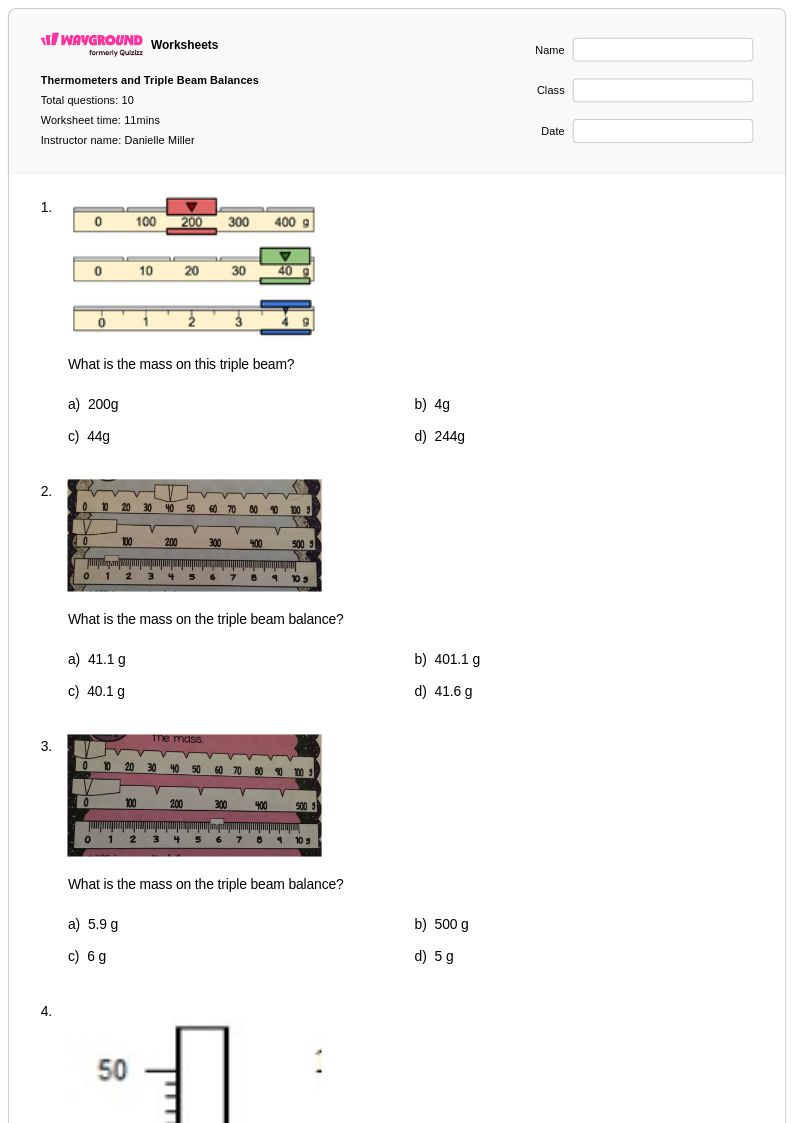
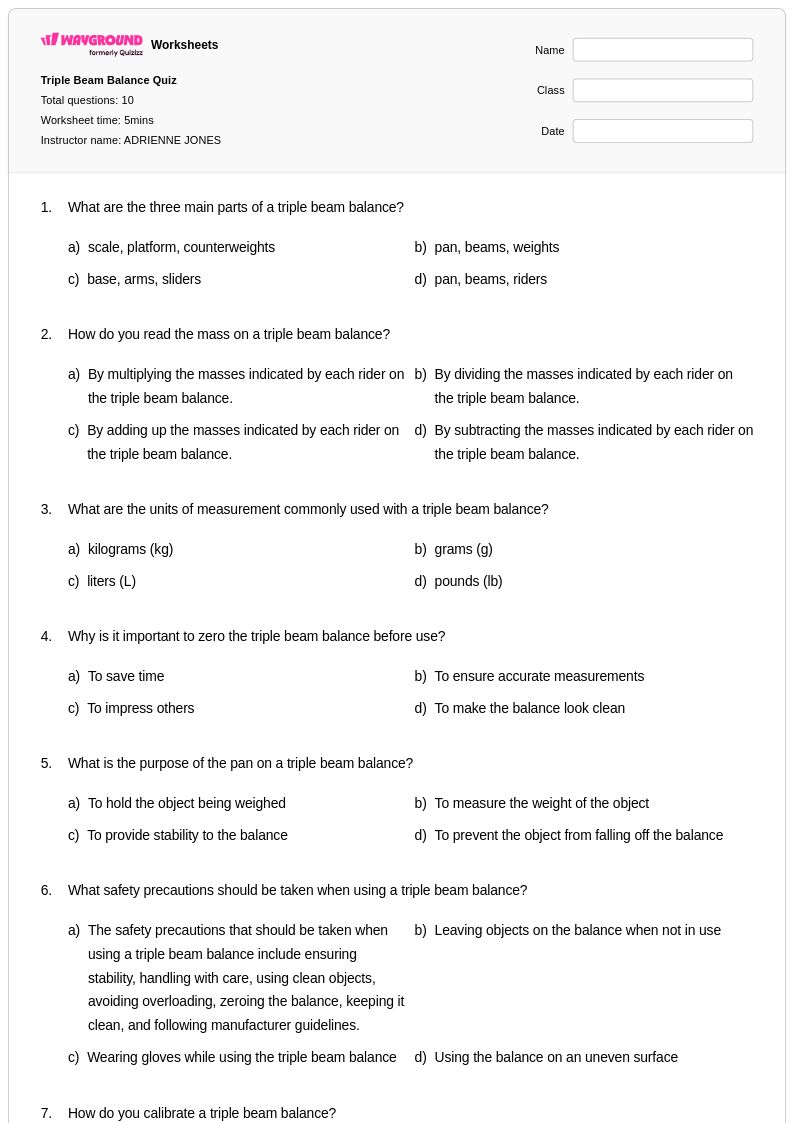
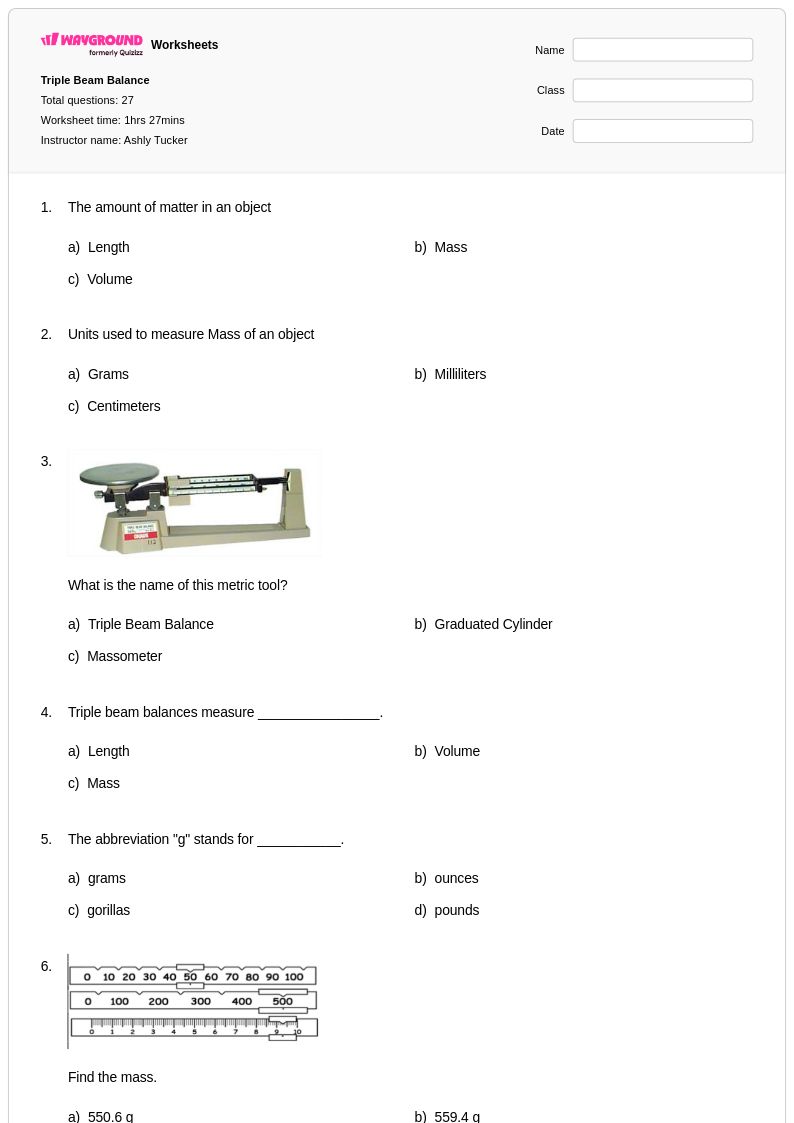
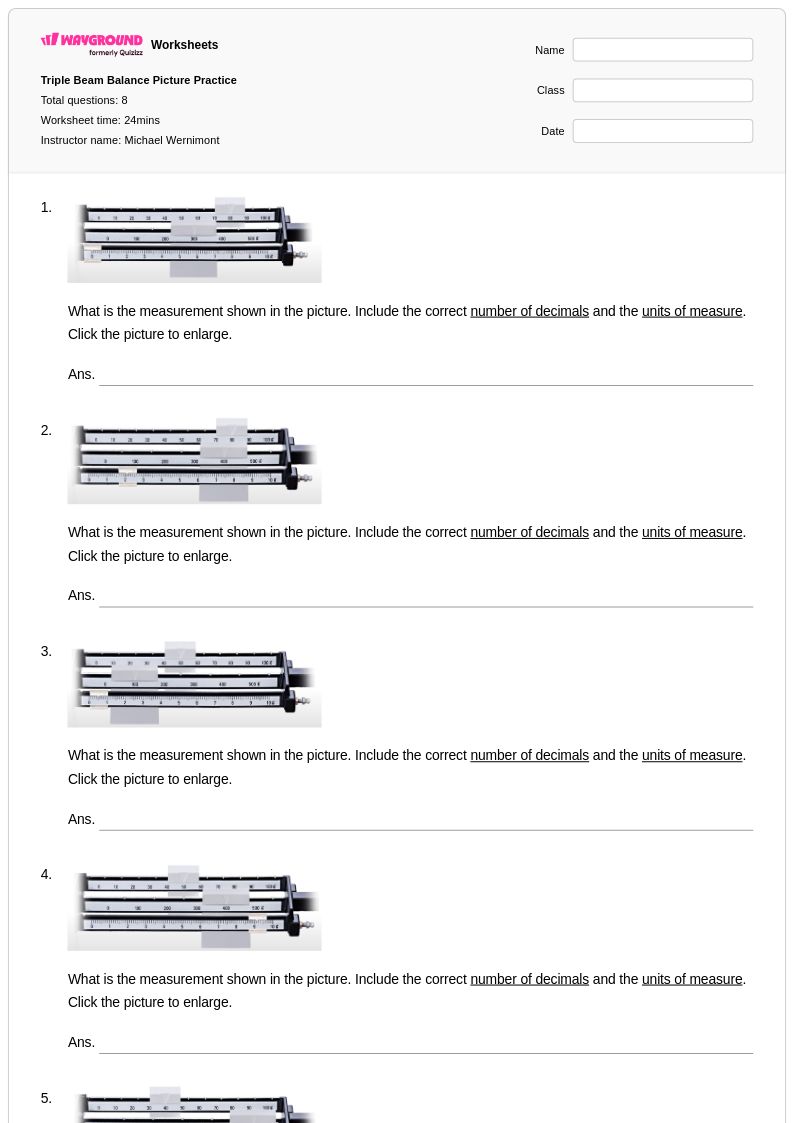
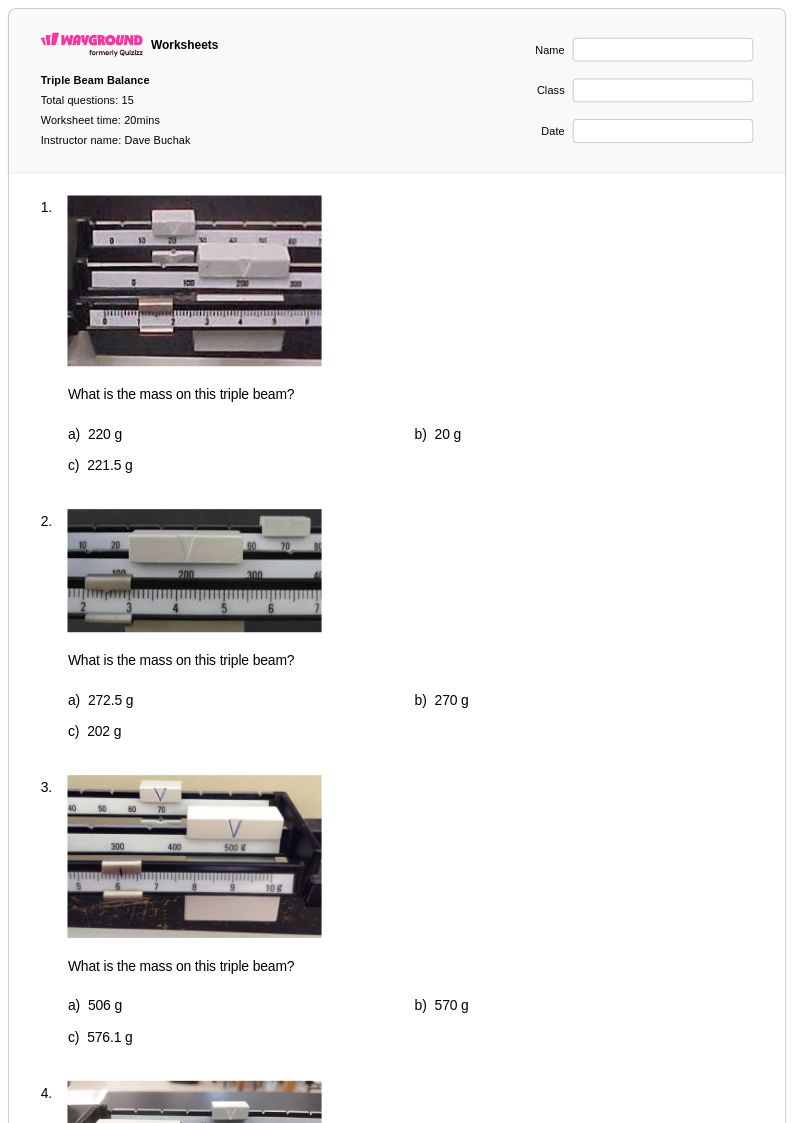
Enhance student understanding of triple beam balance measurements with Wayground's comprehensive collection of free worksheets, featuring hands-on practice problems, detailed answer keys, and printable PDFs for effective science learning.
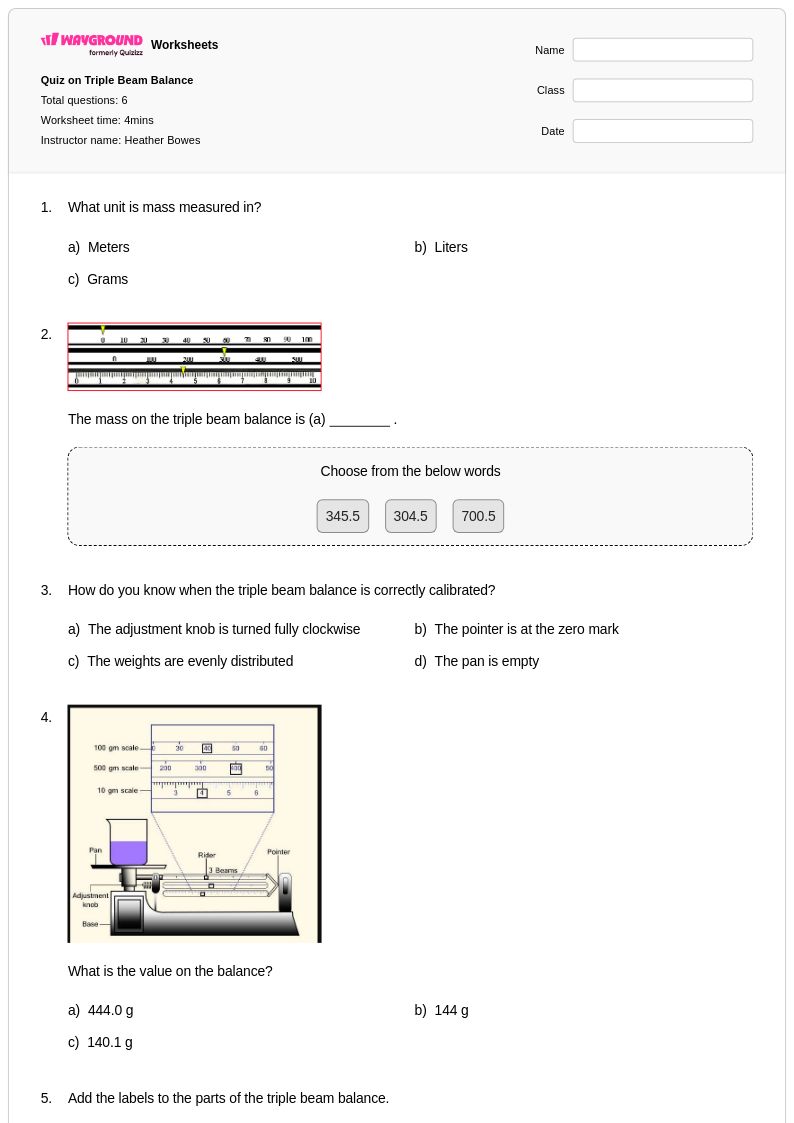
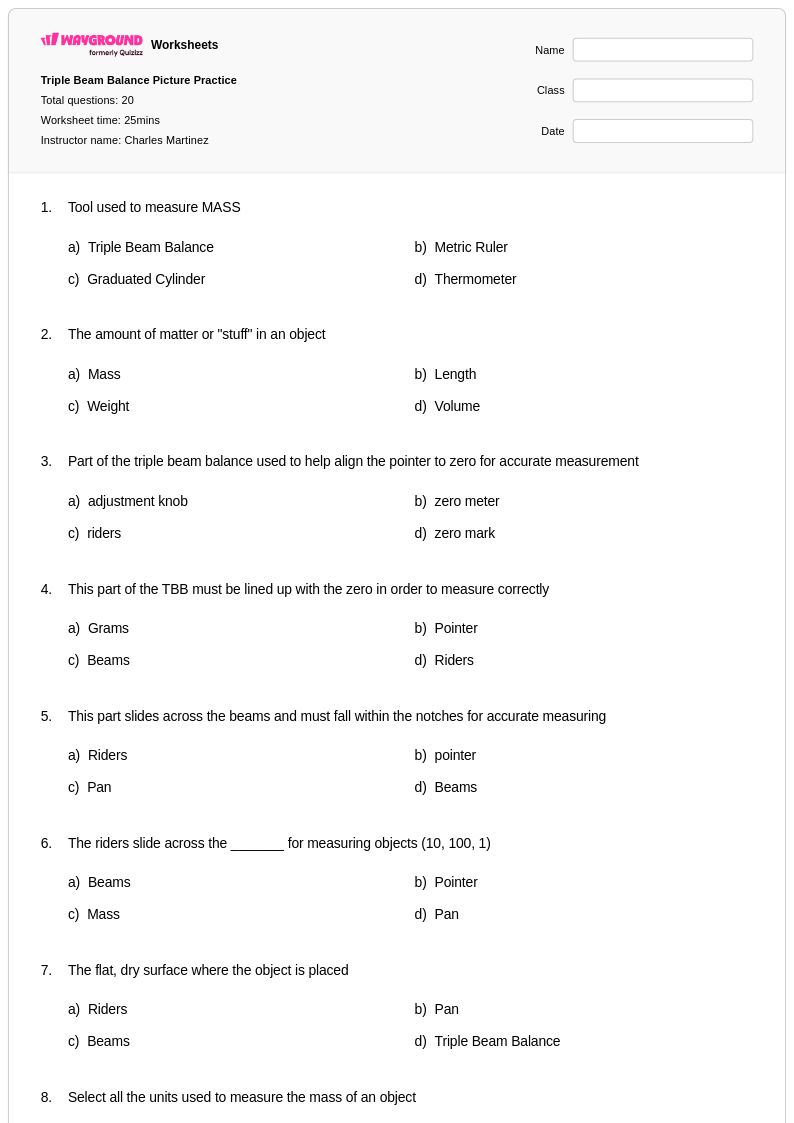
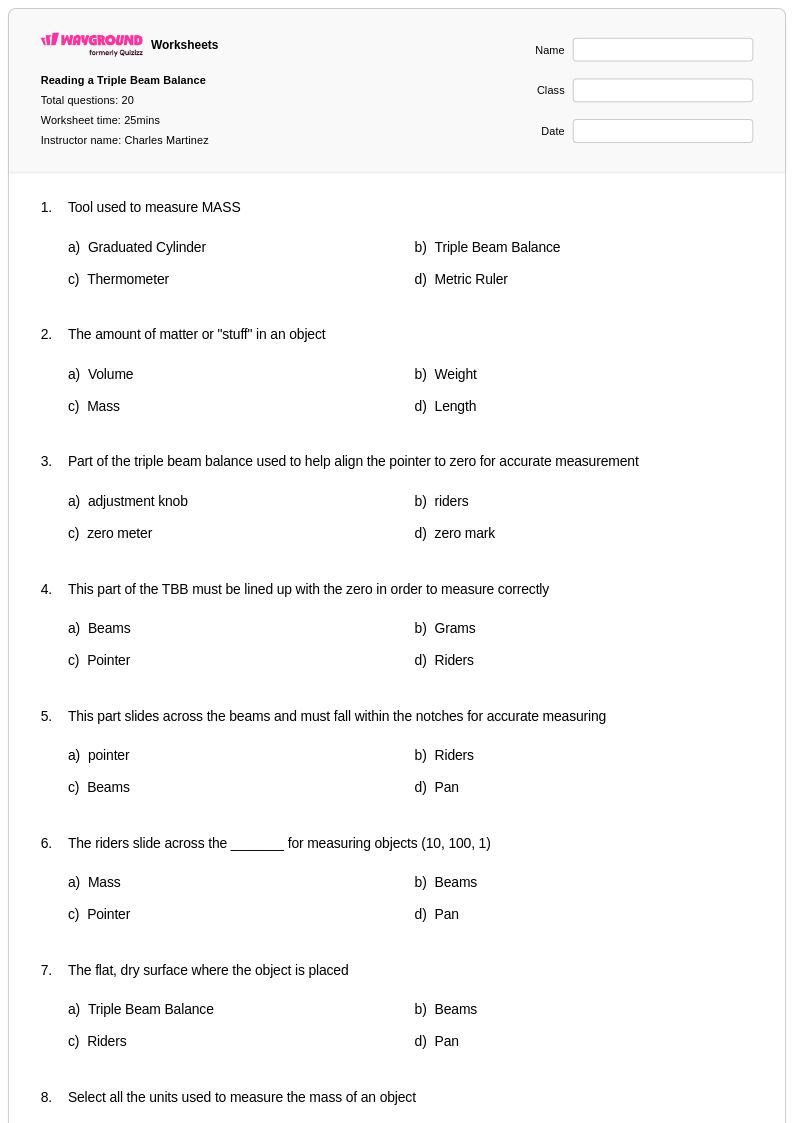
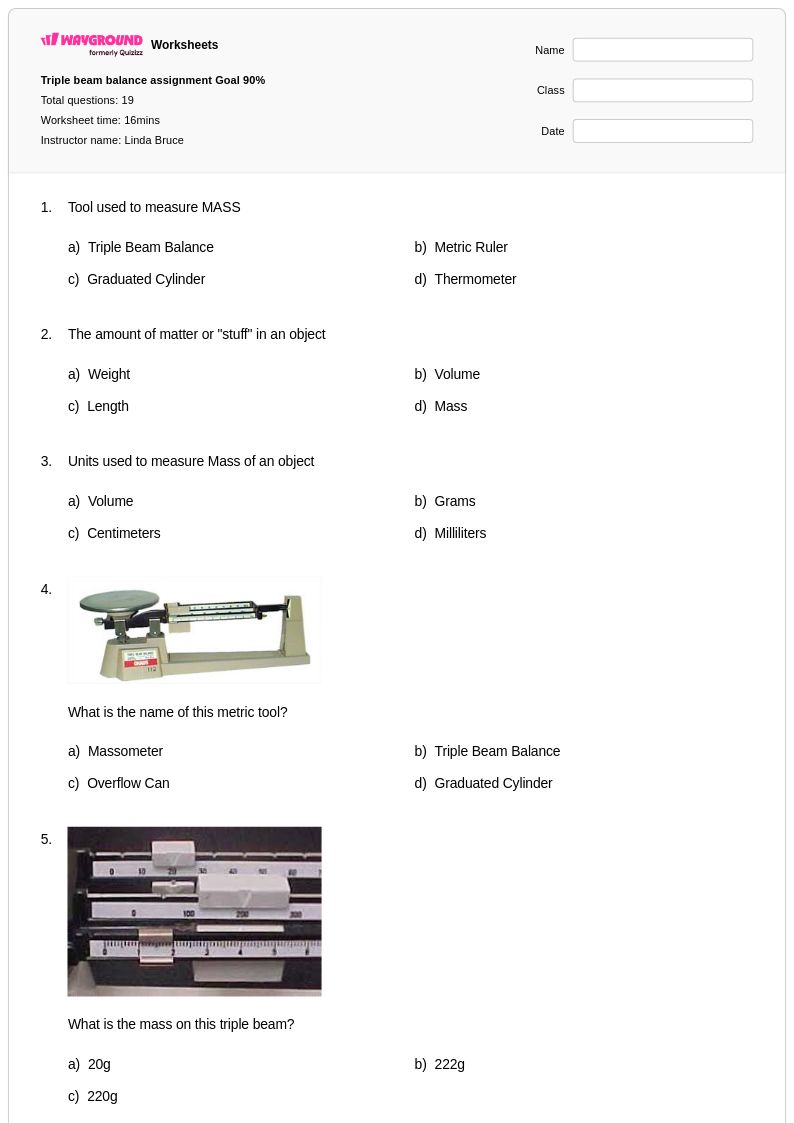
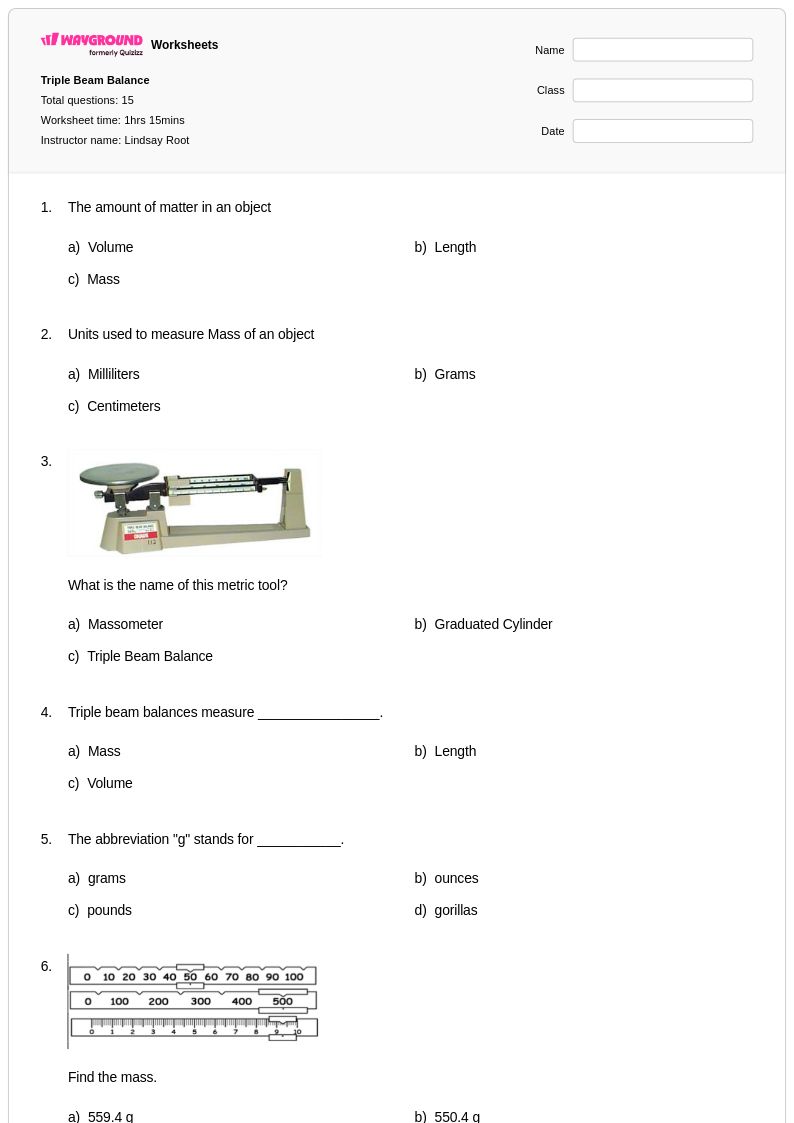
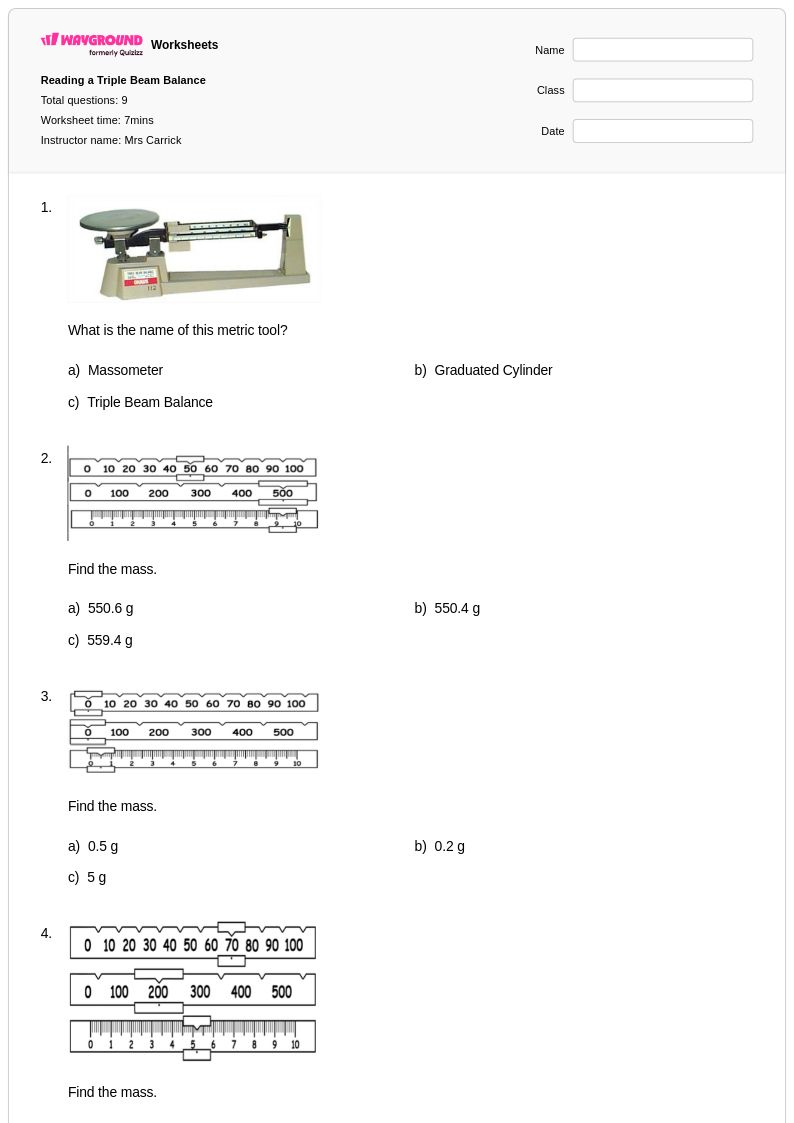
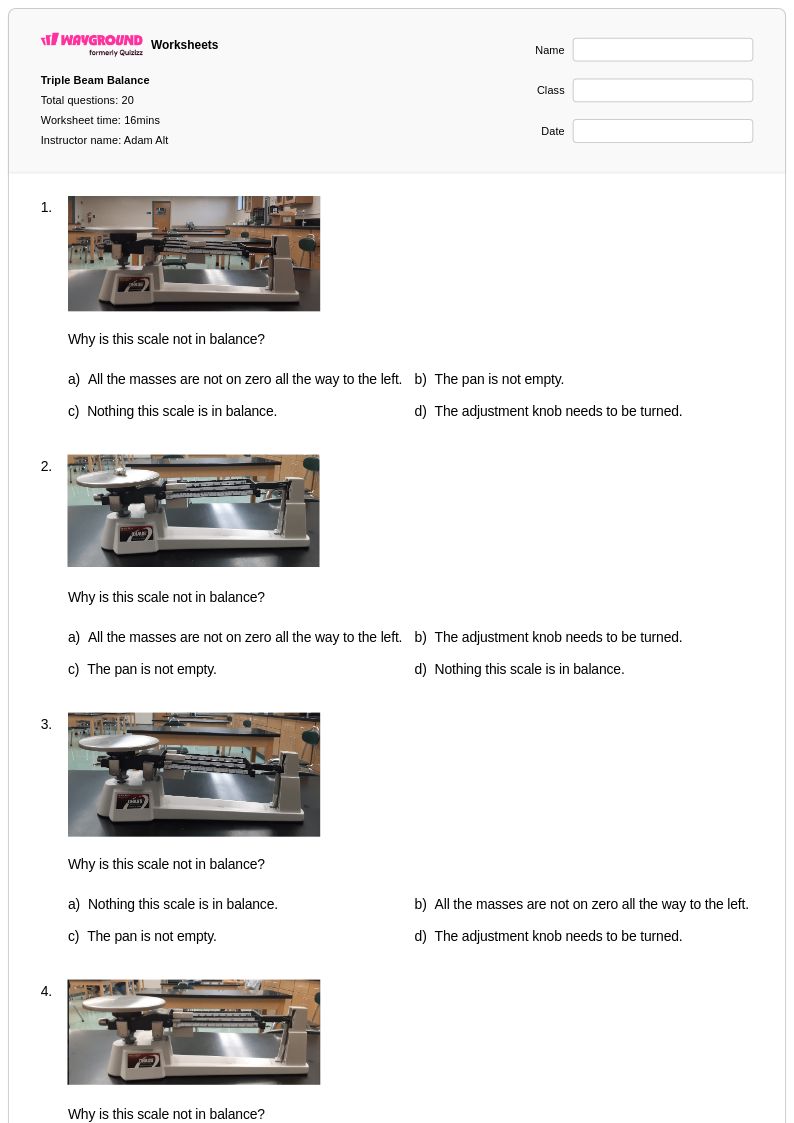
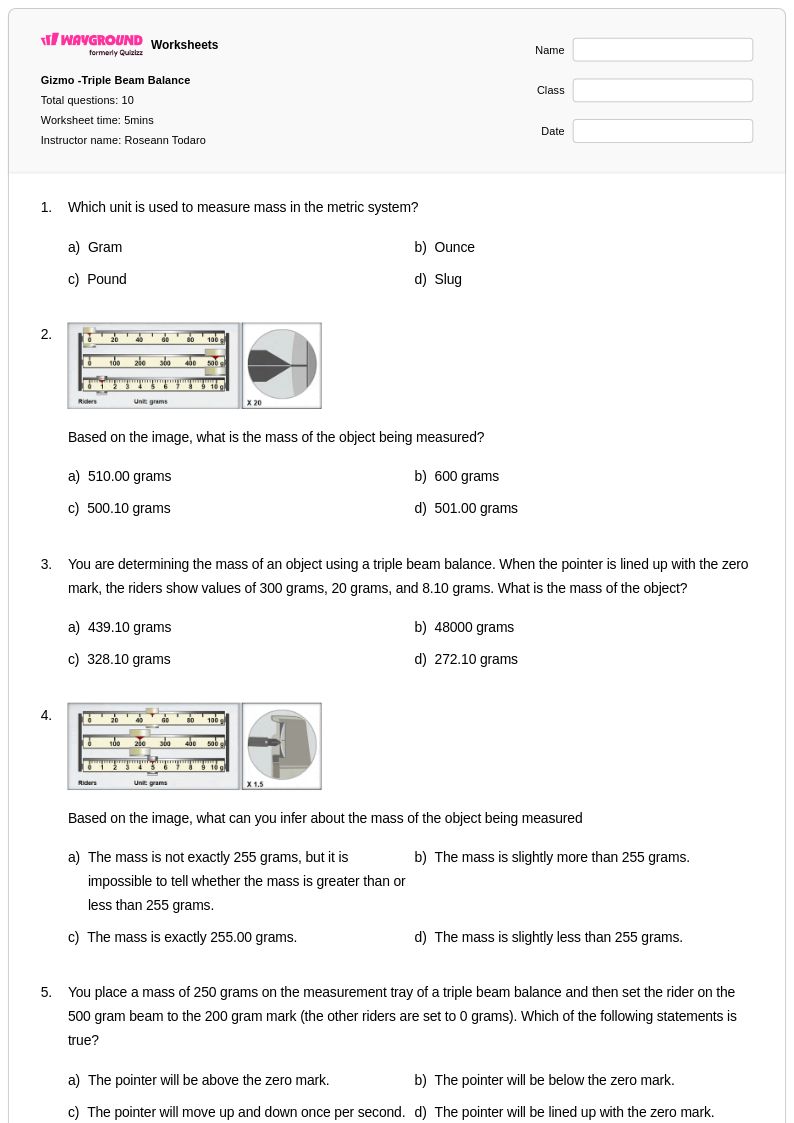
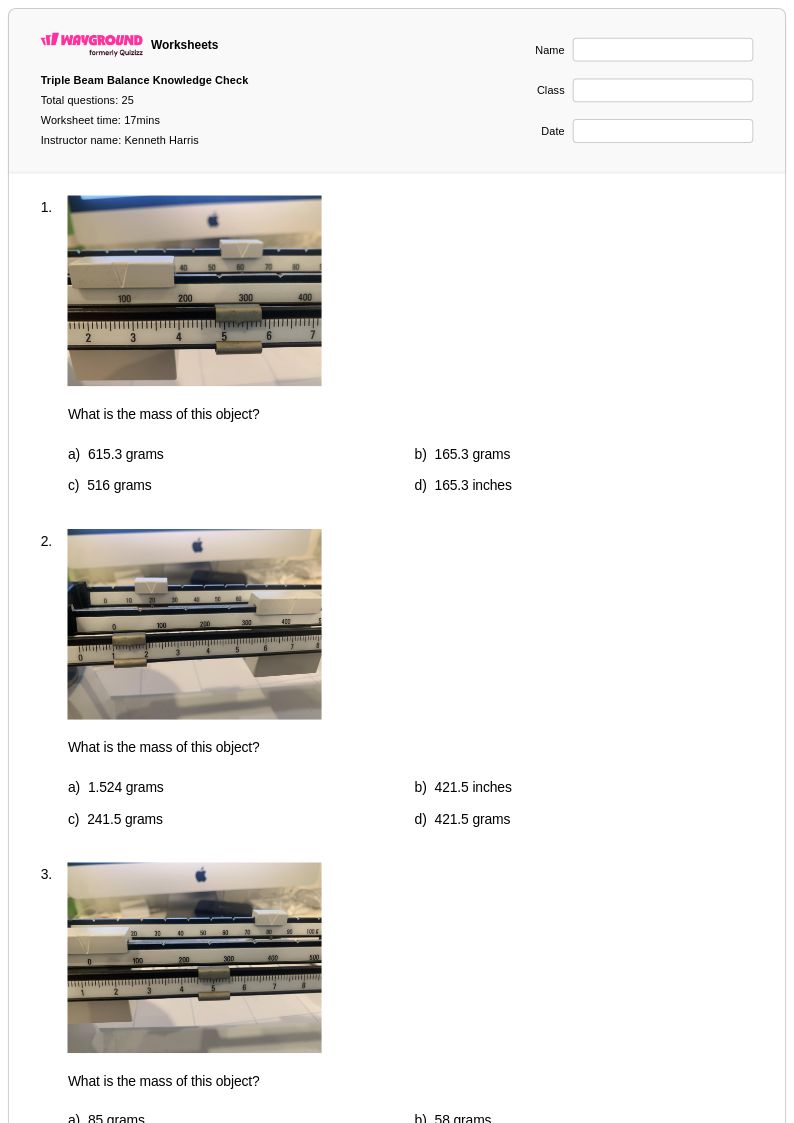
Triple beam balance worksheets available through Wayground (formerly Quizizz) provide comprehensive practice for students learning this fundamental measurement instrument in science education. These expertly designed worksheets focus on developing critical skills including reading measurements to the nearest tenth of a gram, understanding the function of each beam and rider, performing zero adjustments, and following proper measurement procedures. Students work through systematic practice problems that build proficiency in mass determination, from basic object weighing to more complex scenarios involving multiple measurements and data recording. The collection includes detailed answer keys and free printable pdf formats that allow educators to seamlessly integrate hands-on measurement practice into laboratory sessions and classroom instruction.
Wayground (formerly Quizizz) empowers science teachers with millions of teacher-created triple beam balance resources that streamline lesson planning and enhance student learning outcomes. The platform's robust search and filtering capabilities enable educators to quickly locate worksheets aligned with specific curriculum standards and differentiated for varying skill levels, from introductory measurement concepts to advanced laboratory techniques. Teachers benefit from flexible customization tools that allow modification of practice problems and measurement scenarios, while the availability of both printable and digital pdf formats supports diverse classroom environments and remote learning needs. These comprehensive resources facilitate targeted remediation for students struggling with measurement precision, provide enrichment opportunities for advanced learners, and ensure consistent skill practice that builds confidence in using this essential scientific instrument.
FAQs
How do I teach students to read a triple beam balance correctly?
Start by introducing each beam individually: the front beam (ones), the middle beam (hundreds), and the back beam (tenths). Teach students to slide each rider from the largest beam to the smallest, then sum all three values to find the total mass. Emphasize that the pointer must rest at zero before any object is placed on the pan, and that the final reading should be recorded to the nearest tenth of a gram. Hands-on practice with physical balances, paired with structured worksheet problems that mirror real measurements, helps students internalize the procedure before working independently in the lab.
What exercises help students practice reading a triple beam balance?
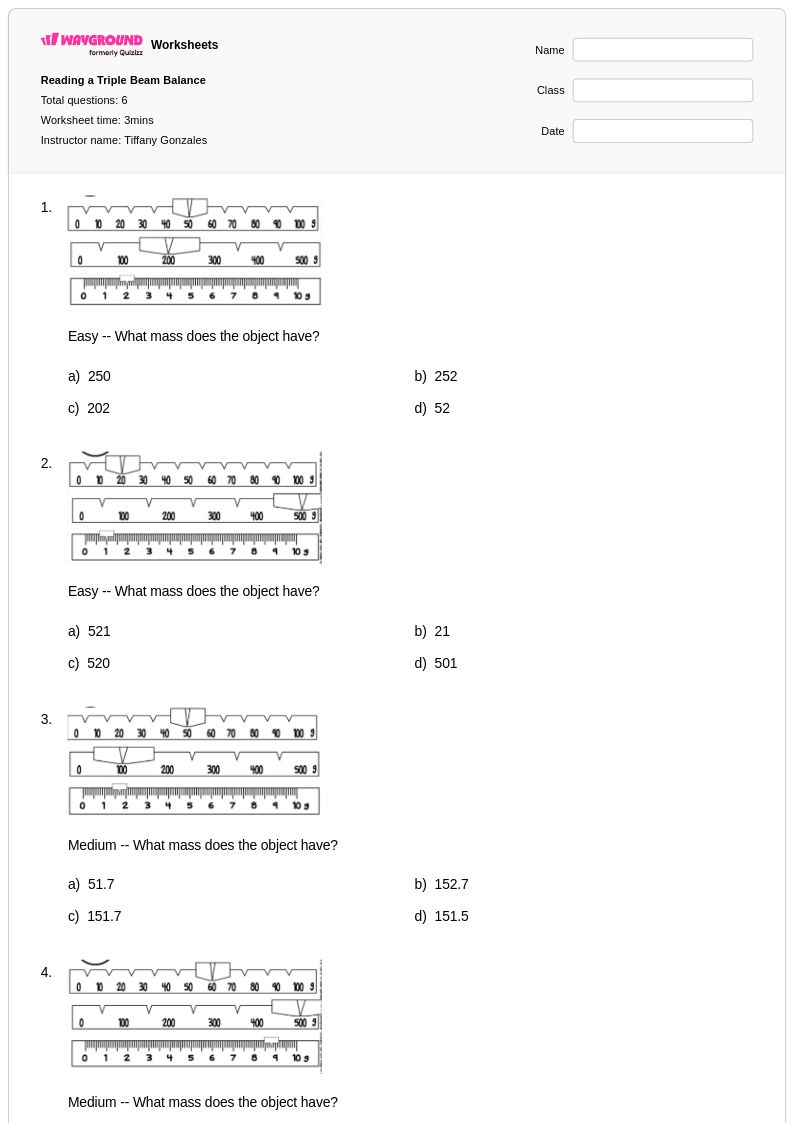
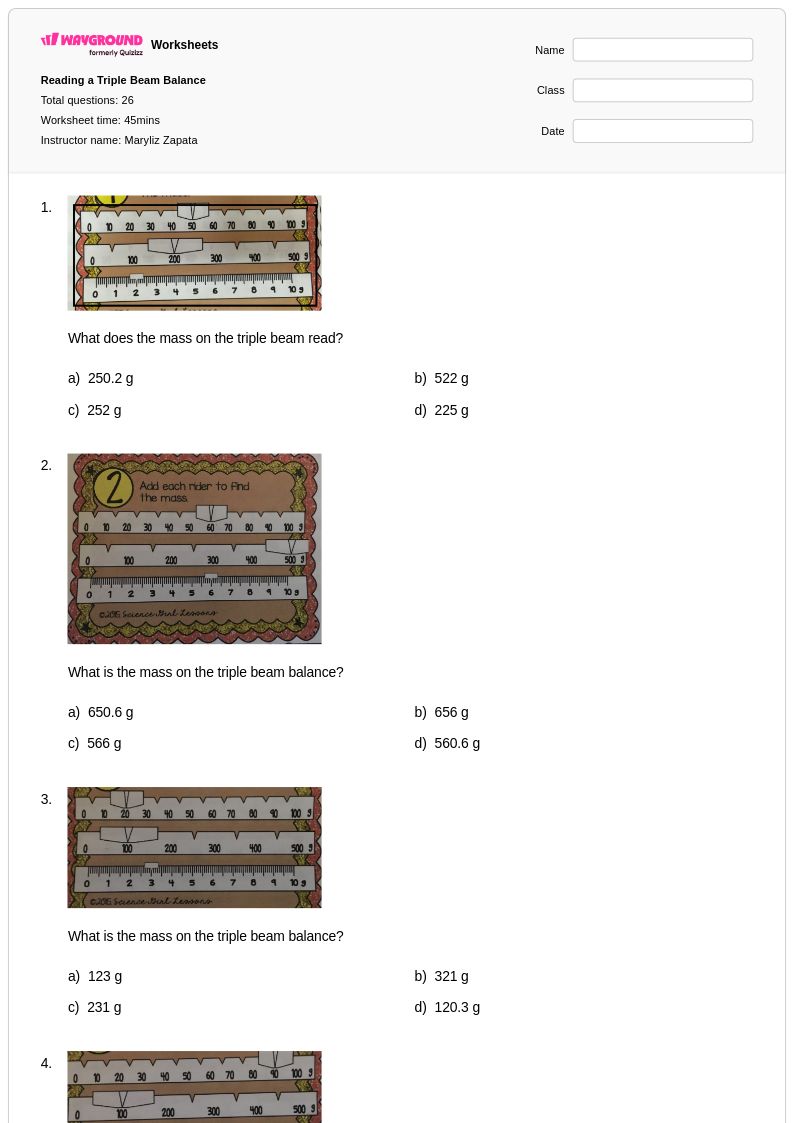
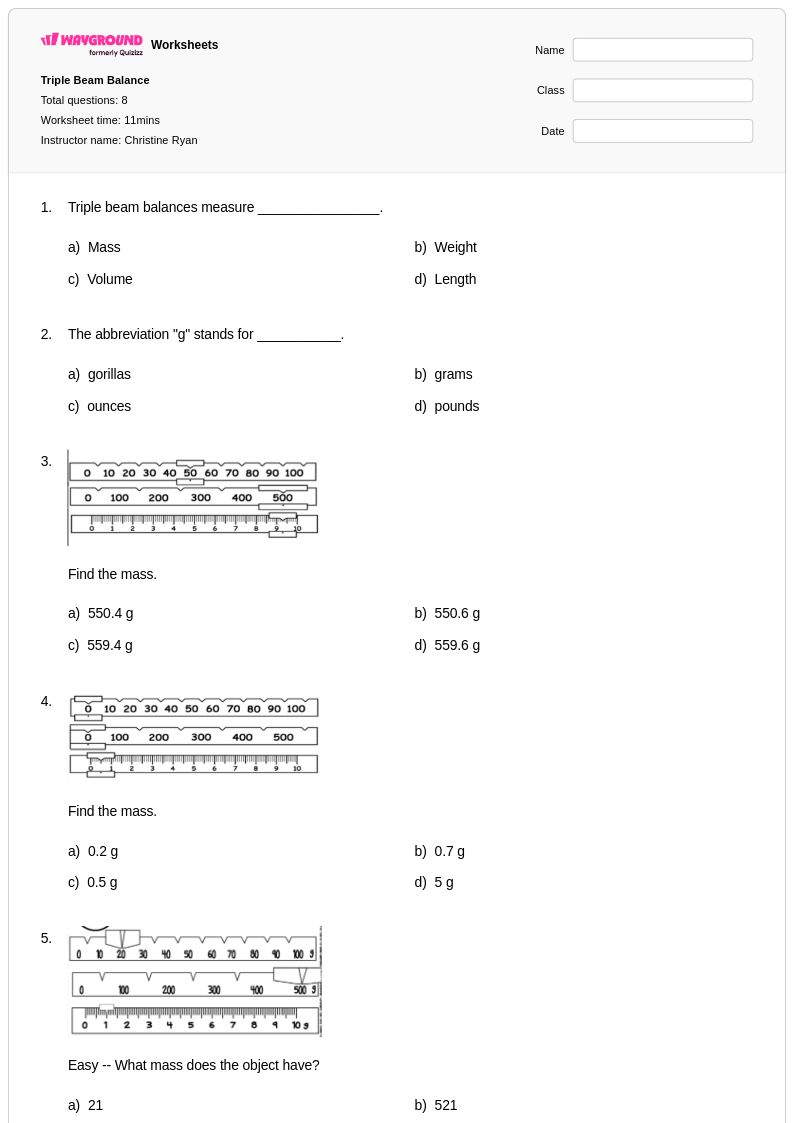
Effective practice exercises include reading diagrams of triple beam balances with riders set at various positions and calculating the total mass shown. Students should also practice zero-adjustment problems, sequential measurement scenarios, and data-recording tasks that require them to log multiple measurements in a table. Worksheets that progress from whole-number readings to tenths-of-a-gram precision help build accuracy gradually, making them well-suited for reinforcing skills before or after lab sessions.
What mistakes do students commonly make when using a triple beam balance?
The most common error is failing to zero the balance before placing an object on the pan, which throws off every subsequent measurement. Students also frequently misread the back beam by confusing the tenths markings, or they add the beam values incorrectly by ignoring one beam entirely. Another frequent mistake is moving the largest rider last instead of first, which makes fine adjustments harder and slows down the measurement process. Targeted worksheet practice that isolates each beam before combining all three helps address these error patterns systematically.
How can I use triple beam balance worksheets to support students at different skill levels?
For introductory learners, use worksheets that present labeled beam diagrams and ask students to read a single beam at a time before combining values. More advanced students can work through multi-step problems that include zero adjustments, unit conversions, and comparative mass data recording. On Wayground, teachers can apply accommodations such as reduced answer choices to lower cognitive load for struggling students, or enable Read Aloud so that question text is accessible to students with reading challenges, without other students being aware of those individual settings.
How do I use Wayground's triple beam balance worksheets in my classroom?
Wayground's triple beam balance worksheets are available as printable PDFs for traditional lab and classroom use, as well as in digital formats for technology-integrated or remote learning environments. Teachers can also host worksheets directly as a quiz on Wayground, allowing students to complete them online with instant feedback. All worksheets include complete answer keys, so grading is straightforward whether students work on paper or digitally.
How do I integrate triple beam balance practice into a lab session?
Use worksheets as a pre-lab primer to ensure students understand the beam structure and zero-adjustment procedure before they touch any equipment. During the lab, have students record actual measurements on a data sheet that mirrors the worksheet format, reinforcing the connection between diagram reading and physical practice. A post-lab worksheet asking students to interpret their recorded data or identify measurement errors consolidates learning and prepares them for assessment.