Free Printable U.S. History Worksheets for Kindergarten
Explore Wayground's free kindergarten U.S. History worksheets and printables that help young learners discover America's past through engaging activities, colorful PDF resources, and simple practice problems with complete answer keys.
Explore printable U.S. History worksheets for Kindergarten
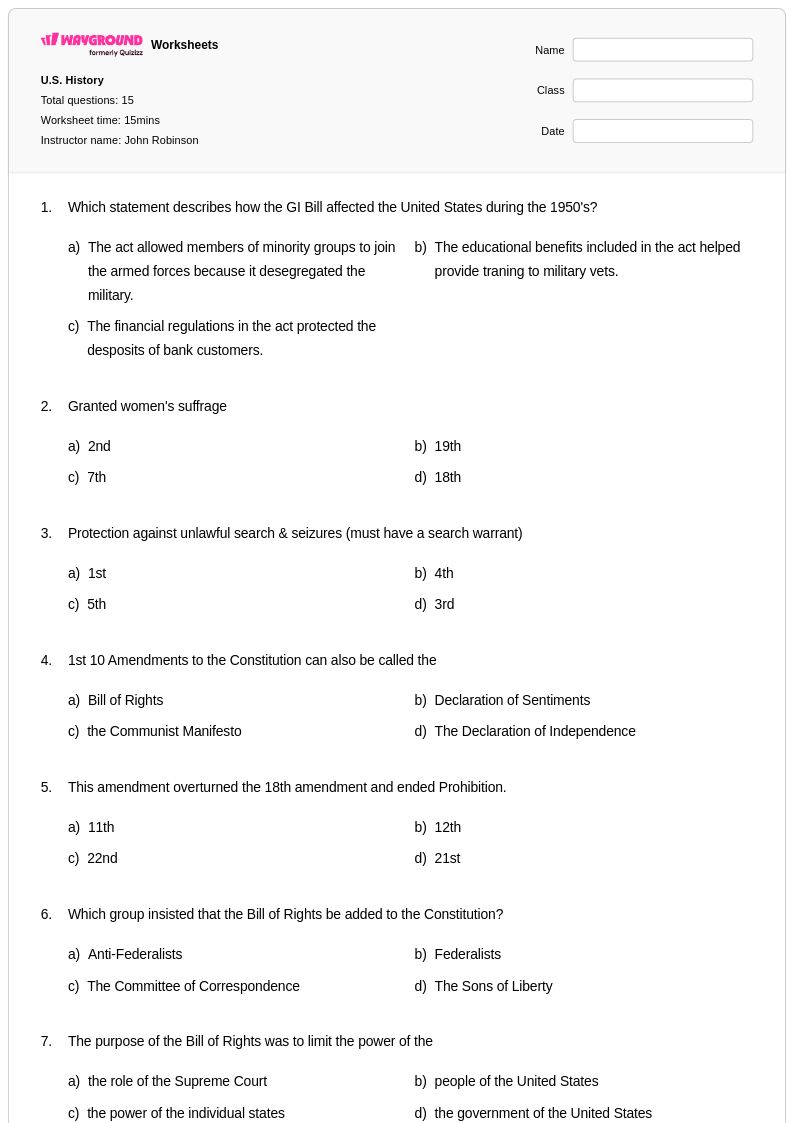
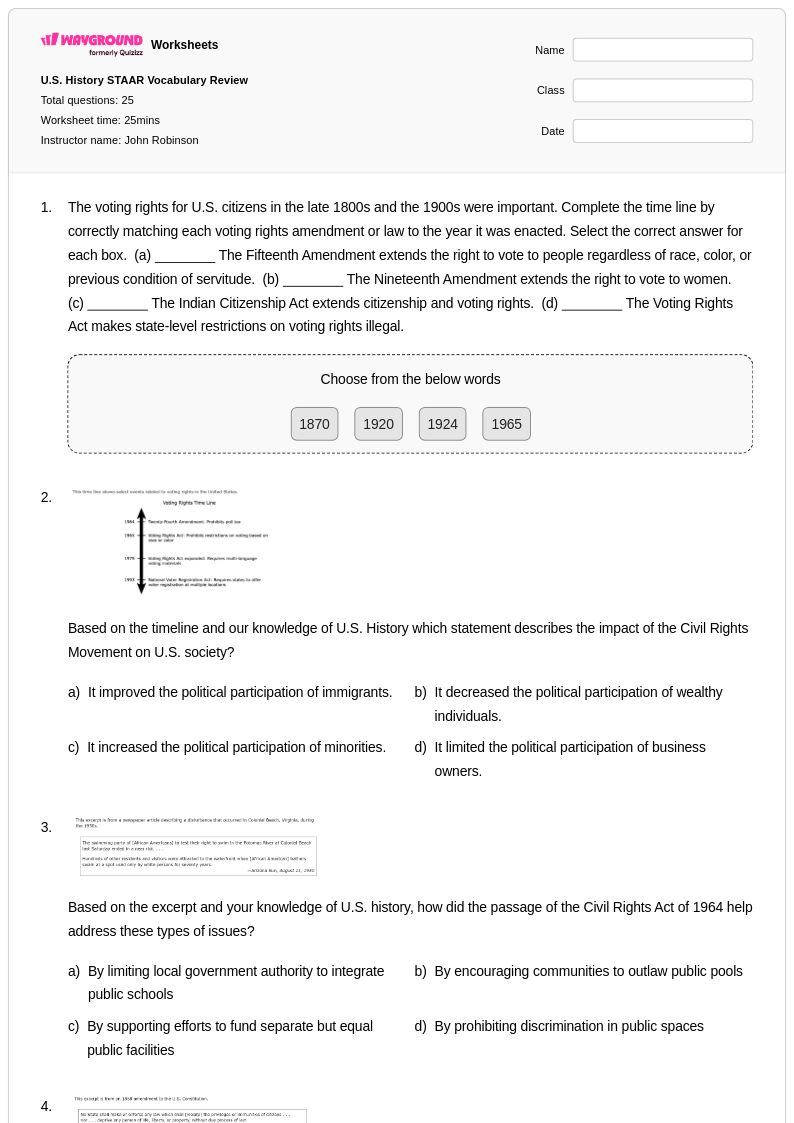
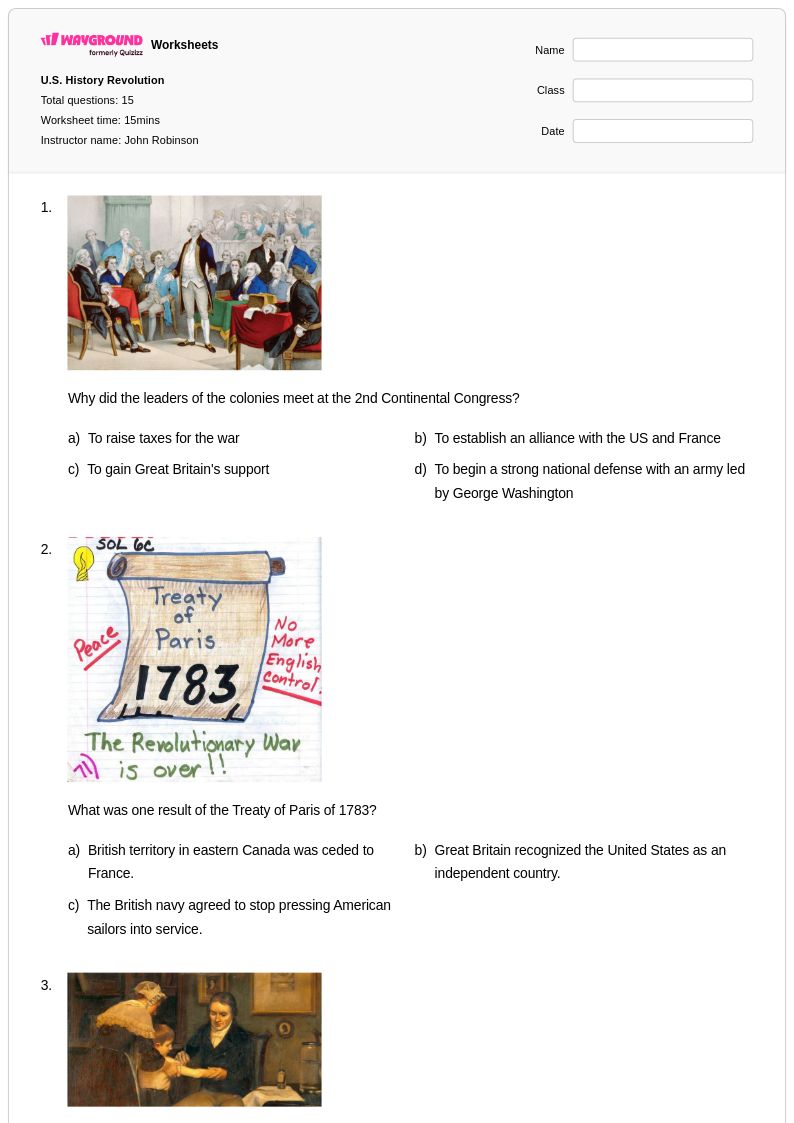
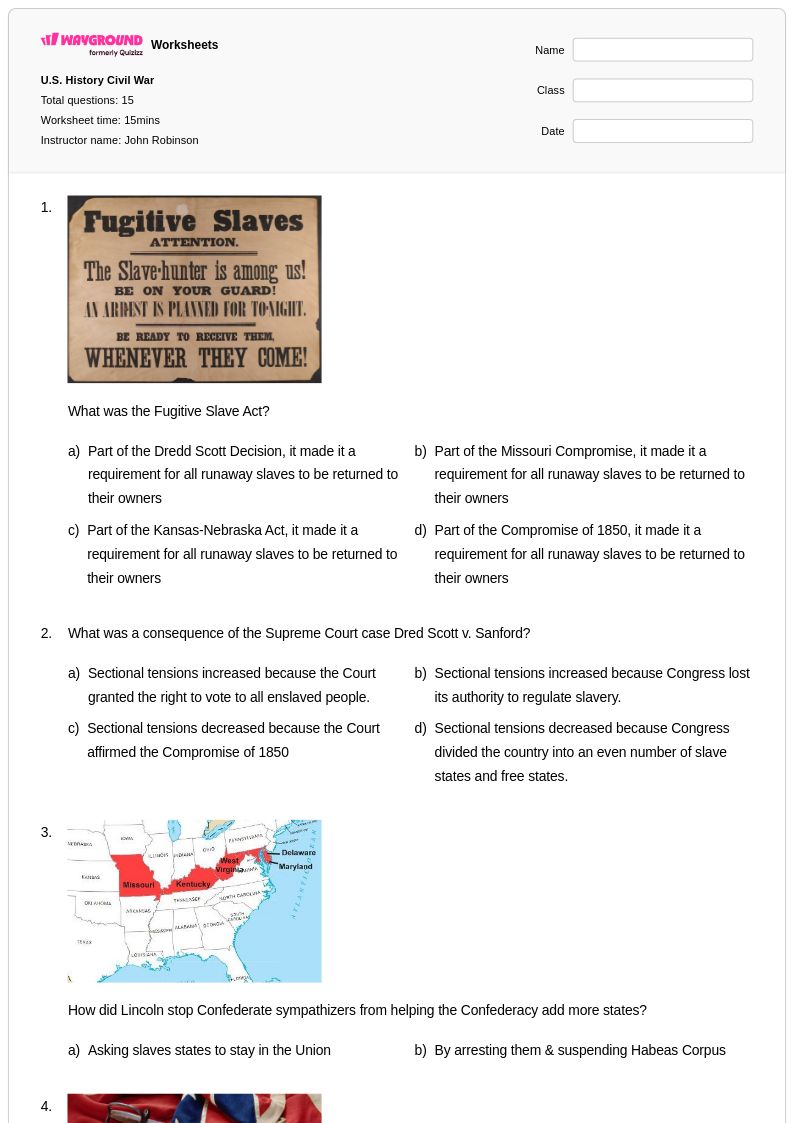
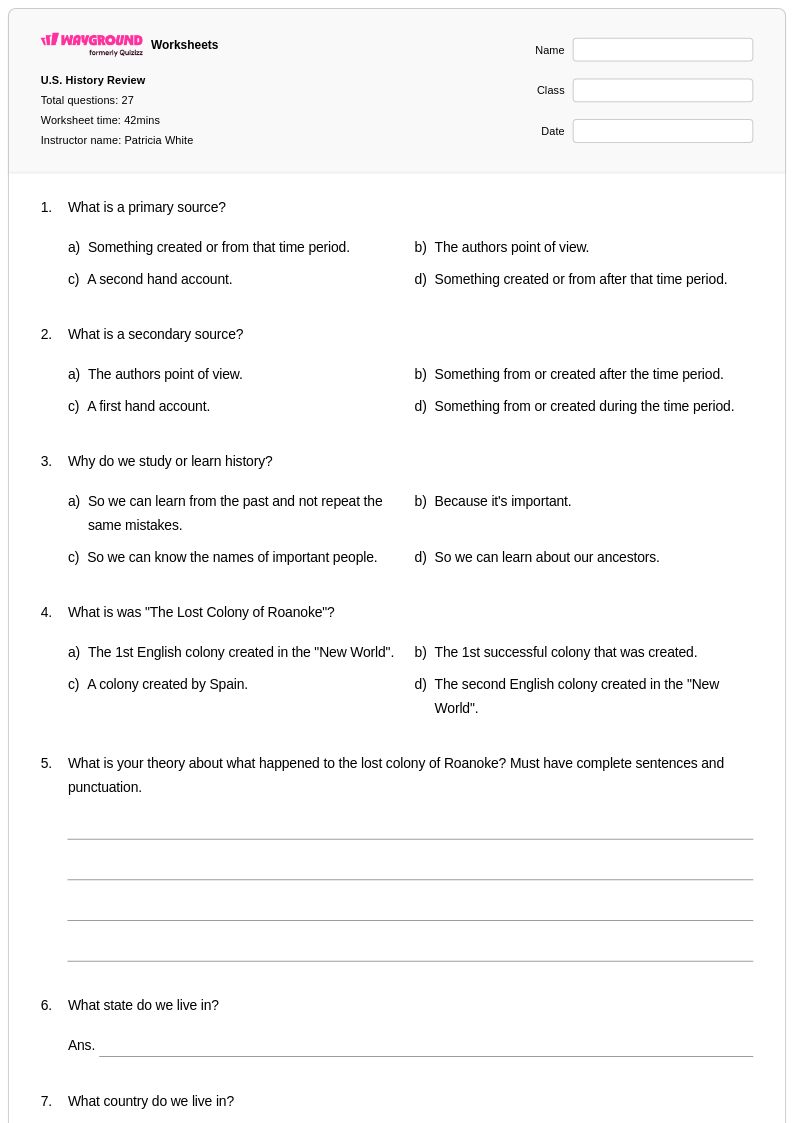
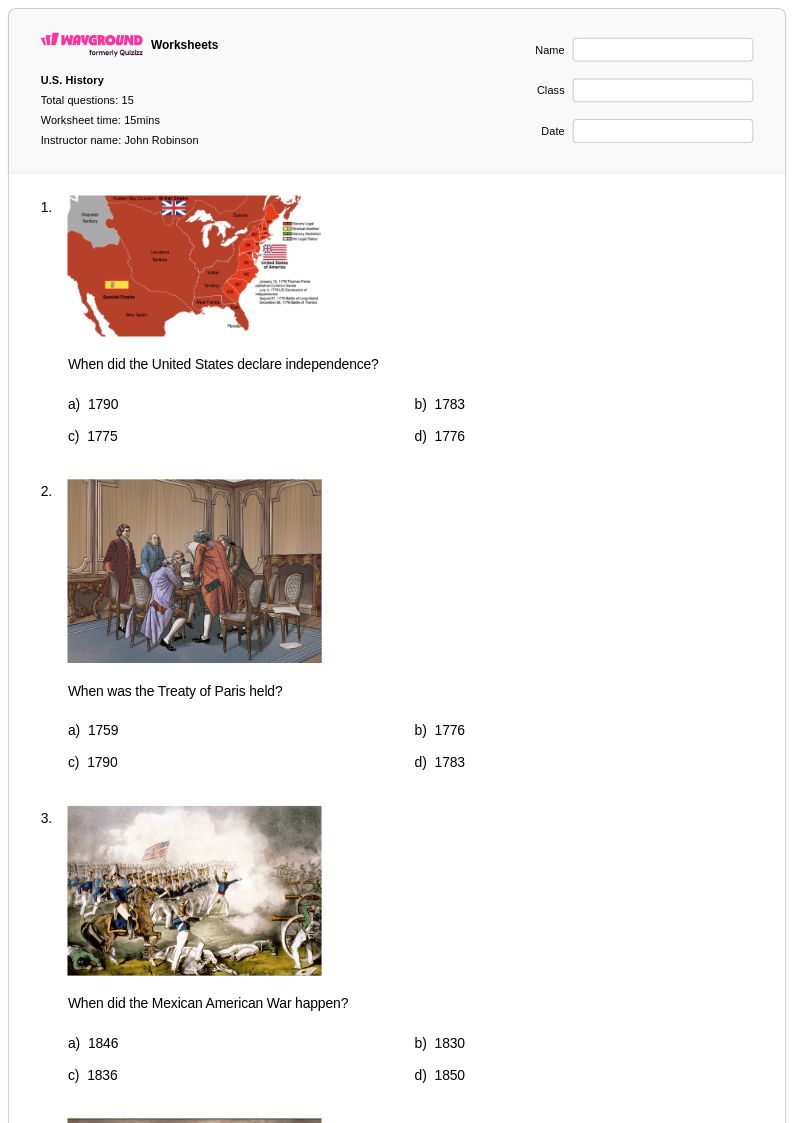
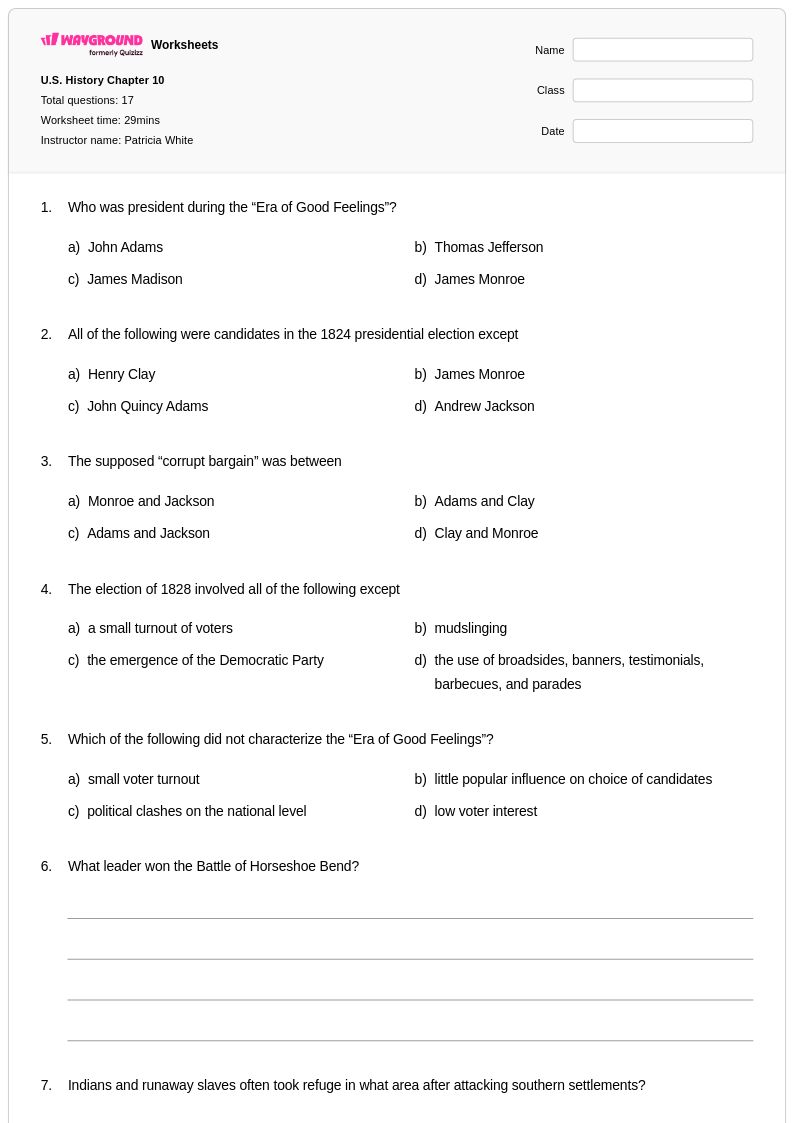
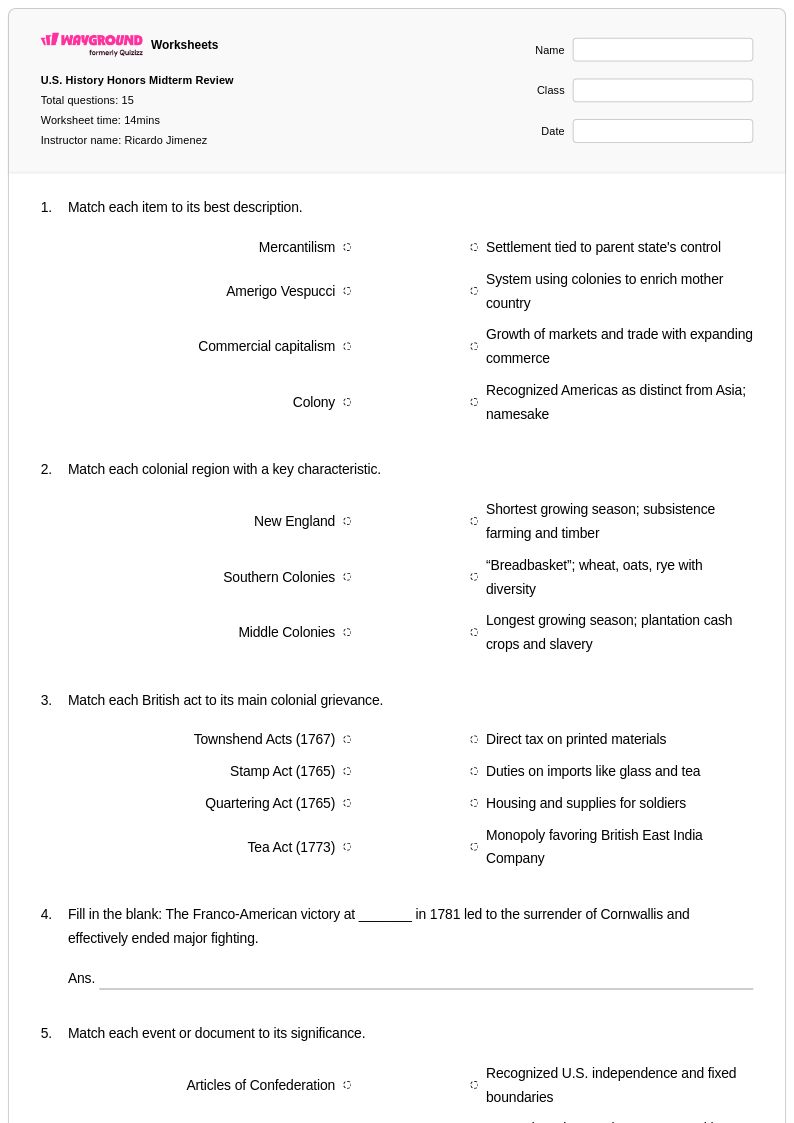
U.S. History worksheets for kindergarten through Wayground (formerly Quizizz) introduce young learners to foundational concepts about America's past through age-appropriate activities and engaging visual content. These carefully designed educational resources help strengthen early social studies skills by developing students' understanding of American symbols, important historical figures like George Washington and Abraham Lincoln, national holidays, and basic concepts about community helpers and citizenship. Each worksheet collection includes comprehensive materials such as answer keys for efficient grading, free printable pdf formats for classroom flexibility, and practice problems that reinforce key learning objectives while building critical thinking skills appropriate for kindergarten-level cognitive development.
Wayground (formerly Quizizz) empowers educators with access to millions of teacher-created U.S. History resources specifically tailored for kindergarten instruction, featuring robust search and filtering capabilities that allow teachers to quickly locate materials aligned with state social studies standards and curriculum requirements. The platform's differentiation tools enable seamless customization of worksheet difficulty levels to meet diverse learning needs, while flexible formatting options provide both printable pdf versions for traditional classroom use and digital formats for interactive learning experiences. These comprehensive features streamline lesson planning by offering ready-to-use materials for skill practice, targeted remediation for struggling learners, and enrichment opportunities for advanced students, ultimately supporting effective instruction that builds kindergarteners' foundational knowledge of American history and civic understanding.
FAQs
How do I teach U.S. History in a way that builds analytical thinking, not just memorization?
Effective U.S. History instruction moves students beyond memorizing dates and names by anchoring content in cause-and-effect relationships, primary source analysis, and historical context. Structured worksheets that ask students to compare perspectives, trace consequences, and evaluate evidence build the analytical habits historians use. Pairing direct instruction with document-based practice helps students internalize not just what happened, but why it mattered.
What are the most common mistakes students make when learning U.S. History?
Students frequently struggle with chronological reasoning, conflating events from different eras or misunderstanding how earlier decisions shaped later outcomes. Another common error is oversimplifying causation, for example, attributing the Civil War solely to slavery without accounting for economic, political, and regional tensions. Students also tend to confuse similar figures or documents, such as the Articles of Confederation versus the Constitution, or Dred Scott versus Plessy v. Ferguson, making targeted practice with these distinctions essential.
What exercises help students practice U.S. History topics like the Civil War, Westward Expansion, and the Civil Rights Movement?
Worksheets that present primary source excerpts, timeline sequencing tasks, and short-answer questions about cause and effect are highly effective for reinforcing complex U.S. History topics. For events like the Civil War or Civil Rights Movement, compare-and-contrast formats help students analyze competing perspectives and policy outcomes. Matching and multiple-choice practice works well for figures-heavy topics like Founding Fathers or Presidents of the United States, where identification accuracy is the primary goal.
How can I use U.S. History worksheets to differentiate instruction for students at different levels?
For struggling students, reducing answer choices and enabling read-aloud support can lower cognitive load while keeping them engaged with grade-level content. On Wayground, teachers can apply individual accommodations such as extended time, reduced answer options, and adjustable reading modes per student, without other students being notified. Advanced learners can be challenged with open-ended analysis questions and primary source interpretation tasks drawn from the same worksheet set, making differentiation manageable within a single lesson.
How do I use Wayground's U.S. History worksheets in my classroom?
Wayground's U.S. History worksheets are available as printable PDFs for traditional classroom use and in digital formats for technology-integrated environments, including the option to host them as a live quiz on Wayground. Teachers can use them for direct instruction support, homework assignments, test preparation, or independent practice. Complete answer keys are included with every worksheet, reducing prep time and making it straightforward to review student work or lead whole-class discussions.
How do I find U.S. History worksheets aligned to my curriculum standards?
Wayground's platform includes standards alignment tools that connect worksheets directly to curriculum requirements, so teachers can filter by topic, standard, or skill rather than searching through generic results. With subtopics spanning from the 13 Colonies to Modern America, including specific events like the Louisiana Purchase, the New Deal, and the Red Scare, teachers can locate materials that match exactly what they are currently teaching. This precision reduces lesson planning time and ensures practice activities reinforce the right learning objectives.
What U.S. History topics should I prioritize when preparing students for assessments?
High-priority topics for most U.S. History assessments include the causes and consequences of the Civil War, Reconstruction and its dismantling through Jim Crow Laws and Plessy v. Ferguson, the expansion of federal power during the New Deal, and the Civil Rights Movement. Students also frequently encounter questions on foundational documents such as the Declaration of Independence, the Articles of Confederation, and the Federalist Papers. Targeted worksheet practice on these themes, combined with review of key figures like Abraham Lincoln, Frederick Douglass, and Thurgood Marshall, builds the breadth and depth assessments require.