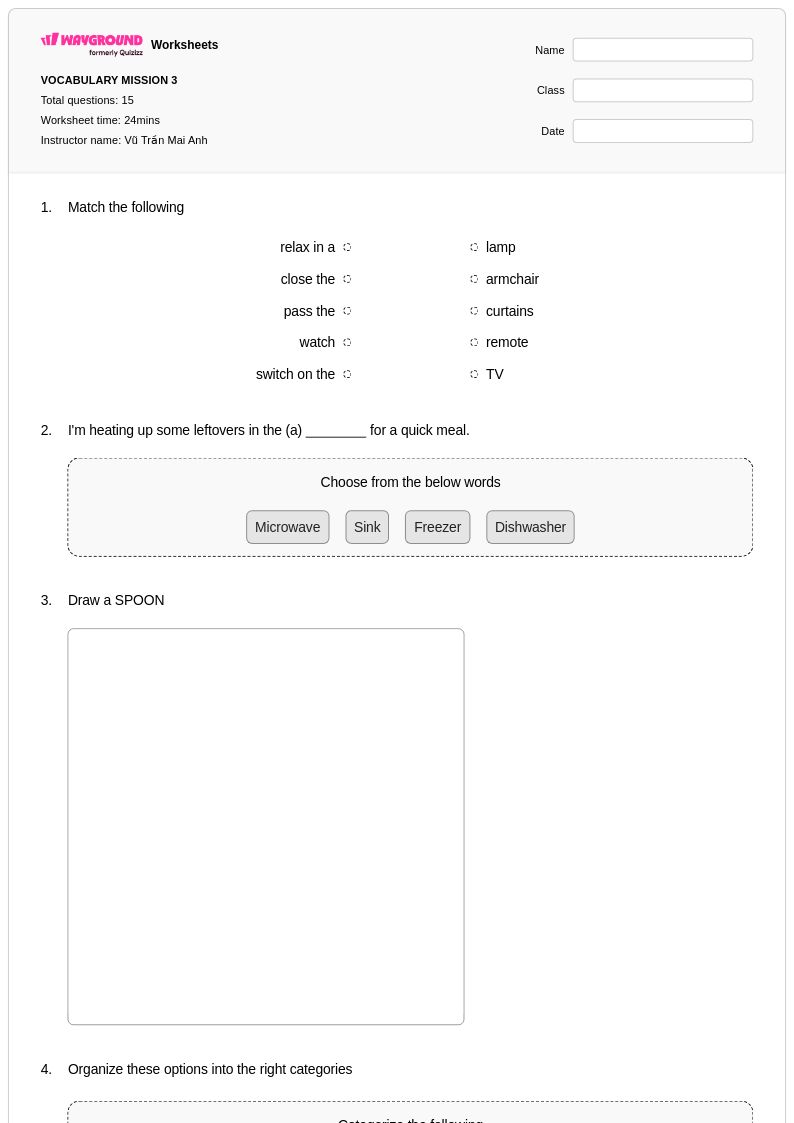
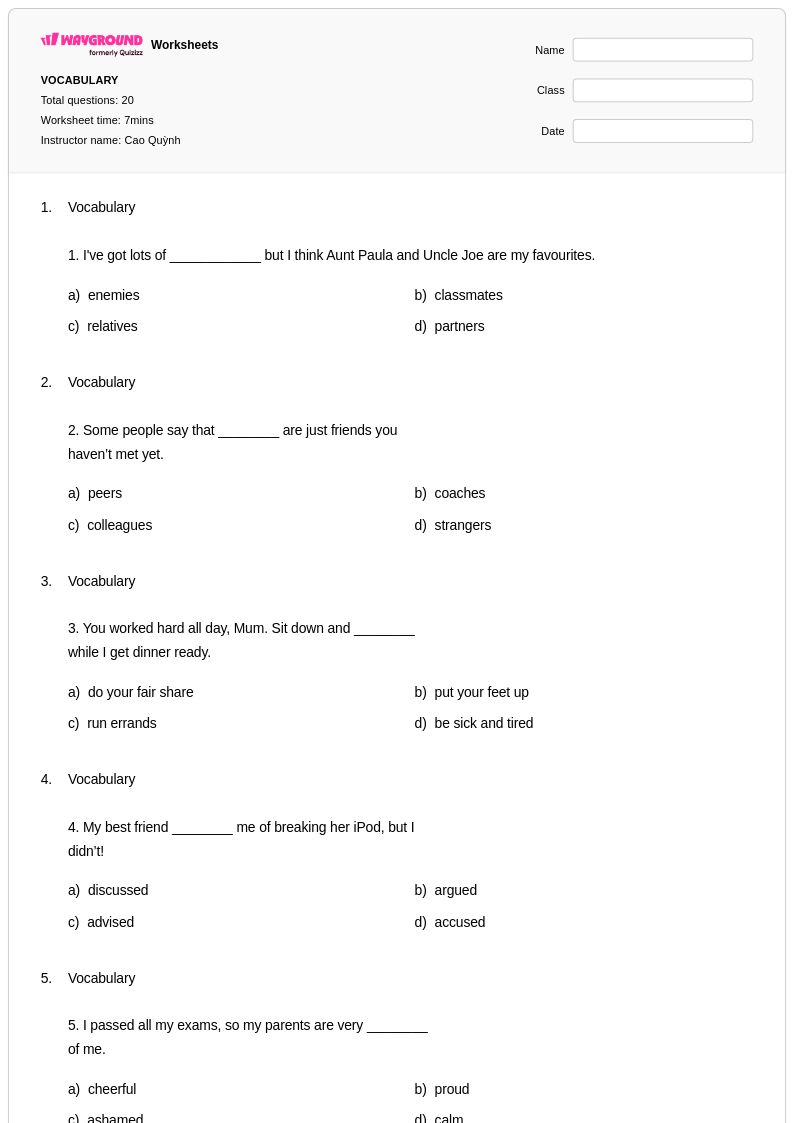
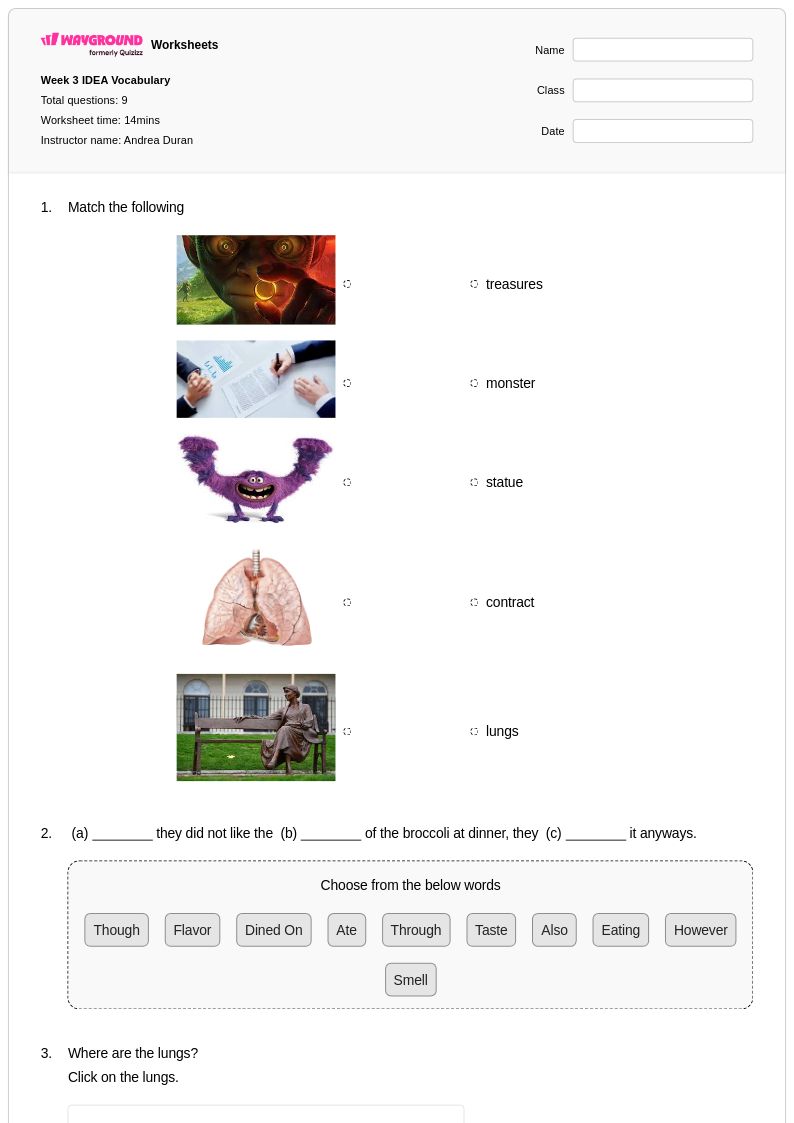
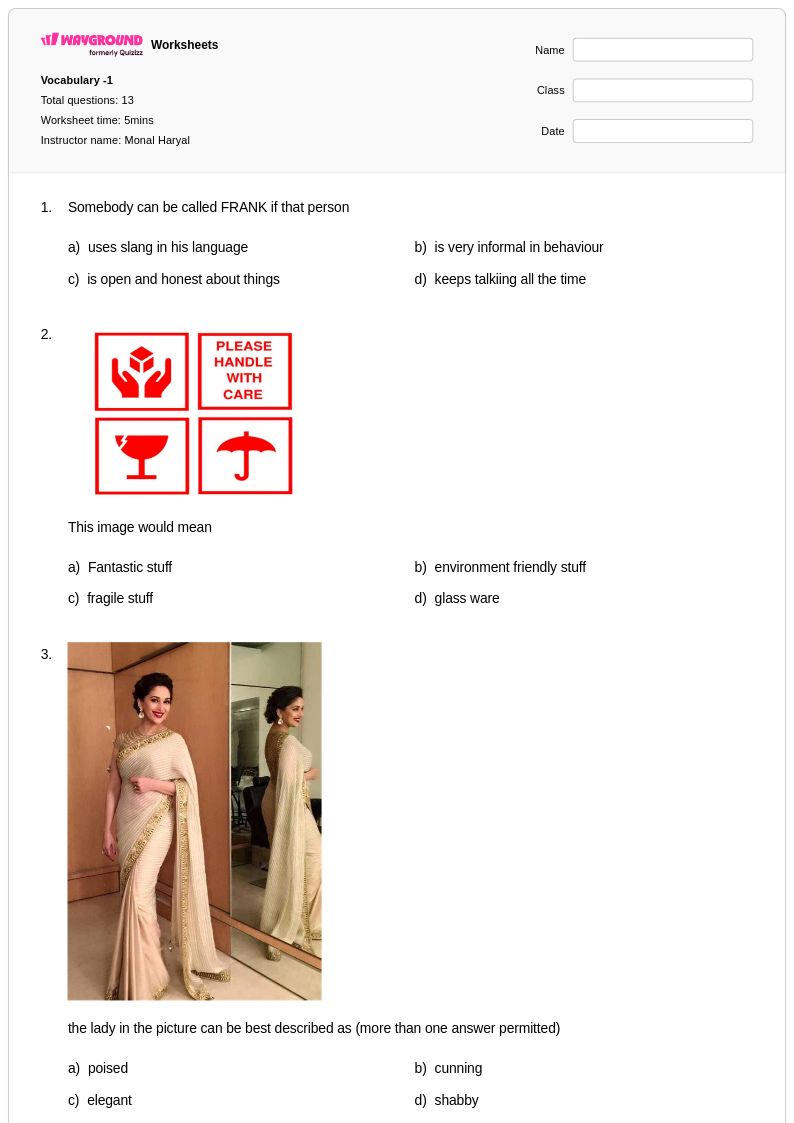
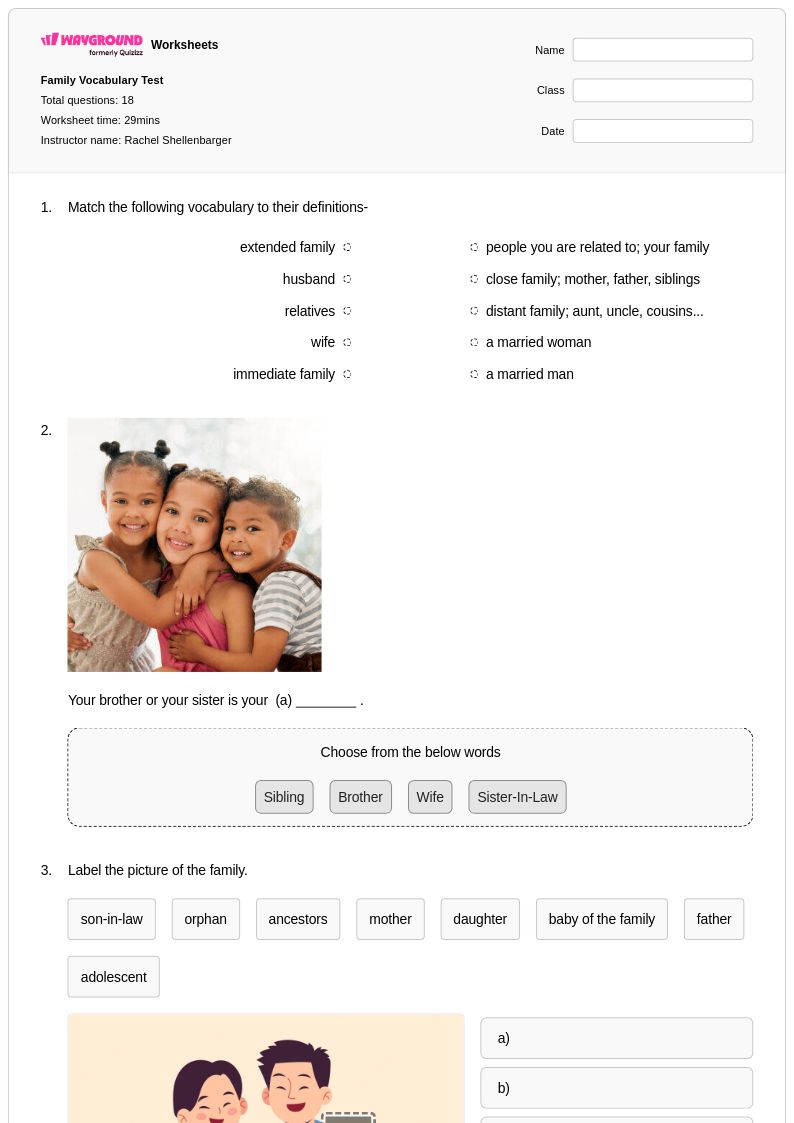
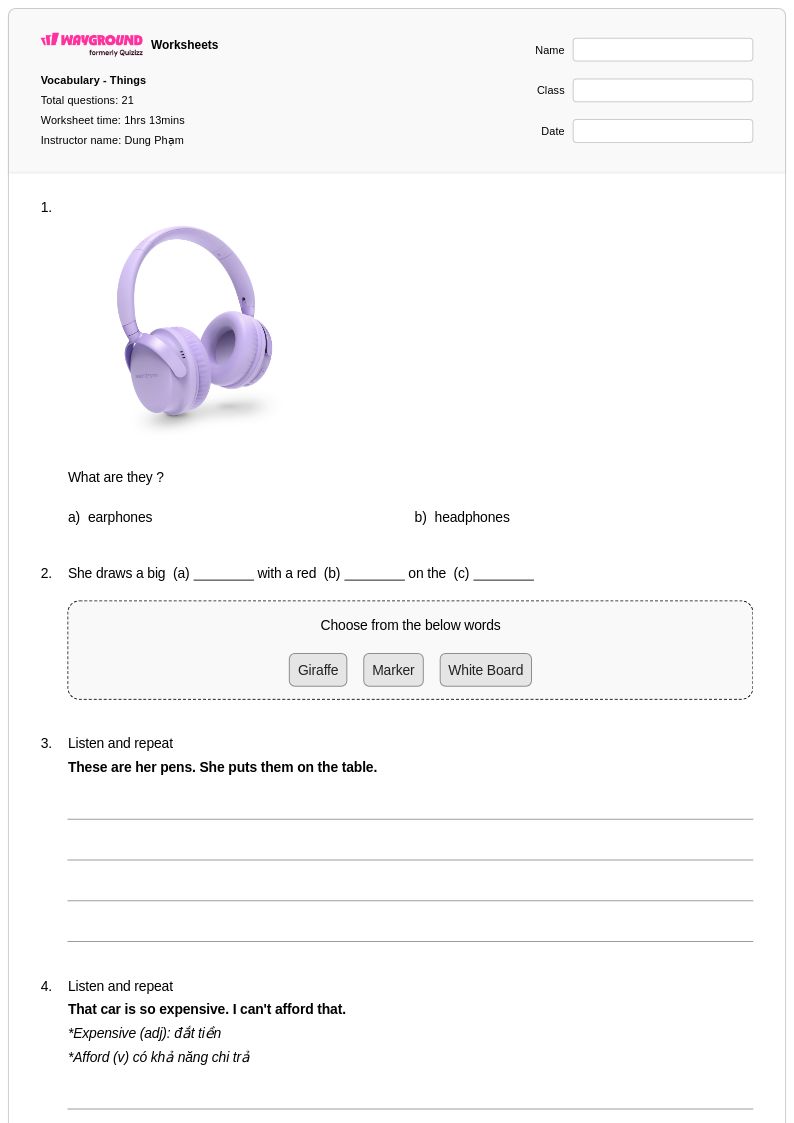
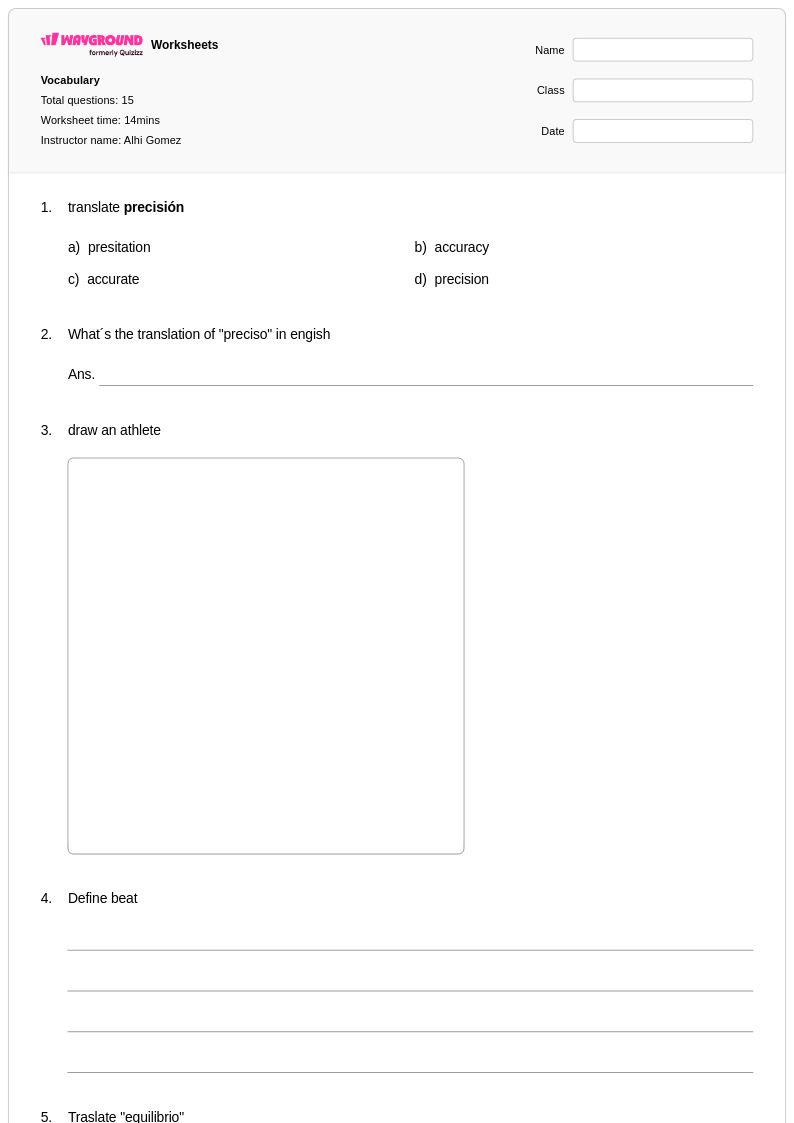
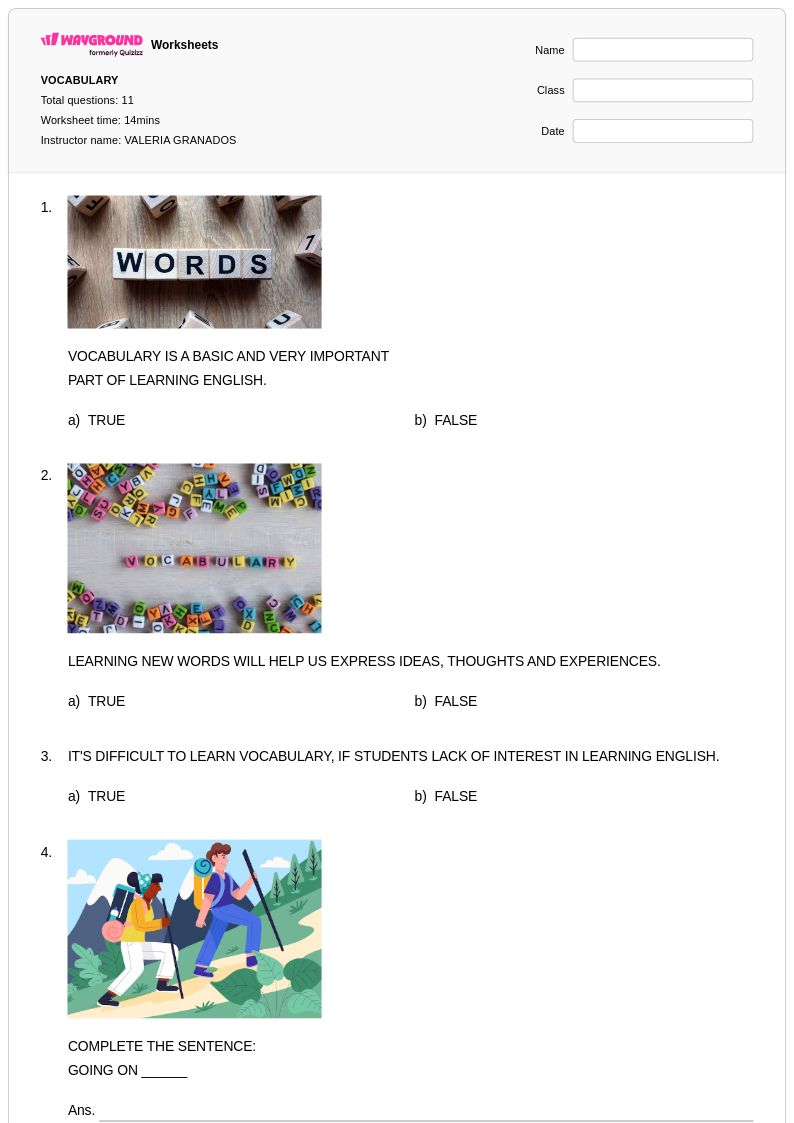
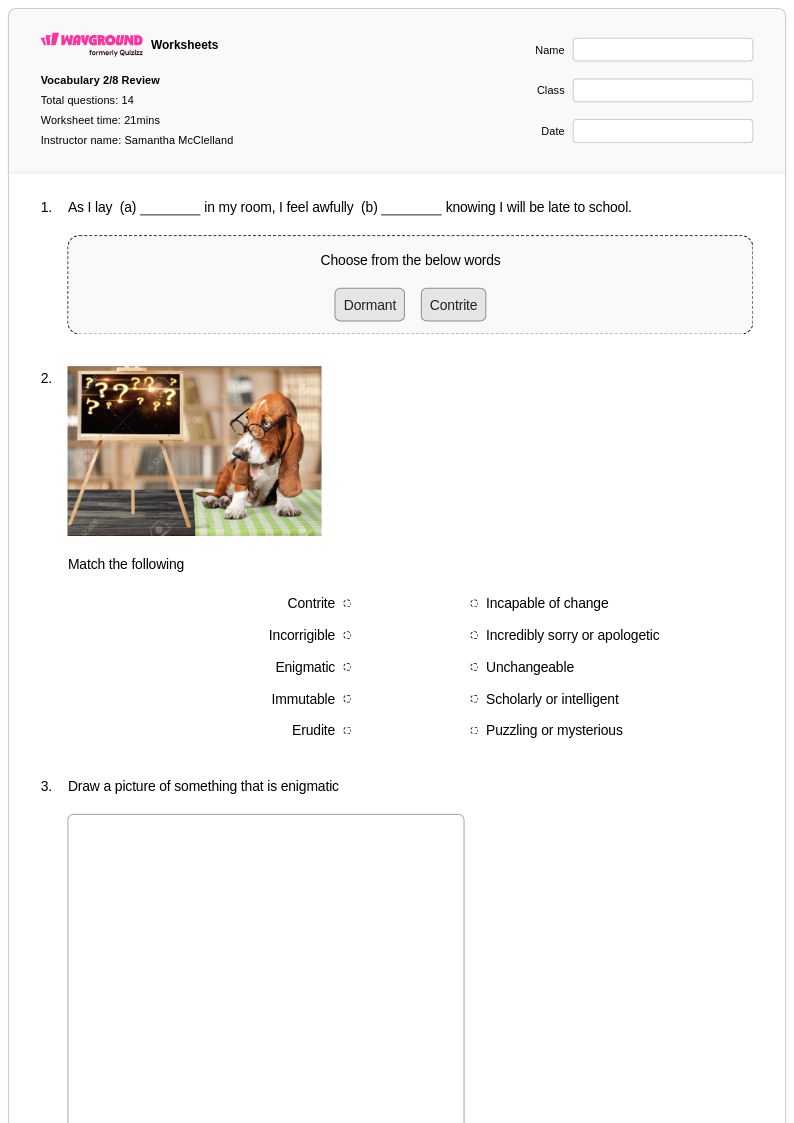
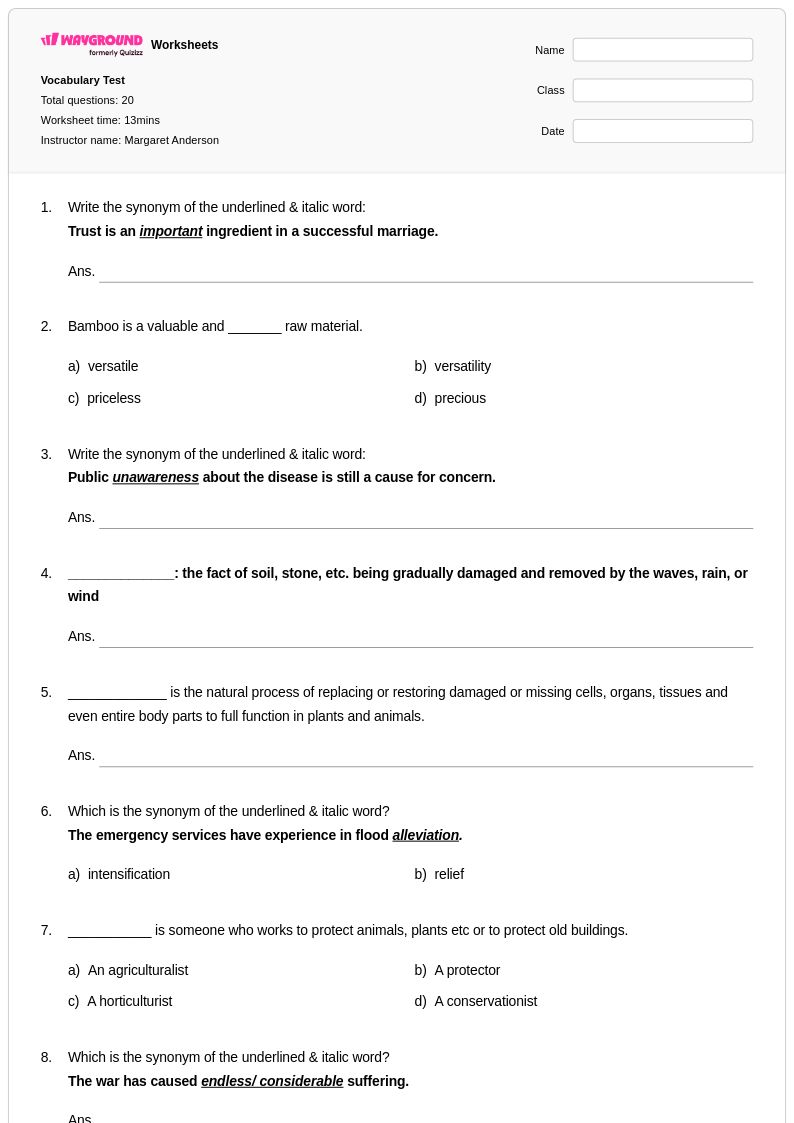
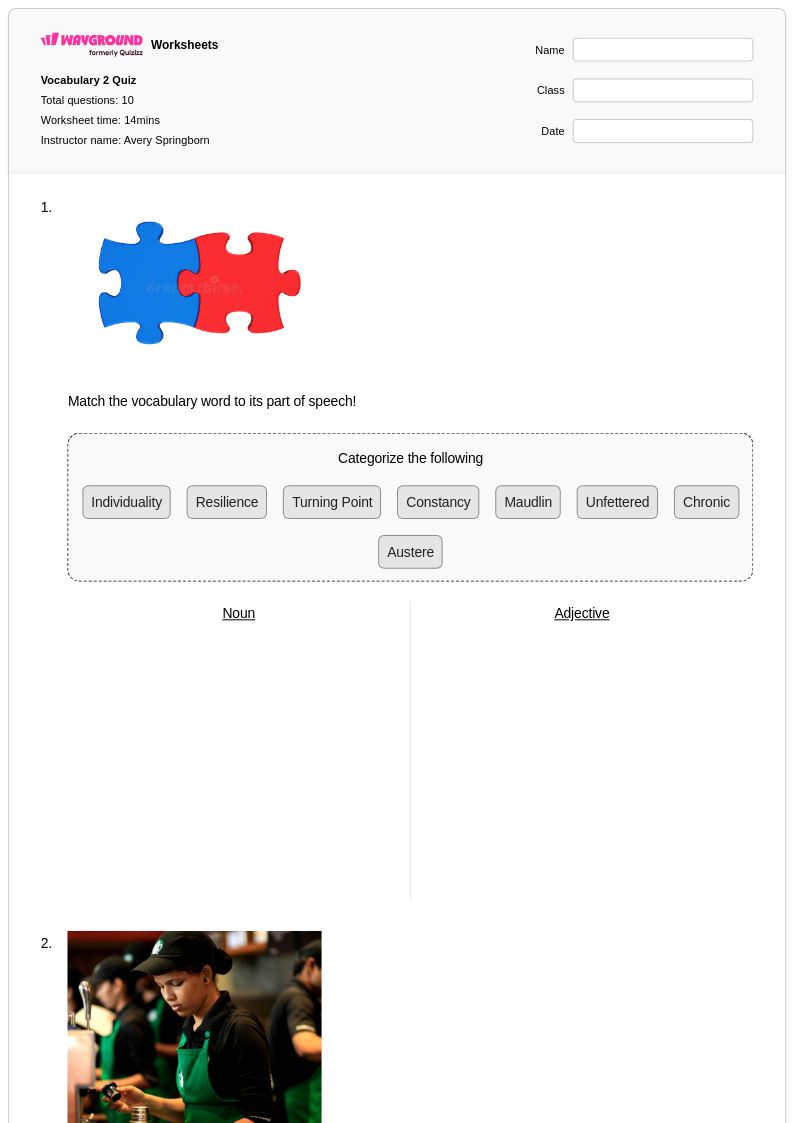
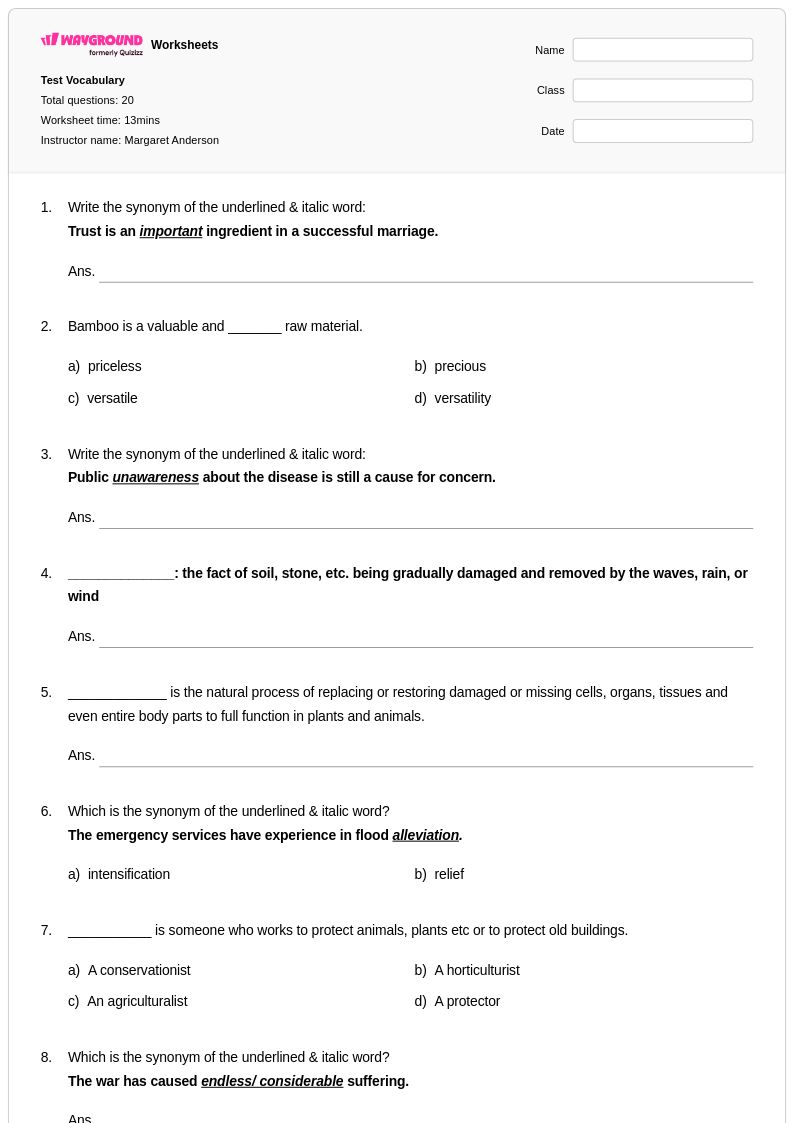
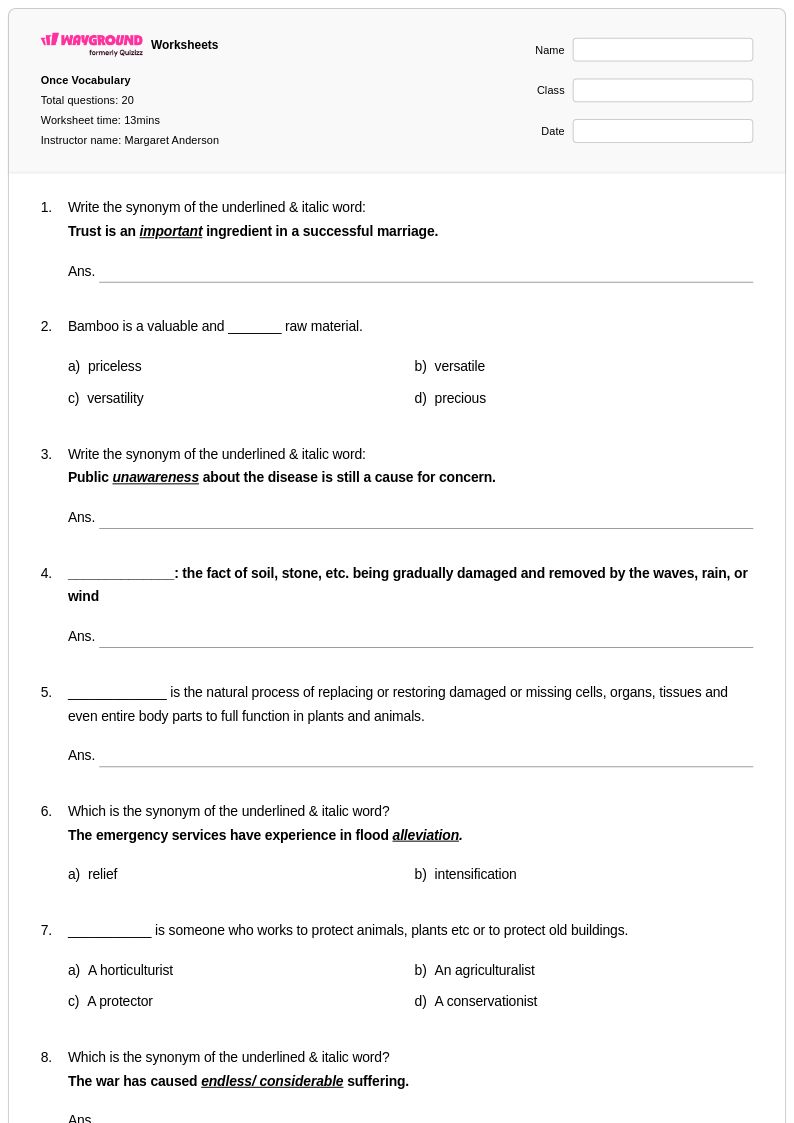
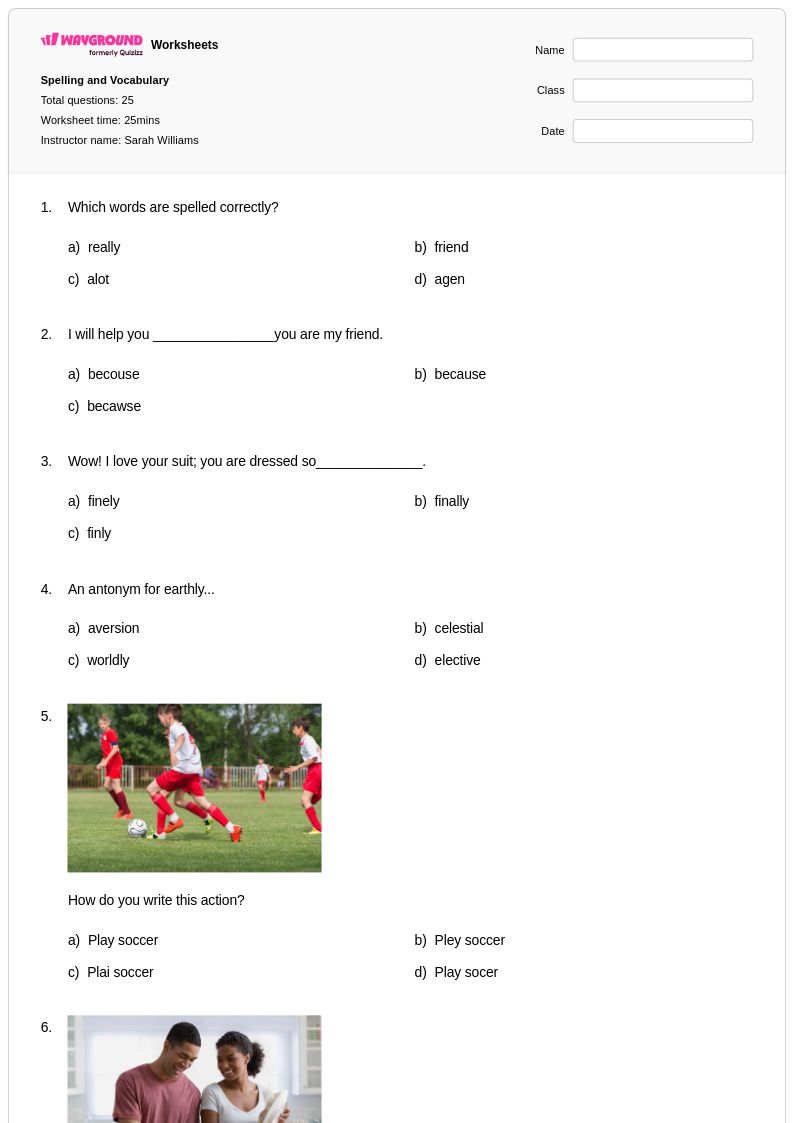
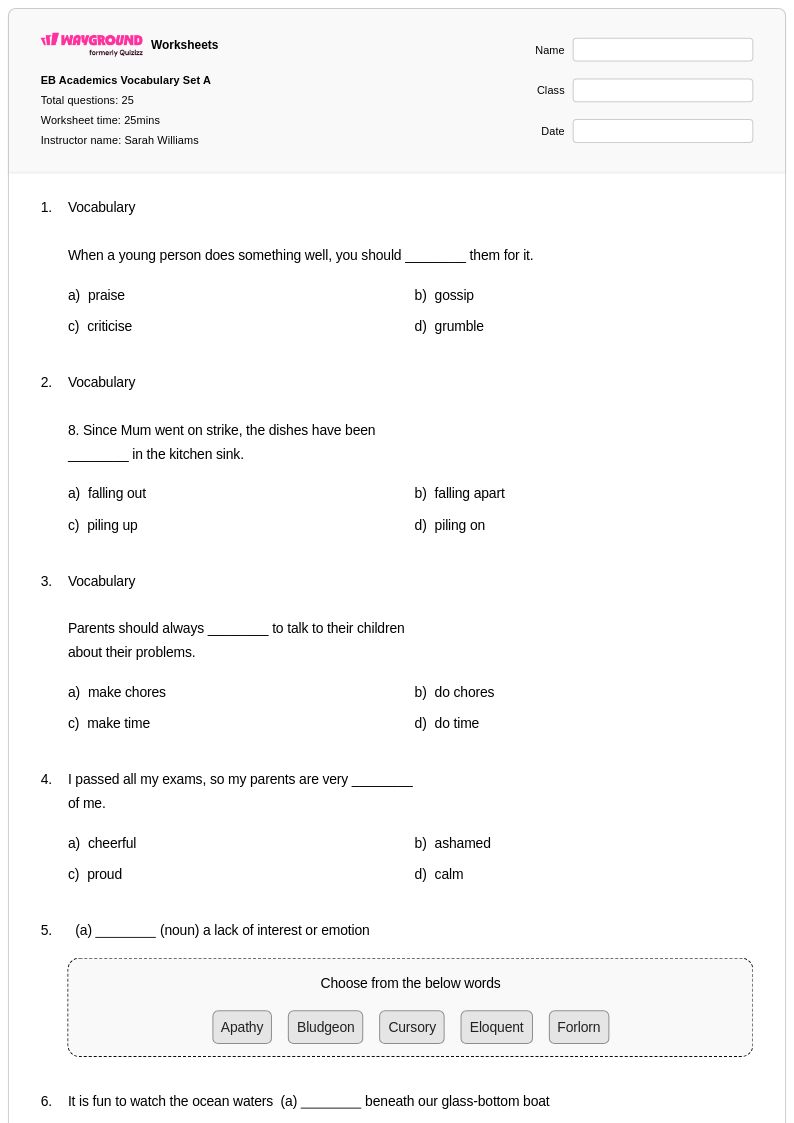
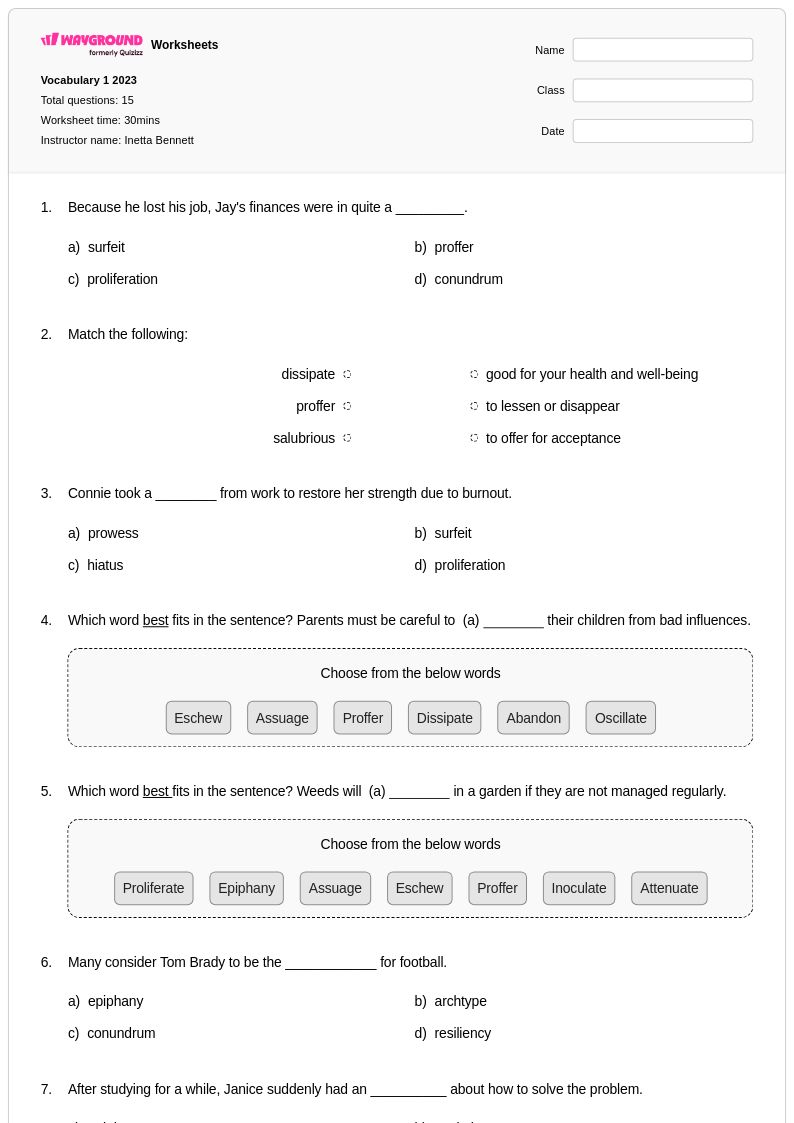
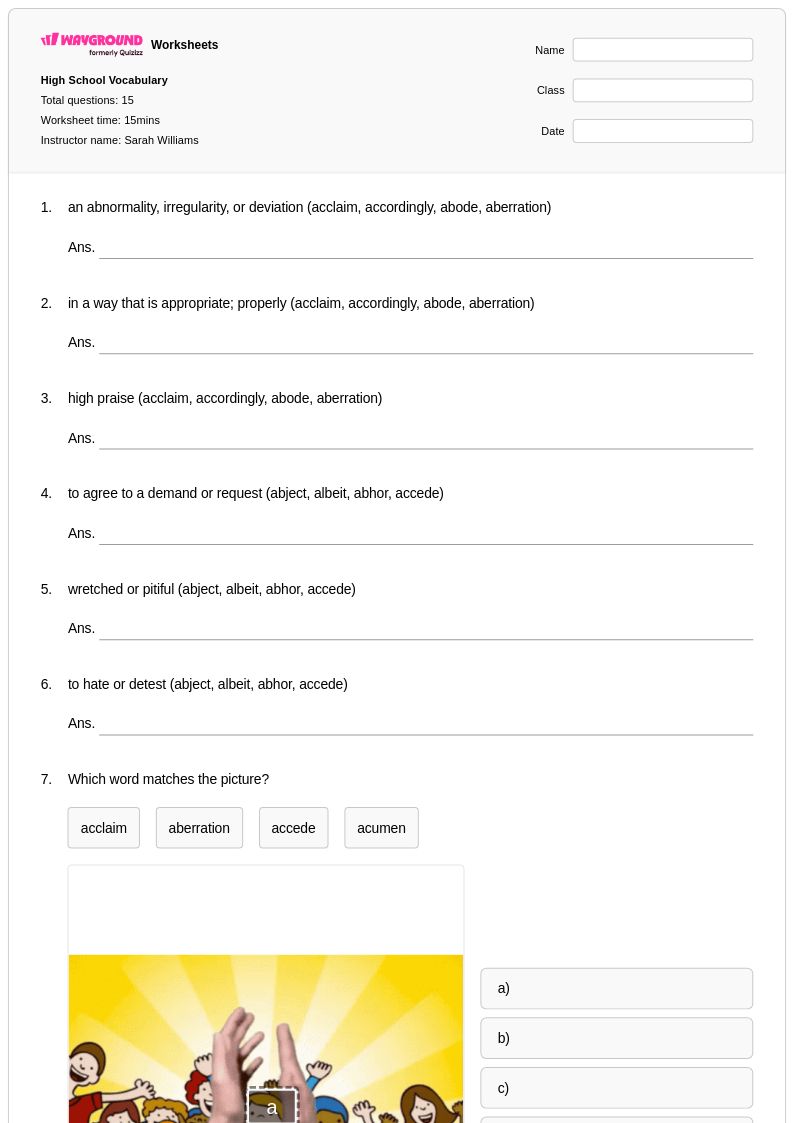
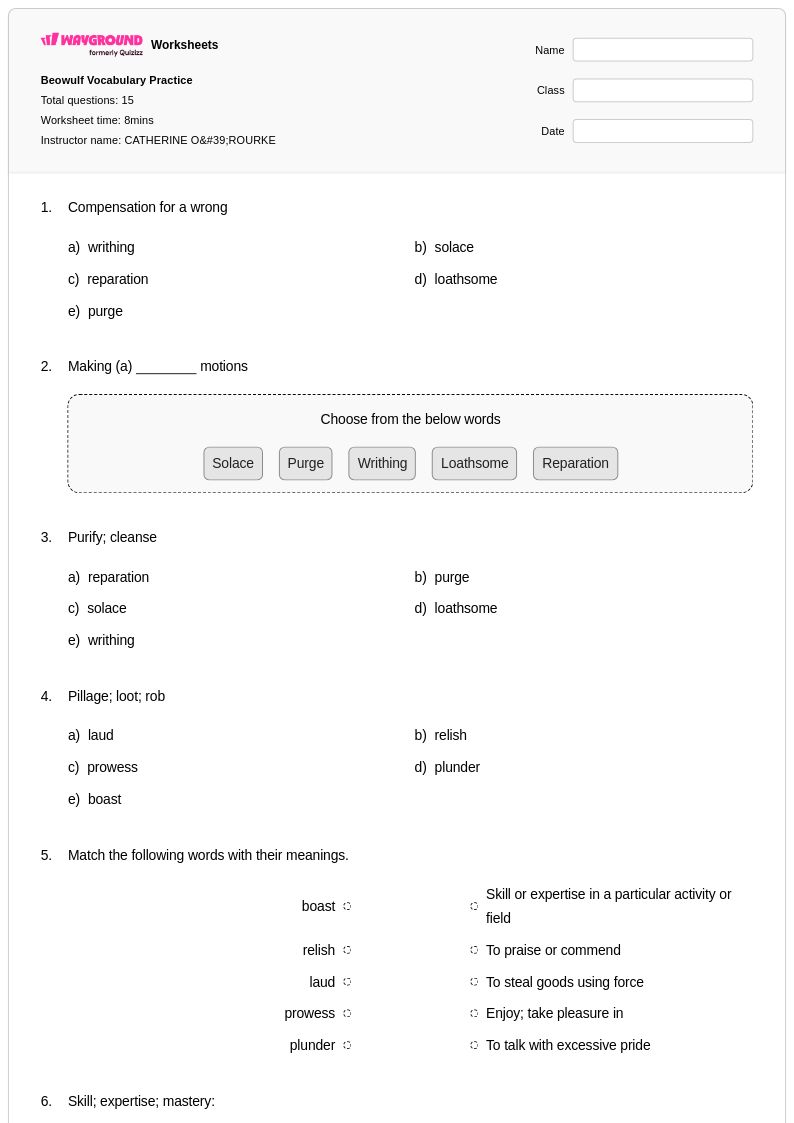
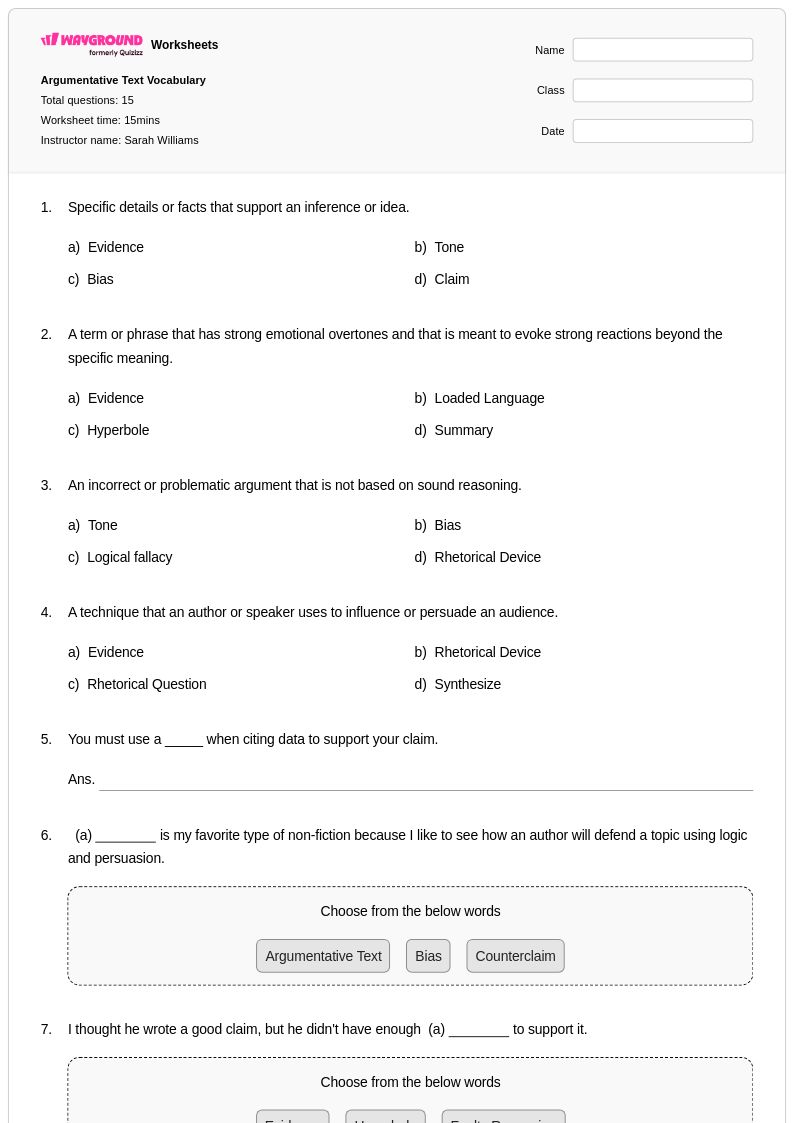
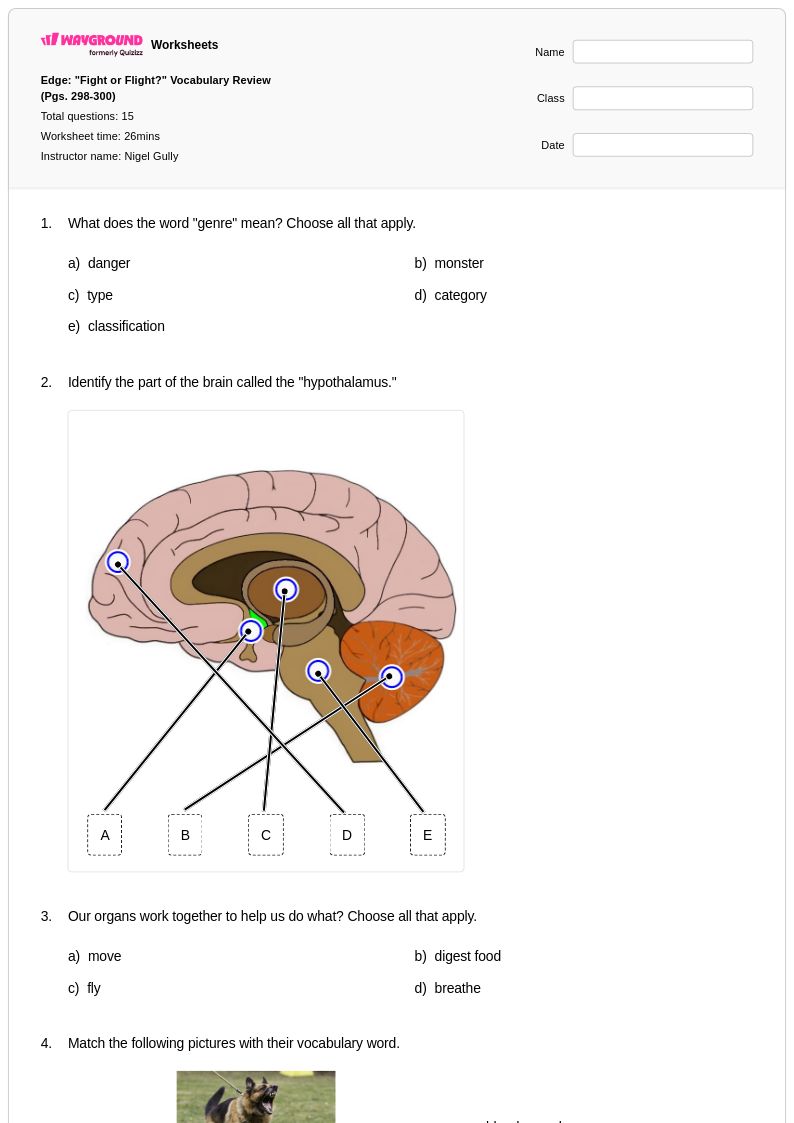
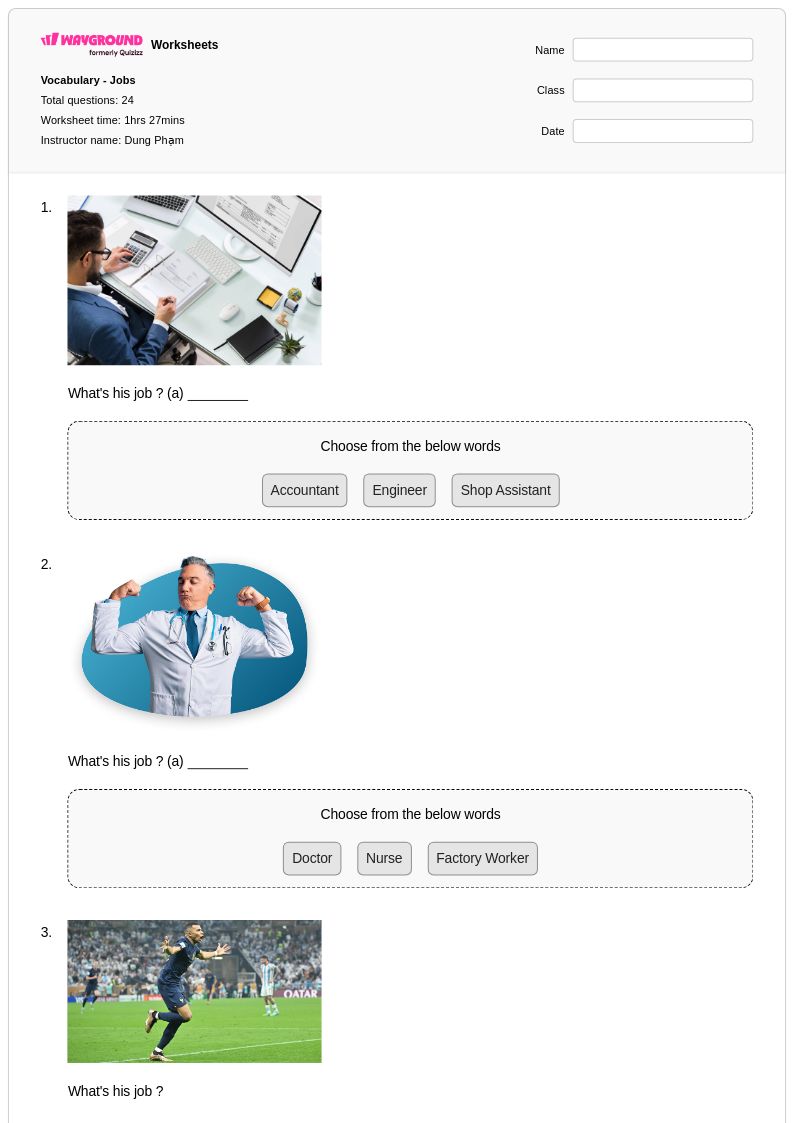
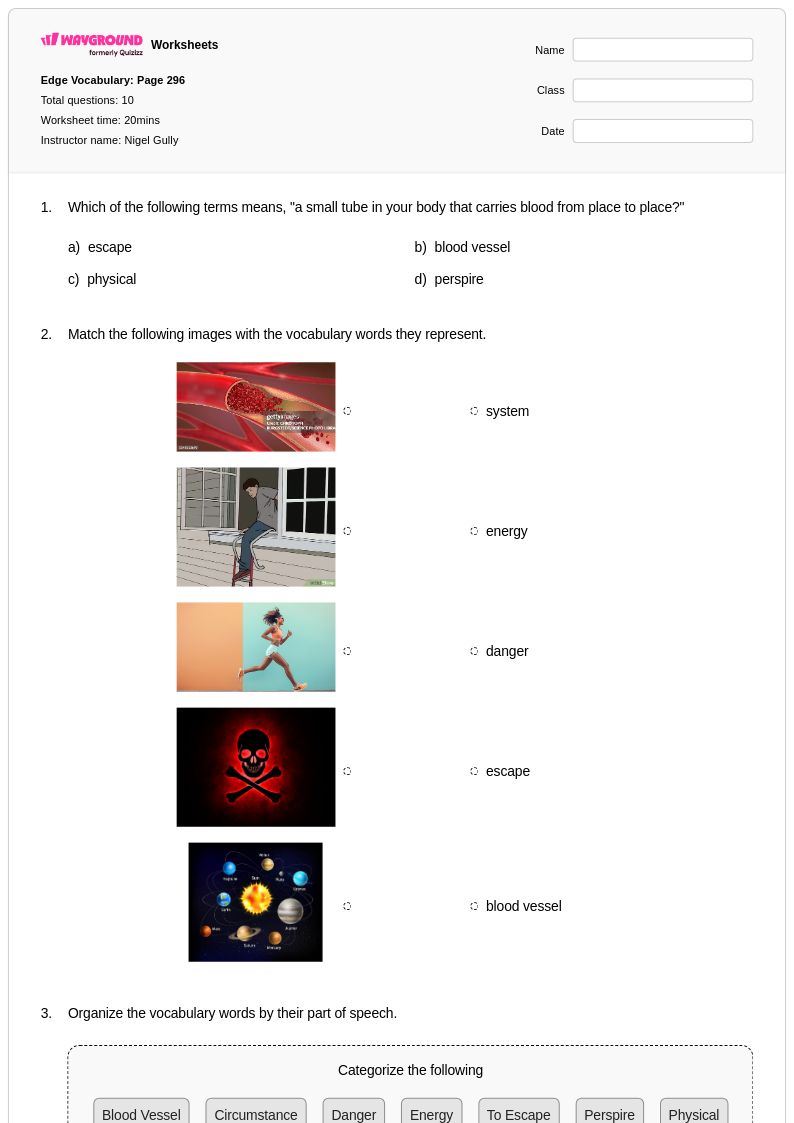
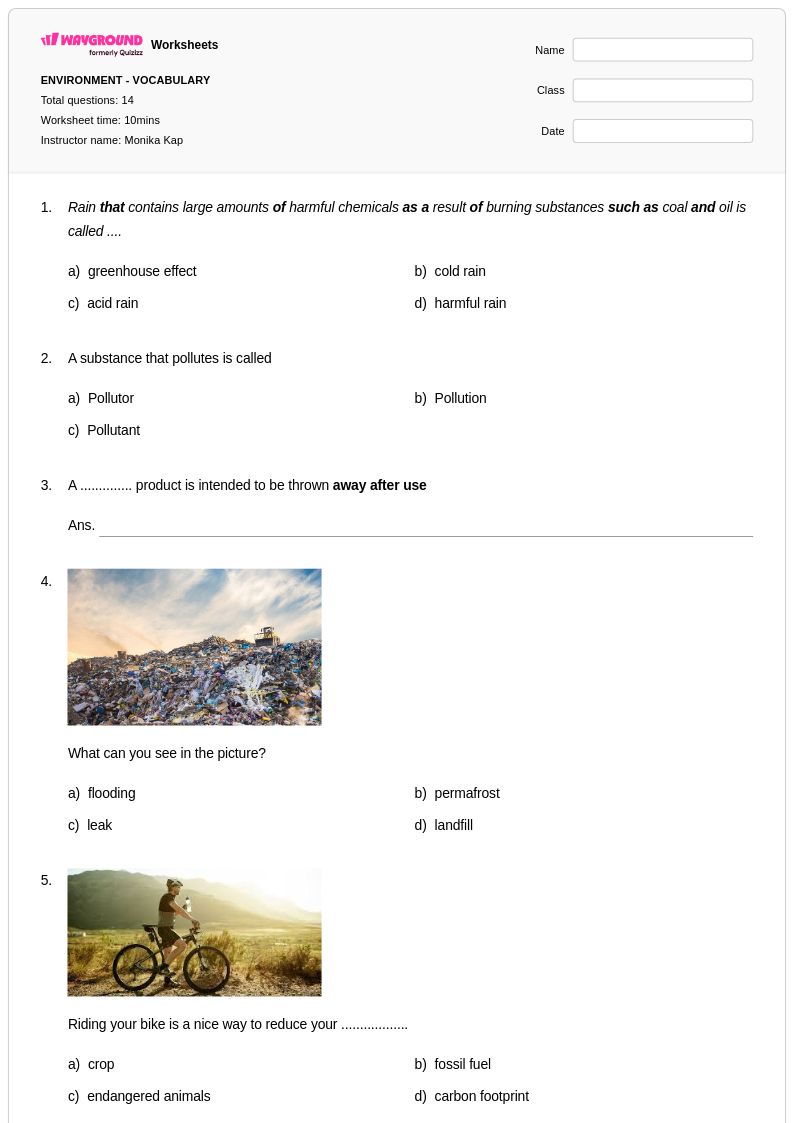
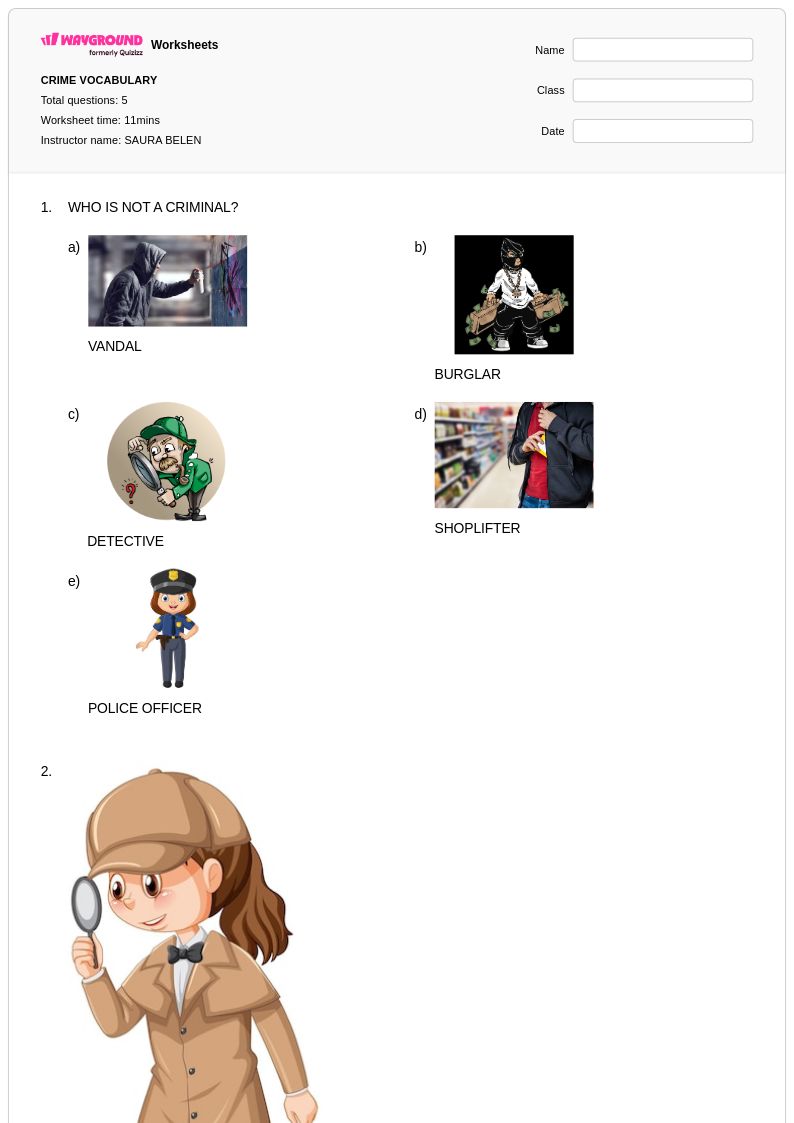
Class 11 vocabulary worksheets from Wayground provide comprehensive practice problems and printable PDFs with answer keys to help students master advanced word meanings, context clues, and language skills through free, expertly-designed exercises.
Explore printable Vocabulary worksheets for Class 11
Class 11 vocabulary worksheets available through Wayground (formerly Quizizz) provide comprehensive practice in advanced word study, etymology, context analysis, and sophisticated language usage that prepares students for college-level reading and writing demands. These expertly designed resources strengthen critical vocabulary skills including morphological analysis, semantic relationships, connotation versus denotation, and domain-specific terminology across academic disciplines. Students engage with challenging practice problems that require them to analyze word roots, prefixes, and suffixes while building connections between related terms and concepts. Each worksheet collection includes detailed answer keys and is available as free printables in convenient PDF format, making it easy for educators to distribute targeted vocabulary practice that aligns with eleventh-grade language arts standards and expectations.
Wayground (formerly Quizizz) empowers teachers with access to millions of educator-created vocabulary resources specifically designed for Class 11 students, featuring robust search and filtering capabilities that allow instructors to locate materials by specific vocabulary concepts, difficulty levels, and standards alignment. The platform's differentiation tools enable teachers to customize worksheets for diverse learning needs, whether providing remediation for struggling students or enrichment activities for advanced learners. These flexible resources are available in both printable PDF formats and interactive digital versions, supporting various classroom configurations and teaching preferences. Teachers can efficiently plan comprehensive vocabulary instruction, implement targeted skill practice sessions, and provide meaningful remediation or acceleration opportunities using these carefully curated worksheet collections that address the sophisticated vocabulary development required at the Class 11 level.
FAQs
How do I teach vocabulary effectively in the classroom?
Effective vocabulary instruction goes beyond memorizing definitions — it requires repeated exposure in multiple contexts. Research-backed strategies include teaching word roots, prefixes, and suffixes so students can decode unfamiliar terms independently, using semantic mapping to build conceptual connections between words, and embedding vocabulary in reading and writing tasks. Explicitly teaching connotation and denotation, shades of meaning, and frequently confused words helps students use language with precision rather than just recognition.
What exercises help students practice vocabulary skills?
Vocabulary practice is most effective when it moves from recognition to application. Exercises such as context clue activities, word maps, root word analysis, and synonym-antonym comparisons give students multiple entry points into a word's meaning. Activities that ask students to use new vocabulary in sentences or identify shades of meaning between related words push practice beyond recall into genuine language use, which is where lasting acquisition happens.
What are common mistakes students make when learning vocabulary?
One of the most frequent errors is treating vocabulary as a memorization task rather than a meaning-building one — students learn a single definition and struggle to apply the word in new contexts. Students also commonly confuse words with similar spellings or sounds, such as frequently confused word pairs, and misread connotation, choosing a word that is technically correct but tonally wrong. Teaching word analysis and context clues directly addresses these gaps by giving students strategies rather than just answers.
How can I differentiate vocabulary instruction for struggling or advanced learners?
For struggling learners, reducing the number of target words per lesson, using word maps with visual supports, and focusing on high-frequency root words and prefixes can lower cognitive load while still building transferable skills. For advanced students, activities centered on connotation and denotation, shades of meaning, and nuanced word choice push deeper engagement with language. On Wayground, teachers can apply accommodations such as read aloud support and reduced answer choices to individual students, allowing the same worksheet to serve diverse learners without singling anyone out.
How do I use Wayground's vocabulary worksheets in my classroom?
Wayground's vocabulary worksheets are available as printable PDF downloads for traditional classroom use and in digital formats for technology-integrated or remote learning environments. Teachers can also host worksheets as a quiz directly on Wayground, making it easy to assign, track, and review student responses. Each worksheet includes a complete answer key, so teachers can use materials for guided practice, independent work, homework, or formative assessment without additional prep.
How do I help students use context clues to determine word meaning?
Teaching context clues means training students to look beyond the unknown word itself to the surrounding sentence and paragraph for meaning signals. Effective instruction covers clue types such as definition clues, example clues, contrast clues, and inference clues, and gives students structured practice identifying which type is present. Worksheets that pair unfamiliar vocabulary with authentic reading passages are especially useful because they replicate the real-world conditions under which students encounter new words.
Why is teaching root words, prefixes, and suffixes important for vocabulary development?
Word analysis through roots, prefixes, and suffixes gives students a generative vocabulary strategy — one word part unlocks the meaning of dozens of related words. For example, understanding the prefix 'un-' or the root 'rupt' allows students to decode unfamiliar words independently rather than relying on a dictionary or teacher. This approach is particularly high-leverage for academic vocabulary, where Latin and Greek roots appear frequently across content areas including science, social studies, and literature.