Free Printable Volcano Experiment Worksheets for Kindergarten
Free kindergarten volcano experiment worksheets and printables help young learners explore basic chemistry concepts through hands-on activities, complete with simple practice problems and answer keys for early science discovery.
Explore printable Volcano Experiment worksheets for Kindergarten
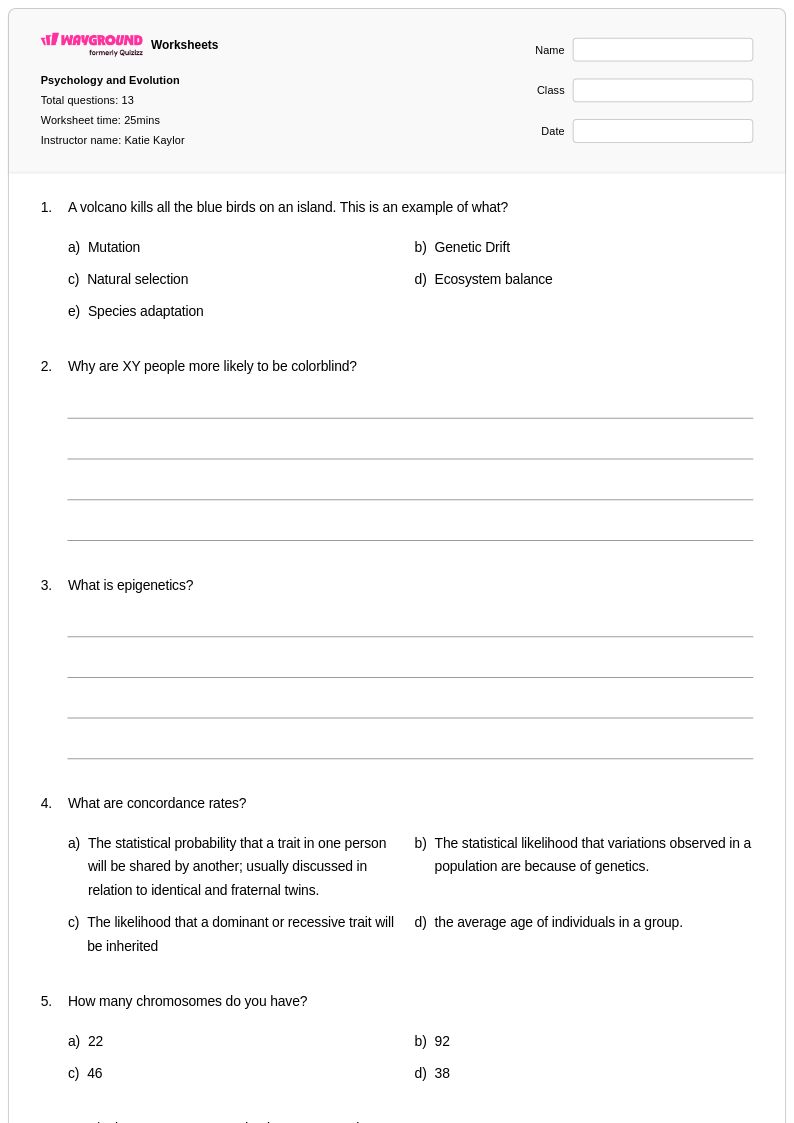
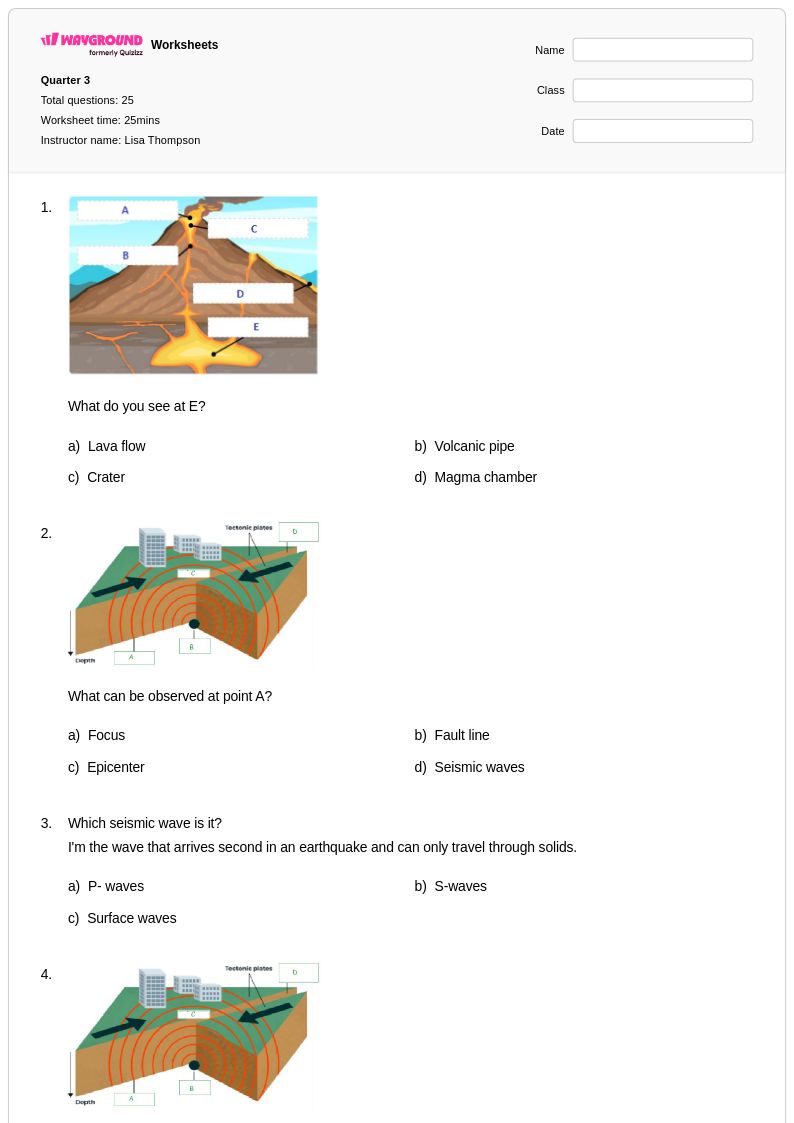
Volcano experiment worksheets for kindergarten students available through Wayground (formerly Quizizz) introduce young learners to basic scientific observation and inquiry skills through engaging, hands-on chemistry activities. These carefully designed educational resources help kindergarten students develop foundational science concepts by exploring how different materials react when combined, fostering early understanding of chemical reactions through safe, age-appropriate experiments. The worksheets strengthen essential skills including following sequential directions, making predictions, recording observations, and drawing conclusions about cause and effect relationships. Teachers can access comprehensive materials that include step-by-step experiment guides, observation recording sheets, vocabulary builders, and answer keys, all available as free printables in convenient pdf format for classroom or home use.
Wayground's extensive collection of volcano experiment resources empowers kindergarten educators with millions of teacher-created materials specifically designed to support early childhood science education. The platform's robust search and filtering capabilities enable teachers to quickly locate worksheets that align with kindergarten science standards and match their students' developmental needs. These versatile resources are available in both printable and digital formats, including downloadable pdf files, making them accessible for various classroom configurations and learning environments. Teachers can easily customize activities to provide differentiated instruction, using simpler observation sheets for students needing additional support while offering extension activities for advanced learners, ensuring effective lesson planning that addresses remediation, enrichment, and essential skill practice in early chemistry concepts.
FAQs
How do I teach the baking soda and vinegar volcano experiment in the classroom?
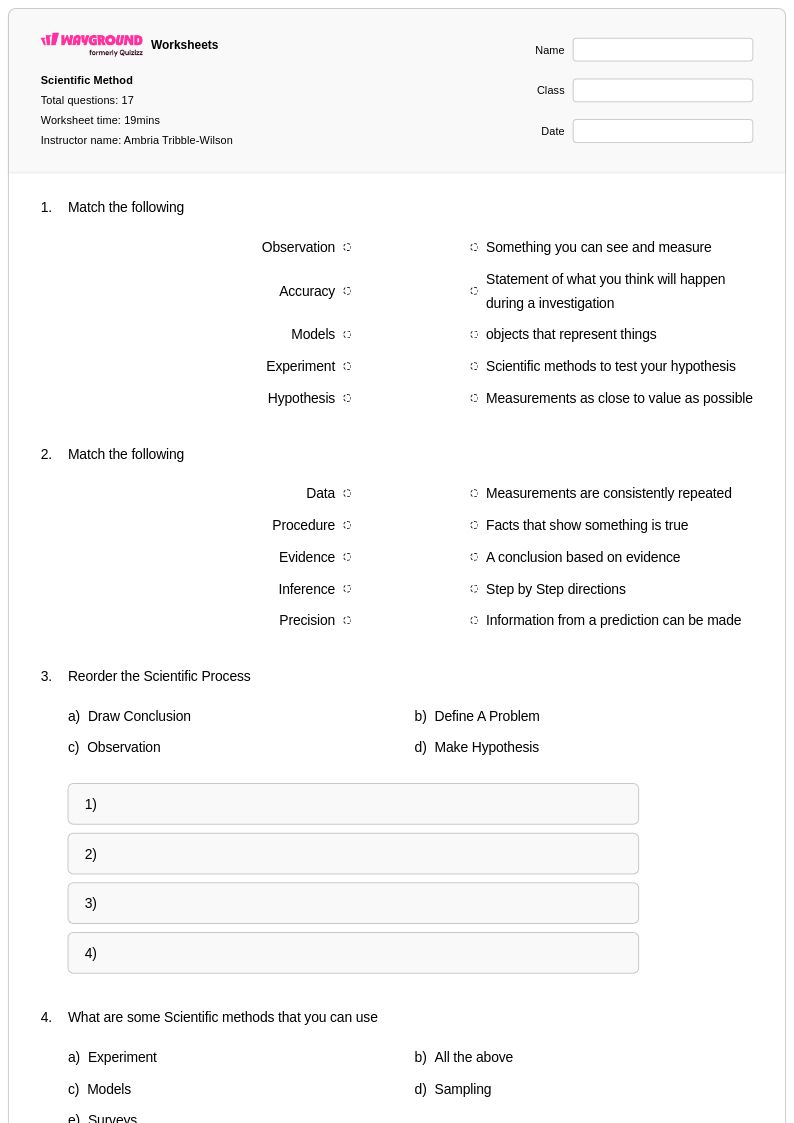
Start by introducing the chemistry before the demonstration: explain that baking soda (sodium bicarbonate) is a base and vinegar (acetic acid) is an acid, and that combining them produces carbon dioxide gas, water, and sodium acetate. Walk students through hypothesis formation and prediction before they observe the reaction, then guide them through recording observations and connecting what they saw to the underlying chemical equation. Anchoring the hands-on activity in the scientific method — question, hypothesis, procedure, observation, conclusion — turns a fun demonstration into a rigorous learning experience.
What chemistry concepts does the volcano experiment reinforce?
The volcano experiment directly reinforces acid-base reactions, gas production, and the conservation of matter. Students observe a real-time example of a chemical change, distinguishing it from a physical change by noting the production of a new substance (carbon dioxide gas). It also provides a concrete context for teaching the scientific method, including hypothesis formation, controlled observation, and data recording.
What exercises help students practice the concepts behind the volcano experiment?
Effective practice exercises include hypothesis formation prompts, observation charts completed during or after the experiment, and data collection templates that ask students to record variables such as the ratio of baking soda to vinegar and the resulting reaction intensity. Extending practice beyond the basic experiment with questions about real-world applications of acid-base chemistry and volcanic gas production deepens conceptual understanding and prepares students for broader science assessments.
What mistakes do students commonly make when learning about the volcano experiment?
A common misconception is that the reaction is physical rather than chemical — students often think mixing two substances and producing bubbles is similar to dissolving sugar in water. Another frequent error is failing to identify carbon dioxide as the specific gas produced, instead describing the reaction vaguely as 'fizzing.' Students also commonly struggle to connect the lab observation back to the symbolic chemical equation, so explicitly bridging the visual reaction to its written representation is essential.
How can I differentiate volcano experiment instruction for students at different skill levels?
For foundational learners, focus on vocabulary (acid, base, chemical reaction, gas) and use observation charts with sentence starters to scaffold written responses. Advanced students can extend their learning by comparing different acid-base combinations, calculating molar ratios, or researching how carbon dioxide production relates to real volcanic activity. On Wayground, teachers can apply accommodations such as read-aloud support, reduced answer choices, and extended time on a per-student basis, allowing the same worksheet set to serve a range of learners without separate materials.
How do I use Wayground's volcano experiment worksheets in my classroom?
Wayground's volcano experiment worksheets are available as printable PDFs, making them easy to distribute in a traditional lab or classroom setting, and in digital formats that support technology-integrated and remote learning environments. Teachers can also host the materials as an interactive quiz directly on Wayground, which allows for real-time student response tracking. Complete answer keys are included, so teachers can use these resources for initial instruction, guided practice, or post-experiment assessment without additional preparation.