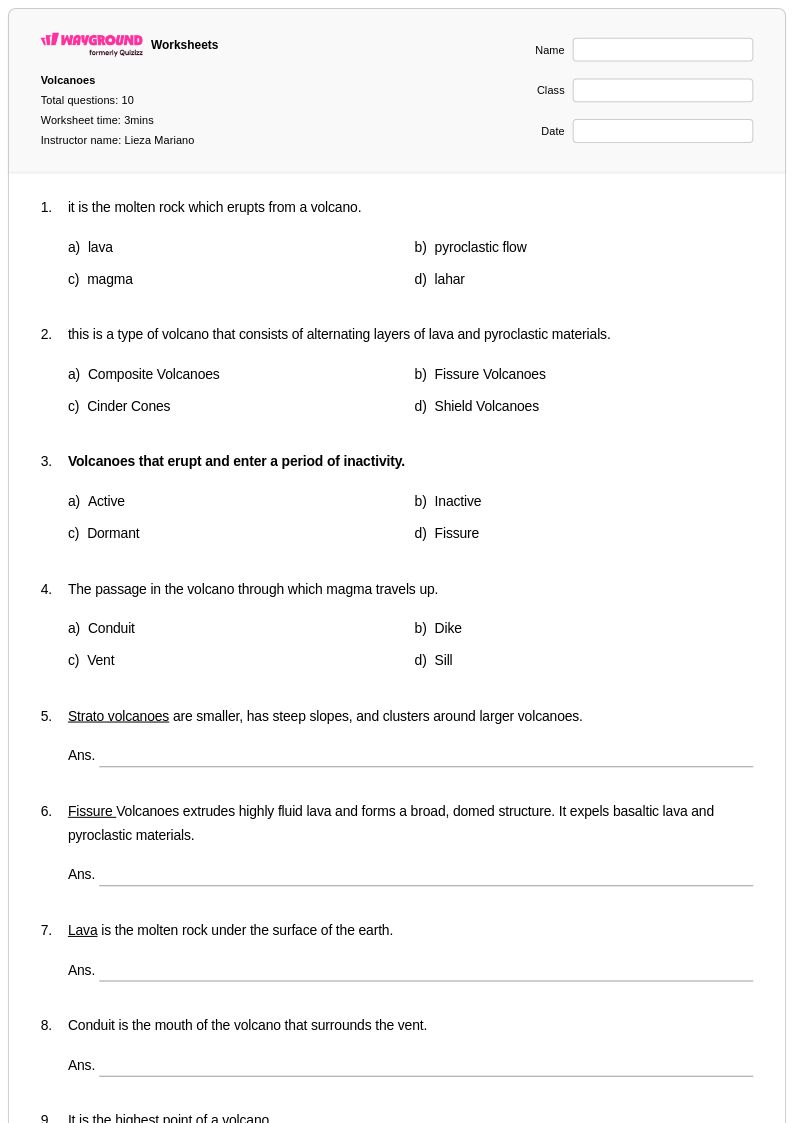
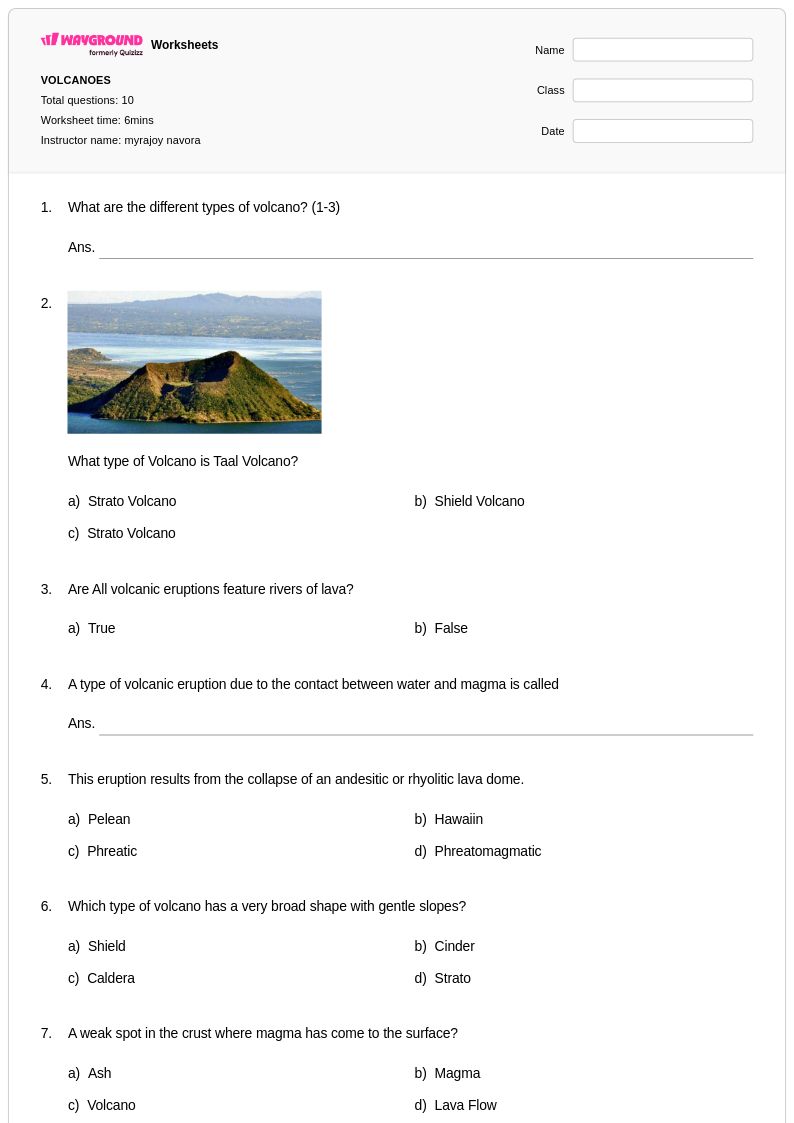
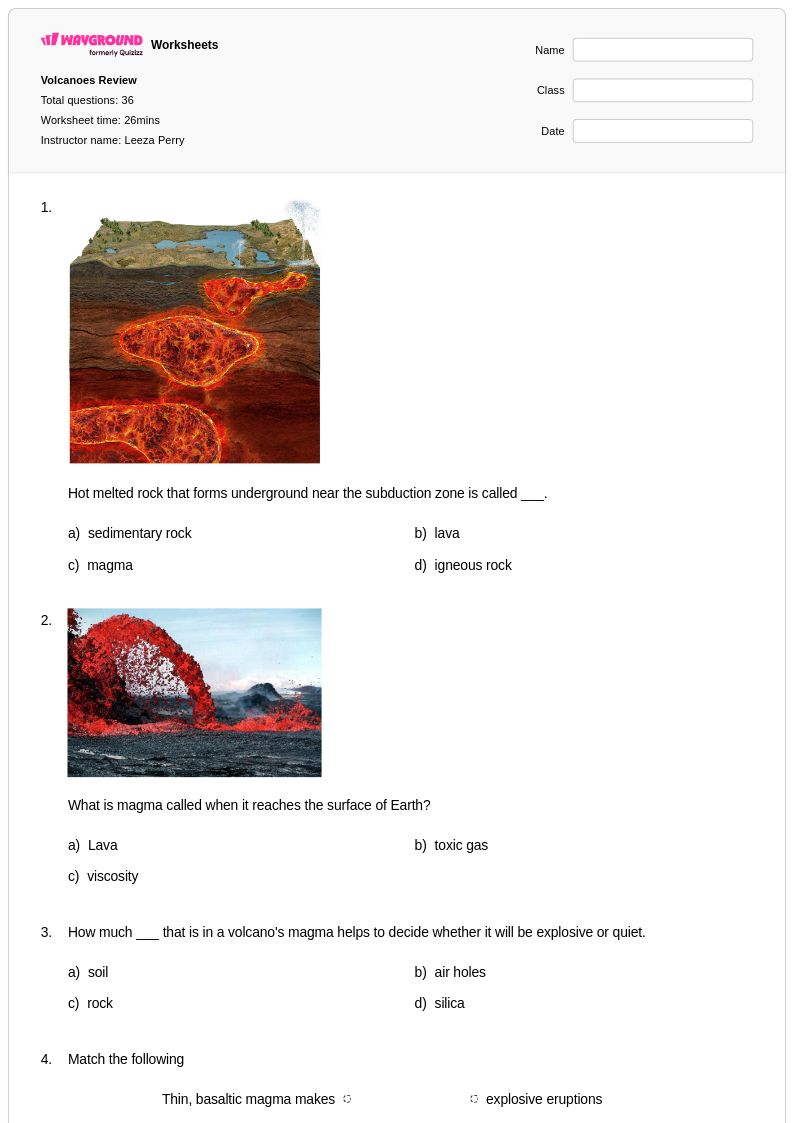
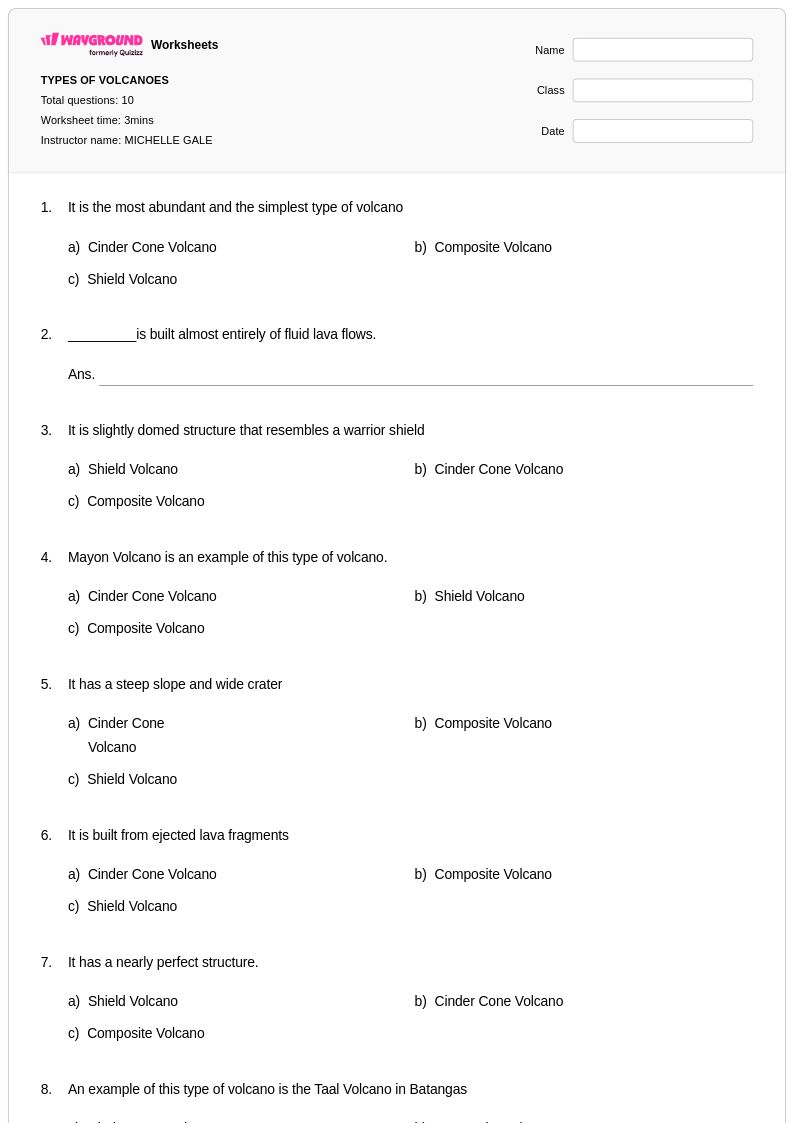
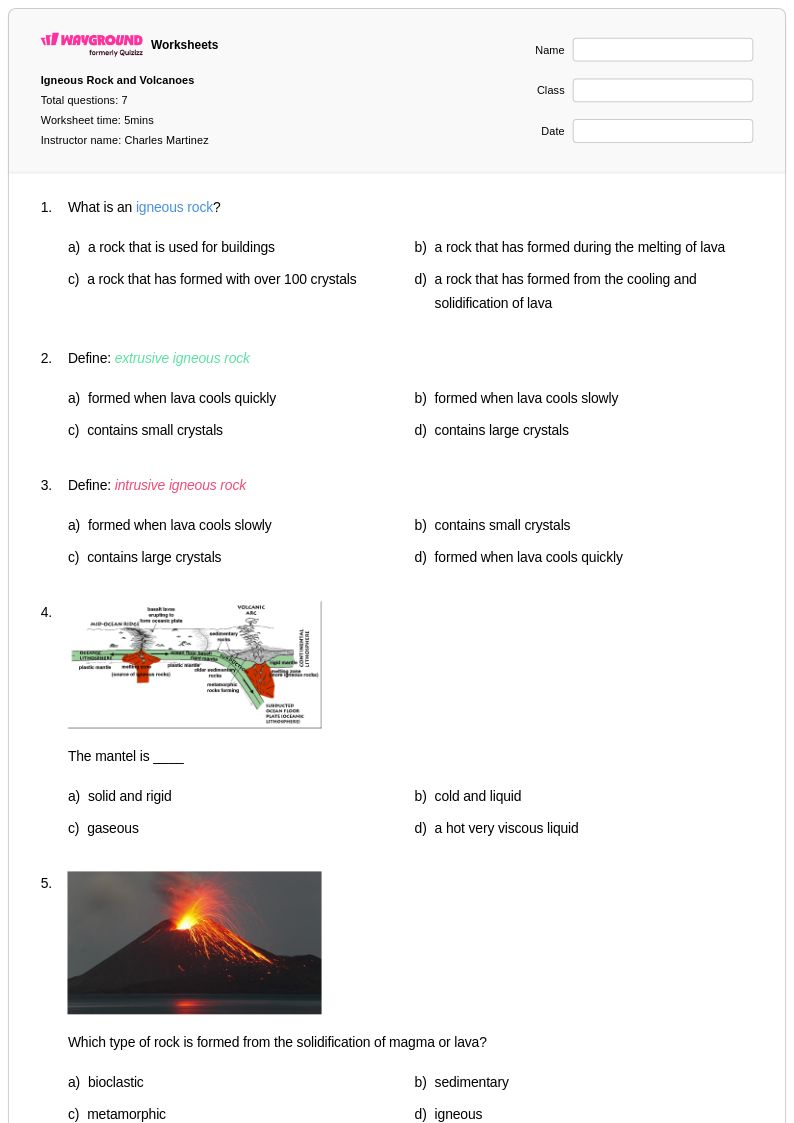
Explore comprehensive Class 9 volcanoes worksheets and printables from Wayground that help students master volcanic processes, eruption types, and geological formations through engaging practice problems, free PDF downloads, and detailed answer keys.
Explore printable Volcanoes worksheets for Class 9
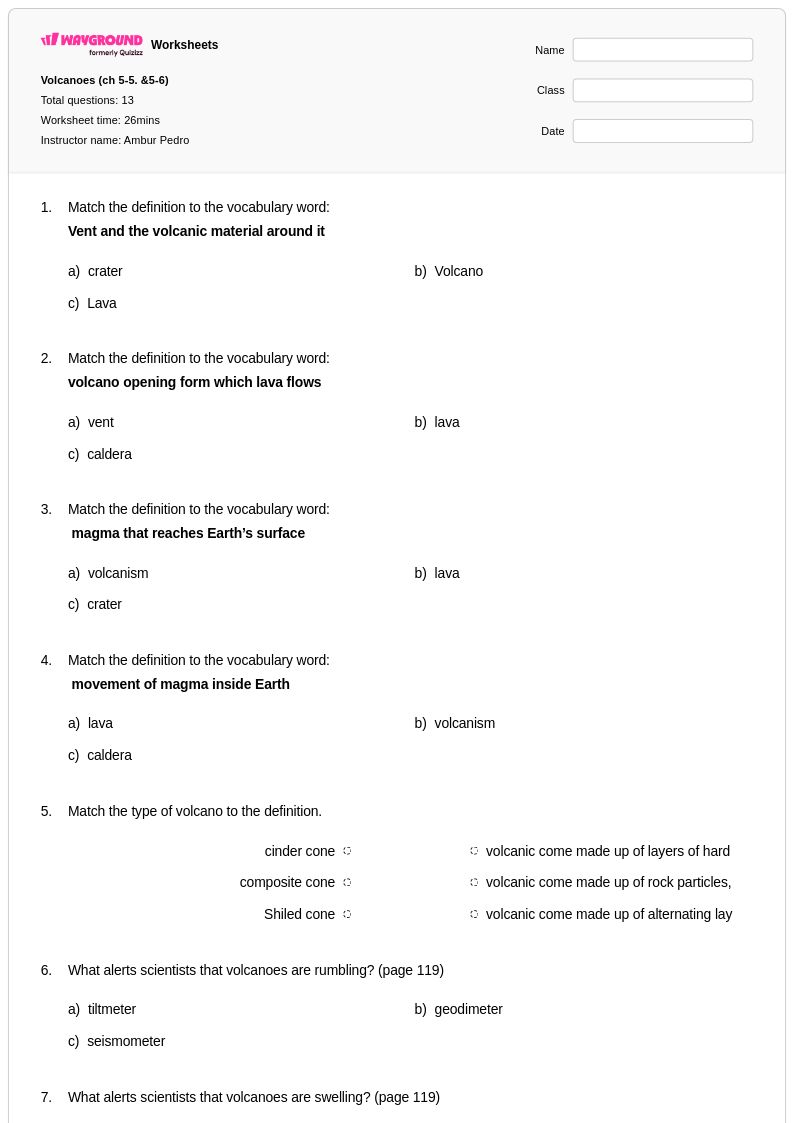
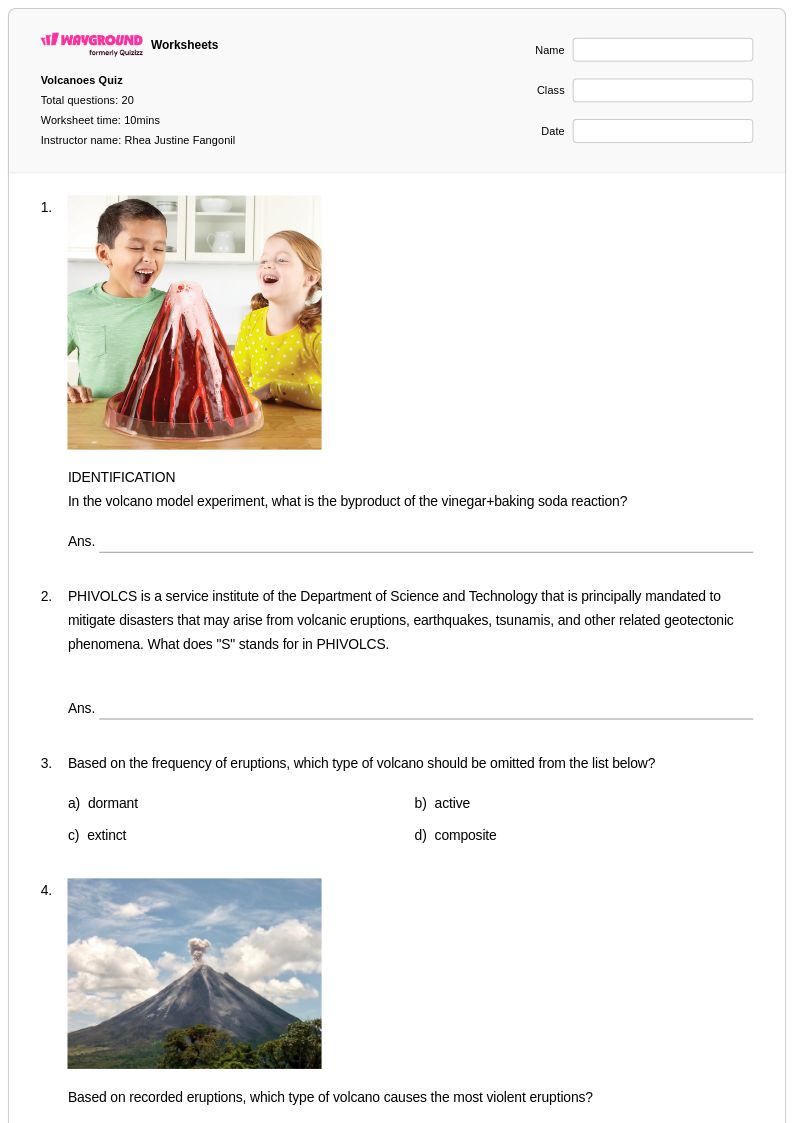
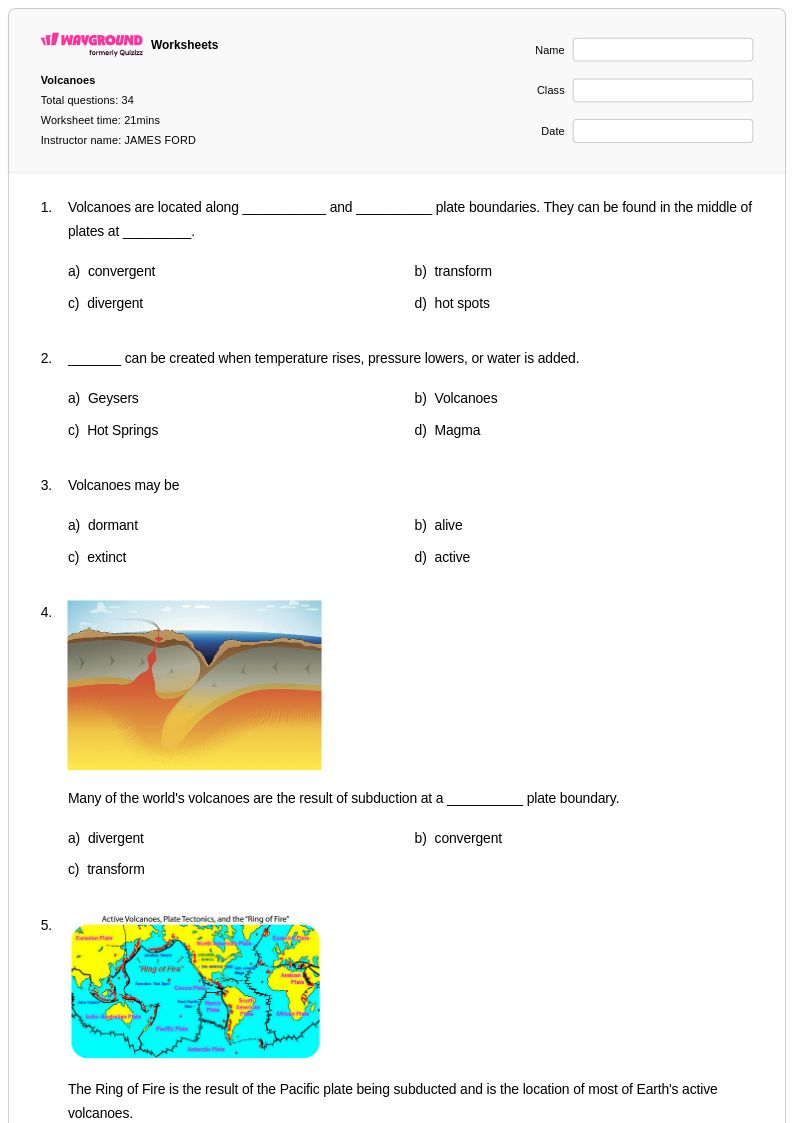
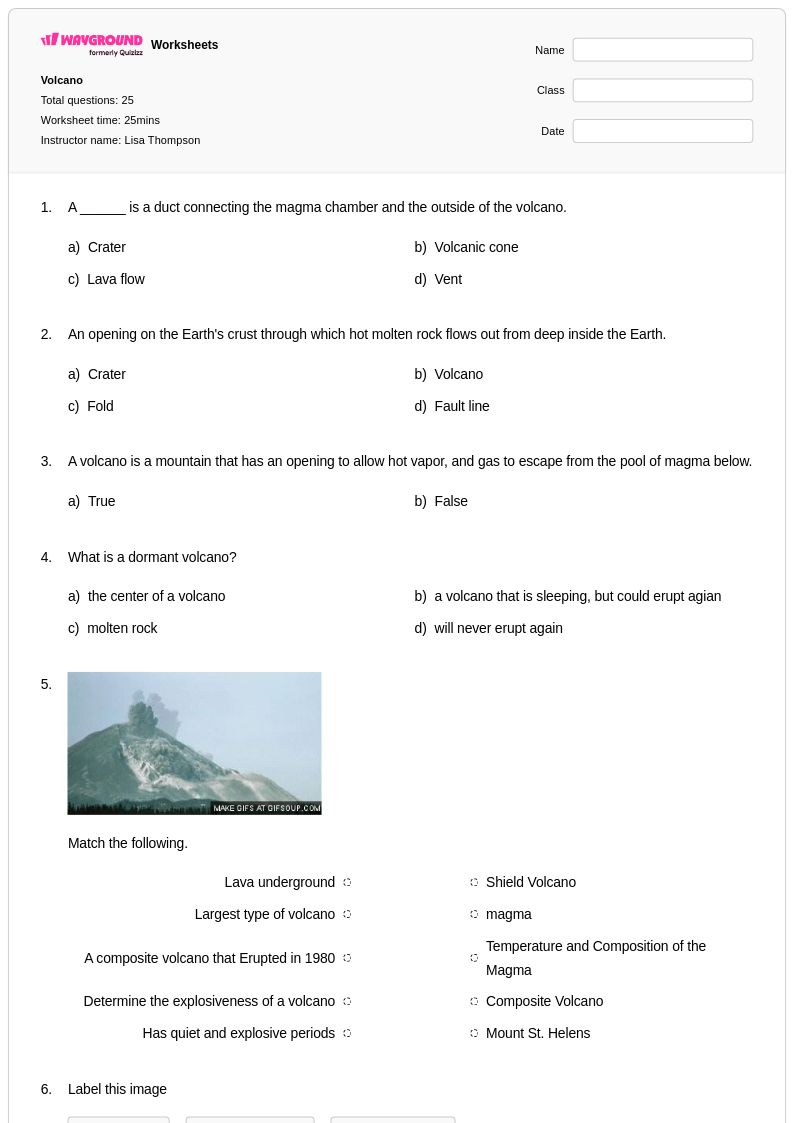
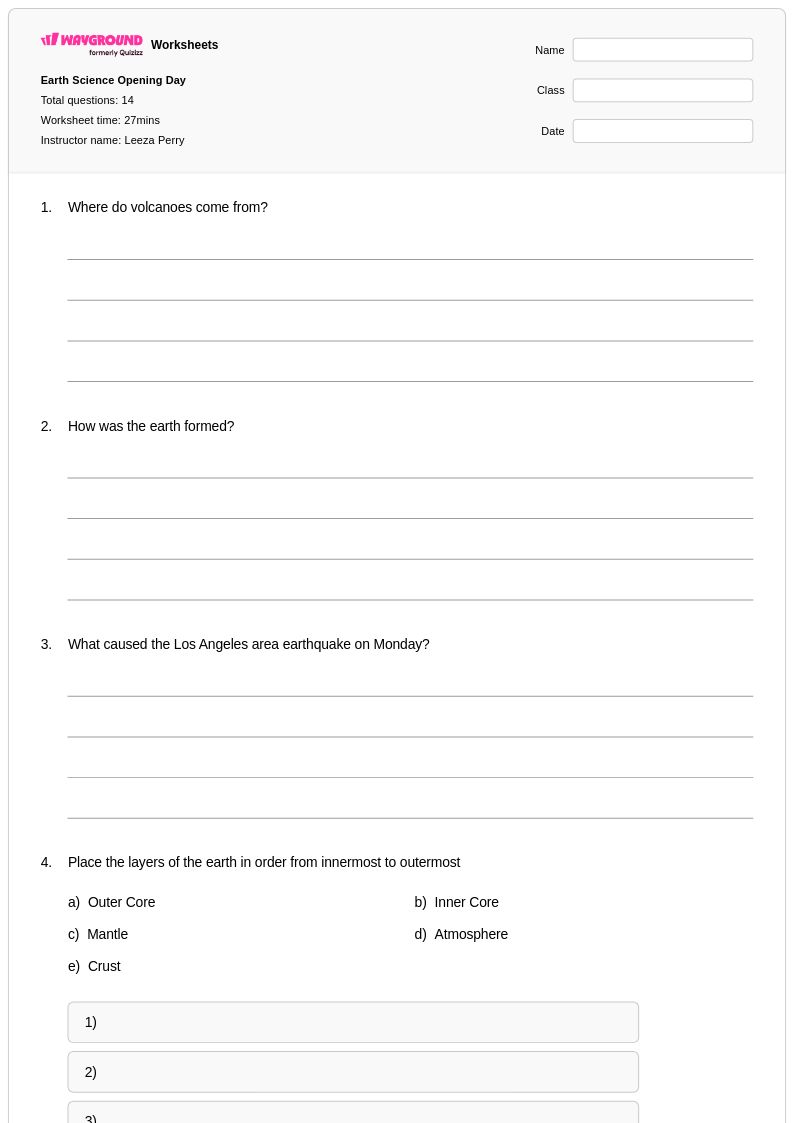
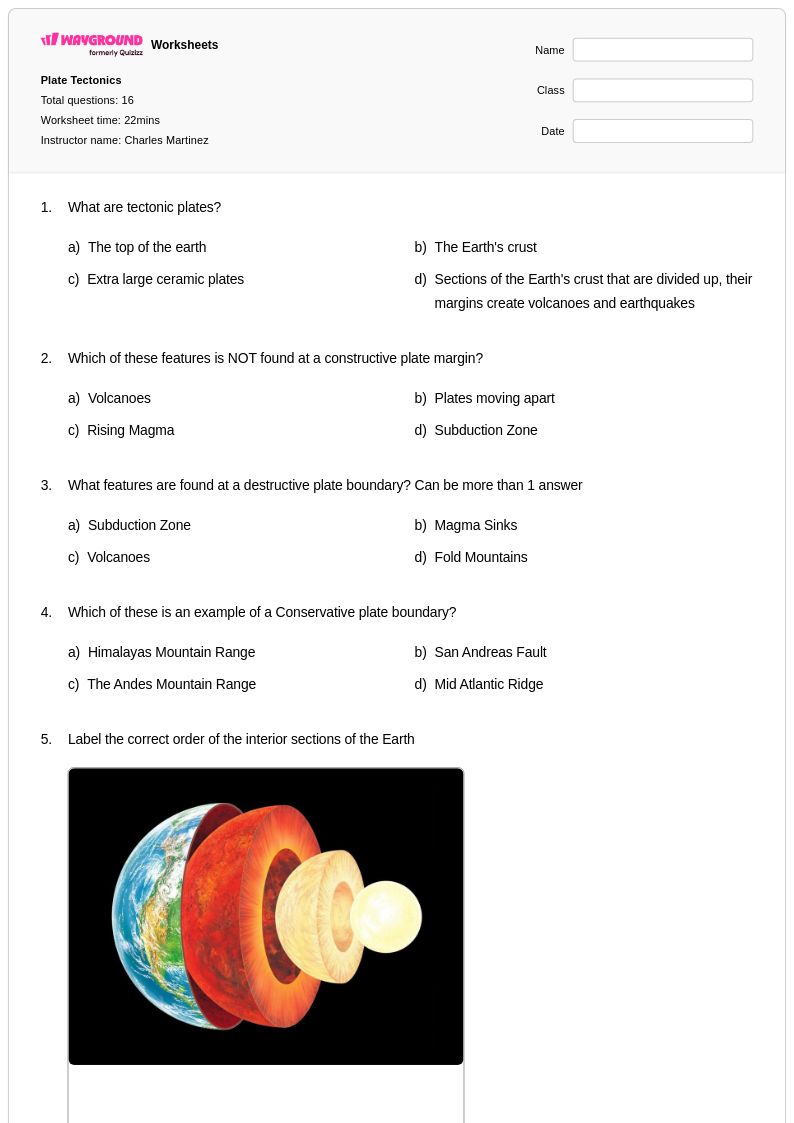
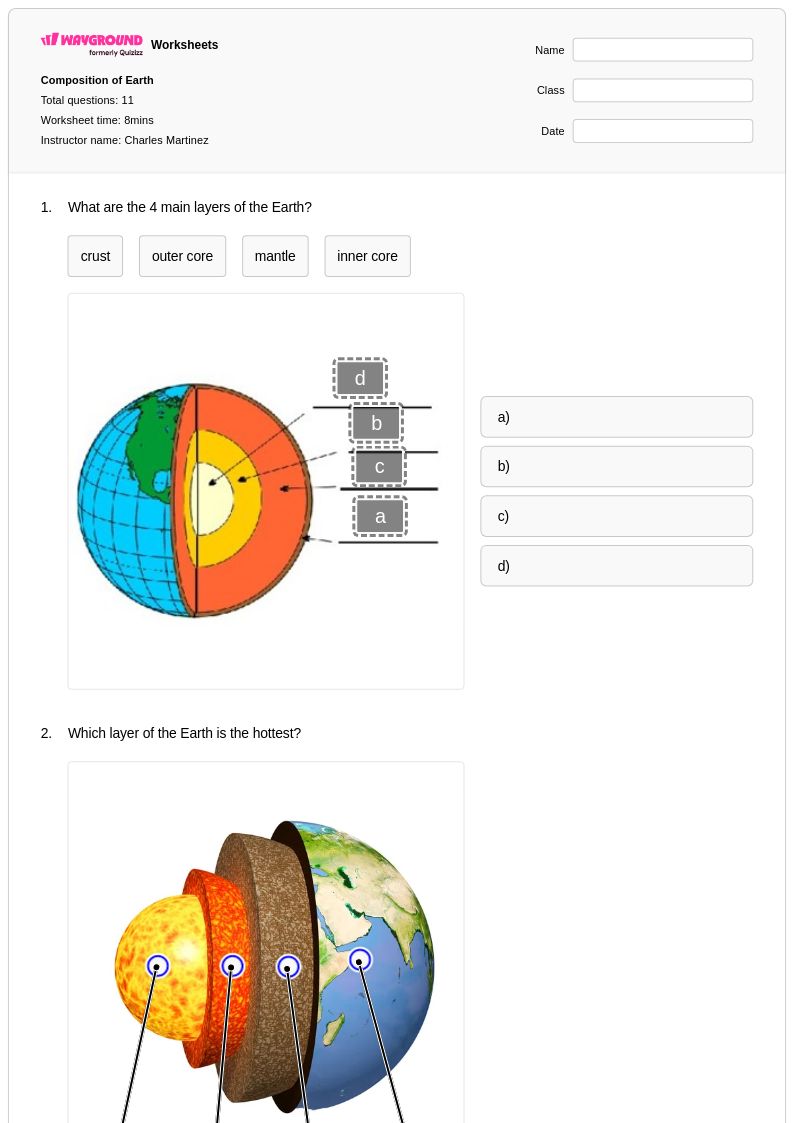
Volcano worksheets for Class 9 students provide comprehensive practice opportunities to explore the dynamic geological processes that shape our planet's surface. These educational resources strengthen critical skills in understanding volcanic formation, eruption types, plate tectonics relationships, and the environmental impacts of volcanic activity. Students engage with practice problems that cover essential concepts including magma composition, volcanic hazards assessment, and the Ring of Fire's geological significance. Free printable materials include detailed answer keys that support independent learning and allow students to verify their understanding of complex volcanic processes. PDF formats ensure easy classroom distribution while maintaining high-quality diagrams and cross-sectional illustrations that help visualize underground magma chambers and eruption mechanisms.
Wayground (formerly Quizizz) empowers educators with millions of teacher-created volcano worksheet resources that support diverse Class 9 Earth and Space Science curriculum needs. The platform's advanced search and filtering capabilities enable teachers to quickly locate materials aligned with specific learning standards while accessing differentiation tools that accommodate various student ability levels. Flexible customization options allow educators to modify existing worksheets or combine multiple resources to create targeted practice sessions for remediation or enrichment activities. Both printable and digital formats, including downloadable PDFs, provide versatile implementation options that seamlessly integrate with existing lesson plans. These comprehensive worksheet collections facilitate effective skill practice in volcanic concepts while streamlining instructional planning through organized, standards-based resource management.
FAQs
How do I teach volcanoes to middle or high school students?
Teaching volcanoes effectively starts with grounding students in plate tectonics and Earth's internal structure, since volcanic activity is a direct consequence of magma movement through the lithosphere. From there, teachers can build outward to eruption types, volcanic landforms, and real-world hazard assessment. Using case studies like Mount St. Helens or Kilauea helps students connect geological processes to observable, documented events rather than treating volcanoes as abstract phenomena.
What exercises help students practice identifying types of volcanoes and eruption styles?
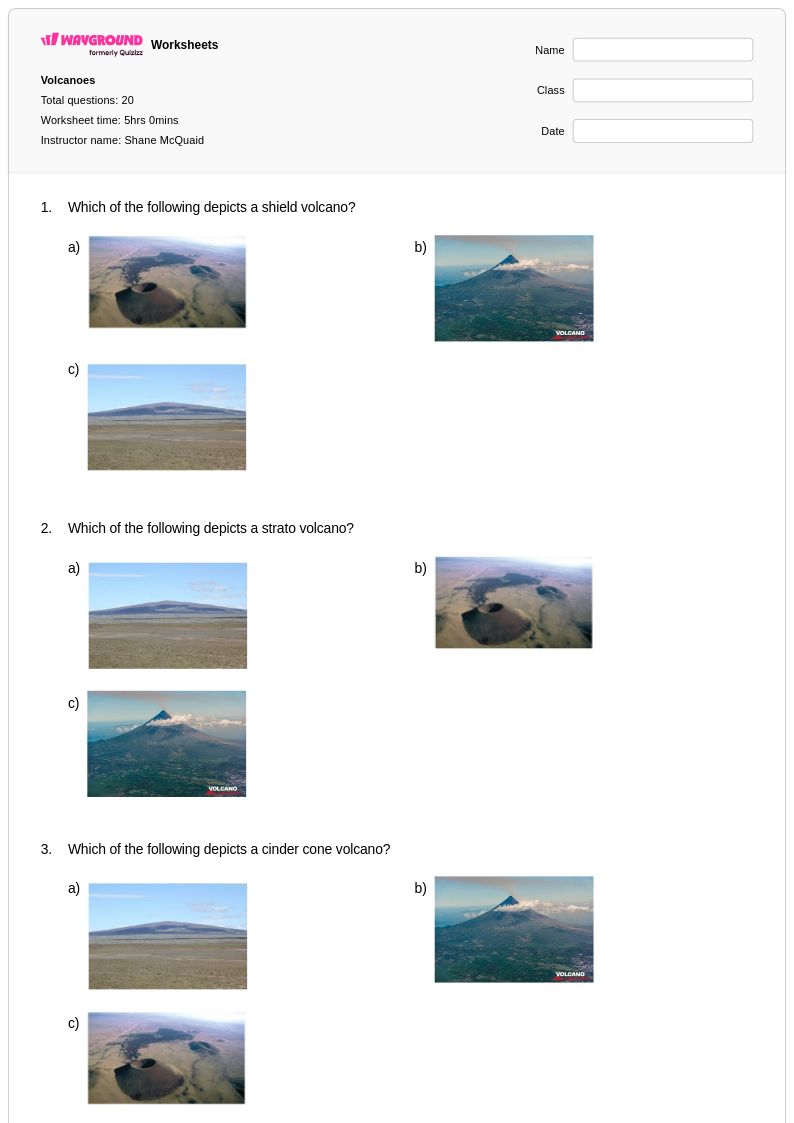
Effective practice exercises ask students to classify volcanoes (shield, cinder cone, composite) based on structural diagrams and magma viscosity data, then predict the likely eruption style for each. Labeling cross-section diagrams of volcanic structures reinforces terminology like magma chamber, vent, and crater. Comparing real eruption datasets — such as lava flow speed versus explosivity index — pushes students to apply classification skills to authentic scientific evidence.
What mistakes do students commonly make when learning about volcanoes?
One of the most common misconceptions is that all volcanoes erupt explosively — students often don't connect magma viscosity and silica content to eruption style, assuming every eruption looks like a Hollywood disaster film. Another frequent error is conflating magma and lava, not recognizing that the same molten rock simply changes names once it reaches the surface. Students also tend to treat volcanic hazards as isolated events rather than understanding that a single eruption can trigger pyroclastic flows, lahars, ashfall, and tsunamis simultaneously.
How do volcanoes relate to plate tectonics, and how do I help students see that connection?
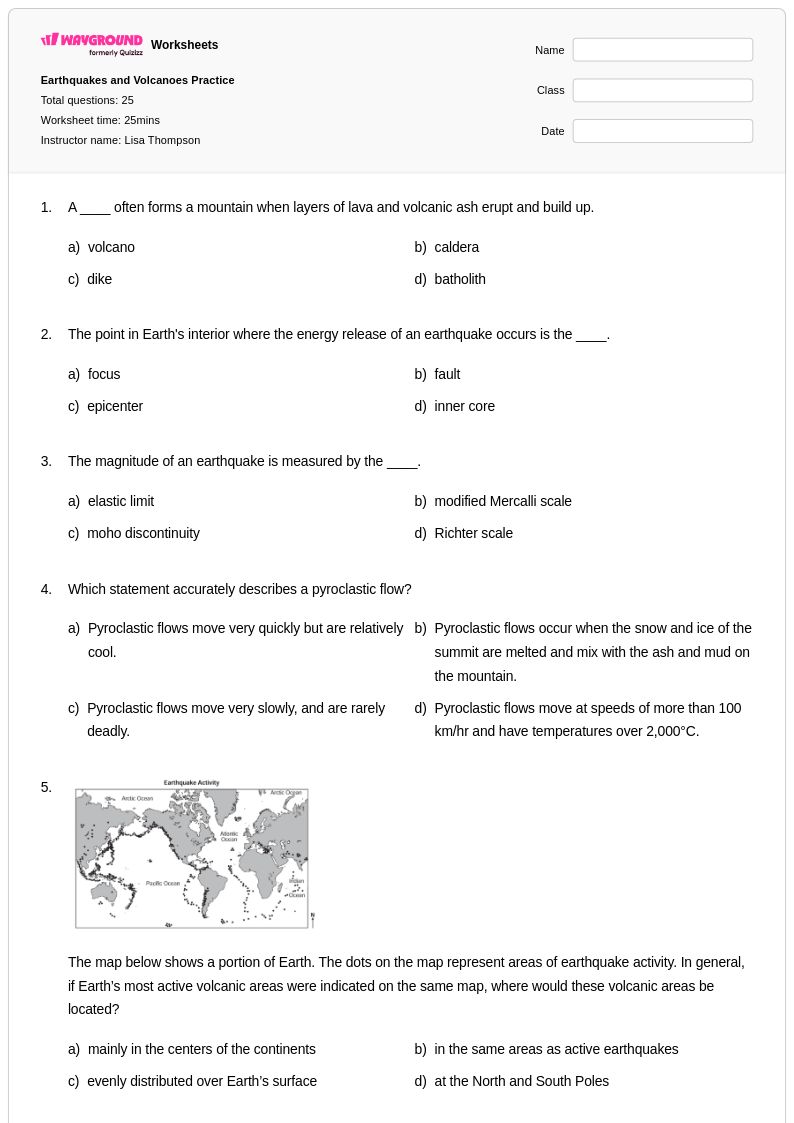
Most volcanic activity occurs at tectonic plate boundaries or hotspots, making volcanoes one of the clearest surface expressions of plate movement and mantle dynamics. Students often struggle to see this connection because plate tectonics operates on geological timescales that feel abstract. Mapping volcanic activity alongside plate boundary maps is one of the most effective ways to make the relationship visual and concrete, helping students recognize that subduction zones, divergent boundaries, and hotspots each produce distinct volcanic patterns.
How do I use Wayground's volcano worksheets in my classroom?
Wayground's volcano worksheets are available as printable PDFs for traditional classroom use and in digital formats for technology-integrated or remote learning environments, giving teachers flexibility across different instructional settings. Teachers can also host worksheets as a quiz directly on Wayground, enabling real-time student responses and built-in answer key support. The range of materials spans foundational volcanic terminology through advanced topics like pyroclastic flows and volcanic hazard assessment, making it practical to differentiate within a single class period.
How can I differentiate volcano instruction for students at different skill levels?
For students who need foundational support, start with vocabulary-building worksheets focused on basic volcanic structures and eruption terminology before introducing process-based analysis. More advanced students can engage with materials that incorporate real geological data, hazard mapping, or research into current volcanology findings. On Wayground, teachers can apply individual accommodations such as read-aloud support, reduced answer choices, or extended time to specific students, allowing the same worksheet session to meet a range of learning needs without requiring entirely separate materials.