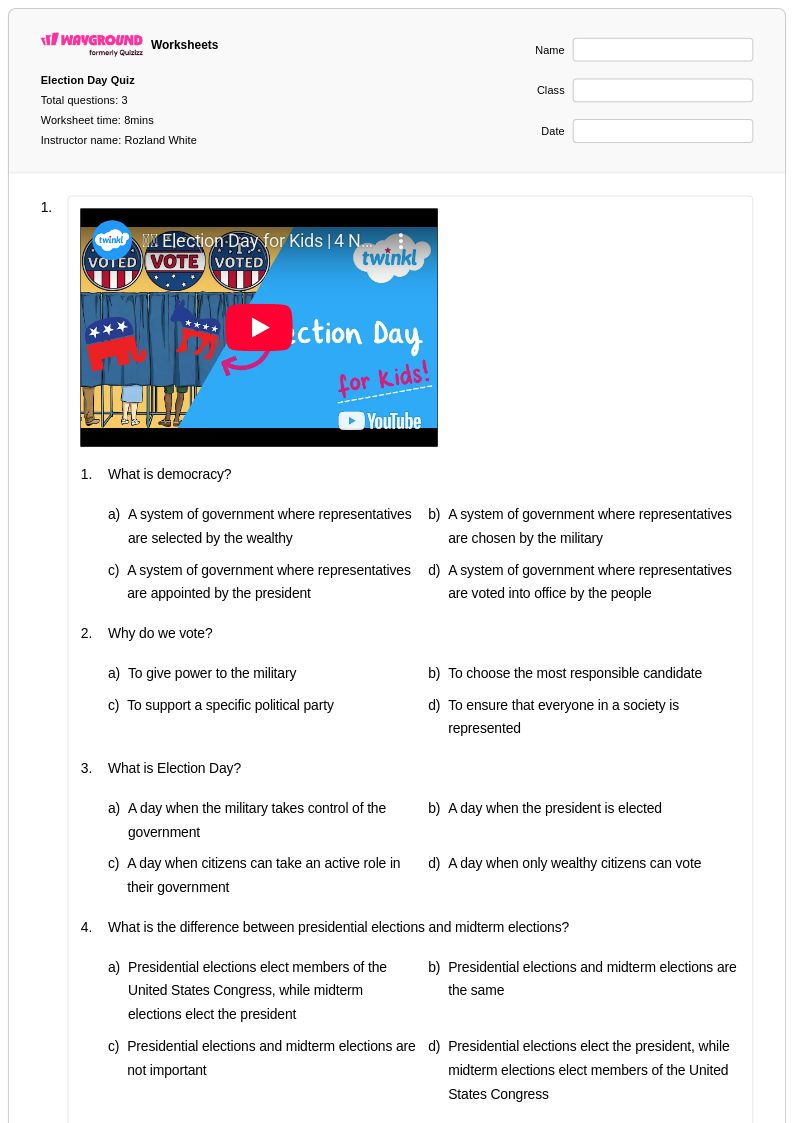
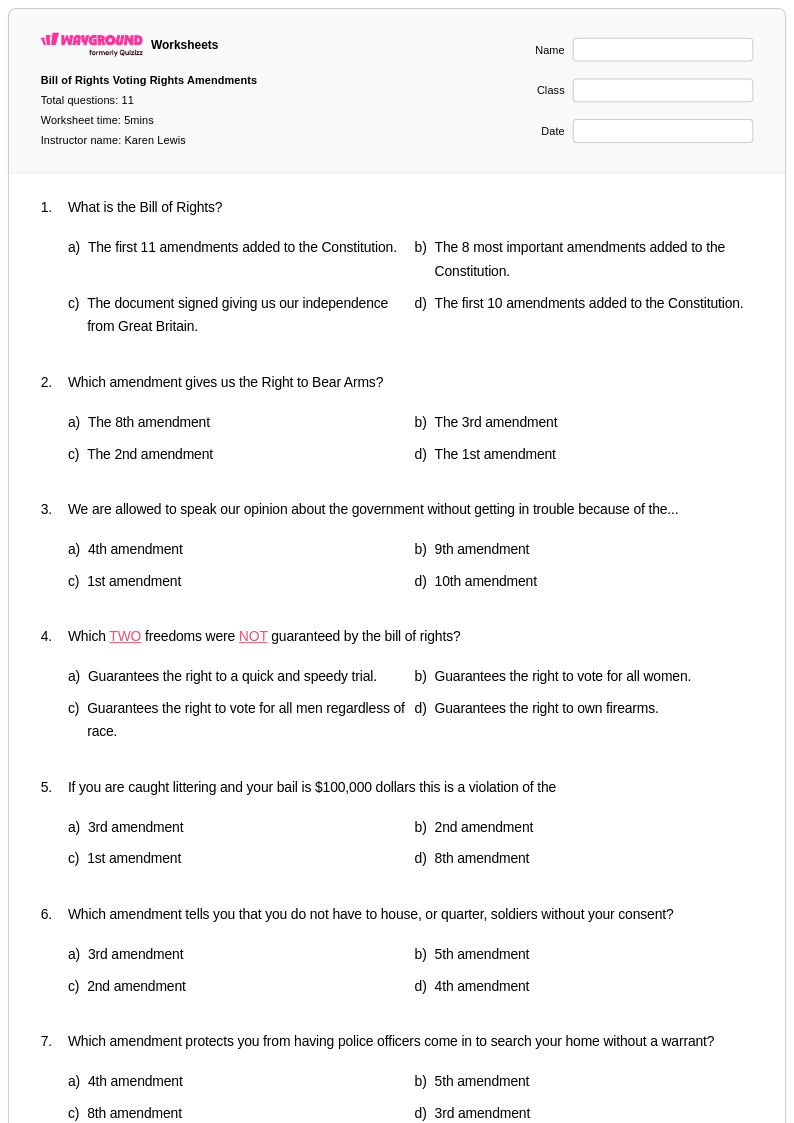
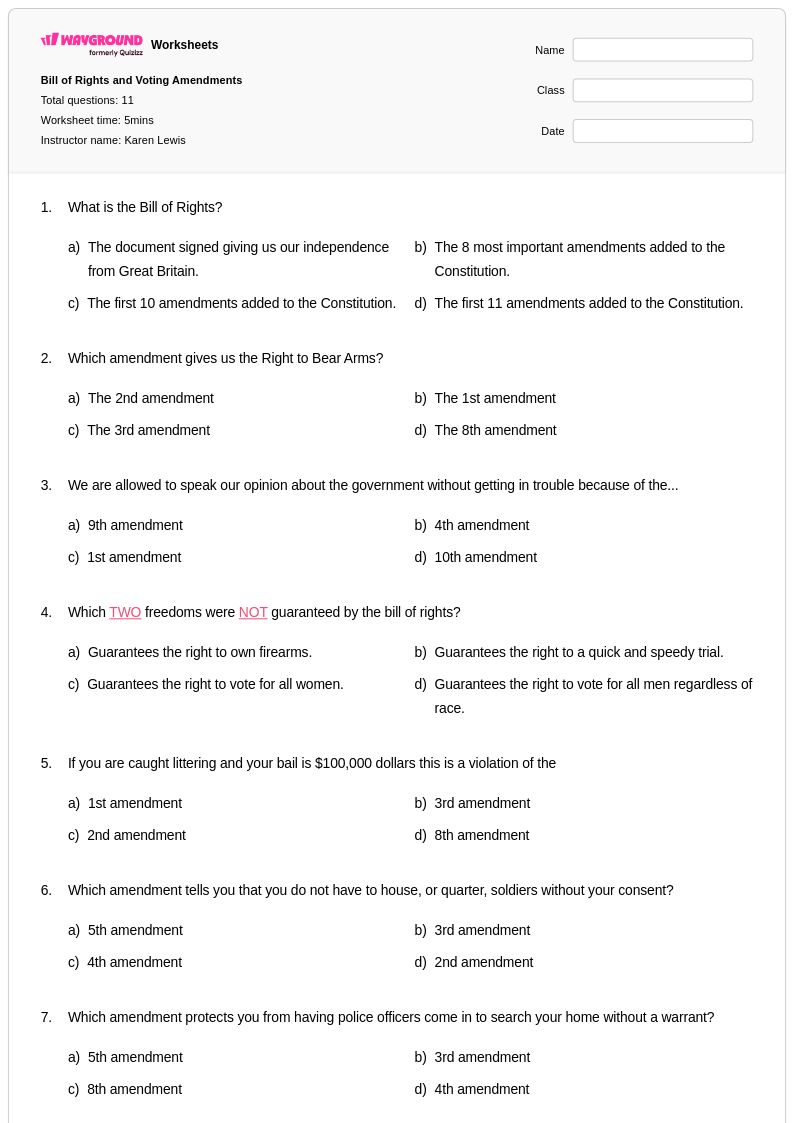
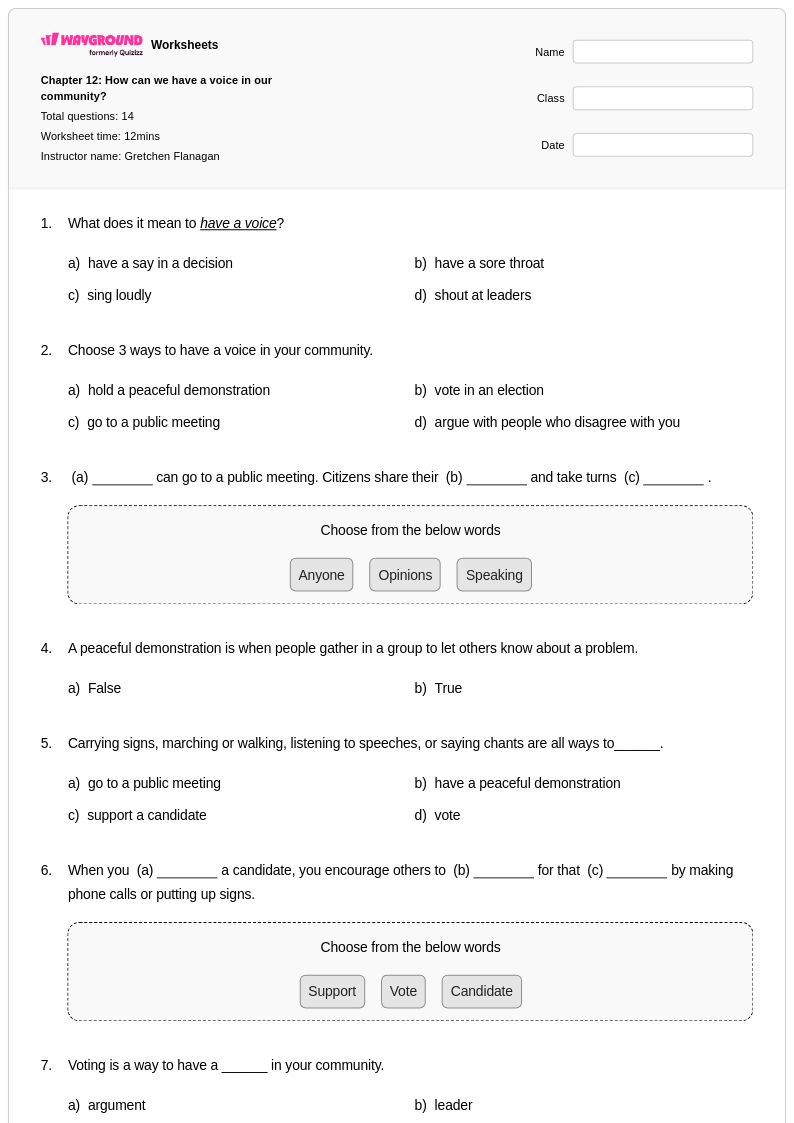
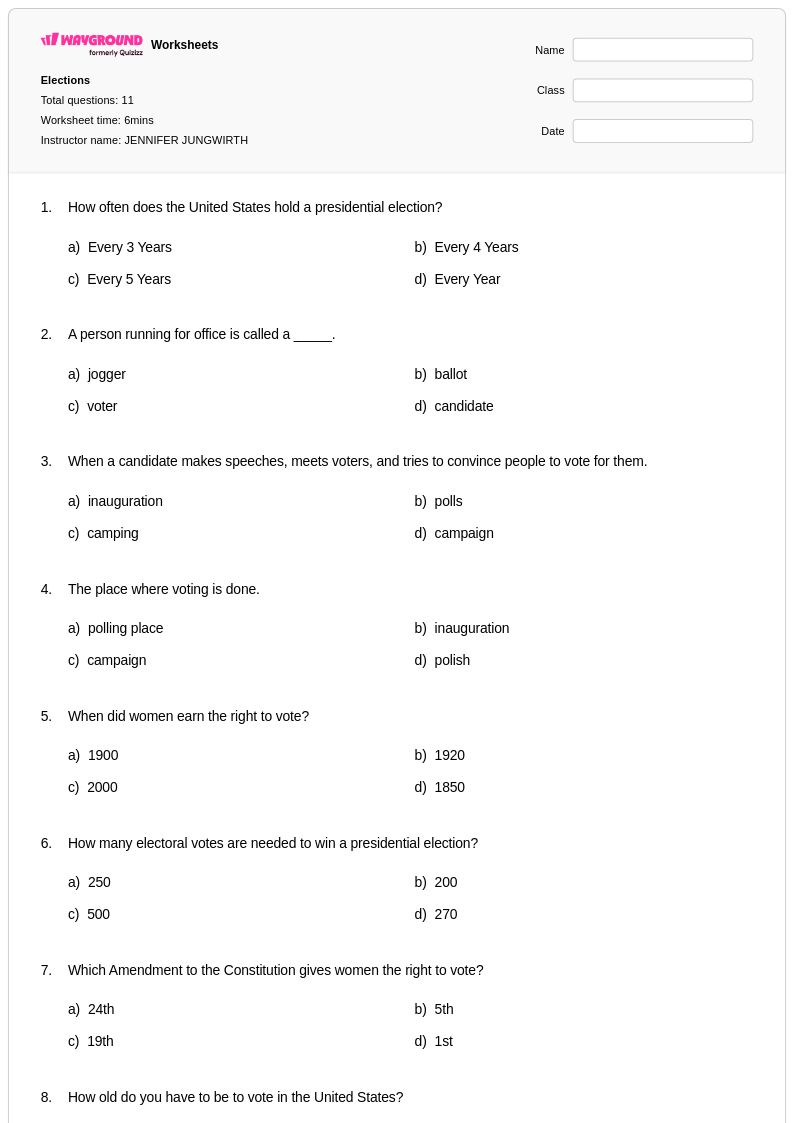
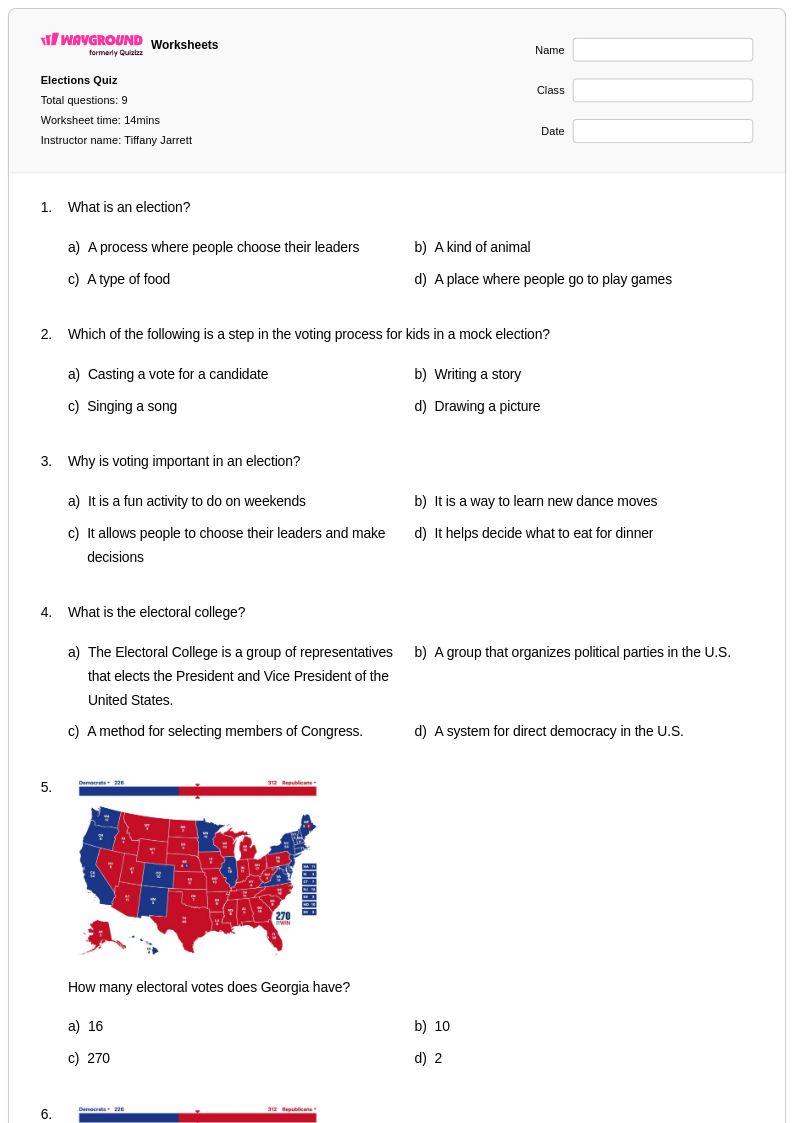
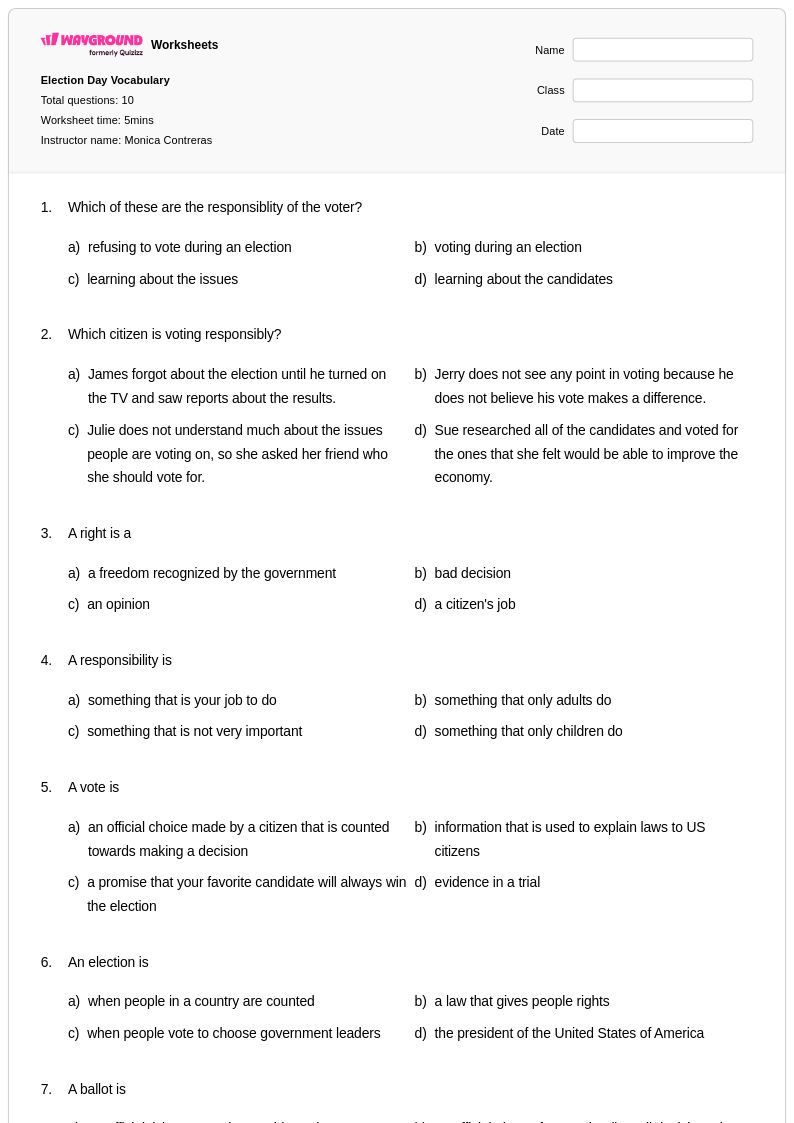
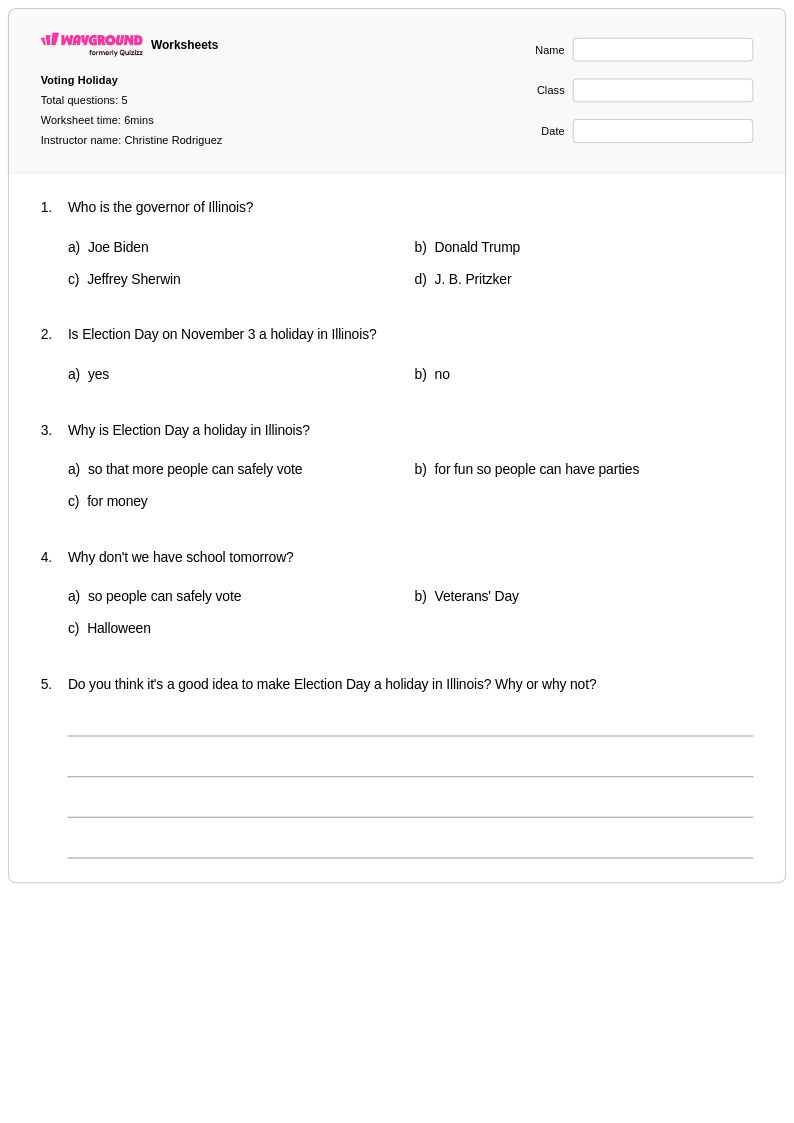
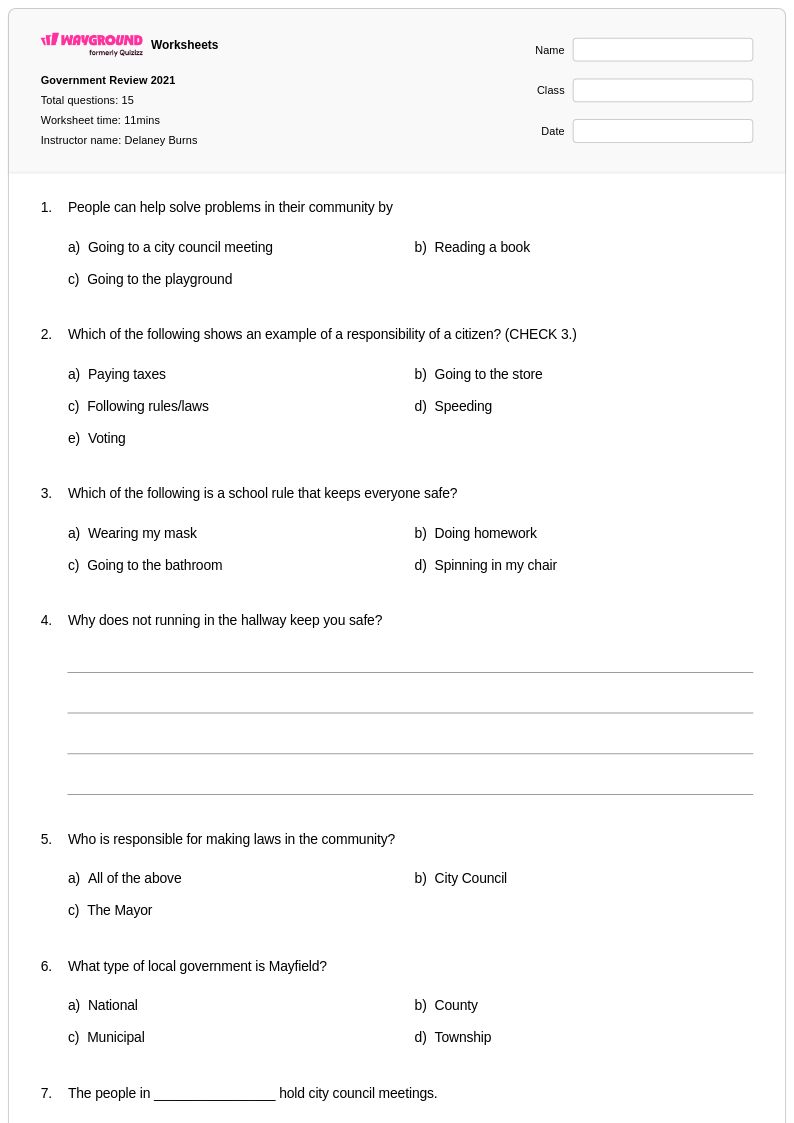
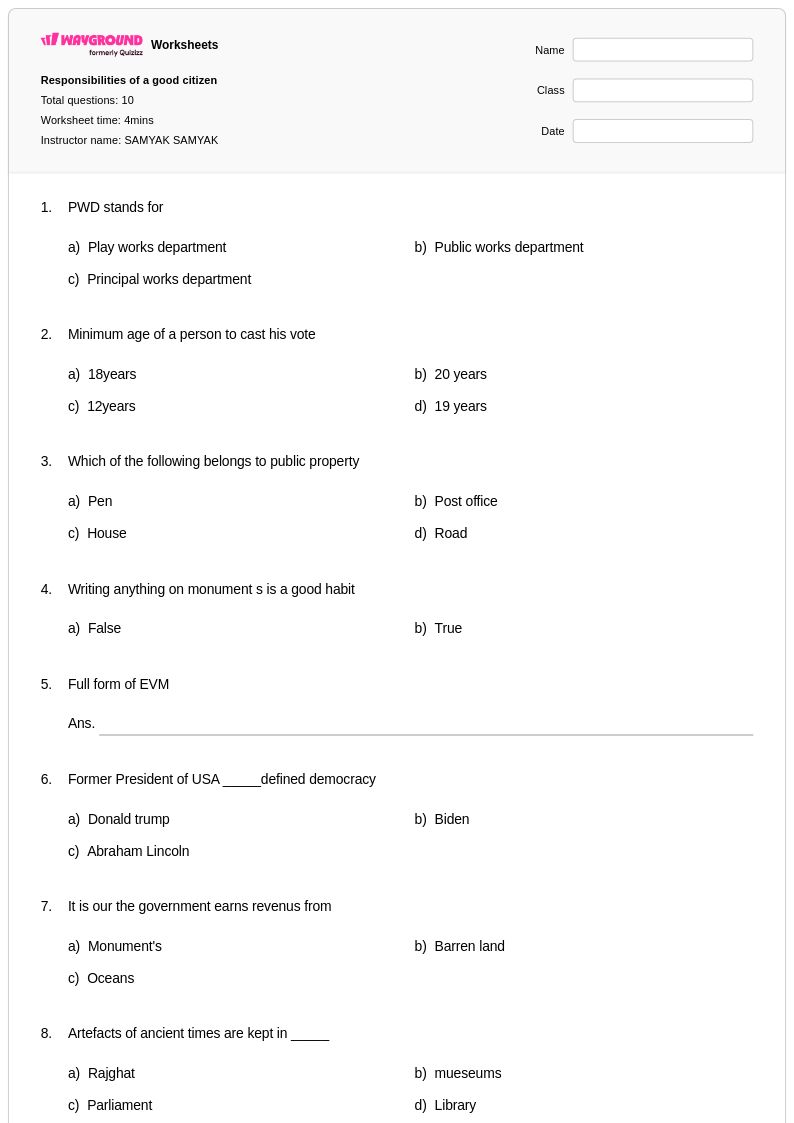
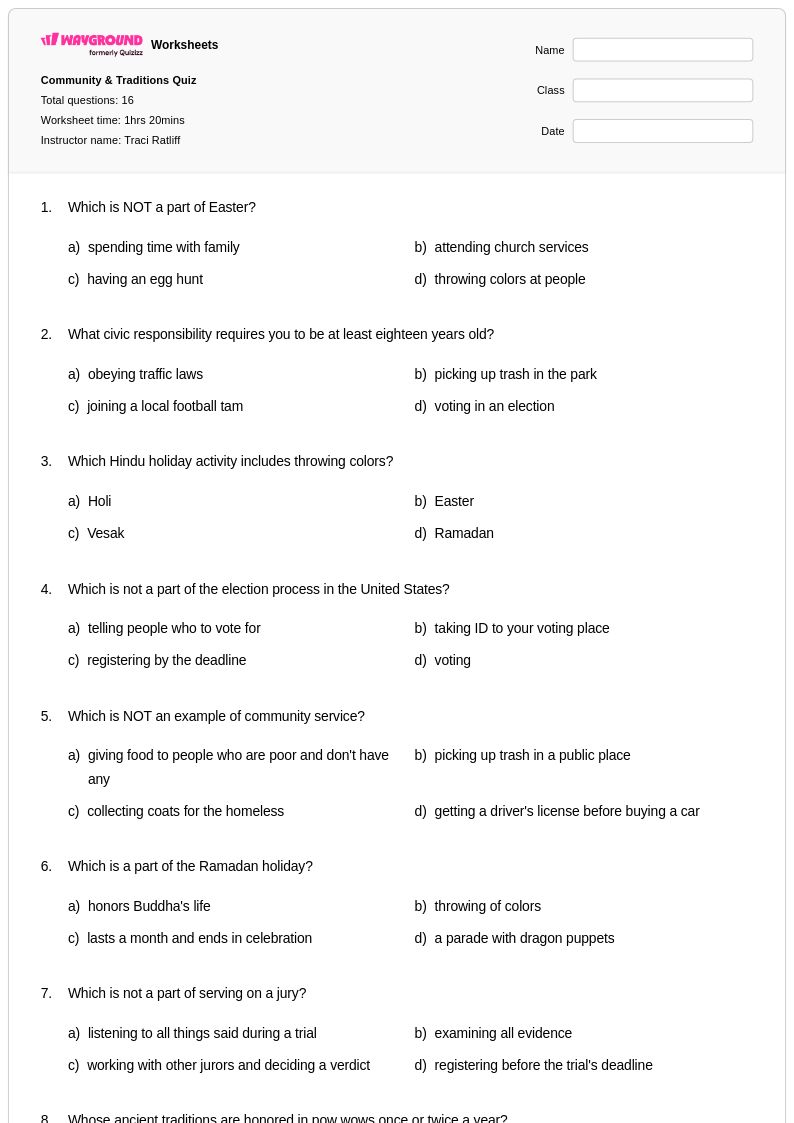
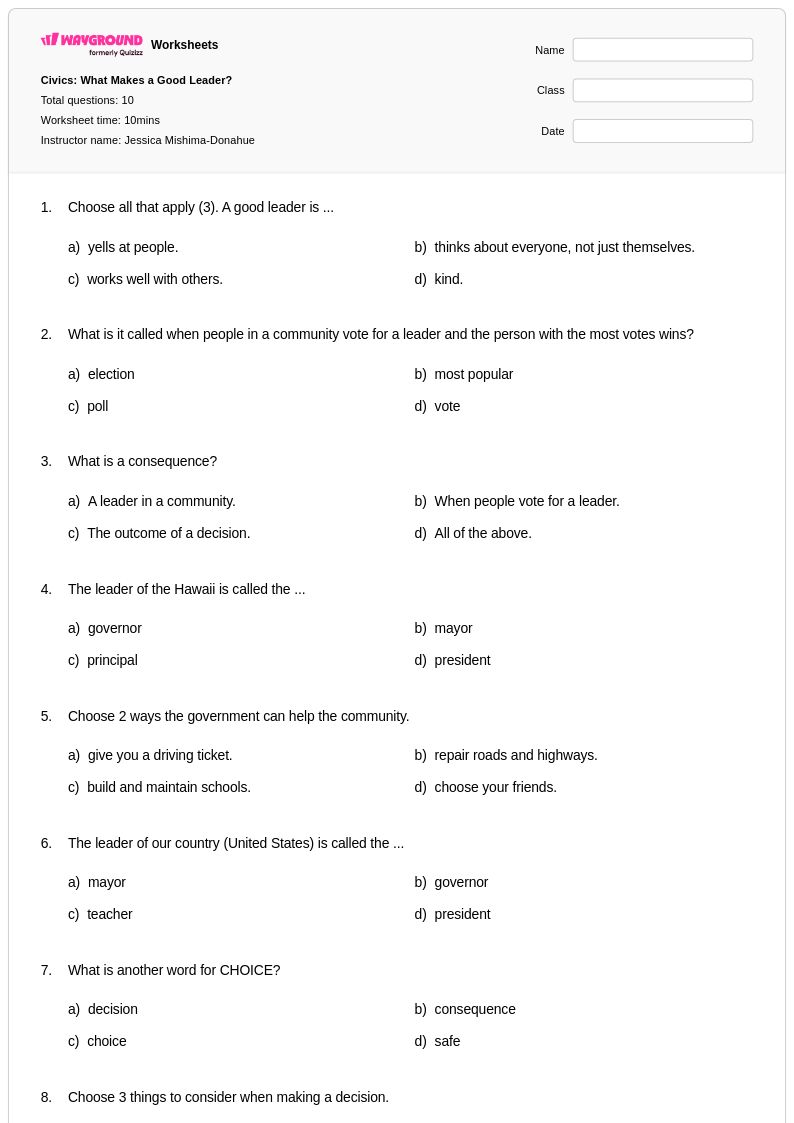
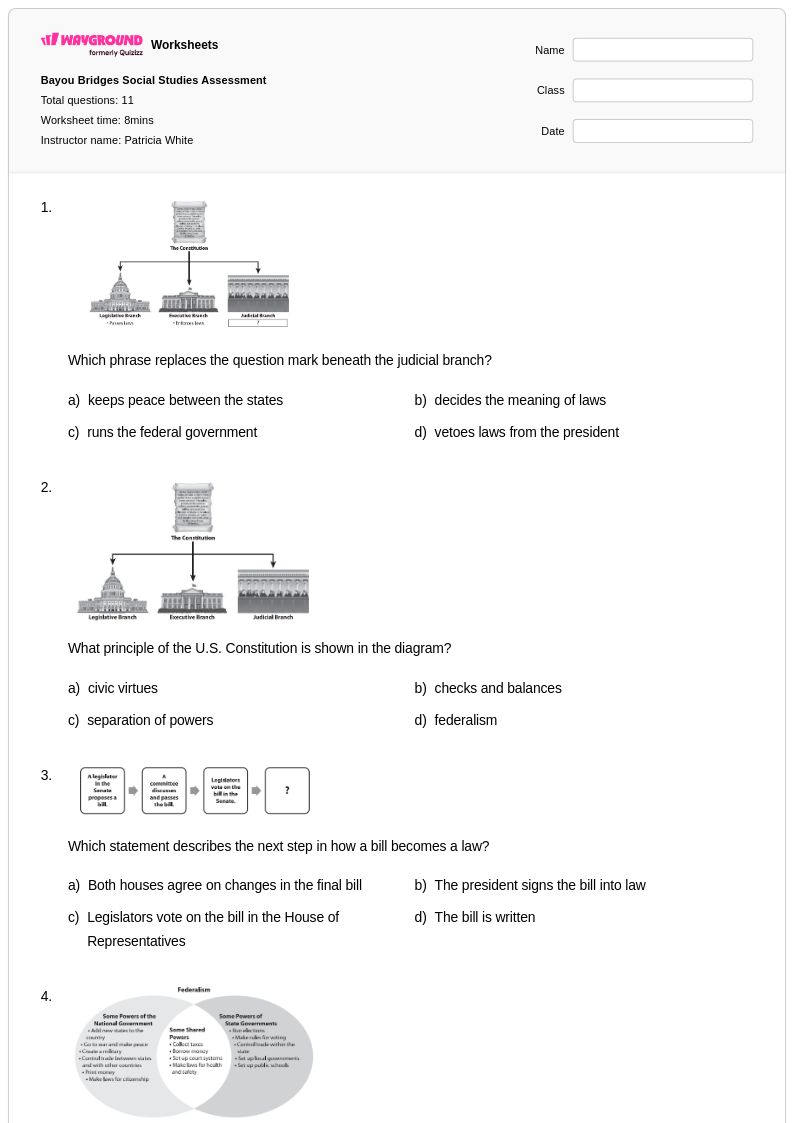
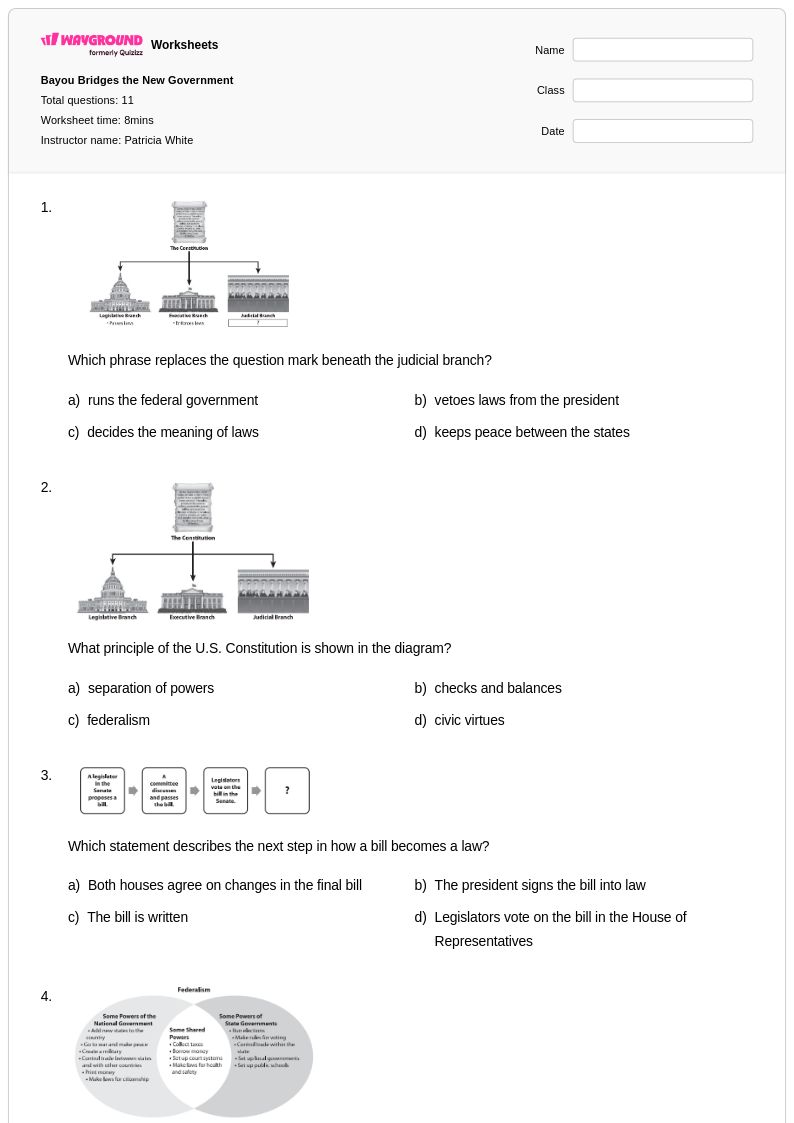
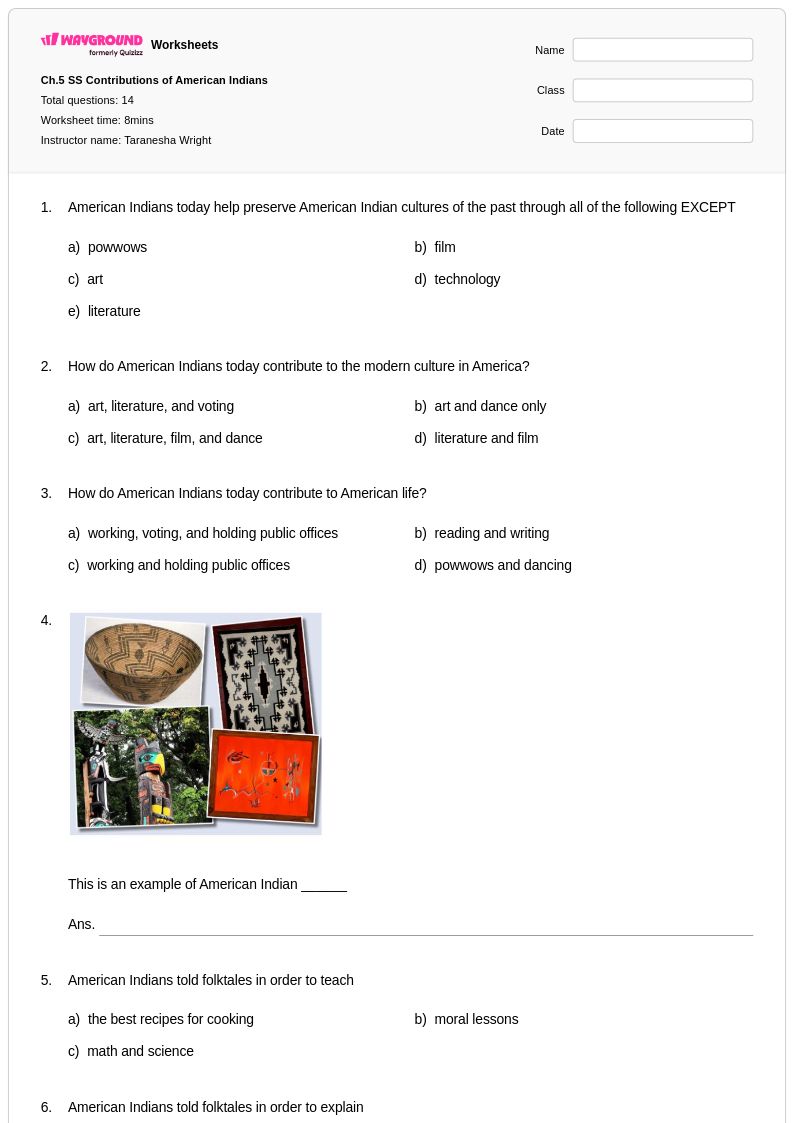
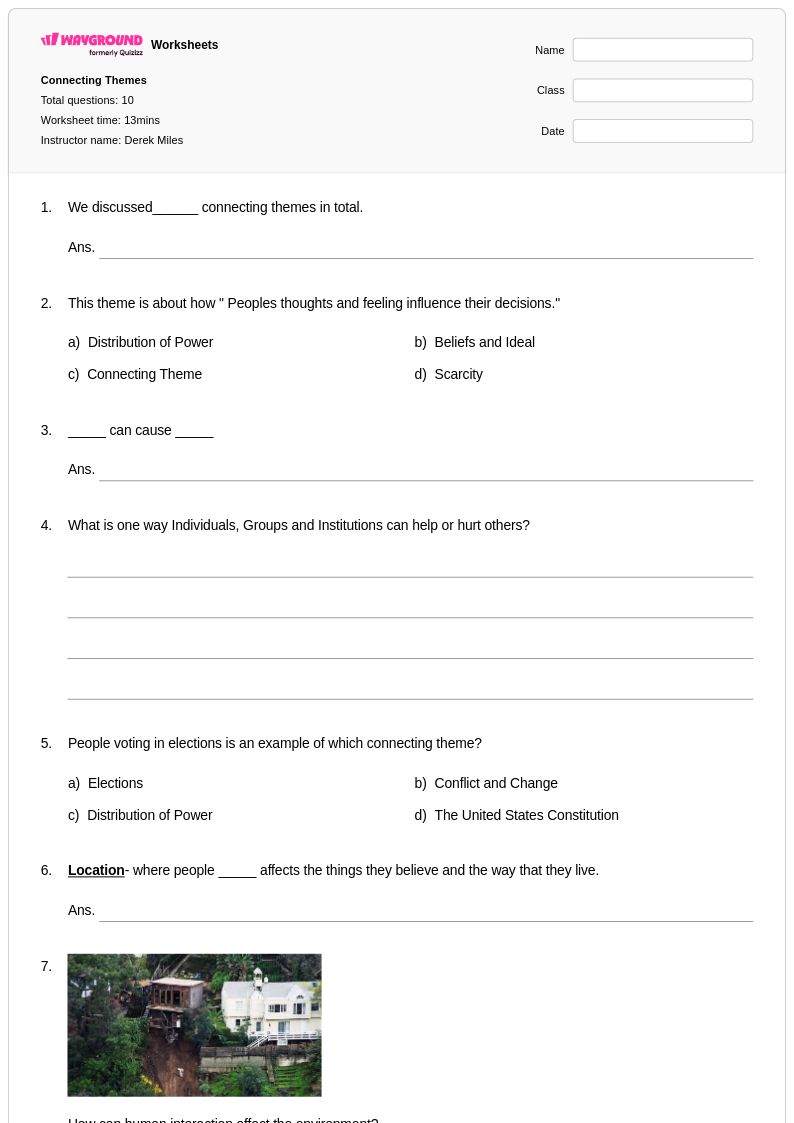
Free Class 3 voting worksheets and printables help students learn about elections, civic participation, and democratic processes through engaging practice problems with answer keys available as downloadable PDFs.
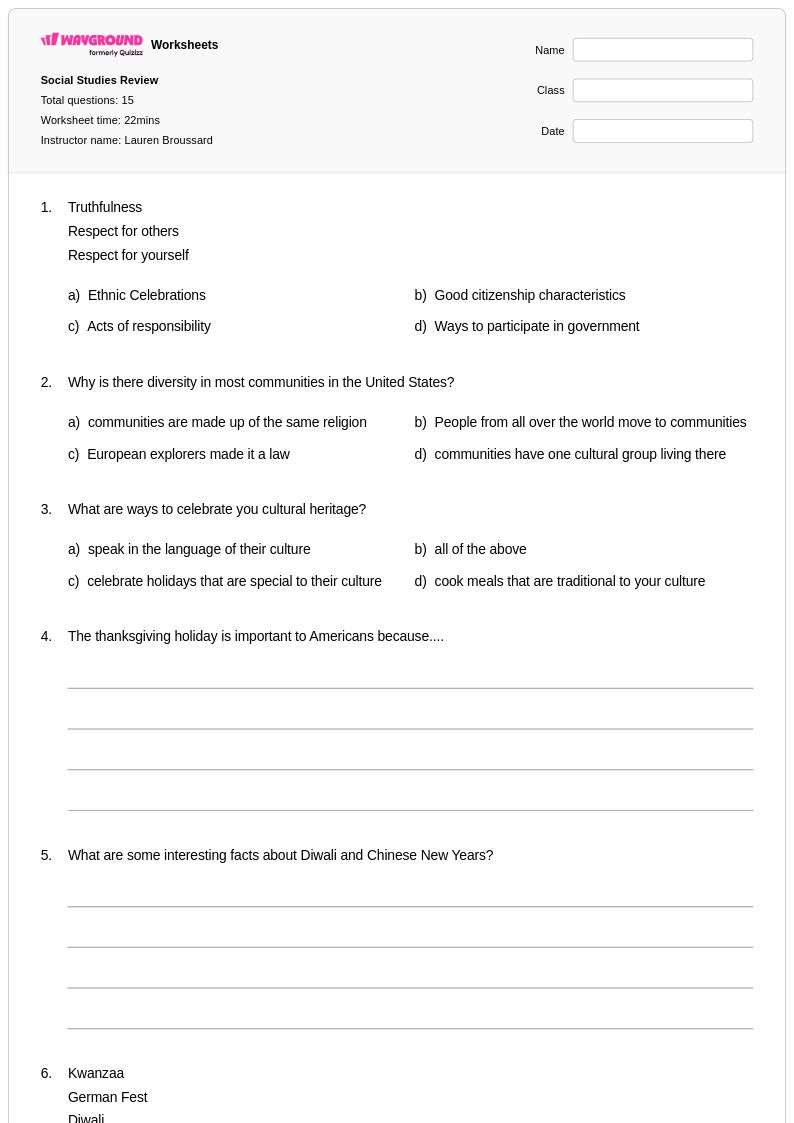
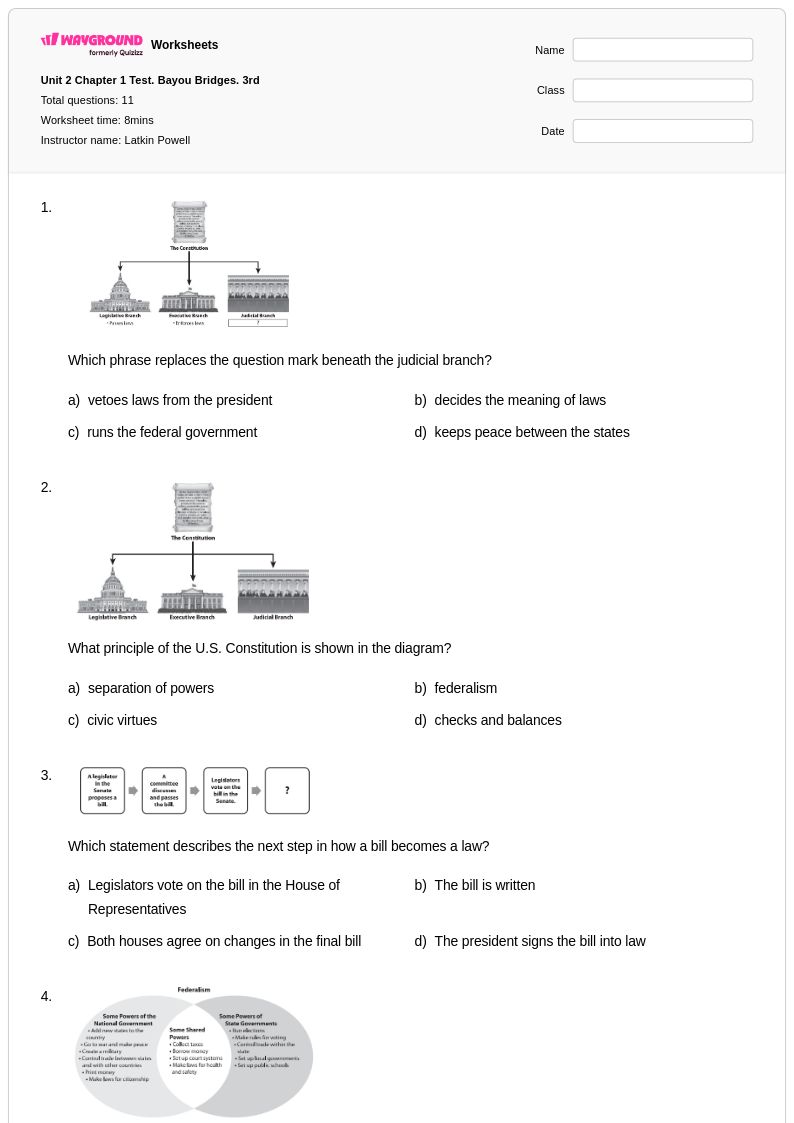
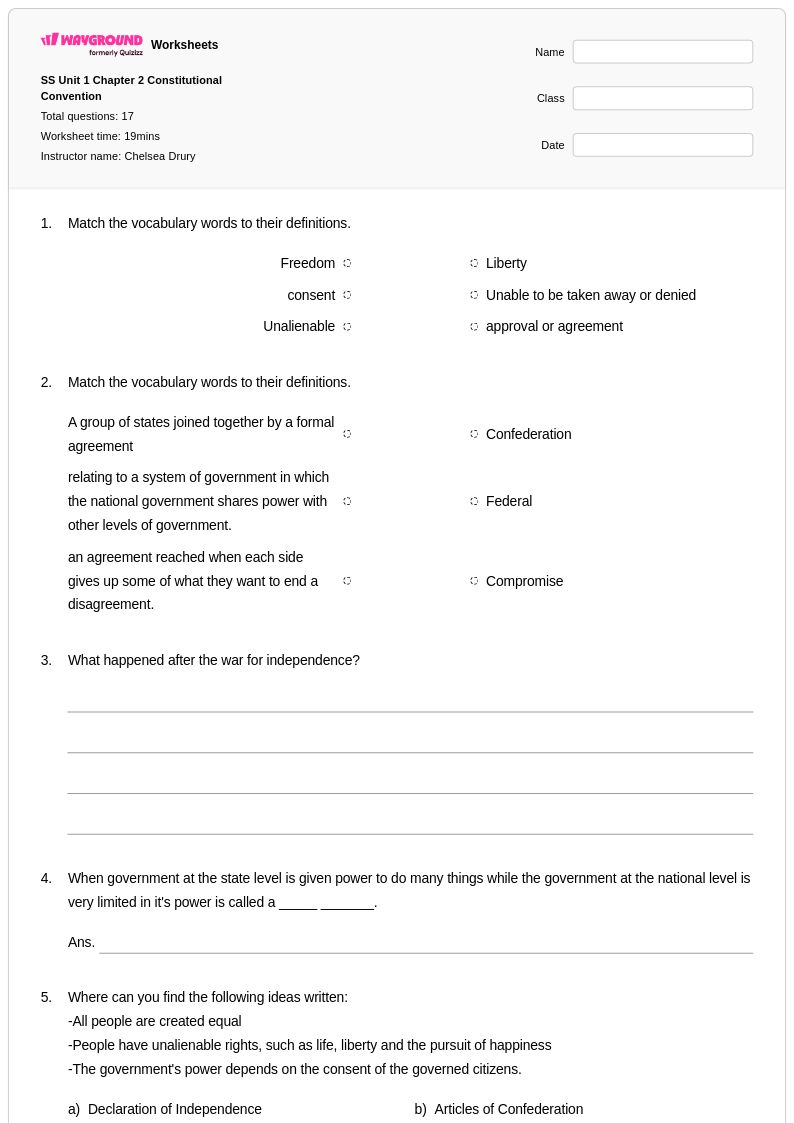
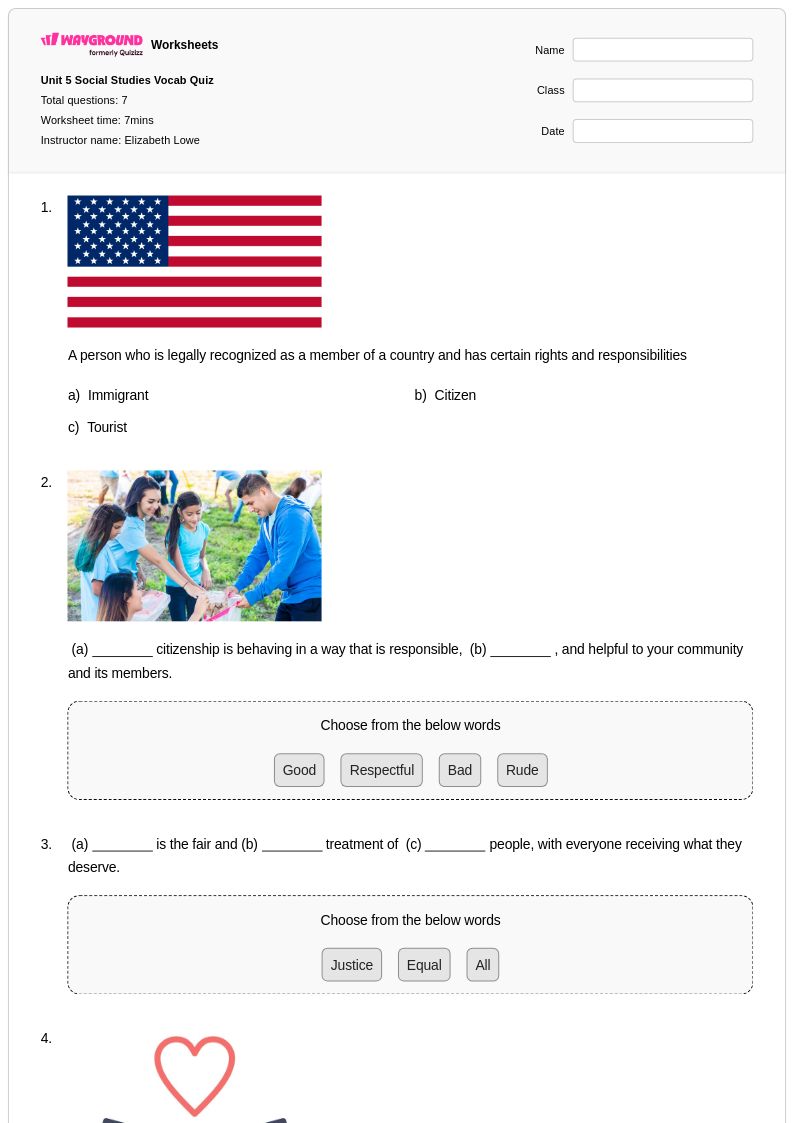
Class 3 voting worksheets available through Wayground (formerly Quizizz) provide young learners with foundational knowledge about democratic participation and civic responsibility. These educational resources introduce third-grade students to essential voting concepts including the purpose of elections, the importance of making informed choices, and how citizens participate in democracy. The worksheets strengthen critical thinking skills by engaging students with age-appropriate scenarios about school elections, community decision-making, and basic democratic principles. Teachers can access comprehensive materials that include answer keys for efficient grading, free printables for classroom distribution, and structured practice problems that help students understand voting procedures, ballot completion, and the significance of every vote in a democratic society.
Wayground (formerly Quizizz) supports educators with an extensive collection of teacher-created voting resources specifically designed for Class 3 social studies instruction. The platform's millions of educational materials include robust search and filtering capabilities that allow teachers to quickly locate worksheets aligned with civics and government standards. These differentiation tools enable instructors to customize content for diverse learning needs, supporting both remediation for struggling students and enrichment opportunities for advanced learners. The flexible format options include printable pdf worksheets for traditional classroom use and digital versions for interactive learning experiences. This comprehensive approach helps teachers efficiently plan engaging civics lessons while providing students with varied opportunities to practice and master fundamental voting concepts through structured skill-building activities.
FAQs
How do I teach voting and elections to elementary or middle school students?
Start by grounding students in the purpose of voting as a mechanism for collective decision-making in a democracy, then build outward to cover voter registration, ballot structure, and the roles of local, state, and federal elections. Connecting abstract concepts to real-world scenarios, such as simulated classroom elections or analyzing sample ballots, helps students grasp why civic participation matters. Primary source documents related to suffrage movements are especially effective for showing students how voting rights evolved over time and why they were hard-won.
What topics should a voting worksheet cover to be useful in a civics class?
A well-designed voting worksheet should address voter registration procedures, how ballots are structured and completed, the differences between local, state, and federal elections, and the historical development of voting rights in the United States. Including practice problems that simulate real-world voting scenarios helps students apply what they've learned rather than just recall definitions. Coverage of suffrage movements and landmark legislation, such as the 19th Amendment and Voting Rights Act, rounds out a comprehensive civics unit on elections.
What common misconceptions do students have about voting and elections?
Students frequently conflate the popular vote with the Electoral College outcome, leading to confusion about how presidential elections are actually decided. Many also assume that registering to vote and voting are the same step, when in fact registration deadlines and eligibility rules vary by state and must be completed in advance. A third common error is treating voting as exclusively a federal activity, when in reality local and state elections often have the most direct impact on students' daily lives.
How can I use voting worksheets to assess student understanding of civic concepts?
Voting worksheets work well as formative assessments when used after initial instruction on electoral processes, voter registration, or suffrage history, helping teachers identify which students can apply concepts versus those who need reteaching. Tasks that ask students to analyze primary sources related to voting rights or complete a simulated voter registration form are particularly effective at revealing depth of understanding. Including short-answer or scenario-based questions, rather than only multiple choice, gives a clearer picture of whether students genuinely understand democratic participation.
How do I use Wayground's voting worksheets in my classroom?
Wayground's voting worksheets are available as printable PDFs for traditional classroom use and in digital formats for technology-integrated or remote learning environments, so they fit a wide range of instructional setups. Teachers can also host worksheets as a live or asynchronous quiz directly on Wayground, which adds an interactive layer to what would otherwise be a static assignment. Each worksheet includes a complete answer key, making them easy to use for independent practice, guided instruction, or self-paced review.
How can I differentiate voting instruction for students with different learning needs?
On Wayground, teachers can apply individual accommodations to specific students without alerting the rest of the class, keeping differentiation seamless. Options include extended time per question, read-aloud support for students who benefit from audio delivery of text, reduced answer choices to lower cognitive load, and reading mode with adjustable font sizes and themes for accessibility. These settings are saved and reusable across future sessions, so setup only needs to happen once per student.