Free Printable World War 2 Aftermath Worksheets for Class 11
Class 11 World War 2 Aftermath worksheets from Wayground help students explore post-war reconstruction, Cold War origins, and global political changes through engaging printables, practice problems, and comprehensive answer keys.
Explore printable World War 2 Aftermath worksheets for Class 11
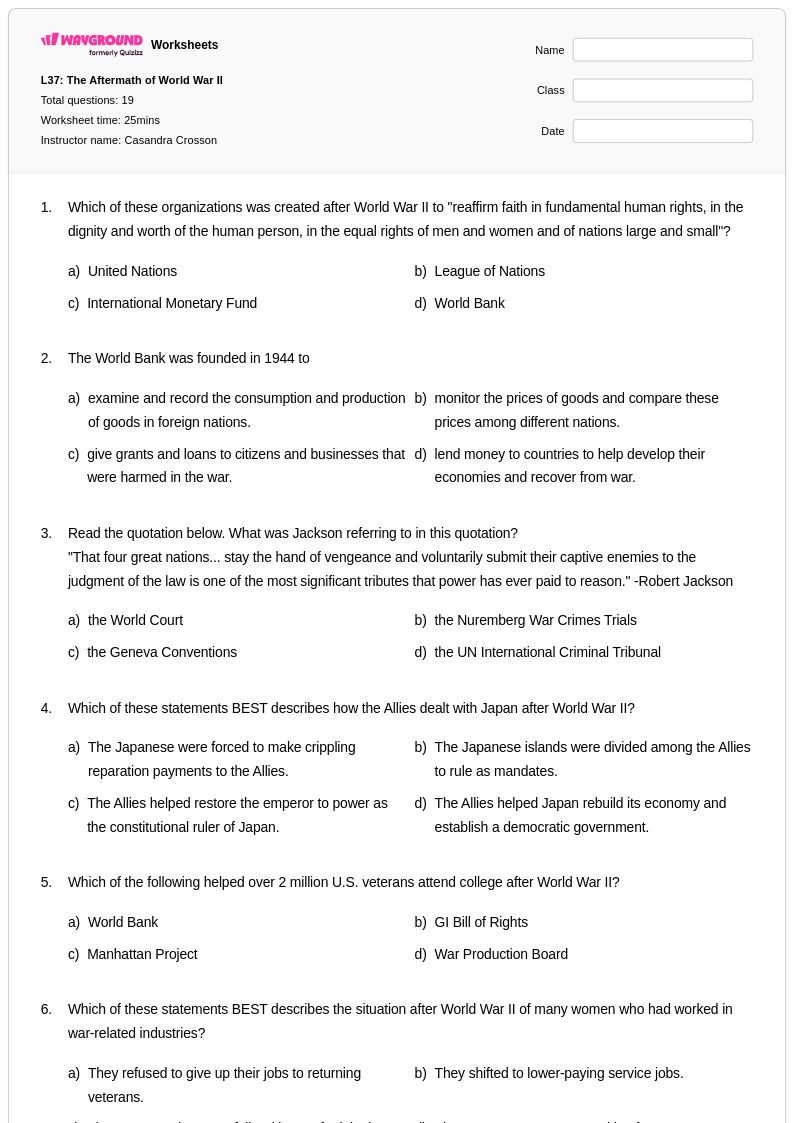
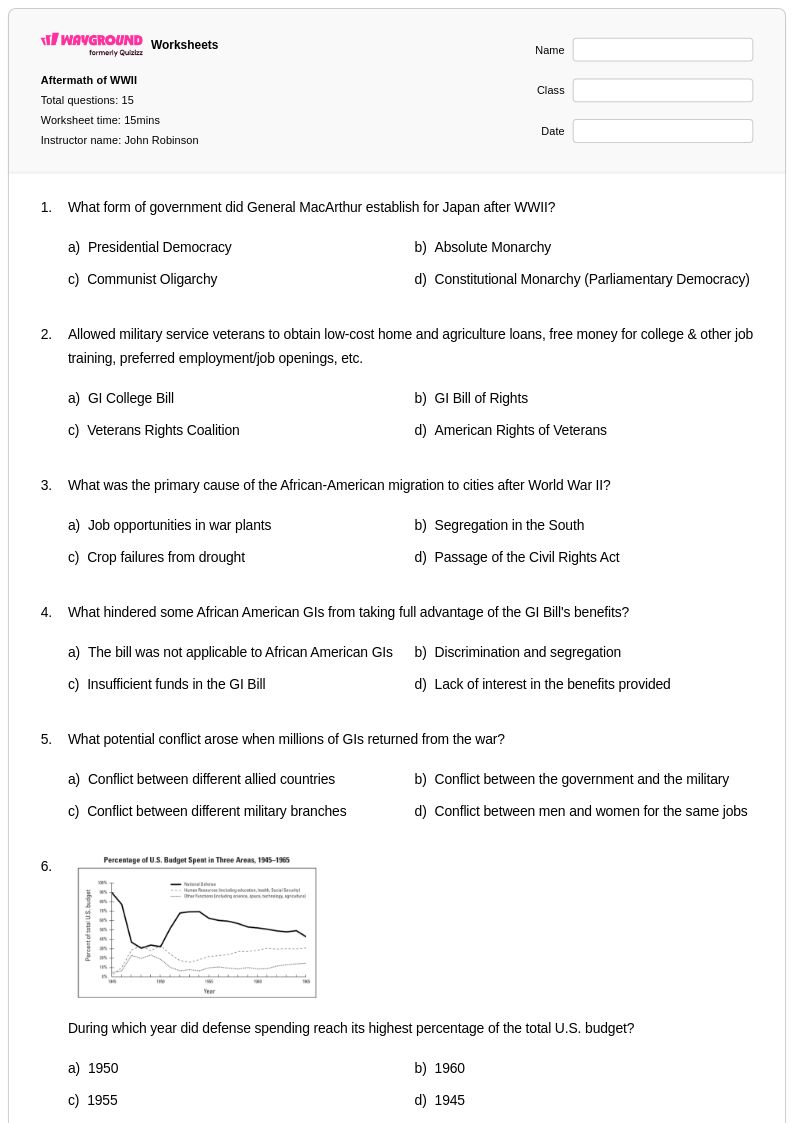
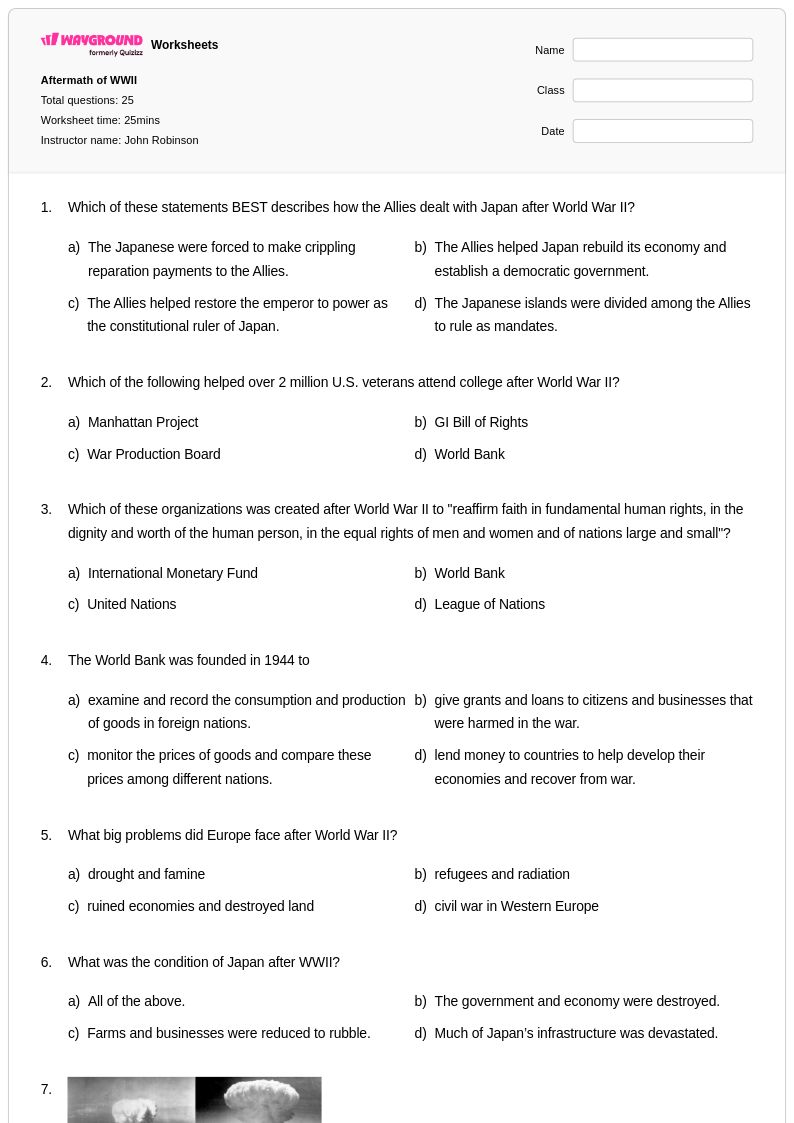
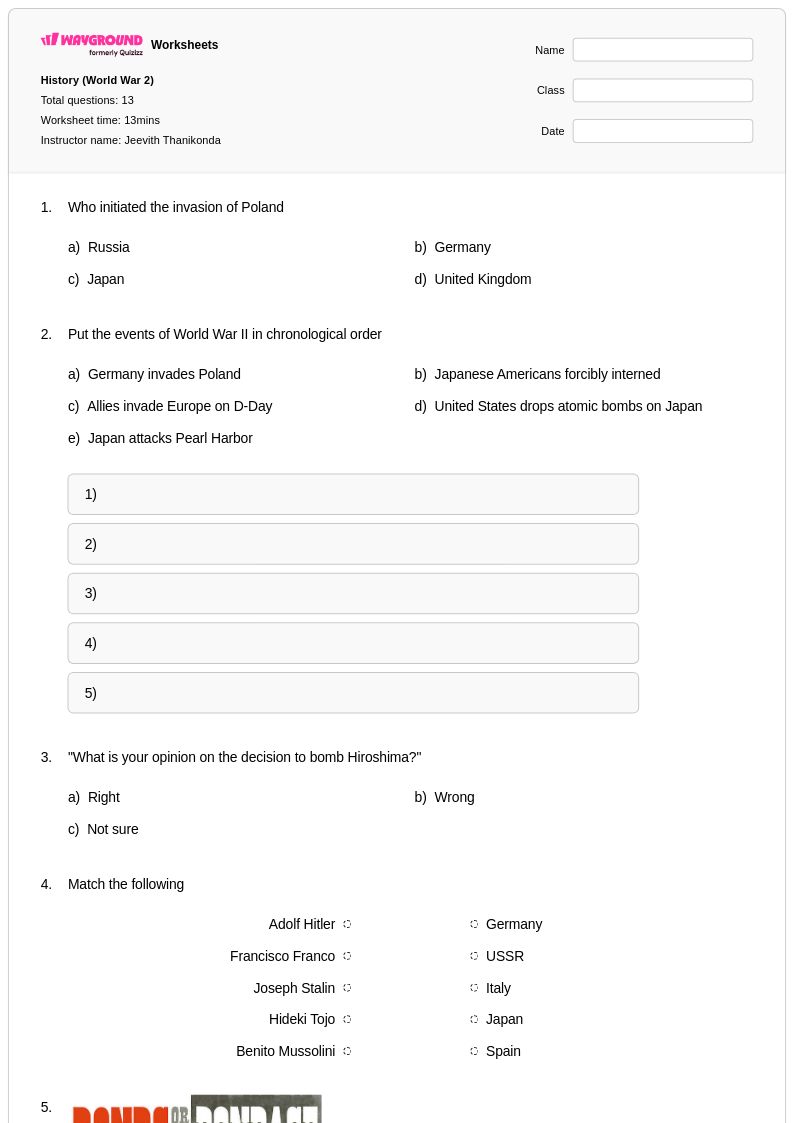
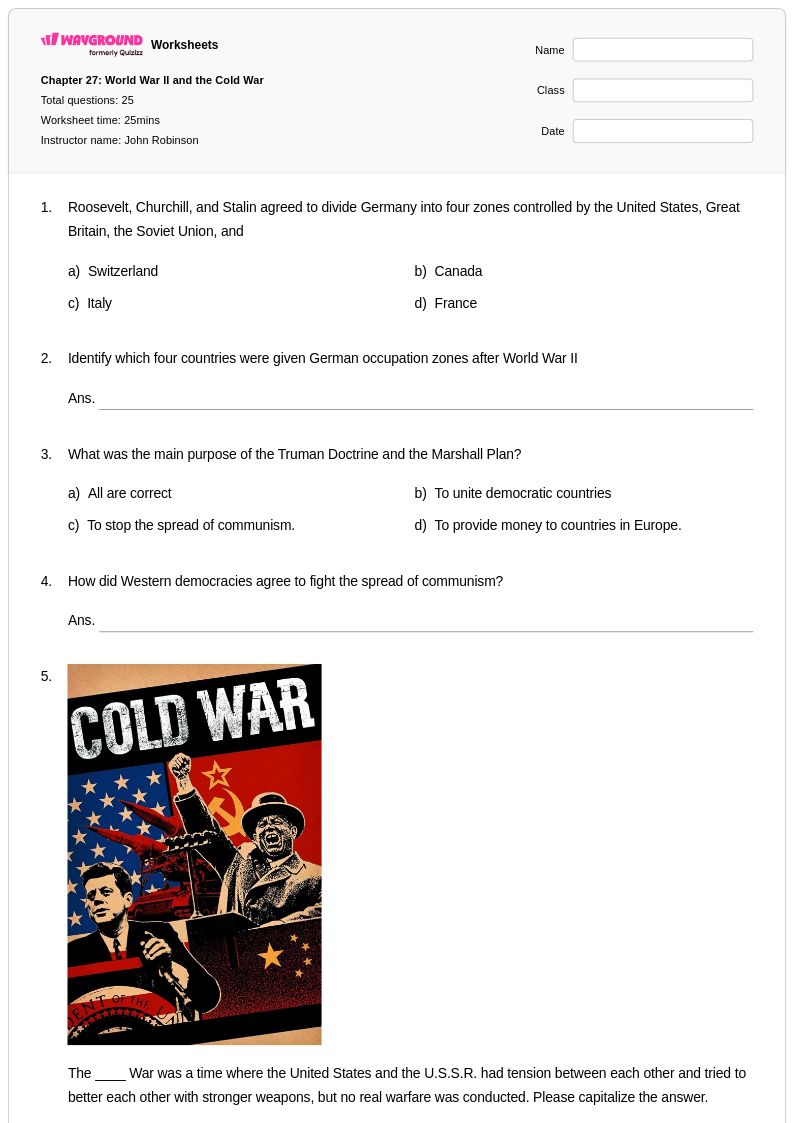
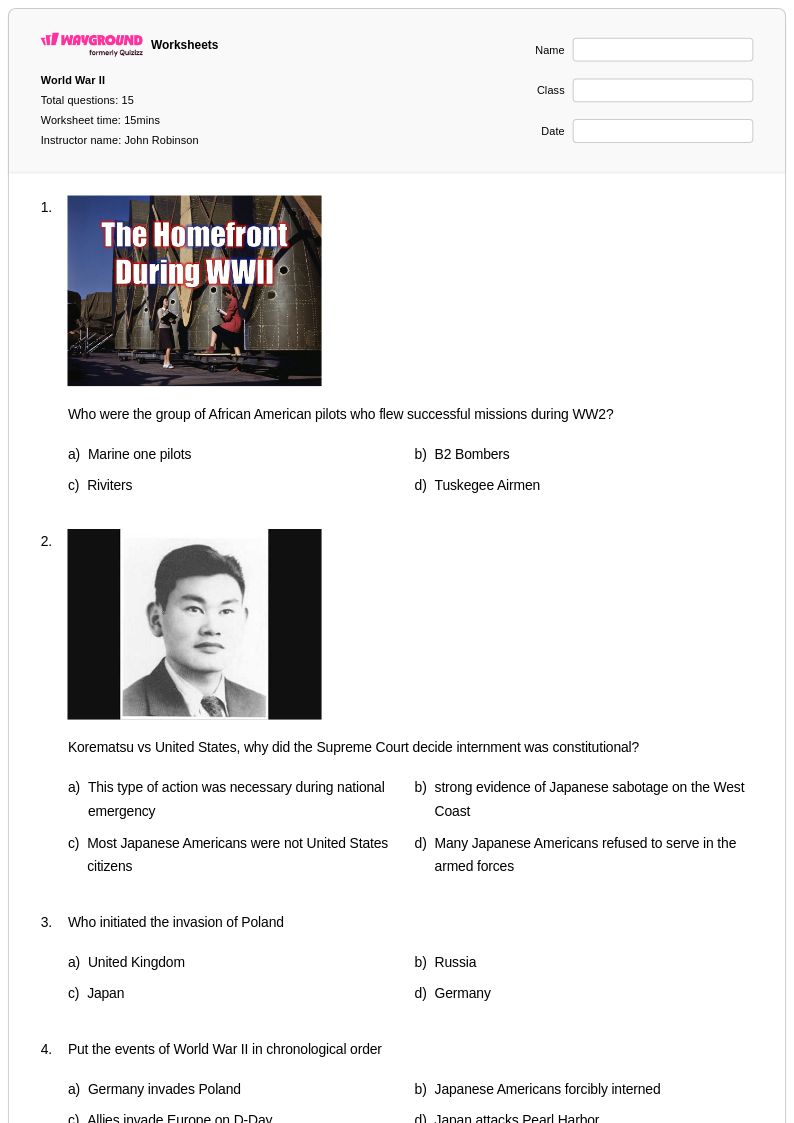
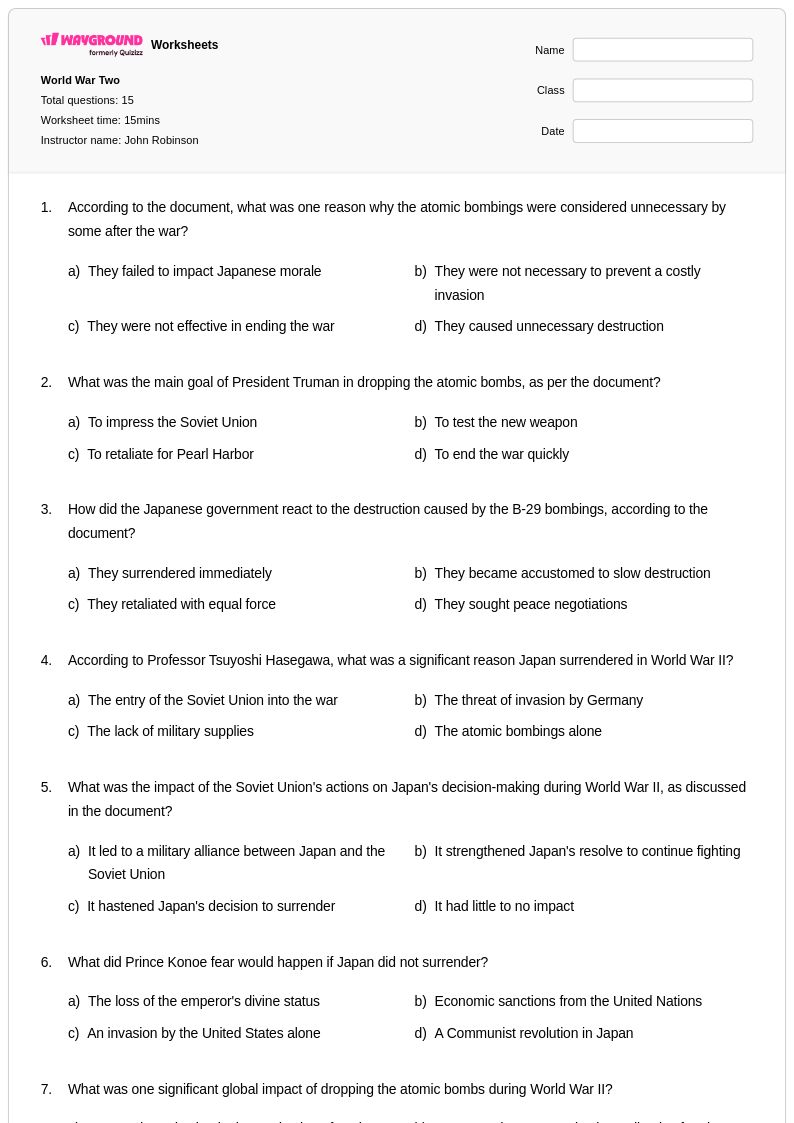
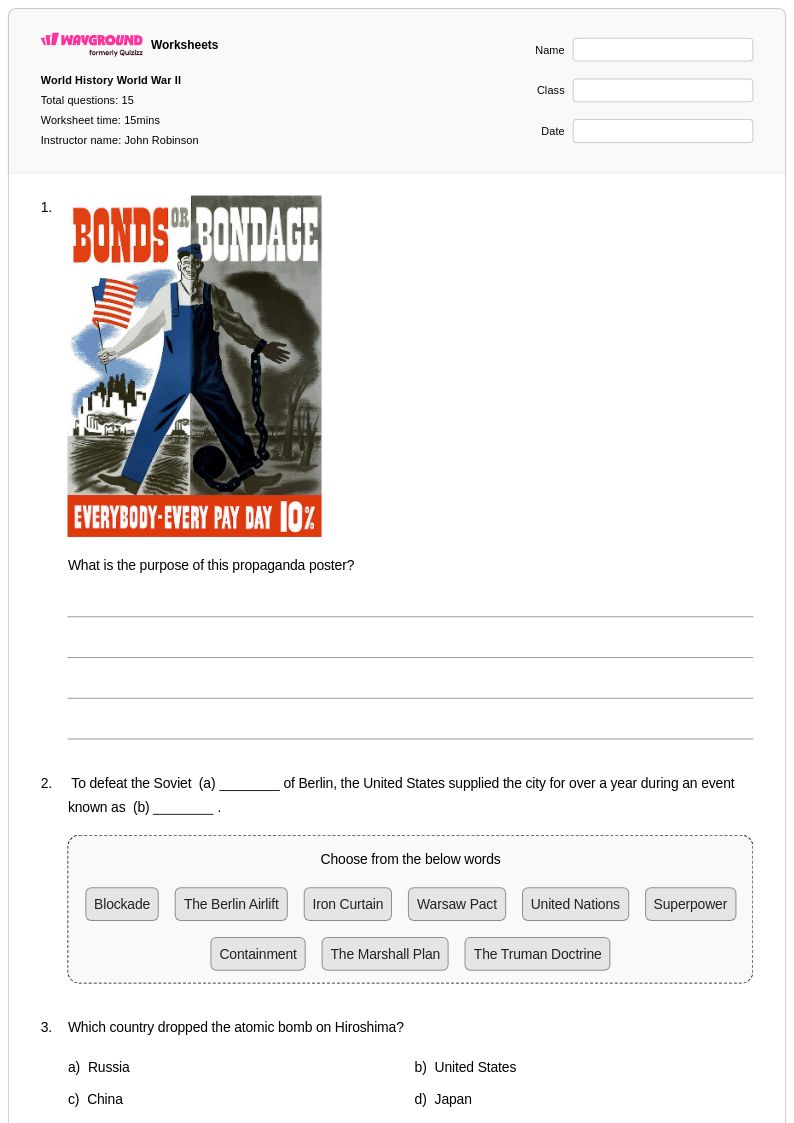
World War 2 Aftermath worksheets for Class 11 students available through Wayground (formerly Quizizz) provide comprehensive coverage of the complex political, social, and economic transformations that reshaped the global landscape following the end of World War II. These educational materials strengthen critical thinking skills as students analyze the establishment of the United Nations, the beginning of the Cold War, decolonization movements, war crimes tribunals, and the rebuilding of war-torn nations. The collection includes detailed practice problems examining the Marshall Plan, the partition of Germany, the creation of Israel, and the shift in global power dynamics from European dominance to American and Soviet hegemony. Each worksheet comes with a comprehensive answer key and is available as free printables in convenient PDF format, enabling students to engage deeply with primary source documents, statistical data, and historical photographs that illustrate the profound changes occurring between 1945 and 1950.
Wayground (formerly Quizizz) supports educators with millions of teacher-created resources specifically designed for World War 2 Aftermath instruction, featuring robust search and filtering capabilities that allow teachers to locate materials aligned with state and national social studies standards. The platform's differentiation tools enable instructors to customize worksheets for varying ability levels within Class 11 classrooms, supporting both remediation for struggling learners and enrichment opportunities for advanced students. Teachers can access these materials in both printable and digital formats, including downloadable PDFs that facilitate flexible lesson planning whether for in-person instruction, remote learning, or hybrid educational environments. These comprehensive worksheet collections streamline curriculum planning by providing ready-to-use assessments and skill practice activities that help students master complex historical concepts while developing essential analytical and interpretive abilities required for advanced high school social studies coursework.
FAQs
How do I teach the aftermath of World War 2 to my students?
Teaching the aftermath of World War 2 is most effective when organized around interconnected themes: political restructuring, economic recovery, and the emergence of new global institutions. Start with the Nuremberg Trials and the founding of the United Nations to anchor students in the immediate post-war response, then expand outward to the Cold War, decolonization movements, and the Marshall Plan. Using primary source documents alongside structured analysis activities helps students understand how wartime decisions shaped the modern world order.
What exercises help students practice analyzing the consequences of World War 2?
Practice exercises that ask students to evaluate cause-and-effect relationships are especially effective for this topic — for example, connecting specific wartime decisions to post-war political boundaries or economic conditions. Comparing different national perspectives on post-war settlements builds analytical depth, and document-based questions using treaty excerpts, UN charter passages, or Nuremberg Trial records give students direct experience with historical evidence. Synthesis tasks that ask students to draw connections between post-war events and contemporary international relations reinforce long-term historical thinking.
What are the most common mistakes students make when studying World War 2 Aftermath?
Students frequently treat the aftermath as a single event rather than a decades-long process, which leads to oversimplified cause-and-effect reasoning. A common misconception is conflating the end of the war with immediate global stability, when in reality the post-war period introduced new conflicts including the Cold War and widespread decolonization struggles. Students also tend to underestimate the economic dimensions of recovery, often focusing on political changes while overlooking how programs like the Marshall Plan restructured entire regions.
How do I differentiate World War 2 Aftermath instruction for students at different skill levels?
For advanced students, assign analytical tasks that examine nuanced topics like the Marshall Plan's long-term economic implications or the legal precedents set by the Nuremberg Trials. Students who need foundational support benefit from scaffolded timelines, vocabulary support, and structured note-taking frameworks that establish basic post-war chronology before moving to interpretation. On Wayground, teachers can apply accommodations including read aloud, reduced answer choices, and extended time to individual students, so differentiation happens at the student level without disrupting the rest of the class.
How can I use World War 2 Aftermath worksheets from Wayground in my classroom?
Wayground's World War 2 Aftermath worksheets are available as free printable PDFs for traditional classroom use and in digital formats for technology-integrated environments. Teachers can assign them as independent practice, guided review, or as a hosted quiz directly on Wayground, which allows for built-in answer checking and real-time progress tracking. The included answer keys make these resources practical for both in-class instruction and independent student review.
How do I connect World War 2 Aftermath topics to current events in my classroom?
The post-war period provides direct entry points into contemporary issues including the structure of international institutions like the UN, the roots of ongoing regional conflicts, and the evolution of international human rights law. Asking students to trace the origins of a current geopolitical tension back to post-1945 decisions builds the kind of historical reasoning that social studies standards prioritize. This approach also reinforces that history is not static, which increases student engagement with the material.