Free Printable Writing Process Worksheets for Class 4
Enhance Class 4 students' understanding of the writing process with Wayground's comprehensive collection of free worksheets and printables, featuring guided practice problems and complete answer keys to develop essential composition skills.
Explore printable Writing Process worksheets for Class 4
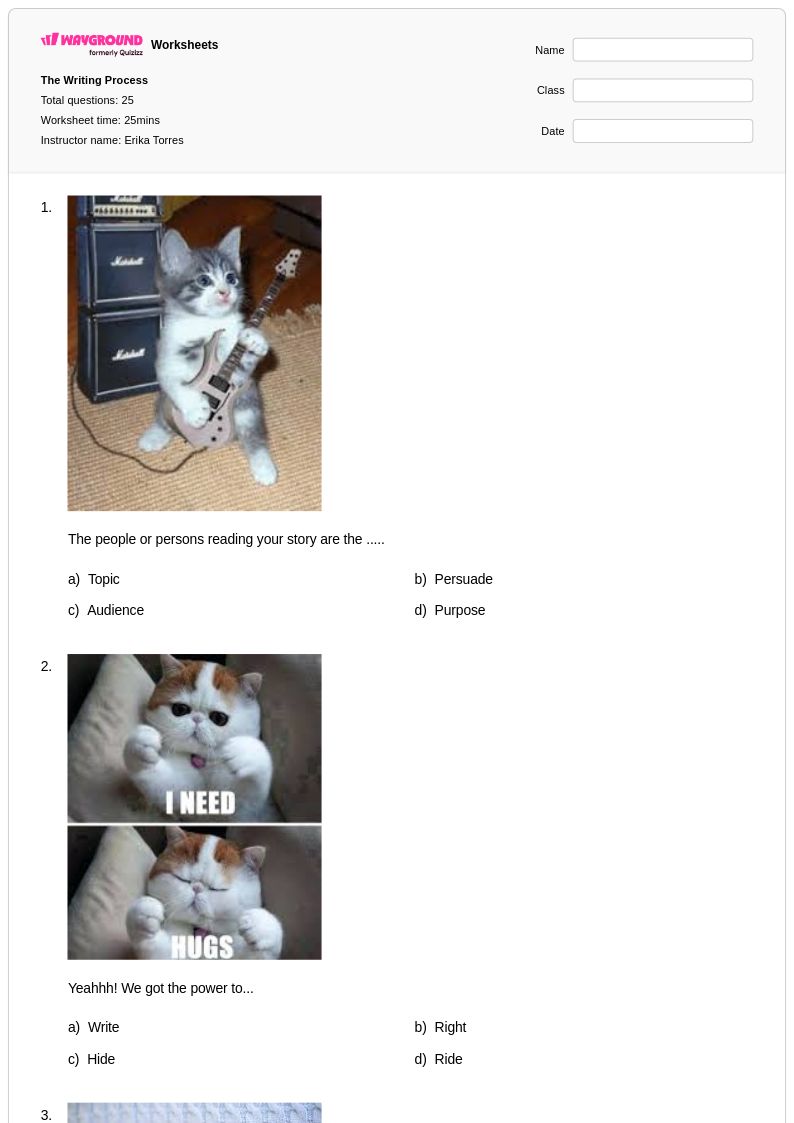
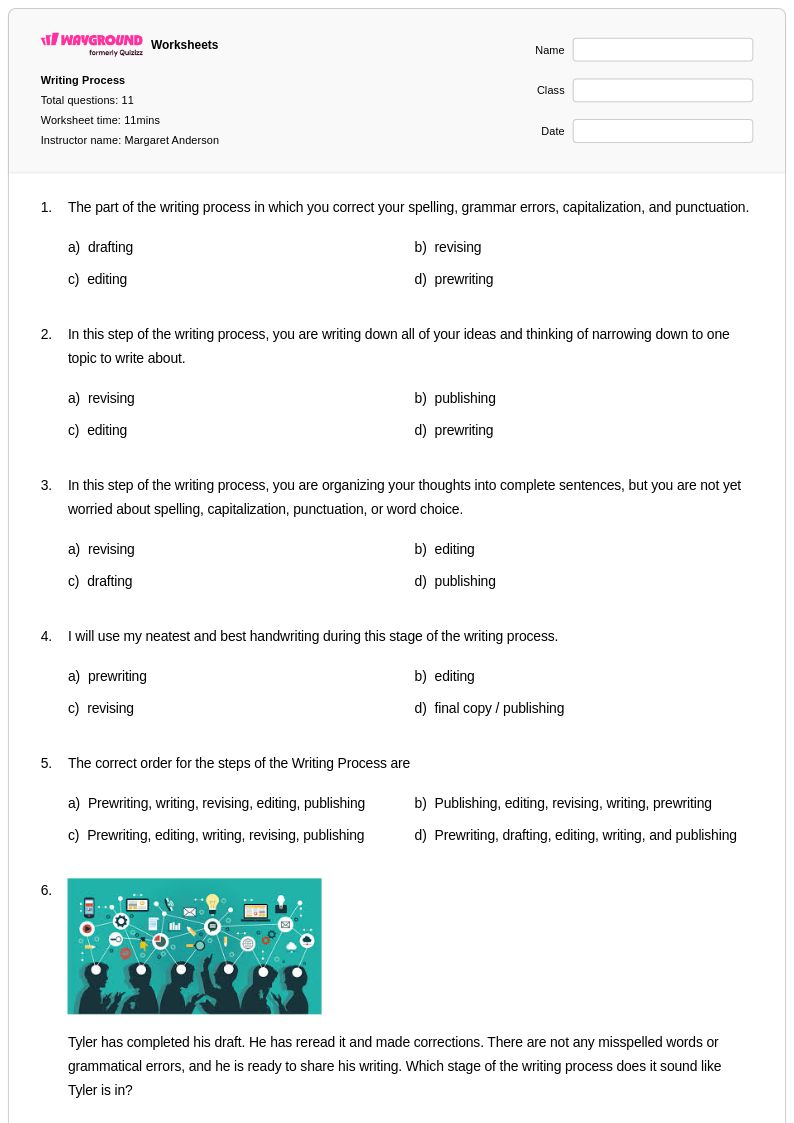
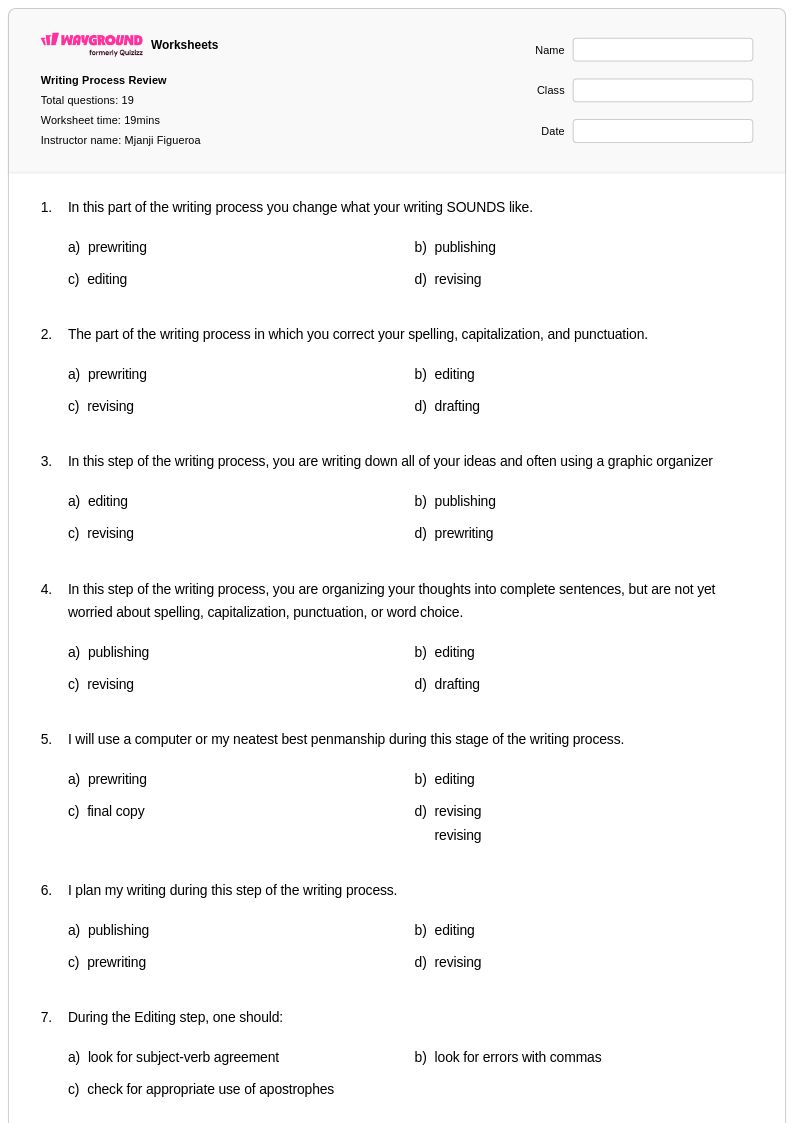
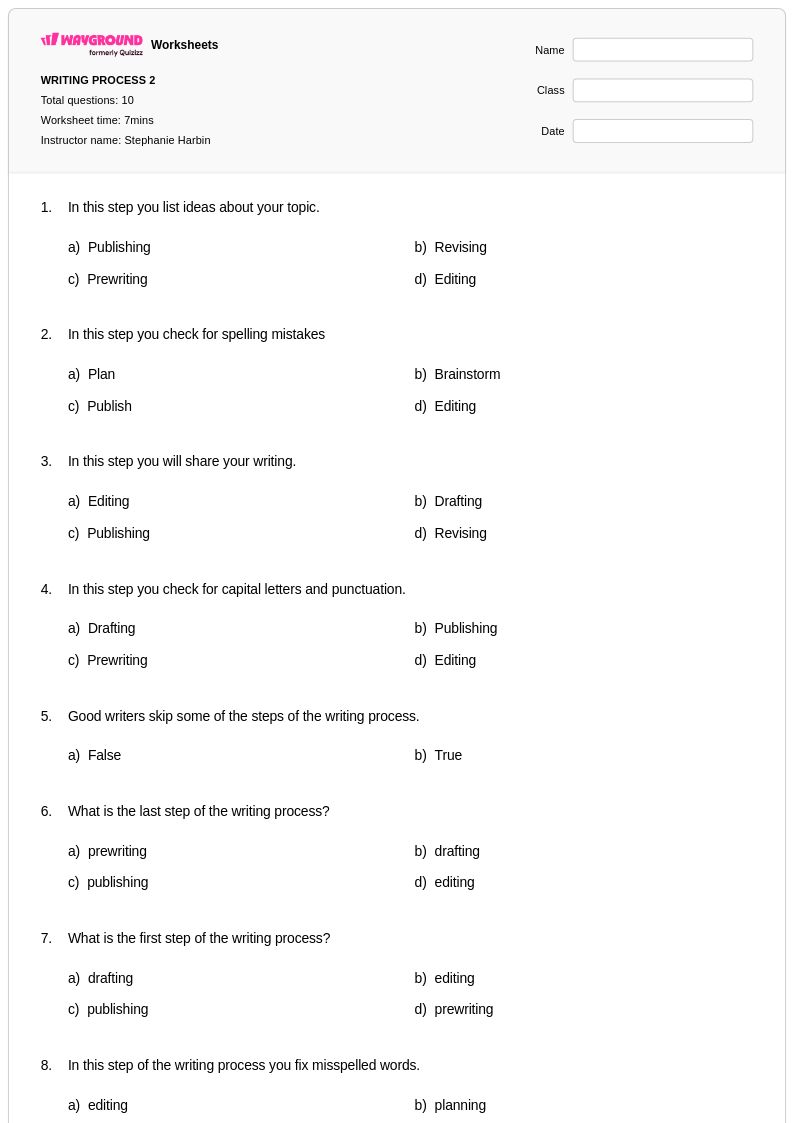
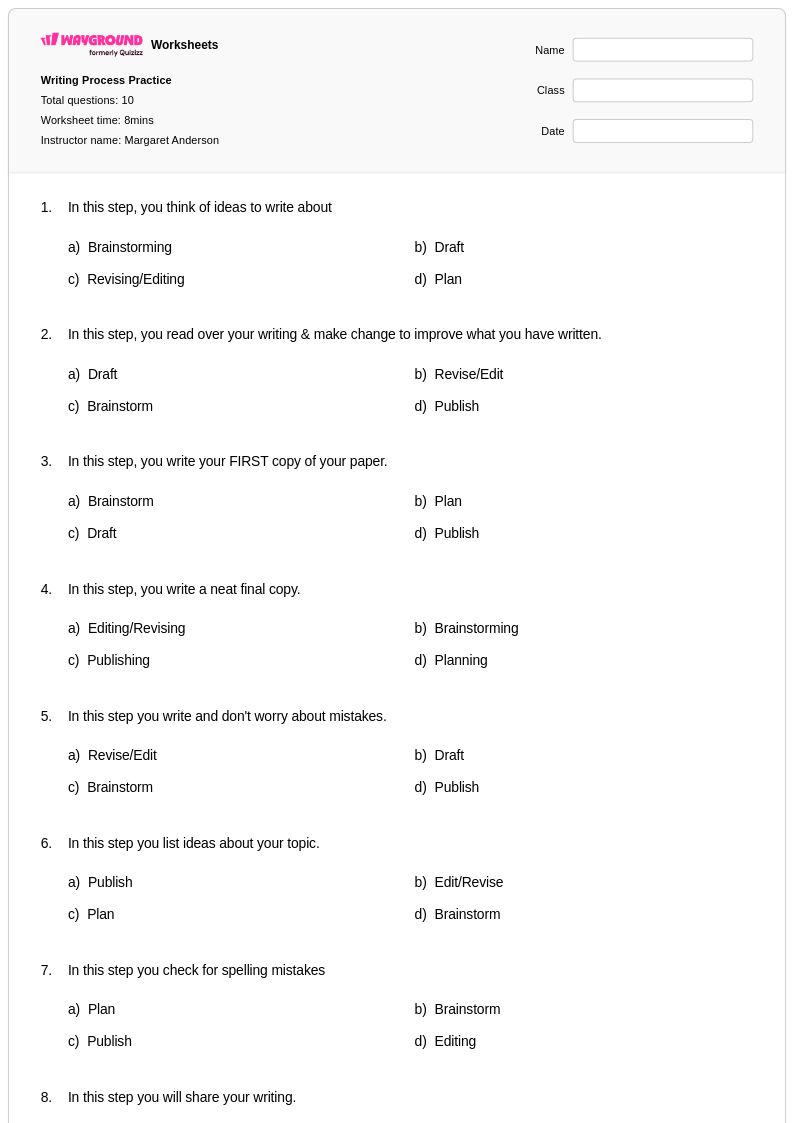
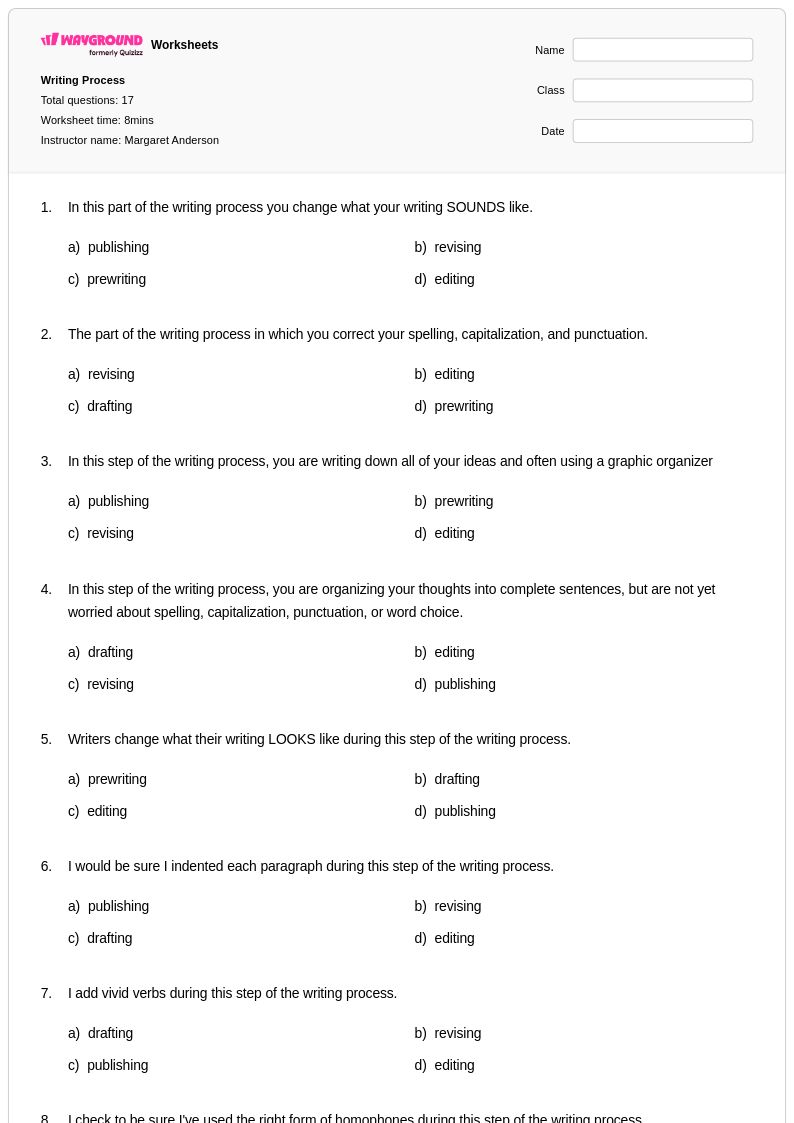
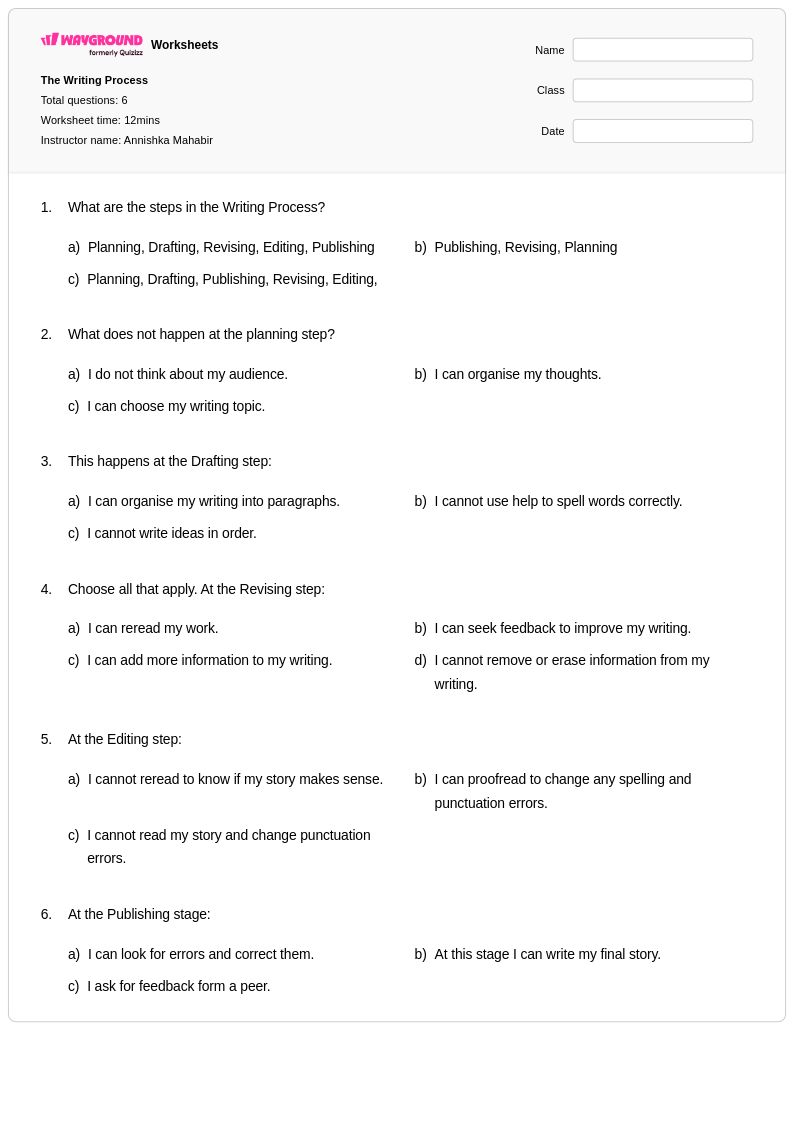
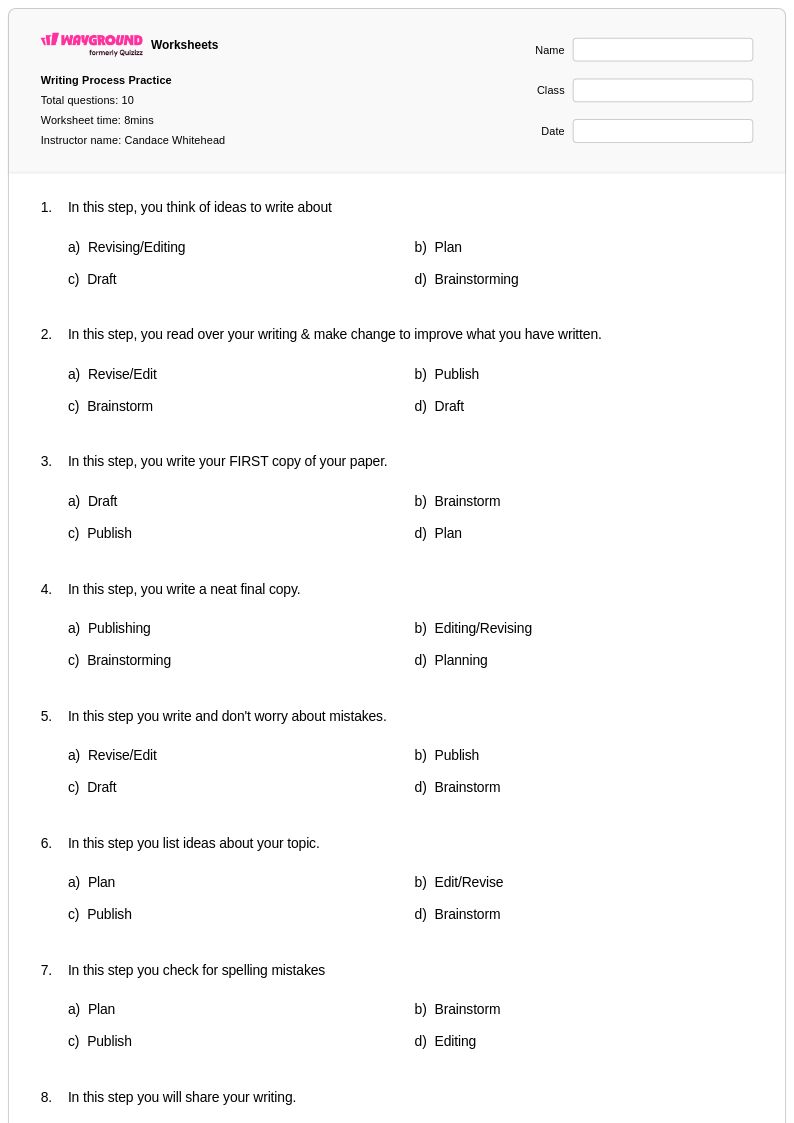
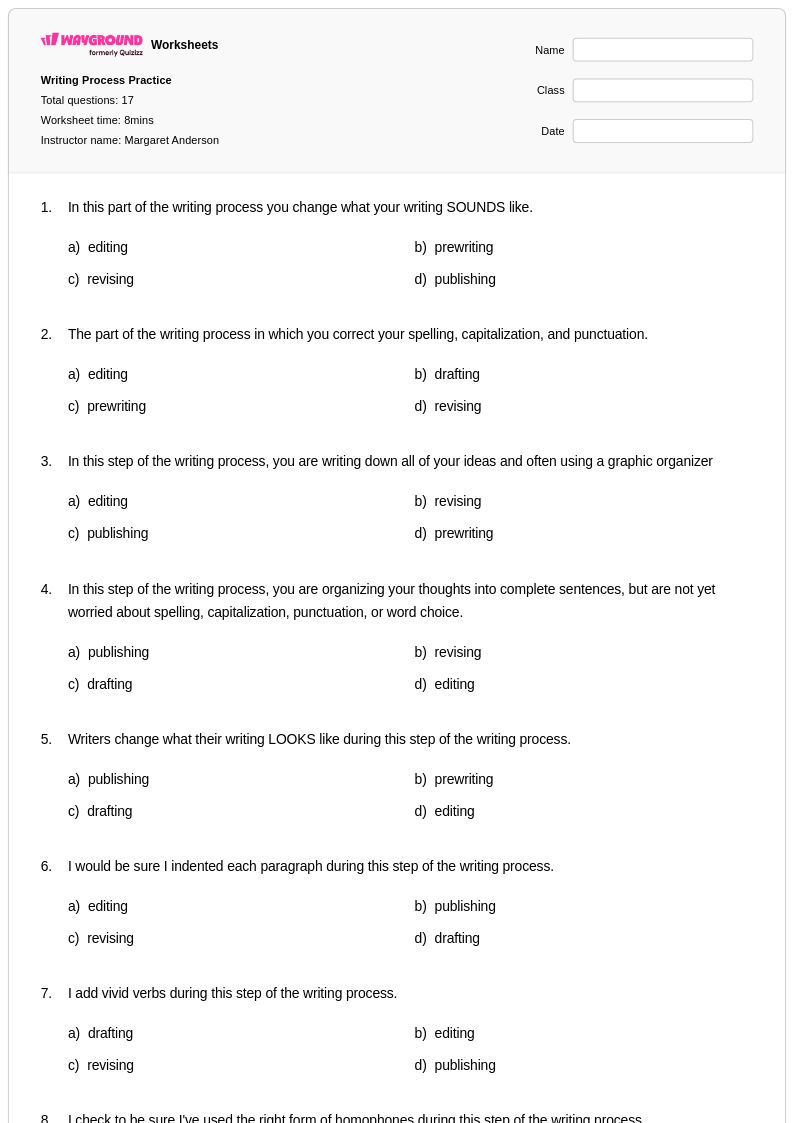
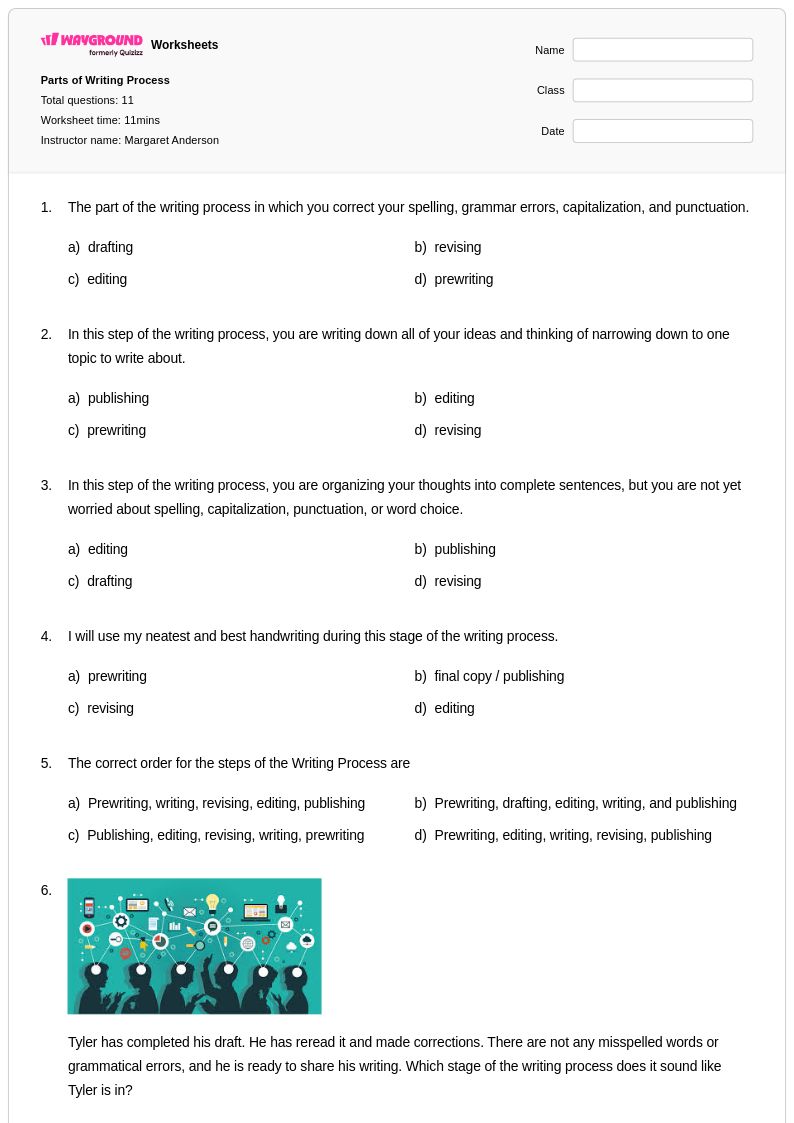
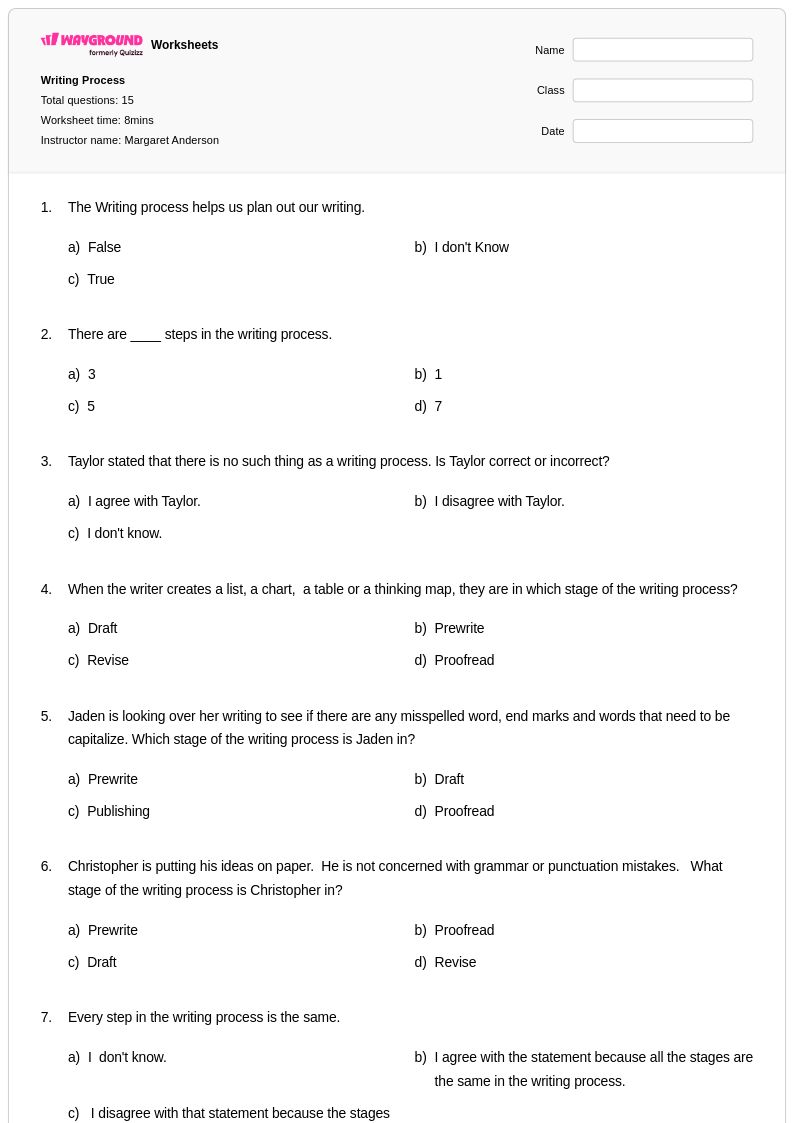
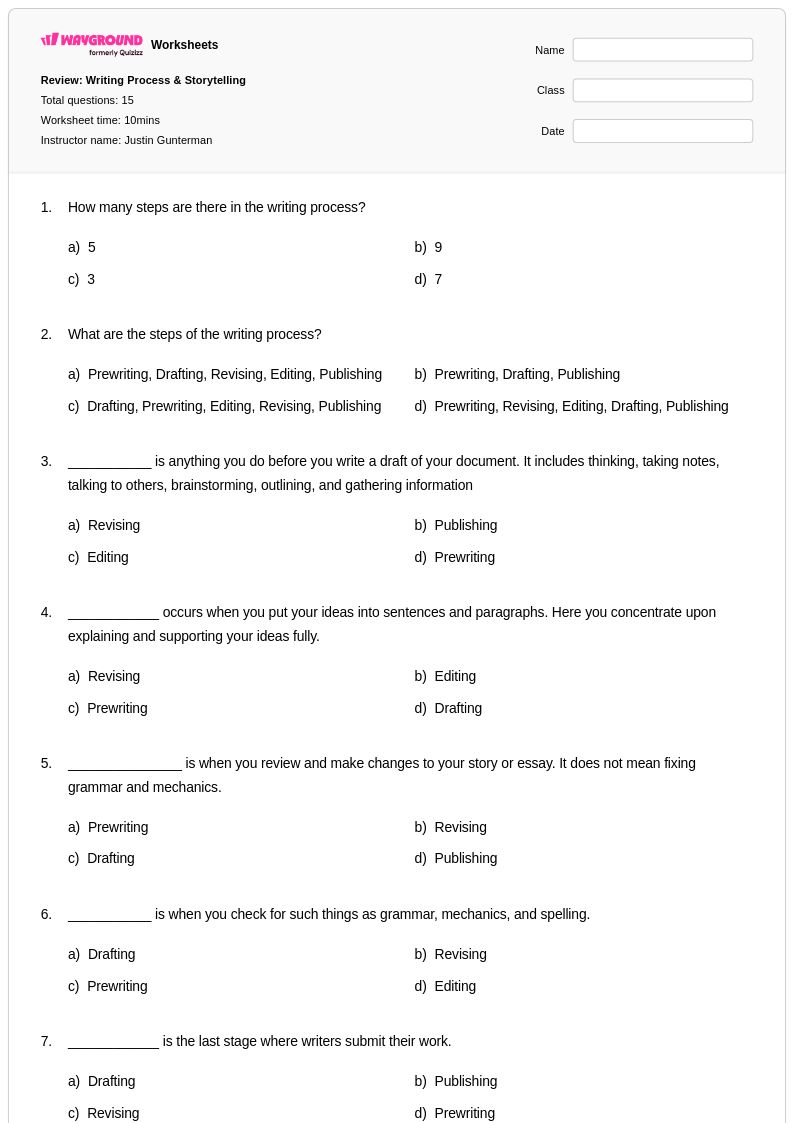
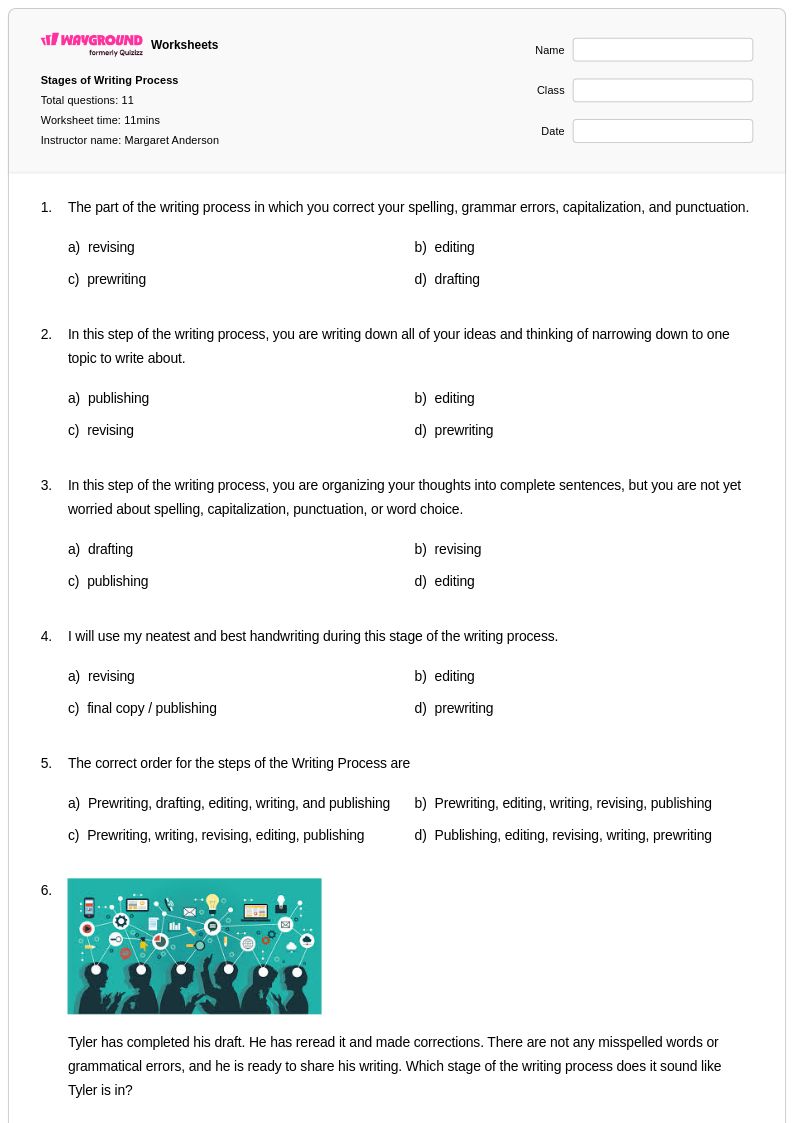
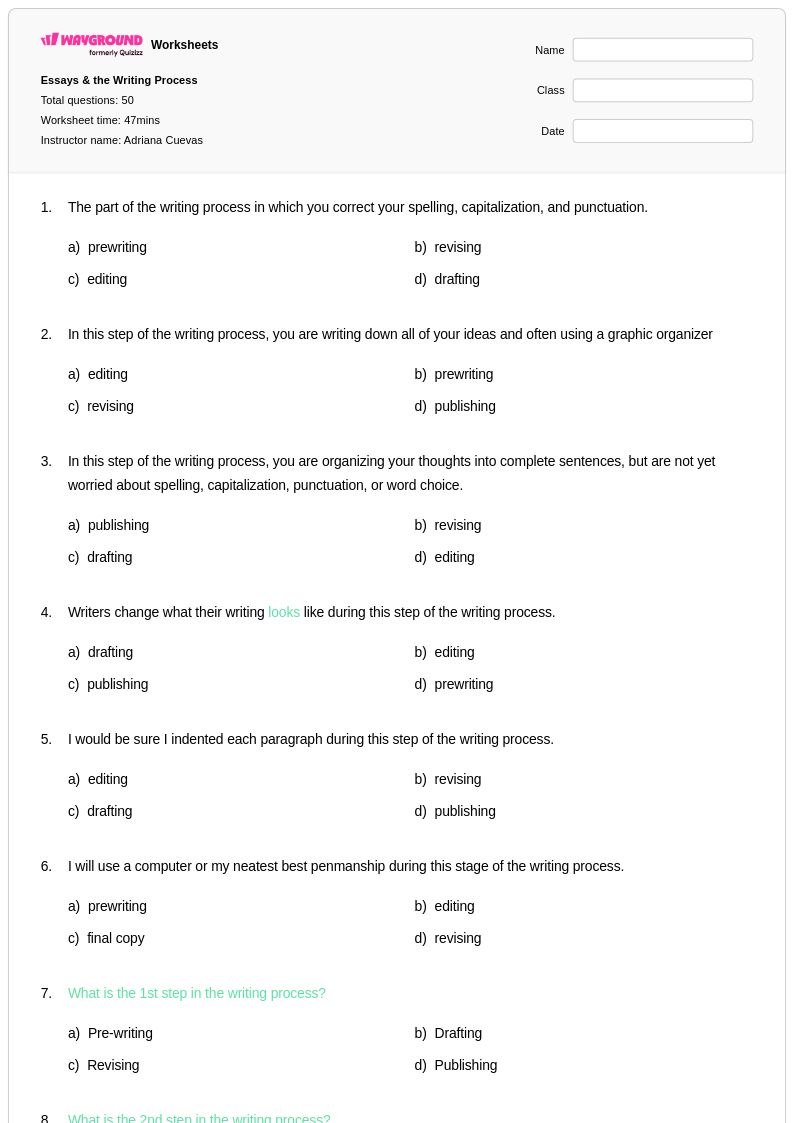
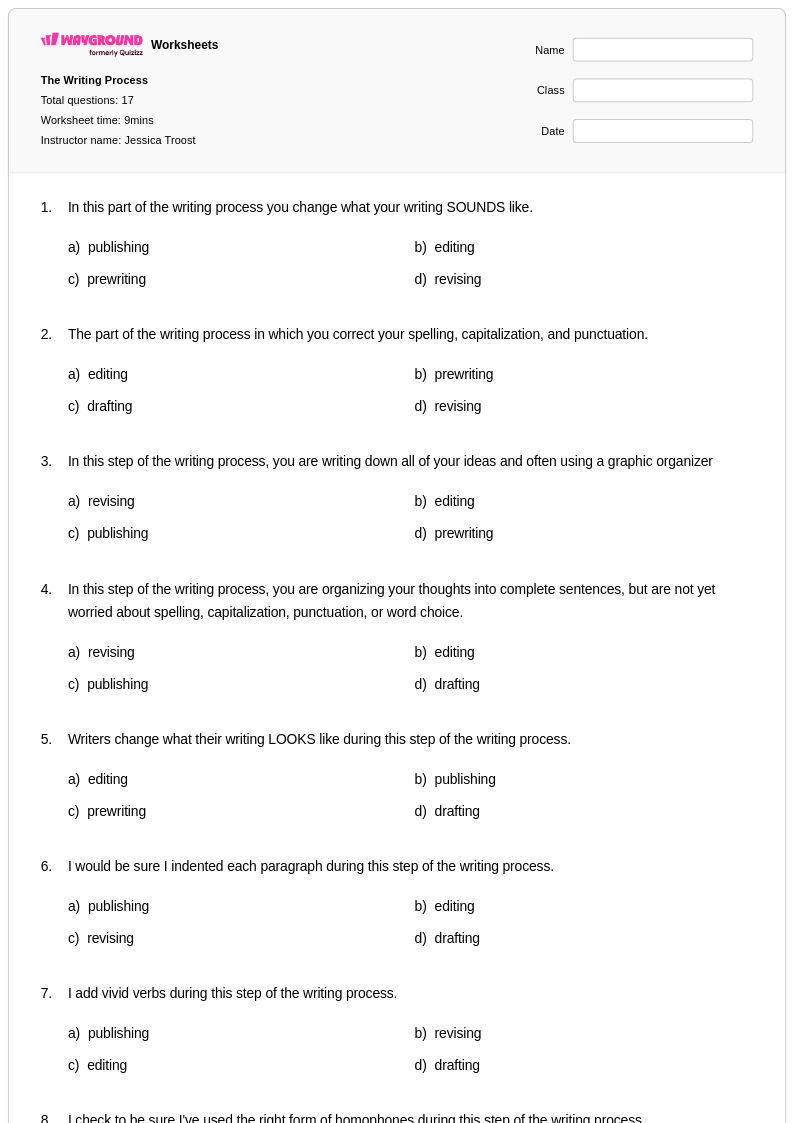
Writing Process worksheets for Class 4 through Wayground (formerly Quizizz) provide comprehensive practice with the systematic approach young writers need to develop their composition skills effectively. These educational resources guide fourth-grade students through each essential stage of writing, from brainstorming and organizing ideas to drafting, revising, editing, and publishing their work. The worksheets strengthen critical thinking abilities as students learn to plan their writing projects, evaluate their initial drafts, and make meaningful improvements to their text. Each printable resource includes structured activities that help students understand how professional writers approach their craft, with practice problems that reinforce the recursive nature of quality writing. Teachers can access these free materials in convenient pdf format, complete with comprehensive answer keys that support both independent practice and guided instruction.
Wayground (formerly Quizizz) empowers educators with an extensive collection of Writing Process worksheets drawn from millions of teacher-created resources, ensuring comprehensive coverage of Class 4 writing standards and expectations. The platform's advanced search and filtering capabilities allow teachers to quickly locate materials that align with specific curriculum requirements and student learning objectives. Differentiation tools enable instructors to customize worksheets for varying ability levels within their classrooms, supporting both remediation for struggling writers and enrichment opportunities for advanced students. These versatile resources are available in both printable and digital formats, including downloadable pdf versions, making them ideal for traditional classroom instruction, homework assignments, writing centers, and distance learning environments. The robust collection supports effective lesson planning while providing teachers with reliable tools for skill practice, formative assessment, and targeted intervention in writing instruction.
FAQs
How do I teach the writing process to students who struggle to get started?
Students who struggle to begin writing often benefit from structured prewriting strategies that lower the barrier to entry. Teaching techniques like mind mapping, brainstorming webs, and sentence starters gives students a concrete starting point before they ever write a full sentence. Breaking the process into discrete, labeled stages — prewriting, drafting, revising, editing, and publishing — helps reluctant writers see writing as a series of manageable steps rather than one overwhelming task.
What exercises help students practice revising and editing their own writing?
Revision and editing are best practiced as separate, targeted skills rather than a single catch-all pass. Exercises like sentence-level revision tasks, peer review checklists, and structured self-reflection prompts train students to read their writing critically and make purposeful changes. Having students apply specific editing criteria — such as checking for thesis clarity, sentence variety, or proper formatting — builds the habit of systematic revision rather than surface-level proofreading.
What are the most common mistakes students make during the writing process?
One of the most frequent errors is skipping the prewriting stage entirely and moving straight to drafting, which often results in disorganized, underdeveloped writing. Students also commonly confuse revising with editing, focusing only on grammar and spelling while ignoring structural issues like weak thesis statements or unclear topic sentences. Another persistent misconception is treating the first draft as a final product, so building in explicit revision cycles with guided checklists helps students understand that strong writing is inherently iterative.
How can I use writing process worksheets to support different types of writing assignments?
Writing process worksheets are versatile enough to scaffold a wide range of assignment types, from argument essays and narrative planning to personal statements and compare-and-contrast essays. Teachers can sequence worksheets by stage — using brainstorming and essay planning sheets early in a unit, then transitioning to peer review and revising worksheets as drafts develop. This stage-by-stage structure ensures students apply consistent process skills regardless of the genre or format they are working in.
How do I use Wayground's writing process worksheets in my classroom?
Wayground's writing process worksheets are available as printable PDFs for traditional classroom use and in digital formats for technology-integrated environments, giving teachers flexibility in how they assign and collect student work. Teachers can also host worksheets as a quiz directly on Wayground, making it easy to assign stages of the writing process as interactive sessions and track student responses in one place. Both formats include answer keys, supporting independent practice as well as whole-class or small-group instruction.
How do I differentiate writing process instruction for struggling writers and advanced students?
For struggling writers, providing graphic organizers, sentence starters, and step-by-step prewriting templates reduces cognitive load while keeping students engaged in the actual thinking work. Advanced students benefit from open-ended extension tasks such as crafting original thesis statements, experimenting with writer's effect techniques, or refining their work using the Show Don't Tell strategy. On Wayground, teachers can also apply individual accommodations — including read aloud support and reduced answer choices — so every student engages with writing process practice at an appropriate level of challenge.
What is the R.A.C.E. strategy and how does it fit into the writing process?
R.A.C.E. stands for Restate, Answer, Cite, and Explain, and it is a structured response strategy that helps students write focused, evidence-based answers to prompts. It fits most naturally into the drafting stage of the writing process, giving students a repeatable framework for constructing paragraphs that are both organized and supported by textual evidence. Teaching R.A.C.E. alongside other writing process skills — such as restating questions and thesis development — helps students connect isolated writing strategies into a coherent, transferable approach.