Free Printable Written Expression Worksheets for Class 8
Class 8 written expression worksheets from Wayground help students develop strong communication skills through engaging printables and practice problems that build writing clarity, organization, and voice with comprehensive answer keys included.
Explore printable Written Expression worksheets for Class 8
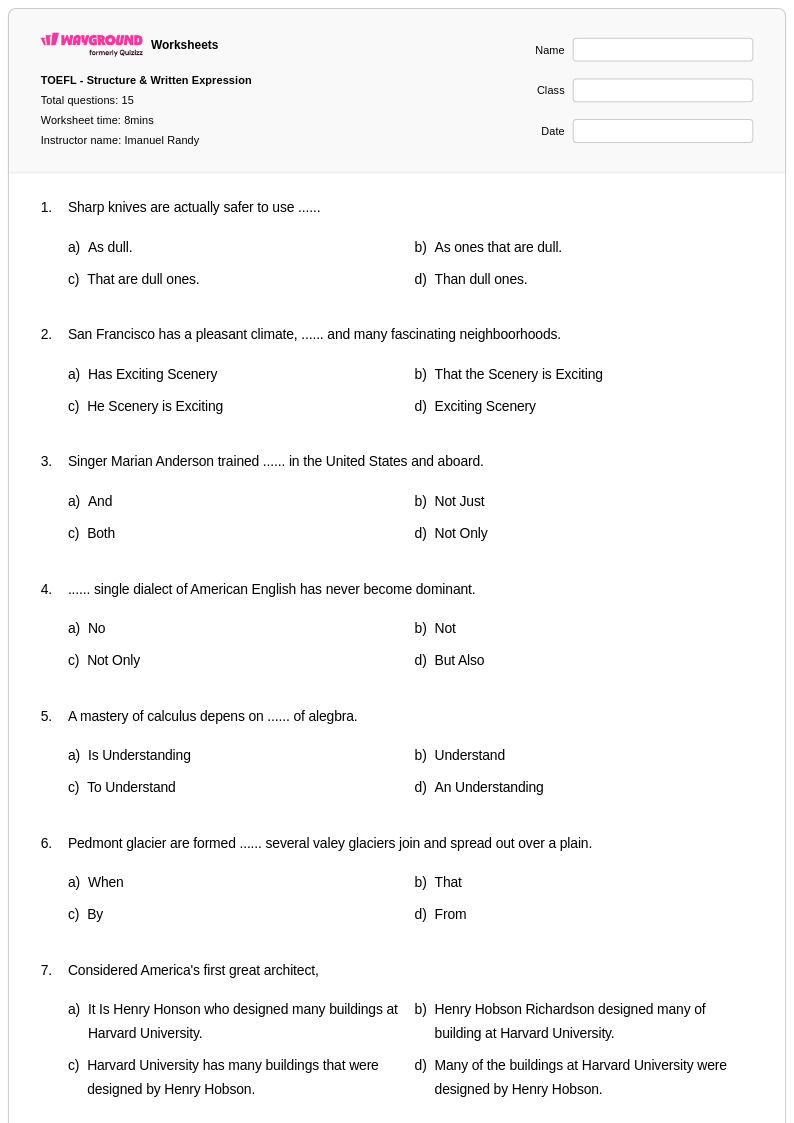
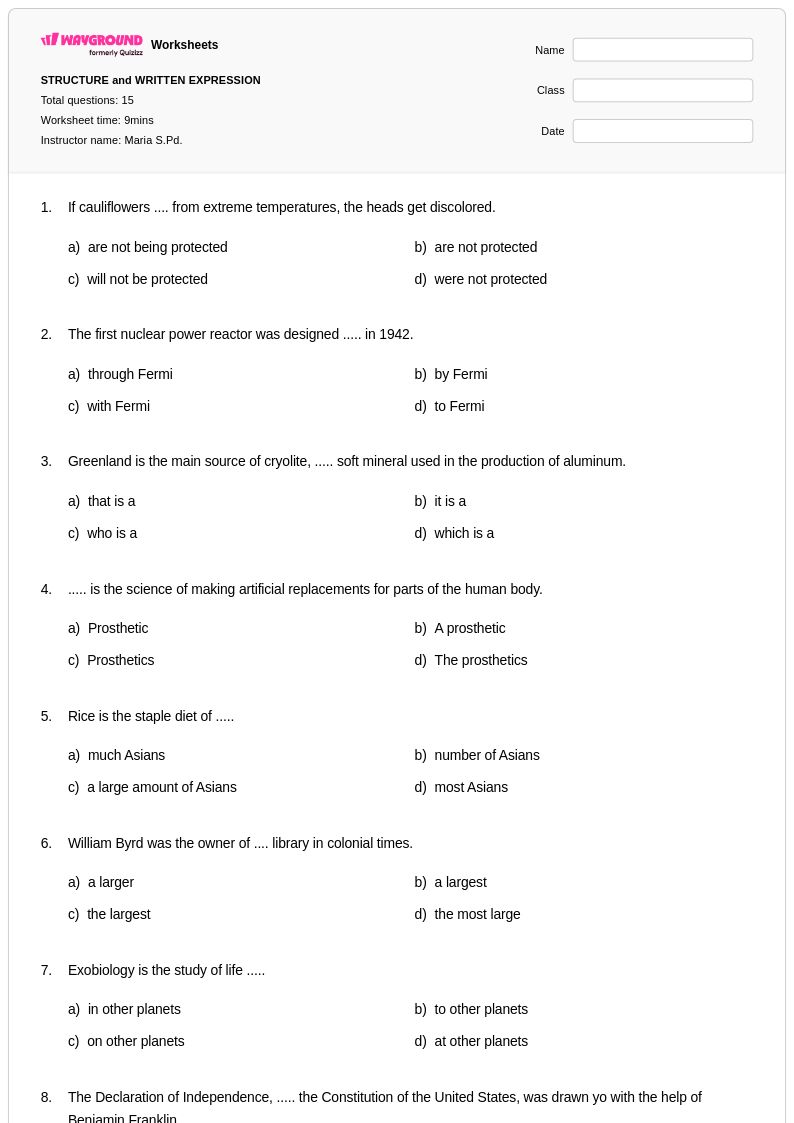
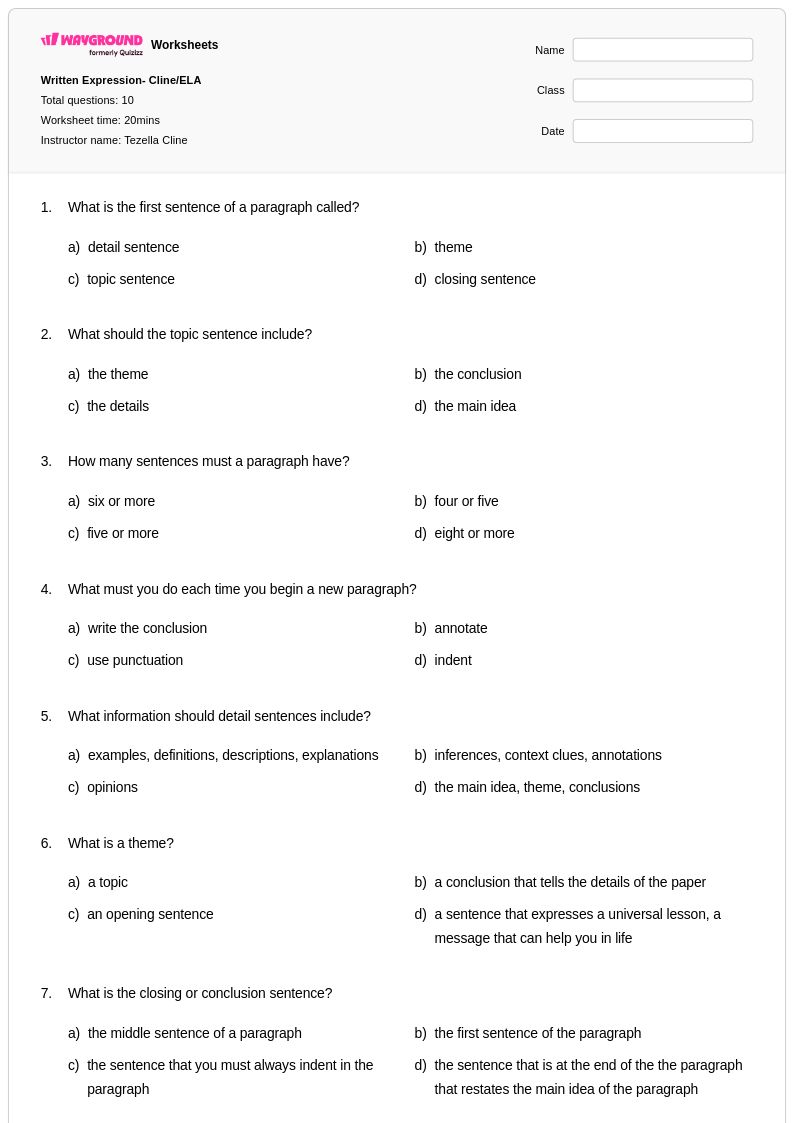
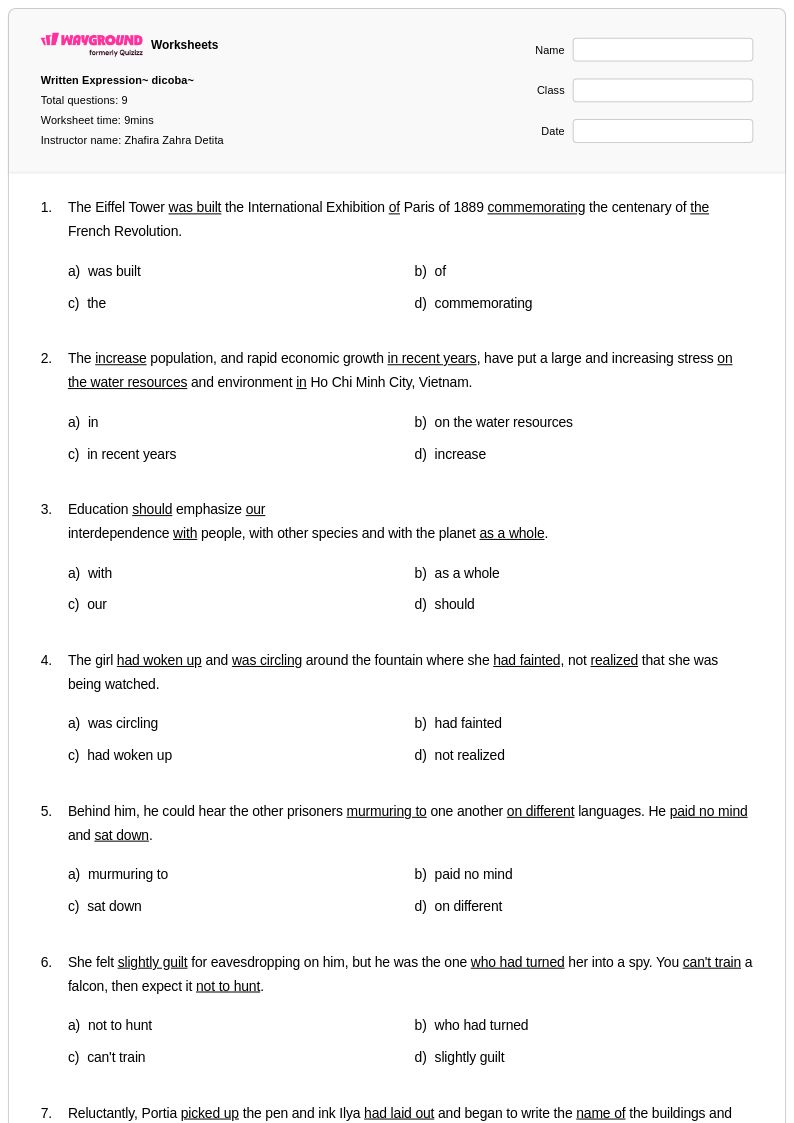
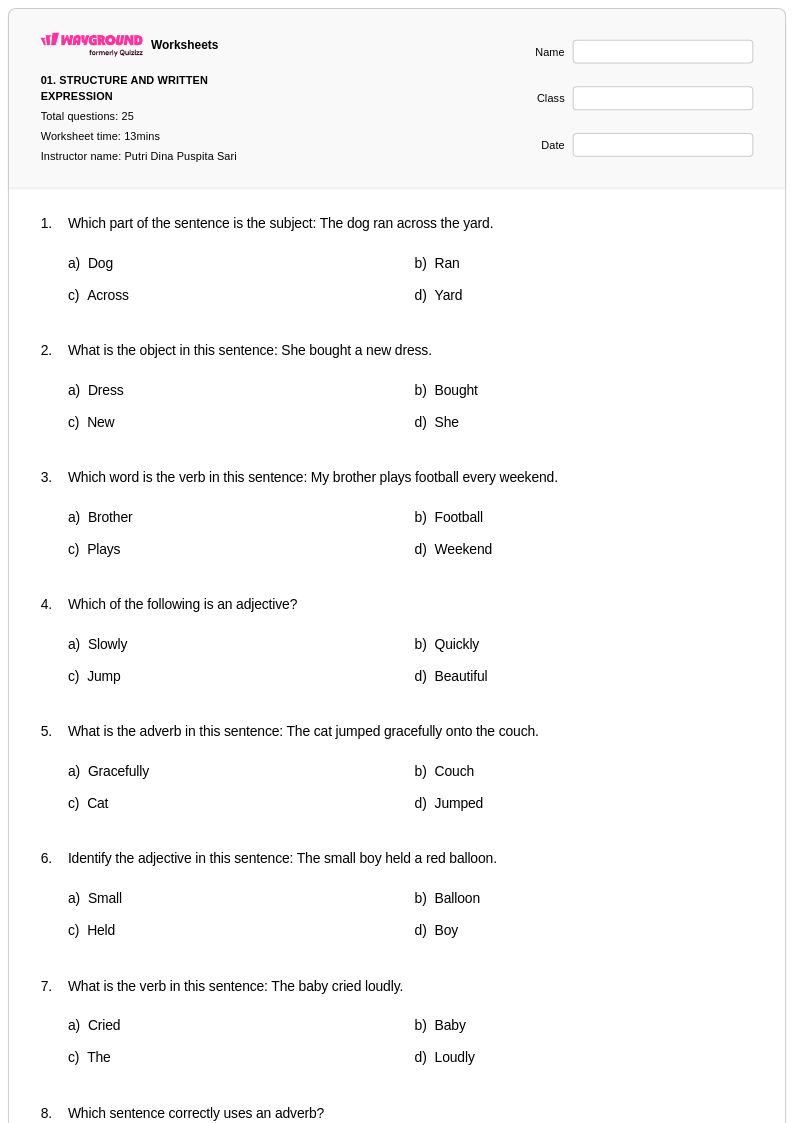
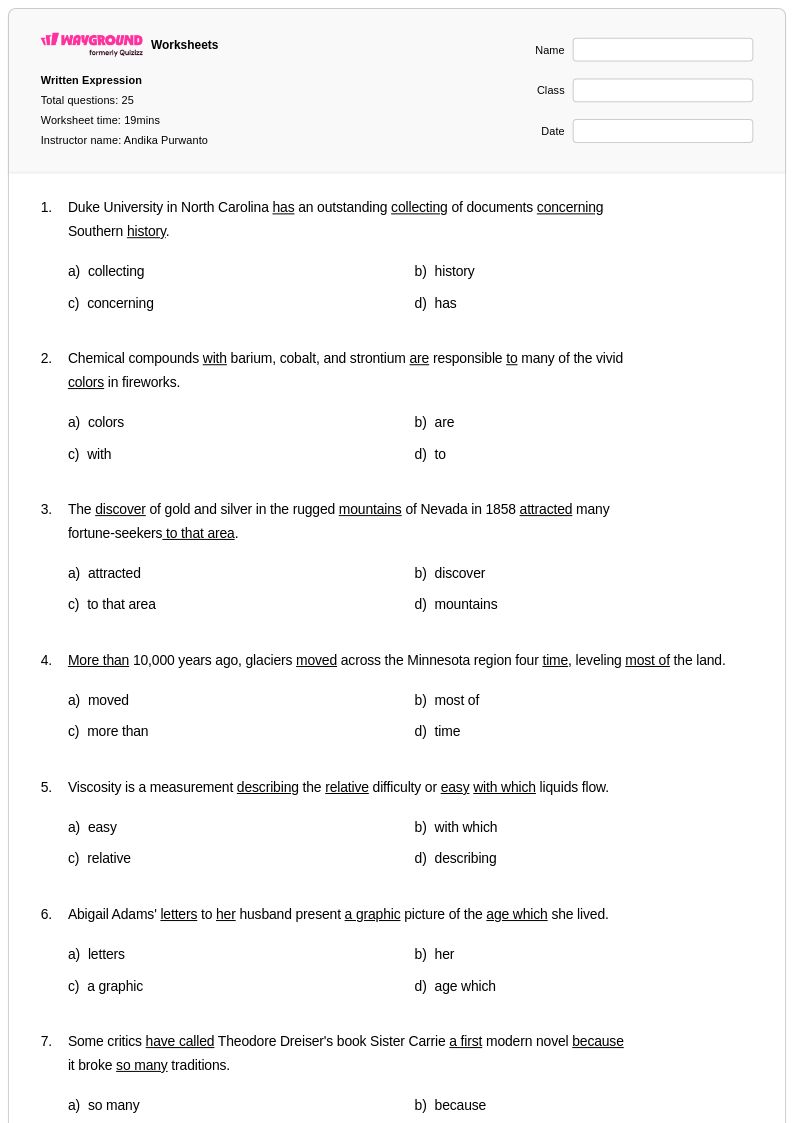
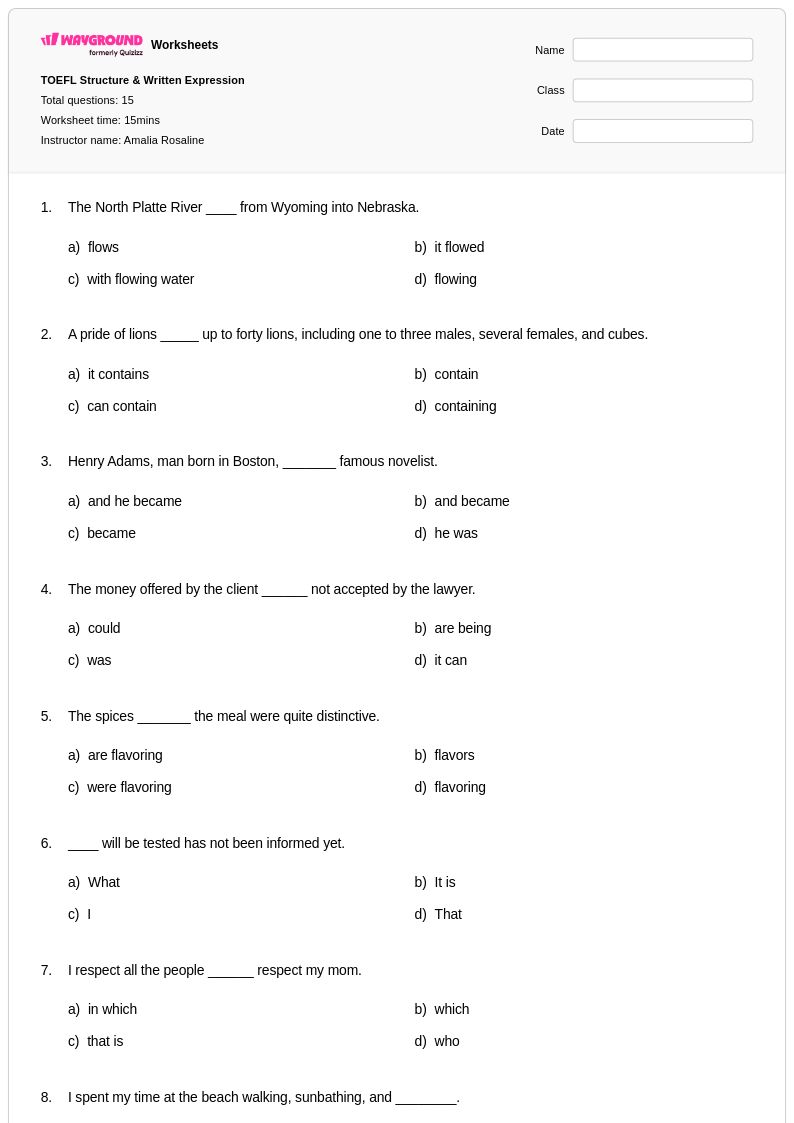
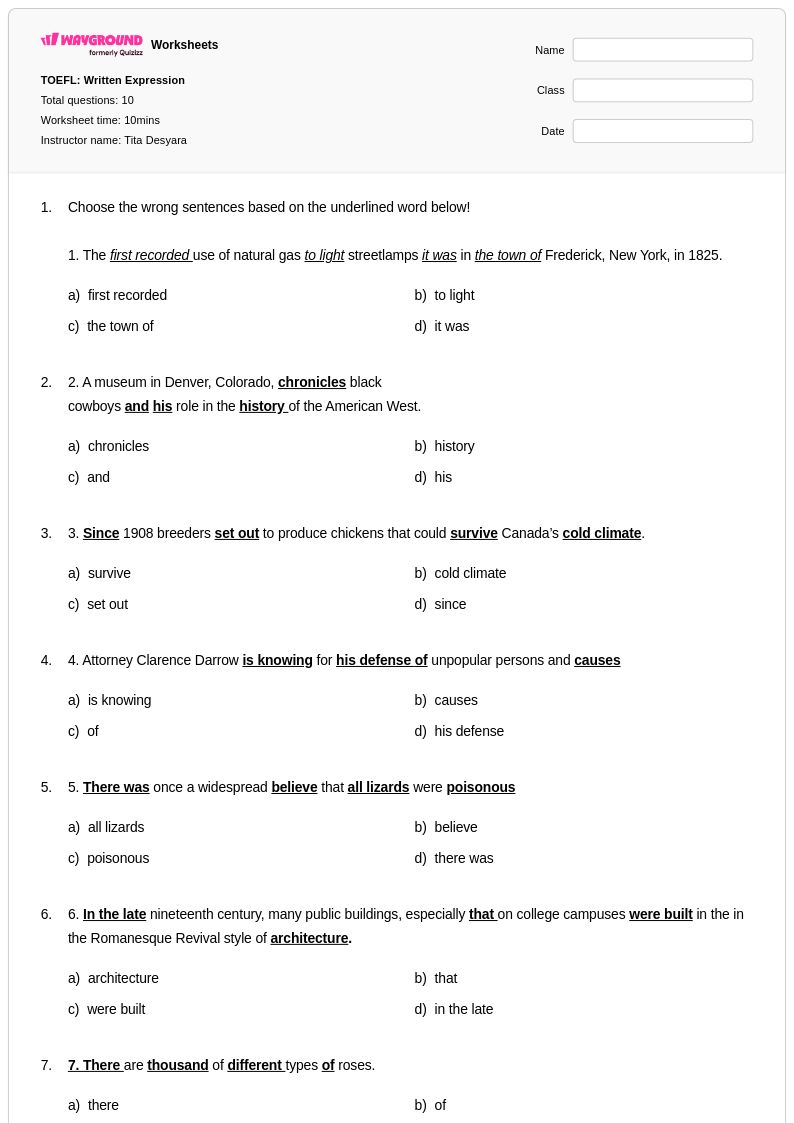
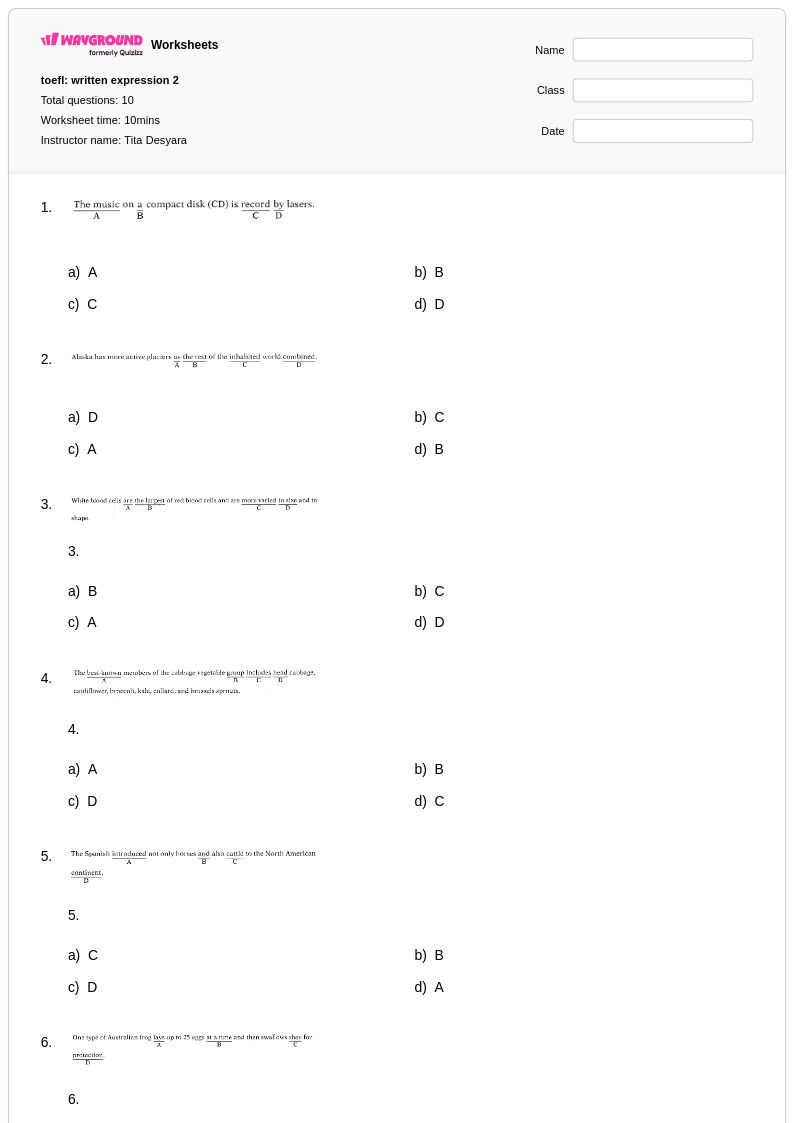
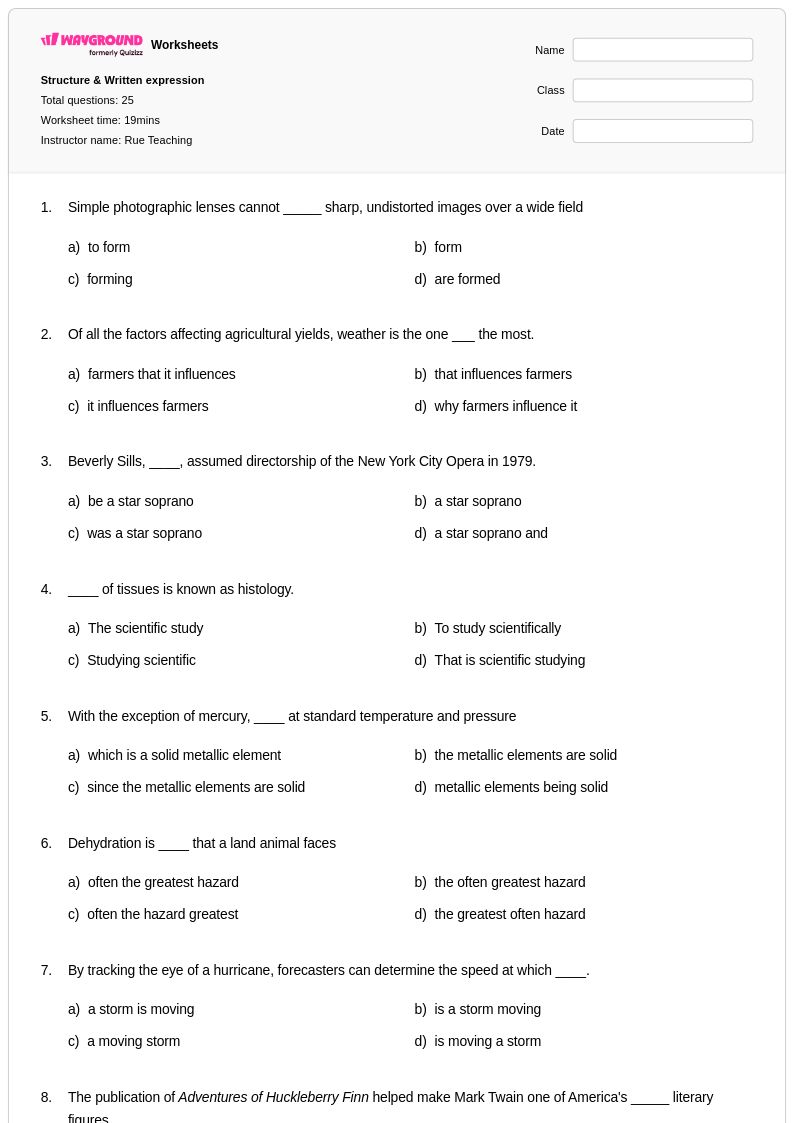
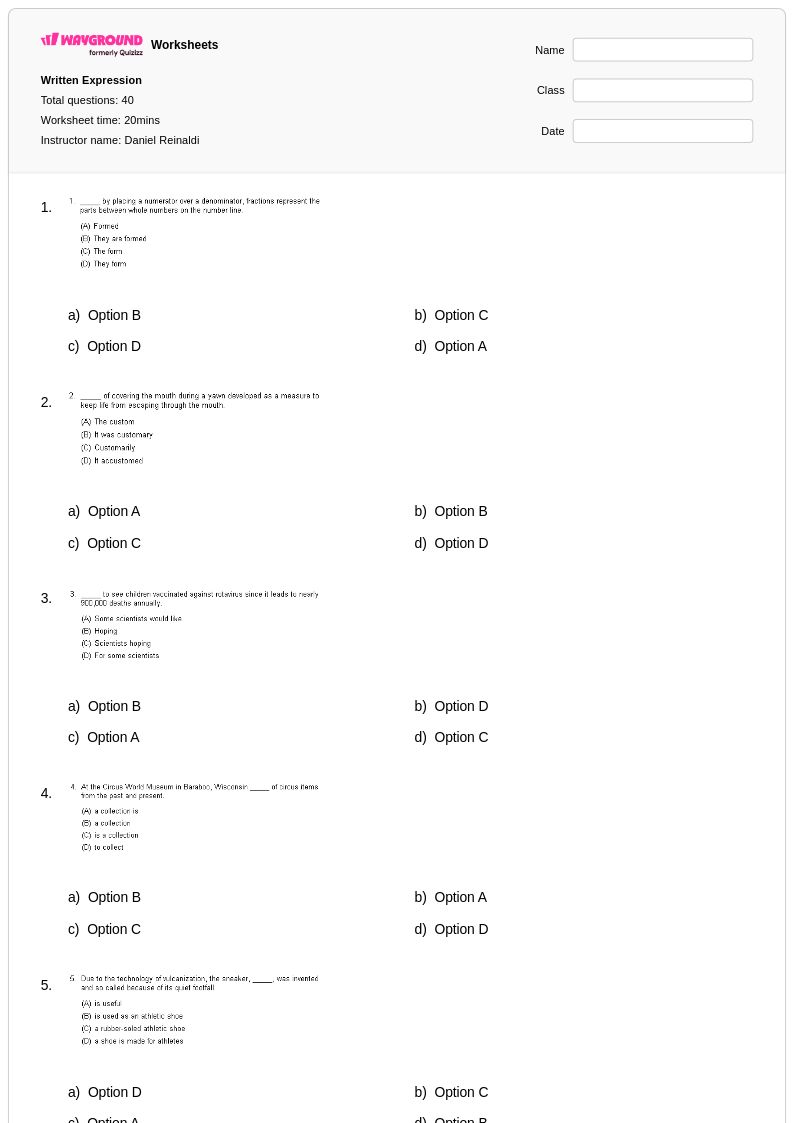
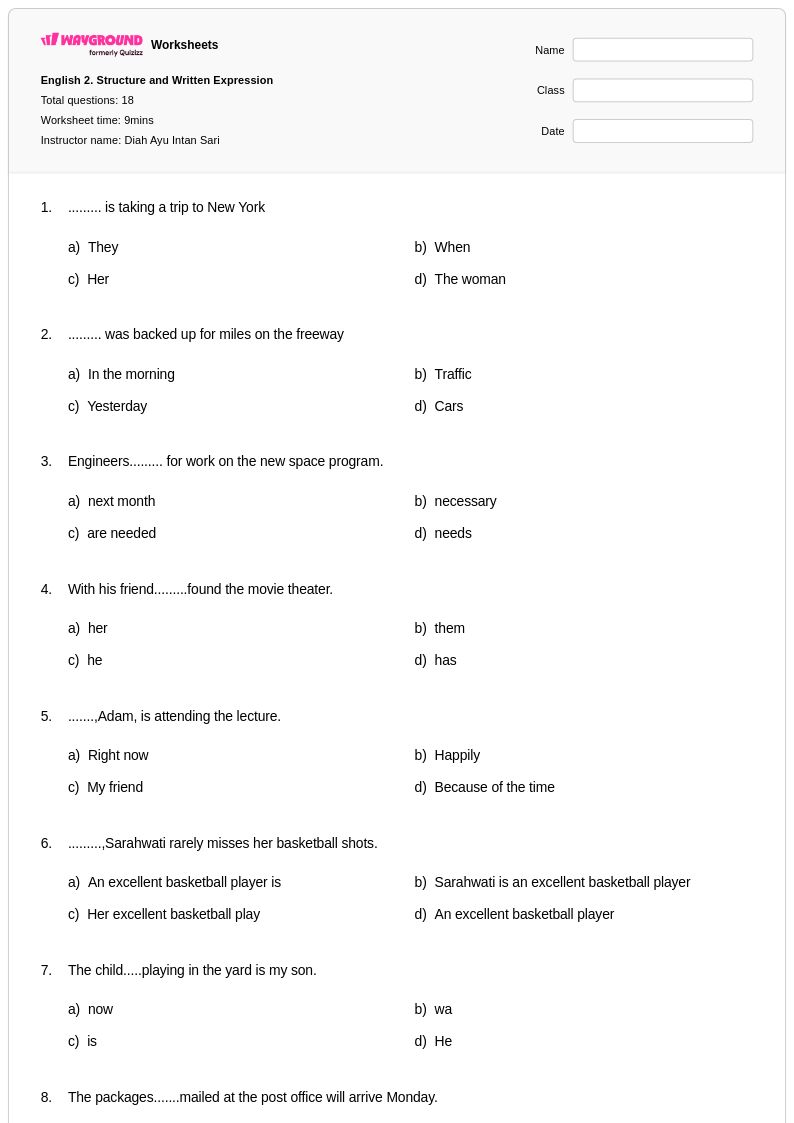
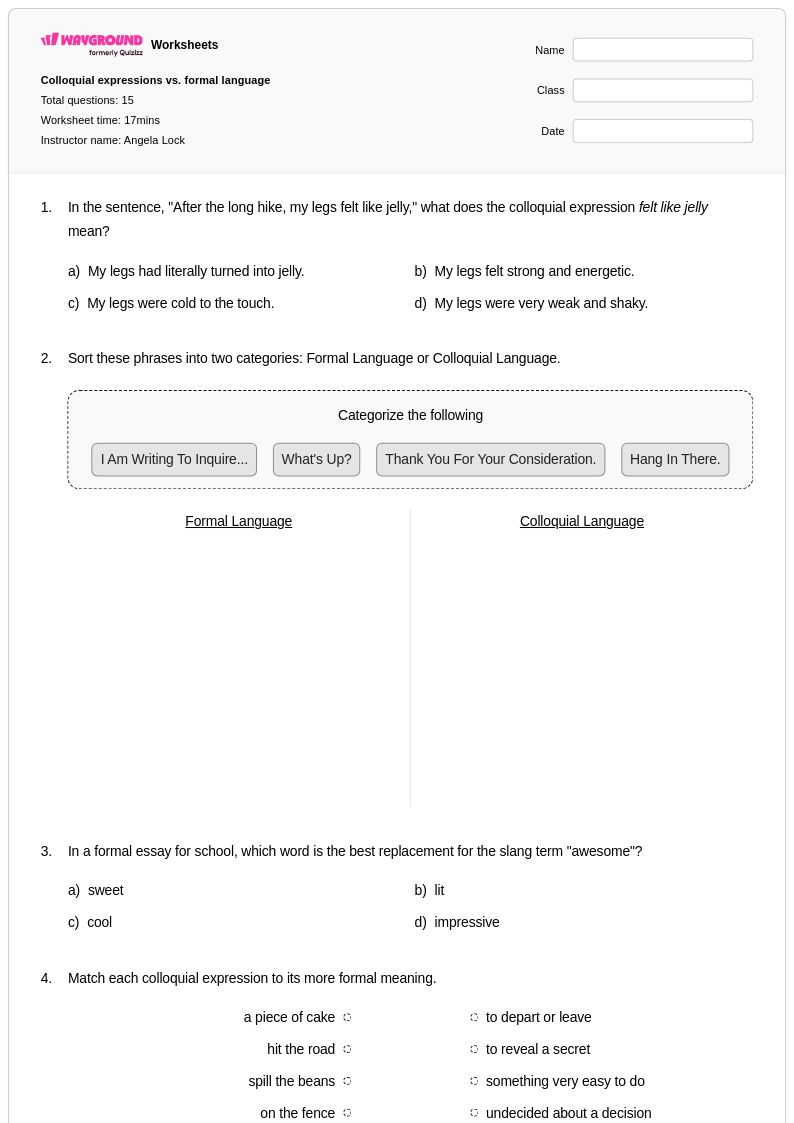
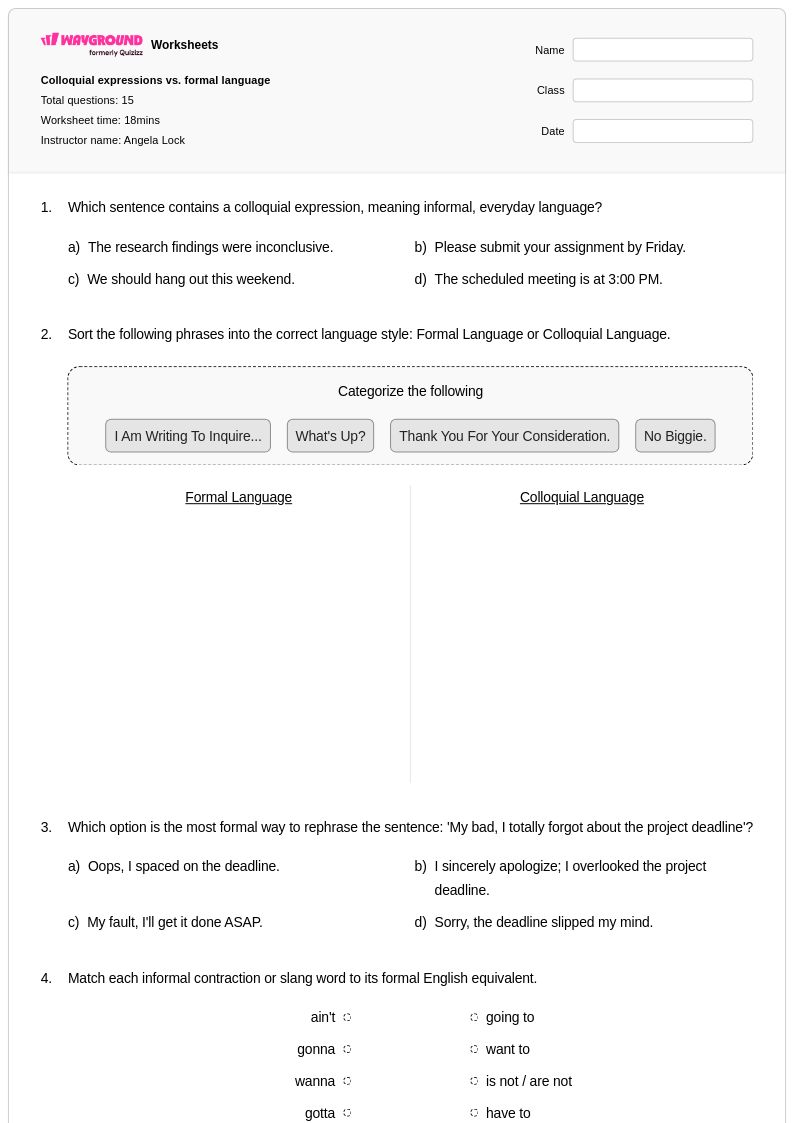
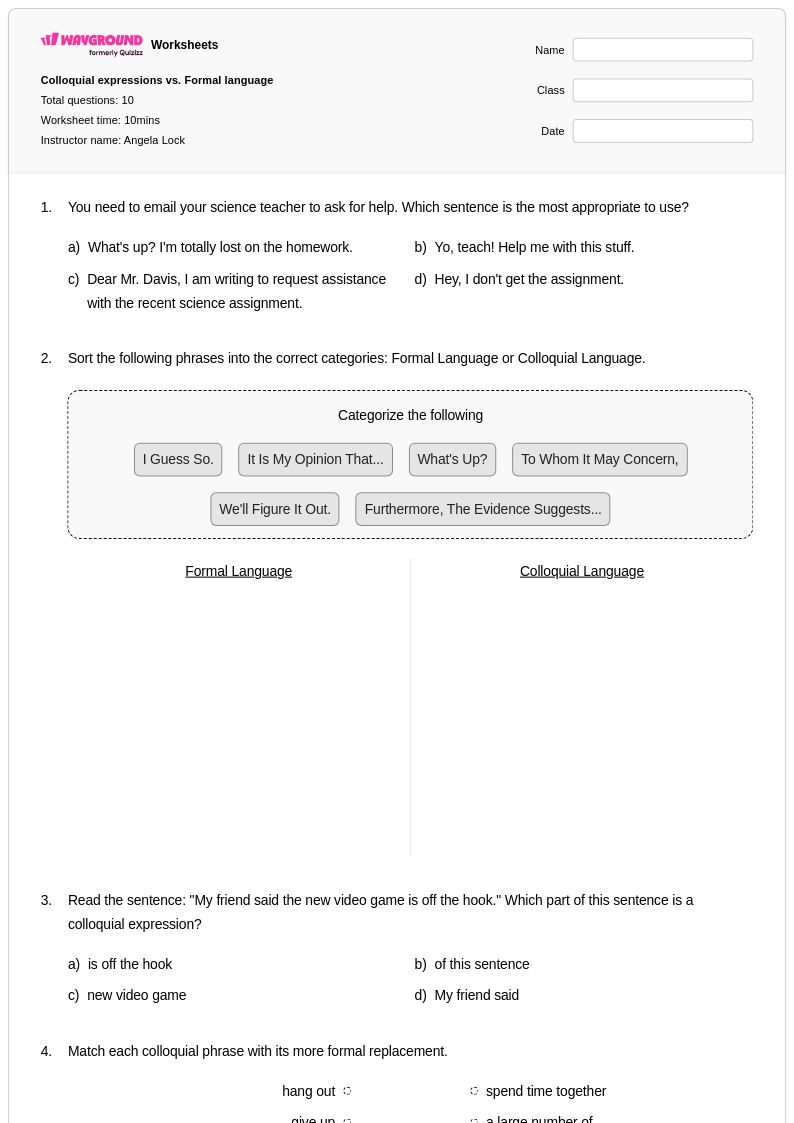
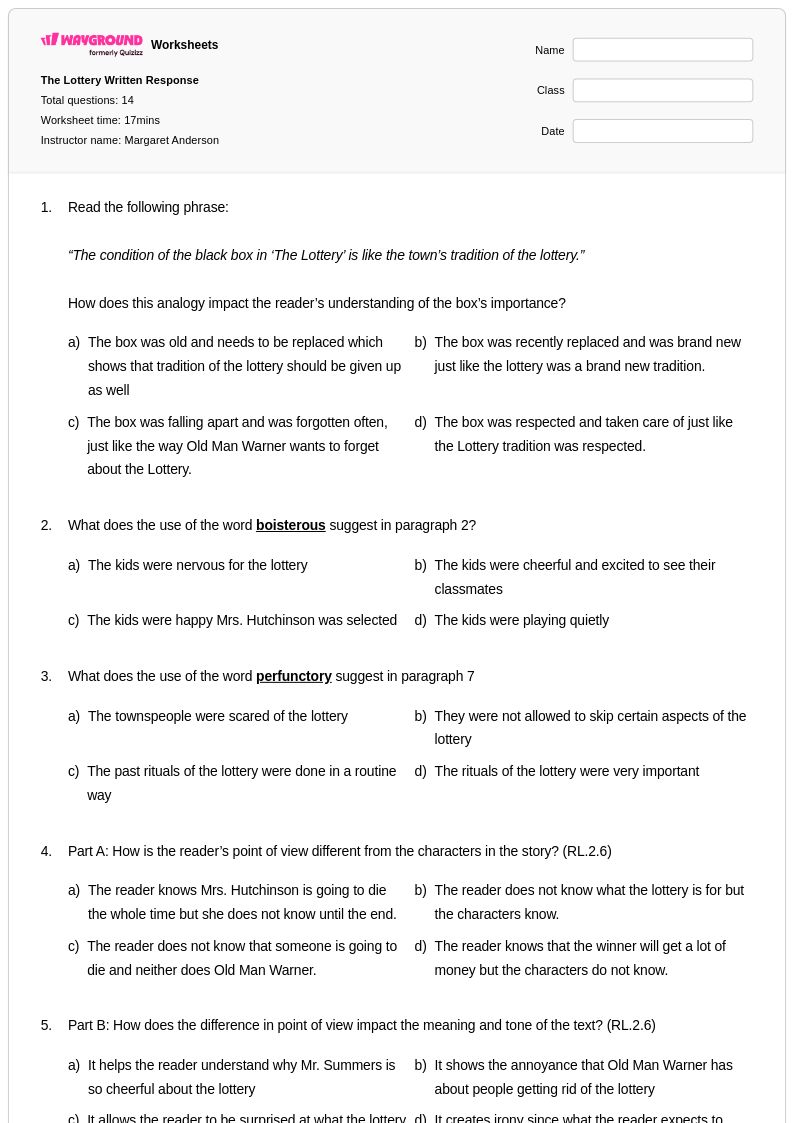
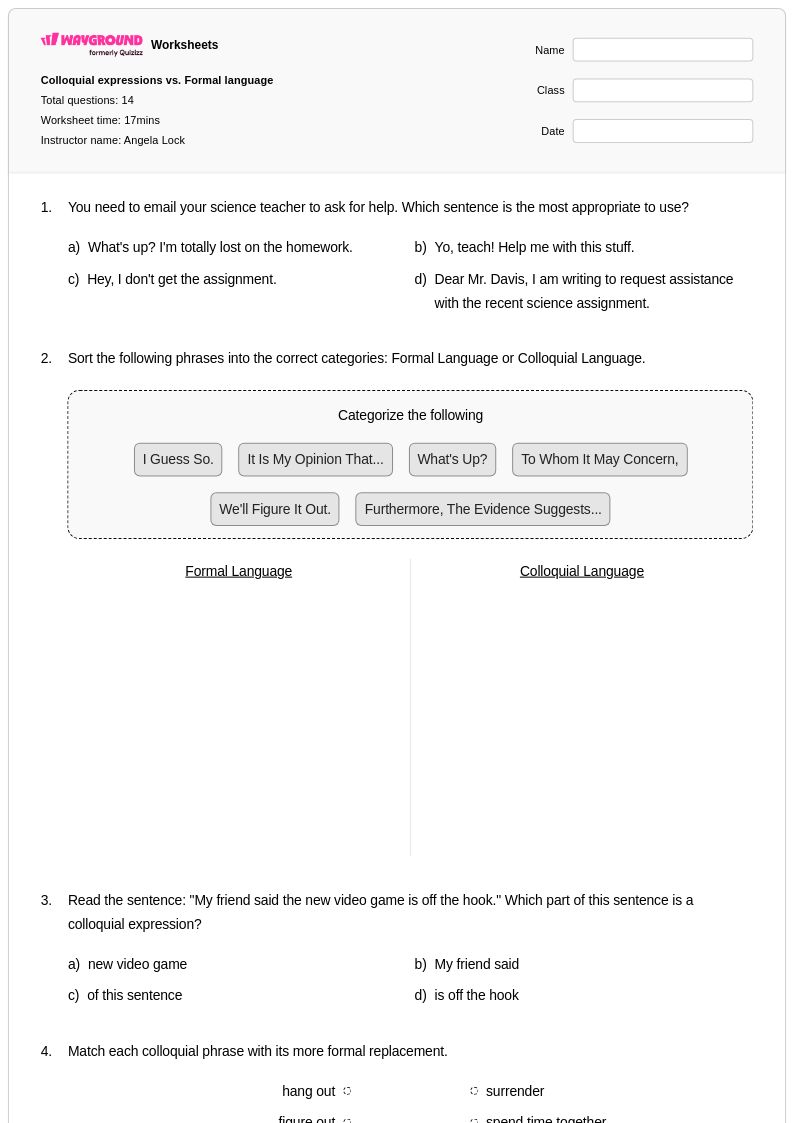
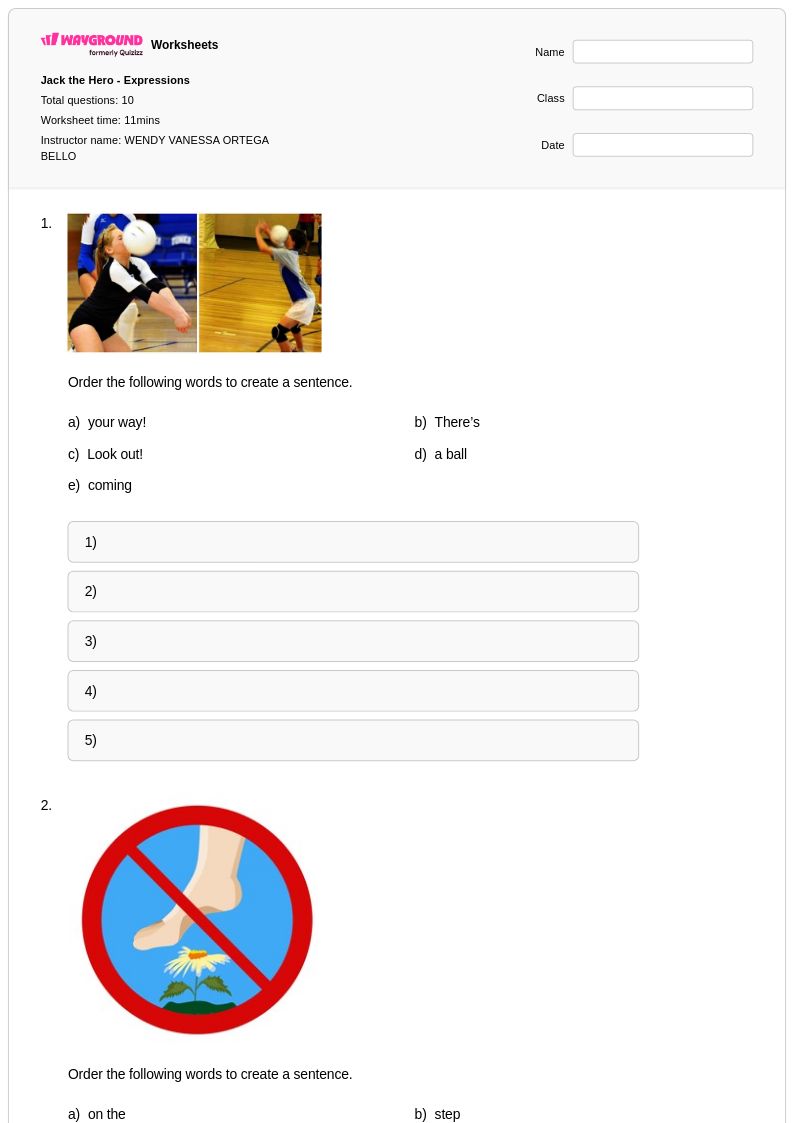
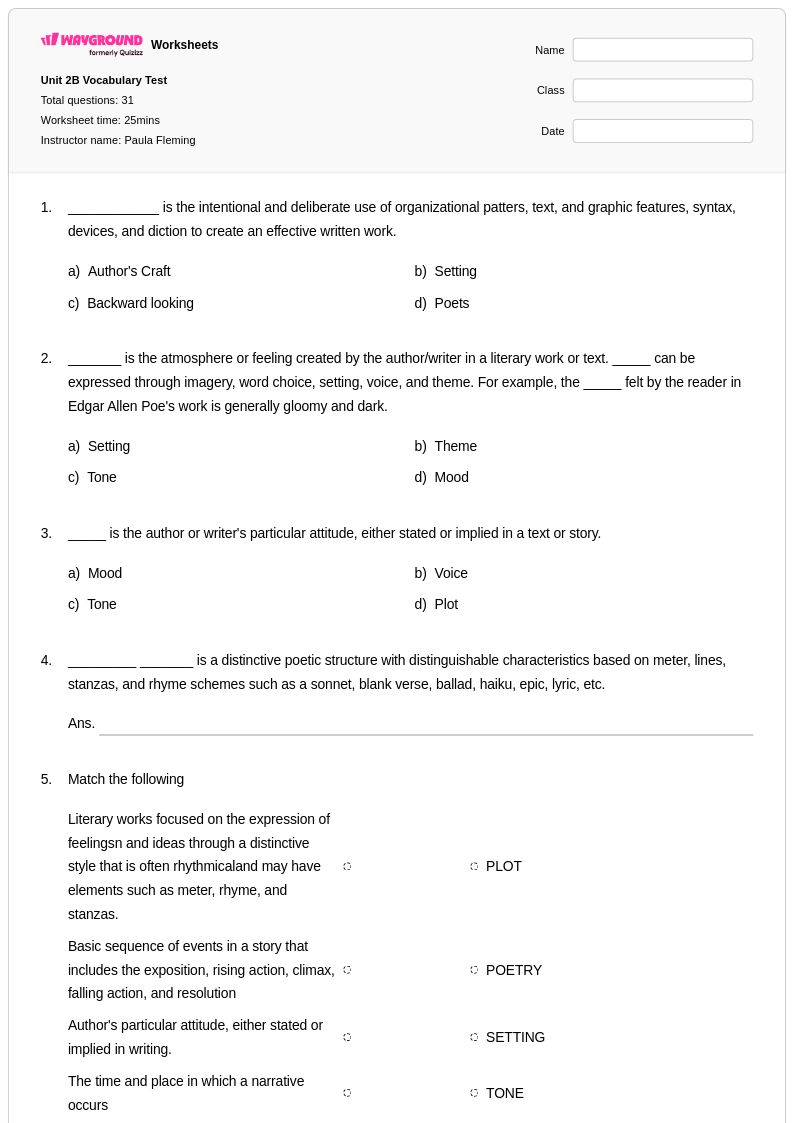
Class 8 written expression worksheets available through Wayground (formerly Quizizz) provide comprehensive practice opportunities for students developing their communication skills through structured writing activities. These educational resources target essential components of effective written expression, including sentence structure, paragraph organization, vocabulary development, grammar application, and coherent idea presentation. Students engage with practice problems that challenge them to articulate thoughts clearly, use appropriate transitions, maintain consistent tone, and develop compelling arguments or narratives. Each worksheet includes detailed answer keys that help educators assess student progress and identify areas requiring additional support, while the free printable format allows for flexible classroom implementation and home study reinforcement.
Wayground's extensive collection of millions of teacher-created resources empowers educators with robust search and filtering capabilities specifically designed for written expression instruction at the Class 8 level. Teachers can easily locate materials aligned with curriculum standards and differentiate instruction through customizable worksheets that accommodate varying skill levels within their classrooms. The platform's digital and pdf formats provide versatility for both traditional and technology-enhanced learning environments, enabling seamless integration into lesson planning workflows. These comprehensive tools support targeted remediation for struggling writers, enrichment opportunities for advanced students, and consistent skill practice that builds confidence in written communication, ultimately helping teachers create more effective and personalized writing instruction experiences.
FAQs
How do I teach written expression skills to students who struggle with organizing their thoughts?
Start by breaking the writing process into discrete, teachable stages: brainstorming, drafting, revising, and editing. Use graphic organizers to help students map ideas before they write, and model paragraph development explicitly by showing how a topic sentence connects to supporting details and a concluding thought. Repeated, structured practice with short writing tasks builds the organizational habits students need before tackling longer compositions.
What exercises help students practice written expression effectively?
Sentence-level exercises that focus on structure and clarity are an effective starting point, as they give students a contained unit to work with before scaling up to paragraphs. Paragraph development tasks that require students to sequence ideas logically, maintain coherence, and stay on topic build the foundational skills needed for longer writing. Regular practice across all stages of the writing process, from drafting to editing, reinforces written expression as a multi-step discipline rather than a single act.
What are the most common written expression mistakes students make?
Students frequently struggle with coherence, writing sentences that are individually correct but do not flow logically from one to the next. Weak paragraph organization is another common issue, where students introduce ideas without development or end paragraphs abruptly. At the sentence level, run-ons, fragments, and unclear pronoun references are persistent errors that undermine otherwise competent ideas.
How can I differentiate written expression instruction for students at different skill levels?
For students who need additional support, reduce task complexity by focusing on one writing component at a time, such as sentence structure before paragraph development. Advanced learners benefit from open-ended prompts that require synthesis, argumentation, or stylistic revision rather than structured scaffolds. On Wayground, teachers can apply accommodations such as Read Aloud for students who process written directions more easily through audio, or adjust font sizes and themes using Reading Mode to reduce visual barriers during digital practice.
How do I use written expression worksheets on Wayground in my classroom?
Wayground's written expression worksheets are available as printable PDFs for traditional classroom use and in digital formats for technology-integrated environments, including the option to host them as a quiz directly on the platform. Teachers can use the platform's search and filtering tools to locate worksheets aligned with specific standards and grade-level expectations, making it straightforward to match resources to current instructional goals. The included answer keys allow for efficient progress monitoring and targeted feedback without requiring teachers to create their own scoring guides.
How do I assess student progress in written expression?
Assess written expression across multiple dimensions: sentence construction, paragraph organization, idea development, and editing accuracy. Use answer keys to identify patterns in student errors rather than treating each mistake in isolation, since recurring issues such as weak topic sentences or missing transitions point to specific instructional gaps. Formative checkpoints at each stage of the writing process, such as reviewing a draft outline before a student begins writing, allow teachers to intervene early before errors become habits.