Free Printable A Long Walk to Water Worksheets for Grade 4
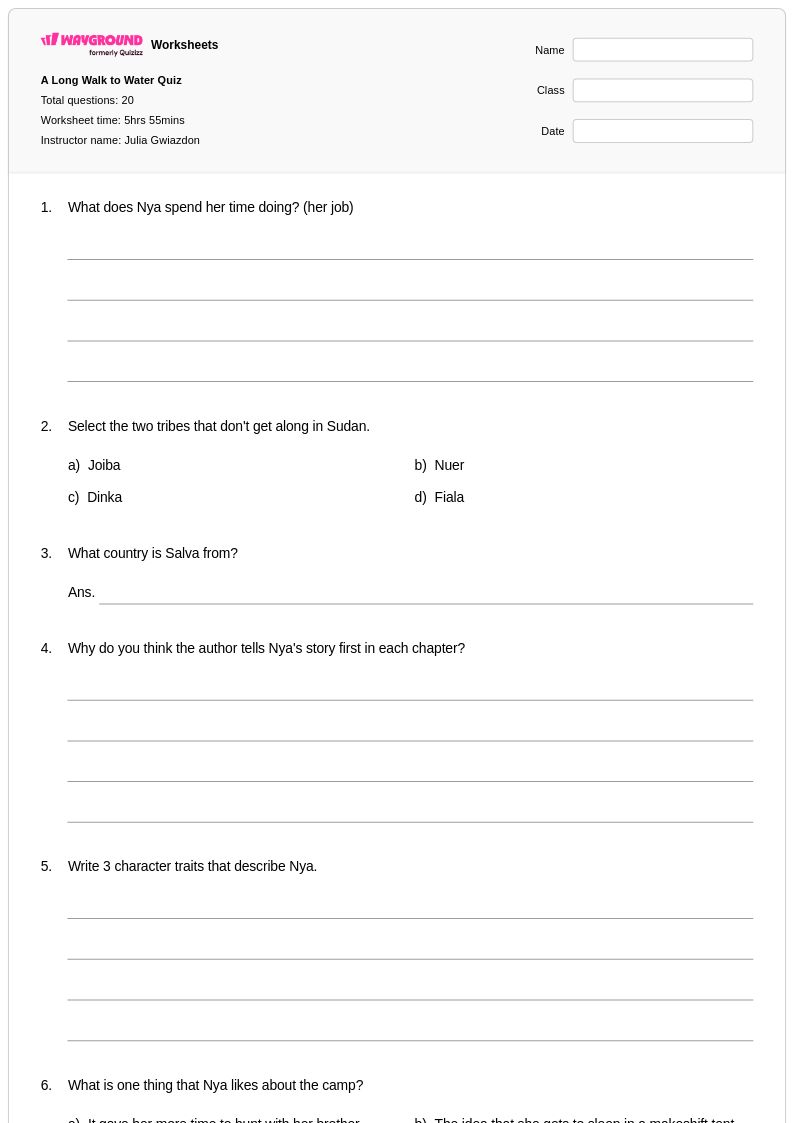
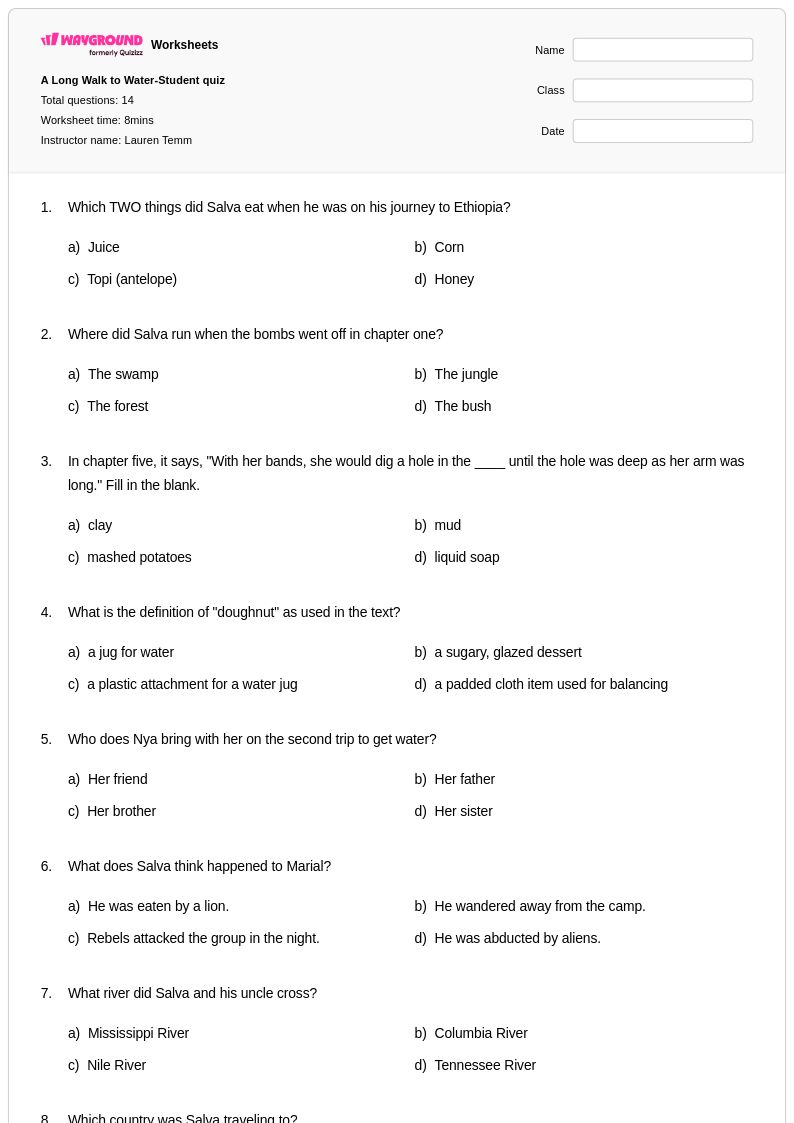
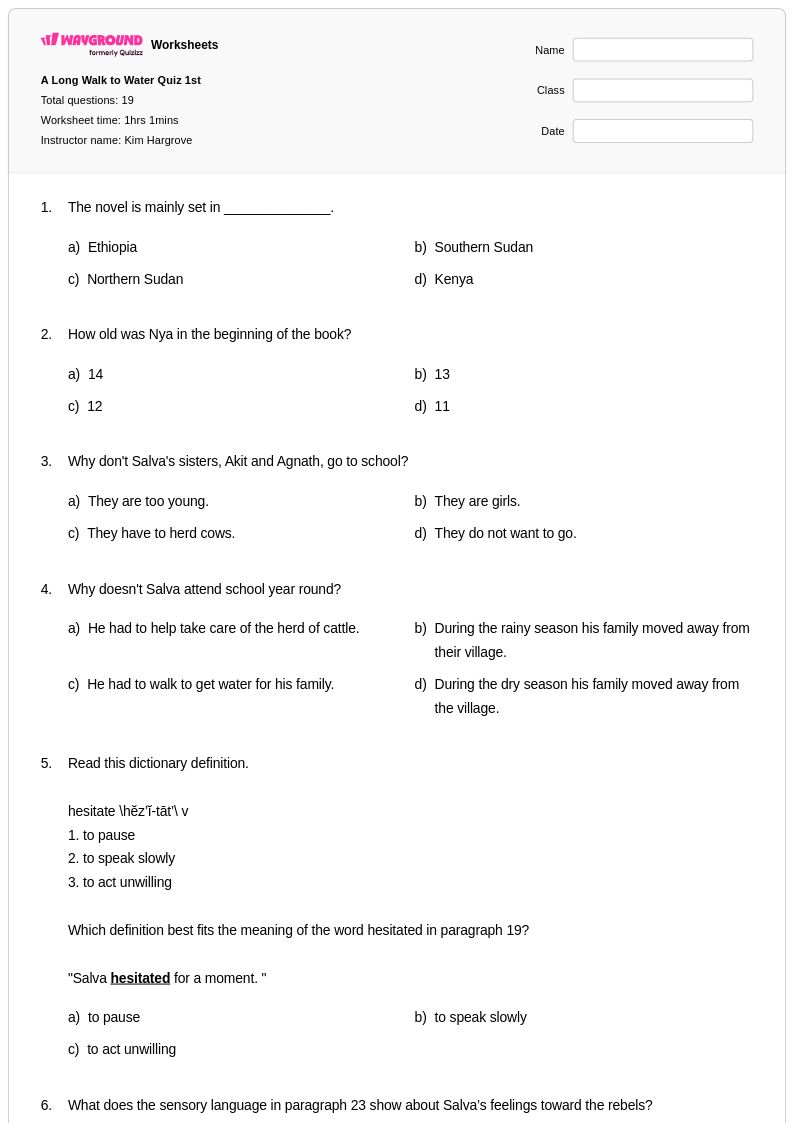
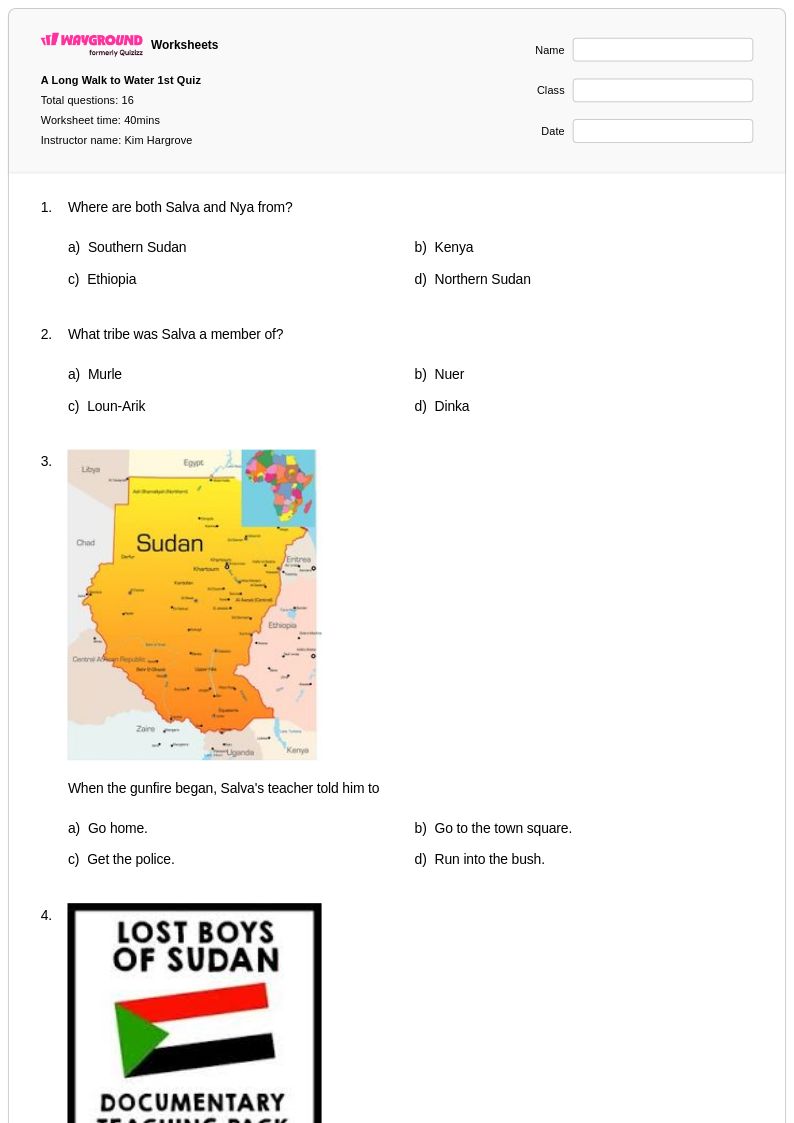
Explore Grade 4 printable worksheets and free PDF practice problems focused on A Long Walk to Water that help students analyze this powerful novel through engaging activities with complete answer keys.
Explore printable A Long Walk to Water worksheets for Grade 4
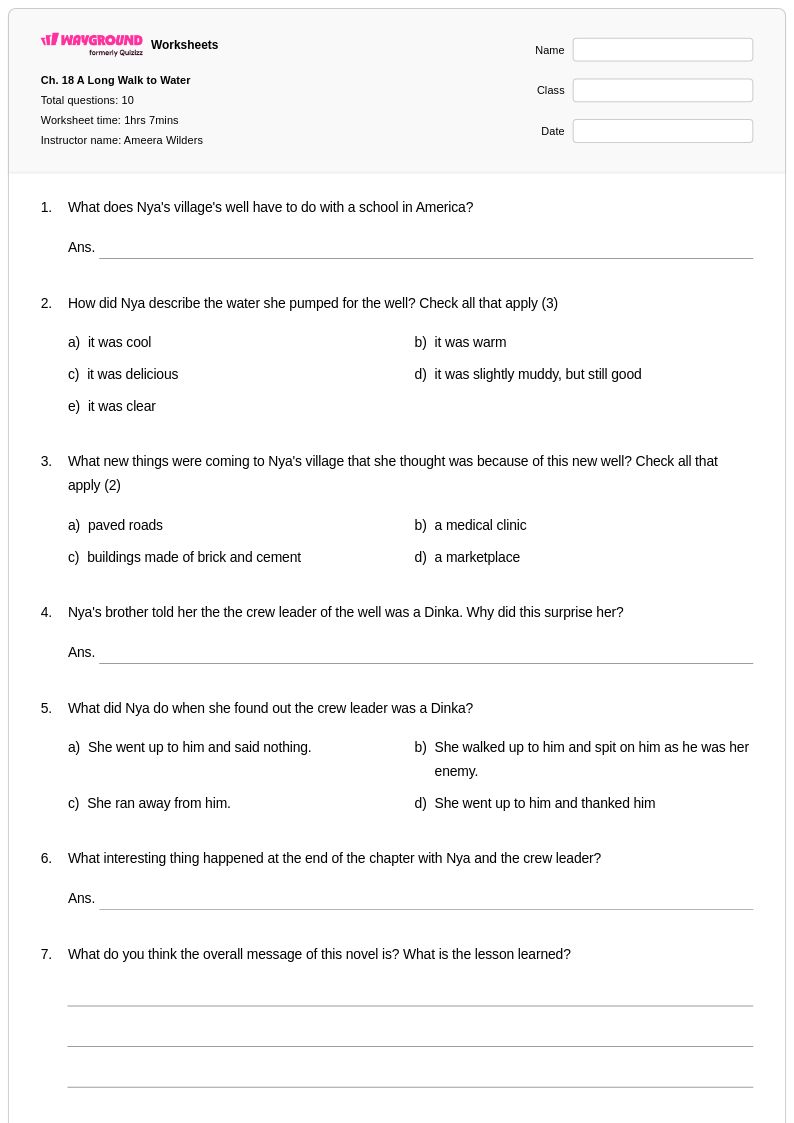
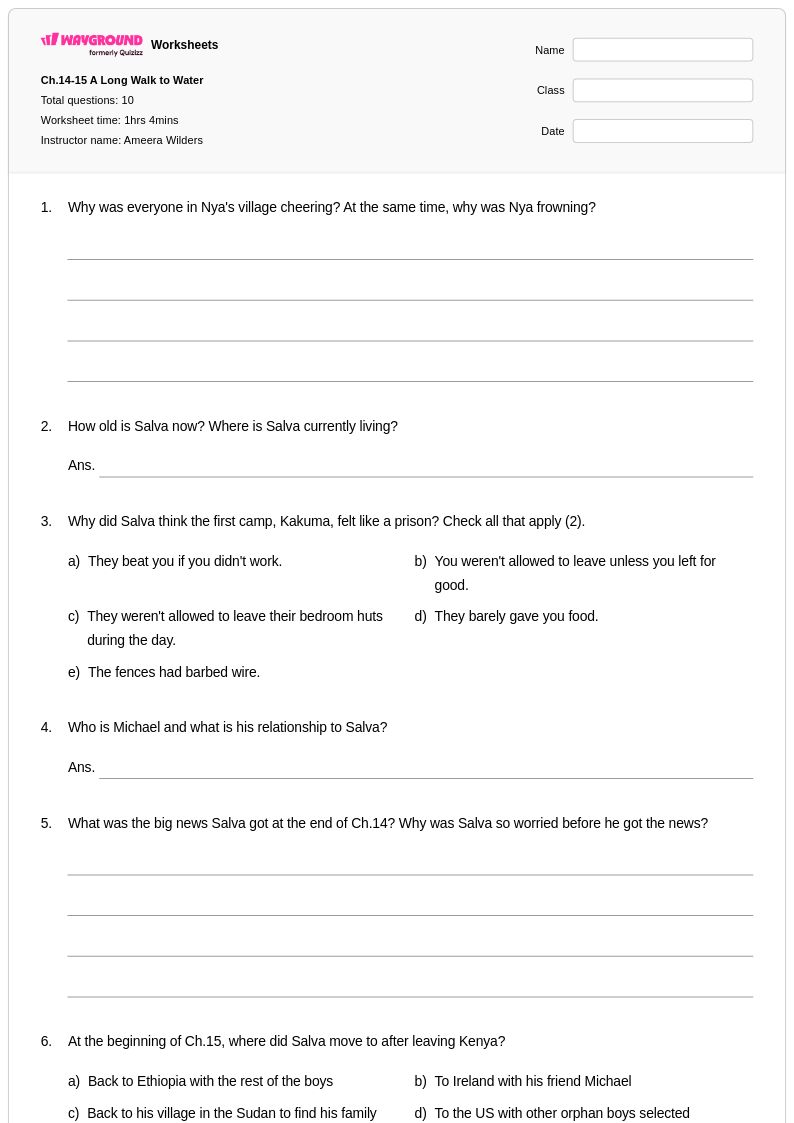
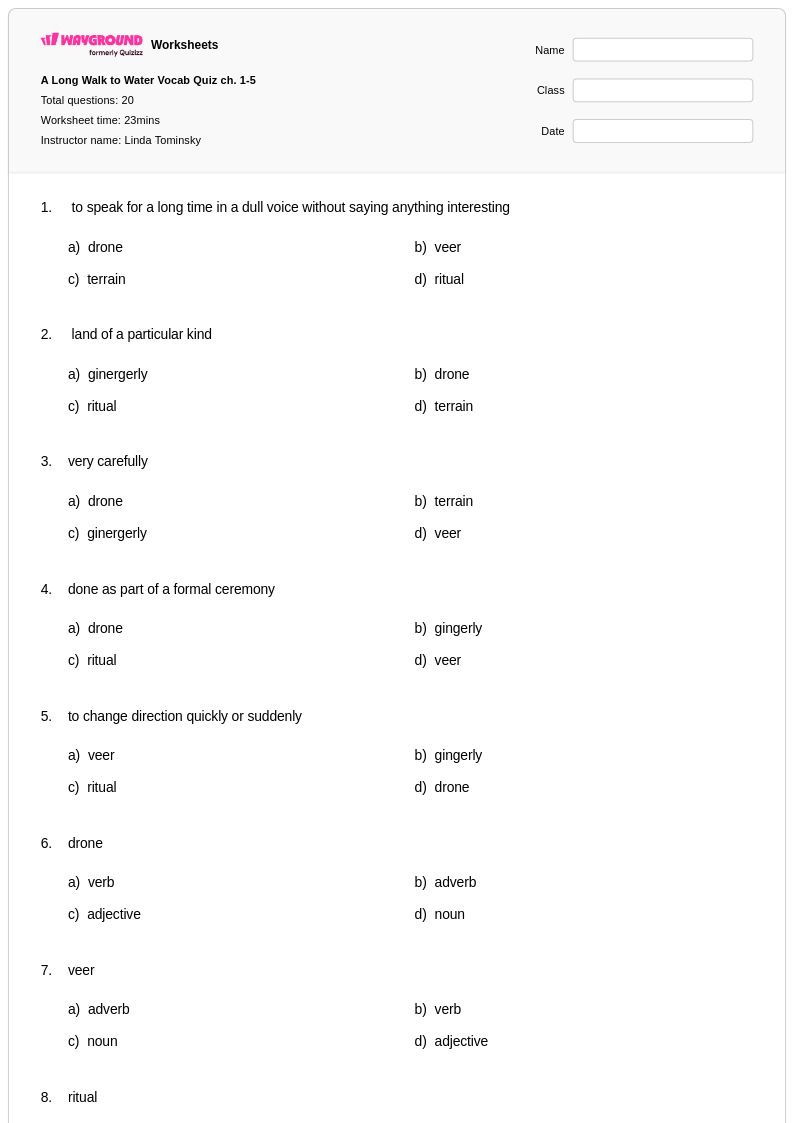
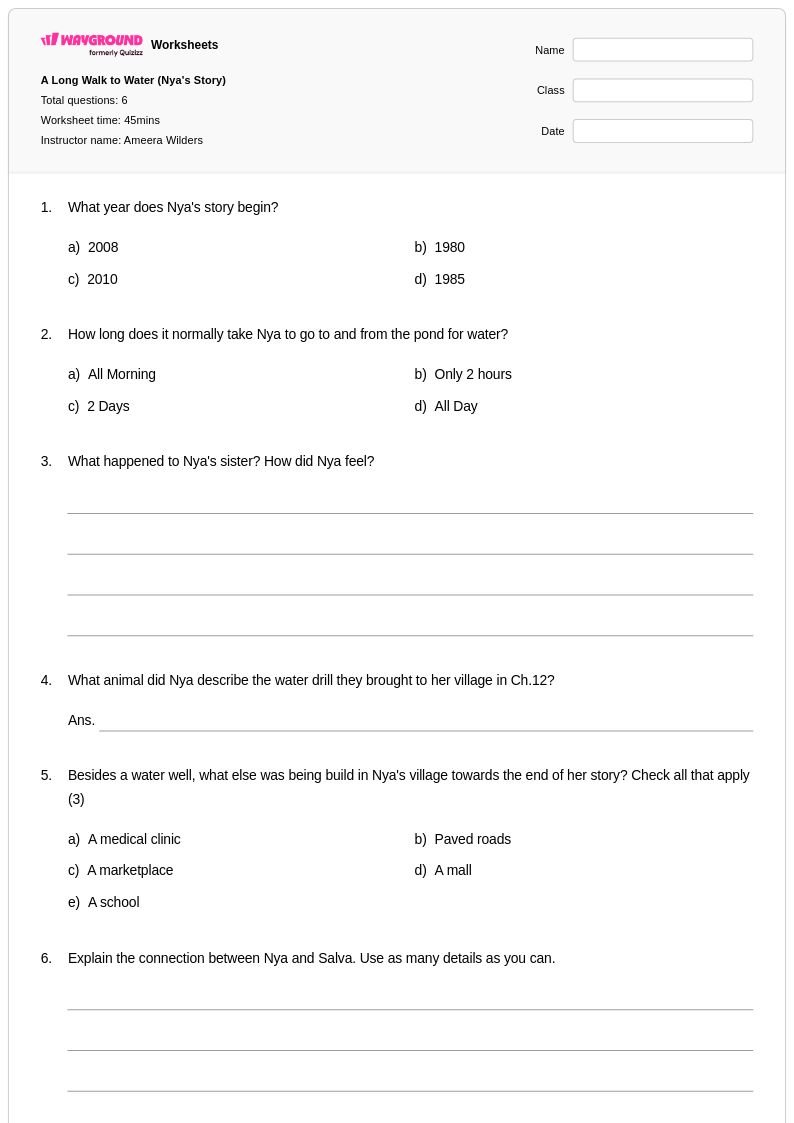
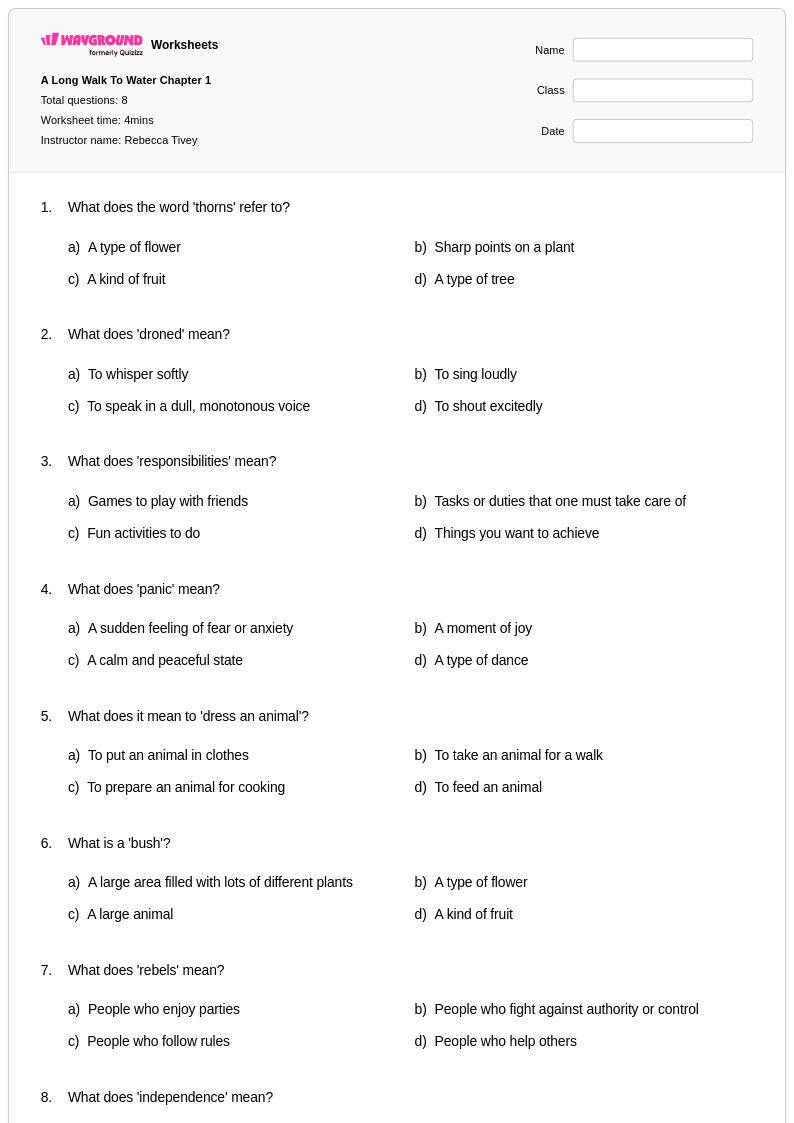
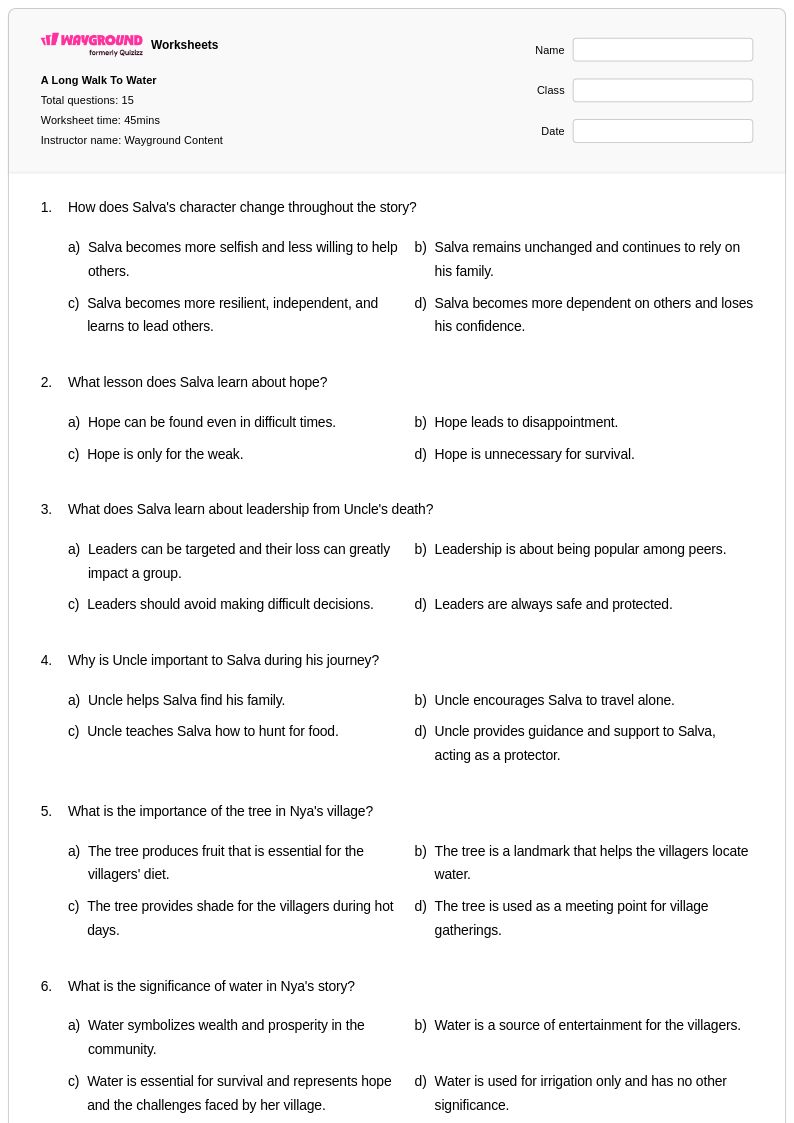
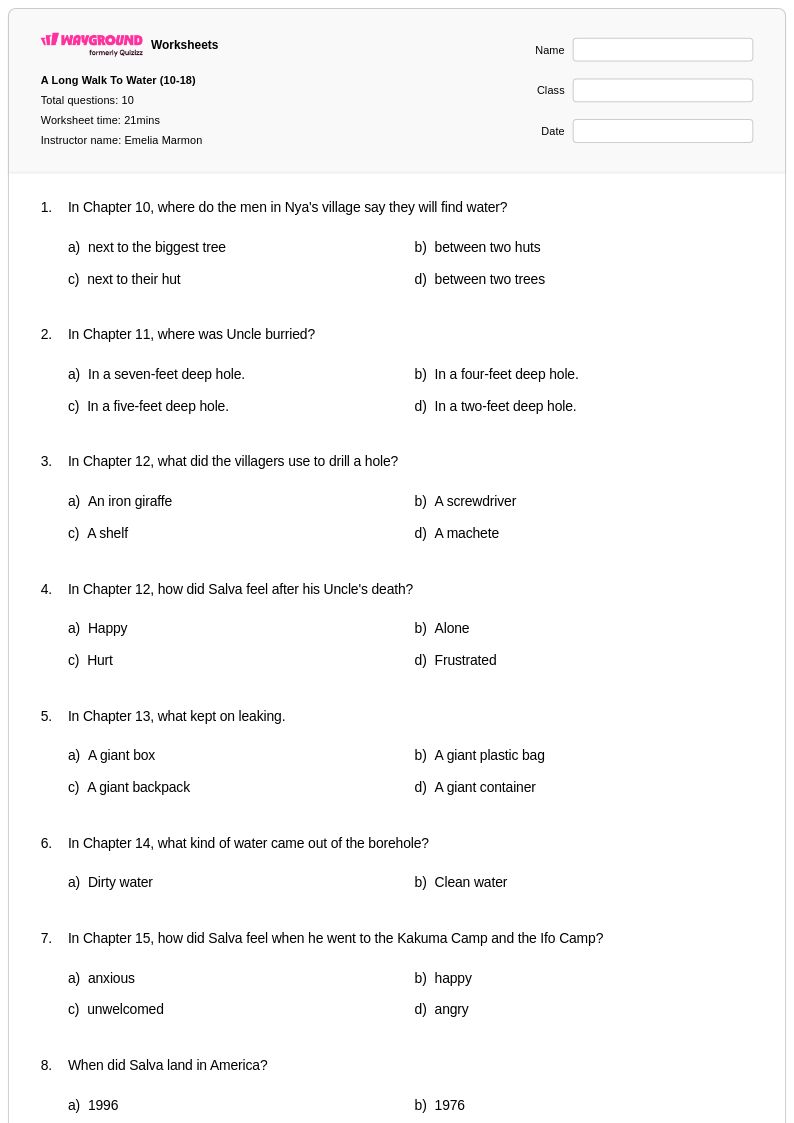
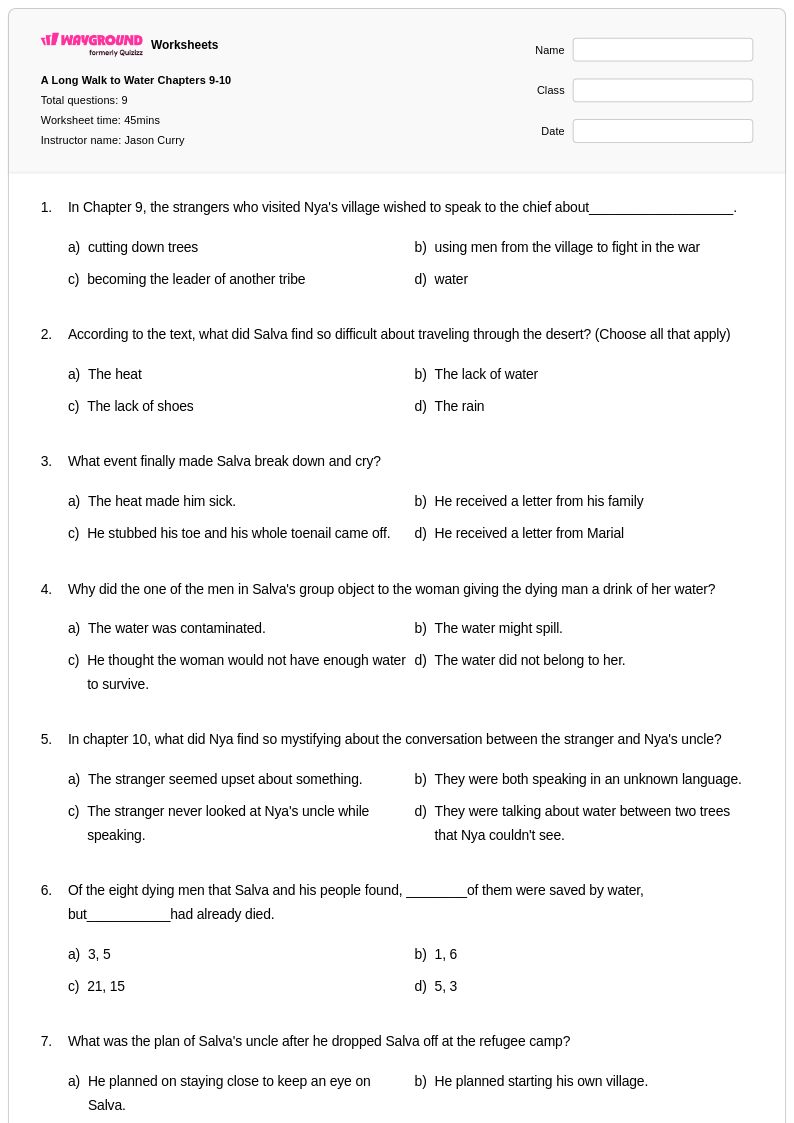
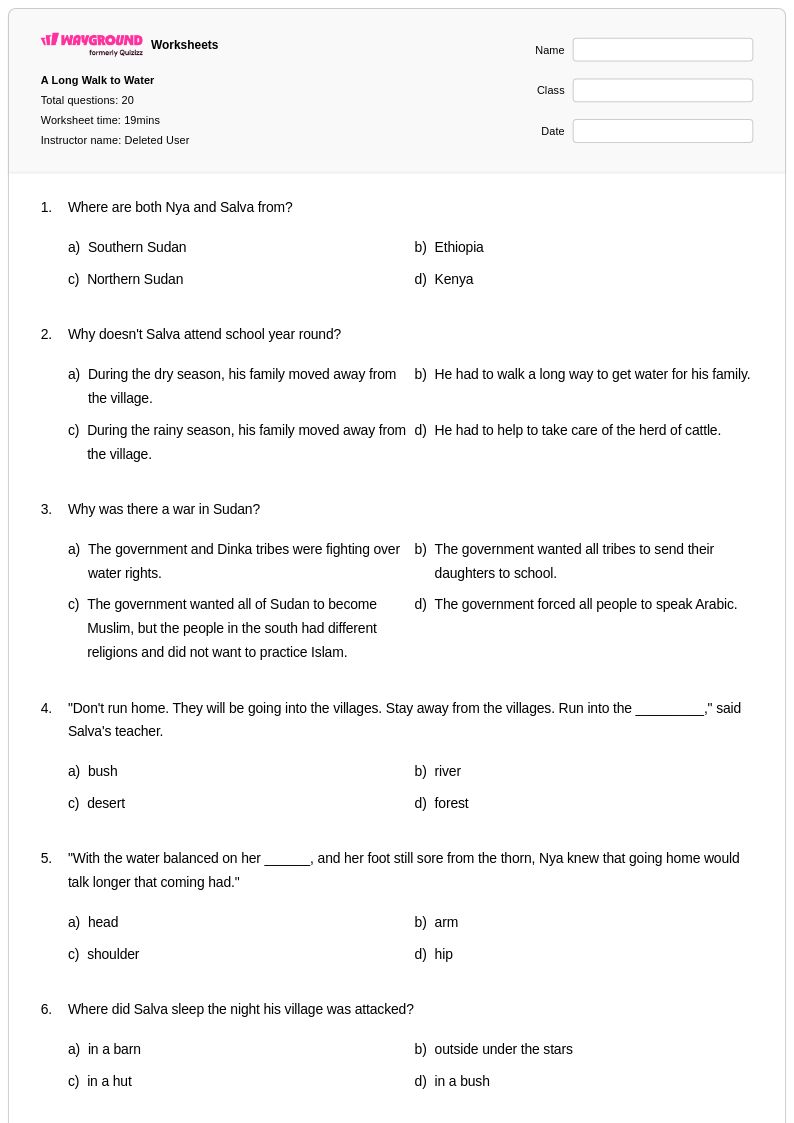
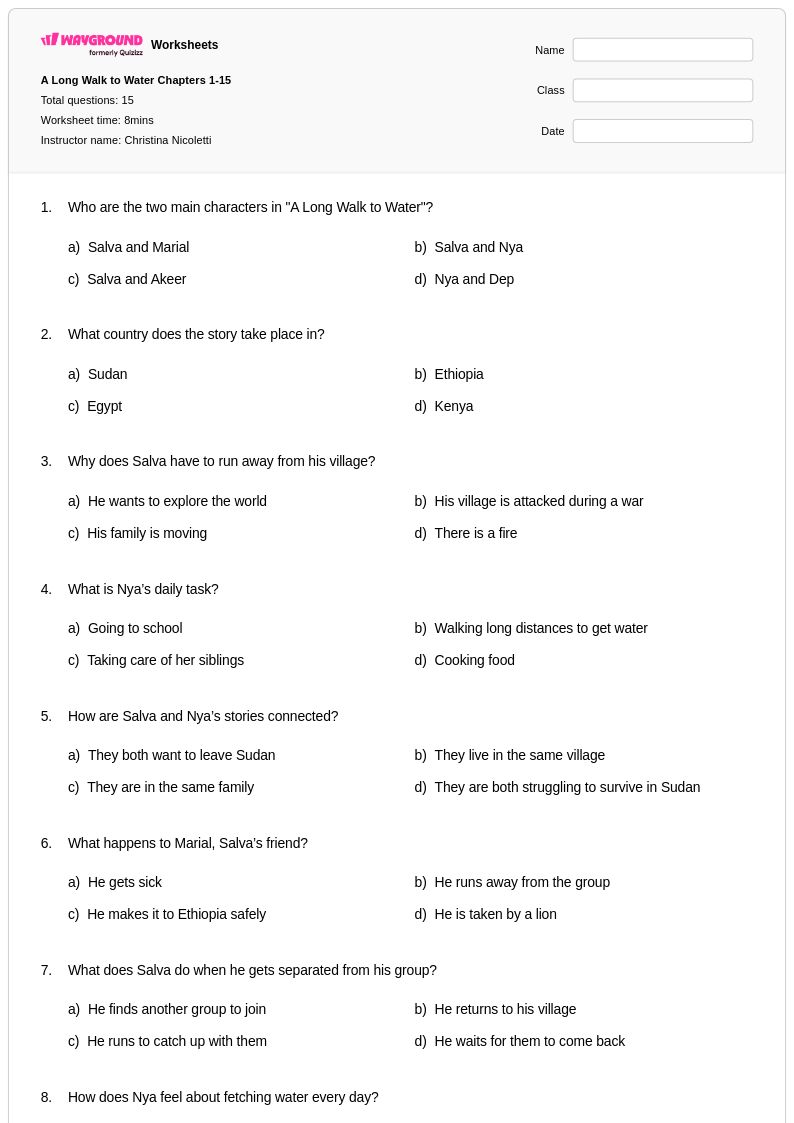
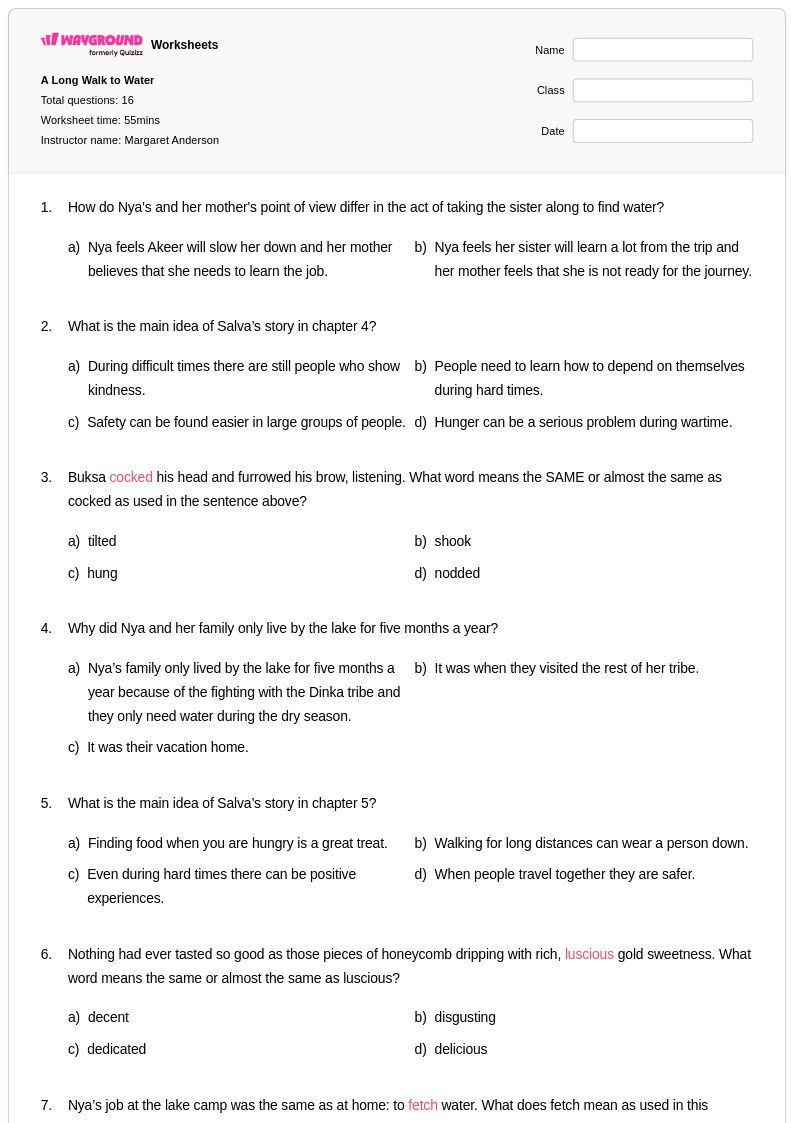
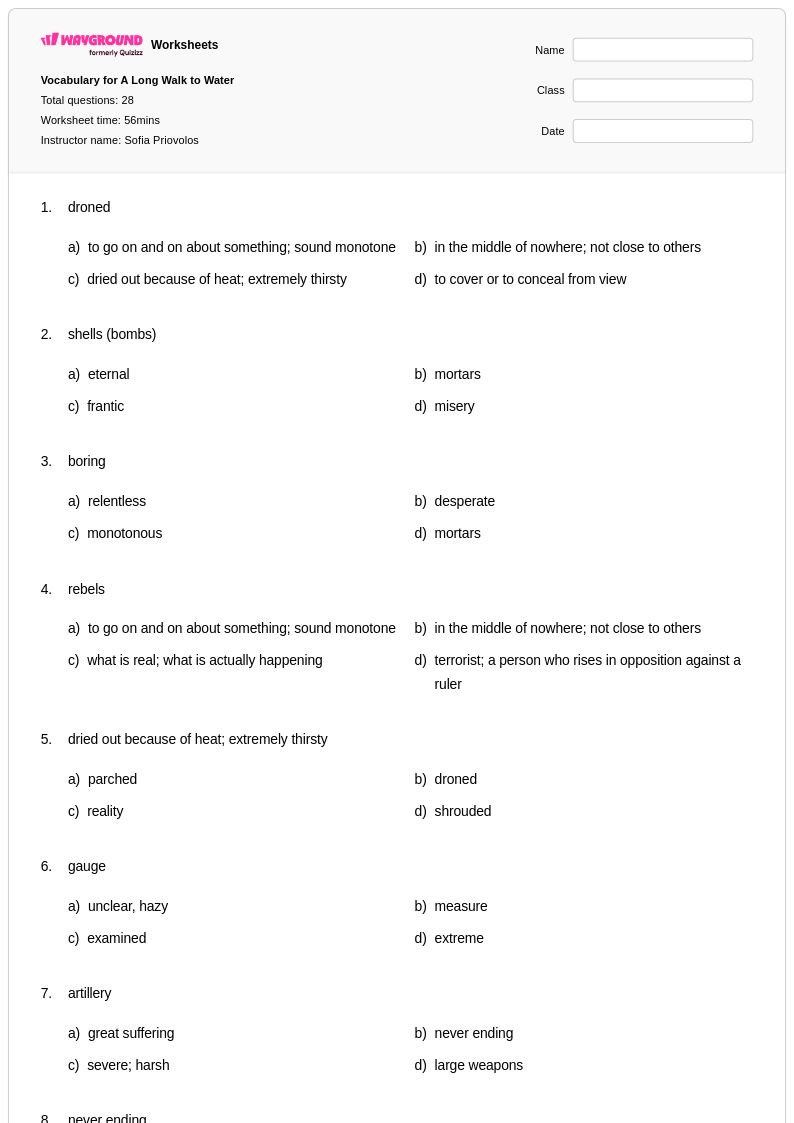
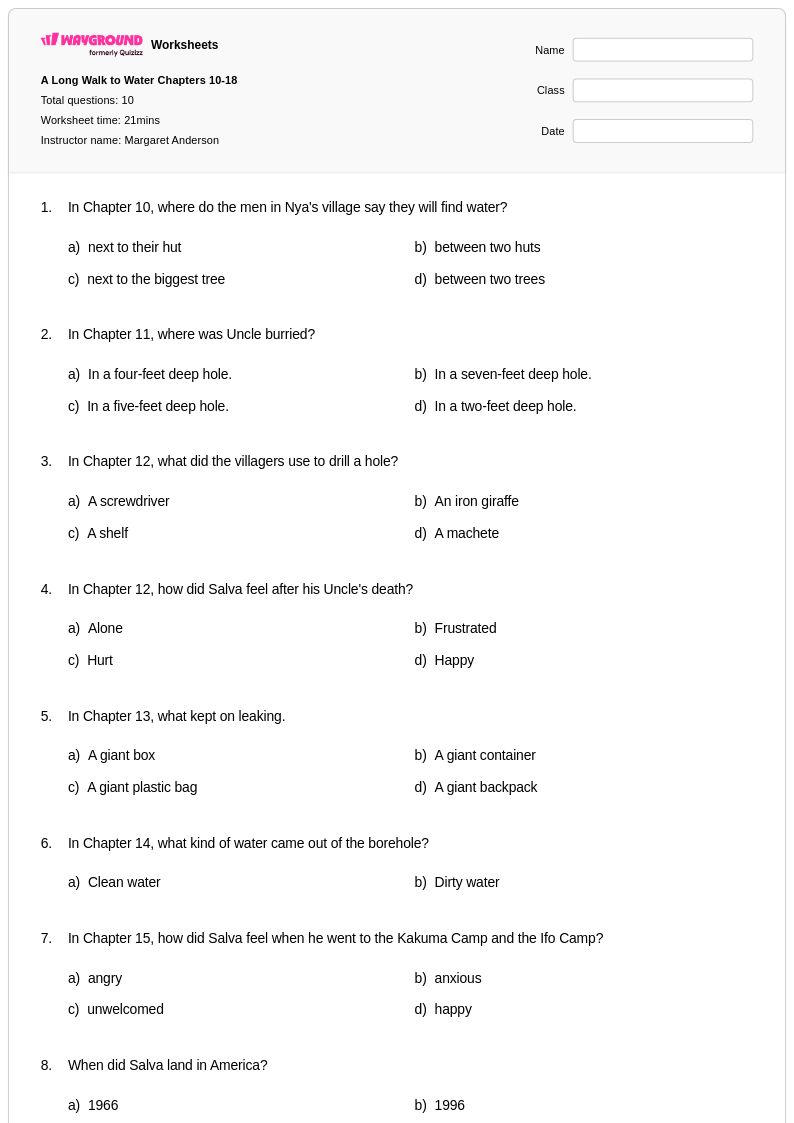
Grade 4 students exploring "A Long Walk to Water" will find comprehensive worksheet collections through Wayground that deepen their understanding of this powerful novel while strengthening essential reading comprehension skills. These carefully designed worksheets guide students through character analysis, plot development, theme exploration, and the examination of survival narratives that define this compelling story. Students engage with practice problems that challenge them to analyze Nya and Salva's parallel journeys, compare cultural contexts, and evaluate the impact of water scarcity on communities. Each worksheet includes detailed answer keys that support both independent learning and teacher-guided instruction, with printable pdf formats ensuring accessibility for diverse classroom environments. These free resources help fourth-grade readers develop critical thinking abilities while connecting literature to real-world humanitarian issues.
Wayground's extensive library contains millions of teacher-created resources specifically designed to support educators working with literature-based reading genres and novel studies like "A Long Walk to Water." Teachers benefit from robust search and filtering capabilities that allow them to locate worksheets aligned with specific reading standards and learning objectives, ensuring seamless integration with existing curriculum plans. The platform's differentiation tools enable educators to customize worksheets for varying skill levels within their Grade 4 classrooms, supporting both remediation for struggling readers and enrichment opportunities for advanced students. Available in both digital and printable formats, these comprehensive worksheet collections streamline lesson planning while providing flexible options for in-class activities, homework assignments, and assessment preparation that reinforce students' analytical reading skills and literary comprehension abilities.
FAQs
How do I teach A Long Walk to Water in my classroom?
Teaching A Long Walk to Water works best when students understand the novel's dual narrative structure, which alternates between Nya's daily water journey in 2008 and Salva's displacement during the Second Sudanese Civil War in the 1980s–90s. Ground students in the historical context of Sudan before reading, then use character development analysis to track how Salva's resilience evolves across chapters. Pairing close reading of textual evidence with thematic discussions around survival, perseverance, and hope helps students engage deeply with Linda Sue Park's storytelling.
What are good exercises to help students practice literary analysis with A Long Walk to Water?
Effective practice exercises for this novel include character development tracking charts that map Salva's internal changes chapter by chapter, theme identification activities where students cite specific textual evidence, and compare-and-contrast tasks that examine the parallel lives of Nya and Salva. Reading comprehension checks after key chapters reinforce plot understanding before students move into deeper analytical work. These structured exercises build the close reading skills students need to write strong literary analysis essays.
What reading comprehension mistakes do students commonly make with A Long Walk to Water?
One of the most common errors is confusing the two timelines — students often lose track of which narrative belongs to Nya and which belongs to Salva, especially in early chapters where the time periods are not yet fully clear. Many students also struggle to connect the two storylines thematically before the novel's ending reveals their intersection. Another frequent mistake is treating Salva's journey as a series of plot events rather than recognizing how each challenge functions to develop his character and reinforce the novel's central themes.
How can I differentiate A Long Walk to Water instruction for students at different reading levels?
For students who struggle with the novel's dual narrative, scaffolded graphic organizers that separate Nya's and Salva's storylines into parallel columns can reduce cognitive load and clarify the structure. For advanced readers, enrichment tasks might include researching the real Salva Dut or analyzing how Park uses foreshadowing to connect the two timelines. On Wayground, teachers can apply individual accommodations such as Read Aloud support, reduced answer choices, and adjustable font sizes, making the same worksheet accessible to learners across a range of reading levels without singling out any student.
How do I use A Long Walk to Water worksheets from Wayground in my lessons?
Wayground's A Long Walk to Water worksheets are available as printable PDFs for traditional classroom use and in digital formats for technology-integrated or remote learning environments. Teachers can also host worksheets directly as a quiz on Wayground, enabling automatic grading and immediate feedback for students. The included answer keys make it straightforward to use these materials for independent practice, guided reading sessions, or formative assessment checkpoints throughout the novel.
How do I help students understand the historical context of A Long Walk to Water?
Before students begin reading, provide a brief overview of the Second Sudanese Civil War and the role of the SPLA (Sudan People's Liberation Army) so they can place Salva's experiences in an accurate historical frame. Historical context activities work well as pre-reading tasks or as companion exercises to specific chapters where the conflict directly affects Salva's journey. Connecting the novel's events to real-world outcomes, such as the actual Salva Dut's Water for South Sudan initiative, gives students a meaningful reason to engage with the history behind the fiction.