
Temas recomendados para ti
- Analyzing Story Structure
- Analyzing Word Choice
- Annotation
- Author's Claim
- Beginning, Middle, End Structure
- Book Report
- Cause and Effect
- Central Idea and Supporting Details
- Central Message
- Character, Setting, and Plot
- Character and Setting
- Character Development
- Character Motivation
- Character Perspective
- Character Traits
- Character Types
- Chronological Order
- Citing Textual Evidence
- Cloze Activity
- Comparing and Contrasting
- Comprehension Questions
- Conflict and Resolution
- Fact Vs. Opinion
- Following Directions
- Following Multistep Directions
- Functional Text Comprehension
- Graphic Sources
- Identifying Problems and Solutions in Reading
- Identifying the Author's Purpose
- Identifying the Main Idea
- Inferential Questions
- Key Ideas and Details
- Listening Comprehension
- Making Connections in Reading
- Making Inferences and Drawing Conclusions
- Making Predictions
- Making Text Connections
- Narrative Elements
- Orton-gillingham Approach
- Paraphrasing
- Parts of a Story
- Photograph Analysis
- Picture Analysis
- Plot Diagram
- Plot Elements
- Plot Structure
- Reading Fluency
- Retelling
- Self-monitoring Strategies
- Sentence Comprehension
- Sequencing Events
- Story Elements
- Story Mapping
- Summarizing
- Text Analysis
- Text and Graphic Features
- Themes
- Types of Conflict
- Understanding Feelings
- Using Text Features
- Visual Literacy
- Visual Scanning
- Visualizing and Verbalizing
- Who What When Where Why Questions
- Yes or No Questions
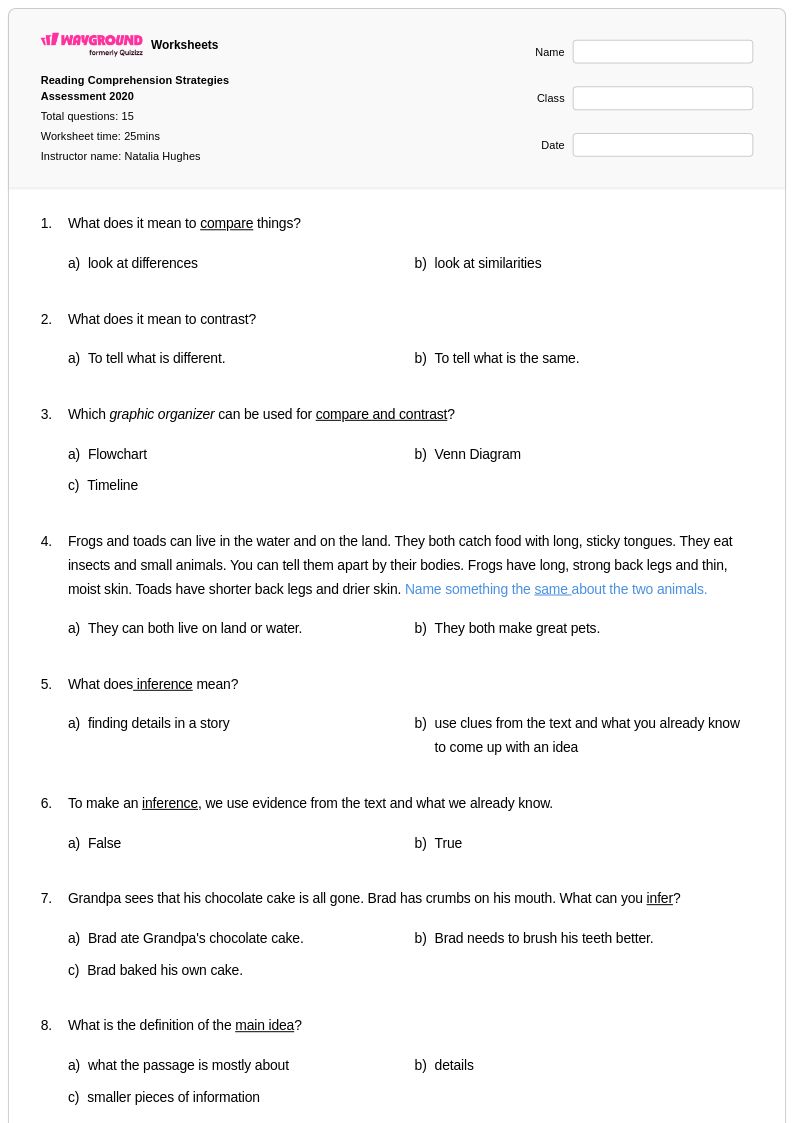
15Q
3rd - 4th
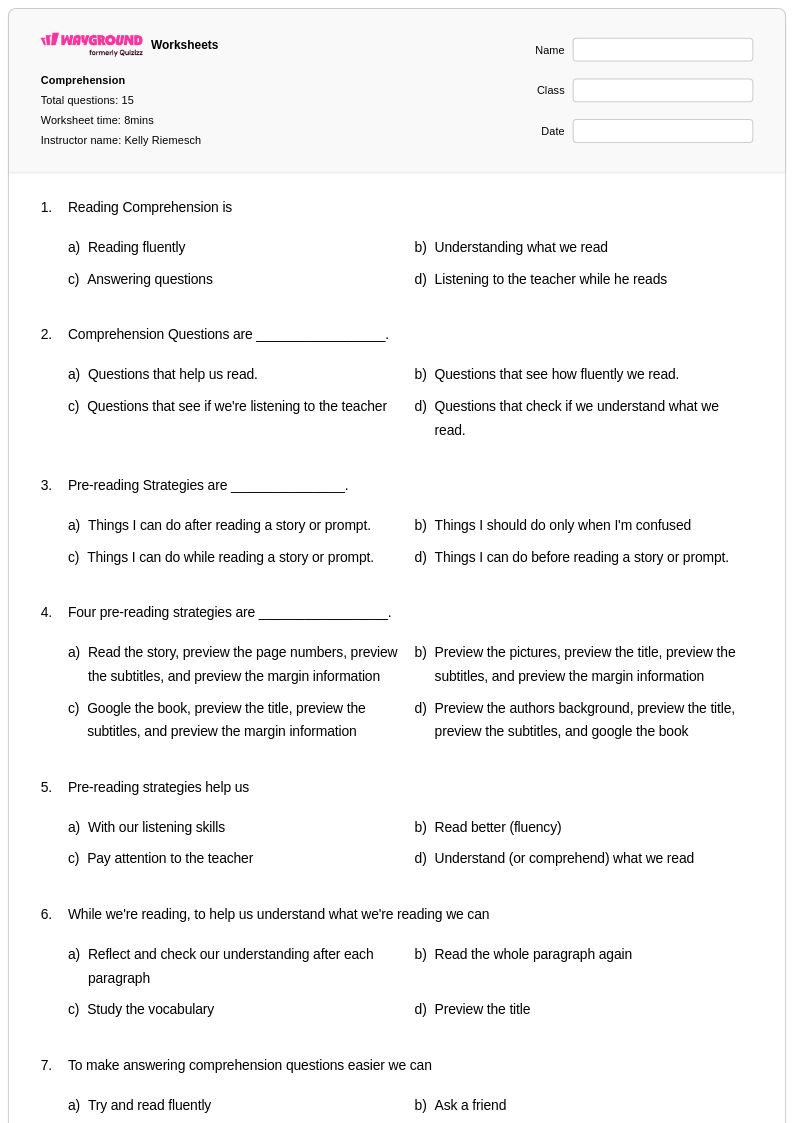
15Q
4th - 5th
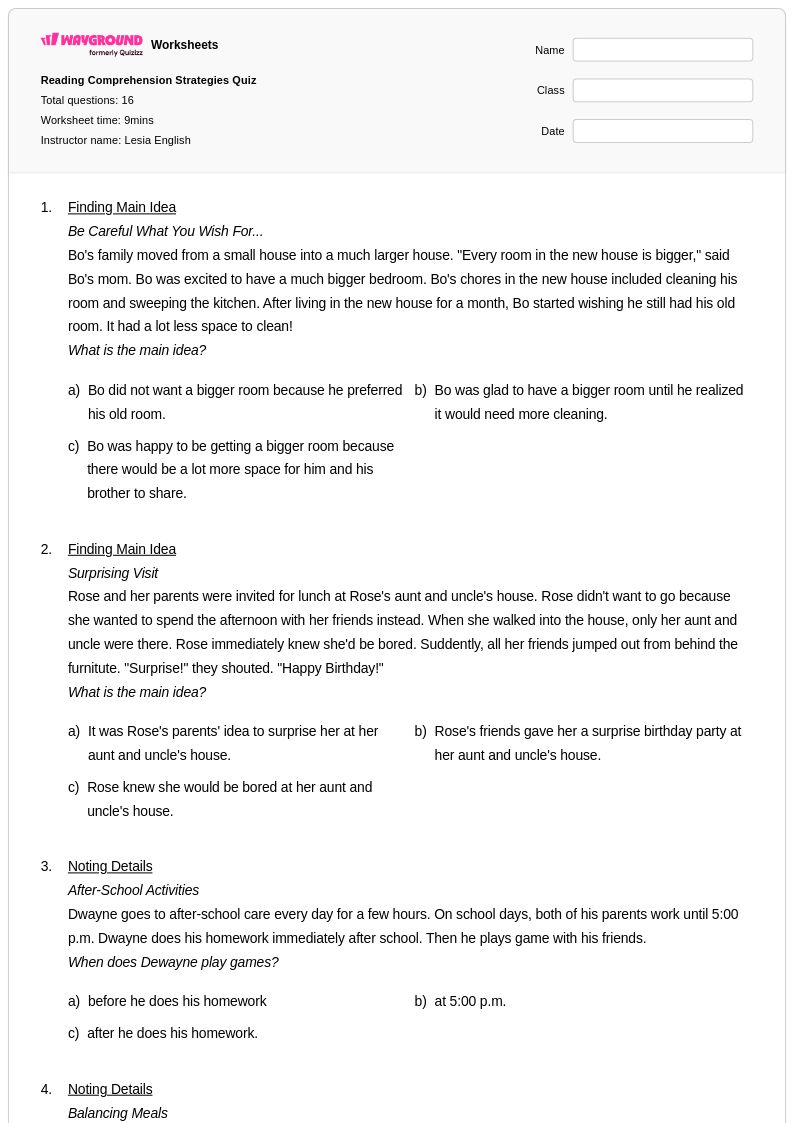
16Q
4th - 5th
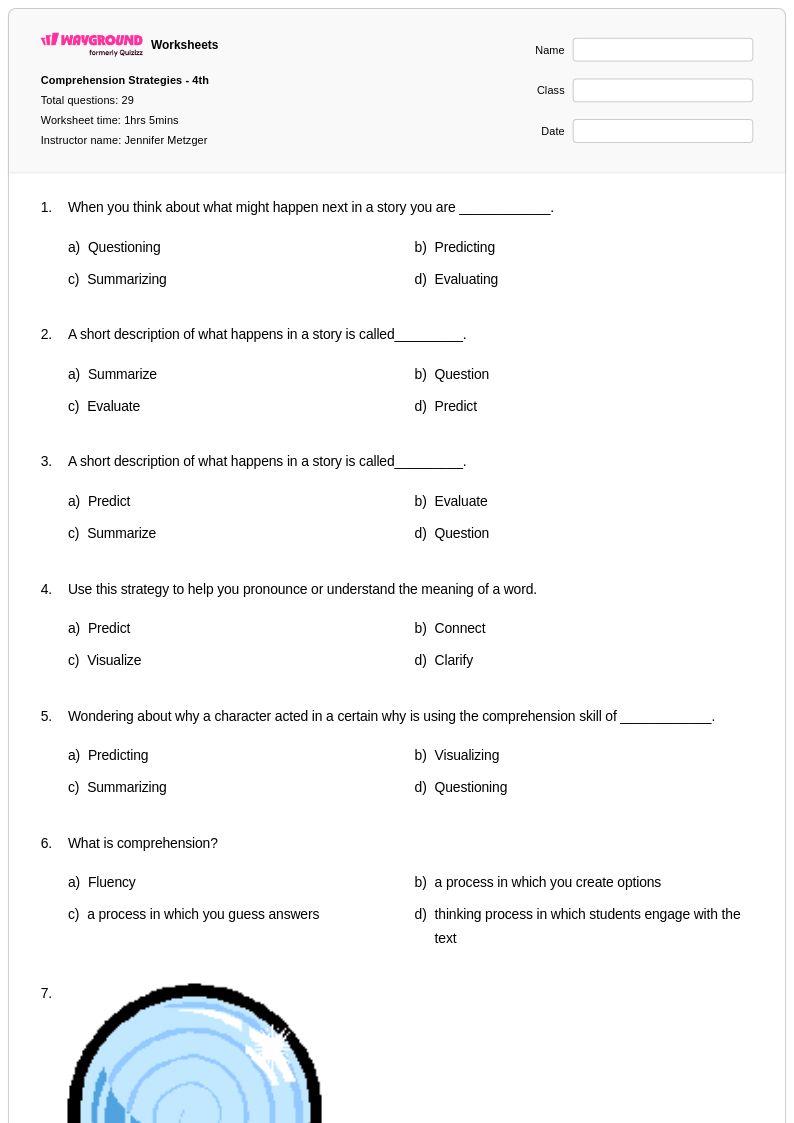
29Q
4th
10Q
4th - Uni
20Q
4th
12Q
2nd - 4th
10Q
4th
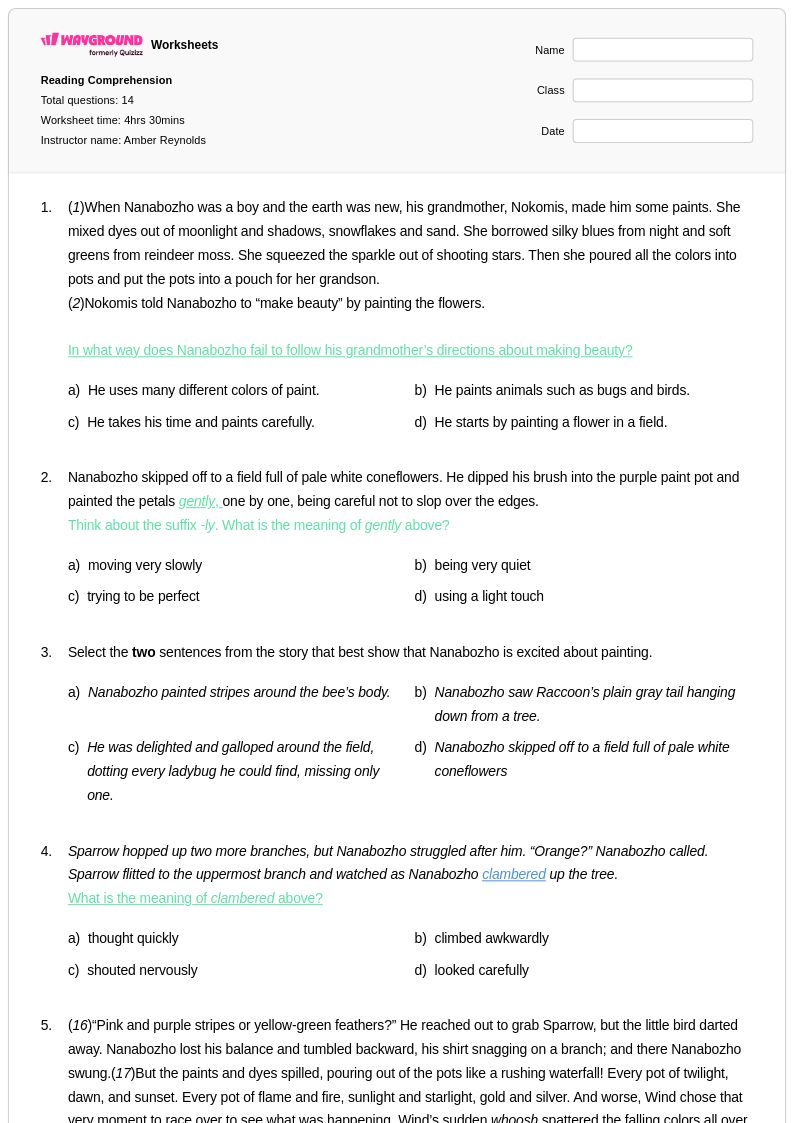
14Q
4th
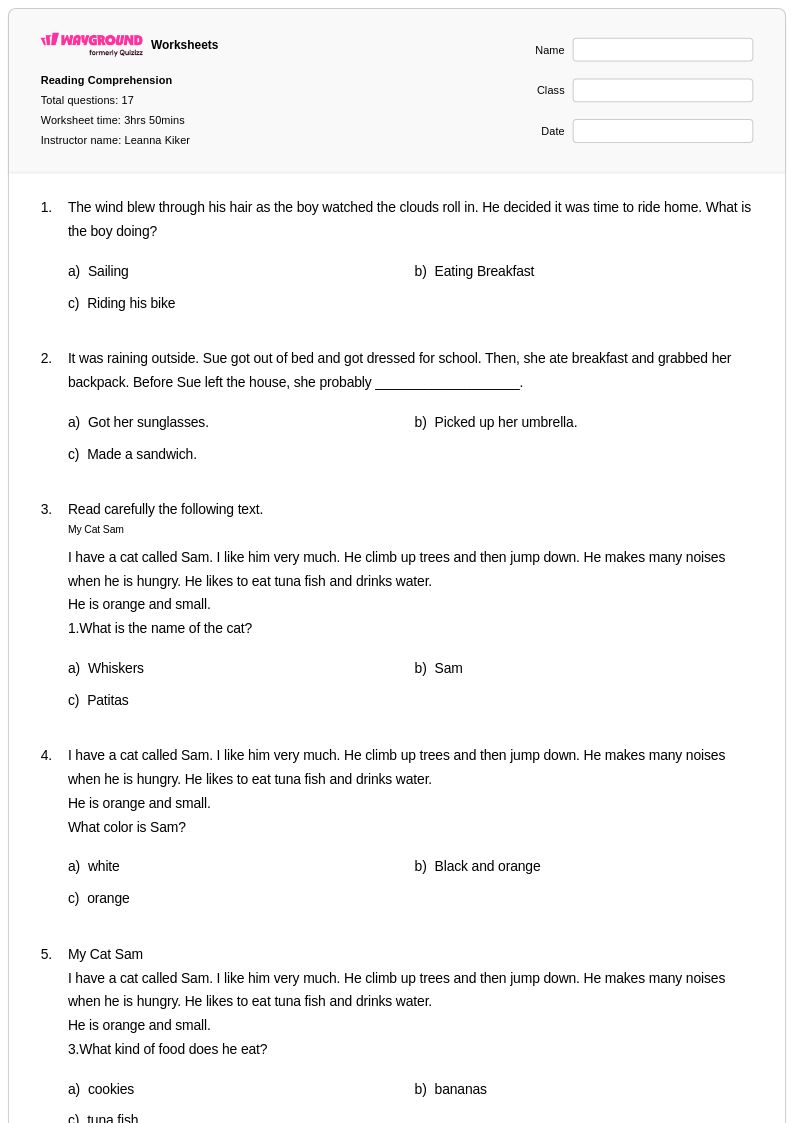
17Q
1st - 4th
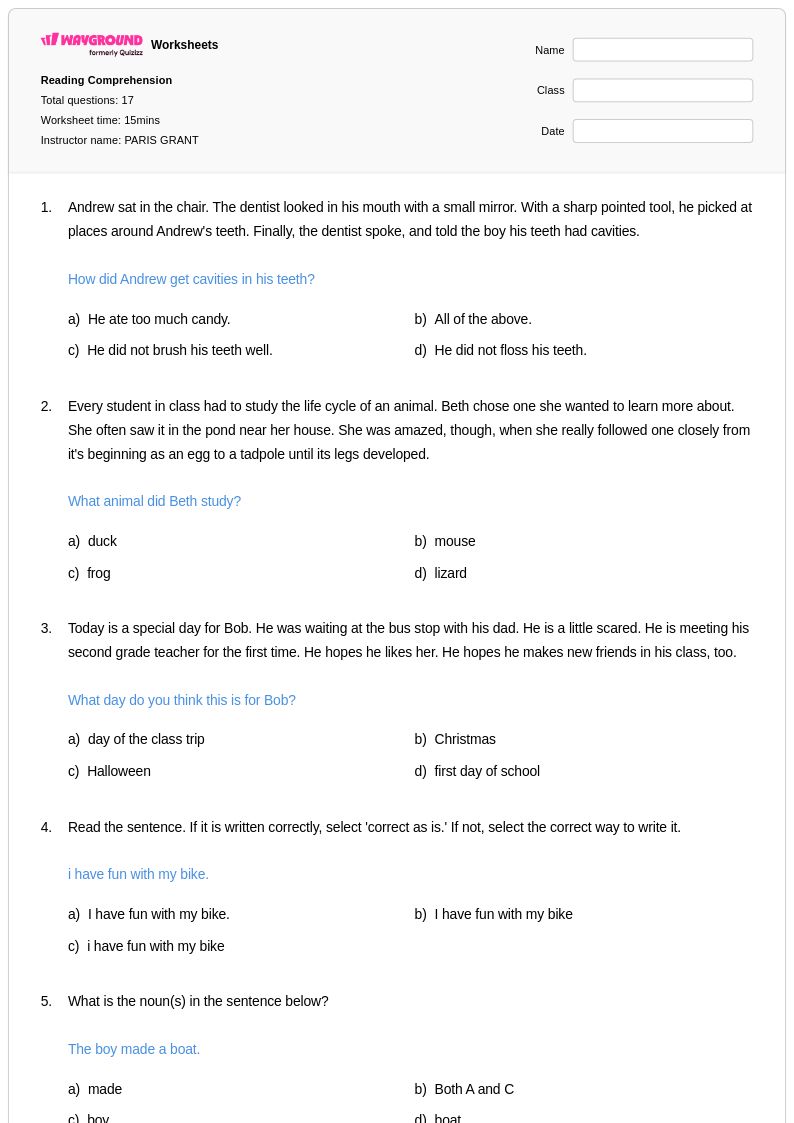
17Q
3rd - 4th
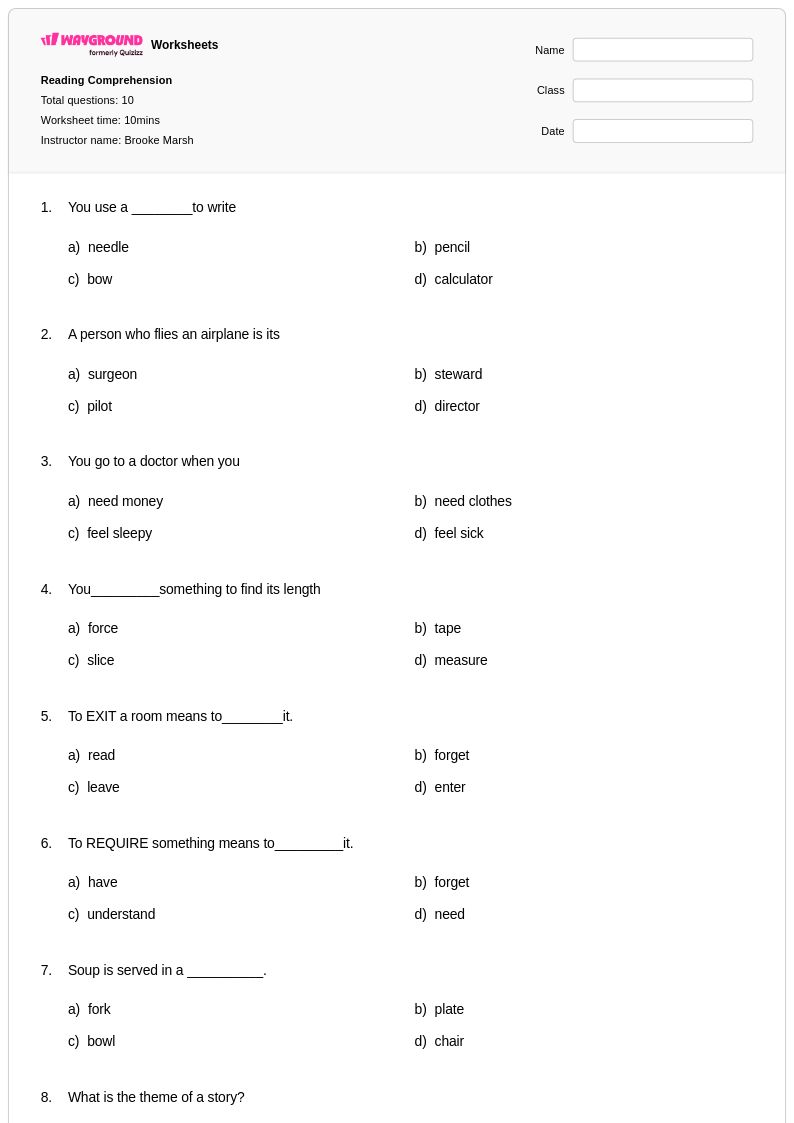
10Q
4th - 6th
15Q
4th - 5th
9Q
4th - 5th
10Q
4th
22Q
4th - 7th
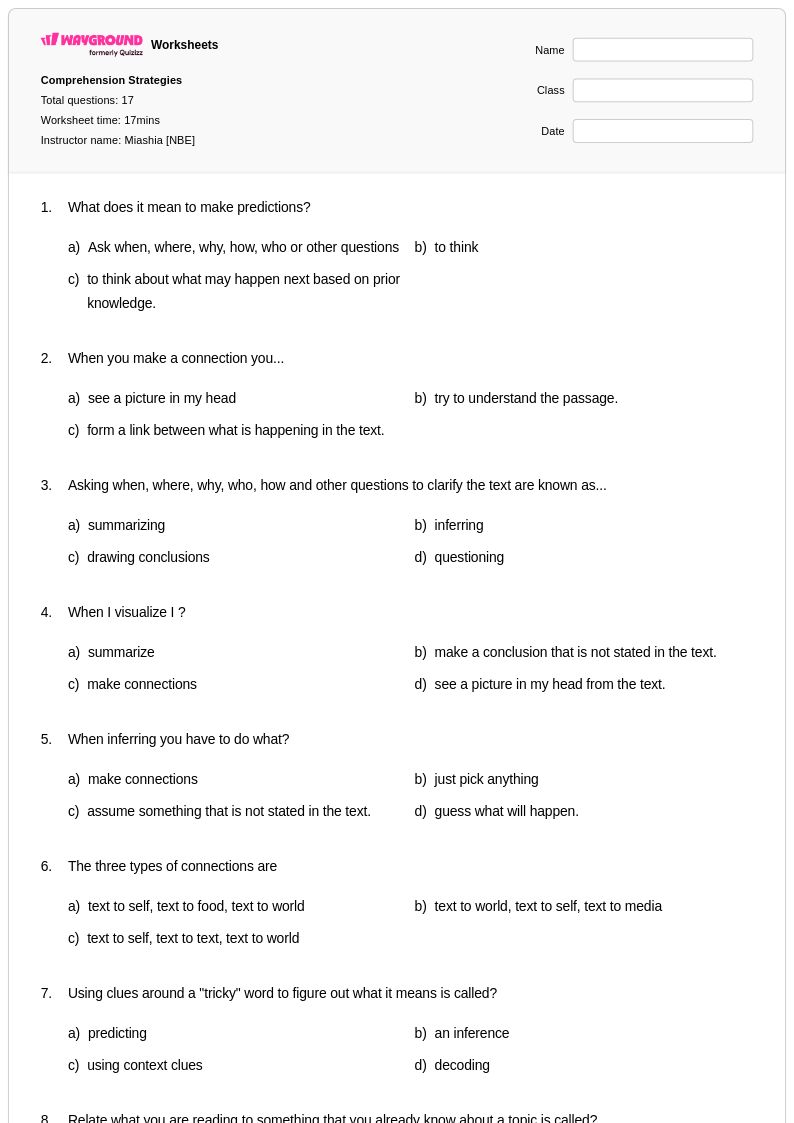
17Q
4th
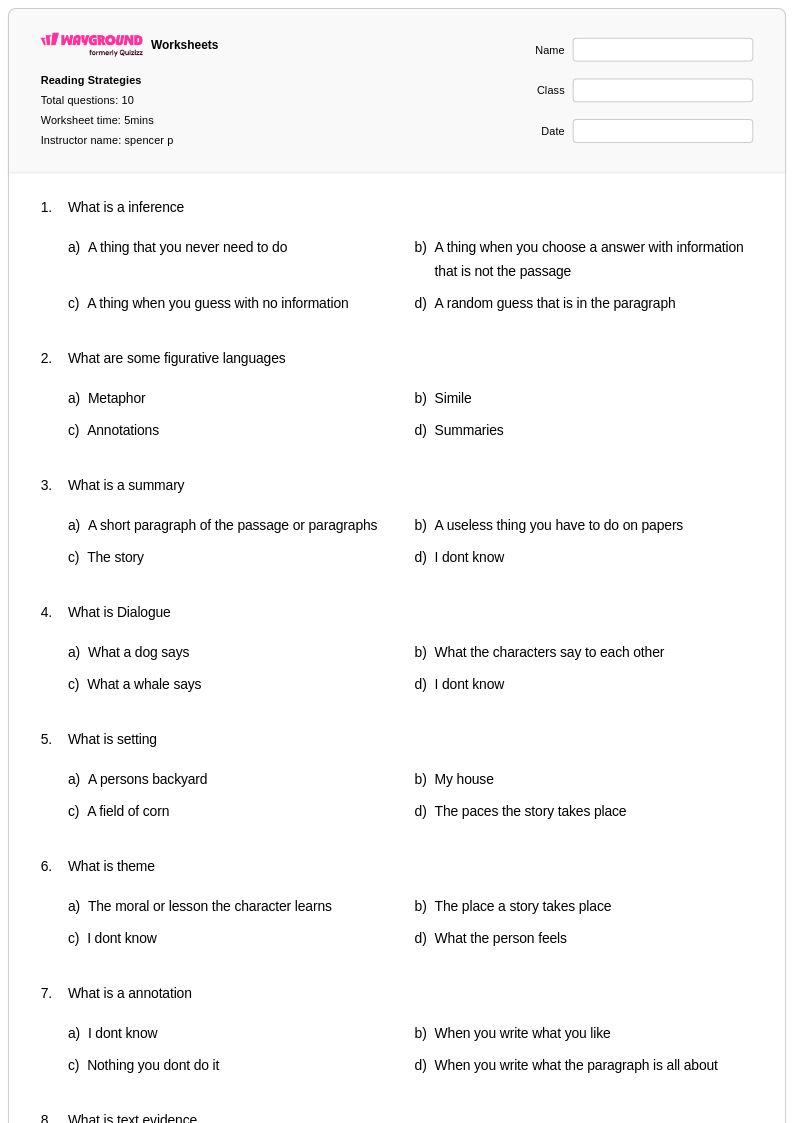
10Q
4th
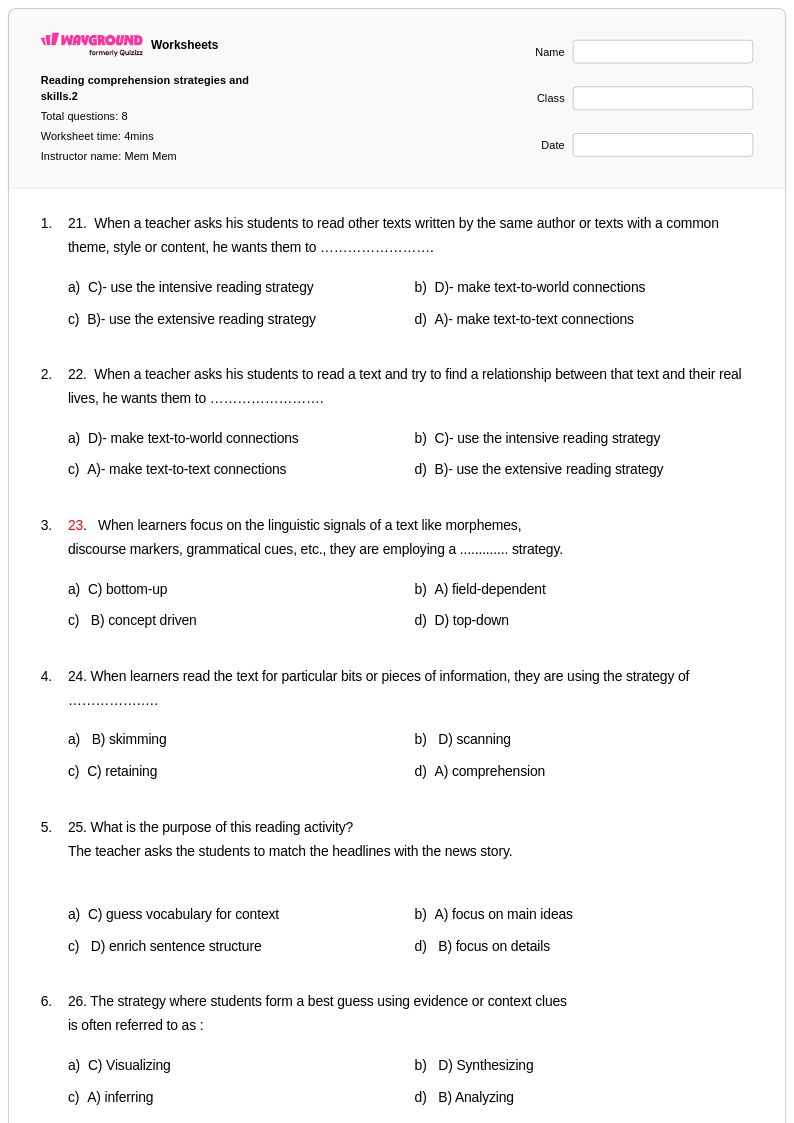
8Q
4th - Uni
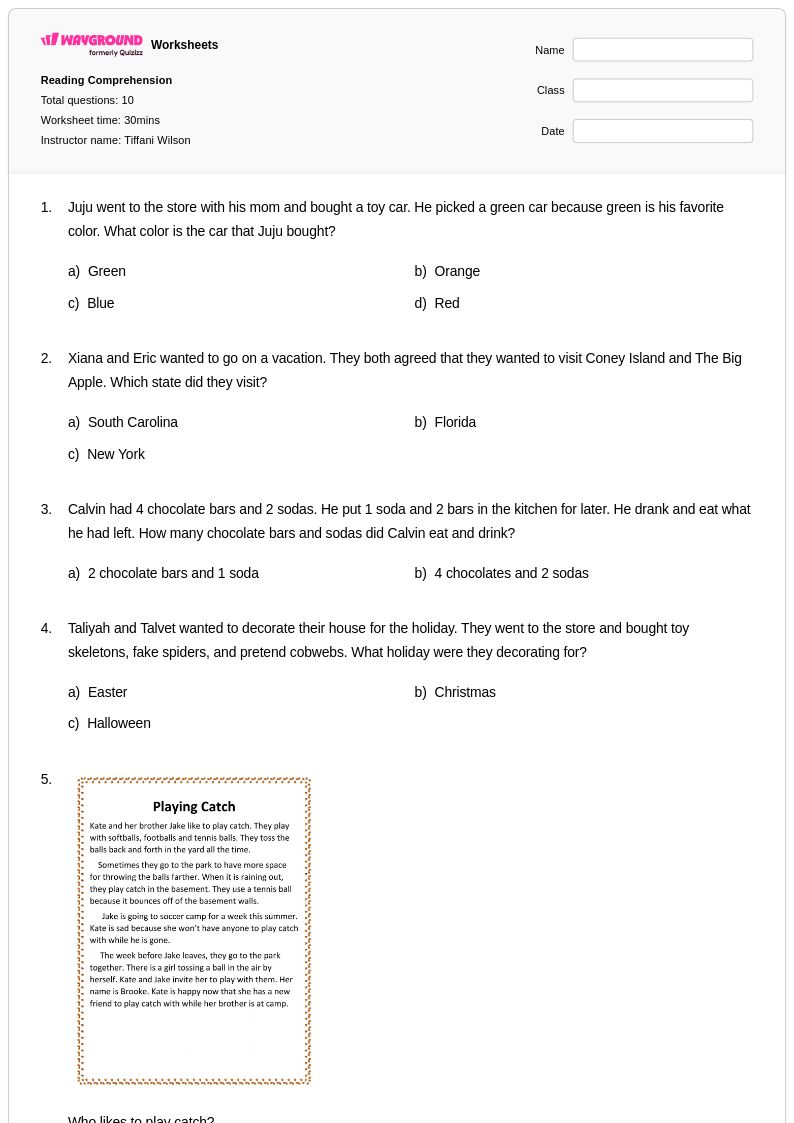
10Q
4th - 5th
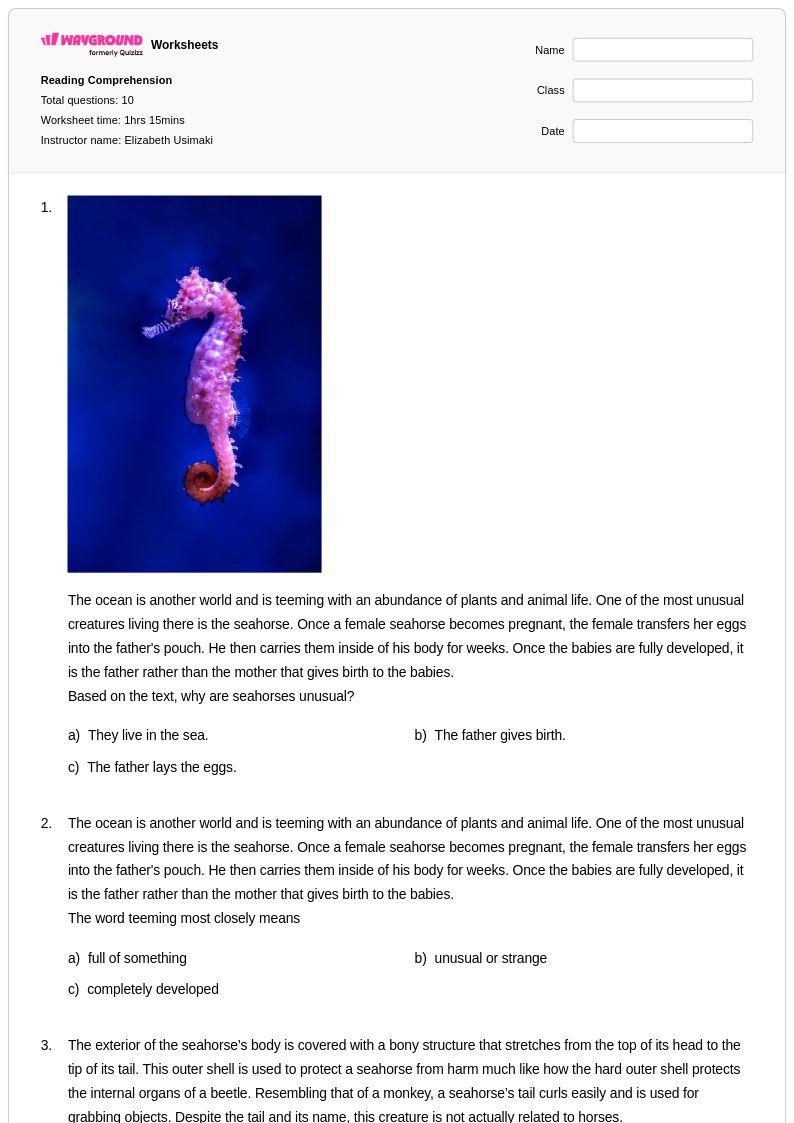
10Q
4th
8Q
3rd - 4th
6Q
KG - 4th
21Q
3rd - 4th
Explorar Reading Comprehension Strategies hojas de trabajo por grados
Explorar Reading Comprehension Strategies Hojas de trabajo para grade 4 por Tema
- Analyzing Story Structure
- Analyzing Word Choice
- Annotation
- Author's Claim
- Beginning, Middle, End Structure
- Book Report
- Cause and Effect
- Central Idea and Supporting Details
- Central Message
- Character, Setting, and Plot
- Character and Setting
- Character Development
- Character Motivation
- Character Perspective
- Character Traits
- Character Types
- Chronological Order
- Citing Textual Evidence
- Cloze Activity
- Comparing and Contrasting
Explore otras hojas de trabajo de materias para grade 4
Explore printable Reading Comprehension Strategies worksheets for Grade 4
Reading comprehension strategies for Grade 4 students form the foundation of advanced literacy skills, and Wayground's extensive worksheet collection provides educators with targeted resources to develop these critical abilities. These carefully designed worksheets focus on essential strategies such as making predictions, identifying main ideas and supporting details, drawing inferences, summarizing text passages, and connecting prior knowledge to new information. Each worksheet includes comprehensive practice problems that guide students through the process of actively engaging with text, while accompanying answer keys enable teachers to quickly assess student understanding and provide immediate feedback. The free printable resources are available in convenient pdf format, making them easily accessible for classroom instruction, homework assignments, or independent practice sessions that reinforce strategic reading approaches.
Wayground, formerly Quizizz, empowers educators with millions of teacher-created reading comprehension strategy worksheets that can be seamlessly integrated into any Grade 4 curriculum. The platform's robust search and filtering capabilities allow teachers to quickly locate materials aligned with specific learning standards and student needs, while built-in differentiation tools enable customization for various reading levels and learning styles. These versatile resources are available in both printable pdf format for traditional classroom use and digital formats for technology-enhanced learning environments, providing flexibility for diverse instructional settings. Teachers can efficiently plan comprehensive reading instruction, implement targeted remediation for struggling readers, offer enrichment opportunities for advanced students, and provide consistent skill practice that builds confident, strategic readers who can tackle increasingly complex texts with independence and success.
FAQs
How do I teach reading comprehension strategies to students who struggle with complex texts?
What reading comprehension strategy worksheets are most effective for building analytical thinking?
What common mistakes do students make when applying reading comprehension strategies?
How can I differentiate reading comprehension strategy worksheets for different reading levels in the same classroom?
How do I use Wayground's reading comprehension strategies worksheets in my classroom?
What's the difference between teaching summarizing and paraphrasing as reading comprehension strategies?
How do I teach students to use text features as a reading comprehension strategy?