
Recommended Topics for you
- Analyzing Mood
- Analyzing Story Structure
- Analyzing Text Structure
- Analyzing Word Choice
- Annotation
- Anticipation Guide
- Article Analysis
- Author's Claim
- Author's Craft
- Author's Point of View
- Book Report
- Cause and Effect
- Central Idea and Supporting Details
- Challenging Beliefs in Critical Thinking
- Character, Setting, and Plot
- Character Development
- Character Motivation
- Character Perspective
- Character Types
- Citing Textual Evidence
- Comparing and Contrasting
- Comprehension Questions
- Conflict and Resolution
- Document Analysis
- Evaluating Ideas
- Fact Vs. Opinion
- Film Analysis
- Fishbowl Discussion
- Functional Text Comprehension
- Graphic Sources
- Identifying Problems and Solutions in Reading
- Identifying the Author's Purpose
- Identifying the Main Idea
- Inferential Questions
- Key Ideas and Details
- Listening Comprehension
- Literary Terms Development
- Making Connections in Reading
- Making Inferences and Drawing Conclusions
- Making Predictions
- Making Text Connections
- Orton-gillingham Approach
- Paraphrasing
- Photograph Analysis
- Plot Diagram
- Plot Elements
- Plot Structure
- Propaganda Analysis
- Reading Fluency
- Reciprocal Teaching
- Self-monitoring Strategies
- Sequencing Events
- Socratic Questioning
- Summarizing
- Syllogism
- Symbolism
- Text Analysis
- Text and Graphic Features
- Themes
- Tone and Mood
- Types of Conflict
- Using Text Features
- Visual Literacy
- Visualizing and Verbalizing
- Who What When Where Why Questions
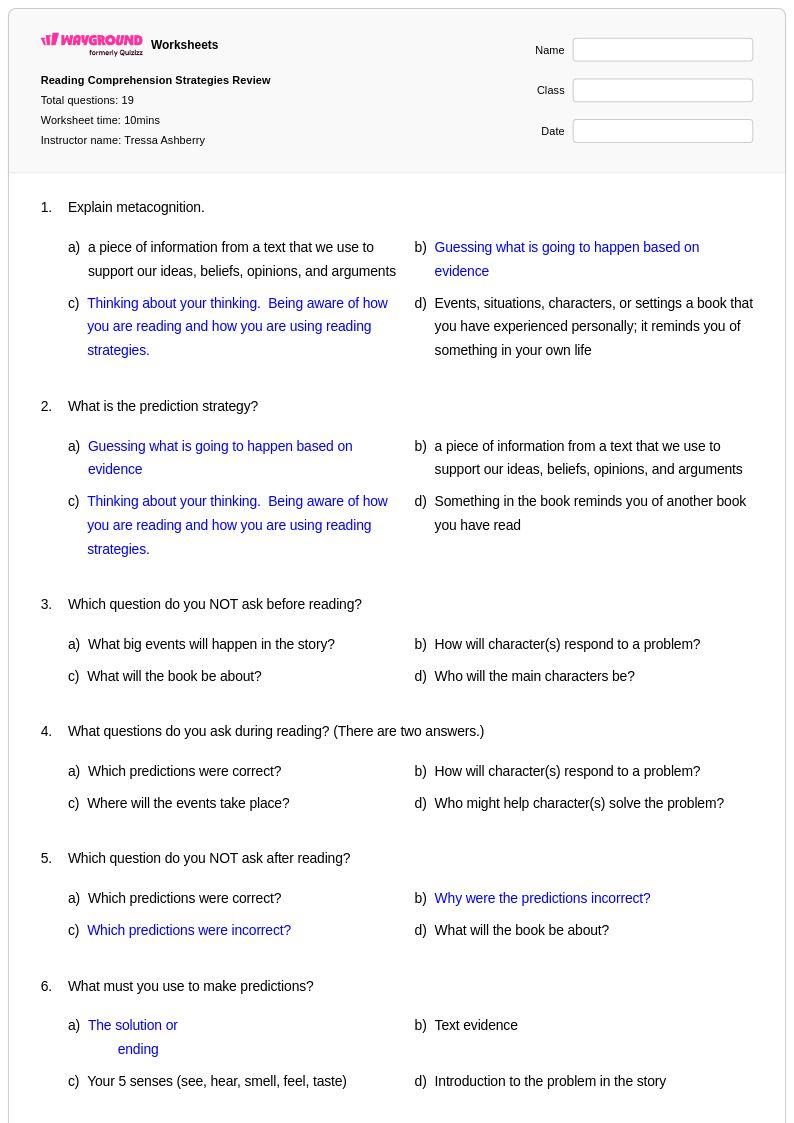
19 Q
6th - 9th
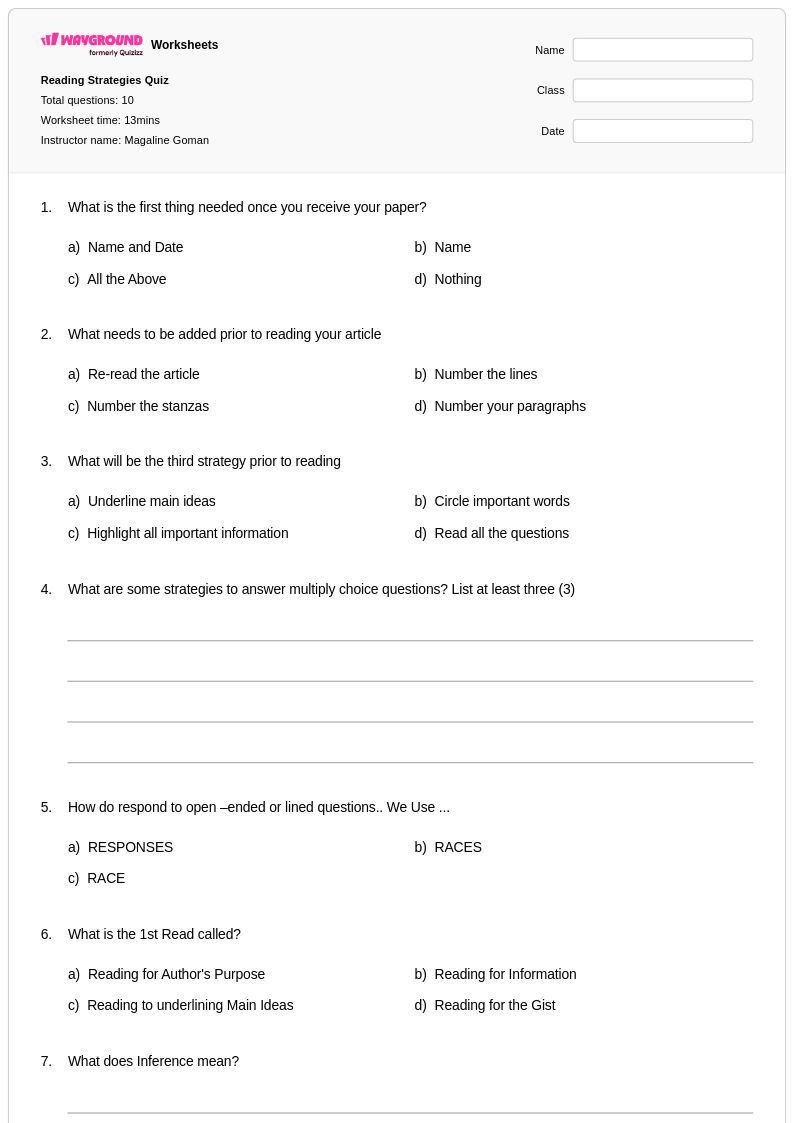
10 Q
6th - 8th
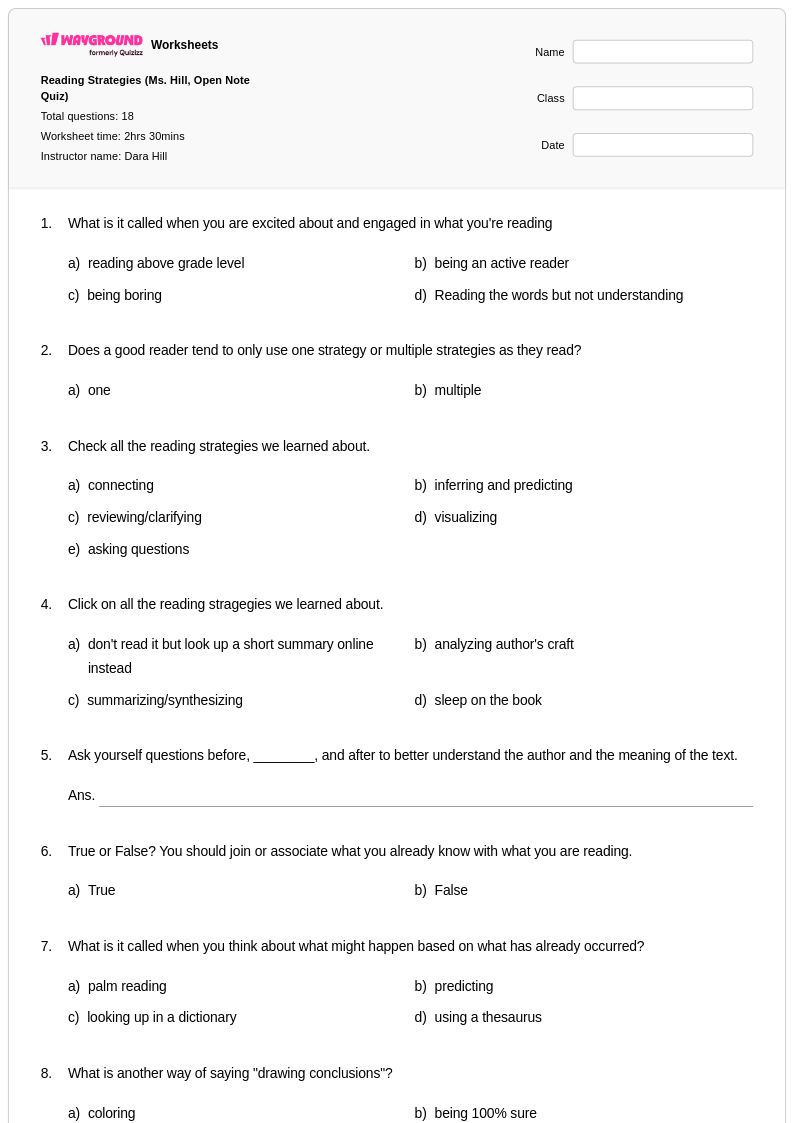
18 Q
6th - 8th
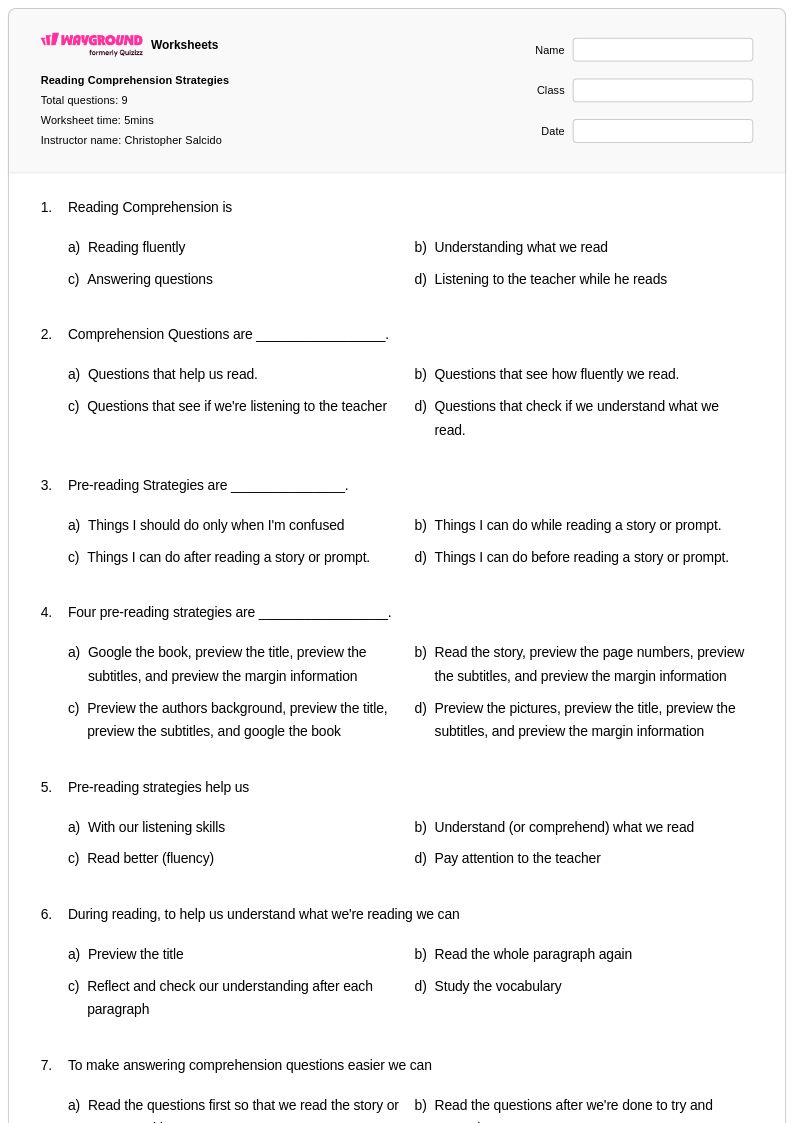
9 Q
5th - 8th
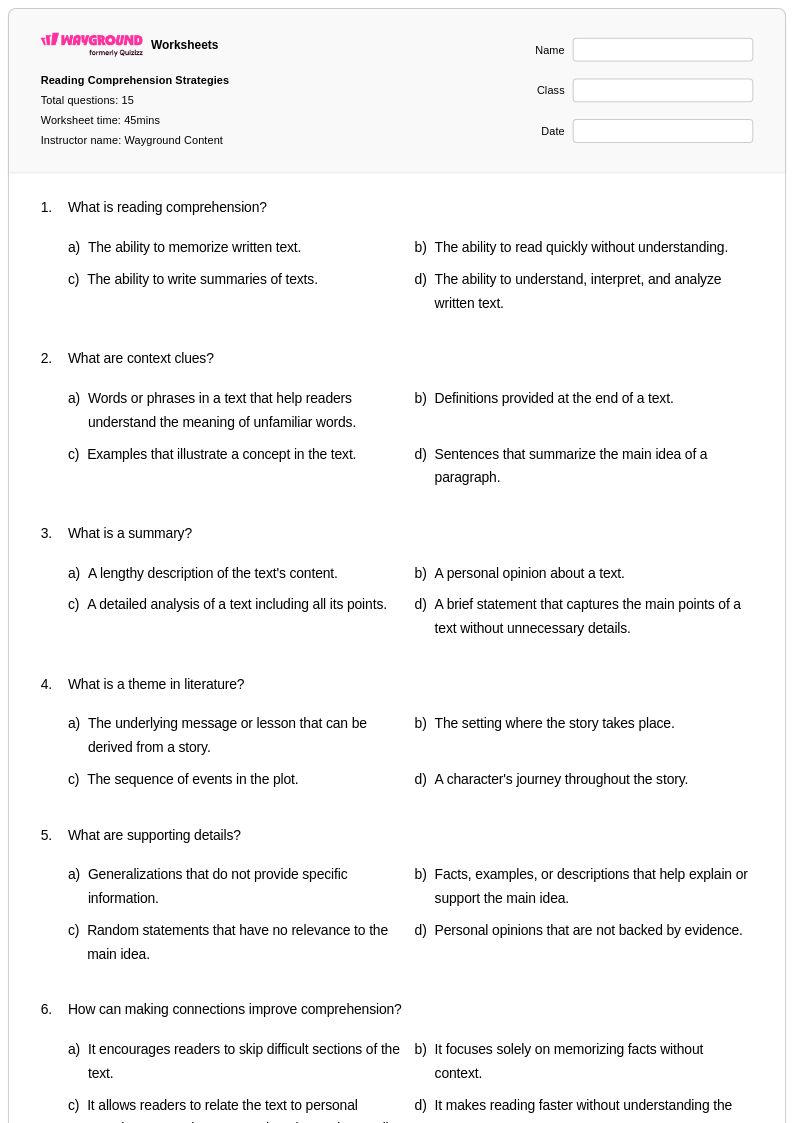
15 Q
6th - 12th
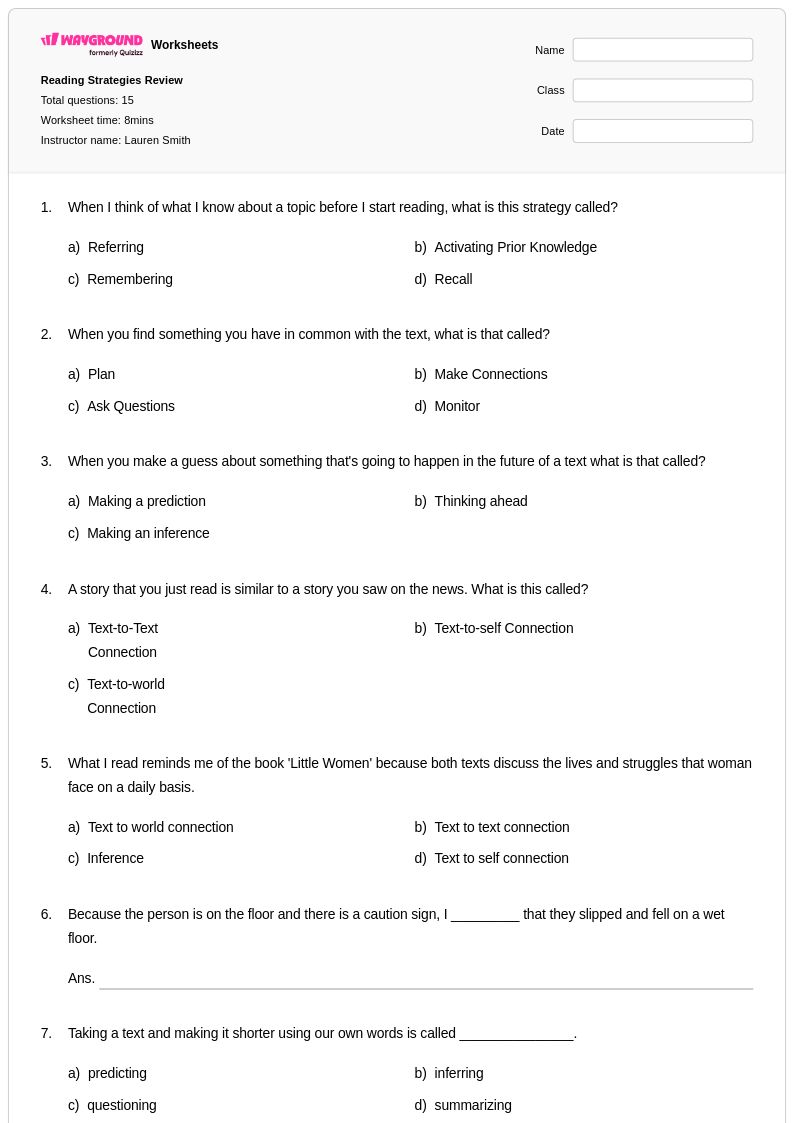
15 Q
5th - 7th
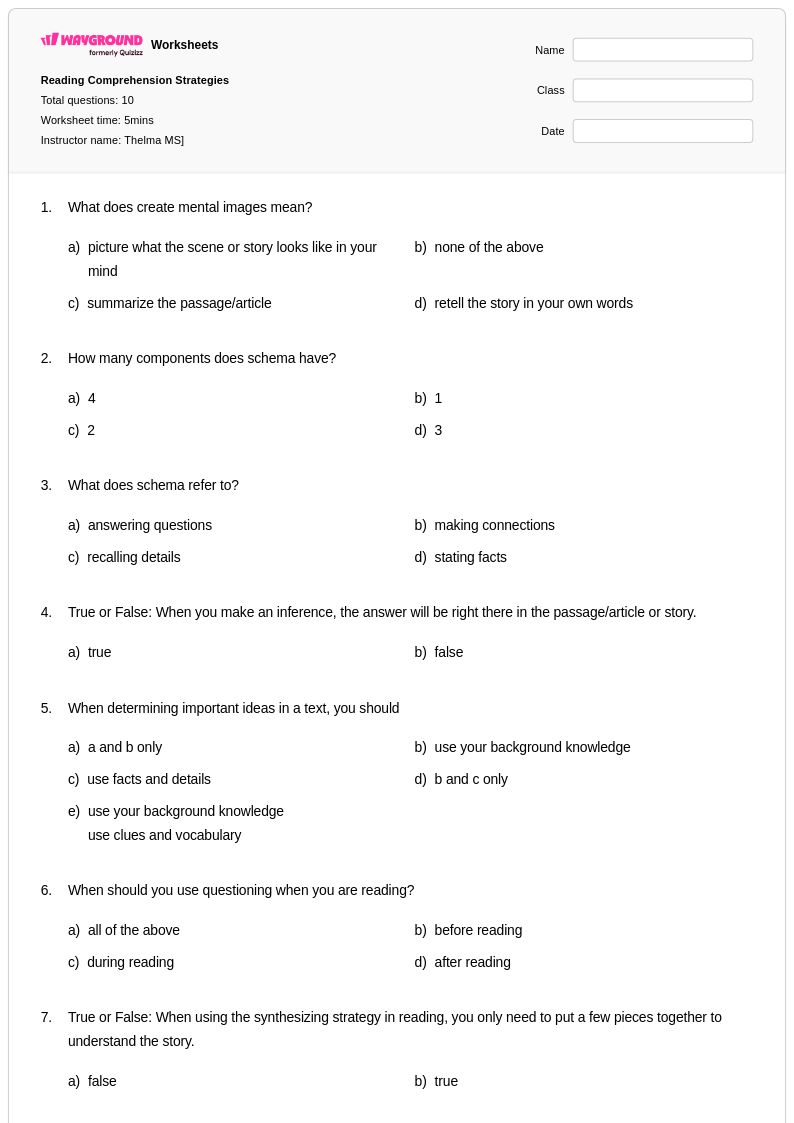
10 Q
6th
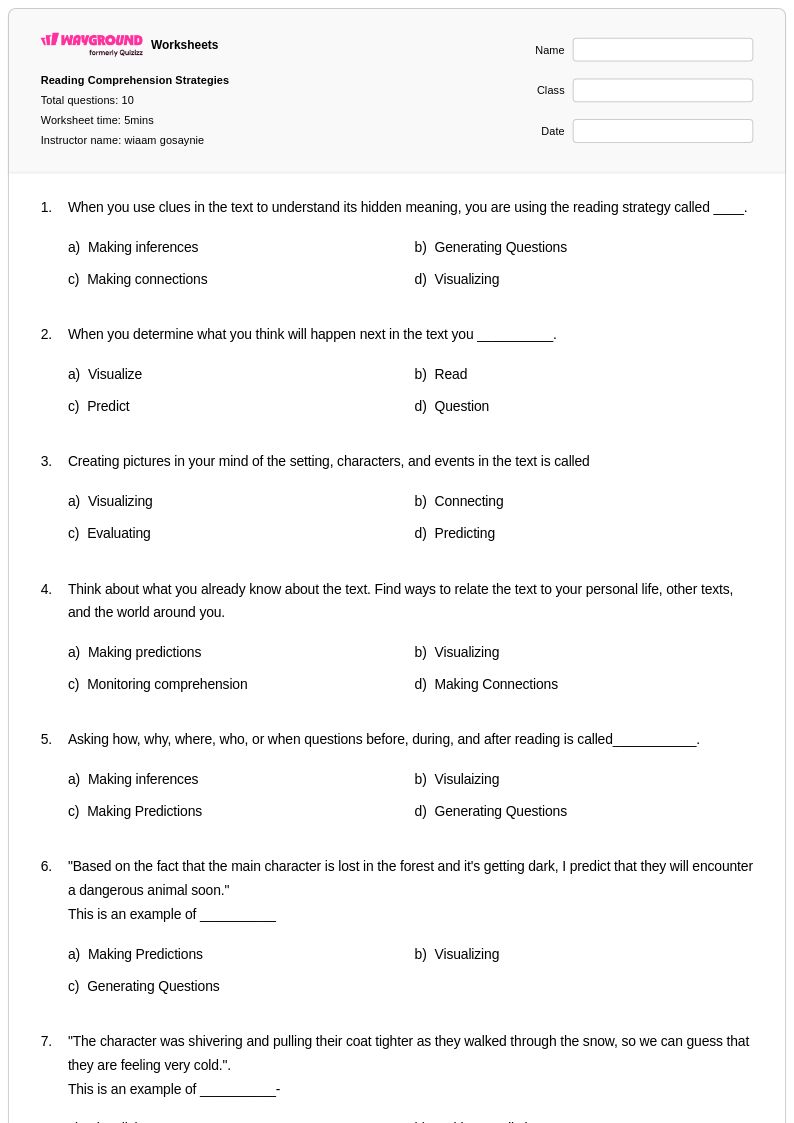
10 Q
6th - Uni
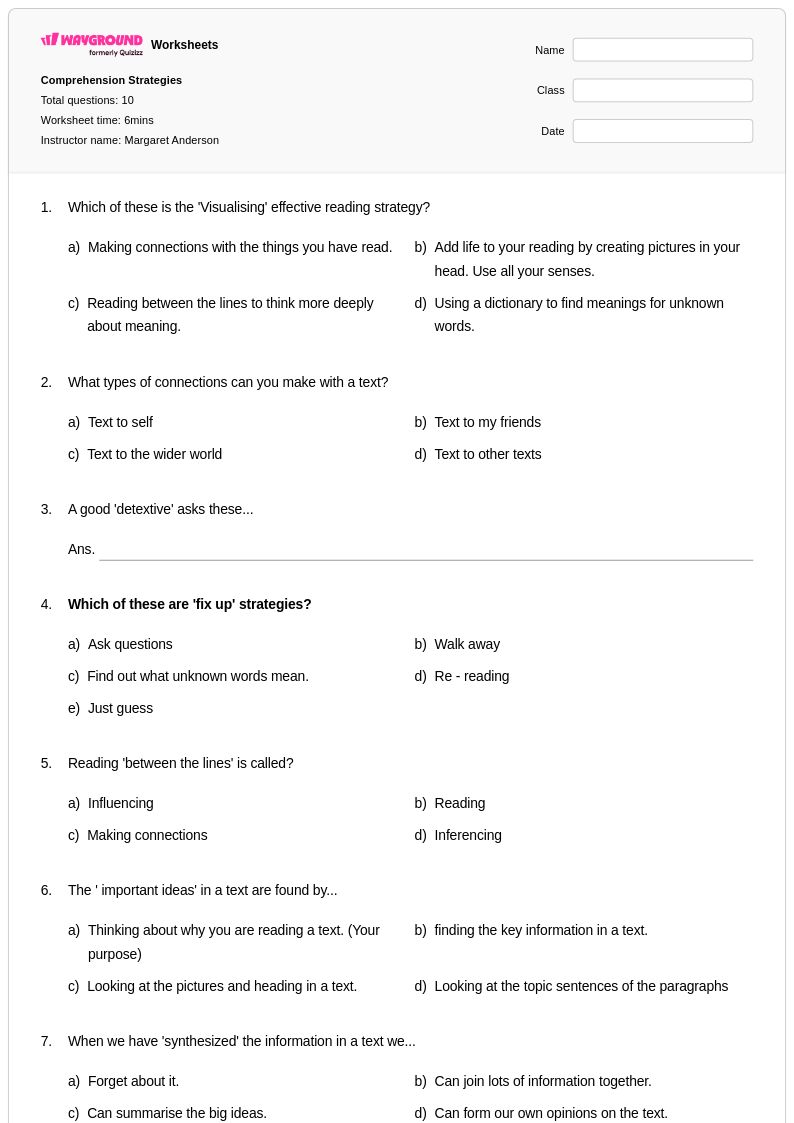
10 Q
6th - 8th
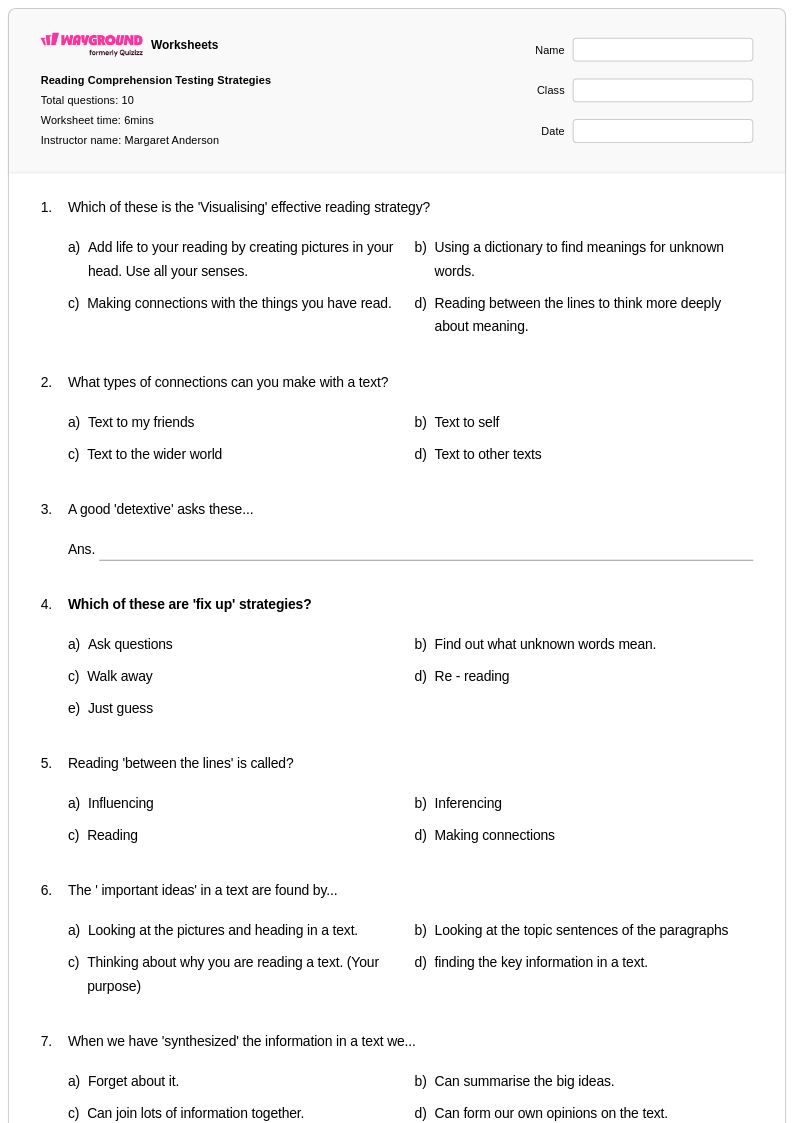
10 Q
6th - 8th
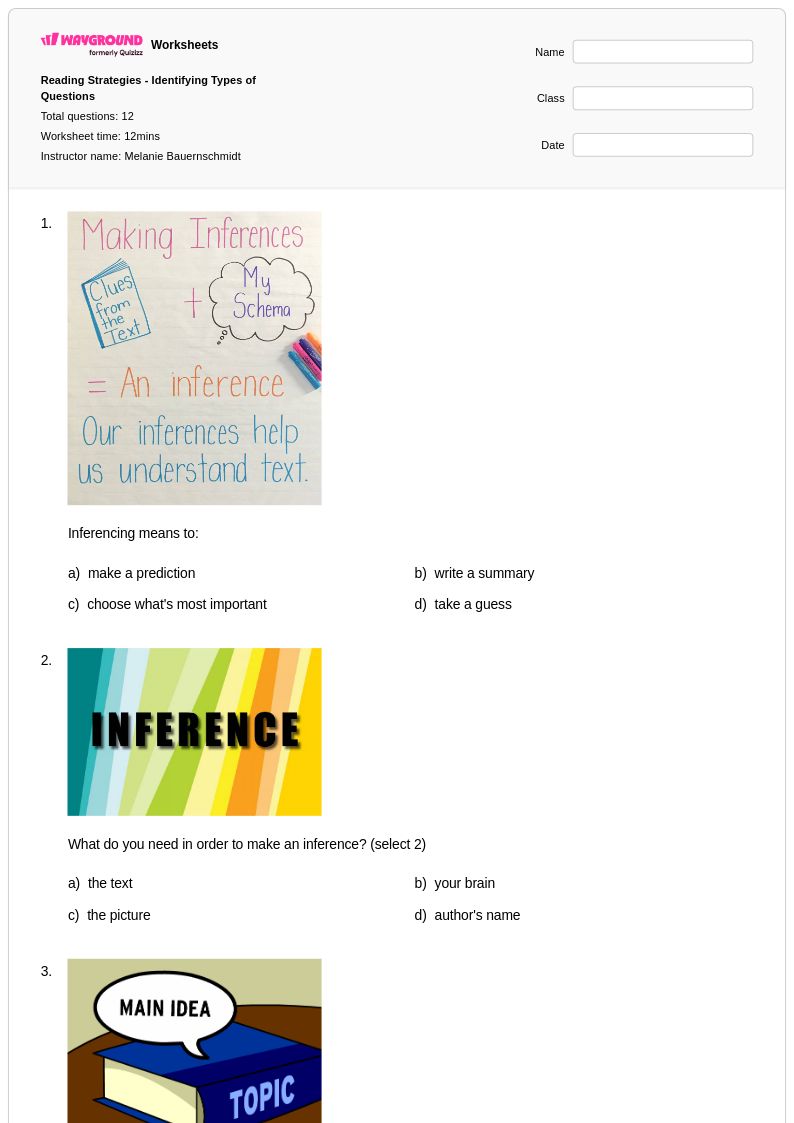
12 Q
5th - 8th
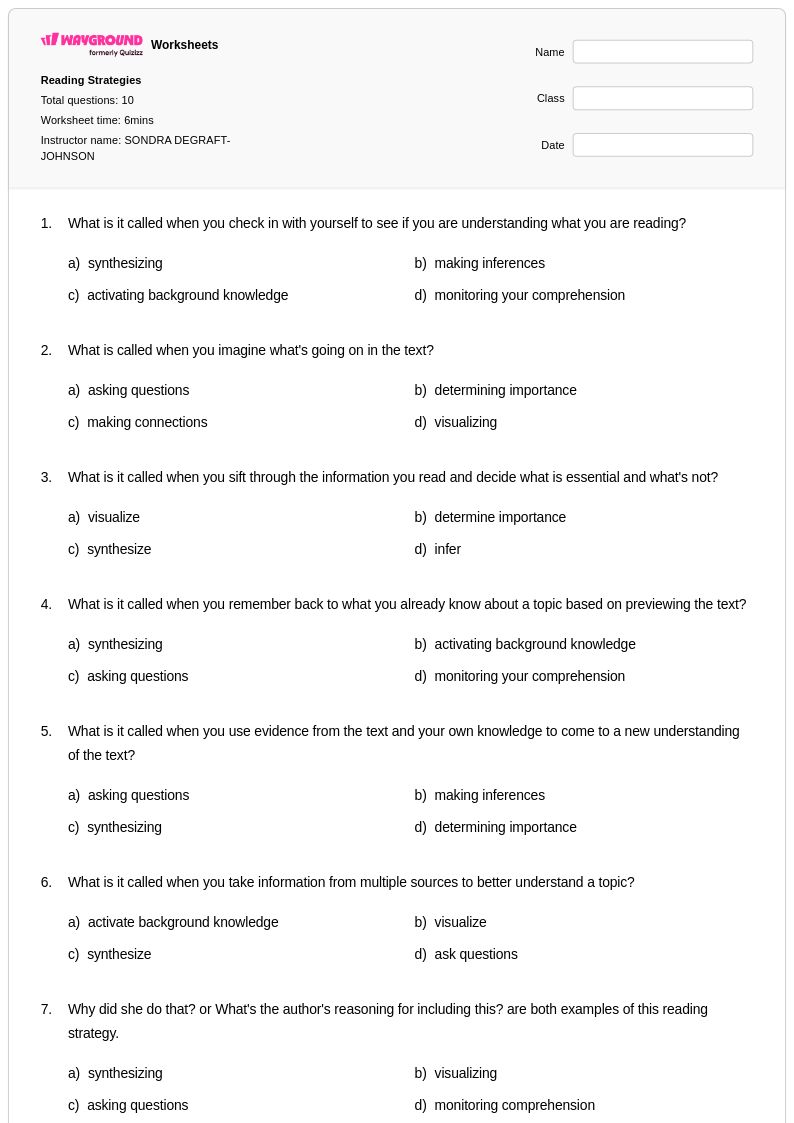
10 Q
6th - 8th
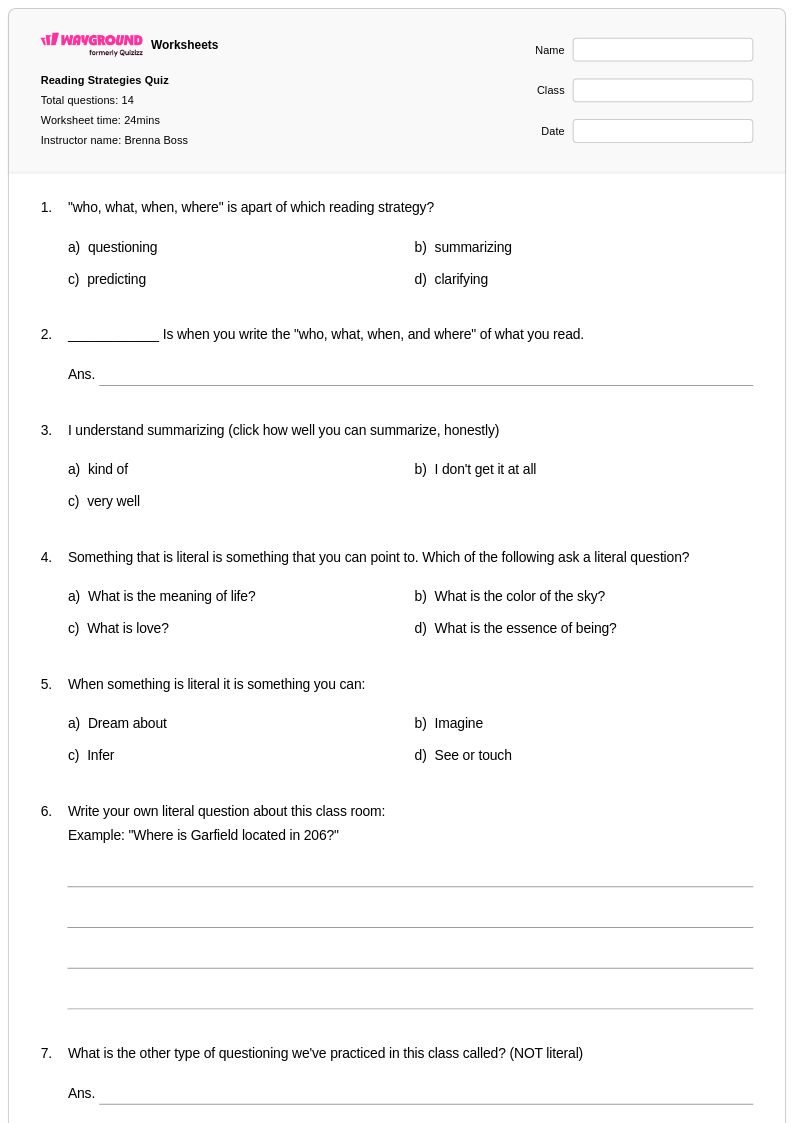
14 Q
6th
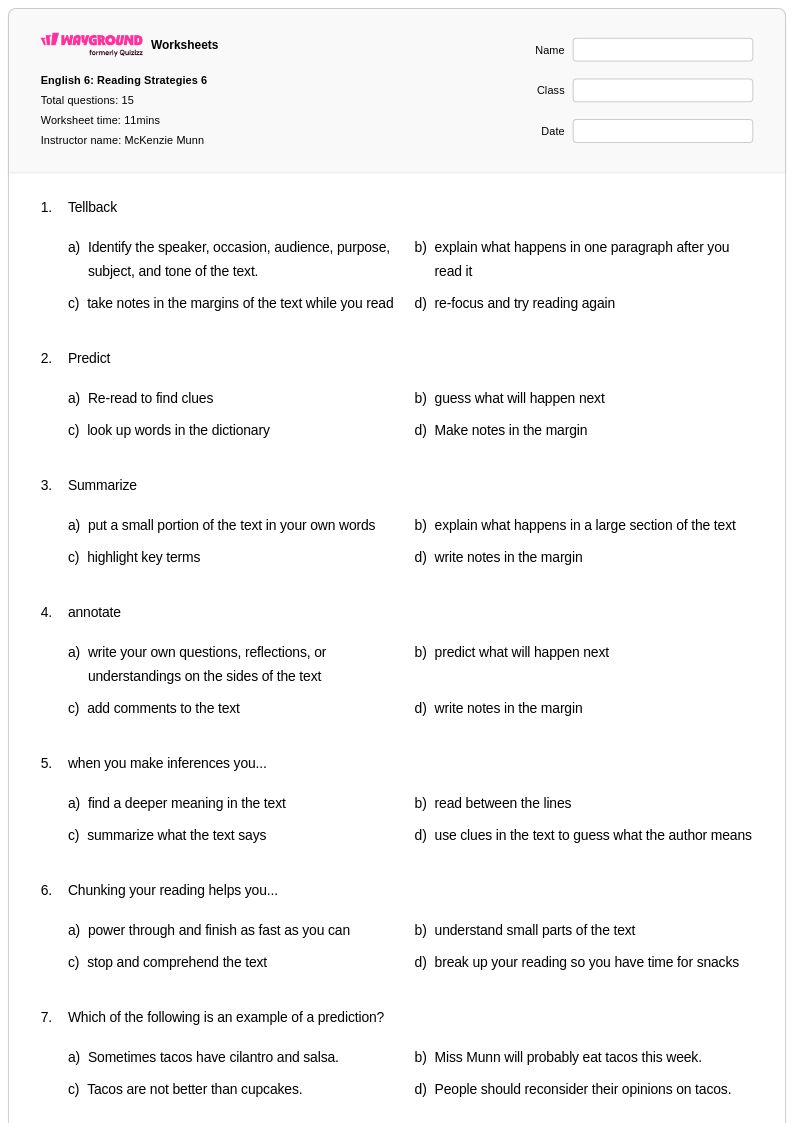
15 Q
6th
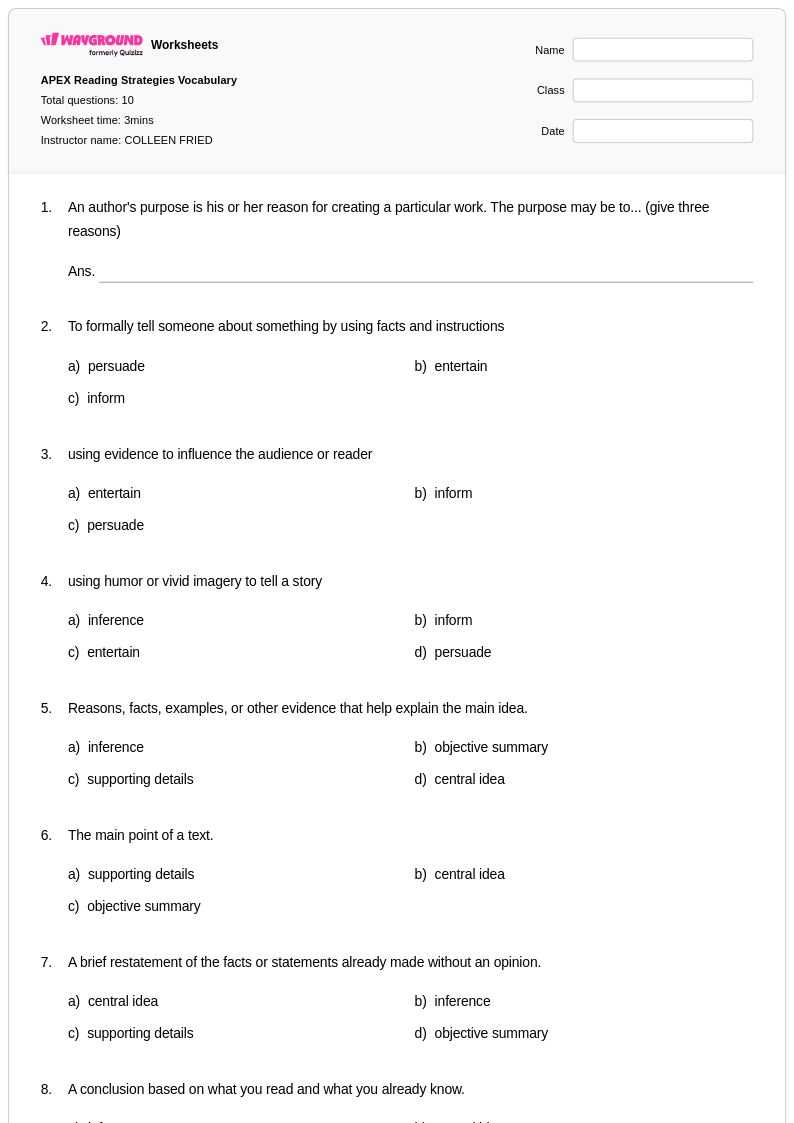
10 Q
6th
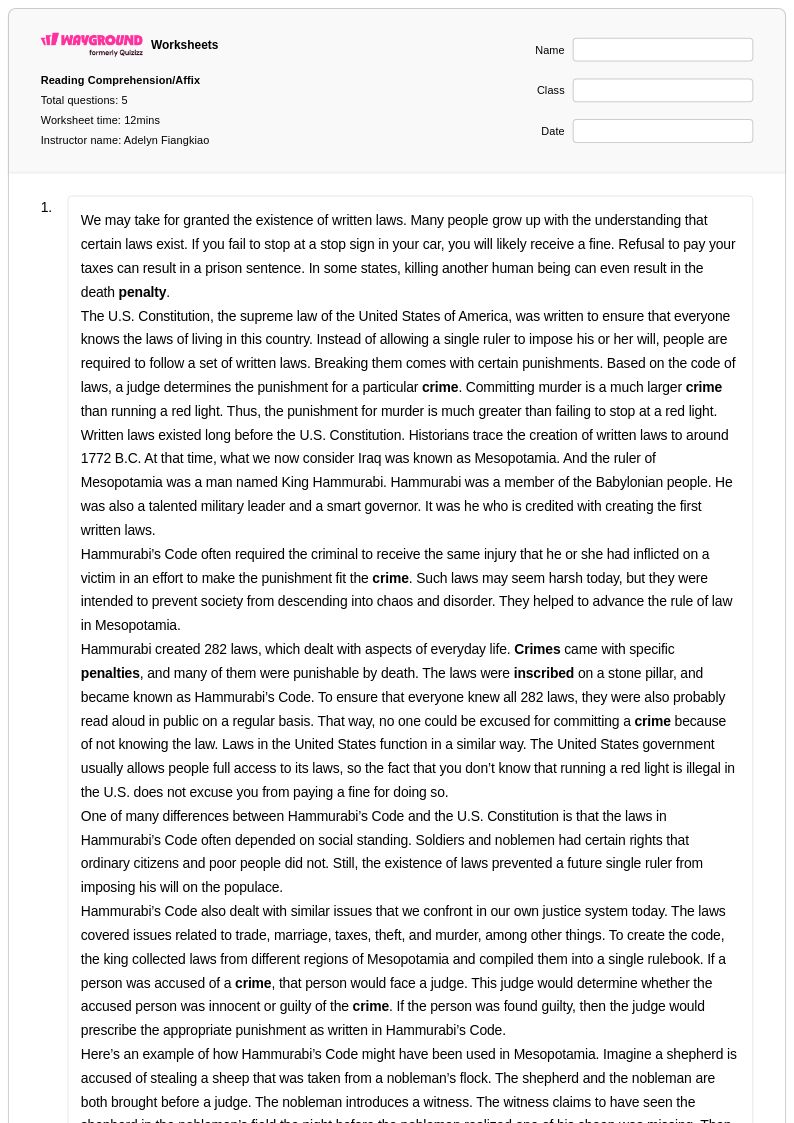
12 Q
6th
8 Q
6th
13 Q
6th
14 Q
5th - 6th
10 Q
6th - 8th
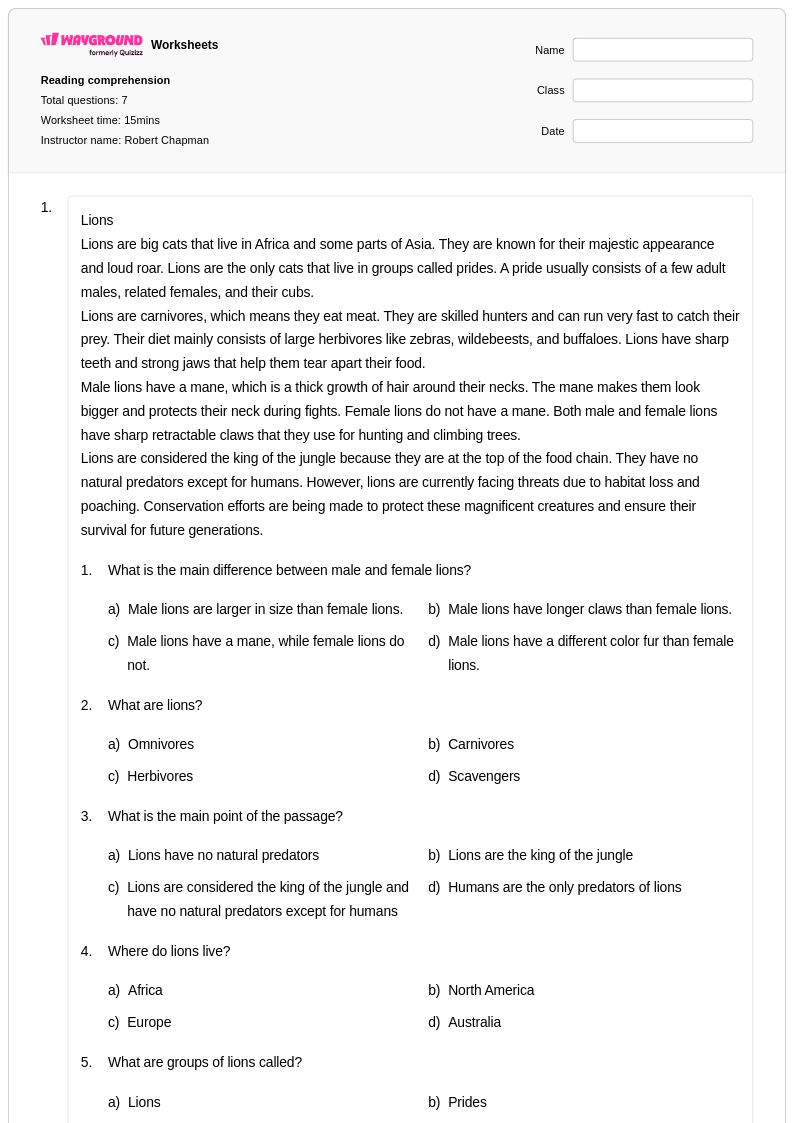
12 Q
6th - 8th
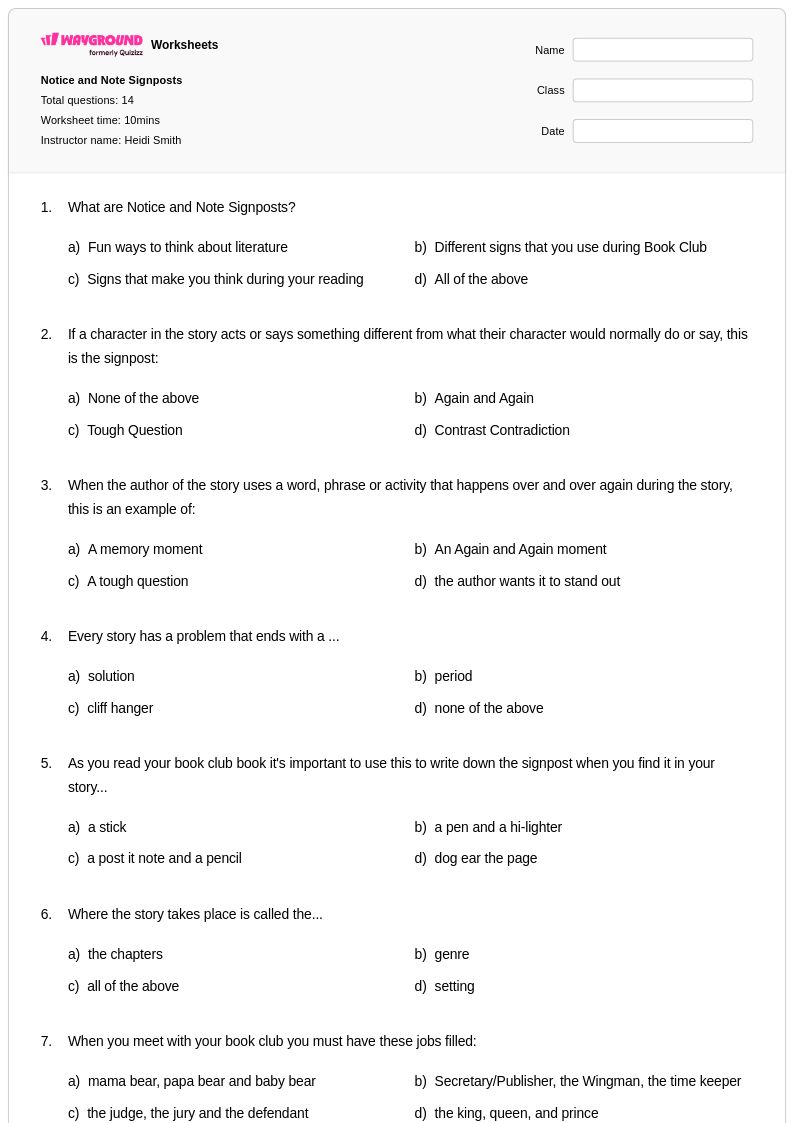
14 Q
4th - 7th
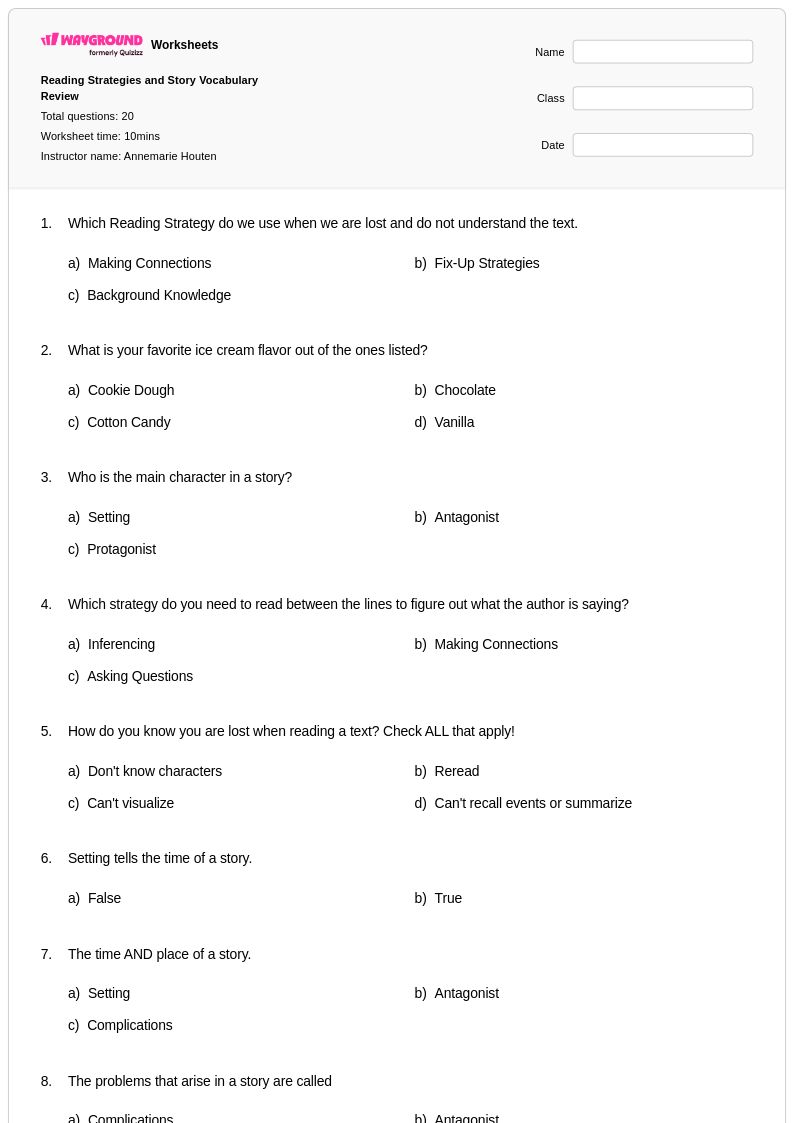
20 Q
6th
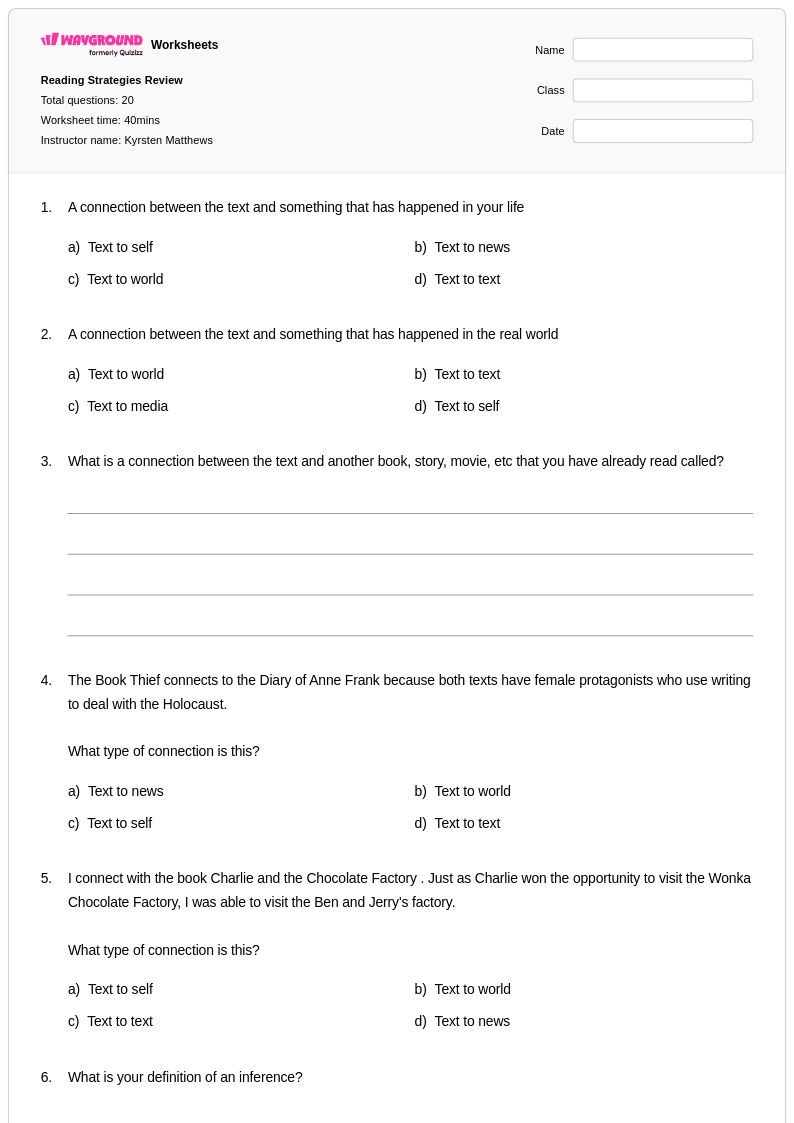
20 Q
6th
Explore Reading Comprehension Strategies Worksheets by Grades
Explore Reading Comprehension Strategies Worksheets for grade 6 by Topic
- Analyzing Mood
- Analyzing Story Structure
- Analyzing Text Structure
- Analyzing Word Choice
- Annotation
- Anticipation Guide
- Article Analysis
- Author's Claim
- Author's Craft
- Author's Point of View
- Book Report
- Cause and Effect
- Central Idea and Supporting Details
- Challenging Beliefs in Critical Thinking
- Character, Setting, and Plot
- Character Development
- Character Motivation
- Character Perspective
- Character Types
- Citing Textual Evidence
Explore Other Subject Worksheets for grade 6
Explore printable Reading Comprehension Strategies worksheets for Grade 6
Reading comprehension strategies for Grade 6 students form the foundation for advanced literacy skills, and Wayground's extensive worksheet collection provides targeted practice in essential techniques like identifying main ideas, making inferences, analyzing text structure, and drawing conclusions from various passages. These carefully designed worksheets strengthen students' ability to actively engage with fiction and nonfiction texts through structured exercises that develop critical thinking and analytical reading skills. Each worksheet includes comprehensive answer keys and is available as free printable PDFs, featuring practice problems that guide students through step-by-step comprehension processes while building vocabulary and textual analysis capabilities essential for middle school academic success.
Wayground's millions of teacher-created reading comprehension strategy resources offer educators powerful tools for differentiated instruction and skill development across diverse learning needs. The platform's robust search and filtering system allows teachers to quickly locate worksheets aligned with specific reading standards and comprehension objectives, while customization features enable modification of content difficulty and question types to support both remediation and enrichment goals. Available in both printable PDF format and interactive digital versions, these resources streamline lesson planning by providing ready-to-use materials that can be seamlessly integrated into reading centers, homework assignments, or targeted intervention sessions, ensuring that Grade 6 students receive consistent practice with the strategic reading approaches necessary for academic achievement.
FAQs
How do I teach reading comprehension strategies to students who struggle with complex texts?
What reading comprehension strategy worksheets are most effective for building analytical thinking?
What common mistakes do students make when applying reading comprehension strategies?
How can I differentiate reading comprehension strategy worksheets for different reading levels in the same classroom?
How do I use Wayground's reading comprehension strategies worksheets in my classroom?
What's the difference between teaching summarizing and paraphrasing as reading comprehension strategies?
How do I teach students to use text features as a reading comprehension strategy?