
Recommended Topics for you
- Analyzing Story Structure
- Beginning, Middle, End Structure
- Cause and Effect
- Central Message
- Character, Setting, and Plot
- Character and Setting
- Character Traits
- Character Types
- Chronological Order
- Cloze Activity
- Comprehension Questions
- Following Directions
- Following Multistep Directions
- Graphic Sources
- Identifying the Author's Purpose
- Identifying the Main Idea
- Listening Comprehension
- Making Connections in Reading
- Making Text Connections
- Narrative Elements
- Orton-gillingham Approach
- Parts of a Story
- Picture Analysis
- Plot Elements
- Reading Fluency
- Rebus Puzzles
- Retelling
- Self-monitoring Strategies
- Sentence Comprehension
- Story Elements
- Story Mapping
- Text and Graphic Features
- Understanding Feelings
- Using Text Features
- Visual Scanning
- Visualizing and Verbalizing
- Who What When Where Why Questions
- Yes or No Questions
21 Q
1st
11 Q
1st
10 Q
KG - 5th
5 Q
1st - 5th
17 Q
1st - 4th
11 Q
1st
15 Q
1st - 5th
17 Q
KG - 12th
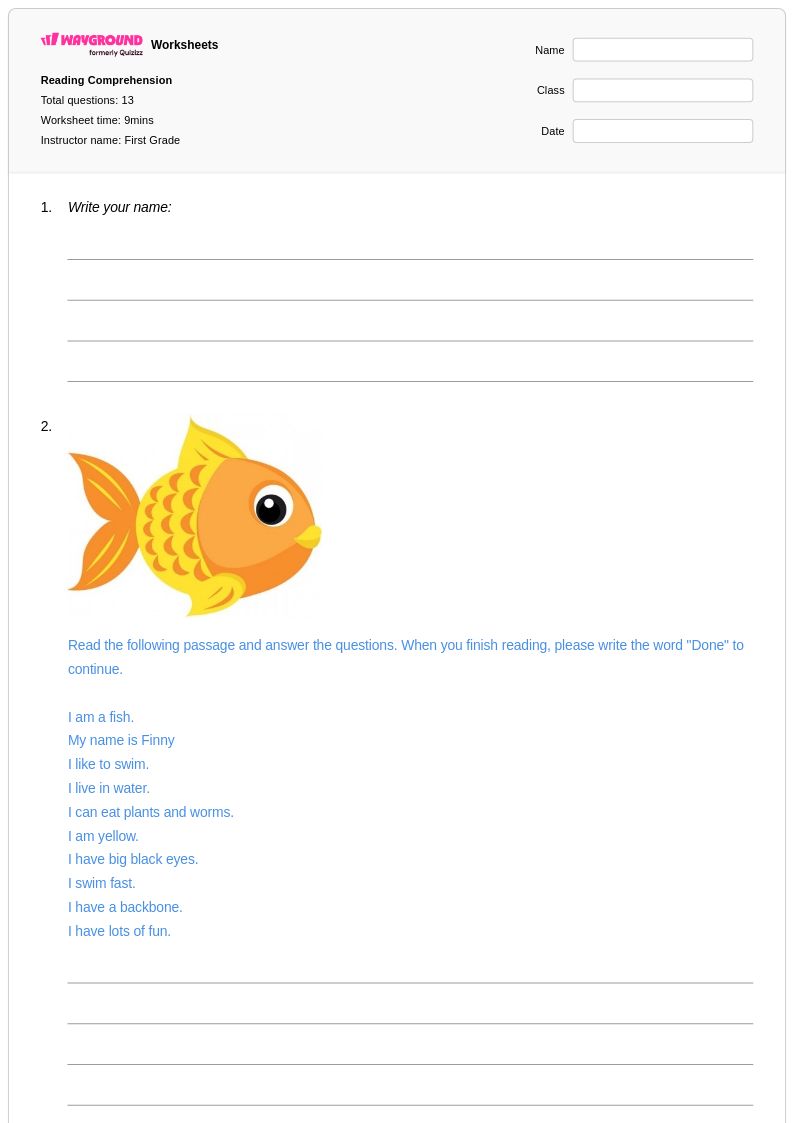
13 Q
1st
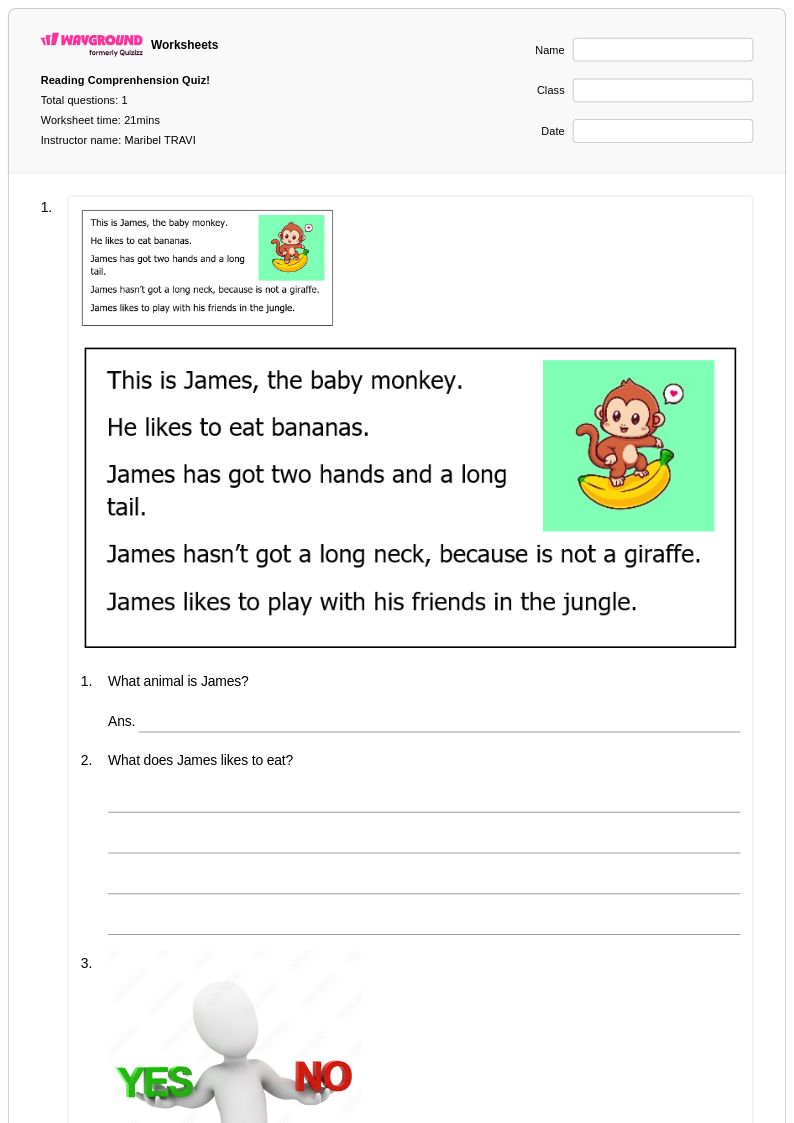
10 Q
1st

20 Q
1st - 5th
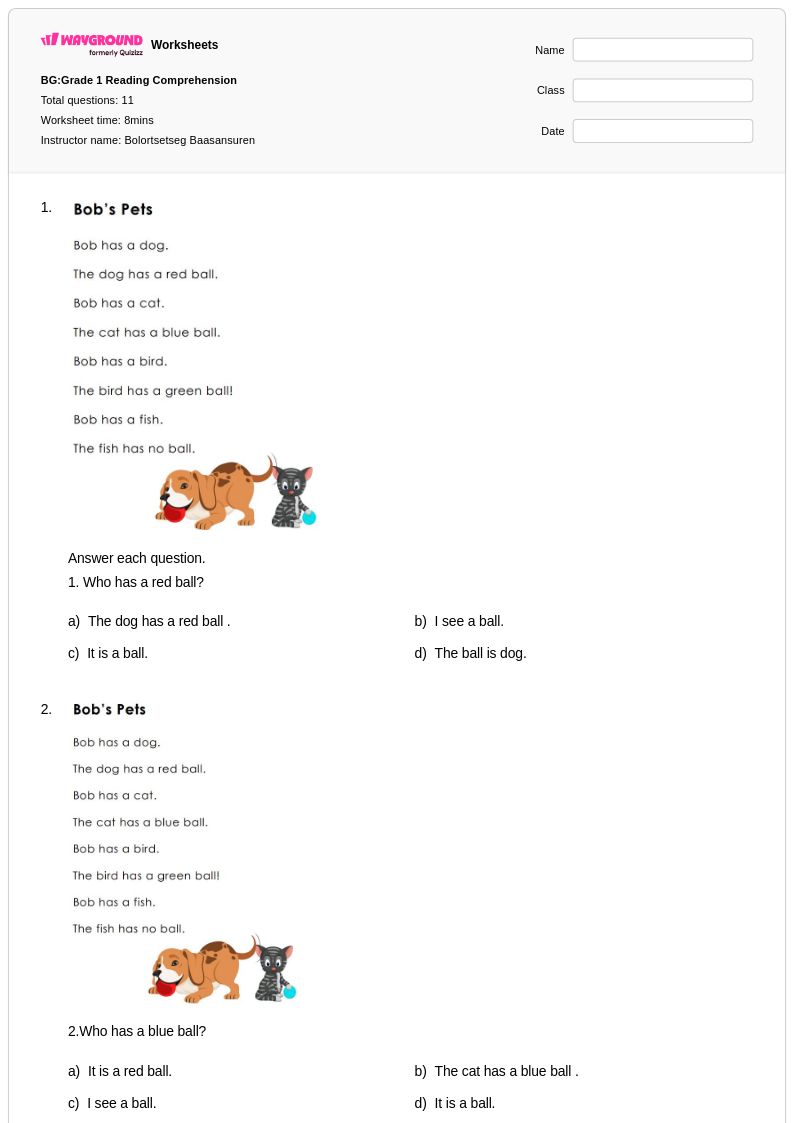
11 Q
1st
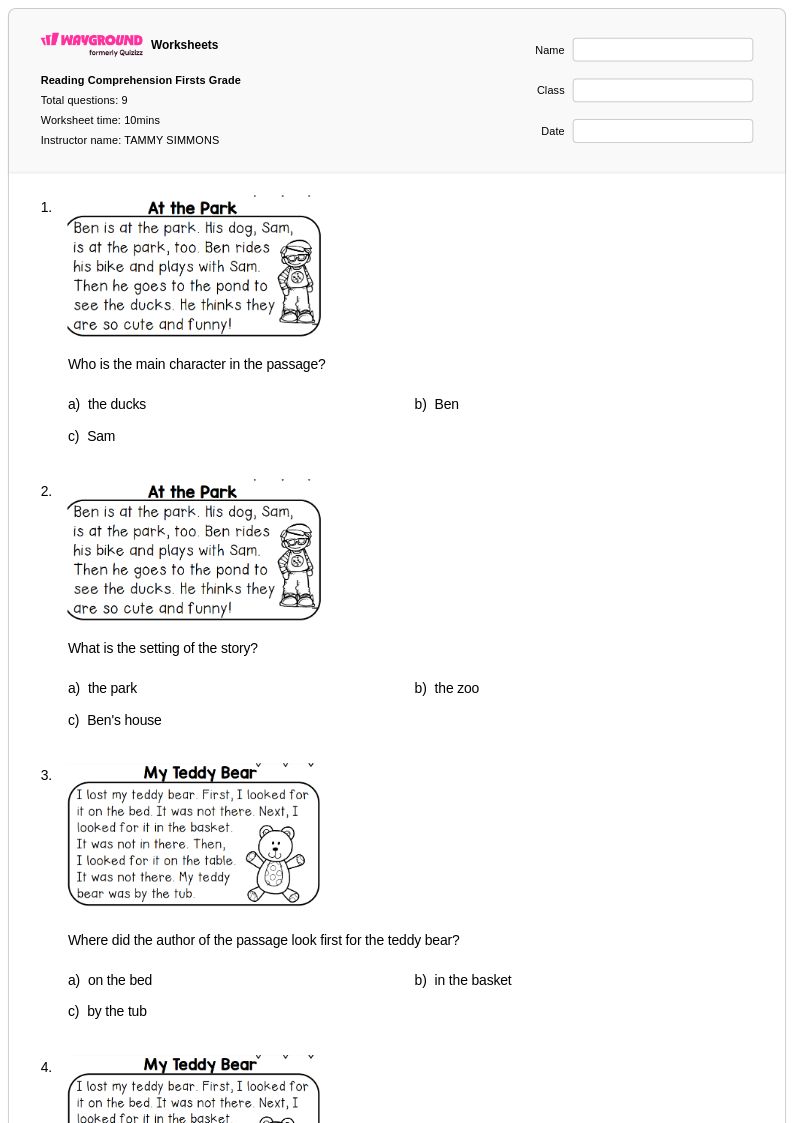
9 Q
1st
9 Q
1st
8 Q
1st - 5th
13 Q
1st - Uni
14 Q
1st
11 Q
1st - 5th
32 Q
KG - 5th
10 Q
1st - 5th
6 Q
1st
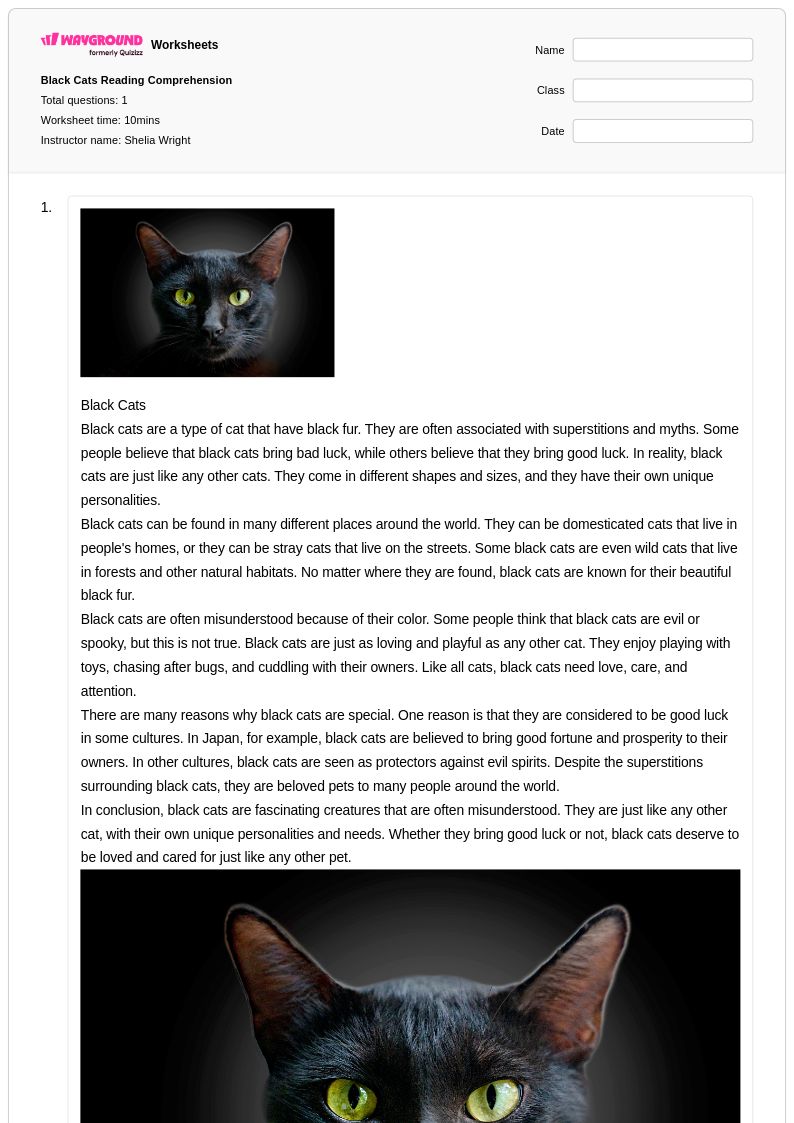
6 Q
1st - 5th
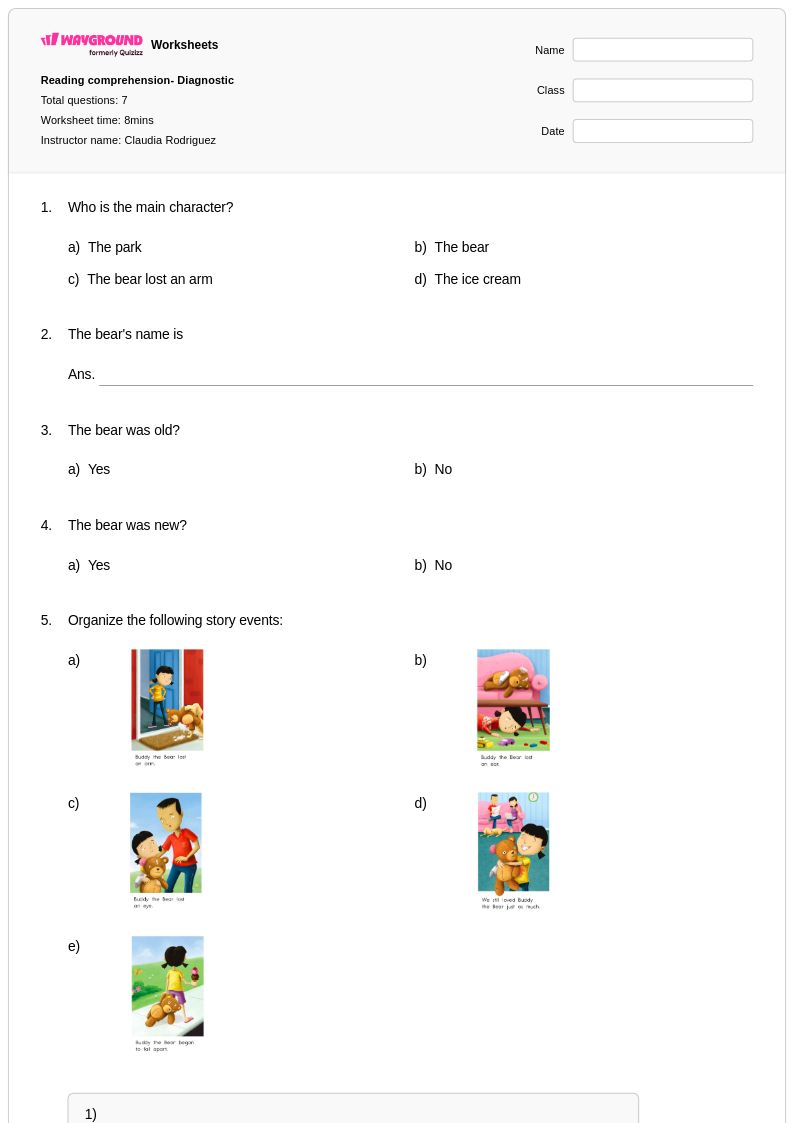
7 Q
1st
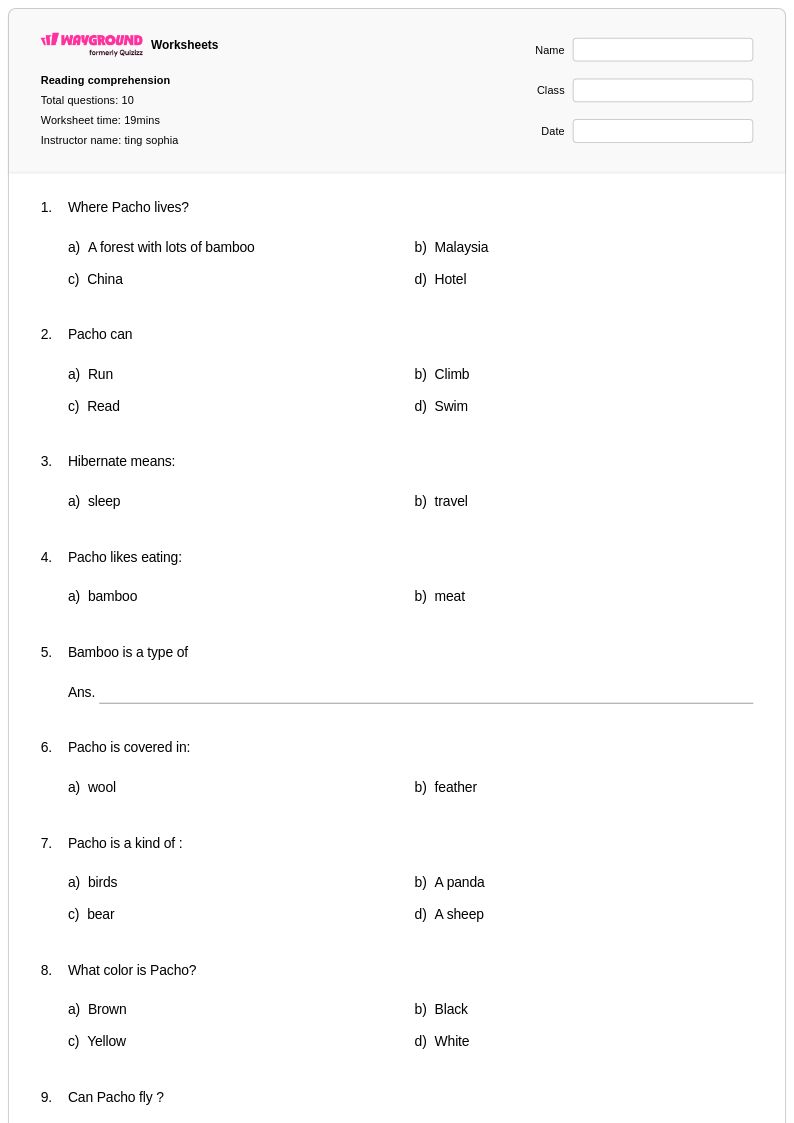
10 Q
1st
Explore Reading Comprehension Strategies Worksheets by Grades
Explore Reading Comprehension Strategies Worksheets for grade 1 by Topic
- Analyzing Story Structure
- Beginning, Middle, End Structure
- Cause and Effect
- Central Message
- Character, Setting, and Plot
- Character and Setting
- Character Traits
- Character Types
- Chronological Order
- Cloze Activity
- Comprehension Questions
- Following Directions
- Following Multistep Directions
- Graphic Sources
- Identifying the Author's Purpose
- Identifying the Main Idea
- Listening Comprehension
- Making Connections in Reading
- Making Text Connections
- Narrative Elements
Explore Other Subject Worksheets for grade 1
Explore printable Reading Comprehension Strategies worksheets for Grade 1
Reading comprehension strategies for Grade 1 students form the foundation of lifelong literacy skills, and Wayground's extensive collection of worksheets provides targeted practice in essential techniques like predicting, questioning, visualizing, and making connections to text. These carefully designed resources help young learners develop critical thinking abilities while building confidence in their reading abilities through age-appropriate passages and engaging activities. Teachers can access comprehensive materials that include detailed answer keys for efficient grading, free printable options for classroom use, and structured practice problems that guide students through step-by-step comprehension processes, ensuring that first-grade students master fundamental strategies before advancing to more complex texts.
Wayground's robust platform, formerly known as Quizizz, empowers educators with millions of teacher-created resources specifically focused on Grade 1 reading comprehension strategies, featuring advanced search and filtering capabilities that allow for precise alignment with curriculum standards and learning objectives. The platform's differentiation tools enable teachers to customize worksheets based on individual student needs, while flexible formatting options provide both printable pdf versions for traditional classroom activities and digital formats for interactive learning experiences. These comprehensive features streamline lesson planning by offering ready-to-use materials for skill practice, targeted remediation for struggling readers, and enrichment opportunities for advanced students, ultimately supporting diverse learning styles and ensuring that every first-grade student develops strong foundational comprehension skills.
FAQs
How do I teach reading comprehension strategies to students who struggle with complex texts?
What reading comprehension strategy worksheets are most effective for building analytical thinking?
What common mistakes do students make when applying reading comprehension strategies?
How can I differentiate reading comprehension strategy worksheets for different reading levels in the same classroom?
How do I use Wayground's reading comprehension strategies worksheets in my classroom?
What's the difference between teaching summarizing and paraphrasing as reading comprehension strategies?
How do I teach students to use text features as a reading comprehension strategy?