Free Printable Plot Diagram Worksheets for Grade 6
Grade 6 plot diagram worksheets from Wayground help students master story structure through engaging printables and practice problems that teach the five elements of narrative development with comprehensive answer keys.
Explore printable Plot Diagram worksheets for Grade 6
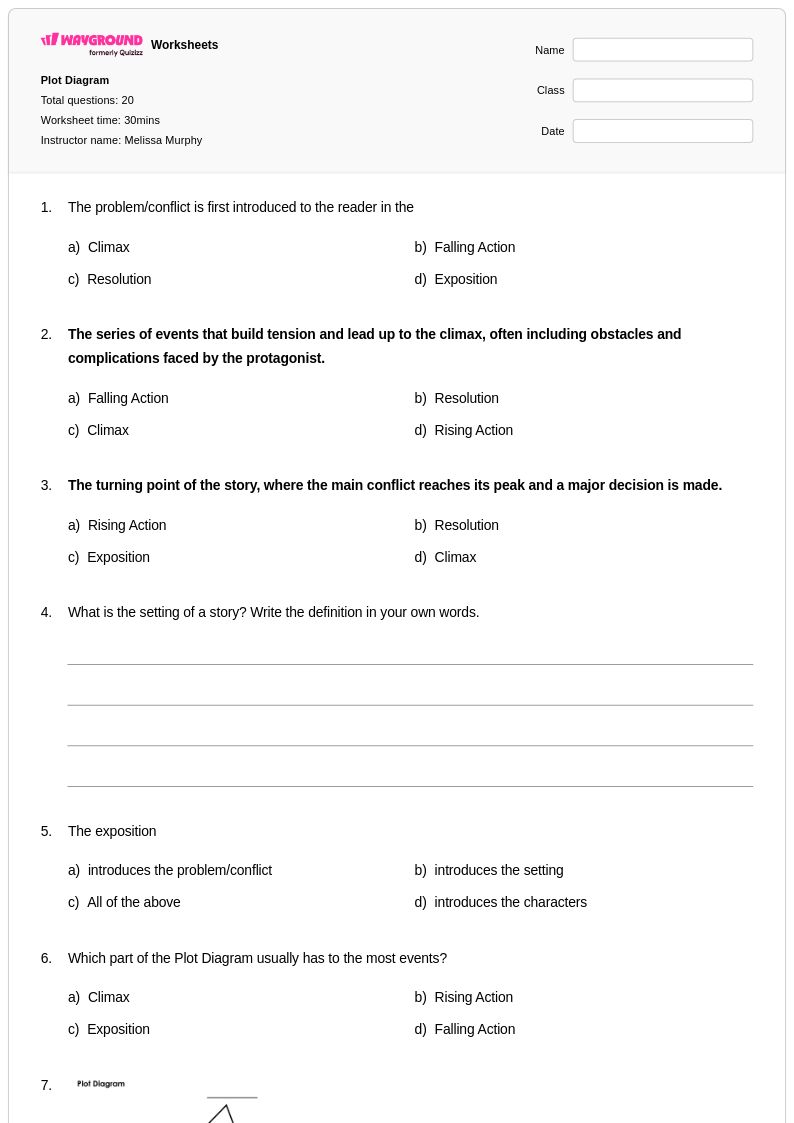
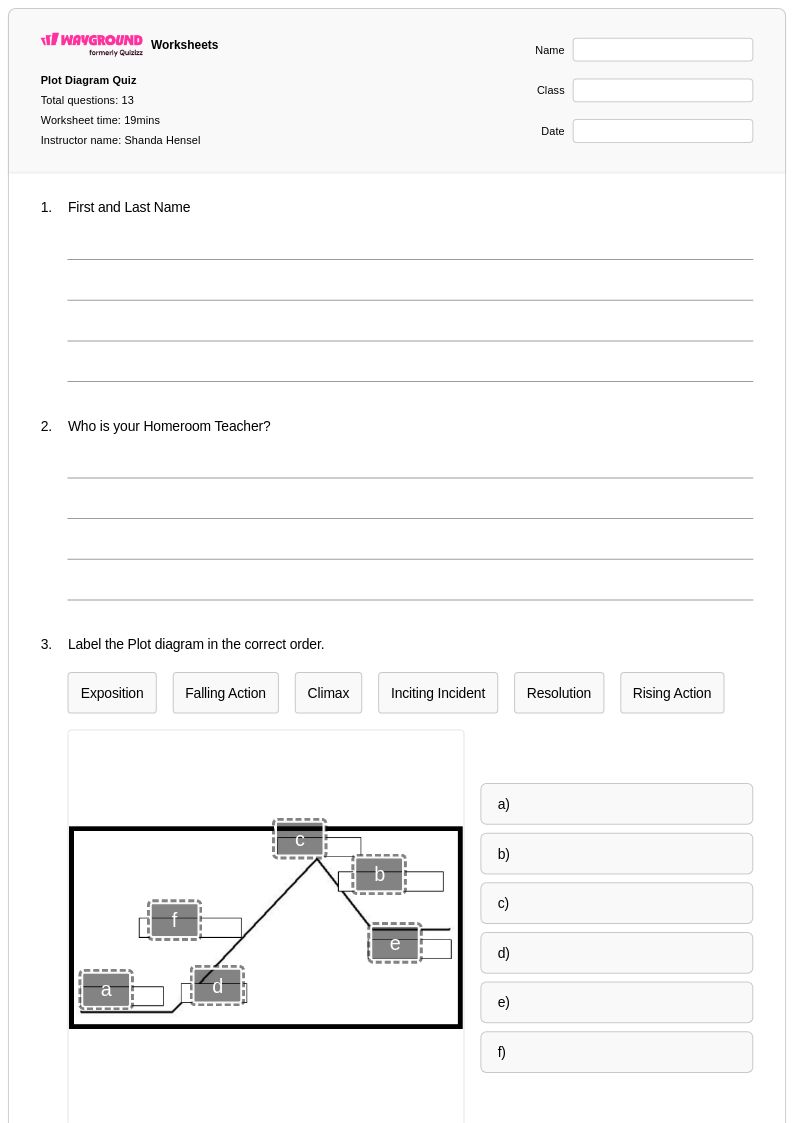
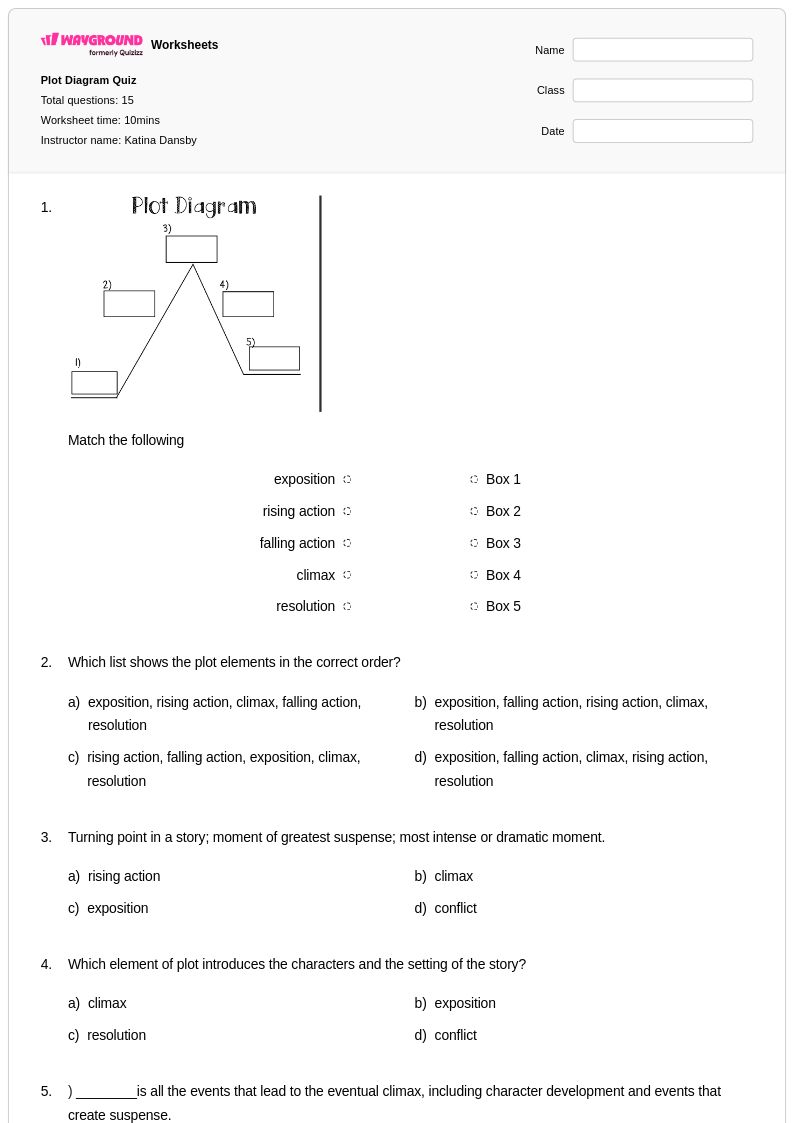
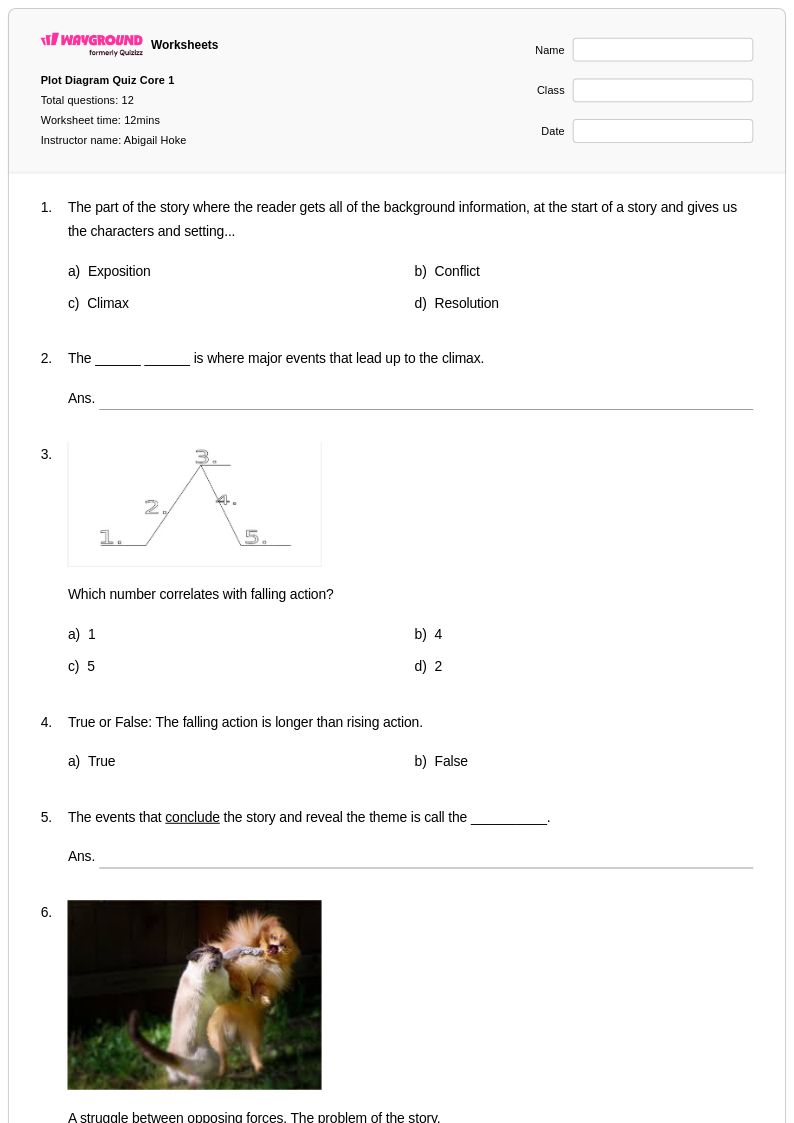
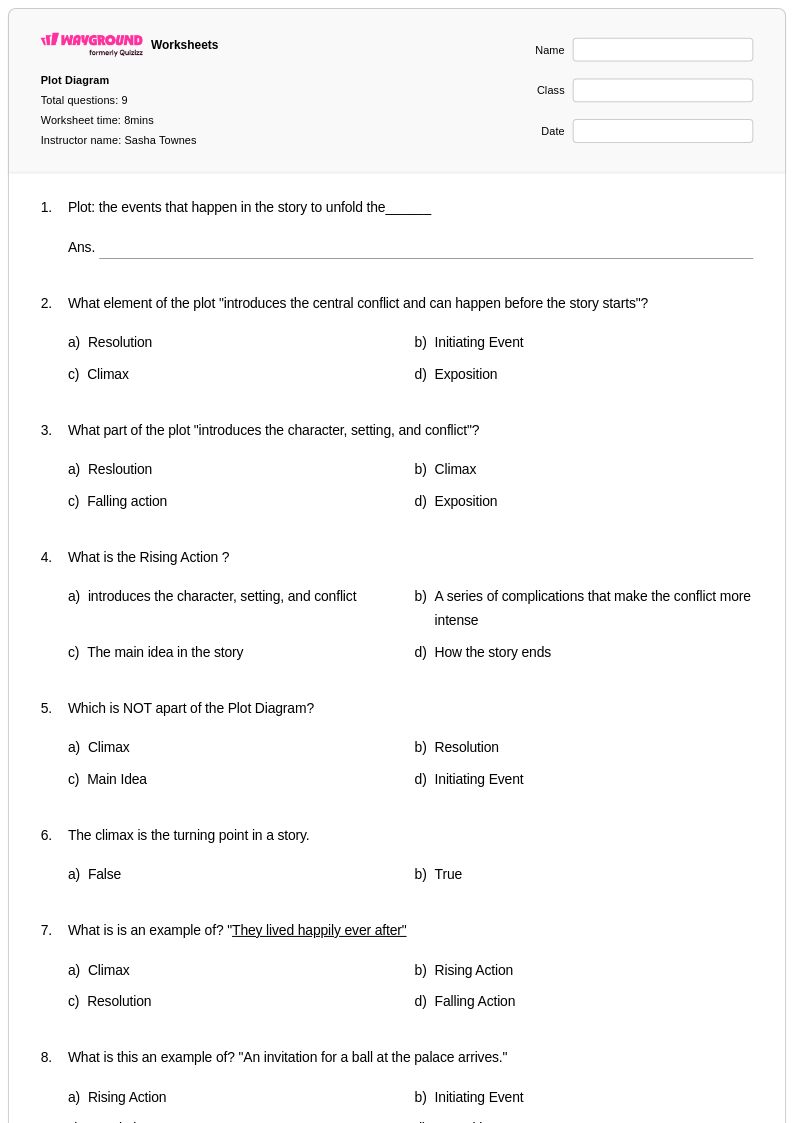
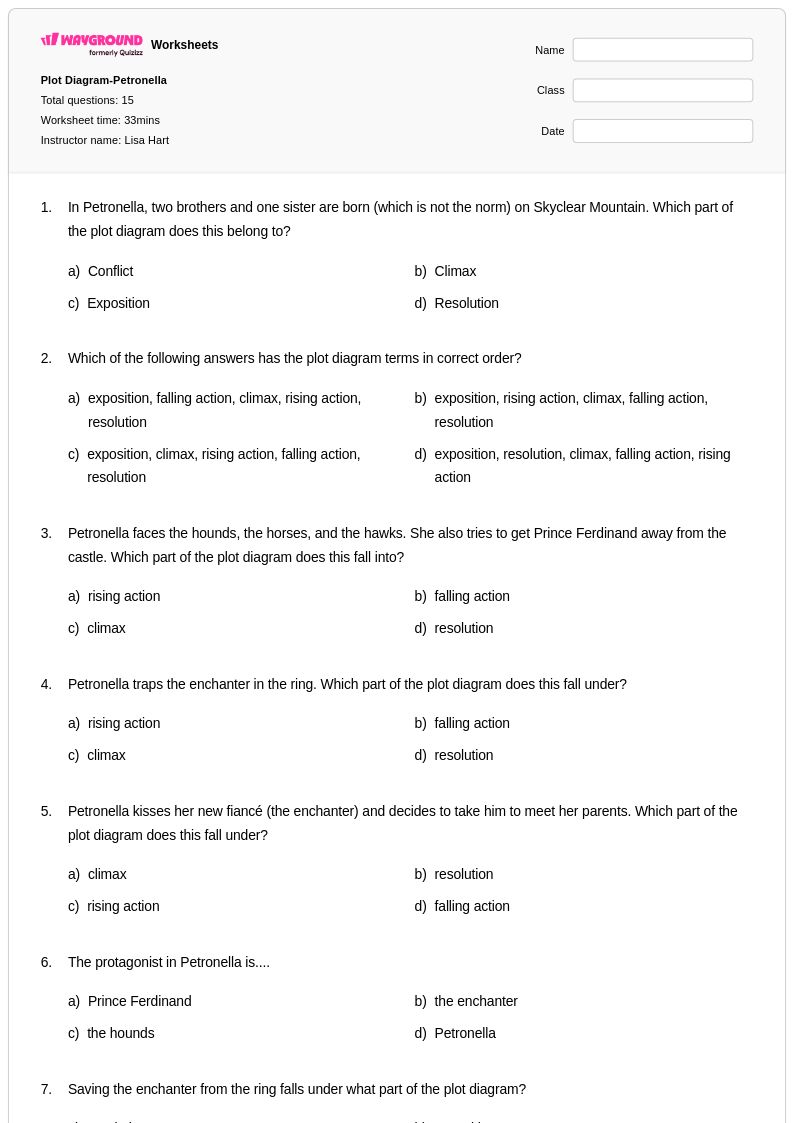
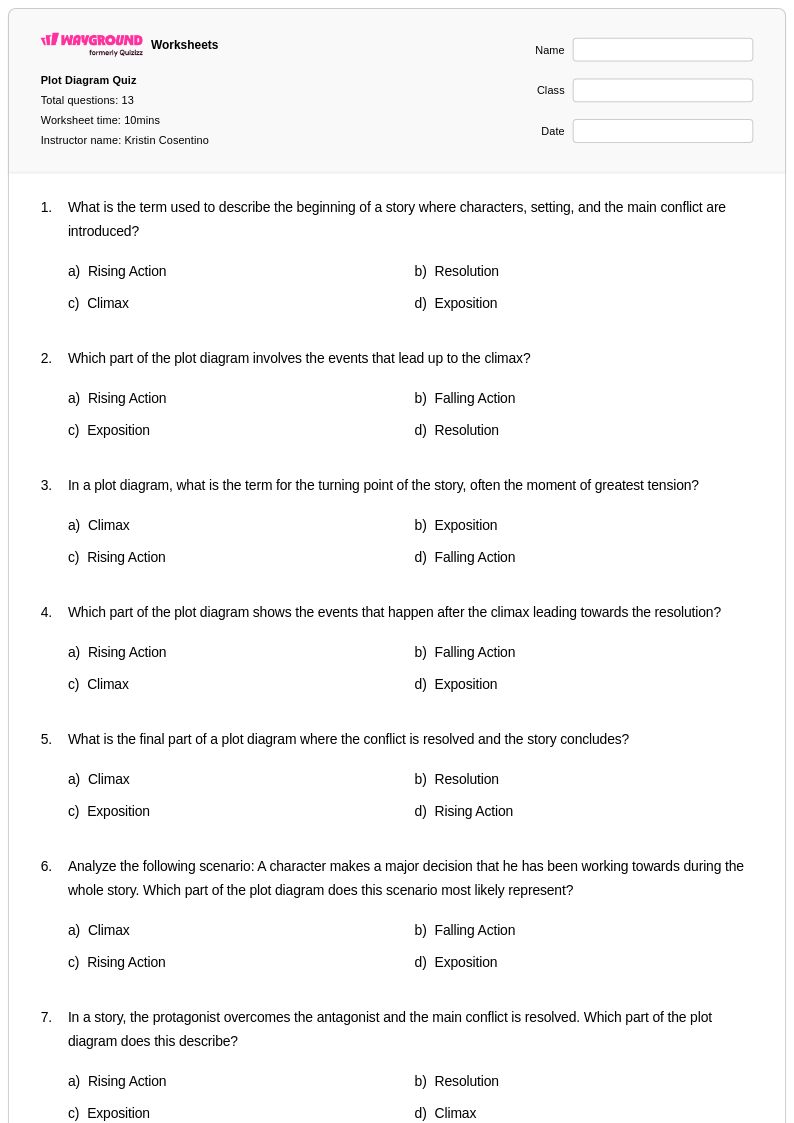
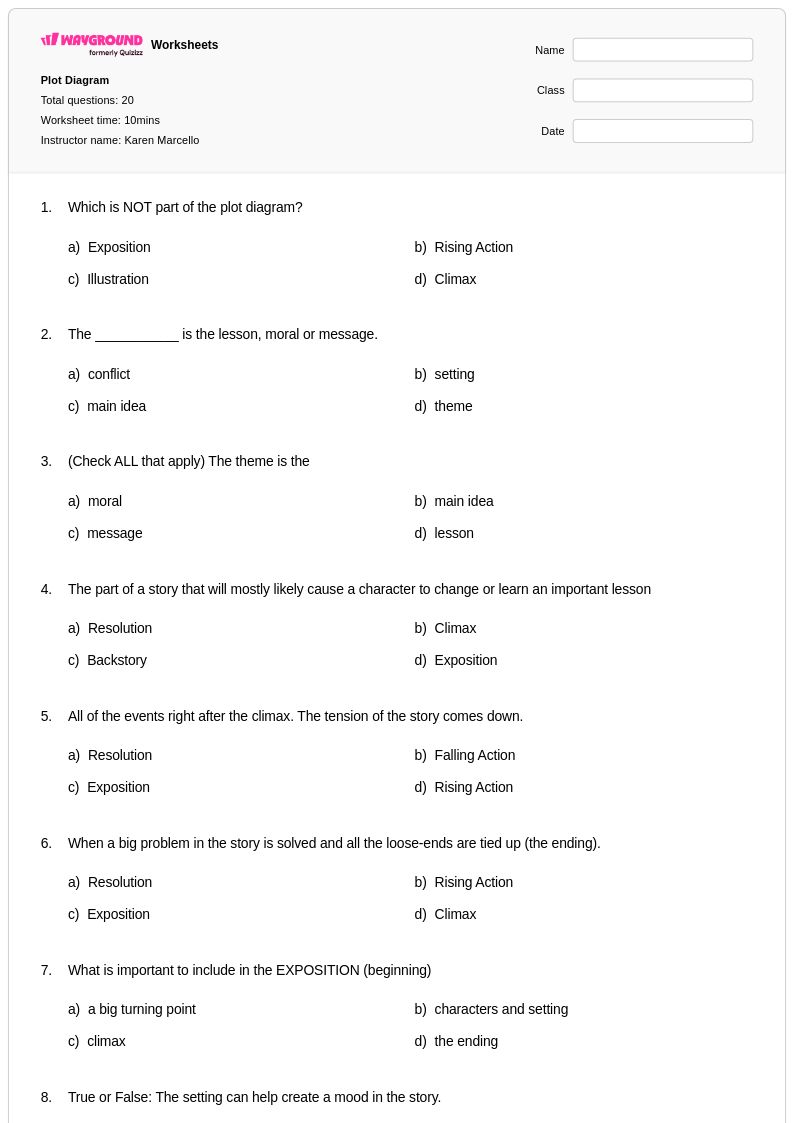
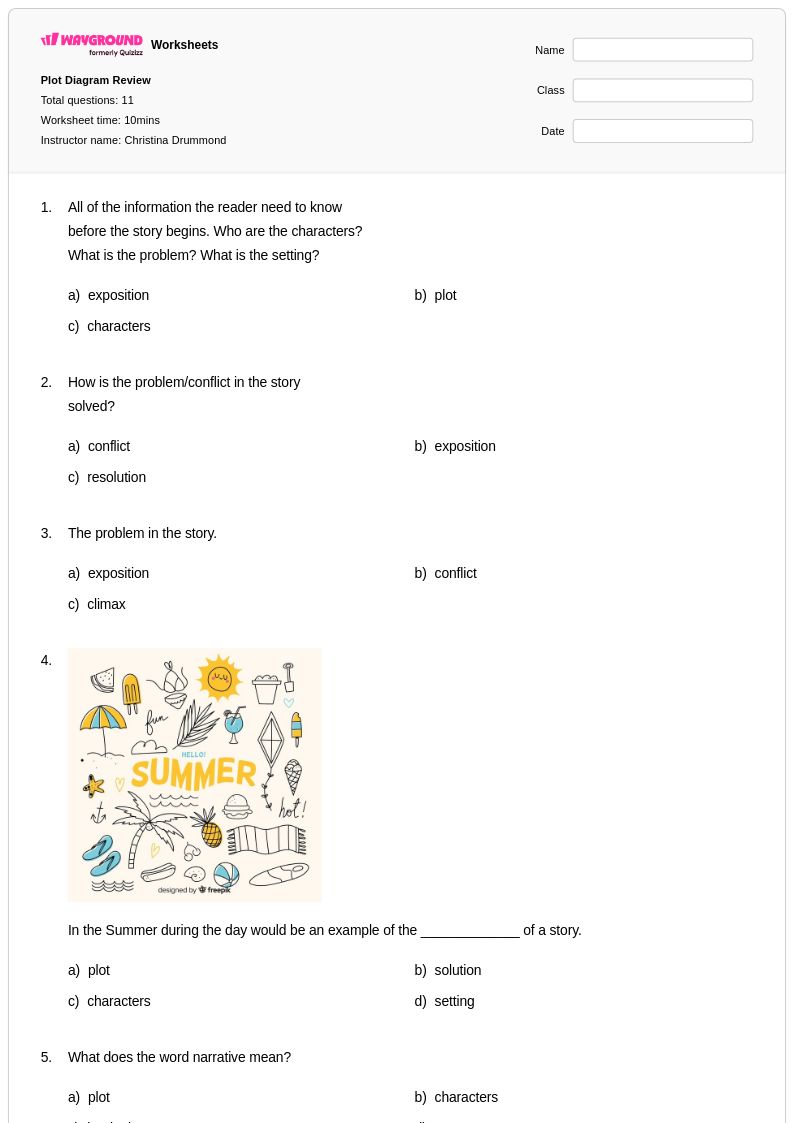
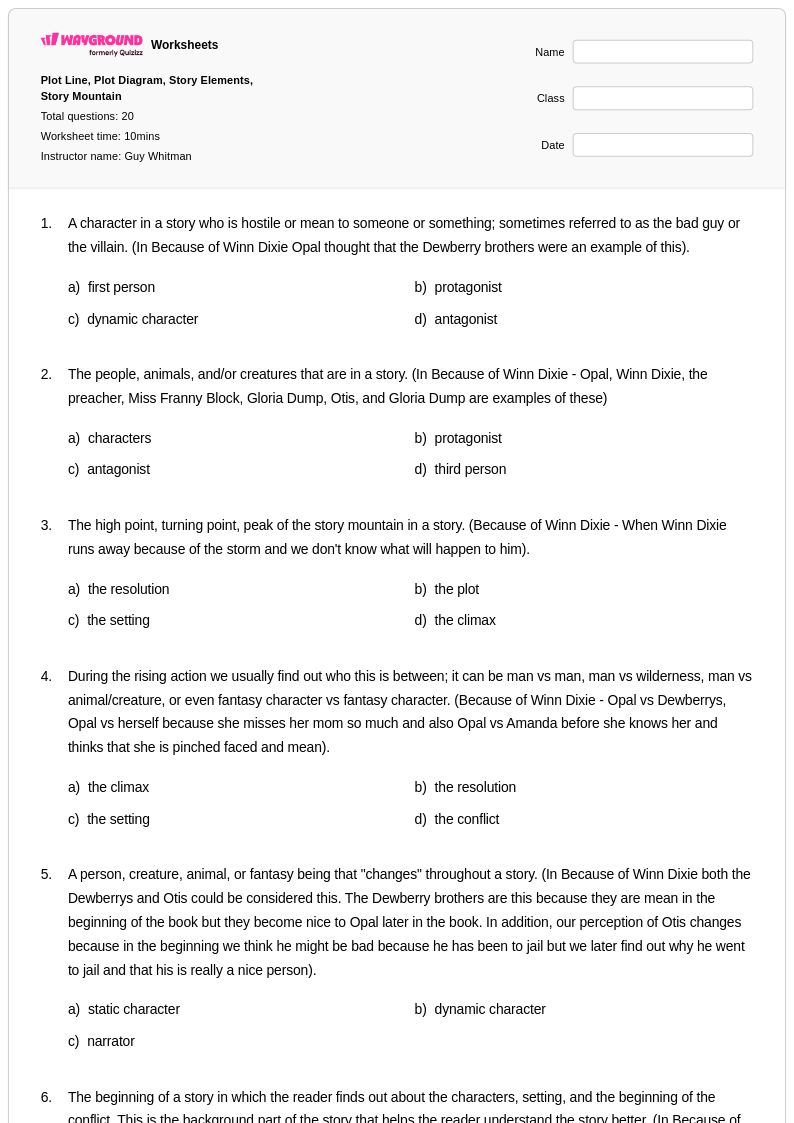
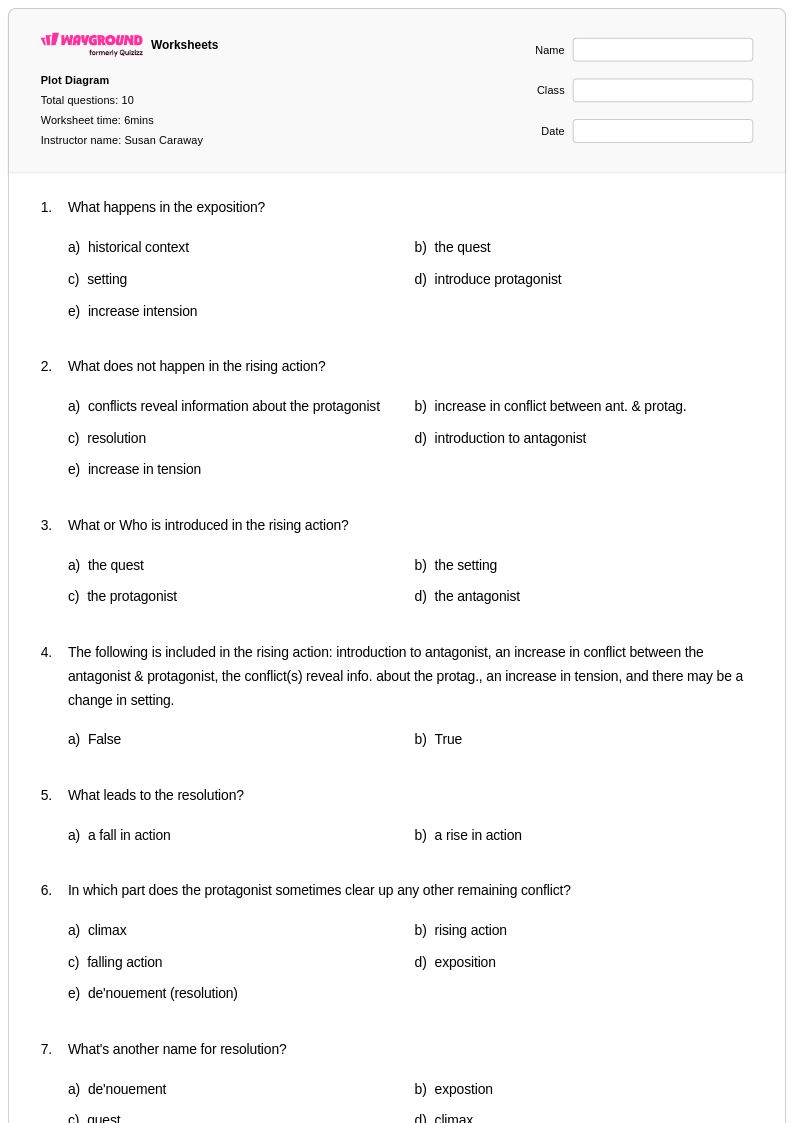
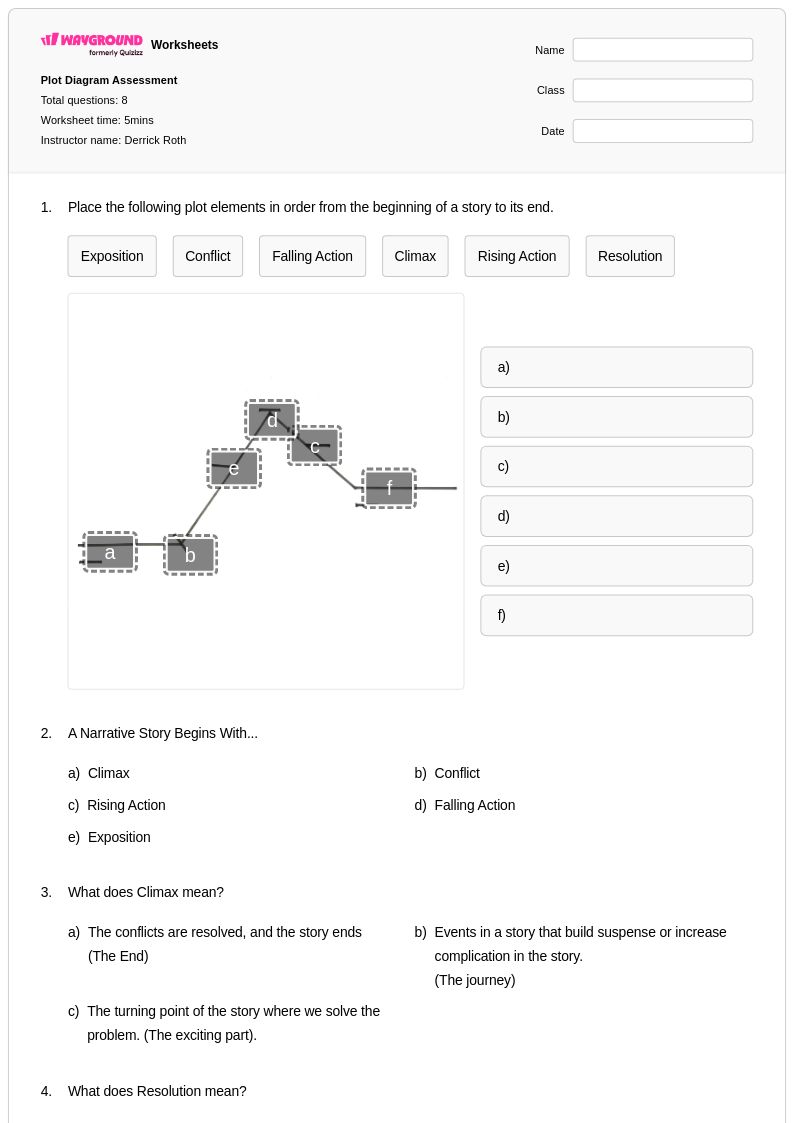
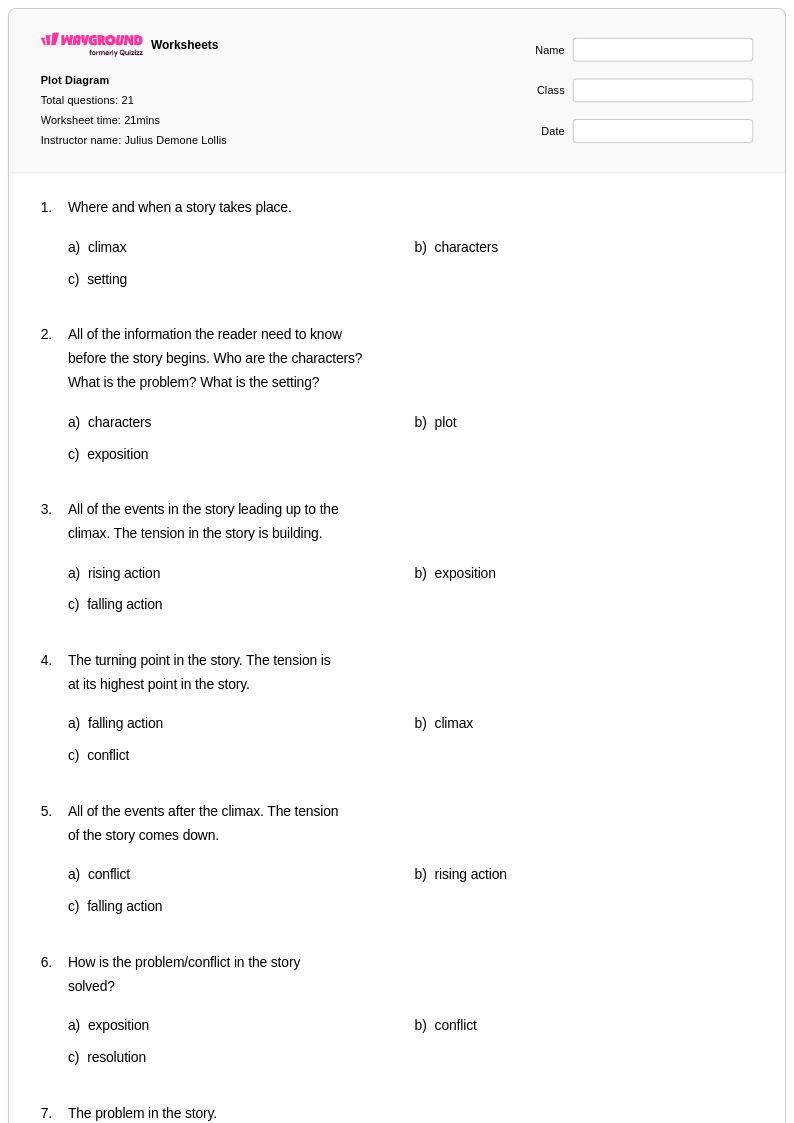
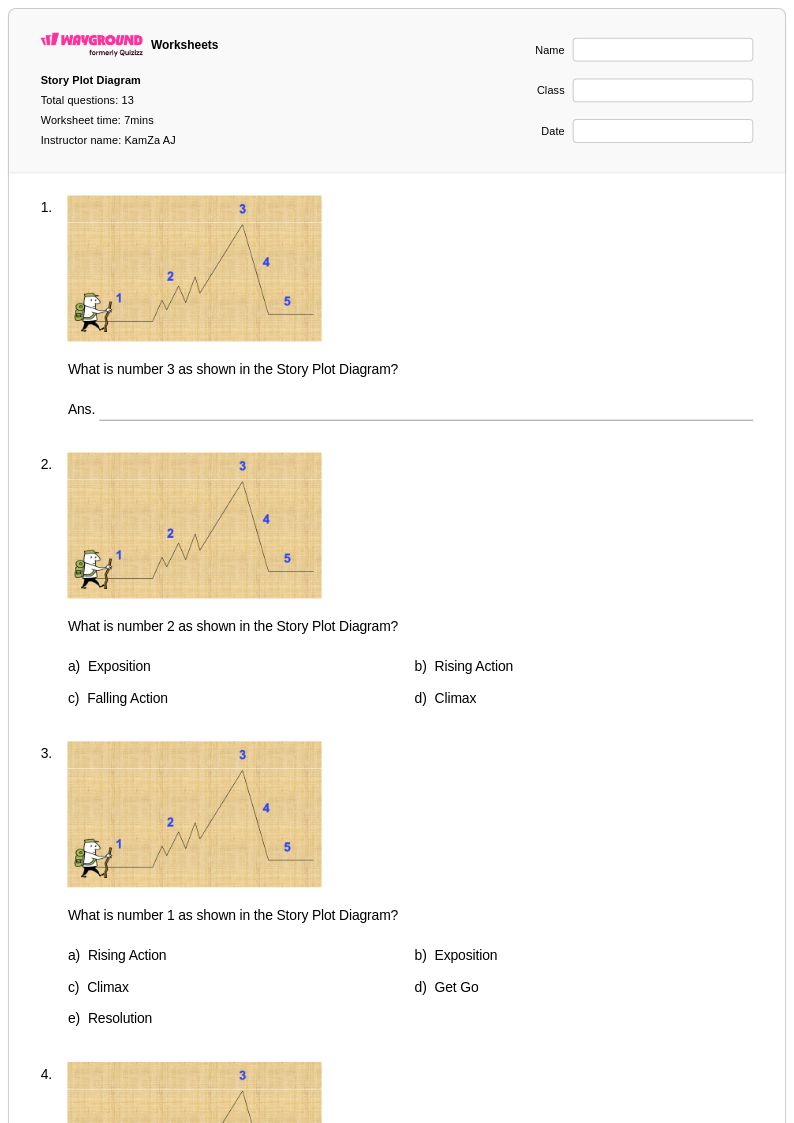
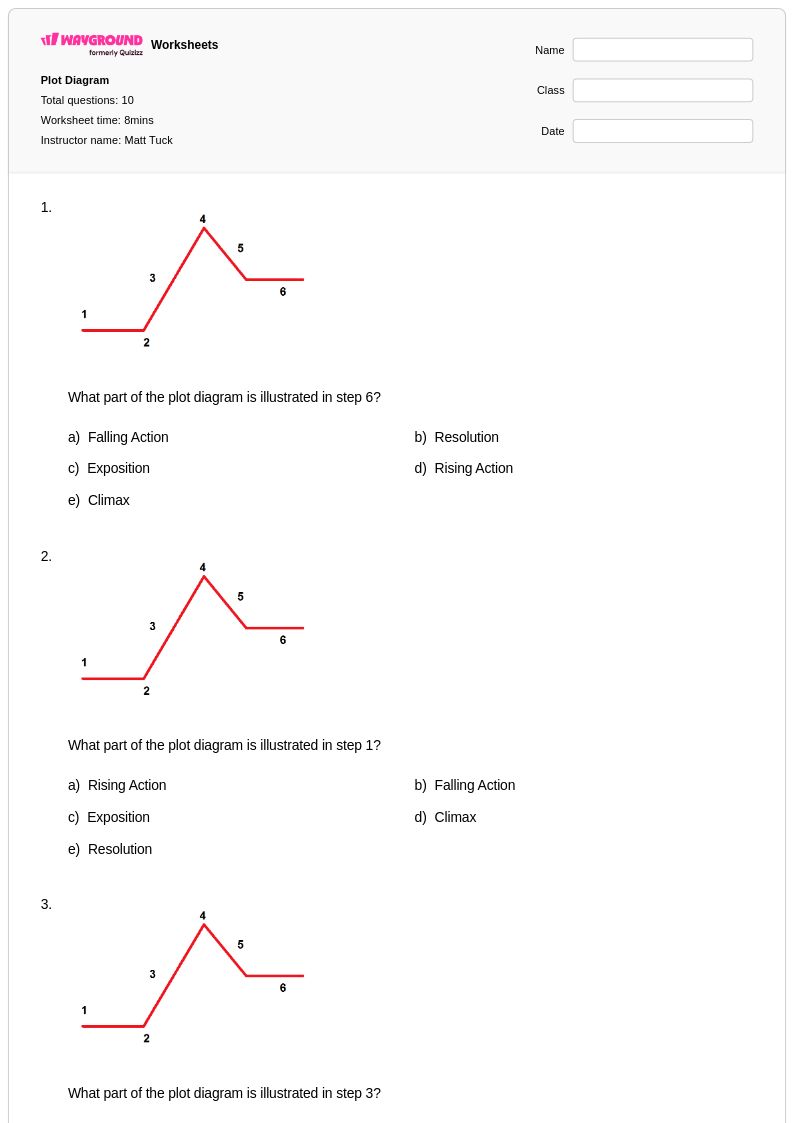
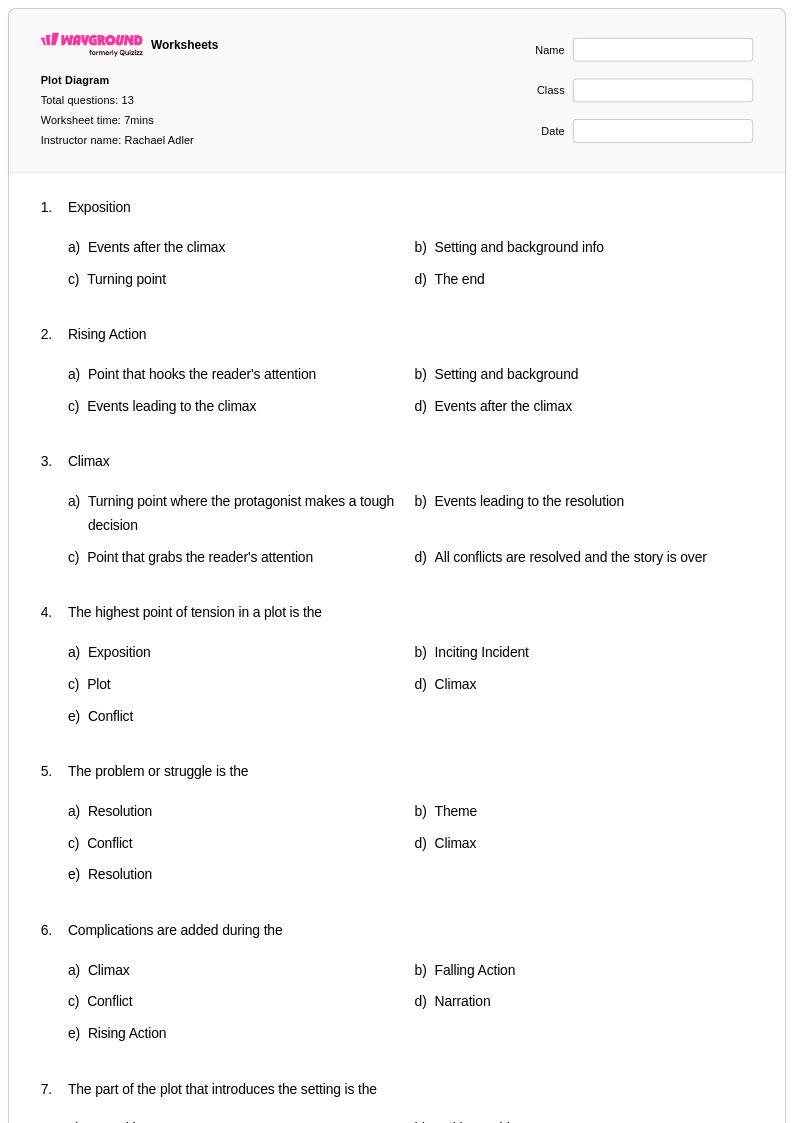
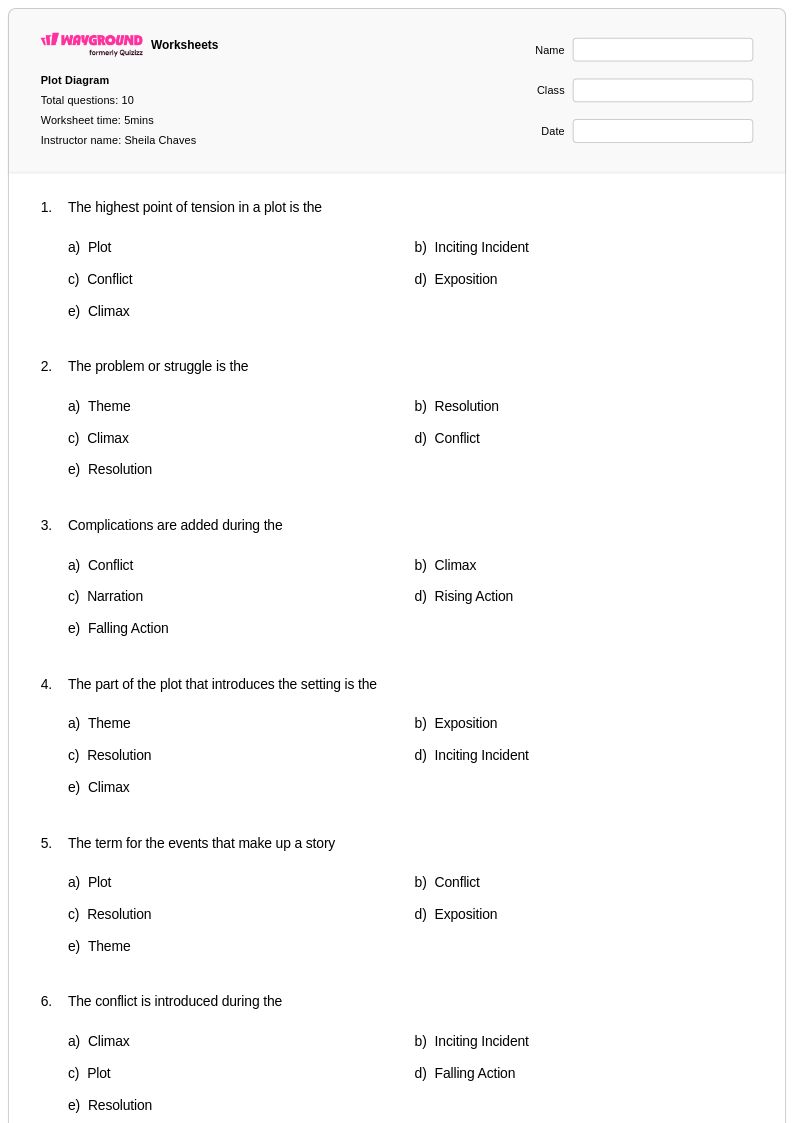
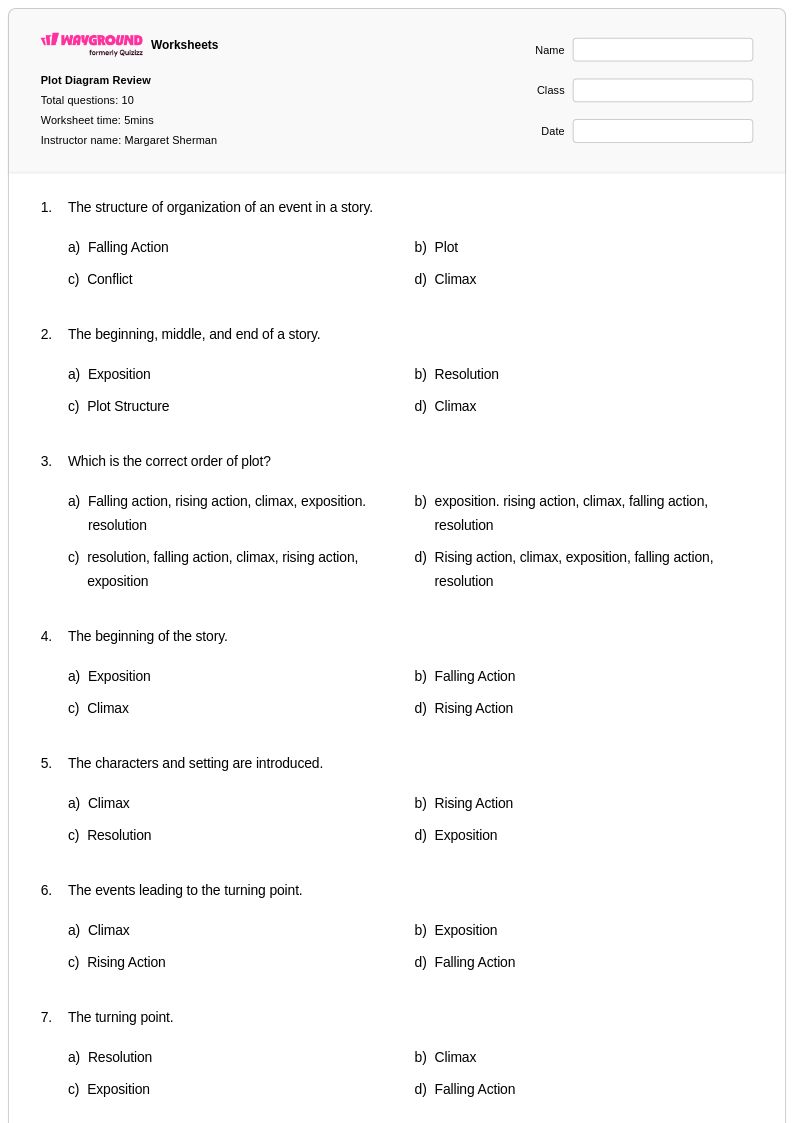
Plot diagram worksheets for Grade 6 students available through Wayground (formerly Quizizz) provide comprehensive practice in identifying and analyzing the essential structural elements of narrative texts. These carefully designed resources help sixth-grade learners master the fundamental components of plot including exposition, rising action, climax, falling action, and resolution while strengthening their overall reading comprehension abilities. Students engage with diverse literary passages and stories, learning to map narrative progression and understand how authors build tension and develop conflicts throughout their works. Each worksheet includes detailed answer keys and offers free printable options, allowing educators to seamlessly integrate plot analysis practice problems into their curriculum while providing students with immediate feedback on their comprehension progress.
Wayground (formerly Quizizz) empowers teachers with an extensive collection of millions of teacher-created plot diagram resources specifically tailored for Grade 6 reading comprehension instruction. The platform's robust search and filtering capabilities enable educators to quickly locate materials aligned with specific learning standards and customize worksheets to meet diverse classroom needs through built-in differentiation tools. Teachers can access these resources in both printable PDF formats for traditional classroom use and interactive digital versions for technology-enhanced learning environments. This flexibility supports comprehensive lesson planning by providing targeted materials for initial skill introduction, remediation for struggling readers, enrichment activities for advanced students, and ongoing practice opportunities that reinforce plot structure understanding across various literary genres and complexity levels.
FAQs
How do I teach plot diagram to students who struggle with story structure?
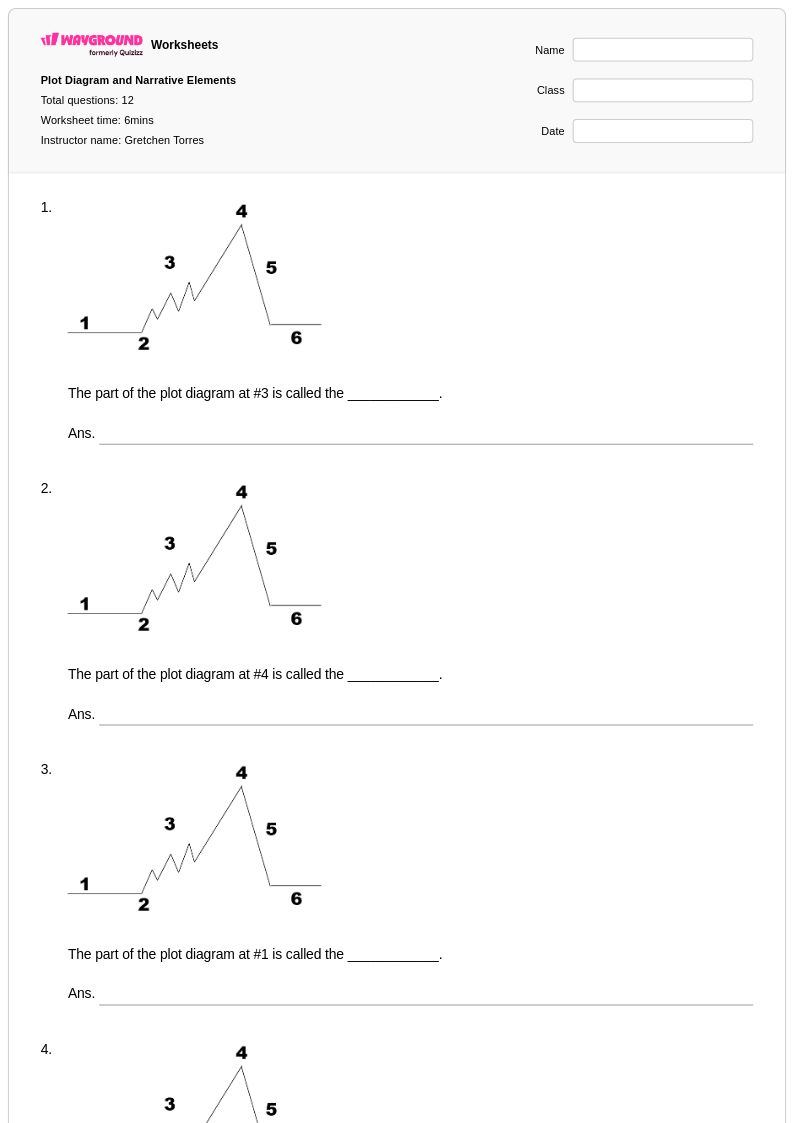
Start by anchoring instruction in a familiar story — a fairy tale or picture book works well — and walk students through each stage of the plot diagram (exposition, rising action, climax, falling action, resolution) as they read. Use a visual diagram that students fill in collaboratively before moving to independent practice. The key is helping students see plot as a cause-and-effect chain, not just a list of events, so they understand why each stage matters to the story's tension and resolution.
What exercises help students practice identifying plot elements in a story?
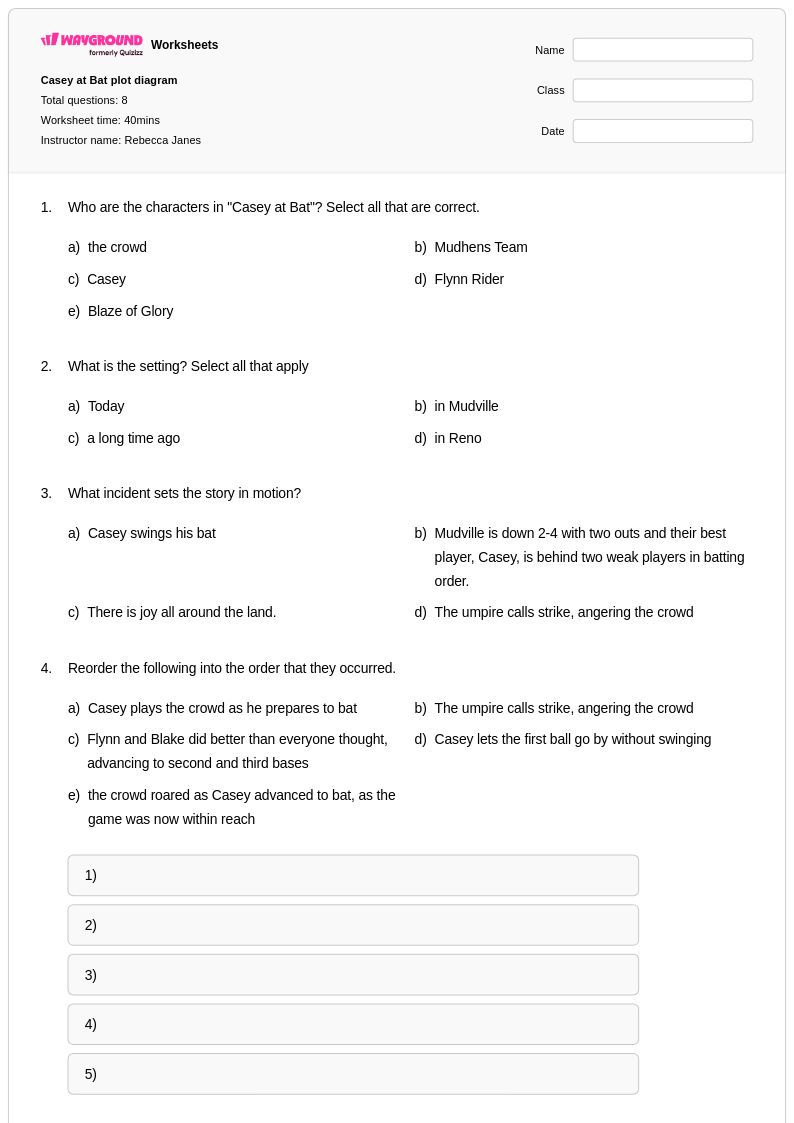
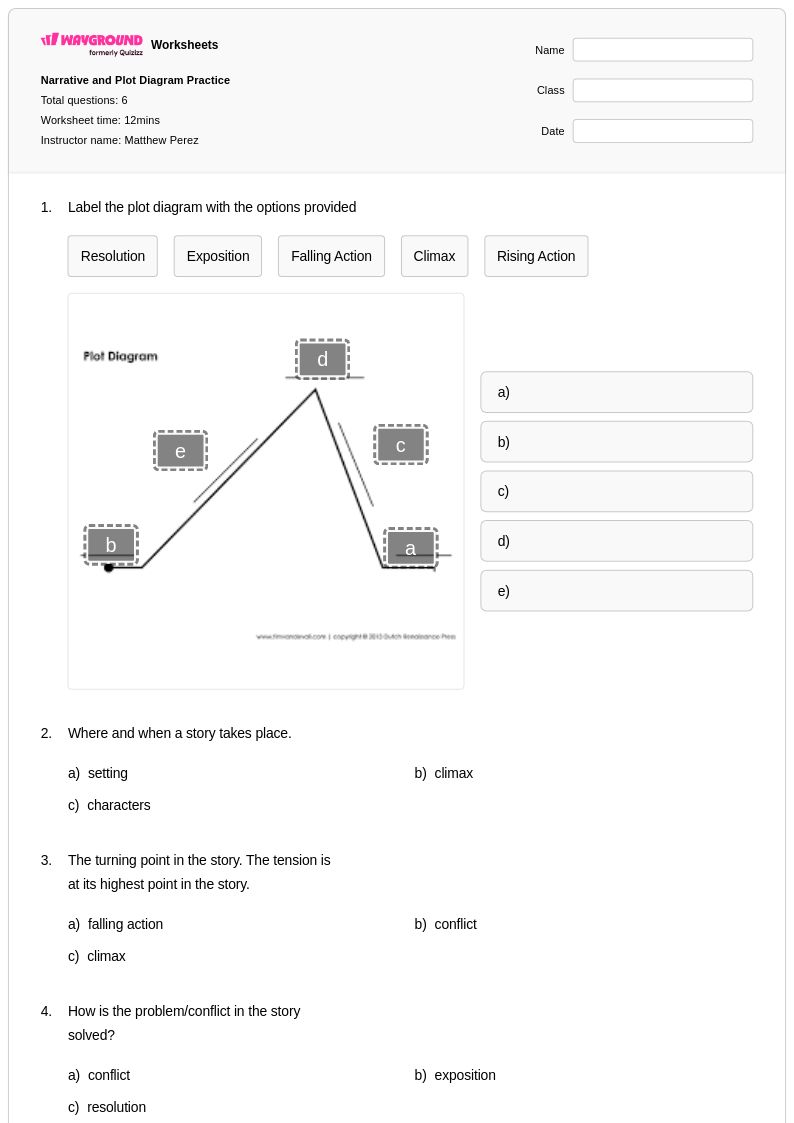
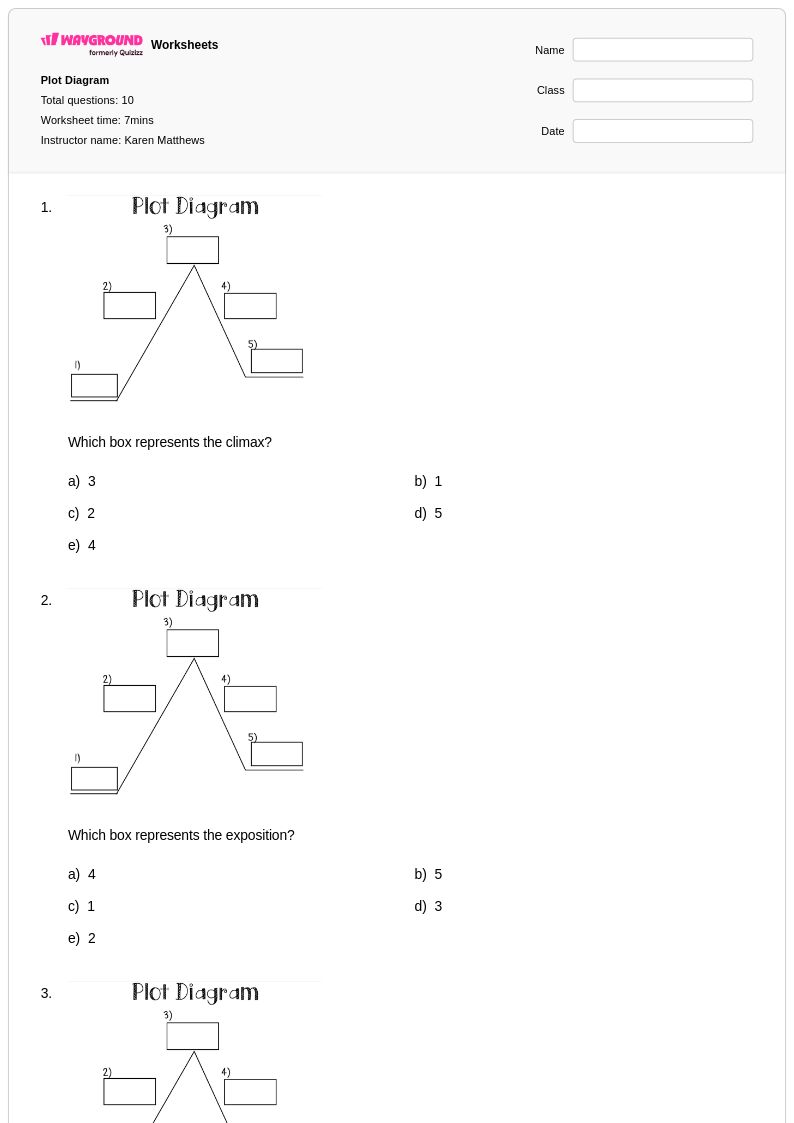
Effective practice exercises include completing blank plot diagrams for short stories or passages, labeling plot stages in a provided story summary, and writing their own brief narratives that must hit each plot element. Worksheets that present a passage followed by structured questions about each stage of the plot reinforce the skill systematically, helping students internalize the framework rather than just memorize terms.
What mistakes do students commonly make when filling out a plot diagram?
The most common error is confusing the climax with the most exciting moment in the story, when in fact the climax is the turning point where the central conflict reaches its peak. Students also frequently lump all middle events into 'rising action' without distinguishing falling action as a distinct wind-down phase. Another recurring mistake is skipping exposition details — students tend to jump straight to conflict without identifying the setting, characters, and background that the author establishes early on.
How can I use plot diagram worksheets to support different reading levels in the same class?
Plot diagram worksheets can be differentiated by varying the complexity of the source text, the amount of scaffolding provided (e.g., partially completed diagrams versus fully blank ones), and the depth of analysis required. On Wayground, teachers can apply student-level accommodations such as read aloud, reduced answer choices, and extended time to support struggling readers individually while the rest of the class works with default settings — all without drawing attention to those students.
How do I use Wayground's plot diagram worksheets in my classroom?
Wayground's plot diagram worksheets are available as printable PDFs for traditional classroom use and in digital formats for technology-integrated environments. Teachers can assign them as independent practice, use them during guided reading lessons, or host them as a quiz directly on Wayground to assess student understanding of narrative structure. Each worksheet includes a complete answer key, reducing prep time and making them ready to use for both classroom instruction and independent study.
How does understanding plot diagram improve students' reading comprehension?
When students can map the structure of a story, they move from passive reading to active analysis — they begin to anticipate how events connect and why authors make specific narrative choices. Recognizing plot stages helps students track character development across a text, understand how tension builds and releases, and identify the central conflict and its resolution. This structural awareness is a transferable skill that strengthens comprehension across fiction genres and grade levels.