Free Printable Comprehension Questions Worksheets for Grade 4
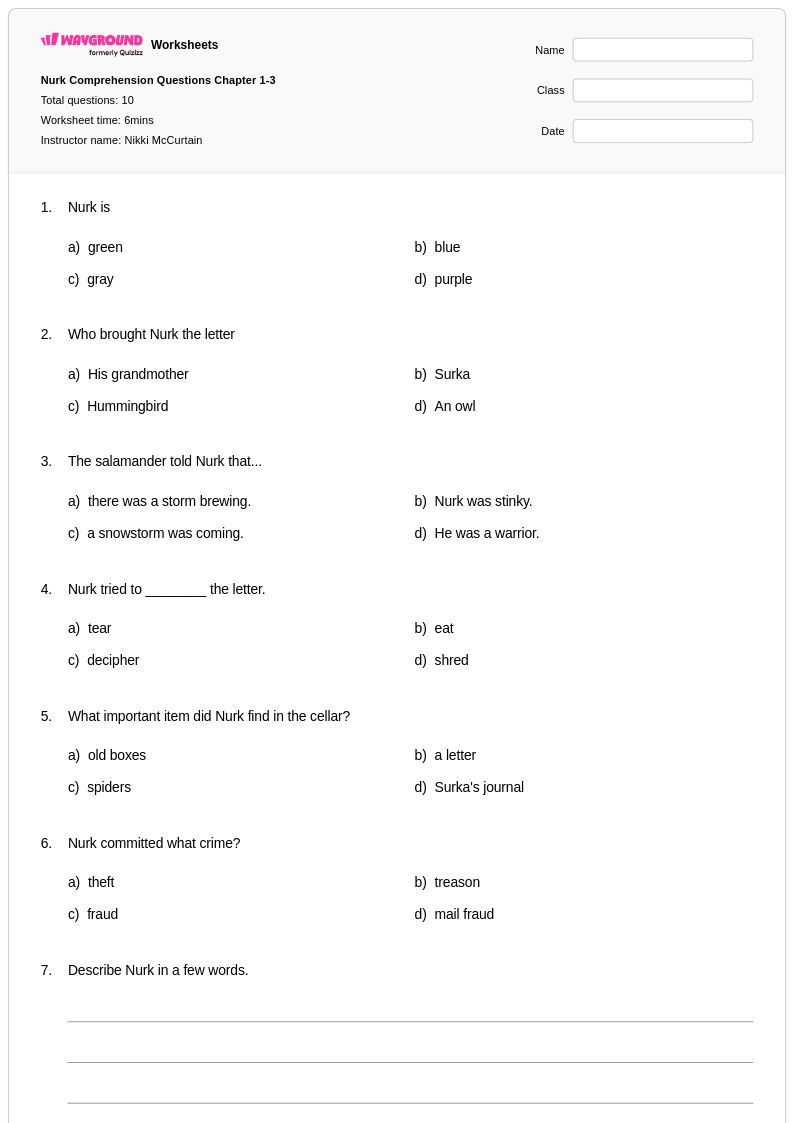
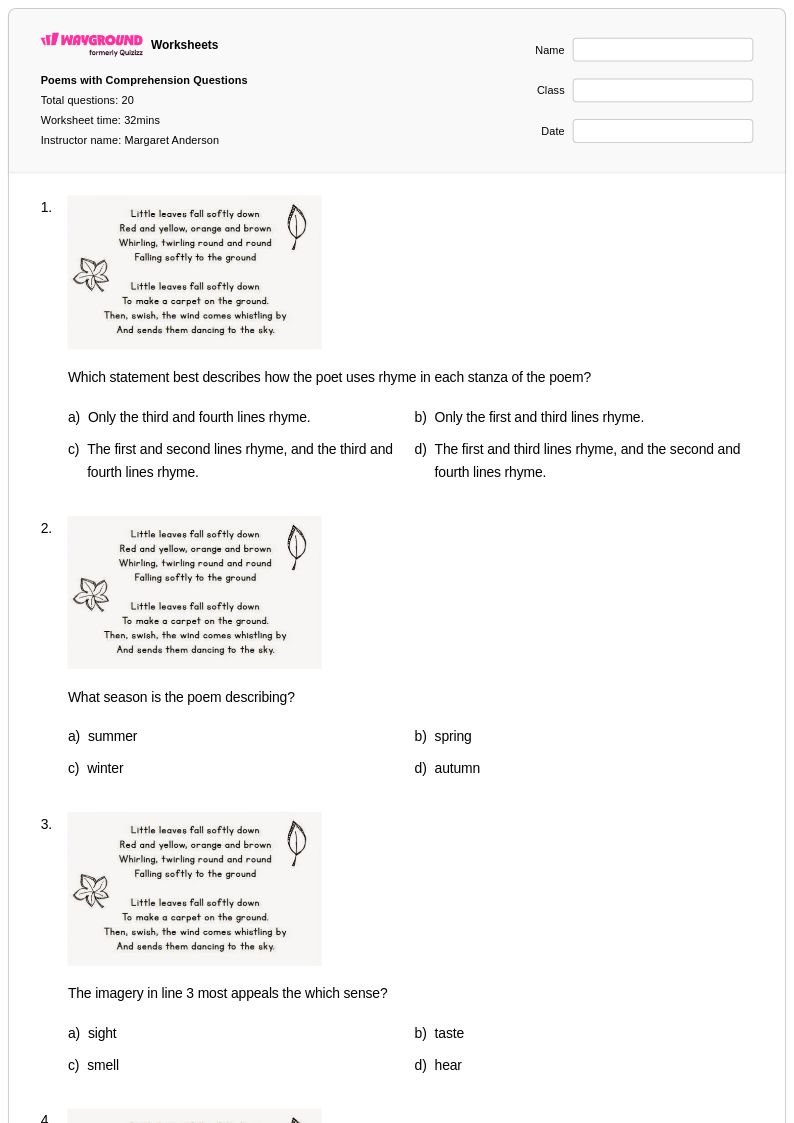
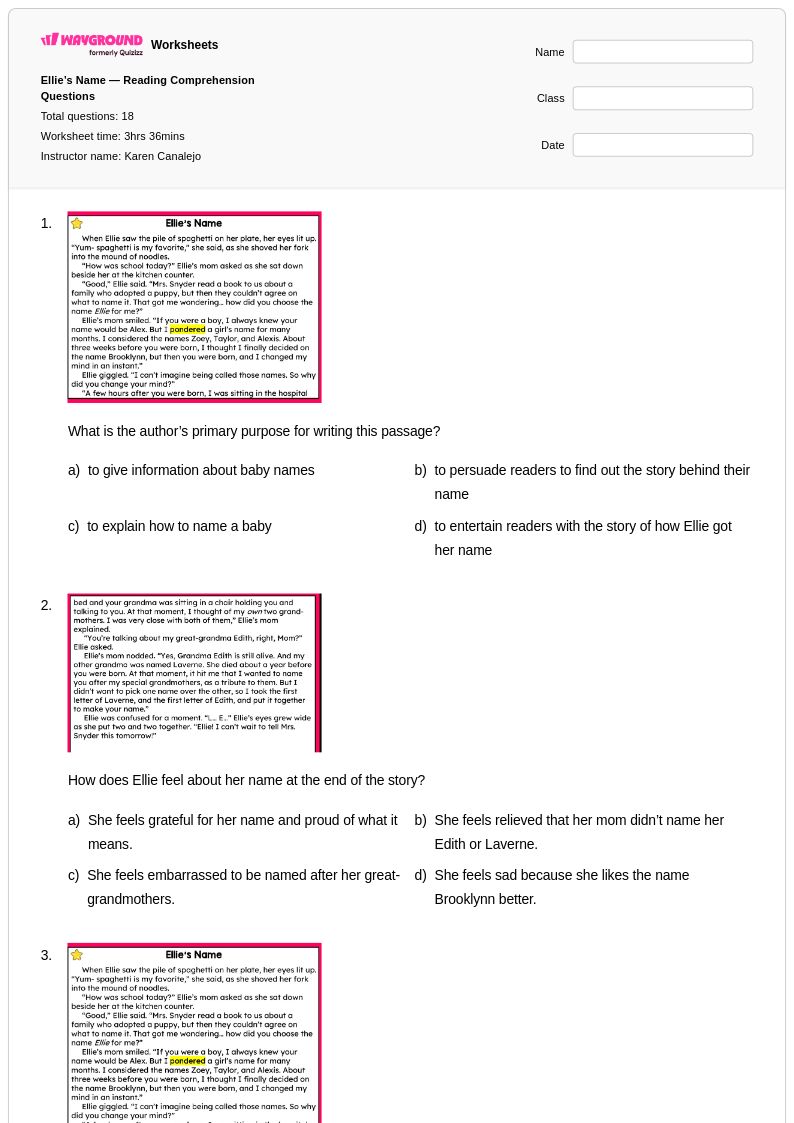
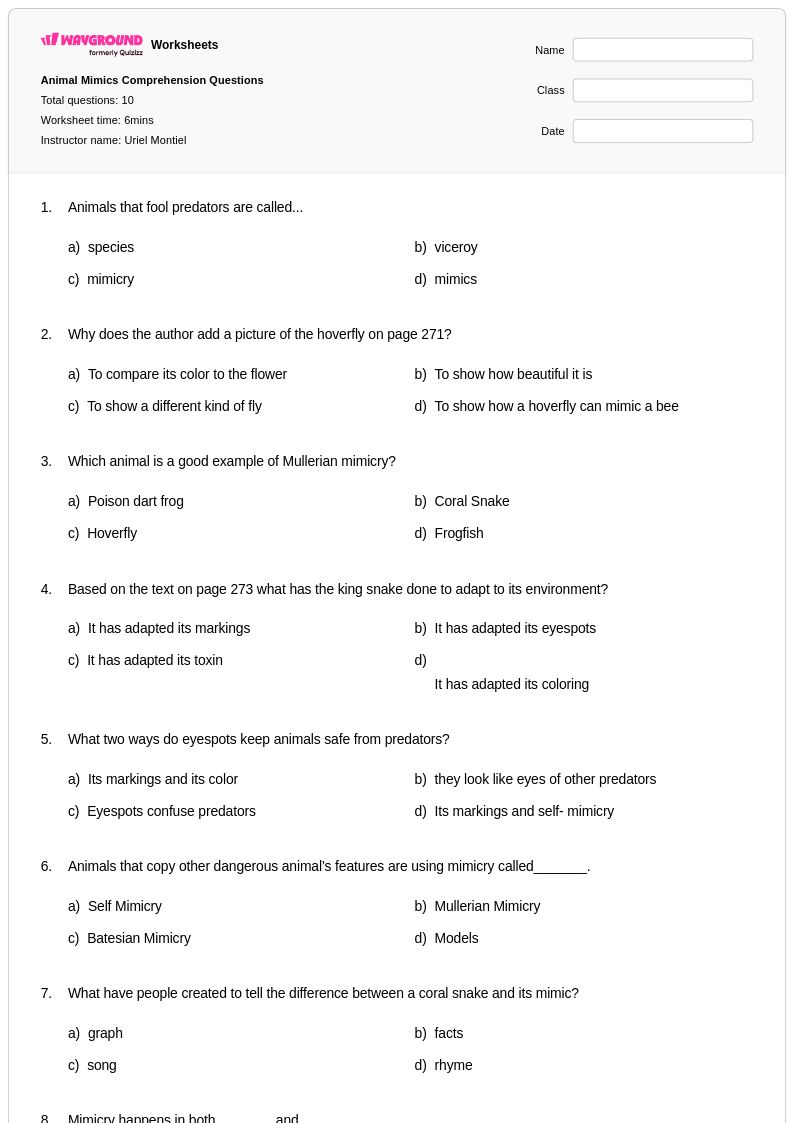
Enhance Grade 4 students' reading skills with Wayground's free comprehension questions worksheets, featuring printable PDFs and answer keys to help young learners practice analyzing texts and developing critical thinking abilities.
Explore printable Comprehension Questions worksheets for Grade 4
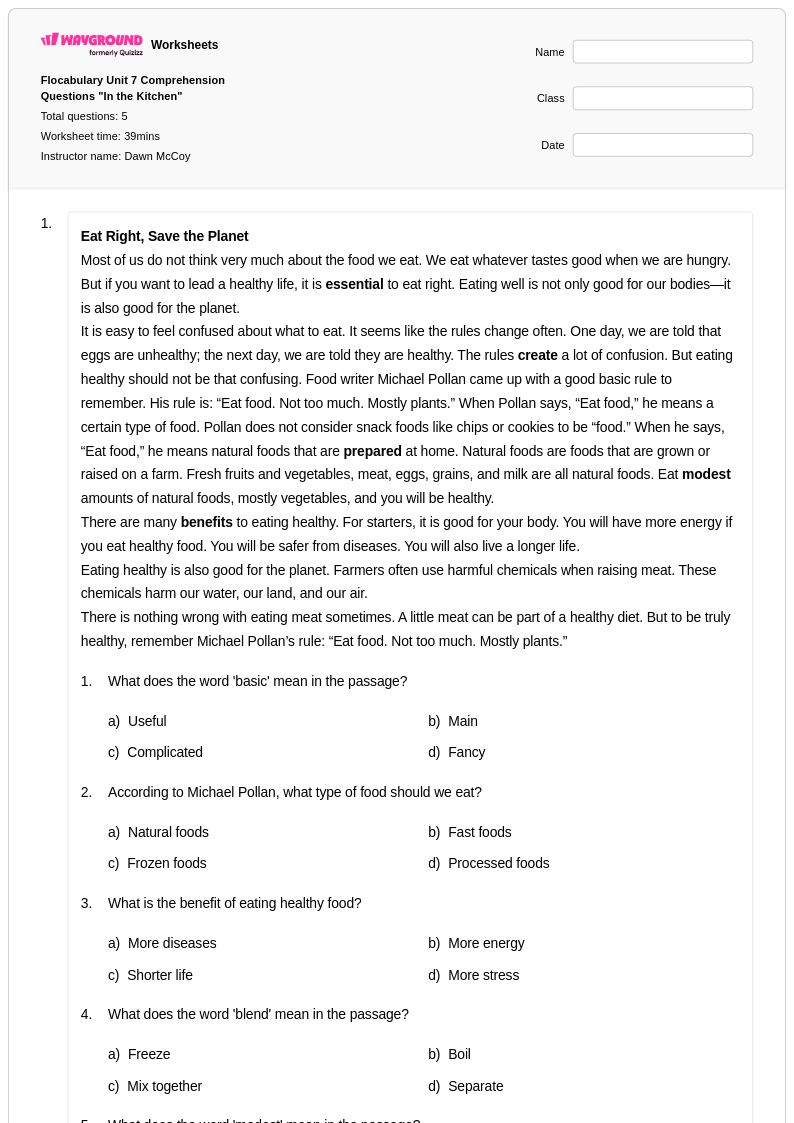
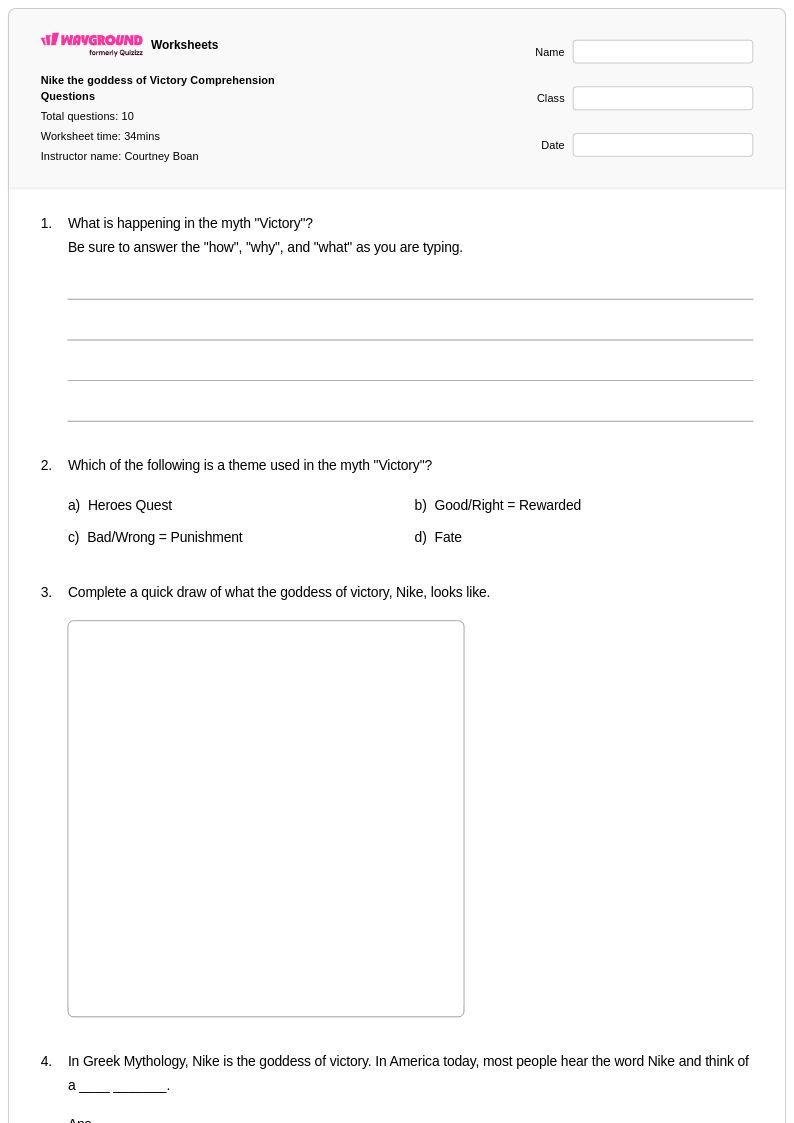
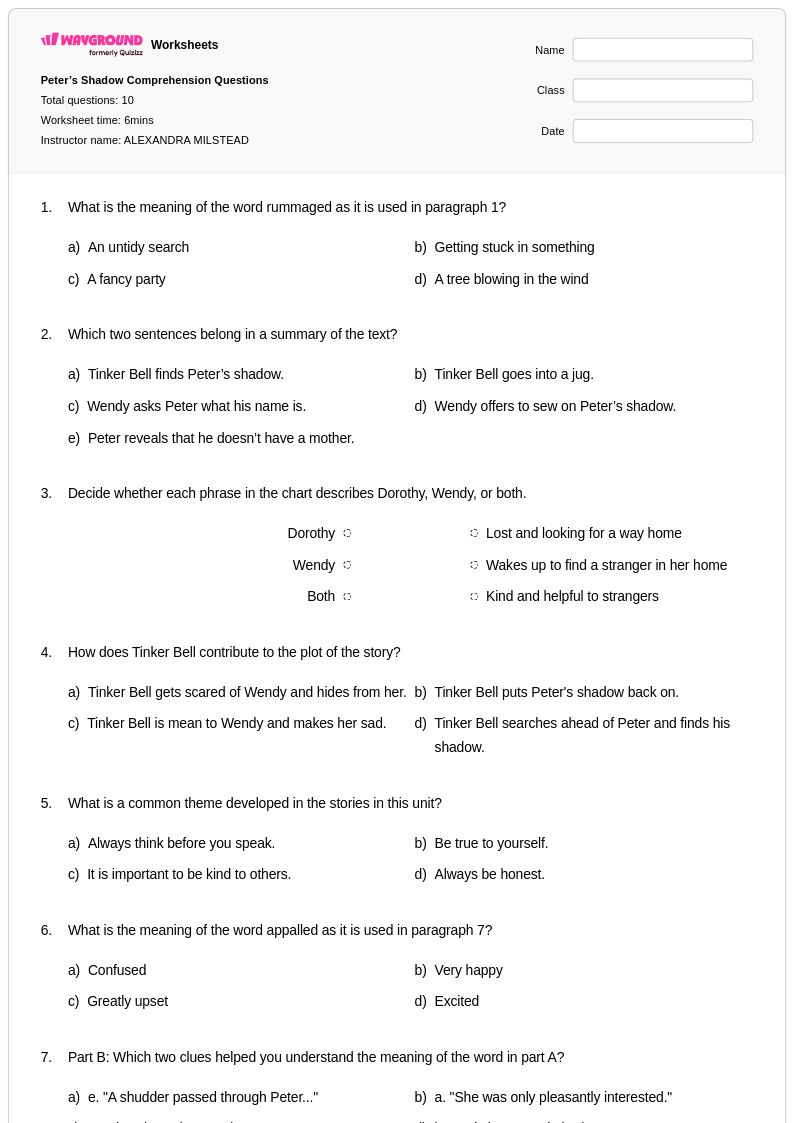
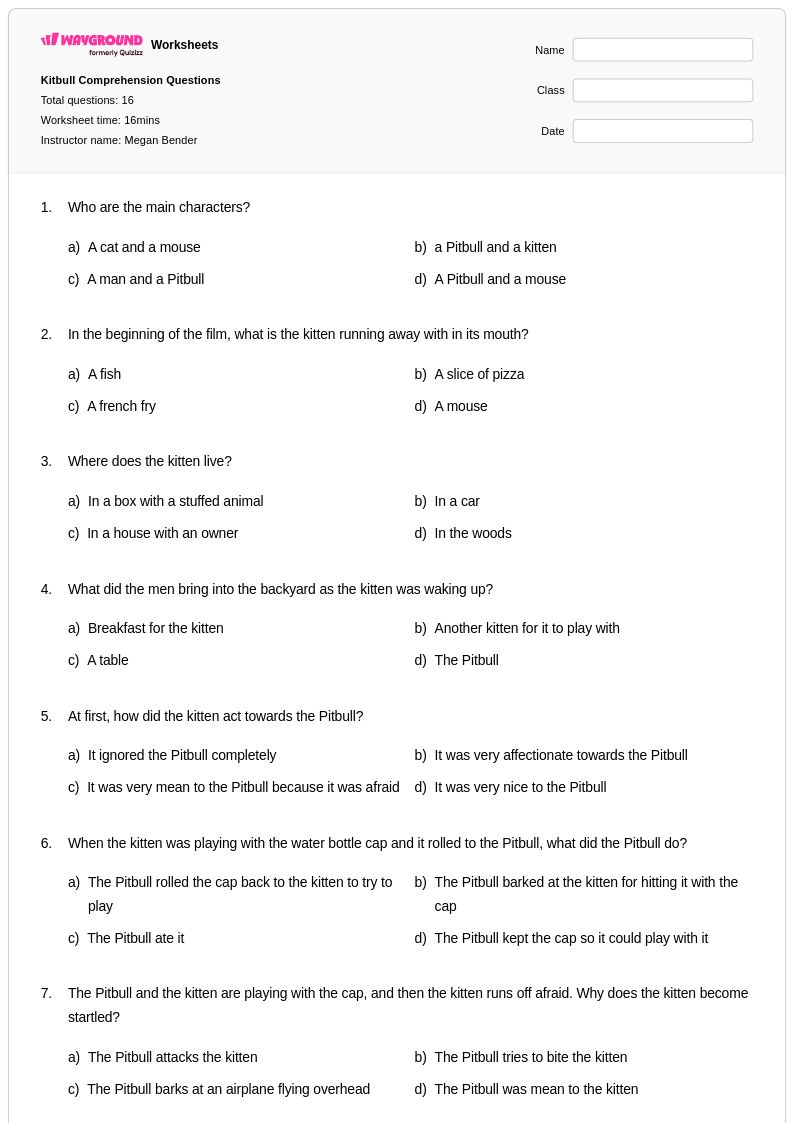
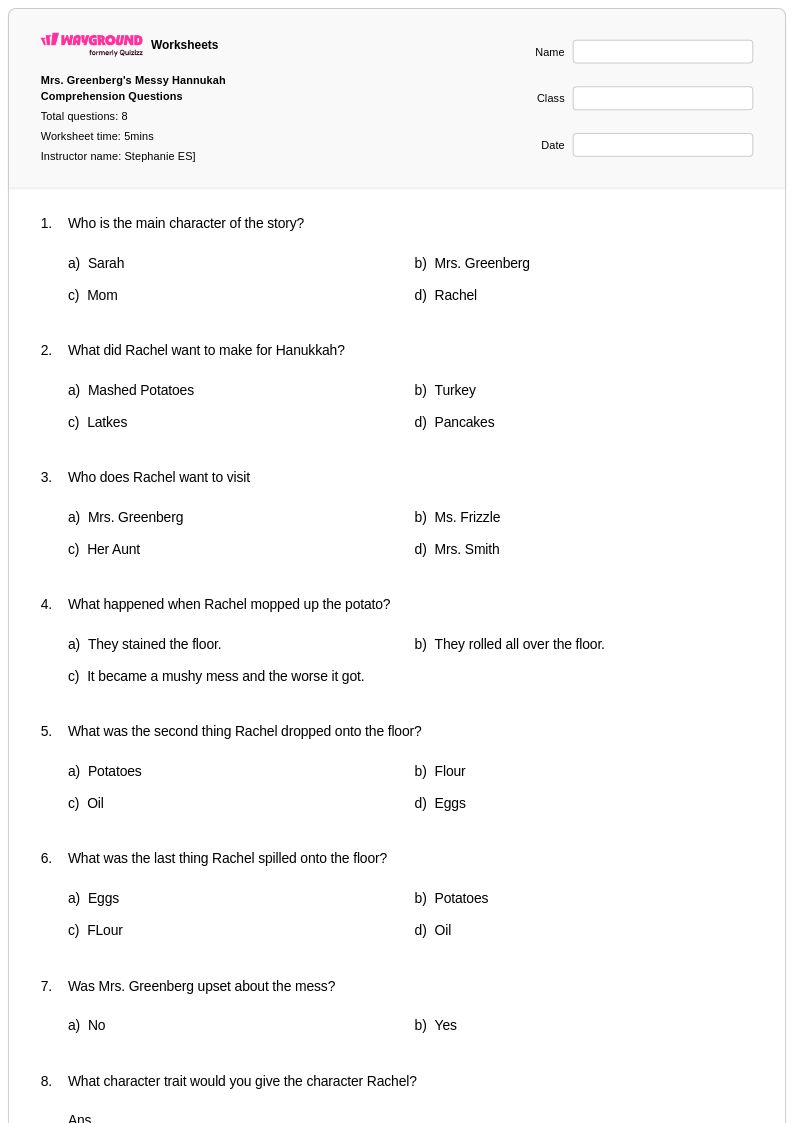
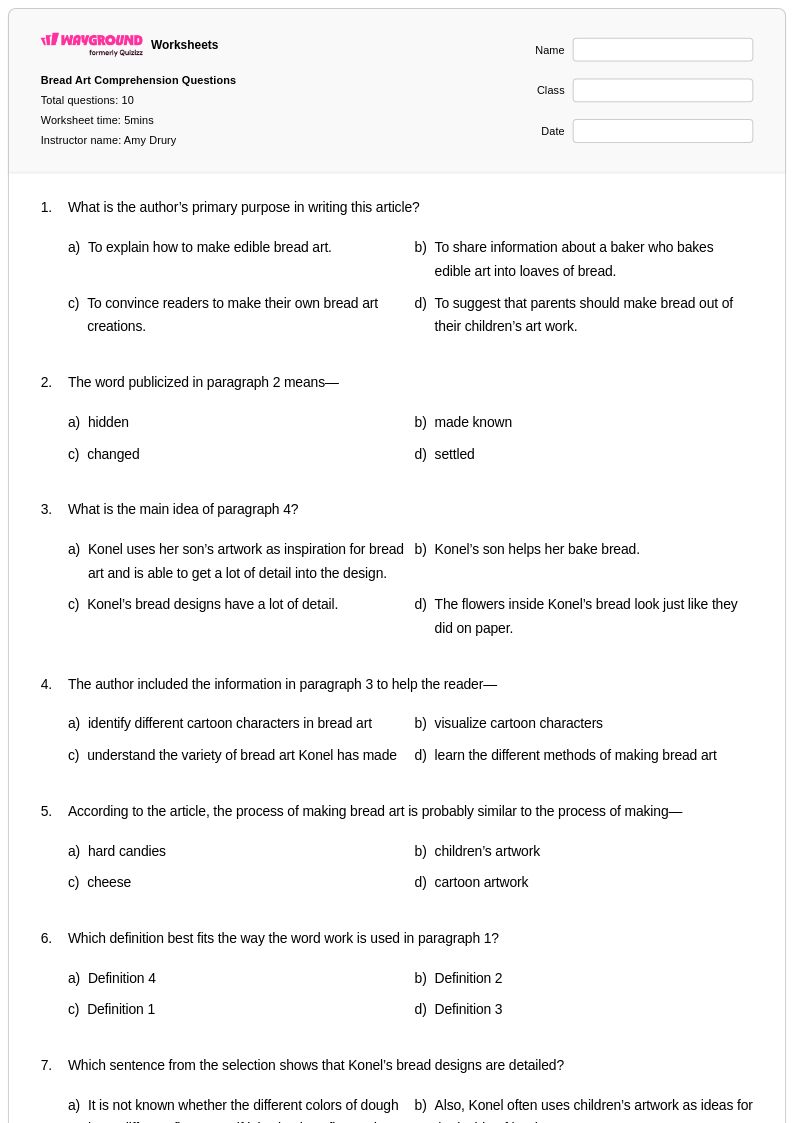
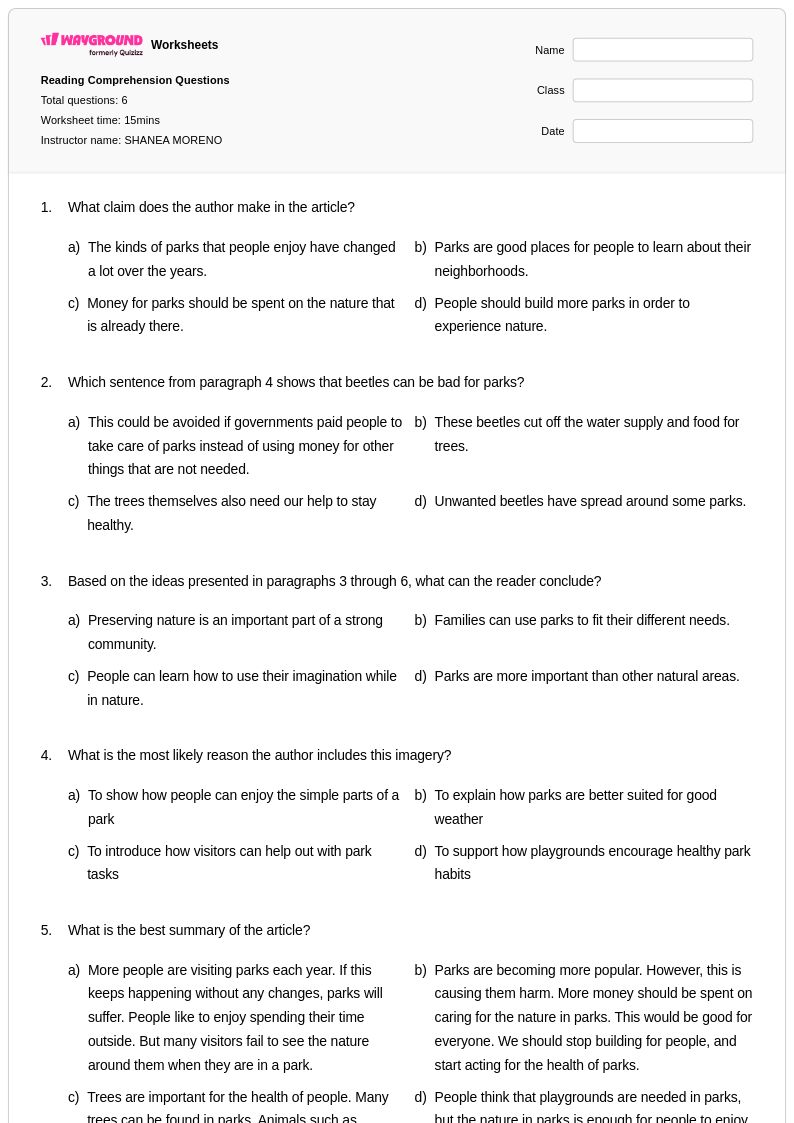
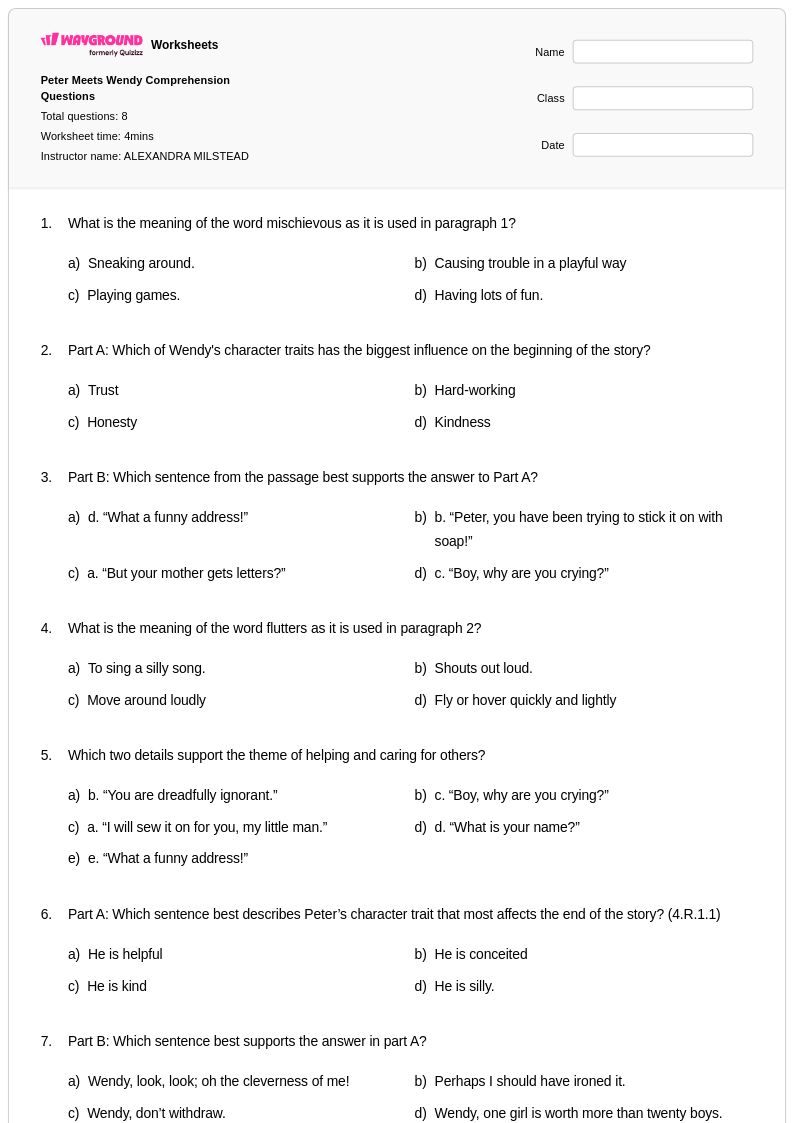
Comprehension questions for Grade 4 students available through Wayground (formerly Quizizz) provide essential practice in analyzing and understanding written texts across multiple genres and complexity levels. These carefully crafted worksheets strengthen critical thinking skills by requiring students to identify main ideas, make inferences, determine cause and effect relationships, and draw conclusions from age-appropriate passages. Each worksheet includes detailed answer keys that help educators assess student progress and identify areas needing additional support. The free printable resources feature varied question formats including multiple choice, short answer, and extended response problems that mirror standardized assessment styles while building confidence in reading analysis. These pdf worksheets serve as valuable practice problems for developing the foundational comprehension skills that Grade 4 students need to succeed in increasingly complex academic texts.
Wayground (formerly Quizizz) empowers educators with millions of teacher-created comprehension question worksheets that can be easily searched and filtered by reading level, question type, and specific comprehension skills. The platform's robust standards alignment ensures that worksheets meet state and national literacy benchmarks while providing differentiation tools that allow teachers to modify content for diverse learning needs. Teachers can customize these resources for whole-class instruction, small group remediation, or individual enrichment activities, with flexible options to use materials in both printable pdf format and interactive digital versions. This comprehensive worksheet collection streamlines lesson planning by offering ready-to-use assessments and practice opportunities that help educators identify student strengths, target skill gaps, and provide focused instruction that builds reading comprehension proficiency throughout the academic year.
FAQs
How do I teach comprehension questions effectively in the classroom?
Effective comprehension instruction moves students from surface-level recall toward deeper analytical thinking by explicitly modeling strategies such as identifying the main idea, making inferences, and analyzing character motivations. Teachers should introduce each strategy in isolation before asking students to apply multiple strategies simultaneously. Using both fiction and nonfiction texts gives students practice recognizing how text structure influences meaning, which strengthens transfer across subject areas.
What types of comprehension questions should I use with my students?
Comprehension questions generally fall into three levels: literal questions that check recall of stated information, inferential questions that require reading between the lines, and evaluative questions that ask students to form judgments or connect text to prior knowledge. A balanced worksheet should include all three levels so teachers can assess where each student's understanding breaks down. Nonfiction texts benefit from additional questions targeting text features and structure, while fiction texts lend themselves to character motivation and theme-based questions.
What exercises help students practice answering comprehension questions?
Structured worksheet practice is one of the most effective ways to build comprehension skills because it gives students repeated, low-stakes exposure to targeted question types. Activities such as close reading passages followed by tiered questions, annotating texts before answering, and returning to the passage to cite evidence all reinforce the habit of reading purposefully. Regular practice with both fiction and nonfiction passages ensures students build flexible comprehension strategies rather than text-type-specific habits.
What mistakes do students commonly make when answering comprehension questions?
The most common error is answering from memory or prior knowledge rather than returning to the text, which leads students to confuse their assumptions with what the author actually states. Students also struggle to distinguish between literal and inferential questions, often treating inference questions as if a direct answer must be stated somewhere in the passage. A third frequent mistake is incomplete answers to 'why' or 'how' questions, where students identify a fact but fail to explain its significance or connection to the question prompt.
How do I differentiate comprehension question worksheets for students at different reading levels?
Differentiation for comprehension practice can include adjusting text complexity, reducing the number of questions, or scaffolding with sentence starters for written responses. On Wayground, teachers can apply student-level accommodations such as Read Aloud, which delivers audio reading of questions for students who need decoding support, and reduced answer choices, which lowers cognitive load for struggling readers. These settings can be assigned to individual students while the rest of the class receives standard settings, making differentiation seamless without singling out any student.
How do I use Wayground's comprehension question worksheets in my classroom?
Wayground's comprehension question worksheets are available as printable PDFs for traditional classroom use and in digital formats for technology-integrated environments, including the option to host them as an interactive quiz directly on Wayground. Teachers can filter resources by subtopic, such as fiction or nonfiction comprehension, to find materials aligned with current curriculum objectives. Each worksheet includes an answer key, which reduces grading time and makes the resources practical for both independent practice and formative assessment.