Free Printable Absolute and Relative Location Worksheets for Grade 1
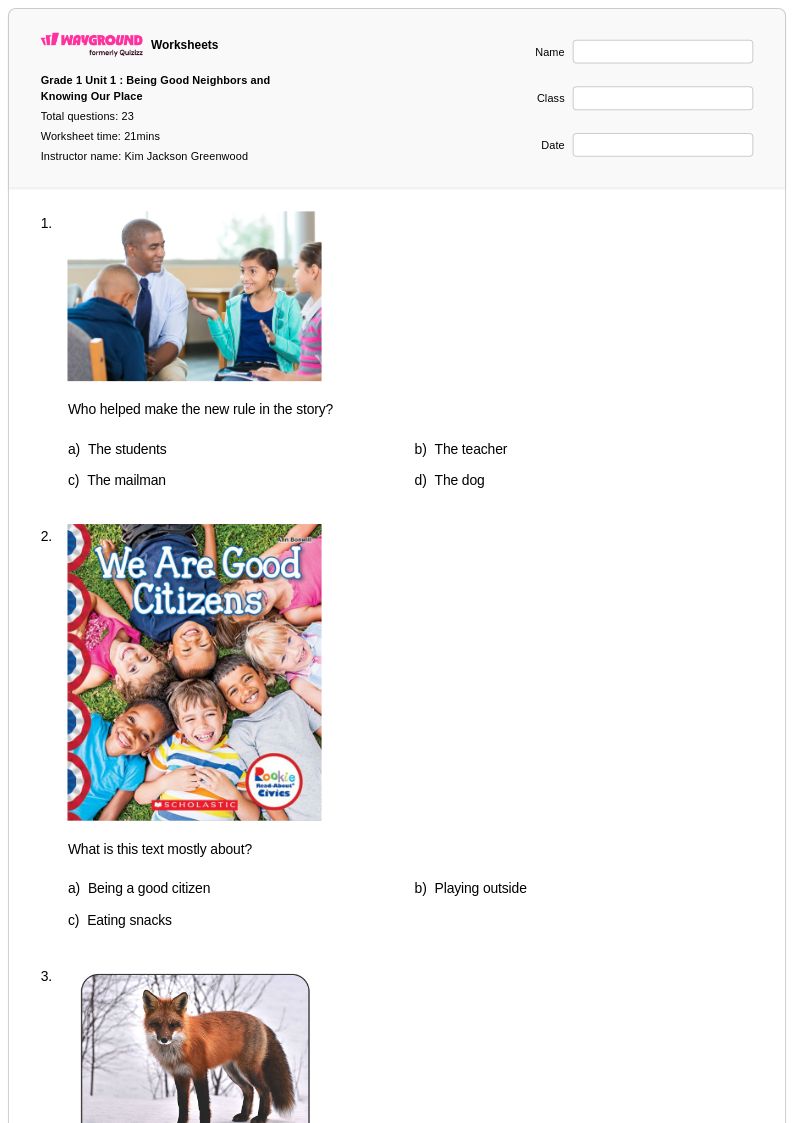
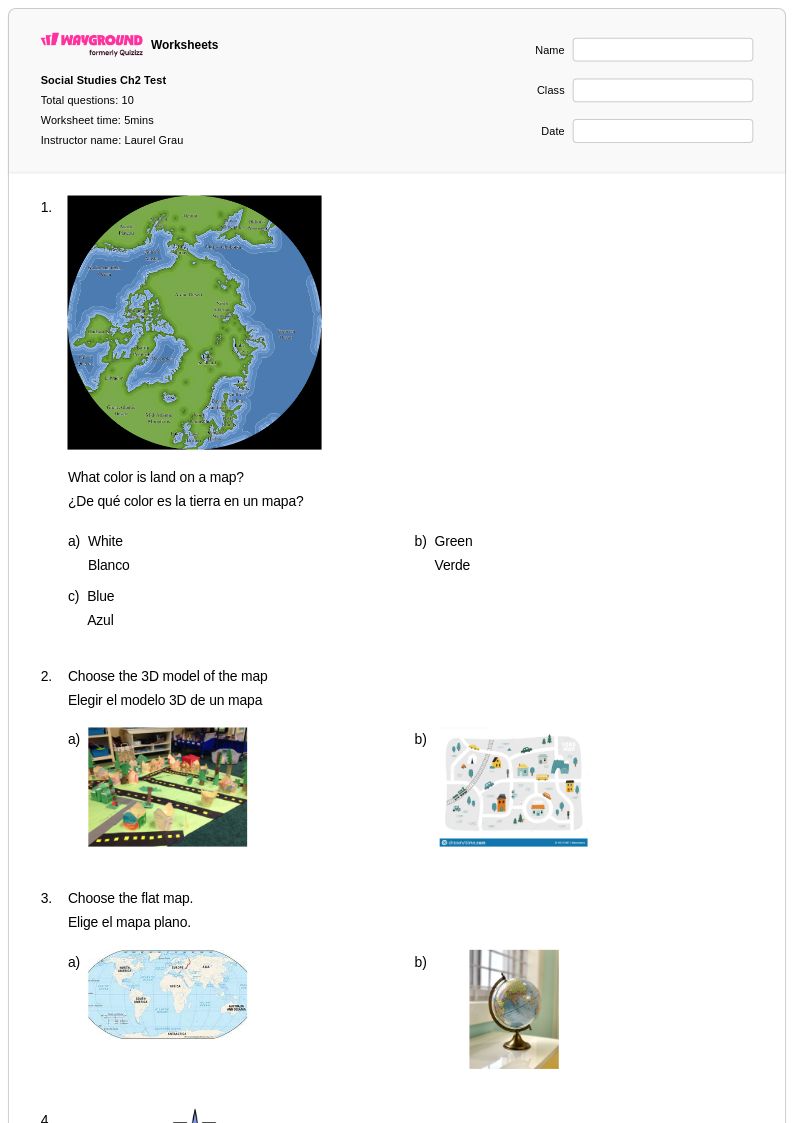
Grade 1 absolute and relative location worksheets help young learners explore geographic positioning through engaging printables, practice problems, and free PDF activities with comprehensive answer keys for effective social studies instruction.
Explore printable Absolute and Relative Location worksheets for Grade 1
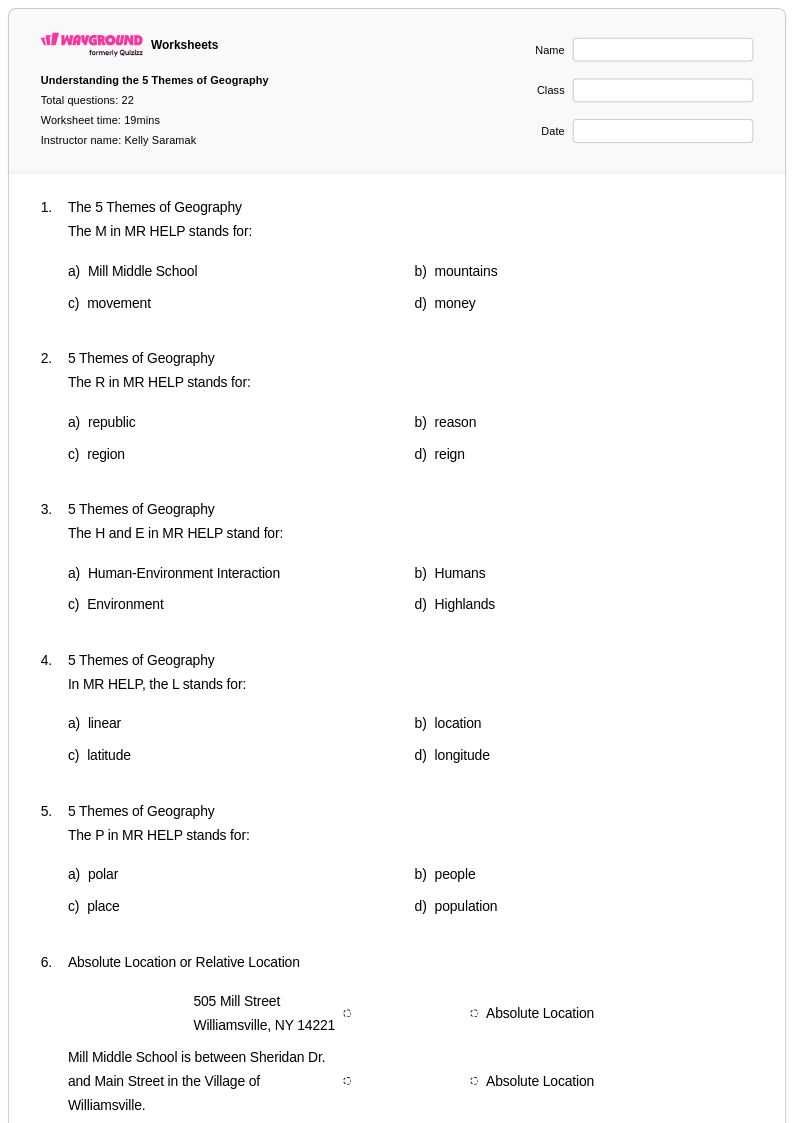
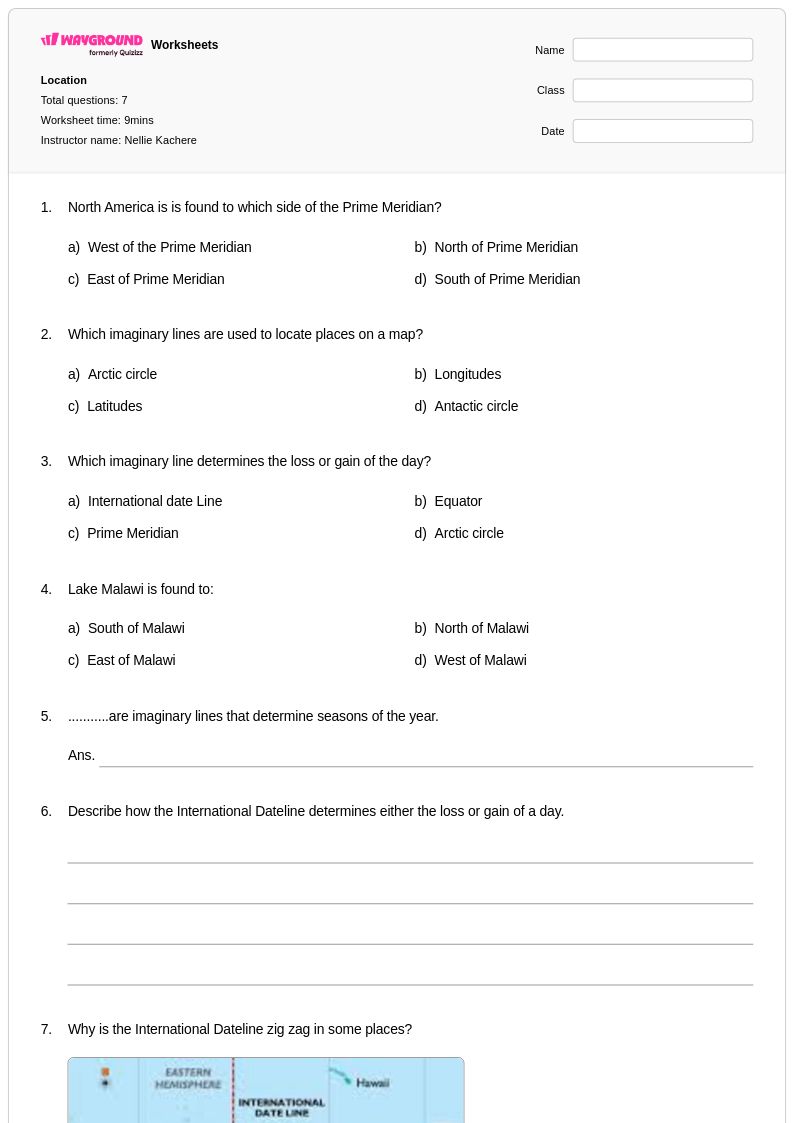
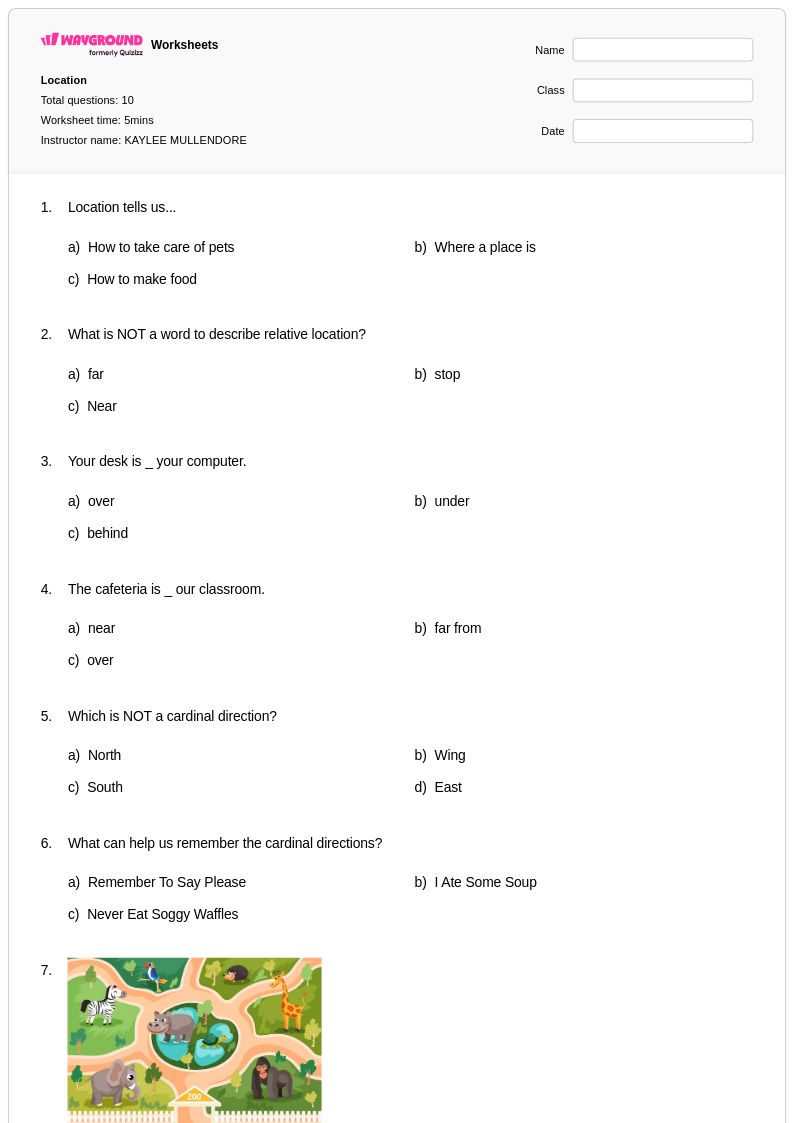
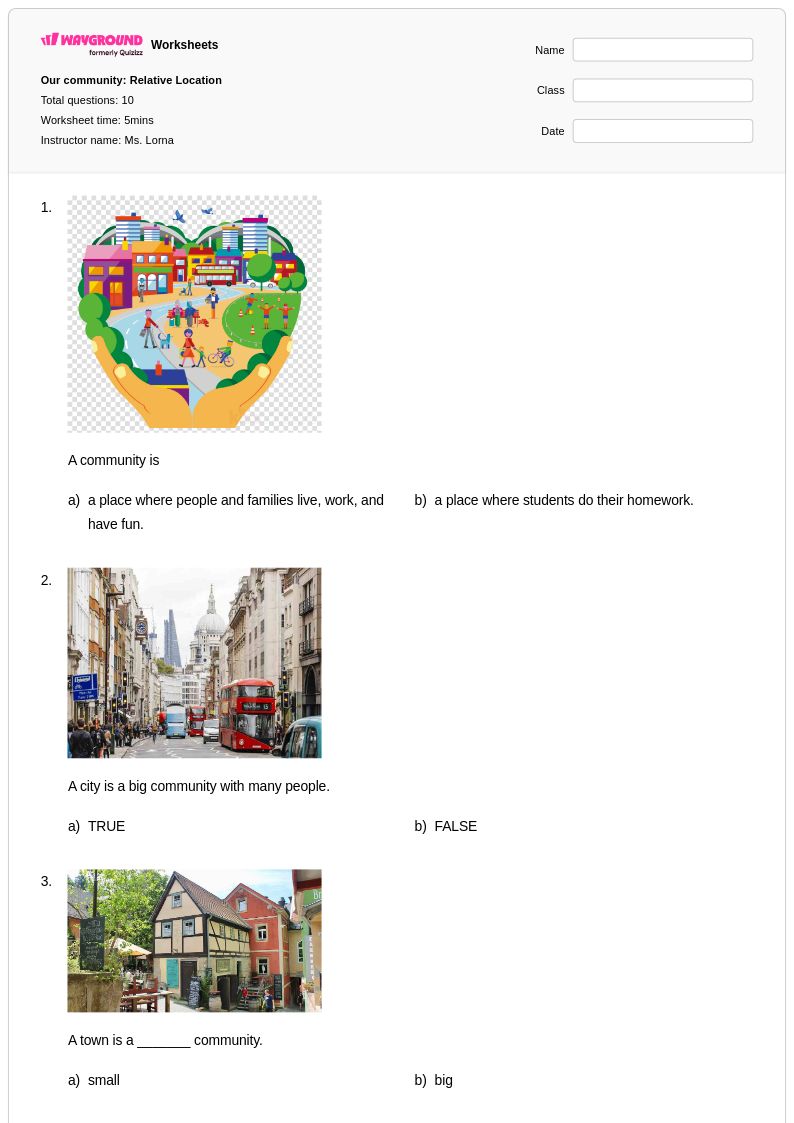
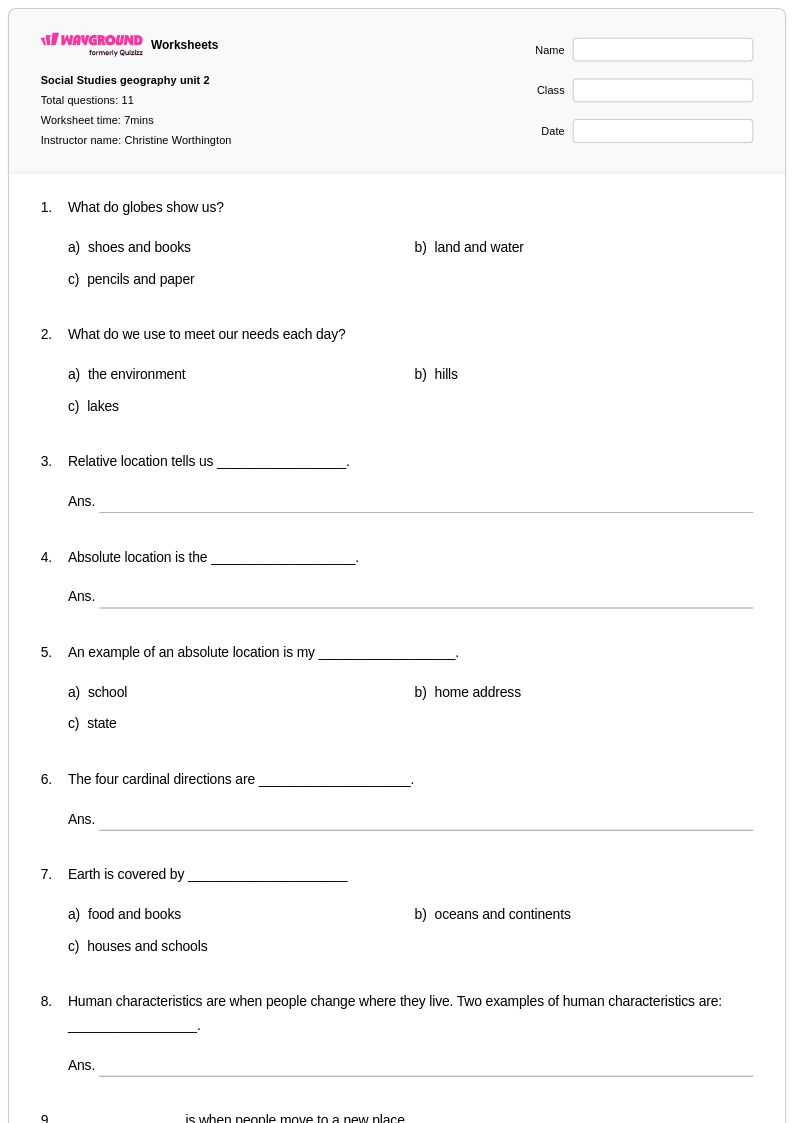
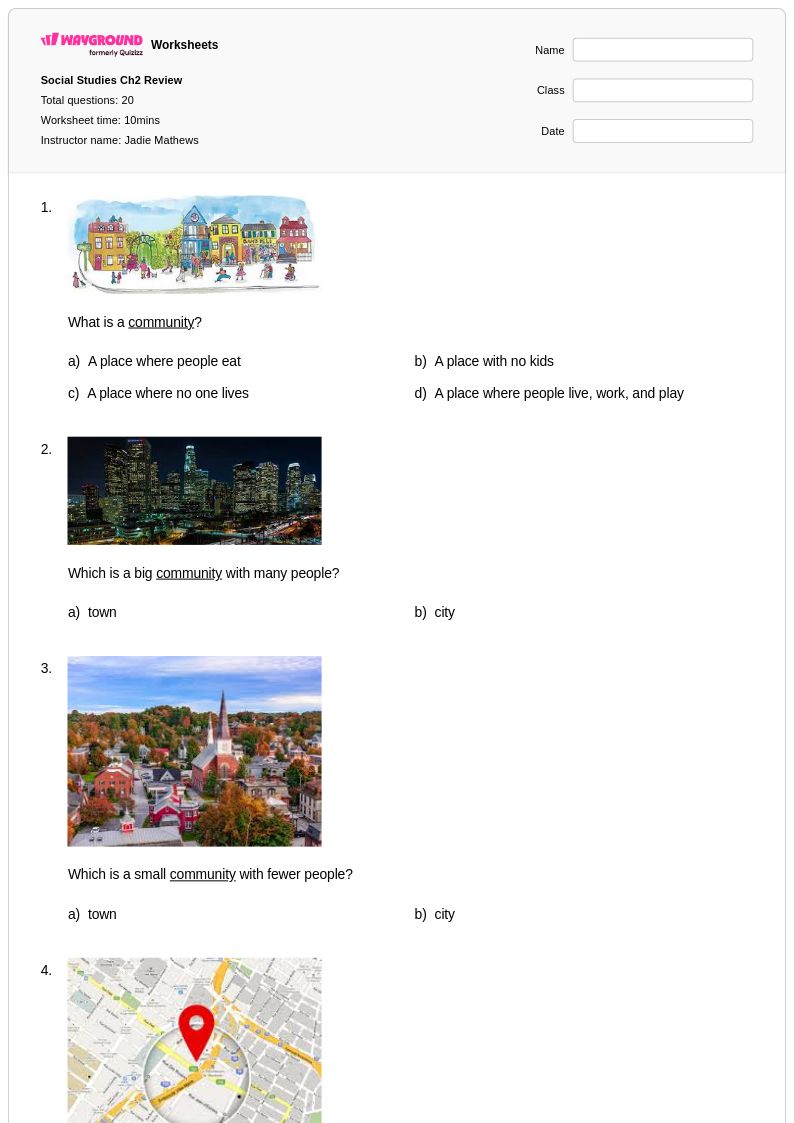
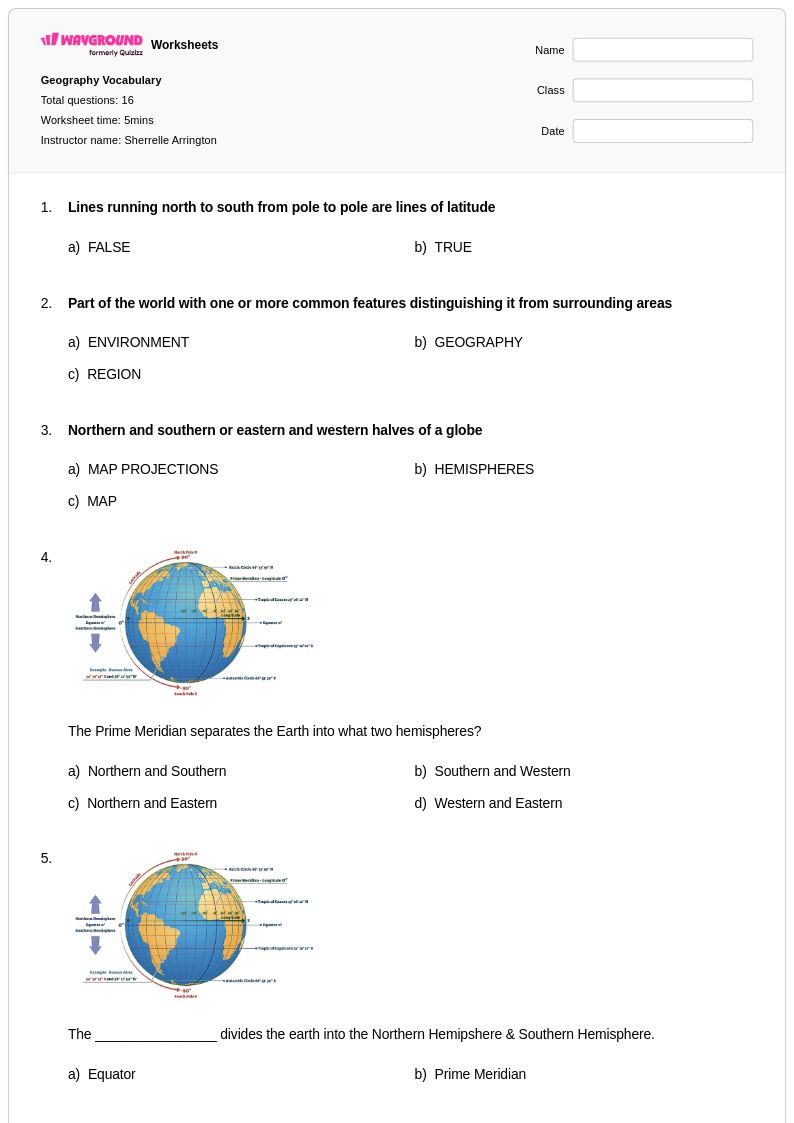
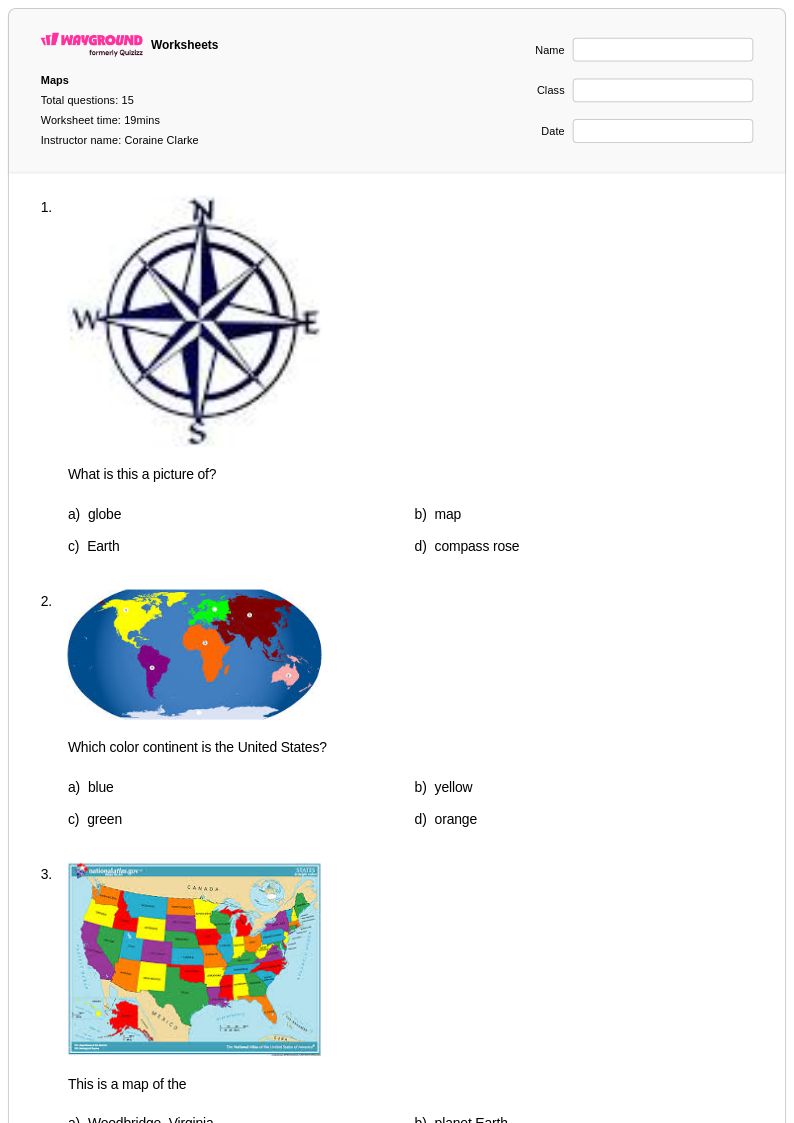
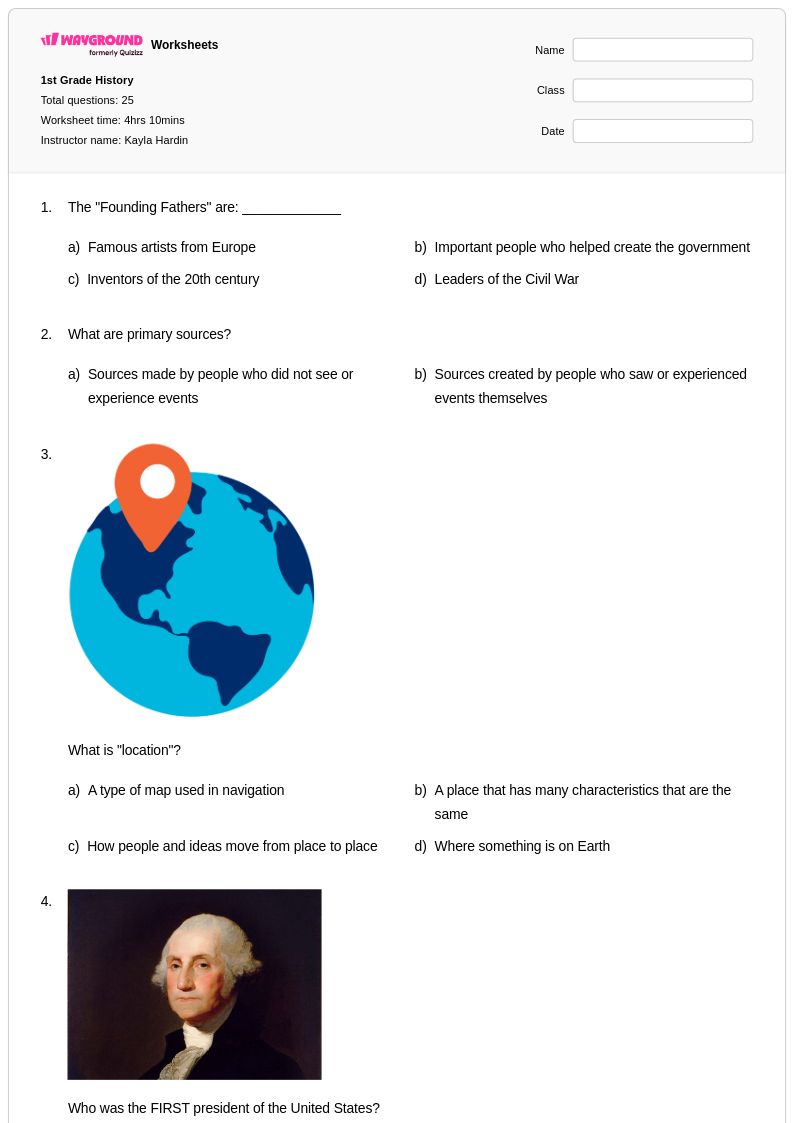
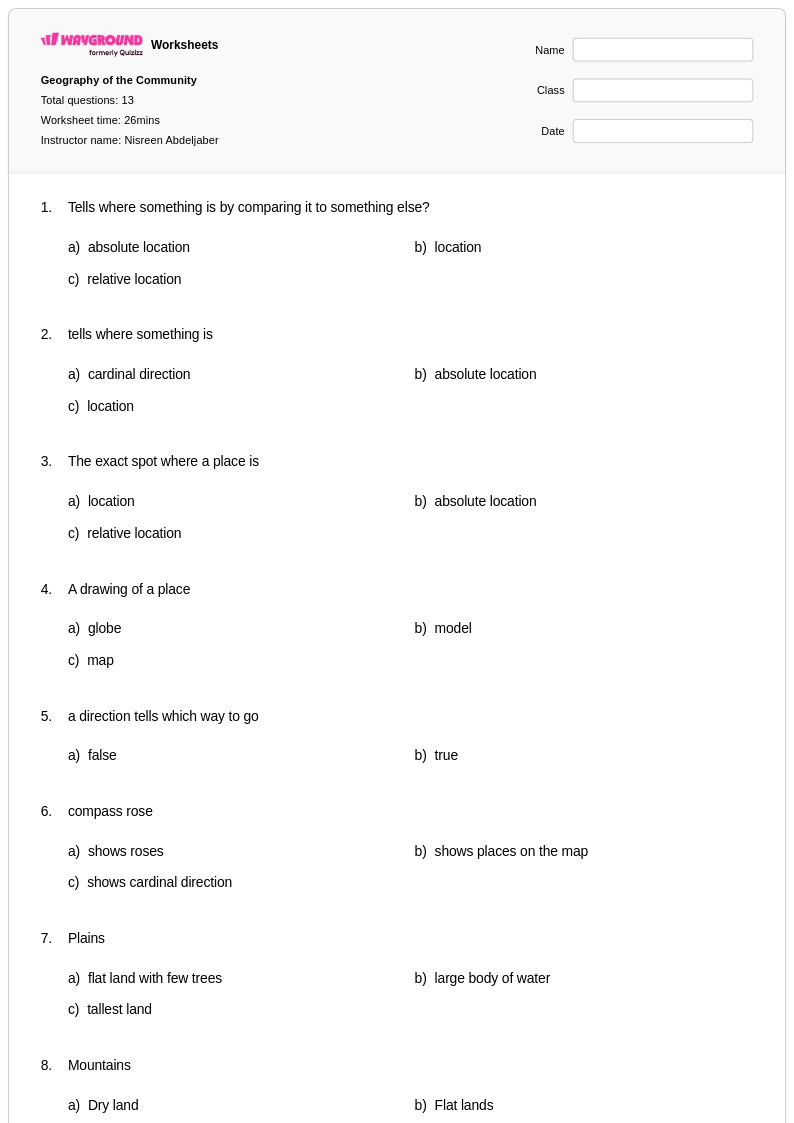
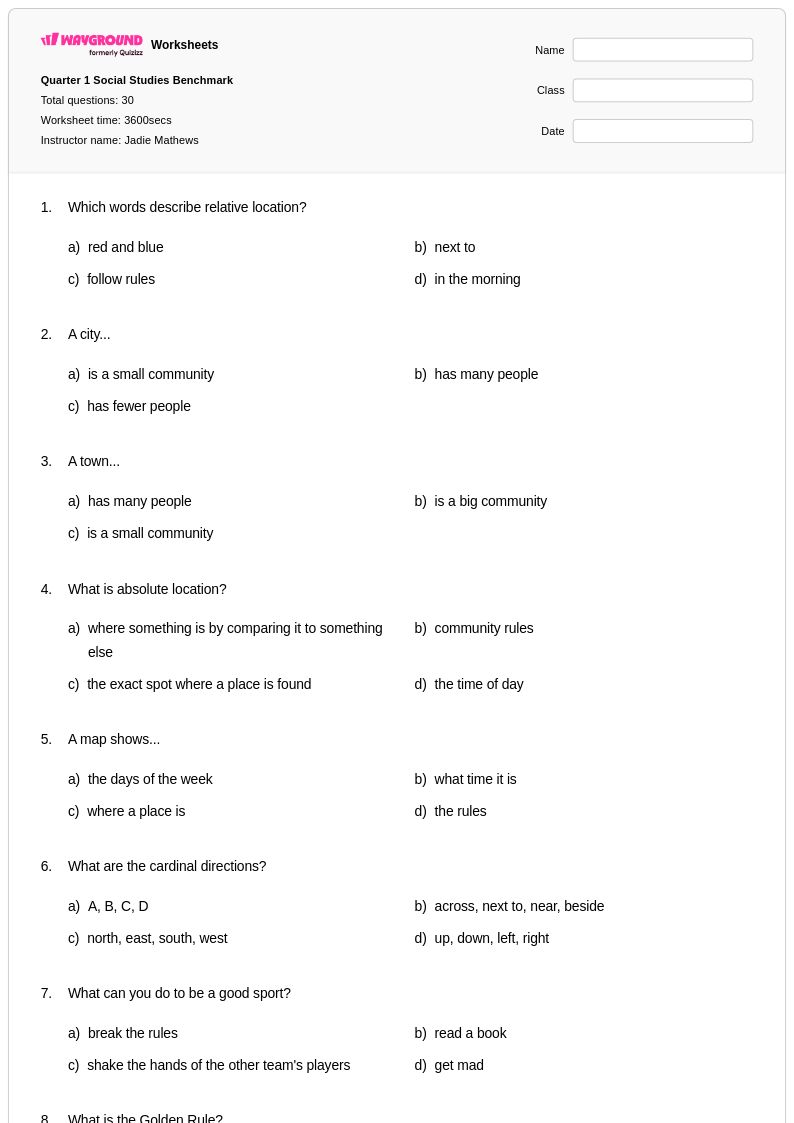
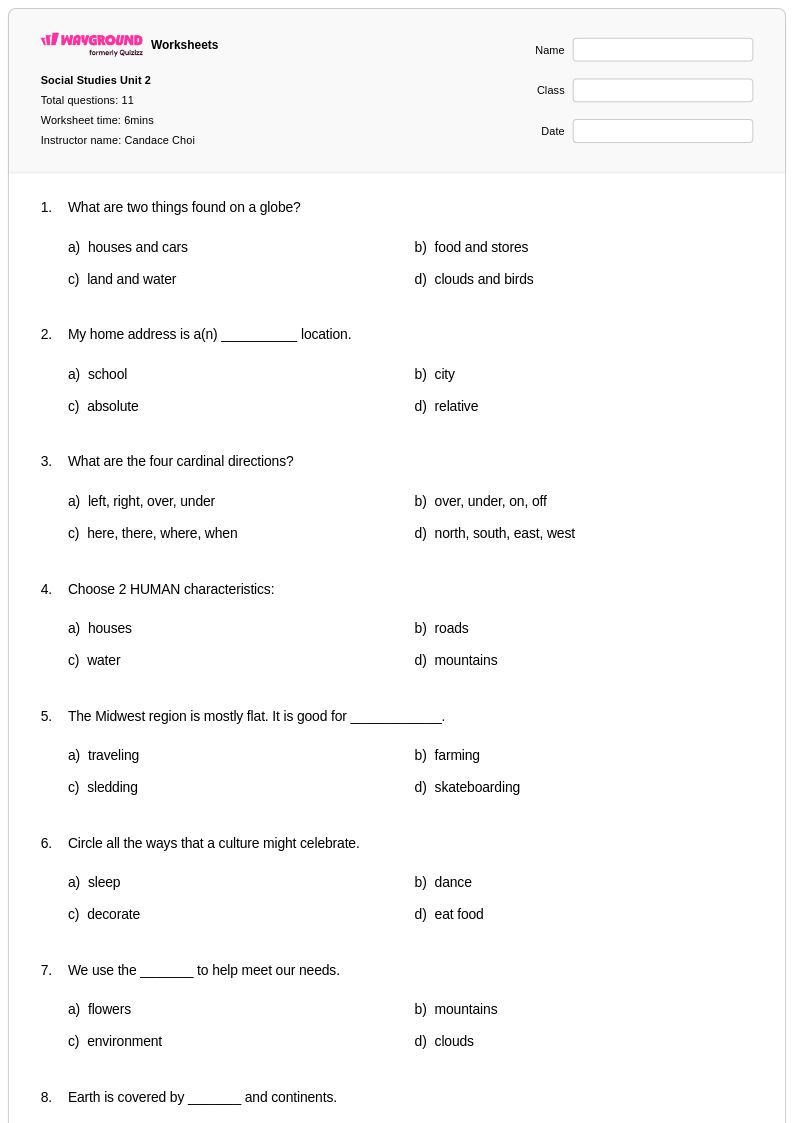
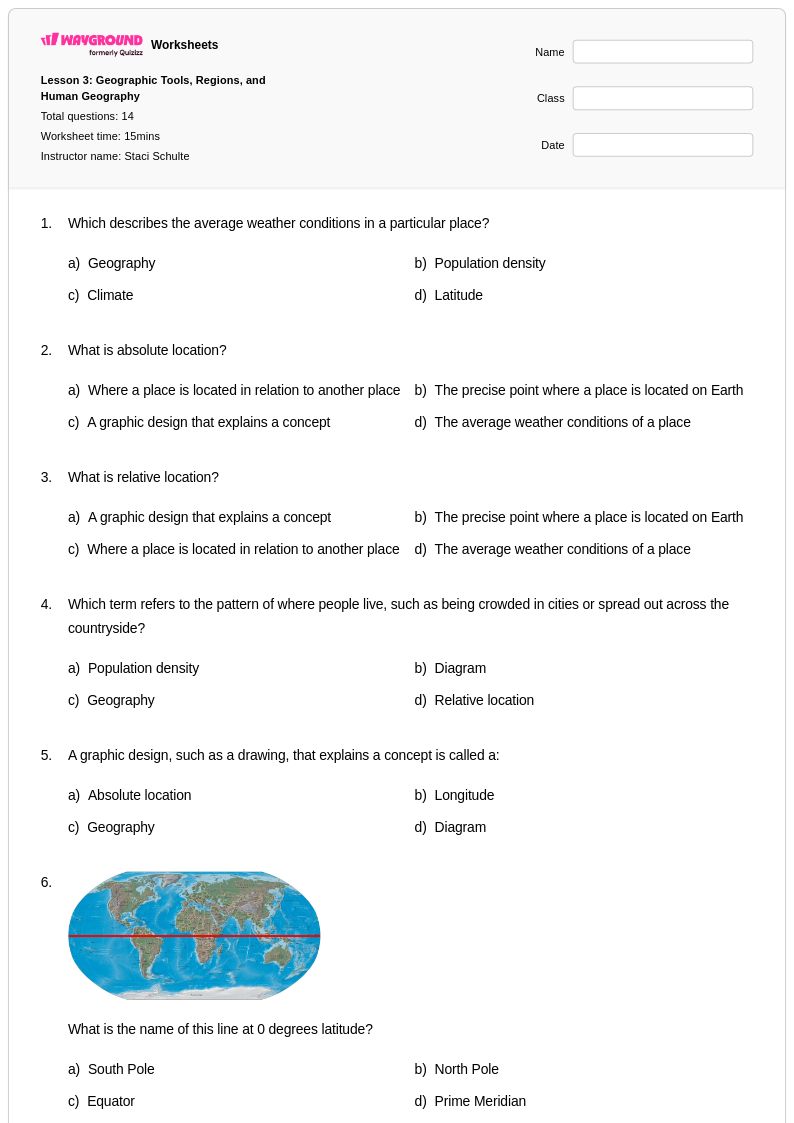
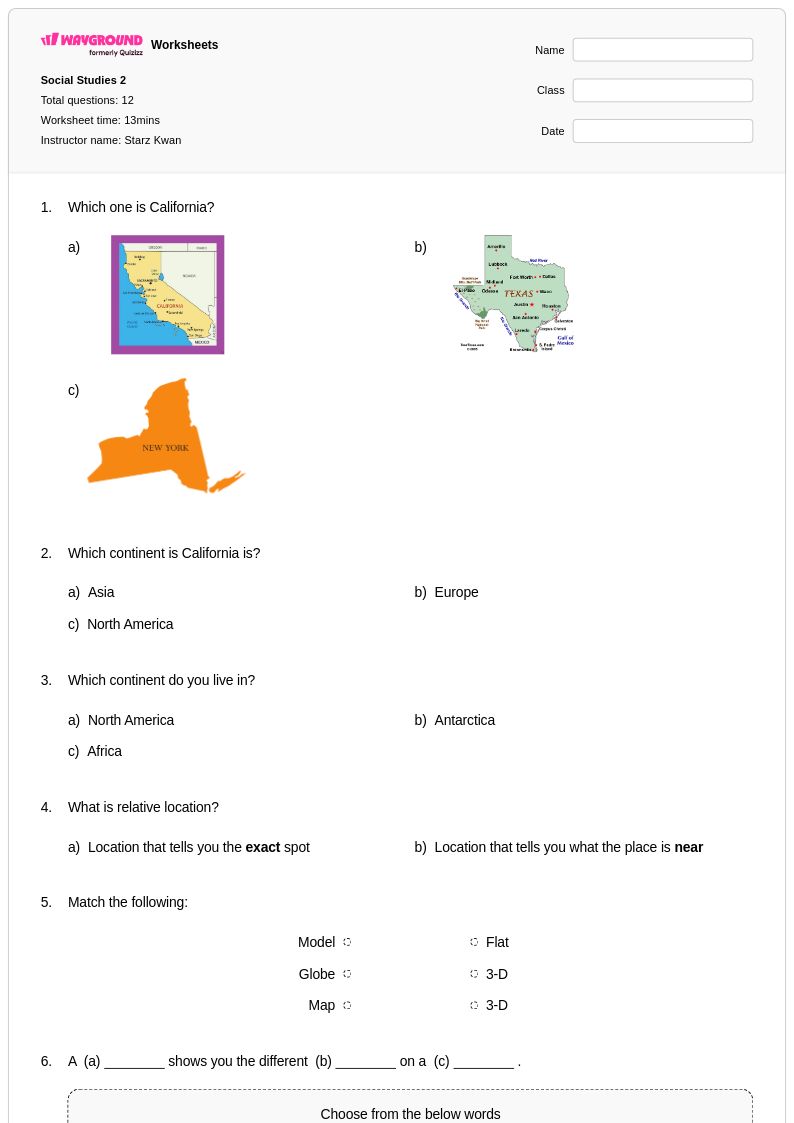
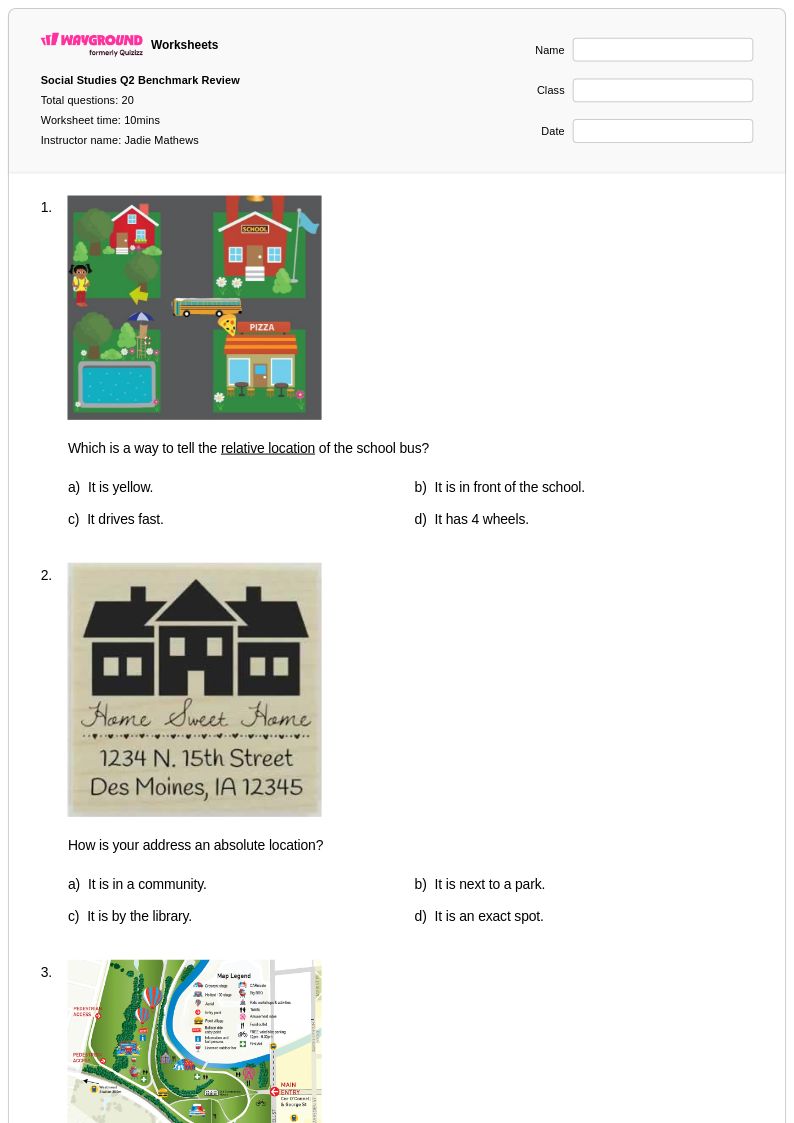
Absolute and relative location worksheets for Grade 1 students available through Wayground provide young learners with foundational geographic skills essential for spatial understanding and map literacy. These carefully designed practice problems introduce first graders to the fundamental concepts of where places are situated, helping them distinguish between absolute location using addresses and coordinates, and relative location using directional words and proximity to landmarks. The comprehensive worksheet collection includes engaging activities that strengthen students' ability to describe locations using terms like "next to," "near," "far from," and "between," while also introducing basic absolute location concepts through simple addresses and map references. Each printable resource comes with detailed answer keys and is available as free PDF downloads, making it easy for educators to provide consistent practice opportunities that build spatial reasoning skills.
Wayground's extensive library draws from millions of teacher-created resources specifically focused on absolute and relative location concepts for Grade 1 geography instruction. The platform's robust search and filtering capabilities allow educators to quickly locate worksheets that align with specific curriculum standards and match their students' developmental needs. Teachers benefit from built-in differentiation tools that enable customization of difficulty levels, ensuring that both struggling learners and advanced students receive appropriate challenges in understanding location concepts. The flexible format options include both printable PDFs for traditional classroom use and digital versions for interactive learning experiences, supporting diverse teaching approaches for skill practice, remediation sessions, and enrichment activities that reinforce essential geographic literacy foundations.
FAQs
How do I teach absolute and relative location to students?
Start by anchoring absolute location to concrete examples students already know, such as their home address or a city's GPS coordinates, before introducing latitude and longitude as a global grid system. Then introduce relative location by having students describe familiar places using directional and descriptive language, like 'north of the school' or 'two blocks from the park.' Pairing both concepts side by side helps students see them as complementary tools for geographic positioning rather than separate ideas.
What exercises help students practice absolute and relative location?
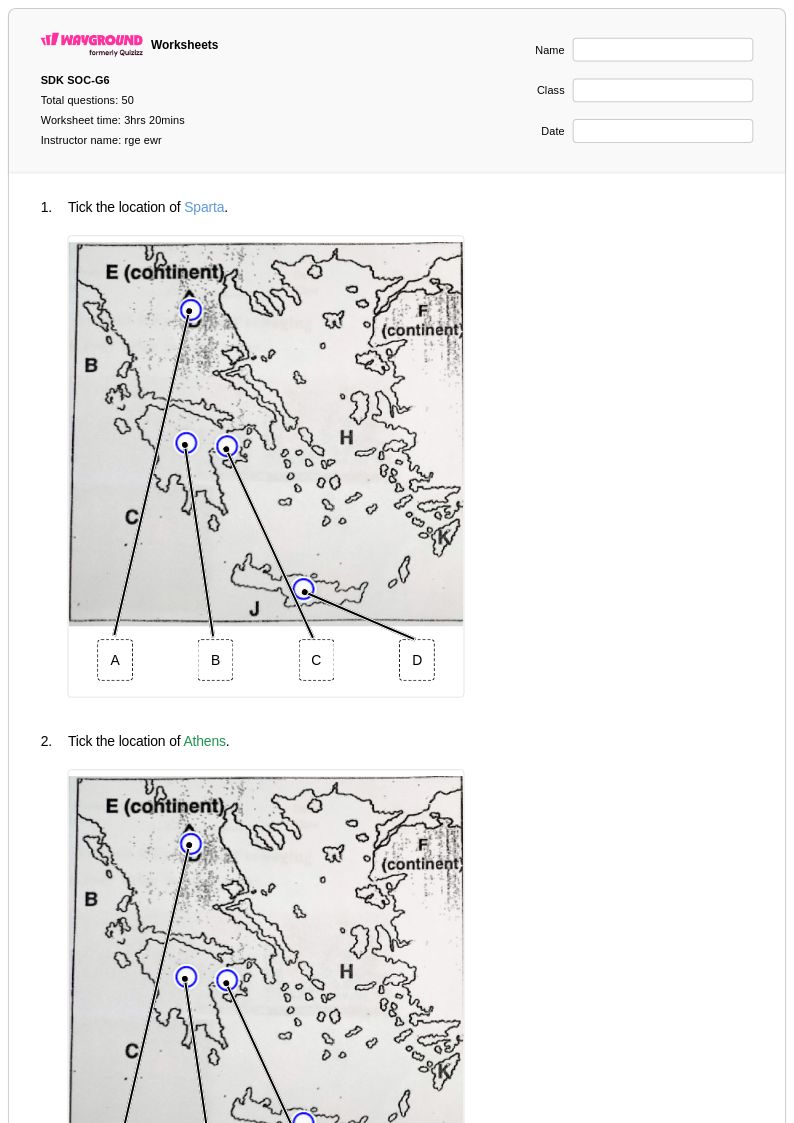
Effective practice exercises include identifying locations on a coordinate grid, reading maps with latitude and longitude references, and writing descriptions of places using relative positioning vocabulary. Tasks that ask students to switch between both formats, such as converting a set of coordinates into a relative description, build flexibility and deepen conceptual understanding. Varied problem types ensure students can apply both skills across different geographic contexts.
What mistakes do students commonly make with absolute and relative location?
The most common error is conflating the two concepts, with students assuming that any address or label counts as an absolute location, when absolute location requires precise coordinates like latitude and longitude. Students also frequently reverse latitude and longitude when plotting points, or use vague language in relative descriptions that lacks a clear reference point. Explicitly modeling how to identify the reference point in a relative location statement helps address this second pattern.
How can I differentiate absolute and relative location instruction for different learners?
For students who need additional support, reduce the complexity of the coordinate grid or provide a word bank of relative location vocabulary to scaffold their responses. On Wayground, teachers can apply accommodations such as read aloud for students who struggle with text-heavy map questions, reduced answer choices to lower cognitive load, and extended time for students who need more processing time. These settings can be assigned to individual students without alerting the rest of the class, and they carry over to future sessions automatically.
How do I use Wayground's absolute and relative location worksheets in my classroom?
Wayground's absolute and relative location worksheets are available as printable PDFs for traditional classroom use and in digital formats for technology-integrated learning environments. Teachers can also host the worksheets as a live quiz on Wayground, making them suitable for whole-class review, independent practice, or formative assessment. The included answer keys allow for efficient grading and make it straightforward to identify which students need additional support with coordinates versus relative description tasks.