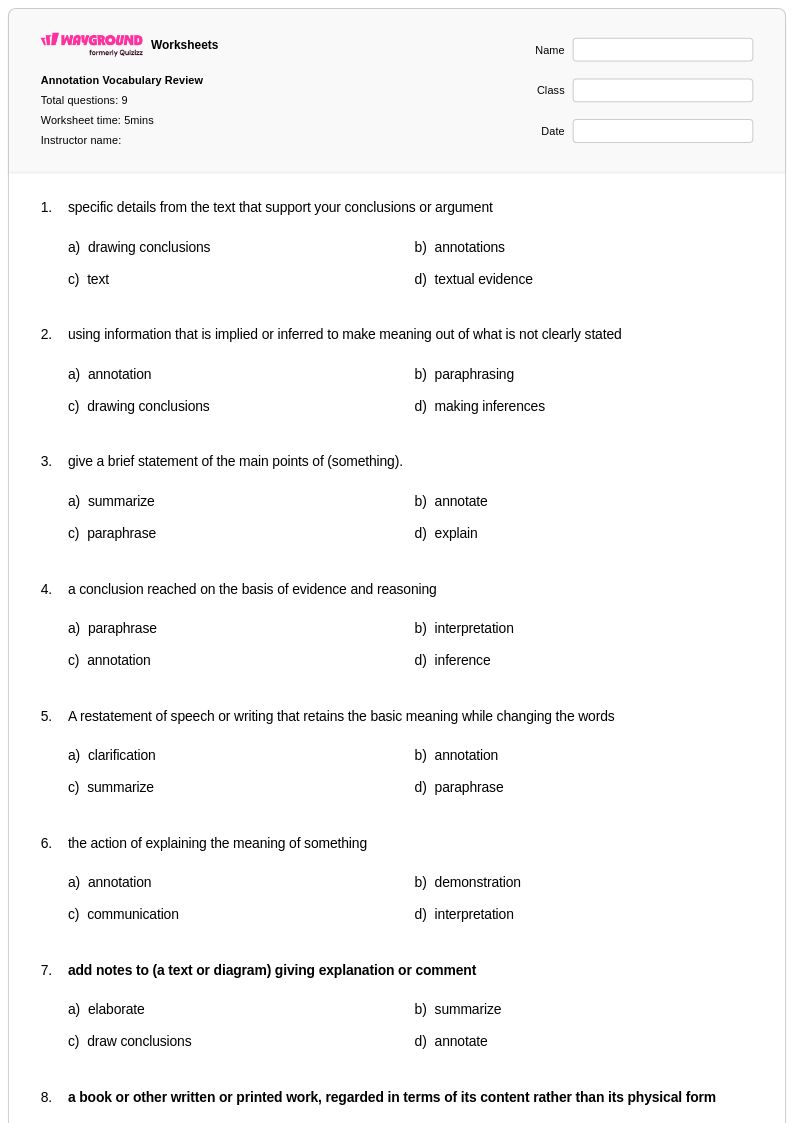
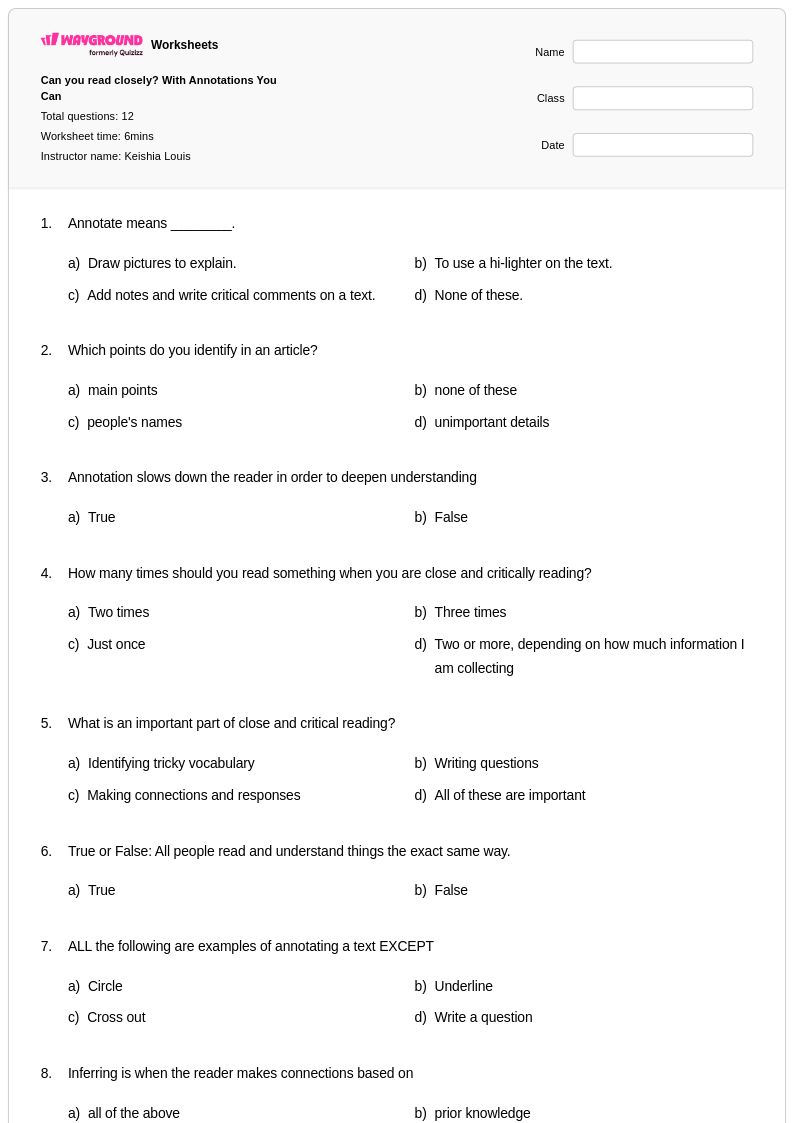
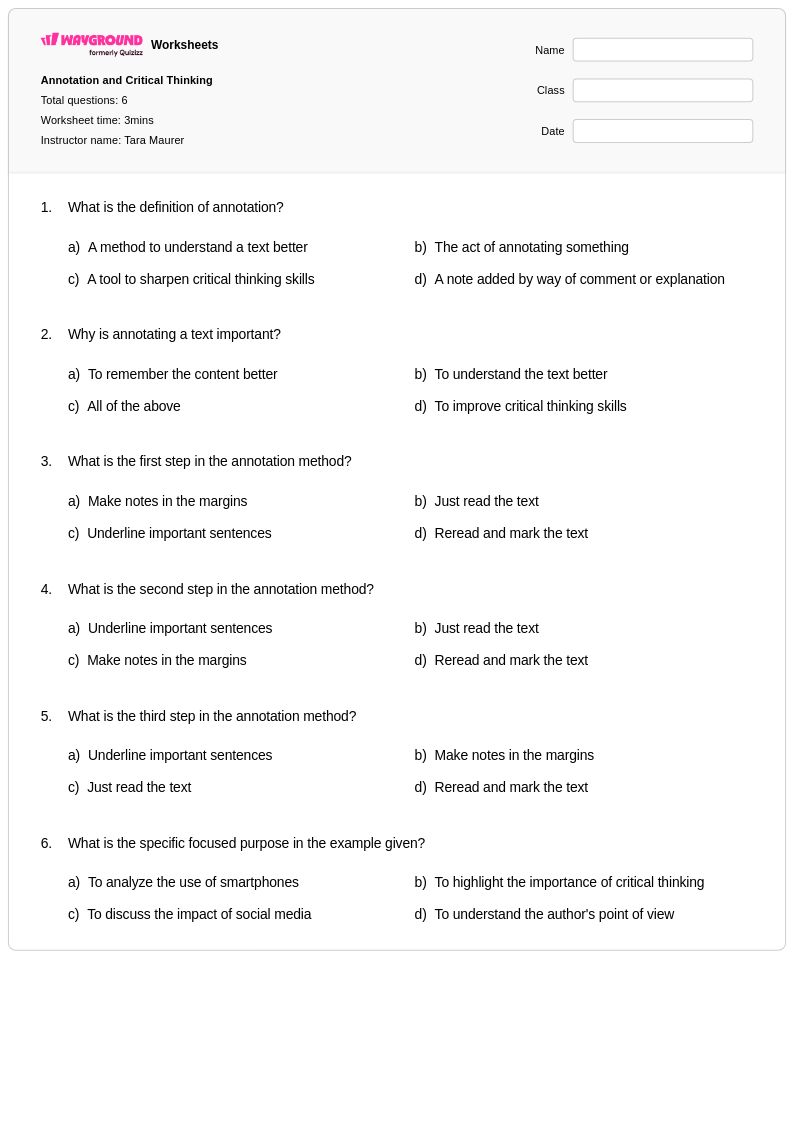
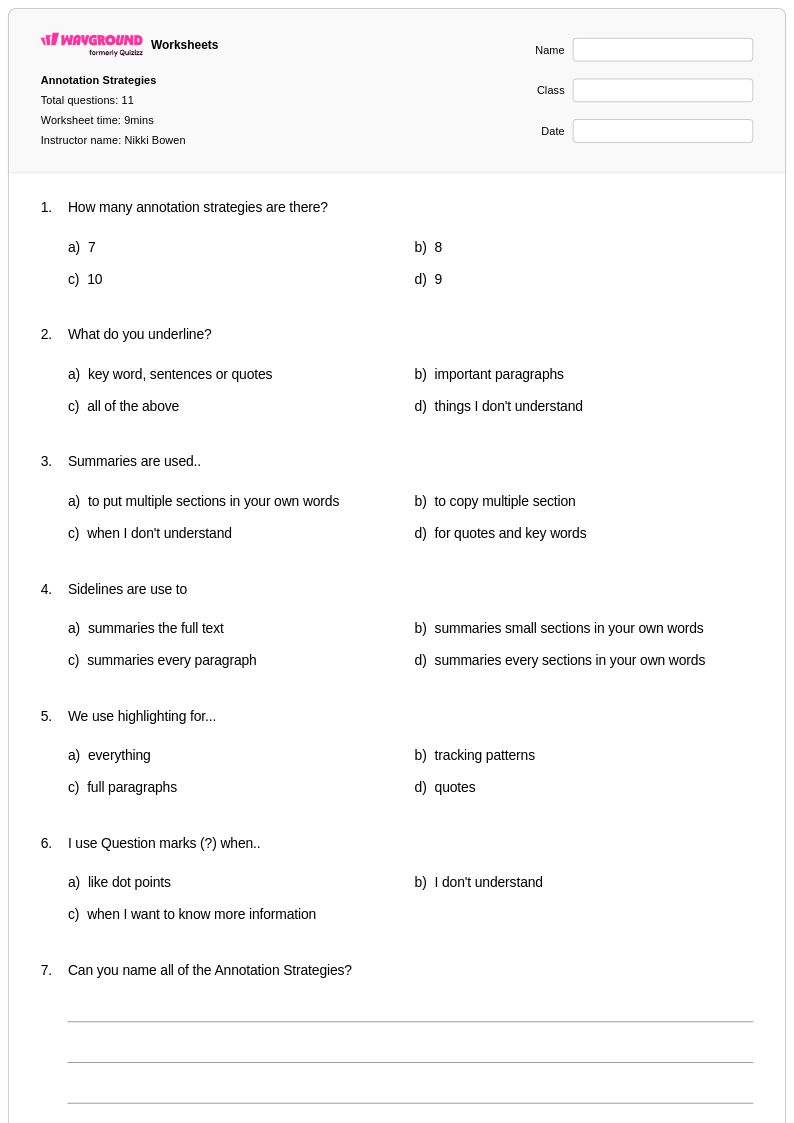
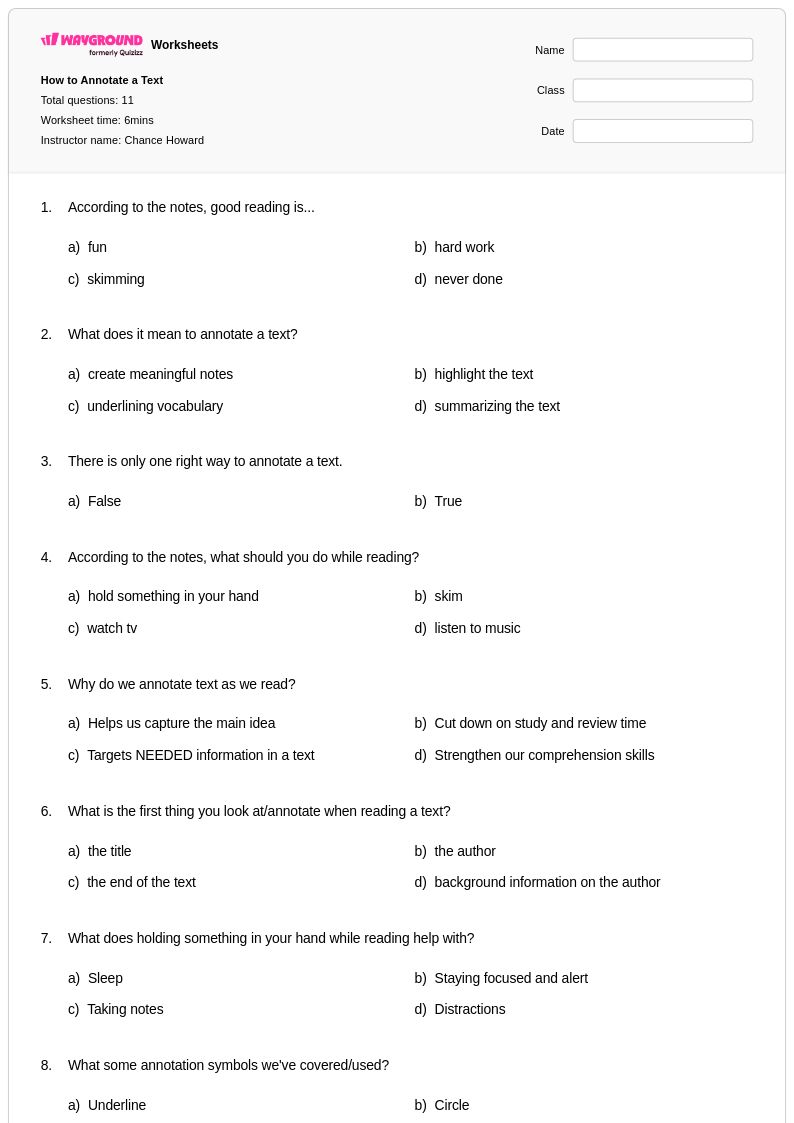
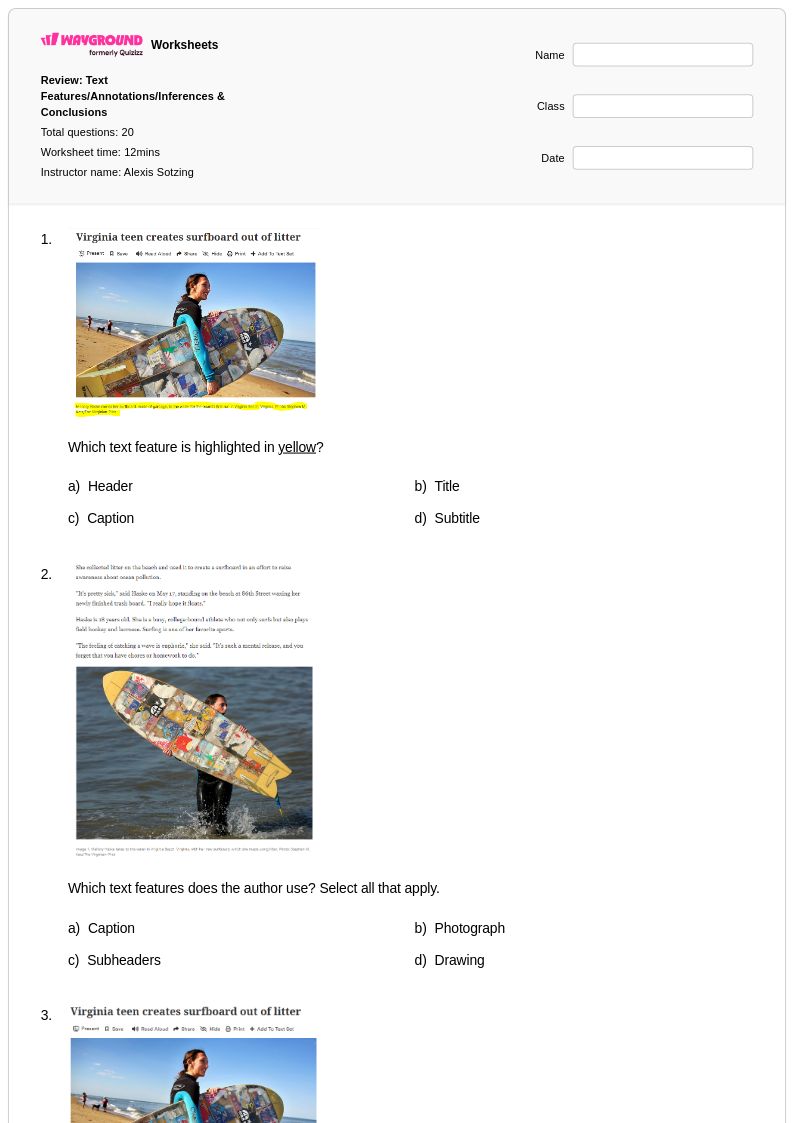
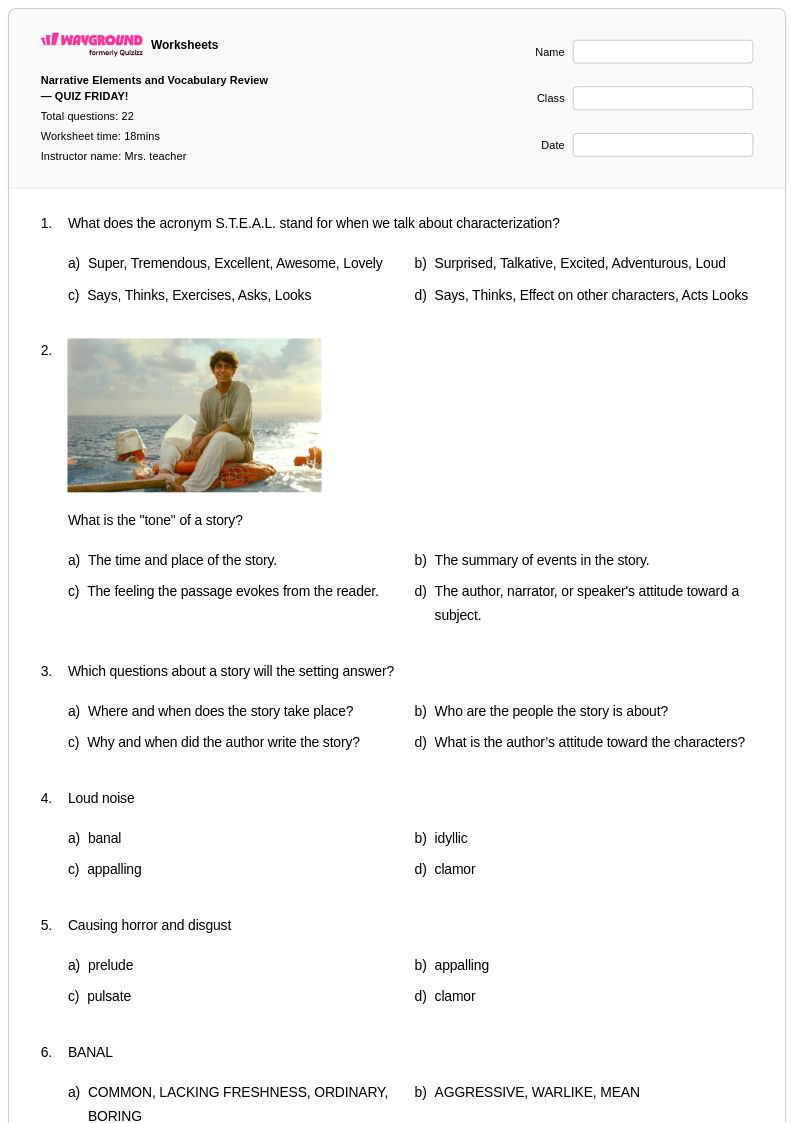
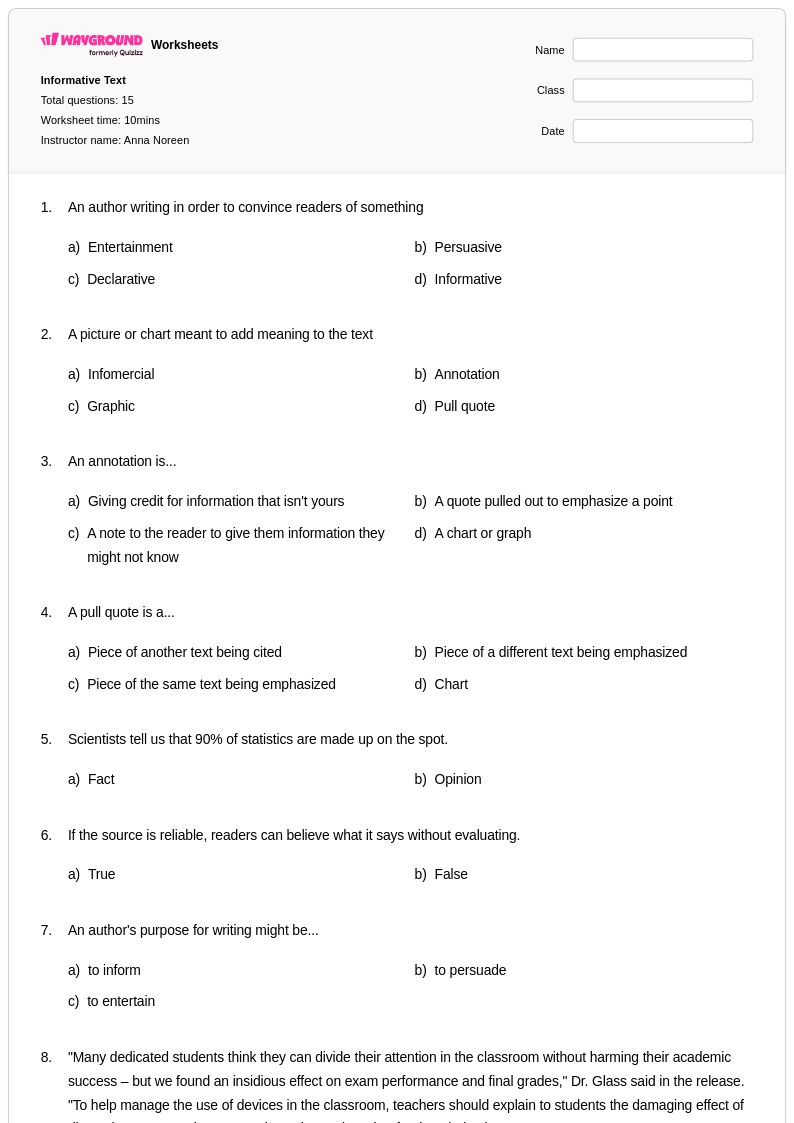
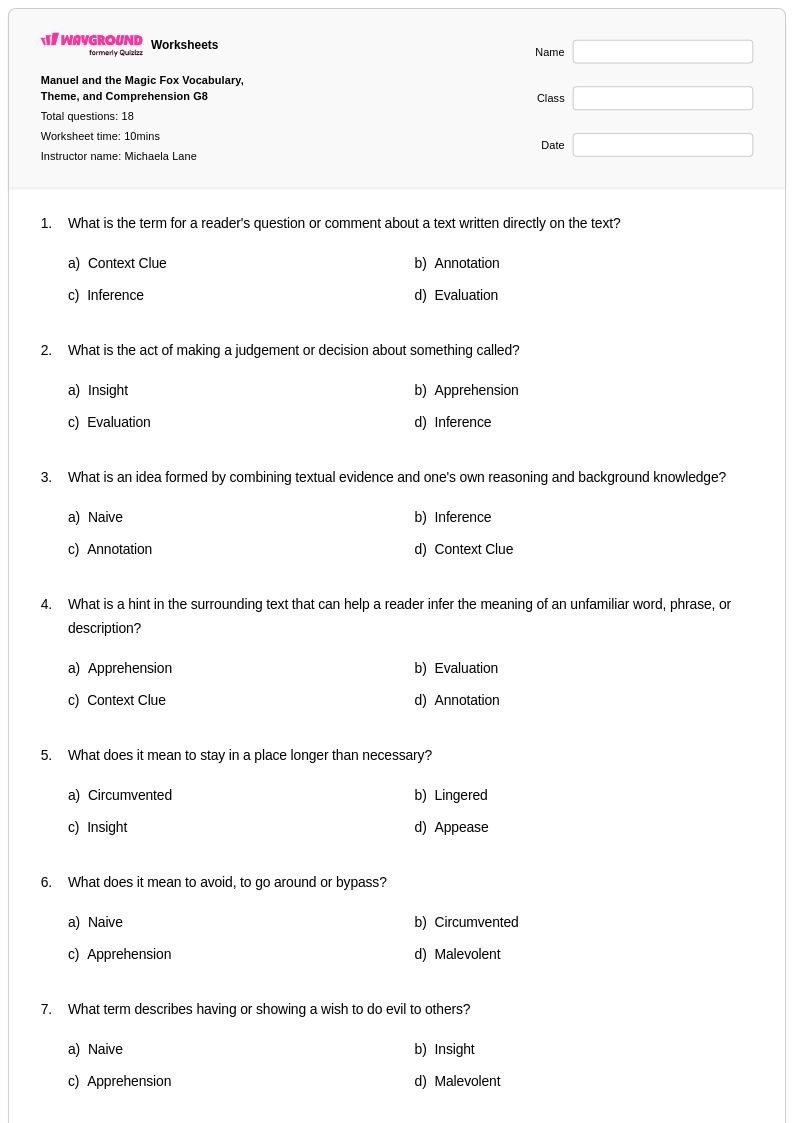
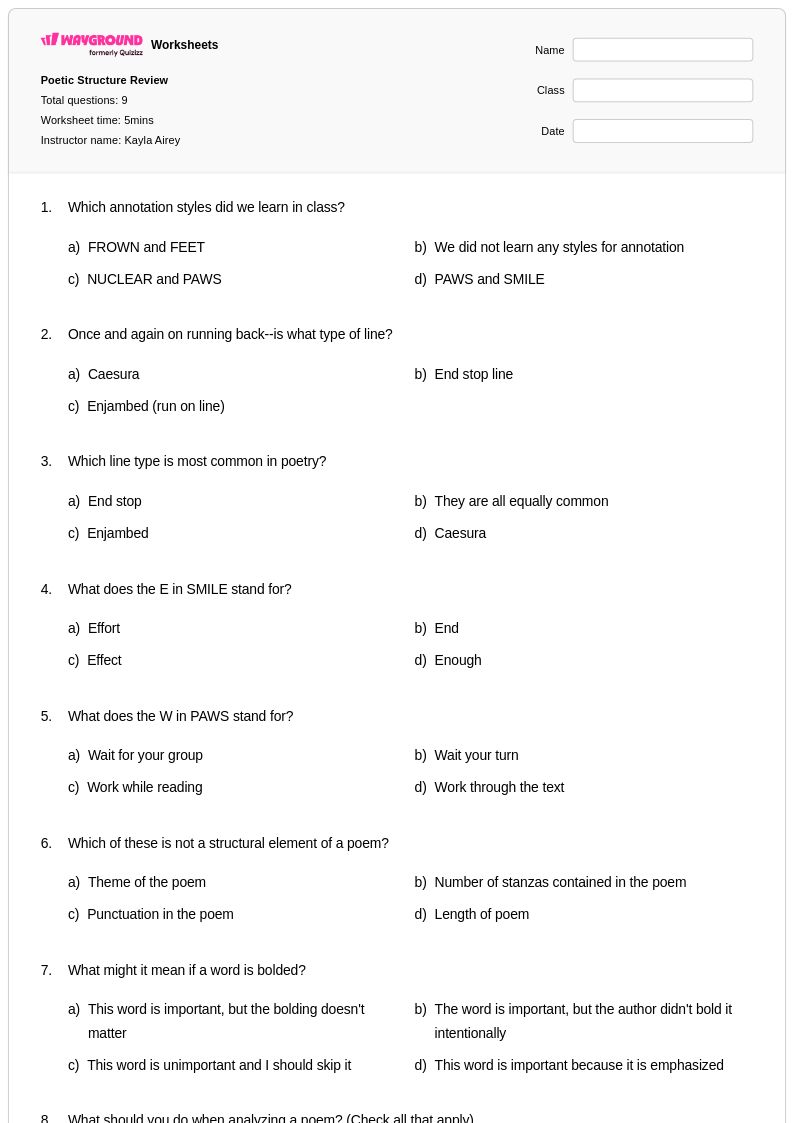
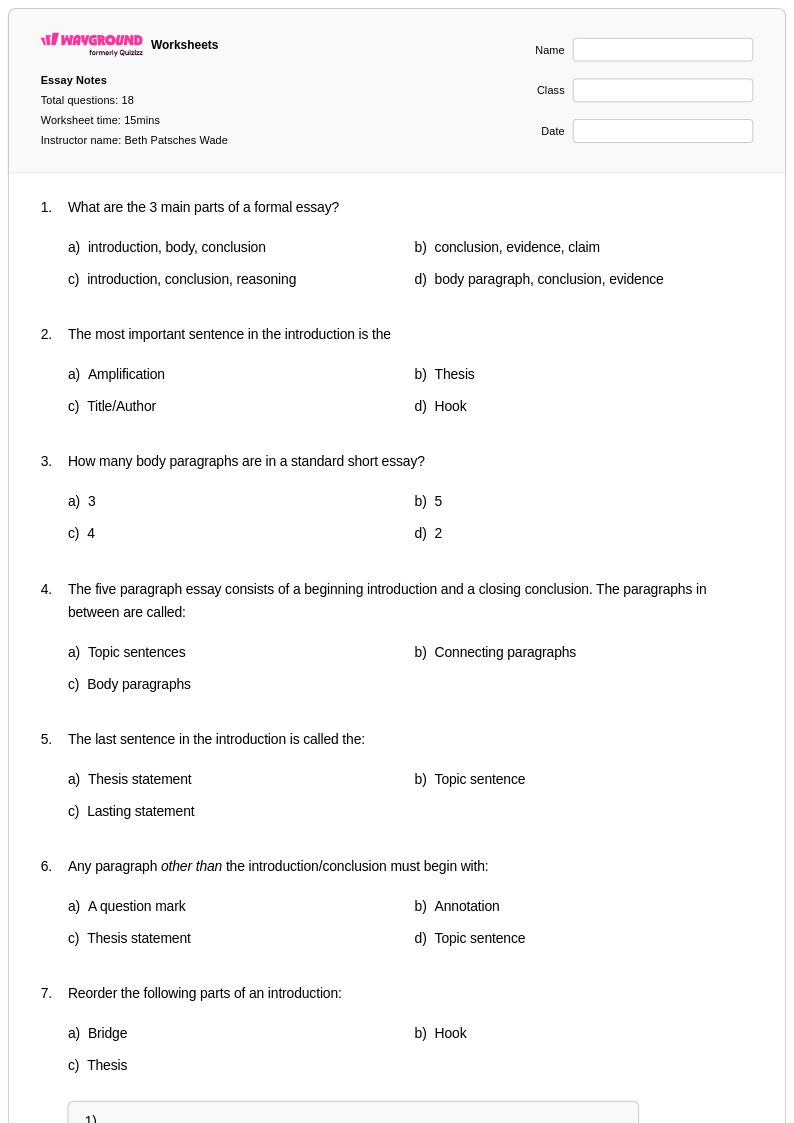
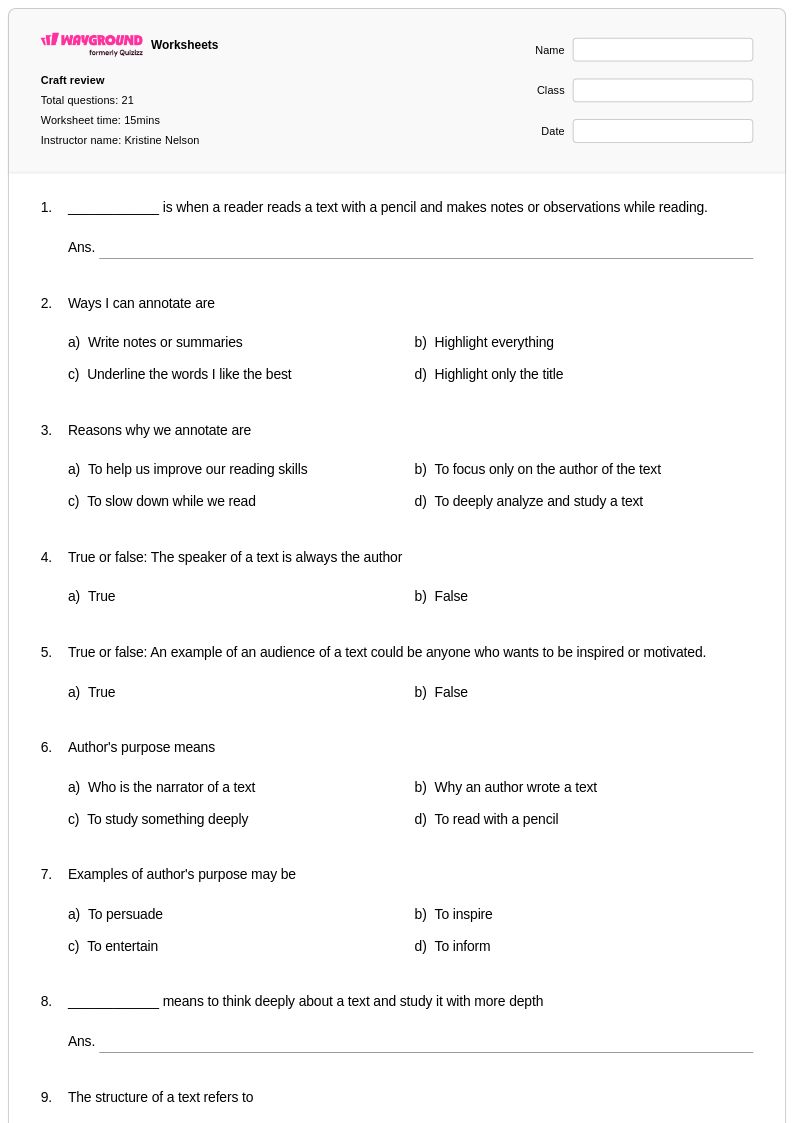
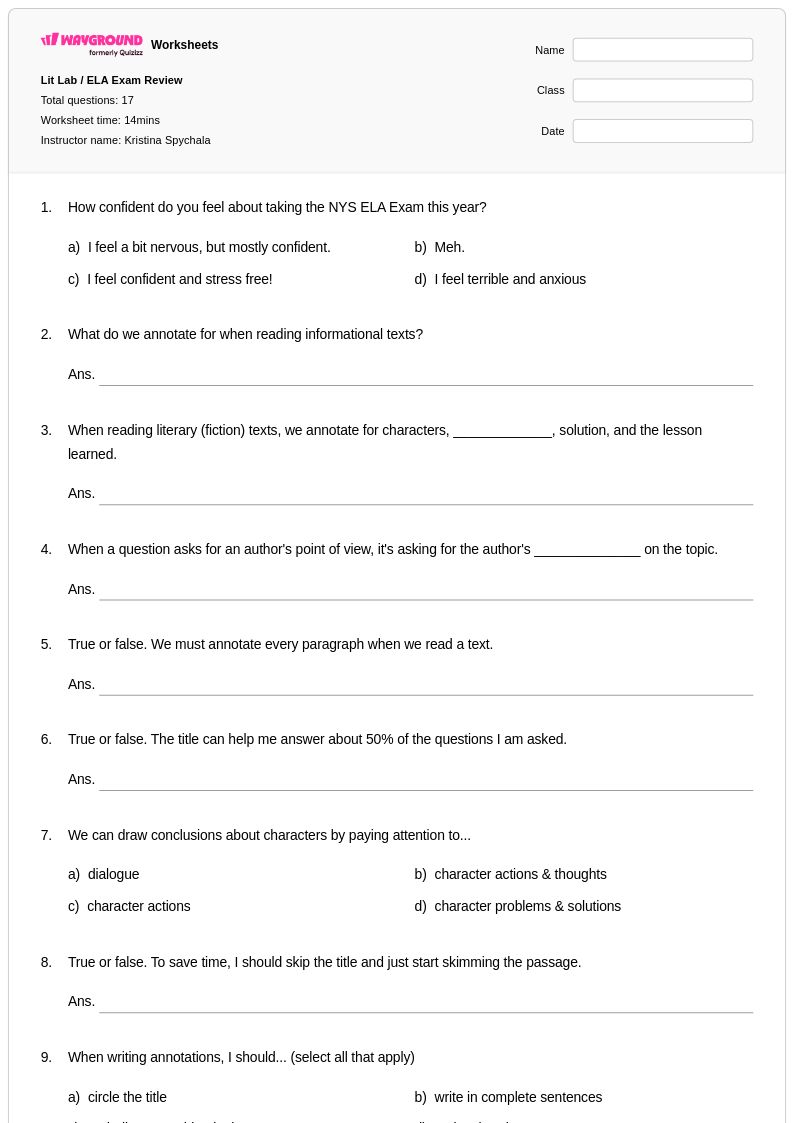
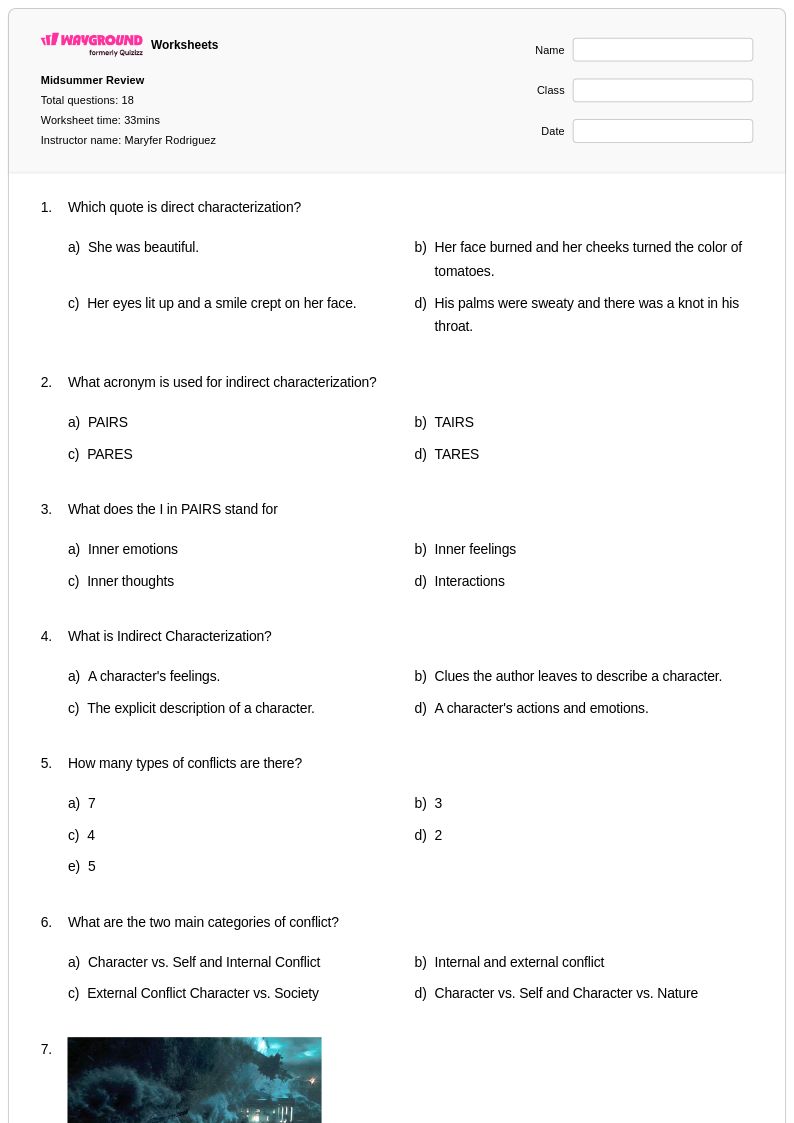
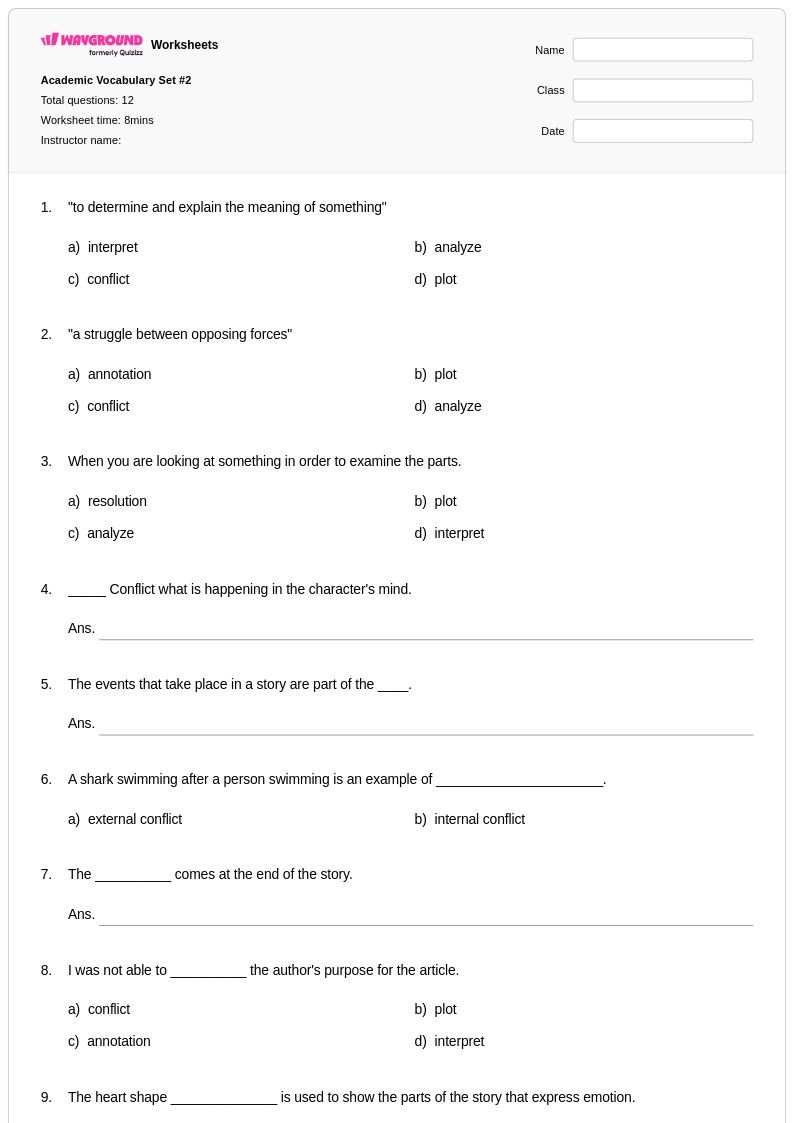
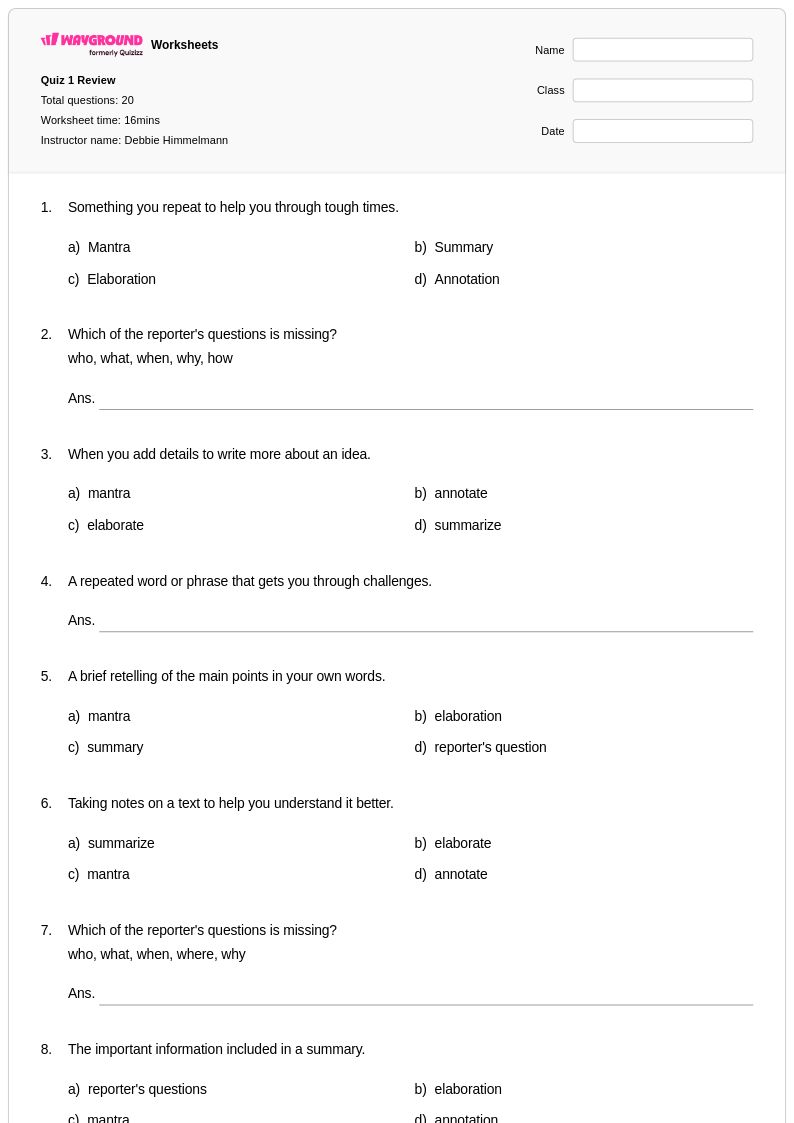
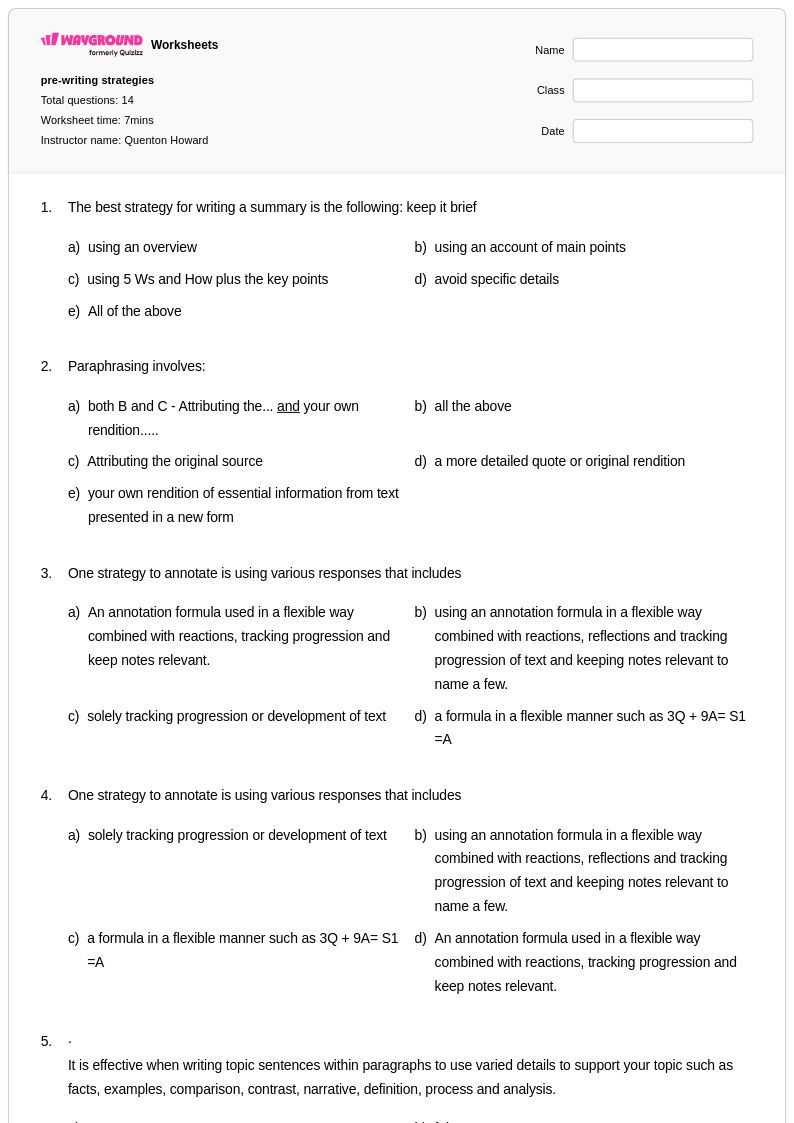
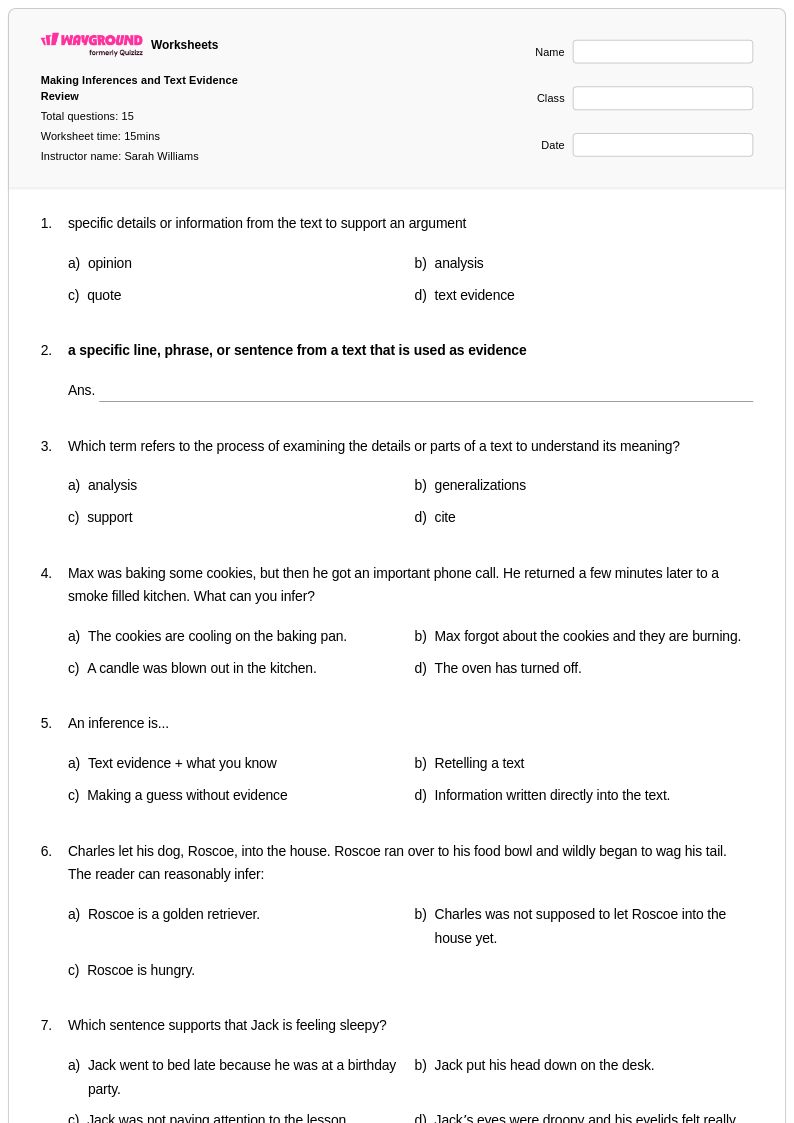
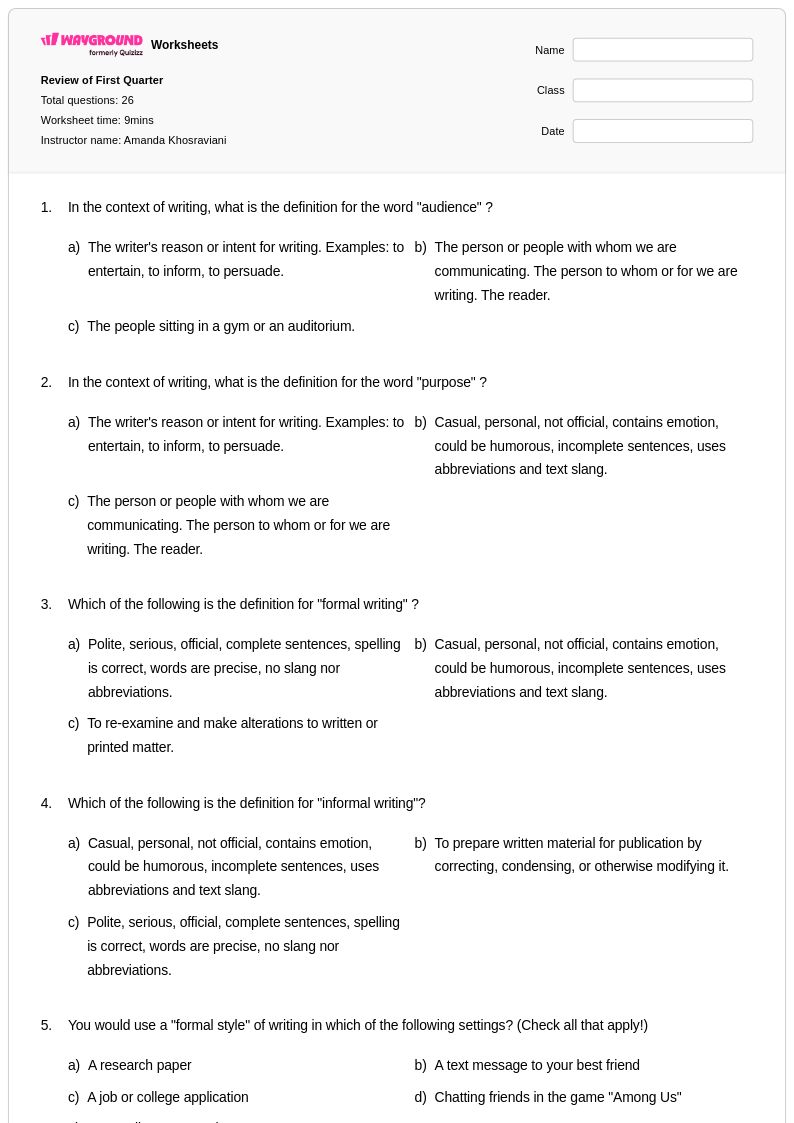
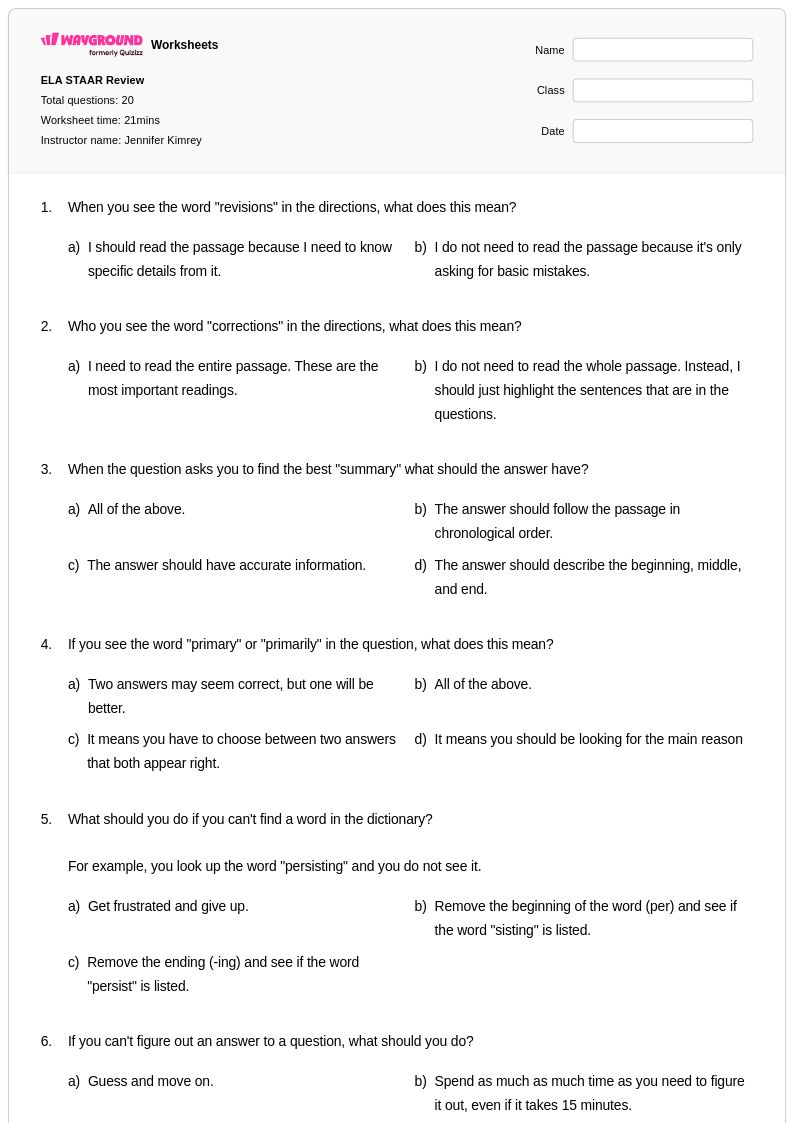
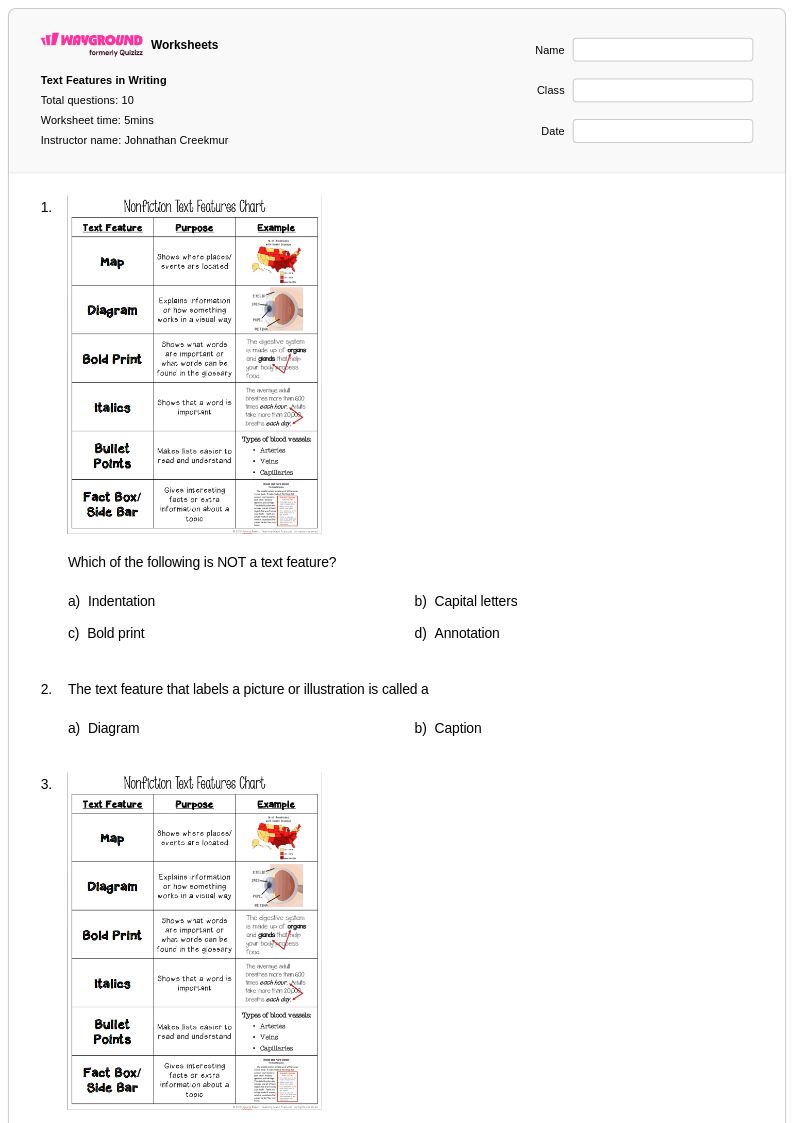
Grade 8 annotation worksheets from Wayground help students master text marking strategies through engaging printables and practice problems, complete with answer keys for effective reading comprehension skill development.
Explore printable Annotation worksheets for Grade 8
Grade 8 annotation worksheets available through Wayground (formerly Quizizz) provide students with systematic practice in one of the most fundamental reading comprehension strategies. These carefully designed resources teach eighth graders how to actively engage with texts by marking important information, identifying key themes, questioning author intent, and making meaningful connections between ideas. Students develop critical thinking skills as they learn to highlight significant passages, write marginal notes, and create symbols or codes that help them track their thinking process while reading. The comprehensive worksheet collections include detailed answer keys that guide teachers through effective annotation techniques, and the free printable formats make these valuable practice problems accessible for both classroom instruction and independent study.
Wayground (formerly Quizizz) empowers educators with millions of teacher-created annotation resources specifically aligned with Grade 8 reading standards and learning objectives. The platform's robust search and filtering capabilities allow teachers to quickly locate worksheets that match their students' reading levels and target specific annotation skills, from basic text marking to sophisticated analytical commentary. These differentiation tools enable seamless customization of materials for remediation, enrichment, and skill reinforcement, while the dual availability of printable PDF versions and interactive digital formats provides maximum flexibility for diverse classroom environments. Teachers can efficiently plan annotation instruction sequences, assess student progress through guided practice activities, and build comprehensive reading comprehension programs that prepare eighth graders for advanced literary analysis and critical reading demands.
FAQs
How do I teach annotation strategies to students who have never marked up a text before?
Start by modeling annotation with a short, familiar passage on a projector, thinking aloud as you underline key ideas, circle unfamiliar vocabulary, and jot margin notes. Introduce one or two annotation symbols at a time rather than overwhelming students with a full system on day one. Gradually release responsibility by having students annotate collaboratively in pairs before working independently, so they build confidence with the strategy before applying it to complex texts.
What kinds of exercises help students practice annotation effectively?
Effective annotation practice moves from structured to open-ended tasks. Begin with margin note exercises where students respond to guided prompts, such as identifying the main idea of each paragraph or flagging confusing lines with a question mark. As students gain fluency, move toward analytical annotation tasks that ask them to track a theme, evaluate an argument, or make cross-textual connections, which is the progression Wayground's annotation worksheets are designed to support.
What mistakes do students commonly make when learning to annotate a text?
The most frequent error is over-highlighting, where students mark nearly every sentence without distinguishing what is genuinely important. A related problem is passive annotation, where students underline text but write no margin notes, which means they are not actively processing meaning. Teachers should watch for students who annotate for compliance rather than comprehension, marking mechanically without connecting the text to their own questions or prior knowledge.
How can annotation worksheets support reading comprehension across different subjects?
Annotation is a cross-curricular skill because the core moves, identifying key information, questioning content, and making connections, apply to literary analysis, scientific articles, primary source documents, and informational texts alike. Annotation worksheets that include passages from multiple genres and subjects help students understand that active reading is not exclusive to English class. This transfer is especially valuable in middle and high school settings where students encounter dense, discipline-specific texts.
How do I use Wayground's annotation worksheets in my classroom?
Wayground's annotation worksheets are available as printable PDFs for traditional classroom use and in digital formats for technology-integrated learning environments, and teachers can also host them as a quiz directly on Wayground. Each worksheet includes a complete answer key, so teachers can efficiently review student work and identify where additional instruction is needed. The range of practice problems, from basic margin note tasks to sophisticated analytical exercises, makes it straightforward to select a worksheet matched to your students' current skill level.
How can I differentiate annotation instruction for students reading below grade level?
For struggling readers, reduce the cognitive load by limiting the annotation task to one or two focus areas per reading, such as circling unknown words and writing one question per paragraph, rather than expecting a full annotation system at once. On Wayground, teachers can enable the Read Aloud feature for individual students who need audio support while reading, and the Reduced Answer Choices accommodation can ease pressure on students completing accompanying comprehension questions. Keeping the annotation task concrete and manageable allows below-level readers to build the habit without becoming overwhelmed by the text itself.