Free Printable Anticipation Guide Worksheets for Grade 9
Grade 9 anticipation guide worksheets from Wayground help students develop critical reading comprehension skills through engaging printable activities, practice problems, and comprehensive answer keys available as free PDF downloads.
Explore printable Anticipation Guide worksheets for Grade 9
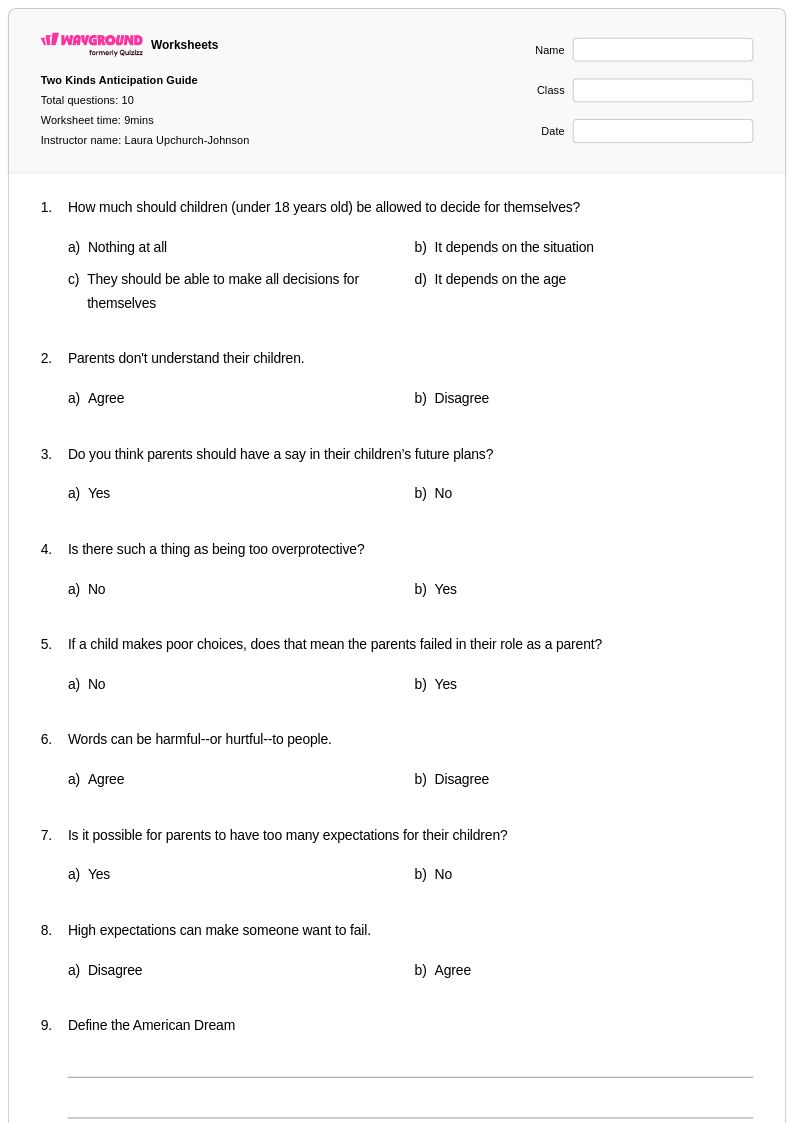
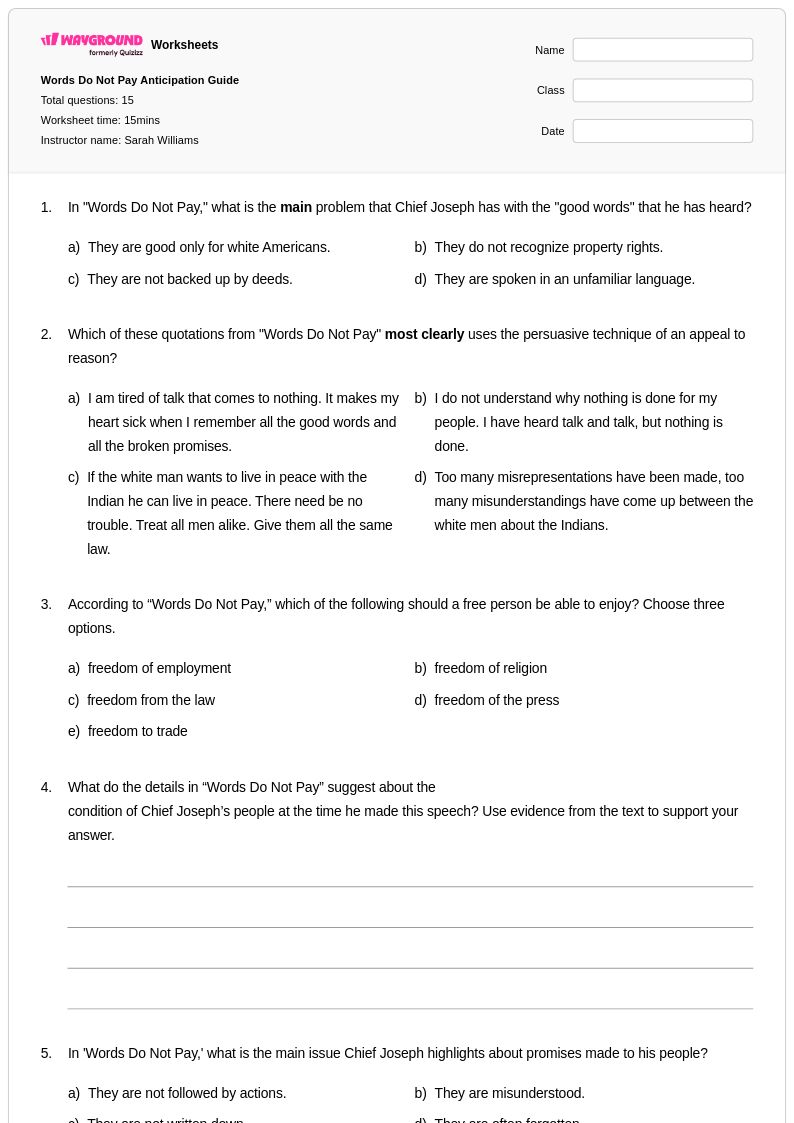
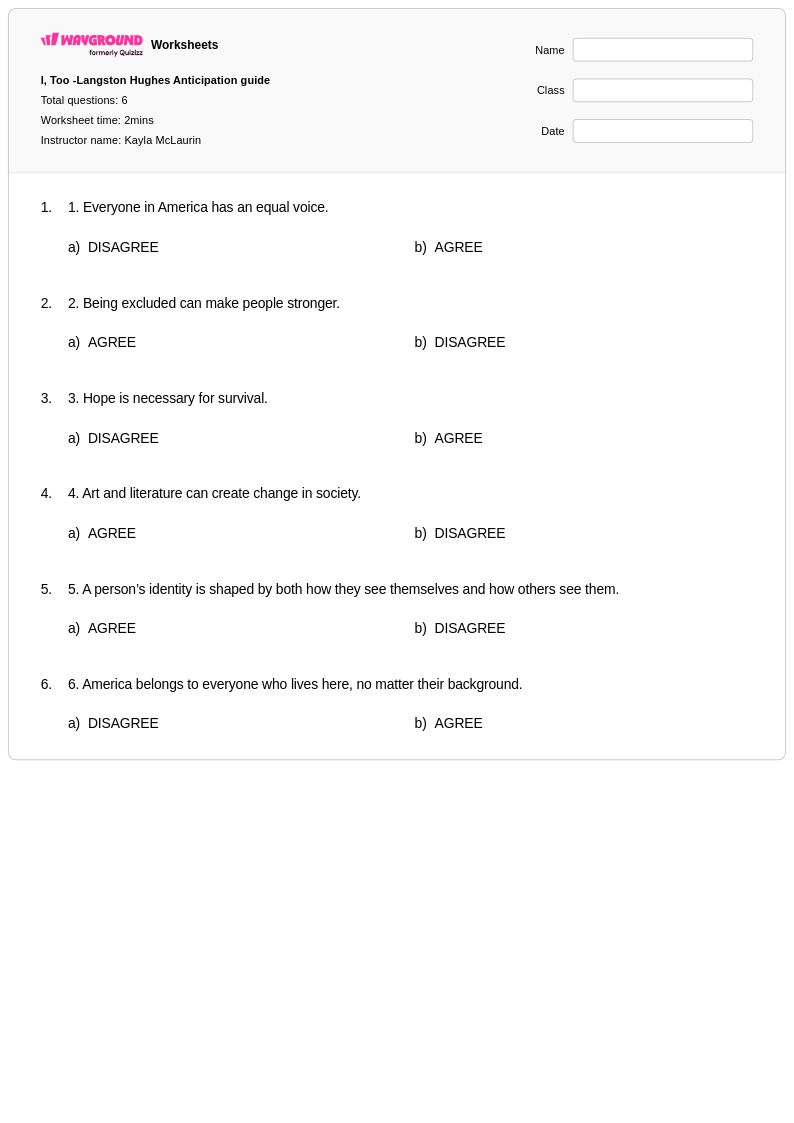
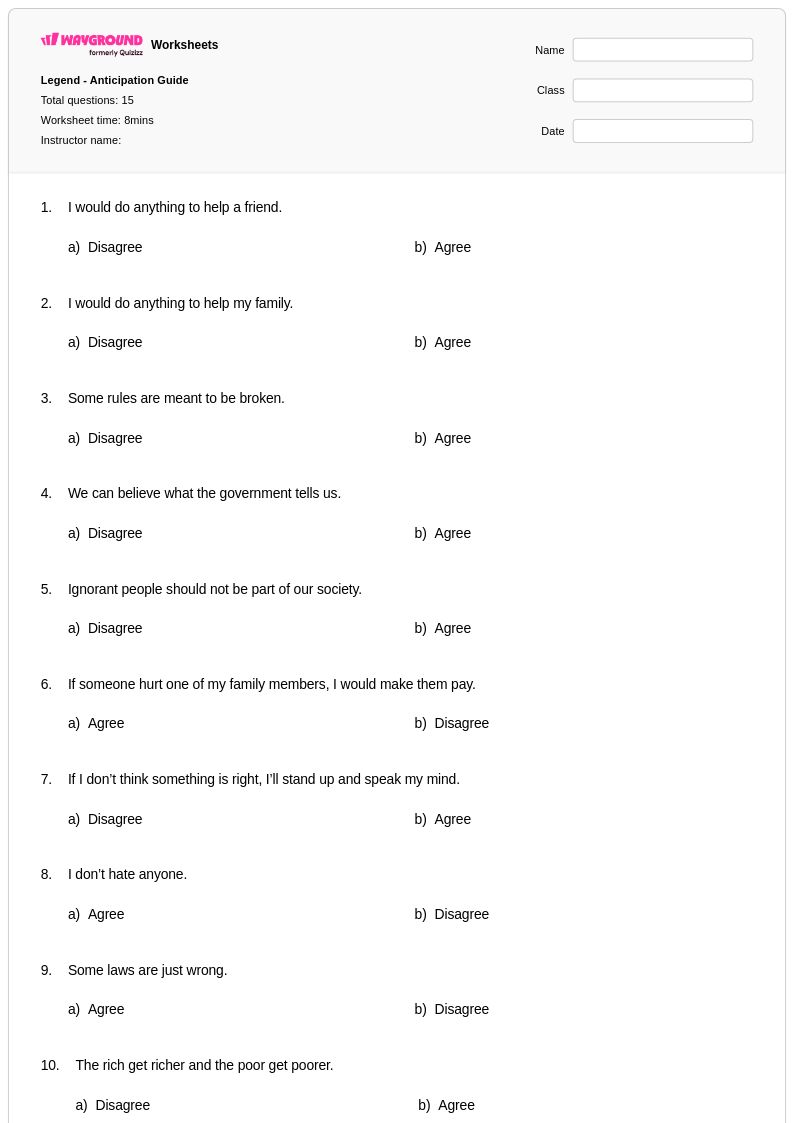
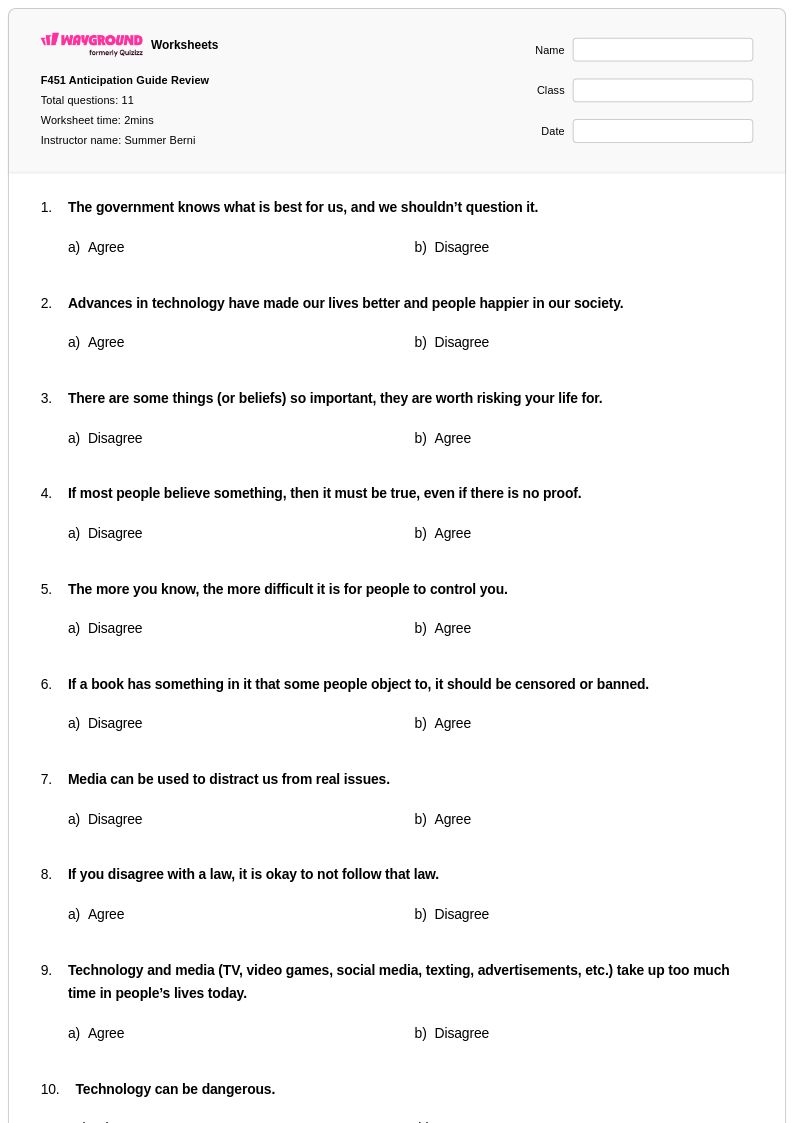
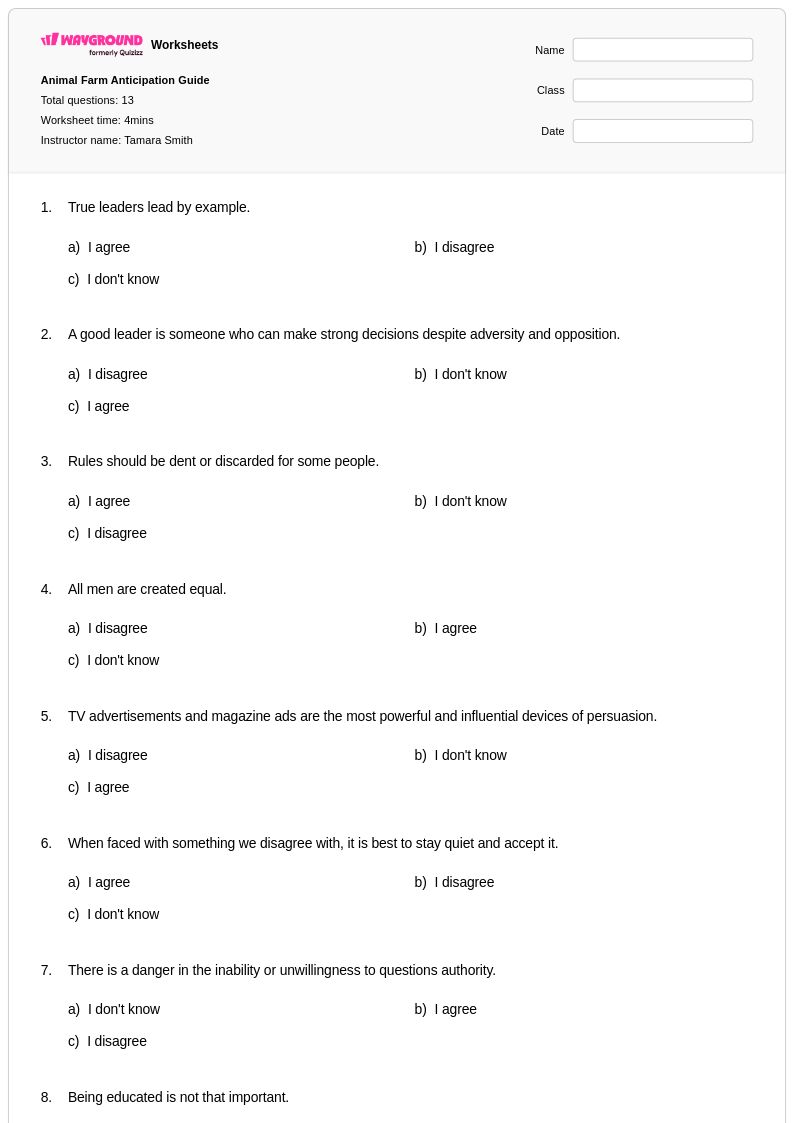
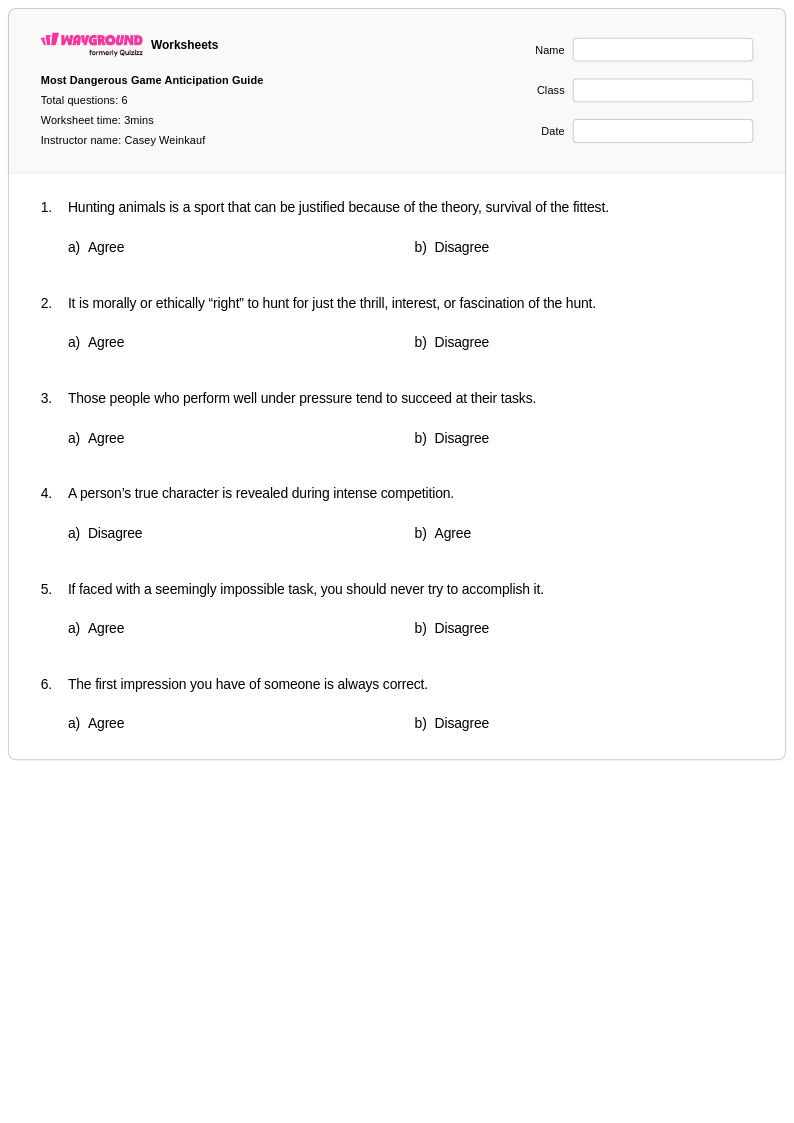
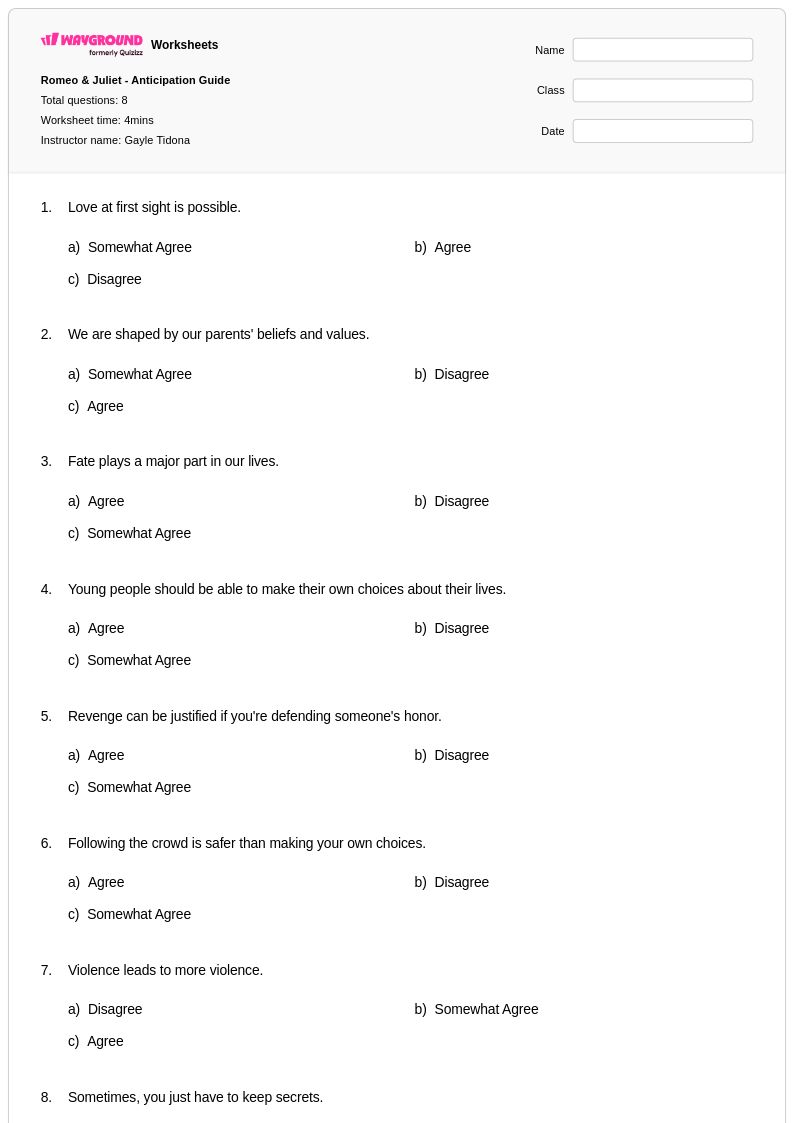
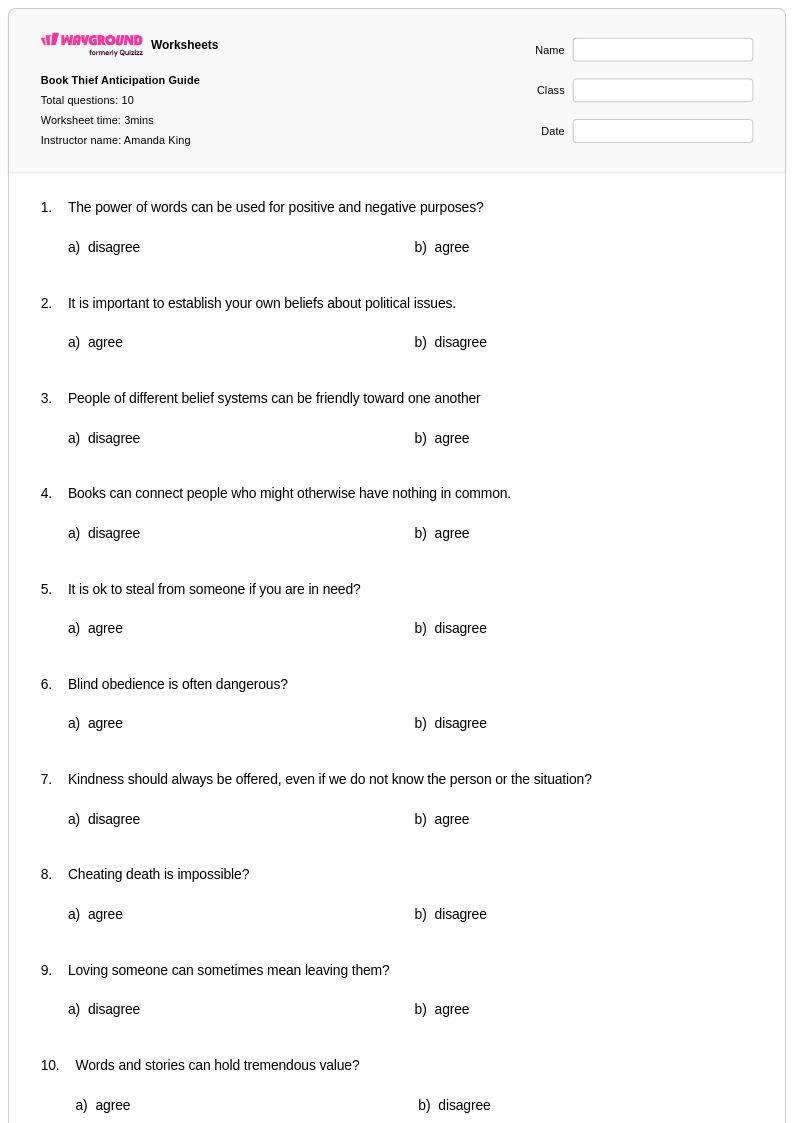
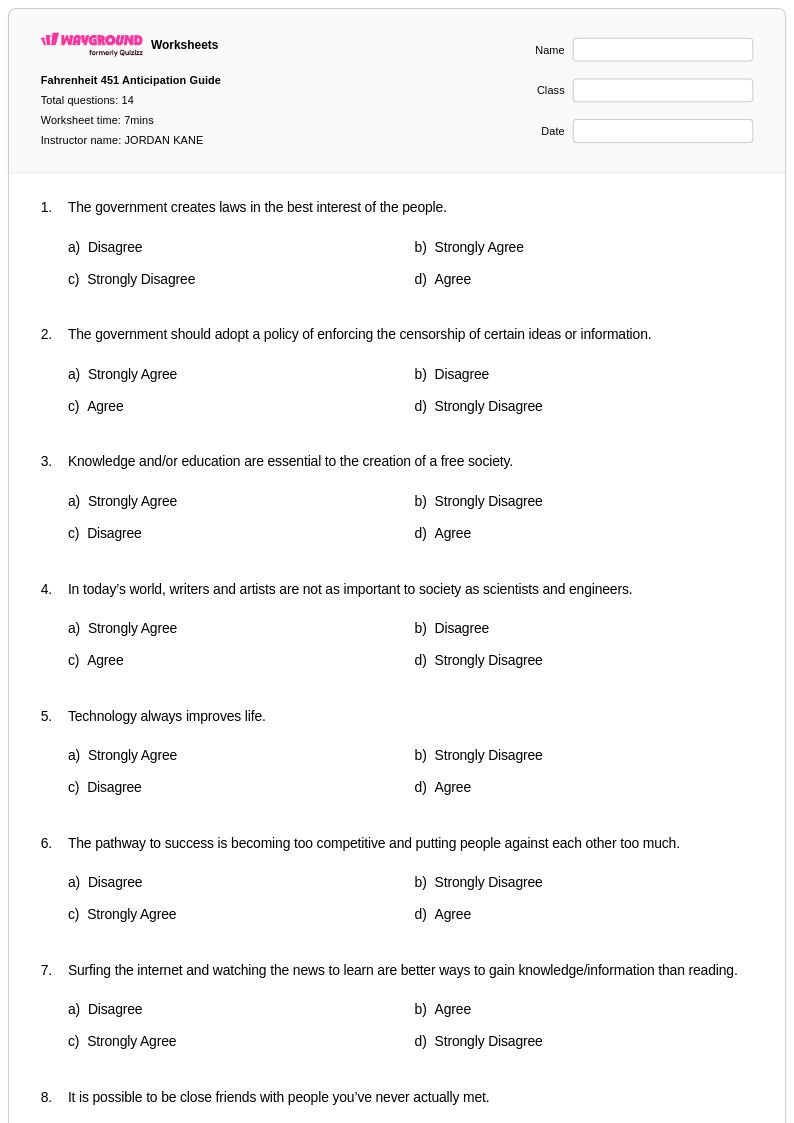
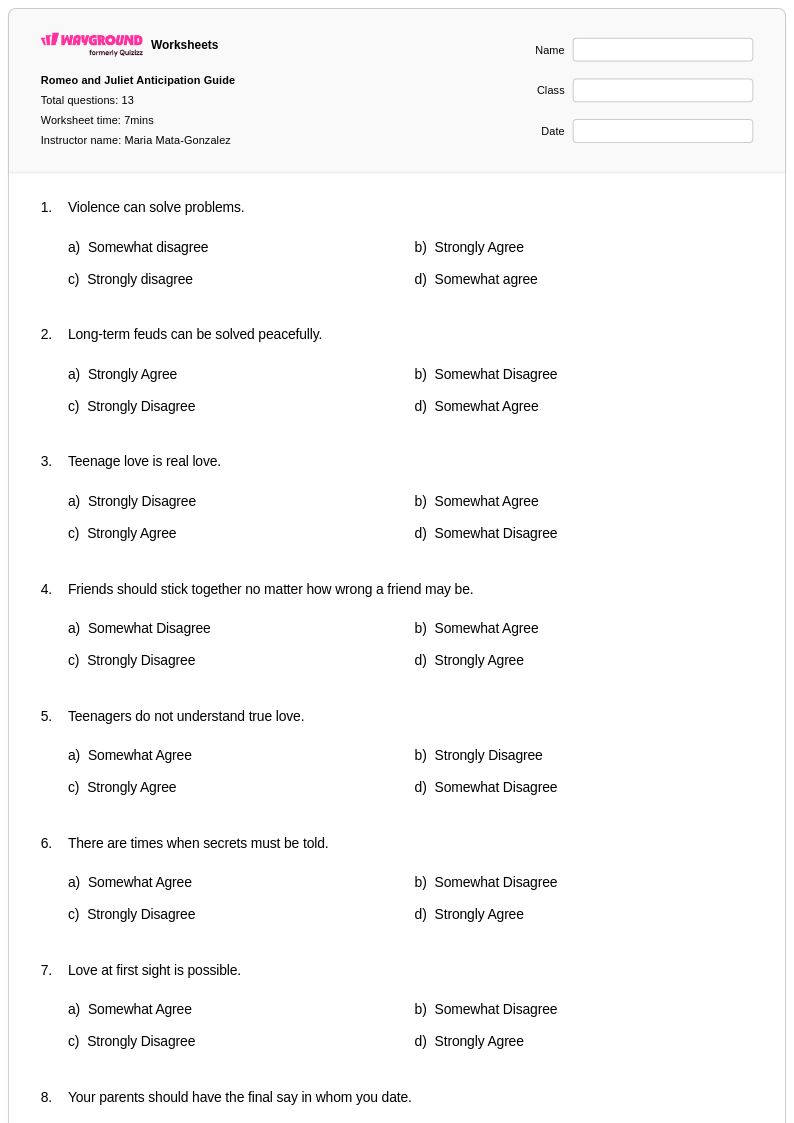
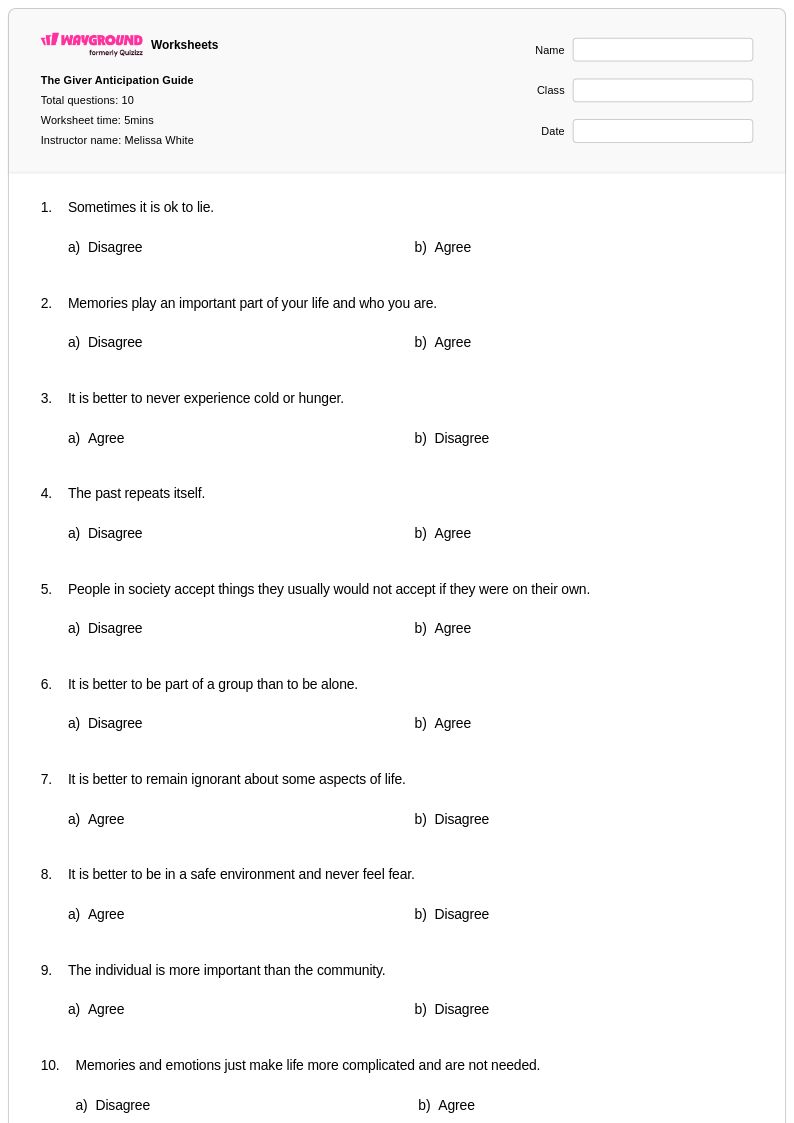
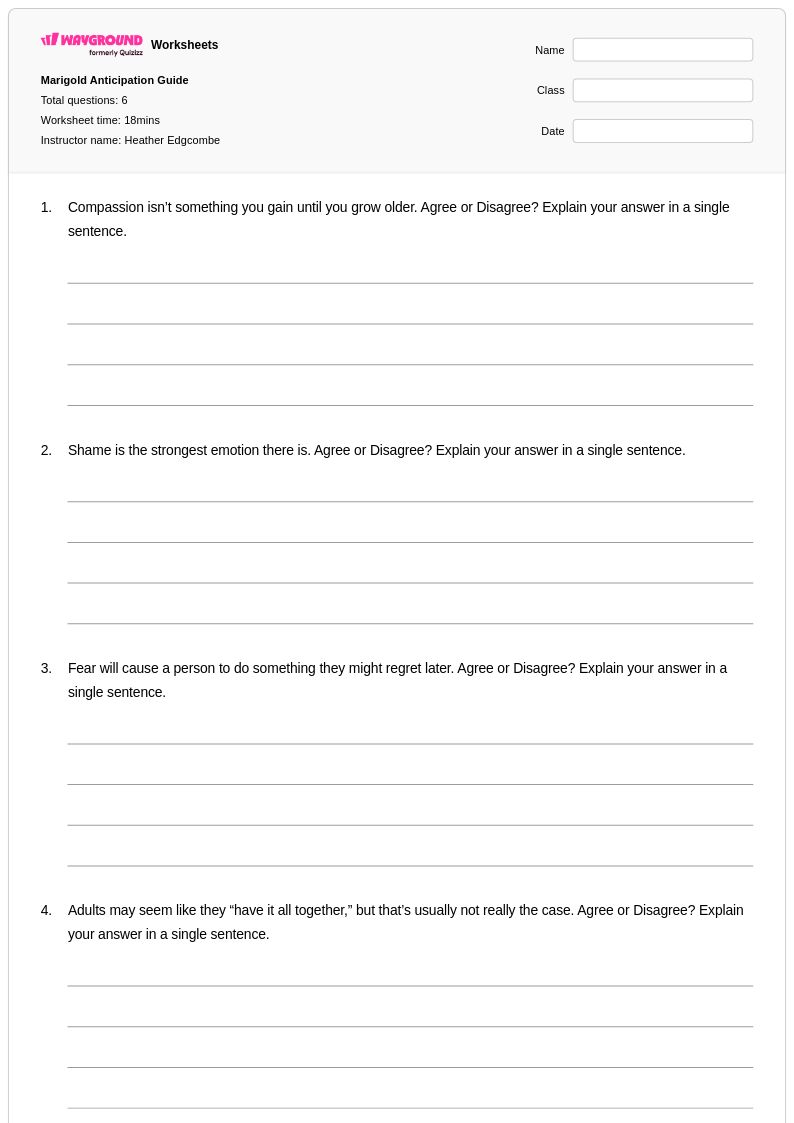
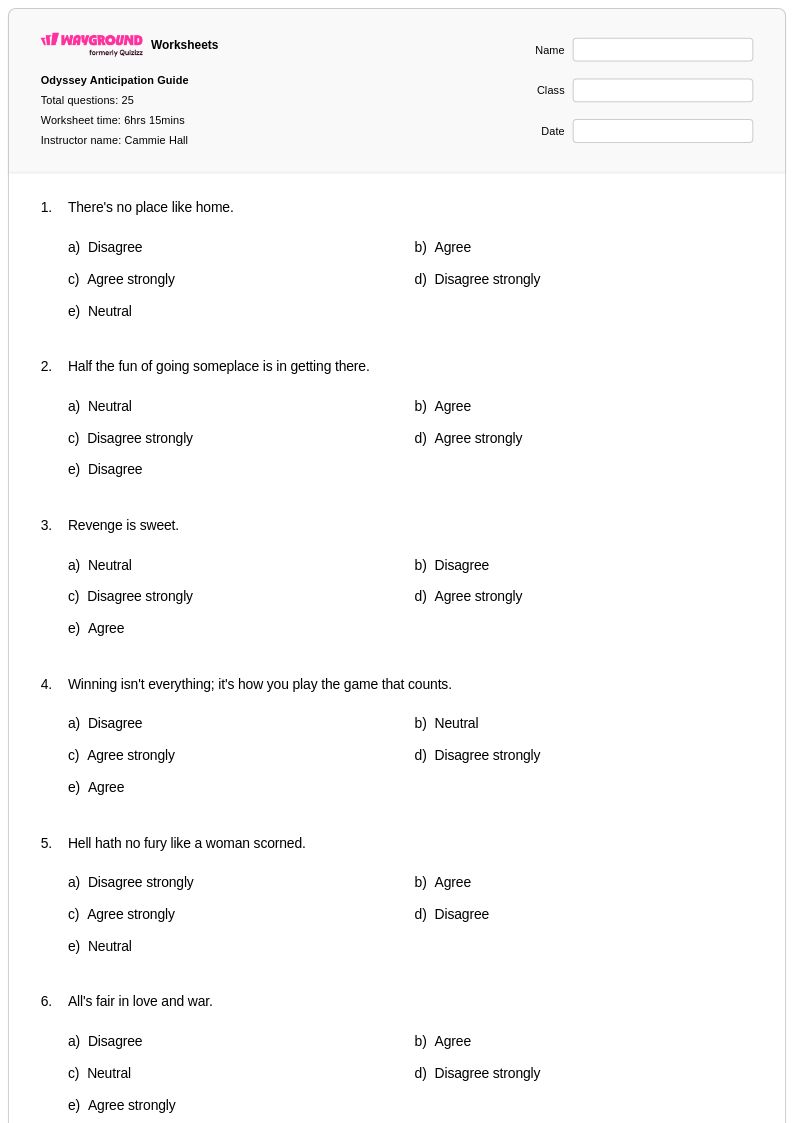
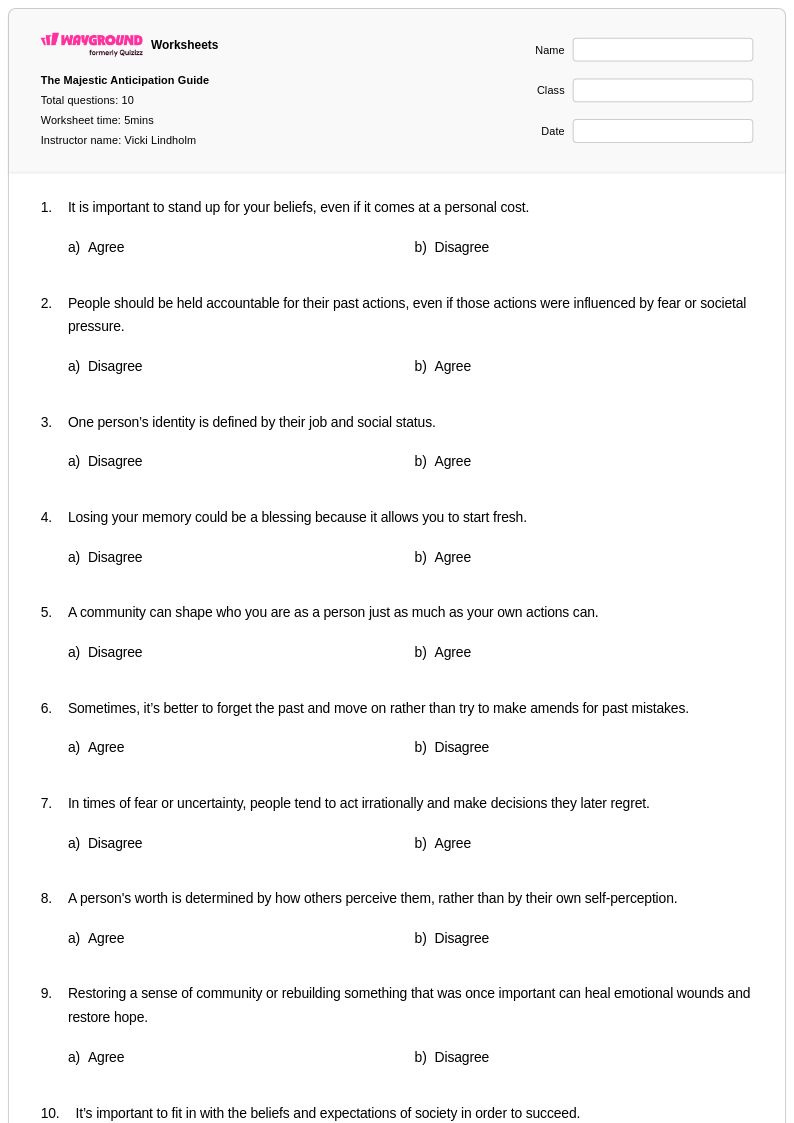
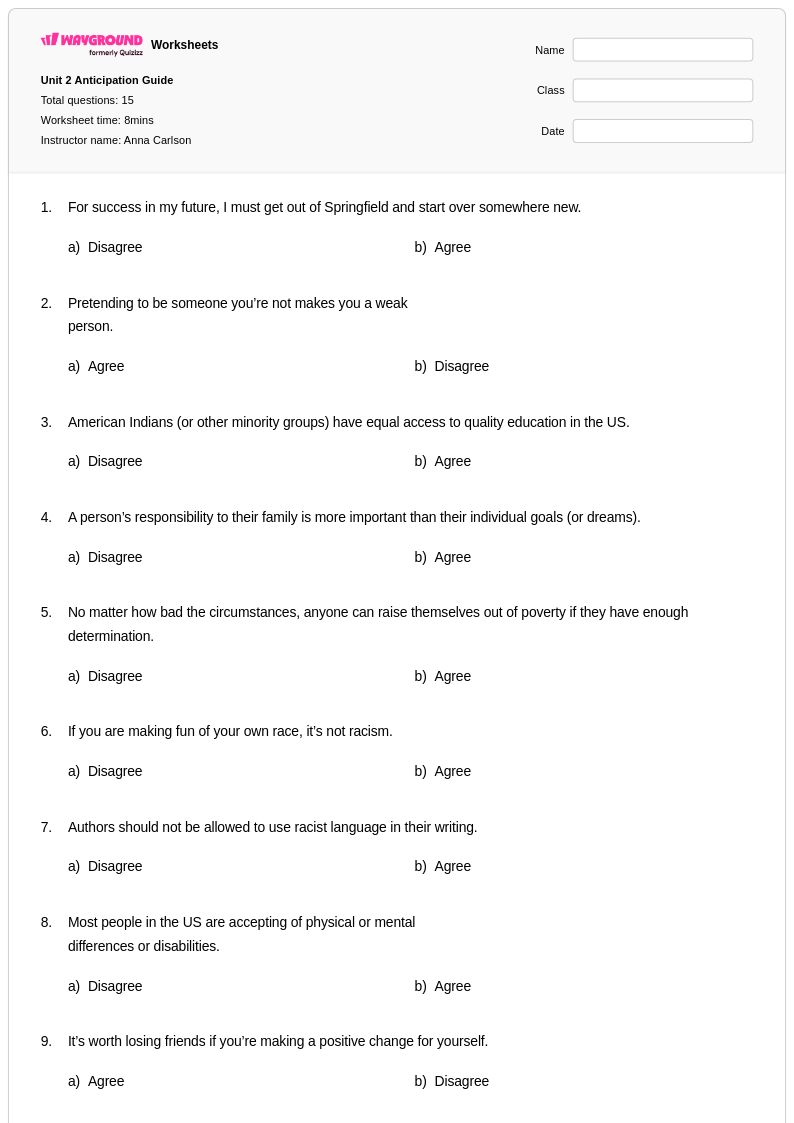
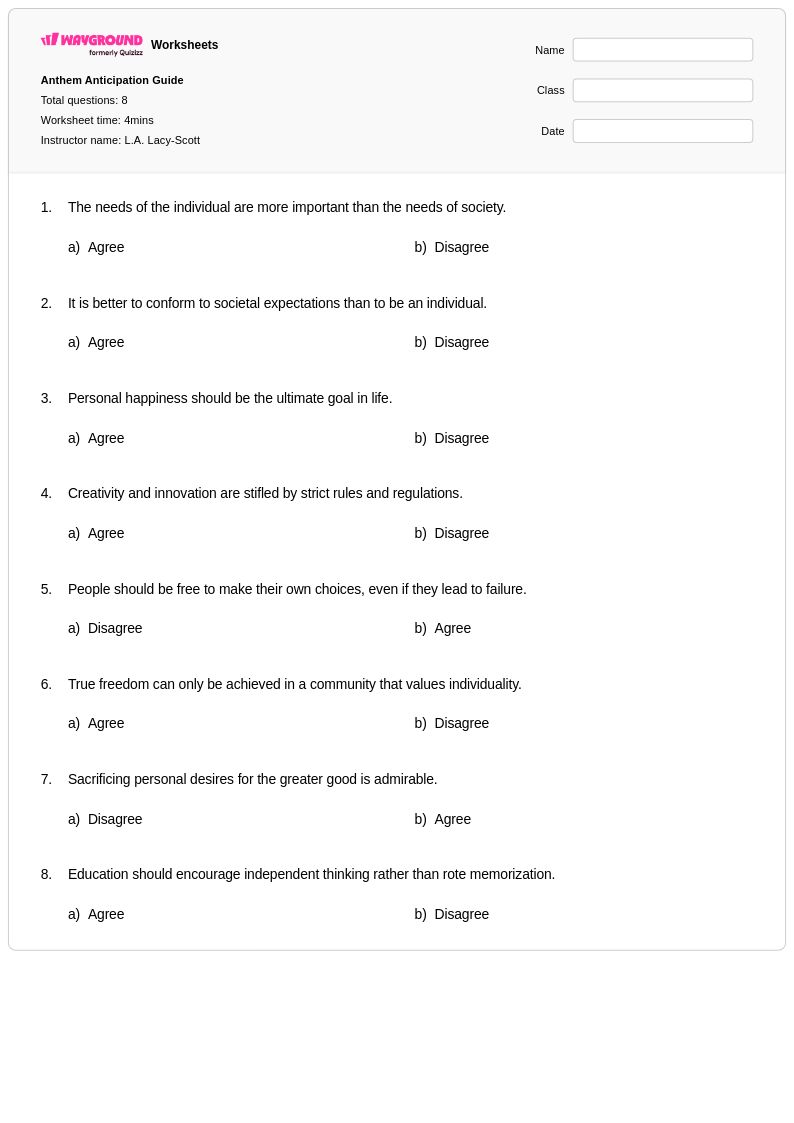
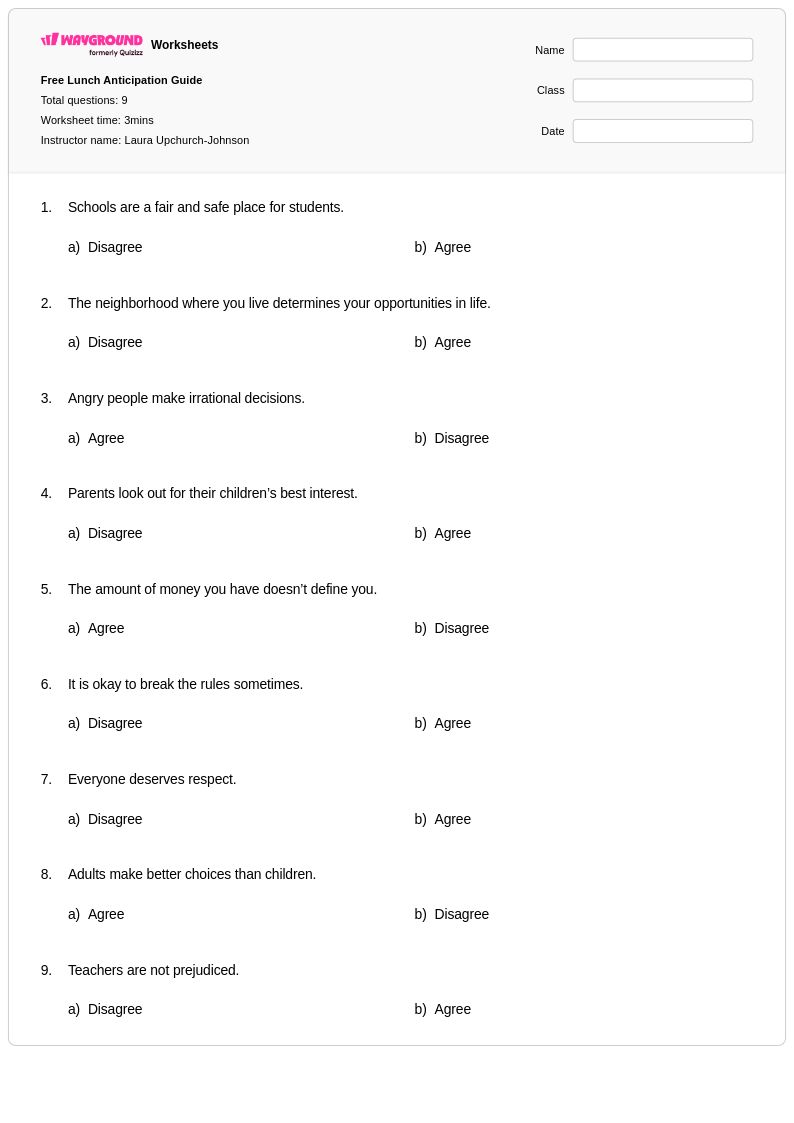
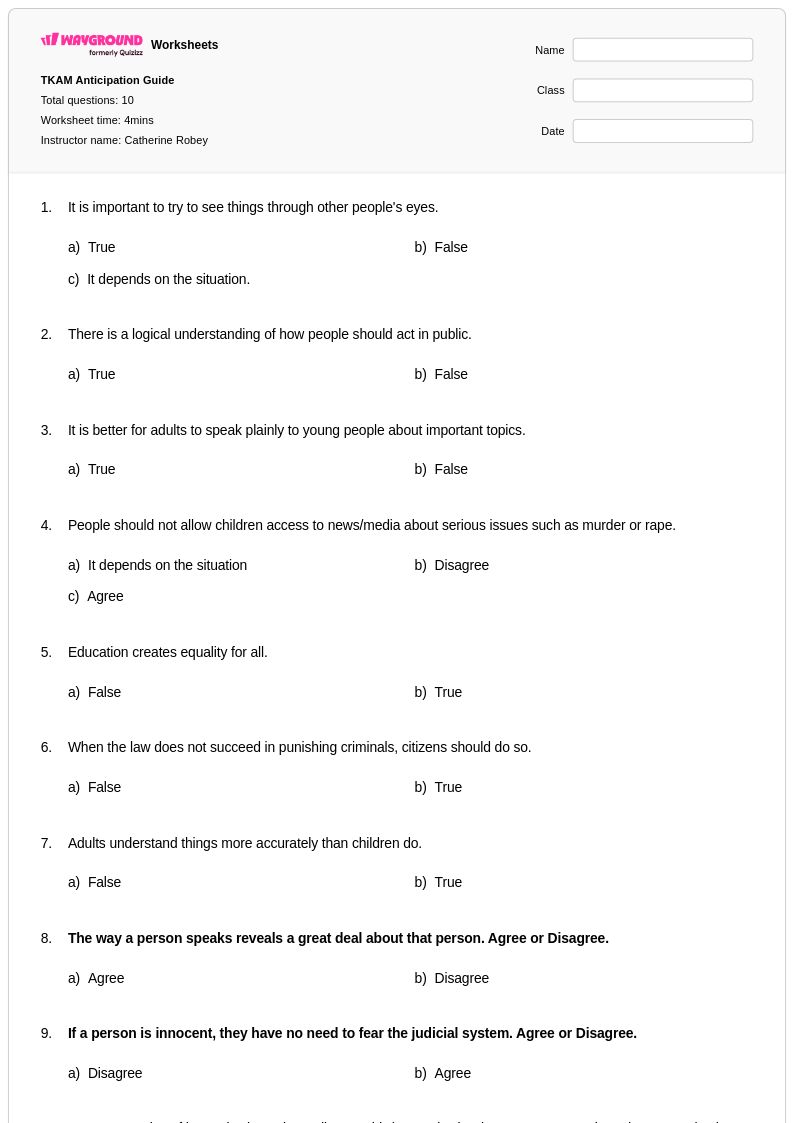
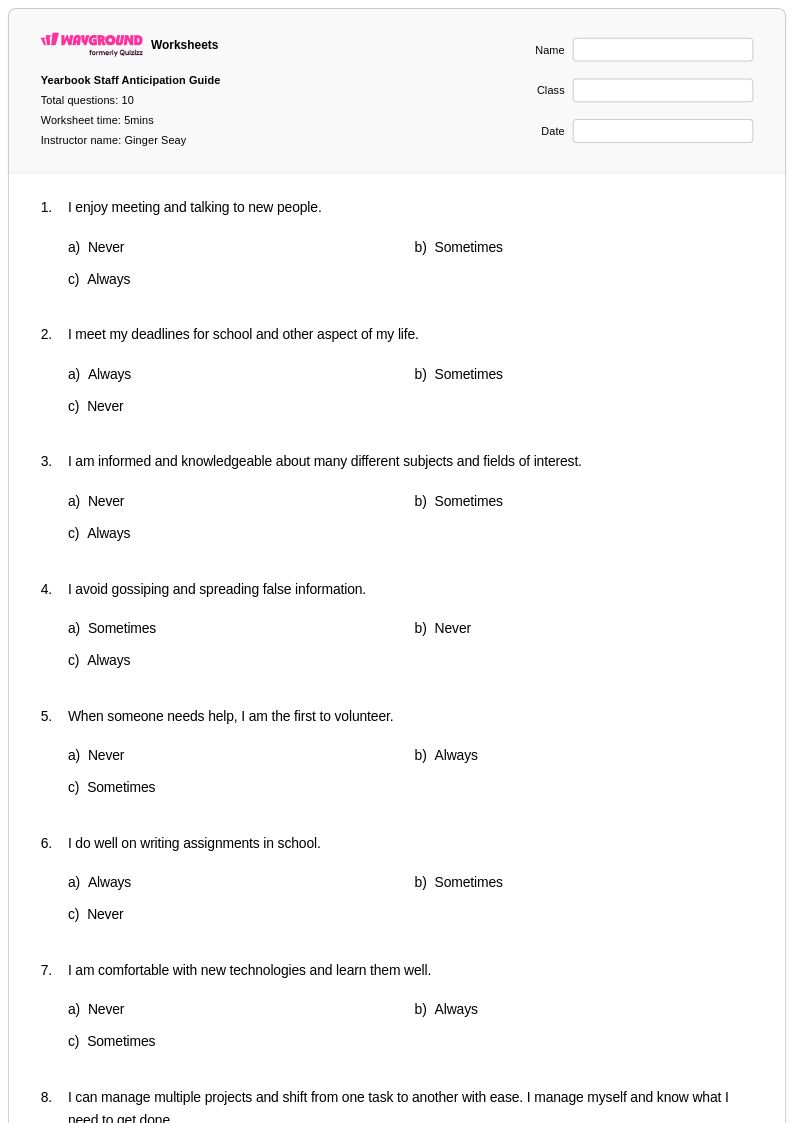
Anticipation guide worksheets for Grade 9 students available through Wayground (formerly Quizizz) serve as powerful pre-reading tools that activate prior knowledge and establish purpose before students engage with complex texts. These comprehensive worksheets present students with thought-provoking statements related to upcoming reading material, requiring them to agree or disagree based on their existing understanding and personal experiences. The practice problems within these printable resources strengthen critical thinking skills by encouraging students to make predictions, form hypotheses, and establish connections between new information and their background knowledge. Each free worksheet includes an answer key that facilitates meaningful post-reading discussions, allowing educators to guide students through comparing their initial responses with insights gained from the text, thereby deepening comprehension and analytical thinking skills essential for advanced literary analysis.
Wayground (formerly Quizizz) empowers educators with millions of teacher-created anticipation guide resources specifically designed to enhance Grade 9 reading comprehension instruction across diverse learning environments. The platform's robust search and filtering capabilities enable teachers to quickly locate materials aligned with specific standards and learning objectives, while built-in differentiation tools allow for seamless customization based on individual student needs and reading levels. These versatile worksheets are available in both printable PDF formats for traditional classroom use and digital formats for technology-integrated learning, supporting flexible lesson planning and diverse instructional approaches. Teachers utilize these resources for targeted skill practice, remediation of struggling readers, and enrichment opportunities for advanced students, creating dynamic learning experiences that prepare ninth-grade students for increasingly sophisticated textual analysis and critical reading demands throughout their academic journey.
FAQs
How do I use an anticipation guide before a reading assignment?
Before students read, present them with a set of declarative statements related to the text's key themes or concepts and ask them to agree or disagree with each one. This activates prior knowledge, surfaces misconceptions, and gives students a clear purpose for reading. After completing the text, students return to their original responses, compare them to what they learned, and discuss any shifts in thinking. The before-and-after structure is what drives deeper comprehension and critical reflection.
What kinds of statements work best in an anticipation guide?
Effective anticipation guide statements are intentionally debatable, directly tied to the text's central ideas, and written in plain language students can engage with before they have background knowledge. Avoid statements with obvious right answers — the goal is to provoke genuine opinion and prediction. Strong statements often challenge common misconceptions or surface values and assumptions that the text will later complicate or confirm.
What mistakes do students commonly make when completing anticipation guides?
The most common mistake is treating anticipation guide responses as a test to get right rather than a genuine prediction exercise, which leads students to change answers not because the text challenged their thinking but because they want to appear correct. Teachers should explicitly frame anticipation guides as low-stakes prediction tools where changing your mind is a sign of learning, not error. Another frequent issue is students completing the post-reading column without referencing specific evidence from the text — requiring a textual citation for each revised response corrects this quickly.
How do anticipation guides help struggling readers?
Anticipation guides reduce the cognitive overwhelm of approaching an unfamiliar text by giving struggling readers a concrete framework before they begin. Because students have already committed to opinions on key ideas, they read with a focused purpose rather than passive scanning. This structure is especially effective for students who struggle with reading comprehension because it transforms reading into an active confirmation or revision of their own predictions rather than a passive decoding task.
How do I use Wayground's anticipation guide worksheets in my classroom?
Wayground's anticipation guide worksheets are available as printable PDFs for traditional classroom use and in digital formats for technology-integrated environments, so teachers can assign them whether students are working on paper or on devices. You can also host the worksheet as a quiz directly on Wayground, enabling real-time response tracking. Each worksheet includes an answer key, giving teachers clear guidance for structuring the post-reading discussion. Wayground also supports individual student accommodations such as read aloud, extended time, and reduced answer choices, which can be configured per student without disrupting the rest of the class.
Can anticipation guides be used across subject areas, not just ELA?
Yes — anticipation guides are highly effective in science, social studies, and history classes wherever students encounter informational texts or content that challenges prior assumptions. A science teacher might use statements about how diseases spread before a unit on epidemiology; a history teacher might present claims about causes of a war before assigning a primary source. The key is that the statements target the conceptual ideas students will encounter, not surface-level facts.