
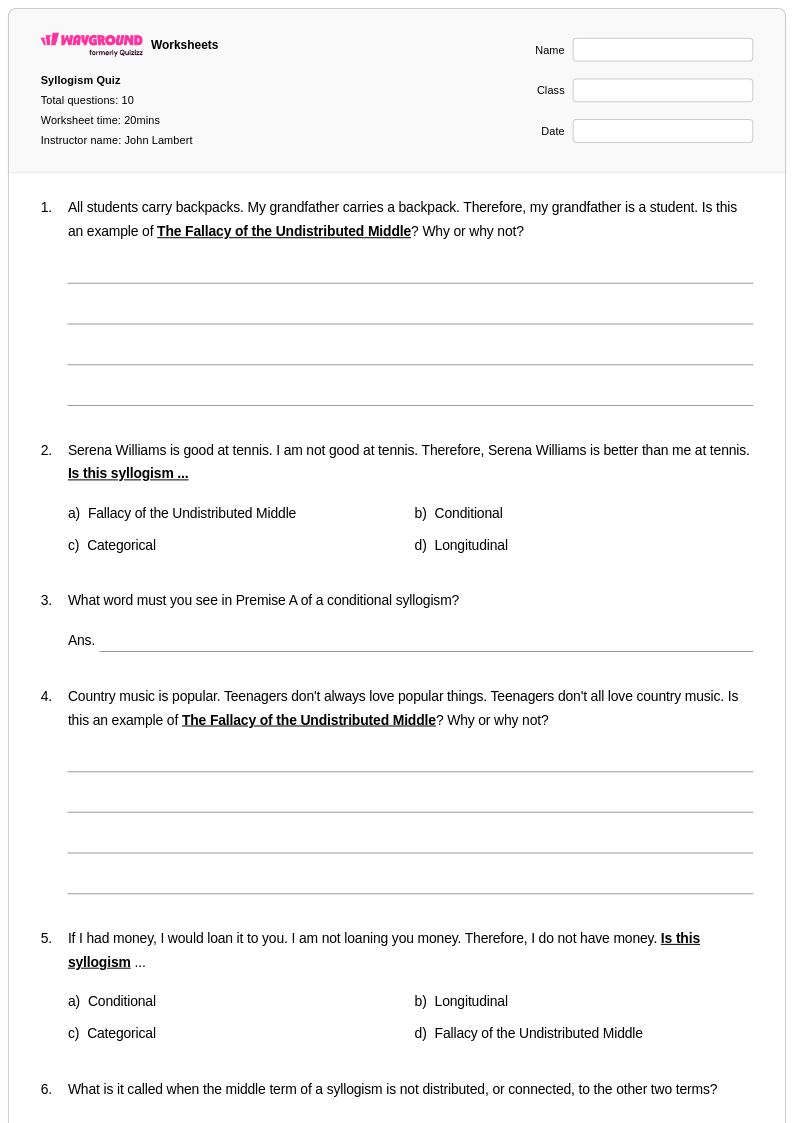
10 Q
9th
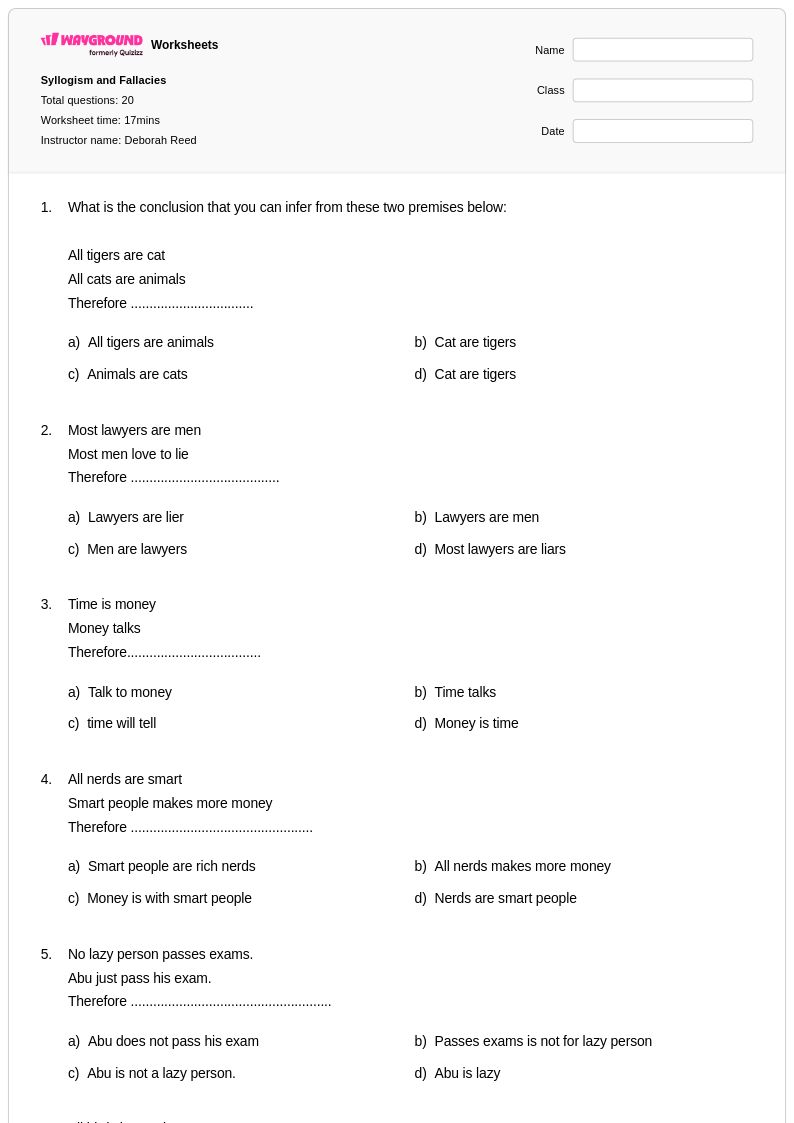
20 Q
9th
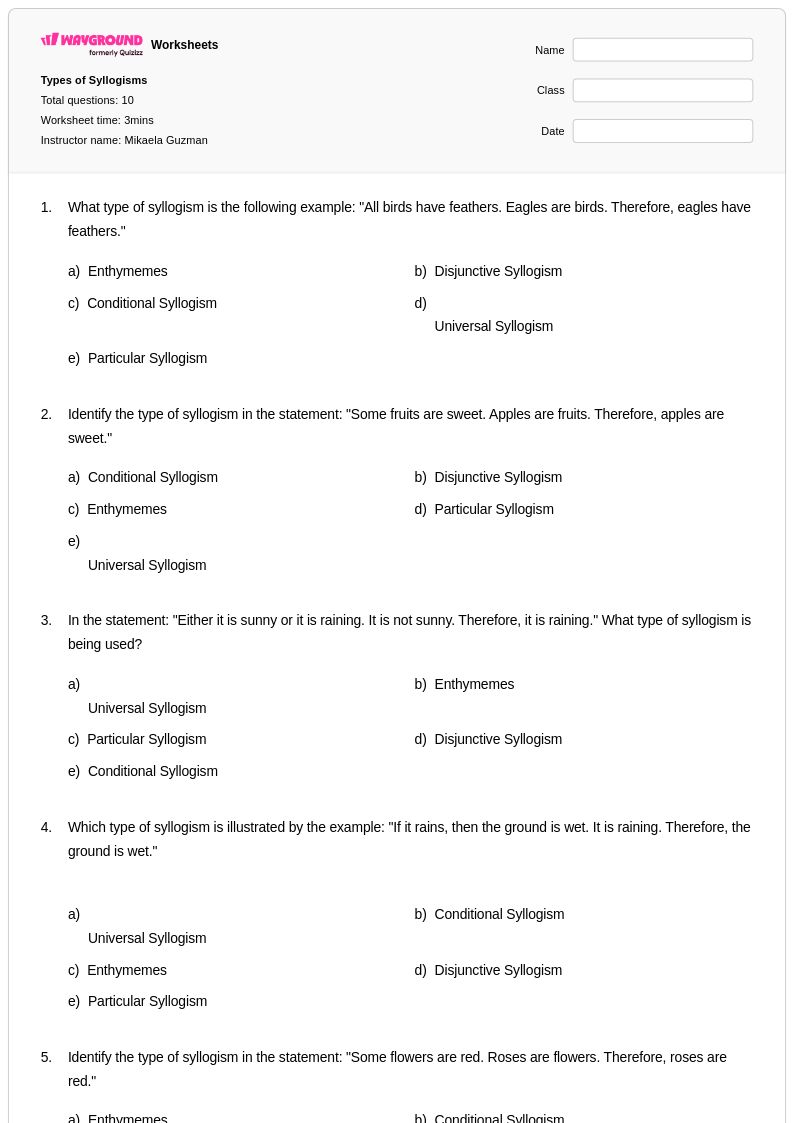
10 Q
9th
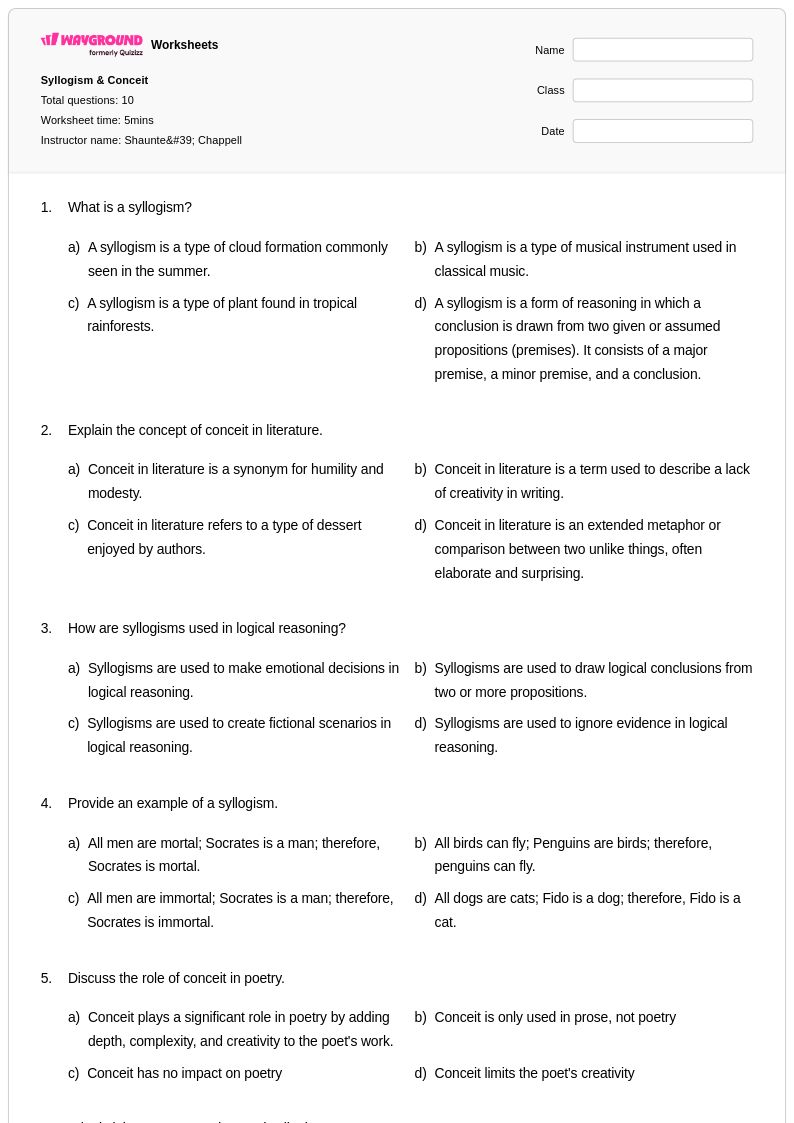
10 Q
9th
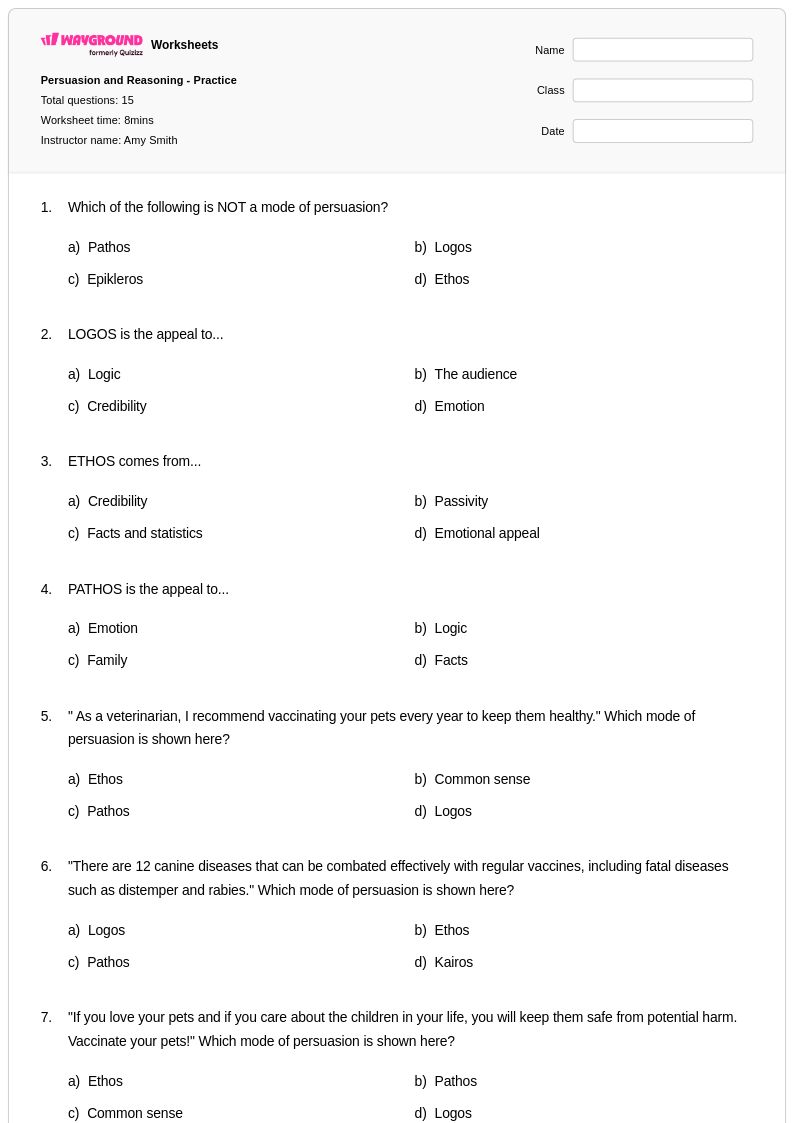
15 Q
9th
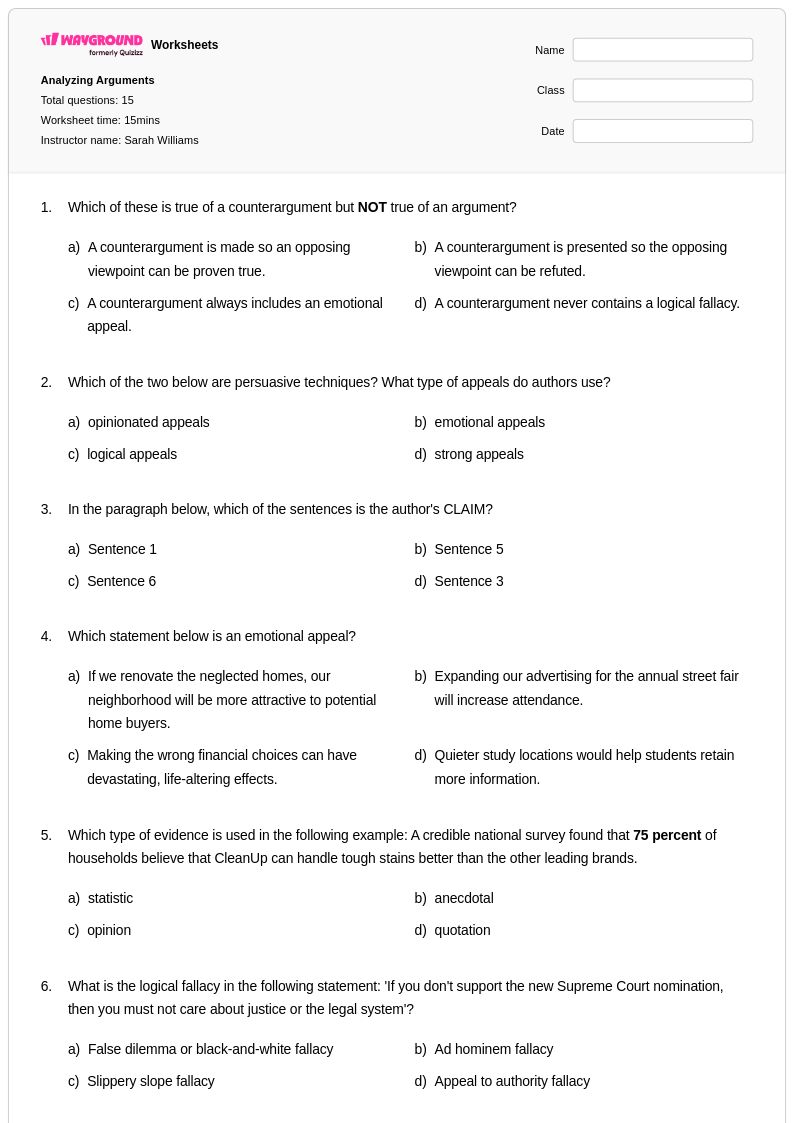
15 Q
8th - Uni
15 Q
4th - Uni
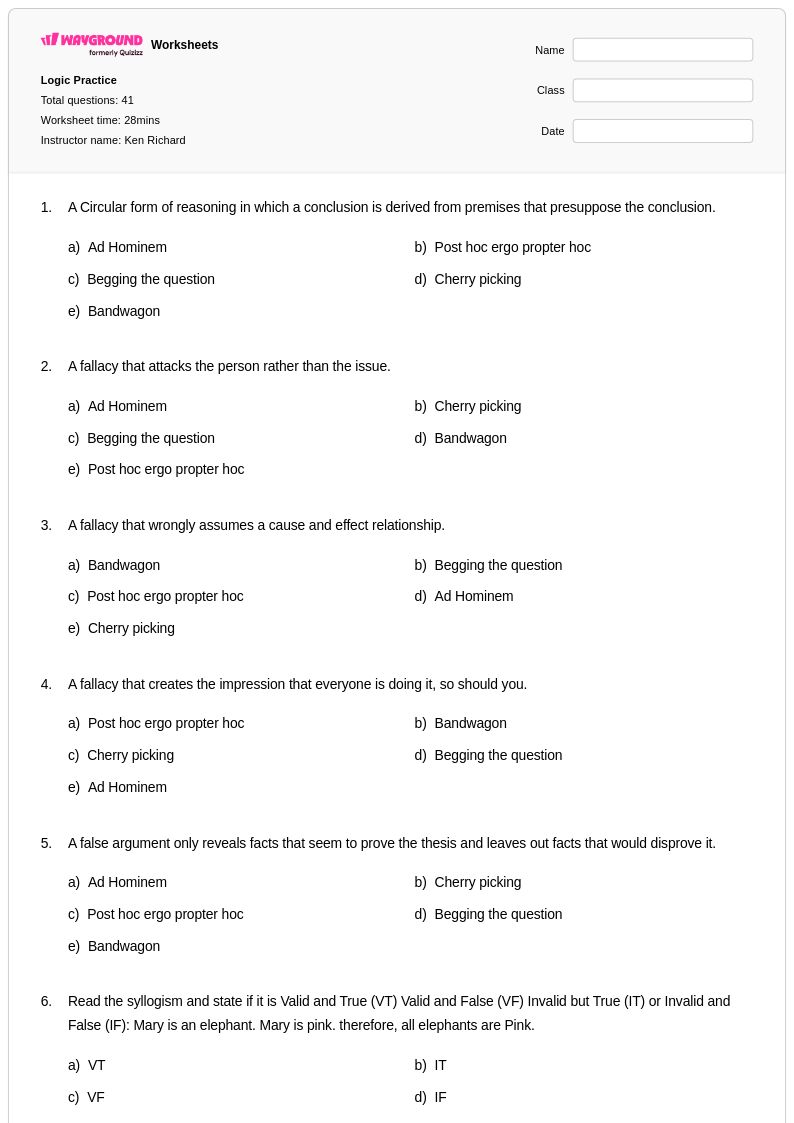
41 Q
9th
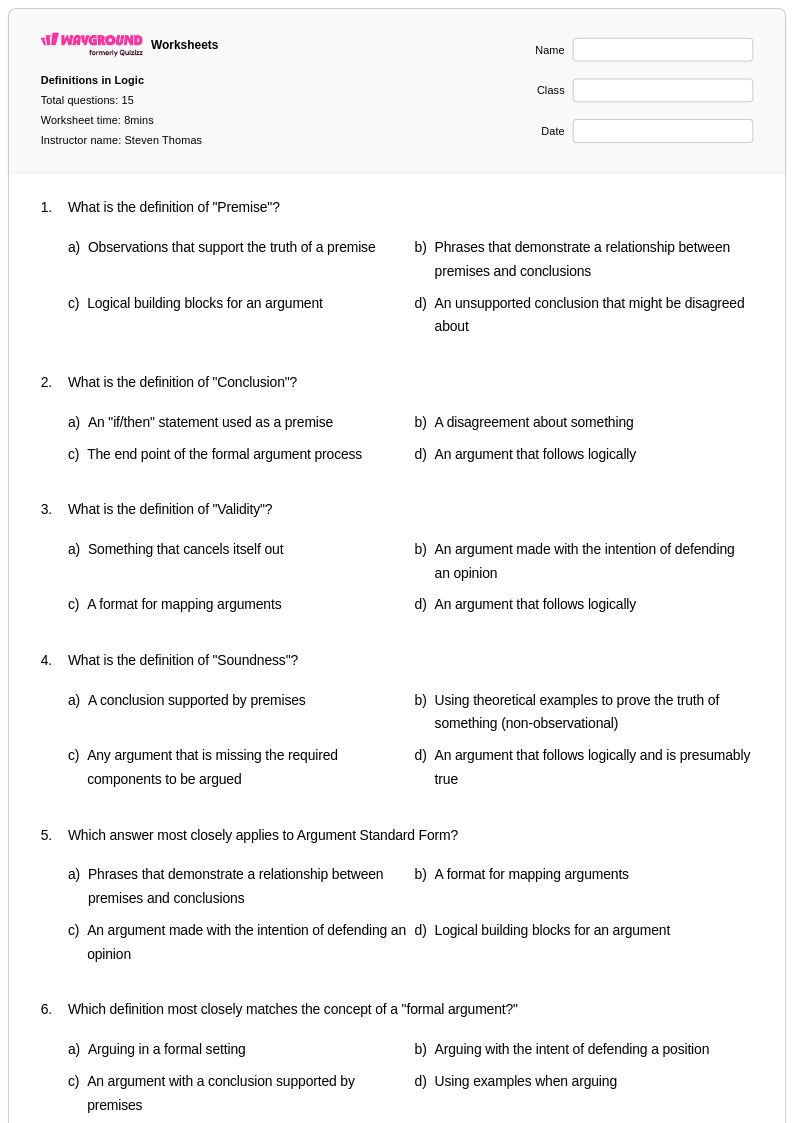
15 Q
9th - 12th
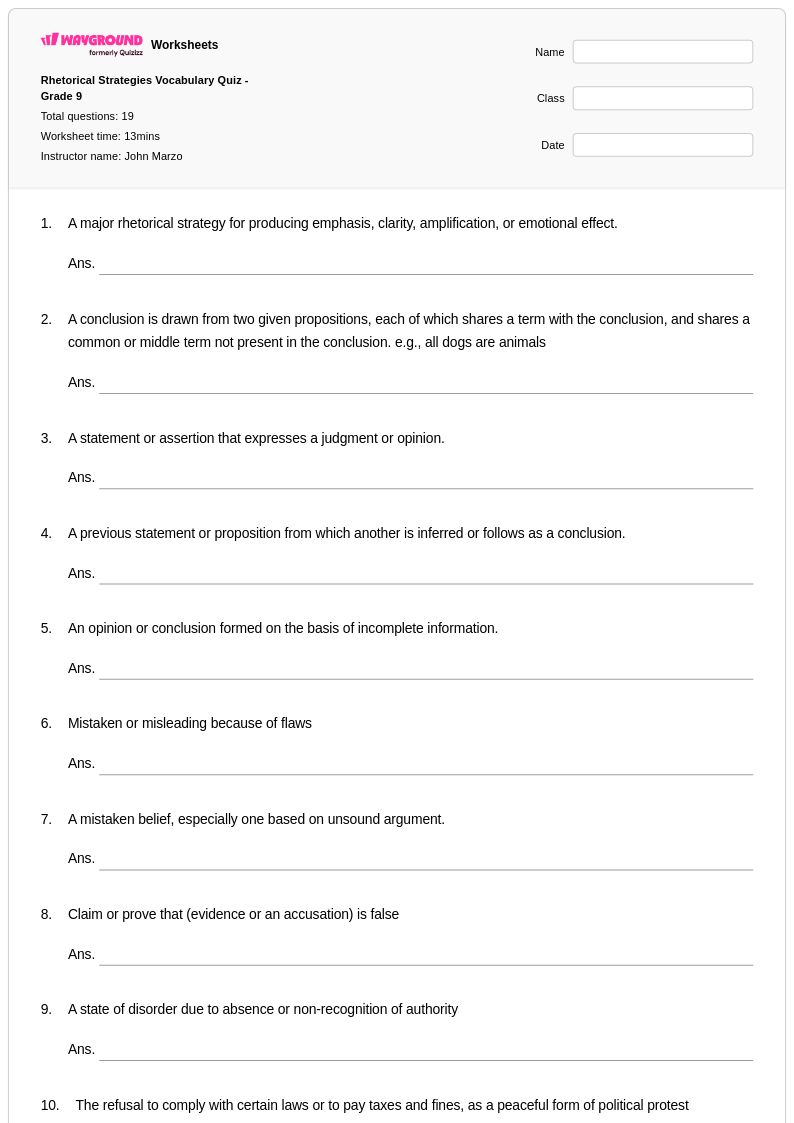
19 Q
9th
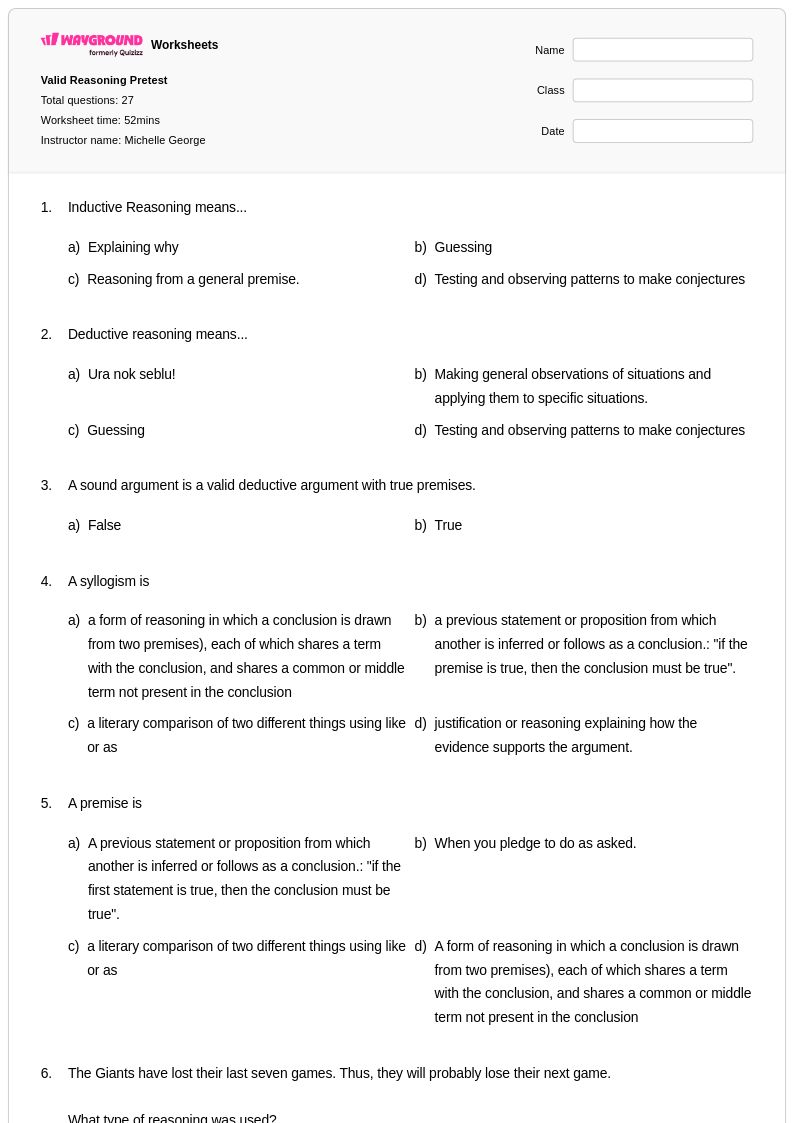
27 Q
9th - 12th
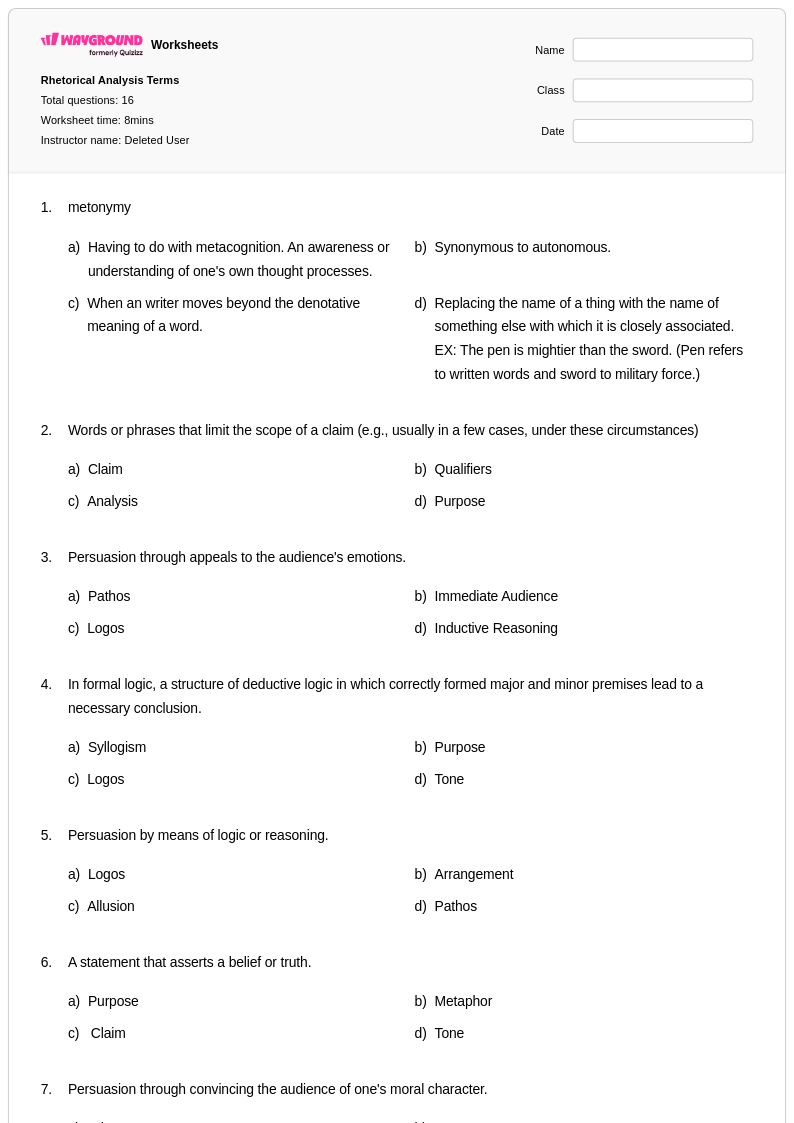
16 Q
9th - 12th
11 Q
9th - 12th
11 Q
9th - 12th
20 Q
9th - 12th
9 Q
9th - 12th
22 Q
9th
18 Q
9th
12 Q
9th - 12th
59 Q
9th - 12th
17 Q
9th - 12th
40 Q
9th - 12th
20 Q
1st - 12th
15 Q
9th
Explore Other Subject Worksheets for grade 9
Explore printable Syllogism worksheets for Grade 9
Grade 9 syllogism worksheets available through Wayground (formerly Quizizz) provide students with structured practice in analyzing logical arguments and identifying valid reasoning patterns. These comprehensive resources focus on developing critical thinking skills essential for advanced reading comprehension, helping students recognize premises, conclusions, and the logical connections between them. The worksheets strengthen students' ability to evaluate deductive reasoning in both literary and informational texts, teaching them to identify major premises, minor premises, and conclusions while assessing argument validity. Each worksheet includes detailed practice problems that guide students through various syllogistic structures, from simple categorical syllogisms to more complex conditional arguments, with complete answer keys that support independent learning and self-assessment. These free printables offer educators ready-to-use materials that systematically build logical reasoning skills crucial for academic success across all subjects.
Wayground (formerly Quizizz) empowers teachers with millions of educator-created syllogism worksheets specifically designed for Grade 9 students, featuring robust search and filtering capabilities that enable quick identification of materials aligned with specific learning objectives and educational standards. The platform's differentiation tools allow teachers to customize worksheet difficulty levels, modify practice problems, and adapt content to meet diverse student needs, whether for remediation of foundational logic skills or enrichment activities for advanced learners. These resources are available in both printable pdf formats for traditional classroom use and digital formats for interactive learning environments, providing maximum flexibility for lesson planning and implementation. Teachers can efficiently organize skill practice sessions, create targeted interventions for students struggling with logical reasoning concepts, and seamlessly integrate syllogism instruction into broader reading comprehension curricula through these adaptable, standards-aligned materials.
FAQs
How do I teach syllogisms to students who are new to logical reasoning?
What kinds of exercises help students practice identifying valid and invalid syllogisms?
What mistakes do students commonly make when working with syllogisms?
How does practicing syllogisms improve reading comprehension?
How can I use Wayground's syllogism worksheets in my classroom?
How can I differentiate syllogism instruction for students at different skill levels?