Free Printable Applied Problems Worksheets for Grade 7
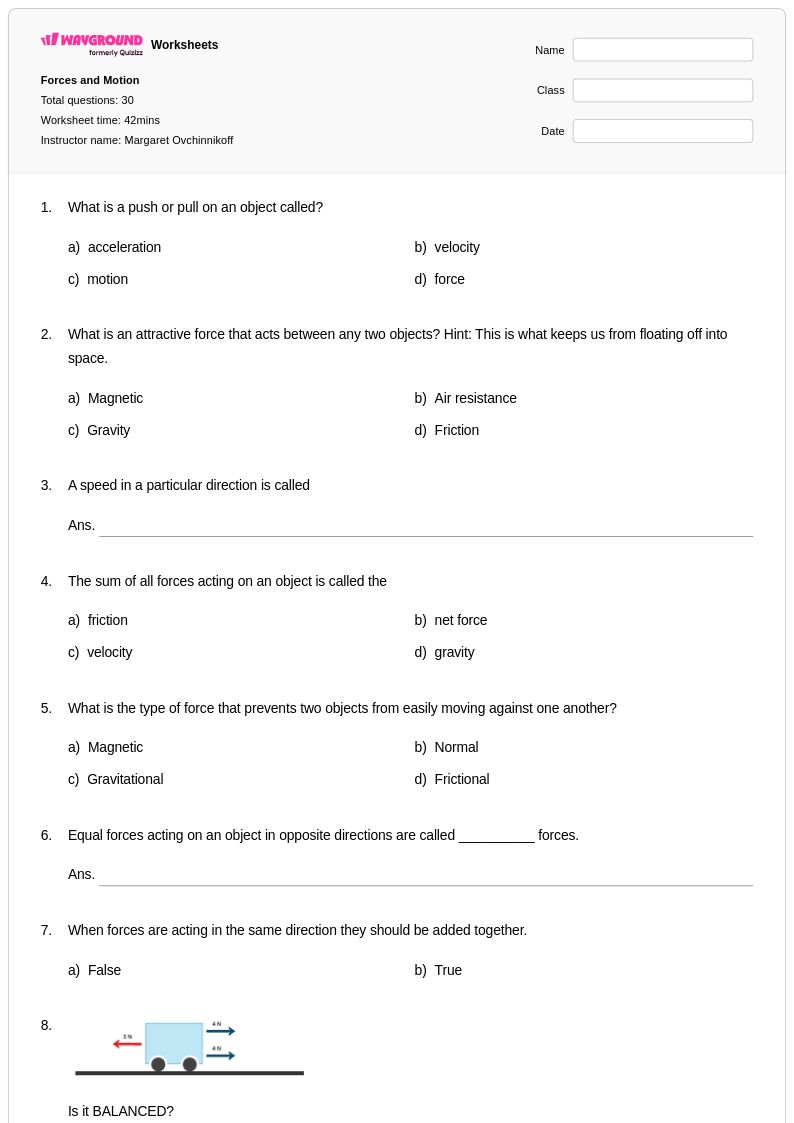
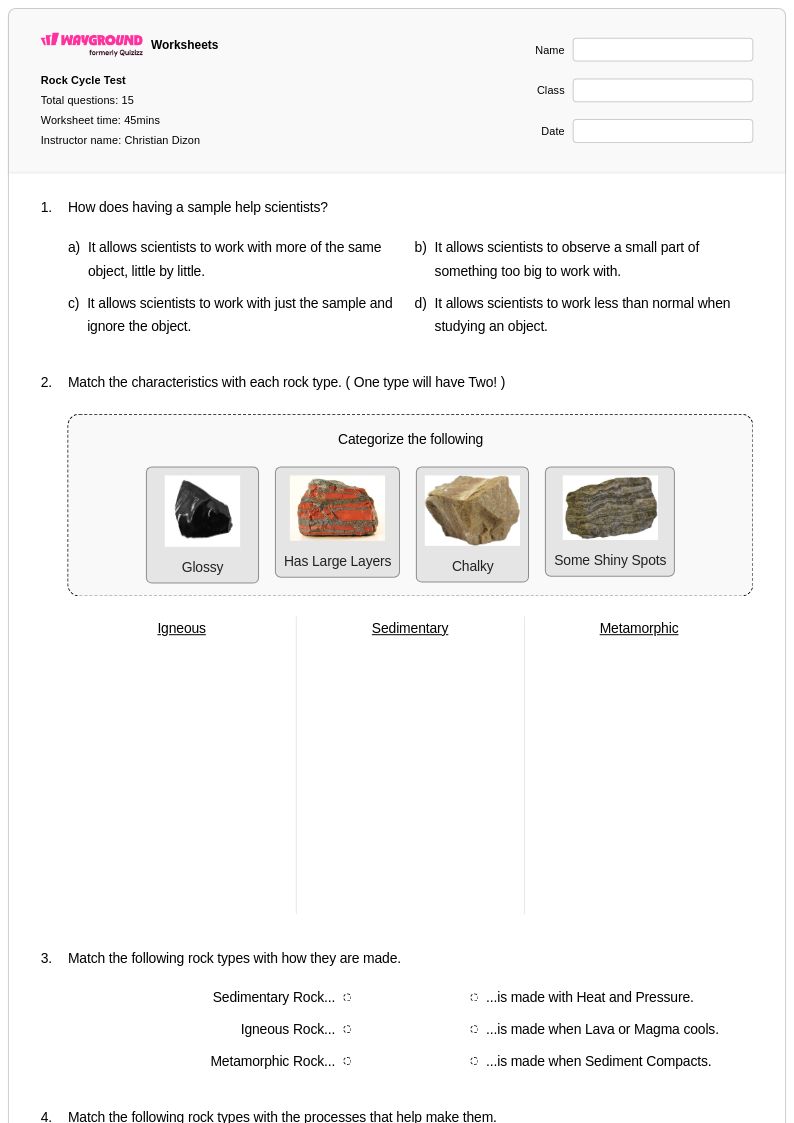
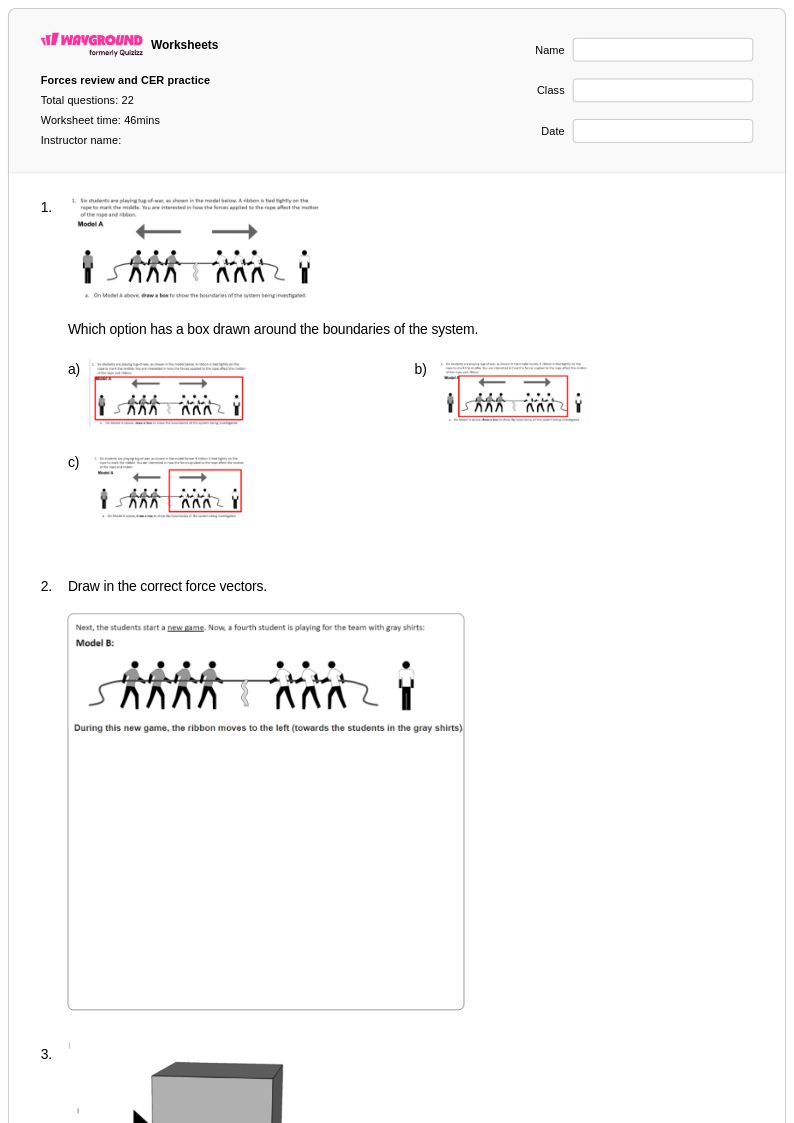
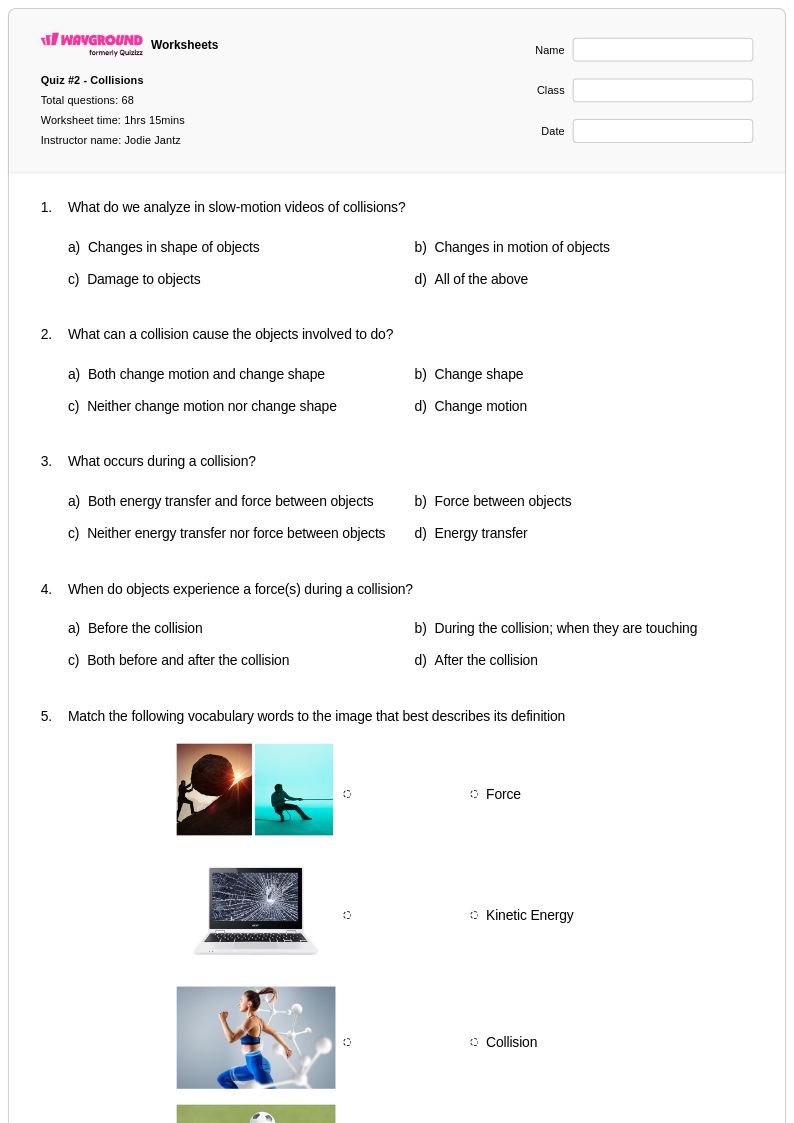
Wayground's Grade 7 applied problems worksheets provide free printables and practice problems with answer keys to help students master real-world applications of units and measurement concepts.
Explore printable Applied Problems worksheets for Grade 7
Applied problems worksheets for Grade 7 units and measurement through Wayground (formerly Quizizz) provide students with authentic, real-world scenarios that require the practical application of measurement concepts and unit conversions. These comprehensive worksheets challenge seventh-grade students to solve complex problems involving length, mass, volume, temperature, and time across both metric and customary systems, strengthening their analytical thinking and mathematical reasoning skills. Each worksheet collection includes detailed answer keys and step-by-step solutions, making them valuable resources for independent practice, homework assignments, and classroom assessments. The free printables cover diverse problem types, from calculating material quantities for construction projects to determining cooking measurements and scientific calculations, ensuring students can connect abstract measurement concepts to practical applications they encounter in daily life.
Wayground (formerly Quizizz) empowers educators with millions of teacher-created applied problems worksheets specifically designed for Grade 7 units and measurement instruction, featuring robust search and filtering capabilities that allow teachers to locate resources aligned with specific curriculum standards and learning objectives. The platform's differentiation tools enable teachers to customize worksheet difficulty levels and problem complexity to meet diverse student needs, while flexible formatting options provide both printable pdf versions for traditional classroom use and digital formats for online learning environments. These extensive worksheet collections support comprehensive lesson planning by offering varied problem sets for initial instruction, targeted remediation for struggling learners, and enrichment opportunities for advanced students, ensuring that all seventh-grade students can develop mastery of measurement applications through systematic skill practice and assessment.
FAQs
How do I teach applied problems in units and measurement?
Start by grounding instruction in contexts students encounter in real life, such as cooking measurements, medication dosages, or construction projects, before introducing formal conversion procedures. Build from single-step unit conversions to multi-step problems that require students to chain conversions across metric and imperial systems. Consistently ask students to justify why a particular unit is appropriate for a given situation, which reinforces conceptual understanding alongside procedural fluency.
What exercises help students practice applied measurement problems?
Effective practice involves scenarios that require more than simple recall, such as calculating the amount of material needed for an engineering task, converting experimental data between unit systems, or interpreting measurement precision in a lab context. Worksheets that present multi-step problems in authentic scientific situations are especially useful because they mirror the reasoning demands students will face in science and technical courses. Spiraling difficulty across a practice set helps students build confidence before tackling complex conversion chains.
What mistakes do students commonly make with unit conversions and applied measurement?
The most frequent error is inverting the conversion factor, which produces an answer in the wrong unit and is often a magnitude off. Students also struggle with significant figures, either carrying too many digits through a calculation or rounding prematurely. A third common issue is failing to check whether the final unit matches what the problem actually asks for, especially in multi-step problems where intermediate units are discarded along the way.
How do I differentiate applied measurement practice for students at different skill levels?
For students who are still developing fluency, reduce the number of conversion steps required and provide unit reference charts so cognitive load stays focused on reasoning rather than memorization. For advanced learners, introduce problems that require selecting the appropriate unit system and evaluating measurement precision with significant figures. On Wayground, teachers can apply accommodations such as reduced answer choices or read aloud support to individual students, while the rest of the class receives standard settings without any notification.
How do I use Wayground's applied problems worksheets in my classroom?
Wayground's applied measurement worksheets are available as printable PDFs for traditional classroom use and in digital formats for technology-integrated environments, giving teachers flexibility depending on their setting. Teachers can also host worksheets directly as a quiz on Wayground, enabling real-time tracking of student responses. Each worksheet includes a complete answer key, so these materials work equally well for guided practice, independent work, or targeted remediation sessions.