Free Printable Atmospheric Circulation and Weather Systems Worksheets for Grade 7
Grade 7 atmospheric circulation and weather systems printable worksheets help students master air pressure patterns, wind formation, and climate systems through engaging practice problems and comprehensive answer keys available as free PDF downloads.
Explore printable Atmospheric Circulation and Weather Systems worksheets for Grade 7
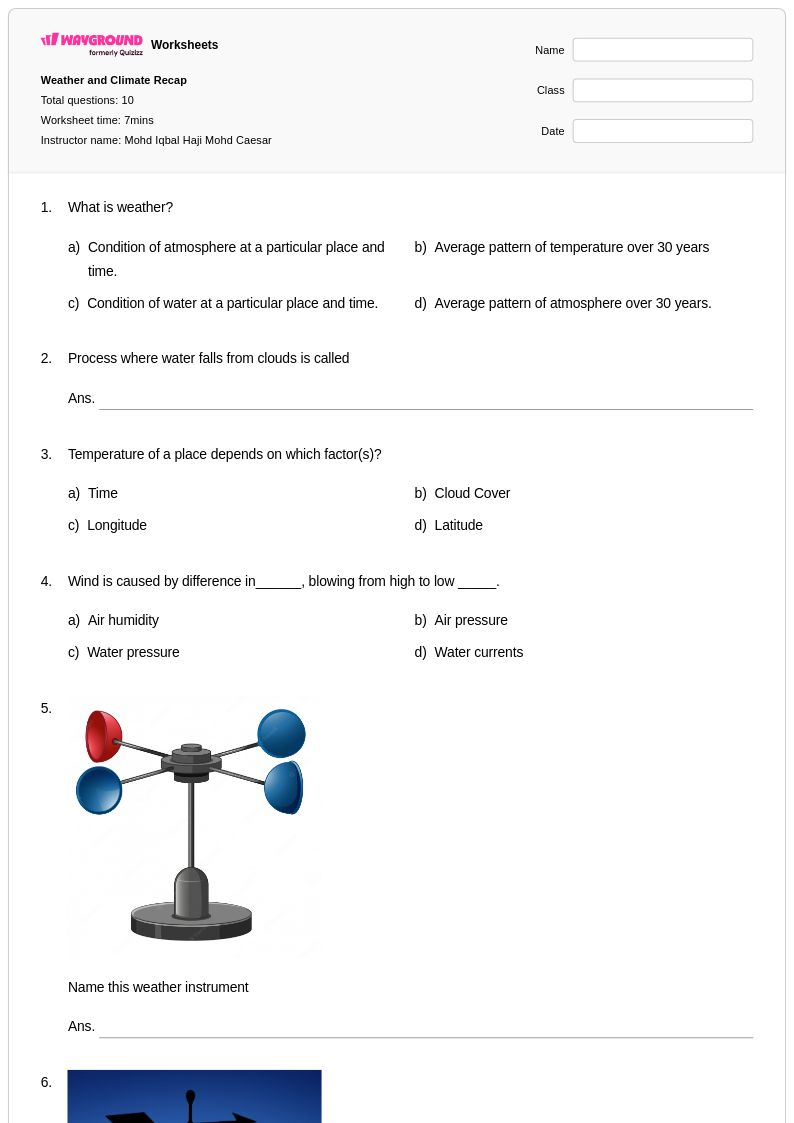
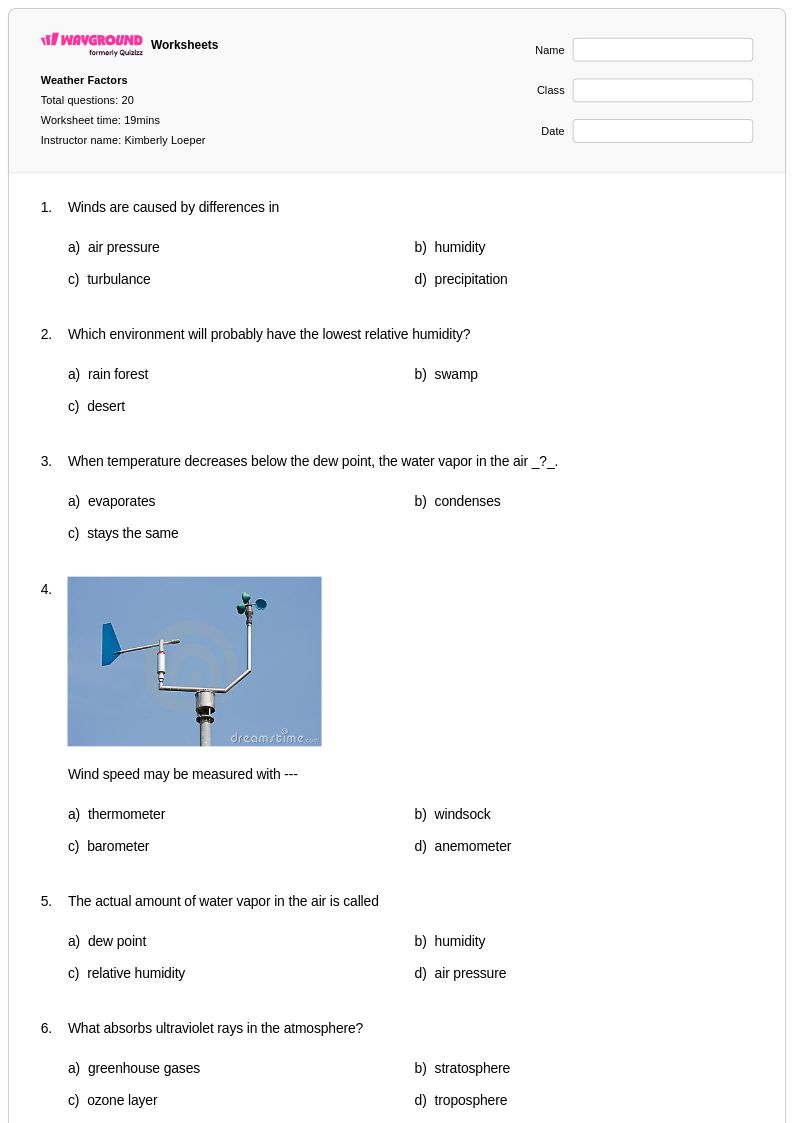
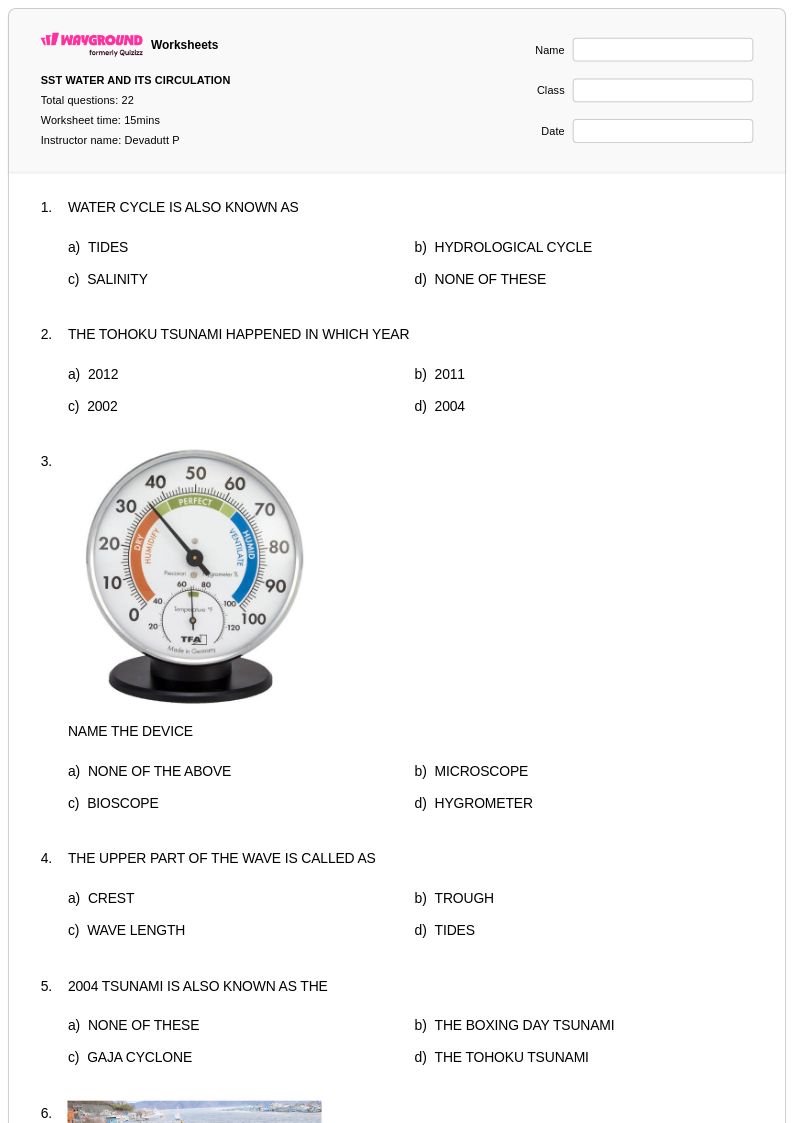
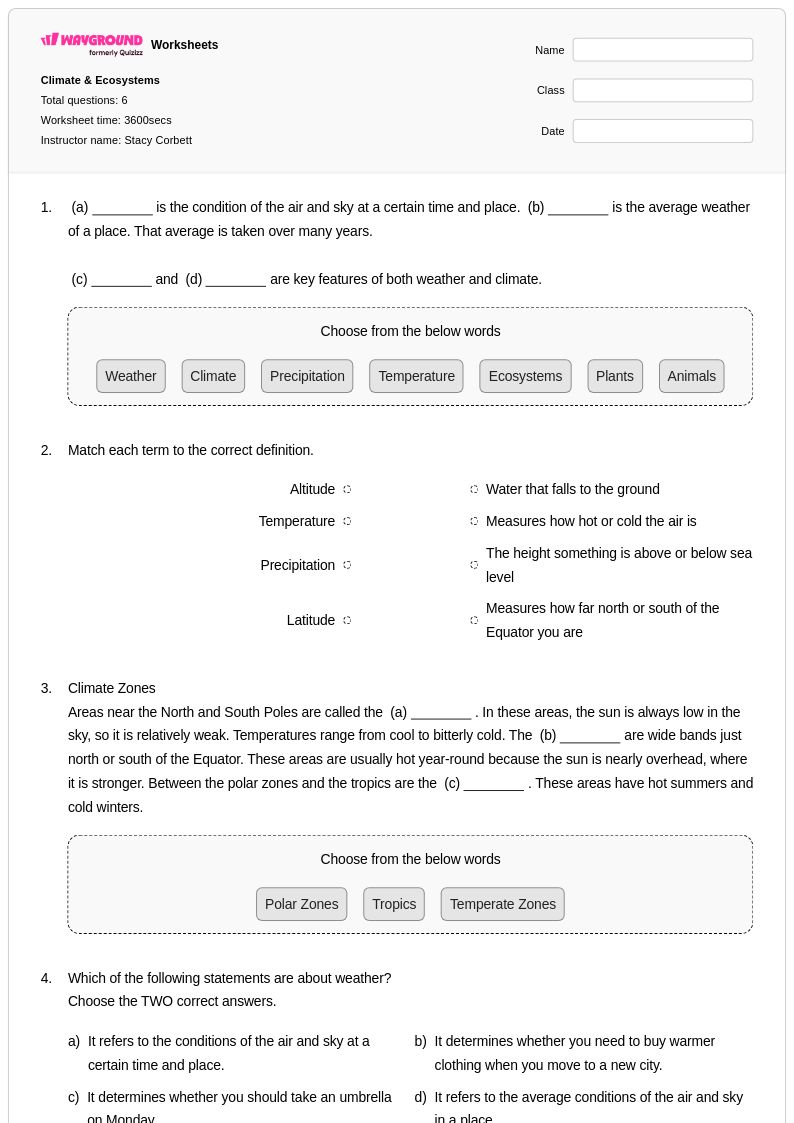
Grade 7 atmospheric circulation and weather systems worksheets available through Wayground (formerly Quizizz) provide comprehensive coverage of Earth's dynamic weather patterns and the complex air movements that drive global climate systems. These educational resources strengthen students' understanding of pressure systems, wind patterns, air masses, fronts, and the Coriolis effect while developing critical thinking skills needed to analyze meteorological phenomena. The worksheet collection includes detailed practice problems that challenge students to interpret weather maps, predict storm movements, and explain the relationship between atmospheric pressure and wind formation. Each printable resource comes with a complete answer key, enabling both independent study and structured classroom activities, while free pdf downloads ensure accessibility for diverse learning environments.
Wayground's extensive library of teacher-created atmospheric circulation and weather systems materials supports educators with millions of professionally developed resources that can be easily located through advanced search and filtering capabilities. The platform's standards-aligned content allows teachers to quickly identify worksheets that match specific curriculum requirements, while built-in differentiation tools enable customization for varying skill levels within Grade 7 classrooms. These flexible resources are available in both printable pdf format and interactive digital versions, making them ideal for traditional instruction, homework assignments, remediation sessions, and enrichment activities. Teachers can efficiently plan comprehensive weather unit lessons, assess student understanding of atmospheric concepts, and provide targeted practice opportunities that reinforce essential meteorological principles and scientific reasoning skills.
FAQs
How do I teach atmospheric circulation and weather systems to middle or high school students?
Start by anchoring instruction in pressure differentials — students need to understand that air moves from high to low pressure before they can make sense of global wind patterns, jet streams, or cyclone formation. Use weather maps as primary sources, having students trace air movement and identify pressure systems before connecting those patterns to regional climate outcomes. Building from local weather observations toward global circulation models helps students see atmospheric science as cumulative rather than abstract.
What exercises help students practice identifying global wind patterns and pressure systems?
Effective practice exercises include weather map analysis tasks where students identify high and low pressure centers, predict wind direction, and infer likely weather conditions for a given region. Problems that ask students to explain the role of the Coriolis effect on wind deflection, or to trace the path of a mid-latitude cyclone across a synoptic chart, build both procedural and conceptual fluency. Worksheets that combine data interpretation with short-answer explanation prompts are especially useful for reinforcing the cause-and-effect relationships between pressure, temperature, and moisture.
What misconceptions do students commonly have about atmospheric circulation?
One of the most persistent misconceptions is that wind moves from cold to warm areas rather than from high to low pressure — students conflate temperature and pressure without distinguishing them as separate variables. Many students also misunderstand the Coriolis effect, believing it causes objects to curve because of a physical force rather than Earth's rotation changing the frame of reference beneath a moving air mass. A third common error is treating cyclones and anticyclones as opposites in a simple sense, without recognizing that their rotation direction and associated weather patterns differ systematically by hemisphere.
How can I differentiate atmospheric circulation worksheets for students at different skill levels?
For students who are still building foundational understanding, reduce the complexity of weather maps used and provide labeled diagrams with partially completed annotations before asking students to work independently. Advanced learners benefit from open-ended analysis tasks that ask them to connect jet stream positioning to seasonal weather anomalies or evaluate real atmospheric data sets. On Wayground, teachers can apply accommodations including reduced answer choices to lower cognitive load for individual students, or enable read-aloud support for students who need it, without affecting how other students experience the same assignment.
How do I use Wayground's atmospheric circulation and weather systems worksheets in my classroom?
Wayground's atmospheric circulation and weather systems worksheets are available as printable PDFs for traditional classroom use and in digital formats for technology-integrated environments, giving teachers flexibility depending on their classroom setup. Teachers can also host worksheets directly as a quiz on Wayground, allowing for streamlined digital assignment and student progress monitoring. Each worksheet includes a complete answer key, supporting both independent student practice and efficient teacher assessment without additional preparation time.
How does atmospheric circulation connect to the weather patterns students observe locally?
Regional weather is largely determined by where a location sits relative to global circulation cells, persistent pressure systems, and seasonal shifts in the jet stream. For example, areas under frequent high-pressure dominance tend to experience clear, dry conditions, while regions regularly influenced by low-pressure systems see more precipitation and variable temperatures. Connecting large-scale circulation features to locally observable weather helps students see atmospheric science as directly relevant rather than purely theoretical, which strengthens retention and analytical reasoning.

![TX25-26 - AoC Spanish Exploration [2] - Printable Atmospheric-circulation-and-weather-systems Worksheets Grade 7 - Wayground](https://quizizz-static.s3.amazonaws.com/_media/worksheets-new/68b0a9b6840e46ed17494a63-tx25-26-aoc-spanish-exploration-2)