Free Printable Blend Words Worksheets for Kindergarten
Discover free kindergarten blend words phonics worksheets and printables through Wayground that help young learners practice combining letter sounds with engaging activities, practice problems, and comprehensive answer keys.
Explore printable Blend Words worksheets for Kindergarten
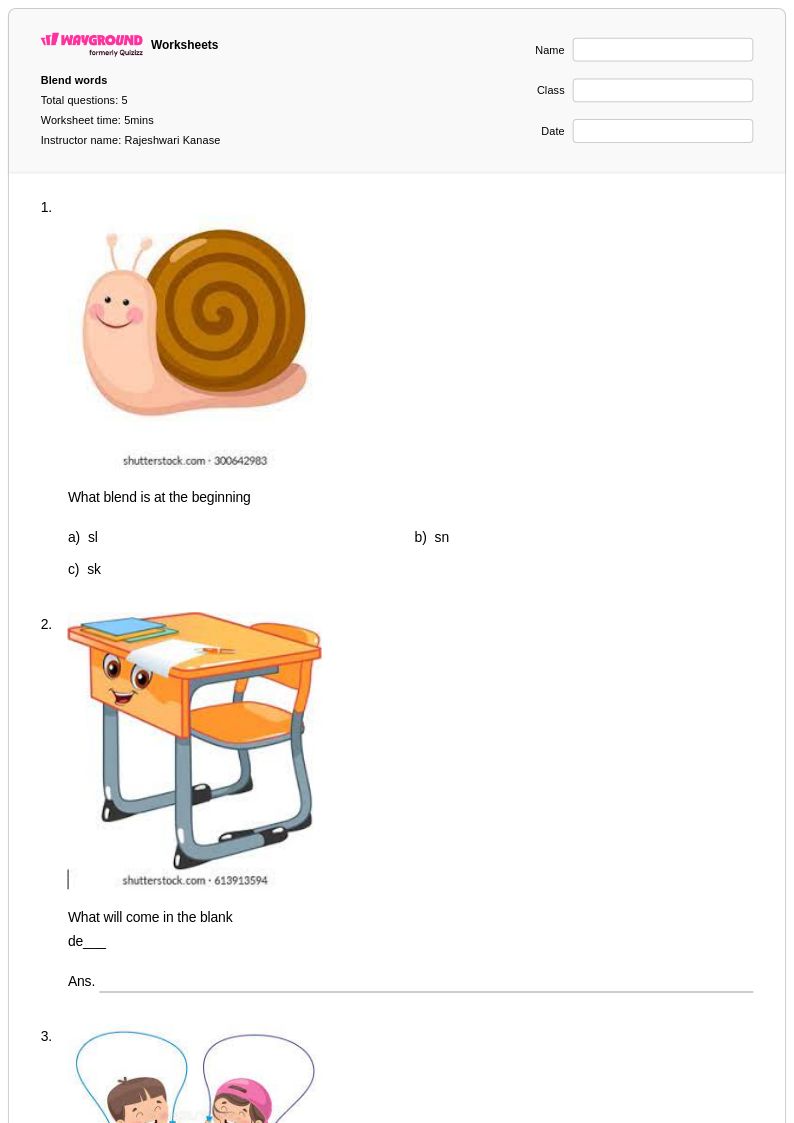
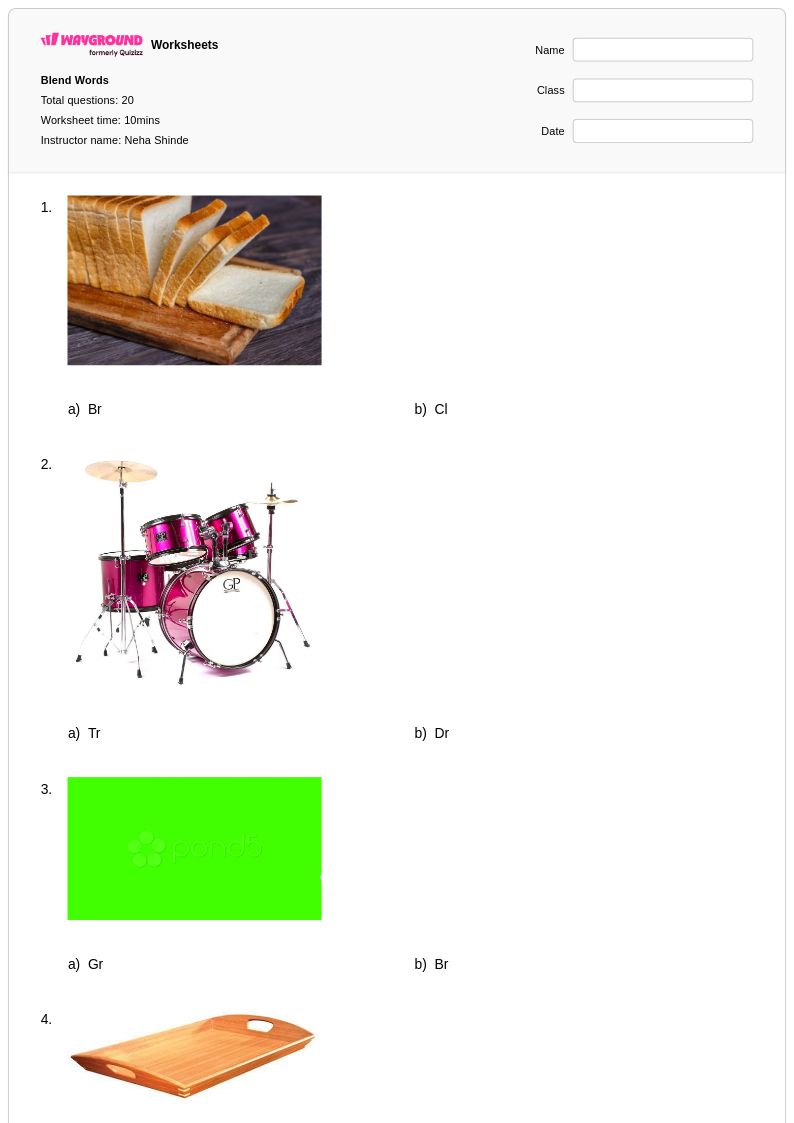
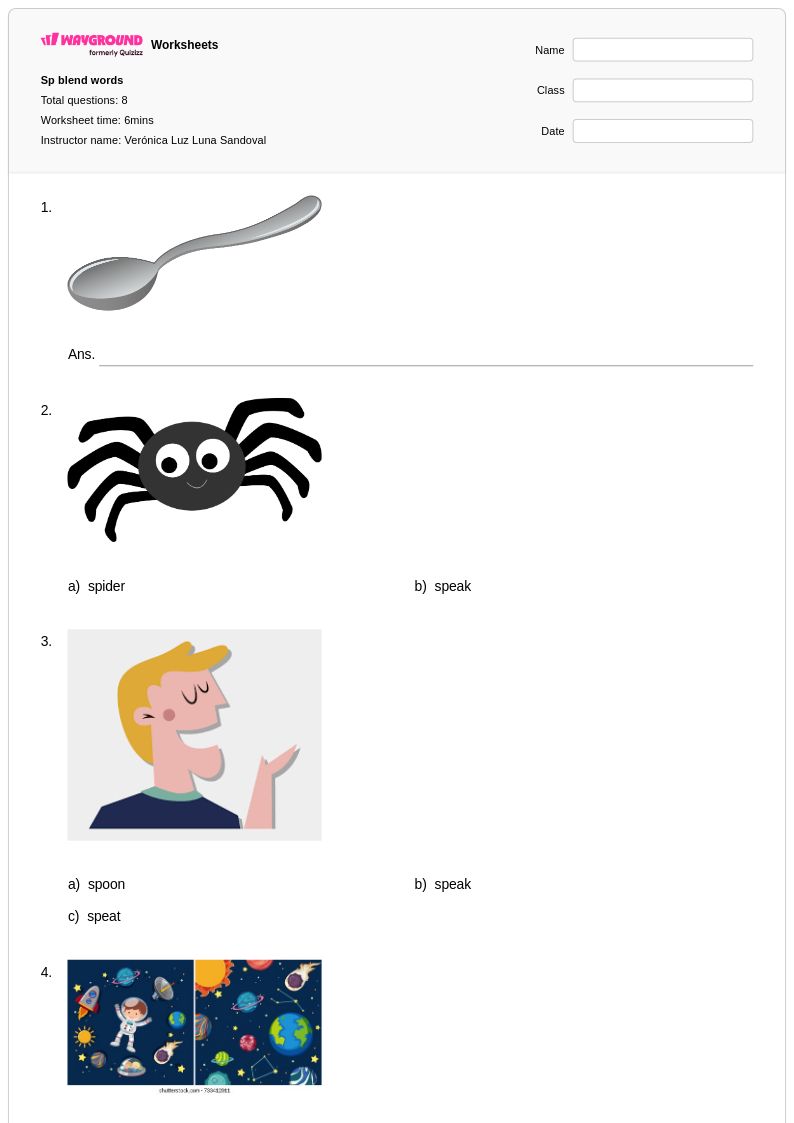
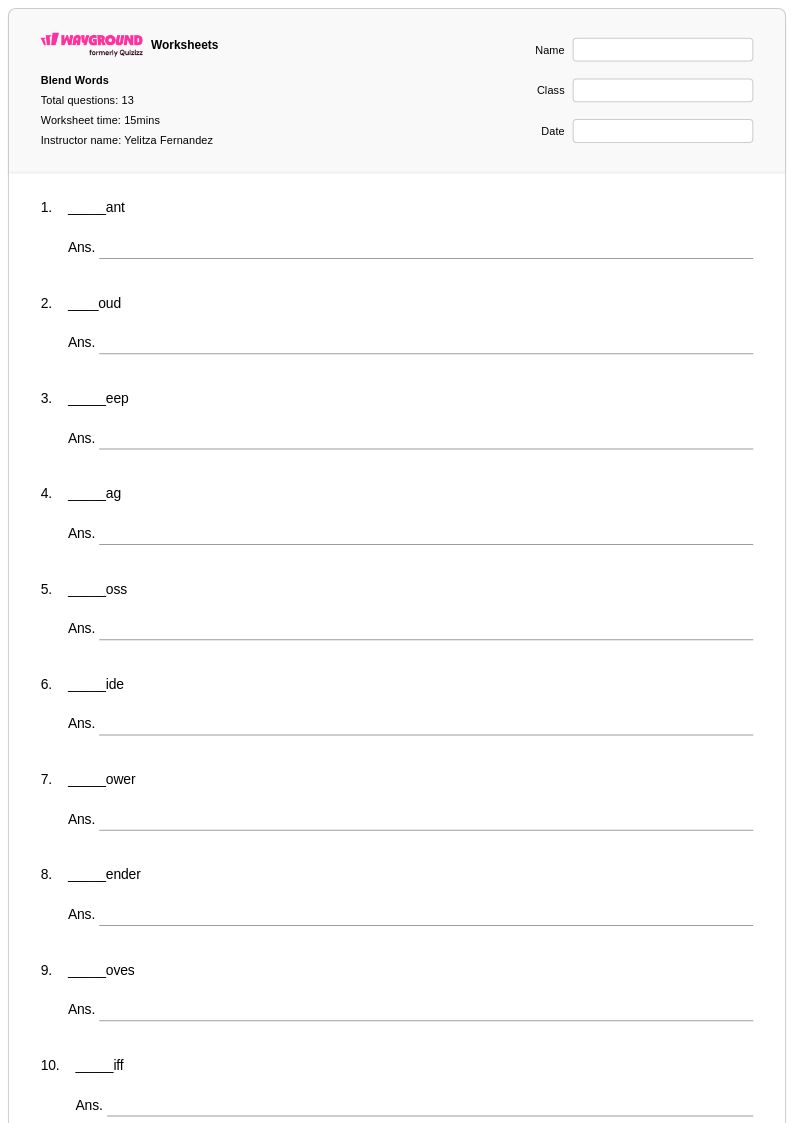
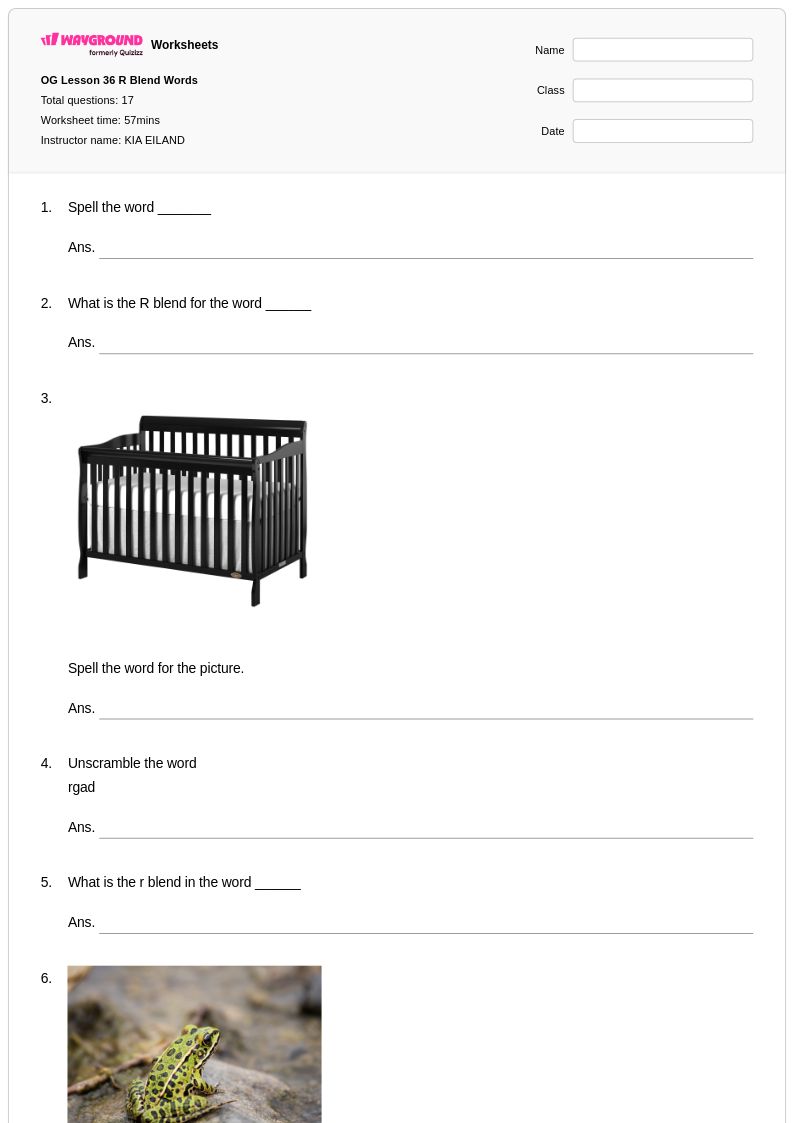
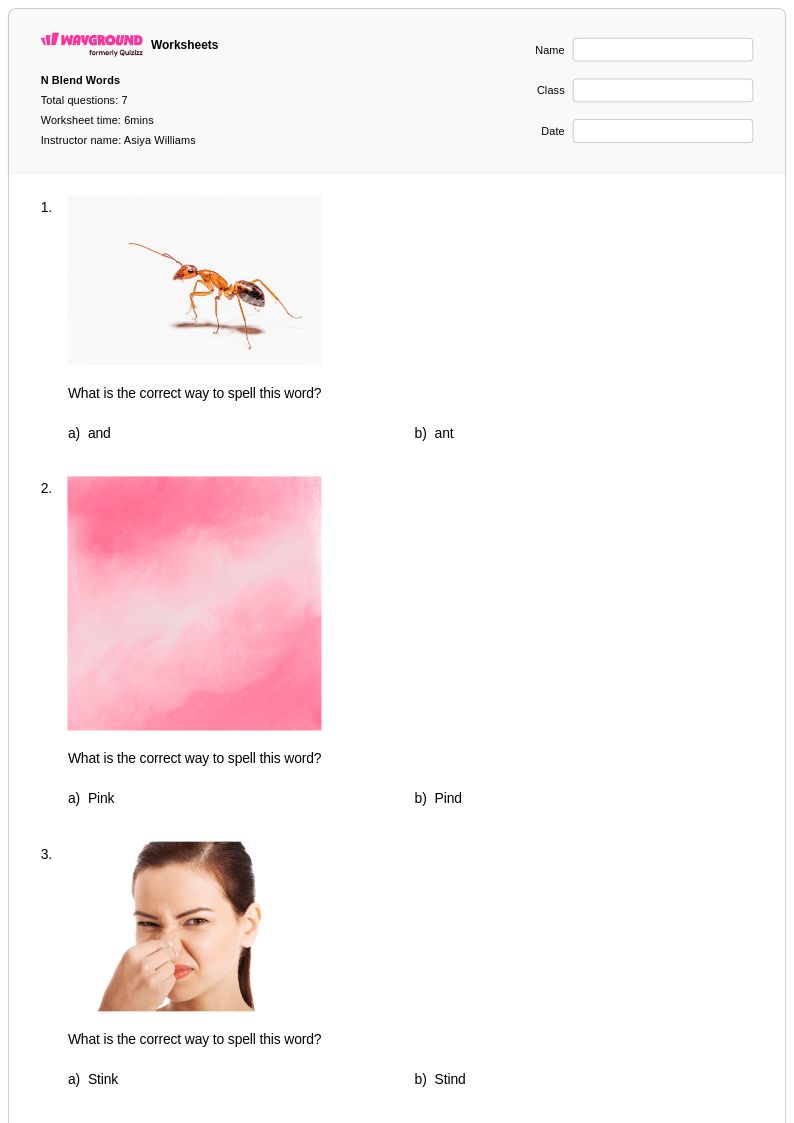
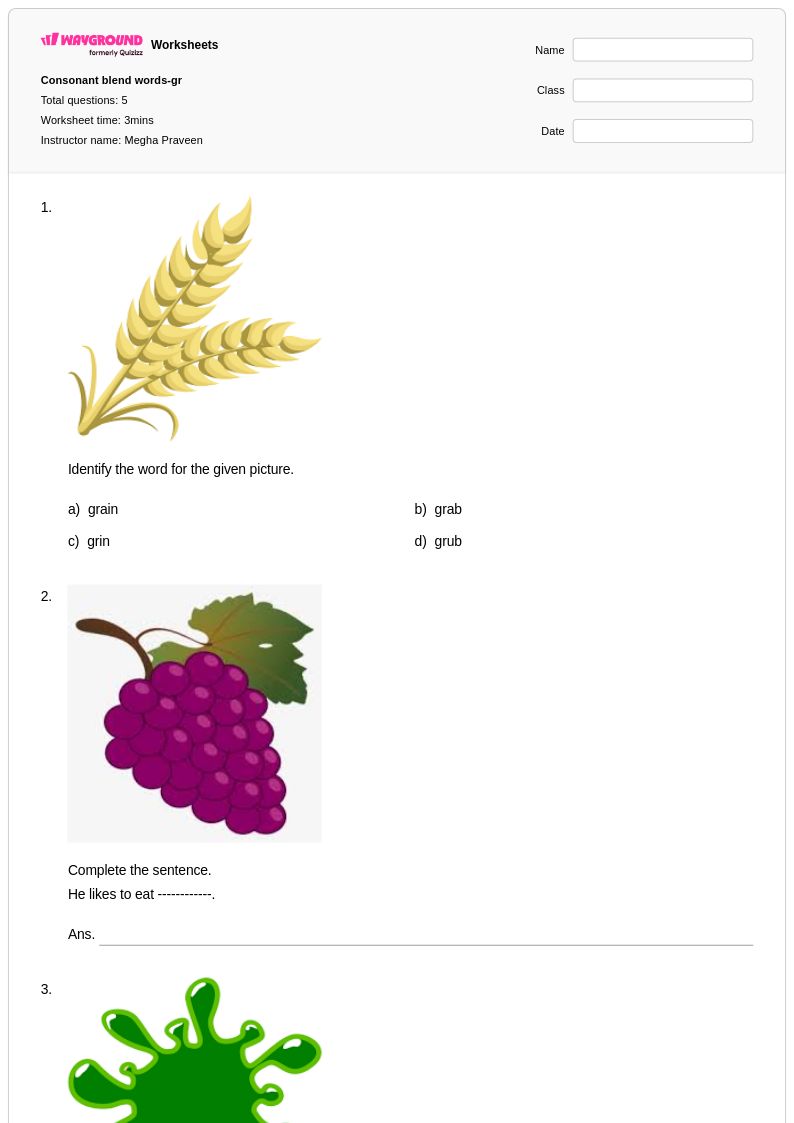
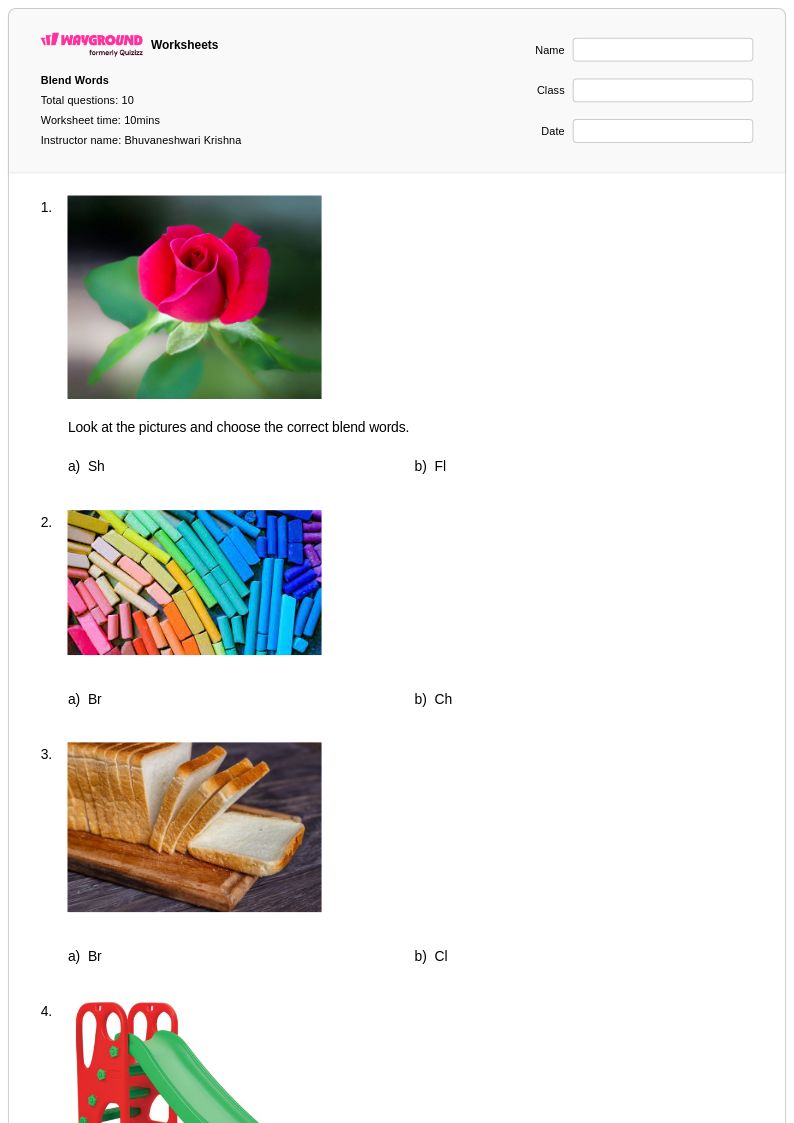
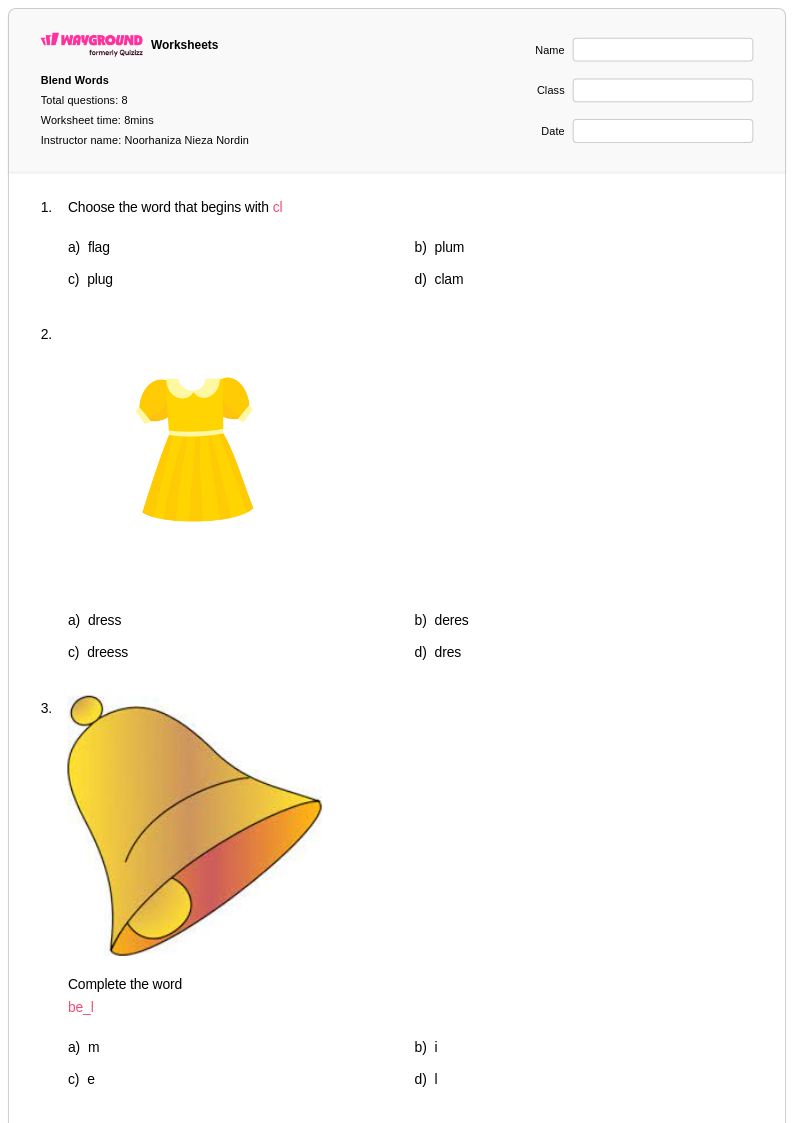
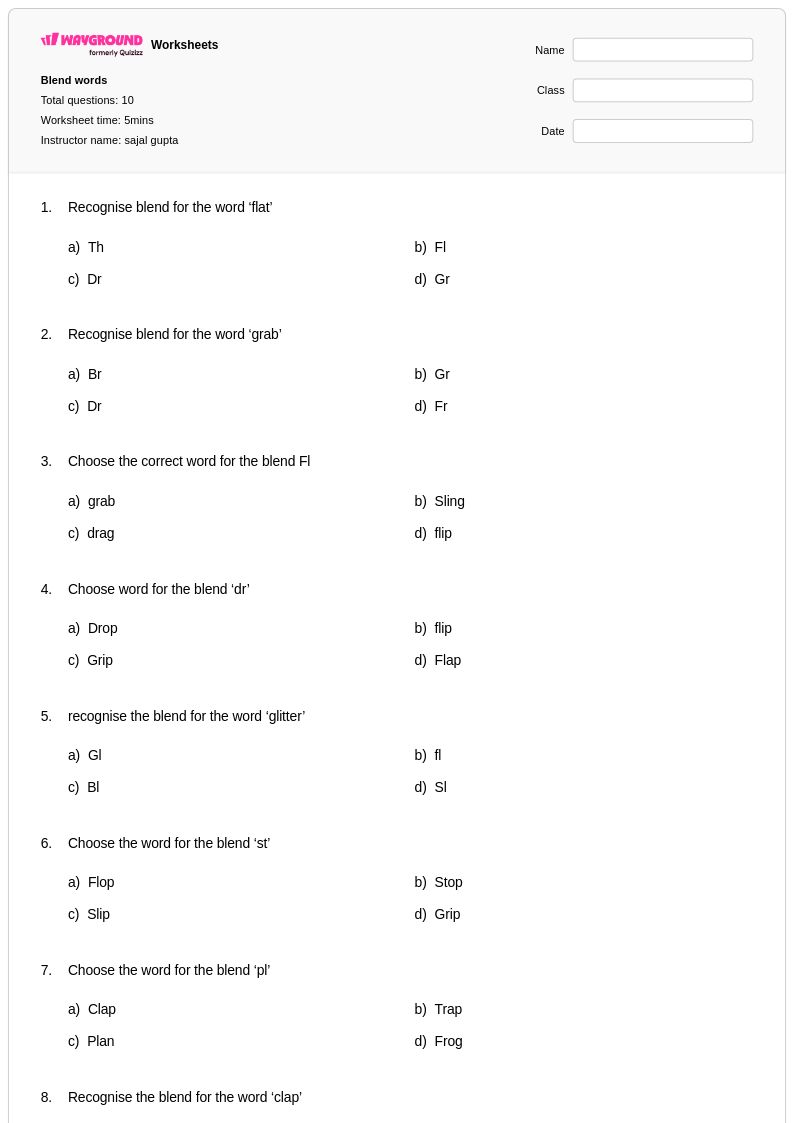
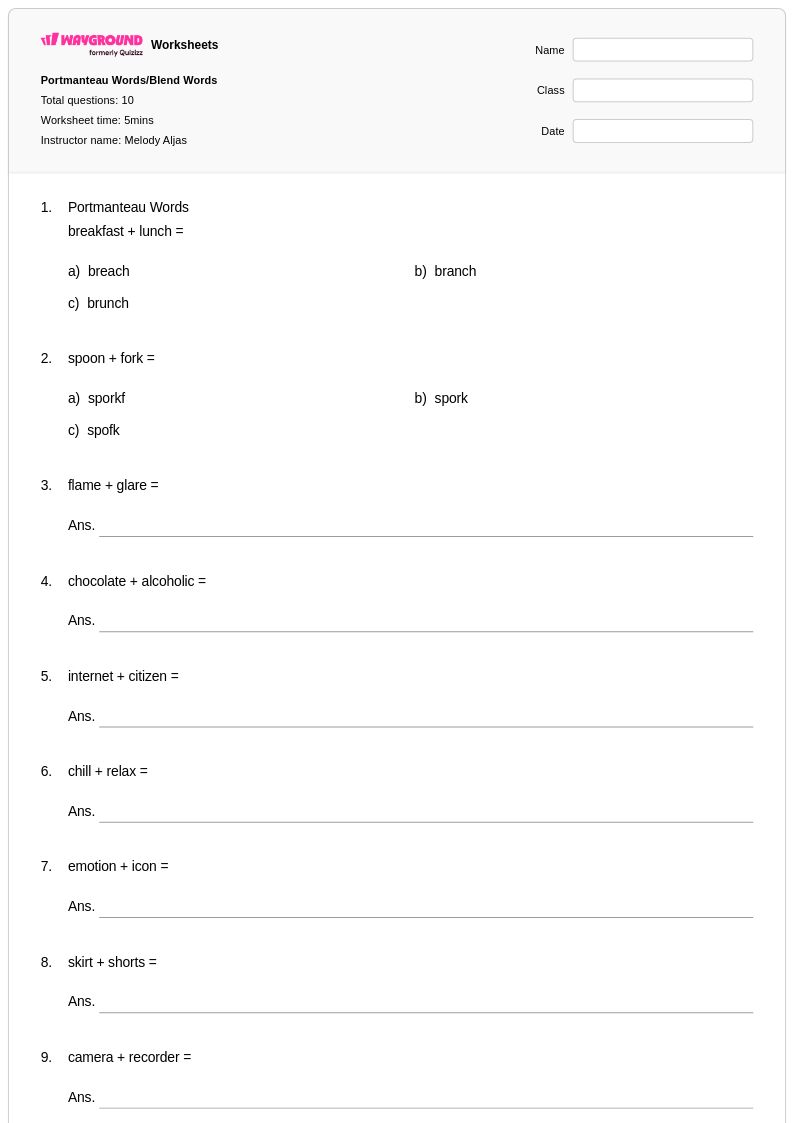
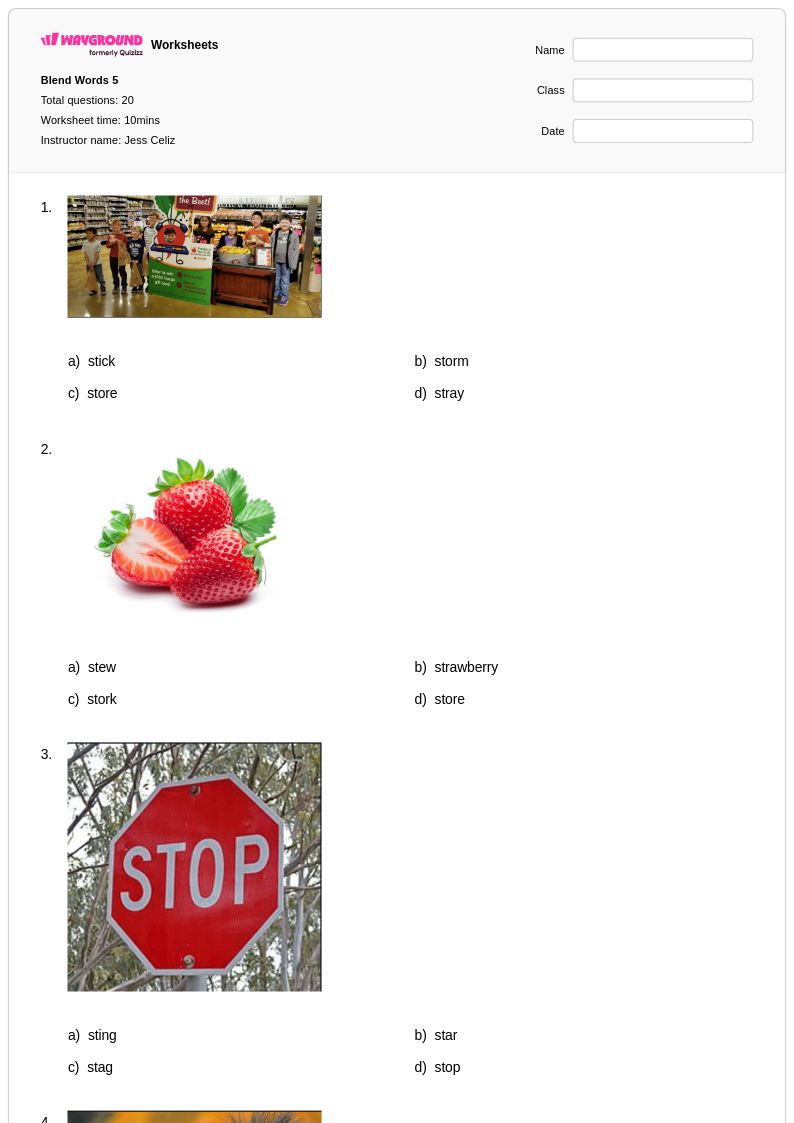
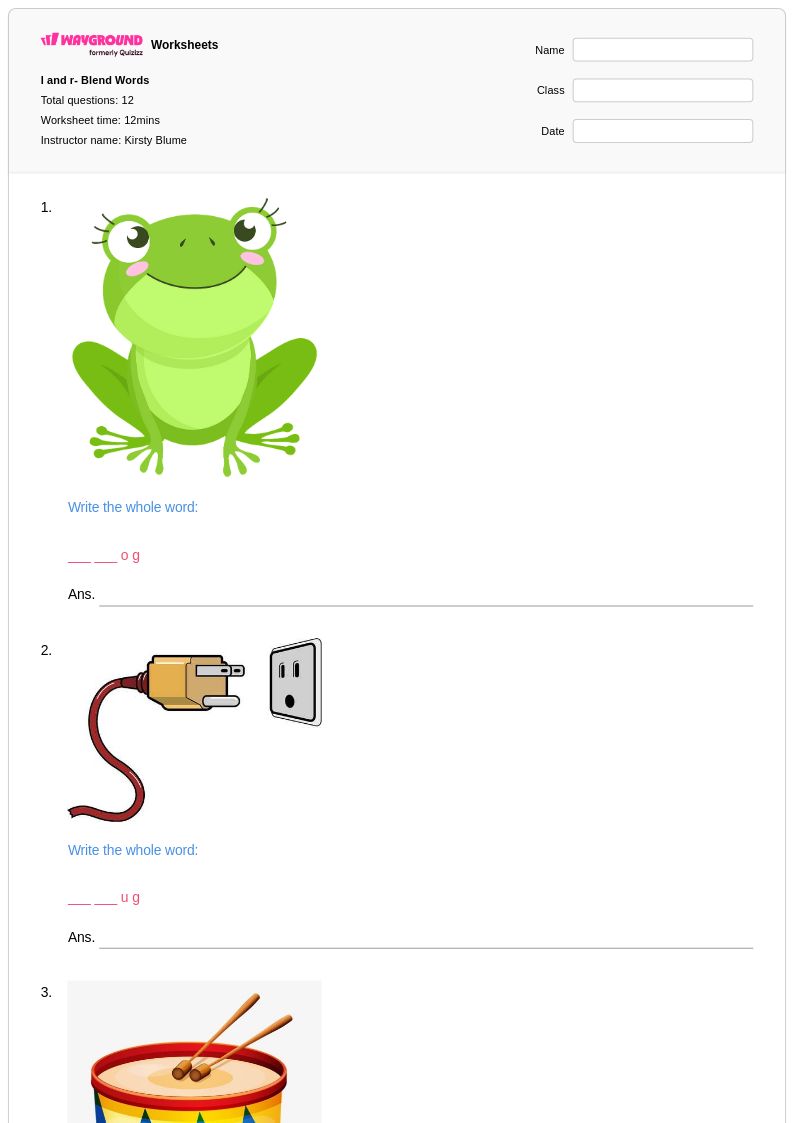
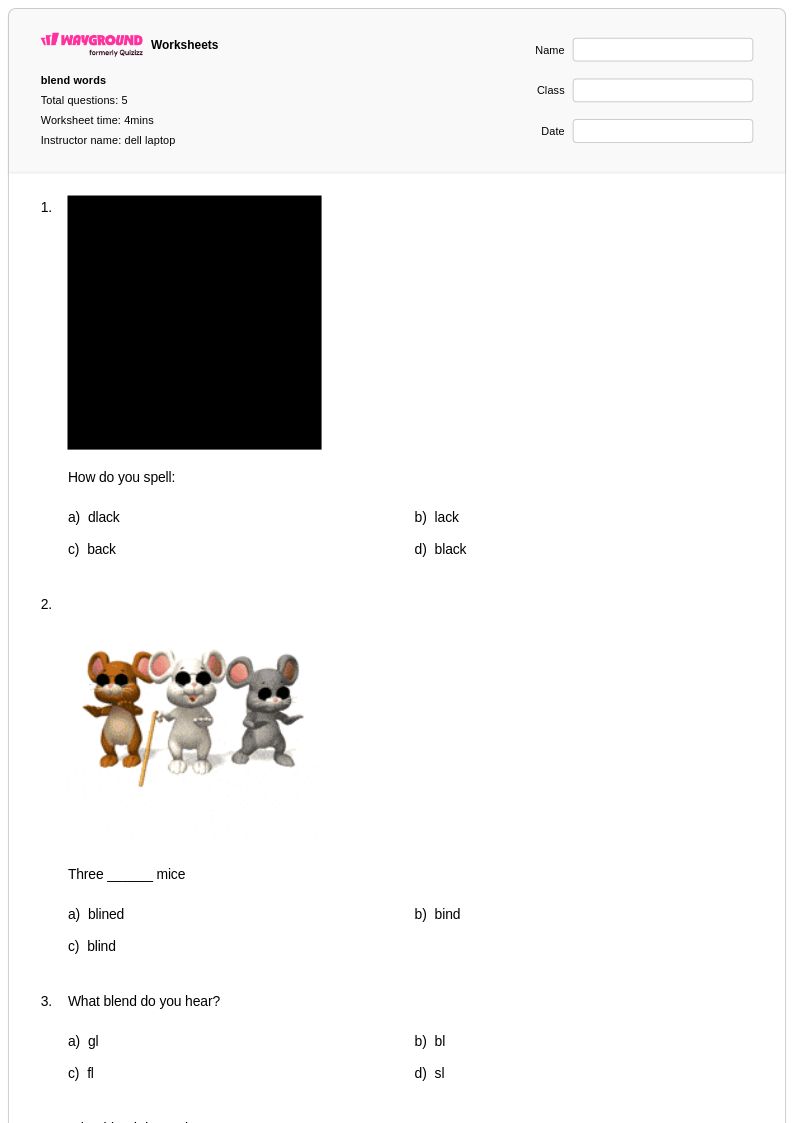
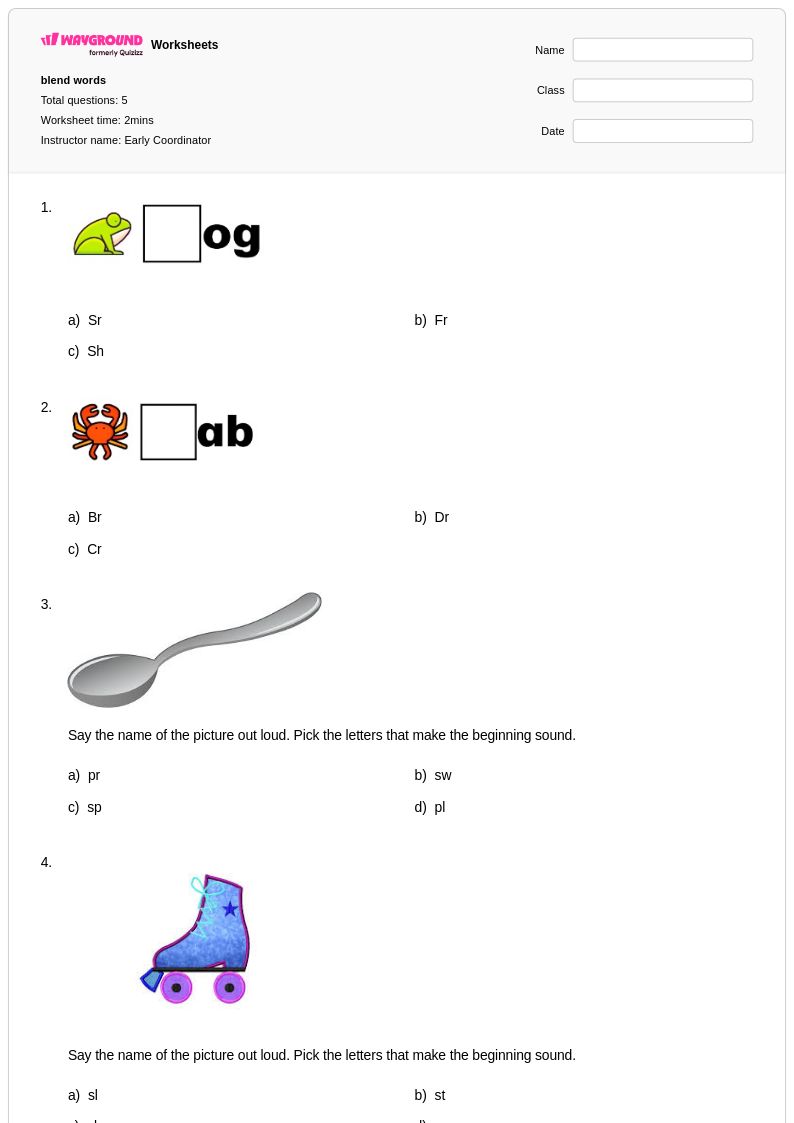
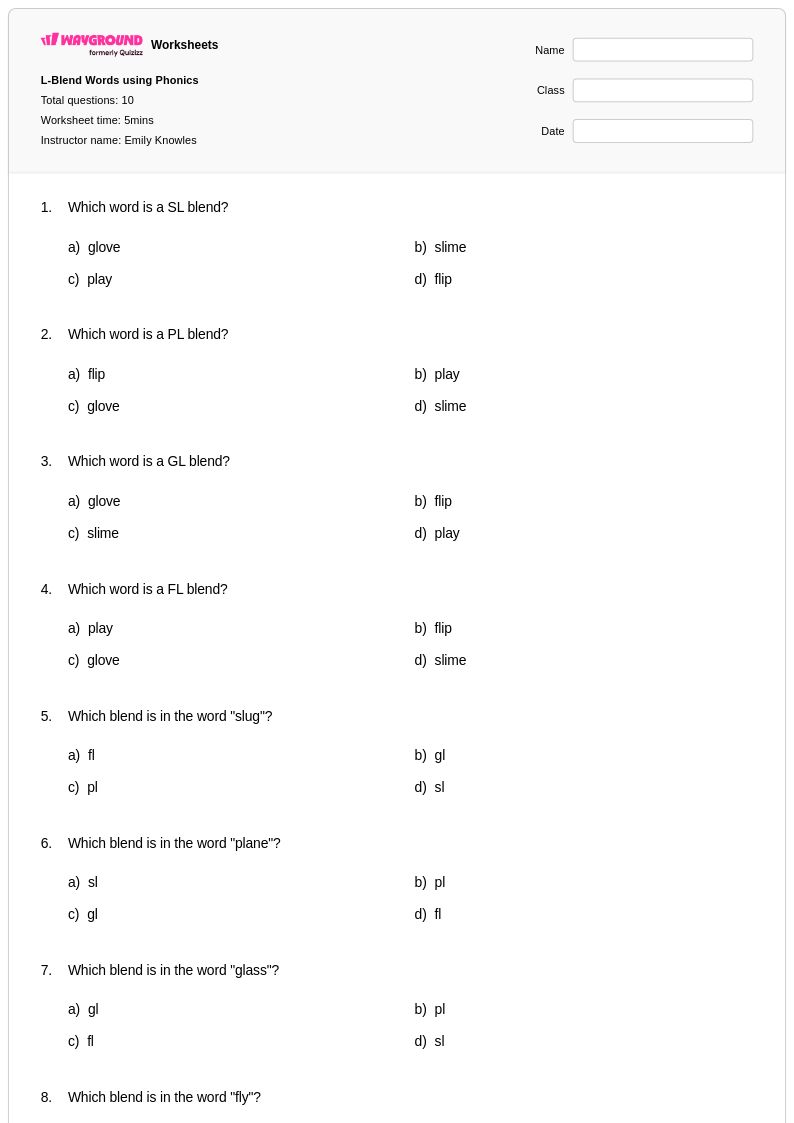
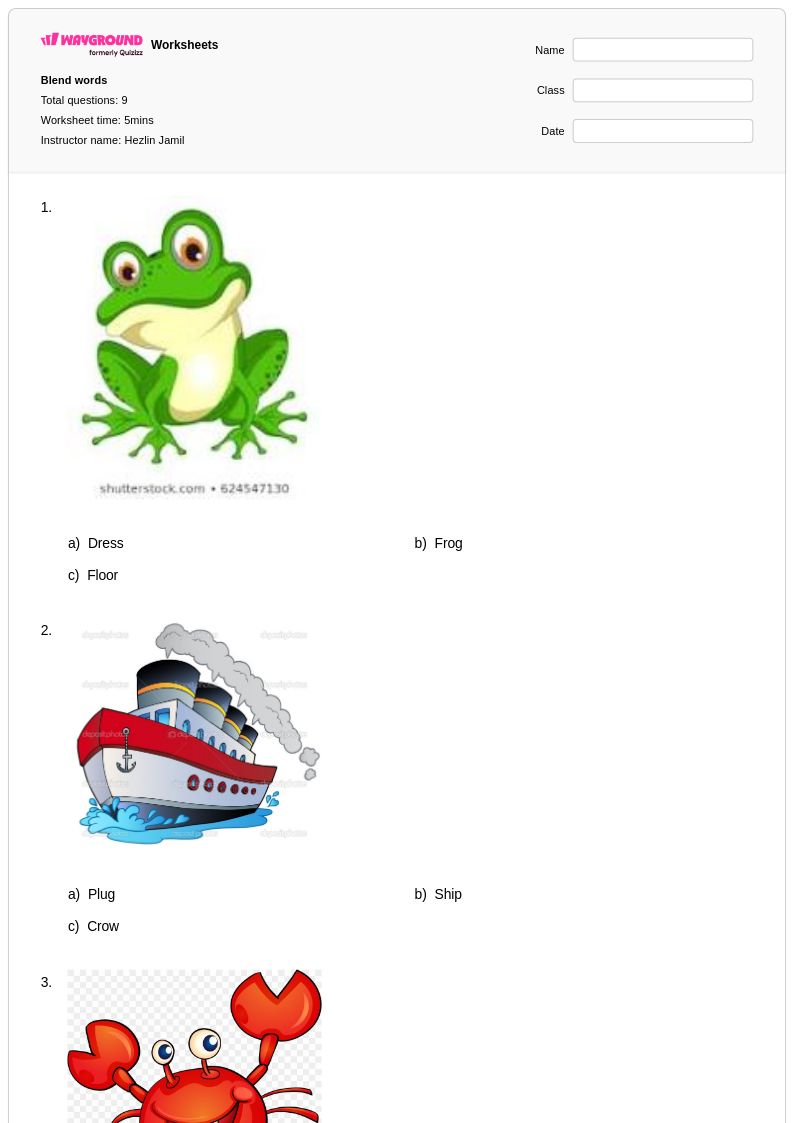
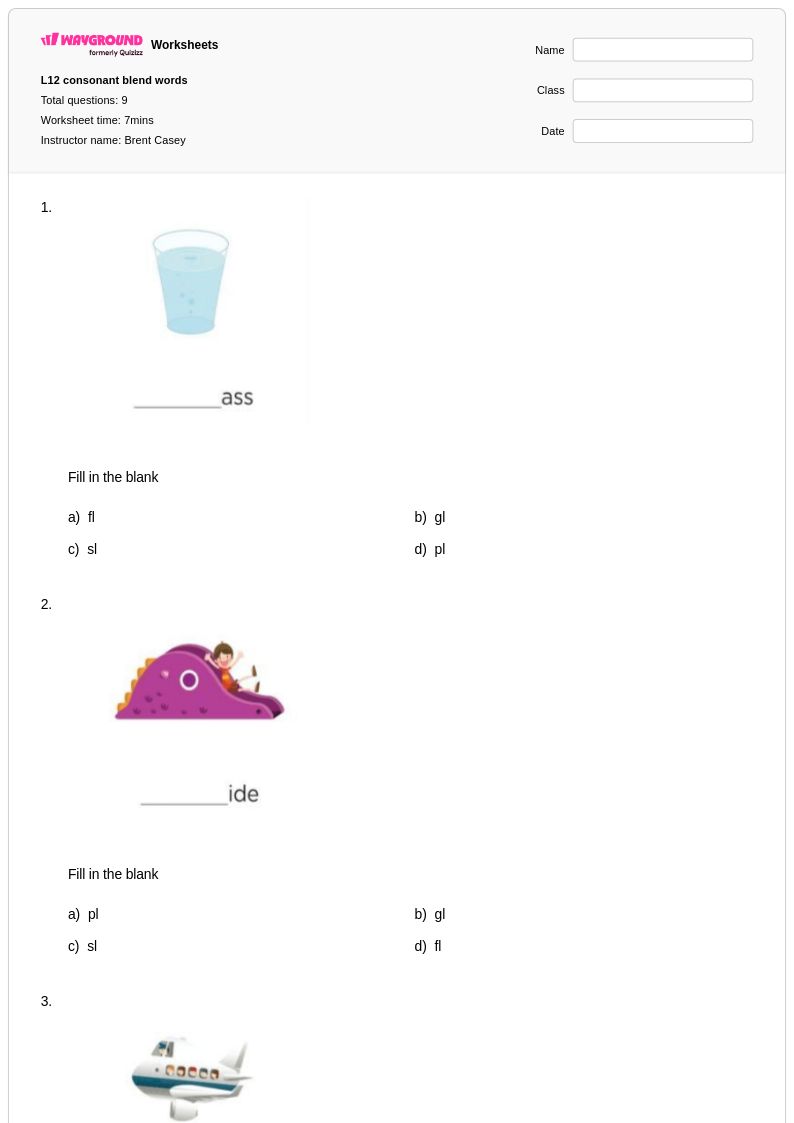
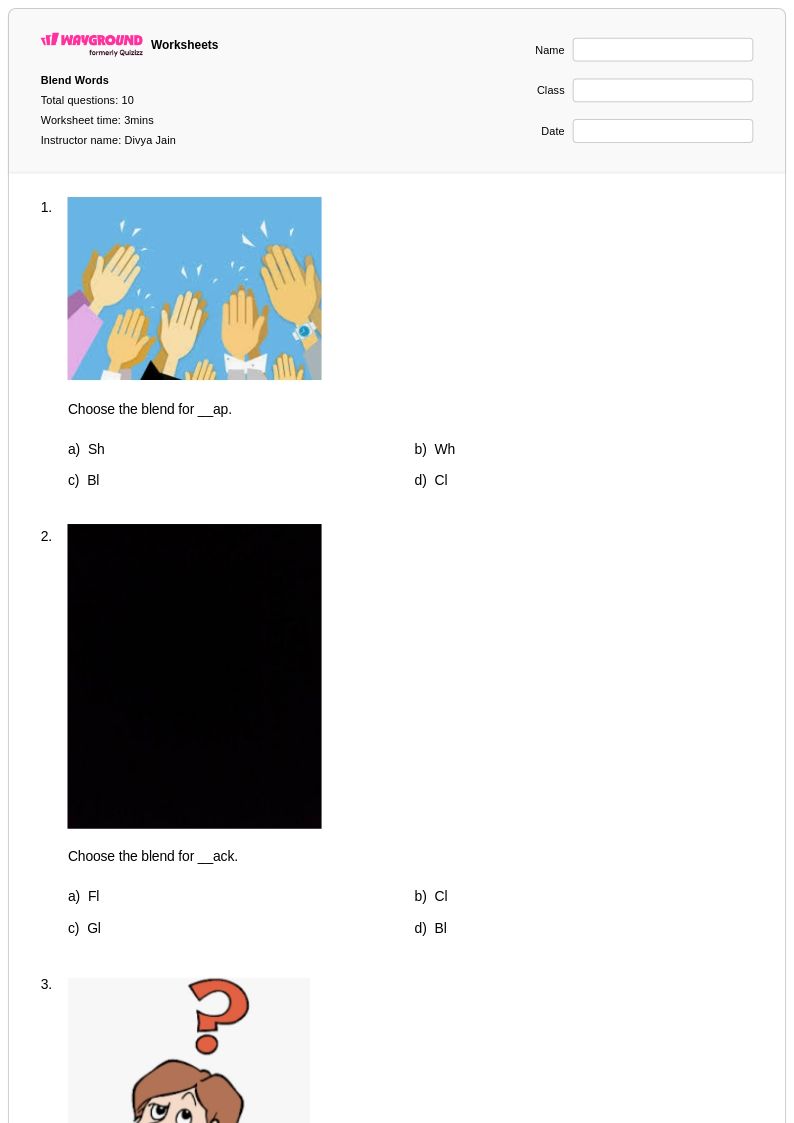
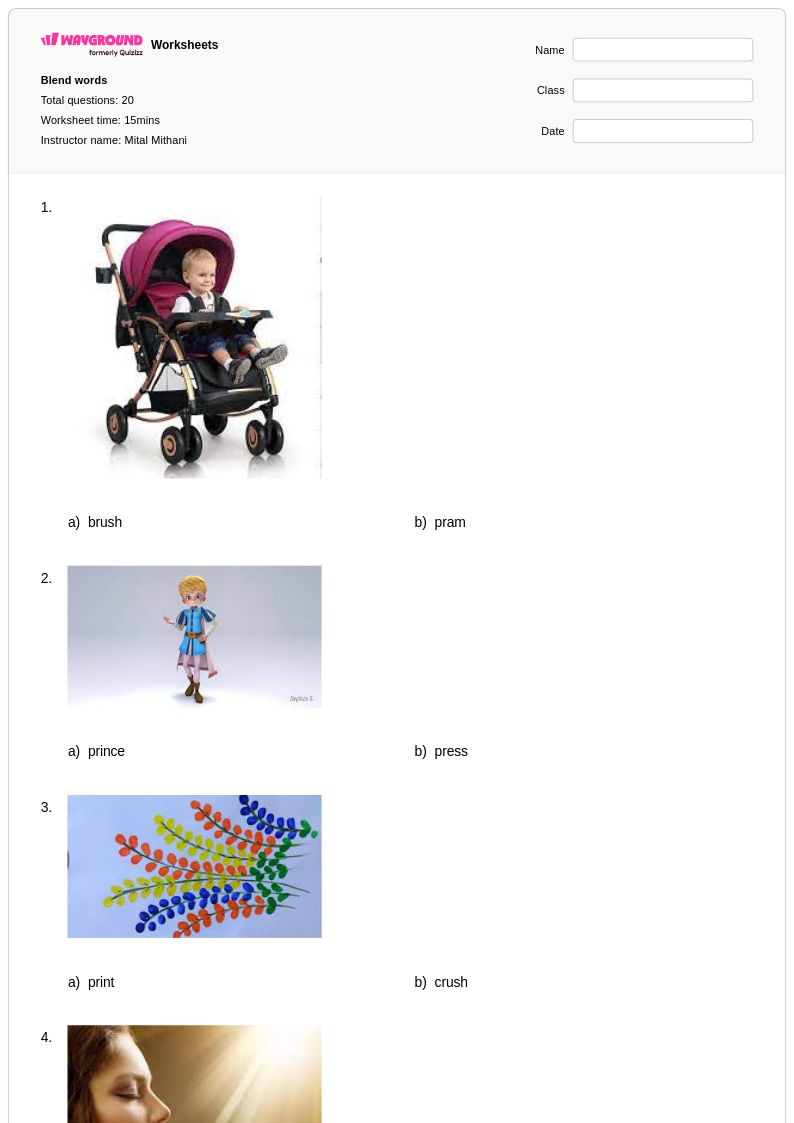
Blend words worksheets for kindergarten students provide essential foundation-building practice in phonics instruction through carefully designed activities that help young learners combine individual sounds to form complete words. These comprehensive printables focus on developing critical pre-reading skills by teaching students to merge consonant and vowel sounds, such as blending "c-a-t" to read "cat" or "s-u-n" to read "sun." Each worksheet includes structured practice problems that progress from simple two-letter combinations to more complex three and four-letter blends, allowing kindergarten students to build confidence while mastering this fundamental reading skill. The free pdf resources come complete with answer keys to support both independent practice and guided instruction, ensuring teachers can effectively assess student progress and provide targeted feedback during phonics lessons.
Wayground's extensive collection of teacher-created blend words worksheets offers kindergarten educators access to millions of high-quality resources specifically designed to support early literacy development. The platform's robust search and filtering capabilities enable teachers to quickly locate materials aligned with specific phonics standards and differentiate instruction based on individual student needs. These versatile worksheets are available in both printable pdf format for traditional classroom use and digital formats for interactive learning experiences. Teachers can easily customize existing resources or create new practice materials to address specific learning objectives, whether planning whole-group phonics instruction, providing targeted remediation for struggling readers, or offering enrichment activities for advanced students ready to tackle more complex blending patterns.
FAQs
How do I teach blend words to early readers?
Teaching blend words begins with ensuring students can isolate and identify individual phonemes before asking them to combine sounds. Start with common two-letter consonant blends like 'bl', 'cr', and 'st', using a say-it-slow, say-it-fast technique to bridge isolated sounds into a full word. Once students can decode simple blends fluently, introduce vowel combinations and more complex multi-syllabic patterns. Consistent, structured phonics practice across reading and writing tasks accelerates mastery.
What exercises help students practice blending sounds into words?
Effective blend words practice includes segmenting and re-blending exercises where students hear a word broken into phonemes and then say it whole, and encoding tasks where they write blended words from dictation. Worksheets that progress from simple two-letter blends to more advanced combinations give students a clear skill ladder to climb. Repeated, low-stakes practice with immediate feedback, such as self-checking against an answer key, builds both accuracy and confidence in phonetic decoding.
What mistakes do students commonly make when learning blend words?
The most frequent error is inserting a vowel sound between consonants, pronouncing 'bl' as 'buh-l' rather than holding the sounds together. Students also struggle with vowel combinations, often defaulting to the short vowel sound when a digraph or diphthong is involved. Another common pattern is blending correctly in isolation but losing accuracy when reading in context, which is why fluency practice within connected text matters alongside isolated blend drills.
How can I differentiate blend words instruction for students at different levels?
For students who are still developing phoneme awareness, reduce the complexity by focusing exclusively on two-letter initial blends before introducing final blends or vowel combinations. More advanced students can work with multi-syllabic words and blends in varied word positions. On Wayground, teachers can apply accommodations such as Read Aloud, which audio-reads questions aloud, and reduced answer choices to lower cognitive load for students who need additional support, while other students continue with standard settings.
How do I use Wayground's blend words worksheets in my classroom?
Wayground's blend words worksheets are available as downloadable PDF files for traditional print-and-distribute use and in digital formats that integrate smoothly into technology-based lessons. Teachers can host worksheets as a live quiz on Wayground, making them suitable for whole-class instruction, small-group intervention, or independent practice at home. Each worksheet includes an answer key, so grading and feedback can happen immediately, whether the teacher is checking work or students are self-assessing.
At what reading level are blend words typically introduced?
Blend words are typically introduced in kindergarten and first grade, once students have a solid grasp of individual letter-sound correspondences. Consonant blends such as 'sl', 'gr', and 'tr' are usually the entry point, followed by vowel teams and more complex patterns in late first and second grade. Students who are reading below grade level in upper elementary may also benefit from targeted blend words review as part of a phonics remediation program.