Free Printable Phoneme Isolation Worksheets for Kindergarten
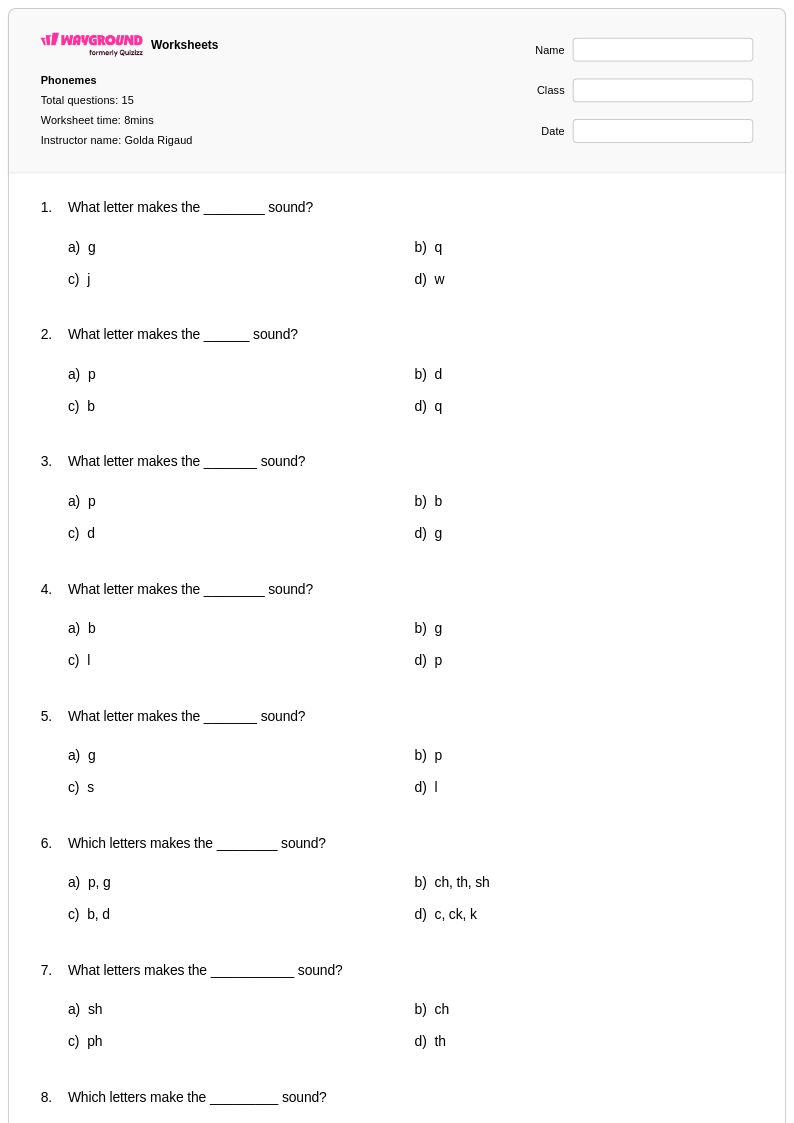
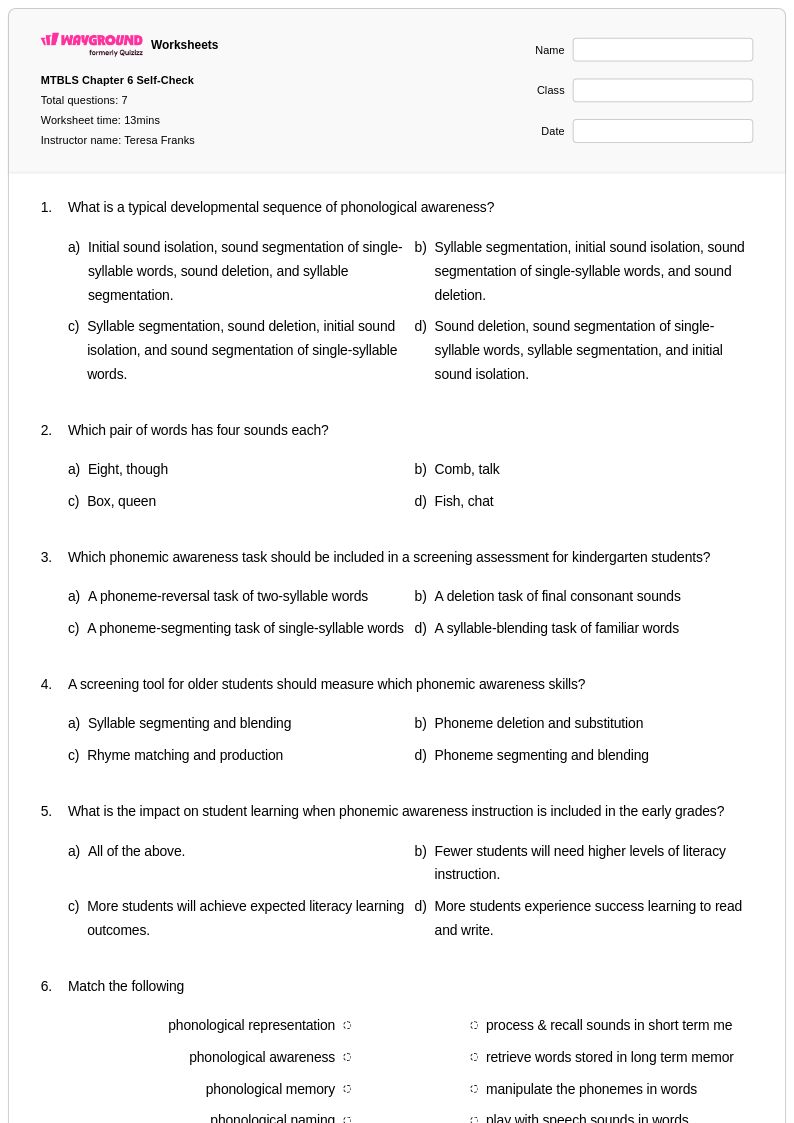
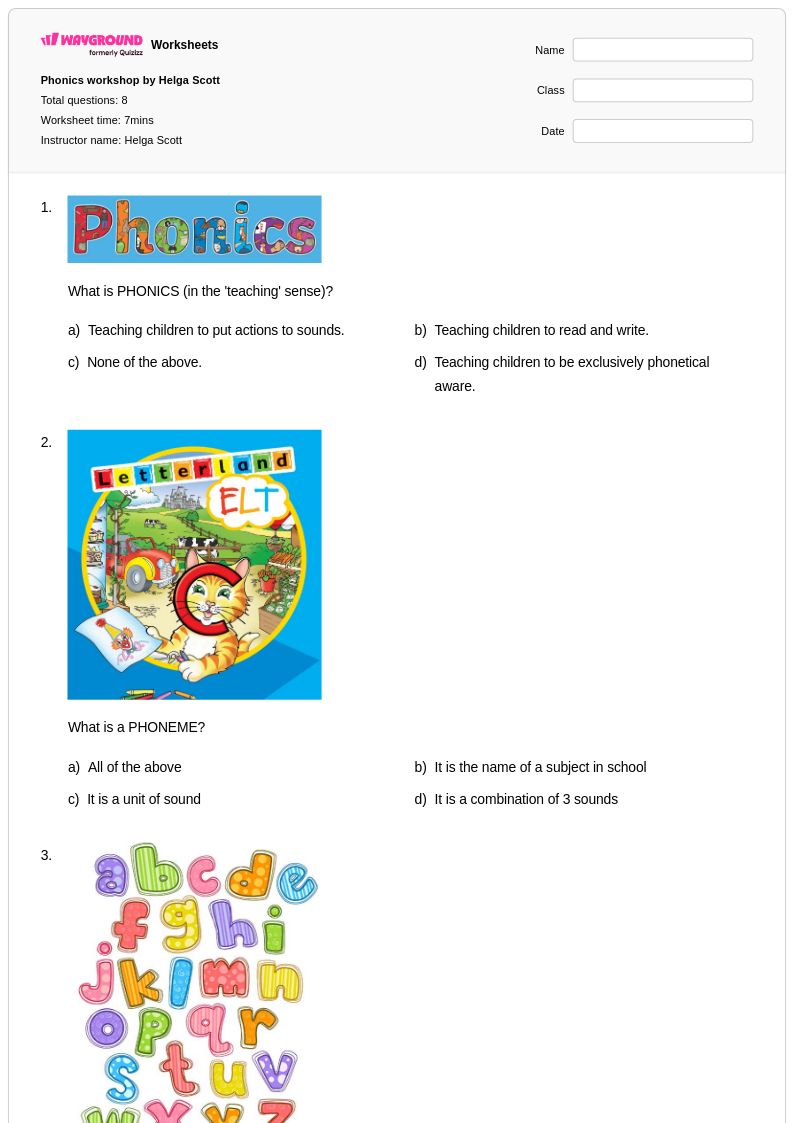
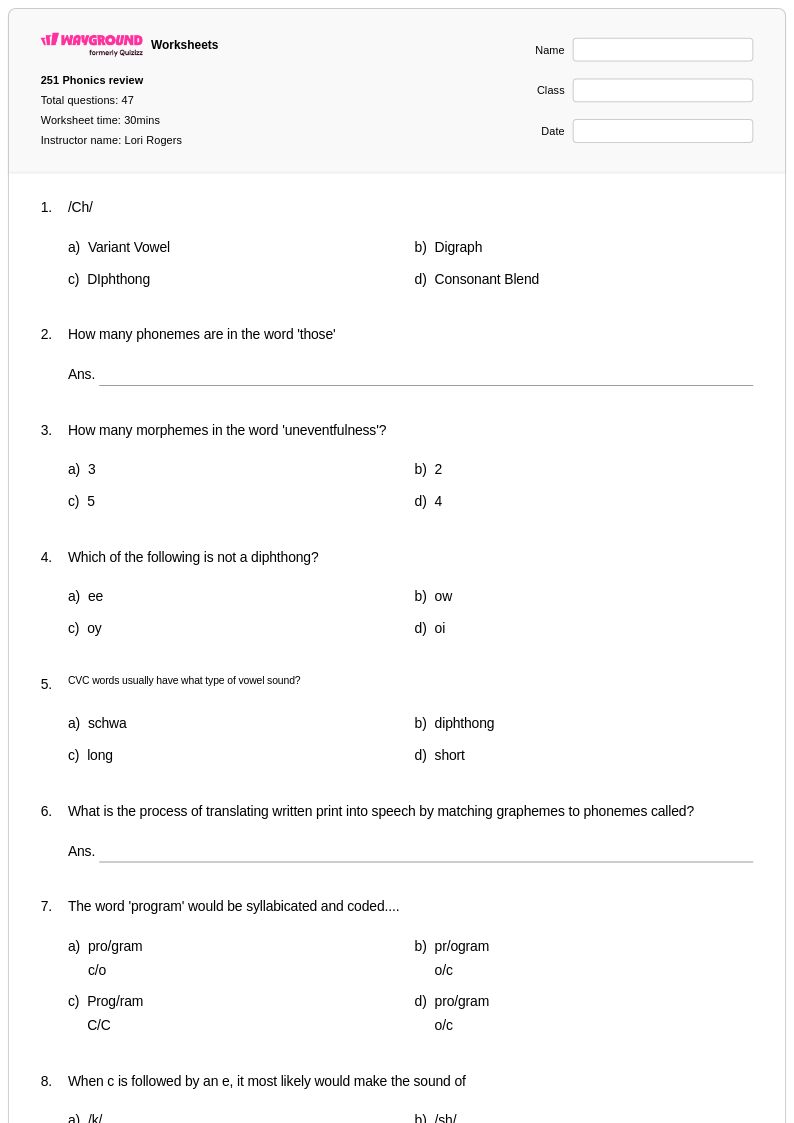
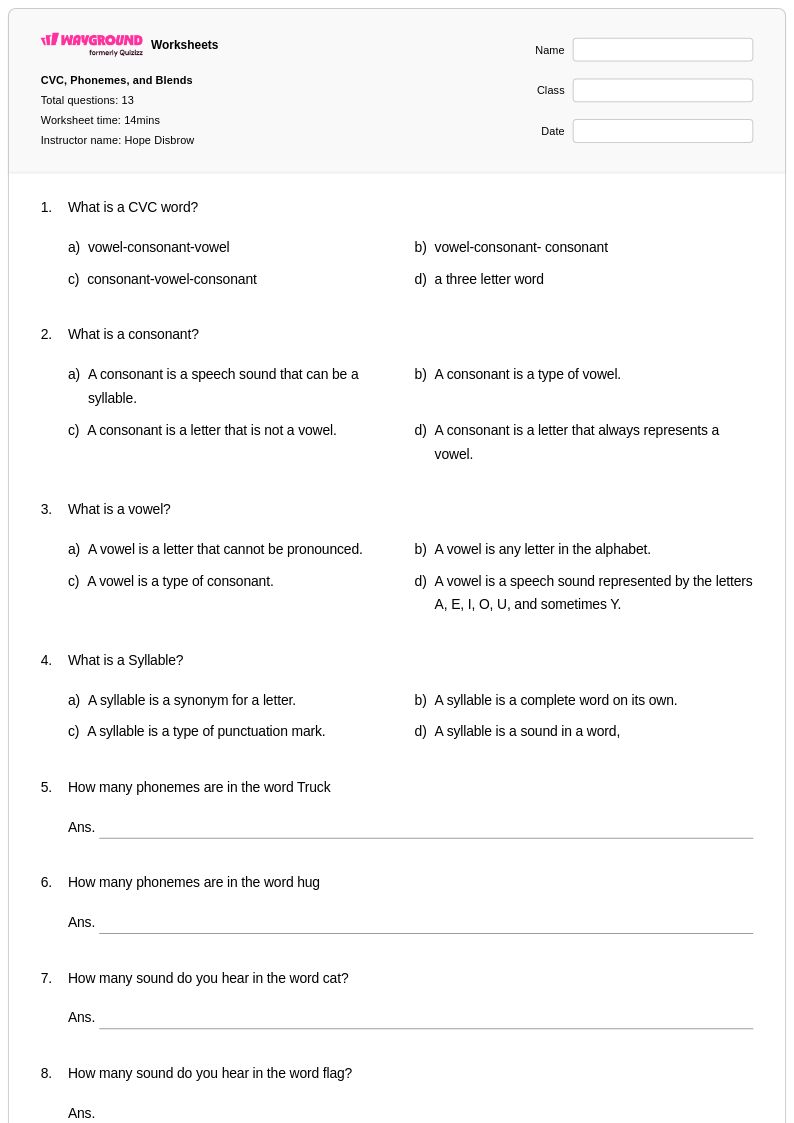
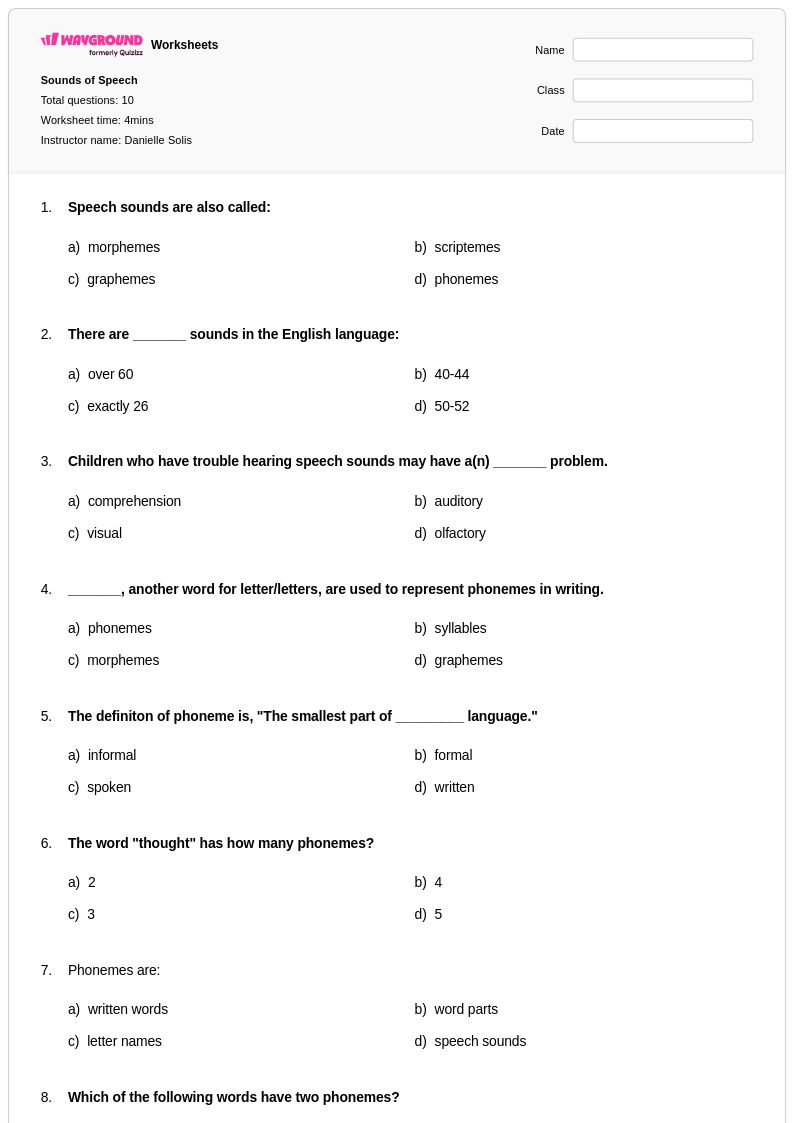
Kindergarten phoneme isolation worksheets from Wayground help young learners identify and separate individual sounds in words through engaging printables, practice problems, and free PDF activities with answer keys.
Explore printable Phoneme Isolation worksheets for Kindergarten
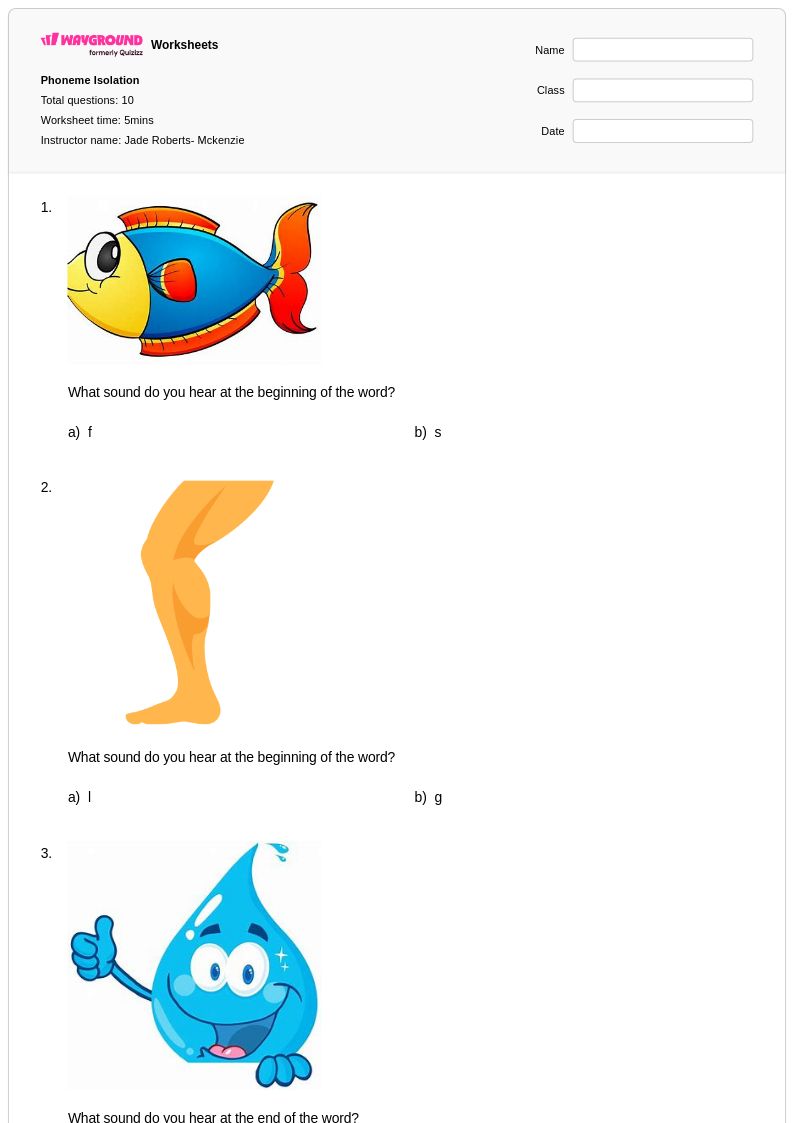
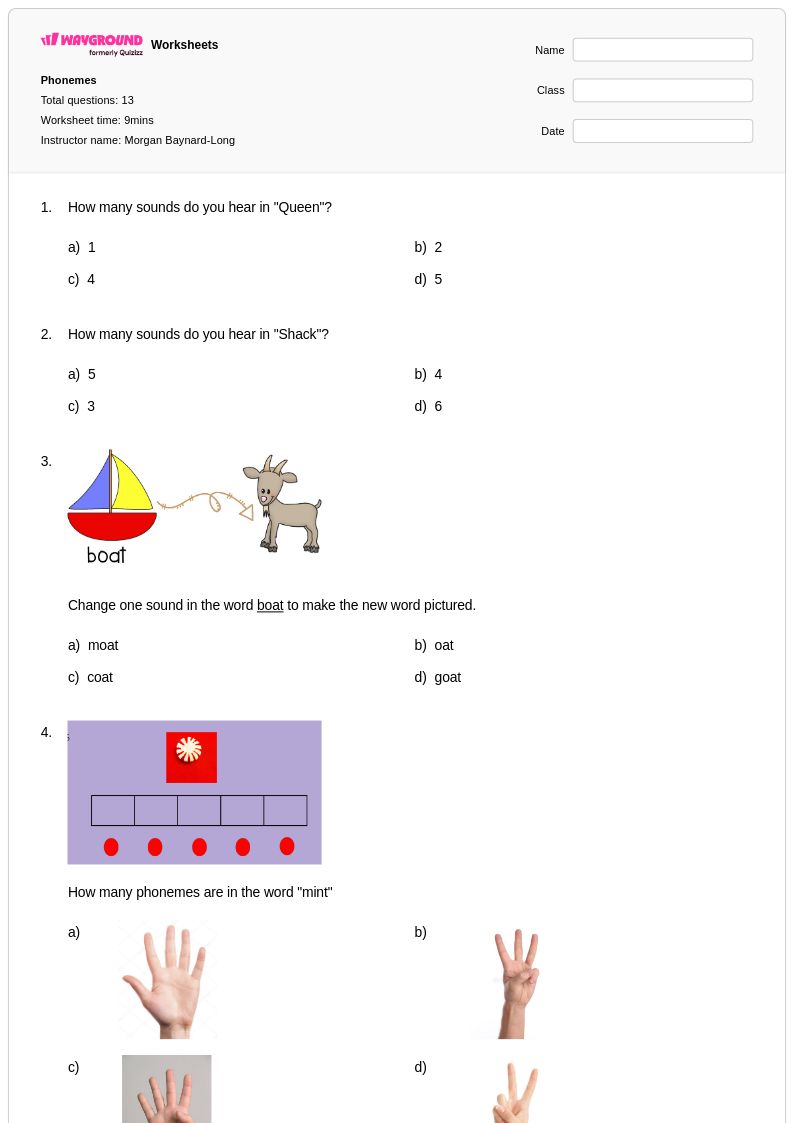
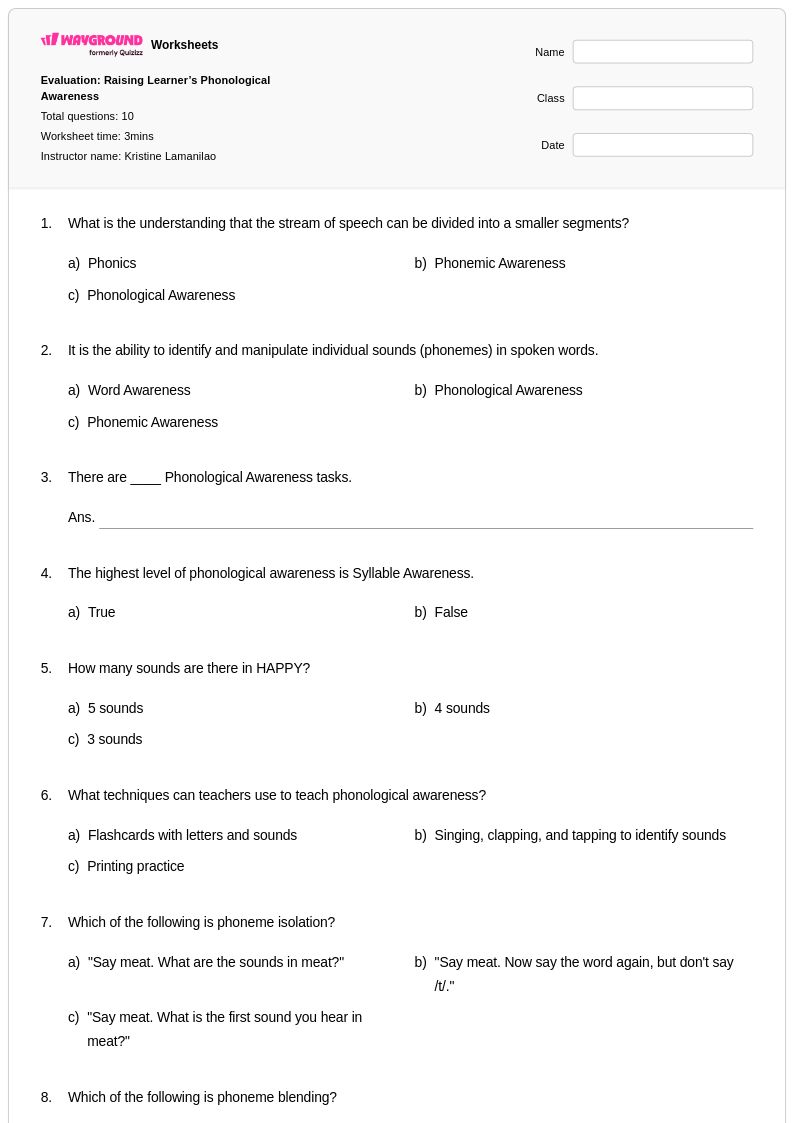
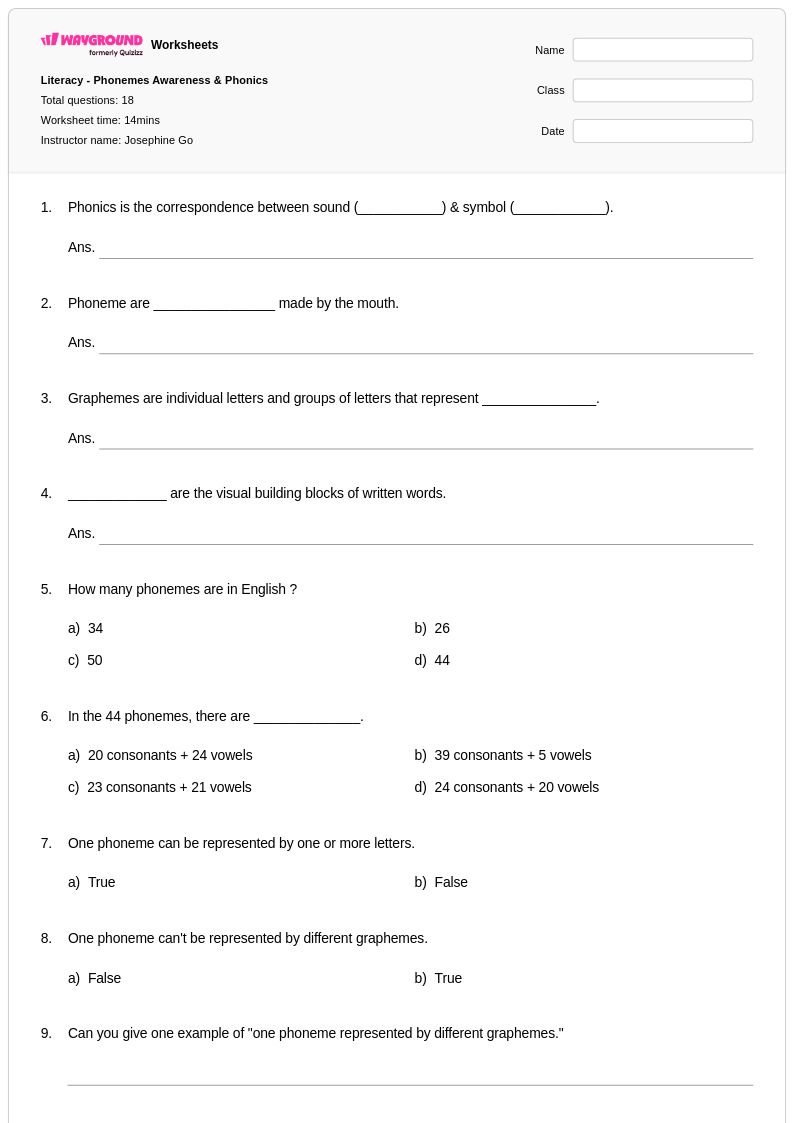
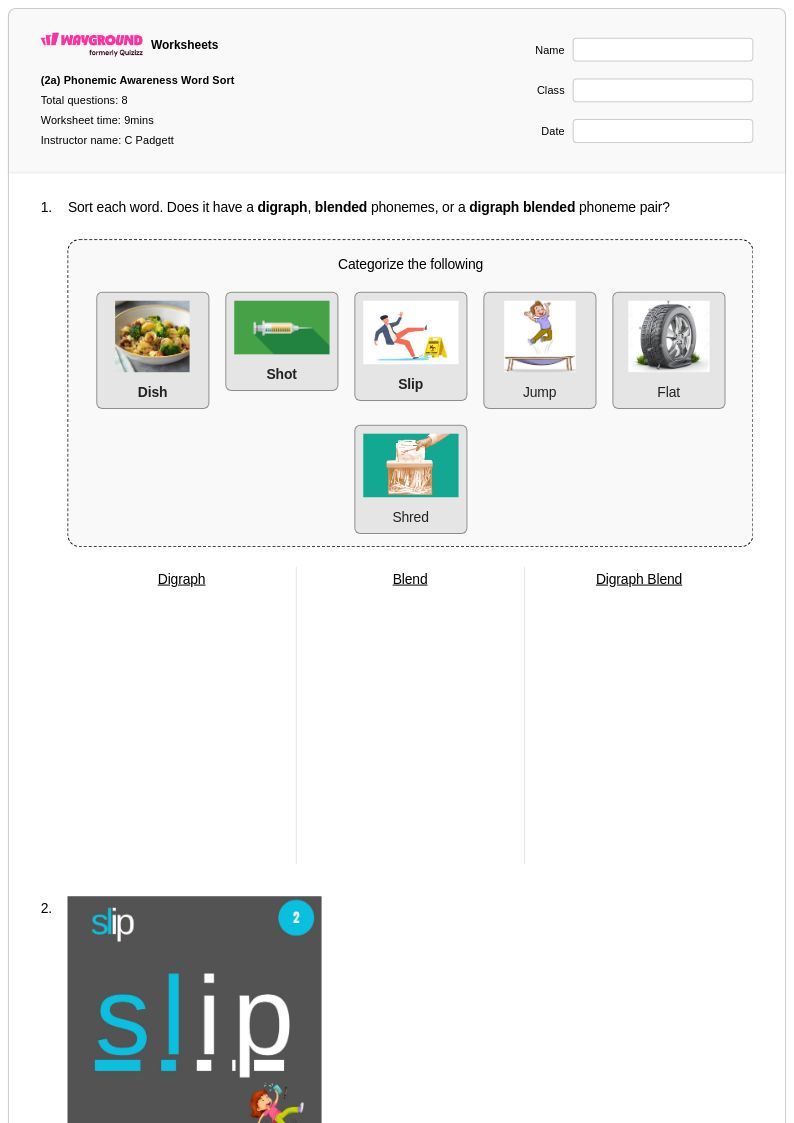
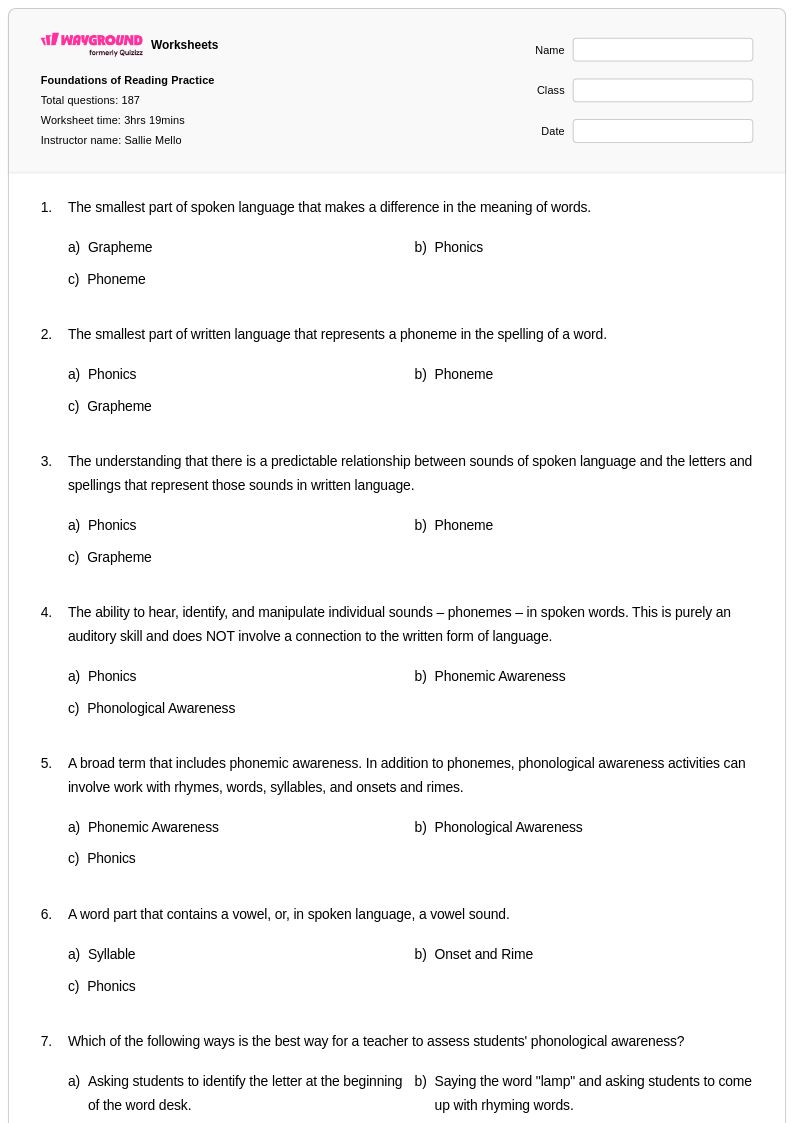
Phoneme isolation worksheets for kindergarten students available through Wayground (formerly Quizizz) provide essential practice in identifying and extracting individual sounds within spoken words, a foundational skill that directly supports reading development. These carefully designed printables help young learners develop phonemic awareness by focusing on isolating beginning, middle, and ending sounds in simple words through engaging activities and practice problems. Each worksheet includes comprehensive answer keys and is available as free pdf downloads, making it easy for educators to implement systematic phonics instruction that strengthens students' ability to manipulate individual phonemes—the smallest units of sound in language.
Wayground (formerly Quizizz) empowers teachers with access to millions of educator-created phoneme isolation resources that can be easily searched, filtered, and customized to meet diverse classroom needs. The platform's robust collection includes both printable pdf worksheets and interactive digital formats, all aligned with kindergarten phonics standards to ensure comprehensive skill development. Teachers can leverage advanced differentiation tools to modify content for various learning levels, supporting both remediation for struggling students and enrichment opportunities for advanced learners. This flexible approach to phoneme isolation practice enables educators to efficiently plan targeted instruction, assess student progress, and provide the repeated practice necessary for kindergarten students to master this critical pre-reading skill.
FAQs
How do I teach phoneme isolation to early readers?
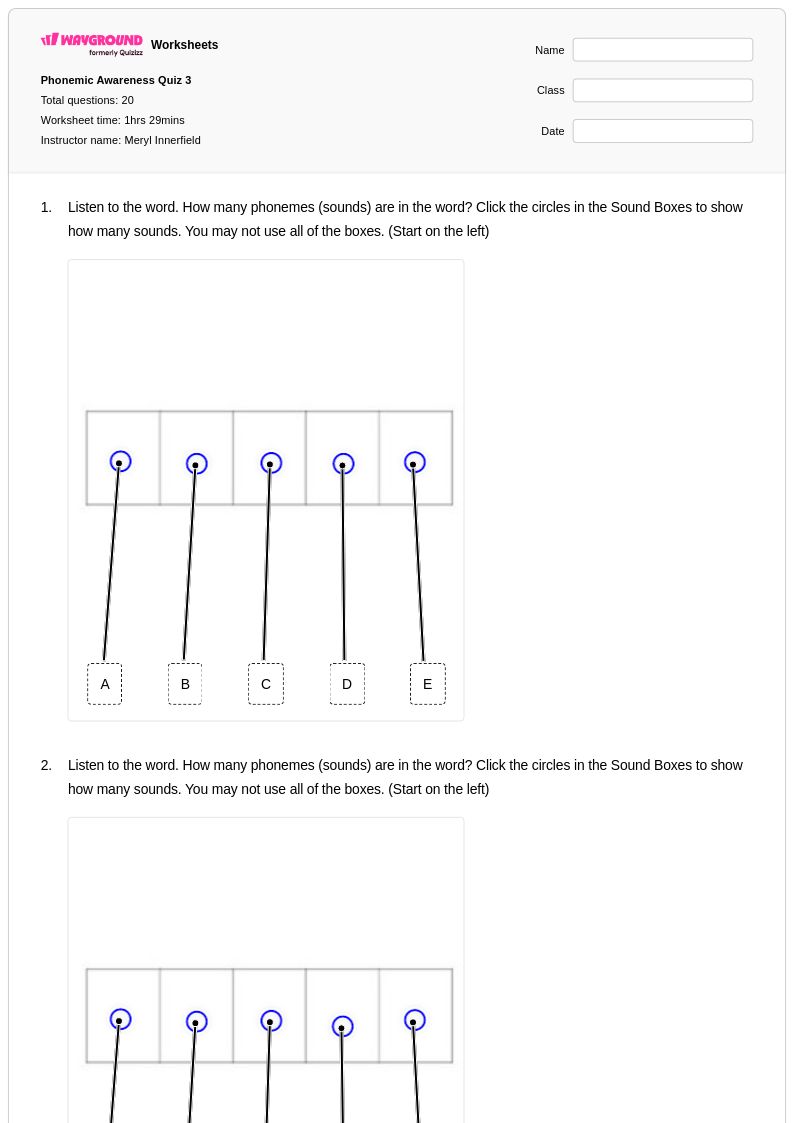
Phoneme isolation is best taught through explicit, sequential instruction that moves from initial sounds to final sounds to medial vowels, as beginning and ending phonemes are generally easier for young learners to detect. Teachers should use consistent verbal prompts such as 'What is the first sound in the word cat?' and pair oral practice with visual supports like sound boxes or colored chips. Building in daily repetition across varied word sets accelerates automaticity and prepares students for blending and segmenting tasks.
What exercises help students practice phoneme isolation?
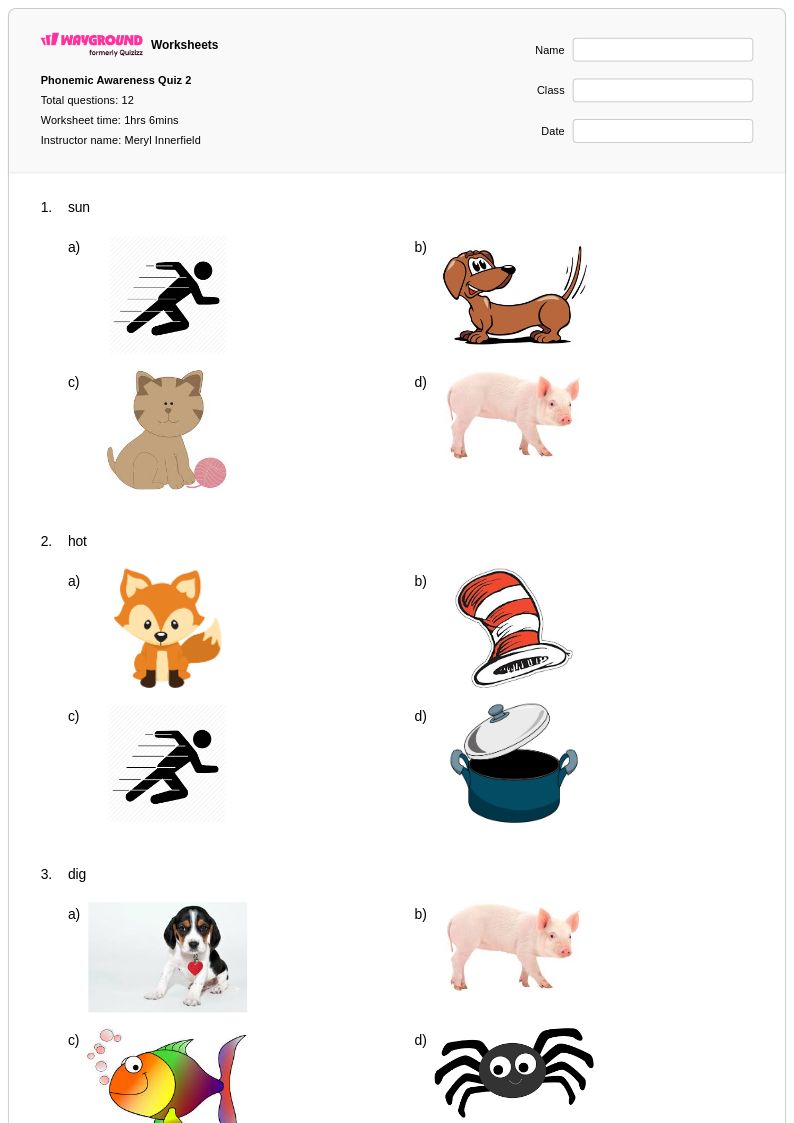
Effective phoneme isolation practice includes identifying the beginning, middle, and ending sounds in spoken words, sorting picture cards by shared initial or final phonemes, and completing structured written exercises where students record the isolated sound from a given word. Worksheets that move systematically through CVC words before progressing to more complex patterns give students a clear scaffold. Regular, short practice sessions of five to ten minutes are more effective than longer, infrequent drills for building phonemic awareness.
What mistakes do students commonly make when isolating phonemes?
The most common error is confusing the letter name with the phoneme — for example, saying 'aitch' instead of /h/ when identifying the first sound in 'hat.' Students also frequently conflate phoneme isolation with whole-syllable segmentation, saying 'cat' instead of /k/ when asked for the initial sound. Another common pattern is difficulty isolating medial vowels, particularly in CVC words, because the vowel sound is heavily influenced by surrounding consonants. Targeted practice isolating each position separately helps address each of these error types.
How do I use phoneme isolation worksheets in my classroom?
Phoneme isolation worksheets from Wayground are available as printable PDFs for traditional classroom use and in digital formats for technology-integrated learning environments, making them flexible enough for whole-class instruction, small group intervention, or independent work stations. Teachers can also host these worksheets as a quiz directly on Wayground, enabling real-time progress monitoring. The included answer keys allow for quick scoring and immediate feedback on phoneme recognition accuracy.
How can I differentiate phoneme isolation practice for students at different skill levels?
For students who are still developing phoneme isolation skills, focus practice on initial consonant sounds in simple CVC words before introducing final and medial phonemes. More advanced learners can work with blends, digraphs, and longer word patterns that require isolating sounds in more complex positions. On Wayground, teachers can apply individual accommodations such as Read Aloud support, which provides audio reading of questions for students who need additional auditory scaffolding, and reduced answer choices to lower cognitive load for students who are still building confidence.
At what age or grade level should students be working on phoneme isolation?
Phoneme isolation is typically introduced in pre-K and kindergarten as part of foundational phonemic awareness instruction, with most students expected to isolate beginning and ending phonemes by the end of kindergarten and medial phonemes by early first grade. Students who have not yet mastered phoneme isolation by late first grade may require targeted intervention, as this skill directly supports decoding and spelling development. Progress on phoneme isolation tasks is a reliable early indicator of reading readiness.