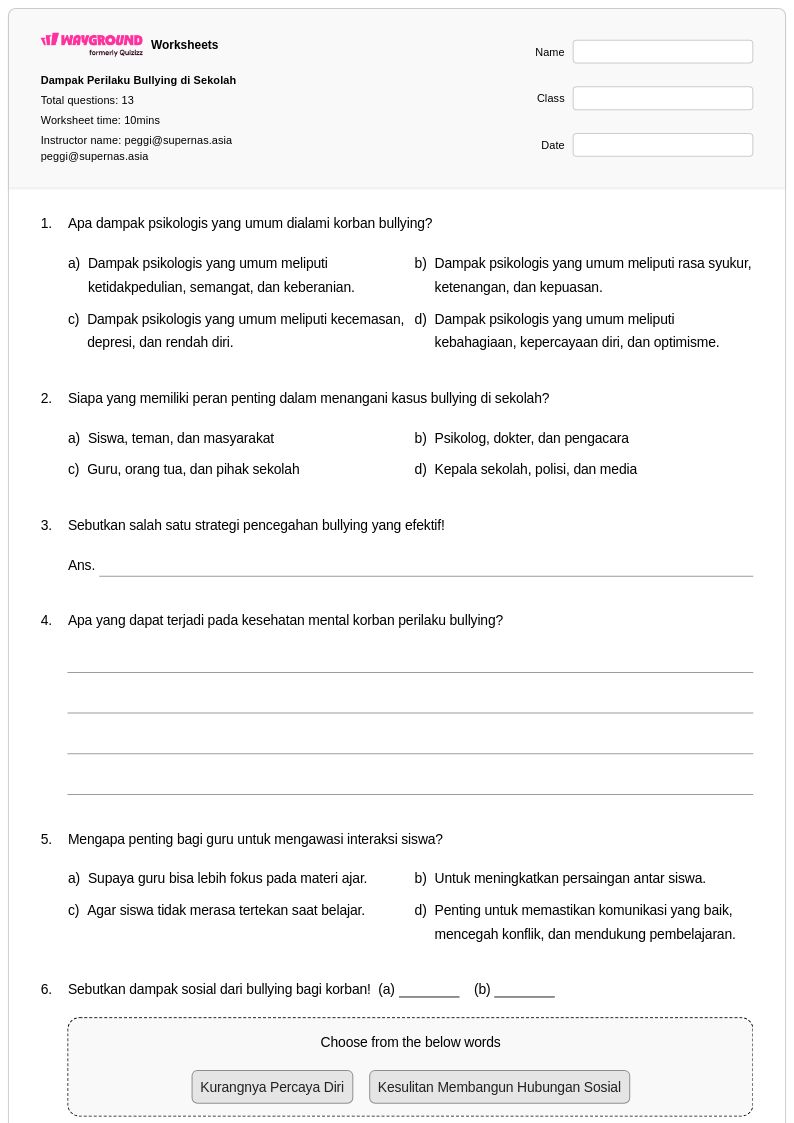
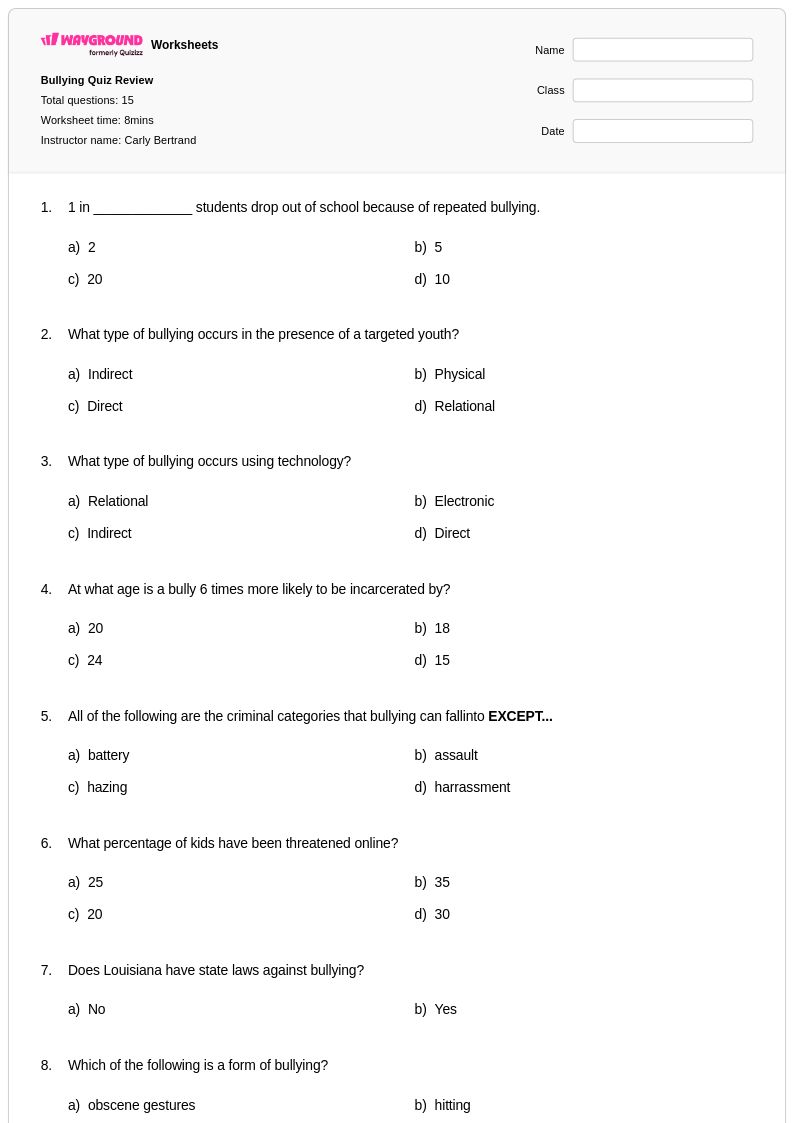
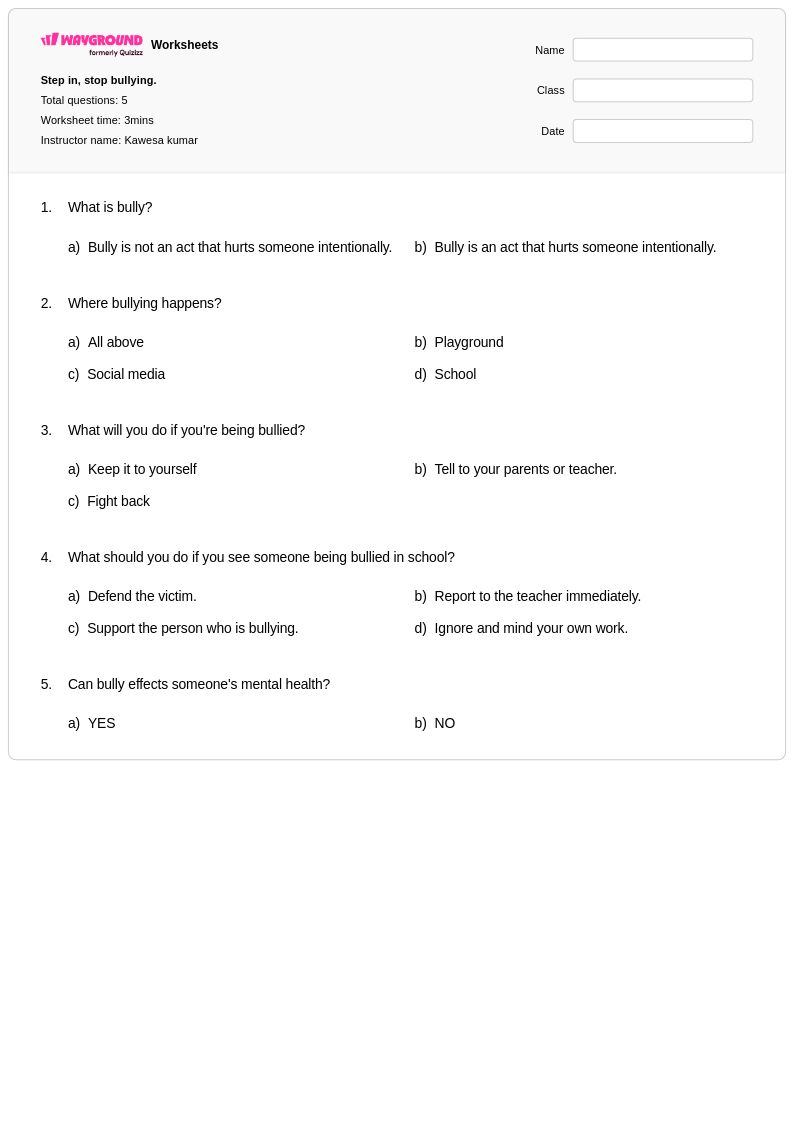
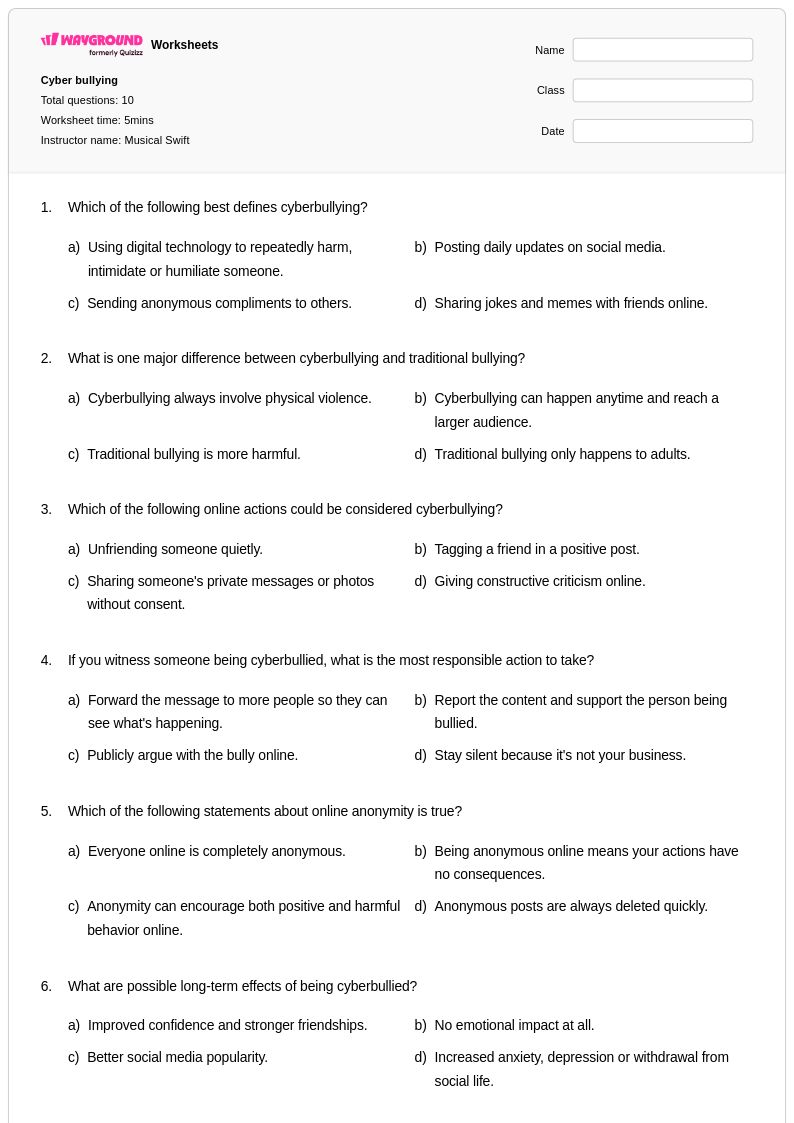
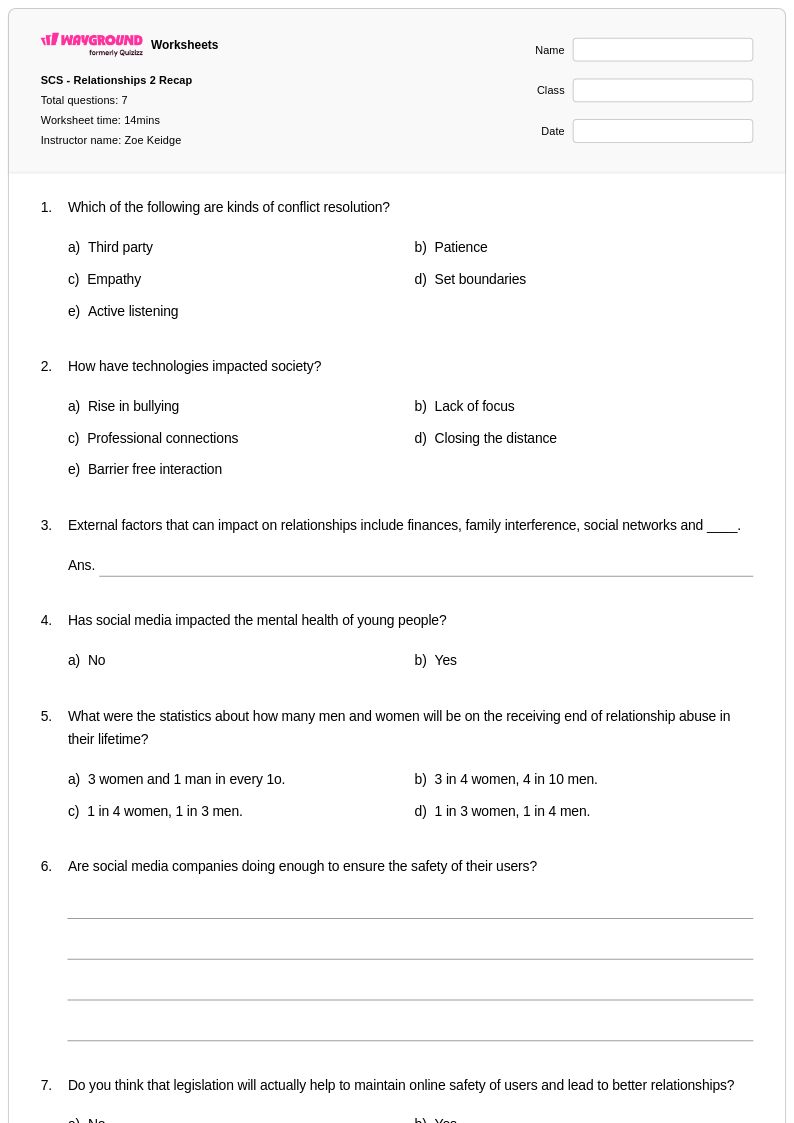
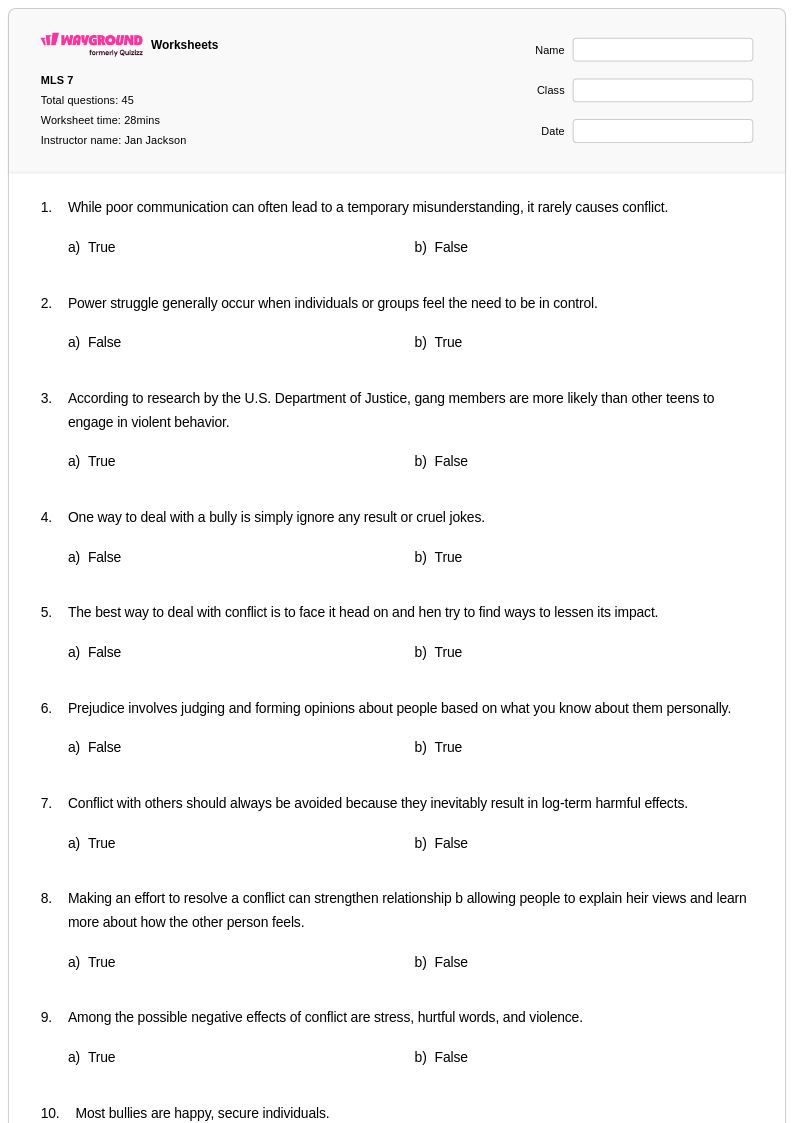
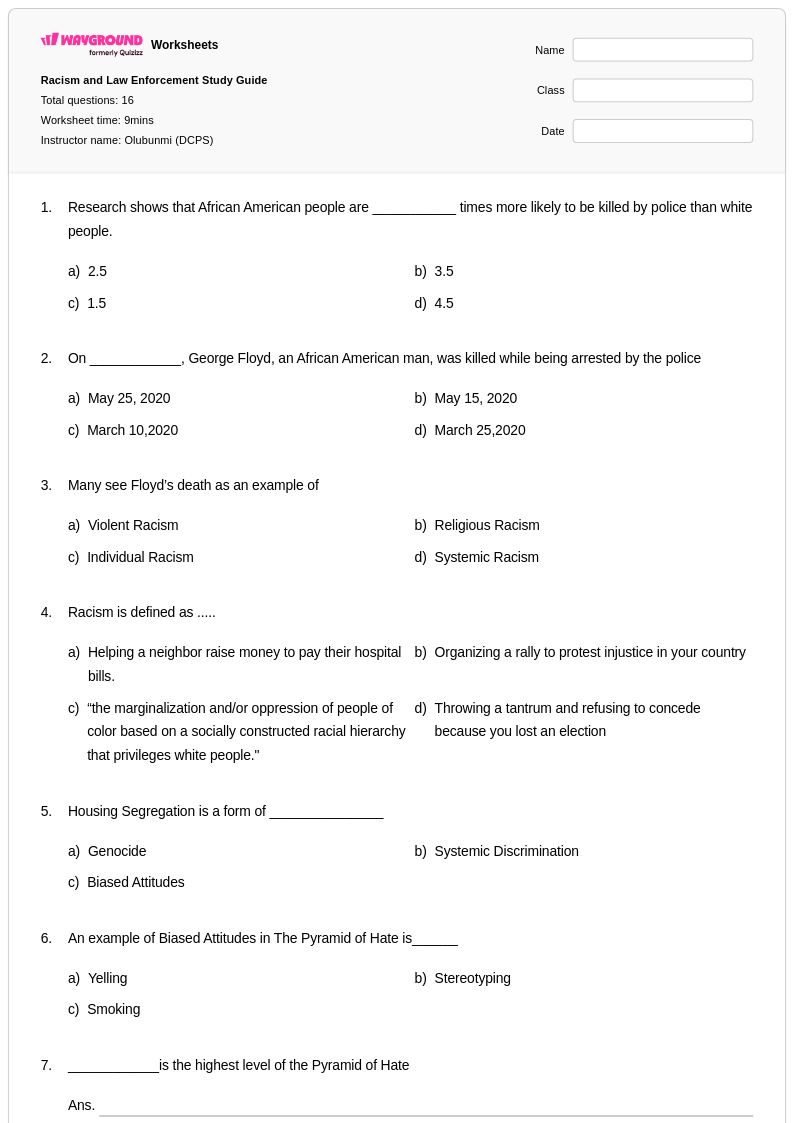
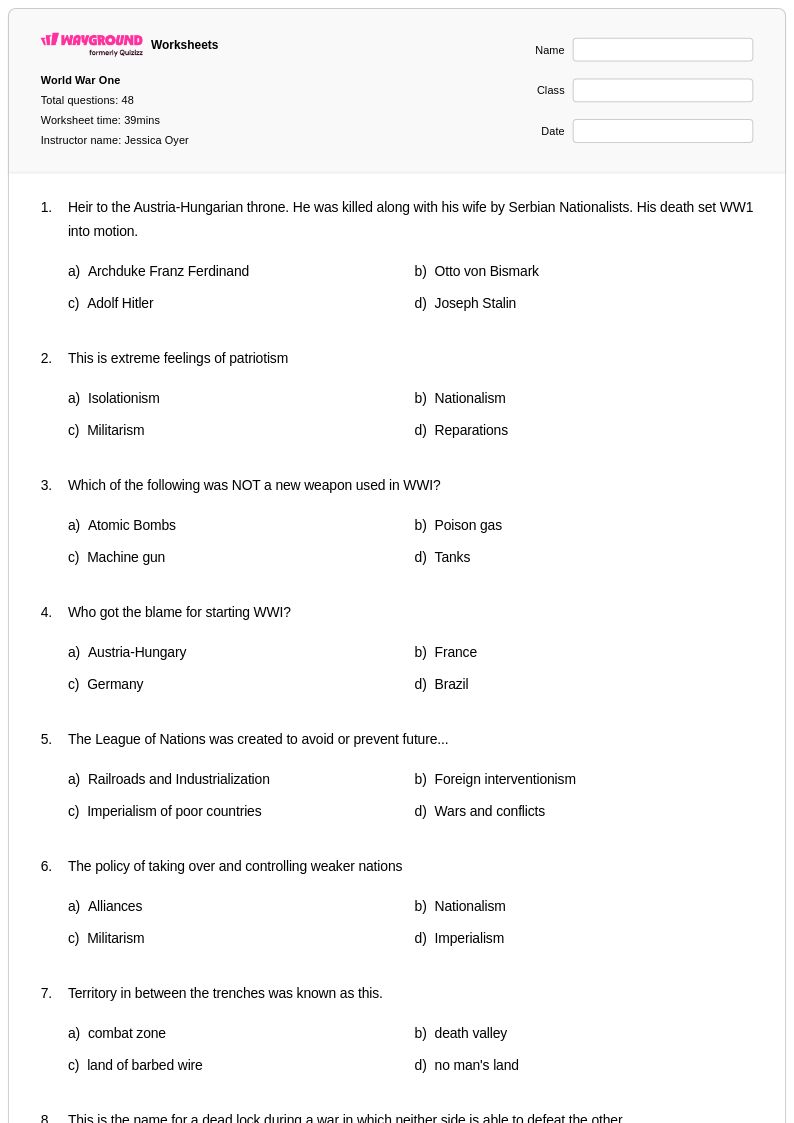
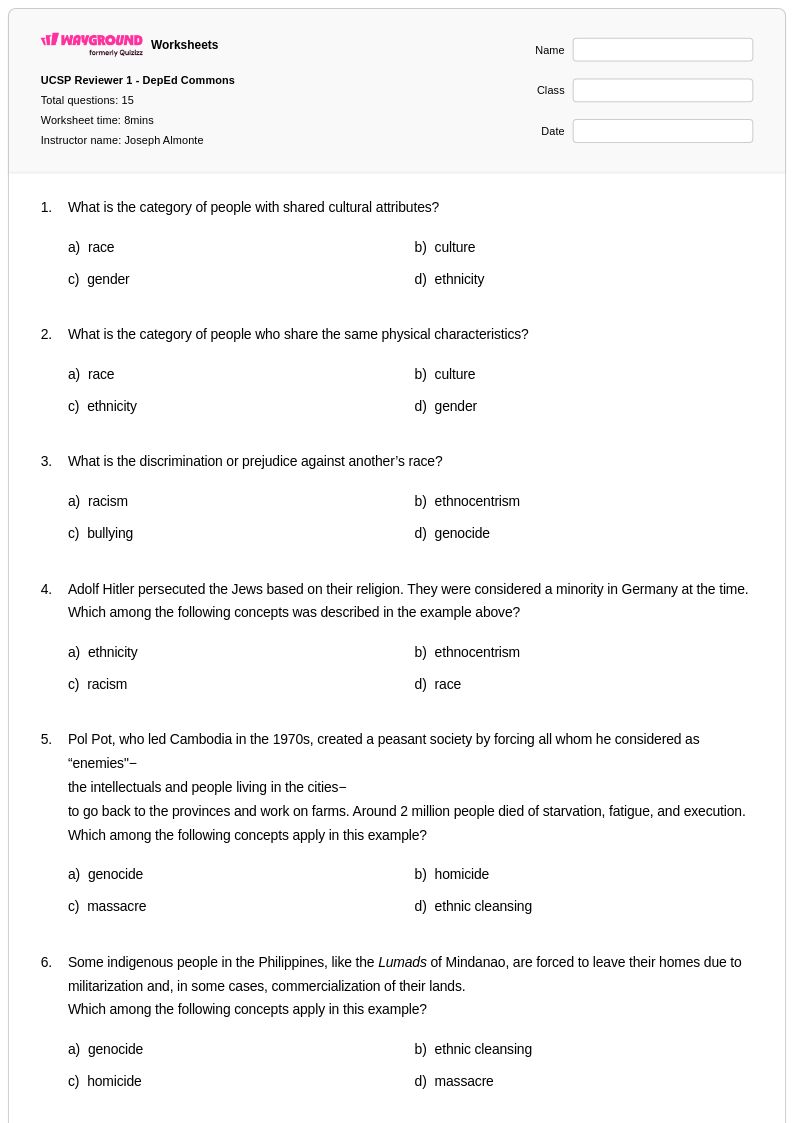
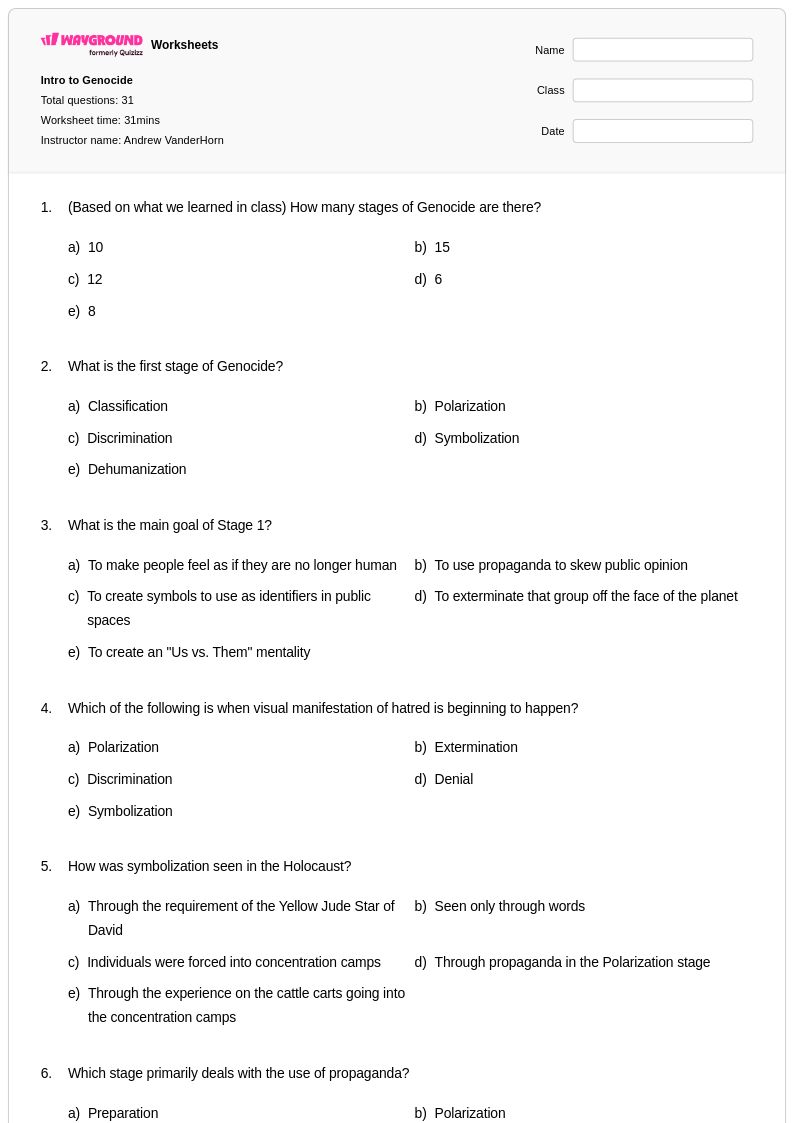
Explore Grade 11 bullying prevention worksheets and printables that help students develop critical thinking skills about peer relationships, conflict resolution, and creating safe school environments with comprehensive answer keys and free PDF resources.
Explore printable Bullying worksheets for Grade 11
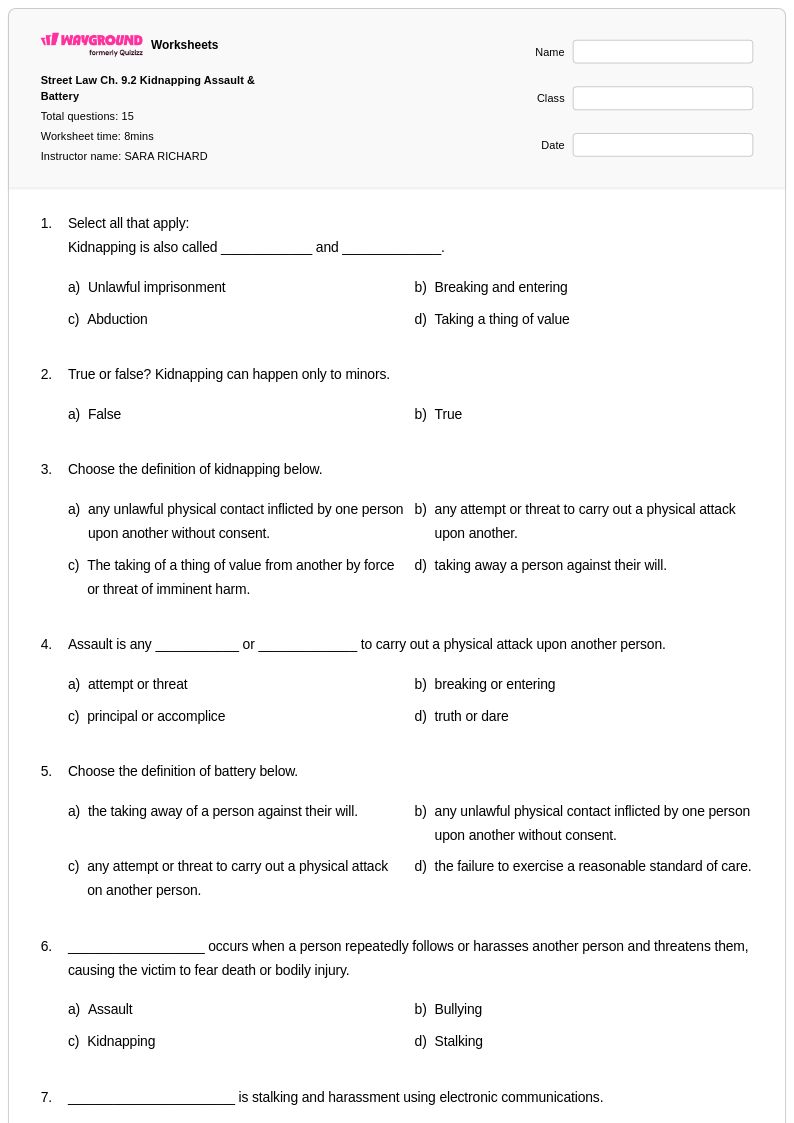
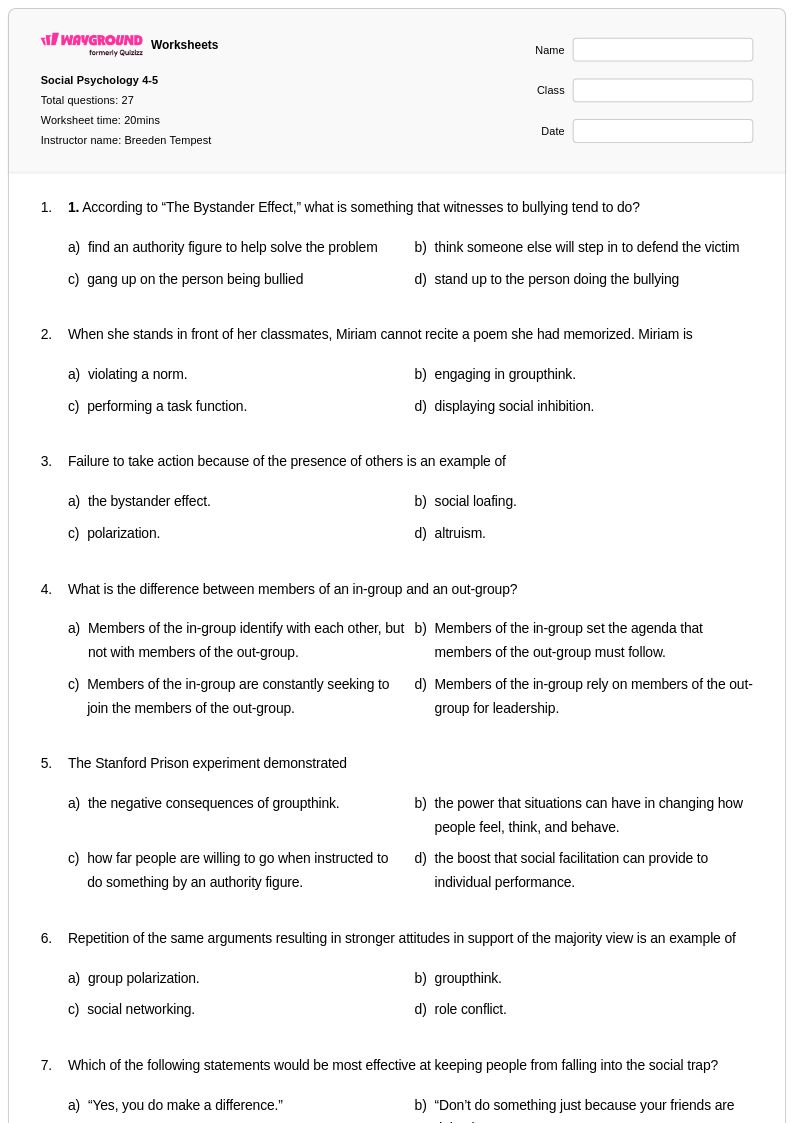
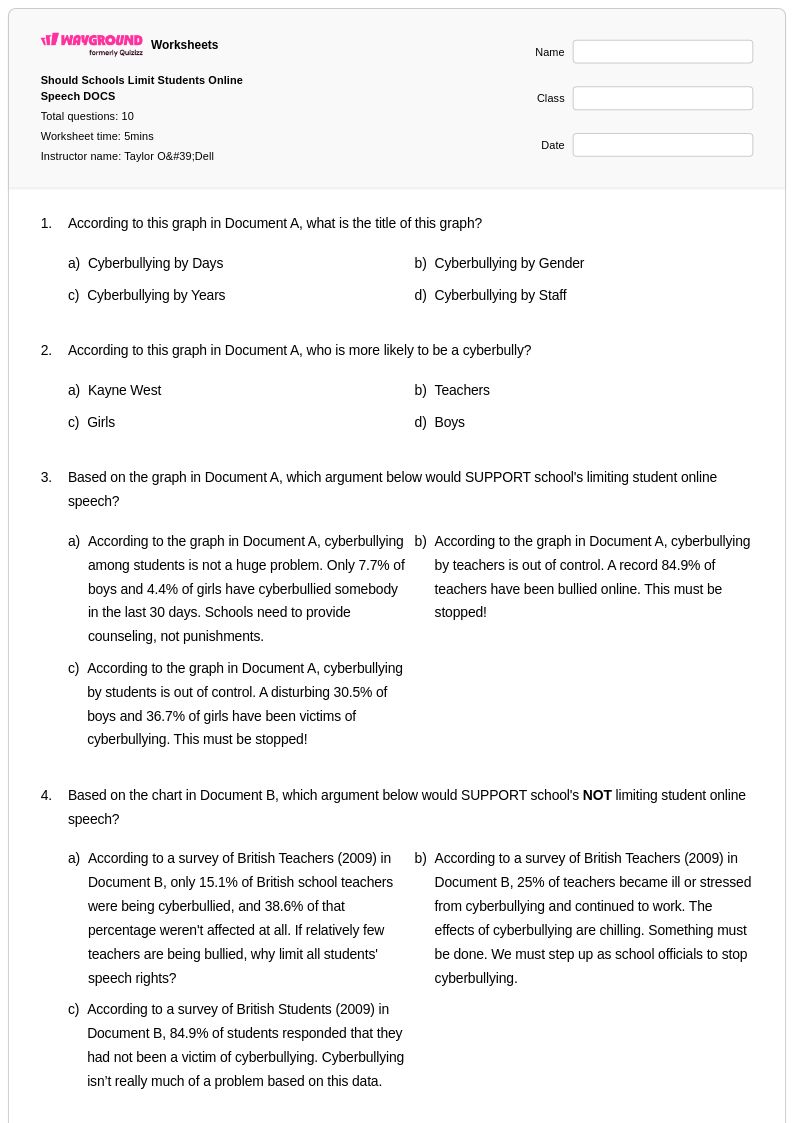
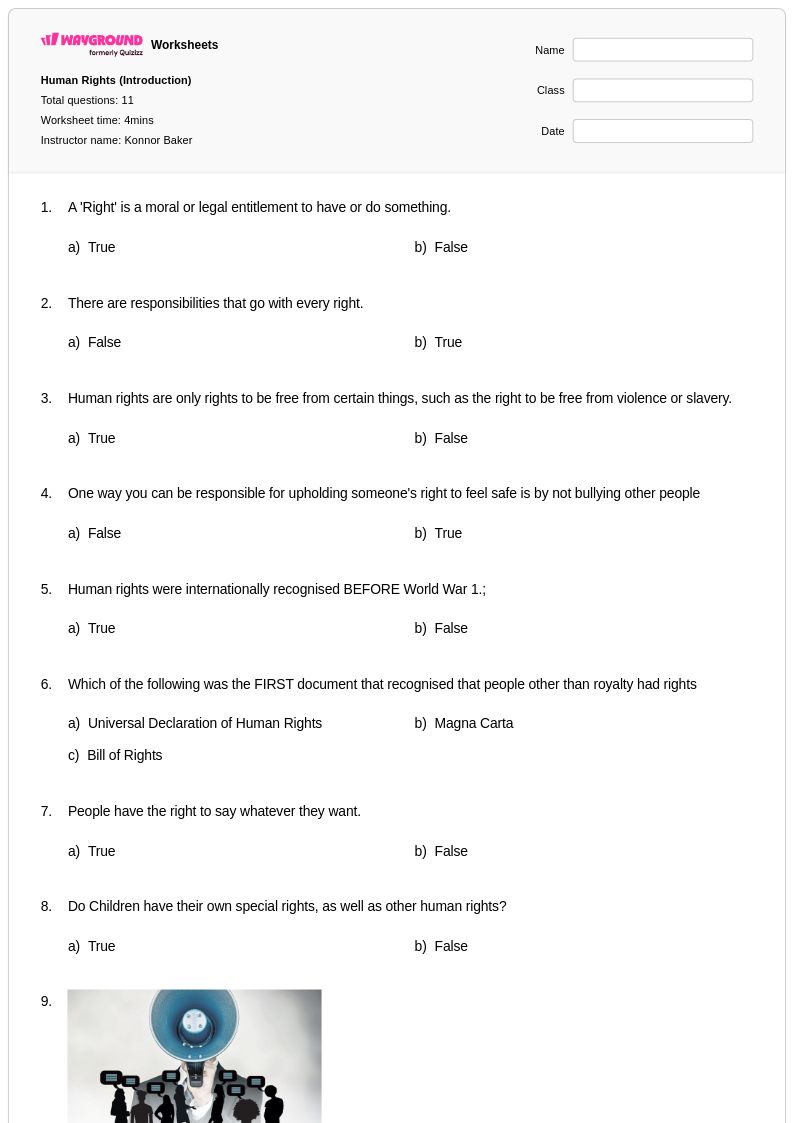
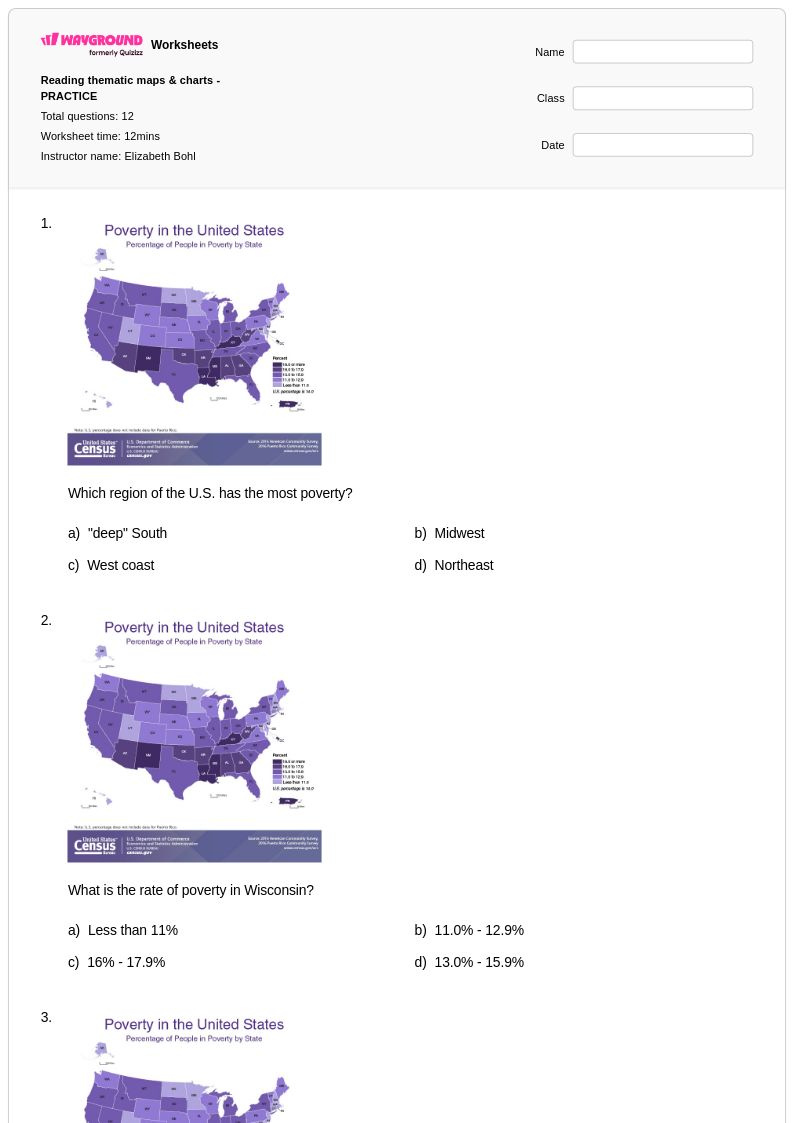
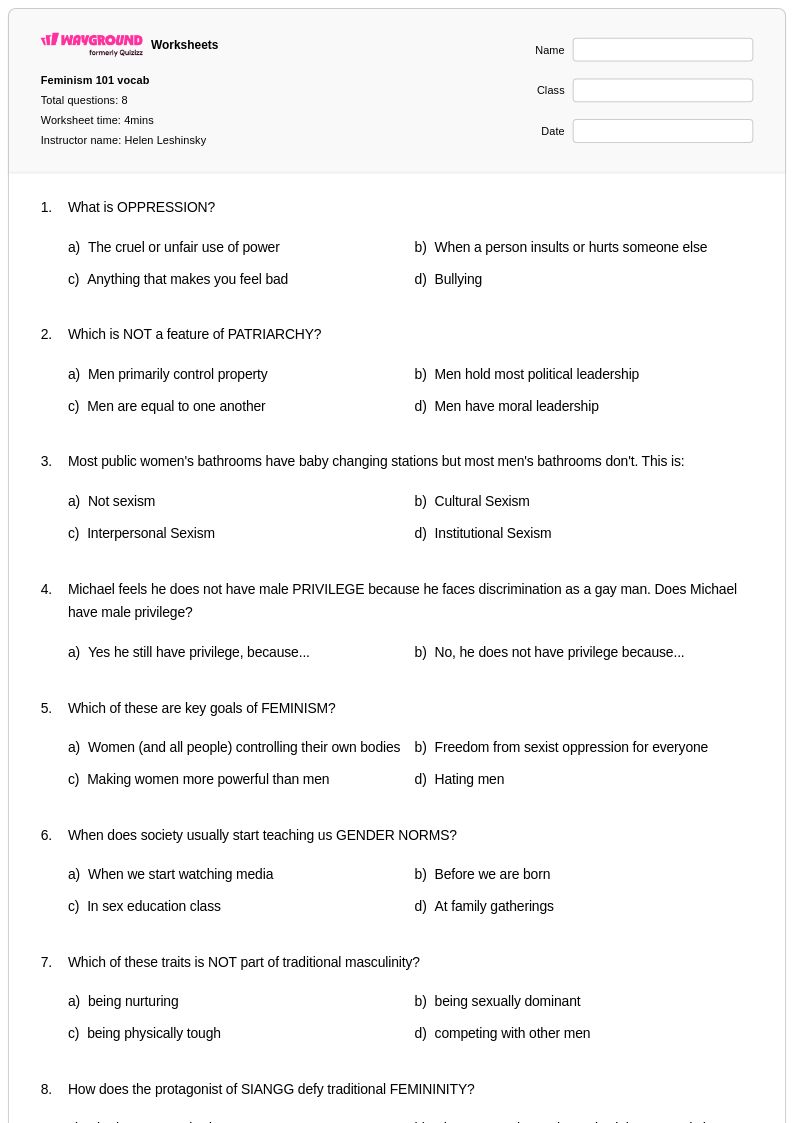
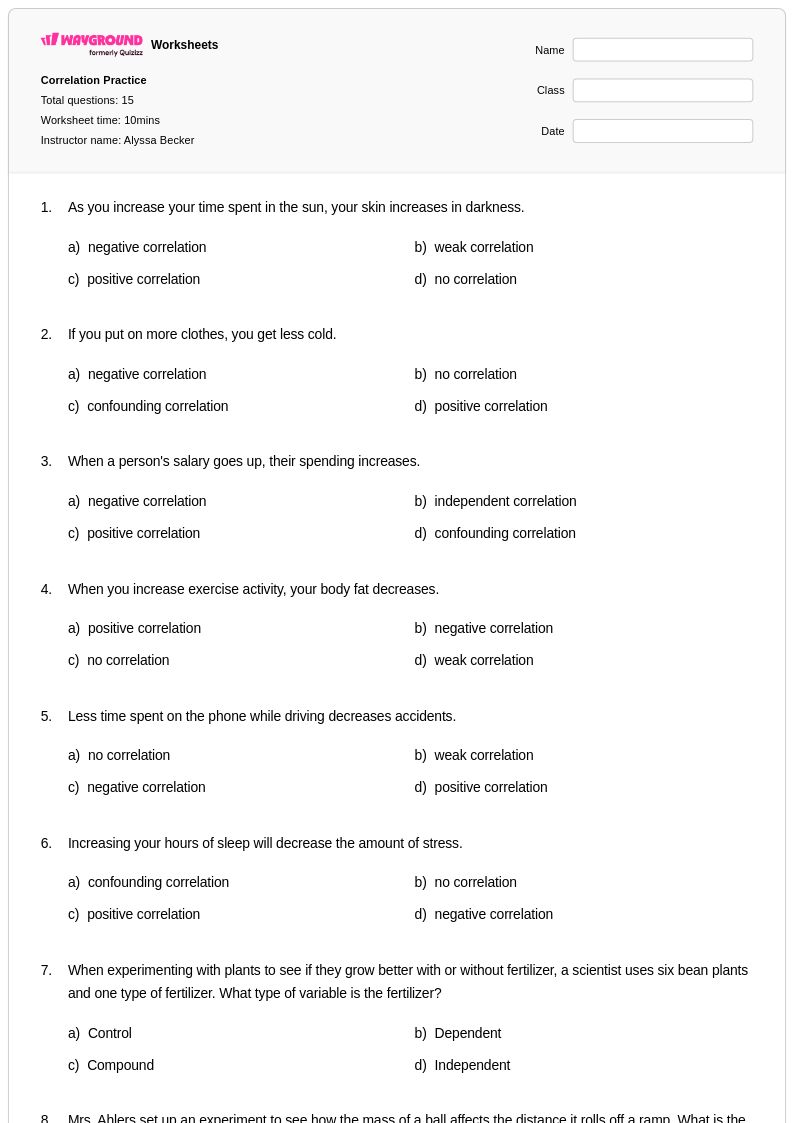
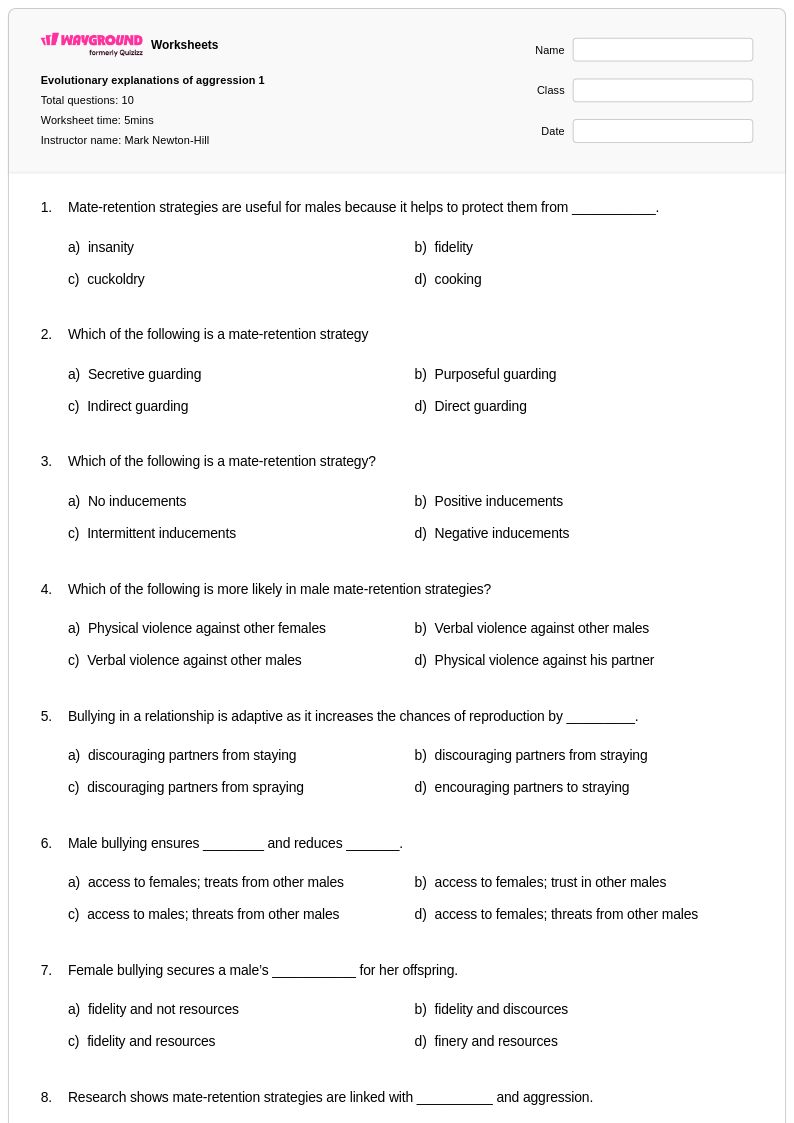
Bullying prevention and intervention worksheets for Grade 11 students available through Wayground (formerly Quizizz) provide comprehensive resources to address this critical social issue within high school environments. These professionally developed materials focus on building students' understanding of bullying dynamics, empowering bystander intervention strategies, and fostering empathy and respect in peer relationships. The worksheet collections include scenario-based practice problems that challenge students to analyze complex social situations, identify different forms of bullying including cyberbullying, and develop effective response strategies. Each worksheet set comes complete with detailed answer keys and comprehensive explanations, making them valuable free printables that educators can seamlessly integrate into their social studies curriculum to strengthen students' social-emotional learning and conflict resolution skills.
Wayground (formerly Quizizz) supports educators with an extensive library of millions of teacher-created bullying prevention resources specifically designed for Grade 11 social studies instruction. The platform's advanced search and filtering capabilities enable teachers to quickly locate materials that align with their specific curriculum standards and learning objectives, while differentiation tools allow for customization based on individual student needs and reading levels. These bullying-focused worksheet collections are available in both printable pdf formats and interactive digital versions, providing flexibility for various classroom settings and learning preferences. Teachers can effectively utilize these resources for initial skill-building lessons, targeted remediation for students who need additional support in understanding social dynamics, and enrichment activities that challenge advanced learners to explore deeper aspects of peer relationships and community building within their school environment.
FAQs
How do I teach students to recognize and respond to bullying?
Effective bullying prevention instruction begins with helping students distinguish between conflict, rudeness, and bullying — specifically that bullying involves repeated behavior, a power imbalance, and intent to harm. From there, teachers should move into scenario analysis where students evaluate real-world situations, identify the type of bullying occurring (physical, verbal, relational, or cyberbullying), and determine appropriate responses. Role-playing bystander intervention strategies is especially effective because it gives students practiced language and actions to use when they witness bullying, rather than relying on in-the-moment instinct.
What kinds of activities help students practice anti-bullying and empathy skills?
Scenario-based worksheets are among the most effective practice tools because they require students to apply empathy and critical thinking to realistic situations rather than recall definitions in the abstract. Reflection activities that ask students to consider how a victim might feel, why a bystander might stay silent, or what a bully might be experiencing build emotional intelligence alongside social awareness. These activities work best when paired with structured discussion prompts that push students to defend their reasoning and consider perspectives beyond their own.
What misconceptions do students commonly have about bullying?
One of the most persistent misconceptions is that bullying is just "kids being kids" or that only physical aggression counts — students often fail to recognize relational bullying, such as deliberate exclusion or rumor-spreading, as a serious form of harm. Another common error is conflating a single mean act with bullying; students need to understand that the repetition and power imbalance are defining features. Many students also underestimate the role of bystanders, believing that staying silent is neutral when in practice it often reinforces the behavior.
How do I support students with different learning needs when teaching bullying prevention?
Wayground's accommodation features allow teachers to differentiate bullying prevention activities for individual students without drawing attention to those adjustments. Teachers can enable Read Aloud so students who struggle with reading can still access scenario-based questions independently, or reduce the number of answer choices displayed to lower cognitive load for students who need it. These settings can be configured per student and apply automatically in future sessions, making it easy to consistently support diverse learners across the full unit.
How do I use Wayground's bullying worksheets in my classroom?
Wayground's bullying prevention worksheets are available as printable PDFs for traditional classroom use and in digital formats for technology-integrated environments, giving teachers flexibility depending on their setup. Teachers can also host the worksheets as a live or assigned quiz on Wayground, which enables real-time progress tracking and automatic scoring. Each worksheet includes a complete answer key, so teachers can use them for guided instruction, independent practice, or take-home reinforcement with confidence that follow-up discussion is grounded in accurate responses.
How do I use bullying worksheets to lead a meaningful classroom discussion?
The most effective approach is to use scenario analysis and reflection prompts as entry points rather than asking students to recall rules or definitions cold. Presenting a scenario worksheet first — where students individually analyze what happened, who was involved, and what the best response would be — gives every student a position to articulate before the group discussion begins. This structure reduces the risk of discussion being dominated by a few voices and ensures the conversation is grounded in specific details rather than generalizations.