
19 Hỏi
6th
10 Hỏi
1st - 6th
12 Hỏi
5th - 6th
10 Hỏi
5th - 9th
15 Hỏi
6th - 8th
11 Hỏi
6th
46 Hỏi
6th - 8th
21 Hỏi
6th
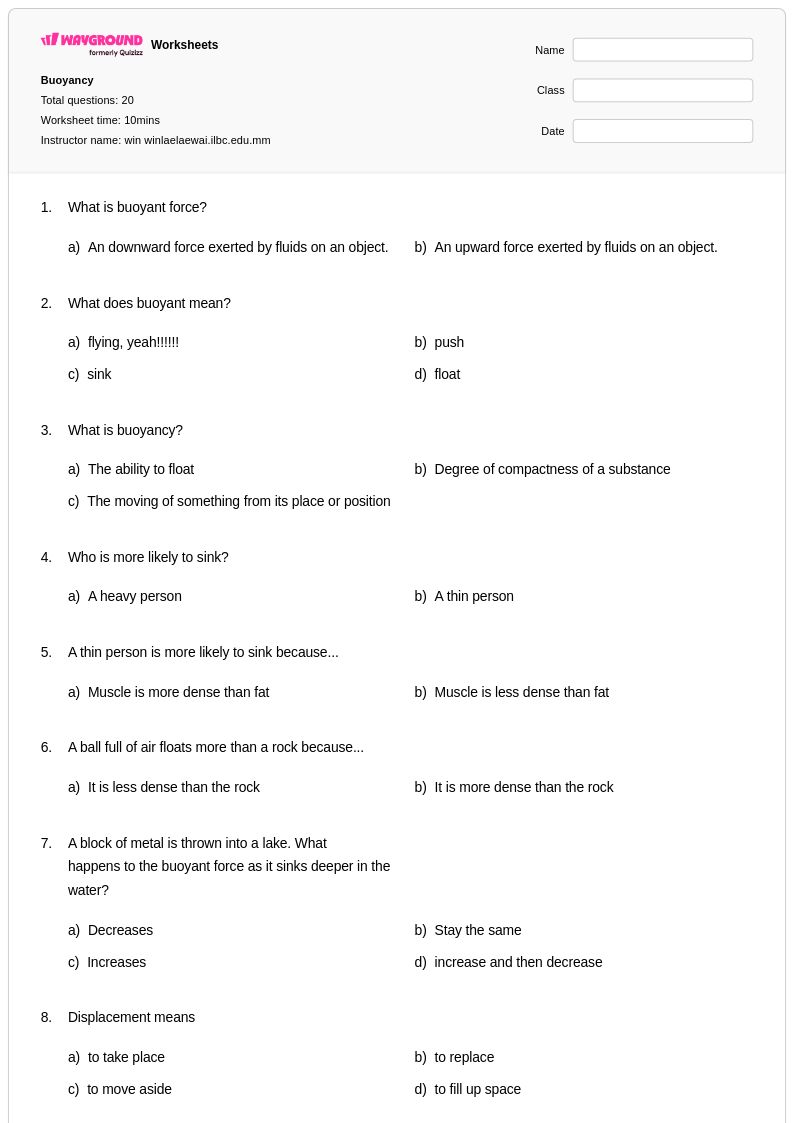
20 Hỏi
6th
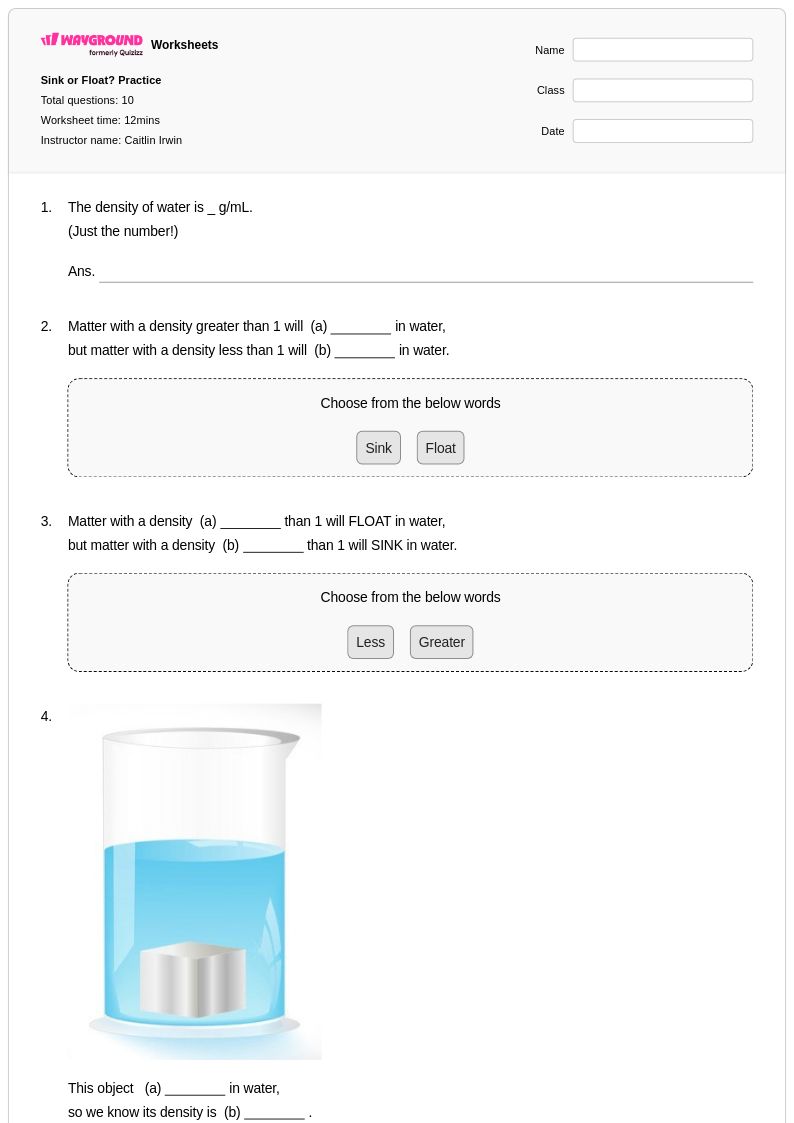
10 Hỏi
6th - 8th
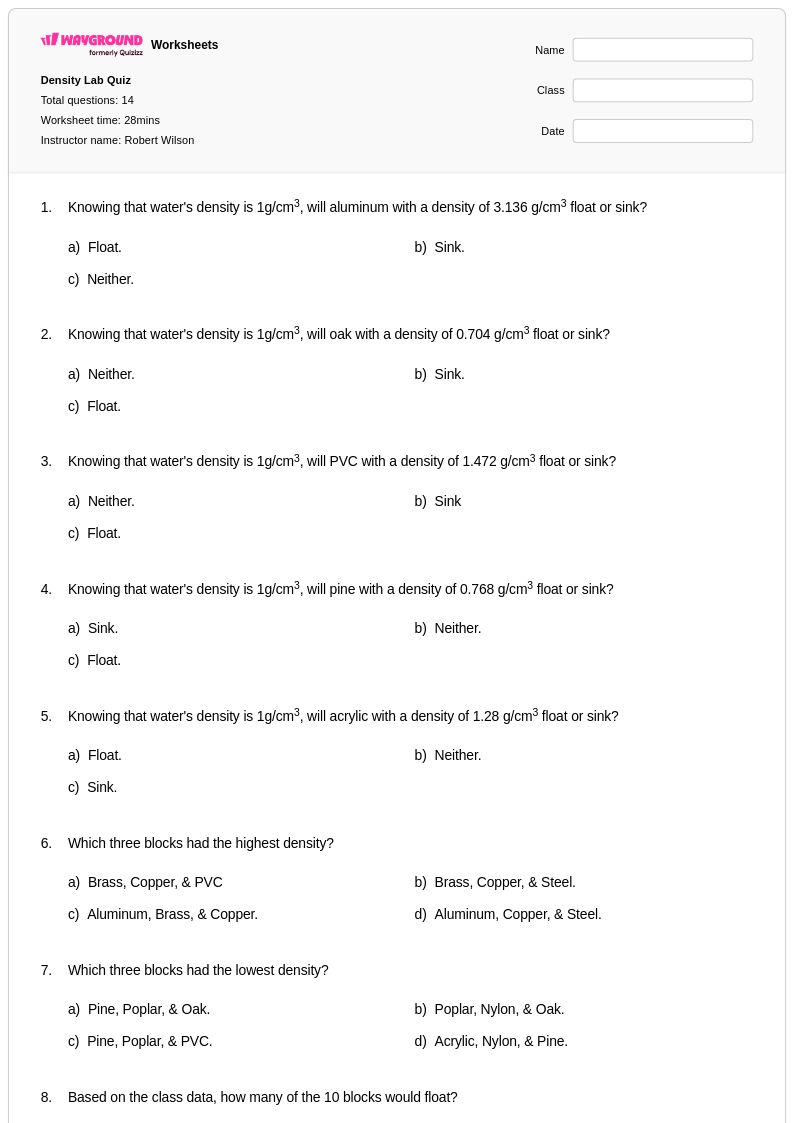
14 Hỏi
6th
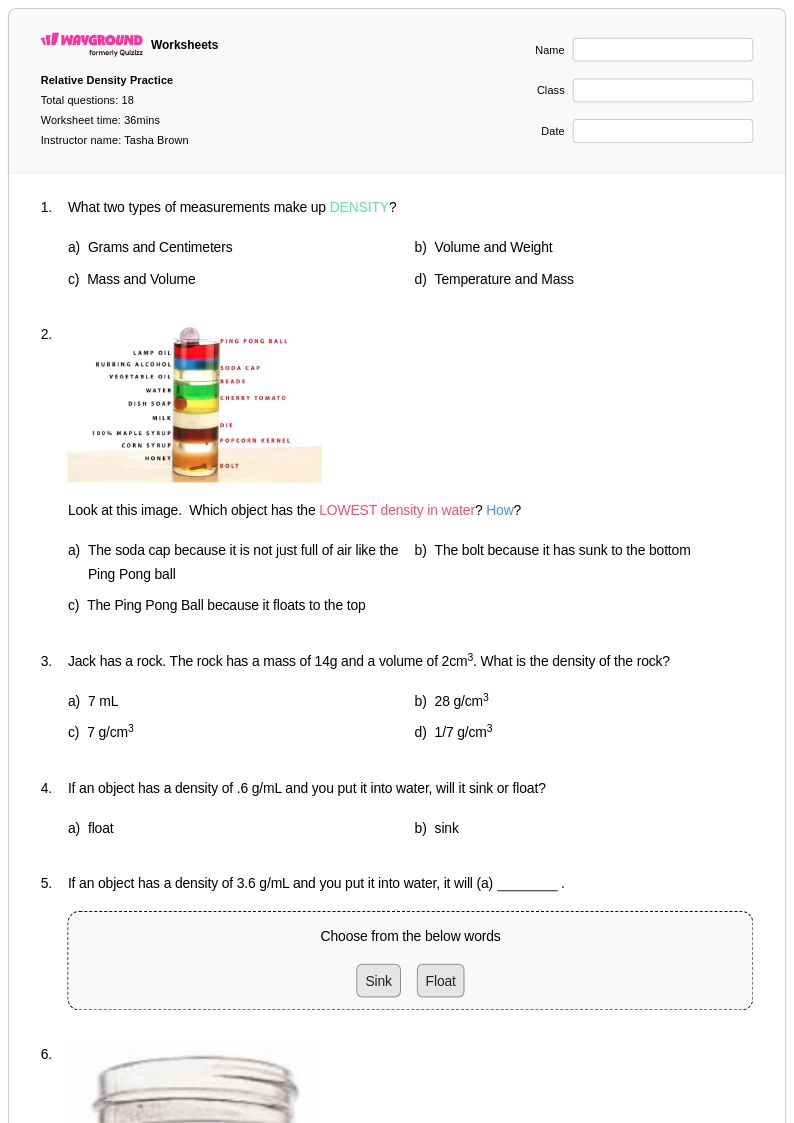
18 Hỏi
6th - Uni
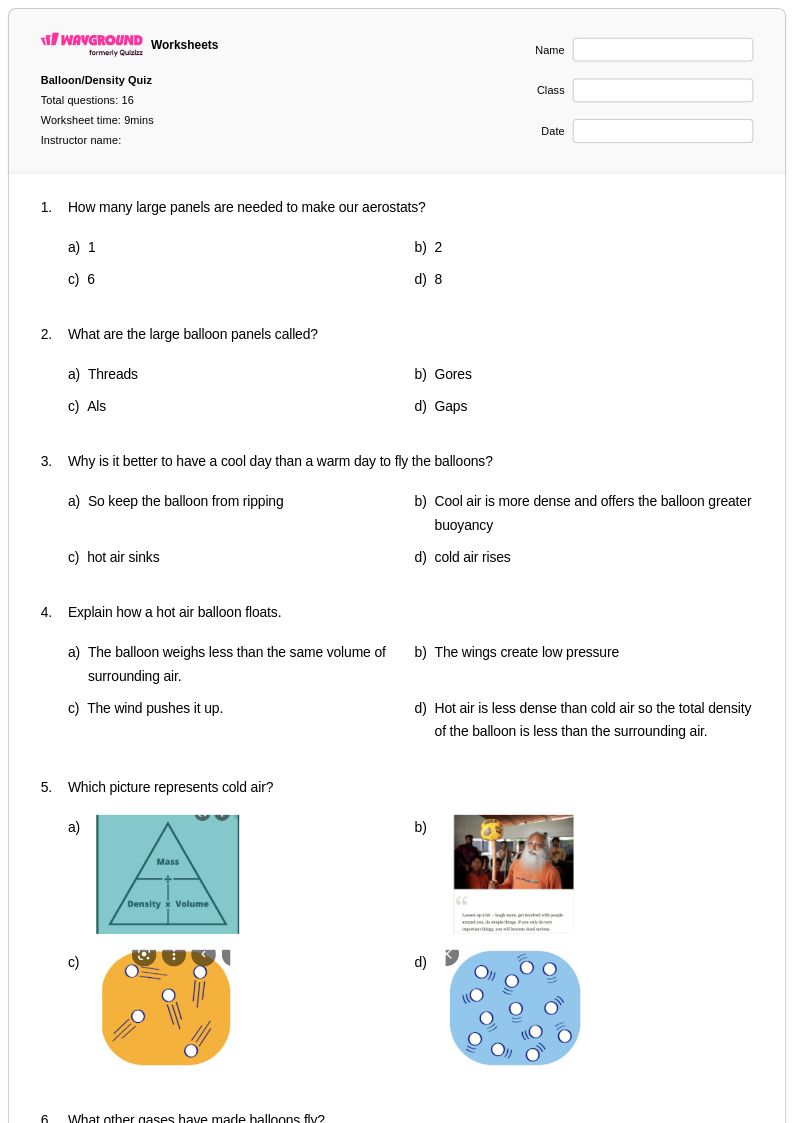
16 Hỏi
6th - 8th
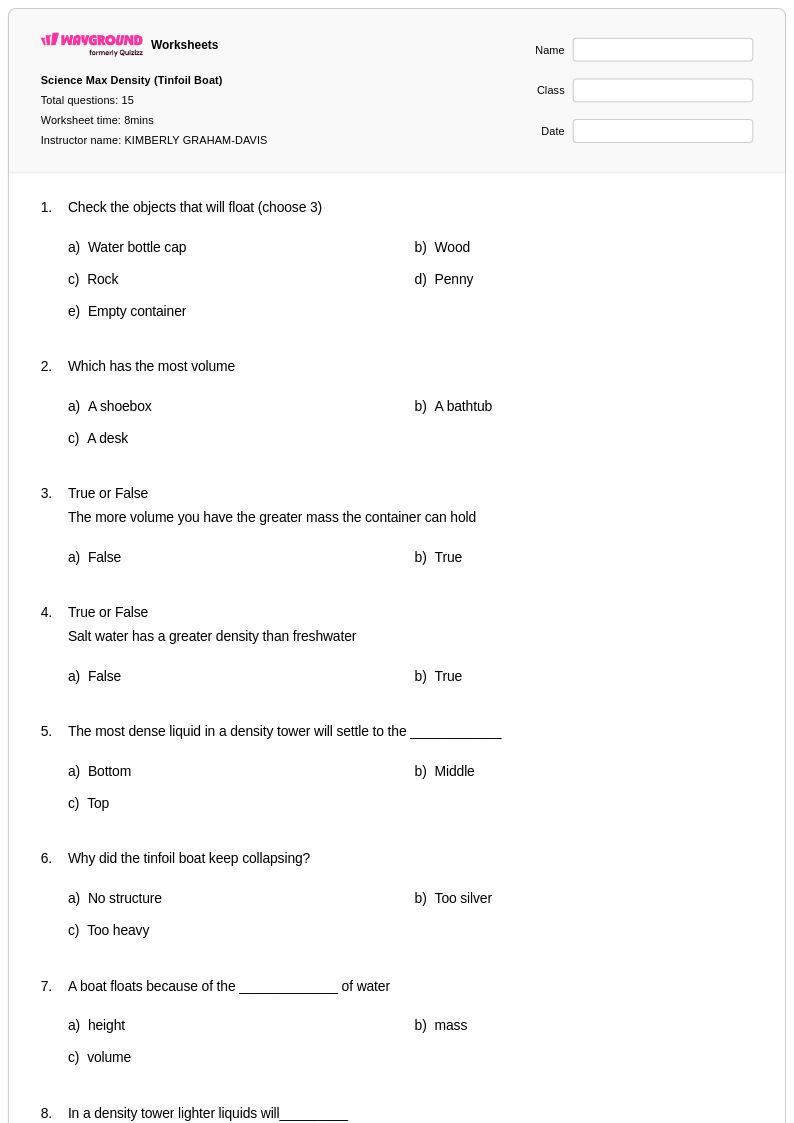
15 Hỏi
5th - 8th
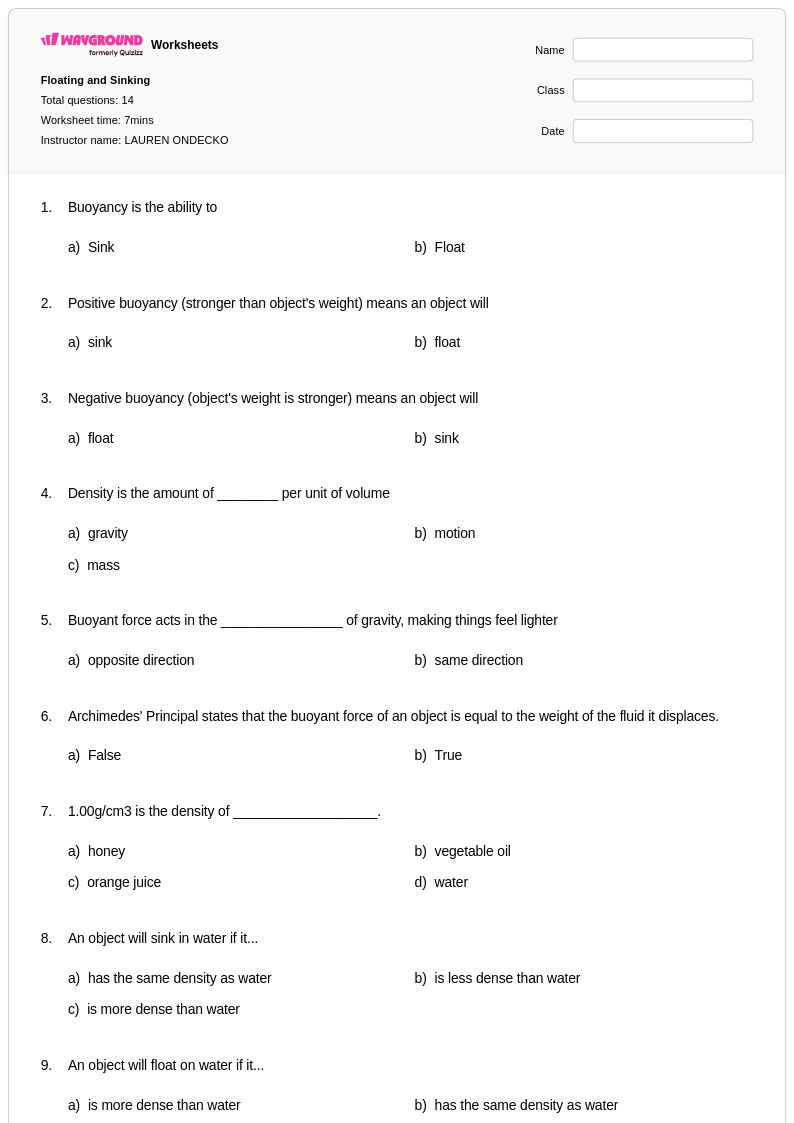
14 Hỏi
6th
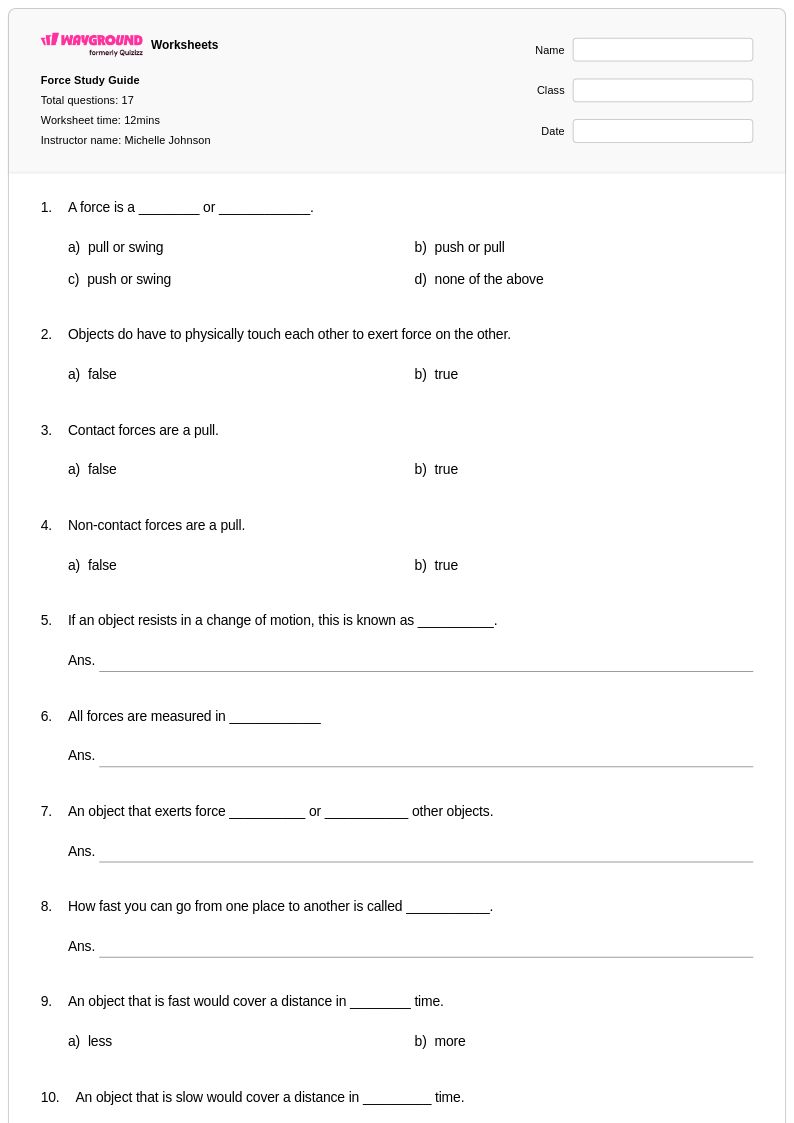
17 Hỏi
4th - 7th
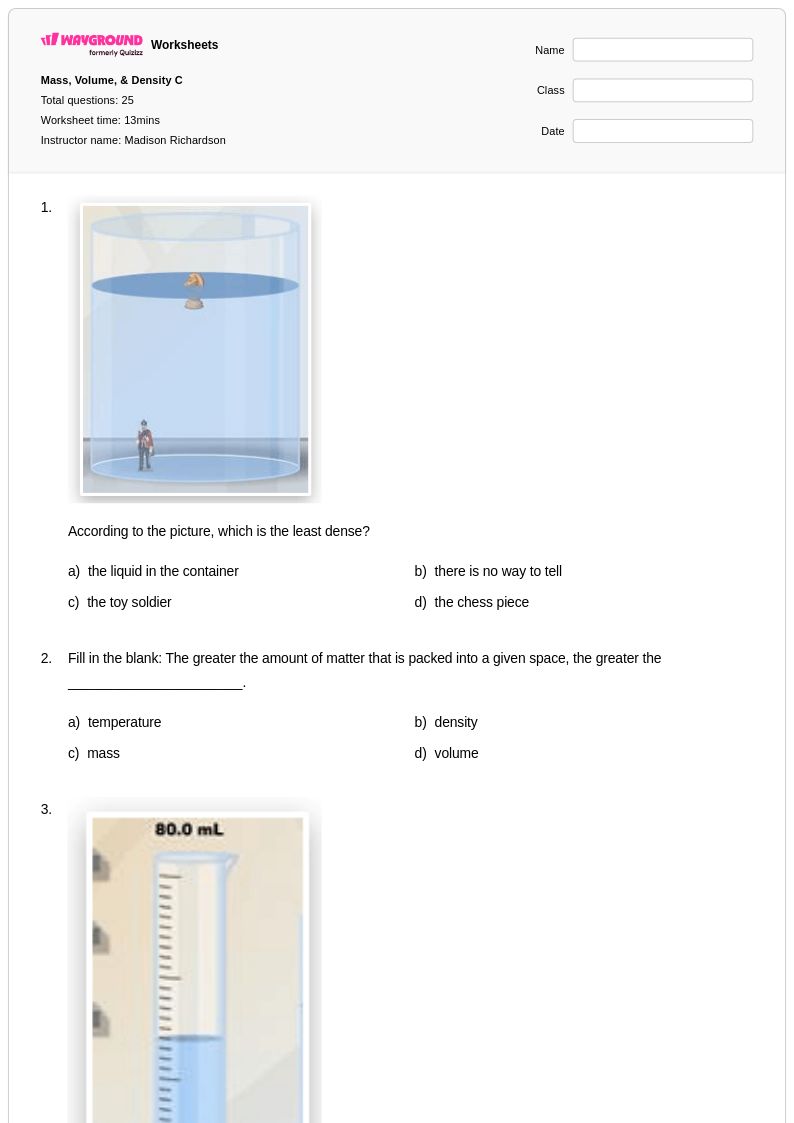
25 Hỏi
6th - 9th
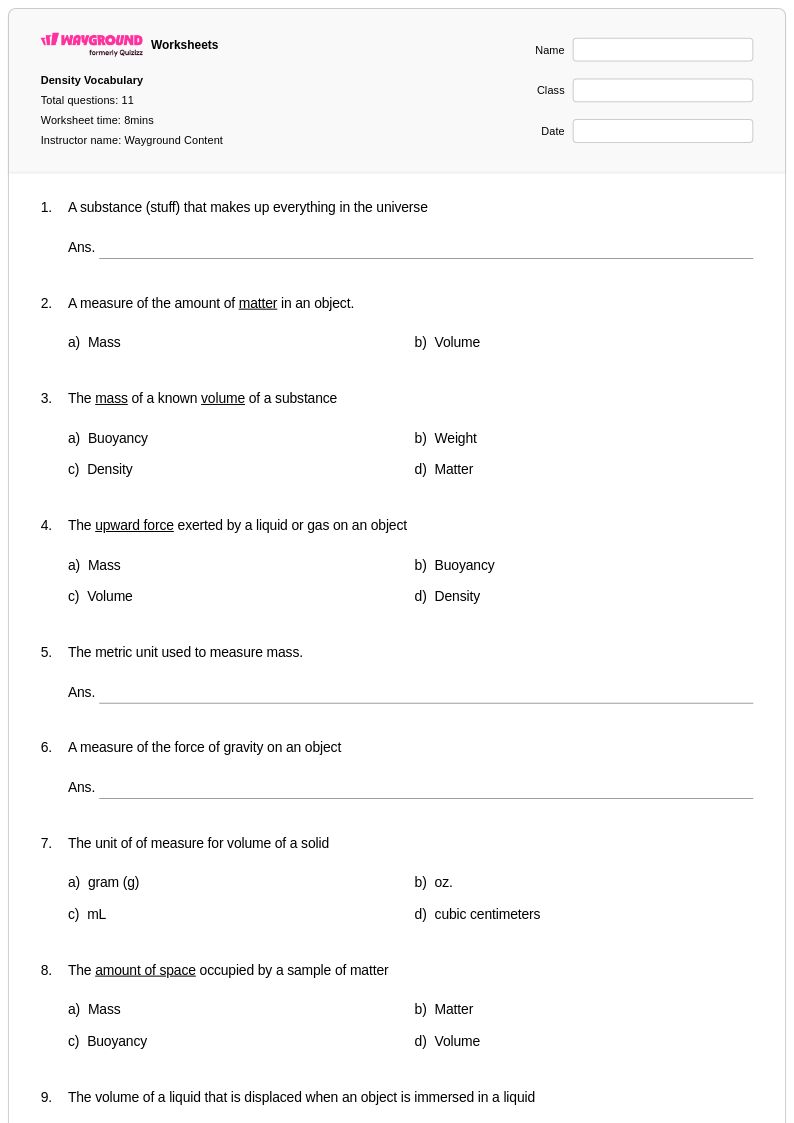
11 Hỏi
6th - 8th
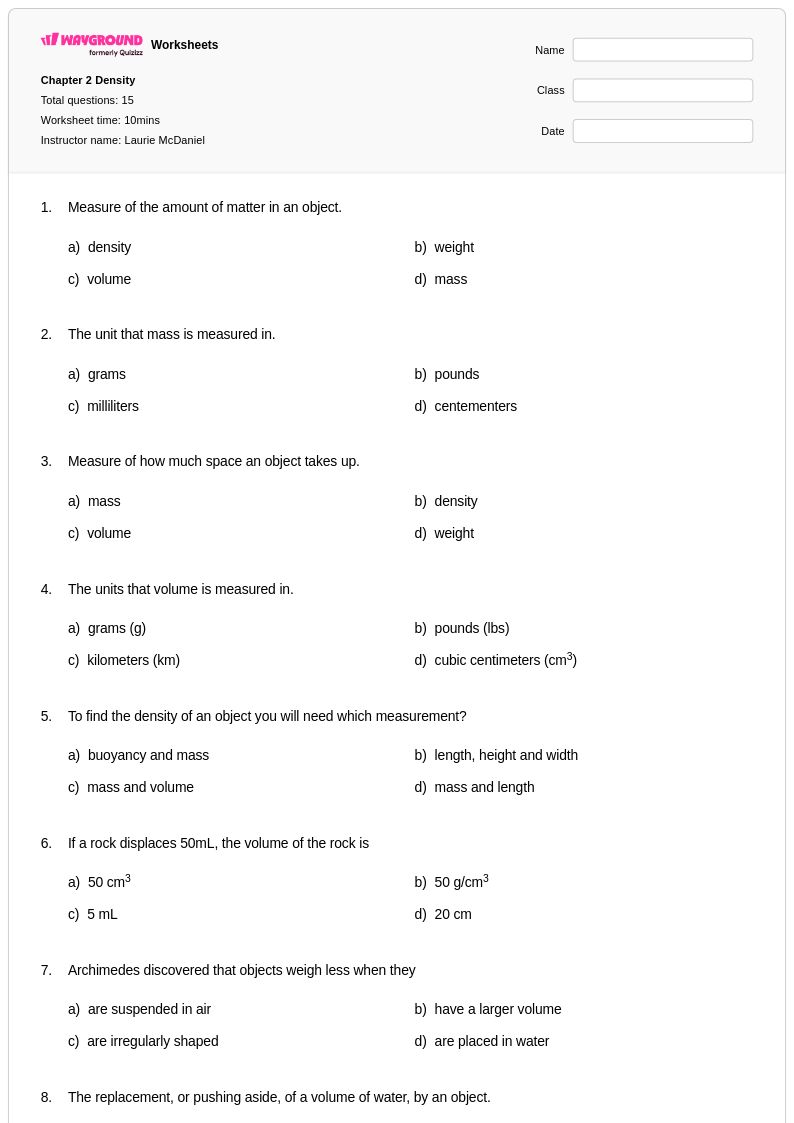
15 Hỏi
6th - 8th
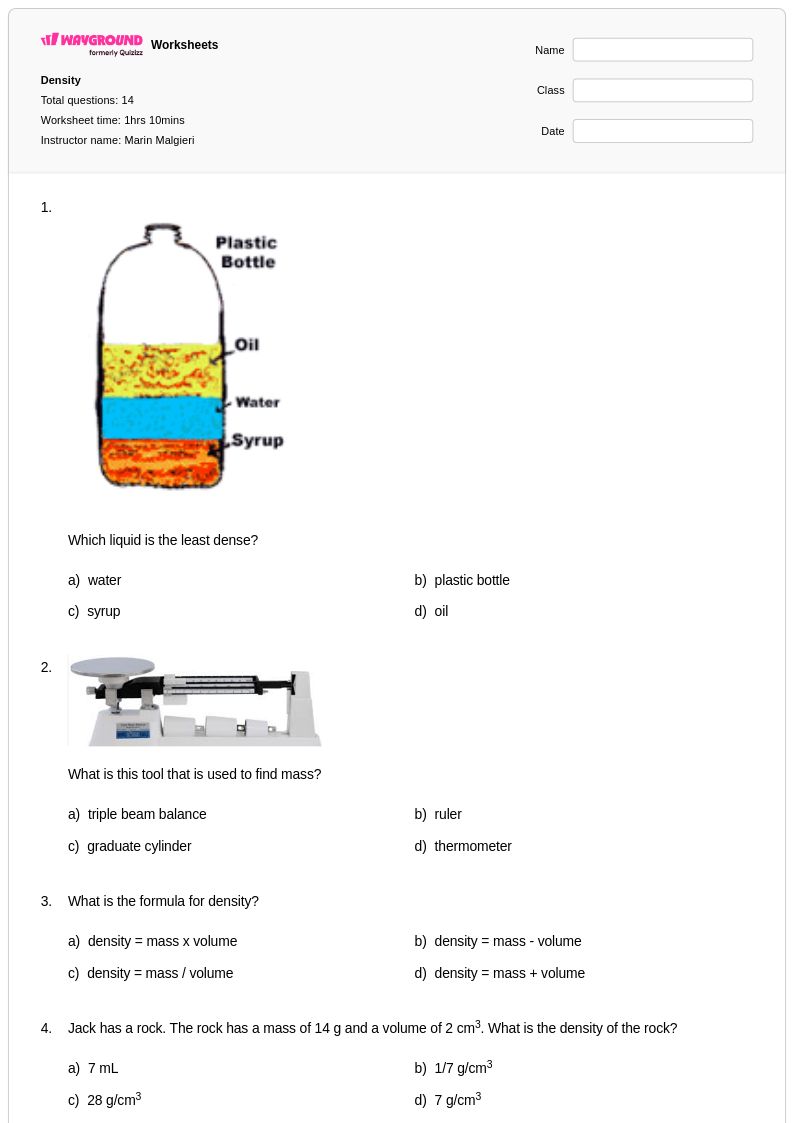
14 Hỏi
6th
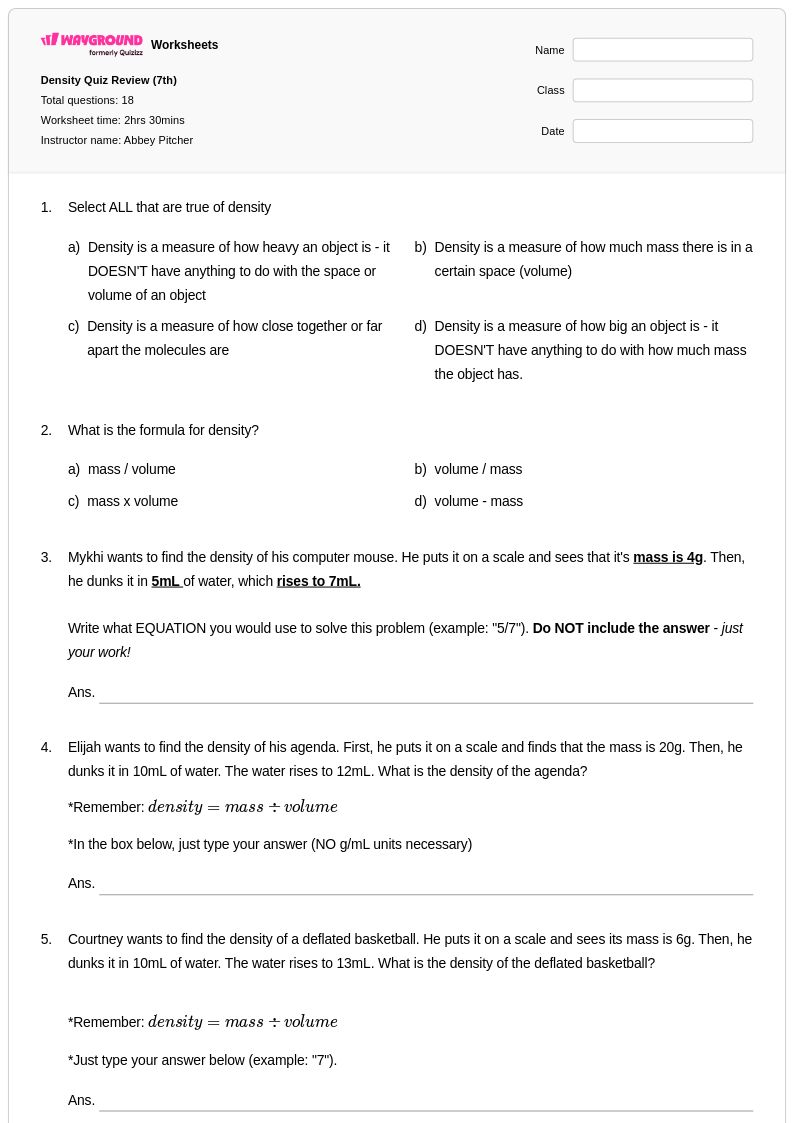
18 Hỏi
6th - 7th
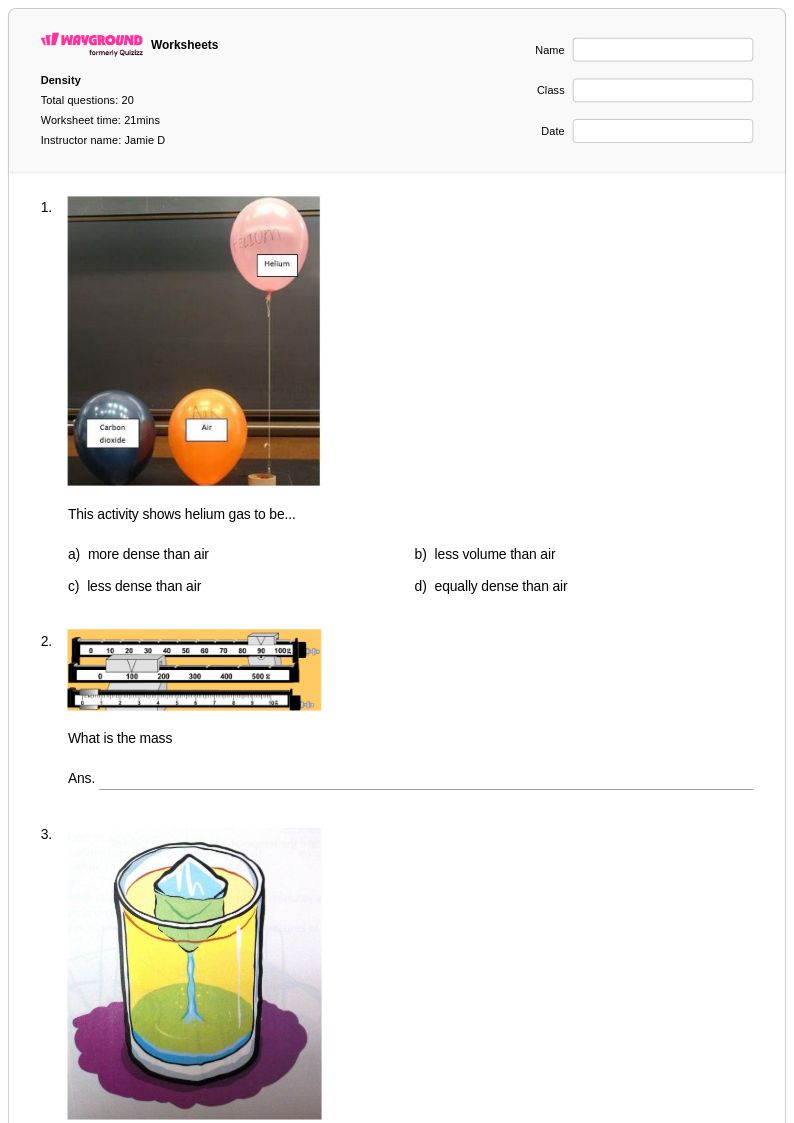
20 Hỏi
6th
Khám phá Buoyancy Bảng tính theo cấp độ
Khám phá các bảng tính chủ đề khác cho grade 6
Explore printable Buoyancy worksheets for Grade 6
Grade 6 buoyancy worksheets available through Wayground (formerly Quizizz) provide students with comprehensive practice in understanding the fundamental principles that determine whether objects float or sink in fluids. These carefully crafted educational resources strengthen critical scientific thinking skills by engaging students with hands-on practice problems that explore Archimedes' principle, density relationships, and the forces acting on submerged objects. Each worksheet collection includes detailed answer keys that support independent learning and self-assessment, while the free printables offer teachers flexible options for classroom instruction, homework assignments, and laboratory reinforcement activities. Students work through real-world scenarios involving ships, submarines, hot air balloons, and everyday objects to develop a thorough understanding of how buoyant force relates to displaced fluid volume and weight.
Wayground (formerly Quizizz) empowers educators with millions of teacher-created buoyancy resources that can be easily accessed through robust search and filtering capabilities aligned with national science standards. The platform's differentiation tools allow teachers to customize worksheet difficulty levels and problem types to meet diverse learning needs, whether supporting struggling students through remediation activities or challenging advanced learners with enrichment exercises. These versatile materials are available in both printable pdf formats for traditional classroom use and digital formats for interactive learning experiences, enabling seamless integration into any teaching environment. Teachers can efficiently plan comprehensive buoyancy units by selecting from extensive collections that scaffold student understanding from basic floating and sinking concepts through complex calculations involving fluid mechanics and displaced volume relationships.
FAQs
How do I teach buoyancy to students?
What exercises help students practice buoyancy concepts?
What mistakes do students commonly make when learning about buoyancy?
How do I differentiate buoyancy instruction for students at different skill levels?
How can I use Wayground buoyancy worksheets in my classroom?