Free Printable Wave Properties Worksheets for Grade 6
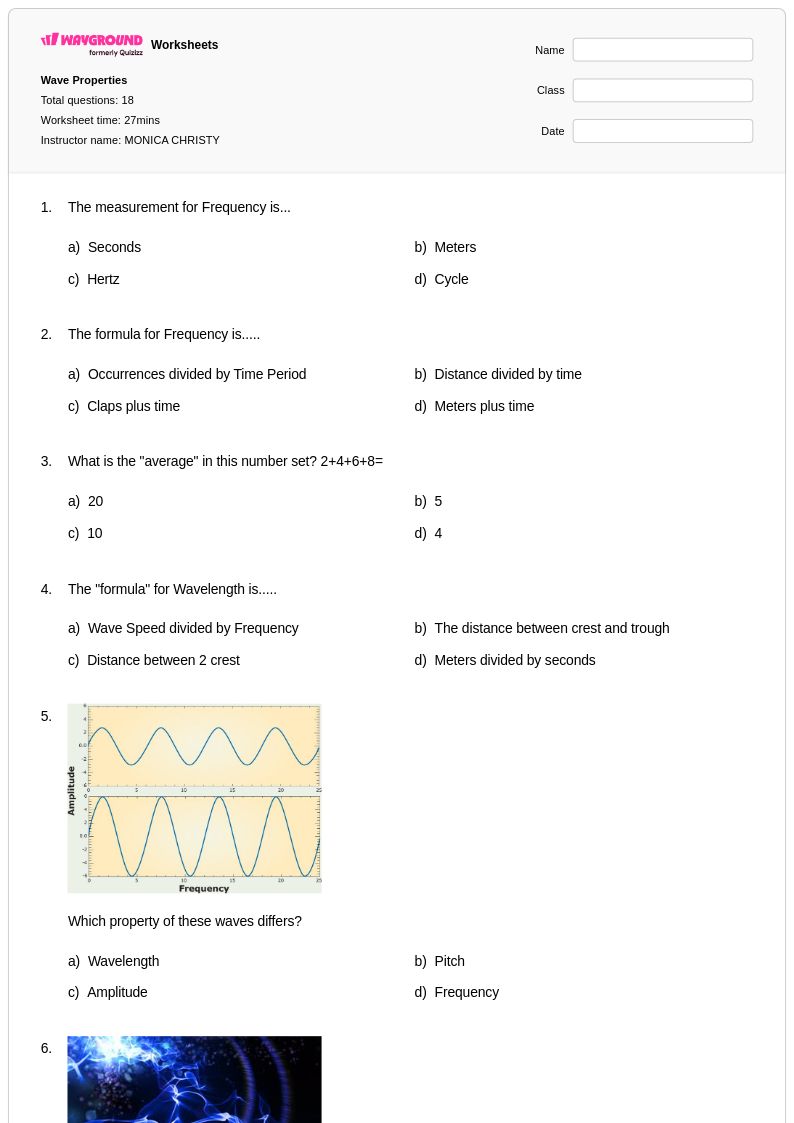
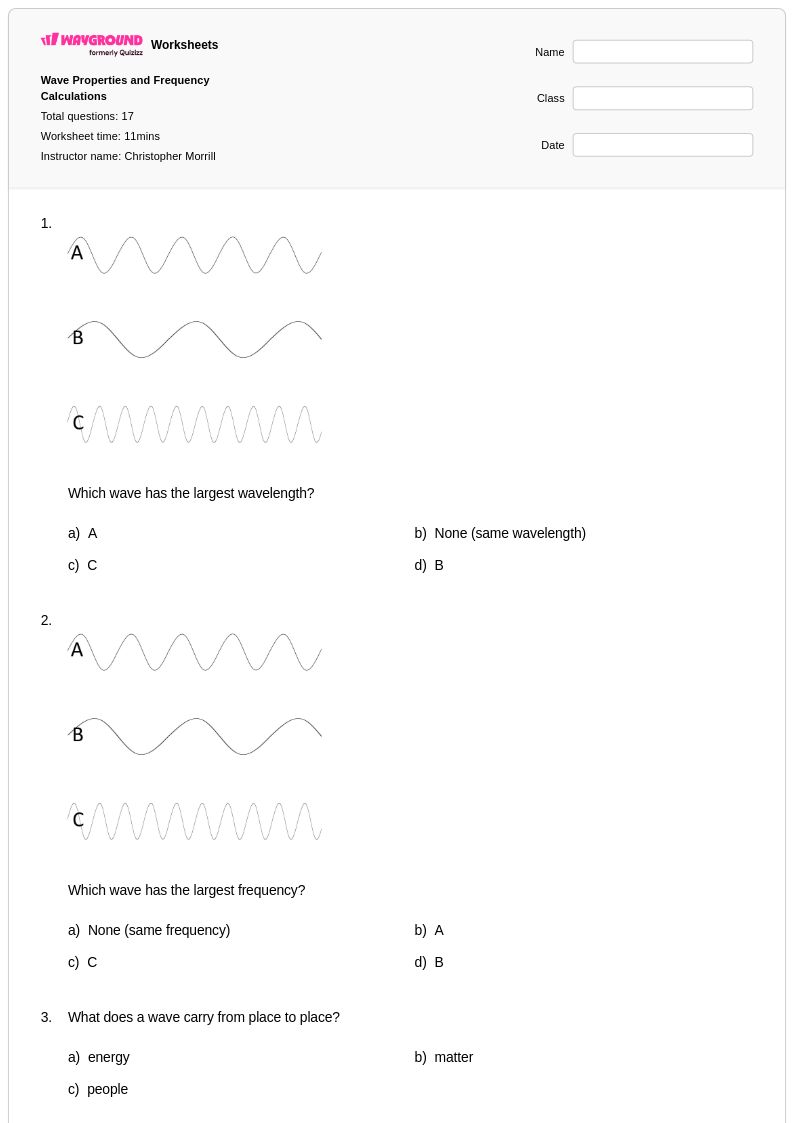
Explore Grade 6 wave properties through Wayground's comprehensive collection of free worksheets and printables, featuring practice problems and answer keys that help students master frequency, amplitude, wavelength, and wave behavior concepts.
Explore printable Wave Properties worksheets for Grade 6
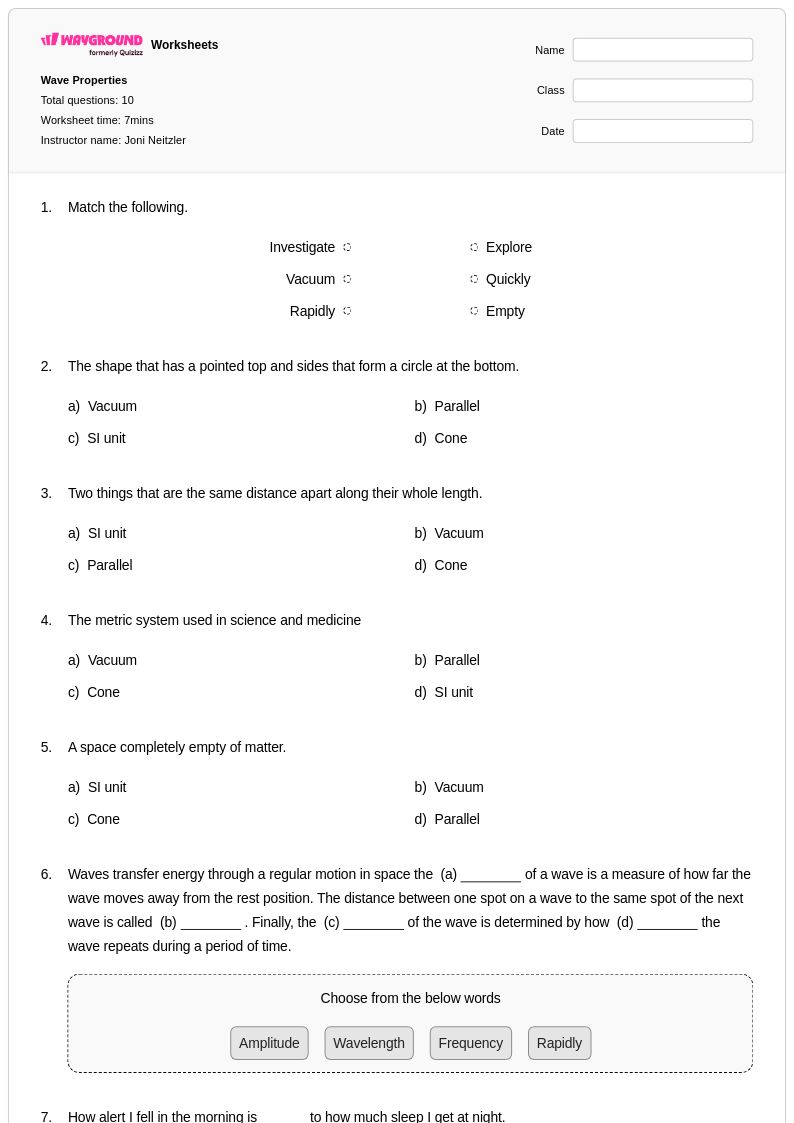
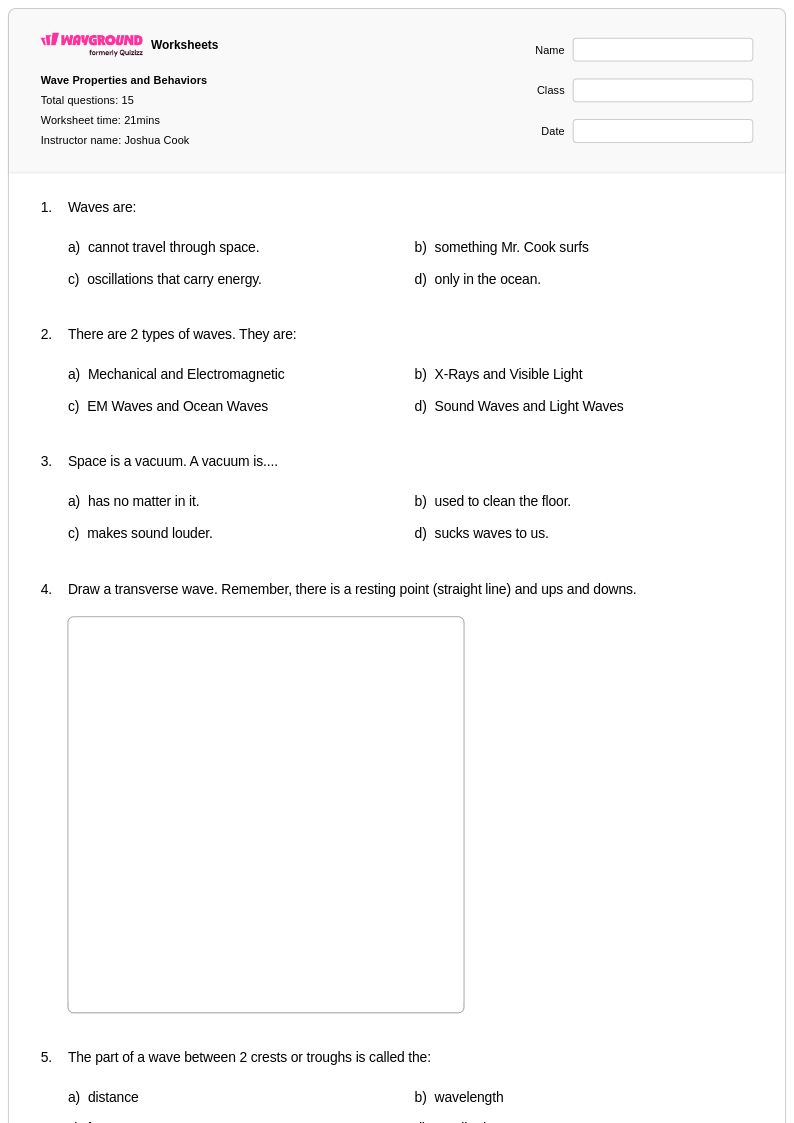
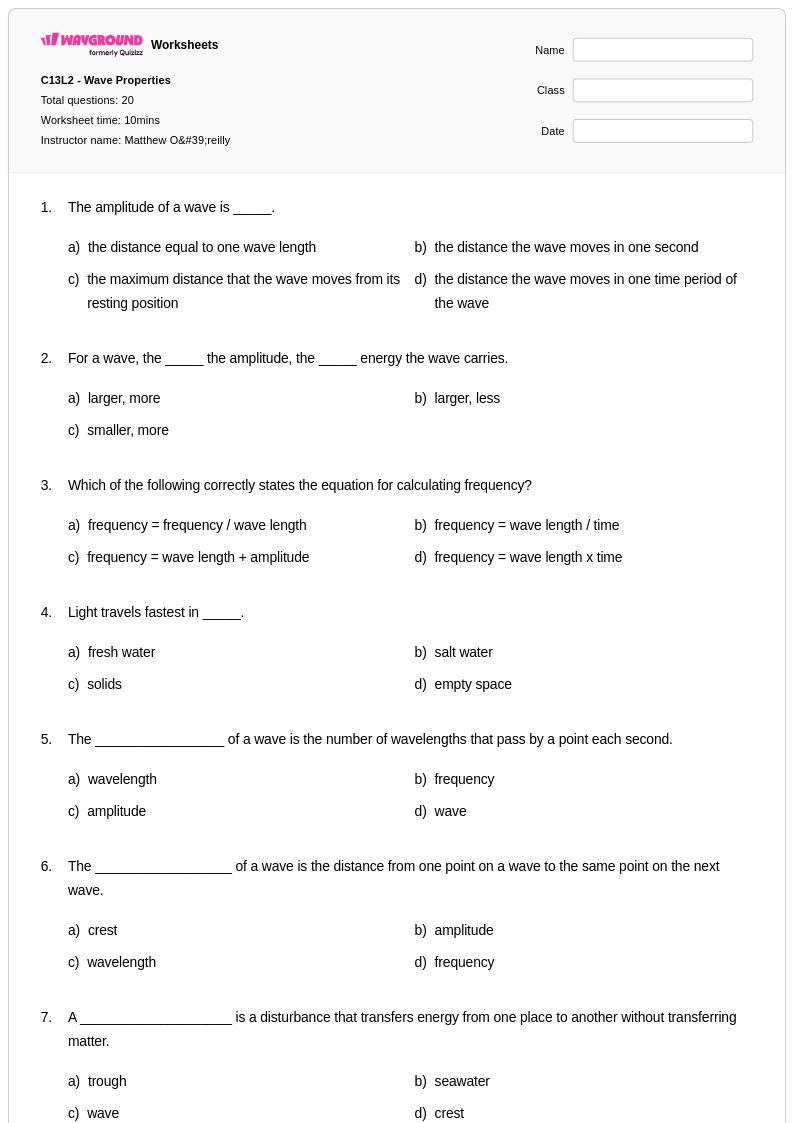
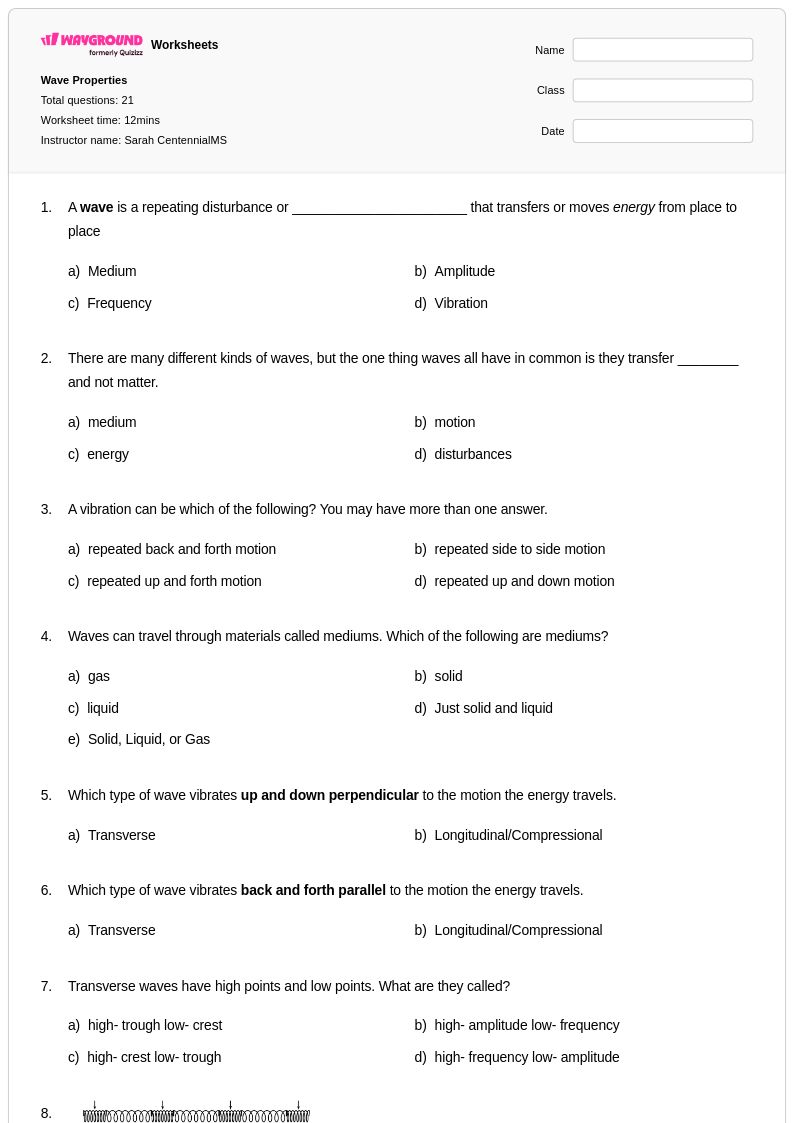
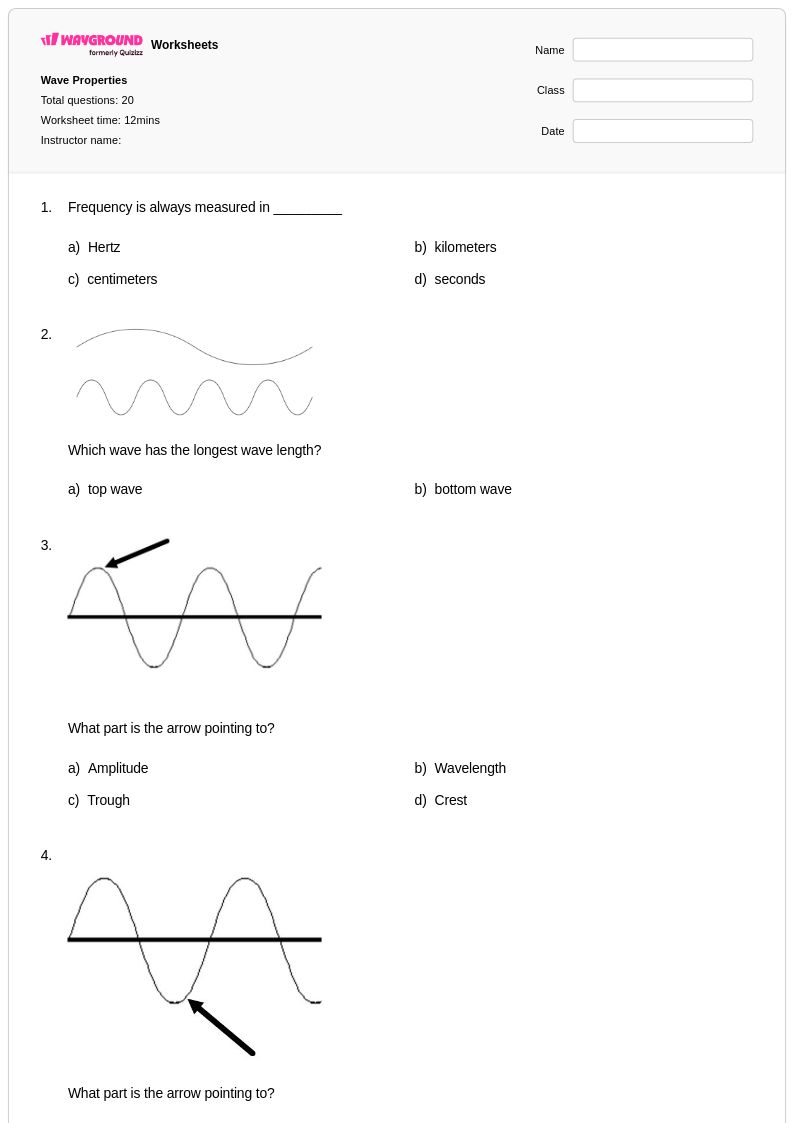
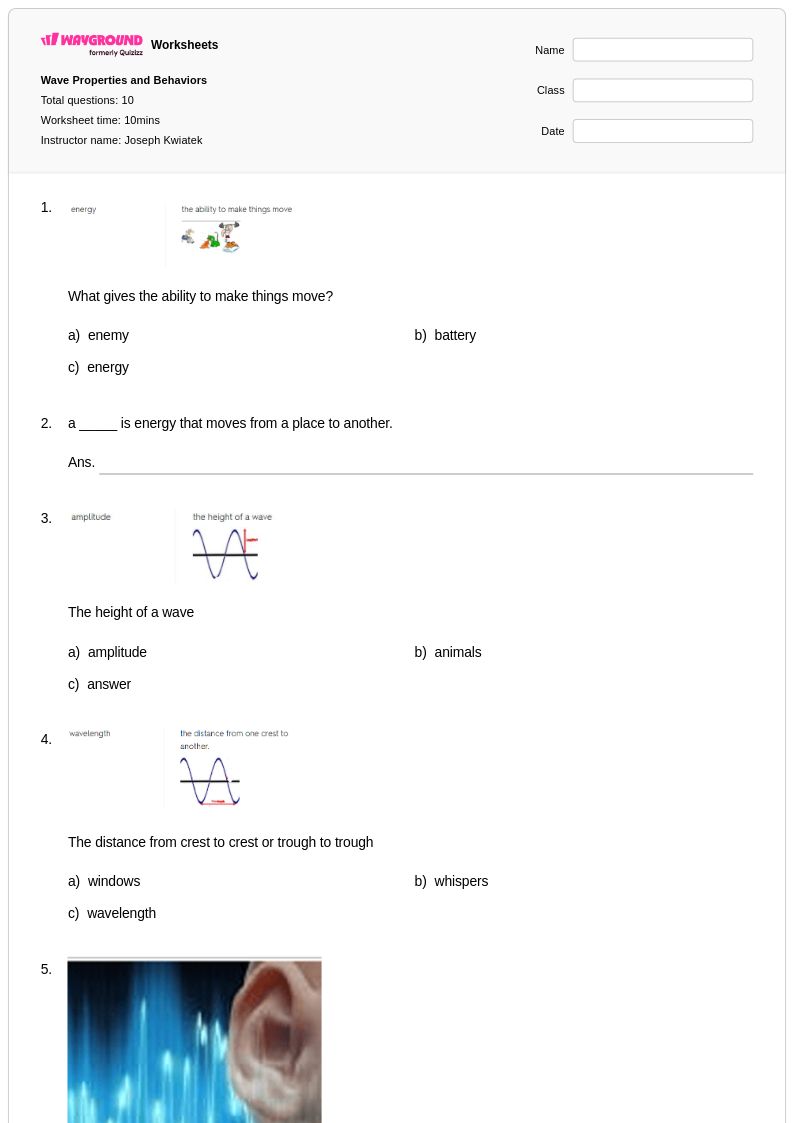
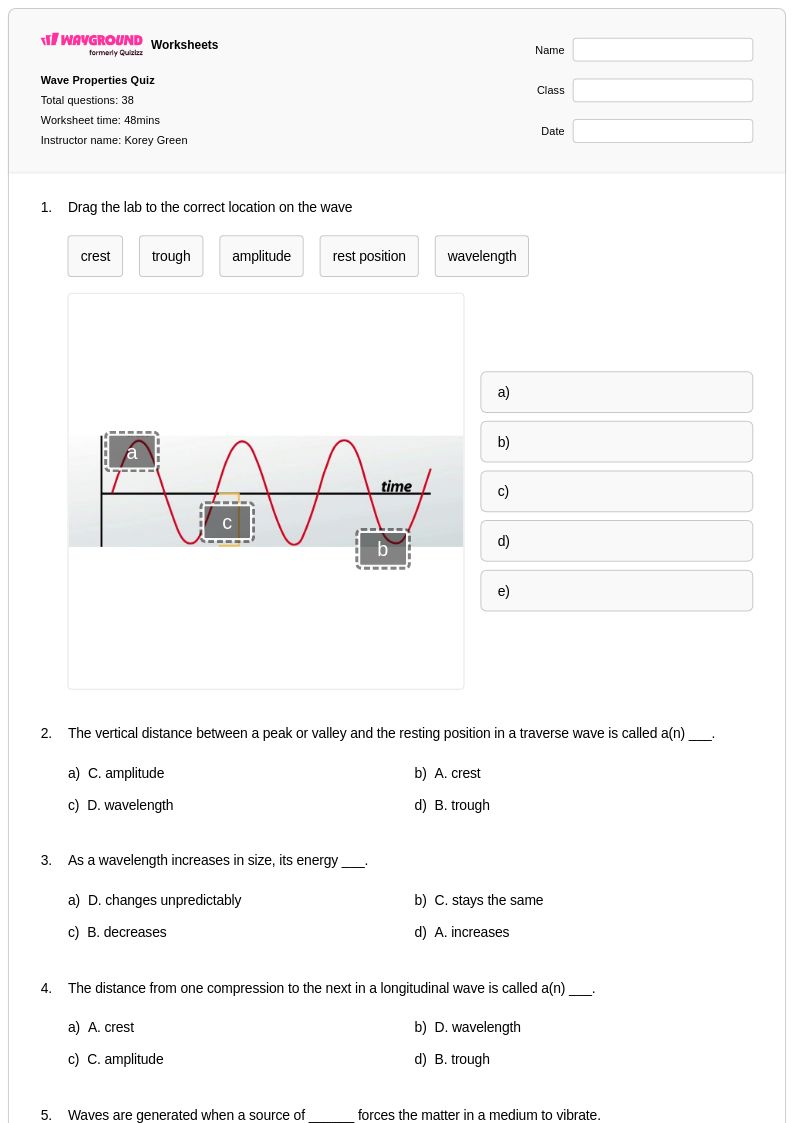
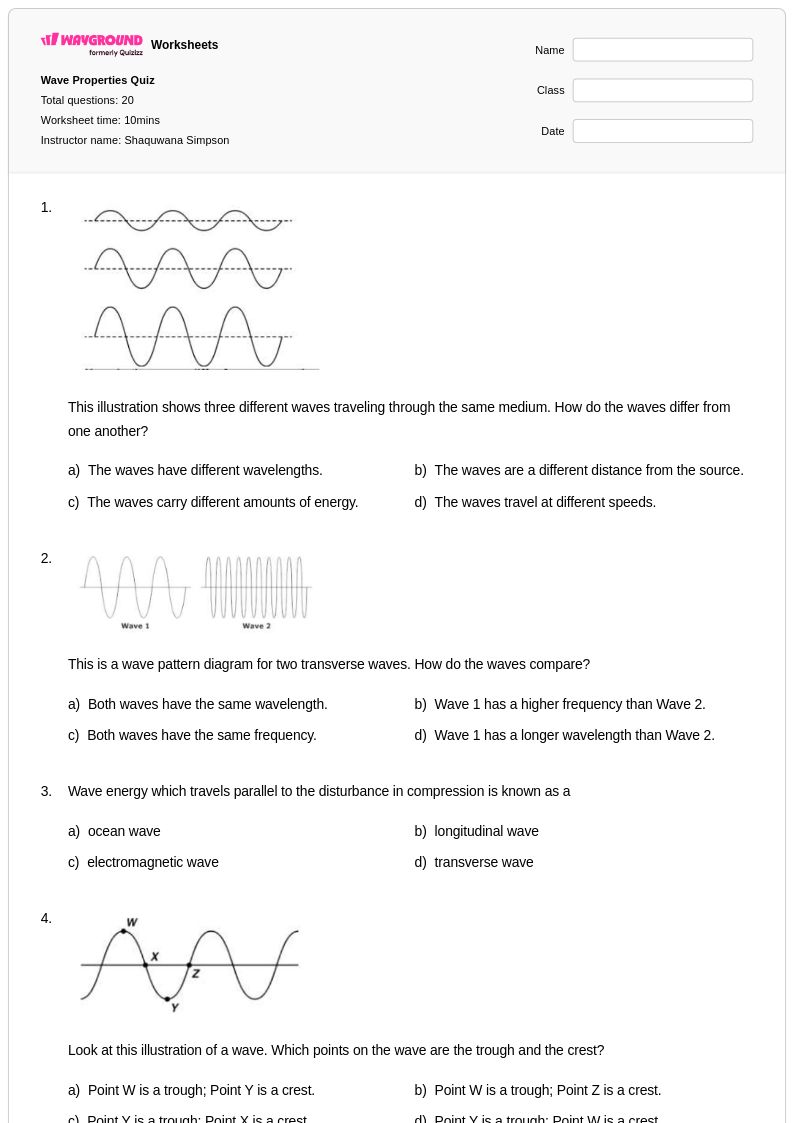
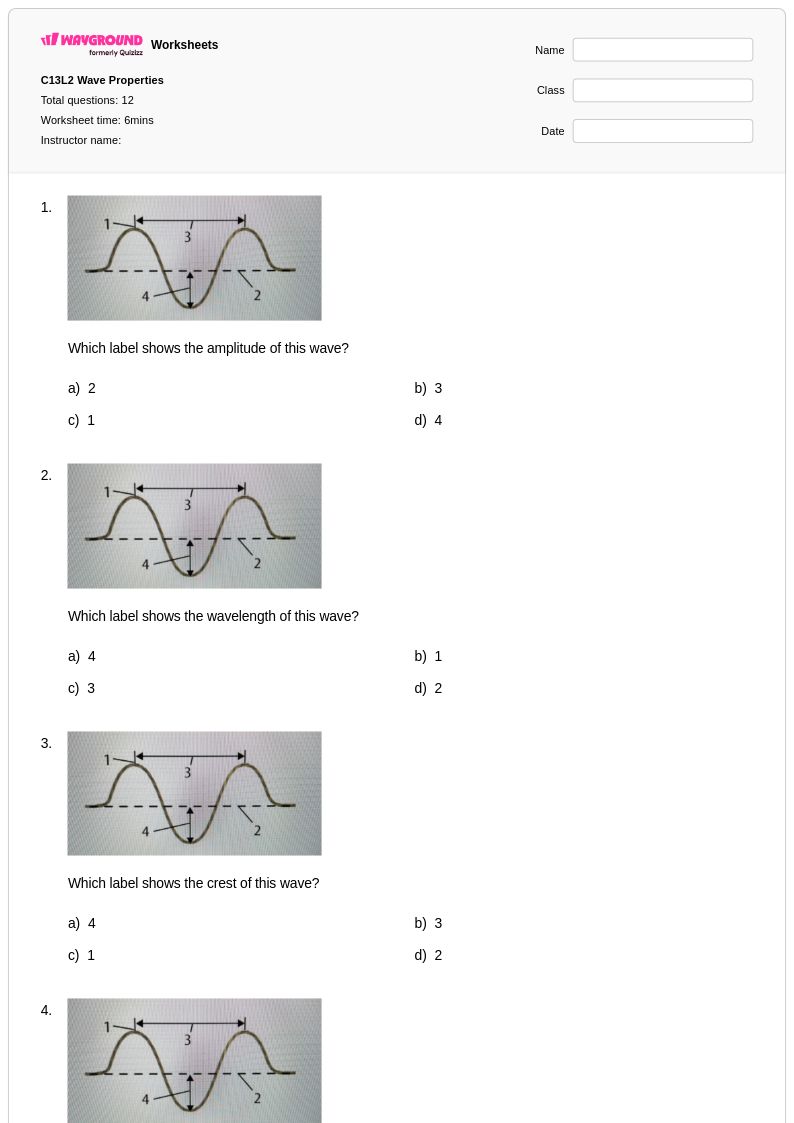
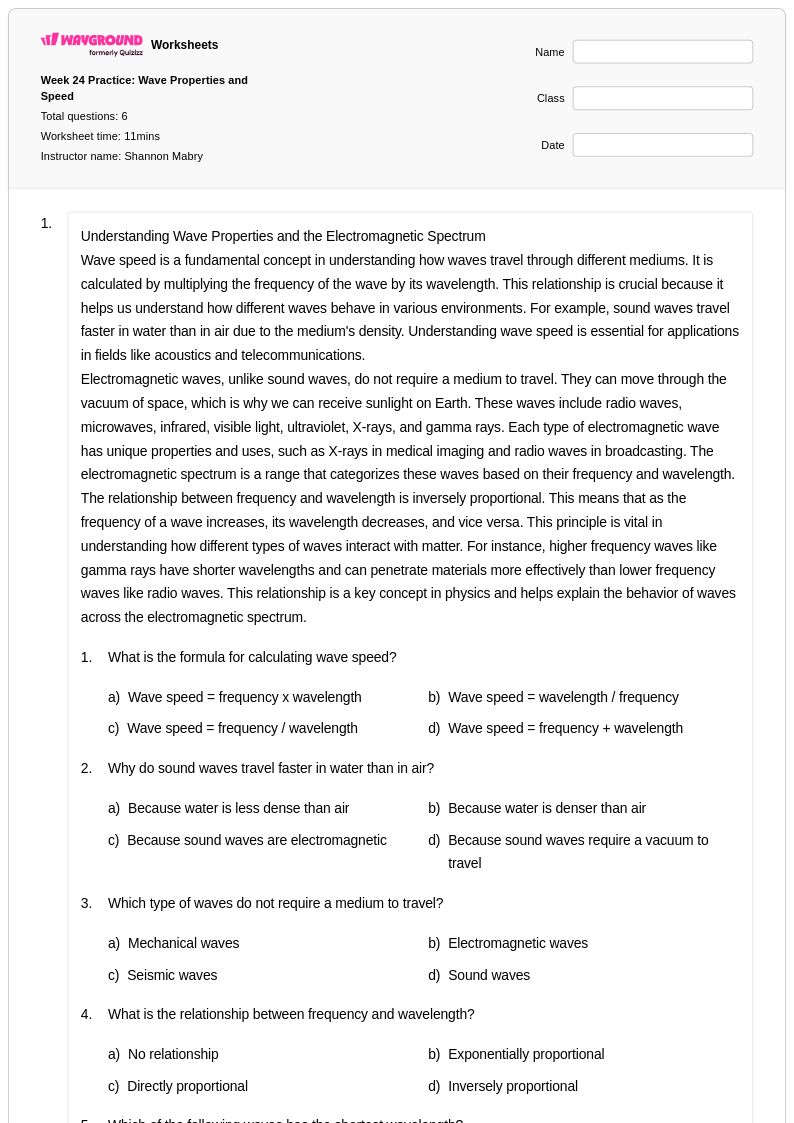
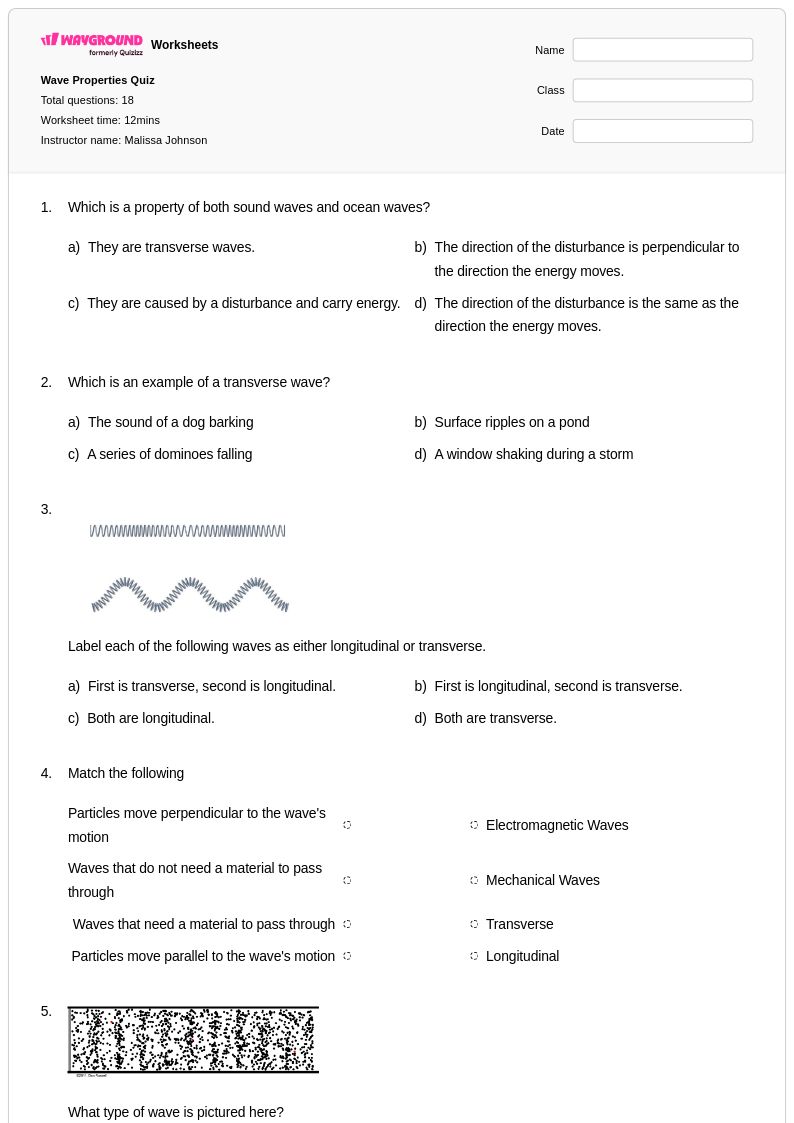
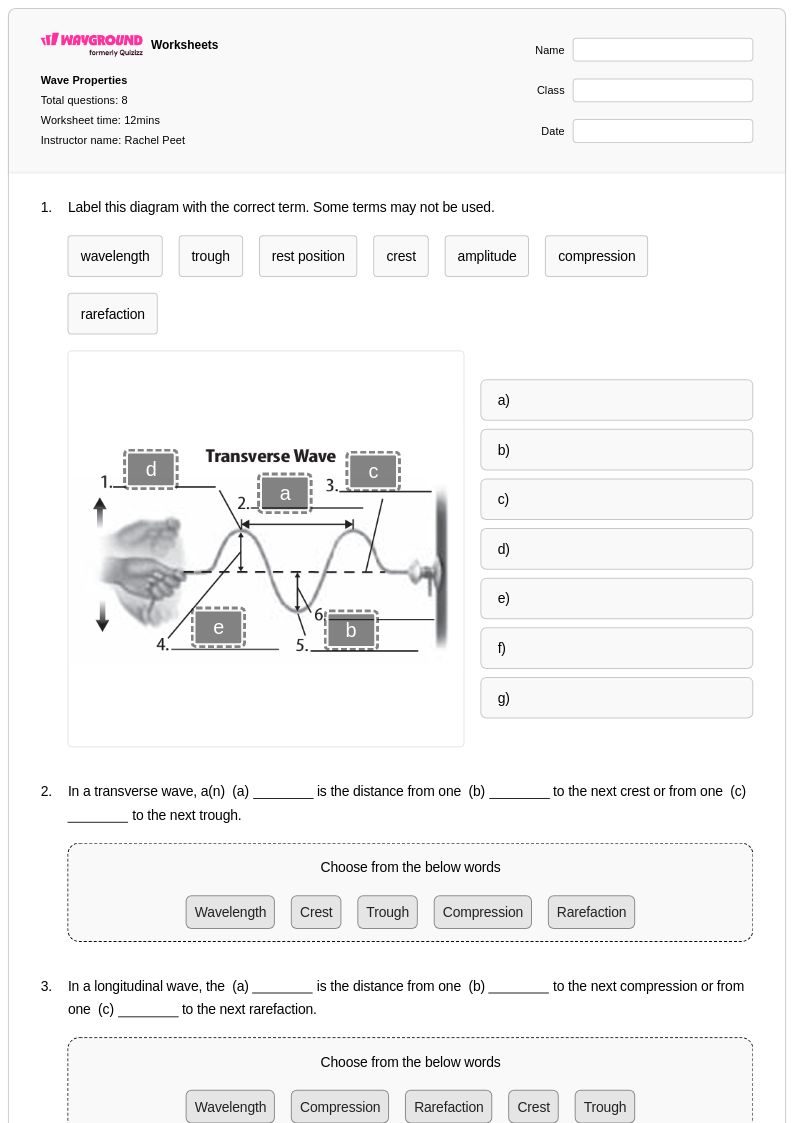
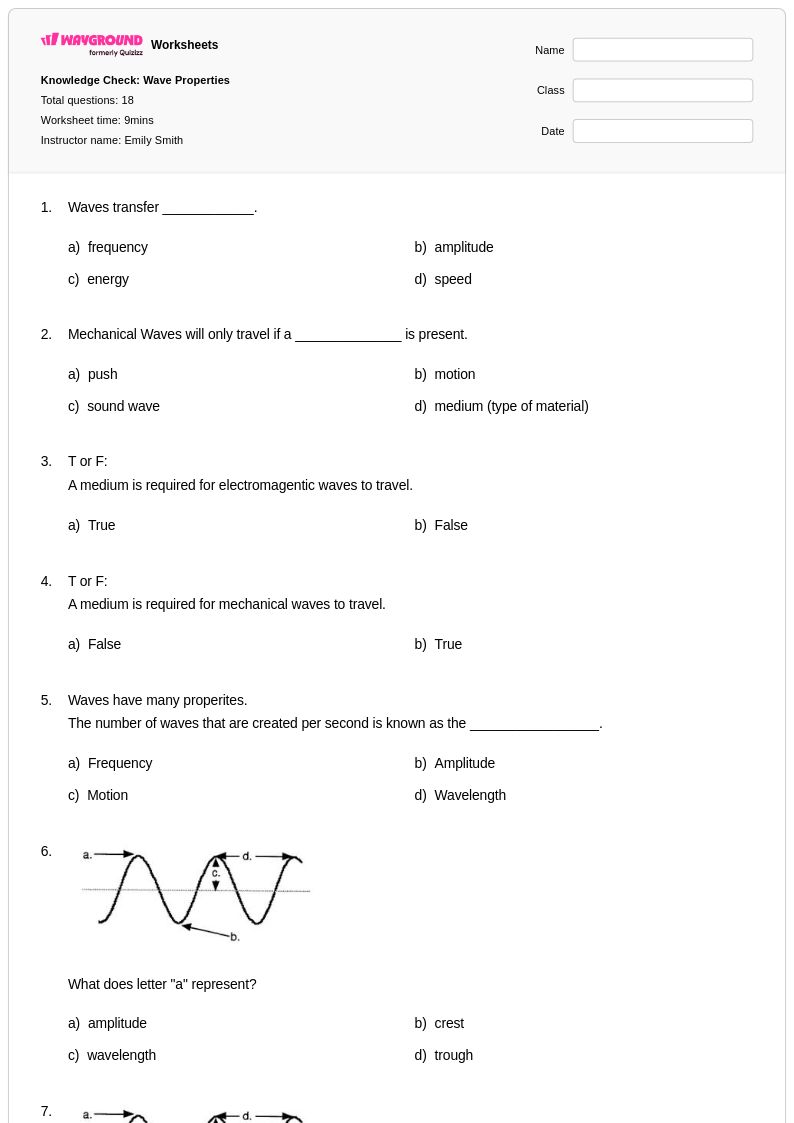
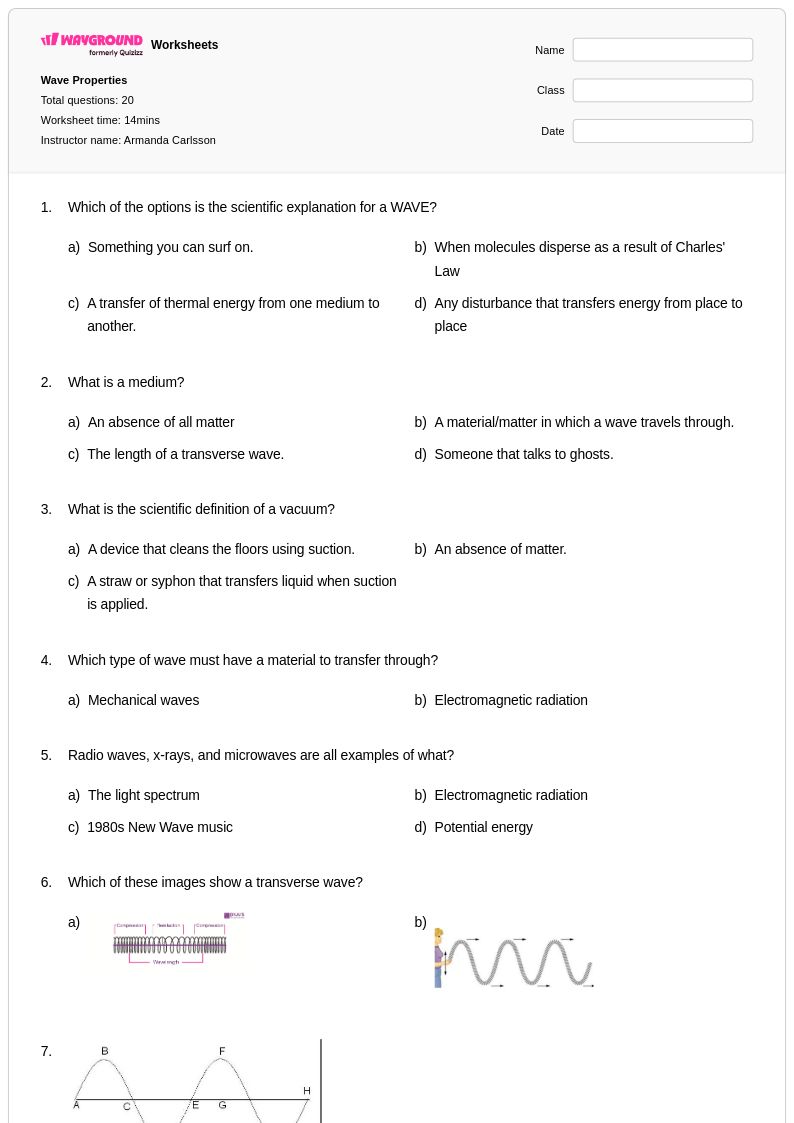
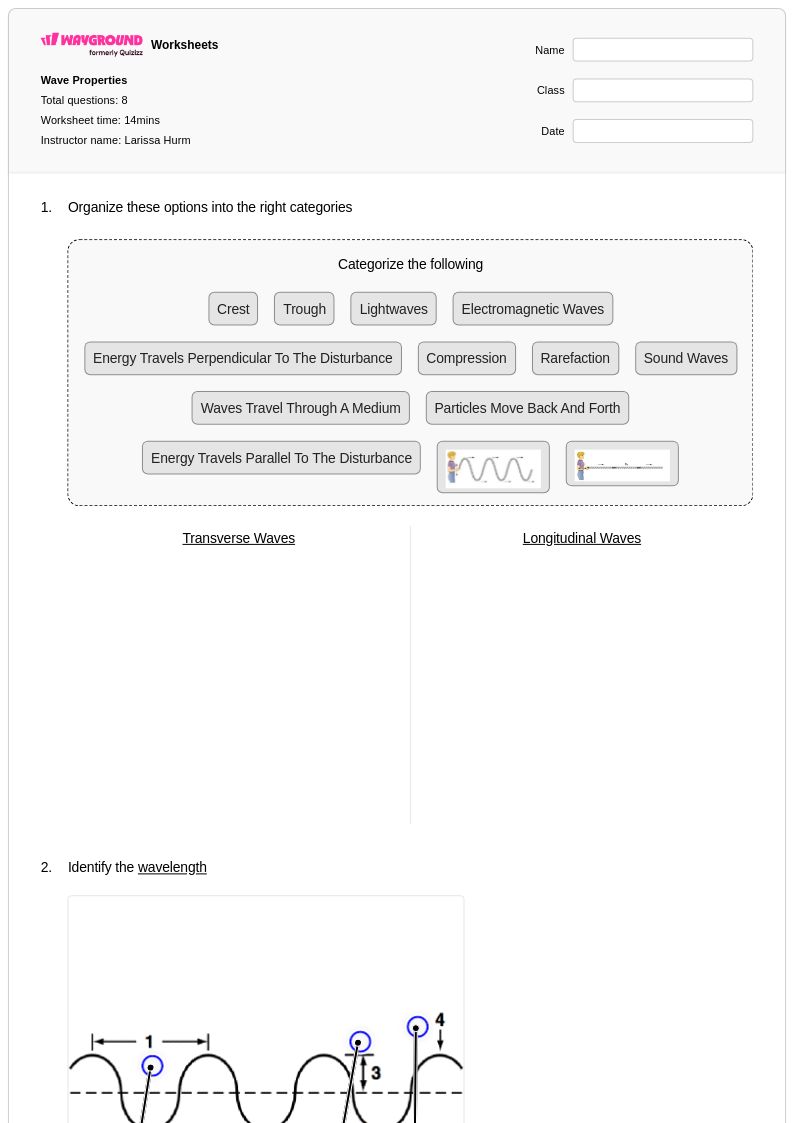
Wave properties worksheets for Grade 6 students available through Wayground (formerly Quizizz) provide comprehensive coverage of fundamental wave concepts that form the foundation of physical science understanding. These carefully crafted educational resources help students master essential skills including identifying wave characteristics such as amplitude, wavelength, and frequency, distinguishing between different types of waves like mechanical and electromagnetic waves, and understanding how waves transfer energy without transferring matter. The collection includes structured practice problems that guide students through measuring wave properties, analyzing wave diagrams, and connecting wave behavior to real-world phenomena such as sound, light, and water waves. Each worksheet comes with a detailed answer key to support both independent study and classroom instruction, and the materials are available as free printables in convenient PDF format for immediate classroom implementation.
Wayground (formerly Quizizz) empowers educators with access to millions of teacher-created wave properties resources specifically designed for Grade 6 physical science instruction. The platform's robust search and filtering capabilities allow teachers to quickly locate worksheets that align with specific learning standards and match their students' current skill levels. Advanced differentiation tools enable instructors to customize existing materials or create targeted variations for remediation and enrichment activities, ensuring that all learners can engage meaningfully with wave concepts regardless of their starting point. The flexible delivery options include both printable PDF formats for traditional classroom use and digital versions for technology-integrated learning environments, making it simple for teachers to incorporate wave properties practice into their lesson planning, homework assignments, and assessment preparation while maintaining the pedagogical rigor necessary for building strong conceptual understanding in physical science.
FAQs
How do I teach wave properties to middle or high school students?
Start by grounding students in the physical experience of waves before introducing mathematical relationships. Use visible demonstrations such as a rope wave or a slinky to show amplitude, wavelength, and frequency in action, then connect those observations to diagrams and formulas. Once students can identify wave features visually, introduce the wave speed equation (v = fλ) and have them practice calculating unknowns across different wave types, including sound and light.
What exercises help students practice wavelength, frequency, and wave speed calculations?
Diagram-based problems where students measure wavelength and amplitude directly from drawn wave graphs are among the most effective practice formats, as they build both visual interpretation and mathematical skills simultaneously. Calculation sets that require students to solve for a missing variable using v = fλ reinforce formula fluency, while real-world application problems involving sound frequency or light wavelength help students connect abstract values to physical meaning. Wave properties worksheets on Wayground include practice problems that cover wave diagram analysis and mathematical formula application across these key characteristics.
What mistakes do students commonly make when working with wave properties?
One of the most frequent errors is confusing wavelength with amplitude, particularly when reading wave diagrams, because students often measure from trough to crest rather than from one complete cycle. Students also frequently misapply the wave speed equation by mixing up frequency and period, or by forgetting to convert units before calculating. A third common misconception is assuming that a higher amplitude means a higher frequency, when in fact these are independent properties.
How can I differentiate wave properties instruction for students with different ability levels?
For students who struggle with the mathematical side, begin with qualitative comparisons, such as identifying which wave has a higher frequency from a diagram, before introducing calculations. For advanced learners, extend practice to include inverse relationships between frequency and period, or multi-step problems involving wave behavior in different media. On Wayground, teachers can apply individual accommodations such as read aloud support, reduced answer choices, and extended time to specific students, ensuring that all learners can engage with wave properties content at an appropriate level of challenge.
How do I use Wayground's wave properties worksheets in my classroom?
Wayground's wave properties worksheets are available as printable PDFs for traditional classroom or lab use and in digital formats for technology-integrated or remote learning environments, giving you flexibility depending on your setup. You can also host them directly as a quiz on Wayground, which allows for streamlined digital delivery and immediate feedback. Each worksheet includes a complete answer key, so they work equally well as guided practice, independent work, or formative assessment tools.
How do I assess student understanding of wave properties effectively?
Effective assessment of wave properties should combine diagram interpretation tasks with calculation problems, since students may be able to recall formulas without genuinely understanding what each variable represents. Look for whether students can correctly identify wavelength and amplitude on an unlabeled wave diagram, and whether they can accurately calculate wave speed when given frequency and wavelength in non-standard units. Exit tickets asking students to describe the relationship between frequency and wavelength for a wave traveling at constant speed are a quick way to surface conceptual gaps.