Explore printable Calf Stretch worksheets for Grade 7
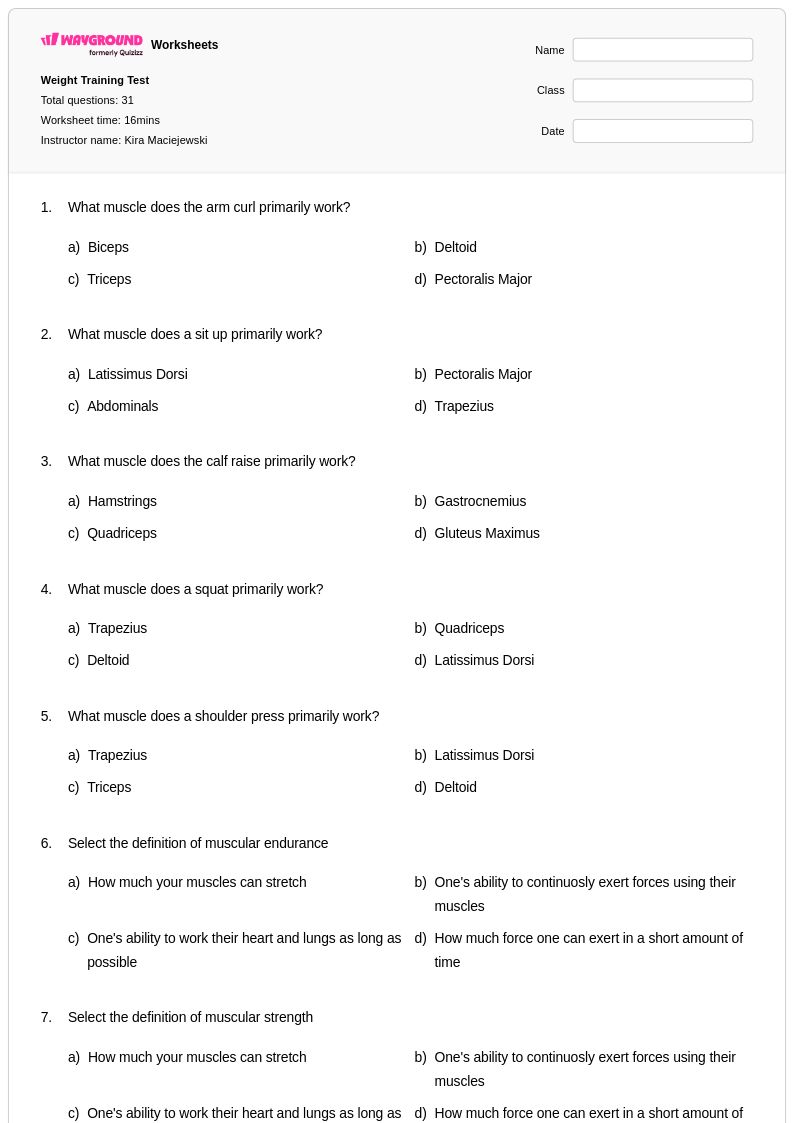
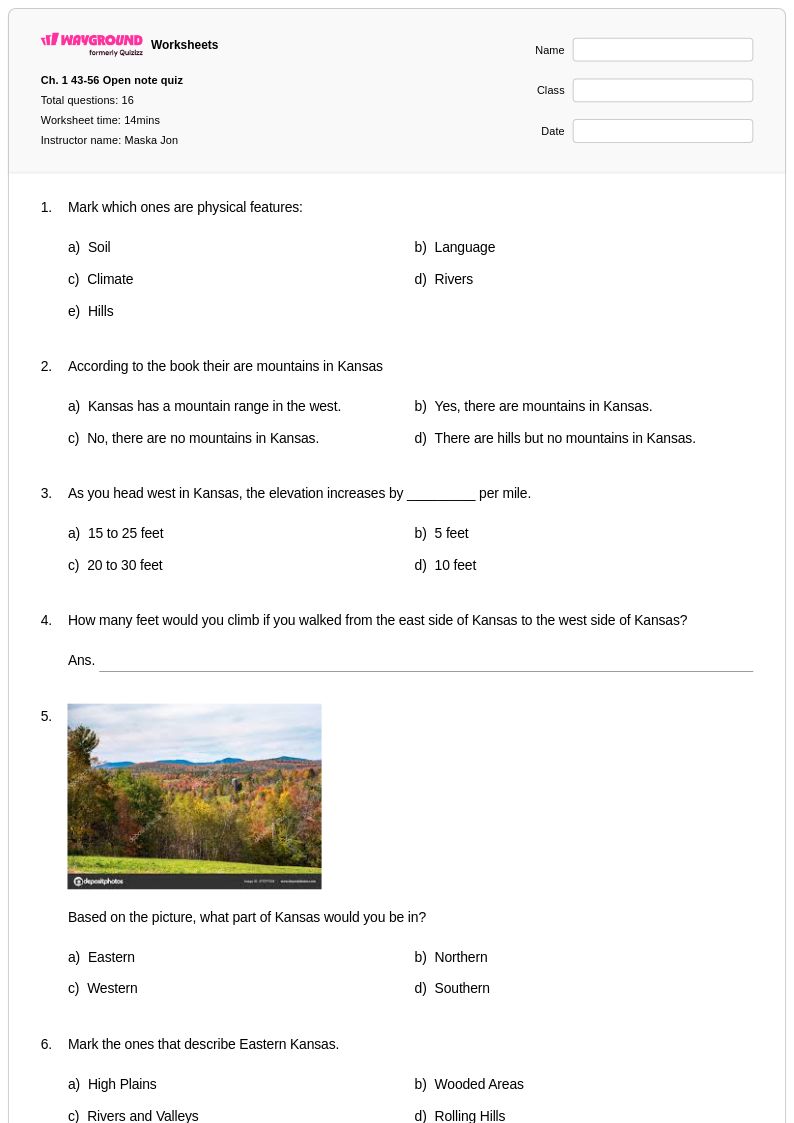
Calf stretch worksheets for Grade 7 students available through Wayground (formerly Quizizz) provide comprehensive instruction on proper lower leg flexibility techniques essential for athletic performance and injury prevention. These educational resources guide seventh-grade students through the fundamental mechanics of calf stretching, including gastrocnemius and soleus muscle targeting, proper positioning, and safe stretching duration. The worksheets feature detailed anatomical diagrams, step-by-step instructions, and practice problems that help students identify correct form versus common mistakes. Each printable resource includes an answer key for self-assessment and teacher evaluation, while the free pdf format ensures easy classroom distribution and homework assignments that reinforce proper stretching protocols.
Wayground (formerly Quizizz) empowers physical education teachers with access to millions of teacher-created calf stretch resources that streamline lesson planning and enhance student learning outcomes. The platform's robust search and filtering capabilities allow educators to quickly locate grade-appropriate materials that align with physical education standards and accommodate diverse learning styles through differentiation tools. Teachers can customize worksheets to match their specific curriculum needs, whether focusing on athletic conditioning, general fitness, or injury prevention education. Available in both printable and digital formats including downloadable pdfs, these resources support flexible classroom instruction, targeted remediation for students struggling with proper technique, and enrichment activities for advanced learners seeking deeper understanding of muscle physiology and stretching science.
FAQs
How do I teach proper calf stretching technique in PE class?
Start by explaining the anatomy of the lower leg so students understand which muscles they are targeting. Introduce the three main calf stretch variations — standing wall stretch, seated calf stretch, and dynamic stretching — and model each one before students attempt them. Emphasize alignment cues such as keeping the heel flat on the floor and the back leg straight, and always pair instruction with injury prevention discussion so students internalize safe form from the start.
What exercises help students practice safe calf stretching?
Practice activities should progress from recognition to execution. Worksheets that ask students to identify correct versus incorrect form in illustrations build critical observation skills before students attempt the stretch themselves. Follow-up practice problems that address hold duration, repetition count, and proper body alignment help reinforce the biomechanical principles behind effective calf stretching.
What mistakes do students commonly make when performing calf stretches?
The most common errors are allowing the heel to lift off the ground, locking the knee of the front leg, and rushing through the stretch without holding it long enough for the muscle to lengthen. Students also frequently neglect to stretch both legs equally. Worksheets that include visual form-check guides and targeted practice problems are effective for helping students self-correct these patterns before they become habitual.
How can I differentiate calf stretch instruction for students with different fitness levels or physical needs?
Modify the stretch progression by offering seated or supported variations for students with limited mobility or balance challenges. For more advanced students, introduce dynamic stretching variations that require greater coordination and control. On Wayground, teachers can apply individual accommodations such as read aloud support and reduced answer choices, ensuring every student can access worksheet content regardless of reading level or learning need.
How do I use Wayground's calf stretch worksheets in my PE class?
Calf stretch worksheets on Wayground are available as printable PDFs for traditional classroom or gymnasium use and in digital formats for technology-integrated settings. Teachers can assign them as pre-activity warm-up reading, post-activity reflection tasks, or independent practice outside of class. Wayground also allows teachers to host the worksheets as a digital quiz, making it straightforward to check for understanding and track student responses in one place.