Free Printable Change Y to I Rule Worksheets for Grade 3
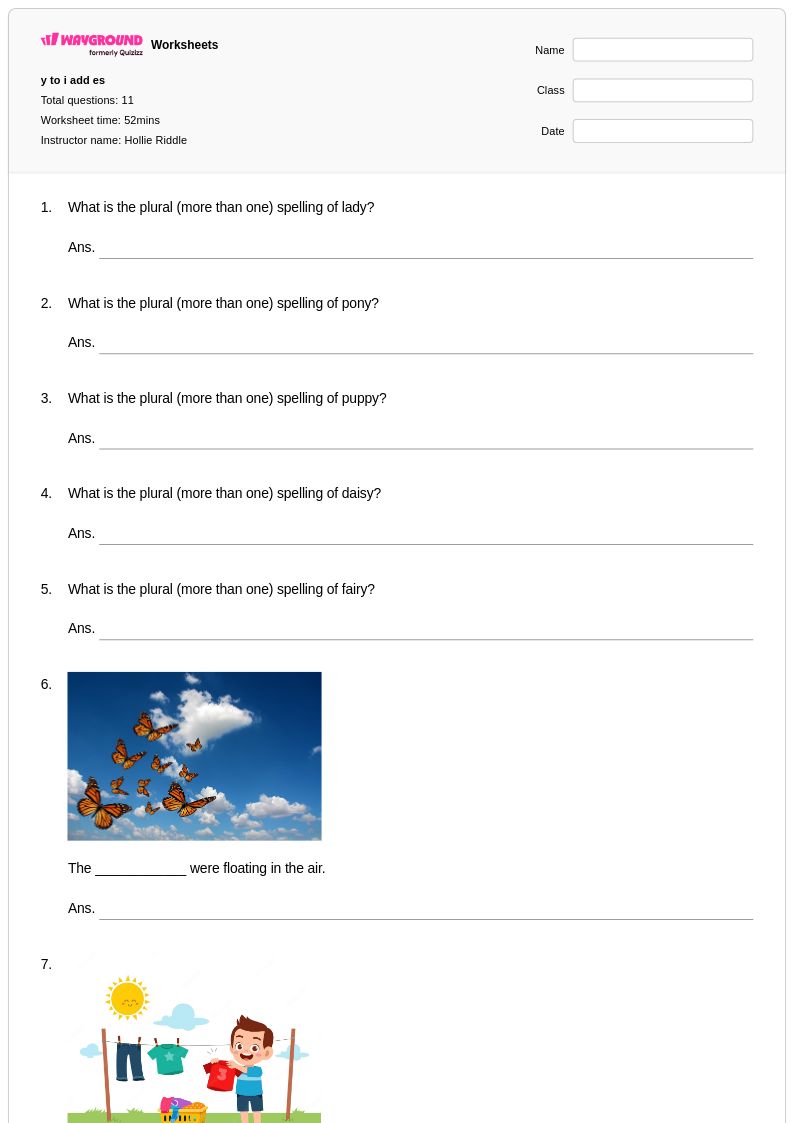
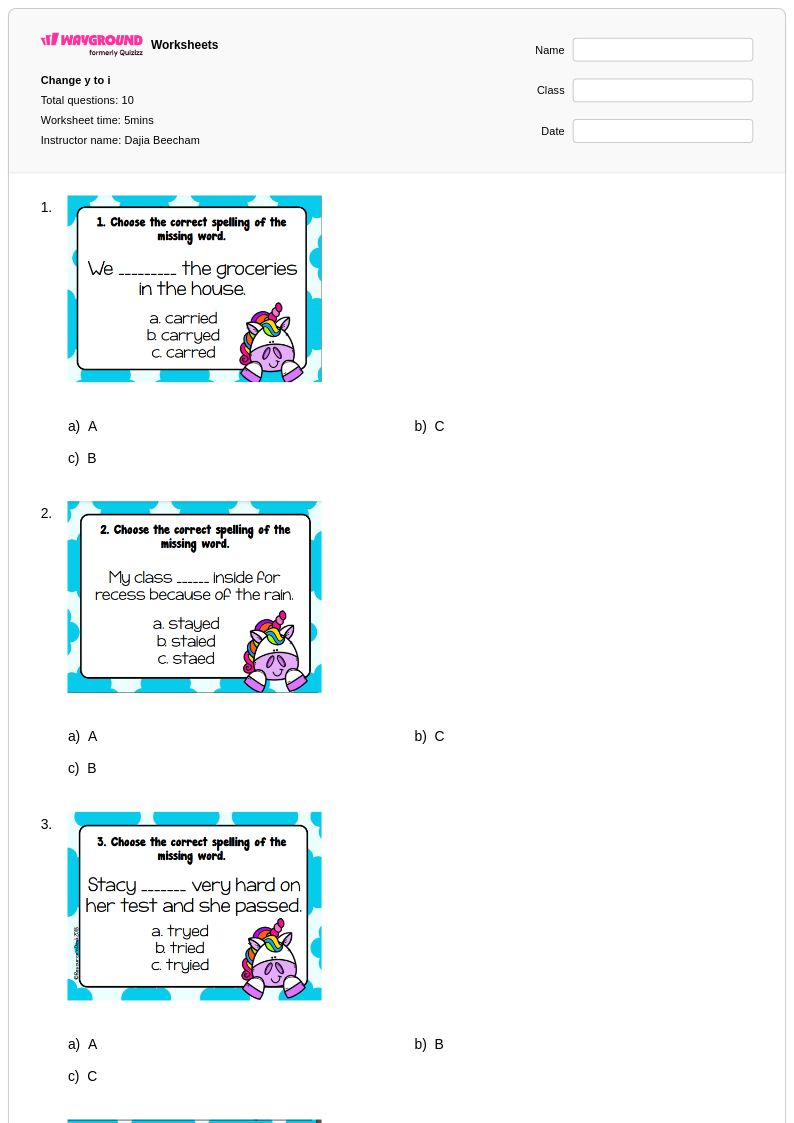
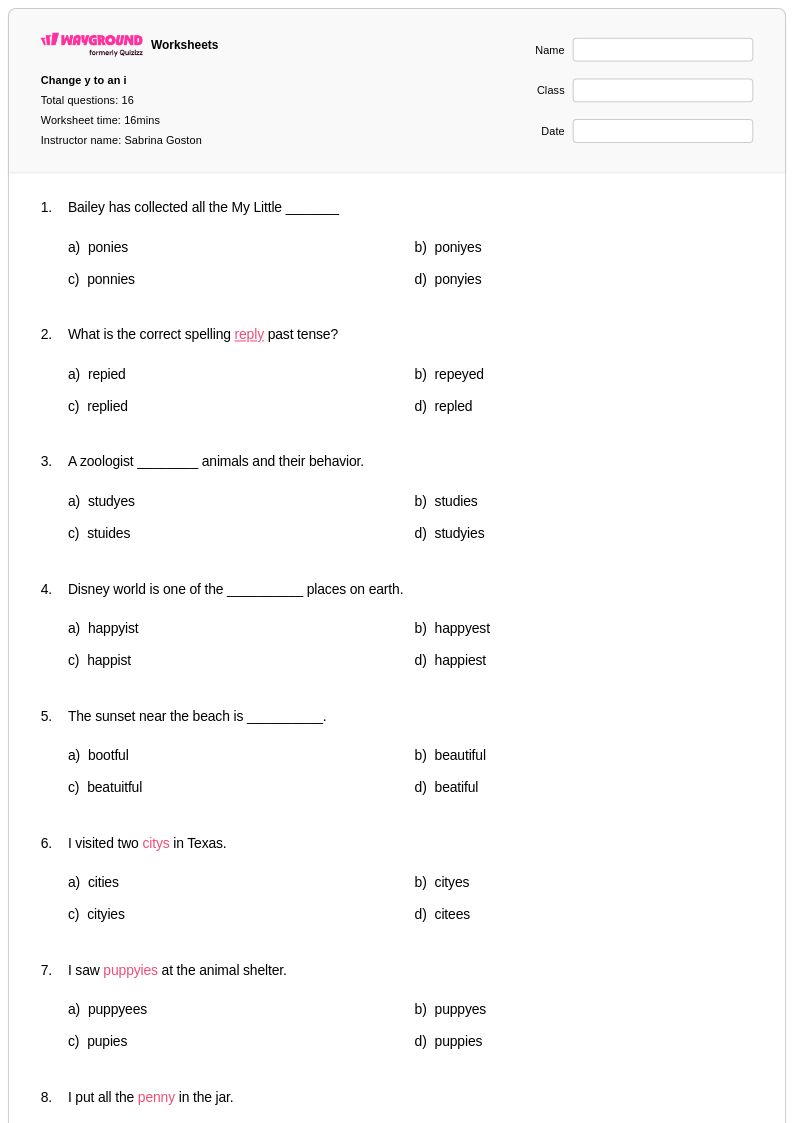
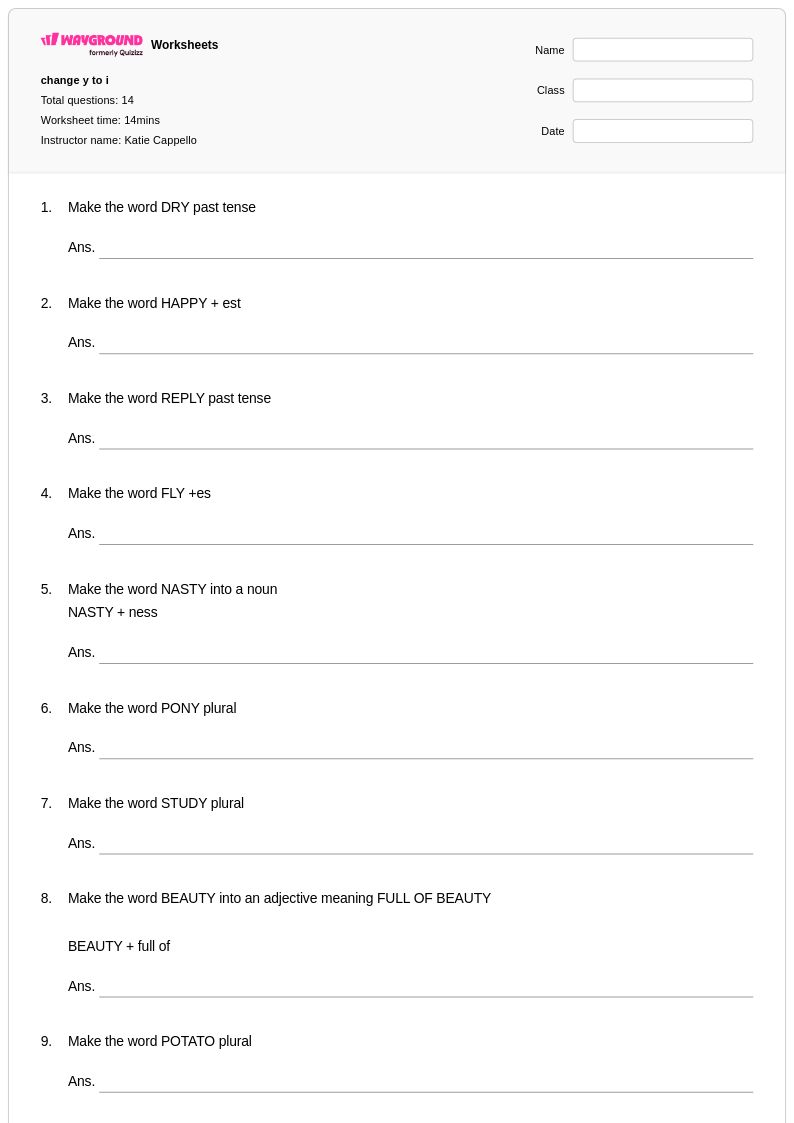
Wayground's free Grade 3 Change Y to I Rule spelling worksheets provide printable PDF practice problems and answer keys to help students master this essential phonics pattern through engaging activities.
Explore printable Change Y to I Rule worksheets for Grade 3
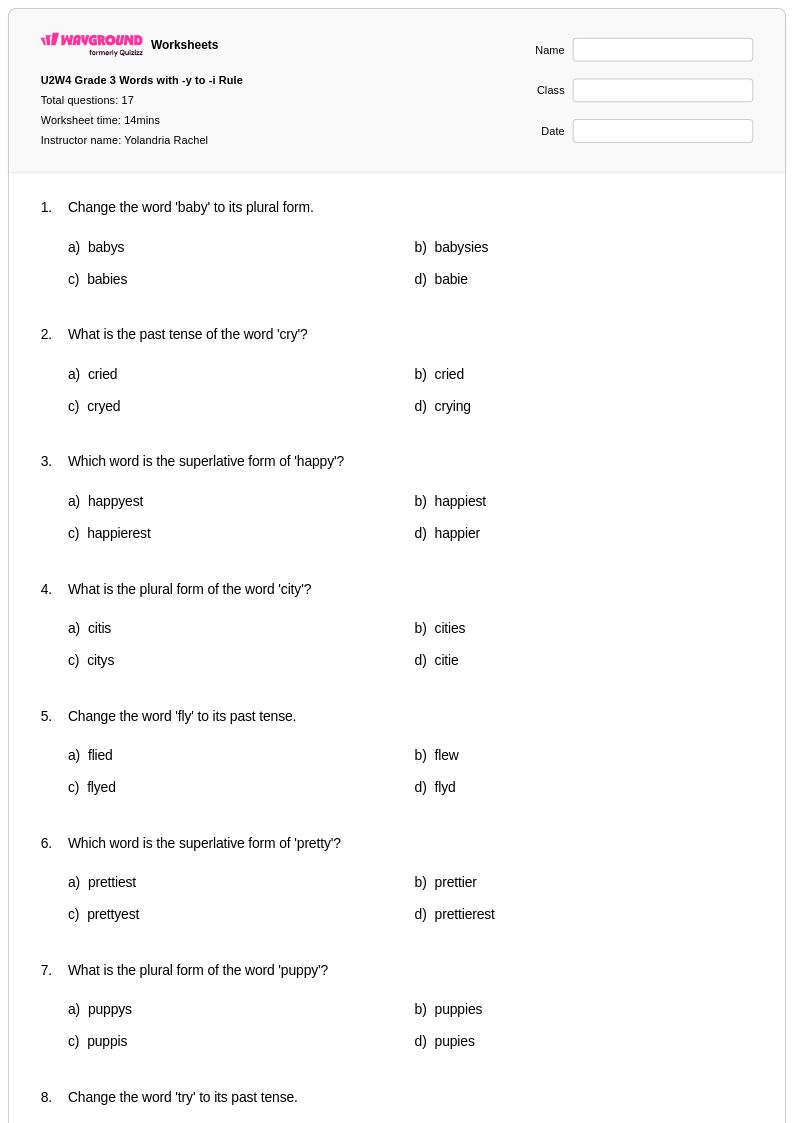
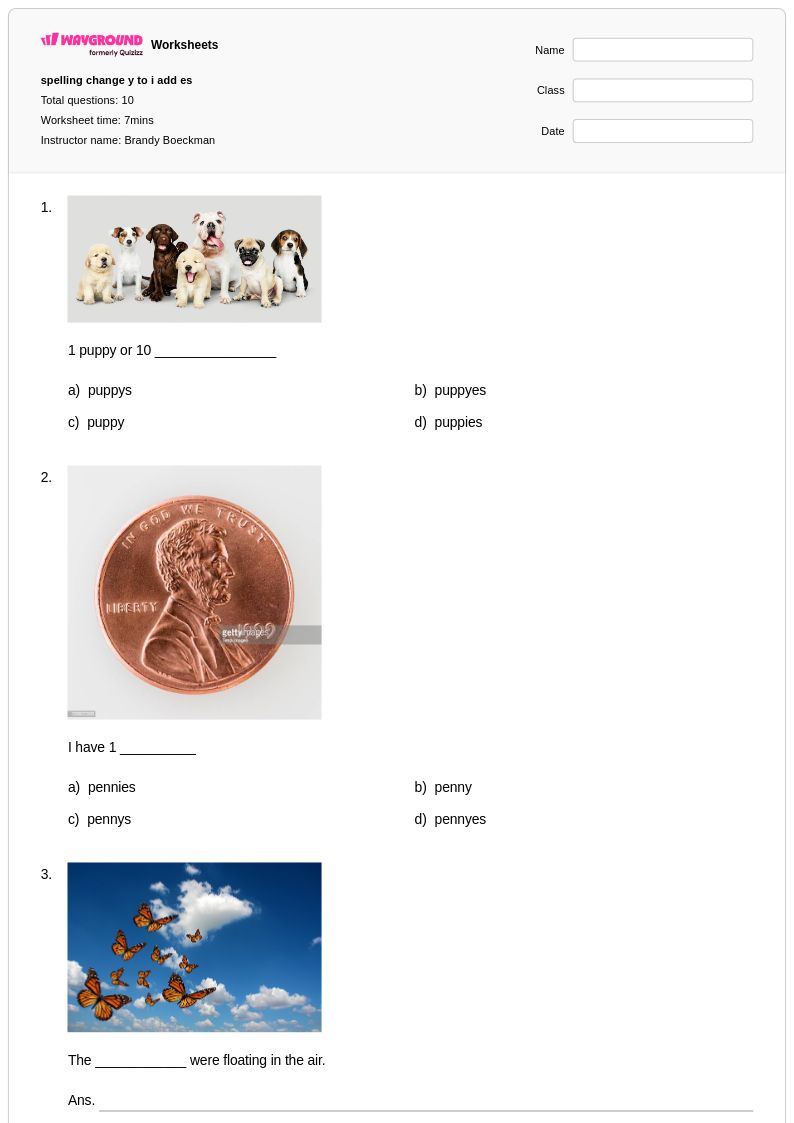
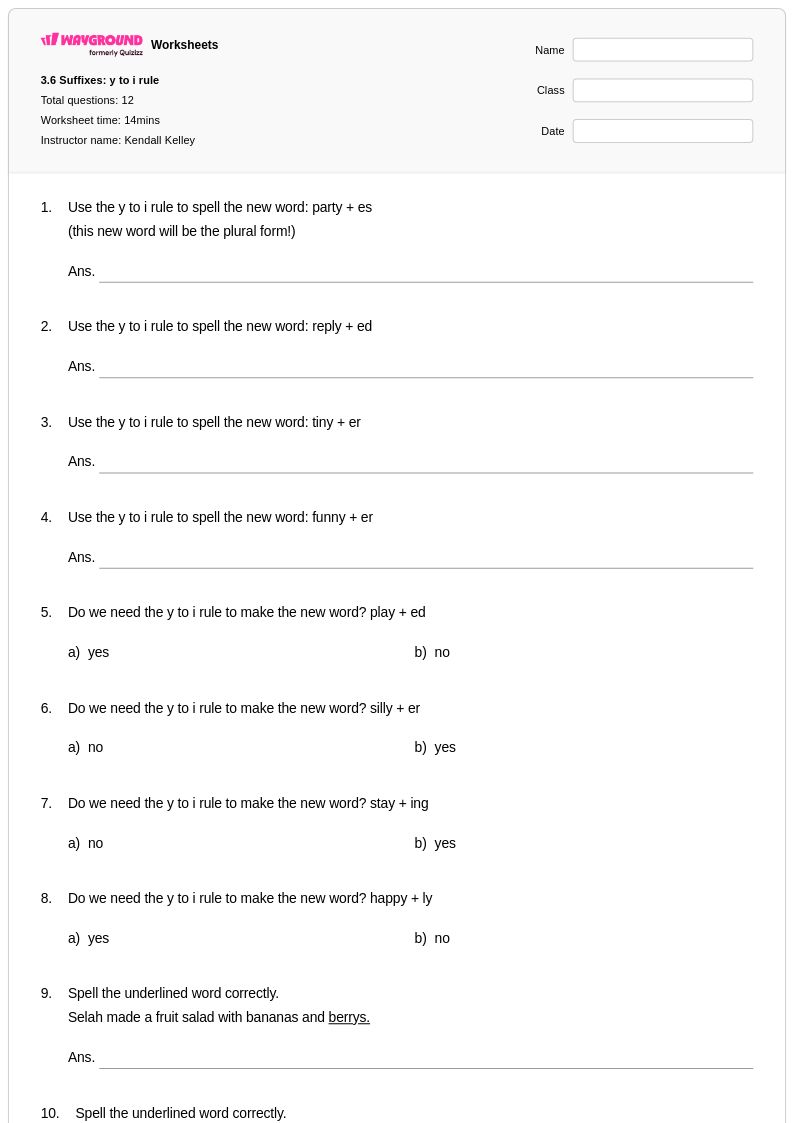
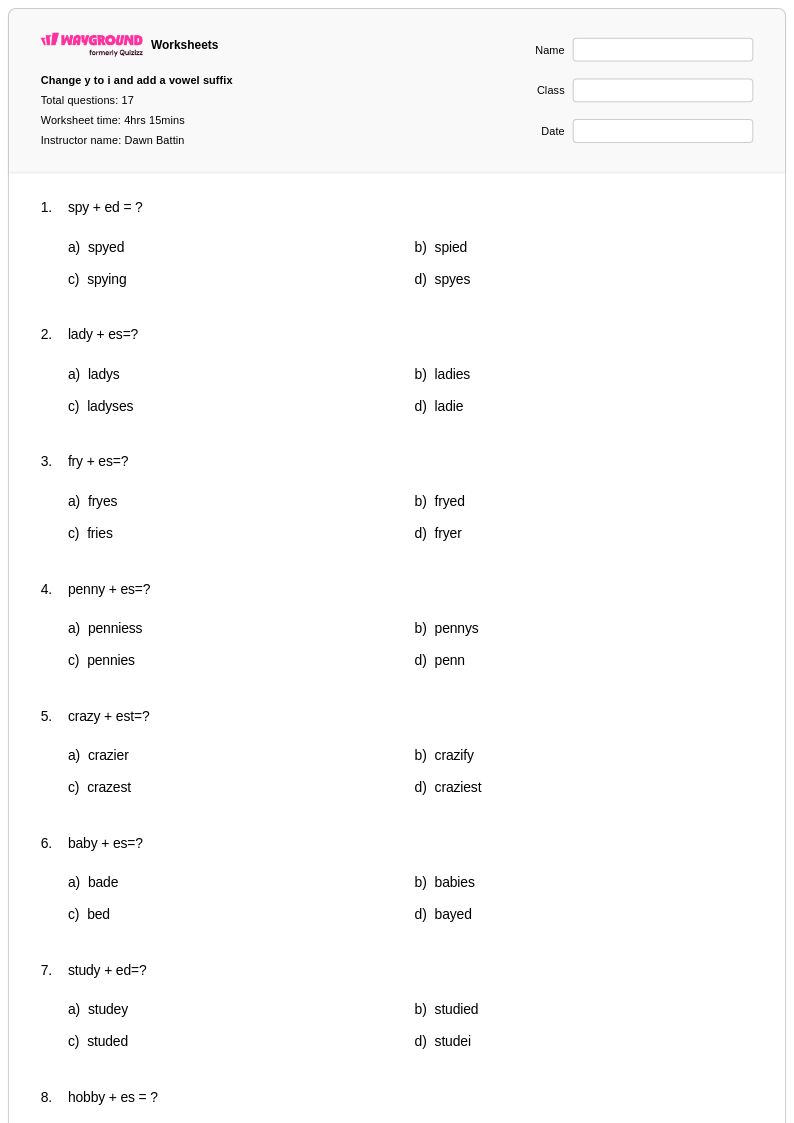
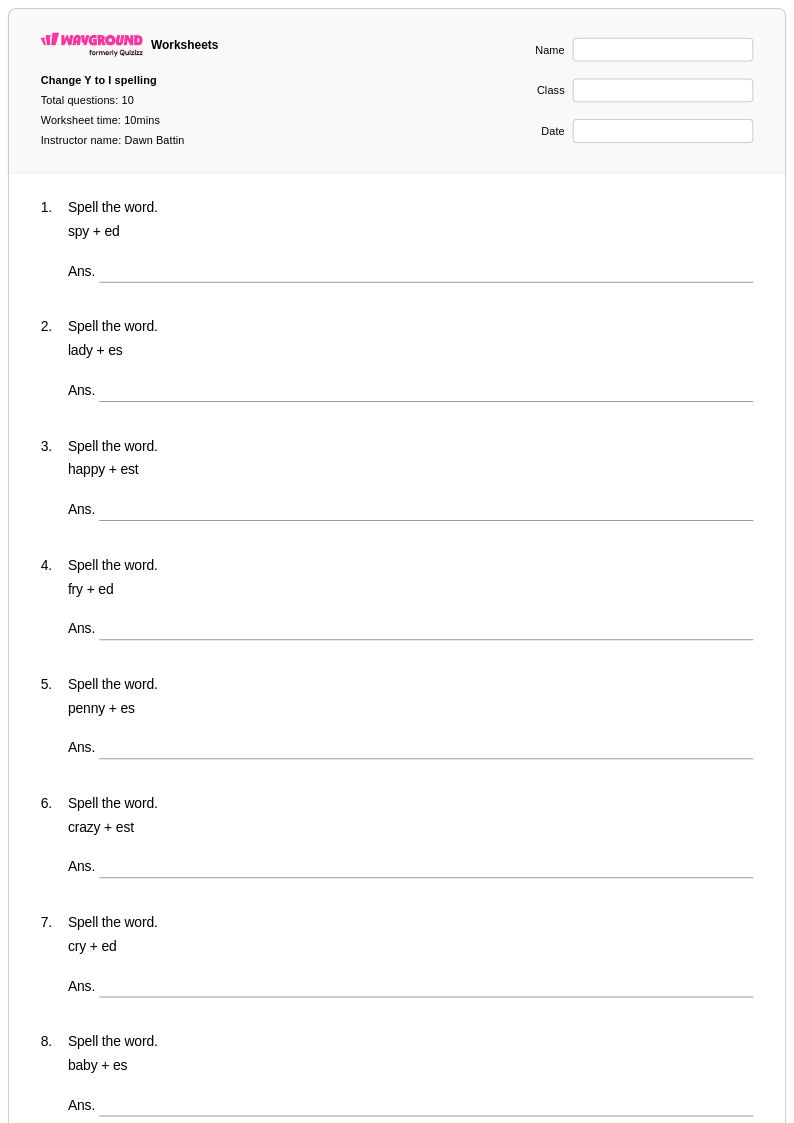
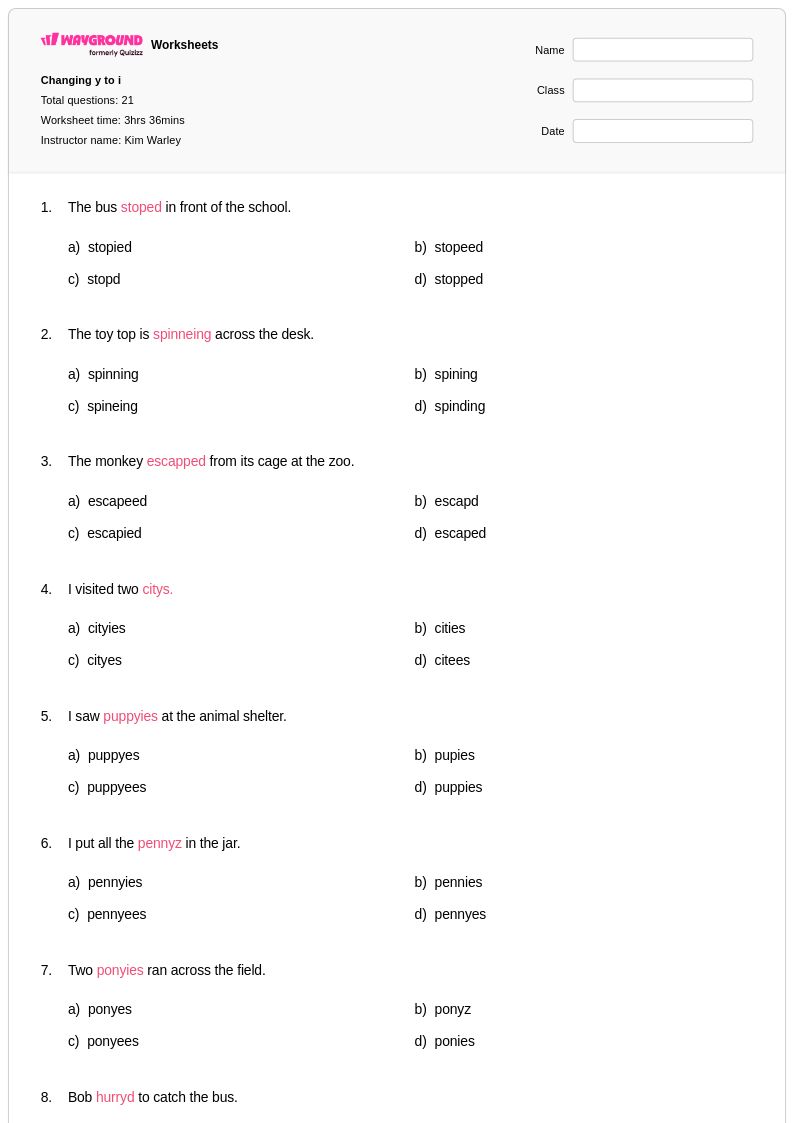
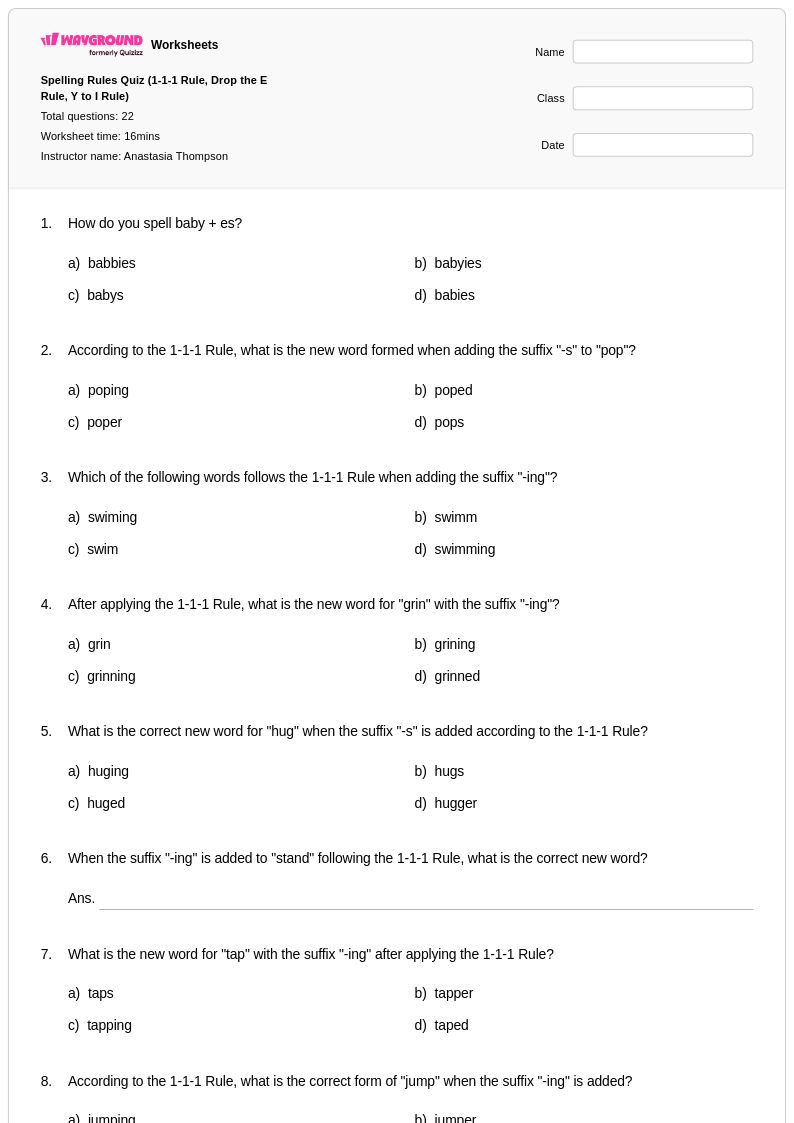
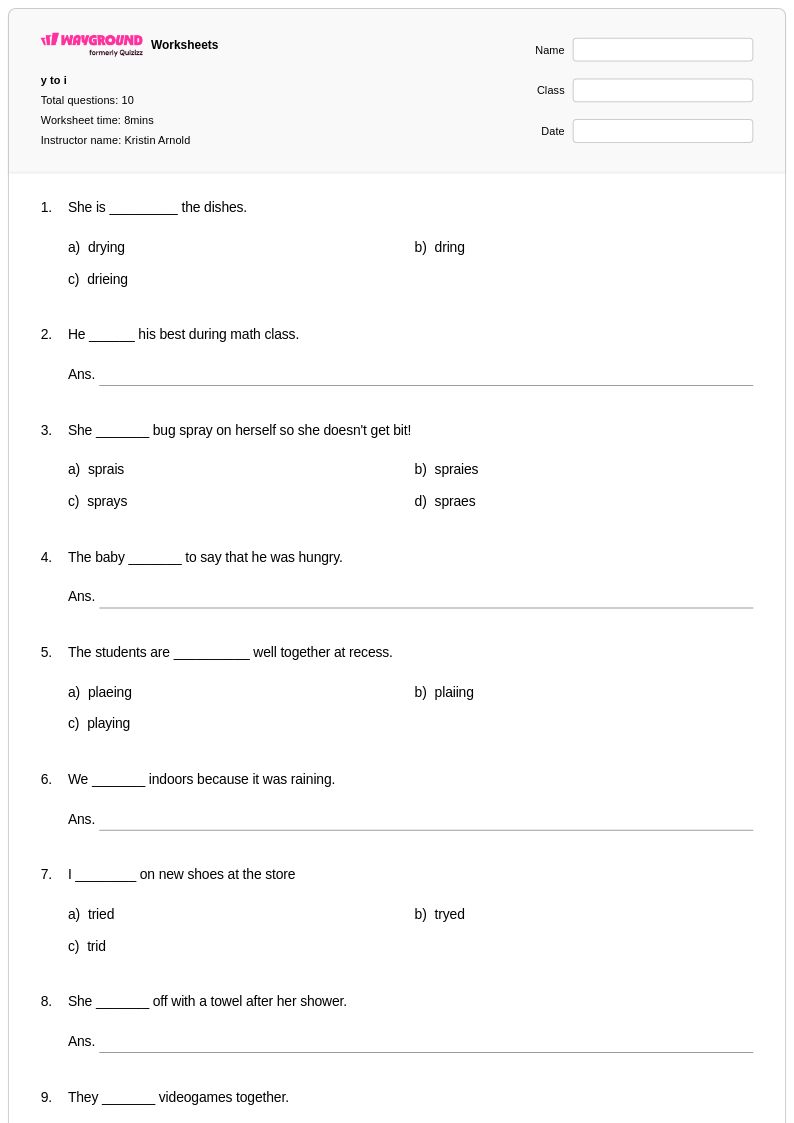
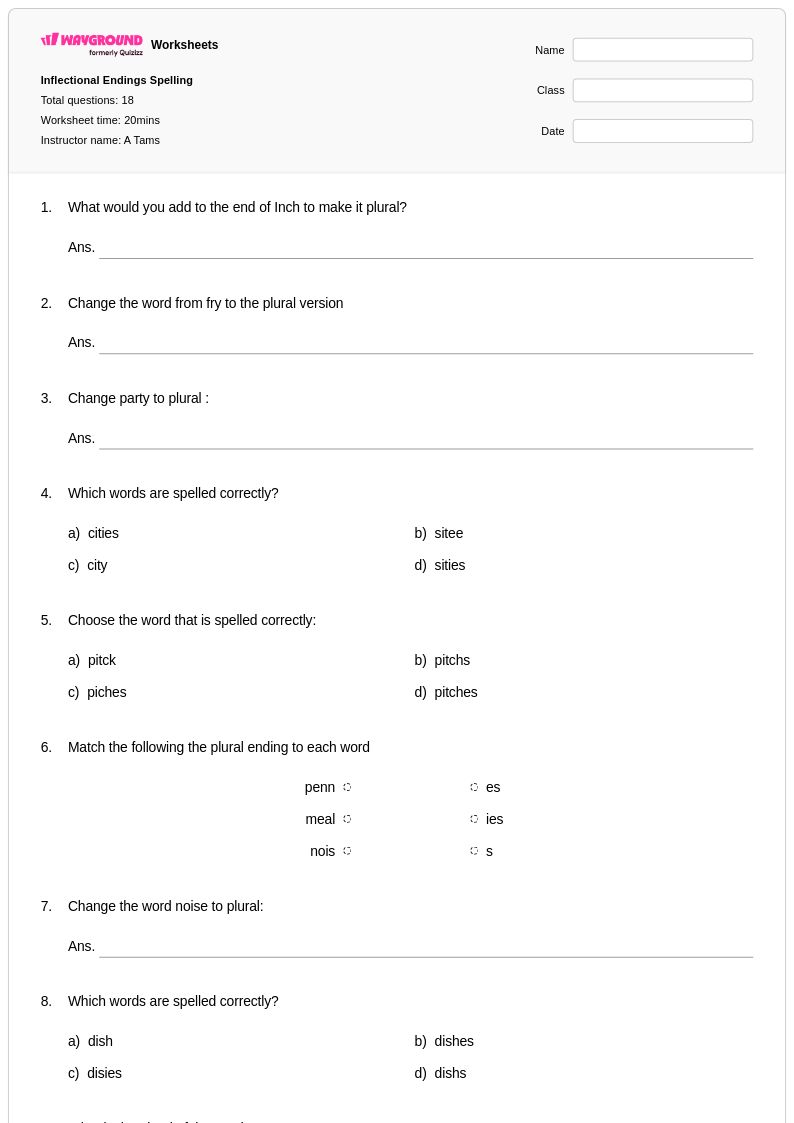
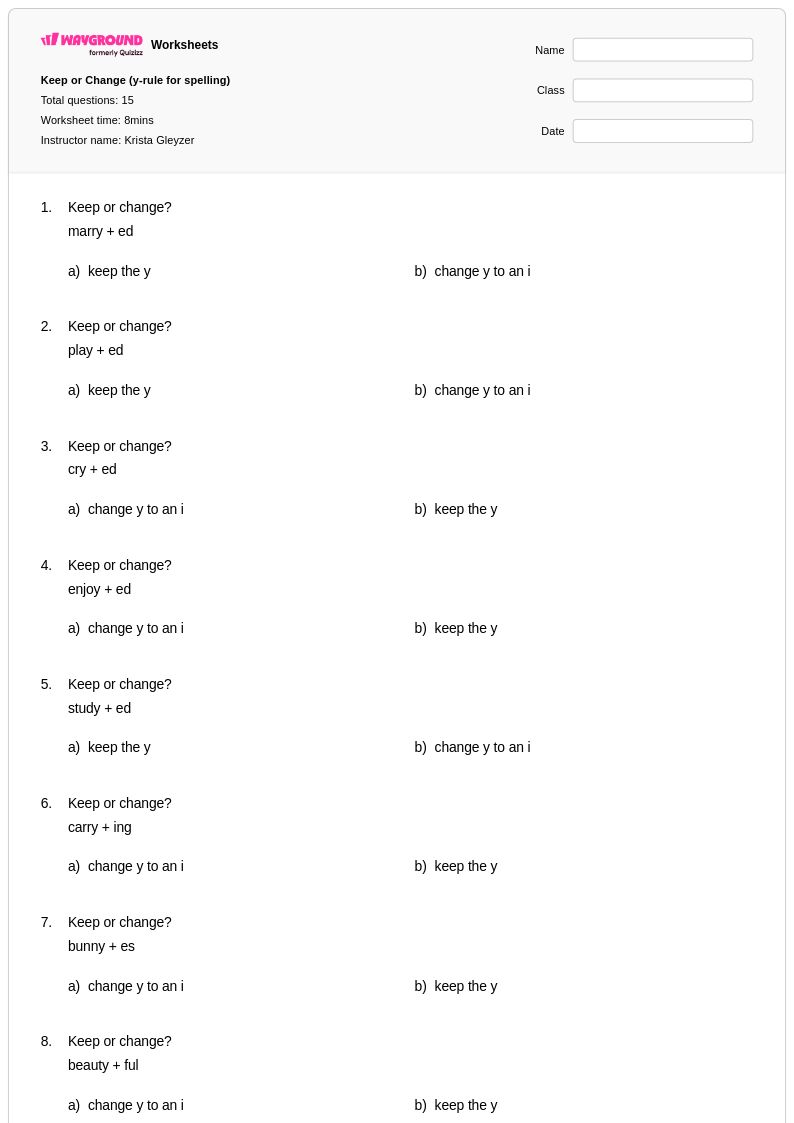
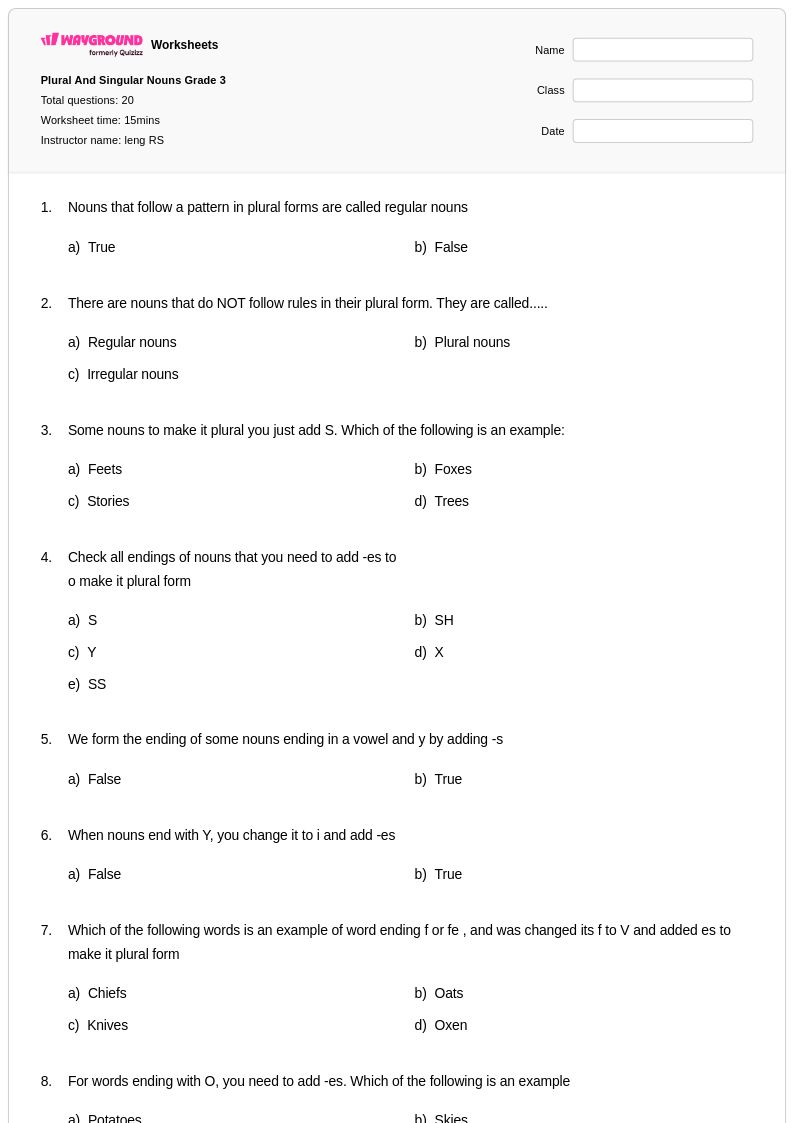
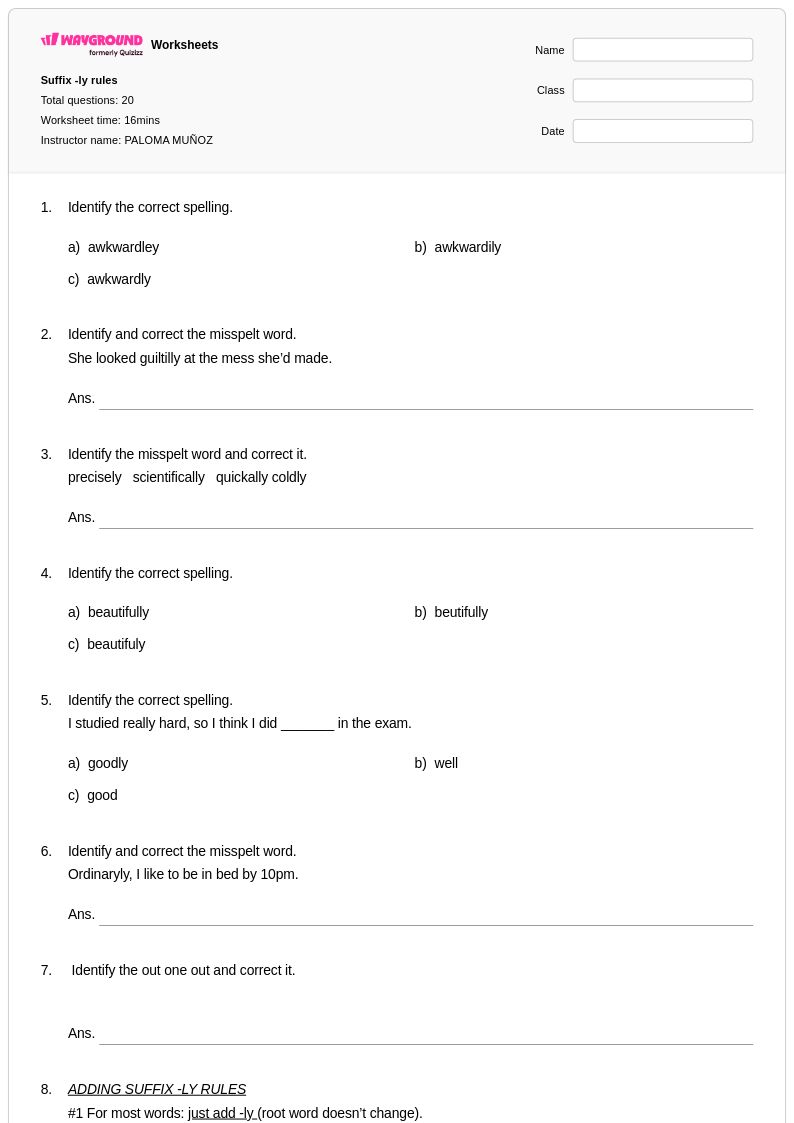
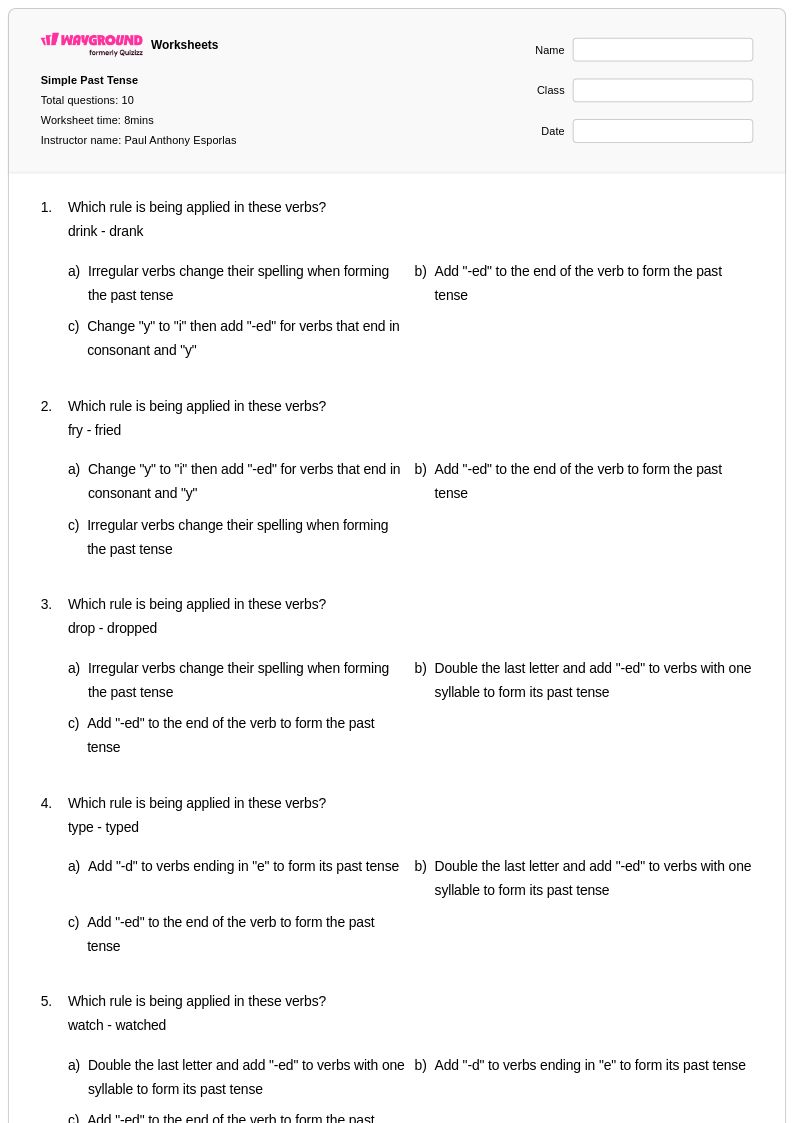
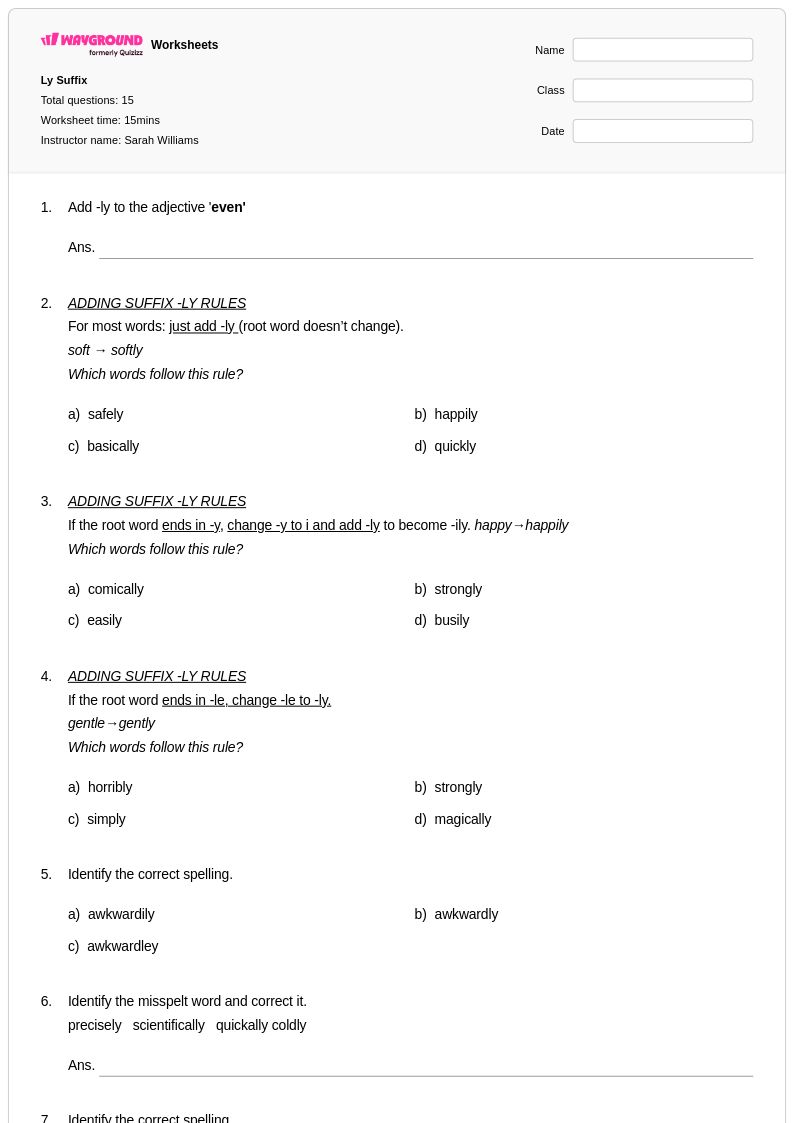
Change Y to I Rule worksheets available through Wayground (formerly Quizizz) provide Grade 3 students with targeted practice in mastering this fundamental spelling pattern. These comprehensive printables focus on teaching students when and how to change the letter Y to I before adding suffixes like -ed, -er, and -es to words such as "happy" becoming "happier" or "cry" becoming "cried." The worksheets strengthen critical phonics skills through systematic practice problems that guide students through the decision-making process of applying this spelling rule correctly. Each resource includes clear examples, guided practice opportunities, and an answer key to support independent learning, making these free pdf materials invaluable for reinforcing proper spelling conventions that students will use throughout their academic careers.
Wayground (formerly Quizizz) supports educators with an extensive collection of teacher-created Change Y to I Rule worksheets that accommodate diverse classroom needs and learning styles. The platform's millions of resources feature robust search and filtering capabilities, allowing teachers to quickly locate materials aligned with Grade 3 spelling standards and differentiate instruction based on individual student requirements. These versatile worksheet collections are available in both printable and digital pdf formats, enabling seamless integration into lesson planning whether for whole-class instruction, small group remediation, or independent enrichment activities. Teachers can customize these resources to match their specific curriculum pacing and student needs, ensuring that spelling skill practice remains engaging and appropriately challenging for developing readers and writers.
FAQs
How do I teach the Change Y to I spelling rule to students?
Start by helping students identify the two core conditions: the word ends in a consonant followed by Y, and a suffix is being added. Teach students to check whether the letter before the Y is a vowel or consonant, since the rule only applies when the Y follows a consonant (e.g., 'happy' becomes 'happier', but 'play' becomes 'played'). Using word sorting activities and guided transformation practice helps students internalize the pattern before applying it independently.
What kinds of exercises help students practice the Change Y to I rule?
Effective practice includes word transformation exercises where students convert base words to plural, past tense, or comparative forms, as well as sentence completion tasks that require applying the rule in context. Pattern recognition activities that contrast Y-to-I words with exceptions (like words ending in a vowel plus Y) help students develop judgment rather than rote memorization. Repeated exposure across varied formats solidifies the spelling pattern so students apply it automatically in their own writing.
What mistakes do students commonly make with the Change Y to I rule?
The most frequent error is over-applying the rule to words where the Y follows a vowel, such as writing 'plaied' instead of 'played'. Students also confuse when to use -ies versus -es, and may forget to drop the Y entirely before adding the suffix. Another common mistake is misapplying the rule when adding suffixes that begin with I, such as -ing, when the Y should be retained (e.g., 'carrying', not 'carriing').
How can I use Change Y to I rule worksheets in my classroom?
These worksheets are available as printable PDFs for traditional classroom use and in digital formats for technology-integrated learning environments, including the option to host them as a quiz on Wayground. Printable versions work well for independent practice, spelling centers, or homework, while digital formats allow for immediate feedback and flexible assignment. Each worksheet includes a complete answer key, making them efficient for both instruction and self-checking.
How do I differentiate Change Y to I rule instruction for students at different levels?
For struggling spellers, limit practice to high-frequency words and provide a visual anchor chart reminding students to check the letter before the Y before applying the rule. Advanced learners can work with less common vocabulary, explore exception words, or practice applying the rule in extended writing tasks. On Wayground, teachers can also apply accommodations such as reduced answer choices or read-aloud support for individual students who need additional scaffolding.
At what grade level should students learn the Change Y to I spelling rule?
The Change Y to I rule is typically introduced in late first or second grade as part of foundational spelling instruction and revisited with increasingly complex vocabulary in third through fifth grade. Students at this stage are building their understanding of how suffixes interact with base word endings, making this rule a natural extension of pluralization and verb conjugation lessons. Continued practice through the middle elementary years helps students apply the rule accurately in their own writing across subjects.