
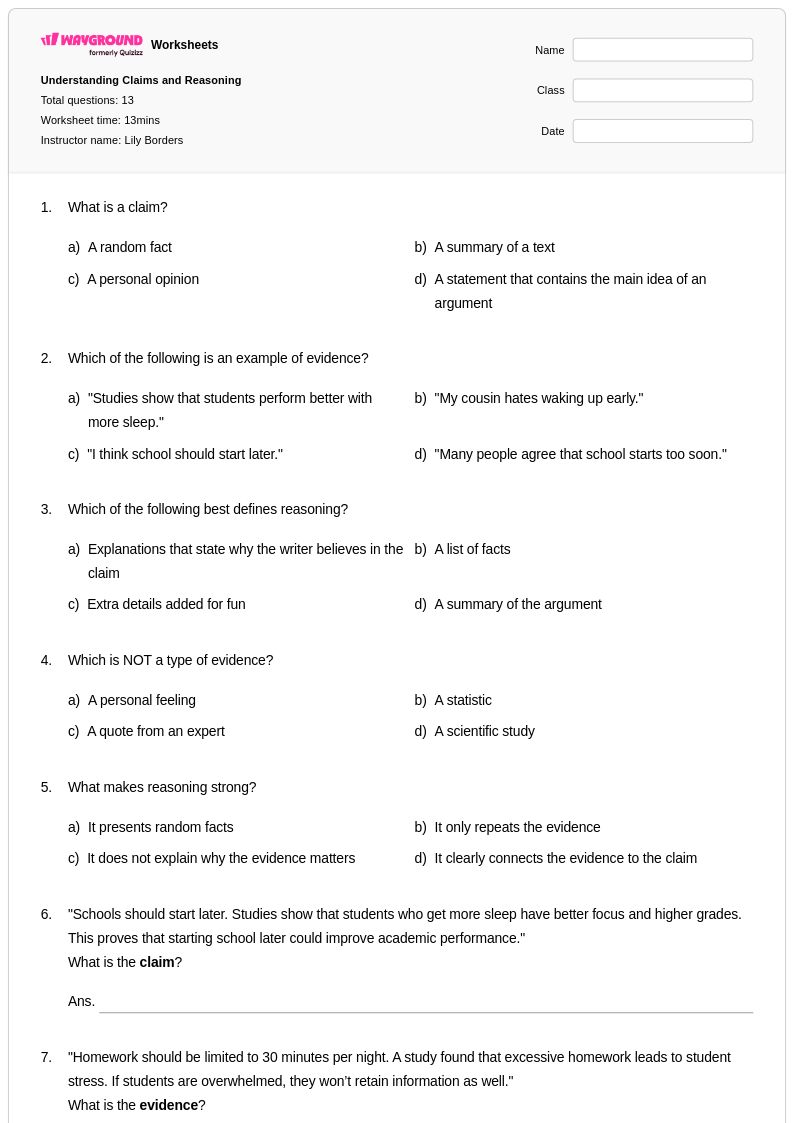
13 Q
8th
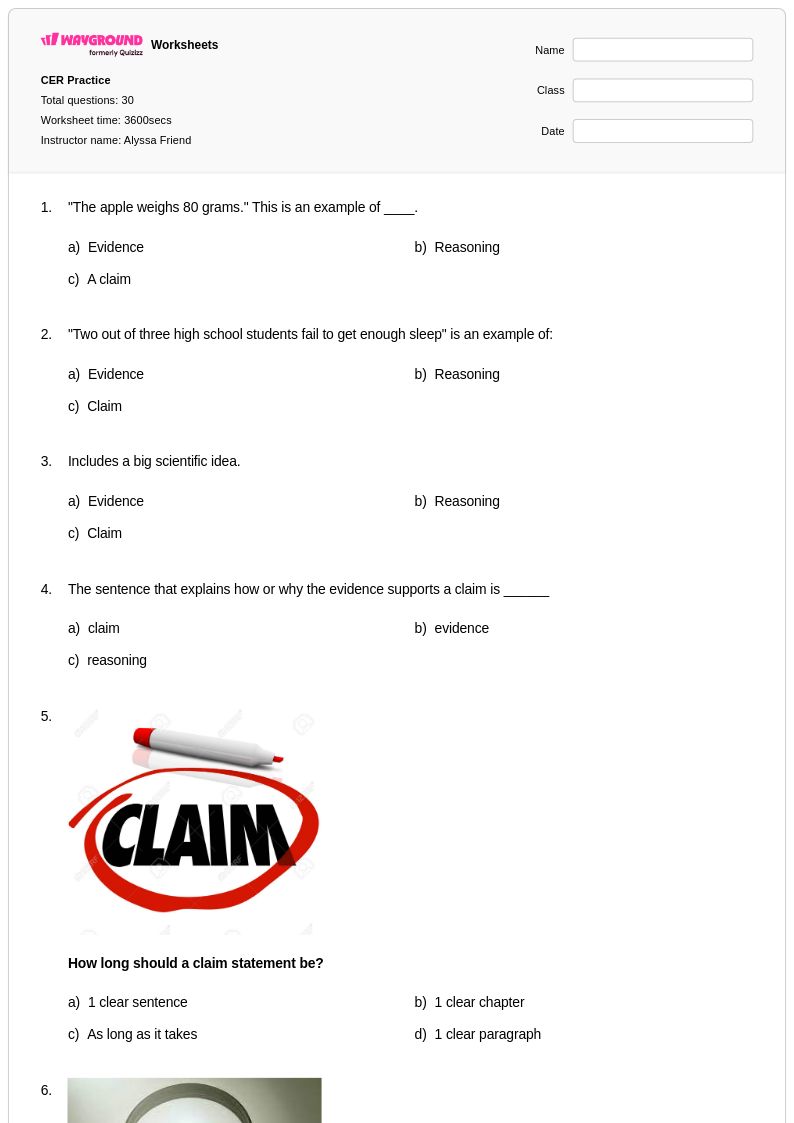
30 Q
6th - 8th
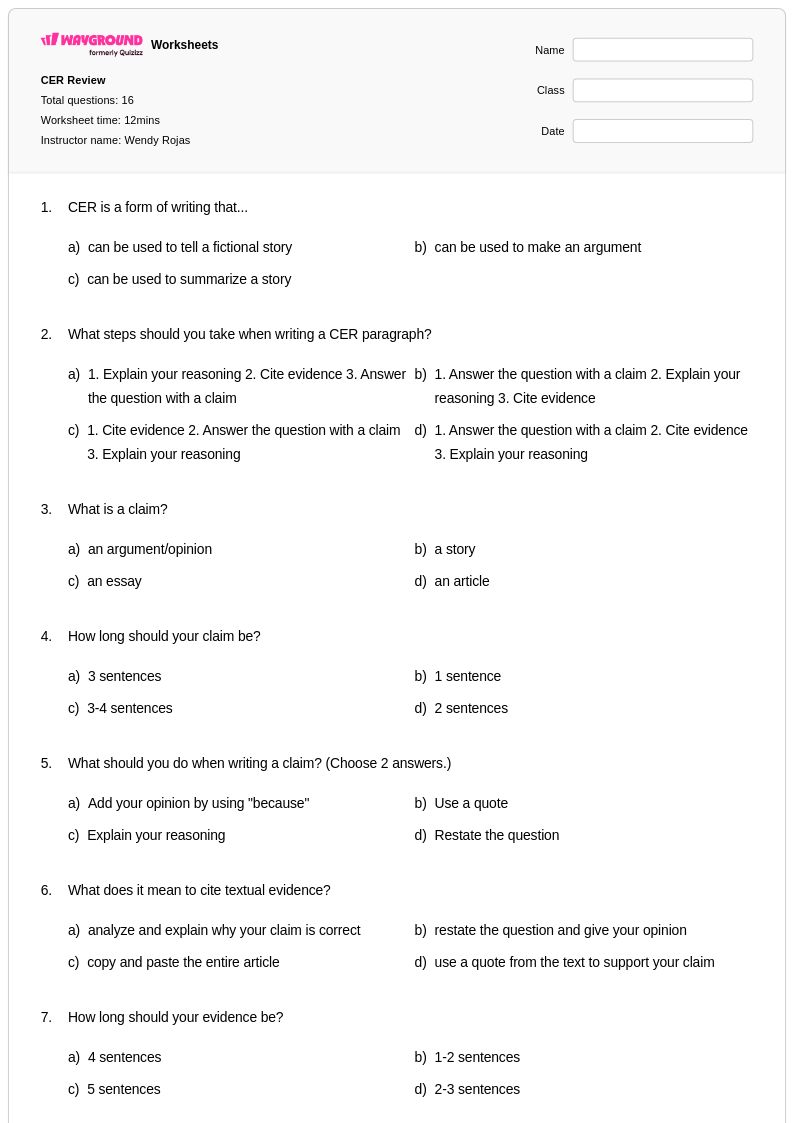
16 Q
7th - 8th
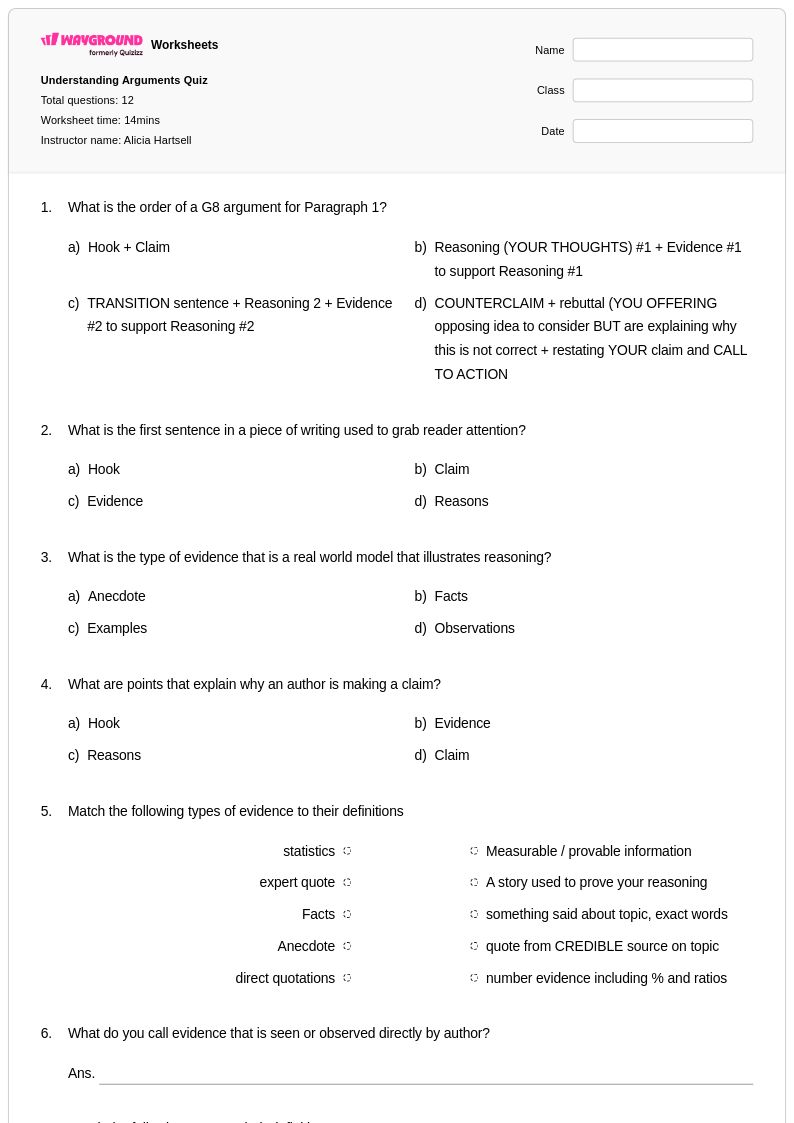
12 Q
8th
14 Q
6th - 8th
11 Q
7th - 9th
11 Q
8th
52 Q
7th - 8th
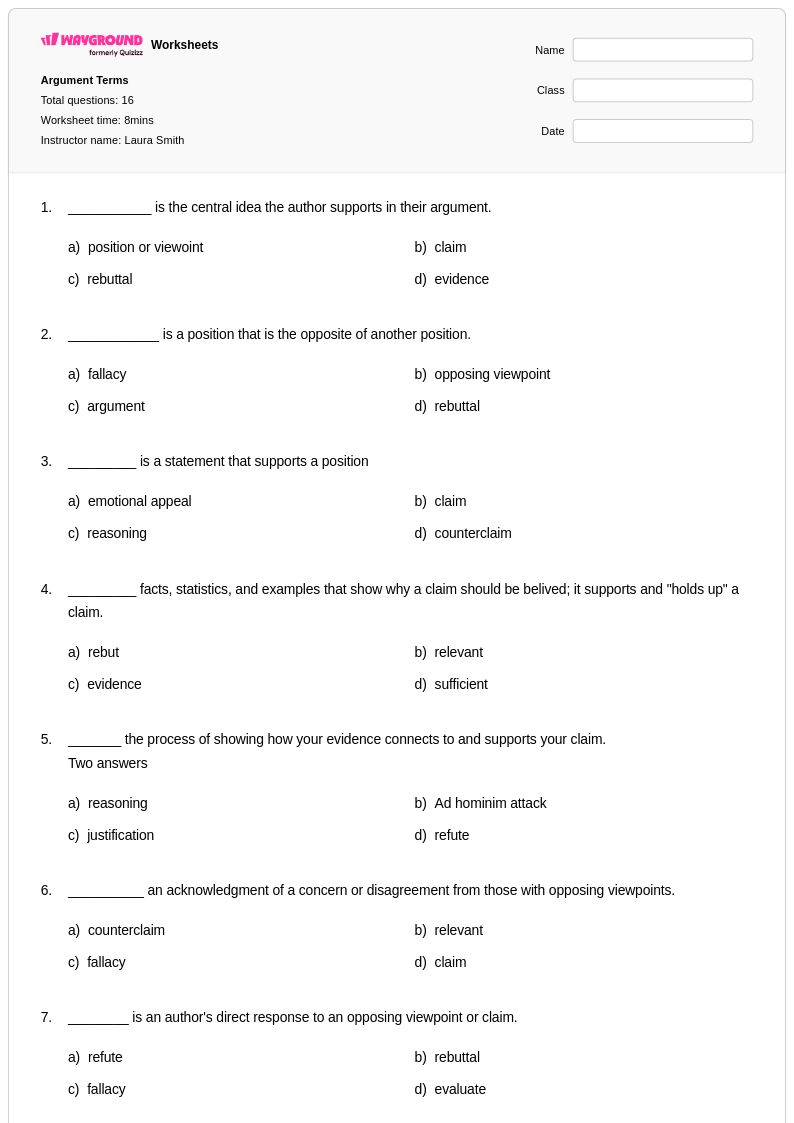
16 Q
8th
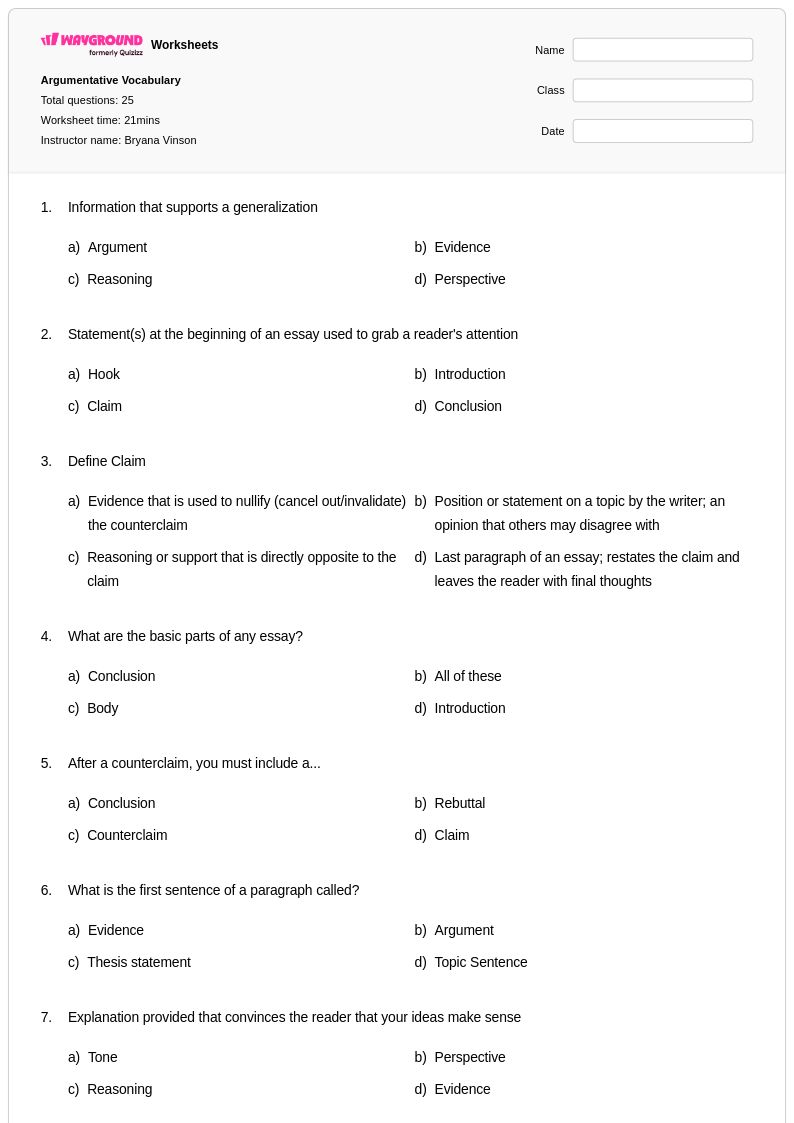
25 Q
8th
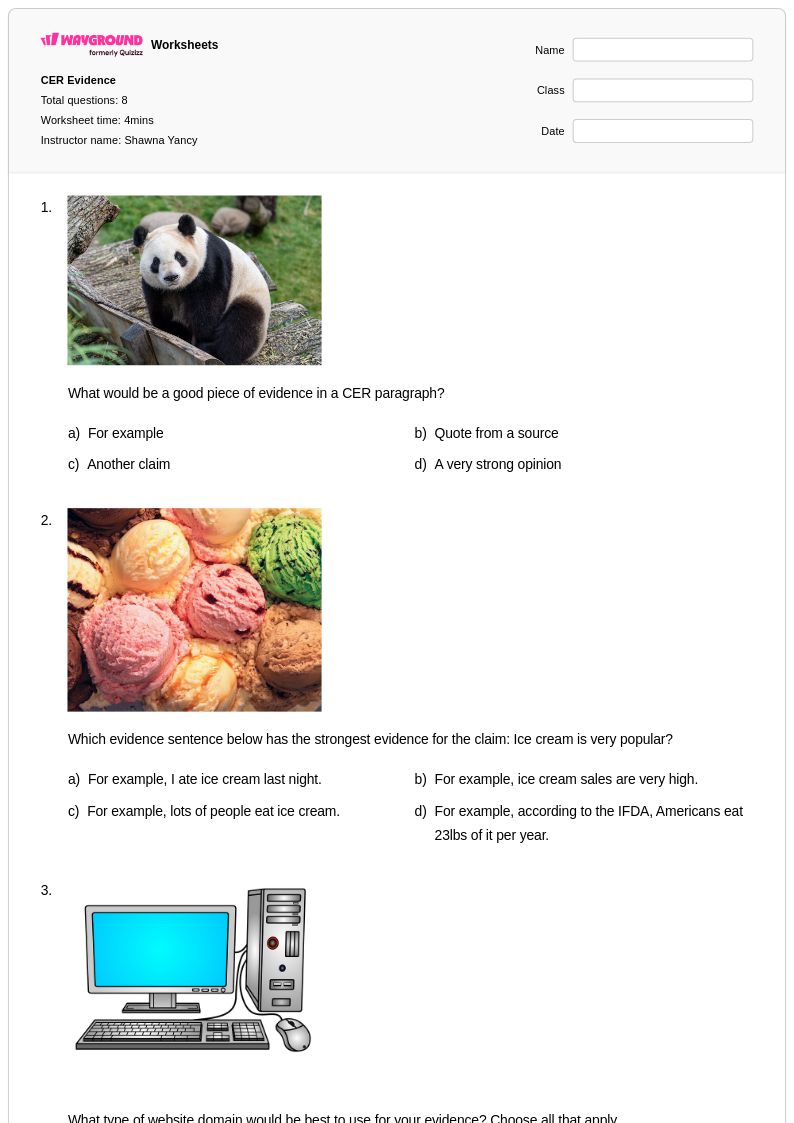
8 Q
7th - 8th
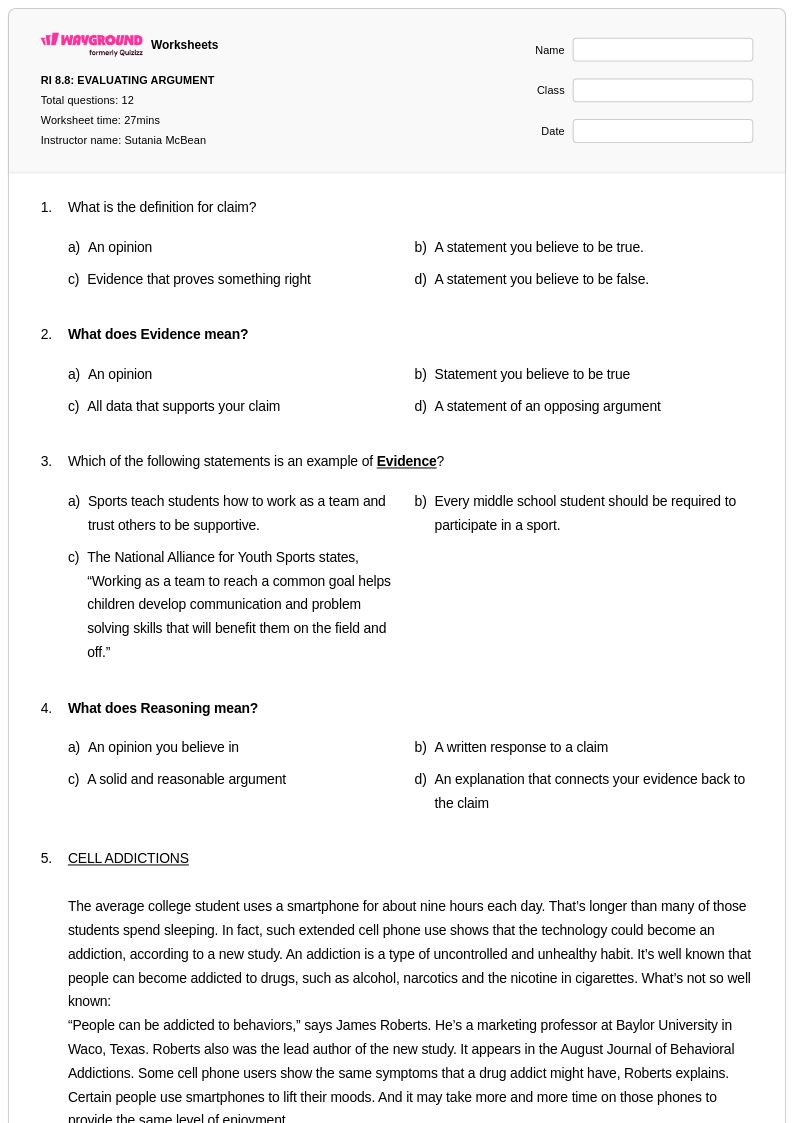
12 Q
8th
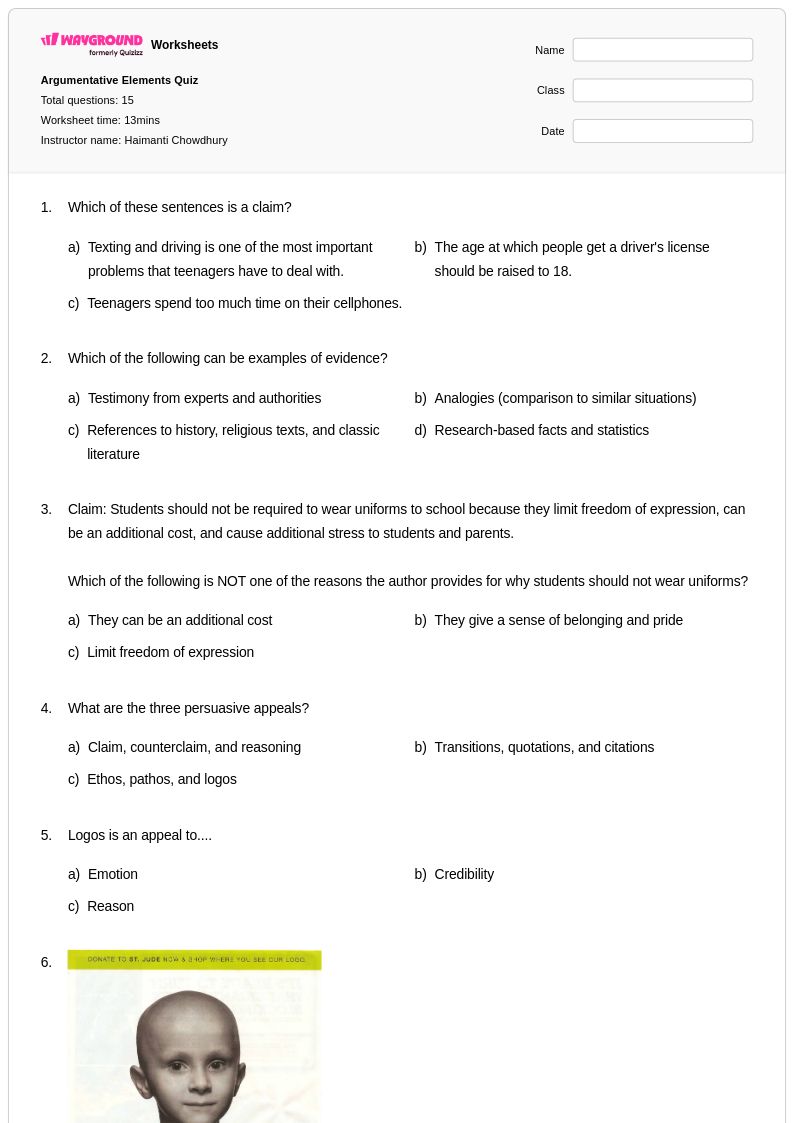
15 Q
8th
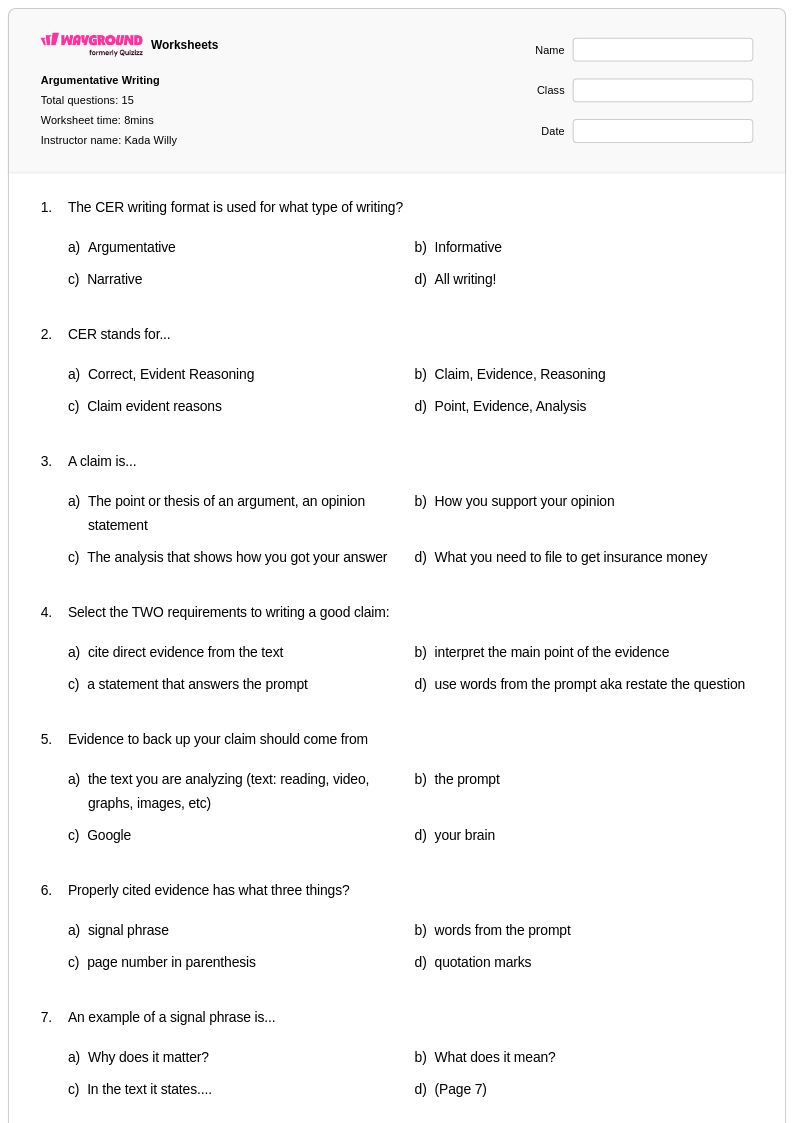
15 Q
6th - 8th
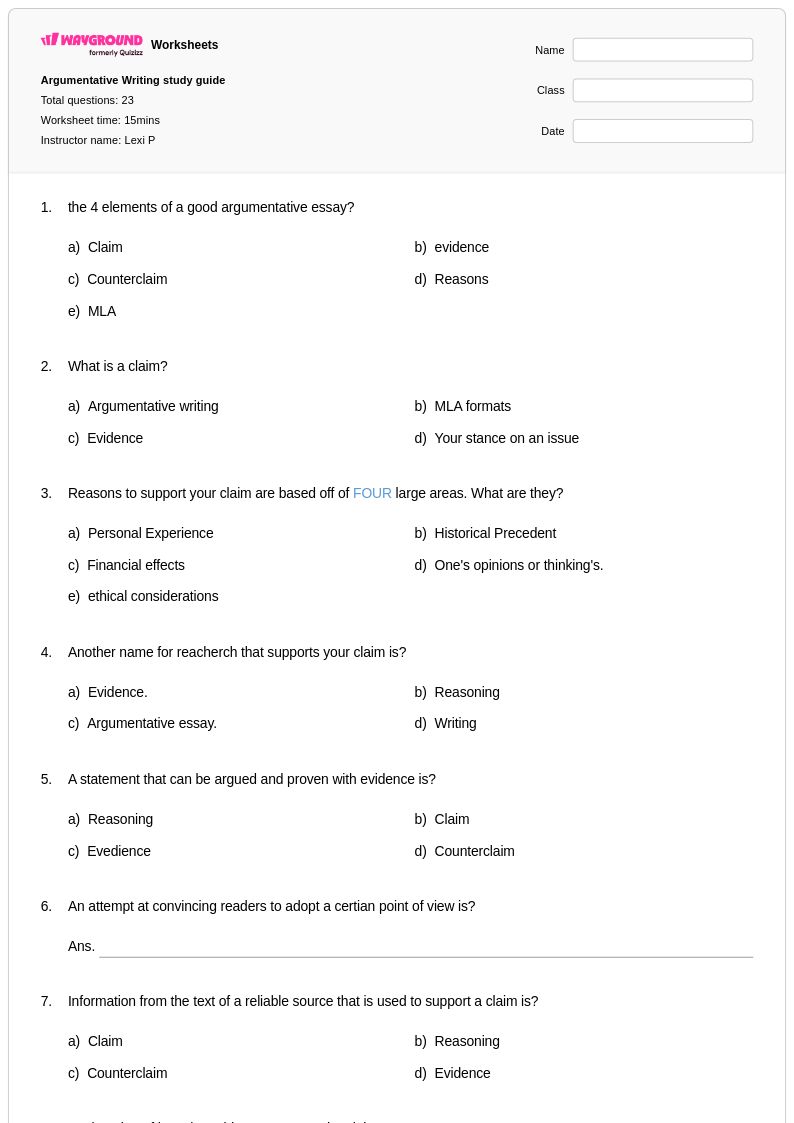
23 Q
8th

15 Q
8th
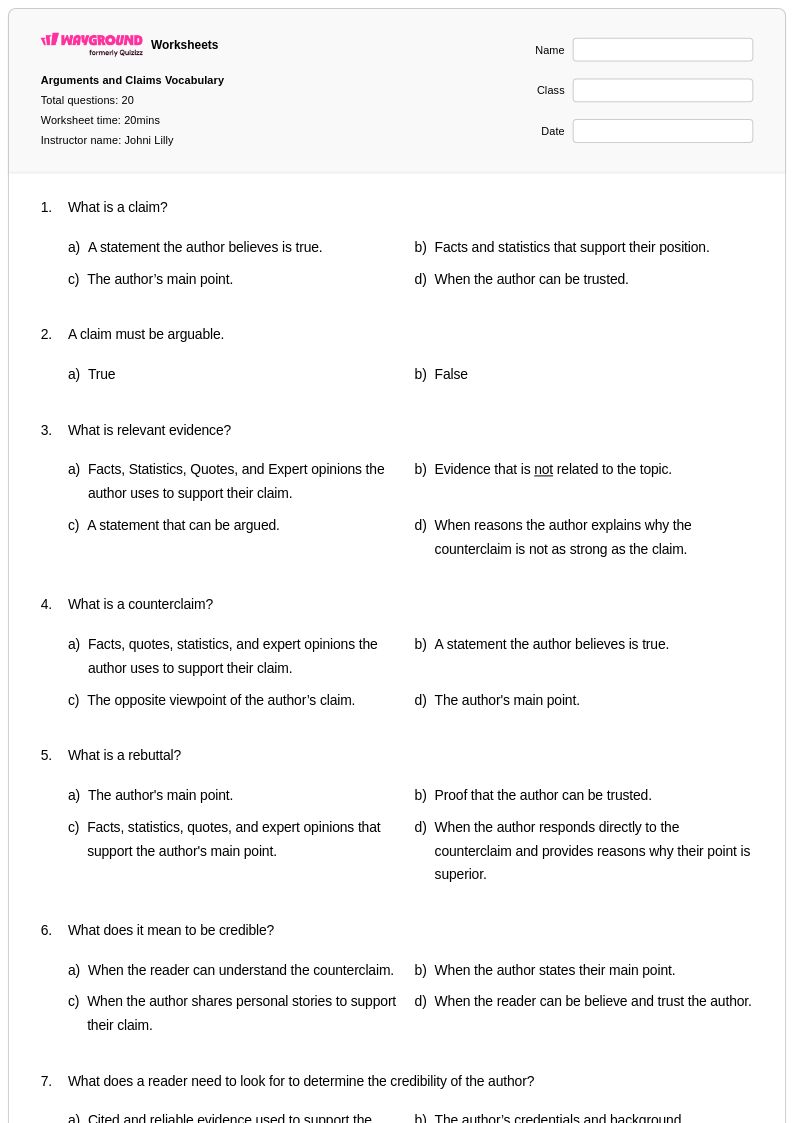
20 Q
8th

10 Q
8th
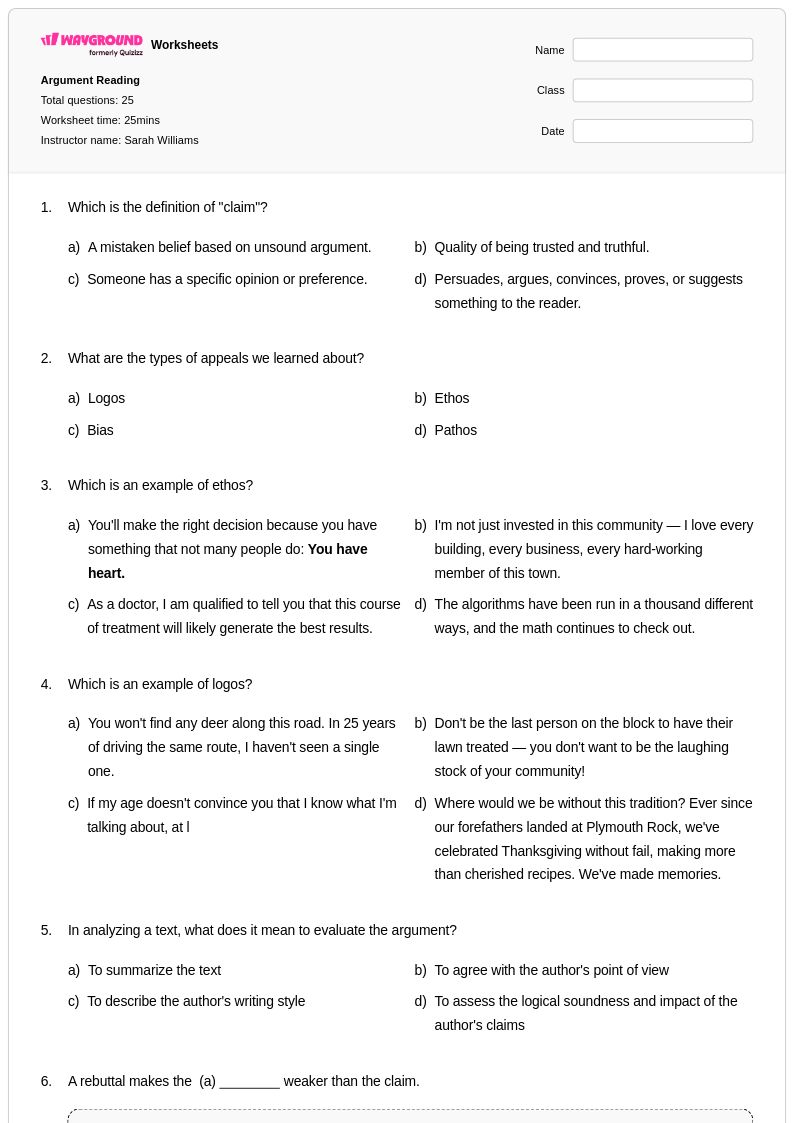
25 Q
7th - Uni
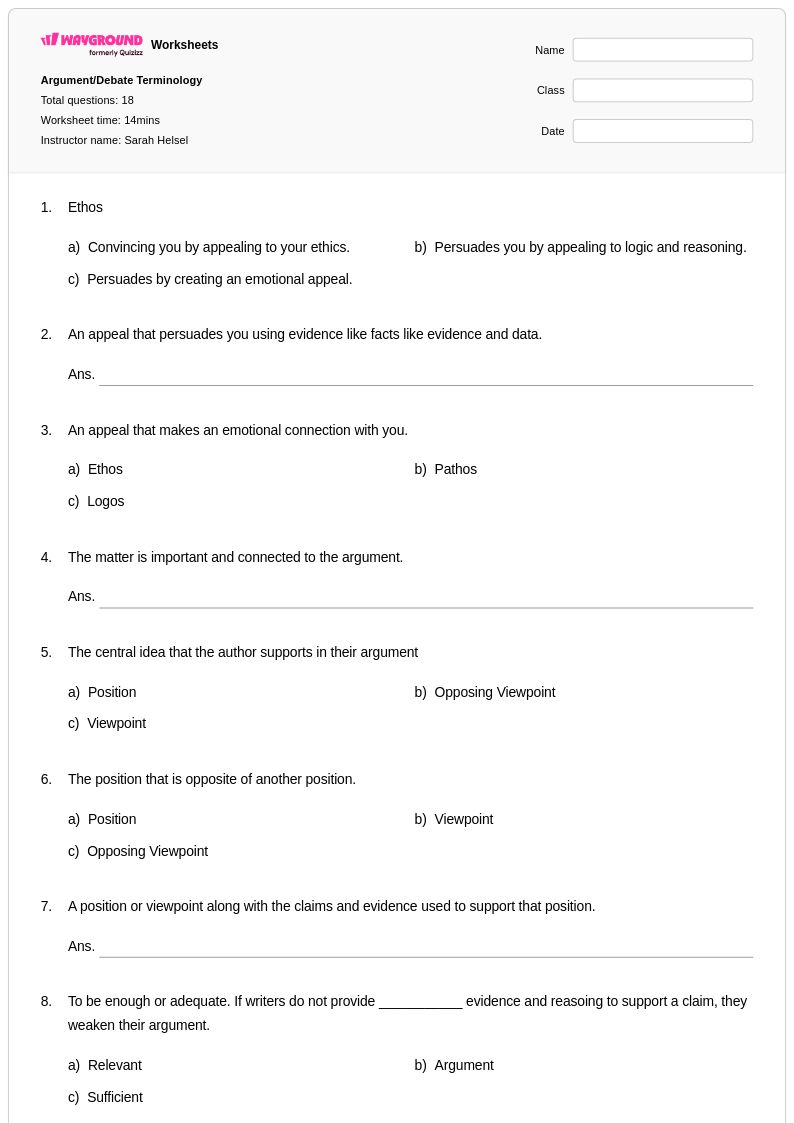
18 Q
8th
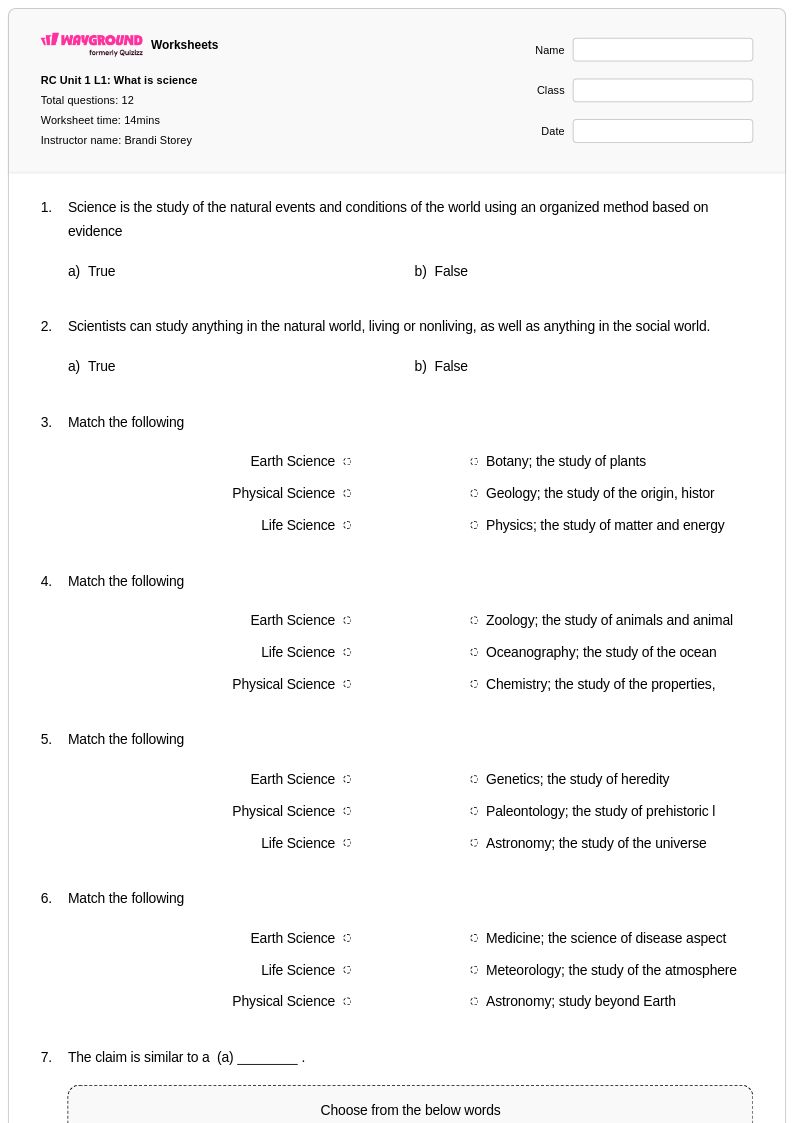
12 Q
8th
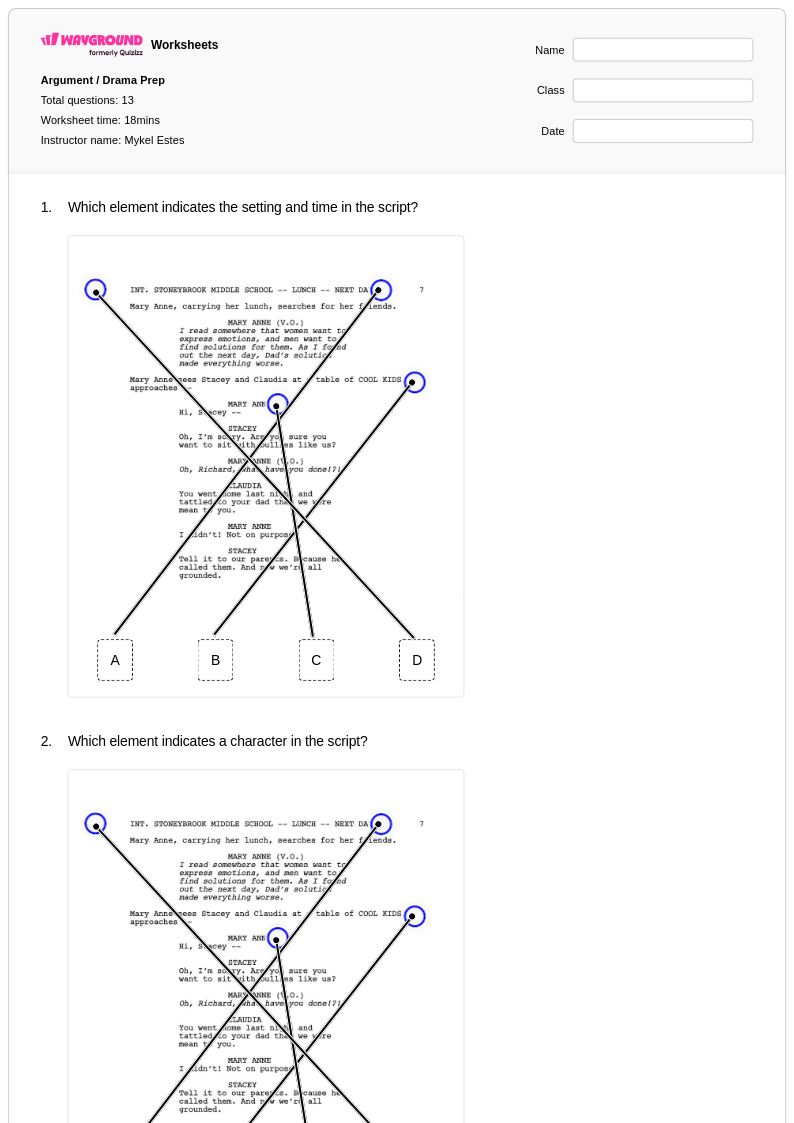
13 Q
8th
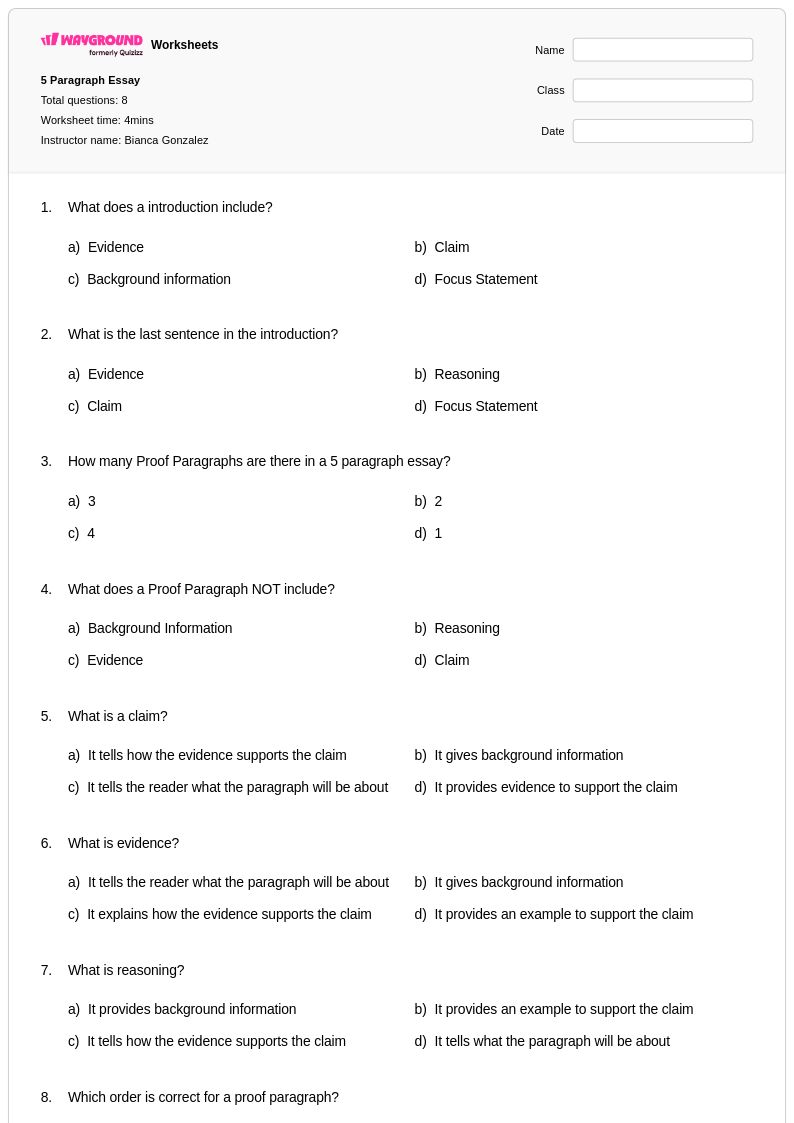
8 Q
6th - 8th
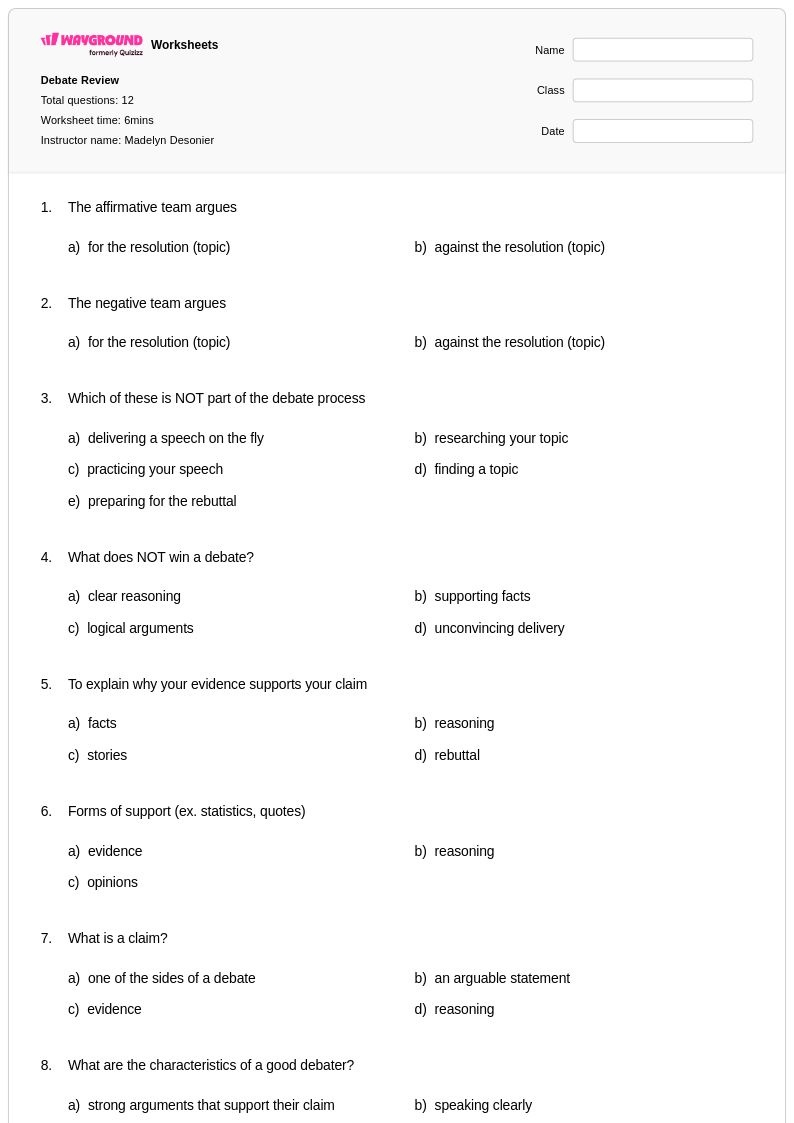
12 Q
6th - 8th
Explore Claims, Evidence, and Reasoning Worksheets by Grades
Explore Other Subject Worksheets for grade 8
Explore printable Claims, Evidence, and Reasoning worksheets for Grade 8
Claims, evidence, and reasoning worksheets for Grade 8 students provide essential practice in constructing well-supported arguments and analyzing nonfiction texts with critical thinking skills. These comprehensive printables guide eighth graders through the fundamental process of identifying strong claims, evaluating relevant evidence from multiple sources, and connecting that evidence to logical reasoning that supports their conclusions. Students work through practice problems that require them to distinguish between weak and strong evidence, analyze author credibility, and craft coherent explanations that demonstrate clear understanding of how claims must be substantiated. Each worksheet includes detailed answer keys that help students self-assess their progress and understand the reasoning behind effective argumentation, while free pdf formats make these resources accessible for both classroom instruction and independent study.
Wayground, formerly Quizizz, empowers educators with an extensive collection of teacher-created worksheets specifically designed to strengthen Grade 8 claims, evidence, and reasoning skills across diverse learning environments. The platform's millions of resources include standards-aligned materials that can be easily filtered by difficulty level, text complexity, and specific argumentative writing focuses, enabling teachers to differentiate instruction for students at various skill levels. These flexible worksheets are available in both printable and digital formats, allowing educators to seamlessly integrate them into lesson planning for initial instruction, targeted remediation, or enrichment activities. Teachers can customize content to match their curriculum pacing and student needs, while the robust search functionality helps locate specific practice materials that address particular aspects of argumentative writing, from evaluating source reliability to constructing counterarguments.
FAQs
How do I teach claims, evidence, and reasoning to students?
What exercises help students practice constructing claims, evidence, and reasoning?
What mistakes do students commonly make with claims, evidence, and reasoning?
How can I use CER worksheets to support students who struggle with argumentative writing?
How do I use claims, evidence, and reasoning worksheets from Wayground in my classroom?
How is reasoning different from evidence in a CER argument?