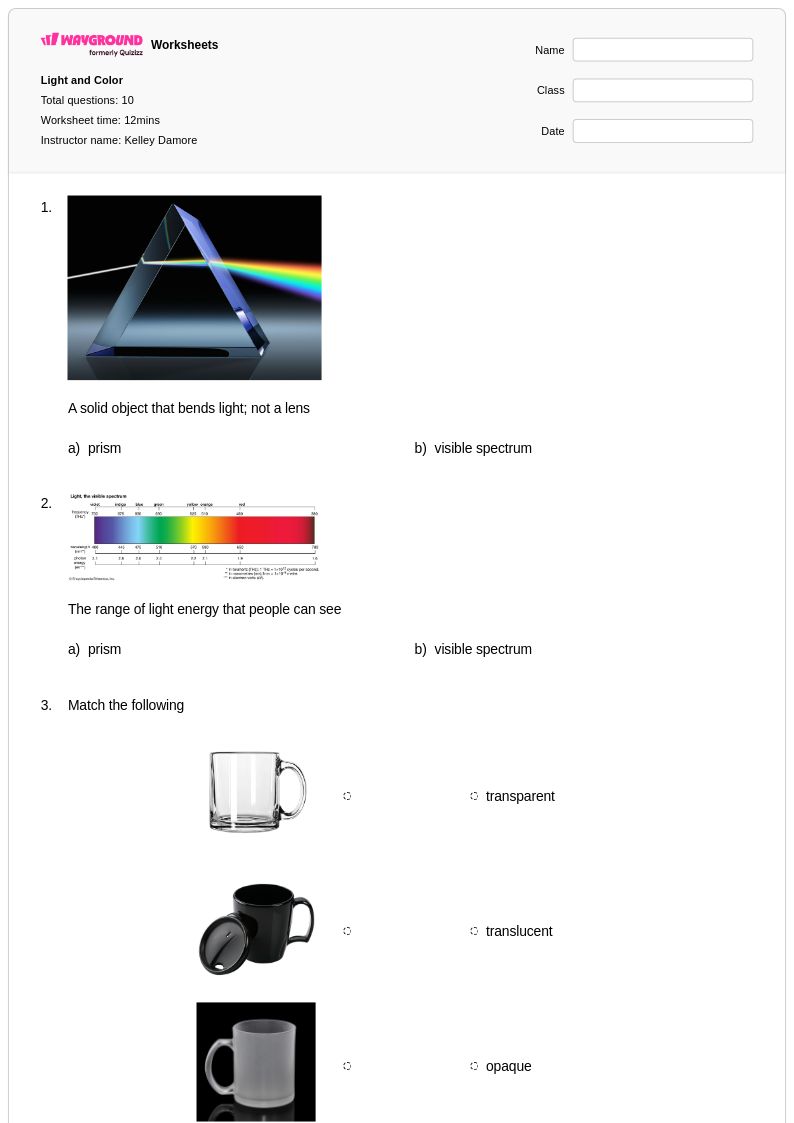
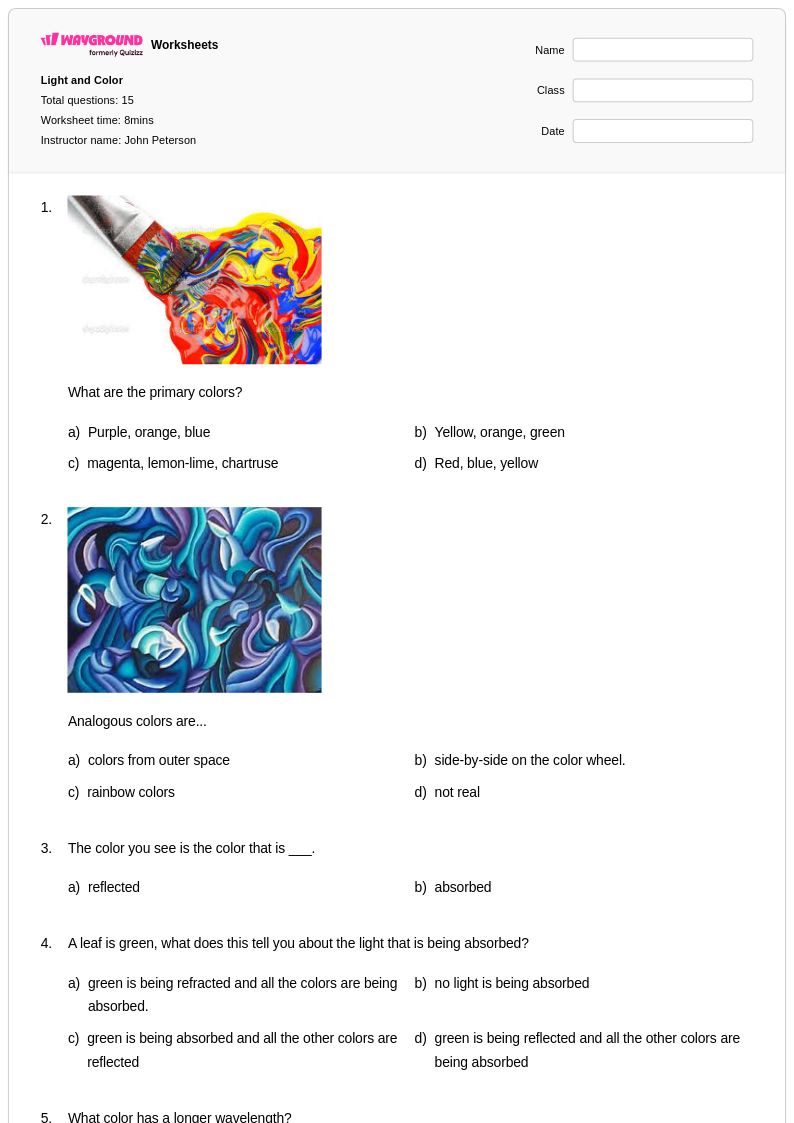
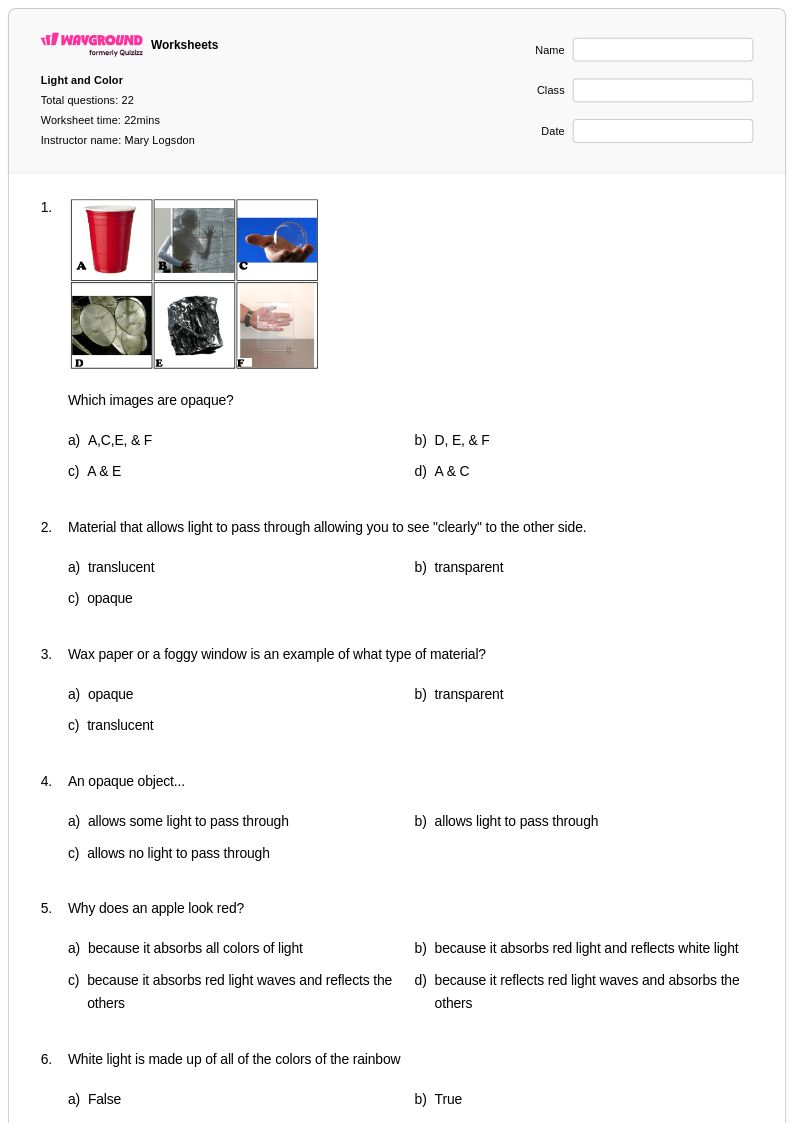
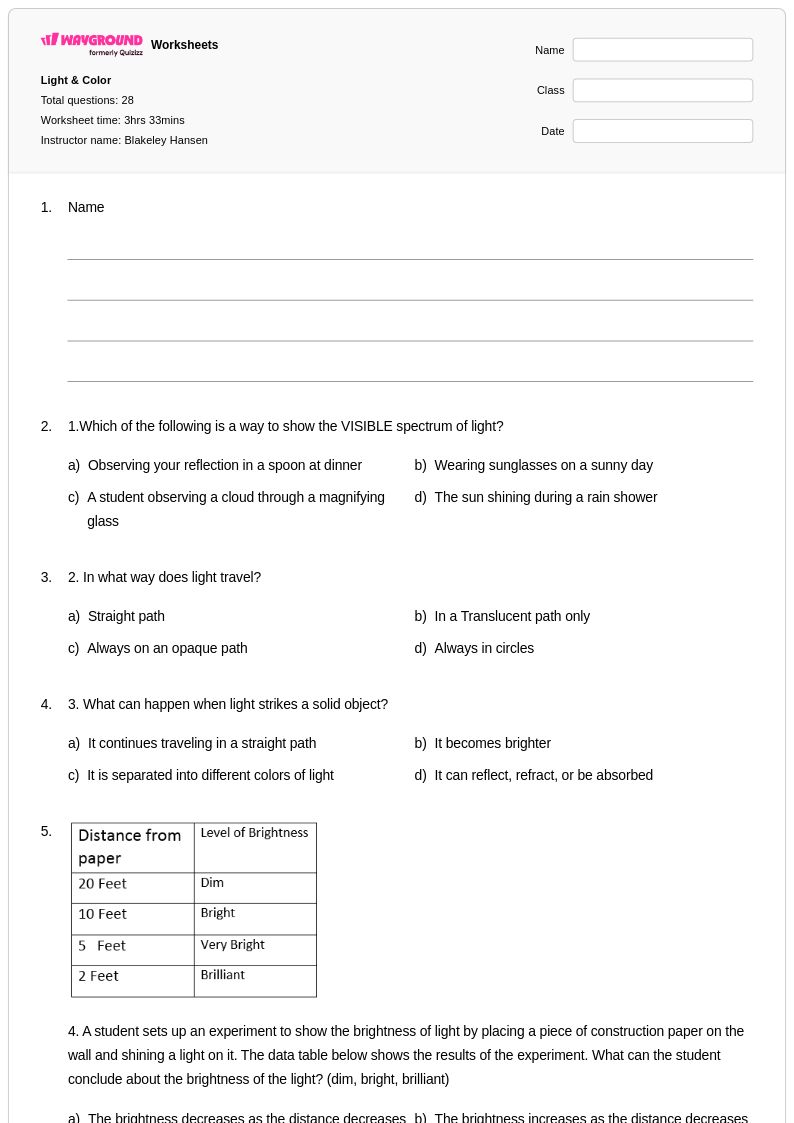
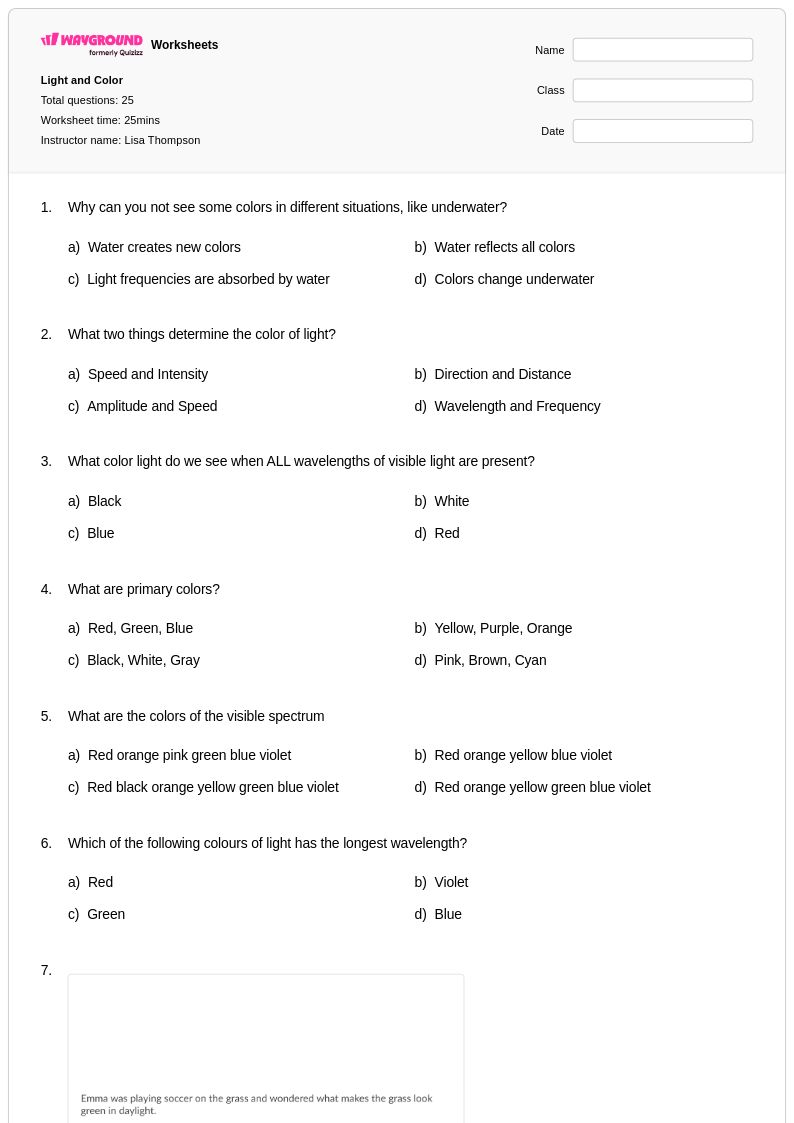
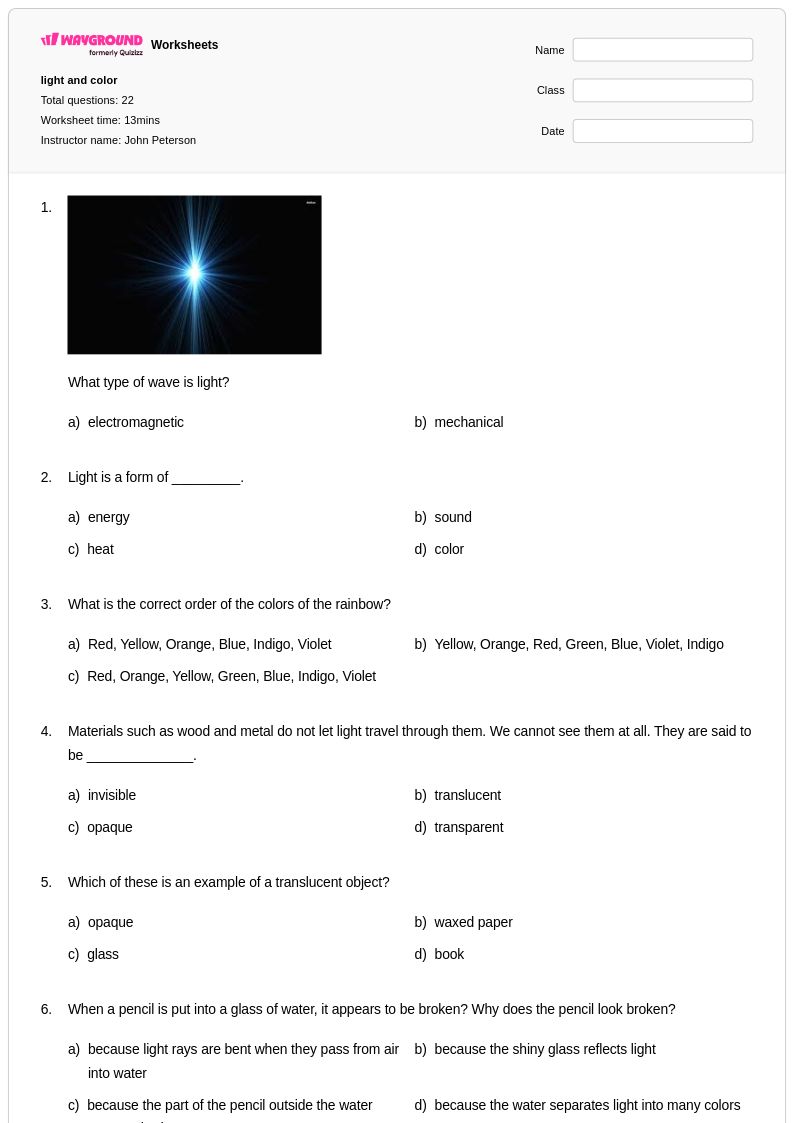
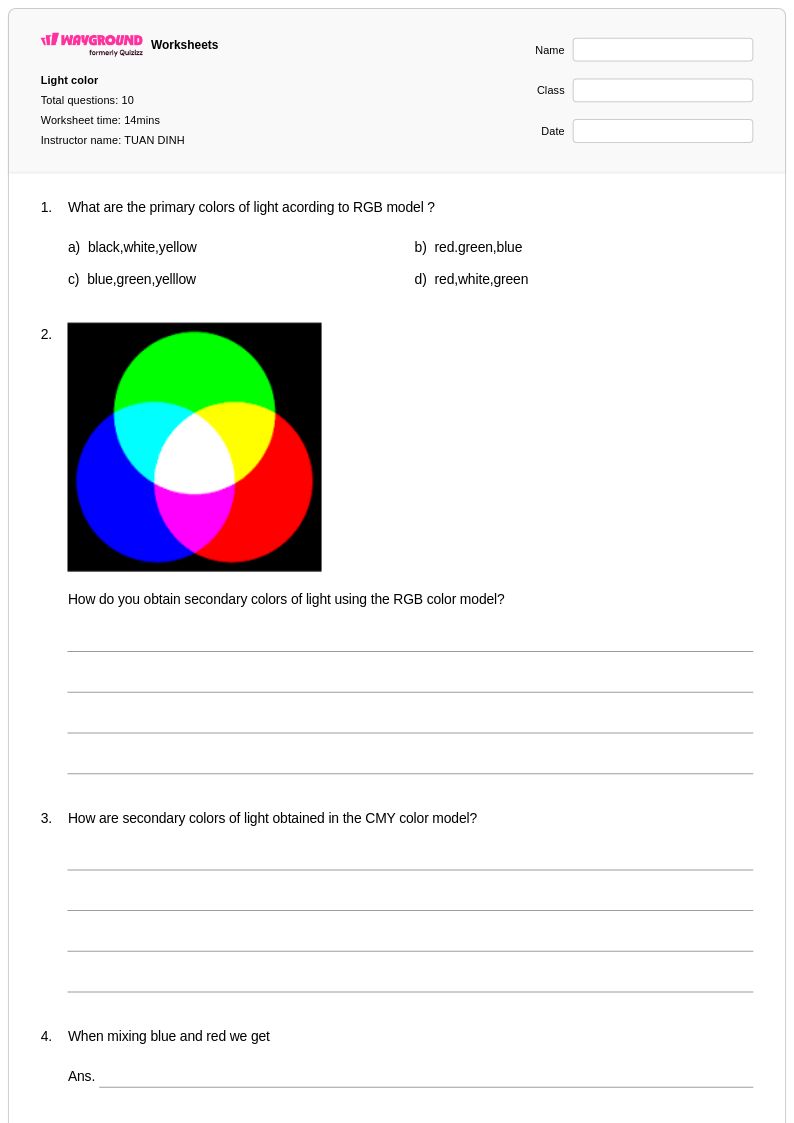
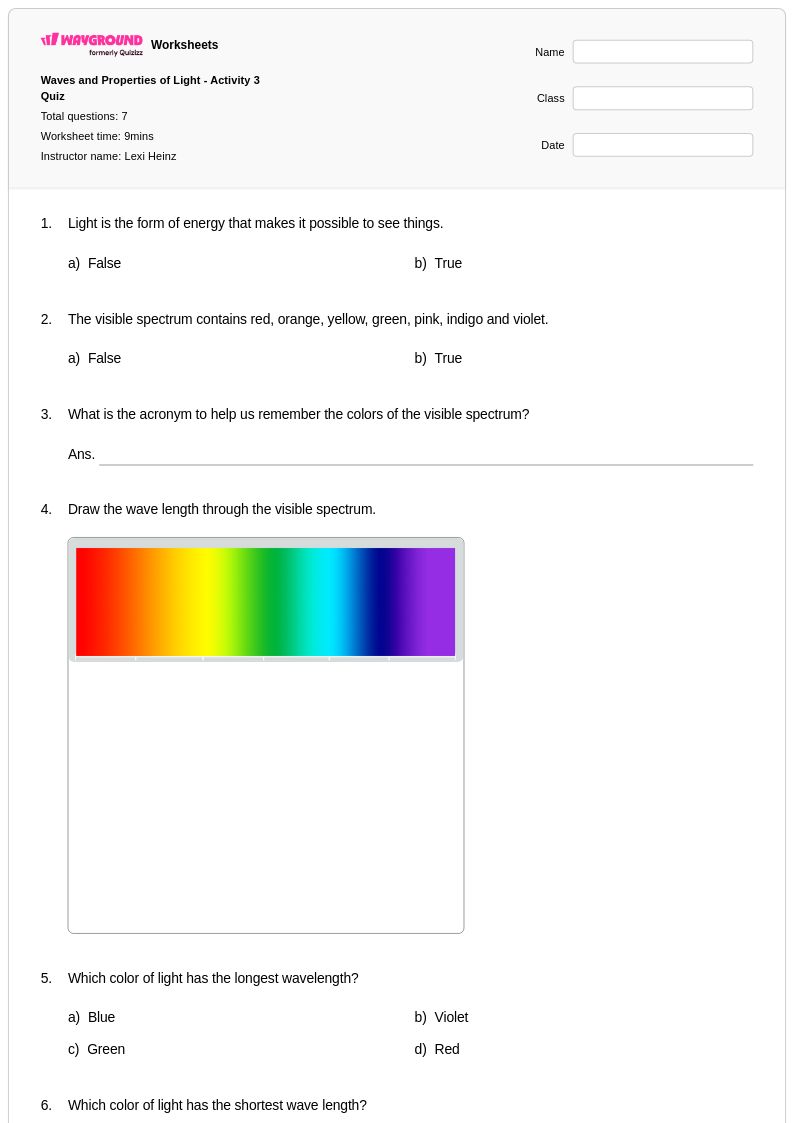
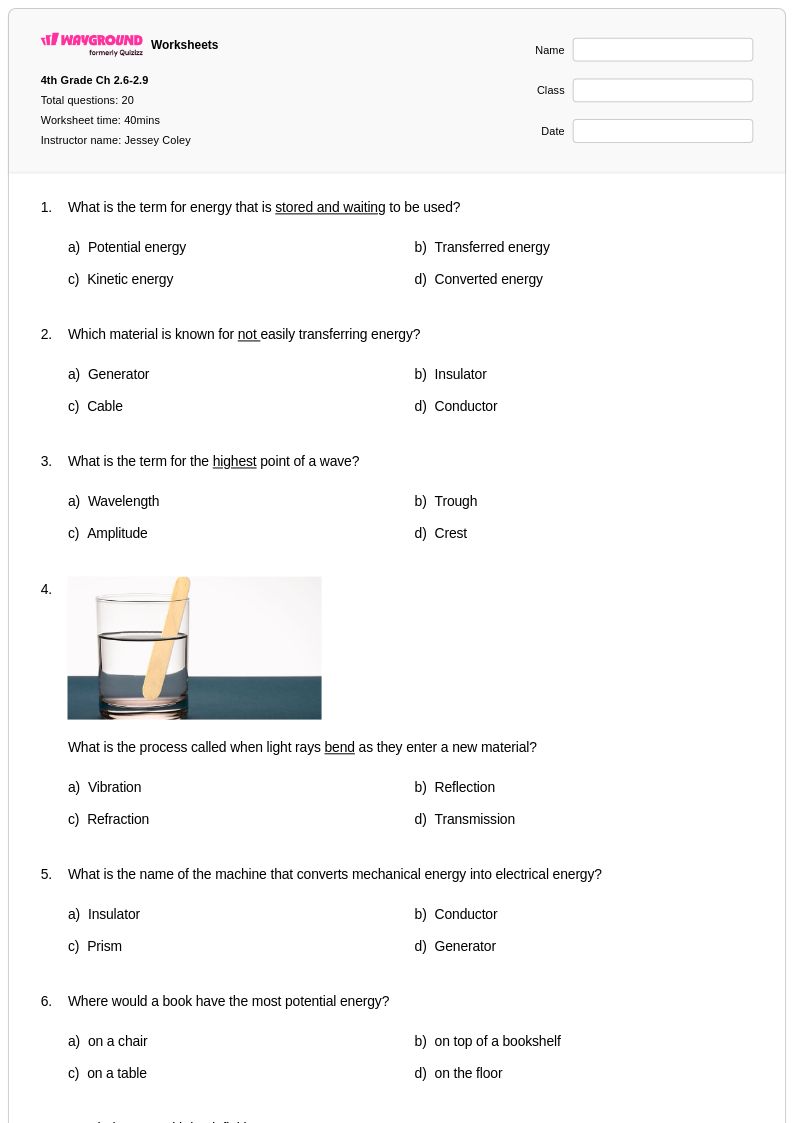
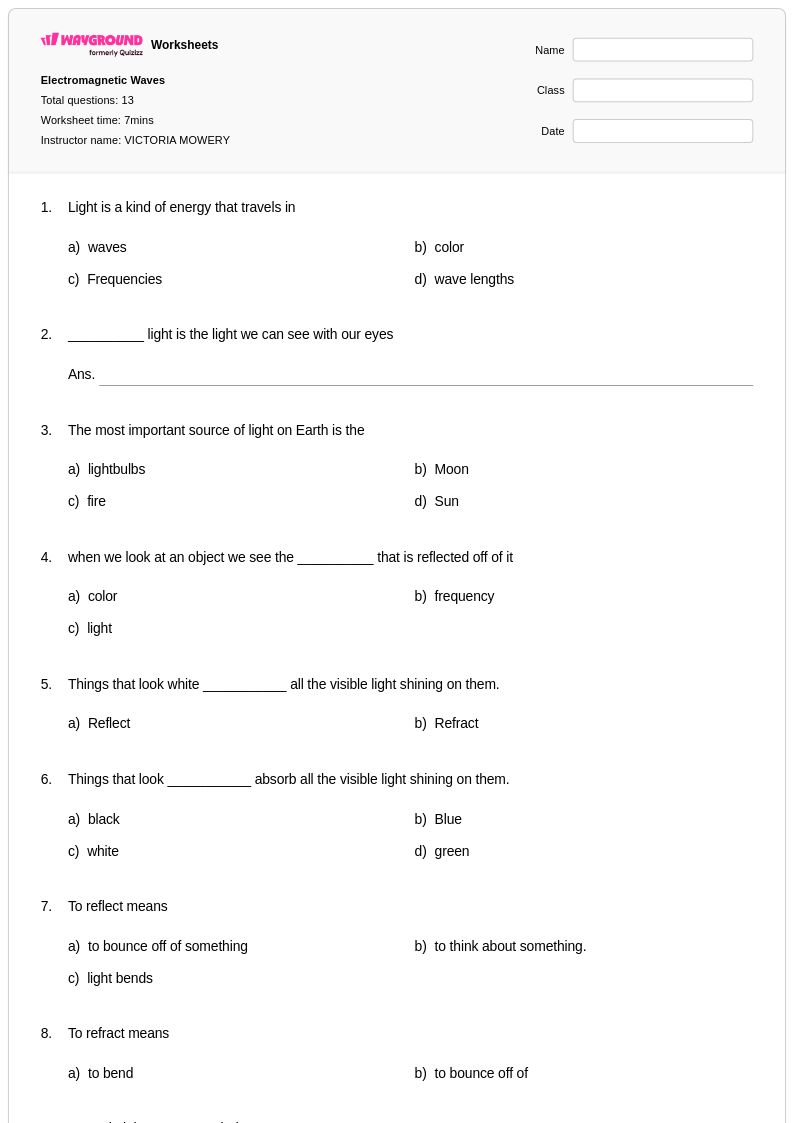
Explore Wayground's free Grade 4 color worksheets and printables that help students discover light properties, color mixing, and spectrum science through engaging practice problems with complete answer keys.
Color worksheets for Grade 4 students available through Wayground (formerly Quizizz) provide comprehensive exploration of light, vision, and color theory fundamentals that align with elementary physics curriculum standards. These carefully designed educational materials help fourth-grade learners understand how white light separates into different colors through prisms, why objects appear certain colors based on light absorption and reflection, and how primary colors combine to create secondary colors. The collection includes hands-on practice problems that challenge students to predict color mixing outcomes, analyze rainbow formation, and explain everyday color phenomena they observe in their environment. Each worksheet comes with a detailed answer key and is available as free printables in convenient pdf format, making it easy for educators to distribute materials and assess student understanding of these fundamental physics concepts.
Wayground (formerly Quizizz) empowers teachers with access to millions of educator-created resources specifically focused on Grade 4 color physics concepts, featuring robust search and filtering capabilities that allow instructors to quickly locate materials matching their specific lesson objectives and state science standards. The platform's differentiation tools enable teachers to customize worksheets for varying skill levels within their classrooms, while the dual availability in both printable pdf and interactive digital formats provides maximum flexibility for different learning environments and teaching preferences. These comprehensive worksheet collections support effective lesson planning by offering structured practice opportunities, facilitate targeted remediation for students struggling with light and color concepts, and provide enrichment activities for advanced learners ready to explore more complex physics principles, ultimately strengthening foundational scientific thinking skills that prepare students for more advanced physics study in higher grades.
FAQs
How do I teach color physics to middle or high school students?
Start by grounding students in the electromagnetic spectrum, establishing that visible light is just a narrow band of wavelengths between approximately 380 and 700 nanometers. From there, build toward wave properties such as frequency and amplitude, then connect those properties to how the human eye perceives color. Using physical demonstrations like prisms to separate white light into component colors helps students visualize abstract concepts before moving to written practice.
What's the difference between additive and subtractive color mixing, and how do I explain it clearly?
Additive color mixing involves combining light sources, where red, green, and blue light combine to produce white light, as seen in screens and projectors. Subtractive color mixing involves pigments or filters that absorb certain wavelengths and reflect others, which is why mixing cyan, magenta, and yellow paint produces a dark or black result. A clear way to teach the distinction is to ask students: are we adding light or removing it? That framing consistently reduces confusion between the two systems.
What common mistakes do students make when learning about color and light wavelengths?
One of the most persistent misconceptions is that color is a property of an object itself rather than a product of how that object absorbs and reflects specific wavelengths of light. Students also frequently confuse additive and subtractive color models, particularly when predicting what color results from mixing. Another common error is conflating higher frequency with longer wavelength, when in fact the two are inversely related. Targeted practice problems that ask students to predict outcomes and explain their reasoning help surface and correct these errors.
What kinds of practice exercises help students understand the electromagnetic spectrum?
Effective practice exercises include ordering regions of the electromagnetic spectrum by wavelength and frequency, comparing the relative energies of different types of radiation, and answering application problems that ask why certain objects appear specific colors under different lighting conditions. Problems that require students to explain why a red apple looks black under blue light, for example, force them to apply absorption and reflection principles rather than memorize facts.
How can I use Wayground's color physics worksheets in my classroom?
Wayground's color physics worksheets are available as printable PDFs for traditional classroom use and in digital formats for technology-integrated environments, giving you flexibility regardless of your setup. You can also host them as a quiz directly on Wayground, which allows you to track student responses and identify gaps in understanding in real time. For students who need additional support, Wayground's accommodation tools include read aloud, extended time, and reduced answer choices, all configurable per student without disrupting the rest of the class.
How do I differentiate color physics instruction for students at different skill levels?
For students still building foundational understanding, focus practice on identifying regions of the electromagnetic spectrum and understanding the basic relationship between wavelength and color. Advanced learners can be challenged with problems involving interference patterns, polarization, or quantitative wavelength-frequency calculations. On Wayground, teachers can apply individual accommodations such as reduced answer choices or read aloud for students who need them, while other students work through standard versions of the same material.