
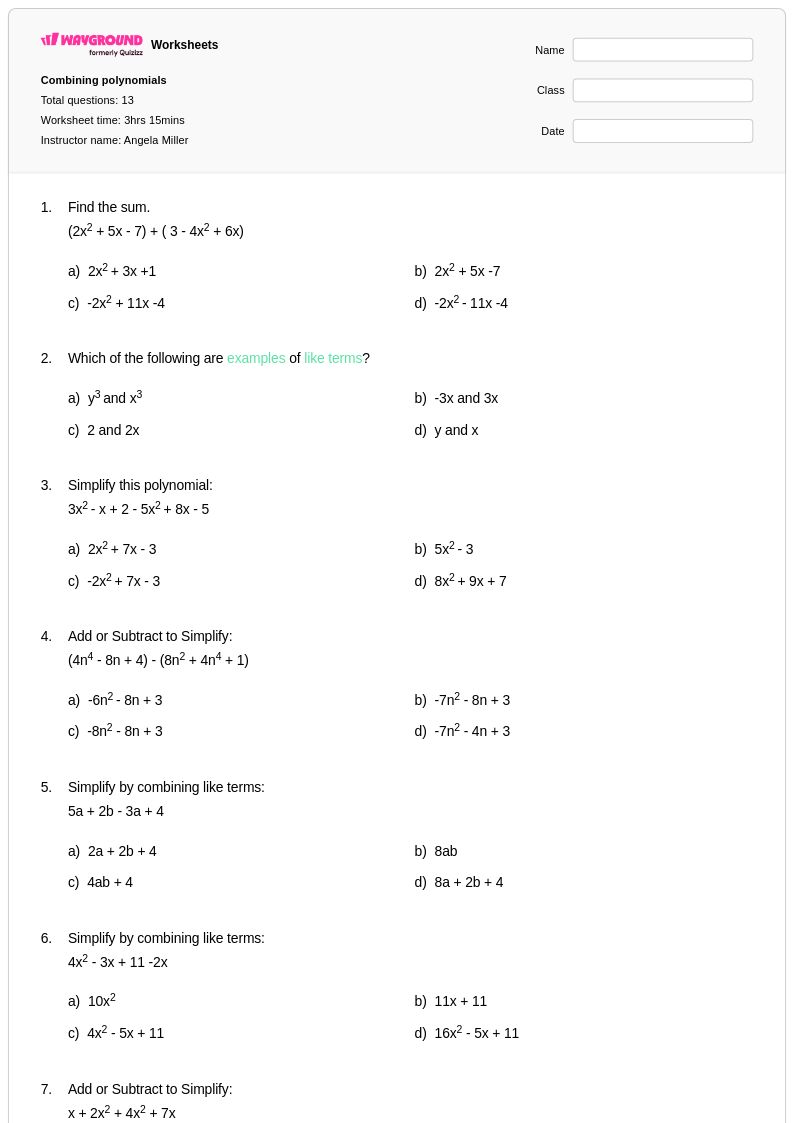
13 Q
7th - 9th
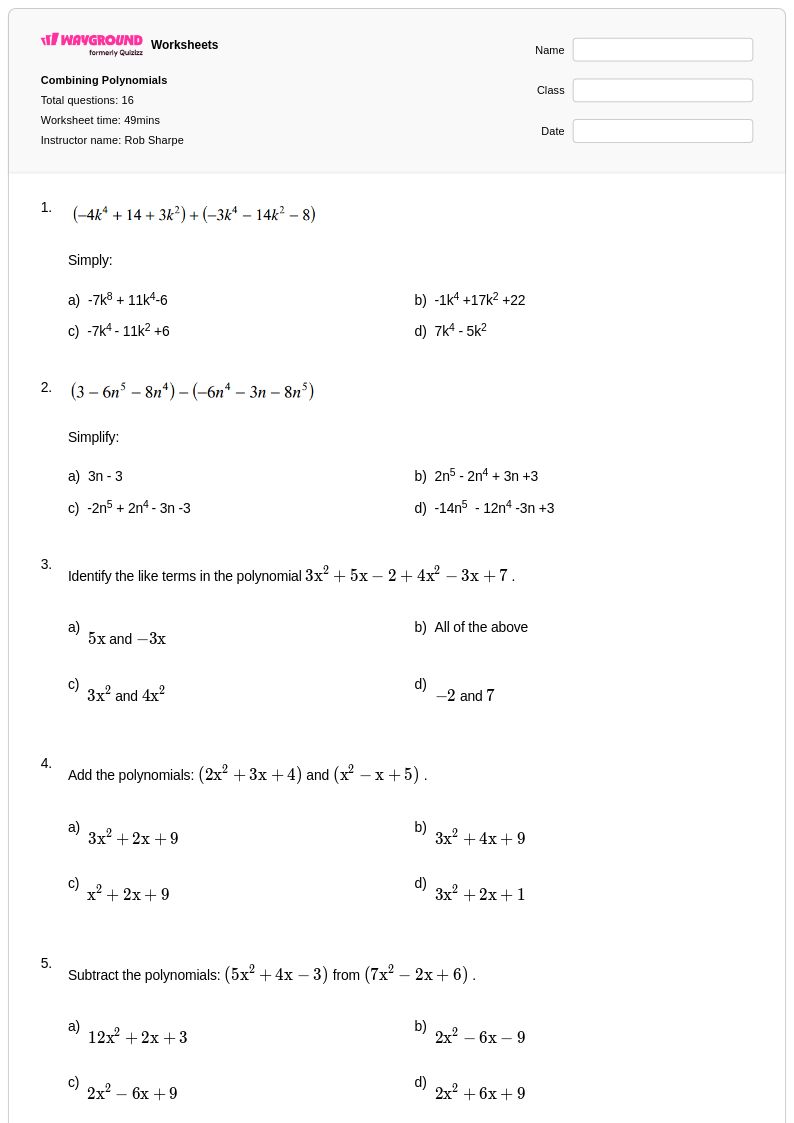
16 Q
9th
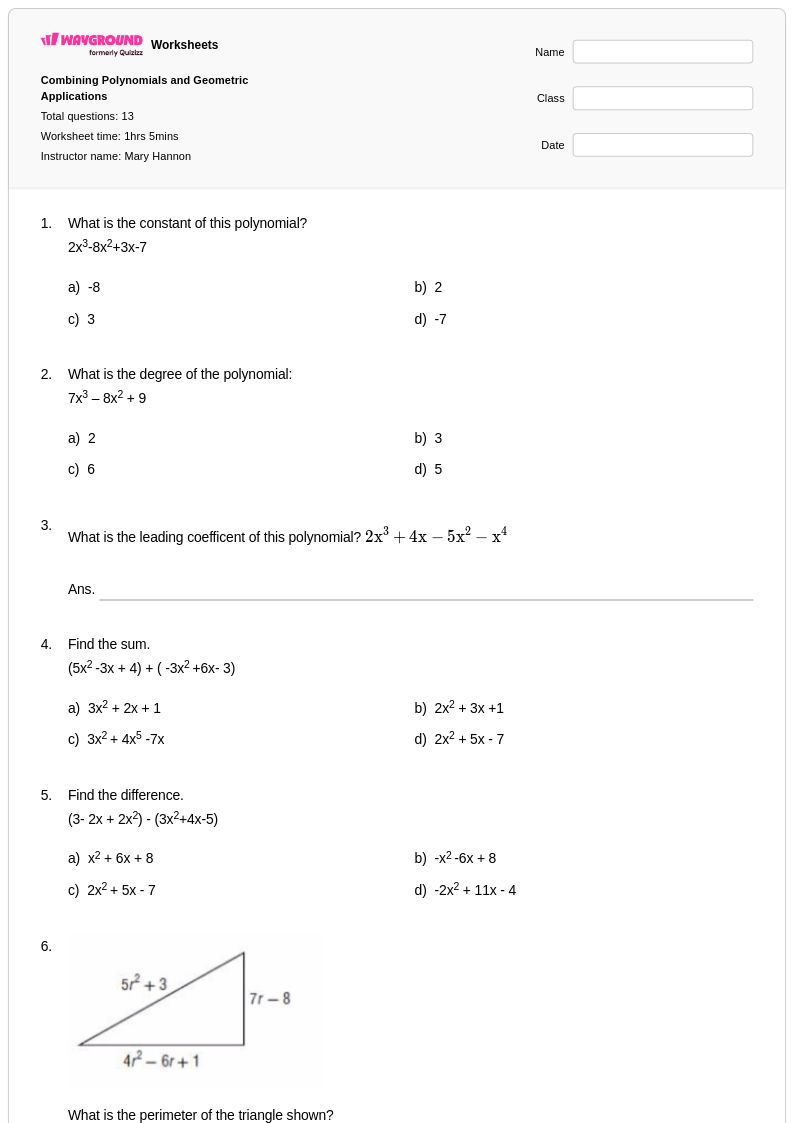
13 Q
9th - 12th
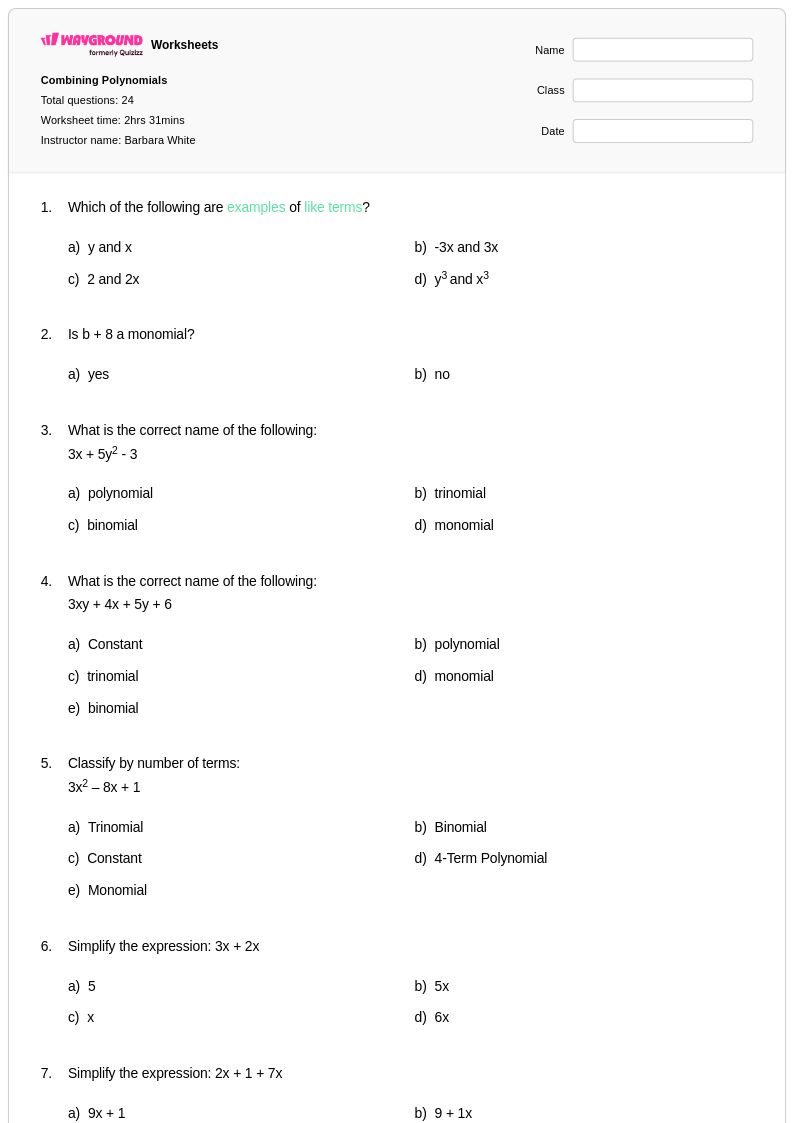
24 Q
9th
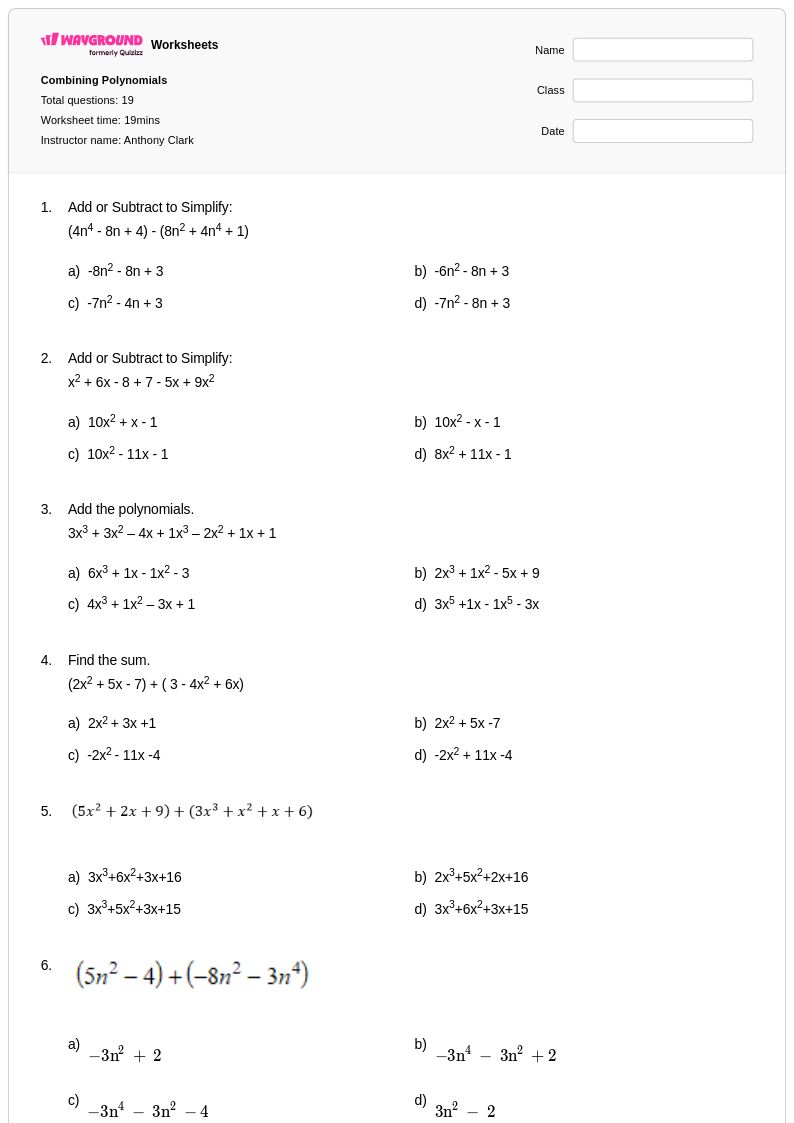
19 Q
9th - Uni
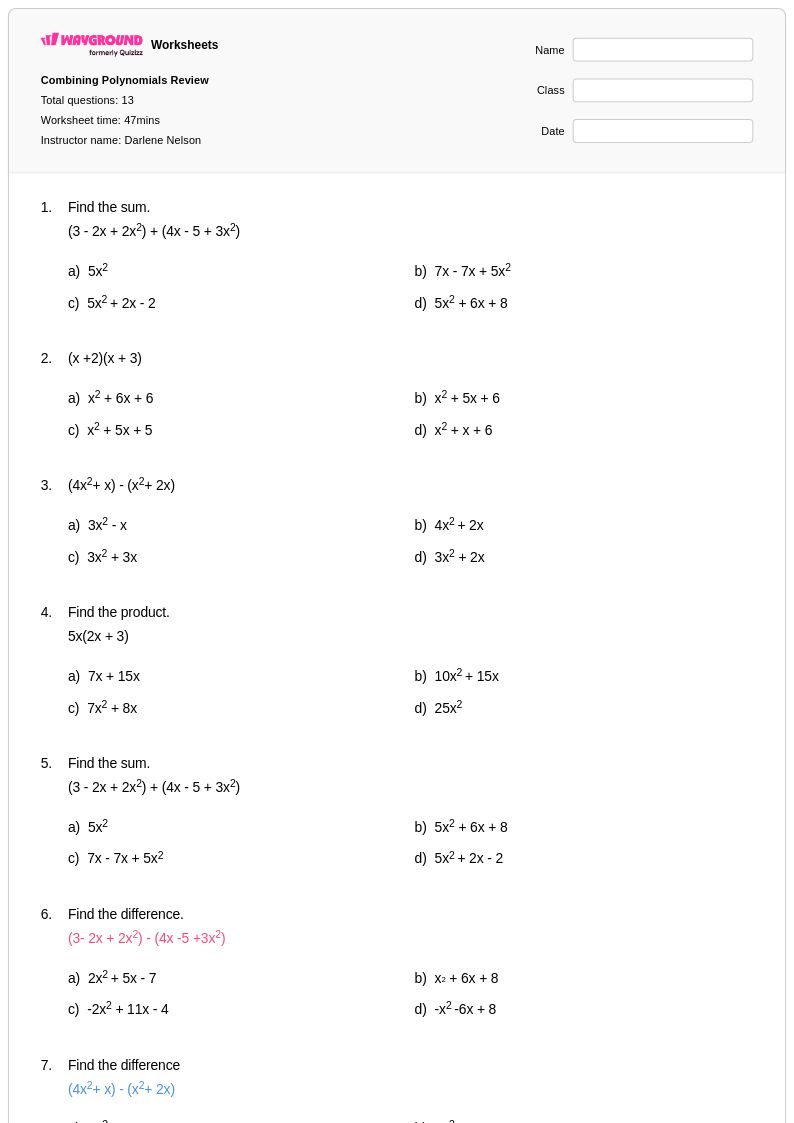
13 Q
9th
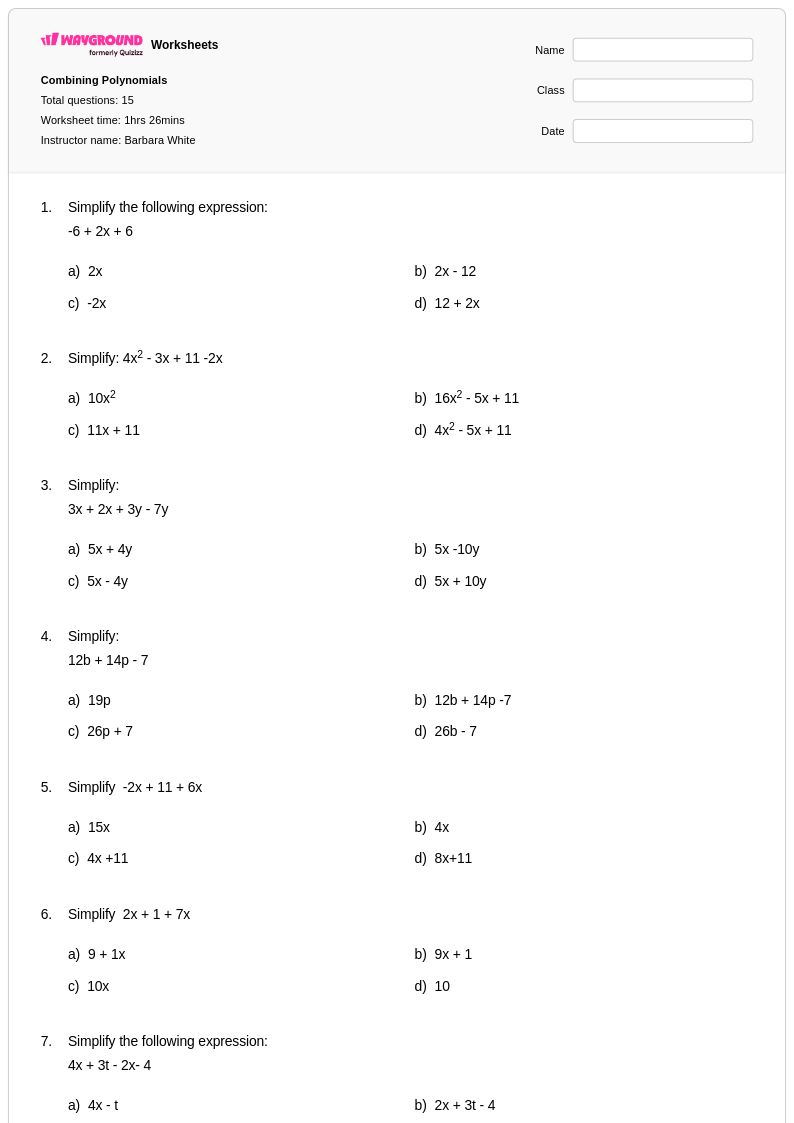
15 Q
7th - 9th
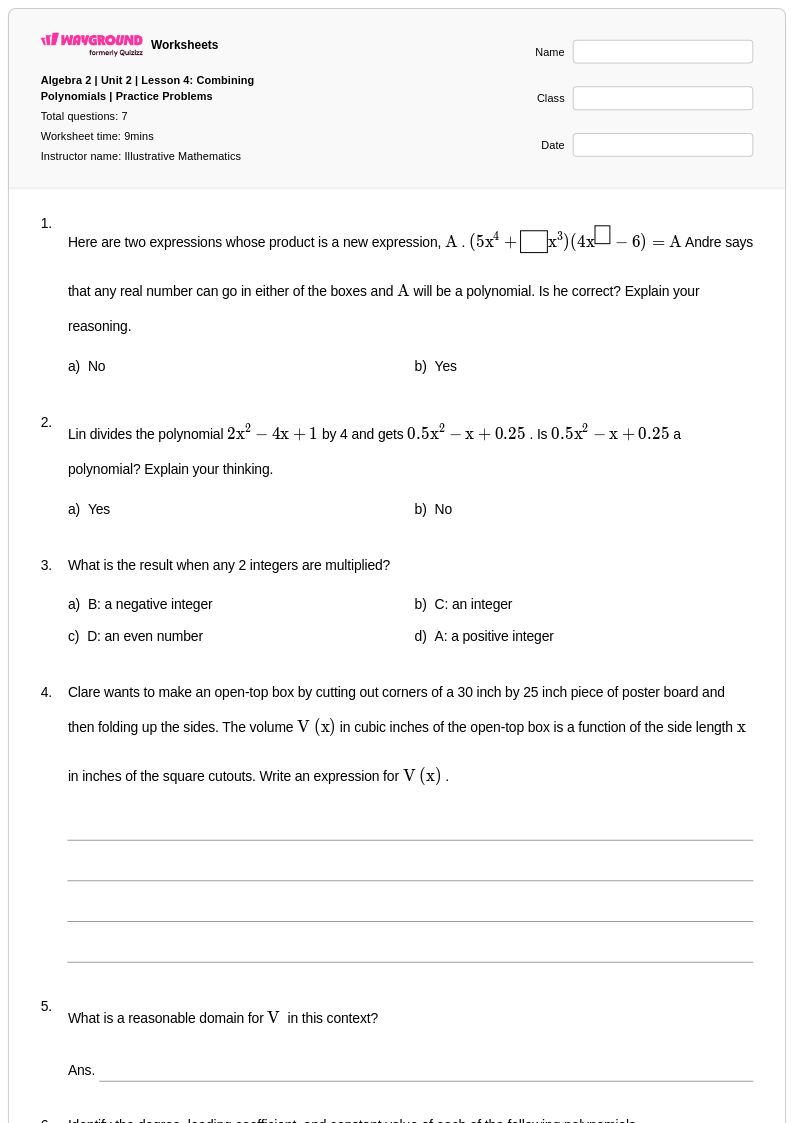
7 Q
6th - Uni
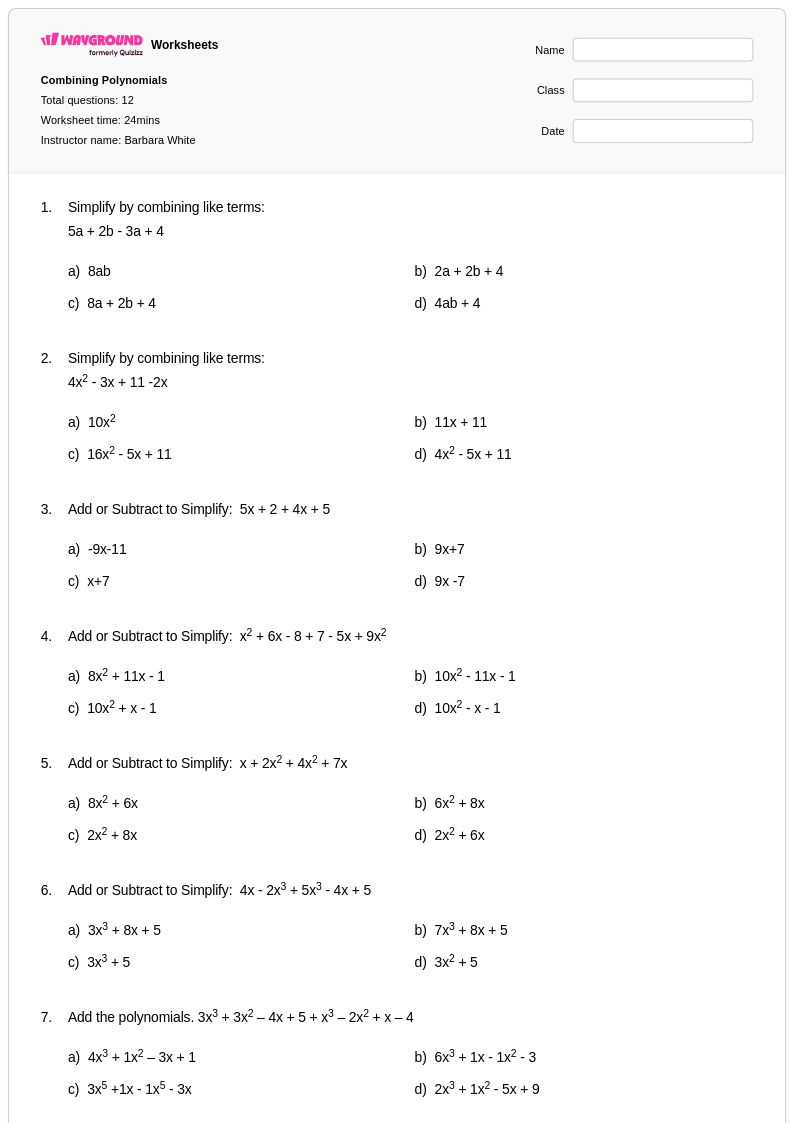
12 Q
9th - PD
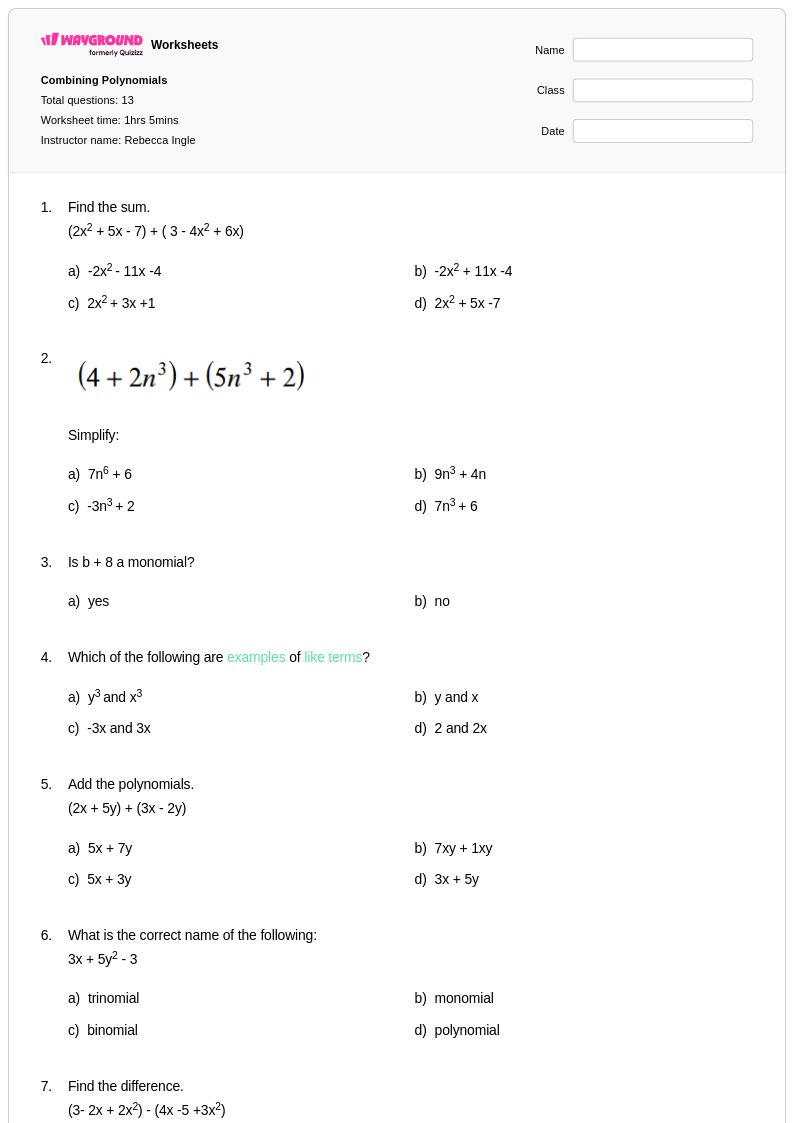
13 Q
9th
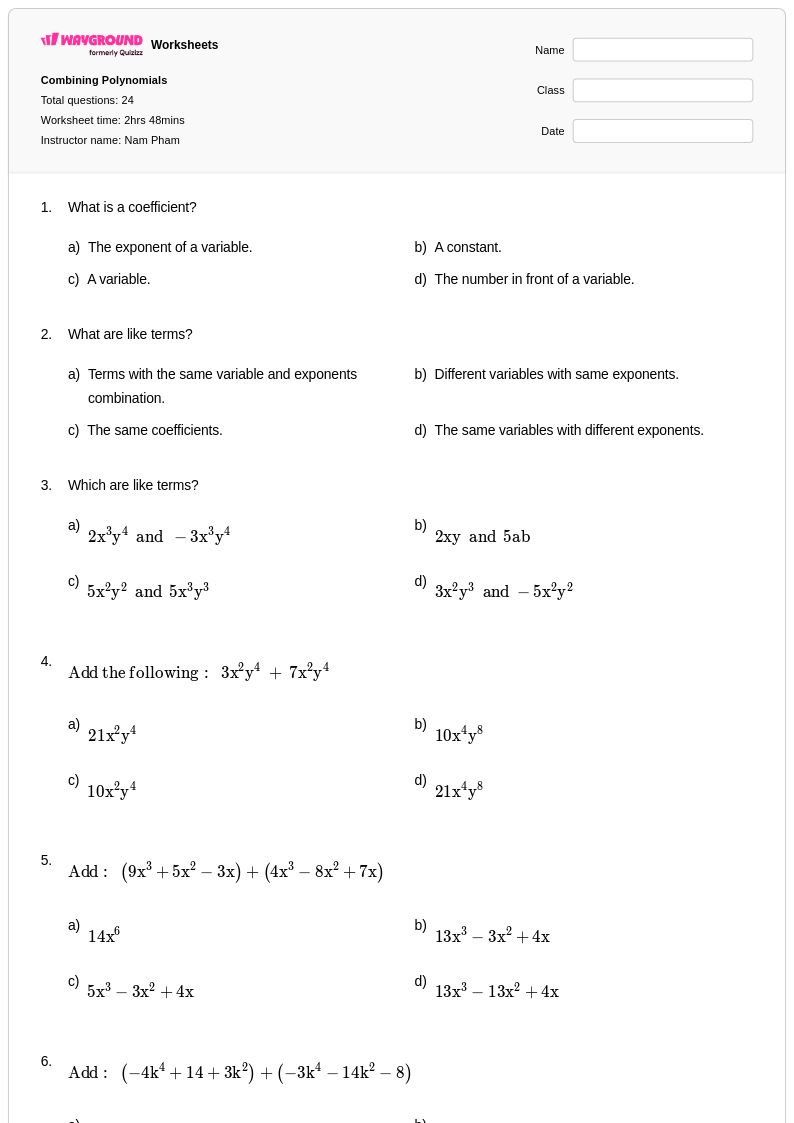
24 Q
9th - 10th
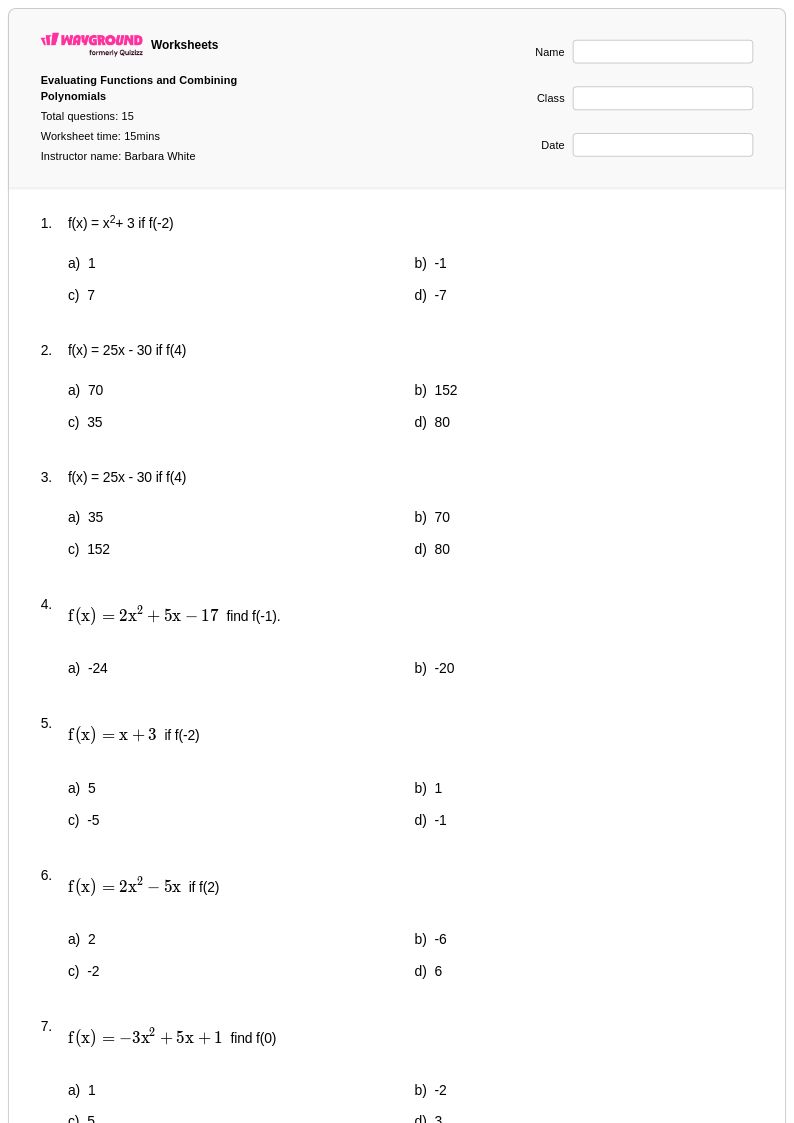
15 Q
9th
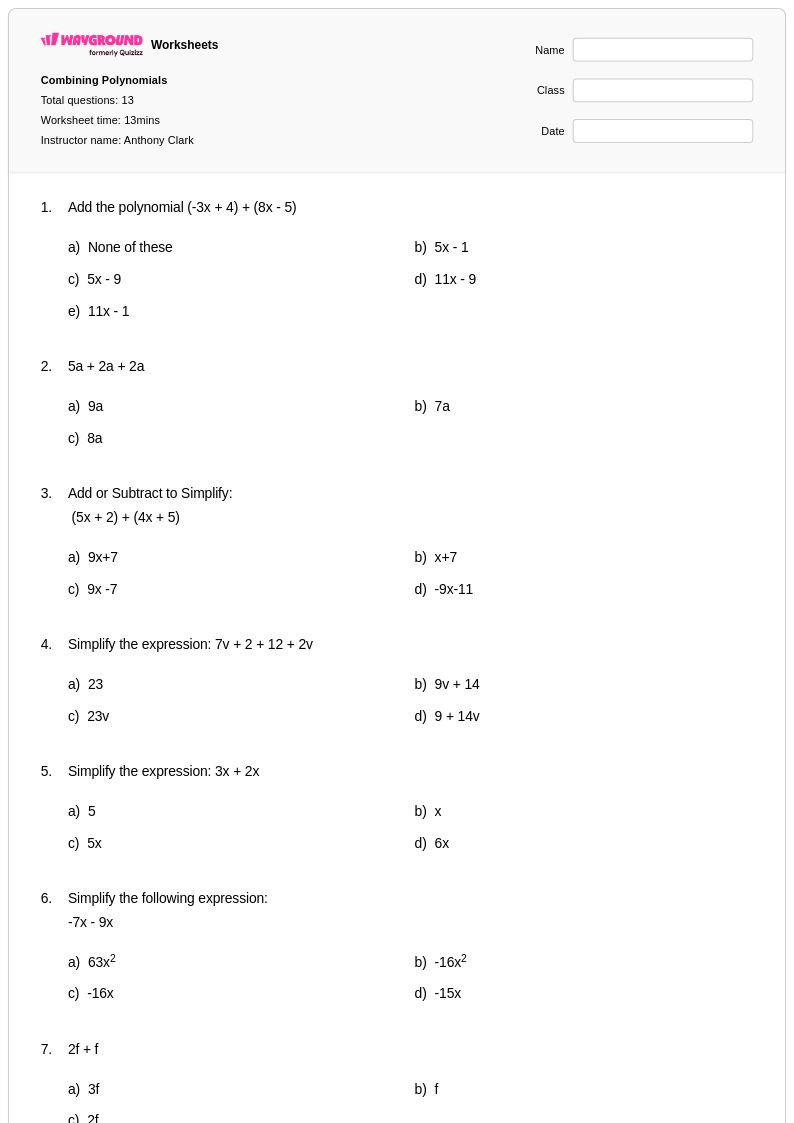
13 Q
9th - Uni
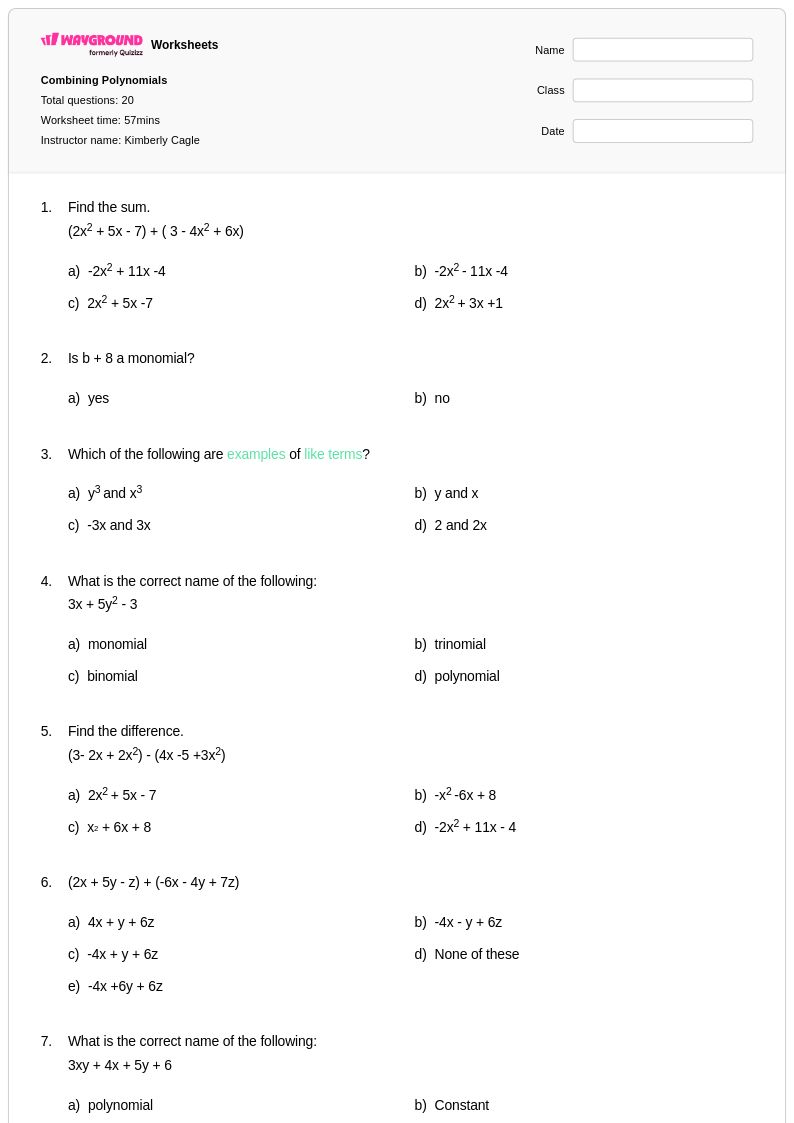
20 Q
9th - 12th
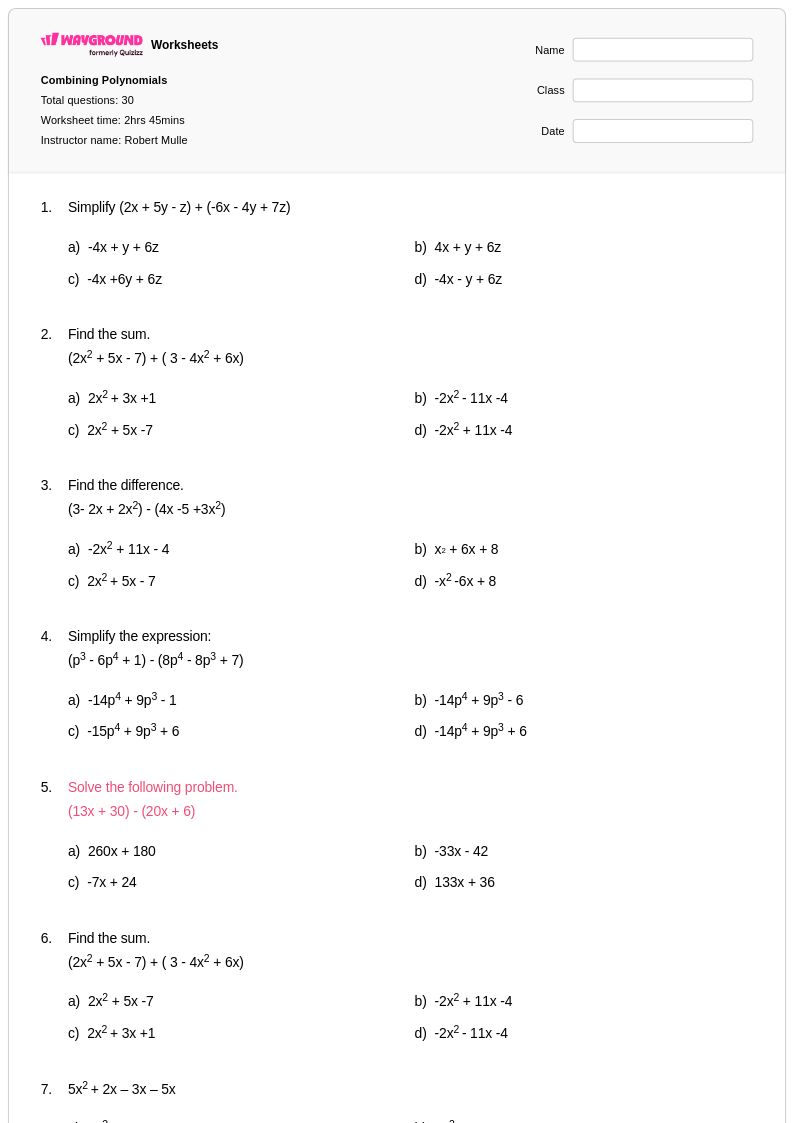
30 Q
9th - 12th
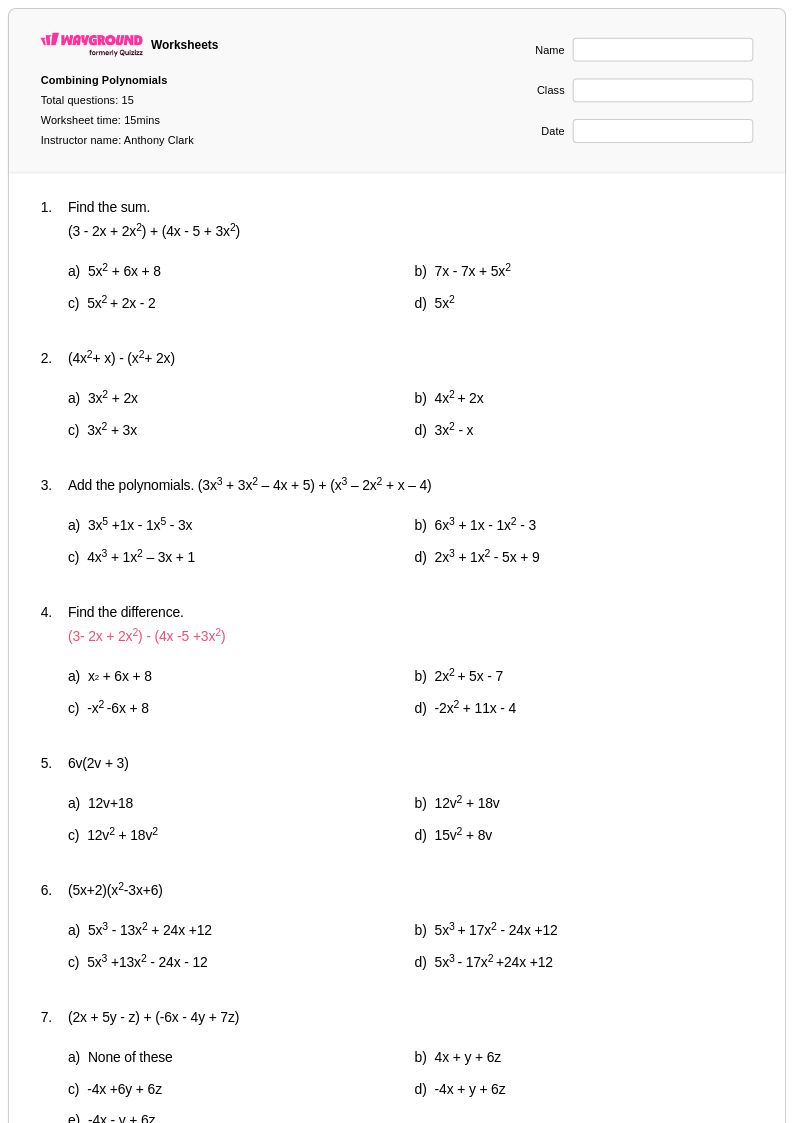
15 Q
9th - Uni
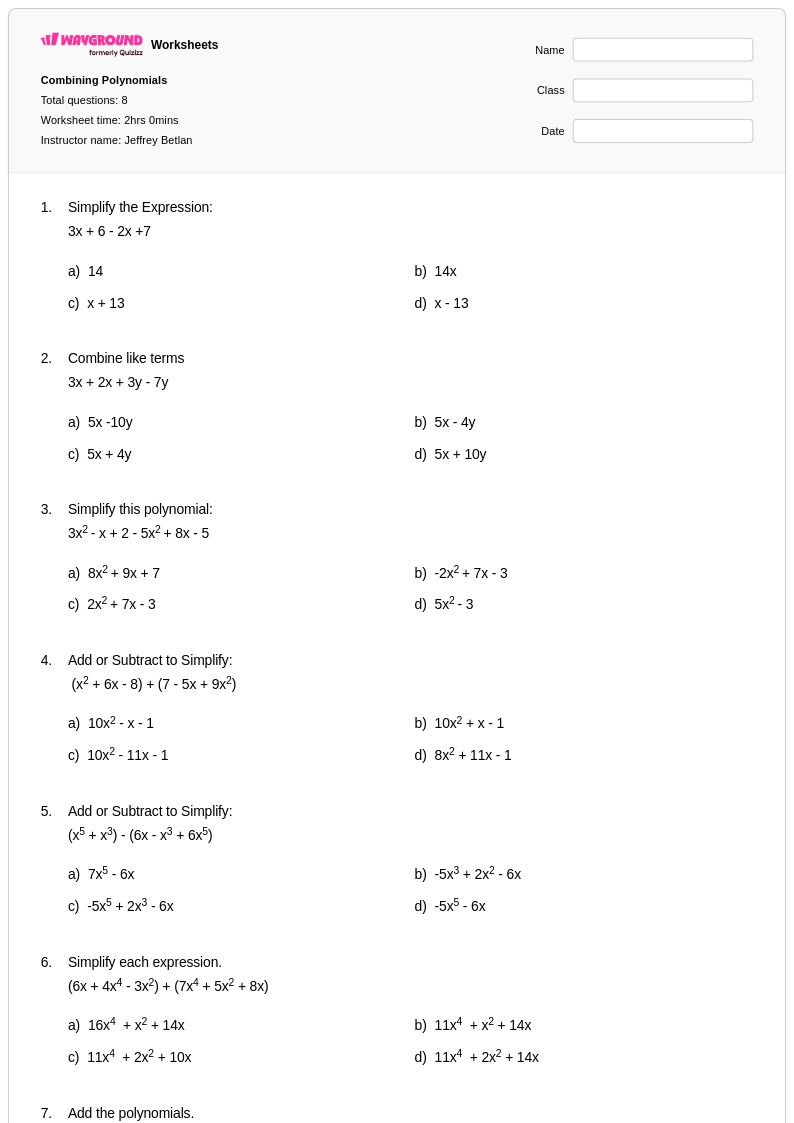
8 Q
9th - 10th
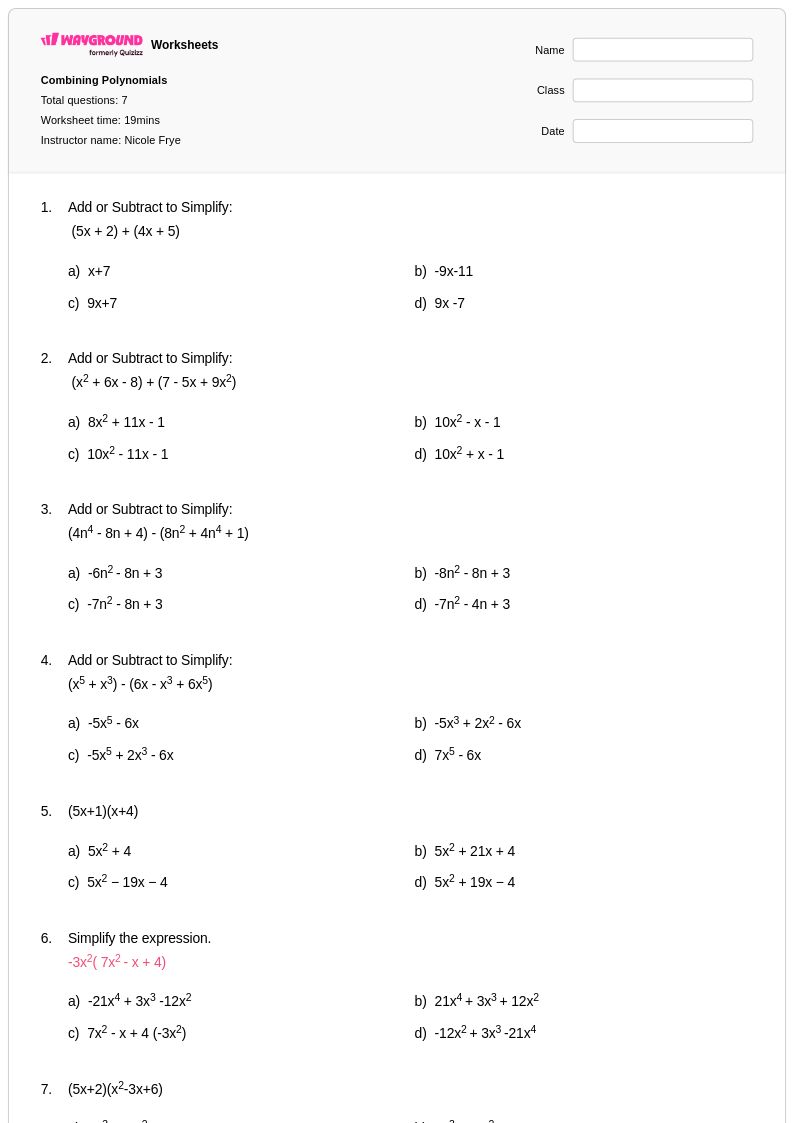
7 Q
9th - 11th
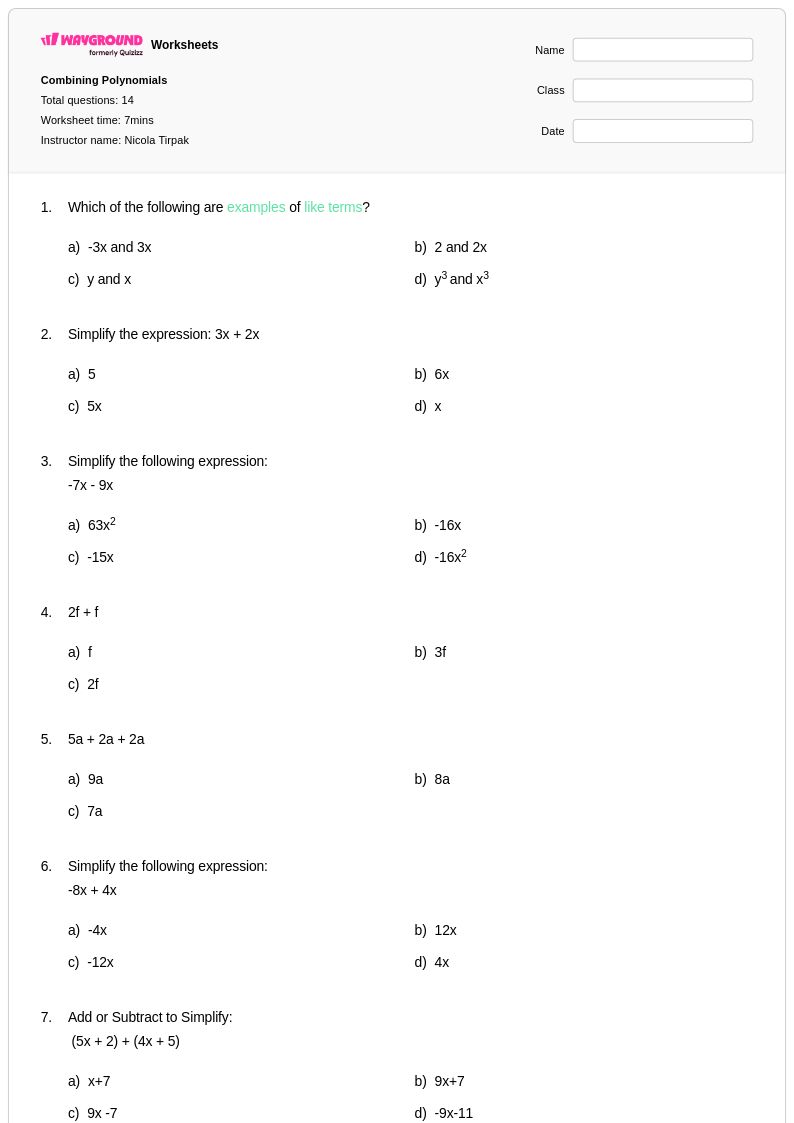
14 Q
9th - 11th
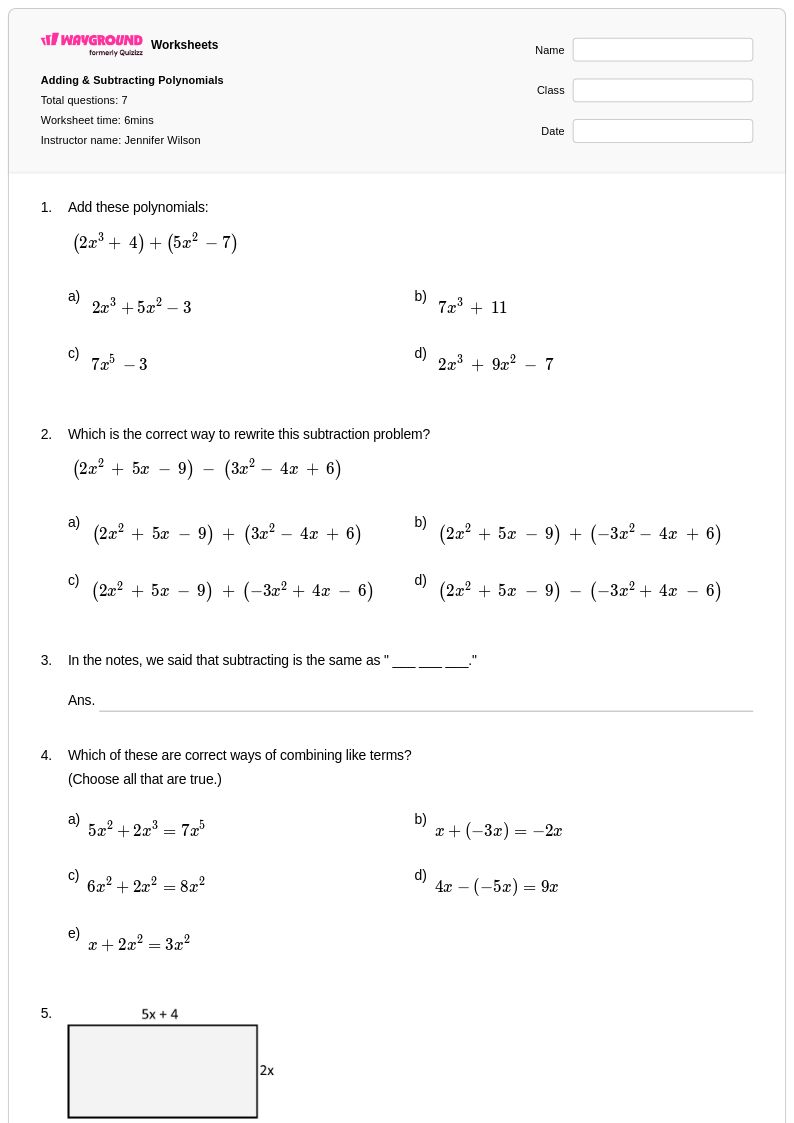
7 Q
9th
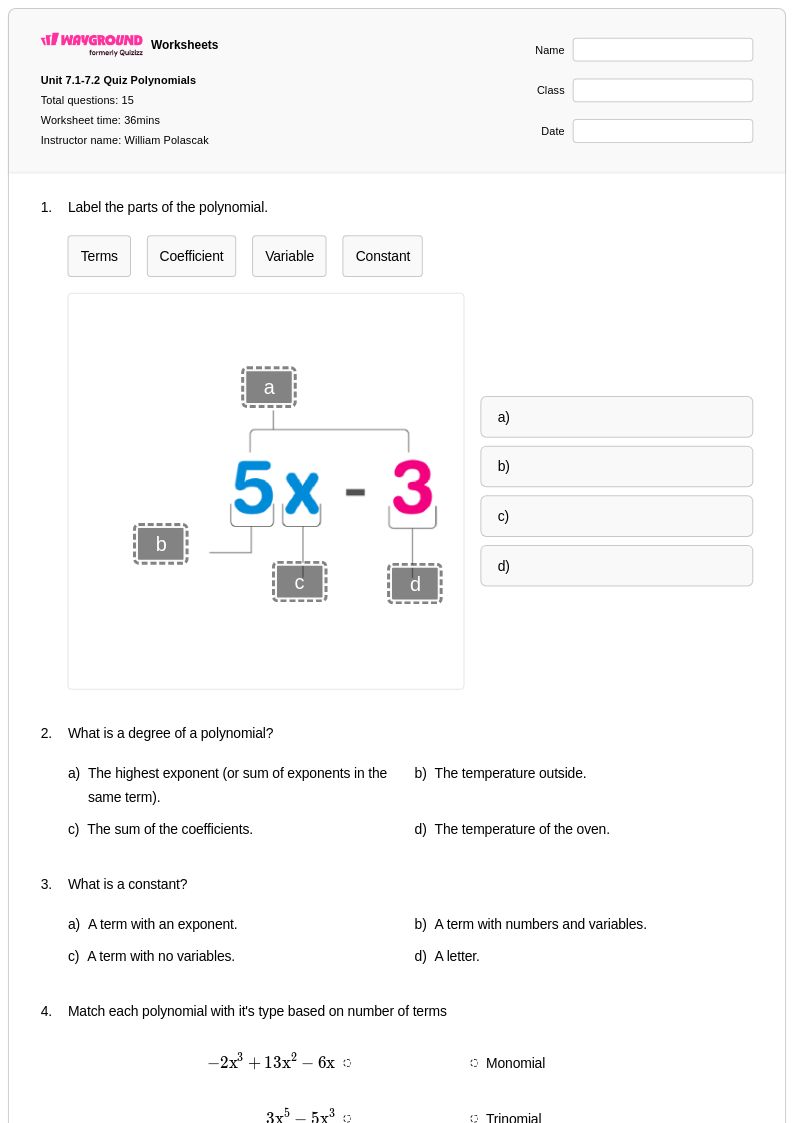
15 Q
9th
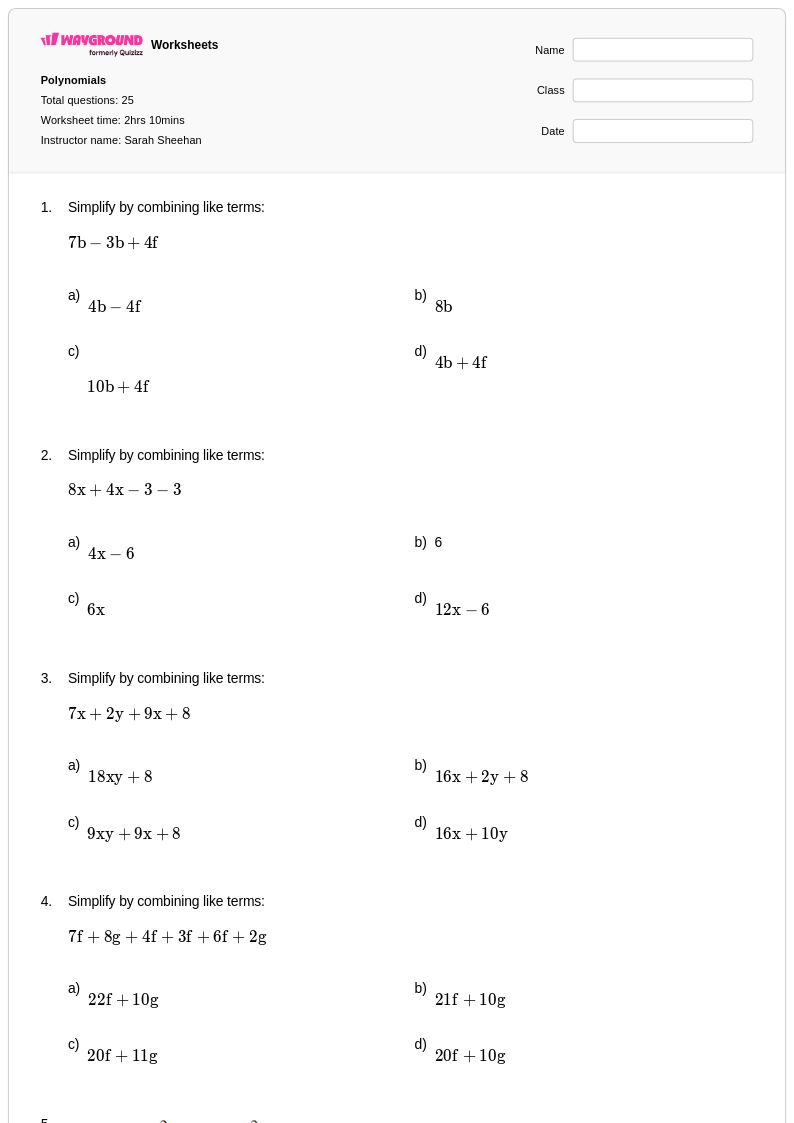
25 Q
9th
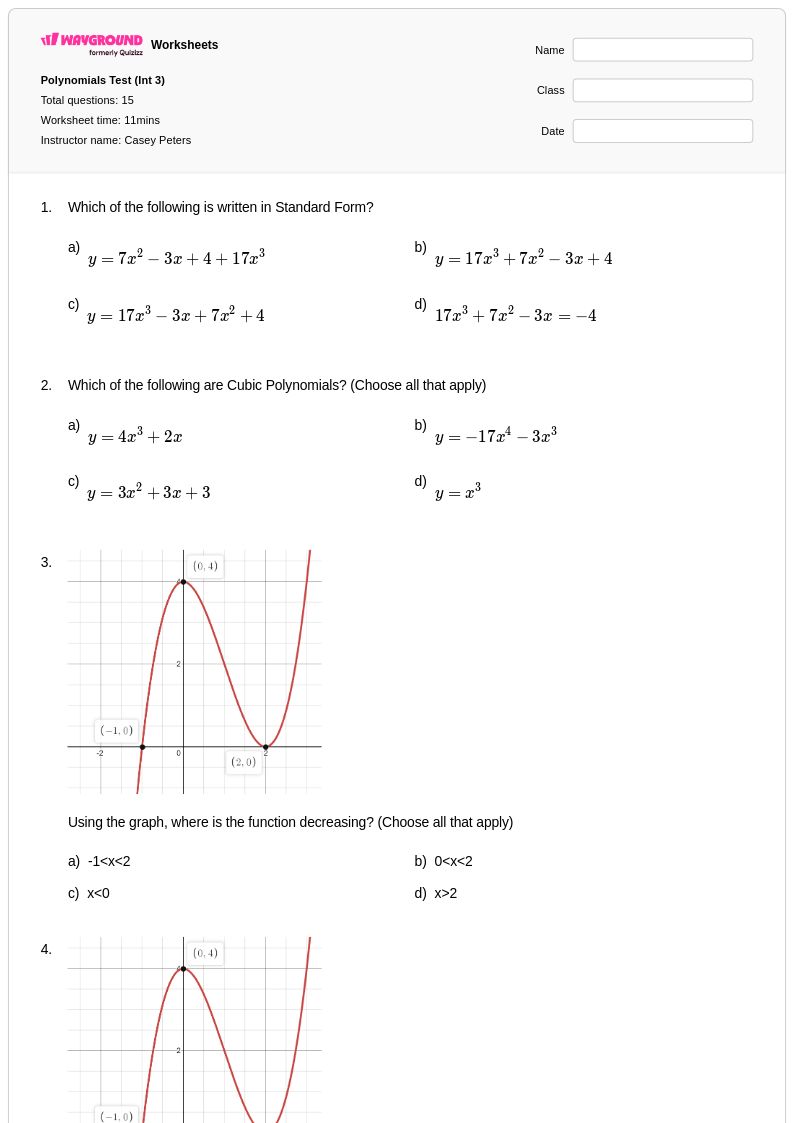
15 Q
9th - 12th
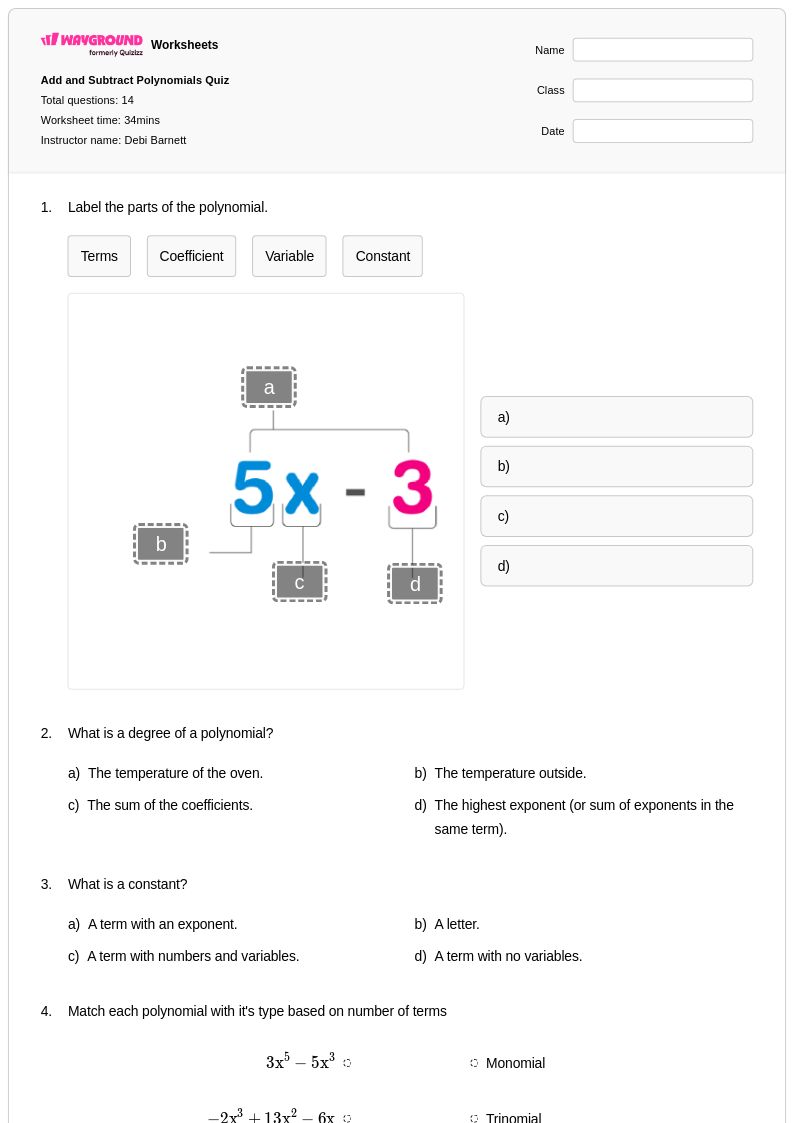
14 Q
9th - 12th
Explore Other Subject Worksheets for grade 9
Explore printable Combining Polynomials worksheets for Grade 9
Combining polynomials represents a fundamental algebraic skill that Grade 9 students must master to succeed in higher-level mathematics. Wayground's comprehensive collection of combining polynomials worksheets provides students with systematic practice in adding, subtracting, and manipulating polynomial expressions through carefully structured problems that build conceptual understanding. These free printables strengthen essential skills including identifying like terms, applying the distributive property, and organizing polynomial expressions in standard form. Each worksheet comes with a detailed answer key that supports independent learning and allows students to check their work, while the variety of practice problems ensures students encounter polynomials with different degrees of complexity and variable arrangements. The pdf format makes these resources easily accessible for both classroom instruction and homework assignments.
Wayground's extensive library draws from millions of teacher-created resources specifically designed to support Grade 9 algebra instruction in combining polynomials. The platform's robust search and filtering capabilities enable educators to quickly locate worksheets that align with specific curriculum standards and match their students' skill levels. Teachers benefit from differentiation tools that allow customization of problem difficulty and complexity, making it simple to provide appropriate challenges for students requiring remediation or enrichment. These combining polynomials worksheets are available in both printable and digital formats, giving educators the flexibility to incorporate them into traditional paper-based lessons or technology-enhanced learning environments. This versatility supports effective lesson planning while ensuring students receive targeted practice with polynomial operations that builds their algebraic reasoning and computational fluency.
FAQs
How do I teach combining polynomials in Grade 9?
What combining polynomials exercises are useful for Grade 9 students?
What errors should I watch for when Grade 9 students combine polynomials?
How can I use a Grade 9 combining polynomials worksheet from Wayground?
How does combining polynomials fit into the Grade 9 Common Core progression?
How can I differentiate Grade 9 combining polynomials practice?
Is combining polynomials a Grade 9 algebra skill?